MPO mencerminkan aktivitas oksidatif sel imun yang dapat menyertai cedera vaskular, tetapi ini adalah penanda konteks—bukan diagnosis. Inilah cara dokter menempatkannya di samping lipid, tekanan darah, glukosa, fungsi ginjal, dan gejala.



- Apa yang diukur MPO: Mieloperoksidase adalah enzim yang terutama dilepaskan oleh neutrofil dan monosit yang teraktivasi yang dapat menghasilkan asam hipoklorit selama aktivasi kekebalan.
- Rentang tergantung pada uji: Uji MPO plasma EDTA yang umum digunakan mengklasifikasikan nilai di bawah 350 pmol/L sebagai risiko lebih rendah, tetapi laboratorium menggunakan metode dan ambang batas yang berbeda.
- Bukan diagnosis penyakit jantung: Hasil MPO yang tinggi tidak dapat menunjukkan apakah arteri koroner menyempit, apakah ada plak, atau apakah nyeri dada bersifat kardiak.
- Risiko jantung MPO: MPO menambahkan informasi prognostik terbatas pada orang yang dipilih, terutama kohort nyeri dada akut, tetapi tidak menggantikan riwayat LDL-C, ApoB, tekanan darah, HbA1c, atau riwayat merokok.
- Troponin yang pertama: Tekanan dada baru, sesak napas, keringat, pingsan, atau nyeri yang menyebar ke rahang atau lengan memerlukan penilaian klinis segera dan tes EKG/troponin—bukan tes darah MPO.
- Penanda konteks: Kolesterol Non-HDL, ApoB, lipoprotein(a), hs-CRP, eGFR, urine ACR, glukosa, dan tekanan darah memberikan konteks risiko yang lebih dapat ditindaklanjuti.
- Konteks palsu umum: Infeksi baru-baru ini, aktivitas autoimun, merokok, disfungsi ginjal, olahraga berat, dan cedera jaringan akut dapat meningkatkan kadar mieloperoksidase.
- Langkah berikutnya yang praktis: Ulangi hasil MPO yang tidak terduga hanya saat sehat dan gunakan laboratorium dan jenis spesimen yang sama; jangan memulai suplemen atau obat hanya untuk menurunkan MPO.
Apa yang Sebenarnya Diukur oleh Tes Darah MPO
A tes mieloperoksidase mengukur enzim oksidatif yang dilepaskan oleh sel darah putih yang teraktivasi; itu mencerminkan aktivitas kekebalan yang dapat berkontribusi pada oksidasi di dinding pembuluh darah. Itu tidak dapat mendiagnosis penyakit arteri koroner, memprediksi serangan jantung individu dengan pasti, atau menjelaskan nyeri dada dengan sendirinya. Mulai 12 September 2026, saya hanya menggunakan MPO sebagai petunjuk sekunder di samping data risiko kardiovaskular yang sudah mapan.

Mieloperoksidase (MPO) disimpan dalam neutrofil dan monosit dan membantu sel-sel tersebut menghasilkan asam hipoklorit, oksidan antimikroba yang ampuh. Di dinding pembuluh darah, kimia yang sama dapat memodifikasi partikel LDL, mengurangi ketersediaan oksida nitrat, dan membuat biologi plak menjadi kurang stabil; itulah sebabnya MPO menarik perhatian sebagai penanda inflamasi vaskular.
Hasil MPO tidak dapat dipertukarkan dengan hasil kolesterol. Seseorang mungkin memiliki LDL-C 92 mg/dL dan MPO yang sementara tinggi setelah penyakit pernapasan, sementara orang lain dengan MPO dalam kisaran yang lebih rendah mungkin masih memiliki risiko seumur hidup yang tinggi karena ApoB adalah 145 mg/dL, tekanan darah 154/94 mmHg, dan mereka merokok.
Kantesti AI adalah sebuah Analisa tes darah AI yang membaca penanda vaskular khusus di samping hasil standar yang paling sering mengubah keputusan, daripada memperlakukan satu enzim sebagai vonis. Dalam pekerjaan klinis saya, pertanyaan yang paling berguna jarang “Apakah MPO tinggi?”; itu adalah “Risiko apa yang berpotensi dapat dimodifikasi yang ada bersamanya?” Jelajahi lebih luas panduan referensi biomarker untuk tes yang umum ditemukan pada panel kardiovaskular.
Dr. Thomas Klein telah melihat pasien menjadi sangat khawatir oleh penanda MPO meskipun EKG normal dan penilaian gejala meyakinkan. Kecemasan itu dapat dihindari ketika laporan menyatakan dengan jelas bahwa MPO menggambarkan jalur biologis, sedangkan pencitraan, gejala, troponin, dan faktor risiko konvensional menentukan apakah penyakit jantung mungkin terjadi.
Enzim bukan antibodi
Tes enzim MPO untuk risiko vaskular berbeda dari antibodi MPO-ANCA tes yang digunakan dalam dugaan vaskulitis. Satu mengukur konsentrasi atau aktivitas enzim yang beredar; yang lain mencari antibodi kekebalan dan memiliki tujuan klinis yang sama sekali berbeda.
Mengapa MPO Terkait dengan Stres Oksidatif di Arteri
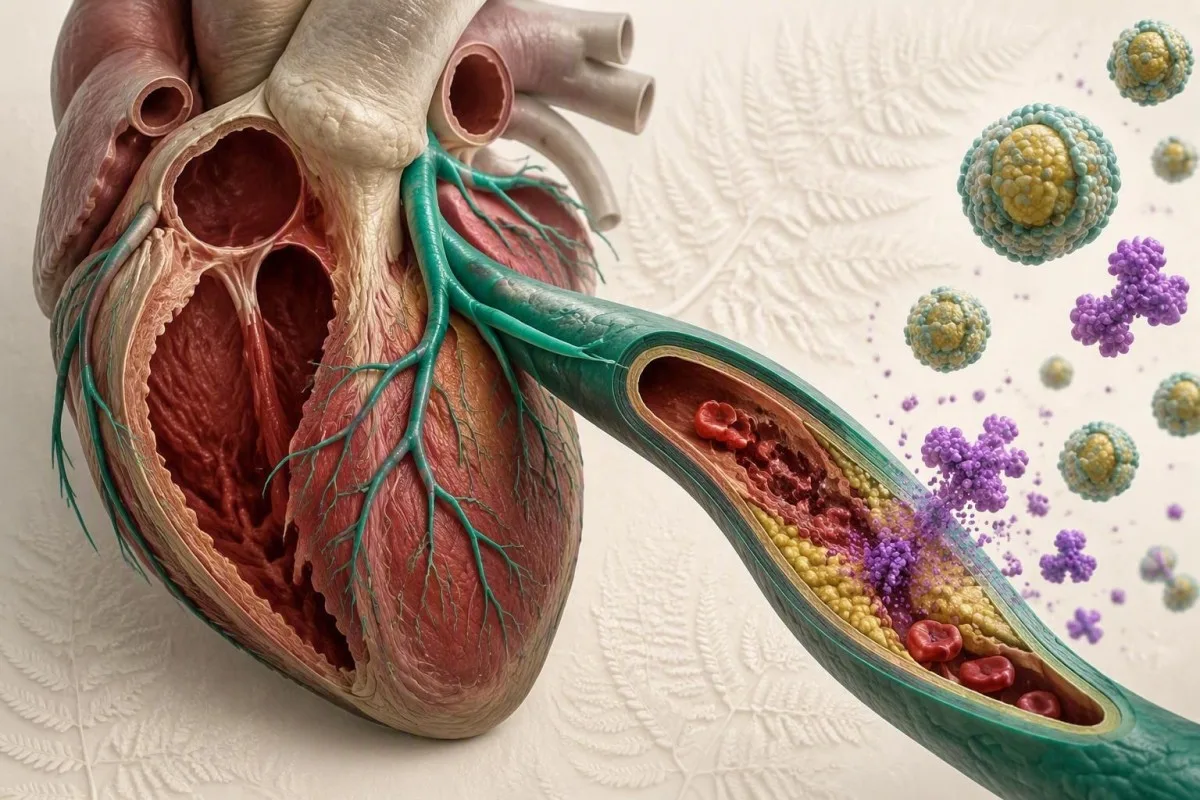
MPO dikaitkan dengan risiko vaskular karena dapat mengoksidasi lipoprotein dan mengganggu pensinyalan oksida nitrat di dalam dinding arteri yang meradang. Mekanismenya secara biologis masuk akal, tetapi masuk akal tidak menjadikan MPO target pengobatan atau diagnosis penyaringan.
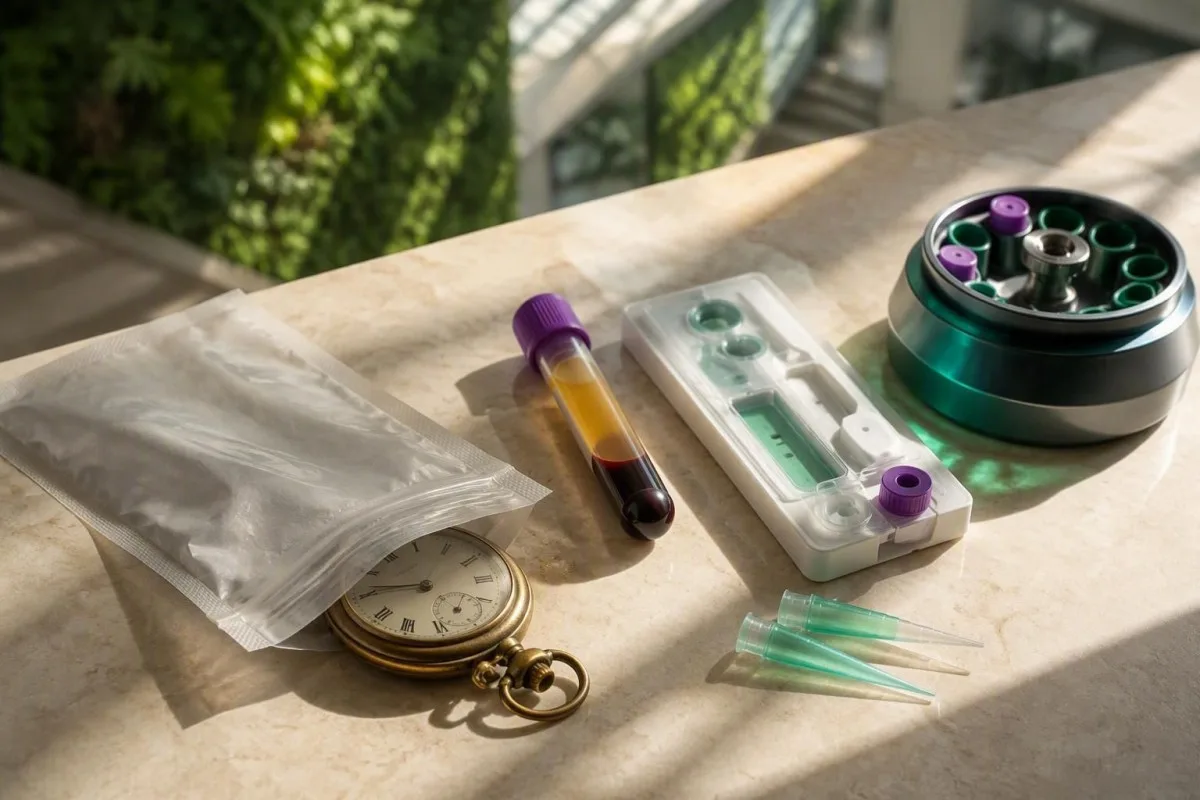
MPO menggunakan hidrogen peroksida dan klorida untuk menghasilkan asam hipoklorit, yang sering disingkat HOCl. HOCl dapat mengklorinasi residu tirosin pada protein dan mengubah fungsi HDL dan LDL; jejak kimia ini dapat diukur dalam studi jaringan penelitian, meskipun nilai plasma rutin tidak dapat menentukan di mana oksidasi terjadi.
Aterosklerosis bukan sekadar “karat di arteri.” Ini melibatkan partikel yang mengandung ApoB memasuki dan tertahan di dinding arteri, rekrutmen kekebalan lokal, disfungsi endotel, dan terkadang pecahnya plak; hasil LDL teroksidasi mungkin secara konseptual terkait tetapi memiliki keterbatasan assay sendiri.
Studi nyeri dada tahun 2003 oleh Brennan et al. menemukan bahwa MPO yang lebih tinggi mengidentifikasi risiko kejadian jangka pendek yang lebih besar bahkan ketika troponin awal negatif (Brennan et al., 2003). Hasil itu menarik secara klinis karena MPO dapat meningkat sebelum cedera sel miokard terdeteksi, bukan karena membuktikan bahwa infark sedang terjadi.
Satu nuansa yang sering terlewatkan secara online: MPO yang beredar dapat berasal dari sel kekebalan yang diaktifkan di luar arteri koroner. Penyakit gusi, penyakit virus akut, radang sendi, penyakit ginjal kronis, dan paparan tembakau semuanya memberikan penjelasan alternatif, sehingga tes ini memiliki spesifisitas anatomis yang buruk.
Kapan Dokter Mungkin Mempertimbangkan Pemesanan MPO
Dokter dapat mempertimbangkan tes darah MPO ketika risiko kardiovaskular konvensional tampak tidak lengkap atau ketika seorang spesialis sedang menyempurnakan risiko pada pasien dengan beberapa temuan yang meragukan. Skrining populasi rutin tidak didukung oleh pedoman pencegahan utama.

Tes ini terkadang dipesan dalam kardiologi preventif untuk seseorang dengan riwayat keluarga prematur, risiko metabolik, skor tradisional yang meragukan, atau perkembangan penyakit vaskular yang tidak dapat dijelaskan. Tes ini kurang membantu pada usia 24 tahun tanpa gejala, tekanan darah normal, LDL-C 68 mg/dL, dan tanpa paparan risiko utama karena kemungkinan penyakit yang dapat ditindaklanjuti sebelum tes sangat rendah.
Bukti terus terang beragam tentang apakah MPO secara materiil meningkatkan keputusan setelah penilaian risiko modern selesai. Pedoman pencegahan ACC/AHA 2019 menekankan estimasi risiko gabungan, tekanan darah, diabetes, merokok, kolesterol, kalsium arteri koroner pada orang dewasa terpilih, dan faktor-faktor yang meningkatkan risiko seperti Lp(a), daripada MPO sebagai tes rutin (Arnett et al., 2019).
Untuk banyak pasien, hs-CRP lebih dikenal, tetapi menjawab pertanyaan yang berbeda: itu adalah protein fase akut yang berasal dari hati, bukan enzim neutrofil. Baca bagaimana gejala dan waktu memperumit interpretasi hs-CRP tinggi sebelum berasumsi salah satu penanda mengidentifikasi arteri yang sakit.
Saya biasanya menunda pembahasan MPO untuk kunjungan lanjutan, bukan pemeriksaan tahunan yang terburu-buru. Hasil yang tidak dapat mengubah keputusan penurunan LDL, pengobatan tekanan darah, penghentian merokok, perawatan diabetes, atau pencitraan dapat menambah kebisingan daripada presisi yang berguna.
Tes Risiko Jantung MPO Bukan Tes MPO-ANCA
Tes MPO kardiak dan tes MPO-ANCA adalah investigasi laboratorium yang berbeda dengan unit, metode, dan konsekuensi klinis yang berbeda. MPO vaskular yang meningkat tidak berarti vaskulitis, dan MPO-ANCA positif tidak mengukur stres oksidatif kardiovaskular.

MPO-ANCA mendeteksi antibodi yang ditujukan terhadap mieloperoksidase dan digunakan dengan gejala, temuan urin, fungsi ginjal, pencitraan, dan penilaian spesialis ketika vaskulitis pembuluh darah kecil dicurigai. Batuk darah, fungsi ginjal yang memburuk dengan cepat, purpura, neuropati, atau penyakit mata inflamasi memerlukan evaluasi medis segera; panel MPO kardiovaskular bukanlah pemeriksaan yang tepat.
Sebaliknya, tes MPO kardiak umumnya melaporkan pmol/L, ng/mL, atau aktivitas spesifik tes. Laboratorium ANCA sering melaporkan unit indeks antibodi atau U/mL dengan ambang batas positifnya sendiri, yang berarti angka dari satu laporan tidak dapat diubah dengan aman menjadi angka dari laporan lain.
Kantesti adalah seorang layanan interpretasi tes lab AI dirancang untuk memisahkan tes yang namanya mirip berdasarkan spesimen, metode, unit, dan pertanyaan klinis. Perbedaan ini sangat penting ketika pasien mengunggah beberapa laporan selama bertahun-tahun; lihat panduan kami untuk pola ANCA dan MPO untuk tindak lanjut spesifik antibodi.
Tanda laboratorium bukanlah diagnosis. Jika MPO-ANCA positif, perkiraan kemungkinan vaskulitis sangat bergantung pada gejala yang kompatibel dan temuan organ yang objektif, sementara hasil positif rendah tunggal dapat terjadi pada kondisi autoimun lain, infeksi, dan beberapa paparan obat.
Mengapa MPO Tidak Dapat Menyingkirkan atau Menyingkirkan Serangan Jantung
MPO tidak dapat menyingkirkan atau mengesampingkan infark miokard karena tidak mengukur cedera otot jantung dan meningkat pada banyak kondisi inflamasi non-kardiak. Gejala dada akut memerlukan EKG, tes troponin sensitivitas tinggi serial, tanda-tanda vital, dan penilaian klinisi.

Troponin sensitivitas tinggi mencerminkan cedera miokard, meskipun troponin pun perlu interpretasi karena penyakit ginjal, takiaritmia, miokarditis, dan hipertensi berat dapat meningkatkannya. Nilai yang berubah selama 1 hingga 3 jam, gejala, temuan EKG, dan ambang batas tes lokal lebih informatif daripada satu hasil MPO.
Dalam kohort New England Journal of Medicine tahun 2003 oleh Brennan et al., MPO menambahkan informasi prognostik di antara pasien yang datang dengan nyeri dada, termasuk beberapa dengan troponin awal negatif (Brennan et al., 2003). Hal itu tidak membenarkan penggunaan MPO di rumah atau di perawatan primer untuk menyingkirkan keadaan darurat; populasi studi sudah menerima penilaian rumah sakit yang mendesak.
Tekanan atau sesak baru yang berlangsung lebih dari 10 menit, nyeri saat beraktivitas, pingsan, sesak napas berat, keringat dingin, atau nyeri yang menjalar ke rahang, punggung, atau lengan harus segera menghubungi layanan darurat. Praktis kami panduan tes darah nyeri dada menjelaskan mengapa waktu mengubah setiap penanda jantung.
MPO normal bukanlah surat izin untuk mengabaikan gejala. Sebaliknya, MPO yang meningkat tanpa gejala biasanya merupakan masalah diskusi risiko, bukan diagnosis ruang gawat darurat.
Kolesterol LDL dan Non-HDL Memberikan Konteks Penting
LDL-C dan kolesterol non-HDL memberikan konteks penting untuk MPO karena aterosklerosis memerlukan paparan lipoprotein yang mengandung ApoB, bukan hanya stres oksidatif. MPO yang meningkat dengan kolesterol aterogenik yang terus-menerus rendah umumnya memiliki implikasi yang berbeda dari nilai MPO yang sama dengan LDL-C 190 mg/dL.

LDL-C sebesar 190 mg/dL atau lebih dianggap sebagai hiperkolesterolemia berat dalam pedoman utama dan biasanya memerlukan pengobatan klinis aktif tanpa memandang skor yang dihitung selama 10 tahun. Kolesterol non-HDL sama dengan kolesterol total dikurangi HDL-C dan menangkap LDL ditambah sisa yang kaya trigliserida; ini sangat berguna ketika trigliserida melebihi 175 mg/dL.
MPO dapat membantu menggambarkan lingkungan vaskular yang merusak, tetapi LDL dan non-HDL menunjukkan muatan partikel yang dapat tertahan di jaringan arteri. Pada pasien dengan LDL-C 178 mg/dL dan MPO 610 pmol/L pada uji yang divalidasi, saya akan fokus terlebih dahulu pada risiko keluarga, ApoB, pilihan pengobatan, kepatuhan, dan terkadang kalsium arteri koroner—bukan suplemen yang dipasarkan sebagai antioksidan.
AI Kantesti menyoroti pola antara hasil lipid dan konteks inflamasi, termasuk LDL tinggi yang tidak menyebabkan gejala. Tidak adanya nyeri dada tidak membuat paparan LDL tidak berbahaya, dan MPO tinggi tidak mengidentifikasi intervensi lipid mana yang tepat untuk individu.
Statin menurunkan LDL-C dan mengurangi kejadian kardiovaskular, tetapi penurunan MPO bukanlah tujuan pengobatan yang divalidasi. Pengukuran harus melayani keputusan yang meningkatkan hasil, bukan menjadi papan skor untuk optimasi biokimia.
ApoB Sering Menjelaskan Risiko Lebih Baik Daripada MPO Saja
ApoB sering menambahkan informasi kardiovaskular yang lebih dapat ditindaklanjuti daripada MPO karena setiap partikel aterogenik membawa satu molekul ApoB. ApoB tinggi mengidentifikasi sejumlah besar partikel yang mampu memasuki dinding arteri, bahkan ketika LDL-C terlihat hanya sedikit meningkat.

ApoB sangat berguna ketika trigliserida tinggi, resistensi insulin ada, atau LDL-C dan non-HDL-C tidak selaras. Misalnya, LDL-C 106 mg/dL dengan trigliserida 260 mg/dL dan ApoB 125 mg/dL dapat menunjukkan lebih banyak partikel aterogenik daripada yang disarankan oleh LDL-C saja.
Pedoman ACC/AHA mencantumkan ApoB dari 130 mg/dL atau lebih sebagai faktor peningkat risiko, terutama ketika trigliserida secara konsisten 200 mg/dL atau lebih (Arnett et al., 2019). Tidak ada ambang batas pedoman yang sebanding di mana MPO saja mengharuskan statin, CT scan, atau angiogram.
Ini adalah salah satu area di mana konteks lebih penting daripada angkanya. Tim kami Penjelasan rasio ApoB terhadap ApoA1 menunjukkan mengapa nilai LDL yang tampaknya dapat diterima dapat menyembunyikan risiko terkait partikel.
Ketika saya meninjau panel, nilai ApoB yang secara konsisten tinggi di dua kali pengambilan darah puasa atau non-puasa biasanya lebih mengubah percakapan daripada hasil MPO satu kali. Alasannya sederhana: kita memiliki bukti uji hasil yang jauh lebih kuat untuk menurunkan beban partikel aterogenik.
Lipoprotein(a) dan Riwayat Keluarga Mengubah Arti MPO
Lipoprotein(a), atau Lp(a), dan riwayat keluarga prematur dapat meningkatkan risiko kardiovaskular seumur hidup secara independen dari MPO. Satu pengukuran Lp(a) biasanya masuk akal pada orang dewasa karena kadarnya sebagian besar diwariskan dan relatif stabil.

Banyak pedoman mempertimbangkan Lp(a) pada 50 mg/dL atau 125 nmol/L atau lebih tingkat peningkat risiko, meskipun mg/dL dan nmol/L tidak dapat dikonversi secara tepat karena ukuran partikel bervariasi. Orang tua, saudara kandung, atau anak dengan infark miokard sebelum usia 55 pada pria atau 65 pada wanita adalah sinyal lain yang memerlukan tinjauan formal.
Dalam analisis EPIC-Norfolk tahun 2007, Meuwese dan rekan-rekannya menemukan MPO yang lebih tinggi terkait dengan penyakit koroner di masa depan di antara orang dewasa yang tampak sehat (Meuwese et al., 2007). Asosiasi tersebut tidak memberi tahu kita apakah Lp(a) yang diwariskan, paparan ApoB seumur hidup, hipertensi, atau merokok adalah pendorong risiko dominan bagi orang tertentu.
Pasien terkadang berasumsi laporan “kolesterol normal” menyingkirkan risiko yang diwariskan. Itu tidak; panduan skrining Lp(a) kami menjelaskan mengapa Lp(a) dapat relevan secara klinis bahkan ketika LDL-C adalah 90 mg/dL.
MPO dapat sedikit menyempurnakan diskusi di pengaturan spesialis, tetapi tidak boleh mengalihkan perhatian dari pendokumentasian usia kerabat pada peristiwa, pemeriksaan Lp(a), dan penyelidikan kemungkinan hiperkolesterolemia familial ketika LDL-C sangat tinggi.
Tekanan Darah dan Merokok Dapat Mengalahkan Hasil MPO
Tekanan darah dan status merokok seringkali mempengaruhi risiko kardiovaskular lebih dari MPO karena keduanya memiliki hubungan kausal yang terbukti dengan serangan jantung, stroke, penyakit ginjal, dan kematian dini. Tekanan darah tunggal di kantor 140/90 mmHg memerlukan konfirmasi, tetapi elevasi yang persisten membutuhkan tindakan terlepas dari MPO.

Ambang batas diagnostik umum untuk hipertensi adalah tekanan darah di kantor 140/90 mmHg atau lebih di banyak tempat, sementara rata-rata di rumah atau ambulatori 135/85 mmHg atau lebih tinggi sering dianggap meningkat. Pedoman bervariasi menurut negara dan risiko pasien, tetapi pembacaan yang berulang kali diukur dengan benar jauh lebih penting daripada satu pengukuran klinis yang cemas.
Merokok mengaktifkan neutrofil, merusak endotelium, dan dapat meningkatkan penanda inflamasi, yang membuat hasil MPO sangat sulit untuk diinterpretasikan pada perokok saat ini. Berhenti merokok secara signifikan menurunkan risiko kardiovaskular bahkan jika biomarker tidak segera normal; tidak ada produk “detoks” yang menggantikan dukungan berhenti merokok.
Kantesti dapat mengatur laporan kardiovaskular bersama dengan hasil dari pemeriksaan laboratorium hipertensi sekunder, tetapi aplikasi tidak dapat mendiagnosis hipertensi dari satu pembacaan. Manset rumah yang tervalidasi, istirahat duduk selama 5 menit, dan catatan 7 hari seringkali merupakan langkah selanjutnya yang lebih berguna.
Saya telah melihat pasien berusia 47 tahun terpaku pada MPO 560 pmol/L sambil mengabaikan rata-rata pembacaan rumah mendekati 151/96 mmHg. Mengobati masalah tekanan yang sudah ada adalah prioritas; MPO tidak mengubah hierarki itu.
Glukosa, Fungsi Ginjal dan Risiko Metabolik Melengkapi Gambaran
Status glukosa dan fungsi ginjal adalah konteks yang diperlukan untuk MPO karena diabetes dan penyakit ginjal kronis mempercepat risiko vaskular melalui beberapa jalur sekaligus. HbA1c 6,5% atau lebih tinggi dapat mendiagnosis diabetes ketika dikonfirmasi dengan tepat, sementara eGFR di bawah 60 mL/menit/1,73 m² selama 3 bulan menunjukkan penyakit ginjal kronis.

Diabetes meningkatkan risiko aterosklerotik melalui glikasi, metabolisme lipoprotein yang berubah, disfungsi endotel, dan cedera ginjal. HbA1c dari 5.7% hingga 6.4% menunjukkan prediabetes, tetapi anemia, transfusi baru-baru ini, varian hemoglobin, dan penyakit ginjal dapat membuat HbA1c menyesatkan; pengujian fruktosamin kadang-kadang berguna ketika itu terjadi.
Penyakit ginjal dapat meningkatkan MPO karena penurunan pembersihan dan aktivasi kekebalan kronis dapat berdampingan, sementara itu secara independen meningkatkan risiko kardiovaskular. eGFR harus diinterpretasikan dengan rasio albumin-kreatinin urin: ACR dari 30 mg/g atau lebih tinggi adalah albuminuria abnormal dan dapat mengubah prioritas pencegahan bahkan dengan eGFR di atas 60.
Sindrom metabolik didefinisikan oleh sekelompok kelainan lingkar pinggang, trigliserida, HDL-C, tekanan darah, dan glukosa, bukan oleh MPO. Tinjau lima kriteria sindrom metabolik yang terukur daripada mengandalkan label “stres oksidatif” yang tidak jelas.
Masalah praktisnya adalah risiko gabungan. MPO 500 pmol/L berarti lebih banyak pada seseorang dengan HbA1c 7,8%, ACR 120 mg/g, trigliserida 240 mg/dL, dan hipertensi daripada pada orang kurus, normotensif yang pulih dari pilek.
Alasan Non-Jantung Peningkatan Kadar Mieloperoksidase
Tingkat mieloperoksidase dapat meningkat dengan infeksi, aktivitas autoimun, merokok, penyakit ginjal kronis, peradangan periodontal, stres jaringan akut, dan olahraga berat baru-baru ini. Penyebab-penyebab ini membuat hasil MPO tunggal yang meningkat tidak spesifik untuk penyakit koroner.
Penyakit demam dapat mengubah aktivasi sel darah putih selama beberapa hari, sedangkan hs-CRP seringkali memuncak dan menurun pada jadwal waktu yang berbeda. Jika tes diambil saat demam, setelah perawatan gigi, atau dalam beberapa hari setelah olahraga berat, saya tidak akan menggunakan nilai MPO tersebut untuk membuat penilaian kardiovaskular jangka panjang.
Olahraga ketahanan yang intens dapat secara sementara mengubah jumlah neutrofil, kreatin kinase, CRP, dan penanda oksidatif. Pelari maraton berusia 52 tahun dengan AST 89 IU/L setelah perlombaan mungkin juga memiliki panel inflamasi yang tidak stabil; pilihan yang lebih aman adalah pemulihan dan pengujian ulang, seperti yang dibahas dalam panduan kreatinin terkait olahraga kami.
Penyakit autoimun sistemik dan vaskulitis memerlukan penilaian klinis mereka sendiri daripada direduksi menjadi skor jantung MPO. Peningkatan ESR atau CRP yang persisten ditambah ruam, pembengkakan sendi, penurunan berat badan, gejala saraf, urine abnormal, atau demam memerlukan tinjauan dokter; Penyebab ESR luas.
Peningkatan MPO ringan setelah pilek biasanya bukan keadaan darurat. Ini adalah alasan untuk memeriksa apakah sampel diambil pada waktu yang masuk akal dan apakah profil risiko konvensional telah dinilai.
Rentang Referensi MPO Bergantung pada Uji dan Spesimen
Rentang referensi MPO bergantung pada metode laboratorium, kalibrasi, dan apakah sampelnya adalah plasma EDTA atau serum. Klasifikasi plasma EDTA yang umum digunakan menggunakan di bawah 350 pmol/L sebagai risiko rendah dan 540 pmol/L atau lebih tinggi sebagai risiko tinggi, tetapi ini bukan batas diagnostik universal.

Beberapa laporan menggunakan ng/mL, sementara yang lain menggunakan pmol/L, dan konversi tidak aman tanpa mengetahui kalibrator pengujian dan bentuk molekul yang diukur. Penanganan pra-analitik juga penting: pemrosesan tertunda, jenis sampel, suhu penyimpanan, dan aktivasi seluler setelah pengumpulan dapat mengubah konsentrasi yang terukur.
Kategori di bawah ini paling baik dilihat sebagai contoh satu keluarga pengujian, bukan sebagai rentang normal universal. Hasil 420 pmol/L dapat disebut sebagai sedang pada satu laporan plasma EDTA, tetapi sampel klinis yang sama mungkin tidak memiliki hasil serum yang dapat dibandingkan secara langsung dari laboratorium lain.
Kantesti AI adalah sebuah platform interpretasi biomarker AI yang mempertahankan interval referensi laboratoriumnya sendiri dan menandai ketidakcocokan unit saat membandingkan laporan historis. Ini sangat berguna ketika pengujian melintasi batas atau laboratorium; tren yang sebenarnya memerlukan pengujian yang sama, spesimen yang sama, dan kondisi kesehatan yang serupa.
Jika MPO meningkat secara tak terduga, ulangi setelah setidaknya 2 hingga 4 minggu tanpa penyakit akut dan setelah menghindari olahraga yang sangat berat selama 24 hingga 48 jam, kecuali dokter Anda memiliki alasan untuk menguji lebih awal. Jangan ulangi tanpa batas: dua nilai yang diambil pada waktu yang tepat biasanya menjawab apakah hasil pertama bersifat sementara.
Rencana Tindak Lanjut yang Masuk Akal untuk MPO yang Ditinggikan
Hasil MPO yang meningkat harus memicu tinjauan kardiovaskular terstruktur, bukan kepanikan dan bukan obat otomatis. Langkah pertama adalah mengonfirmasi konteks uji, menyingkirkan pemicu peradangan baru-baru ini, dan mengukur risiko yang dapat dimodifikasi yang sudah mapan.

Mulailah dengan gejala dan urgensi. Tekanan dada, sesak napas saat beraktivitas, sinkop, gejala neurologis baru, atau kondisi tidak sehat yang nyata memerlukan penilaian medis secara real-time; pasien tanpa gejala biasanya dapat membuat janji temu yang tidak mendesak untuk meninjau risiko dalam beberapa minggu ke depan.
Kemudian periksa dasar-dasarnya: rata-rata tekanan darah, panel lipid puasa atau tidak puasa, non-HDL-C, ApoB bila diindikasikan, HbA1c atau glukosa, eGFR, ACR urin, paparan merokok/vaping, tidur, obat-obatan, dan riwayat keluarga. A garis waktu tes darah membantu mengidentifikasi apakah penyakit, diet, atau perubahan obat mendistorsi hasil.
Kantesti AI dapat membandingkan tanggal dan membantu menyiapkan pertanyaan untuk dokter, sementara kami alur kerja klinis kami menjelaskan mengapa hasil harus ditinjau sebagai pola daripada bendera terisolasi. Ini tidak menggantikan EKG, keputusan pencitraan, pemeriksaan fisik, atau nasihat peresepan individu.
Pemindaian kalsium arteri koroner dapat berguna untuk orang dewasa tanpa gejala yang dipilih ketika keputusan pengobatan tetap tidak pasti setelah penilaian konvensional. Ini tidak cocok untuk semua orang, dan MPO tinggi saja bukanlah indikasi standar; usia, risiko yang dihitung, pertimbangan radiasi, dan konsekuensi manajemen yang mungkin terjadi penting.
Bisakah Perubahan Gaya Hidup Menurunkan MPO dan Risiko Jantung?
Tindakan gaya hidup dapat mengurangi beban peradangan dan risiko kardiovaskular, tetapi tidak ada panduan yang merekomendasikan pengobatan target MPO laboratorium. Tujuan yang dapat diandalkan adalah menurunkan faktor risiko penyebab: lipoprotein yang mengandung ApoB, tekanan darah, paparan tembakau, risiko diabetes, ketidakaktifan, dan kurang tidur.
Pola makan bergaya Mediterania, aktivitas aerobik dan resistensi yang teratur, tidur yang cukup, pengelolaan berat badan bila perlu, dan penghentian tembakau memperbaiki faktor risiko dengan bukti hasil yang sudah mapan. Untuk trigliserida, mengurangi karbohidrat olahan dan paparan alkohol dapat sangat berarti; lihat pilihan praktis untuk menurunkan trigliserida sebelum pengujian ulang.
Suplemen antioksidan belum mendapatkan peran sebagai terapi kardiovaskular penurun MPO. Vitamin E dosis tinggi, beta-karoten, dan produk campuran dapat menimbulkan bahaya atau interaksi obat, dan penurunan penanda pengganti bukanlah bukti berkurangnya serangan jantung atau stroke.
Bukti untuk menurunkan MPO secara langsung belum cukup matang untuk dijadikan dasar resep. Jika LDL-C turun dari 170 menjadi 85 mg/dL berdasarkan rencana yang disetujui dokter, tekanan darah turun dari 148/92 menjadi 126/78 mmHg, dan merokok berhenti, saya menganggap itu sebagai keberhasilan pencegahan yang kuat meskipun MPO belum diulang.
Gunakan tren secara bijaksana: tren lipid dan tekanan darah yang sebanding lebih kuat secara klinis daripada pengujian penanda peradangan yang sering. Kami longitudinal kami menjelaskan apa yang harus dicatat sebelum memutuskan bahwa biomarker benar-benar telah berubah.
Kesimpulan: Masukkan MPO dalam Penilaian Kardiovaskular Lengkap
MPO adalah penanda stres oksidatif yang bermakna secara biologis, tetapi tidak dapat mendiagnosis arteri yang tersumbat, menyingkirkan serangan jantung, atau menggantikan alat pencegahan kardiovaskular yang sudah mapan. Keterbatasan terbesarnya adalah non-spesifisitas: peningkatan yang sama dapat mencerminkan peradangan vaskular, infeksi, merokok, penyakit ginjal, atau pemicu kekebalan lainnya.
Diskusi MPO yang berguna mencakup LDL-C atau non-HDL-C, ApoB jika relevan, Lp(a) setidaknya sekali, rata-rata tekanan darah, HbA1c atau glukosa, fungsi ginjal, albumin urin, status merokok, riwayat keluarga, gejala, dan riwayat pengobatan. MPO normal tidak meniadakan ApoB tinggi atau hipertensi, dan MPO yang meningkat tidak membuktikan adanya plak.
Aturan praktis Dr. Thomas Klein lugas: hasil tes harus mengubah tindakan selanjutnya yang aman. Jika MPO tidak mengubah pengobatan pencegahan, pencitraan, triase gejala, atau waktu penilaian ulang, itu mungkin menarik tetapi tidak menentukan secara klinis.
Kantesti menggabungkan interpretasi laporan multibahasa dengan tinjauan tren, dan konten medisnya diawasi melalui kami Dewan Penasehat Medis. Untuk metodologi dan keterbatasan, tinjau kami pendekatan validasi klinis teknis sebelum mengandalkan interpretasi otomatis apa pun.
Tangani gejala mendesak dengan serius terlepas dari MPO. Untuk pencegahan yang stabil, bawa panel lengkap dan catatan tekanan darah di rumah Anda ke dokter yang berkualifikasi; percakapan itulah tempat penanda khusus mendapatkan tempatnya—atau dikesampingkan dengan tepat.
Pertanyaan yang Sering Diajukan
Apa arti hasil tes mieloperoksidase yang tinggi?
Tes mieloperoksidase yang tinggi berarti ada peningkatan aktivitas yang beredar dari sel-sel kekebalan yang melepaskan MPO, yang dapat menyertai stres oksidatif dan peradangan vaskular. Pada salah satu uji plasma EDTA yang umum digunakan, nilai 540 pmol/L atau lebih tinggi masuk dalam kategori yang lebih tinggi, tetapi interval spesifik laboratorium selalu diutamakan. Infeksi, merokok, penyakit ginjal, aktivitas autoimun, peradangan gusi, dan olahraga intens baru-baru ini juga dapat meningkatkan MPO. Hasil yang tinggi tidak mendiagnosis penyakit arteri koroner atau membuktikan bahwa serangan jantung sedang terjadi.
Apa hasil tes darah MPO normal?
Tidak ada hasil tes darah MPO normal universal tunggal karena pengujian menggunakan spesimen, kalibrator, dan unit yang berbeda. Satu pengujian plasma EDTA yang umum dikutip menggunakan kurang dari 350 pmol/L sebagai kategori rendah, 350 hingga 539 pmol/L sebagai sedang, dan 540 pmol/L atau lebih tinggi sebagai tinggi. Nilai-nilai tersebut tidak boleh diterapkan pada hasil MPO yang dilaporkan dalam ng/mL atau pada pengujian serum tanpa rentang referensi laboratorium itu sendiri. MPO normal juga tidak dapat menyingkirkan LDL-C tinggi, ApoB tinggi, plak koroner, atau sindrom koroner akut.
Bisakah MPO mendiagnosis penyakit jantung?
Tidak, MPO tidak dapat mendiagnosis penyakit jantung karena tidak menunjukkan penyempitan koroner, beban plak, cedera otot jantung, atau penyebab gejala dada. Diagnosis penyakit koroner bergantung pada gejala, pemeriksaan, EKG, troponin sensitivitas tinggi jika kemungkinan penyakit akut, penilaian risiko, dan terkadang pencitraan koroner atau uji stres. Pada nyeri dada akut, pengukuran troponin serial selama kira-kira 1 hingga 3 jam jauh lebih dapat ditindaklanjuti secara klinis daripada MPO. MPO dapat menambah informasi risiko sekunder dalam pengaturan terpilih, tetapi bukan merupakan tes diagnostik mandiri.
Apakah MPO sama dengan MPO-ANCA?
Tidak, pengujian enzim MPO dan pengujian MPO-ANCA menjawab pertanyaan yang berbeda. Pengujian jantung MPO mengukur konsentrasi atau aktivitas mieloperoksidase yang beredar, seringkali dalam pmol/L, sedangkan pengujian MPO-ANCA mengukur antibodi yang ditujukan pada MPO, seringkali dilaporkan dalam U/mL atau indeks uji. MPO-ANCA digunakan dalam evaluasi kemungkinan vaskulitis pembuluh darah kecil bersama dengan gejala, pengujian urin, fungsi ginjal, pencitraan, dan penilaian spesialis. Hasil MPO kardiovaskular yang tinggi tidak berarti seseorang menderita vaskulitis.
Tes apa yang harus saya periksa dengan MPO yang tinggi?
Peningkatan MPO harus diinterpretasikan bersama tekanan darah, LDL-C, non-HDL-C, ApoB bila diindikasikan, lipoprotein(a), HbA1c atau glukosa, eGFR, rasio albumin-kreatinin urin, paparan merokok, gejala, dan riwayat keluarga. ApoB 130 mg/dL atau lebih tinggi dan Lp(a) 50 mg/dL atau 125 nmol/L atau lebih tinggi merupakan temuan yang meningkatkan risiko yang diakui dalam kerangka pencegahan umum. Jika ada nyeri dada, sesak napas hebat, pingsan, atau gejala neurologis, EKG dan tes troponin sensitivitas tinggi mendesak lebih diutamakan. Ulangi MPO hanya saat sehat dan sebaiknya setelah 2 hingga 4 minggu menggunakan laboratorium dan jenis spesimen yang sama.
Bagaimana cara menurunkan kadar mieloperoksidase saya?
Belum ada target pengobatan yang terbukti untuk menurunkan mieloperoksidase itu sendiri, sehingga klinisi fokus pada perubahan yang mengurangi kejadian kardiovaskular. Ini termasuk menghentikan tembakau, mengontrol tekanan darah, menurunkan LDL-C dan ApoB bila diindikasikan, meningkatkan kontrol glukosa, berolahraga secara teratur, dan mengikuti pola makan yang berkelanjutan. Hindari memulai suplemen antioksidan semata-mata untuk mengubah angka MPO karena perubahan penanda tidak membuktikan berkurangnya serangan jantung atau stroke. Hasil pengulangan paling bermakna bila diukur dengan alat uji yang sama setelah pulih dari sakit dan menghindari olahraga yang sangat berat selama 24 hingga 48 jam.
Dapatkan Analisis Tes Darah Berbasis AI Hari Ini
Bergabunglah dengan lebih dari 2 juta pengguna di seluruh dunia yang mempercayai Kantesti untuk analisis instan dan akurat terhadap tes lab. Unggah hasil tes darah Anda dan terima interpretasi komprehensif biomarker 15,000+ dalam hitungan detik.
📚 Publikasi Riset yang Dirujuk
Klein, T., Mitchell, S., & Weber, H. (2026). Kantesti LTD. (2026). Panduan Studi Besi: TIBC, Saturasi Besi & Kapasitas Pengikatan. Zenodo. https://doi.org/10.5281/zenodo.18248745 | ResearchGate: https://www.researchgate.net/ | Academia.edu: https://www.academia.edu/. Kantesti Penelitian Medis AI.
Klein, T., Mitchell, S., & Weber, H. (2026). Kantesti LTD. (2026). Rentang Normal aPTT: Panduan Pembekuan Darah D-Dimer, Protein C. Zenodo. https://doi.org/10.5281/zenodo.18262555 | ResearchGate: https://www.researchgate.net/ | Academia.edu: https://www.academia.edu/. Kantesti Penelitian Medis AI.
📖 Referensi Medis Eksternal






⚕️ Penafian Medis
Artikel ini hanya untuk tujuan edukasi dan tidak merupakan nasihat medis. Selalu konsultasikan dengan penyedia layanan kesehatan yang berkualifikasi untuk keputusan diagnosis dan perawatan.
Sinyal Kepercayaan E-E-A-T
Pengalaman
Tinjauan klinis yang dipimpin dokter terhadap alur kerja interpretasi hasil lab.
Keahlian
Fokus pada kedokteran laboratorium tentang bagaimana biomarker berperilaku dalam konteks klinis.
Kewenangan
Ditulis oleh Dr. Thomas Klein dengan peninjauan oleh Dr. Sarah Mitchell dan Prof. Dr. Hans Weber.
Kepercayaan
Interpretasi berbasis bukti dengan jalur tindak lanjut yang jelas untuk mengurangi kepanikan.