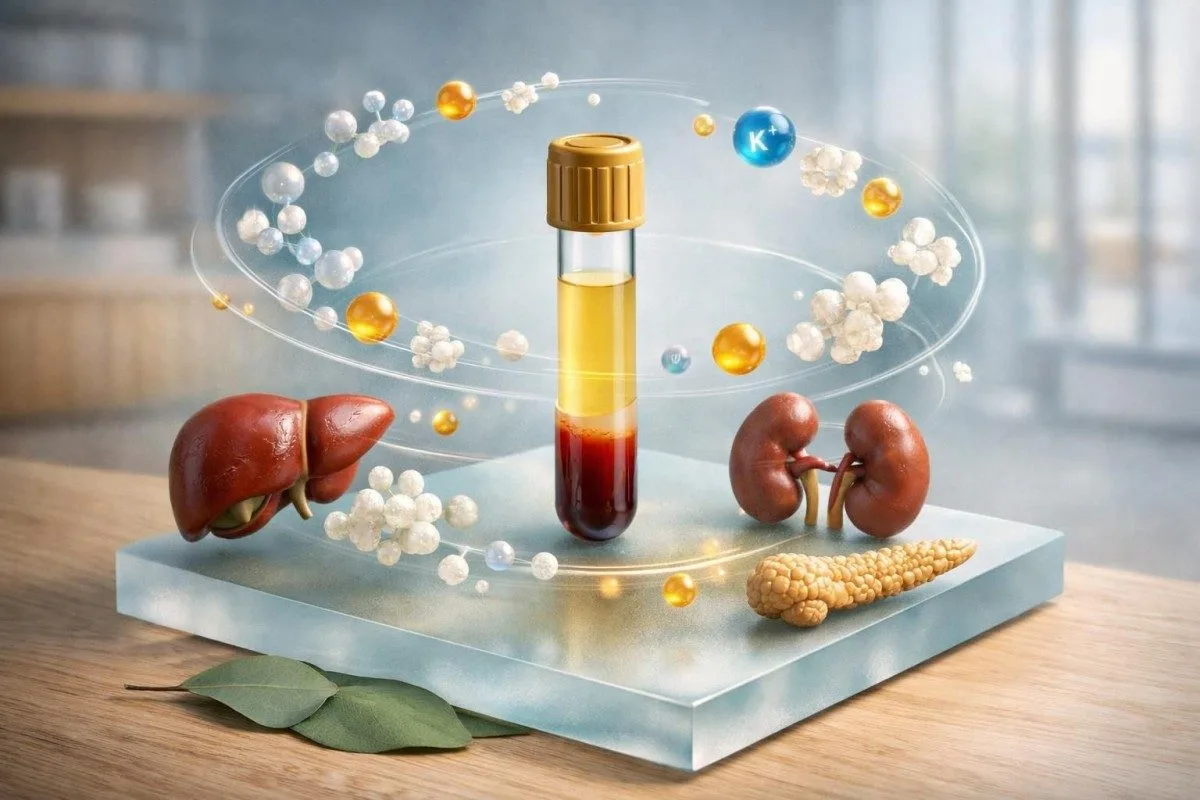
Հիվանդները հաճախ խնդրում են ամբողջական արյան վահանակ, երբ իրականում նկատի ունեն քիմիական հետազոտություն։ Ահա թե ինչ կարող է արագ պարզաբանել արյան քիմիական վահանակը, և այն շատ իրական բաները, որոնք այնուամենայնիվ կարող է բաց թողնել։.


- BMP սովորաբար պարունակում է 8 հիմնական քիմիական թեստ; CMP սովորաբար պարունակում է 14՝ ավելացնելով լյարդի և սպիտակուցային մարկերներ։.
- Նատրիում նորմալ միջակայքը սովորաբար 135-145 մմոլ/լ. ։ Մակարդակները՝ 125 mmol/L-ից ցածր հաճախ անհրաժեշտ է նույն օրվա կլինիկական վերանայում։.
- Կալիում նորմալ միջակայքը սովորաբար 3.5-5.0 մմոլ/լ. Վերոնշյալ մակարդակները 6.0 mmol/L-ից բարձր կարող են շտապ լինել, հատկապես թուլության կամ սրտխփոցի դեպքում։.
- Ծոմ պահած գլյուկոզա — 70-99 մգ/դլ ընդհանուր առմամբ նորմալ է, 100-125 մգ/դլ հուշում է նախաշաքարախտի մասին, իսկ 126 մգ/դԼ կամ ավելի կրկնակի հետազոտության ժամանակ հաստատում է շաքարախտը։.
- Կրեատինին կարող է նորմալ թվալ, մինչդեռ էլեկտրոնային գլյուտենային ֆիբրոմատոզ տարեց մարդկանց մոտ կամ ցածր մկանային զանգված ունեցող մարդկանց մոտ նվազած է։.
- ALT և AST փոխարինելի չեն. CK 780 U/L հետ ALT 31 U/L ուժեղ ֆիզիկական վարժությունից հետո հաճախ ցույց է տալիս մկանային սթրես, ոչ թե լյարդի անբավարարություն։.
- Արյան կենսաքիմիական վահանակ օգնում է ջրազրկման, էլեկտրոլիտային տեղաշարժերի, գլյուկոզայի խնդիրների, երիկամային սթրեսի և լյարդ-լեղու օրինաչափությունների դեպքում։.
- Ինչն է բաց թողնում ներառում է անեմիա, վարակների բջջային օրինաչափություններ, վահանագեղձի հիվանդություն, երկաթի անբավարարություն, B12-ի անբավարարություն, բազմաթիվ քաղցկեղներ և սրտային վնասվածքի մեծ մասը։.
- Քիմիական ցուցանիշների նորմալ արդյունքներ Չի բացառվում մակարդման խանգարումների, պանկրեատիտի, աուտոիմուն հիվանդության կամ վաղ ճարպային լյարդի առկայությունը։.
- Տրենդի վերլուծություն 8 շաբաթ 6-12 ամիս հաճախ ավելի կլինիկապես օգտակար է, քան մեկ նորմալ տեսք ունեցող վահանակը։.
Ինչ է սովորաբար ներառում արյան քիմիական վահանակը—and ինչ է իրականում նշանակում այդ անվանումը
A արյան կենսաքիմիայի վահանակ դա շիճուկի անալիզների մի խումբ է, որը սովորաբար ստուգում է գլյուկոզան, էլեկտրոլիտներ, երիկամների մարկերներն են ինչպիսիք են ԲՈՒՆ և կրեատինինը, և հաճախ լյարդի հետ կապված մարկերներ ինչպիսիք են ALT, AST, բիլիռուբինը, և ալբումին. ։ Այն չէ CBC, որը հաշվում է բջիջները. իսկ BMP ավելի փոքր 8-անալիզով կենսաքիմիայի տարբերակն է, մինչդեռ CMP սովորական 14-անալիզով ընդլայնումն է։ Վահանակը կարող է օգնել գնահատել ջրազրկումը, շաքարախտի նշանները, երիկամների սթրեսը, լյարդի վնասումը և էլեկտրոլիտային խնդիրները, և մենք ամեն օր մեկնաբանում ենք այս օրինաչափությունները Կանտեստի արհեստական բանականություն այն բանից հետո, երբ հիվանդները առաջին անգամ կարդում են մեր ստանդարտ արյան անալիզի ակնարկը.
Ահա այն մասը, որը բաց են թողնում կայքերի մեծ մասը. հենց արտահայտությունն ինքնին ստանդարտացված չէ։ Մի լաբորատորիայի կենսաքիմիայի վահանակը ըստ էության BMP կամ CMP պատվեր է, մինչդեռ մյուսը ավելացնում է մագնեզիում, ֆոսֆոր կամ միզաթթու. 2026 թվականի ապրիլի 19-ի դրությամբ ես դեռ տեսնում եմ, որ միջազգային պորտալները մի քանի տարբեր շիճուկային փաթեթներ թարգմանում են նույն անգլերեն արտահայտությամբ, և հենց դրա պատճառով հիվանդները կարծում են, թե ստացել են նույն անալիզը, մինչդեռ իրականում չեն ստացել։.
Կենսաքիմիայի վահանակը չափում է շիճուկում լուծված նյութերը. իսկ CBC-ի դիֆերենցիալը չափում է բջիջները։ Ես տեսել եմ բազմաթիվ մարդկանց, որոնք ունեն խիստ հոգնածություն և նորմալ կենսաքիմիայի վահանակ, մինչդեռ իրական խնդիրը եղել է երկաթի անբավարարություն, B12-ի անբավարարություն կամ ցածր հեմոգլոբինի այնպիսի օրինաչափություն, որը ընդհանրապես չի երևում կենսաքիմիայի վրա։.
«Ամբողջական արյան վահանակ» պիտակը հնչում է ամբողջական, բայց սովորաբար այդպես չէ։ Բժիշկ Թոմաս Քլայնի (MD) իմ պարզ կանոնն է՝ եթե հարցը վերաբերում է բջիջներին, հորմոններին, երկաթին, մակարդմանը կամ սրտի վնասմանը, ապա միայն կենսաքիմիայի վահանակը սխալ մեկնարկային կետ է։.
Ինչու լաբորատորիաները նույն անունն են օգտագործում տարբեր փաթեթների համար
Հիվանդանոցները հաճախ անվանում են վահանակների պատվերները՝ ելնելով սարքավորման աշխատանքային հոսքից, այլ ոչ թե հիվանդին ուղղված պարզությունից։ Դա նշանակում է, որ մի պորտալում համապարփակ արյան վահանակը կարող է համարժեք լինել միայն CMP-ին, մինչդեռ մեկ այլ պորտալում այն լուռ ներառում է լիպիդներ կամ HbA1c՝ այնպիսի համատեքստ, որը փոխում է մեկնաբանությունը նույնիսկ նախքան թվերին նայելը։.
Որ մարկերներն են սովորաբար լինում արյան քիմիական վահանակում
Կենսաքիմիայի վահանակների մեծ մասը ներառում է նատրիումը, կալիումը, քլորիդը, CO2/բիկարբոնատը։, գլյուկոզան, կալցիում, ԲՈՒՆ, և կրեատինինը; իսկ CMP-ն սովորաբար ավելացնում է ալբումին, ընդհանուր սպիտակուց, բիլիռուբինը, ALT, AST, և ալկալային ֆոսֆատազա. ։ Մեծահասակների հղման միջակայքերը տարբերվում են ըստ լաբորատորիայի, բայց սովորական «խարիսխները» այնքան հուսալի են, որ վտանգը ճանաչելի լինի։.
Նատրիումը սովորաբար 135-145 մմոլ/լ, կալիում 3.5-5.0 մմոլ/լ, քլորիդ 98-106 մմոլ/լ, և CO2 BMP-ում և CMP-ում համատեղ; ցածր արժեքները հուշում են մետաբոլիկ ացիդոզ կամ բիկարբոնատի կորուստ։. Կալիումի մակարդակը, որը բարձր է 5.5 մմոլ/լ-ից բարձր , ուշադրության կարիք ունի, իսկ եթե բարձր է 6.0 mmol/L-ից բարձր , կարող է շտապ լինել—մեր էլեկտրոլիտների վահանակը -ը խորանում է, թե ինչու է ԷՍԳ-ն ավելի կարևոր, քան մեկուսացված թիվը։.
BUN-ը սովորաբար 7-20 մգ/դլ, ալբումինով 3.5-5.0 գ/դլ, ընդհանուր բիլիռուբին 0.2-1.2 մգ/դլ, AST՝ մոտ 10-40 Մ/Լ, և ALP՝ մոտավորապես 44-147 ԱՄ/Լ է. է։ Որոշ եվրոպական լաբորատորիաներ օգտագործում են ավելի ցածր առողջ ALT-ի վերին սահմաններ, քան ԱՄՆ-ի շատ հաշվետվություններ, ուստի Kantesti AI-ն ստուգում է տպված միջակայքը մեր բժշկական վավերացման չափանիշները; -ի հետ. եթե վահանակի «ֆերմենտներով ծանր» կողմն է ձեր հիմնական մտահոգությունը, սկսեք մեր լյարդի ֆունկցիայի թեստի ուղեցույցը.
Սոված վիճակում գլյուկոզան՝ 70-99 մգ/դլ ընդհանուր առմամբ նորմալ է, 100-125 մգ/դլ , համապատասխանում է նախադիաբետին, և 126 մգ/դԼ կամ ավելի կրկնակի հետազոտության ժամանակ հաստատումը աջակցում է շաքարախտի ախտորոշմանը։ 200 մգ/դլ կամ ավելի , դասական ախտանիշների հետ միասին, նաև ախտորոշիչ է, բայց ես այնուամենայնիվ սիրում եմ զուգակցել A1c-ի համատեքստի հետ , քանի որ ստերոիդները, սուր հիվանդությունը և քնի պակասը կարող են խեղաթյուրել պատկերը։.
Լաբորատոր նրբություն, որը մարդկանց մեծ մասը բաց է թողնում
Հեմոլիզը կարող է կեղծ բարձրացնել կալիումը և AST-ն, քանի որ ներբջջային պարունակությունը հավաքումից հետո արտահոսում է նմուշի մեջ։ Լիպեմիան կարող է խեղաթյուրել որոշ ֆոտոմետրիկ անալիզներ, իսկ ջրազրկումը կարող է ալբումինը և ընդհանուր սպիտակուցը ցույց տալ ավելի լավ, քան իրականում են։.
Ախտանշաններ, որոնց գնահատմանը կարող է իրականում օգնել արյան քիմիական վահանակը
Արյան կենսաքիմիական վահանակն առավել օգտակար է, երբ ախտանշանները հուշում են հեղուկների, աղերի, շաքարի նյութափոխանակության, երիկամների կամ լեղու հոսքի խնդիր։ Այն կարող է պարզաբանել գլխապտույտը, փսխումը, չափազանց ծարավը, մկանային սպազմերը, շփոթվածությունը, այտուցը, քորը կամ մուգ մեզը, բայց սովորաբար նեղացնում է տարբերակների շրջանակը, այլ ոչ թե անվանում հիվանդությունը։.
Փսխումից կամ փորլուծությունից հետո 24 ժամվա ընթացքում ես գրեթե ամեն ինչից ավելի շատ ուշադրություն եմ դարձնում նատրիումին, կալիումին, քլորիդին և CO2-ին։ Երբ այդ թվերը շեղված են, կենսաքիմիական վահանակը կարող է արագ բացատրել գլխապտույտը, սպազմերը, թուլությունը կամ շփոթվածությունը, և բիկարբոնատի մակարդակը՝ ստորև 22 մմոլ/լ-ից ցածր հաճախ ինձ հուշում է, որ հեղուկի կորուստը դարձել է նյութափոխանակորեն կարևոր, այլ ոչ թե պարզապես անհարմար։.
Այտուցը ևս դասական օրինակ է։ Ցածր ալբումինը կարող է ուղեկցել լյարդի հիվանդությանը, երիկամների կողմից սպիտակուցի կորուստին, աղիքներում սպիտակուցի կորստին կամ ծանր բորբոքմանը—այդ պատճառով արդյունքը՝ 2.8 գ/դլ հուշում է, ոչ թե դատավճիռ, և հիվանդների մեծ մասը զարմանում է՝ իմանալով, որ ցածր ալբումինը ինքնաբերաբար չի նշանակում ցիռոզ։.
Ծարավի, հաճախակի միզարձակման, մշուշոտ տեսողության կամ չբացատրված քաշի կորստի դեպքում կենսաքիմիական վահանակի գլյուկոզան կարող է լինել առաջին շեղումը։ Մեր ավելի քան 2 միլիոն վերբեռնված հաշվետվությունների վերանայման ընթացքում Kantesti AI-ն կրկնվող կերպով տեսնում է, որ մեղմ բարձր գլյուկոզան մերժվում է որպես սթրես, մինչդեռ ավելի ճիշտ քայլը կլիներ շաքարախտի հետագա հետազոտությունը. լյարդային գերակշռող ախտանշաններ, ինչպիսիք են քորը, մուգ մեզը կամ գունատ կղանքը, հաճախ պահանջում են մեր բարձրացած լյարդի ֆերմենտները ուղղորդում են.
Ինչն է հաճախ բաց թողնում արյան քիմիական վահանակը—even երբ արդյունքները նորմալ են
Նորմալ արյան կենսաքիմիական վահանակը ոչ չի բացառում անեմիան, վարակների բջջային օրինաչափությունները, վահանագեղձի հիվանդությունը, երկաթի անբավարարությունը, B12-ի անբավարարությունը, մակարդման խնդիրները, քաղցկեղների մեծ մասը կամ բազմաթիվ աուտոիմուն խանգարումներ։ Սա այն «կույր կետն» է, որը հիասթափեցնում է հիվանդներին, որոնց ասել են, որ իրենց սովորական արյան անալիզը նորմալ է, թեև ճիշտ հետազոտությունները երբեք չեն նշանակվել։.
Կրծքավանդակի ցավը ամենամաքուր օրինակն է։ Հիվանդը կարող է ունենալ սովորական կենսաքիմիական վահանակ, և այնուամենայնիվ ունենալ տրոպոնինի թեստ կամ աննորմալ ECG, քանի որ սրտամկանի վնասվածքը չի չափվում նատրիումով կամ ալբումինով. նույն տրամաբանությունը կիրառվում է բազմաթիվ վարակների դեպքում, որտեղ բջիջների քանակներն ու կուլտուրաները պատմությունն ավելի վաղ են բացահայտում, քան կենսաքիմիան։.
Հոգնածությունը, մազաթափությունը, բերանի ցավոտությունը, թմրած ոտքերը և անհանգիստ ոտքերը հաճախ առաջանում են երկաթի կամ վիտամինների անբավարարությունից, մինչդեռ կենսաքիմիական ցուցանիշները դեռ գտնվում են սահմաններում։ Ես այս օրինաչափությունը տեսնում եմ շաբաթական, և սովորաբար ավելացնում եմ վիտամին B12-ի հետազոտություն նախքան ընդունեմ, որ նորմալ կենսաքիմիական վահանակը հանգստացնող է. ֆերիտինը և վահանագեղձի հետազոտությունը հաճախ հաջորդ քայլն են, եթե ախտանշանները շարունակվում են։.
Եվ որոշ ախտորոշումներ գրեթե ամբողջությամբ ապրում են կենսաքիմիայից դուրս։ Եթե պատմությունը հուշում է ցան, հոդերի այտուց, քրոնիկ փորլուծություն կամ կրկնվող ջերմություններ, ես անցնում եմ աուտոիմուն պանել։ քանի որ կենսաքիմիական վահանակը կարող է «մեղմ» լինել, մինչդեռ իրական հիվանդությունն ակտիվ է։.
Արյան քիմիական վահանակ՝ ընդդեմ CBC-ի, BMP-ի և CMP-ի. հստակ համեմատություն
Մաքուր համեմատությունը պարզ է. CBC հաշվում է բջիջները, BMP չափում է 8 հիմնական կենսաքիմիական ցուցանիշ, և CMP ավելացնում է ևս 6 լյարդ-սպիտակուցային մարկեր՝ ընդհանուր 14-ի համար։ «Արյան կենսաքիմիական վահանակ» արտահայտությունը հովանոցային տերմին է, ոչ թե խիստ կարգավորվող պատվերի անվանում, դրա համար էլ ամբողջական արյան վահանակը և համապարփակ արյան վահանակը հաճախ տարբեր բաներ են նշանակում տարբեր լաբորատորիաներում։.
BMP-ն սովորաբար ներառում է նատրիում, կալիում, քլորիդ, CO2, գլյուկոզա, կալցիում, BUN և կրեատինին։ CMP-ն սովորաբար նշանակում է BMP-ն գումարած ալբումին, ընդհանուր սպիտակուց, բիլիռուբին, ALP, ALT և AST, ինչը մեկ վերցման ընթացքում բավական է հեղուկների հավասարակշռությունը, երիկամային լարվածությունը և մի քանի լյարդ-լեղու օրինաչափություններ լայնորեն սկրինինգ անելու համար։.
Այն, ինչ հիվանդները հաճախ անվանում են «ամբողջական արյան պանել», սովորաբար ներառում է լրացուցիչ մոդուլներ, օրինակ՝ լիպիդներ, A1c, վահանագեղձի հետազոտություն կամ երկաթի հետազոտություններ, բայց չկա համընդհանուր սահմանում։ Դա կարևոր է, քանի որ խոլեստերինի ռիսկը առանձին հարց է. 2018 թվականի AHA/ACC ուղեցույցը դեռևս վերաբերվում է LDL-C և apoB-ին որպես նվիրված թիրախների, ոչ թե քիմիական ցուցանիշների փոխարինիչների (Grundy et al., 2019), ուստի նորմալ քիմիական պանելն քիչ բան է ասում թիթեղների (պլաք) ռիսկի մասին, և դուք դեռ պետք է լիպիդային պանելների մեկնաբանություն.
2026 թվականի ապրիլի 19-ի դրությամբ ես դեռ տեսնում եմ, որ լաբորատոր պորտալները CMP-ն անվանում են «քիմիա», և հիվանդները ենթադրում են, որ ամեն ինչ ստուգվել է։ Գործնականում ամենաանվտանգ սովորությունն է փնտրել իրական անալիտի (ցուցանիշի) անունները՝ այլ ոչ թե վստահել փաթեթի վերնագրին։.
Հիշողության հնարք
Մտածեք բջիջների, աղերի և հավելումների մասին։ CBC-ն հավասար է բջիջների. BMP-ն՝ աղերի, շաքարի և երիկամների հիմնական ցուցանիշների. CMP-ն՝ BMP-ին գումարած լյարդի և սպիտակուցային հավելումների։ Եթե խոլեստերինը, վահանագեղձը, երկաթը կամ բորբոքումը կարևոր են, ենթադրեք, որ դա ներառված չի եղել, եթե չեք տեսնում արդյունքի տողը։.
Սննդից հրաժարում (ծոմ), խոնավացում, ֆիզիկական վարժություններ և դեղամիջոցներ, որոնք կարող են աղավաղել քիմիական արդյունքները
Սննդից զերծ մնալը (ծոմը), ջրազրկումը, վերջին շրջանում ֆիզիկական վարժությունները և դեղերը կարող են այնքան փոխել արյան քիմիական պանելն, որ արդյունքը նորմալից դառնա աննորմալ։ Տարածված խեղաթյուրումներն են՝ ջրազրկումից BUN-ի բարձրացումը, նմուշի մշակման պատճառով կալիումի կեղծ բարձրացումը և ուժեղ մարզումից հետո AST-ի կամ կրեատինինի անցողիկ «ցատկերը»։.
Գլյուկոզայի համար՝ 8-12 ժամ ծոմը հաճախ նախընտրելի է, եթե ձեր բժիշկը չի ցանկանում պատահական (random) արժեք։ Սովորաբար ջուրը նորմալ է և հաճախ օգտակար, քանի որ ջրազրկումը կարող է խտացնել ալբումինը, կալցիումը և BUN-ը. եթե հրահանգների հարցում վստահ չեք, օգտագործեք մեր ծոմի կանոնների ուղեցույցը.
Ես այս օրինաչափությունը մարզիկների մոտ շատ հաճախ եմ տեսնում. 52-ամյա մարաթոն վազորդը ցույց է տալիս CK 780 U/L, ALT 31 U/L, և կրեատինինը 1.38 մգ/դլ մրցումից հետո առավոտյան։ Այս օրինաչափությունն ավելի շատ համատեղելի է մկանների քայքայման և հարաբերական ջրազրկման հետ, քան հեպատիտի, ինչի համար էլ մեր մարզիկի արյան անալիզի ուղեցույցը ասում է մարդկանց՝ չստուգել առավելագույն ջանքից հետո առավոտյան։.
Կարևոր են նաև դեղերը։. ACE ինհիբիտորներ, ARB-ներ, սպիրոնոլակտոն, և տրիամետոպրիմը կարող է բարձրացնել կալիումը.; թիազիդներ կարող է իջեցնել նատրիումը.; ստատիններ, հակաէպիլեպտիկները, և նույնիսկ պարացետամոլի (ացետամինոֆեն) ծանր օգտագործումը կարող են «շարժել» լյարդի ֆերմենտները, իսկ նմուշի հավաքման ժամանակ բռունցք սեղմելը կարող է կալիումը թվալ բարձր, երբ հիվանդն իրականում նորմալ է։.
Ինչու են բժիշկները կարդում քիմիական օրինաչափությունները, ոչ թե առանձին թվերը
Բժիշկները կարդում են քիմիական օրինաչափությունները, քանի որ համակցությունները գերազանցում են առանձին թվերը։. Բարձր BUN՝ կայուն կրեատինինով ենթադրում է այլ խնդիր, քան թե՛ միասին աճողը, և բարձր ALP՝ գումարած բիլիռուբին բարձրացնում է այլ մտահոգություն, քան միայնակ ALT-ի աննշան աճը։.
A BUN/կրեատինինի հարաբերակցություն մոտավորապես 20:1 հաճախ մատնանշում է ջրազրկում, երիկամների արյունամատակարարման նվազում, կորտիկոստերոիդների ազդեցություն կամ վերին ԳՄ արյունահոսություն, մինչդեռ ցածր հարաբերակցությունը կարող է ի հայտ գալ ցածր սպիտակուցային ընդունման կամ լյարդի առաջադեմ հիվանդության դեպքում։ Ես հազվադեպ եմ մեկնաբանում այդ զույգը առանց կոնտեքստի, և մեր BUN/կրեատինին հարաբերակցության ուղեցույցում բացատրում է, թե ինչու է հարաբերակցությունը օգտակար, բայց երբեք ինքնուրույն ախտորոշիչ չէ։.
Լյարդի «պատկերները» էլ ավելի կոնտեքստային են։. ALT և AST հեպատոցելյուլյար մարկերներ են, մինչդեռ ALP, GGT, և բիլիռուբինը ավելի շատ հակված են խոլեստատիկ ուղղության. Kwo et al.-ի ACG ուղեցույցը շեշտում է օրինաչափությամբ (pattern-based) գնահատումը՝ այլ ոչ թե ֆերմենտային «խուճապը» մեկ մեղմ բարձր թվի շուրջ (Kwo et al., 2017), և հենց այդպես էլ ես մոտենում եմ ALT 54 U/L, ALP 198 U/L, և բիլիռուբին 2.1 մգ/դլ.
Ցածր CO2 բարձր anion gap այնպիսի զույգ է, որը ստիպում է ինձ կանգ առնել ու մտածել կետոացիդոզի, լակտատային ացիդոզի, երիկամային անբավարարության կամ թունավոր ալկոհոլների մասին։ Թոմաս Քլայնի արագ կանոնն այսպիսին է. եթե քիմիայի վահանակը միաժամանակ «տարօրինակ» է երեք ուղղությամբ, վստահեք օրինաչափությանը, ոչ թե ամենագեղեցիկ մեկ արդյունքին, ապա օգտագործեք մեր անիոնային բացվածքի բացատրիչը նախքան որոշելը, որ դա բարորակ է։.
Ե՞րբ նորմալ քիմիական վահանակը չպետք է ձեզ հանգստացնի
Արյան նորմալ կենսաքիմիական վահանակը չի հանգստացնում, երբ ախտանշանները լուրջ են, զարգացող, կամ անատոմիկորեն կոնկրետ։ Կրծքավանդակի կայուն ցավը, տեղային թուլությունը, սև կղանքը, չպարզված քաշի կորուստը, ուժեղ հոգնածությունը կամ շաբաթներով տևող ջերմությունները արժանի են ավելին, քան միայն կենսաքիմիան։.
Քաղցկեղի մտահոգությունները շատ հաճախ են առաջ գալիս, և ես կտրուկ եմ այս հարցում. կենսաքիմիական վահանակը կարող է լիովին նորմալ լինել հաստ աղիքի, կրծքագեղձի, թոքի, վահանագեղձի կամ արյան քաղցկեղի վաղ փուլերում։ Նույնիսկ երբ քաղցկեղ կա, լաբորատոր փոփոխությունները հաճախ ուշ են կամ ոչ սպեցիֆիկ, ուստի նորմալ կենսաքիմիան երբեք չի փակվում այդ զրույցը, եթե պատմությունը մտահոգիչ է։.
Երիկամային հիվանդությունը ևս մեկ թակարդ է։ Կրեատինինը, որը նորմալ է թվում, կարող է դեռ թաքցնել տարեցների մոտ ֆիլտրացիայի նվազումը, ավելի փոքր մարմնաչափ ունեցող հիվանդների մոտ կամ ցանկացած մարդու մոտ, ում մկանային զանգվածը ցածր է. ժամանակակից մեկնաբանությունը ուժեղ հենվում է eGFR-ի վրա, և Inker et al.-ի կողմից նկարագրված ռասայից զերծ հավասարումները փոխեցին այդ զրույցը 2021-ին (Inker et al., 2021)։.
Մենք նաև տեսնում ենք նորմալ կամ գրեթե նորմալ ALT՝ ճարպային լյարդի, լեղաքարային խցանման ընդհատվող դրվագների և քրոնիկ լյարդի հիվանդության վաղ փուլերի ժամանակ։ Մեր վերլուծության մեջ Kantesti AI-ում մեկ հանգստացնող վահանակը շատ ավելի քիչ օգտակար է, քան երկու կամ երեք վահանակները՝ 6-12 ամիս, դրա համար էլ տրենդի (միտման) վերանայումը արյան անալիզի պատմություն հաճախ բացահայտում է շեղում, որը մեկանգամյա արդյունքը թաքցնում է։.
Որ արյան քիմիական վահանակի արդյունքներն են շտապ կամ նույն օրվա համար
Քիմիայի այն արդյունքները, որոնք ինձ ամենահրատապ կերպով անհանգստացնում են, հետևյալն են՝ կալիումով՝ 6.0 մմոլ/լ-ից բարձր, նատրիումը՝ 125 mmol/L-ից ցածր, գլյուկոզան՝ 300 mg/dL-ից բարձր, ախտանշաններով, բիկարբոնատը՝ 15 mmol/L-ից ցածր, և ցանկացած արագ կրեատինինի աճ՝ հիվանդի սովորական բազային ցուցանիշից։ Այդ թվերը միշտ չէ, որ նշանակում են շտապ օգնության բաժանմունք, բայց նշանակում են նույն օրվա կլինիկական վերանայում։.
Կալիումը լաբորատորիայից զանգի դասական արդյունքն է։. 5.1-5.5 մմոլ/լ սովորաբար մեղմ է, 5.6-6.0 մմոլ/լ պահանջում է արագ հաստատում և դեղորայքի վերանայում, և 6.0 մմոլ/լ-ից բարձր կարող է առաջացնել առիթմիաներ՝ հատկապես թուլության, սրտխփոցների, երիկամային հիվանդության կամ ԷՍԳ-ի փոփոխությունների դեպքում, ուստի մեր բարձր կալիումի արտակարգ իրավիճակների ուղեցույցը առաջին հղումներից մեկն է, որ ուղարկում եմ։.
Նատրիումի ծանր խնդիրները կարող են նույնքան վտանգավոր լինել։. Նատրիումը 125 մմոլ/լ-ից ցածր կարող է առաջացնել շփոթություն, ընկումներ կամ նոպաներ, նատրիումը 155 մմոլ/լ-ից բարձր հաճախ արտացոլում է ջրի զգալի պակաս, իսկ կալցիումը 12.0 մգ/դլ-ից բարձր կարող է բերել փորկապության, ջրազրկման և մտավոր «մառախուղի»; ամենագործնական շեմերը մեր մեջ են նատրիումի միջակայքի ուղեցույցի.
Բիլիռուբինի աճը՝ դեղնախտի, մուգ մեզի, գունատ կղանքի կամ ջերմության հետ միասին, ինձ ստիպում է մտածել լեղուղիների խցանման կամ հեպատիտի մասին՝ մինչև այլ բան ապացուցվի։ Եթե որովայնային ցավը հատկապես ընդգծված է, լիպազը կամ պատկերային հետազոտությունը կարող է ավելի կարևոր լինել, քան կենսաքիմիական վահանակը, և ես չեմ սիրում այդ պատմությունը թողնել մինչև հաջորդ գիշեր, եթե հիվանդը վատանում է։.
Ինչպես մեկնաբանել արյան քիմիական վահանակը՝ առանց ավելի լայն պատկերը բաց թողնելու
Արյան կենսաքիմիական վահանակն օգտագործելու ամենաանվտանգ ձևը այն համապատասխանեցնելն է այն հարցին, որը դուք իրականում տալիս եք։ Եթե մտահոգությունը անեմիան է, վահանագեղձի հիվանդությունը, բորբոքումը, երկաթի անբավարարությունը, պտղաբերությունը, մակարդումը կամ սրտային վնասվածքը, ավելացրեք այդ թեստերը՝ փոխարենը հույս դնելու, որ կենսաքիմիական վահանակը ինչ-որ կերպ կծածկի դրանք։.
Դա հենց այն տեղն է, որտեղ Kantesti-ն օգնում է. մեր համակարգը կարդում է լաբորատոր PDF-ները կամ լուսանկարները, յուրաքանչյուր մարկերը քարտեզագրում է ճիշտ՝ տվյալ լաբորատորիային հատուկ միջակայքին, և վերբեռնումից մոտ 60 վայրկյանում բացահայտում է օրինաչափությունների մակարդակի հուշումներ։ Եթե ցանկանում եք փորձել այն ձեր սեփական հաշվետվությամբ, սկսեք մեր արյան անալիզի PDF վերբեռնման ուղեցույցը. Այնուհետև օգտագործեք անվճար մեկնաբանման դեմոյում.
Kantesti-ն այժմ աջակցում է օգտատերերին 127+ երկրներ և 75+ լեզուներ, և մեր 2.78T-պարամետր առողջապահական AI-ն մեկնաբանության շերտի հետևում է, բայց մենք գործընթացում դեռևս պահում ենք բժիշկներին տեսանելի։ Եթե ցանկանում եք տեսնել, թե ով է վերանայում բժշկական տրամաբանությունը, մեր Բժշկական խորհրդատվական խորհուրդ հրապարակային է։ Եթե ցանկանում եք ընկերության համատեքստը, մեր About Us էջում Սա ճիշտ մեկնարկային կետն է։.
Իմ վերջնական խորհուրդը, որպես Թոմաս Քլայն, բ.գ.դ., գործնական է. համեմատեք վահանակը ձեր ախտանիշների, ձեր դեղերի, ձեր վերջին արդյունքի և այն հետազոտությունների հետ, որոնք երբևէ չեն նշանակվել։ Եթե ցանկանում եք երկրորդ դիտարկում, որն ավելի արագ է, քան սպասել հետադարձ զանգին, վերբեռնեք հաշվետվությունը մեր հարթակ և պահեք մեկնաբանության պատճենը ձեր հաջորդ այցելության համար. հիվանդների մեծ մասը գտնում է, որ օրինաչափությունների վրա հիմնված նշումների մեկ հստակ էջը փոխում է զրույցը։.
Հաճախակի տրվող հարցեր
Արդյո՞ք արյան կենսաքիմիական վահանակը նույնն է, ինչ CBC-ն (ընդհանուր արյան անալիզը)։
Թիվ. Արյան կենսաքիմիական վահանակը չափում է լուծված նյութեր, ինչպիսիք են գլյուկոզը, նատրիումը, կալիումը, կրեատինինը և հաճախ՝ լյարդի մարկերները, մինչդեռ CBC-ն չափում է բջիջներ, ինչպիսիք են կարմիր բջիջները, սպիտակ բջիջները և թրոմբոցիտները։ BMP-ն սովորաբար պարունակում է 8 կենսաքիմիական թեստ, իսկ CMP-ն՝ սովորաբար 14, սակայն դրանցից ոչ մեկը չի փոխարինում CBC-ին, երբ հարցը վերաբերում է անեմիային, վարակին կամ արյունահոսությանը։ Եթե հիմնական ախտանիշը հոգնածությունն է, գունատությունը, ջերմությունը կամ կապտուկները, շատ հիվանդների անհրաժեշտ են երկուսն էլ՝ մեկի փոխարեն։.
Արդյո՞ք արյան կենսաքիմիական վերլուծության պանելն նույնն է, ինչ BMP-ը, CMP-ը կամ ամբողջական արյան պանելն։
Ոչ այնքան։ BMP-ն սովորաբար ավելի փոքր 8-թեստանոց քիմիական վահանակն է, իսկ CMP-ն՝ տարածված 14-թեստանոց տարբերակը, որը ավելացնում է ալբումին, բիլիռուբին, ALT, AST, ALP և ընդհանուր սպիտակուց։ «full blood panel» և «comprehensive blood panel» արտահայտությունները ստանդարտացված չեն, ուստի մի կլինիկա կարող է նկատի ունենալ CBC + CMP, իսկ մյուսը կարող է ավելացնել լիպիդներ, HbA1c կամ վահանագեղձի հետազոտություններ։ Ամենաանվտանգ քայլը իրական անալիտների ցանկին նայելն է, այլ ոչ թե փաթեթի անվանը։.
Պե՞տք է արդյոք ծոմ պահել մինչև արյան կենսաքիմիական վահանակի հանձնումը։
Հաճախ՝ այո, բայց ոչ միշտ։ Եթե գլյուկոզան մեկնաբանվում է որպես ծոմ պահած արժեք, շատ կլինիկագետներ նախընտրում են 8–12 ժամ ծոմ, մինչդեռ ջուրը սովորաբար թույլատրվում է և կարող է նվազեցնել ջրազրկման հետ կապված կեղծ բարձր ցուցանիշները՝ BUN-ում, ալբումինում և կալցիումում։ Սուրճը, հյութը, ծամոնն ու առավոտյան ծանր մարզումը կարող են արդյունքներն այնքան փոխել, որ դա կարևոր լինի սահմանային դեպքերում։ Եթե ձեր լաբորատոր թերթիկը չի նշում, նմուշառումից առաջ հարցրեք՝ գուշակելու փոխարեն։.
Արդյո՞ք արյան կենսաքիմիական վերլուծությունների վահանակը կարող է ցույց տալ երիկամների կամ լյարդի խնդիրներ։
Այո, այն կարող է դրանք առաջարկել, բայց ինքնուրույն չի ախտորոշում։ Երիկամների նշանները ներառում են BUN, կրեատինին և հաճախ eGFR, իսկ լյարդ-լեղուղիների նշանները՝ ALT, AST, ALP, բիլիռուբին, ալբումին և ընդհանուր սպիտակուց։ Կրեատինինի բարձրացումը նույնիսկ 0.3 մգ/դլ կարող է կարևոր լինել, եթե այն նոր է, իսկ բիլիռուբինի 2.0 մգ/դլ-ից բարձր լինելը՝ դեղնախտի հետ միասին, պահանջում է անհապաղ ուշադրություն։ Նորմալ արժեքները լիովին չեն բացառում երիկամների վաղ հիվանդությունը, ճարպային լյարդը կամ լեղուղիների ընդհատվող խնդիրները։.
Կարո՞ղ է արյան կենսաքիմիական վերլուծությունների վահանակը հայտնաբերել քաղցկեղ։
Ոչ, ոչ հուսալի։ Արյան կենսաքիմիական վահանակը կարող է ցույց տալ անուղղակի հուշումներ, օրինակ՝ 12.0 մգ/դլ-ից բարձր բարձր կալցիում, ցածր ալբումին կամ լյարդի ֆունկցիայի թեստերի աննորմալ արդյունքներ, սակայն շատ վաղ փուլերի քաղցկեղներ ունեն լիովին նորմալ կենսաքիմիական արդյունքներ։ Դա նշանակում է, որ նորմալ վահանակը չի կարող բացառել հաստ աղիքի, թոքերի, կրծքագեղձի, վահանագեղձի կամ արյան քաղցկեղները, եթե ախտանշանները կամ պատկերային հետազոտությունները մտահոգիչ են։ Քաղցկեղի գնահատումը կախված է պատմությունից, այլ ոչ միայն կենսաքիմիայից։.
Ի՞նչ անել, եթե իմ արյան կենսաքիմիական վահանակը նորմալ է, բայց ես դեռ վատ եմ զգում։
Նորմալ կենսաքիմիական վահանակը նշանակում է, որ այդ պահին ձեր էլեկտրոլիտները, գլյուկոզան, երիկամների ցուցանիշները և լյարդի հիմնական ցուցանիշները ակնհայտորեն շեղված չեն եղել. Սակայն դա չի նշանակում, որ ամեն ինչ կարգին է։ Հաստատուն հոգնածությունը կարող է դեռ պահանջել CBC, ֆերիտին, B12, TSH կամ քնի գնահատում, իսկ կրծքավանդակի ցավը կարող է դեռ պահանջել ԷՍԳ և տրոպոնին։ Իմ փորձից՝ այն ախտանշանները, որոնք տևում են ավելի քան 2–6 շաբաթ, արժանի են ավելի նպատակային հետազոտության, այլ ոչ թե նույն կենսաքիմիական վահանակը կրկնել ու կրկնել։ Կարմիր դրոշի ախտանշանները, ինչպիսիք են սև կղանքը, մարմնի մի կողմի թուլությունը, շնչահեղձության վատթարացումը կամ դեղնությունը, չպետք է սպասեն սովորական հերթական վերահսկմանը։.
Որքա՞ն հաճախ պետք է մեծահասակները կրկնեն արյան կենսաքիմիական վահանակը։
Ընդհանուր առմամբ առողջ մեծահասակների համար քիմիական վահանակը (chemistry panel) կրկնելը յուրաքանչյուր 1-3 տարին մեկ սովորական է, թեև տարիքը, դեղերը և ռիսկի գործոնները կարող են փոխել այդ ժամանակացույցը։ Շաքարախտով, բարձր արյան ճնշմամբ, երիկամների հիվանդությամբ, լյարդի հիվանդությամբ կամ միզամուղների (diuretic) օգտագործմամբ մարդիկ հաճախ կարիք ունեն շատ ավելի հաճախակի հետազոտությունների՝ երբեմն յուրաքանչյուր 3-12 ամիսը մեկ։ ACE ինհիբիտորից, ARB-ից կամ սպիրոնոլակտոնից սկսելուց հետո կալիումը և կրեատինինը սովորաբար վերահսկվում են մոտավորապես 1-4 շաբաթվա ընթացքում։ Լավագույն ժամանակացույցը այն է, որը կապված է ձեր նախնական ցուցանիշների (baseline) և կայացվող բուժման որոշման հետ։.
Կարո՞ղ է ալկոհոլը փոխել իմ արյան քիմիական պանելի արդյունքները։
Ալկոհոլը, հատկապես չարաշահումը, կարող է ժամանակավորապես ազդել գլյուկոզայի, հիդրատացիայի և լյարդի հետ կապված արդյունքների վրա, ուստի տեղեկացրեք թեստավորող թիմին վերջին ընդունման մասին։ Խուսափեք չափից դուրս խմելուց 24-48 ժամ առաջ պլանավորված թեստի համար, եթե դա հնարավոր է, սակայն մի ուշացրեք հրատապ թեստավորումը և մի թաքցրեք ալկոհոլի օգտագործումը։.
Ի՞նչ է նշանակում անիոնային բացը իմ քիմիական վահանակում։
Անիոնային բացը հաշվարկված թիվ է՝ նատրիումից, քլորիդից և բիկարբոնատից, որը օգնում է կլինիկոսներին փնտրել որոշ թթու-բազային խանգարումներ։ Թեթև շեղումը սովորաբար մեկնաբանվում է՝ հաշվի առնելով ախտանիշները, դեղամիջոցները, երիկամների ֆունկցիան, գլյուկոզան և կրկնվող էլեկտրոլիտները։.
Արդյո՞ք արյան կենսաքիմիական վահանակը կարող է աննորմալ լինել՝ դժվար արյունահավաքի պատճառով։
Այո։ Եթե արյունահավաքի կամ փոխադրման ընթացքում կարմիր արյան բջիջները քայքայվում են, լաբորատորիան կարող է նշել հեմոլիզ, ինչը կարող է կեղծ բարձրացնել կալիումը և երբեմն AST-ը։ Ձեր բժիշկը կարող է կրկնել արյունահավաքը՝ հաճախ նույն օրը, եթե կալիումը բարձր է կամ առկա են ախտանիշներ։.
Ստացեք AI-ով աշխատող արյան անալիզի վերլուծություն այսօր
Միացեք ավելի քան 2 միլիոն օգտատերերի ամբողջ աշխարհում, ովքեր վստահում են Kantesti-ին՝ լաբորատոր թեստերի ակնթարթային, ճշգրիտ վերլուծության համար։ Վերբեռնեք ձեր արյան անալիզի արդյունքները և ստացեք 15,000+ բիոմարկերների համապարփակ մեկնաբանություն վայրկյանների ընթացքում։.
📚 Հղված հետազոտական հրապարակումներ
Klein, T., Mitchell, S., & Weber, H. (2026). BUN/կրեատինին հարաբերակցության բացատրությունը. Երիկամների ֆունկցիայի թեստի ուղեցույց.։ Kantesti AI Medical Research.
Klein, T., Mitchell, S., & Weber, H. (2026). Մեզի մեջ ուրոբիլինոգեն. Մեզի ընդհանուր հետազոտության ուղեցույց 2026.։ Kantesti AI Medical Research.
📖 Արտաքին բժշկական հղումներ
⚕️ Բժշկական հրաժարում
Այս հոդվածը միայն կրթական նպատակների համար է և չի հանդիսանում բժշկական խորհրդատվություն։ Ախտորոշման և բուժման որոշումների համար միշտ խորհրդակցեք որակավորված բուժաշխատողի հետ։.
E-E-A-T վստահության ազդանշաններ
Փորձառություն
Բժշկի կողմից ղեկավարվող կլինիկական վերանայում՝ լաբորատոր մեկնաբանության աշխատանքային հոսքերի համար։.
Մասնագիտություն
Լաբորատոր բժշկության կենտրոնացում՝ այն բանի վրա, թե ինչպես են բիոմարկերները դրսևորվում կլինիկական համատեքստում։.
Հեղինակություն
Գրված է դոկտոր Թոմաս Քլայնի կողմից՝ դոկտոր Սառա Միթչելի և պրոֆեսոր դոկտոր Հանս Վեբերի կողմից վերանայմամբ։.
Հուսալիություն
Ապացույցների վրա հիմնված մեկնաբանություն՝ հստակ հետագա քայլերի ուղիներով՝ ահազանգերը նվազեցնելու համար։.