
Some supplements change your body; others confuse the test used to measure it. Knowing which is happening can prevent a misleading result or an unsafe pause.

Főbb tanulságok
- A biotin can distort some immunoassays, including certain thyroid and cardiac tests; disclose the dose and last time taken.
- Vizsgálati zavar (assay interference) means a test method gives a misleading result, even when the underlying biomarker has not changed.
- C-vitamin may interfere with some urine dipsticks and glucose methods; effects depend on the assay and dose.
- A kreatin can raise blood creatinine without a matching fall in kidney filtration, especially after recent use or strenuous exercise.
- Iron, B12, and folate can change the actual measured nutrient levels, so results may reflect recent supplementation rather than untreated status.
- Do not stop prescribed supplements or treatment on your own. Ask the ordering clinician or laboratory whether a pause is needed for your specific test.
- Record the exact product, dose, frequency, and last dose. A photo of the label can help identify hidden ingredients and high-dose biotin.
- A repeat test using a different assay may be safer and more useful than stopping a supplement when testing is urgent.
Two ways supplements can change a test result
Supplement interactions affect lab results in two different ways: a supplement can change the biology being measured, or it can interfere with the laboratory method. Biotin is a well-known example of assay interference; iron or vitamin B12 can genuinely raise measured nutrient levels. Tell the clinician and laboratory what you take, including the dose and last dose, before deciding whether to pause anything.
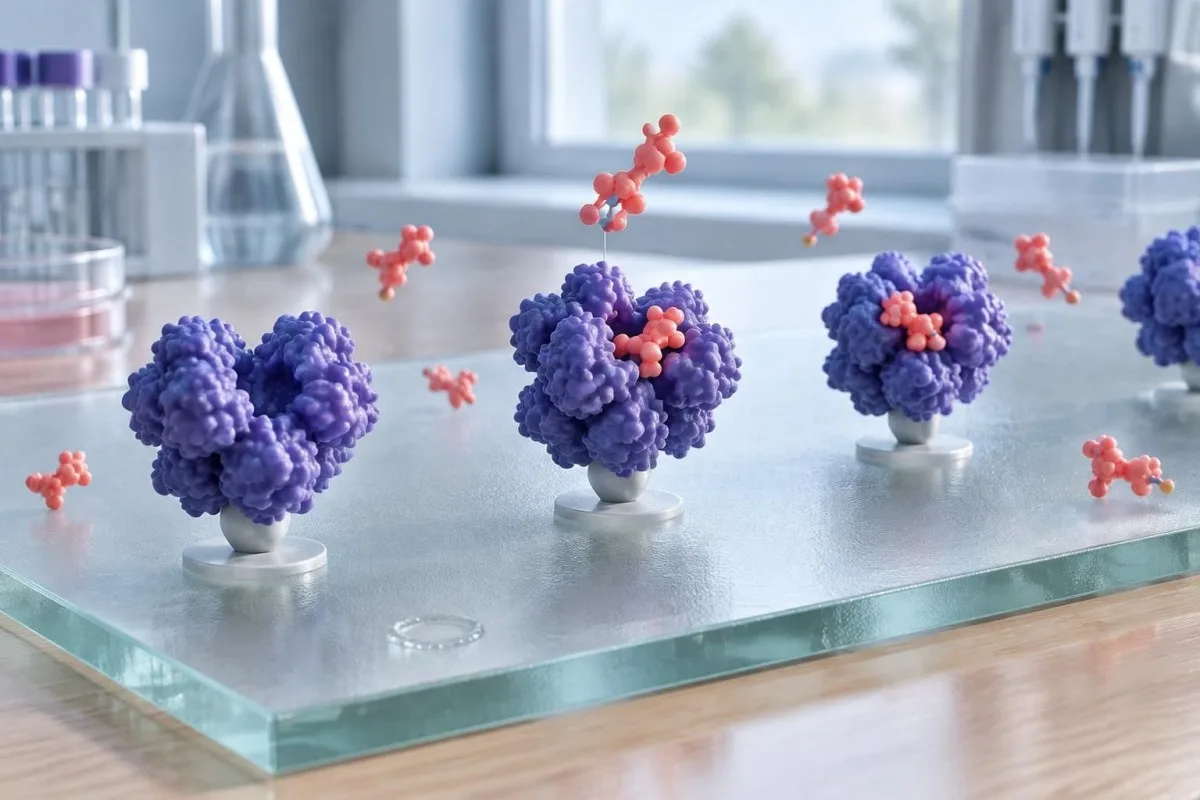
A biological change is real: the supplement alters a substance in your body, and the test detects that change. Taking iron can raise serum iron soon after a dose; taking vitamin B12 can raise serum B12, while longer-term use may improve a deficiency. These changes are not laboratory errors, but they can make a result less useful for understanding your baseline.
Egy a vizsgálati módszer zavarása happens when a substance disrupts the test method itself. Biotin is the clearest common example: some tests use a biotin–streptavidin binding system, and high circulating biotin can produce falsely high or falsely low results depending on the assay design. The same dose may affect one laboratory platform and not another.
A result that looks surprising does not prove that a supplement caused it. For example, a hypothetical person taking a hair-and-nail product with 10 mg biotin daily might have a thyroid result that conflicts with symptoms, but the clinician still needs to consider thyroid disease, medicines, timing, and the specific assay. Our biomarker-útmutatónkban can help identify which test names appear on a report; it cannot establish whether a particular result is affected by interference.
Biotin and immunoassays: the most important interaction to flag
Biotin can interfere with certain immunoassays and produce falsely high or falsely low results, especially when supplements contain milligram doses rather than the microgram amounts found in many standard multivitamins. The direction of error depends on the assay design, so a result cannot be corrected by guessing.

Many adults need about 30 micrograms (mcg) of biotin per day, while products marketed for hair or nails may contain 5,000–10,000 mcg (5–10 mg) per serving. That is roughly 170–330 times the adequate intake, although a large dose does not interfere with every test. The FDA has warned that biotin can cause clinically significant errors in some laboratory tests, including certain troponin assays.
In a common sandwich immunoassay, excess biotin can make a result appear falsely low; in some competitive assays, it can make a result appear falsely high. This pattern can mimic a hormone imbalance, but laboratories use different methods, so the direction and size of the effect are not universal. Li and colleagues’ AACC guidance document explains that the lab should consider dose, time since last use, kidney function, and the specific assay before advising a washout (Li et al., 2020).
A hypothetical patient taking 10 mg biotin who has a low TSH and high free T4 may have true hyperthyroidism, assay interference, or both. If the laboratory confirms a biotin-sensitive method, the clinician may arrange a repeat after a suitable interval or request a method not based on biotin; urgent symptoms should not wait for an unsupervised supplement pause. For related hormone-result context, see our guides to thyroid nodule testing és total T3 results.
Which results may be affected?
Depending on the platform, biotin-sensitive assays may include tests for TSH, free T4, free T3, PTH, 25-hydroxyvitamin D, some reproductive hormones, and cardiac troponin. This is not a universal list: laboratories may use different reagents for the same test name, and some methods are not susceptible.
The 2018 review by Favresse and colleagues describes immunoassay interference from several sources, including biotin, and stresses that discordant results need laboratory-aware investigation rather than automatic diagnosis (Favresse et al., 2018). Tell the care team if a result seems inconsistent with symptoms or with earlier results, especially when a high-dose supplement is involved.
Thyroid, hormone, and cardiac tests that deserve a biotin check
High-dose biotin is especially worth mentioning before thyroid or cardiac testing because some susceptible assays can create results that point in the opposite direction from the true physiology. A falsely low troponin could be dangerous if it delays urgent assessment, so suspected heart symptoms require immediate clinical care, not a wait-and-see supplement washout.

Biotin-related error can make some thyroid profiles look like low TSH with high thyroid hormones, a pattern that may resemble hyperthyroidism. It can also alter other hormone results on susceptible platforms. The numerical pattern alone does not identify interference; clinicians compare symptoms, medication history, prior results, and the laboratory method.
For troponin, the concern is not that biotin causes a heart attack; it is that certain assays may report a misleading concentration. A person with chest pressure, shortness of breath, fainting, or sudden weakness should seek emergency assessment and disclose biotin use immediately. Clinicians can consult the laboratory about an alternative assay while the urgent evaluation proceeds.
For example, if a hypothetical patient has a new abnormal TSH after starting a 5 mg biotin product, but no compatible symptoms and previously stable results, the ordering clinician can ask the lab whether its analyzer is susceptible. A repeat after a lab-directed pause or use of a different method may resolve the mismatch. Read more about subclinical hyperthyroidism patterns és when thyroid testing is repeated.
Vitamin C can affect some glucose and urine tests
Vitamin C can interfere with some laboratory chemistry methods and urine dipsticks, but the effect varies by test technology and dose. A negative urine dipstick finding does not always rule out a condition when ascorbic acid is present, so report high-dose vitamin C before urine or glucose testing.
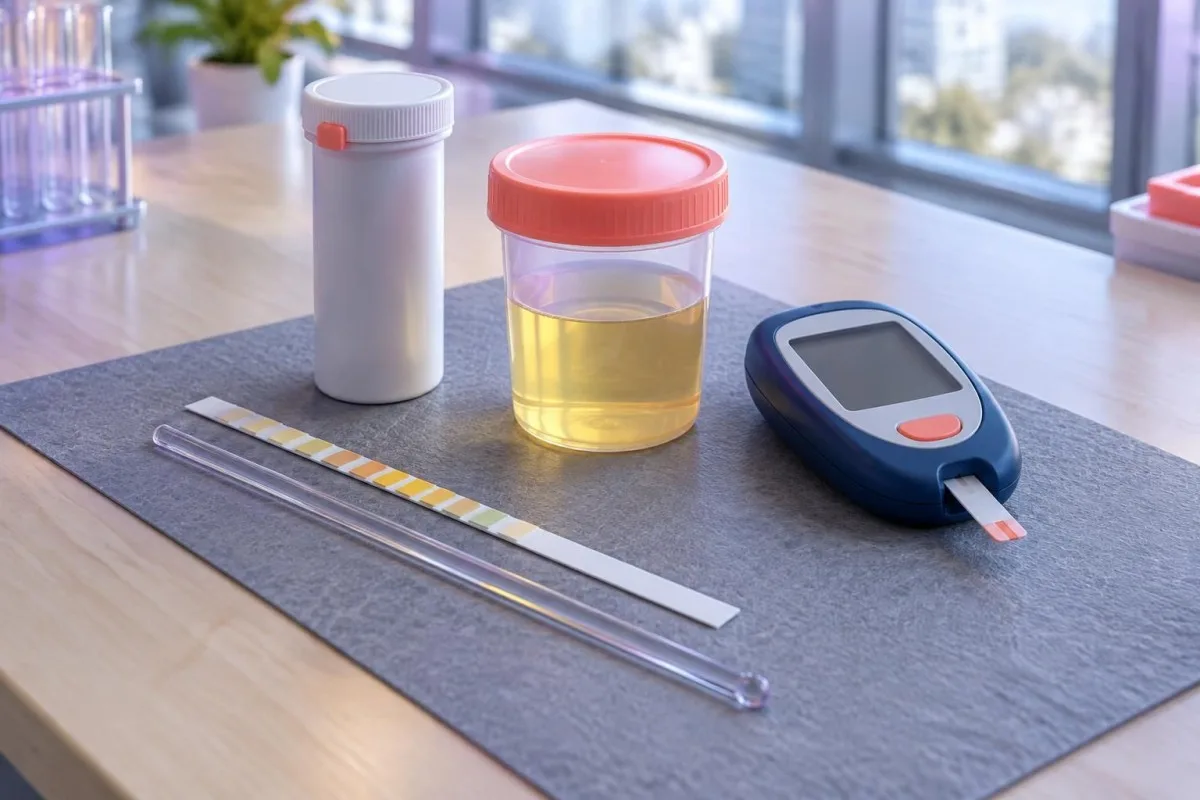
Ascorbic acid is a reducing agent, which means it can alter color reactions used by some test strips. Depending on the strip, concentration, and analyte, vitamin C may cause a false-negative result for glucose, blood, nitrite, or bilirubin in urine; it does not reliably affect every brand or every sample. The lab method and package insert matter more than a general rule.
High-dose vitamin C can also affect some glucose measurement technologies, including certain point-of-care systems. Do not use a home meter result that conflicts with symptoms as proof that blood glucose is normal, and do not delay care for confusion, vomiting, severe thirst, or other concerning symptoms. Ask the clinic which device or assay is being used if you take gram-level doses.
A hypothetical person taking 1,000 mg vitamin C twice daily might have a urine dipstick that appears negative for glucose despite a separate elevated blood glucose result. That mismatch could reflect interference, sample timing, or a genuine difference between urine and blood measurements; it needs interpretation rather than a simple repeat of the same strip. See our guides to a vizelet tesztcsík eredményei és éhgyomri utasításaink.
Creatine may raise creatinine without proving kidney damage
Creatine supplements can raise blood creatinine in some people because creatine is converted to creatinine, the substance commonly used to estimate kidney filtration. That can lower a creatinine-based eGFR estimate even when filtration has not changed, so dose, exercise, hydration, and other kidney markers help interpret the result.
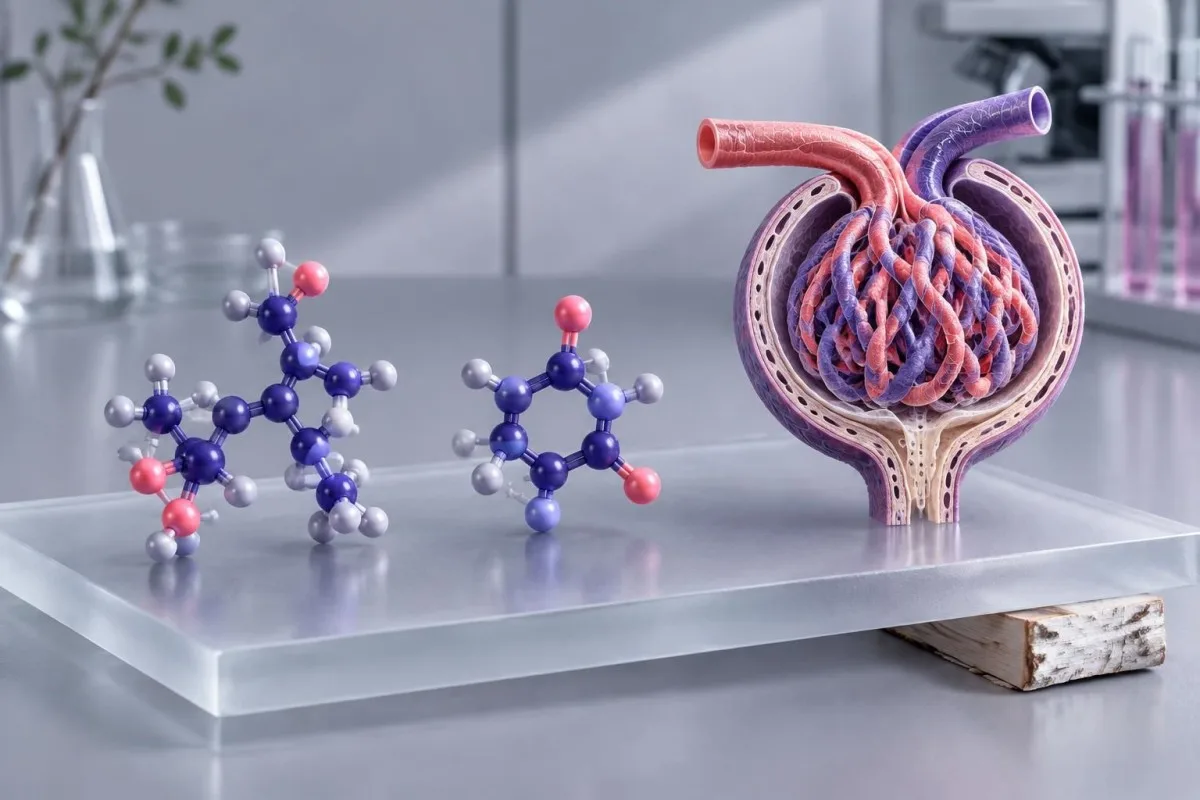
Creatinine is produced partly from creatine in muscle, and creatine monohydrate can increase the amount available for conversion. A rise in serum creatinine is not automatically a false result: it is a real measured value, but it may not represent a matching loss of filtration. The size of change varies with muscle mass, dose, recent exercise, diet, and kidney function.
Creatinine-based eGFR can therefore be harder to interpret in a person using creatine, especially if the result is a small isolated shift. A clinician may compare the trend, urine albumin, urinalysis, blood pressure, and—when appropriate—cystatin C or another assessment. A single eGFR estimate is not a diagnosis of chronic kidney disease; persistence for at least 3 months or other evidence of kidney damage generally matters.
For example, a hypothetical strength athlete taking 5 g creatine daily has creatinine rise from 0.9 to 1.2 mg/dL after a demanding training block. That does not prove kidney injury, but it should not be dismissed either, particularly if urine albumin is present or values keep rising. Review creatinine and eGFR in muscular adults és urine albumin-to-creatinine ratios alongside the result.
Iron, B12, folate, and vitamin D change the biology being measured
Iron, vitamin B12, folate, and vitamin D supplements can change the actual concentrations measured in blood; these are usually biological effects, not assay errors. A recent dose or ongoing treatment may make a result reflect supplementation rather than the untreated level that prompted testing.

A recent oral iron dose can temporarily increase serum iron and transferrin saturation, while ferritin changes more slowly as iron stores are replenished. When a clinician is evaluating iron status, a full panel—often ferritin, serum iron, transferrin or TIBC, and a blood count—is more informative than serum iron alone. The lab or clinician may give timing instructions; do not stop prescribed iron without checking.
Vitamin B12 and folate concentrations can rise after supplementation, even when the original cause of symptoms has not been resolved. A normal or high serum B12 after tablets does not always establish that tissue status was adequate before treatment; methylmalonic acid can help in selected cases, although kidney impairment can also raise it. For related interpretation, see high MMA with normal B12 és határértékű B12 eredmények.
Vitamin D supplements can raise serum 25-hidroxi-D-vitamin, the usual status marker, and the result should be interpreted with dose, duration, calcium, and clinical context. Assays can also differ in how well they measure vitamin D2 and D3. For example, after 8 weeks of a prescribed regimen, a level may show treatment response rather than the starting deficiency; note the product and start date. Our D-vitamin-újratesztelési útmutatónk elmagyarázza, miért számít az időzítés.
Herbal products can alter clotting, liver enzymes, and medication levels
Herbal supplements may change real physiology, interact with medicines, or occasionally affect an assay; their ingredients and potency can vary between products. Products containing vitamin K, concentrated green tea extract, or other botanicals deserve particular attention when clotting tests or liver enzymes are being monitored.
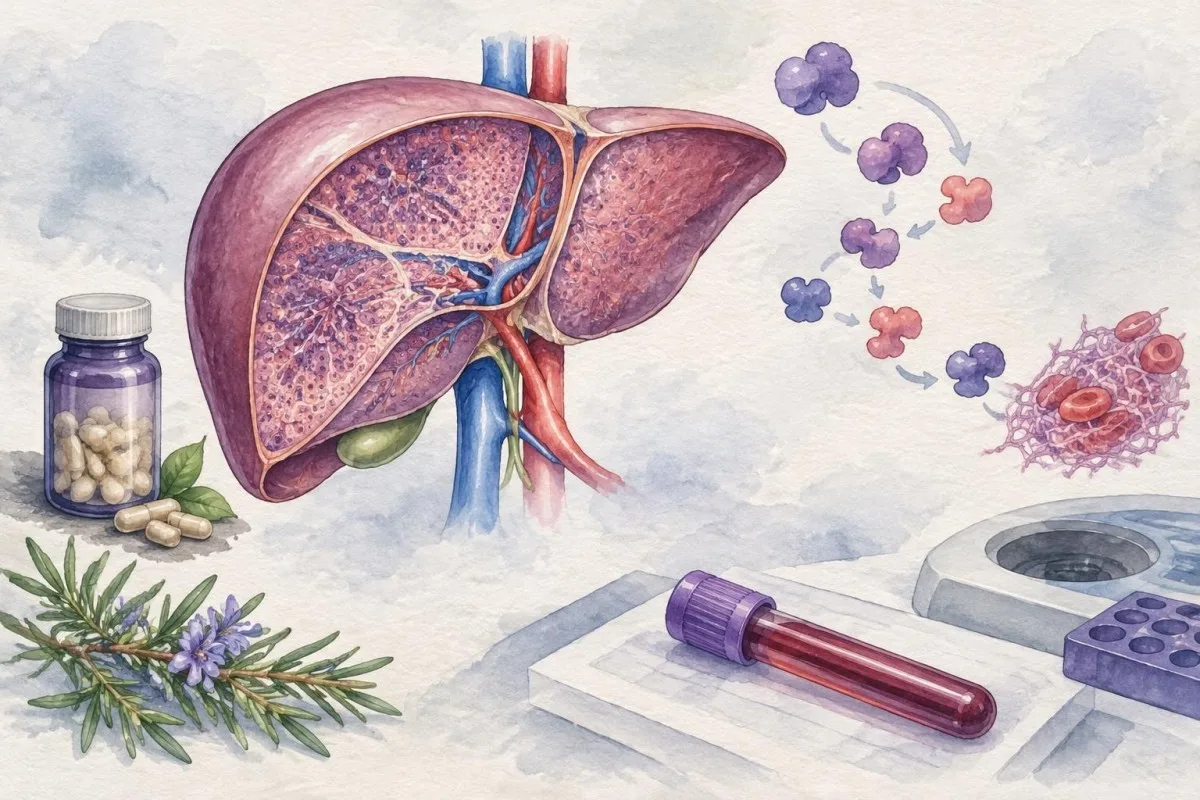
Vitamin K in supplements can alter the response to a warfarin and may change the INR; sudden changes in intake are more relevant than a single standardized amount. People taking warfarin should contact their anticoagulation team before starting, stopping, or changing a vitamin K product. The INR is interpreted against the person's treatment target, not a universal normal range.
Concentrated green tea extract has been associated with liver injury in some reports, while ordinary brewed tea is not equivalent to high-dose extract. Other multi-ingredient products can contain undeclared or inconsistently measured ingredients, making a precise interaction difficult to predict. New jaundice, dark urine, persistent nausea, or severe abdominal symptoms after starting a product require prompt medical advice.
If a hypothetical patient taking warfarin begins a new supplement and their INR changes, the clinician should review the product label, dose, adherence, diet, illness, and medicines rather than attributing the change to one ingredient by default. A koagulációs vizsgálati útmutatónk can explain what PT and INR measure, while the care team decides what the result means for treatment.
Should you pause supplements before a blood test?
There is no universal supplement washout period: whether to pause depends on the ingredient, dose, test method, kidney function, and urgency of testing. Ask the ordering clinician or laboratory what to do for that specific test, and never stop prescribed treatment or a medically necessary supplement without their advice.

Before testing, write down each product's full name, ingredients, dose, frequency, start date, and last dose. Include multivitamins, powders, gummies, energy products, injections, and supplements taken only occasionally; biotin may be hidden in hair-and-nail formulas or B-complex products. A photo of the front and ingredient panel is often more useful than a brand name alone.
Ask: “Could any of these affect this exact test or assay, and should I change the timing, pause it, or use a different method?” If biotin is relevant, the needed interval varies with dose, kidney clearance, and assay sensitivity; published guidance does not support one blanket number of hours for every person and every test. The lab can often identify susceptible methods or advise on a biotin-independent assay.
Do not delay urgent testing to complete a supplement washout. For scheduled testing, follow the lab's fasting instructions separately from supplement instructions: fasting does not automatically mean stopping all supplements, and taking a supplement with water can still matter for some measurements. Keep previous results and dates together when comparing trends; our kiindulási vizsgálatra való felkészülést ismertető útmutatónk covers other factors that can shift a result.
A practical note to send the clinic
A useful message includes the test date, product label, dose, and last dose—for example: “I take biotin 10 mg each morning; my last dose was Tuesday at 8 a.m. Does your thyroid assay require a pause or an alternative method?” That gives the laboratory actionable information without asking you to diagnose the result yourself.
If the report conflicts with symptoms or an earlier result, ask whether the method changed and whether a repeat sample or alternate assay is appropriate. For information on review standards and clinical oversight, see the orvosi tartalmi szabványok.
Gyakran feltett kérdések
Megváltoztathatják a kiegészítők a vérvizsgálati eredményeket?
Igen. A táplálékkiegészítők megváltoztathatják egy anyag mennyiségét a szervezetében, vagy zavarhatják az azt mérő vizsgálati módszert. A milligrammos dózisban alkalmazott biotin befolyásolhat bizonyos immunoassay-ket, míg a vas vagy a B12-vitamin valódi biológiai hatás révén emelheti a mért tápanyagszinteket. Mielőtt bármin változtatna, mondja el a klinikusnak és a laboratóriumnak a termék nevét, az adagot és az utolsó adag bevételének időpontját.
Mennyi ideig kell abbahagynom a biotint egy vérvizsgálat előtt?
Nincs egyetlen, minden dózisra, vizsgálatra és betegre érvényes biotinmentes időszak. Egy napi 5–10 mg-os készítmény nagyobb jelentőségű lehet, mint egy több tíz mikrogramm biotint tartalmazó multivitamin, de a vesefunkció és a laboratóriumi módszer is befolyásolja a kockázatot. Kérdezze meg a laboratóriumot vagy a vizsgálatot elrendelő klinikust, hogy az adott vizsgálat biotinérzékeny-e, illetve előnyösebb-e a szüneteltetés vagy egy alternatív vizsgálati módszer.
A biotin okozhatja, hogy a pajzsmirigy vizsgálat eredményei kórosnak tűnjenek?
Igen, a biotin egyes arra érzékeny pajzsmirigy-immunoassay-k eredményeit kórosnak tüntetheti fel, esetenként alacsony TSH- és magas pajzsmirigyhormon-szintek mintázatát eredményezve. A hiba iránya és mértéke a vizsgálattól függ, és nem minden laboratórium alkalmaz biotin alapú módszereket. Tájékoztassa kezelőorvosát az adagjáról és az utolsó alkalmazás időpontjáról; a klinikusok laboratórium által meghatározott idő elteltével megismételhetik a vizsgálatot, vagy más módszert alkalmazhatnak.
A kreatin befolyásolja a kreatinin- vagy eGFR-vérvizsgálatok eredményét?
A kreatin megemelheti a szérum kreatininszintet, mivel a kreatin egy része kreatininné alakul, ami csökkentheti a kreatininalapú eGFR-becslést anélkül, hogy bizonyítaná a veseszűrés romlását. A hatás az adagtól, az izomtömegtől, a testmozgástól és a vesefunkciótól függően változik. A klinikus összevetheti a korábbi eredményeket, a vizelet albuminszintjét és esetenként a cisztatin C-t, ahelyett hogy önmagában értelmezne egyetlen kreatinineredményt.
Abba kell hagynom minden étrend-kiegészítő szedését a laborvizsgálat előtt?
Nem, ne hagyja abba automatikusan az összes étrend-kiegészítő szedését. Néhányat felírnak, vagy orvosilag szükségesek lehetnek, és ezek elhagyása káros lehet; mások csak bizonyos vizsgálatokat vagy vizsgálati módszereket befolyásolhatnak. Adja meg a klinikusnak a teljes listát az adagokkal együtt, és kérdezze meg, hogy a vizsgálathoz szükség van-e az időzítés módosítására, átmeneti szüneteltetésre vagy más vizsgálati módszerre.
Befolyásolhatja-e a C-vitamin a vizeletvizsgálat eredményét?
Vitamin C can interfere with some urine dipstick reactions, potentially causing false-negative findings for glucose, blood, nitrite, or bilirubin, depending on the strip and concentration. This does not happen with every method, and a dipstick result should be interpreted with symptoms and other tests. Report high-dose vitamin C use, especially if a urine result conflicts with other findings.
Érthető magyarázatot kaphat a vérvizsgálat eredményekről
Töltse fel laborleletét, és az Kantesti AI másodpercek alatt közérthetően elmagyarázza az egyes biomarkereket. Világszerte több mint 2 millió ember használja.
Referenciák
- Klein, T., Mitchell, S., & Weber, H. (2026). Egy előzetesen regisztrált, rubrika-alapú automatizált technikai benchmark az Kantesti vérvizsgálat-értelmező motorra 100 000 szintetikus tesztesetben. Kantesti AI orvosi kutatás. DOI
- Klein, T., Mitchell, S., & Weber, H. (2026). Klinikai validálási keretrendszer v2.0 (Orvosi validálási oldal). Kantesti AI orvosi kutatás. DOI
- Li D és mtsai. (2020). Az AACC iránymutató dokumentuma a biotin laboratóriumi vizsgálatokra gyakorolt interferenciájáról. The Journal of Applied Laboratory Medicine. DOI PubMed
- Favresse J et al. (2018). Interferences With Thyroid Function Immunoassays: Clinical Implications and Detection Algorithm. Endocrine Reviews. DOI PubMed
- 2 hónapos kortólElemzett vizsgálatok
- 127+Országok
- 100+Nyelvek
Az orvosi csapatról


E-E-A-T bizalmi jelzések
Tapasztalat
Orvosok által vezetett klinikai áttekintés a laboratóriumi értelmezési munkafolyamatokról.
Szakértelem
Laboratóriumi medicina fókusz: hogyan viselkednek a biomarkerek klinikai környezetben.
Tekintélyesség
Orvosi lektor: Dr. Thomas Klein, közreműködött Dr. Sarah Mitchell és Prof. Dr. Hans Weber.
Megbízhatóság
Bizonyítékokon alapuló értelmezés, világos követési útvonalakkal a riadalom csökkentésére.




Orvosi nyilatkozat
A cikk kizárólag oktatási célokat szolgál, és nem minősül orvosi tanácsadásnak. A diagnózisra és a kezelési döntésekre vonatkozóan mindig konzultáljon szakképzett egészségügyi szolgáltatóval.
Közzétéve · Kapcsolat a szerkesztőséggel
Kiadó: Kantesti Ltd, bejegyezve Angliában és Walesben, cégjegyzékszám:. 17090423, London, Egyesült Királyság.
