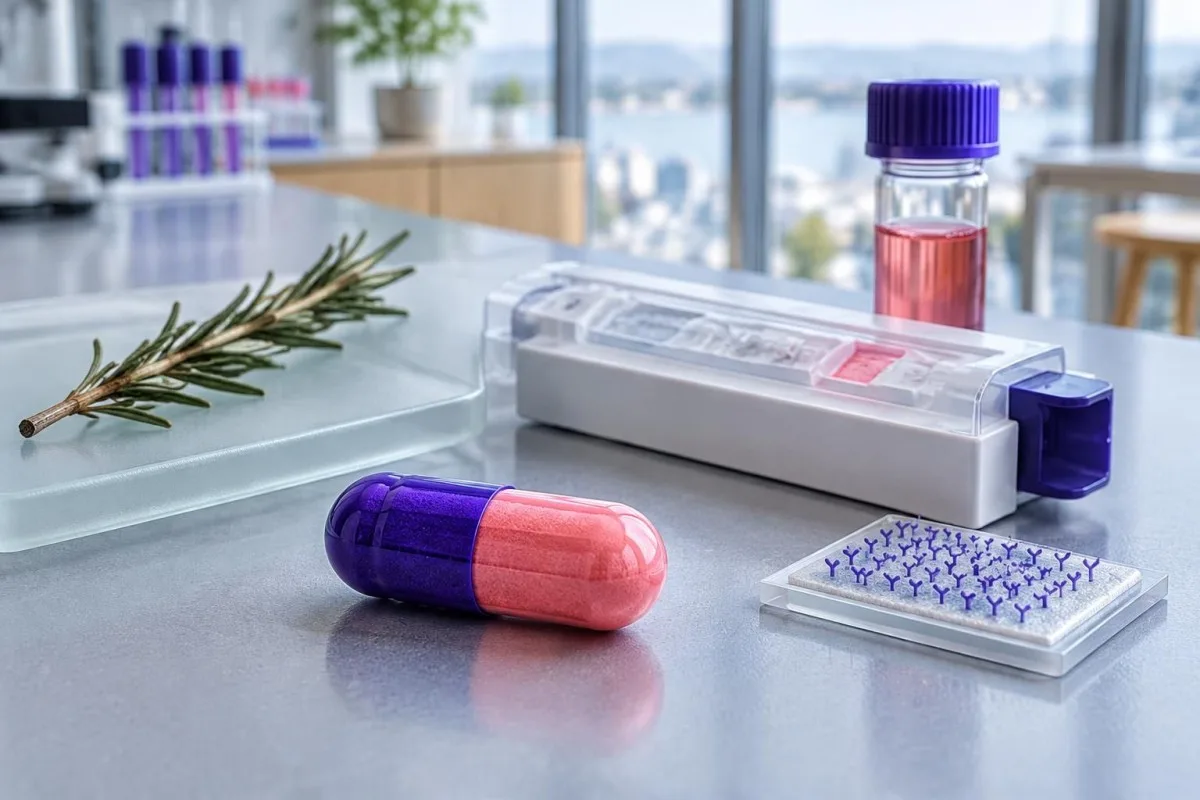
Some supplements change your body; others confuse the test used to measure it. Knowing which is happening can prevent a misleading result or an unsafe pause.

Ĉefaj konkludoj
- Biotino can distort some immunoassays, including certain thyroid and cardiac tests; disclose the dose and last time taken.
- Analiza interfero means a test method gives a misleading result, even when the underlying biomarker has not changed.
- Vitamino C may interfere with some urine dipsticks and glucose methods; effects depend on the assay and dose.
- Kreatino can raise blood creatinine without a matching fall in kidney filtration, especially after recent use or strenuous exercise.
- Iron, B12, and folate can change the actual measured nutrient levels, so results may reflect recent supplementation rather than untreated status.
- Do not stop prescribed supplements or treatment on your own. Ask the ordering clinician or laboratory whether a pause is needed for your specific test.
- Record the exact product, dose, frequency, and last dose. A photo of the label can help identify hidden ingredients and high-dose biotin.
- A repeat test using a different assay may be safer and more useful than stopping a supplement when testing is urgent.
Two ways supplements can change a test result
Supplement interactions affect lab results in two different ways: a supplement can change the biology being measured, or it can interfere with the laboratory method. Biotin is a well-known example of assay interference; iron or vitamin B12 can genuinely raise measured nutrient levels. Tell the clinician and laboratory what you take, including the dose and last dose, before deciding whether to pause anything.
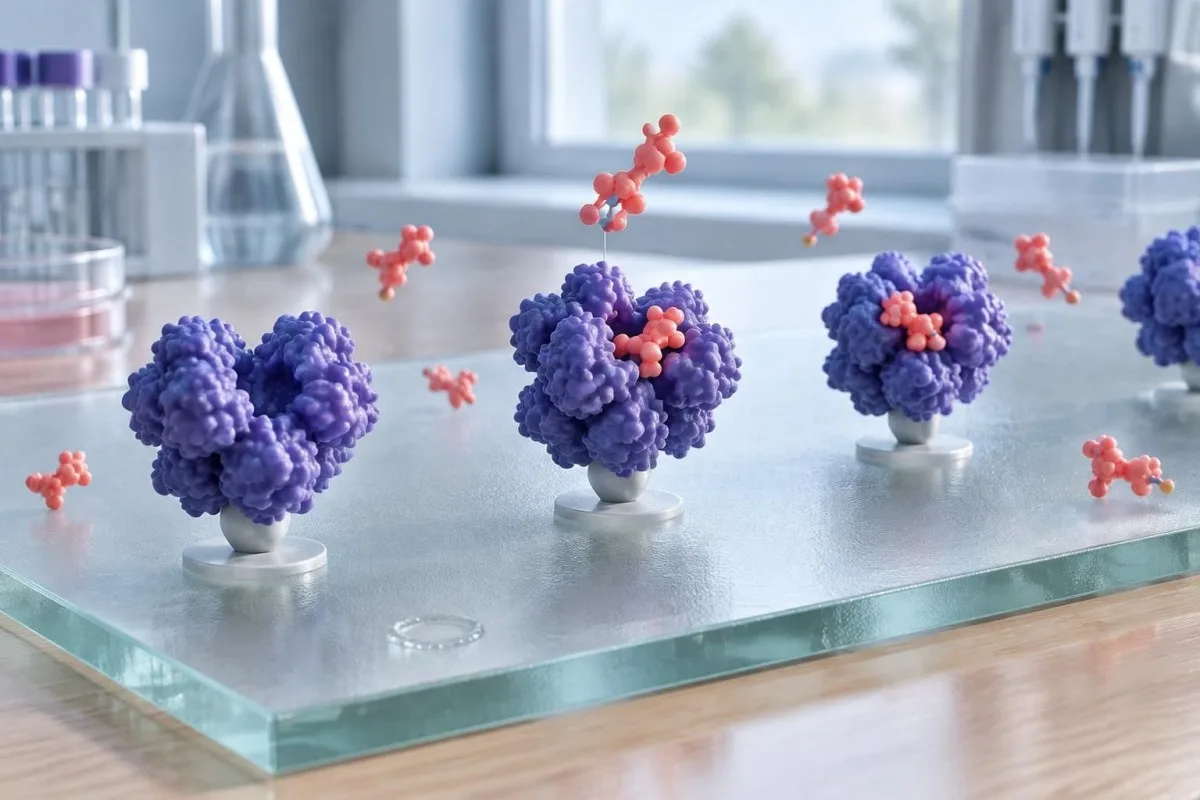
A biological change is real: the supplement alters a substance in your body, and the test detects that change. Taking iron can raise serum iron soon after a dose; taking vitamin B12 can raise serum B12, while longer-term use may improve a deficiency. These changes are not laboratory errors, but they can make a result less useful for understanding your baseline.
Unu interfero de analizo happens when a substance disrupts the test method itself. Biotin is the clearest common example: some tests use a biotin–streptavidin binding system, and high circulating biotin can produce falsely high or falsely low results depending on the assay design. The same dose may affect one laboratory platform and not another.
A result that looks surprising does not prove that a supplement caused it. For example, a hypothetical person taking a hair-and-nail product with 10 mg biotin daily might have a thyroid result that conflicts with symptoms, but the clinician still needs to consider thyroid disease, medicines, timing, and the specific assay. Our biomarkila gvidilo can help identify which test names appear on a report; it cannot establish whether a particular result is affected by interference.
Biotin and immunoassays: the most important interaction to flag
Biotin can interfere with certain immunoassays and produce falsely high or falsely low results, especially when supplements contain milligram doses rather than the microgram amounts found in many standard multivitamins. The direction of error depends on the assay design, so a result cannot be corrected by guessing.
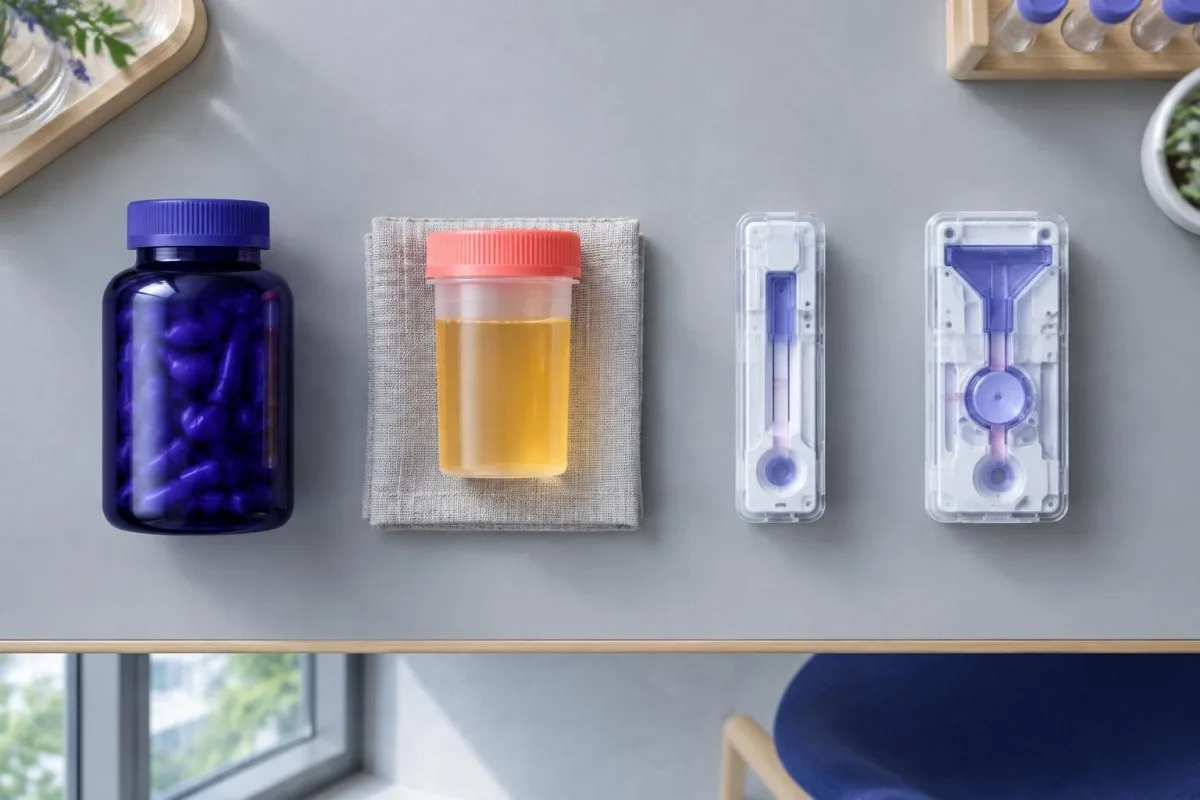
Many adults need about 30 micrograms (mcg) of biotin per day, while products marketed for hair or nails may contain 5,000–10,000 mcg (5–10 mg) per serving. That is roughly 170–330 times the adequate intake, although a large dose does not interfere with every test. The FDA has warned that biotin can cause clinically significant errors in some laboratory tests, including certain troponin assays.
In a common sandwich immunoassay, excess biotin can make a result appear falsely low; in some competitive assays, it can make a result appear falsely high. This pattern can mimic a hormone imbalance, but laboratories use different methods, so the direction and size of the effect are not universal. Li and colleagues’ AACC guidance document explains that the lab should consider dose, time since last use, kidney function, and the specific assay before advising a washout (Li et al., 2020).
A hypothetical patient taking 10 mg biotin who has a low TSH and high free T4 may have true hyperthyroidism, assay interference, or both. If the laboratory confirms a biotin-sensitive method, the clinician may arrange a repeat after a suitable interval or request a method not based on biotin; urgent symptoms should not wait for an unsupervised supplement pause. For related hormone-result context, see our guides to thyroid nodule testing kaj total T3 results.
Which results may be affected?
Depending on the platform, biotin-sensitive assays may include tests for TSH, free T4, free T3, PTH, 25-hydroxyvitamin D, some reproductive hormones, and cardiac troponin. This is not a universal list: laboratories may use different reagents for the same test name, and some methods are not susceptible.
The 2018 review by Favresse and colleagues describes immunoassay interference from several sources, including biotin, and stresses that discordant results need laboratory-aware investigation rather than automatic diagnosis (Favresse et al., 2018). Tell the care team if a result seems inconsistent with symptoms or with earlier results, especially when a high-dose supplement is involved.
Thyroid, hormone, and cardiac tests that deserve a biotin check
High-dose biotin is especially worth mentioning before thyroid or cardiac testing because some susceptible assays can create results that point in the opposite direction from the true physiology. A falsely low troponin could be dangerous if it delays urgent assessment, so suspected heart symptoms require immediate clinical care, not a wait-and-see supplement washout.
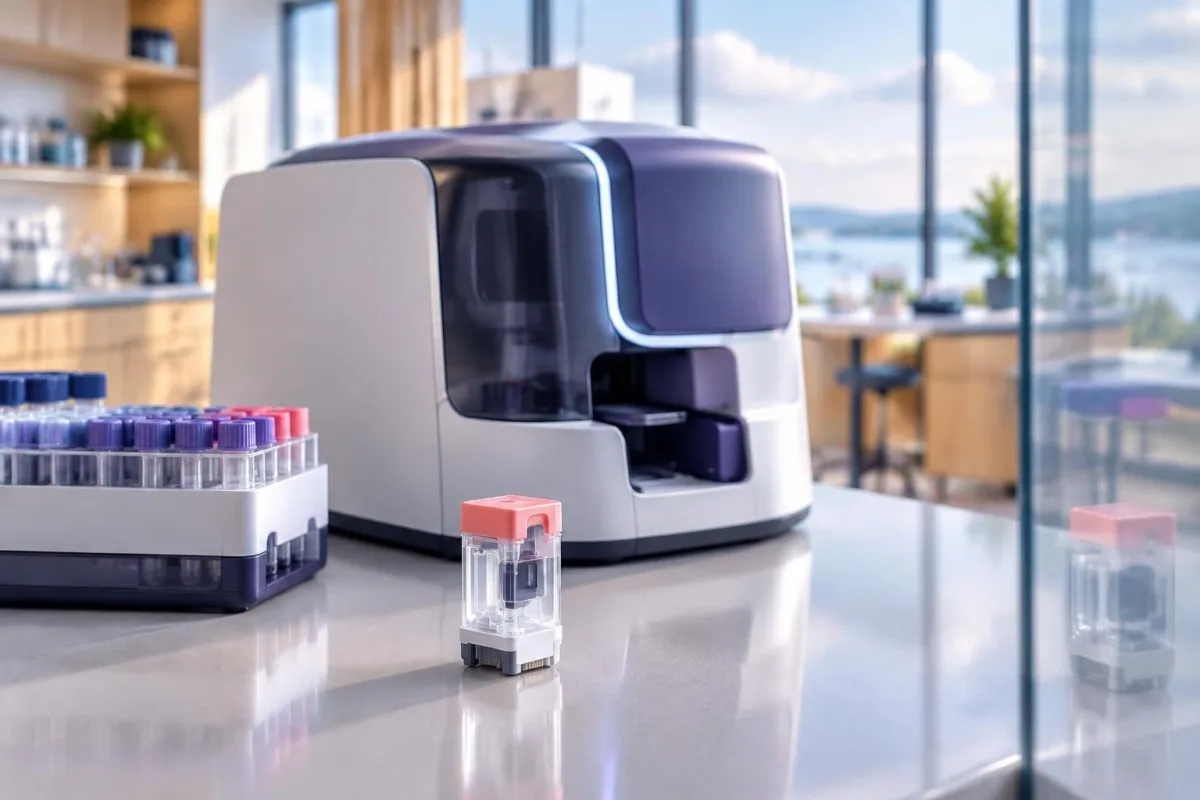
Biotin-related error can make some thyroid profiles look like low TSH with high thyroid hormones, a pattern that may resemble hyperthyroidism. It can also alter other hormone results on susceptible platforms. The numerical pattern alone does not identify interference; clinicians compare symptoms, medication history, prior results, and the laboratory method.
For troponin, the concern is not that biotin causes a heart attack; it is that certain assays may report a misleading concentration. A person with chest pressure, shortness of breath, fainting, or sudden weakness should seek emergency assessment and disclose biotin use immediately. Clinicians can consult the laboratory about an alternative assay while the urgent evaluation proceeds.
For example, if a hypothetical patient has a new abnormal TSH after starting a 5 mg biotin product, but no compatible symptoms and previously stable results, the ordering clinician can ask the lab whether its analyzer is susceptible. A repeat after a lab-directed pause or use of a different method may resolve the mismatch. Read more about subclinical hyperthyroidism patterns kaj when thyroid testing is repeated.
Vitamin C can affect some glucose and urine tests
Vitamin C can interfere with some laboratory chemistry methods and urine dipsticks, but the effect varies by test technology and dose. A negative urine dipstick finding does not always rule out a condition when ascorbic acid is present, so report high-dose vitamin C before urine or glucose testing.
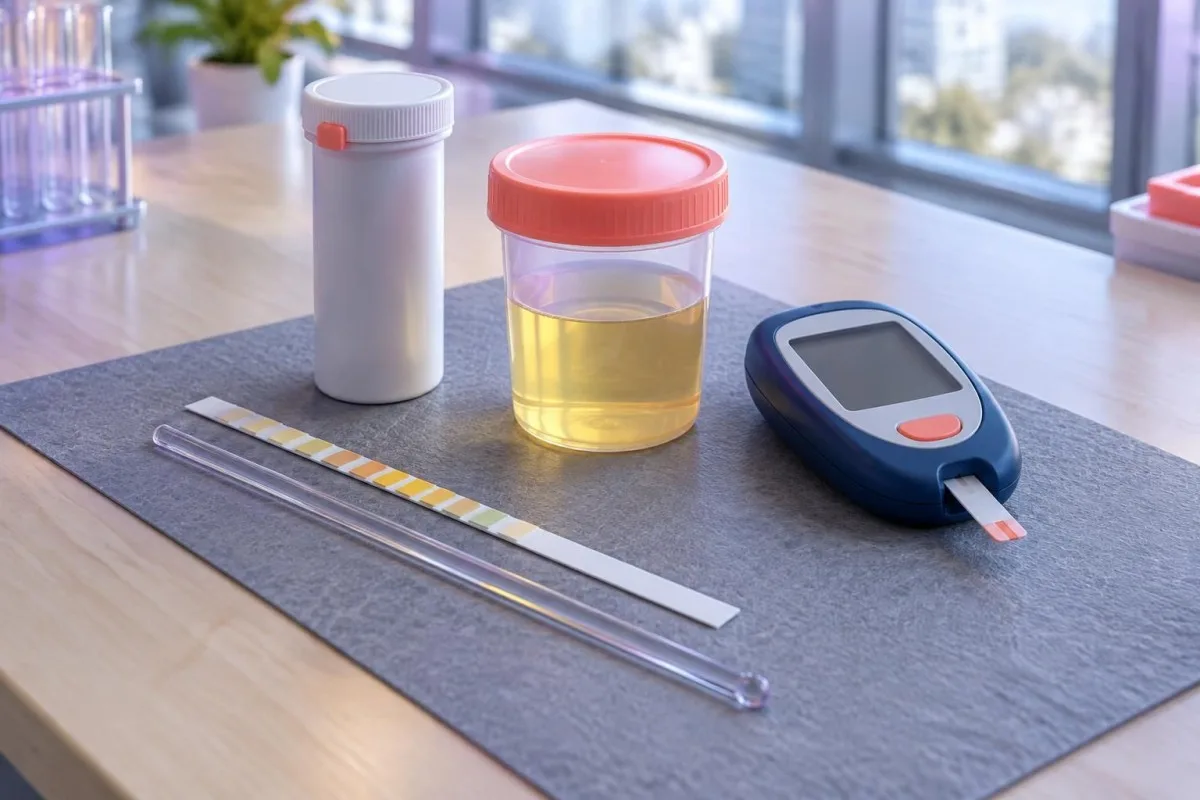
Ascorbic acid is a reducing agent, which means it can alter color reactions used by some test strips. Depending on the strip, concentration, and analyte, vitamin C may cause a false-negative result for glucose, blood, nitrite, or bilirubin in urine; it does not reliably affect every brand or every sample. The lab method and package insert matter more than a general rule.
High-dose vitamin C can also affect some glucose measurement technologies, including certain point-of-care systems. Do not use a home meter result that conflicts with symptoms as proof that blood glucose is normal, and do not delay care for confusion, vomiting, severe thirst, or other concerning symptoms. Ask the clinic which device or assay is being used if you take gram-level doses.
A hypothetical person taking 1,000 mg vitamin C twice daily might have a urine dipstick that appears negative for glucose despite a separate elevated blood glucose result. That mismatch could reflect interference, sample timing, or a genuine difference between urine and blood measurements; it needs interpretation rather than a simple repeat of the same strip. See our guides to urindipstikaj rezultoj kaj fastajn instrukciojn.
Creatine may raise creatinine without proving kidney damage
Creatine supplements can raise blood creatinine in some people because creatine is converted to creatinine, the substance commonly used to estimate kidney filtration. That can lower a creatinine-based eGFR estimate even when filtration has not changed, so dose, exercise, hydration, and other kidney markers help interpret the result.
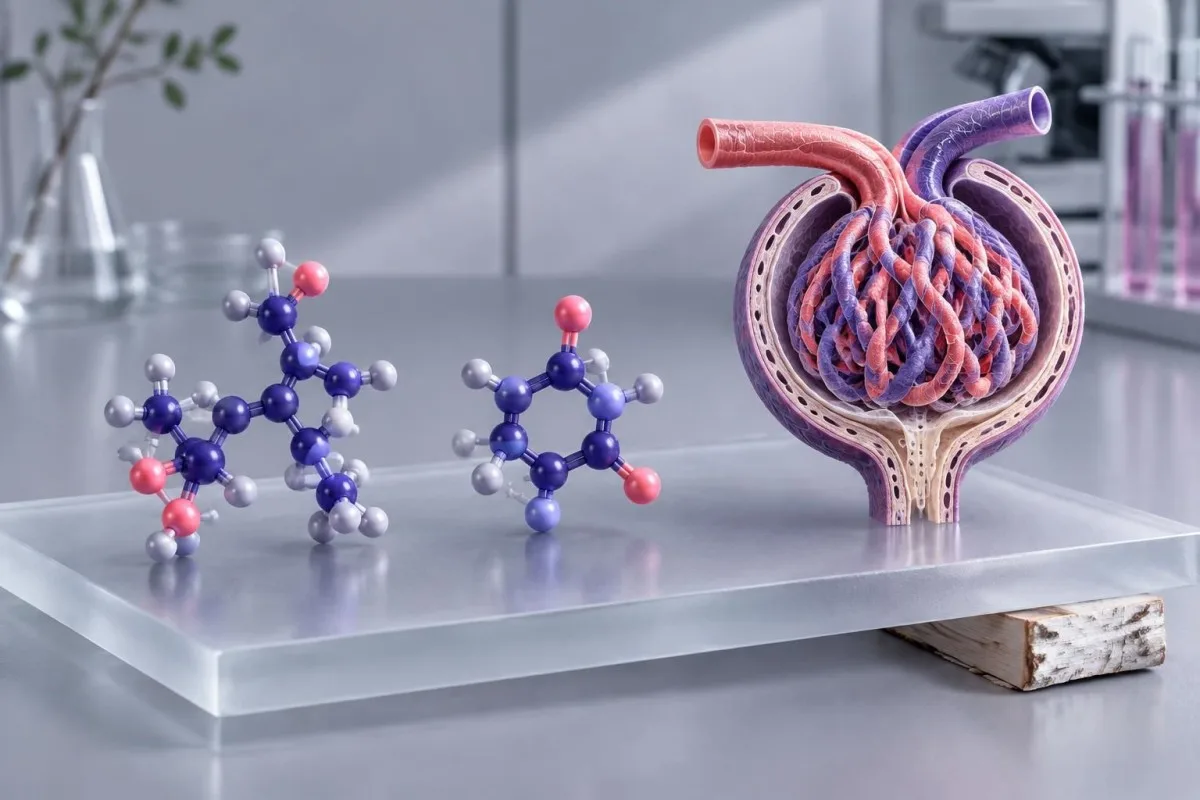
Creatinine is produced partly from creatine in muscle, and creatine monohydrate can increase the amount available for conversion. A rise in serum creatinine is not automatically a false result: it is a real measured value, but it may not represent a matching loss of filtration. The size of change varies with muscle mass, dose, recent exercise, diet, and kidney function.
Creatinine-based eGFR can therefore be harder to interpret in a person using creatine, especially if the result is a small isolated shift. A clinician may compare the trend, urine albumin, urinalysis, blood pressure, and—when appropriate—cystatin C or another assessment. A single eGFR estimate is not a diagnosis of chronic kidney disease; persistence for at least 3 months or other evidence of kidney damage generally matters.
For example, a hypothetical strength athlete taking 5 g creatine daily has creatinine rise from 0.9 to 1.2 mg/dL after a demanding training block. That does not prove kidney injury, but it should not be dismissed either, particularly if urine albumin is present or values keep rising. Review creatinine and eGFR in muscular adults kaj urine albumin-to-creatinine ratios alongside the result.
Iron, B12, folate, and vitamin D change the biology being measured
Iron, vitamin B12, folate, and vitamin D supplements can change the actual concentrations measured in blood; these are usually biological effects, not assay errors. A recent dose or ongoing treatment may make a result reflect supplementation rather than the untreated level that prompted testing.

A recent oral iron dose can temporarily increase serum iron and transferrin saturation, while ferritin changes more slowly as iron stores are replenished. When a clinician is evaluating iron status, a full panel—often ferritin, serum iron, transferrin or TIBC, and a blood count—is more informative than serum iron alone. The lab or clinician may give timing instructions; do not stop prescribed iron without checking.
Vitamin B12 and folate concentrations can rise after supplementation, even when the original cause of symptoms has not been resolved. A normal or high serum B12 after tablets does not always establish that tissue status was adequate before treatment; methylmalonic acid can help in selected cases, although kidney impairment can also raise it. For related interpretation, see high MMA with normal B12 kaj limaj B12-rezultoj.
Vitamin D supplements can raise serum 25-hidroksivitamino D, the usual status marker, and the result should be interpreted with dose, duration, calcium, and clinical context. Assays can also differ in how well they measure vitamin D2 and D3. For example, after 8 weeks of a prescribed regimen, a level may show treatment response rather than the starting deficiency; note the product and start date. Our gvidilo pri ripetaj testoj de vitamino D klarigas kial la tempigo gravas.
Herbal products can alter clotting, liver enzymes, and medication levels
Herbal supplements may change real physiology, interact with medicines, or occasionally affect an assay; their ingredients and potency can vary between products. Products containing vitamin K, concentrated green tea extract, or other botanicals deserve particular attention when clotting tests or liver enzymes are being monitored.
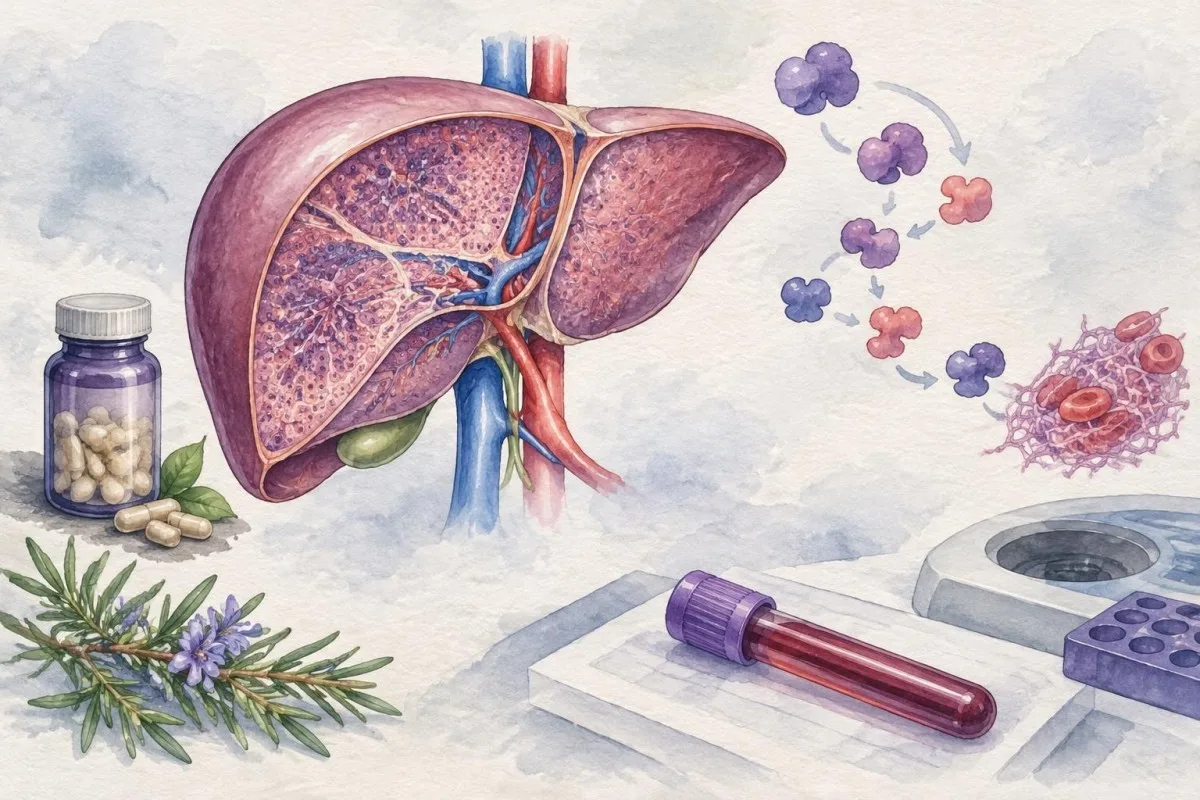
Vitamin K in supplements can alter the response to warfarin and may change the INR; sudden changes in intake are more relevant than a single standardized amount. People taking warfarin should contact their anticoagulation team before starting, stopping, or changing a vitamin K product. The INR is interpreted against the person's treatment target, not a universal normal range.
Concentrated green tea extract has been associated with liver injury in some reports, while ordinary brewed tea is not equivalent to high-dose extract. Other multi-ingredient products can contain undeclared or inconsistently measured ingredients, making a precise interaction difficult to predict. New jaundice, dark urine, persistent nausea, or severe abdominal symptoms after starting a product require prompt medical advice.
If a hypothetical patient taking warfarin begins a new supplement and their INR changes, the clinician should review the product label, dose, adherence, diet, illness, and medicines rather than attributing the change to one ingredient by default. A gvidilo pri koaguliĝaj testoj can explain what PT and INR measure, while the care team decides what the result means for treatment.
Should you pause supplements before a blood test?
There is no universal supplement washout period: whether to pause depends on the ingredient, dose, test method, kidney function, and urgency of testing. Ask the ordering clinician or laboratory what to do for that specific test, and never stop prescribed treatment or a medically necessary supplement without their advice.

Before testing, write down each product's full name, ingredients, dose, frequency, start date, and last dose. Include multivitamins, powders, gummies, energy products, injections, and supplements taken only occasionally; biotin may be hidden in hair-and-nail formulas or B-complex products. A photo of the front and ingredient panel is often more useful than a brand name alone.
Ask: “Could any of these affect this exact test or assay, and should I change the timing, pause it, or use a different method?” If biotin is relevant, the needed interval varies with dose, kidney clearance, and assay sensitivity; published guidance does not support one blanket number of hours for every person and every test. The lab can often identify susceptible methods or advise on a biotin-independent assay.
Do not delay urgent testing to complete a supplement washout. For scheduled testing, follow the lab's fasting instructions separately from supplement instructions: fasting does not automatically mean stopping all supplements, and taking a supplement with water can still matter for some measurements. Keep previous results and dates together when comparing trends; our gvidilo pri preparado por baza testo covers other factors that can shift a result.
A practical note to send the clinic
A useful message includes the test date, product label, dose, and last dose—for example: “I take biotin 10 mg each morning; my last dose was Tuesday at 8 a.m. Does your thyroid assay require a pause or an alternative method?” That gives the laboratory actionable information without asking you to diagnose the result yourself.
If the report conflicts with symptoms or an earlier result, ask whether the method changed and whether a repeat sample or alternate assay is appropriate. For information on review standards and clinical oversight, see the normoj pri medicina enhavo.
Oftaj demandoj
Ĉu suplementoj povas ŝanĝi rezultojn de sangoanalizo?
Jes. Suplementoj povas ŝanĝi la kvanton de substanco en via korpo aŭ malhelpi la testmetodon, kiu mezuras ĝin. Biotino en miligramaj dozoj povas influi iujn imunanalizojn, dum fero aŭ vitamino B12 povas pliigi la mezuritajn nutraĵnivelojn pro reala biologia efiko. Informu la klinikiston kaj laboratorion pri la produkto, dozo kaj lasta dozo antaŭ ol ŝanĝi ion.
Kiom longe mi devas ĉesigi biotinon antaŭ sangokontrolo?
Ne ekzistas ununura intervalo por forigo de biotino el la organismo, kiu aplikeblas al ĉiu dozo, analizo kaj paciento. Ĉiutaga produkto kun 5–10 mg povas esti pli grava ol multivitamino enhavanta dekojn da mikrogramoj, sed ankaŭ la rena funkcio kaj la laboratoria metodo influas la riskon. Demandu al la laboratorio aŭ al la kuracisto, kiu mendis la teston, ĉu la specifa testo estas sentema al biotino kaj ĉu paŭzo aŭ alternativa analiza metodo estus preferinda.
Ĉu biotino povas igi la rezultojn de tiroida testo aspekti nenormalaj?
Jes, biotino povas igi iujn sentemajn imunanalizojn de tiroido aspekti nenormalaj, foje produktante ŝablonon de malalta TSH kaj altaj tiroidaj hormonoj. La direkto kaj amplekso de la eraro dependas de la analizo, kaj ne ĉiuj laboratorioj uzas biotinbazitajn metodojn. Raportu vian dozon kaj lastan uzon; klinikistoj povas ripeti la testadon post intervalo difinita de la laboratorio aŭ uzi alian metodon.
Ĉu kreatino influas sangokontrolojn pri kreatinino aŭ eGFR?
Kreatino povas pliigi serum-kreatininon, ĉar iom da kreatino transformiĝas en kreatininon, kio povas malaltigi kreatininbazitan eGFR-takson sen pruvi, ke la rena filtrado malpliiĝis. La efiko varias laŭ la dozo, muskola maso, ekzercado kaj rena funkcio. Kuracisto povas kompari antaŭajn rezultojn, urin-albuminon kaj foje cistatinon C, anstataŭ interpreti nur unu kreatininan rezulton.
Ĉu mi ĉesu preni ĉiujn nutraĵajn suplementojn antaŭ la laboratorioekzamenoj?
Ne, ne ĉesigu aŭtomate ĉiun suplementon. Iuj estas preskribitaj aŭ medicine necesaj, kaj ĉesigi ilin povas esti damaĝe; aliaj povas influi nur specifajn testojn aŭ analizmetodojn. Donu al la klinikisto kompletan liston kun dozoj kaj demandu, ĉu la testo postulas ŝanĝon de la tempo, provizoran paŭzon aŭ alian analizon.
Can vitamin C affect a urine test?
Vitamin C can interfere with some urine dipstick reactions, potentially causing false-negative findings for glucose, blood, nitrite, or bilirubin, depending on the strip and concentration. This does not happen with every method, and a dipstick result should be interpreted with symptoms and other tests. Report high-dose vitamin C use, especially if a urine result conflicts with other findings.
Klarigu viajn rezultojn de sangoanalizo
Alŝutu vian laboratorian raporton kaj la AI de Kantesti klarigas ĉiun biomarkilon per simpla lingvaĵo ene de sekundoj. Uzata de pli ol 2 milionoj da homoj tutmonde.
Referencoj
- Klein, T., Mitchell, S., & Weber, H. (2026). Antaŭ-Registrita, Rubrik-bazita Aŭtomatigita Teknika Komparnormo de la Kantesti-Sangotesta Interpretada Motoro sur 100,000 Sintezaj Testkazoj. Kantesti AI-esplorado pri medicino. DOI
- Klein, T., Mitchell, S., & Weber, H. (2026). Klinika Validiga Kadro v2.0 (Paĝo pri Medicina Validigo). Kantesti AI-esplorado pri medicino. DOI
- Li D k.a. (2020). Gviddokumento de AACC pri interfero de biotino en laboratoriaj testoj. The Journal of Applied Laboratory Medicine. DOI PubMed
- Favresse J et al. (2018). Interferences With Thyroid Function Immunoassays: Clinical Implications and Detection Algorithm. Endocrine Reviews. DOI PubMed
- 2M+Analizitaj testoj
- 127+Landoj
- 100+Lingvoj
Pri la medicina teamo


Signaloj de fido E-E-A-T
Sperto
Kuracista gvidata klinika revizio de laboratoriaj interpretaj laborfluoj.
Kompetenteco
Laboratoria medicino fokusiĝas pri kiel biomarkiloj kondutas en klinika kunteksto.
Aŭtoritateco
Medicine recenzita de D-ro Thomas Klein, kun kontribuoj de D-rino Sarah Mitchell kaj Prof. D-ro Hans Weber.
Fidindeco
Evident-bazita interpretado kun klaraj sekvaj vojoj por redukti alarmon.



Medicina malrespondeca deklaro
Ĉi tiu artikolo estas nur por edukaj celoj kaj ne konsistigas medicinan konsilon. Ĉiam konsultu kvalifikitan sanprovizanton por diagnozaj kaj traktadaj decidoj.
Publikigita · Kontaktu la redakcian teamon
Eldonita de Kantesti Ltd, registrita en Anglio kaj Kimrio, kompanio n-ro. 17090423, Londono, Unuiĝinta Reĝlando.
