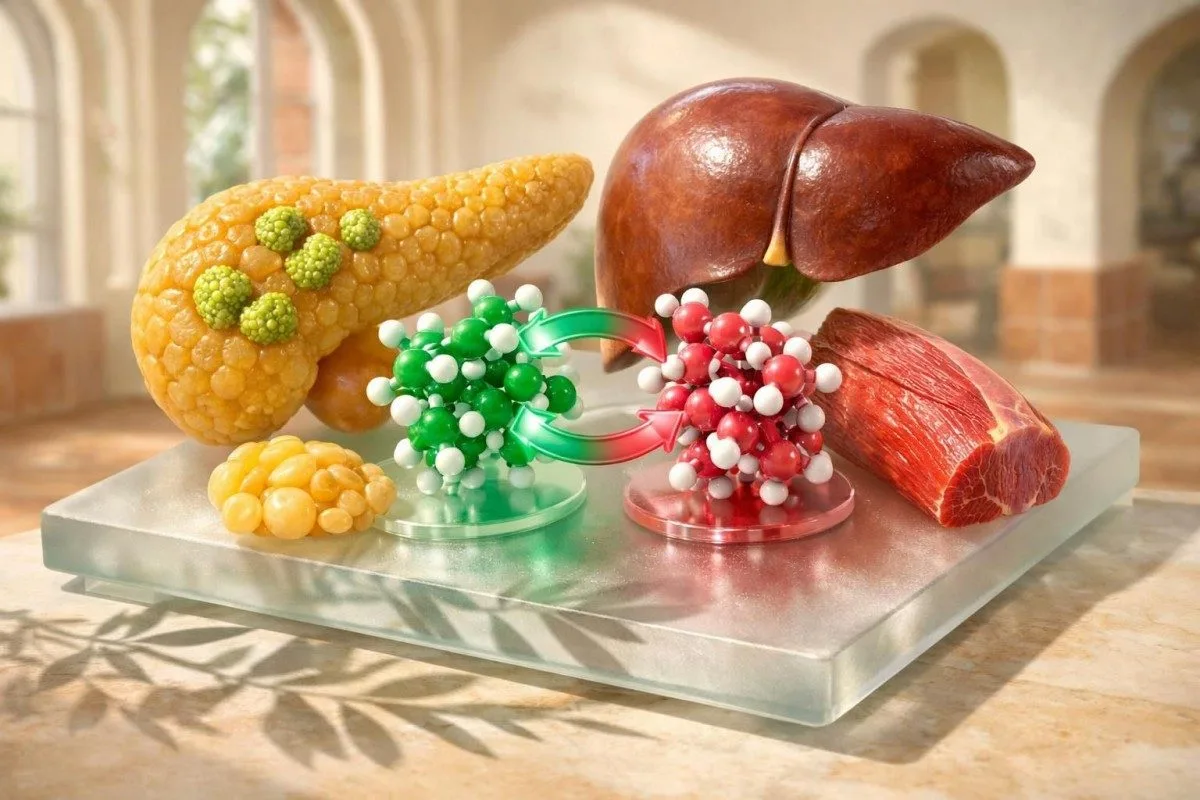
If your lab report shows fasting glucose and insulin, you can estimate insulin resistance in under a minute. The harder part is knowing when the number matters, when it misleads, and what to do before diabetes develops.


- Formula HOMA-IR = fasting insulin (µU/mL) × fasting glucose (mg/dL) ÷ 405, or insulin × glucose (mmol/L) ÷ 22.5.
- Reassuring range In many adults, HOMA-IR under 2.0 suggests better insulin sensitivity when the sample was truly fasting.
- Early warning A HOMA-IR of 2.0-2.9 often points to early insulin resistance even when HbA1c is still below 5.7%.
- High result A HOMA-IR of 3.0 or higher usually deserves action, repeat testing, and a look at lipids, ALT, and waist size.
- Fasting insulin levels Many labs list 2-20 µU/mL as normal, but metabolically favorable fasting insulin is often closer to 2-8 µU/mL.
- Best companion tests Pair HOMA-IR with HbA1c, triglycerides/HDL, ALT, and sometimes SHBG for a more reliable insulin resistance test.
- Repeat timing Recheck after 8-12 weeks of consistent changes, ideally at the same lab and after 10-12 hours of water-only fasting.
- Medical follow-up Ask for clinical review when fasting glucose is 100-125 mg/dL, HbA1c is 5.7-6.4%, or HOMA-IR is above 3.0.
What HOMA-IR means when you already have fasting glucose and insulin
HOMA-IR estimates insulin resistance from two fasting labs: glucose and insulin. In most adults, under 2.0 is usually reassuring, 2.0-2.9 often means early resistance, and 3.0 or higher deserves a closer look before prediabetes becomes obvious.
HOMA-IR is a screening index, not a diagnosis. It often turns abnormal years before fasting glucose reaches 100 mg/dL or HbA1c reaches 5.7%, which is why we built this calculation into Kantesti AI blood test analyzer for patients who only have a standard lab printout.
The number matters only if the sample was truly fasting. For an insulin resistance test, I prefer 10-12 hours with water only; black coffee, nicotine, hard exercise, and even a poor night of sleep can nudge insulin upward enough to muddy the result, so check our fasting guide before you trust a borderline value.
I see this pattern a lot: a 38-year-old with fasting glucose 94 mg/dL, fasting insulin 14 µU/mL, HbA1c 5.4%, and triglycerides 186 mg/dL is told everything is normal because the glucose sits inside the lab range. HOMA-IR here is 3.25, and that is usually the first clean signal that the liver is already overworking overnight.
As of April 3, 2026, there is still no universal cutoff accepted by every endocrine society. My view, as Thomas Klein, MD, is that this is one of those indices where context beats dogma: waist size, ALT, lipids, sleep apnea risk, PCOS history, and family history tell you whether the number is a warning light or background noise.
How to calculate HOMA-IR without a unit mistake
HOMA-IR is calculated as fasting insulin multiplied by fasting glucose. Use glucose in mg/dL divided by 405, or glucose in mmol/L divided by 22.5; mixing units is the commonest patient mistake I see.
If your fasting insulin is 12 µU/mL and fasting glucose is 96 mg/dL, the math is 12 × 96 ÷ 405 = 2.84. The SI version gives the same answer: 12 × 5.3 mmol/L ÷ 22.5 = 2.83 after rounding.
The trouble starts when the lab reports glucose in mmol/L but insulin in µU/mL, or when a patient copies the wrong column from a PDF. If you are staring at a report full of abbreviations and reference ranges, our blood test abbreviations guide helps you identify the exact numbers to use.
Some European and Middle Eastern labs report insulin in pmol/L instead of µU/mL. A rough conversion is pmol/L ÷ 6 ≈ µU/mL, but assays are not perfectly interchangeable, so I usually verify the unit before calculating; our 15,000+ biomarker guide shows how insulin may appear on different reports.
Worked example
A fasting glucose of 89 mg/dL with fasting insulin 7 µU/mL gives a HOMA-IR of 1.54, which most clinicians would read as fairly reassuring. A fasting glucose of 102 mg/dL with the same insulin gives 1.76—still not dramatic, but the higher glucose changes the conversation because impaired fasting glucose begins at 100 mg/dL.
HOMA-IR ranges that are useful in real life
Useful HOMA-IR interpretation is simple: below 2.0 is often acceptable, 2.0-2.9 suggests early resistance, 3.0-4.9 usually means clear resistance, and 5.0 or higher is markedly elevated if the sample was truly fasting.
Clinicians disagree on the exact cutoff, so I do not treat 2.1 and 4.8 as the same story. A result over 2.0 with fasting glucose 100-125 mg/dL or HbA1c 5.7-6.4% raises much more concern, and our HbA1c cutoffs guide is the quickest companion read.
Fasting insulin levels deserve their own look. Many labs call 2-20 µU/mL normal, but metabolically healthy adults often sit closer to 2-8 µU/mL; once I see 10-15 µU/mL with triglycerides creeping above 150 mg/dL, I start reading the whole pattern through our lipid panel interpretation lens rather than relying on the lab flag.
There is another angle here: older adults, people of South Asian ancestry, and patients with PCOS can show trouble at lower numbers. In practice, a normal-looking HOMA-IR near 1.9 can still be metabolically noisy if the waist circumference is above 102 cm in men or 88 cm in women, sleep is poor, and blood pressure is rising.
When patients upload labs to AI-powered blood test interpretation, our model does not stop at the index. It checks whether the insulin blood test sits near the upper lab limit, whether glucose is drifting upward over time, and whether the pattern fits lean insulin resistance, fatty liver, or a temporary stress response.
When HOMA-IR is high for the wrong reason—or looks normal when it is not
HOMA-IR becomes unreliable when fasting is imperfect, insulin assays vary, or the physiology is unusual. It can read falsely high after stress, poor sleep, corticosteroids, or acute illness, and it can look deceptively normal in some lean patients.
Insulin measurement is less standardized than glucose measurement. Different immunoassays can vary by roughly 10-30% at the same true concentration, which is one reason our medical validation standards treat serial trends from the same lab as more useful than one-off comparisons across laboratories.
A bad cold, dental infection, or inflammatory flare can transiently raise both fasting insulin and glucose. If CRP is elevated or you feel unwell, I often repeat the test in 2-6 weeks rather than labeling somebody insulin resistant on the spot; our CRP guide explains why inflammation can distort metabolic labs.
HOMA-IR is also a poor fit for people using insulin injections, many patients in pregnancy, and anyone with type 1 diabetes or severe beta-cell failure. If the result clashes with the rest of the story—say HOMA-IR is low but you have acanthosis, central weight gain, or post-meal crashes—use a broader clinical screen such as our symptoms decoder and ask whether an oral glucose tolerance test would answer more.
The lab combinations that confirm early insulin resistance
The best way to read HOMA-IR is with neighboring labs, not by itself. The most informative companions are HbA1c, triglycerides and HDL, ALT, and sometimes SHBG when I suspect hepatic insulin resistance or PCOS.
A rising ALT can be the earliest clue that insulin resistance is landing in the liver. Even when the lab still marks ALT as normal, values above about 25 U/L in women or 35 U/L in men make me think harder about fatty liver, especially if HOMA-IR is above 2.0; our ALT guide goes deeper on that pattern.
Low SHBG is one of the more underused clues. In women with androgen symptoms or men with borderline testosterone, an SHBG below about 20-30 nmol/L often travels with hepatic insulin resistance, which is why I pair HOMA-IR with the SHBG guide more often than most patients expect.
Triglycerides above 150 mg/dL, HDL below 40 mg/dL in men or 50 mg/dL in women, and a TG/HDL ratio above 3 in mg/dL units frequently strengthen the diagnosis. When that cluster appears, our platform usually flags metabolic syndrome risk even if fasting glucose still looks innocent.
Not every abnormal result is metabolic syndrome. Iron overload, thyroid disease, chronic inflammation, and severe sleep restriction can mimic parts of the pattern, which is why a good clinician keeps the differential diagnosis wider than social media does.
What usually drives HOMA-IR up
High HOMA-IR usually reflects excess visceral fat, liver fat, poor sleep, inactivity, or hormonal conditions such as PCOS. Medications matter too—prednisone, some antipsychotics, and even short bursts of severe stress can push the index up quickly.
Visceral fat behaves differently from the fat you can pinch under the skin. Once waist size crosses about 102 cm in men or 88 cm in women, the liver often starts producing too much glucose overnight, and fasting insulin climbs to hold the line.
PCOS is one of the commonest overlooked causes in younger women. In my experience, a patient with regular-ish cycles can still have meaningful insulin resistance, acne, scalp hair thinning, or elevated androgens, so our PCOS testing guide is worth reading even before glucose becomes abnormal.
Not every case is about weight. We see lean patients with HOMA-IR 2.5-3.5 who sleep 5 hours a night, rotate shift work, or carry a strong family history of type 2 diabetes; if you want the bigger picture on who we are and how we review those patterns, the story starts about Kantesti.
In our analysis of more than 2M user reports across 127+ countries, the repeat companions are boringly consistent: higher triglycerides, slightly higher ALT, higher uric acid, and lower HDL show up long before overt diabetes. That is exactly why I tell patients not to dismiss a mildly high insulin resistance test just because the chemistry panel says within range.
How to lower HOMA-IR in the next 8 to 12 weeks
Most people can lower HOMA-IR within 8-12 weeks. The interventions with the best yield are 5-10% weight loss, 150 minutes per week of aerobic activity, 2-3 resistance sessions, better sleep, and fewer refined carbohydrates that spike insulin every day.
You do not need a perfect diet. A meal pattern built around 25-35 g of protein per meal and 25-35 g of fiber per day usually lowers hunger enough to make the rest easier, and our AI supplement recommendations only make sense after the food pattern is fixed.
The smallest habit with the best evidence may be a 10-minute walk after meals. I have watched borderline HOMA-IR values fall from the low 3s into the 1s when patients pair post-meal walking with two weekly resistance sessions and then recheck using our Try free AI blood test analysis workflow on the same lab method.
Sleep is not optional here. Four or five nights of 4-5 hours can worsen insulin sensitivity by roughly 20-30% in experimental settings, so when a result looks worse than expected, I ask about snoring, rotating shifts, late caffeine, and alcohol before I rewrite the meal plan.
Supplements are secondary and the evidence is honestly mixed. Magnesium helps when there is a documented deficiency, omega-3 can lower triglycerides, and berberine 500 mg two to three times daily has modest data but can interact with medicines and cause gastrointestinal upset—so I prefer clinician-guided use, not guesswork.
When you should ask for more tests or medical treatment
Ask for more testing when HOMA-IR is above 3.0, fasting glucose is 100-125 mg/dL, HbA1c is 5.7-6.4%, or you have strong symptoms despite a borderline result. The next test is often a 75 g oral glucose tolerance test, sometimes with insulin levels, although insulin sampling protocols vary by clinic.
If medication is on the table, kidney function matters first. Metformin is commonly started at 500 mg once daily with food and titrated toward 1,500-2,000 mg/day, but clinicians usually avoid starting it when eGFR is below 30 mL/min/1.73 m²; our eGFR guide explains that safety piece.
If you want a deeper answer, ask for a 75 g oral glucose tolerance test with insulin at 0 and 120 minutes. A 2-hour insulin above roughly 30-60 µU/mL often suggests resistance, but labs do not standardize this as well as they standardize glucose, so the pattern matters more than one number.
I also escalate faster if there is fatty liver, PCOS with infertility, rapid weight gain, or a first-degree relative with early type 2 diabetes. In those situations, a continuous glucose monitor, structured post-meal glucose checks, metformin, or anti-obesity medication can be reasonable, but the choice depends on BMI, kidney function, pregnancy plans, and symptoms.
One more practical point: do not let a normal fasting glucose delay care if your insulin is clearly high. A fasting insulin above about 15 µU/mL or a HOMA-IR above 5.0 deserves a proper conversation with a clinician, even if the lab report itself barely comments on the result.
PCOS, lean bodies, athletes, and other special HOMA-IR situations
Special populations can fool simplistic HOMA-IR reading. PCOS, peri-menopause, aging muscle loss, and even heavy endurance training can shift fasting glucose or insulin in ways that look odd unless you know the pattern.
Peri-menopause is a classic inflection point. Estrogen changes, less sleep, and a drift toward central fat can raise fasting insulin even when body weight barely changes, so I often pair HOMA-IR with the women's hormonal health guide when symptoms and cycles are changing together.
Lean insulin resistance is real. I have seen runners with fasting glucose 102 mg/dL and fasting insulin 3 µU/mL, giving a HOMA-IR under 1.0—not worrisome—while another lean office worker shows glucose 89 mg/dL and insulin 13 µU/mL, giving a HOMA-IR near 2.9, which is a very different metabolic story.
Age matters because muscle is the major sink for glucose after meals. If strength is falling, waist size is rising, and recovery is slower, insulin resistance can worsen without dramatic weight gain, which is one reason biological aging and metabolic aging often travel together in our biological age guide.
For men, declining activity, sleep apnea, and visceral fat often do more damage than testosterone alone. The practical takeaway is simple: HOMA-IR in a 55-year-old with snoring and high triglycerides deserves a different lens than the same number in a 25-year-old triathlete.
Lean insulin resistance exists
Lean insulin resistance often shows normal BMI but higher fasting insulin, post-meal sleepiness, family history, or mild fatty liver. I become suspicious when HOMA-IR is above 2.0 despite BMI under 25 kg/m² and triglycerides are not as low as they should be.
Athletes can run a higher fasting glucose without high HOMA-IR
Endurance athletes can wake with fasting glucose 100-110 mg/dL after heavy training because hepatic glucose output rises overnight. If fasting insulin remains 2-4 µU/mL and HOMA-IR stays under about 1.0, I usually interpret that as training physiology rather than early diabetes.
How Kantesti AI interprets HOMA-IR and tracks change over time
Kantesti AI interprets HOMA-IR by reading fasting glucose, insulin, units, reference ranges, and neighboring markers together. That matters because a raw number without context misses the difference between early metabolic drift and a temporary lab blip.
Patients usually upload a PDF or photo, and our AI blood test platform parses the panel in about 60 seconds. It then checks whether the insulin blood test came from a true fasting sample, whether the units are compatible, and whether the pattern fits early insulin resistance, fatty liver risk, or a need for repeat testing.
This is not black-box medicine. Our medical review process is anchored by physicians on the Medical Advisory Board, and when I review a borderline HOMA-IR, I want to see trend lines, not a single heroic interpretation from one morning draw.
Under the hood, Kantesti's neural network analyzes multi-marker relationships across more than 15,000 biomarkers, more than 2M users, 127+ countries, and 75+ languages, with CE Mark, HIPAA, GDPR, and ISO 27001 controls around the workflow. If you want the technical side rather than the patient summary, our technology guide explains how multi-biomarker reasoning differs from a calculator.
I built this part of the workflow for exactly the patient who is told to wait until the sugar is higher. My advice as Thomas Klein, MD, is simpler: if HOMA-IR is abnormal today, track it now, act now, and repeat the same fasting labs in 8-12 weeks rather than waiting for prediabetes to become obvious.
Research publications and methodology notes
These research notes do not set HOMA-IR cutoffs. They show the publication style our team uses when we translate technical lab concepts into patient-readable explanations, which is the same method behind our metabolic content.
If you want to see how we write evidence-backed biomarker explainers, our broader blood test interpretation with AI article outlines the clinical-review process we use before publication. That matters because HOMA-IR is easy to calculate but much harder to interpret responsibly, and Thomas Klein, MD, reviews these papers with the same rule I use in clinic: never publish a cutoff without stating where uncertainty begins.
Kantesti Medical Editorial Team. (2026). Iron Studies Guide: TIBC, Iron Saturation & Binding Capacity. Zenodo. https://doi.org/10.5281/zenodo.18248745. ResearchGate: record search. Academia.edu: record search.
Kantesti Medical Editorial Team. (2026). aPTT Normal Range: D-Dimer, Protein C Blood Clotting Guide. Zenodo. https://doi.org/10.5281/zenodo.18262555. ResearchGate: record search. Academia.edu: record search.
Frequently Asked Questions
What is a normal HOMA-IR?
In adults, a HOMA-IR under about 2.0 is usually reassuring if the sample was truly fasting for 10-12 hours. Values of 2.0-2.9 often suggest early insulin resistance, 3.0-4.9 usually indicate clear resistance, and 5.0 or higher is markedly elevated. There is no single global cutoff, so age, ethnicity, body composition, PCOS, and assay method can shift how clinicians read the number. As of April 3, 2026, most endocrinologists still use HOMA-IR as a context-dependent screening tool rather than a formal diagnosis.
Is fasting insulin 12 high?
A fasting insulin of 12 µU/mL is often higher than ideal even though many labs list 2-20 µU/mL as normal. If fasting glucose is 96 mg/dL, the HOMA-IR would be 2.84, which fits early insulin resistance in many adults. If fasting glucose is lower, the same insulin level may be less concerning, so the ratio matters. I usually pay more attention when fasting insulin is above 10 µU/mL and triglycerides are also above 150 mg/dL.
Can HOMA-IR be high if HbA1c is normal?
Yes. HOMA-IR often rises years before HbA1c reaches the prediabetes range of 5.7-6.4%. A person can have fasting glucose 90-99 mg/dL, HbA1c 5.2-5.5%, and still show fasting insulin 12-15 µU/mL with HOMA-IR above 2.5. That pattern usually means the pancreas is working harder to keep glucose normal. It is one of the commonest early-warning scenarios I see in clinic.
How long should I fast before a HOMA-IR test?
For HOMA-IR, most clinicians accept an 8-12 hour fast, but I prefer 10-12 hours with water only. Black coffee, nicotine, vigorous exercise, and poor sleep the night before can all shift fasting insulin enough to confuse a borderline result. Morning testing is usually easiest because overnight liver glucose production is part of what the test captures. If the sample was not clearly fasting, repeat it before making big decisions.
How quickly can HOMA-IR improve?
HOMA-IR can improve within 8-12 weeks if the underlying drivers change. A 5-10% reduction in body weight, 150 minutes per week of aerobic activity, two or three resistance sessions, and better sleep often lower fasting insulin by several units. I have seen values fall from around 3.2 to 1.8 over three months when patients keep the intervention simple and repeat the test at the same lab. Trend quality matters more than chasing a perfect one-time result.
Should I ask for metformin or more testing?
Ask for clinical review when HOMA-IR is above 3.0, fasting glucose is 100-125 mg/dL, HbA1c is 5.7-6.4%, or symptoms strongly suggest insulin resistance despite a borderline number. The next test is often a 75 g oral glucose tolerance test, sometimes with insulin measurements, or a continuous glucose monitor if post-meal spikes are suspected. Metformin commonly starts at 500 mg daily and is titrated upward, but kidney function, pregnancy plans, gastrointestinal tolerance, and body weight all matter. A HOMA-IR above 5.0 or fasting insulin above 15 µU/mL usually deserves a proper clinician conversation rather than watchful waiting.
Get AI-Powered Blood Test Analysis Today
Join over 2 million users worldwide who trust Kantesti for instant, accurate lab test analysis. Upload your blood test results and receive comprehensive interpretation of 15,000+ biomarkers in seconds.
📚 Referenced Research Publications
Klein, T., Mitchell, S., & Weber, H. (2026). Iron Studies Guide: TIBC, Iron Saturation & Binding Capacity. Kantesti AI Medical Research.
Klein, T., Mitchell, S., & Weber, H. (2026). aPTT Normal Range: D-Dimer, Protein C Blood Clotting Guide. Kantesti AI Medical Research.
⚕️ Medical Disclaimer
This article is for educational purposes only and does not constitute medical advice. Always consult a qualified healthcare provider for diagnosis and treatment decisions.
E-E-A-T Trust Signals
Experience
Physician-led clinical review of lab interpretation workflows.
Expertise
Laboratory medicine focus on how biomarkers behave in clinical context.
Authoritativeness
Written by Dr. Thomas Klein with review by Dr. Sarah Mitchell and Prof. Dr. Hans Weber.
Trustworthiness
Evidence-based interpretation with clear follow-up pathways to reduce alarm.