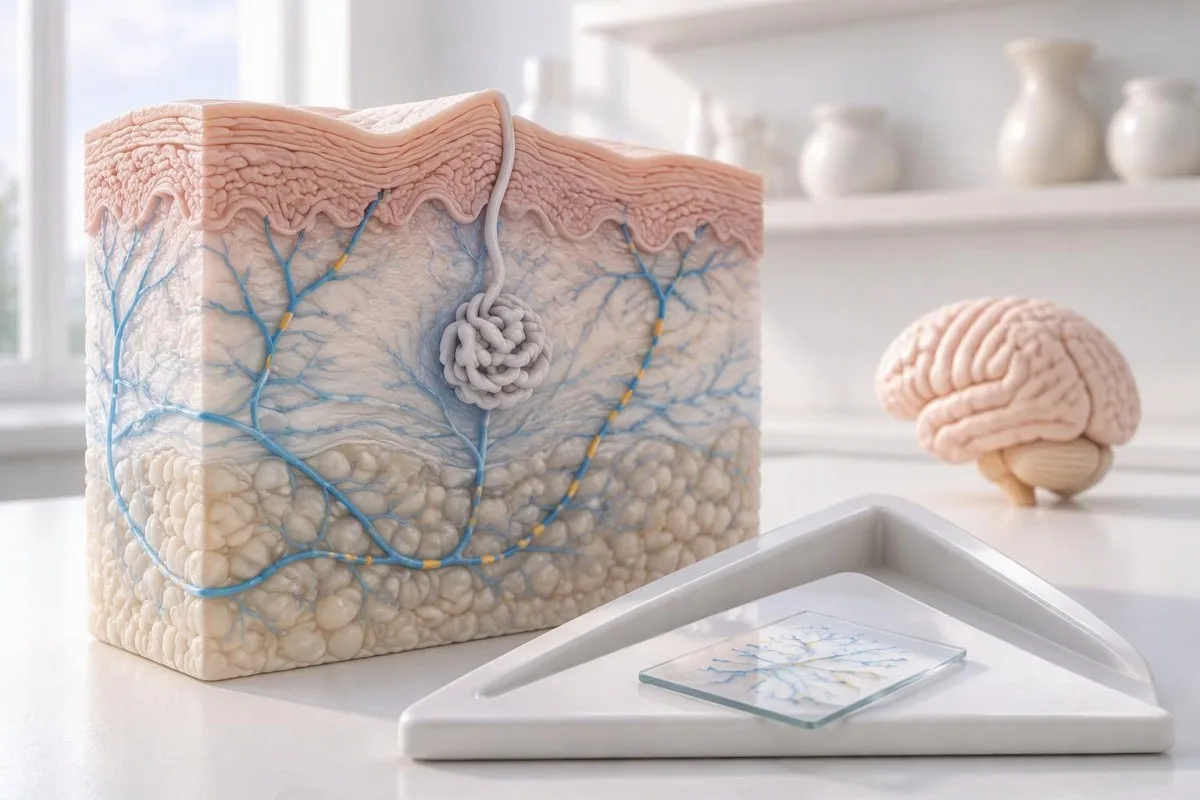
ત્વચાની બાયોપ્સી પાર્કિન્સન સાથે સંકળાયેલા પ્રોટીનને ઓળખી શકે છે, પરંતુ તે એકલા હાથે રોગનું નામ નક્કી કરી શકતી નથી. પેશીમાં મળેલા તારણને તમારા લક્ષણો, ન્યુરોલોજિકલ તપાસ અને તબીબી ઇતિહાસ સાથે જોડવાથી ઉપયોગી જવાબ મળે છે.


- Syn-One ટેસ્ટ ત્વચાની ચેતાઓમાં ફોસ્ફોરિલેટેડ આલ્ફા-સિન્યુક્લિન શોધે છે; પોઝિટિવ પરિણામ સિન્યુક્લિનોપથીને સમર્થન આપે છે, માત્ર પાર્કિન્સન રોગને નહીં.
- પાર્કિન્સન શોધ 2024ના બહુ-કેન્દ્રિય JAMA અભ્યાસમાં તબીબી રીતે નિદાન થયેલા 96 દર્દીઓના પસંદ કરેલા જૂથમાં 92.7% હતી.
- અન્ય સિન્યુક્લિનોપથીઓ માટે પણ પરીક્ષણ પોઝિટિવ આવ્યું: તે અભ્યાસમાં મલ્ટિપલ સિસ્ટમ એટ્રોફી માટે 98.2%, લેવી બોડીઝ સાથેના ડિમેન્શિયા માટે 96.0% અને શુદ્ધ સ્વાયત્ત નિષ્ફળતા માટે 100%.
- નિયંત્રણ જૂથનાં તારણો સિન્યુક્લિનોપથીના ક્લિનિકલ પુરાવા ન ધરાવતા 120 સહભાગીઓમાંથી 4માં પોઝિટિવ હતાં, જે 3.3%ને સમકક્ષ છે.
- નેગેટિવ તારણો શંકા ઓછી થાય છે, પરંતુ પાર્કિન્સન રોગને નકારી શકાતો નથી; 2024ના અભ્યાસમાં તબીબી રીતે પાર્કિન્સન રોગનું નિદાન થયેલા 96 સહભાગીઓમાંથી 7ના પરીક્ષણનાં પરિણામો નકારાત્મક આવ્યાં.
- ક્લિનિકલ નિદાન માટે બ્રેડિકિનેશિયાનું મૂલ્યાંકન રિજિડિટી અથવા આરામની સ્થિતિમાં થતા કંપન સાથે કરવું જરૂરી છે; ત્વચાના પરીક્ષણનું પરિણામ તે તપાસનું સ્થાન લઈ શકતું નથી.
- નમૂનો એકત્ર કરવો સામાન્ય રીતે સ્થાનિક એનેસ્થેટિક હેઠળ ગરદન, જાંઘ અને નીચલા પગમાંથી આશરે 3 mm કદના ત્વચાના ત્રણ નમૂના લેવામાં આવે છે.
- સારવારના નિર્ણયો તબીબી સિન્ડ્રોમ અને લક્ષણોને ધ્યાનમાં લેવા જોઈએ; પાર્કિન્સનની દવા શરૂ કરવી કે બંધ કરવી તેનો નિર્ણય માત્ર બાયોપ્સી પર આધારિત ન હોવો જોઈએ.
શું Syn-One ટેસ્ટ ખરેખર પાર્કિન્સન રોગ શોધી શકે છે?
આ Syn-One પરીક્ષણ ત્વચાની ચેતાઓમાં ફૉસ્ફોરિલેટેડ આલ્ફા-સિન્યુક્લિન શોધી શકે છે, જે પાર્કિન્સન રોગ અને અન્ય સિન્યુક્લિનોપથી સાથે સંકળાયેલું તારણ છે. હકારાત્મક પરિણામ તે રોગ-પરિવારને સમર્થન આપે છે, પરંતુ માત્ર તેના આધારે પાર્કિન્સન રોગને મલ્ટિપલ સિસ્ટમ એટ્રોફી, લેવી બોડી સાથેના ડિમેન્શિયા અથવા શુદ્ધ ઑટોનોમિક નિષ્ફળતાથી અલગ ઓળખી શકાતો નથી. નકારાત્મક પરિણામથી પાર્કિન્સન રોગ નકારી શકાતો નથી.
તેથી પાર્કિન્સન રોગ માટેની ત્વચા બાયોપ્સીને શ્રેષ્ઠ રીતે એક સહાયક જૈવિક પરીક્ષણ, તરીકે સમજવી જોઈએ, હલનચલન-વિકારોના મૂલ્યાંકનના વિકલ્પ તરીકે નહીં. પ્રયોગશાળા પરિઘીય ચેતા તંતુઓની તપાસ કરે છે; તે સબ્સ્ટાન્શિયા નિગ્રામાંથી નમૂનો લેતી નથી, જે મગજનો એવો ભાગ છે જે પાર્કિન્સનનાં હલનચલનનાં લક્ષણો સાથે ગાઢ રીતે સંકળાયેલો છે. આ તફાવત સમજાવે છે કે ત્વચામાં જોવા મળેલી અસામાન્યતા દરેક કંપન કે ચાલવાની સમસ્યાનું કારણ સ્થાપિત કરી શકતી નથી.
ધીમે ધીમે નાની થતી હસ્તલિપિ, જમણા હાથનો ઓછો ઝુલાવો અને બટન બંધ કરવામાં થતી ધીમી ગતિ ધરાવતી 67 વર્ષીય વ્યક્તિનું ઉદાહરણ ધ્યાનમાં લો. ત્વચામાં હકારાત્મક તારણ પાર્કિન્સન રોગની તબીબી શંકાને અનુરૂપ હશે, જ્યારે શરૂઆતમાં જ સ્પષ્ટપણે બ્લડ પ્રેશર જાળવવામાં નિષ્ફળતા અને નબળું સંતુલન ધરાવતી વ્યક્તિમાં આ જ તારણથી અલગ નિદાન અંગે ચર્ચા શરૂ થાય. આ કાલ્પનિક ઉદાહરણો છે, નોંધાયેલા દર્દીઓના કિસ્સા નથી.
કાન્ટેસ્ટી એક છે AI રક્ત પરીક્ષણ વિશ્લેષક જે સાથેની પ્રયોગશાળા રિપોર્ટ્સ સમજાવવામાં મદદ કરે છે; તે આ ત્વચા પરીક્ષણ કરતું નથી કે PDF પરથી પાર્કિન્સન રોગનું નિદાન કરતું નથી. અહીં થોમસ ક્લેઇનનું સંપાદકીય ધ્યાન પ્રોટીન શોધવા અને વ્યક્તિનું નિદાન કરવા વચ્ચેની સીમા પર છે. અમારાં સંસ્થા અને ક્લિનિકલ ફોકસ આ લેખમાં રક્ત પરીક્ષણનો સંદર્ભ વર્ણવે છે, ત્વચા પેથોલોજી માટેના નિષ્ણાત પ્રમાણપત્રને નહીં.
ત્વચાનો નમૂનો કેવી રીતે લેવામાં આવે છે અને તેની તપાસ કેવી રીતે થાય છે?
Syn-One પરીક્ષણમાં સામાન્ય રીતે આશરે 3 mm કદના ત્વચાના ત્રણ પંચ નમૂના, લેવામાં આવે છે, જે સ્થાનિક એનેસ્થેટિક હેઠળ ગરદનના પાછળના ભાગ, જાંઘ અને નીચલા પગમાંથી એકત્રિત કરવામાં આવે છે. વિશિષ્ટ પ્રયોગશાળા પેશી પર પ્રક્રિયા કરે છે અને ઇમ્યુનોફ્લોરોસેન્સનો ઉપયોગ કરીને ચેતા તંતુઓમાં ફૉસ્ફોરિલેટેડ આલ્ફા-સિન્યુક્લિન શોધે છે.
ત્રણ સ્થળોએથી નમૂના લેવા મહત્ત્વનું છે, કારણ કે પરિઘીય જમાવટો જરૂરી નથી કે સરખી રીતે વિતરિત થયેલી હોય. પેશીની પ્રક્રિયા, વિભાગની જાડાઈ, એન્ટિબૉડીની પસંદગી અને તપાસવામાં આવતા વિભાગોની સંખ્યા શોધને અસર કરી શકે છે; ત્વચારોગવિજ્ઞાનની સામાન્ય પેથોલોજી તપાસ આપમેળે આ વિશિષ્ટ પરીક્ષણ સમકક્ષ હોતી નથી. નમૂના લેતાં પહેલાં ખાતરી કરો કે નમૂનાઓ જરૂરી હૅન્ડલિંગ પ્રોટોકૉલ અનુસરતી નિર્ધારિત પ્રયોગશાળામાં મોકલાશે.
તબીબી રીતે ઉપયોગી પ્રશ્ન માત્ર એટલો નથી કે સ્લાઇડમાં ફ્લોરોસન્ટ ટપકું છે કે નહીં. સંકેતનું અર્થઘટન તેની શારીરિક રચનામાં સ્થિતિને ધ્યાનમાં રાખીને કરવું જોઈએ; તેમાં તે આસપાસની સામગ્રીને બદલે ચેતા તંતુમાં સ્થિત છે કે નહીં તેનો સમાવેશ થાય છે. રિપોર્ટમાં નમૂનાની પર્યાપ્તતા, તપાસવામાં આવેલાં સ્થળો અને ચેતા-તંતુનાં કોઈ વધારાનાં માપનો ઉલ્લેખ છે કે નહીં તે પૂછો—આ વિગતો અનપેક્ષિત પરિણામ સમજાવવામાં મદદ કરે છે.
જોકે કેટલાક રિપોર્ટમાં વર્ણનાત્મક માપનો સમાવેશ થાય છે, મુખ્ય નિદાનાત્મક તારણ સામાન્ય રીતે મળ્યું વિરુદ્ધ મળ્યું નથી, હોય છે, ng/mLમાં દર્શાવાતી રક્ત-પરીક્ષણ જેવી સાંદ્રતાને બદલે. અમારું ગુણાત્મક અને માત્રાત્મક પરિણામો સમજૂતી આ રિપોર્ટિંગના સ્વરૂપોને અલગ પાડવામાં મદદ કરે છે. ત્વચામાં આલ્ફા-સિન્યુક્લિનની એવી કોઈ સાંદ્રતા સર્વસ્વીકૃત નથી જેનું પાર્કિન્સનના તબક્કામાં સીધું રૂપાંતર કરી શકાય.
Syn-One ટેસ્ટનું પરિણામ પોઝિટિવ આવે તો તેનો અર્થ શું થાય?
A હકારાત્મક Syn-One પરીક્ષણનો અર્થ એ છે કે પ્રયોગશાળાએ તપાસેલા ત્વચાના ચેતા-પેશીમાં ફૉસ્ફોરિલેટેડ આલ્ફા-સિન્યુક્લિન શોધ્યું છે. યોગ્ય તબીબી પરિસ્થિતિમાં, તે સિન્યુક્લિનોપથીને સમર્થન આપે છે; પરંતુ તે સ્વતંત્ર રીતે પાર્કિન્સન રોગ સ્થાપિત કરતું નથી, તેની તીવ્રતા નક્કી કરતું નથી કે અશક્તિ ક્યારે વિકસશે તેની આગાહી કરતું નથી.
Alpha-synuclein is a naturally occurring neuronal protein; the test is not looking for an entirely foreign substance. Phosphorylation at serine 129 is a modification associated with aggregated alpha-synuclein in synucleinopathies. Detecting this modification in skin nerves is biologically informative, but it does not tell the neurologist which brain networks are driving the person’s symptoms.
A positive finding is also not a hereditary risk score. It does not identify a Parkinson’s-associated gene variant, establish that a child will inherit a disorder, or measure the percentage of brain cells affected. Those are three different questions requiring different evidence, and confusing them can turn a useful pathology result into an unnecessarily frightening family conversation.
Nor should the amount of staining be treated as a countdown. A laboratory may describe distribution or burden, but a single report does not provide a validated individual timeline to falls, dementia, or loss of independence. For comparison, neurofilament light chain interpretation addresses another neurological biomarker whose biological signal also needs clinical context.
પ્રકાશિત સંશોધનમાં Syn-One ટેસ્ટ કેટલો સચોટ છે?
The strongest widely cited multicenter evidence found skin phosphorylated alpha-synuclein in 92.7% of clinically diagnosed Parkinson’s participants, with positivity in 3.3% of controls. Those figures describe selected research groups; they are not a universal accuracy estimate for every person referred with tremor.
Gibbons et al. reported the study in JAMA in 2024 across 30 sites, with 343 participants in the primary analysis. Detection occurred in 89 of 96 participants with Parkinson’s, 54 of 55 with multiple system atrophy, 48 of 50 with dementia with Lewy bodies, and all 22 with pure autonomic failure. Four of 120 controls were positive.
Those results are encouraging, but the reference diagnoses were clinical rather than autopsy-confirmed. The study did not establish sensitivity in very early or prodromal disease, and its control group was not a full representation of confusing clinic referrals with essential tremor, progressive supranuclear palsy, corticobasal syndromes, or mixed neurological conditions. These limitations matter more than an advertising phrase such as “over 90% accurate.”
મુજબ 24 ઑક્ટોબર, 2026, this article anchors its numerical discussion to that identifiable 2024 publication rather than assuming an unverified new guideline or regulatory update. Kantesti’s ક્લિનિકલ વૅલિડેશન ફ્રેમવર્ક concerns our own blood-report interpretation methodology, not validation of the Syn-One test. Accuracy evidence cannot be transferred from one technology to another.
પોઝિટિવ પરિણામનો અર્થ પાર્કિન્સનનું નિદાન કેમ નથી?
A positive result does not equal Parkinson’s because several different disorders share alpha-synuclein pathology, and the probability of disease also depends on the clinical picture before testing. Specificity against healthy controls is not the same as specificity for Parkinson’s against other synucleinopathies.
In the Gibbons et al. study, multiple system atrophy actually had a higher detection percentage than Parkinson’s: 98.2% versus 92.7%. Calling a positive result “Parkinson’s-specific” therefore reverses what the evidence shows. The assay may support the presence of the broader pathology family while leaving the subtype question unresolved.
Here is a deliberately hypothetical calculation: assume a test has 93% sensitivity and 97% specificity in the population being assessed. At a 10% pretest probability, a positive result gives approximately a 78% post-test probability; at a 1% pretest probability, it gives approximately 24%. These are teaching calculations, not validated Syn-One predictive values or probabilities specifically for Parkinson’s.
The practical issue is whether the suspected disorder was plausible before the sample was taken. A biomarker in someone with a matching neurological syndrome carries different weight from an unexpected finding in a person without objective signs. Our positive antibody interpretation guide explains a related reasoning principle, although this skin assay detects tissue protein—not antibodies circulating in blood.
શું Syn-One ટેસ્ટનું નેગેટિવ પરિણામ પાર્કિન્સનને નકારી શકે છે?
A negative Syn-One test cannot rule out Parkinson’s disease. It means phosphorylated alpha-synuclein was not detected in the tissue examined; a neurologist must decide whether that finding meaningfully lowers suspicion or conflicts with an otherwise convincing clinical syndrome.
Seven of the 96 clinically diagnosed Parkinson’s participants in the 2024 JAMA study tested negative. That 7.3% negative proportion is a useful reminder that even promising assays miss some clinically affected people. It does not establish the false-negative rate for every disease stage, laboratory method, genetic background, or referral population.
A negative result can reflect biological variability, deposits outside the sampled tissue, or limitations in sampling and detection. Early-disease performance remains less certain than performance in established clinical syndromes, and inadequate tissue should not be treated as a reassuring negative. Ask whether all three specimens were adequate before discussing what the result means for your diagnosis.
Persistent bradykinesia, rigidity, or progressive gait change deserves follow-up even after a negative biopsy. The next step may be reassessment, medication review, imaging for a particular differential diagnosis, or simply observing the clinical course—not automatically repeating the skin procedure. Our discussion of નકારાત્મક ન્યુરોલોજીકલ એન્ટિબોડી પરીક્ષણો illustrates why a negative laboratory finding must be matched to the question the assay can answer.
ન્યુરોલોજિસ્ટ પાર્કિન્સન અને MSA વચ્ચે ભેદ કેવી રીતે કરે છે?
Neurologists distinguish Parkinson’s from multiple system atrophy, or MSA, primarily through the clinical pattern, including autonomic dysfunction, cerebellar signs, motor progression, and response to treatment. A positive skin alpha-synuclein finding can occur in both conditions and cannot independently separate them.
Parkinson’s often begins asymmetrically and may show a clear, sustained response to levodopa. MSA becomes more concerning when severe autonomic dysfunction appears early, particularly urinary retention or substantial orthostatic hypotension, alongside parkinsonism or cerebellar dysfunction. None of these clues is absolute, and one unusual symptom should not be turned into a diagnosis without the wider examination.
For example, an illustrative 61-year-old with movement slowness, recurrent faintness on standing, and worsening bladder emptying needs more than a tremor assessment. The clinician may examine blood-pressure changes, review medications, and investigate urinary function before interpreting the positive skin result. Dehydration, prostate-related obstruction, diabetes, and medication effects can also complicate that picture.
Research into the distribution and burden of cutaneous alpha-synuclein may eventually improve subtype classification, but those patterns are not interchangeable with an independently validated diagnosis from a routine positive report. Contrast this with Huntington genetic testing, where the assay addresses a specific genetic mechanism. Different neurological tests have fundamentally different diagnostic jobs.
કયા લક્ષણો અને તપાસનાં તારણોને સૌથી વધુ મહત્ત્વ અપાય છે?
For Parkinson’s assessment, the central motor finding is bradykinesia combined with rigidity or rest tremor. Neurologists also examine asymmetry, gait, eye movements, balance, and other neurological signs; skin biopsy findings are interpreted alongside—not instead of—those observations.
આ 2015 Movement Disorder Society criteria define parkinsonism as bradykinesia plus rest tremor or rigidity (Postuma et al., 2015). Bradykinesia is not merely feeling tired or moving slowly: repetitive movements are assessed for slowness and a decrement in amplitude or speed. A hand that starts tapping well and progressively produces smaller movements tells a different story from a hand limited by pain.
Reduced arm swing, softer speech, smaller handwriting, and difficulty turning in bed can support the history, but each has alternatives. Shoulder disease can reduce arm swing; arthritis can affect handwriting; sedating medicines can slow movement. A positive skin finding should not make the clinician stop checking those competing explanations, particularly when only one symptom seems abnormal.
The location of symptoms matters too. Numbness concentrated in the thumb, index, and middle fingers suggests a local nerve problem more readily than Parkinson’s; our carpal tunnel symptom patterns explain that distribution. Bringing a short symptom timeline and a complete medication list often helps more than arriving with a single laboratory percentage.
જો યાદશક્તિ, ઊંઘ અથવા બ્લડ પ્રેશરની સમસ્યાઓ પહેલાં શરૂ થાય તો?
Memory changes, dream enactment, or autonomic symptoms can shift the interpretation toward dementia with Lewy bodies, pure autonomic failure, or a possible prodromal syndrome. A positive skin result supports biological suspicion but does not determine which disorder will emerge or when.
આ 2017 DLB Consortium report retains the clinical 1-year rule: dementia before or within one year of parkinsonism favors the label dementia with Lewy bodies; dementia developing after established Parkinson’s favors Parkinson’s disease dementia (McKeith et al., 2017). This is a practical naming convention, not a biological switch. Skin alpha-synuclein positivity cannot date when cognitive or motor symptoms began.
Pure autonomic failure can involve neurogenic orthostatic hypotension without established parkinsonism or dementia. A conventional orthostatic hypotension threshold is a sustained fall of at least 20 mmHg systolic or 10 mmHg diastolic within three minutes of standing, although a clinician must assess context and possible causes. A positive skin finding does not make every episode of dizziness neurodegenerative.
Dream enactment should prompt a sleep history and, when indicated, video polysomnography to evaluate REM sleep behavior disorder and its mimics. The procedure is different from an MSLT used for narcolepsy; our sleep study testing guide explains that distinction. A positive biopsy in someone without a defined motor syndrome should lead to measured follow-up, not a promised date of future Parkinson’s.
ત્વચાની બાયોપ્સીની સરખામણી DaT ઇમેજિંગ અને MRI સાથે કેવી રીતે થાય છે?
Skin alpha-synuclein testing, dopamine-transporter imaging, and MRI answer different questions. Skin testing assesses peripheral protein deposits, DaT imaging assesses presynaptic dopaminergic function, and MRI looks for structural explanations or features relevant to alternative diagnoses.
An abnormal DaT scan can support a presynaptic dopaminergic deficit, but it usually cannot independently distinguish Parkinson’s from degenerative parkinsonian disorders such as MSA or progressive supranuclear palsy. A normal MRI does not exclude Parkinson’s either. Two abnormal supportive tests may increase confidence in part of the biological story without resolving the disease subtype.
When findings disagree, there is no automatic rule that the skin test outranks the scan or the scan outranks the examination. A positive skin result with normal dopaminergic imaging might raise questions about a nonmotor synucleinopathy, timing, technical factors, or an unrelated cause of symptoms. The appropriate response is to revisit the clinical question, not average two incompatible results into a score.
કાન્ટેસ્ટી એક છે AI બ્લડ ટેસ્ટ રિપોર્ટ સમજો પ્લેટફોર્મ that can explain accompanying findings such as vitamin B12 or thyroid results; our blood-report tools do not substitute for reading neurological imaging or skin histology. Our ટેકનોલોજી અને અર્થઘટન માર્ગદર્શિકા describes that scope. For potentially treatable sensory or balance contributors, વિટામિન B12ના સીમાવર્તી પરિણામો deserve their own clinical assessment.
મળતાં આવતાં લક્ષણોનું કારણ સમજવામાં કયા રક્ત પરીક્ષણો મદદ કરી શકે છે?
Blood tests cannot currently diagnose Parkinson’s through a routine general laboratory panel, but targeted testing can identify treatable contributors to tremor, fatigue, neuropathy, or cognitive symptoms. Depending on the presentation, clinicians may check thyroid function, vitamin B12, glucose, electrolytes, and kidney or liver function.
Thyrotoxicosis can produce a fine action tremor, palpitations, and weight loss, whereas Parkinson’s assessment focuses on a different motor pattern. TSH and free T4 help investigate thyroid physiology, but they do not confirm or exclude alpha-synuclein pathology. Our thyroxine and thyroid testing guide explains why the paired results are more useful than interpreting either hormone alone.
Copper deficiency is another reason to resist a one-test explanation, particularly when gait difficulty accompanies sensory loss or anemia. Excess zinc intake can reduce copper absorption; these findings point toward a different mechanism from Parkinson’s and can coexist with unrelated conditions. Our guides to ઓછું કોપર કારણ બને છે અને excess zinc nerve symptoms describe that connection.
Kantesti can help explain units, reference intervals, and changes across accompanying blood reports, but no CBC, ferritin level, or general metabolic panel can validate a positive skin alpha-synuclein result. The sensible approach is targeted testing guided by the examination rather than ordering dozens of unrelated markers. A correctable deficiency deserves treatment even when a separate neurological diagnosis remains under consideration.
પોઝિટિવ કે નેગેટિવ પરિણામથી સારવારમાં ફેરફાર થશે?
A Syn-One result may change diagnostic confidence or follow-up planning, but treatment should remain guided by the clinical syndrome and symptom burden. A positive finding alone is not an instruction to start levodopa, and a negative finding alone is not an instruction to stop it.
Before ordering the test, ask what would change after each possible outcome. If the examination already strongly supports Parkinson’s and the treatment plan would remain identical whether the biopsy is positive or negative, the additional value may be limited. In an uncertain presentation, however, biological support might justify specialist reassessment or a different discussion about autonomic and cognitive monitoring.
Medication response is useful information, but it is not a perfect diagnostic experiment. Dose, duration, adherence, side effects, and which symptom is being measured all affect interpretation; tremor may respond differently from slowness or rigidity. Do not make a large medication change yourself to see whether the biopsy was “right”—bring the report and symptom history to the prescribing clinician.
Medication-induced parkinsonism also needs consideration, especially with dopamine-blocking drugs, and some people have more than one contributing mechanism. Our guide to વૃદ્ધોમાં દવાઓની અસરો provides a useful preparation checklist for that conversation. Exercise, fall prevention, physiotherapy, and management of constipation or blood-pressure symptoms should address actual needs rather than wait for a laboratory label.
સલામતી, ખર્ચ અને ગોપનીયતા વિશે તમારે શું તપાસવું જોઈએ?
Before a skin biopsy, confirm procedure suitability, total costs, coverage, laboratory handling, and who will explain the result. Small skin samples usually involve a minor outpatient procedure, but local anesthetic reactions, scarring, infection, or bleeding are possible and need individualized discussion.
Tell the clinician about anticoagulants, antiplatelet medicines, anesthetic allergies, healing problems, and previous unusual scarring. Do not stop a prescribed blood thinner on your own: the clinician must balance procedure-related bleeding against the reason the medicine was prescribed. Ask for written site-care instructions and a contact route for increasing redness, discharge, persistent bleeding, or fever.
Request a written estimate separating the laboratory charge from collection, consultation, and any follow-up fees. Coverage, prior authorization, and availability vary by insurer and country; a quoted turnaround should come from the collecting service rather than a generic article. Laboratory accreditation, regulatory status, and evidence of clinical usefulness are separate questions—one does not automatically establish the others.
કાન્ટેસ્ટી એક છે AI-સંચાલિત બ્લડ ટેસ્ટ એનાલિસિસ ટૂલ, not the laboratory receiving your skin specimens. Our ગોપનીયતા અને ડેટા સંબંધિત વ્યવહારો explain handling of information submitted to our service, while the skin-test provider has its own policies. Before sharing an accompanying laboratory report, review our रिपोर्ट अपलोड गोपनीयता चेकलिस्ट and remove identifiers that are unnecessary for the task.
હવે આગળ શું થવું જોઈએ, અને આ ચર્ચાને કયું સંશોધન સમર્થન આપે છે?
After a Syn-One result, ask your neurologist three questions: Which diagnosis best fits my examination, how does this result change that probability, and what changes in my care now? The directly relevant evidence concerns skin alpha-synuclein and neurological diagnostic criteria; unrelated research should not be used to claim Parkinson’s test accuracy.
For a positive result, request the proposed clinical subtype and the findings that support it; for a negative result, ask which diagnoses remain plausible and whether sample adequacy was satisfactory. Thomas Klein’s closing advice is straightforward: keep the neurological examination at the center of the decision. A laboratory finding should make the reasoning clearer, not hide the uncertainty behind a percentage.
Arrange follow-up around the pace of symptoms, not around a universal biopsy timetable. Sudden weakness, new inability to walk, acute confusion, or rapidly worsening swallowing or breathing needs urgent assessment rather than a routine Parkinson’s appointment. Our તબીબી સલાહકાર બોર્ડની માહિતી describes clinical governance; a named byline or publication date should not be mistaken for proof that an individual report has received specialist review.
The two related repository items below are included for transparency about broader Kantesti research topics, not as evidence that the Syn-One test detects Parkinson’s. Neither title addresses cutaneous alpha-synuclein or validates the detection percentages quoted here. A Figshare DOI identifies a repository record; it does not by itself establish peer review, independent replication, or clinical effectiveness.
Women’s health guide: Ovulation, menopause & hormonal symptoms. (n.d.). Figshare. https://doi.org/10.6084/m9.figshare.31830721. This title-first citation is used because authorship and publication date were not independently verified for this draft; the associated મહિલાઓના હોર્મોનલ હેલ્થ ગાઇડ concerns a separate clinical subject, not Parkinson’s biomarker performance.
Multilingual AI assisted clinical decision support for early hantavirus triage: Design, engineering validation, and real-world deployment across 50,000 interpreted blood test reports. (n.d.). Figshare. https://doi.org/10.6084/m9.figshare.32230290. The 50,000-report figure appears in the supplied publication title and is not presented here as an independently verified deployment result; ResearchGate and Academia.edu links below are discovery searches, not verified copies of either work.
વારંવાર પૂછાતા પ્રશ્નો
Syn-One ટેસ્ટ પોઝિટિવ આવે તો શું મને પાર્કિન્સન રોગ છે?
0 હકારાત્મક Syn-One પરીક્ષણનો અર્થ એ છે કે તપાસવામાં આવેલા ત્વચાના ચેતા પેશીમાં ફૉસ્ફોરીલેટેડ આલ્ફા-સિન્યુક્લિન મળી આવ્યું હતું; તેનો અર્થ એ નથી કે પાર્કિન્સન રોગની સ્વતંત્ર રીતે પુષ્ટિ થઈ છે. 2024ના JAMA અભ્યાસમાં, પાર્કિન્સન રોગ ધરાવતા સહભાગીઓમાં 92.7% અને મલ્ટિપલ સિસ્ટમ એટ્રોફી, લેવી બૉડીઝ સાથેનું ડિમેન્શિયા તથા શુદ્ધ સ્વાયત્ત નિષ્ફળતા ધરાવતા સહભાગીઓમાં પણ હકારાત્મક પરિણામો જોવા મળ્યાં હતાં. કયું નિદાન સૌથી વધુ બંધબેસે છે તે નક્કી કરવા ન્યુરોલોજિસ્ટ લક્ષણોની રૂપરેખા અને તપાસનો ઉપયોગ કરે છે. આ પરિણામ રોગનો તબક્કો કે કોઈ વ્યક્તિનું પૂર્વાનુમાન સ્થાપિત કરતું નથી.
પાર્કિન્સન્સ માટે Syn-One ટેસ્ટ કેટલો સચોટ છે?
2024ના એક બહુકેન્દ્રીય JAMA અભ્યાસમાં પાર્કિન્સનનું તબીબી નિદાન થયેલા 96 સહભાગીઓમાંથી 89માં ત્વચામાં ફોસ્ફોરિલેટેડ આલ્ફા-સિન્યુક્લિન શોધાયું, જે 92.7% જેટલું હતું. 120 નિયંત્રણોમાંથી ચારના પરિણામો હકારાત્મક હતાં, જે 3.3% જેટલું હતું. આ આંકડા પસંદ કરાયેલા સંશોધન જૂથોમાંથી મેળવવામાં આવ્યા હતા અને પ્રારંભિક લક્ષણો ધરાવતા અથવા જેમના કંપનનું નિદાન અનિશ્ચિત હોય તેવા દરેક વ્યક્તિ માટેની ચોકસાઈ સ્થાપિત કરતા નથી. અભ્યાસે એ પણ સ્થાપિત કર્યું નહોતું કે હકારાત્મક પરિણામ પાર્કિન્સનને અન્ય સિન્યુક્લિનોપેથીથી અલગ પાડે છે.
નેગેટિવ Syn-One ટેસ્ટ હોવા છતાં શું તમને પાર્કિન્સન રોગ હોઈ શકે?
હા, Syn-One પરીક્ષણ નેગેટિવ આવ્યા પછી પણ પાર્કિન્સન રોગની શક્યતા રહે છે. 2024ના JAMA અભ્યાસમાં તબીબી રીતે પાર્કિન્સનનું નિદાન થયેલા 96 સહભાગીઓમાંથી સાતમાં તારણો નેગેટિવ હતાં. નેગેટિવ પરિણામનો અર્થ એ છે કે તપાસવામાં આવેલા પેશીમાં લક્ષિત પ્રોટીન મળ્યું નથી; અને તેનું મહત્ત્વ નમૂનાની પૂરતી ગુણવત્તા, રોગની રજૂઆત અને અગાઉની તબીબી શંકા પર આધારિત છે. સતત રહેતી બ્રેડીકિનેસિયા, કઠોરતા અથવા વધતાં જતાં ચાલ સંબંધિત લક્ષણો માટે હજી પણ ન્યુરોલોજીકલ મૂલ્યાંકન જરૂરી છે.
શું Syn-One ટેસ્ટ પાર્કિન્સન રોગ અને MSA વચ્ચે ભેદ કરી શકે છે?
હકારાત્મક Syn-One પરિણામથી પાર્કિન્સન અને મલ્ટિપલ સિસ્ટમ એટ્રોફી, અથવા MSA, વચ્ચેનો ભેદ સ્વતંત્ર રીતે નક્કી કરી શકાતો નથી. 2024ના JAMA અભ્યાસમાં પાર્કિન્સન ધરાવતા 92.7% સહભાગીઓ અને MSA ધરાવતા 98.2% સહભાગીઓમાં પરિણામ હકારાત્મક આવ્યું હતું. ન્યુરોલોજિસ્ટ્સ ઉપપ્રકારનું મૂલ્યાંકન કરવા સ્વાયત્ત તંત્રની નિષ્ક્રિયતા, સેરેબેલર ચિહ્નો, રોગની પ્રગતિ અને સારવારના પ્રતિભાવની તપાસ કરે છે. પેશીઓમાં વિતરણની તરાહો અંગેના સંશોધનને નિયમિત હકારાત્મક અહેવાલ પરથી મળતા નિશ્ચિત ઉપપ્રકારના નિદાન સાથે ગૂંચવવું ન જોઈએ.
Syn-One ટેસ્ટ માટે ત્વચાની કેટલી બાયોપ્સી લેવામાં આવે છે?
Syn-One ટેસ્ટમાં સામાન્ય રીતે પાછળની ગરદન, જાંઘ અને નીચેના પગમાંથી આશરે 3 mmના ત્રણ પંચ ત્વચાના નમૂનાઓ લેવામાં આવે છે. નમૂના લેવા માટે સામાન્ય રીતે સ્થાનિક એનેસ્થેટિકનો ઉપયોગ કરવામાં આવે છે. અનેક સ્થળોએથી નમૂના લેવાથી પેરિફેરલ ચેતાઓમાં આલ્ફા-સિન્યુક્લીનના થાપણોના અસમાન વિતરણને ધ્યાનમાં લેવામાં મદદ મળે છે. નમૂના લેનારા તબીબે ચોક્કસ પ્રોટોકોલ, દવાઓ સંબંધિત સાવચેતીઓ, સારવારપશ્ચાત સંભાળ અને પરિણામની ચર્ચા કરવાની વ્યવસ્થાની પુષ્ટિ કરવી જોઈએ.
પરિણામને કારણે મારે પાર્કિન્સનનાં ઔષધો શરૂ કરવાં કે બંધ કરવાં જોઈએ?
Syn-One ટેસ્ટ પોઝિટિવ કે નેગેટિવ આવ્યો હોય એટલા માટે જ પાર્કિન્સન માટેની દવા શરૂ કે બંધ કરશો નહીં. 2024ના અભ્યાસમાં પાર્કિન્સનનું ક્લિનિકલ નિદાન થયેલા સાત સહભાગીઓનો સમાવેશ કરાયો હતો, જેમના ત્વચાના તારણો નેગેટિવ હતાં; આ દર્શાવે છે કે નેગેટિવ પરિણામના આધારે ક્લિનિકલ નિદાનને આપમેળે રદ કરી શકાય નહીં. દવા અંગેના નિર્ણયો તપાસ, લક્ષણો, લાભ, પ્રતિકૂળ અસરો અને અન્ય સંભવિત કારણો પર આધાર રાખે છે. સારવારમાં કોઈ ફેરફાર કરતાં પહેલાં સૂચન કરનાર ન્યુરોલોજિસ્ટ સાથે સૂચિત ફેરફાર વિશે ચર્ચા કરો.
શું પોઝિટિવ સિન-વન ટેસ્ટ લક્ષણો દેખાય તે પહેલાં ભવિષ્યમાં પાર્કિન્સન રોગ થવાની આગાહી કરી શકે છે?
ત્વચામાં આલ્ફા-સિન્યુક્લિનનું સકારાત્મક પરિણામ પાર્કિન્સન રોગ થવાની વ્યક્તિગત તારીખ વિશે માન્ય માહિતી આપતું નથી. 2024ના બહુ-કેન્દ્રિય JAMA અભ્યાસે રોગના અત્યંત પ્રારંભિક અથવા પ્રોડ્રોમલ તબક્કામાં પરીક્ષણની કામગીરી સ્થાપિત કરી નહોતી. સ્વપ્નોનો અભિનય કરતા અથવા સ્વાયત્ત તંત્રનાં લક્ષણો ધરાવતા લોકોને નિષ્ણાત દ્વારા અનુવર્તી તપાસની જરૂર પડી શકે છે, પરંતુ સકારાત્મક પરિણામથી કયો સિન્ડ્રોમ વિકસશે તે નક્કી થતું નથી. તેને અપંગતા અથવા ડિમેન્શિયા સુધીની ગણતરી તરીકે ન ગણવું જોઈએ.
આજે જ AI-સંચાલિત બ્લડ ટેસ્ટ વિશ્લેષણ મેળવો
વિશ્વભરના 2 મિલિયનથી વધુ વપરાશકર્તાઓ જોડાઓ જેઓ તાત્કાલિક, ચોક્કસ લેબ ટેસ્ટ વિશ્લેષણ માટે Kantesti પર વિશ્વાસ કરે છે. તમારાં બ્લડ ટેસ્ટ રિપોર્ટ અપલોડ કરો અને સેકન્ડોમાં 15,000+ બાયોમાર્કર્સની વ્યાપક સમજૂતી મેળવો.
📚 સંદર્ભિત સંશોધન પ્રકાશનો
ક્લાઇન, ટી., મિચેલ, એસ., અને વેબર, એચ. (2026). મહિલા આરોગ્ય માર્ગદર્શિકા: ઓવ્યુલેશન, મેનોપોઝ અને હોર્મોનલ લક્ષણો. Kantesti AI Medical Research.
ક્લાઇન, ટી., મિચેલ, એસ., અને વેબર, એચ. (2026). પ્રારંભિક હેન્ટાવિરસ ટ્રાયેજ માટે બહુભાષી AI સહાયિત ક્લિનિકલ નિર્ણય સપોર્ટ: ડિઝાઇન, એન્જિનિયરિંગ માન્યતા અને 50,000 અર્થઘટન કરેલા રક્ત પરીક્ષણ અહેવાલોમાં વાસ્તવિક-દુનિયાનું જમાવટ. Kantesti AI Medical Research.
📖 બાહ્ય તબીબી સંદર્ભો
Gibbons CH et al. (2024). Skin Biopsy Detection of Phosphorylated α-Synuclein in Patients With Synucleinopathies. JAMA.
Postuma RB et al. (2015). MDS clinical diagnostic criteria for Parkinson's disease. Movement Disorders.
McKeith IG et al. (2017). Diagnosis and management of dementia with Lewy bodies: Fourth consensus report of the DLB Consortium. ન્યુરોલોજી (Neurology).
⚕️ તબીબી અસ્વીકરણ
આ લેખ માત્ર શૈક્ષણિક હેતુઓ માટે છે અને તે તબીબી સલાહનું સ્વરૂપ નથી. નિદાન અને સારવાર સંબંધિત નિર્ણય માટે હંમેશા લાયક આરોગ્યસેવા પ્રદાતા સાથે પરામર્શ કરો.
E-E-A-T વિશ્વાસ સંકેતો
અનુભવ
લેબ રિપોર્ટની વ્યાખ્યાયન વર્કફ્લોઝનું ડૉક્ટર-આધારિત ક્લિનિકલ સમીક્ષણ.
કુશળતા
લેબોરેટરી મેડિસિનનો ફોકસ કે બાયોમાર્કર્સ ક્લિનિકલ સંદર્ભમાં કેવી રીતે વર્તે છે તેના પર.
સત્તાવાદ
ડૉ. થોમસ ક્લાઇન દ્વારા લખાયેલ અને ડૉ. સારાહ મિચેલ તથા પ્રો. ડૉ. હાન્સ વેબર દ્વારા સમીક્ષિત.
વિશ્વસનીયતા
પુરાવા આધારિત વ્યાખ્યાયન સાથે સ્પષ્ટ અનુસરણ માર્ગો, જેથી ચિંતા/અલાર્મ ઓછું થાય.