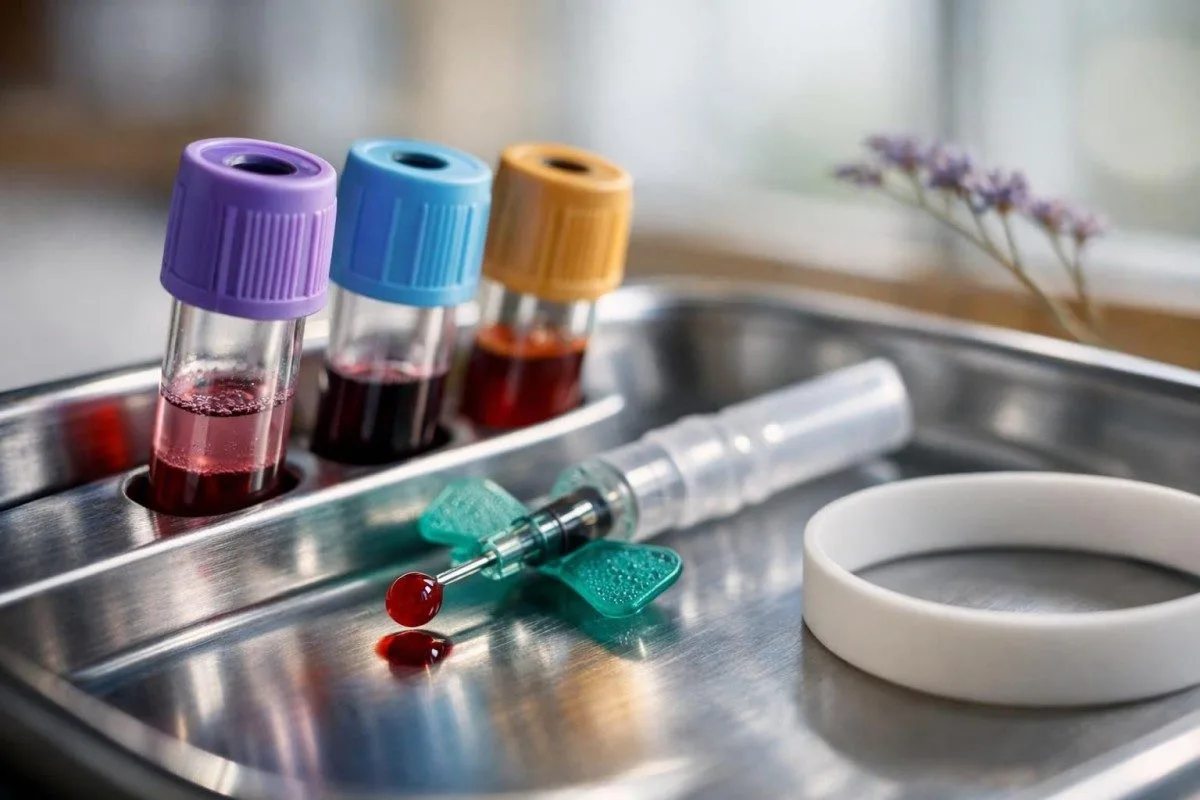
Most surgical patients need fewer tests than they expect. The real issue is knowing which results would actually change anesthesia, bleeding risk, or timing.


- CBC is the most common pre-op test; hemoglobin below 8 g/dL often triggers extra review before elective surgery.
- Verihiutaleet normally range from 150–450 x10^9/l; many procedures can proceed above 50 x10^9/L, but brain or eye surgery often wants more than 100 x10^9/L.
- Kalium is usually safest between 3,5–5,0 mmol/L; levels below 3.0 or above 5,5 mmol/l can delay anesthesia.
- INR is normally 0.8-1.2 in patients not taking warfarin; many surgical teams want INR below 1.5 before invasive procedures.
- eGFR-arvo of 60 mL/min/1.73 m² or higher is generally reassuring; lower values can change fluid and drug planning.
- HbA1c of 6.5% tai korkeampi supports diabetes; some elective programs postpone surgery when HbA1c is above 8.0-8.5%.
- Type and screen may need repeating within 72 tuntia if you were pregnant or transfused in the previous 3 kuukauden ajan.
- Pregnancy testing often turns positive at hCG 20-25 mIU/mL and can change medication or imaging decisions even when surgery still proceeds.
- Routine testing can be skipped in many healthy adults having low-risk surgery when history and examination are unremarkable.
Which pre-op blood tests are usually ordered?
Most people having surgery do ei need a giant panel. A typical blood test before surgery is a targeted mix of CBC, BMP or CMP, sometimes PT/INR or aPTTja type and screen if transfusion is possible; healthy patients having low-risk procedures may need no blood work at all.
The standard pre-op order set is smaller than most patients expect. In my experience, the useful question is whether a result will change anesthesia, bleeding planning, or timing — and that is exactly how we teach patients to read pre-op panels on tekoäly verikoetulokset.
If the abbreviations blur together, start with the basics: CBC looks at hemoglobin, white cells, and platelets, while BMP/CMP checks electrolytes, kidney function, and glucose. Our lab abbreviations guide helps because many hospital portals show only shorthand.
Klo kohdasta Kantesti, we see the same misconception in almost every country: patients assume more testing means safer surgery. As of April 1, 2026, the evidence still favors selective testing over blanket panels for low-risk elective cases.
Why surgeons and anesthesiologists order labs at all
Doctors order pre-op labs when a result could change what happens in the operating room. The aim is not to uncover every chronic problem; the aim is to avoid a preventable anesthesia, bleeding, kidney, or infection complication today.
As Thomas Klein, MD, I usually ask one blunt question before I sign off on a test: if the sodium comes back 129 mmol/L or the creatinine jumps from 0.9 to 1.8 mg/dL, what will we do differently? If the honest answer is nothing, the test is often noise.
Our physicians on the Lääketieteellinen neuvoa-antava toimikunta use the same logic. Kreatiniini can change drug dosing, kalium can change arrhythmia risk, and a positive antibody screen can slow transfusion support even when the CBC looks fine.
Lab interpretation is more nuanced than a simple red flag. Kantesti AI checks the lab's reference interval, unit system, and sample type against our kliininen validointi framework because a creatinine of 1.3 mg/dL means something very different in a muscular 90-kg athlete than in a frail 48-kg older adult.
CBC before surgery: anemia, infection, and platelets
A CBC is the most common pre-op blood test because it detects anemia, infection patterns, and low platelets. Normal adult Valkosolut on yleensä 4,0–11,0 x10^9/L, and normal verihiutaleet ovat 150–450 x10^9/l.
What matters most is the story behind the number. A WBC of 12.5 x10^9/L with fever and cough worries me; the same value after prednisone or in a heavy smoker often does not, and our deeper white blood cell guide käy läpi tämän eron.
Hemoglobin drives many delay decisions. Adult hemoglobin is roughly 12,0–15,5 g/dl naisilla ja 13,5–17,5 g/dL in men; elective surgery often gets a second look below 10 g/dl, and below 8 g/dL many teams pause unless the procedure is urgent, while platelet thresholds are summarized in our verihiutalemääräoppaamme.
One trap I see every month is EDTA platelet clumping — the lab reports platelets of 38 x10^9/L, everyone panics, then a repeat in a citrate tube comes back 186. Another is chronic iron-deficiency anemia with a normal heart rate and good exercise tolerance; a stable 9,8 g/dl before minor surgery is not the same problem as a newly dropping 9,8 g/dl with black stools.
MCV and RDW can explain the anemia
A low MCV alle 80 fL suggests iron deficiency or thalassemia trait, while a high RDW yli 14,5% nudges us toward mixed deficiency or recent blood loss. That backstory often tells us whether the surgeon can proceed and treat later, or whether the anemia needs workup first.
BMP or CMP: kidney function, electrolytes, and glucose
A BMP tai CMP is ordered to catch kidney dysfunction, electrolyte problems, and glucose issues that can destabilize anesthesia. Normal natrium on 135–145 mmol/l, normaali kalium on 3,5–5,0 mmol/L, and an eGFR of 60 mL/min/1.73 m² or higher is generally reassuring.
I pay less attention to an isolated PULLA than most patients expect. A BUN of 28 mg/dL with normal creatinine may simply reflect dehydration, which is why our BUN interpretation guide pairs it with hydration status rather than treating it as kidney failure by itself.
Creatinine and eGFR-arvo change anesthetic planning because impaired kidneys clear drugs more slowly and tolerate hypotension poorly. Our eGFR-oppaamme explains why a creatinine that looks normal can still hide reduced kidney reserve in older adults or people with low muscle mass; some European labs now flag eGFR below 90 earlier, but most perioperative decisions pivot more sharply when eGFR falls below 60 or especially below 30.
Glucose deserves its own line item. A fasting glucose of 70–99 mg/dL is normal, 100–125 mg/dL suggests impaired fasting glucose, and HbA1c 6.5% or higher supports diabetes; some orthopedic and vascular programs start delaying elective surgery around 8.0-8.5%, as we discuss in our HbA1c range guide, and patients on SGLT2-estäjiä may need a medication hold even when the sugar looks decent.
PT/INR and aPTT: who really needs clotting tests?
Routine clotting tests are usually ei needed for everyone. INR is normally 0.8-1.2 in people not taking warfarin, and an unexplained aPTT above the lab range deserves context before anyone talks about cancellation.
A PT/INR is most useful when you take varfariini, have liver disease, have a strong bleeding history, or are headed for surgery where even modest bleeding matters. Our PT/INR-ohjeemme covers the common thresholds; many teams want INR below 1.5 before invasive surgery, though neurosurgery may aim even tighter.
An aPTT is usually ordered when there is heparin exposure, a personal or family bleeding history, or concern about an intrinsic pathway disorder. The number is easy to overread — our aPTT and coagulation guide is helpful here because a mildly prolonged aPTT from a lupus anticoagulant may raise clotting risk rather than bleeding risk.
Here is a nuance most patient sites miss: DOACs such as apixaban and rivaroxaban are not reliably measured by standard INR. I have seen patients reassured by an INR of 1.1 even though clinically relevant anticoagulant effect was still present; timing since the last dose, kidney function, and the procedure's bleeding risk matter far more.
Type and screen, crossmatch, and pregnancy testing
A type and screen is ordered when transfusion is reasonably possible, and a pregnancy test is ordered when the result could change anesthesia or imaging choices. These are not routine for every minor procedure, but they matter a great deal when indicated.
Knowing your blood type from a donor card is not the same as having a current hospital type and screen. The lab confirms ABO/Rh and looks for unexpected antibodies; our blood type and reticulocyte guide is a useful refresher if terms like Rh-negative tai alloantibody feel fuzzy.
A positive antibody screen can delay blood availability by hours because the blood bank may need to find compatible units and perform extra matching. If you want the pre-op vocabulary decoded, our biomarkkeriopas helps patients distinguish screen, crossmatchja antigen without getting lost in jargon.
Pregnancy testing is usually urine or serum hCG, and many hospital assays turn positive around 20-25 mIU/mL. A positive result does not automatically cancel urgent surgery, but it can change fluoroscopy shielding, medication choices, and the conversation about timing; if you were transfused or pregnant within the prior 3 kuukauden ajan, some hospitals require a fresh type and screen within 72 tuntia.
Targeted tests that are sometimes added
Targeted tests are added only when history points that way. The most common extras are ferritiini tai raudan tutkimukset, liver tests, albumiinin, kilpirauhastutkimukset, ja joskus virtsan tutkimus.
Iron status is the hidden pre-op issue I wish more patients knew about. A alle 30 ng/mL strongly suggests iron deficiency in most adults, and our ferritin range guide matters here because patients can have normal hemoglobin today yet still drift into postoperative anemia after a high-blood-loss operation.
Liver tests are usually selective, not routine. ALT is commonly reported as normal around 7–56 yksikköä/l, total bilirubiini around 0.1-1.2 mg/dLja albumin below 3.0 g/dL raises my concern more than a mild isolated ALT bump because low albumin tracks with poor wound healing and frailty; our ALT-oppaaseen unpacks the difference.
Urinalysis is another overused test. For most non-urologic surgery, asymptomatic bacteriuria on a screening urine sample is not a good reason to delay or give antibiotics, which is why I point readers to our virtsan tutkimus -oppaamme before they panic over a few leukocytes or trace bacteria; mild thyroid lab abnormalities behave similarly — context beats reflex cancellation.
When pre-op blood work can be safely skipped
Pre-op blood work can often be skipped in healthy adults having low-risk surgery. That includes many cataract, dermatologic, endoscopy, and minor ambulatory procedures when history and examination are reassuring.
This is where old habits die hard. Patients frequently upload years of old lab PDFs to Kantesti-tekoäly after being told no repeat blood work is needed, and the surprise is usually that the surgeon is following evidence, not cutting corners.
NICE NG45 and the ASA approach both moved away from age-based routine testing years ago. The classic New England Journal of Medicine -lehdessä cataract surgery trial found no meaningful reduction in perioperative events from routine testing, and the later Cochrane review landed in essentially the same place for low-risk eye surgery.
But skipped does not mean ignored. A person with CKD stage 3, insulin-treated diabetes, heavy anticoagulant use, or a history of transfusion reactions can need labs for even a modest procedure, while a healthy 29-year-old having a 20-minute superficial operation may need none.
Which abnormal results can delay an elective procedure?
Elective surgery is most often delayed by results that signal unstable anemia, active infection, major clotting risk, dangerous electrolytes, or poorly controlled diabetes. In day-to-day practice, the repeat test is sometimes as important as the abnormal one.
Common tripwires are hemoglobiini alle 8 g/dL, platelets below 50 x10^9/L, INR 1.5 or higher when not expected, potassium below 3.0 or above 5.5 mmol/L, sodium below 130 mmol/L, and day-of-surgery glucose above 250 mg/dL. Korkea WBC above 15 x10^9/L with fever or new symptoms often pushes us to look for infection before proceeding.
The thing is, not every scary result is real. A hemolyzed sample can falsely raise potassium into the 5.8-6.2 mmol/L range, and a rushed repeat often normalizes — our laboratoriotutkimusten ajoitusoppaamme explains why repeat chemistry can come back within an hour while a crossmatch takes longer.
Across the 2M+ reports uploaded to Kantesti from 127+ countries, the most common misunderstanding is confusing a lab reference flag with a surgical stop sign. Our result translation guide helps patients separate mildly abnormal numbers from the findings that truly change anesthesia, and that distinction avoids a lot of sleepless nights.
False alarms worth repeating
Three repeat-worthy culprits are hemolysis, EDTA platelet clumpingja tourniquet-related hemoconcentration. In practice, repeating the sample before canceling a case can save a patient a lost workday, a missed operation slot, and a lot of unnecessary fear.
What blood tests should I ask for, and how do I understand the results?
The best question is not what blood tests should I get; it is which test would change management for my surgery. If no result would alter timing, bleeding preparation, medication choice, or anesthesia plan, extra blood work usually adds cost more than safety.
As Thomas Klein, MD, I tell patients not to ask for every panel under the sun. Bring a medication list, prior abnormal labs, and the name of the procedure instead; if you already have results and want a plain-language review before that appointment, you can upload them to our free lab review, and most patients get a readable summary in about 60 sekunnissa.
Preparation matters more than people realize. Most CBCs and many BMP/CMP panels do ei require fasting, but glucose or lipid testing sometimes does, so check the exact order and read our paasto-ohje before you skip water or morning medicines.
To understand the numbers, compare the current result with your own baseline, not just the lab's red box. Kantesti AI explains trend direction, reference variation, and medication context using the framework we outline in our teknologiaopas.
And if you want the physician-style logic behind miten lukea verikoetuloksia, start with our complete lab reading guide. In clinic, that is usually where fear turns into a concrete plan.
Tutkimusjulkaisut ja lisälukeminen
These two publications give added context on blood-based diagnostics that occasionally intersect with perioperative evaluation. They are not standard pre-op ordering guides, but they are useful references for broader lab literacy.
Kantesti AI Research Team. (2026). Nipah virus blood test: Early detection & diagnosis guide 2026. Zenodo. https://doi.org/10.5281/zenodo.18487418. A searchable ResearchGate version is also available. An Academia.edu listing can be useful for literature tracking.
Kantesti AI Research Team. (2026). B negative blood type, LDH blood test & reticulocyte count guide. Figshare. https://doi.org/10.6084/m9.figshare.31333819. A searchable ResearchGate version is also available. An Academia.edu listing can be useful for literature tracking.
If a pre-op result is unusual and you need physician-reviewed context, send it through your own care team first, then ota yhteyttä tiimiimme if you want help understanding the report language. We update this section when new blood-testing references are directly relevant to patients preparing for surgery.
Usein kysytyt kysymykset
Tarvitsevatko kaikki potilaat verikokeen ennen leikkausta?
Ei. Terveiden aikuisten, joille tehdään vähäinen ja matalan riskin leikkaus, ei usein tarvita preoperatiivisia verikokeita, jos esitiedot ja tutkimus ovat tavanomaiset. Täydellinen verenkuva tai kemiallinen peruskoe on todennäköisemmin tarpeen, jos taustalla on munuaissairaus, diabetes, anemia, verenohennuslääkkeiden käyttö tai odotettavissa oleva verenvuoto. Veriryhmä- ja seulontatutkimus (type and screen) varataan yleensä toimenpiteisiin, joissa verensiirto on realistinen mahdollisuus.
Mitä verikokeita minun pitäisi ottaa ennen yleisanestesiaa?
Ei ole olemassa yhtä yleistä luetteloa kaikille potilaille yleisanestesiassa. Yleisimmät, tarvittaessa tehtävät tutkimukset ovat täydellinen verenkuva (CBC), perusmetabolinen paneeli (BMP) tai laaja metabolinen paneeli (CMP), kreatiniini ja elektrolyytit, glukoosi sekä joskus PT/INR, aPTT, veriryhmän määritys ja seulonta (type and screen) tai raskaustesti. Itse toimenpiteellä on merkitystä: lyhyt, pinnallinen leikkaus ei välttämättä vaadi laboratoriokokeita, kun taas suuri vatsan tai ortopedinen leikkaus vaatii usein enemmän suunnittelua. Paras kysymys on, mikä tutkimustulos muuttaisi anestesia- tai leikkaussuunnitelmaa.
Voiko matala hemoglobiini peruuttaa leikkauksen?
Kyllä, mutta raja-arvo ei ole sama kaikissa tapauksissa. Hemoglobiini alle 8 g/dl johtaa usein leikkauksen siirtämiseen tai kiireelliseen keskusteluun elektiivisen leikkauksen yhteydessä, kun taas vakaa krooninen anemia 9–10 g/dl:n alueella voi yhä olla hyväksyttävä pienemmän verenmenetyksen toimenpiteissä. Oireilla on suuri merkitys: rintakipu, hengenahdistus, mustat ulosteet tai hemoglobiinin nopea lasku ovat huolestuttavampia kuin pitkään jatkunut lievä anemia. Kirurgit arvioivat myös odotettavissa olevan verenmenetyksen, sydänsairauden sekä sen, voidaanko rautahoidolla parantaa tilannetta ensin.
Tarvitaanko paasto ennen leikkausta edeltäviä verikokeita?
Yleensä ei CBC:tä varten, eikä usein myöskään tavanomaista BMP- tai CMP-tutkimusta varten. Paasto vaaditaan useammin, kun määräys sisältää paastoglukoosin tai lipidipaneelin, ja paastoajan pituus on yleensä 8–12 tuntia laboratoriosta riippuen. Vettä saa yleensä juoda, ja siitä voi olla hyötyä, koska kuivuminen voi virheellisesti nostaa BUN-arvoa ja vaikeuttaa näytteenottoa. Kysy erikseen aamulla otettavista lääkkeistä, erityisesti insuliinista, diabetestableteista ja verenohennuslääkkeistä.
Kuinka tuoreiden preoperatiivisten laboratoriokokeiden tulisi olla?
Monet sairaalat hyväksyvät vakaan täydellisen verenkuvan ja kemiallisten tutkimusten tulokset, jotka on otettu enintään 30 päivän sisällä ennen elektiivistä leikkausta, vaikka jotkin hyväksyvät pidemmät ajanjaksot, jos pitkäaikaissairaudet eivät ole muuttuneet. Veriryhmä- ja seulontatutkimus (type and screen) on eri asia: jos olet ollut raskaana tai saanut verensiirron viimeisten 3 kuukauden aikana, monet veripankit edellyttävät, että näyte on kerätty 72 tunnin kuluessa. Leikkauspäivän glukoosimittaus voidaan silti lisätä diabeteksen vuoksi, vaikka tuoreita poliklinikkalabroja olisi saatavilla. Paikallinen käytäntö, toimenpide ja sairaushistoriasi määrittävät tarkan ajankohdan.
Mitkä poikkeavat verikokeiden tulokset viivästyttävät leikkausta useimmin?
Yleisimmät viivästykset johtuvat vaikeasta anemiasta, merkittävistä elektrolyyttihäiriöistä, hoitamattomasta diabeteksesta, odottamattomista hyytymishäiriöistä, aktiivisesta infektiosta ja akuutista munuaisvauriosta. Käytännössä kliinikot usein keskeyttävät elektiivisen leikkauksen, kun hemoglobiini on alle 8 g/dl, trombosyytit alle 50 x10^9/l, INR on 1,5 tai korkeampi, kalium on alle 3,0 tai yli 5,5 mmol/l tai glukoosi on yli 250 mg/dl leikkauspäivänä. Kuume ja valkosolujen määrä yli 15 x10^9/l lisäävät myös huolta infektiosta. Uusintanäyte on joskus järkevin seuraava askel, koska hemolyysi ja trombosyyttien paakkuuntuminen voivat aiheuttaa vääriä hälytyksiä.
Mitä verikokeita minun pitäisi pyytää, jos kirurgini ei tilannut mitään?
Älä pyydä oletuksena laajaa tutkimuspakettia. Kysy, muuttaisiko täydellinen verenkuva (CBC), kemiallinen tutkimus, INR, veriryhmän ja vasta-aineiden määritys (type and screen) tai raskaustesti hoitoa kyseisessä toimenpiteessäsi, käyttämissäsi lääkkeissä tai kroonisissa sairauksissasi. Jos vastaus on ei, testien ohittaminen on usein ohjeisiin perustuva valinta eikä laiminlyönti. Aiemmat poikkeavat verikokeet, lääkityslista ja tarkka leikkauksen nimi ovat yleensä hyödyllisempää kuin se, että pyydät itse lisää verikokeita.
Hanki tekoälypohjainen verikoeanalyysi tänään
Liity yli 2 miljoonan käyttäjän joukkoon maailmanlaajuisesti, jotka luottavat Kantesti:hen saadakseen välittömän ja tarkan laboratoriotestianalyysin. Lataa verikoetuloksesi ja saat kattavan tulkinnan 15,000+-biomarkkereista sekunneissa.
📚 Viitatut tutkimusjulkaisut
Klein, T., Mitchell, S., & Weber, H. (2026). Nipah-viruksen verikoe: Varhaisen havaitsemisen ja diagnoosin opas 2026. Kantesti AI Medical Research.
Klein, T., Mitchell, S., & Weber, H. (2026). B-negatiivinen veriryhmä, LDH-verikoe ja retikulosyyttimäärän opas. Kantesti AI Medical Research.
⚕️ Lääketieteellinen vastuuvapauslauseke
Tämä artikkeli on tarkoitettu vain koulutustarkoituksiin eikä se muodosta lääketieteellistä neuvontaa. Ota aina yhteyttä pätevään terveydenhuollon ammattilaiseen diagnoosi- ja hoitopäätöksiä varten.
E-E-A-T-luottamussignaalit
Kokea
Lääkärin johtama kliininen arviointi laboratoriotulkinnan työnkuluista.
Asiantuntemus
Laboratoriolääketiede keskittyy siihen, miten biomarkkerit käyttäytyvät kliinisessä kontekstissa.
Auktoriteetti
Kirjoittanut tohtori Thomas Klein, tarkistanut tohtori Sarah Mitchell ja professori tohtori Hans Weber.
Luotettavuus
Näyttöön perustuva tulkinta selkeillä jatkopoluilla, jotka vähentävät hälytystä.