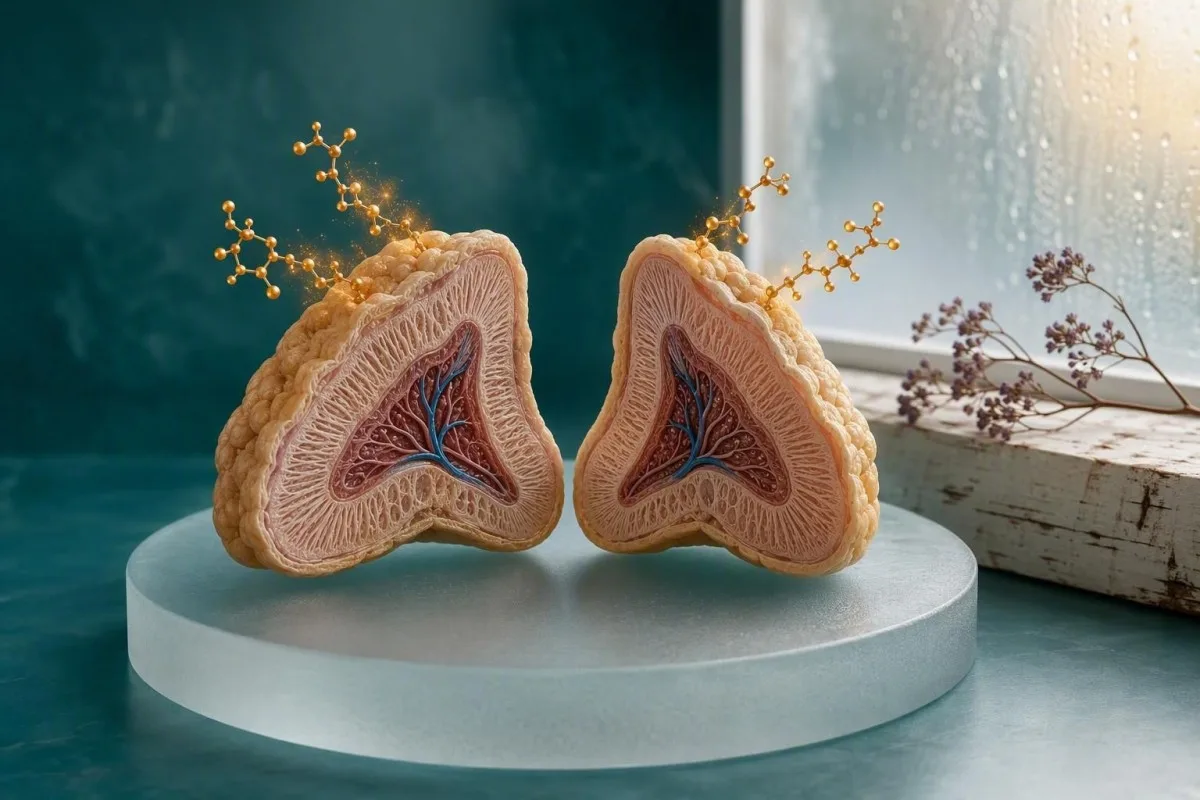
Korkea DHEA-tulos heijastaa yleensä lisämunuaisen hormonaalista signaalia, lisäravinteen vaikutusta tai harvemmin munasarjojen tai lisämunuaisten häiriötä. Tarkka määritysmenetelmä, yksikkö, oireet, muutoksen nopeus ja samanaikaiset hormonit määrittävät, tarvitaanko rutiininomaista uusintatutkimusta vai nopeaa endokrinologin arviota.


- DHEA-S:n lähde: DHEA-S:ää tuottavat lähes kokonaan lisämunuaiset, kun taas DHEA:ta voi tulla lisämunuaisista, munasarjoista ja perifeerisistä kudoksista.
- Laboratoriorajat vaihtelevat: Monet laboratoriot ilmoittavat DHEA-S:n ylärajaksi noin 320–430 µg/dL 18–29-vuotiailla naisilla, ja yli 30-vuotiailla ylärajat ovat alhaisemmat.
- Kasvainten raja-arvo: DHEA-S yli 700 µg/dL vaatii nopean arvioinnin lisämunuaisperäisen syyn varalta, erityisesti nopean virilisaation yhteydessä.
- PCOS-malli: PCOS voi aiheuttaa lievää tai kohtalaista androgeenien nousua, mutta hyvin korkea DHEA-S-tulos ei ole tyypillinen eikä sitä pidä automaattisesti liittää PCOS:ään.
- Keskeinen seulontatesti: Varhain aamulla follikulaarivaiheessa otettu 17-hydroksiprogesteroni yli 200 ng/dL johtaa yleensä ACTH-stimulaatiotestaukseen epäklassisen synnynnäisen lisämunuaisen liikakasvun selvittämiseksi.
- Lääkityksen tarkistus: DHEA-lisät, testosteronialtistus, danatsoli, jotkin epilepsialääkkeet ja analyysihäiriö voivat muuttaa androgeenituloksia.
- Kiireelliset oireet: Uusi äänen madaltuminen, nopeasti etenevä kasvojen karvoitus, hiustenlähtö päänahassa, lihasmassan kasvu tai klitoriksen suureneminen vaativat ajankohtaista lääketieteellistä arviota.
- Uudelleentestausmenetelmä: LC-MS/MS on yleensä suositeltavampi matalille naisten androgeenipitoisuuksille, kun immunomääritys tulos ei sovi kliiniseen kuvaan.
Mitä korkea DHEA-tulos merkitsee naisilla
Korkean DHEA:n syyt naisilla liittyvät useimmiten lisämunuaisten hormonituotantoon, DHEA:ta sisältävään lisäravinteeseen tai analyysi- ja ajoitusongelmaan; tulos yksinään ei diagnosoi PCOS:ää tai kasvainta. 24. elokuuta 2026 alkaen käytännön ensimmäinen askel on varmistaa, mittasiko raportti DHEA vai DHEA-S, ja aseta sitten luku testosteronin, kuukautishistorian ja fyysisten muutosten etenemisnopeuden rinnalle.
Liputettu tulos voi olla järkyttävä, mutta lippu tarkoittaa vain, että arvo on kyseisen laboratorion viitevälin ulkopuolella. DHEA-S yli 700 µg/dL on hyödyllinen kehotus nopeaan lisämunuaisten arviointiin aikuisella naisella, kun taas pieni erillinen nousu juuri laboratorion ylärajan yläpuolelle selittyy usein paljon vähemmän dramaattisella syyllä. Lue todellinen alue, analyysimenetelmä ja yksikkö ennen johtopäätösten tekemistä; oppaamme poikkeavien laboratoriolippujen selittää, miksi tämä on tärkeää.
DHEA on heikko androgeeni ja testosteronin ja estrogeenien esiaste. Sen pitoisuus muuttuu päivän aikana enemmän kuin DHEA-S, koska DHEA:lla on lyhyt kiertoaika, noin 15-30 minuuttia; DHEA-S kestää noin 7-10 tuntia ja on siksi tasaisempi lisämunuaisten merkkiaine. Kantesti on tekoälypohjainen verikoeseanalysaattori, joka lukee raportoidun analyytin, yksikön, ikäkohtaisen alueen ja liittyvät hormonit sen sijaan, että jokaista korkeaa lippua käsiteltäisiin samalla tavalla.
Kliinisessä työssäni hyödyllisin kysymys ei ole "kuinka korkea se on?", vaan "korkea verrattuna mihin kuvioon?". 24-vuotiaan, jolla on epäsäännölliset kuukautiskierrot, kohtalaisesti kohonnut testosteroni ja DHEA-S 410 µg/dL, tarvitsee erilaista keskustelua kuin 48-vuotias, jonka DHEA-S on juuri saavuttanut 920 µg/dL ja johon liittyy äänen muutos. Dr. Thomas Klein arvioisi nämä erillisinä kliinisinä ongelmina, ei eri pisteinä samalla asteikolla.
Ensimmäiset tiedot, jotka kopioit raportistasi
Kirjaa tarkka testin nimi, tulos, yksikkö, laboratorion viiteväli, näytteenottoaika, kierron päivä, raskausstatus, lääkkeet ja lisäravinteet. Nämä seitsemän yksityiskohtaa voivat estää tarpeettoman kuvantamistutkimuksen tai päinvastoin estää vakavan androgeeniylimäärän kuvion sivuuttamisen.
DHEA vs DHEA-S: Miksi ero muuttaa tutkimusprosessia
DHEA-S on ensisijaisesti lisämunuaisten hormoni, kun taas DHEA on vähemmän lähteisiin sidottu ja vaihtelee enemmän. Korkea DHEA-S naisilla viittaa siksi vahvemmin lisämunuaisten tuotantoon kuin erillinen korkea DHEA-tulos.
DHEA on dehydroepiandrosteroni; DHEA-S on sen sulfatoitu varastomuoto. Lisätty sulfaattiryhmä tekee DHEA-S:stä runsaampaa ja vakaampaa verenkierrossa, joten endokrinologit valitsevat sen usein yrittäessään selvittää, onko androgeeniylimäärällä lisämunuaisten osuutta. Tarkemman selityksen lähteestä ja ajoituksesta saat vertailemalla DHEA-S:ää ja DHEA:ta.
Ei ole olemassa yhtä ainoaa yleispätevää naisten DHEA-S-viiteväliä. Tyypillinen yläraja voi olla 430 µg/dL iässä 18-29, 320 µg/dL iässä 30-39ja 220 µg/dL 40-49 vuoden ikäisillä, mutta paikalliset menetelmät eroavat merkittävästi; jotkin eurooppalaiset laboratoriot raportoivat µmol/L-yksiköissä, joissa 1 µg/dL on noin 0,027 µmol/L. Ikäkorjaus on tärkeää, koska lisämunuaisen androgeenituotanto laskee tasaisesti kolmannen vuosikymmenen jälkeen.
Yksittäinen seerumin DHEA-arvo voi olla korkeampi varhain aamulla otetussa näytteessä, akuutin sairauden, voimakkaan liikunnan tai äskettäisen ravintolisän käytön jälkeen. DHEA-S ei ole immuuni vaihteluille, mutta uusintatulos on yleensä helpompi tulkita. Pelkästään "DHEA" nimellä merkittyä testiä ei tule koskaan käyttää DHEA-S:n korvikkeena tarkistamatta, mitä lääkäri pyrki selvittämään.
Naisilla korkean DHEA-S:n lisämunuaisperäiset syyt
Lisämunuaisen syitä korkeaan DHEA-S-pitoisuuteen ovat fysiologinen vaihtelu, epätyypillinen synnynnäinen lisämunuaisten liikatoiminta, ACTH-stimuloitu lisämunuaisten toiminta ja harvoin androgeeneja tuottava lisämunuaisen kasvain. Yli 700 µg/dL:n DHEA-S-tulos tai nopeasti nousevat arvot ansaitsevat nopean lääkärin arvioinnin, erityisesti virilisaation esiintyessä.
Epätyypillinen 21-hydroksylaasin puutos voi ilmetä murrosiän jälkeen aknen, hirsutismin, epäsäännöllisten kuukautisten tai hedelmällisyysongelmien muodossa. Kuluvan kuukautiskierron follikkelivaiheen näyte, otettu noin klo 8 aamulla, ja 17-hydroksiprogesteroni yli 200 ng/dL (noin 6 nmol/L) johtaa yleensä ACTH-stimulaatiotestiin; stimuloitu arvo, joka on hieman yli 1 000 ng/dL, tukee vahvasti diagnoosia. Speiserin ym. (2018) johtama Endocrine Societyn ohjeistus suosittelee varhaisen aamun seulontaa ja varmistavaa testausta tämän tilan diagnosoimiseksi pelkän DHEA-S:n perusteella.
ACTH on aivolisäkkeen signaali, joka voi stimuloida lisämunuaisen androgeenituotantoa. ACTH-riippuvaisessa kortisolin ylituotannossa DHEA-S voi olla normaali tai kohonnut; kortisolia tuottavassa lisämunuaisen sairaudessa, joka hillitsee ACTH:ta, DHEA-S voi sen sijaan olla matala. Tämä kontrasti selittää, miksi kortisolin tulos ilman luotettavia ACTH-näytteenottotietoja voi johtaa harhaan jopa kokeneita lääkäreitä.
Lisämunuaisen androgeeneja tuottavat kasvaimet ovat harvinaisia, mutta niiden kuvio on erottuva: DHEA-S on usein merkittävästi kohonnut, oireet etenevät kuukausissa pikemminkin kuin vuosissa, ja testosteroni voi myös olla korkea. Kuvantamista pidetään yleensä asianmukaisena biokemiallisen vahvistuksen jälkeen, ei ensisijaisena reaktiona rajatulosiin. Yksittäinen korkea arvo DHEA-lisäravinteen käytön jälkeen ei ole todiste lisämunuaisen massasta.
Miksi kortisoli kuuluu samaan keskusteluun
Kortisoli ja DHEA syntyvät vierekkäisistä lisämunuaisreiteistä, mutta eivät liiku yhdessä luotettavasti. Oikein ajoitettu kortisolin mittaus voi selventää, selittääkö ACTH-stimulaatio, -suppressio vai jokin muu lisäravinnevaikutus tulosta paremmin; katso käytännön oppaamme kortisoli- ja DHEA-kuvio-opas.
Munasarjaperäiset syyt, PCOS ja yhden hormonin mittauksen rajoitukset
PCOS on yleisin pysyvien androgeeniylimääräoireiden syy lisääntymisikäisillä naisilla, mutta se nostaa useammin testosteronia tai androstenedionia kuin aiheuttaa merkittävää DHEA-S-nousua. DHEA-S voi olla lievästi koholla PCOS:ssä, mutta lähes 700 µg/dL:n tai sitä korkeampi arvo tulisi selvittää myös PCOS:n ulkopuolelta.
PCOS diagnosoidaan yhdistelmällä ovulaatiohäiriöitä, kliinistä tai biokemiallista hyperandrogenismia ja munasarjojen morfologiaa, kun muut syyt on poissuljettu. Azzizin ym. (2009) julkaisema Androgen Excess and PCOS Society -lausunto kuvaa PCOS:ää pääasiassa hyperandrogeeniseksi, mutta mikään DHEA-S-arvo ei itsenäisesti vahvista sitä. Akne yhdistettynä epäsäännöllisiin kuukautisiin ja korkeaan DHEA-S-arvoon on viitteellinen, ei diagnostinen.
Munasarjojen androgeenejä tuottavat kasvaimet tuottavat yleensä testosteronipitoisuuksia, jotka ovat yli 150–200 ng/dL ja nopeampaa virilisaatiota kuin tavallinen PCOS. DHEA-S on usein normaali puhtaasti munasarjalähteessä, mikä on hyödyllinen vihje, muttei täydellinen sääntö. Syklin huomioivasta testauksesta ehkäisyn jälkeen artikkelissamme PCOS-testit ehkäisyn jälkeen kerrotaan odotusajasta ja sen rajoituksista.
Kantesti on tekoälypohjainen verikoetulosten selitys -alusta, joka sijoittaa DHEA-S:n kokonaistestosteronin, SHBG:n, LH:n, FSH:n, prolaktiinin, glukoosin ja HbA1c:n rinnalle, kun nämä arvot ovat saatavilla. Tällä kontekstilla on merkitystä, koska insuliiniresistenssi voi vahvistaa munasarjojen androgeenituotantoa, mutta se ei selitä jokaista lisämunuaisen tasoista DHEA-S-arvoa. Laajempi naisten hormoniterveyden oppaassamme on hyödyllinen ennen yhden diagnoosin olettamista.
Yleinen väärinkäsitys munasarjakystistä
Ultraäänilöydös, joka näyttää monirakkulaiselta, ei tarkoita, että yksittäiset rakkulat erittäisivät DHEA:ta. PCOS on metabolinen-endokriininen oireyhtymä, ja monilla sen sairastavilla naisilla on normaali ultraäänilöydös, kun taas toisilla, joilla on monirakkulainen morfologia, ei ole PCOS:ää.
Lääkitys-, lisäravinne- ja analyysimenetelmän syyt korkeaan DHEA:han
DHEA-kapselit ovat suoraviivaisin ohimenevä syy korkeaan DHEA- tai DHEA-S-arvoon, ja jo 25–50 mg päivässä voi nostaa tulosta laboratorion viitealueen ulkopuolelle. Lääkityksen tarkistus tulisi tehdä ennen kuvantamista, mutta määrättyjä lääkkeitä ei pidä lopettaa ilman lääkärin neuvoa.
DHEA:ta myydään joissakin maissa ilman reseptiä saatavana lisäravinteena, ja sitä voi esiintyä tuotteissa, joita markkinoidaan energian, libidon, vaihdevuosien tai "lisämunuaisen tuenin" nimellä. Epäpuhtaudet tai puutteellinen merkintä ovat mahdollisia yhdistetyissä hormonaalisissa tuotteissa. Kumppanin käyttämät testosteronigeelit voivat myös siirtyä läheisessä ihokontaktissa, nostaen naisen androgeenitasoja, vaikka hänellä ei olisikaan tarkoitettua reseptiä.
Danatsoli, valproaatti, jotkin progestiinit ja glukokortikoidimuutokset voivat muuttaa laajempaa androgeenikuvaa, vaikka ne eivät kaikki suoraan nostakaan DHEA-S-arvoa. Yhdistelmäehkäisypillerit laskevat yleensä DHEA-S-arvoa ja vapaata testosteronia, joten normaali arvo niiden käytön aikana ei poissulje perustason androgeeniylimäärää. Lue lisää DHEA-S ehkäisyn aikana.
Immunomääritykset ovat herkkiä naisilla tyypillisille matalille pitoisuuksille, ja biotiini voi vääristää valikoituja streptavidiini-biotiinimäärityksiä. LC-MS/MS tarjoaa paremman analyyttisen spesifisyyden kokonaistestosteronille ja on hyödyllinen, kun tulos on ristiriidassa anamneesin kanssa; DHEA-S-menetelmät vaihtelevat myös laboratorioittain. Lopeta biotiinin käyttö vähintään 48 tuntia ennen suunniteltua verikoetta, jos laboratoriosi niin neuvoo, ja ilmoita sen käytöstä joka tapauksessa.
Mitä ottaa mukaan vastaanotolle
Ota mukaan kuvat jokaisesta lisäravinnepakkauksesta, mukaan lukien jauheet, voiteet, pelletit ja yrttisekoitukset, sekä annos ja viimeinen käyttöpäivä. Käytännössä tämä ratkaisee useampia hämmentäviä tulosyhdistelmiä kuin potilaat odottavat.
Korkean DHEA:n oireet: Mitä saatat huomata ja mitä et ehkä huomaa
Korkean DHEA-arvon oireet ovat androgeeniylimäärän oireita, eivätkä ne itsessään ole luotettava mittari itse arvosta. Akne, lisääntynyt terminaalikarvoitus kasvoissa tai vartalolla, ohimopään hiustenlähtö, epäsäännölliset kuukautiset ja hedelmällisyyden lasku voivat esiintyä, kun taas monet naiset, joilla on lievä DHEA-S-nousu, tuntevat olonsa täysin terveiksi.
Hirsutismi tarkoittaa karheaa terminaalihiekkaa androgeeniherkillä alueilla, ei tavallista hienoa kehonhiekkaa. Muokattu Ferriman-Gallwey-pisteetys käyttää yhdeksää kehonkohtaa, ja pisteet 8 tai enemmän katsotaan usein epänormaaliksi monissa populaatioissa, vaikka etnisyys ja hygieniakäytännöt muuttavat sen hyödyllisyyttä. Martin et al. (2018) Endocrine Societyn hirsutismiohjeistus suosittelee kohdennettua androgeenitestausta, kun pisteet ovat epänormaalit tai oireet etenevät.
Nopeat muutokset painavat enemmän kuin pelkkä vakavuus. Uusi päivittäinen parranajo kahdesti, ohimoiden alueen hiustenlähtö, äänen syveneminen, lisääntynyt lihaksikkuus tai klitoriksen suureneminen yli 3–12 kuukauden ovat huolestuttavampia merkittävästä androgeeniylijäämästä kuin pitkäaikainen lievä leukakarvoitus teini-iästä lähtien. Hyödyllinen aiheeseen liittyvä yleiskatsaus on oppaamme testosteronipitoisuuksista naisilla.
Akne, väsymys, ahdistus, alakuloisuus ja huono uni ovat epäspesifejä. En leimaisi niitä "adrenaali-väsymykseksi" DHEA-tuloksen perusteella; tälle ilmaisulle ei ole olemassa hyväksyttyä diagnostiikkamenetelmää. Tri Thomas Klein on nähnyt potilaiden helpottuvan, kun tämä ero tehdään, koska se ohjaa huomion pois todisteisiin perustuvista syistä, kuten PCOS, kilpirauhasen sairaus, raudanpuute, lääkkeiden vaikutukset tai tavallinen elämänstressi.
Oireet, jotka eivät vastaa lukumäärää
Karvatupet reagoivat eri tavoin samaan androgeenipitoisuuteen, koska paikallinen entsyymiaktiivisuus ja geneettinen herkkyys vaihtelevat. Naisella voi olla merkittävä hirsutismi normaaleilla seerumin androgeeneilla, kun taas toisella, jolla on DHEA-S 500 µg/dL, on vähän näkyviä muutoksia.
Milloin korkea DHEA vaatii nopeaa kliinistä arviota
Hakeudu nopeasti lääkäriin, jos DHEA tai DHEA-S on korkea yhdessä nopean virilisaation, DHEA-S-pitoisuuden yli 700 µg/dL, testosteronin yli noin 150-200 ng/dL tai uuden vaikean hypertensiotason ja kortisoliin liittyvien oireiden kanssa. Useimmat lievät kohonneet arvot eivät ole hätätapauksia, mutta näiden yhdistelmien tapauksessa ei pidä odottaa vuosittaista tarkistusta.
Virilisaatio tarkoittaa maskulinisoivampien piirteiden kehittymistä, erityisesti äänen syvenemistä, klitoriksen suurenemista, nopeasti etenevää mieskaltaista hiustenlähtöä päänahassa tai merkittävää lihasmuutosta. Nämä merkit viittaavat androgeenialtistukseen, joka ylittää tavanomaisessa PCOS:ssä havaitun tason, ja oikeuttavat kiireellisen ensisijaisen hoidon, gynekologisen tai endokrinologisen polun. Nopea alkaminen muutaman kuukauden aikana on kliinisesti informatiivisempaa kuin pitkä historia vakaasta hiustenkasvusta.
Soita kiirepalveluihin, jos sinulla on vaikea päänsärky ja näköhäiriöitä, rintakipua, pyörtymistä, sekavuutta tai erittäin korkea verenpaine; näitä oireita ei aiheuta pelkkä DHEA, mutta ne voivat viitata erilliseen hormonaaliseen tai sydän- ja verisuoniongelmaan. Jos painonnousu keskivartalon alueella, helpot mustelmat, proksimaalinen lihasheikkous ja uusi diabetes liittyvät tulokseen, lääkärit voivat arvioida kortisolin ylimäärää. Sivumme aiheesta korkeasta kortisolista selittää, miksi yksikään yksittäinen kortisolin mittaus ei diagnosoi Cushingin oireyhtymää.
Raskaus muuttaa kontaktin kynnystä. Uusia androgeenisia oireita raskauden aikana, erityisesti nopeasti eteneviä, tulee keskustella viipymättä synnytysryhmän kanssa, koska äidin ja sikiön tilanteet eroavat. Älä aloita antiandrogeenilääkkeitä tai DHEA-tasoa alentavia lisäravinteita omatoimisesti; useat vaihtoehdot eivät sovellu raskauden aikana tai ilman luotettavaa ehkäisyä.
Mikä on yleensä turvallista tehdä tänään
Kirjoita ylös, milloin oireet alkoivat, säilytä laboratorioraportti ja lopeta käyttämäsi DHEA-lisäravinteet, kunnes olet puhunut lääkärin kanssa. Lisäravinteen lopettaminen on eri asia kuin reseptilääkkeen lopettaminen, mikä voi olla vaarallista äkillisesti.
Kuinka DHEA-testaus uusitaan luotettavamman vastauksen saamiseksi
Toistuva DHEA-S-testi on hyödyllisin, kun se otetaan aamulla, mahdollisuuksien mukaan samassa laboratoriossa, lopetettuasi käyttämäsi DHEA-lisäravinteet ja dokumentoituaan syklin vaiheen. DHEA itse on herkempi ajoitukselle kuin DHEA-S, joten yksittäinen odottamaton DHEA-tulos vaatii erityistä varovaisuutta.
Lisääntymisikäisillä naisilla, jotka kuukautiset, lääkärit ottavat androgeenitestit usein varhaisen follikulaarivaiheen aikana, yleensä päivinä 3-5, kun se on käytännöllistä. Tämä ei ole pakollista DHEA-S:lle, mutta se helpottaa samanaikaisen testosteronin, 17-hydroksiprogesteronin, LH:n, FSH:n ja estradiolin vertailua. Vältä testausta akuutin kuumetaudin aikana, kun kysymys on lievästä selittämättömästä poikkeamasta.
Kirjaa äskettäin tapahtunut raskas liikunta, huono uni, vuorotyö, alkoholin käyttö ja lisäravinteet. Nämä tekijät selittävät harvoin DHEA-S-arvon 900 µg/dL, mutta ne voivat muuttaa raja-arvon ylittävän tuloksen kohinaksi. Jos tulokset eroavat merkittävästi käyntien välillä, käytä todellisia päivämääriä ja näytteenottotilanteita; meidän verikokeiden aikajanaopas näyttää, miksi ilmeiset muutokset ovat joskus esianalyyttisiä eivätkä biologisia.
Älä paastoa pelkästään DHEA-S-testiä varten, elleivät muut määrätyt testit sitä vaadi. Paastoaminen on tärkeämpää glukoosin, insuliinin ja lipidien kannalta kuin tämän lisämunuaisen androgeenin kohdalla. Jos testaus on osa hedelmättömyysselvitystä, kysy laboratoriolta tai hedelmällisyystiimiltä heidän protokollaansa sen sijaan, että olettaisit internetin neuvojen soveltuvan lääkityssuunnitelmaasi.
Miksi toistaminen toisessa laboratoriossa voi sekoittaa asioita
Uusi laboratorio voi käyttää erilaista kalibrointia ja viiteväliä, joten tulos voi näyttää muuttuneen, vaikka fysiologia ei olisikaan. Toista ensin samassa paikassa vahvistaessasi lievää poikkeamaa ja käytä sitten erikoismääritystä, jos kliininen kuva pysyy ristiriitaisena.
Testit, joita kliinikot käyttävät korkean DHEA:n jälkeen naisilla
Seuraavat testit kohonneen DHEA-S-tason jälkeen riippuvat tasosta ja oireista, mutta sisältävät yleensä DHEA-S, kokonaistestosteroni LC-MS/MS-menetelmällä, SHBG, 17-hydroksiprogesteroni, prolaktiini, TSH ja raskaustesti, jos se on aiheellista. Kuvantamistutkimukset on varattu vahvistetulle vaikealle biokemialliselle tai virilisaatiokuviolle, ei rutiininomaiselle lievälle kohonneelle tasolle.
Kokonaistestosteroni ja SHBG mahdollistavat vapaan androgeenialtistuksen arvion, kun taas DHEA-S auttaa paikantamaan todennäköisen lähteen. Aamulla otettava 17-hydroksiprogesteroni seuloo ei-klassista synnynnäistä lisämunuaisen hyperplasiaa; prolaktiini ja TSH tutkivat yleisiä syitä epäsäännöllisille kuukautisille, jotka eivät itsessään selitä korkeaa DHEA-S-arvoa. Meidän hormonipaneelin tulkintaopas kartoittaa nämä testit niihin kysymyksiin, joihin ne vastaavat.
Jos kortisolin liikaeritys on mahdollinen, Endocrine Societyn lähestymistapa käyttää validoituja seulontamenetelmiä, kuten myöhäisillan syljen kortisolia, 24 tunnin virtsan vapaata kortisolia tai yön yli kestävää 1 mg:n deksametasonisuppressiotestiä satunnaisen seerumin kortisolin sijaan. Satunnainen klo 9 a.m. kortisolin mittaus voi olla hyödyllinen valituissa tilanteissa, mutta se ei ole Cushingin taudin seulontatesti. Syynä on biologinen rytmi, ei kliinikon pikkutarkkuus.
Lantioulta otettava ultraääni voi auttaa arvioimaan munasarjojen morfologiaa, mutta se ei voi sulkea pois jokaista pientä androgeenejä tuottavaa munasarjalähdettä. Lisämunuaisten CT- tai MRI-kuvaus on yleensä kohdennettu, kun DHEA-S-arvo on merkittävästi korkea tai toistettu testaus vahvistaa huolestuttavan kuvion. Kysymys ei ole siitä, voiko kuvaus löytää jotain; vaan siitä, onko esitestitodennäköisyys riittävän korkea, jotta löydös olisi merkityksellinen.
Insuliiniresistenssin testaaminen ilman ylitestausta
HbA1c, paastoglukoosi, lipidit, verenpaine ja vyötärön mitta ovat usein tärkeämpiä pitkäaikaisen PCOS-riskin kannalta kuin pelkkä paastoinssuliinin tulos. Korkea paastoinssuliini voi tukea insuliiniresistenssiä, mutta jokaiselle laboratoriola on olemassa kansainvälisesti standardoitua diagnostista raja-arvoa.
Kuinka lääkärit tulkitsevat DHEA:ta, testosteronia, kortisolia ja ACTH:ta yhdessä
A korkea DHEA-S normaalin testosteronin kanssa suosii usein lisämunuaisen osuutta, kun taas merkittävästi korkea testosteroni normaalin DHEA-S:n kanssa voi suosia munasarjalähdettä. Nämä ovat suuntaa antavia vihjeitä, eivät tiukkoja diagnostisia lakeja, koska hormonit ovat päällekkäisiä ja määrityksillä on rajoituksensa.
DHEA-S heijastaa lisämunuaisen zona reticularis -aktiivisuutta suoremmin kuin testosteroni. Testosteroni voi olla normaali, kun DHEA-S on lievästi koholla, koska perifeerinen muuntuminen vaihtelee yksilöiden välillä. Päinvastoin, korkea vapaa testosteroni normaalin kokonaistestosteronin kanssa voi esiintyä, kun SHBG on matala lihavuudessa, kilpirauhasen vajaatoiminnassa, insuliiniresistenssissä tai androgeenialtistuksessa.
Matala ACTH yhdistettynä korkeaan kortisoliin ja matalaan DHEA-S:ään viittaa ACTH-suppressioon, kun taas korkea ACTH voi esiintyä korkeampien lisämunuaisen androgeenien kanssa joissakin ACTH-vetoisissa tiloissa. Tämä on yksi syy siihen, miksi ACTH-näyte vaatii huolellista käsittelyä ja tulkintaa. Kantesti:n neuroverkko on tekoälyyn perustuva verikokeiden analysointityökalu, joka vertaa tätä monianalyyttistä kuviota laboratorion ilmoitettuihin viiteväleihin, mutta se ei voi korvata lääkärin tutkimusta tai vahvistaa endokriinistä diagnoosia.
Lievästi korkea LH:n ja FSH:n suhde ei ole eikä riitä PCOS:lle. Suhde vaihtelee syklin aikana, muuttuu ehkäisyn vaikutuksesta ja muuttuu vähemmän hyödylliseksi 35 ikävuoden jälkeen. Jos raportti sisältää sen, pidä sitä tukevana kontekstina pikemminkin kuin päätöksenä; meidän kortisolin ja ACTH:n vertailuopas näyttää saman periaatteen toisessa hormoniasteikossa.
Miksi vapaan testosteronin laskelmat voivat poiketa toisistaan
Vapaa testosteroni voidaan mitata suoraan tai arvioida kokonaistestosteronista, SHBG:stä ja albumiinista; menetelmät eivät ole vaihdettavissa. Kun tulos voi vaikuttaa kuvantamiseen tai hoitoon, lääkärit suosivat usein korkealaatuista kokonaistestosteronimenetelmää ja SHBG:tä yhden suoran vapaan testosteronin immunomäärityksen sijaan.
Raskaus, perimenopaussi ja elämänvaiheen konteksti DHEA-S:lle
DHEA-S laskee normaalisti iän myötä, joten samalla arvolla on eri merkitys 25- ja 55-vuotiailla. DHEA-S-taso 300 µg/dL voi olla merkityksetön parikymppisellä naisella, mutta selvästi viitealueen yläpuolella menopaussin jälkeen., riippuen laboratoriomenetelmästä.
Lisämunuaisen androgeenituotanto huipentuu nuorella aikuisiällä ja laskee sen jälkeen vähitellen, prosessi, jota kutsutaan joskus adrenopaussiksi. Tuo lasku on syy siihen, miksi laboratoriot julkaisevat ikäryhmäkohtaisia välialueita, vaikka tarkat käyrät eroavatkin analyysimenetelmästä riippuen. Vaihdevuodet ohittaneen naisen, jolla on uutta hirsutismia, korkea DHEA-S tai nouseva testosteroni, tulisi saada tarkempi arviointi kuin henkilön, jolla on vakaat oireet parikymppisestä lähtien.
Raskaus luo erikoistuneen umpieritysjärjestelmän ympäristön, jossa istukka metaboloituu äidin DHEA-S:ää, ja viitearvot eivät ole vaihdettavissa raskaana olevien ja ei-raskaana olevien arvojen kanssa. Synnytys- ja umpieritystiimien tulisi tulkita odottamattomia tuloksia yhdessä, erityisesti jos esiintyy äidin virilisaatiota. Kotona tehtävät hormonipaneelit eivät ole turvallinen korvike raskaus-spesifille kliiniselle arvioinnille.
Perimenopaussi voi aiheuttaa epäsäännöllisiä syklejä, jotka muistuttavat PCOS:ää, kun taas laskeva munasarjojen estrogeeni voi paljastaa kasvojen karvoitusta, joka oli aiemmin vähemmän näkyvää. Ennen vaihdevuosien hormonihoitojen aloittamista määritä perustaso, jos kliinisesti tarpeen; HRT-hoitoa edeltävä verikokeiden tarkistuslista voi auttaa muotoilemaan kysymyksiä lääkärille.
Vaihdevuolten jälkeinen varoitusmerkki
Uutta virilisaatiota vaihdevuosien jälkeen ei koskaan selitetä "normaalilla ikääntymisellä", ennen kuin merkittävä androgeenien liikatuotanto on poissuljettu. Kiireellisyys kasvaa, kun muutos on mitattavissa kuukausien aikana, eikä hidas, vakaa lisääntyminen muutamassa karkeassa karvassa vuosien aikana.
Käytännön seuraavat askeleet korkean DHEA-S:n jälkeen
Lievän, odottamattoman korkean DHEA-S-arvon kohdalla ilman nopeita oireita, varaa normaali vastaanottoaika, tarkista lisäravinteet ja toista standardoitu paneeli. Merkittävän nousun tai virilisaation kohdalla pyydä kiireellistä umpieritys- tai gynekologista arviota ja ota mukaan alkuperäinen raportti sen sijaan, että luottaisit muistiin.
Aloita yhden sivun aikajanan avulla: ensimmäiset oireet, syklin päivämäärät, raskausmahdollisuus, kehon karvoitus- tai akne-muutokset, painonmuutos, lääkkeet, lisäravinteet ja aiemmat androgeenitulokset. Sisällytä, käyttääkö läheinen henkilö testosteronigeeliä. Kliinikko voi usein tunnistaa informatiivisimman seuraavan testin tästä aikajanasta nopeammin kuin laajasta, ajastamattomasta laboratoriopaneelista.
Esitä kolme kohdennettua kysymystä: Onko tulos DHEA vai DHEA-S? Sopivatko sen suuruusluokka ja ikäkohtainen alueeni? Mikä kumppanituloksista muuttaisi hoitoa? Tämä lähestymistapa tekee vastaanotoista tuottavampia ja välttää yleisen ansan, jossa kaikki hormonit tilataan toistuvasti. Voit luoda tiivistetyn lääkärikäynnin laboratoriokooste ennen vastaanottoa.
Älä itse hoida mintulla, inositolilla, lisämunuaistuotteilla tai antiandrogeenilisillä syyn selvittämisen sijaan. Jotkut voivat olla järkeviä diagnosoidussa yhteydessä, mutta ne voivat vaikeuttaa tulkintaa ja raskauden suunnittelua. Hoito seuraa diagnoosia: DHEA-altistuksen lopettaminen, PCOS-riskin käsittely, glukokortikoidihoito vahvistetussa epätyypillisessä CAH:ssa tai harvinaisten syiden erikoishoito.
Kuinka nopeasti seuranta tulee tapahtua
Vain hieman viitealueen yläpuolella oleva arvo ilman eteneviä oireita voidaan yleensä tarkistaa muutaman viikon kuluessa. Yli 700 µg/dL:n tulos, yli 150-200 ng/dL:n testosteroni tai nopea virilisaatio edellyttää yhteydenottoa muutaman päivän, ei kuukausien kuluessa.
Mitä EI pidä tehdä, kun DHEA on korkea
Älä oleta korkean DHEA-arvon todistavan kroonista stressiä, PCOS:ää, hedelmättömyyttä tai lisämunuaisen kasvainta. Haitallisin reaktio on usein laboratoriotuloksen hoitaminen ennen analyytin, tuloksen, altistushistorian ja kliinisen kuvion vahvistamista.
Vältä "hormonitasapainottavien" sekoitusten ostamista DHEA:n alentamiseksi. Tuotteet, jotka sisältävät lakritsia, pregnenolonia, DHEA:ta, testosteronin esiasteita tai ilmoittamattomia steroidimaisia yhdisteitä, voivat muuttaa verenpainetta, kaliumia, kuukautiskiertoja ja laboratoriokäyttöön tarkoitettua tulkintaa. Luonnollinen merkintä ei takaa annoksen tarkkuutta tai turvallisuutta.
Älä tulkitse normaalia kortisolia, lantion ultraääntä tai normaalia kuukautisia todisteena siitä, että korkea DHEA-S ei vaadi seurantaa. Jokaisella testillä on kapea käyttötarkoitus. Parempi lähestymistapa on sarjamittaiset, vertailukelpoiset tulokset ja oireet ajan mittaan; meidän pitkittäisen testianalyysin opas selittää, miten tunnistaa merkityksellinen trendi.
Samoin älä panikoi yhden pienen poikkeaman vuoksi. Laboratorion viitevälit sisältävät osan viiteväestöstä, joten noin 1 terveestä ihmisestä 20 osuu sattumalta rajojen ulkopuolelle. Kun tuloksia tilataan useita, sattumankaltaiset hälytykset yleistyvät, minkä vuoksi kokenut kuvioiden tarkistus on hyödyllisempi kuin kunkin merkkiaineen erillinen etsiminen internetistä.
Karvojen poisto ei mitätöi arviointia
Vahaaminen, parranajo, laserhoito ja kosmeettinen peitevoide ovat henkilökohtaisia valintoja, eivätkä ne estä kliinikkoa arvioimasta androgeenien liikatuotantoa. Tärkeää on muutoksen nopeus, alueet, joihin se vaikuttaa, ja onko muita virilisoivia piirteitä ilmennyt.
Voiko ruokavalio tai elämäntapa alentaa korkeaa DHEA:ta?
Ruokavalio ja elämäntavat eivät suoraan hoida merkittävää DHEA-S-nousua tai sulje pois lisämunuaisen sairautta. Kuitenkin naisilla, joilla on PCOS tai insuliiniresistenssi, asteittainen painonpudotus, säännöllinen uni ja fyysinen aktiivisuus voivat parantaa ovulaatiota ja vapaan testosteronin altistusta, vaikka DHEA-S muuttuisikin vähän.
Realistinen tavoite 150 minuuttia viikossa kohtalaisesta aktiivisuudesta ja lihaskuntoharjoittelusta 2 päivänä voi parantaa insuliiniherkkyyttä ja kardiometabolista riskiä. Jos painonpudotus on aiheellista, 5 % painonpudotus voi parantaa syklin säännöllisyyttä PCOS:ssä, vaikkakaan se ei ole hoitovaatimus eikä todista, että DHEA-S olisi ollut elämäntapojen ohjaamaa. Valitse tuki, joka kunnioittaa hedelmällisyystavoitteita ja syömishäiriöhistoriaa.
Ei ole olemassa todistettua ruokaa, joka luotettavasti "huuhtelisi" DHEA:ta kehosta. Riittävä proteiinin, kuitupitoisten kasvien, tyydyttymättömien rasvojen ja säännöllisten aterioiden saanti voi tukea aineenvaihdunnan terveyttä, mutta rajoittavat detox-ruokavaliot usein pahentavat väsymystä ja hämärtävät kliinistä kuvaa. Jos käytät lisäravinteita harjoitteluun tai vaihdevuosiin, tarkista niiden ainesosat ennen uusintatestausta; meidän lisämunuaislisän turvallisuusopas selittää yleisiä huolenaiheita.
Unenpuute ja stressi voivat pahentaa aknea, ruokahalua, glukoosin säätelyä ja oireiden kokemusta, mutta niitä ei tulisi käyttää selittämään pois virilisaatiota tai DHEA-S:ää 800 µg/dL. Kerron potilaille, että tukevat tavat ovat arvokkaita tutkimusten rinnalla, eivät niiden sijaan. Tämä ero estää sekä virheellisen rauhoittelun että tarpeettoman syyllisyyden.
Huomautus inositolista
Myo-inositoli voi auttaa joitakin PCOS:ään liittyvän ovulaatiohäiriön omaavia henkilöitä, mutta todisteet eivät osoita sitä hoitona selittämättömään korkeaan DHEA-S:ään. Keskustele annoksesta, hedelmällisyyssuunnitelmista ja glukoosipitoisuutta alentavista lääkkeistä kliinikon kanssa ennen sen aloittamista.
AI-tulostulkinnan turvallinen käyttö yhdessä kliinisen hoidon kanssa
AI voi järjestää korkean DHEA-raportin, tunnistaa yksikkövirheet ja merkitä yhdistelmiä, jotka vaativat oikea-aikaista seurantaa, mutta se ei voi tutkia virilisaatiota tai päättää, onko kuvantaminen asianmukaista. Käytä tekoälyn tulkintaa parempien kysymysten valmisteluun ja vahvista sitten päätökset pätevän kliinikon kanssa, jolla on koko sairaushistoriasi.
AI tulkitsee DHEA- ja DHEA-S-tuloksia tarkistamalla ikäkohtaiset viitevälit, yksiköt, muiden hormonaalisten arvojen yhdistelmät ja edellisistä raporteista tehdyt muutokset. on tekoälypohjainen biomarkkerien tulkinta-alusta, joka on suunniteltu muuttamaan laboratorion PDF tai valokuva jäsennellyksi selitykseksi noin 60 sekunnissa, samalla kun säilytetään ero koulutuksen ja diagnoosin välillä. Se on erityisen hyödyllinen, kun yksi raportti käyttää µg/dL ja toinen µmol/L.
Kliininen tiimimme tarkistaa lääketieteellisen sisällön vakiintuneiden laboratorio- ja endokriinisten standardien mukaisesti, ja lääketieteellistä validointikatsausta kuvaa, miten tulkinnan laatua ja turvallisuusrajoja lähestytään. ei diagnosoi PCOS:ää, synnynnäistä lisämunuaisen liikakasvua tai lisämunuaisen kasvaimia yhden hormonaalisen tuloksen perusteella; nämä diagnoosit vaativat kliinistä arviointia, kohdennettua testausta ja joskus kuvantamista.
Jos tulkintasi tunnistaa merkittävän tuloksen tai kiireellisen oireyryhmän, jaa alkuperäinen raportti kliinikkosi kanssa viipymättä. Lääketieteellinen neuvoa-antava toimikunta tukee koulutusmateriaaliemme taustalla olevaa kliinistä valvontaa, mutta verkkotulkinta ei saa koskaan viivästyttää kiireellistä arviointia. Ydinasia: vahvista testi, poista vältettävissä olevat altistukset, arvioi kuvio ja eskaloitu nopeasti, kun muutokset ovat nopeita tai merkittäviä.
Usein kysytyt kysymykset
Mikä DHEA-S:n taso on liian korkea naisella?
DHEA-S-taso, joka ylittää laboratorion ikäkohtaisen ylärajan, on korkea, mutta aste on tärkeämpi kuin pelkkä merkintä. Monet laboratoriot käyttävät ylärajoina noin 320–430 µg/dl 18–29-vuotiailla naisilla ja alhaisempia rajoja iän myötä. Noin 700 µg/dl ylittävä DHEA-S-pitoisuus edellyttää nopeaa arviointia lisämunuaisen androgeenejä tuottavan lähteen varalta, erityisesti kun kasvojen karvoitus, akne, äänen muutos tai hiustenlähtö päänahasta etenee nopeasti. Raportoivan laboratorion oma viitealue ja yksiköt ovat lähtökohta, koska menetelmät vaihtelevat.
Voiko PCOS aiheuttaa korkean DHEA-S:n?
PCOS voi aiheuttaa lievän tai kohtalaisen korkean DHEA-S-tuloksen, mutta yleisemmin se nostaa testosteronin, vapaan testosteronin tai androstenedionin tasoja. DHEA-S-arvo lähellä 700 µg/dL tai sen yli ei ole tyypillinen rutiininomaiselle PCOS:lle, ja sen pitäisi saada kliinikot harkitsemaan lisämunuaisperäisiä syitä, lisäravinteiden käyttöä ja epätyypillistä synnynnäistä lisämunuaisen liikakasvua. PCOS-diagnoosi edellyttää ovulaatiohäiriöiden ja hyperandrogenismin kuviota sen jälkeen, kun asiaankuuluvat vaihtoehdot on poissuljettu. Yksittäinen DHEA-S-tulos ei voi diagnosoida PCOS:ää.
Voiko stressi aiheuttaa korkeaa DHEA:ta naisilla?
Akuutti stressi, unen häiriintyminen, sairaus ja näytteenottoajankohta voivat vaikuttaa DHEA:n vaihteluun, jonka puoliintumisaika on vain noin 15–30 minuuttia. Ne ovat vähemmän vakuuttavia selityksiä jatkuvalle merkittävälle DHEA-S:n kohonneelle tasolle, koska DHEA-S on vakaampi lisämunuaisen merkkiaine, jonka puoliintumisaika on noin 7–10 tuntia. Stressiä ei pidä käyttää nopean virilisaation tai DHEA-S-tasojen yli 700 µg/dL sivuuttamiseen. Standardoiduissa olosuhteissa toistuva testaus auttaa erottamaan biologisen vaihtelun pysyvästä tuloksesta.
Pitäisikö minun lopettaa DHEA:n käyttö ennen verikoetta?
Reseptivapaa DHEA tulisi yleensä lopettaa ennen uusintatutkimusta sen ajoituksesta keskusteltuaan tilaavan lääkärin kanssa, koska 25-50 mg:n päivittäiset annokset voivat merkittävästi nostaa DHEA:n ja DHEA-S:n tasoa. Säilytä lisäravinnepullo tai valokuva etiketistä, koska annos ja ainesosat ovat kliinisesti hyödyllisiä. Älä lopeta reseptilääkkeenä määrättyjä glukokortikoideja tai muita reseptihormoneja äkillisesti ilman lääketieteellistä neuvontaa. Dokumentoi viimeinen annospäivämäärä, jotta uusintatulosta voidaan tulkita oikein.
Mitä testejä tehdään korkean DHEA-S-arvon jälkeen?
Yleisiä jatkotutkimuksia ovat DHEA-S:n uusintamittaus, kokonaistestosteronin mittaus LC-MS/MS:llä aina kun mahdollista, SHBG, varhainen aamuinen 17-hydroksiprogesteroni, prolaktiini, TSH ja raskaustesti tarvittaessa. Yli 200 ng/dL:n aamukolmen 17-hydroksiprogesteroni folliikkelivaiheessa johtaa usein ACTH-stimulaatiotestaukseen epäklassisen synnynnäisen lisämunuaisen liikatoiminnan varalta. Kortisolin mittaus valitaan, kun oireet viittaavat kortisolin liikatuotantoon, ja kuvantaminen varataan yleensä vahvistettuihin selkeisiin kohonneisiin arvoihin tai nopeaan virilisaatioon. Tarkka paneeli riippuu iästä, oireista, lääkityksistä ja siitä, oliko DHEA tai DHEA-S koholla.
Tarkoittaako korkea DHEA-S lisämunuaiskasvainta?
Korkea DHEA-S ei automaattisesti tarkoita lisämunuaiskasvainta; lisäravinteet, ei-klassinen synnynnäinen lisämunuaisen liikakasvu ja PCOS:ään liittyvä lisämunuaisten androgeenien liikatuotanto ovat yleisempiä selityksiä pienemmille kohonneille arvoille. Huoli kasvaa, kun DHEA-S-arvo ylittää noin 700 µg/dL, jos tulos nousee nopeasti tai jos ilmenee virilisoivia muutoksia 3–12 kuukauden aikana. Lääkärit yleensä vahvistavat tuloksen ja arvioivat testosteronin, 17-hydroksiprogesteronin, kortisoliin liittyviä piirteitä ja lääkealtistusta ennen kohdennettujen kuvantamistutkimusten tilaamista. Nopea arviointi on järkevää, mutta useimmat poikkeavat tulokset eivät osoita syöpää.
Hanki tekoälypohjainen verikoeanalyysi tänään
Liity yli 2 miljoonan käyttäjän joukkoon maailmanlaajuisesti, jotka luottavat Kantesti:hen saadakseen välittömän ja tarkan laboratoriotestianalyysin. Lataa verikoetuloksesi ja saat kattavan tulkinnan 15,000+-biomarkkereista sekunneissa.
📚 Viitatut tutkimusjulkaisut
Klein, T., Mitchell, S., & Weber, H. (2026). Rautatutkimusopas: TIBC, raudan kylläisyys ja sitoutumiskyky. Kantesti AI Medical Research.
Klein, T., Mitchell, S., & Weber, H. (2026). aPTT:n normaali alue: D-dimeerin ja proteiini C:n veren hyytymisopas. Kantesti AI Medical Research.
📖 Ulkoiset lääketieteelliset lähteet
⚕️ Lääketieteellinen vastuuvapauslauseke
Tämä artikkeli on tarkoitettu vain koulutustarkoituksiin eikä se muodosta lääketieteellistä neuvontaa. Ota aina yhteyttä pätevään terveydenhuollon ammattilaiseen diagnoosi- ja hoitopäätöksiä varten.
E-E-A-T-luottamussignaalit
Kokea
Lääkärin johtama kliininen arviointi laboratoriotulkinnan työnkuluista.
Asiantuntemus
Laboratoriolääketiede keskittyy siihen, miten biomarkkerit käyttäytyvät kliinisessä kontekstissa.
Auktoriteetti
Kirjoittanut tohtori Thomas Klein, tarkistanut tohtori Sarah Mitchell ja professori tohtori Hans Weber.
Luotettavuus
Näyttöön perustuva tulkinta selkeillä jatkopoluilla, jotka vähentävät hälytystä.