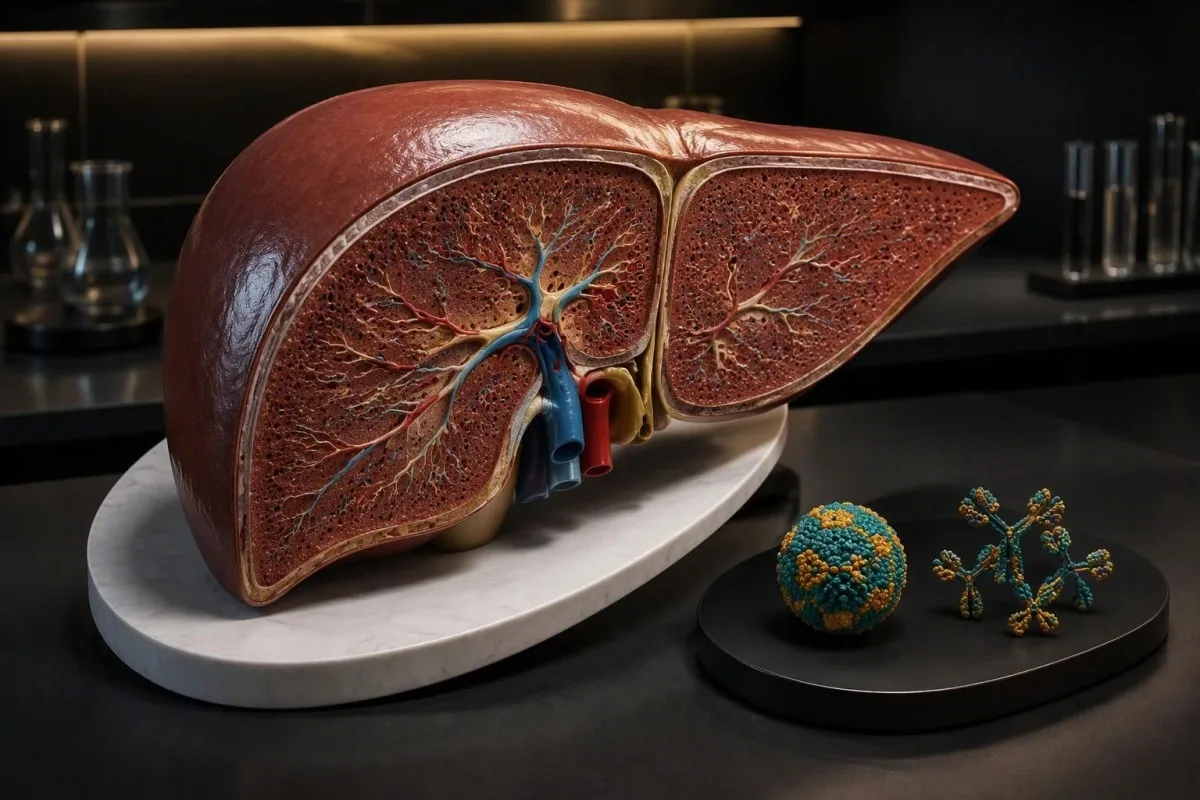
A positive antibody result is not a diagnosis by itself. Symptoms, liver chemistry, exposure timing, and the exact assay determine what should happen next.


- Hepatitis A IgM positive supports recent infection most strongly when compatible symptoms, elevated liver enzymes, and a plausible exposure occur together.
- IgM timing usually spans the period just before symptoms through approximately 6 months afterward; occasional longer persistence prevents precise dating.
- Total HAV antibodies include IgM and IgG. A positive total antibody result alone cannot distinguish acute infection from vaccination or past infection.
- Unexpected positivity needs clinician-guided assessment, especially when ALT is normal, symptoms are absent, or the result came from indiscriminate screening.
- ALT above 1,000 U/L can occur in acute hepatitis A, but this level also occurs with medication toxicity, reduced liver blood flow, and other causes.
- Konfirmo may involve a fresh sample, a different laboratory assay, and HAV RNA testing when available; repeating the same test is not always enough.
- Close-contact protection works best within 14 days of exposure. Eligible contacts may need hepatitis A vaccine, immune globulin, or both.
- Urĝaj avertosignoj include confusion, unusual drowsiness, persistent vomiting, and a rising INR; INR of at least 1.5 with encephalopathy can indicate acute liver failure.
- Recovery should be followed through symptoms, ALT, bilirubin, and sometimes INR—not repeated IgM testing until it becomes negative.
What does a hepatitis A IgM positive result mean?
A hepatitis A IgM positive result supports recent hepatitis A when symptoms, elevated liver enzymes, and exposure timing fit. An unexpected positive—especially without symptoms or liver abnormalities—may reflect persistent antibodies, recent vaccination, or a false result and warrants clinician-guided confirmation. Do not assume either active infection or harmless error from IgM alone.
HAV IgM is an antibody response, not a measurement of how much virus is present. A person tested 4 weeks after a credible exposure with nausea, dark urine, and sharply elevated ALT has a very different probability of acute hepatitis A from someone tested during an unrelated wellness panel.
I’m Dr. Thomas Klein, Kantesti’s Chief Medical Officer; my approach here is to separate 3 questions: whether infection occurred, whether liver function is threatened, and whether contacts need protection. Those questions overlap, but a single positive antibody cannot answer all of them.
The reason the test was ordered matters. A broad panel containing 20 unrelated markers can uncover a result that was never clinically suspected, and our explanation of pozitivaj antikorpo-rezultoj helps distinguish exposure markers from evidence of current illness.
Kantesti estas AI-sanga analizilo that can help organize HAV serology alongside ALT, bilirubin, and sample dates; it cannot establish contagiousness from 1 antibody result. Our organizo kaj klinika celo explain where educational interpretation fits—and where direct medical assessment takes over.
When does positive HAV IgM support acute hepatitis A?
Positive HAV IgM supports acute hepatitis A most strongly when there is an abrupt compatible illness and biochemical hepatitis. The incubation period is usually 15–50 days, averaging about 28 days, so clinicians look backward several weeks rather than only at yesterday’s meal.
Acute hepatitis A can begin with fatigue, fever, poor appetite, nausea, or abdominal discomfort before jaundice appears. An exposure 3–5 weeks earlier may involve contaminated food, travel, household contact, or sexual contact involving fecal exposure; the absence of a memorable exposure does not exclude infection.
ALT can exceed 1,000 U/L in acute hepatitis A, although that value is not specific to HAV. If the laboratory’s upper limit is 40 U/L, an ALT of 1,200 U/L is 30 times that limit; our ALT terminology guide explains why this measures injury rather than remaining liver capacity.
Consider a hypothetical 38-year-old with nausea, dark urine, ALT 1,450 U/L, bilirubin 4.0 mg/dL, and positive HAV IgM after an outbreak exposure. That combination strongly supports acute infection, but clinicians would still assess INR, medication use, and hydration because identifying the cause does not establish the severity.
The pattern across the panel is more useful than the highest number: ALT and AST commonly dominate early, while bilirubin can remain elevated as symptoms evolve. Our klarigo de hepata panelo separates these measurements so that 1 improving enzyme does not create false reassurance.
Hepatitis A IgM vs IgG: what do total antibodies show?
HAV IgM generally indicates recent immune activity, while HAV IgG usually indicates immunity from past infection or vaccination. Total anti-HAV detects both antibody classes, so 1 positive total-antibody result cannot establish acute hepatitis A unless the IgM component and clinical circumstances are also known.
Total anti-HAV positive with IgM negative usually means past infection or vaccine-related immunity, not acute hepatitis A. HAV IgG generally persists long term, often for life after natural infection; this is why a positive total result years later should not be interpreted as a new contagious episode.
Total anti-HAV positive with IgM positive is compatible with current or recent infection, but it can also occur with recent vaccination or misleading IgM reactivity. Both tests being positive does not provide 2 independent confirmations, because the total assay includes the very antibody class under question.
IgM positive with total anti-HAV negative is an unusual discordant pattern that deserves laboratory discussion rather than automatic diagnosis. Differences in analytical sensitivity can contribute, but a fresh specimen and another method may help distinguish early seroconversion from an isolated false signal; 1 laboratory contradiction should not be ignored.
HAV-specific IgM is not the same as total serum IgM, which is often reported in mg/dL. The distinction between antibody class and target also appears in CMV antikorpa padronoj, although CMV and HAV have different biology and their confirmation pathways are not interchangeable.
How long can hepatitis A IgM remain positive?
HAV IgM usually becomes detectable around symptom onset, sometimes 5–10 days earlier, and commonly remains detectable for approximately 6 months. Occasional persistence beyond 1 year means a positive result cannot precisely date an infection or prove that a recovering person remains contagious.
The IgM window is not a stopwatch. Two people recovering from the same outbreak may become negative at different times, and a result obtained 7 months after documented hepatitis A can reflect residual immune activity rather than a second infection; previous reports are therefore clinically valuable.
An early negative IgM does not always exclude hepatitis A. If characteristic symptoms started only 1–2 days before sampling and exposure is convincing, a clinician may arrange repeat serology after several days or consider HAV RNA, rather than concluding that the liver injury must have another cause.
Persistent IgM should not be used as a return-to-work test. Requiring a negative antibody at 3 or 6 months can unnecessarily prolong restrictions after the clinically relevant infectious period, while symptoms and public-health criteria provide a more appropriate basis for decisions.
Antibody duration varies between infections, so the general problem of persistent IgM is discussed in our chikungunya IgM timing guide. The practical point is the same, but HAV-specific timing must be used: an antibody can outlast the event that produced it.
Why can a hepatitis A IgM false positive occur?
A hepatitis A IgM false positive can arise from nonspecific immune activation, cross-reactive antibodies, or assay interference. The concern is greatest when there are 0 compatible symptoms, normal liver chemistry, no plausible exposure, and an isolated result near the assay’s positivity threshold.
Epstein–Barr virus and other illnesses can complicate antibody interpretation through broad immune activation or cross-reactivity, and autoimmune disease can occasionally contribute. A clinician should investigate these possibilities selectively—not order 10 additional antibody tests simply because one assay was positive; our EBV serology explanation illustrates pattern-based reasoning.
Low pretest probability reduces a positive result’s reliability. In an illustrative population where 1% truly have the target illness, a hypothetical test with 99% sensitivity and 99% specificity produces about 99 true positives and 99 false positives per 10,000 people; these are teaching assumptions, not published HAV assay performance estimates.
CDC documented this diagnostic problem in an investigation of unexpected positive HAV IgM results among people without a recent history of acute hepatitis (CDC, 2005). Its recommendation against indiscriminate IgM screening follows the same reasoning: testing people unlikely to have acute disease increases the proportion of misleading positives.
A second positive result is not automatically independent proof. If the same interfering antibody reacts again on the same system 48 hours later, repetition may simply reproduce the problem; the distinction between persistence and confirmation also appears in our West Nile IgM discussion, although HAV requires its own laboratory approach.
How should you read the assay value and vaccine history?
Read the exact test name, laboratory cutoff, collection date, and recent vaccination history before interpreting HAV IgM. A value such as 1.2 index units is usually a method-specific signal, not a viral load, antibody concentration, or universal measure of disease severity.
HAV IgM assays do not share one universal numerical cutoff. One laboratory may report an index while another reports a signal-to-cutoff ratio or simply reactive/nonreactive; an index of 1.2 cannot be compared directly with 1.2 from a different method unless the laboratory confirms equivalence.
A weakly reactive result deserves attention, not dismissal. Near-cutoff reactivity can occur in early infection as well as false positivity, so 2 different patients with the same index may need different follow-up; our gvidilo pri kvalita kontraŭ kvanta analizo explains why numerical-looking reports are not always true concentrations.
Recent hepatitis A vaccination can transiently produce detectable IgM, so clinicians need the vaccination date and product, especially when testing occurred within the following few weeks. The vaccine is inactivated and cannot cause hepatitis A infection; vaccine-related reactivity should not be mislabeled as a laboratory mistake without assessment.
Supplement-related interference depends on the assay design. Tell the clinician and laboratory about high-dose biotin—for example, 5–10 mg daily—and immunomodulating treatment, but do not assume biotin necessarily causes a positive HAV result; Kantesti can organize 2 reports by method and date, while only the laboratory can investigate its analytical interference.
Which follow-up tests can confirm an unexpected positive?
Confirmation starts with clinical reassessment and the original laboratory report, followed when appropriate by a fresh specimen, another assay method, and HAV RNA testing. There is no single mandatory confirmation sequence for every positive result; 1 symptomatic outbreak-associated case differs from an incidental screening result.
The first follow-up is often a conversation, not another tube. A clinician should establish symptom onset, exposures during the preceding 15–50 days, vaccination dates, previous HAV results, and medication history; these details determine whether immediate public-health action is justified while additional testing is arranged.
Repeat IgM on a fresh sample can check reproducibility, particularly if identification or sample handling is uncertain. Depending on timing, a repeat after several days may reveal evolving serology, but 1 immediate repeat on the same method does less to exclude method-specific interference than testing through a different validated assay.
HAV RNA detection provides direct evidence of viral genetic material, and public-health or reference laboratories may offer testing of serum or stool. A negative RNA result does not invariably exclude a resolving infection because specimen timing and assay sensitivity matter; RNA is not routinely necessary in every clinically convincing case (Nelson et al., 2020).
Kantesti estas AI-platformo por interpretado de sangoanalizo that can place 3 elements—serology, liver chemistry, and timing—into one reviewable summary, without claiming to confirm infection. Our klinikan validigan kadron describes why uncertainty and clinician escalation belong in interpretation rather than being hidden behind a confident label.
What else should clinicians consider when the pattern does not fit?
An unexpected positive HAV IgM should not stop evaluation for other causes of liver injury. Hepatitis B or E, medication toxicity, autoimmune hepatitis, impaired liver blood flow, and bile duct problems can require different treatment—even when 1 HAV antibody assay is reactive.
Markedly elevated ALT is not unique to hepatitis A. An ALT of 2,000 U/L with recent acetaminophen excess or a hypotensive episode requires urgent investigation of those causes, because anchoring on positive IgM can delay time-sensitive treatment; 2 processes can occasionally coexist as well.
Hepatitis E deserves consideration when exposure, travel, pregnancy, or immune status fits. Its testing may involve IgM and RNA, with interpretation influenced by timing and immune suppression; our gvidilo pri hepatito E-testado explains why a positive HAV screen should not close that diagnostic door.
Hepatitis B requires its own marker combination, commonly including HBsAg, anti-HBc, and sometimes HBV DNA. A patient with 2 weeks of fatigue but no jaundice can still have clinically significant hepatitis, as our hepatito B simptomgvidilo explains; symptom absence cannot distinguish the viruses reliably.
A predominantly cholestatic pattern changes the next step. If alkaline phosphatase is 4 times the upper limit while ALT is only mildly elevated, imaging may be needed to assess bile drainage; autoimmune testing or other investigations should follow the pattern, not a blanket panel triggered by one unexpected antibody.
Which liver results and symptoms need urgent care?
Confusion, unusual drowsiness, persistent vomiting, dehydration, or worsening coagulation require urgent medical assessment in suspected hepatitis A. An INR of at least 1.5 together with hepatic encephalopathy can meet the definition of acute liver failure in a person without pre-existing cirrhosis.
INR assesses clotting and can reveal impaired liver synthetic function, although warfarin, vitamin K deficiency, and other conditions affect it too. An INR rising from 1.1 to 1.6 during acute hepatitis needs prompt assessment even without confusion; our klarigo pri la rezulto de INR helps explain this distinction.
ALT is an injury marker, not a liver-failure score. Falling ALT from 2,000 to 900 U/L may represent recovery, but it is not reassuring if INR is rising or mental status is changing; clinicians interpret at least these 3 domains together rather than judging safety from the enzyme trend alone.
Bilirubin reflects processing and excretion, not severity by itself. A bilirubin of 4.0 mg/dL is approximately 68 µmol/L and can explain jaundice and dark urine, but its cause requires context; our gvidilo pri rekta bilirubino distinguishes hepatitis from impaired bile drainage.
New disorientation or inability to keep fluids down should not wait for repeat serology. Older adults and people with chronic liver disease warrant a lower threshold for assessment, and an unexpected positive with normal ALT and 0 symptoms is usually a confirmation problem rather than an emergency by itself.
How are acute hepatitis A and recovery usually managed?
Uncomplicated hepatitis A is usually managed with hydration, adequate nutrition, symptom relief, and clinician-directed monitoring; no specific antiviral is routinely used. Hepatitis A does not become chronic, although approximately 10–15% of symptomatic patients can have prolonged or relapsing illness lasting up to 6 months.
Monitoring should follow symptoms and liver chemistry, with INR added when illness is significant or function is uncertain. A clinician might repeat tests within several days for a deteriorating patient or after 1–2 weeks for stable outpatient recovery; those intervals are examples, not a universal schedule.
Medication review is part of treatment. Ask specifically about acetaminophen, combination cold remedies, herbal mixtures, and supplements rather than adding a liver-detox product; our liver-supporting food discussion explains why nutrition support is different from a promised cure.
Small, frequent meals can be easier than large meals during nausea, and oral rehydration may help when intake is poor. There is no established vitamin dose that makes HAV IgM disappear faster; a 500 mg supplement claim should not substitute for hydration assessment, medication safety, or follow-up.
Relapse does not mean chronic infection. Renewed symptoms or worsening ALT over the following 6 months still need reassessment, including consideration of other causes and renewed public-health advice; persistent IgM alone, without a clinical change, is not evidence that treatment failed (Nelson et al., 2020).
Are you contagious, and what precautions protect close contacts?
Hepatitis A spreads mainly through fecal–oral exposure, and infectiousness is usually greatest during the 2 weeks before jaundice or symptom onset. Most people become substantially less infectious about 1 week after onset, but IgM positivity alone cannot determine an individual’s transmission risk.
Soap-and-water handwashing is central, particularly after toileting, changing diapers, and before handling food. Household bathrooms and frequently touched surfaces should be cleaned according to local public-health advice; washing hands for at least 20 seconds is more useful than trying to monitor contagiousness through repeated IgM tests.
Household members and sexual contacts may need prompt exposure assessment, while ordinary workplace conversation or sharing air does not usually constitute an HAV exposure. Public-health teams assess childcare, food handling, and shared living arrangements individually; 1 positive result does not automatically justify vaccinating an entire office.
Avoid preparing food for others while potentially infectious, and discuss sexual practices that can involve fecal exposure with the treating clinician. Return-to-school or work restrictions commonly depend on onset dates and local rules rather than antibody negativity at 6 months; food handlers may face additional requirements.
Contact protection should not wait for symptoms, because post-exposure prophylaxis has a 14-day window. Our travel vaccine antibody guide explains how immunization records can be more useful than indiscriminate testing, but an actual household exposure calls for direct clinical or public-health advice.
Who needs vaccine or immune globulin after exposure?
Eligible close contacts should receive hepatitis A post-exposure prophylaxis as soon as possible, ideally within 14 days of exposure. U.S. ACIP guidance generally recommends a single-antigen hepatitis A vaccine for unvaccinated people aged at least 12 months, with immune globulin added or substituted in selected groups.
Under U.S. guidance, infants younger than 12 months receive immune globulin rather than routine hepatitis A vaccine for post-exposure protection. The recommended intramuscular immune-globulin dose is 0.1 mL/kg, and people with a vaccine contraindication may also need immune globulin; clinicians must use the locally licensed product and guidance.
Unvaccinated people aged at least 12 months who are immunocompromised or have chronic liver disease generally need both vaccine and immune globulin, administered at different anatomical sites. For adults older than 40 years, adding immune globulin depends on risk assessment rather than age alone (Nelson et al., 2020).
Previous complete vaccination usually removes the need for additional post-exposure prophylaxis, although immune suppression and uncertain records deserve individual assessment. Do not delay the 14-day window while searching for an antibody result; a dose given for immediate protection also needs the appropriate later schedule for durable immunity.
Children and pregnancy require individualized advice, not automatic avoidance of vaccination. Hepatitis A vaccine is inactivated, and pregnancy is not itself a contraindication when vaccination is indicated; our children’s laboratory safety guide reinforces why age-specific clinical decisions should not be delegated to 1 automated result.
What should you bring to the clinician’s follow-up?
Bring the complete laboratory report, symptom dates, vaccination records, exposure details, and a medication list to follow-up. As of October 18, 2026, the safest interpretation still combines 3 domains—clinical illness, laboratory evidence, and exposure probability—rather than treating a positive flag as a diagnosis.
The original report contains details a cropped positive flag can hide. Include the assay name, reference threshold, whether the result is equivocal, and any laboratory comments; a collection date 2 days before symptoms means something different from a report obtained 8 months after documented hepatitis A.
Write a short timeline rather than relying on memory. List vaccination, symptom onset, travel, household illnesses, food-related alerts, and test dates over the preceding 50 days; also mention older confirmed hepatitis A, because a past infection can explain persistent IgM without proving a new event.
Kantesti estas AI-movita ilo por analizi sangotestojn that can help organize uploaded reports and trends in approximately 60 seconds, but it cannot determine whether 1 exposed contact should receive immune globulin. Our Gvidilo de AI-teknologio explains the interpretation workflow without replacing clinical examination or laboratory confirmation.
Ask 4 specific questions: Does this fit acute hepatitis A, should the laboratory confirm it differently, what liver tests need repeating, and do contacts need protection today? If exposure occurred 12 days ago, mention that immediately—the remaining prevention window may matter more than waiting for a neatly resolved diagnostic label.
Research publications and the limits of automated interpretation
HAV-specific guidance should drive diagnosis and contact protection; broader biomarker publications provide context, not proof of acute hepatitis A. The 2 related Zenodo publications below concern kidney chemistry and urinalysis, and neither should be treated as a HAV diagnostic validation study.
Source quality depends on the clinical question. CDC’s 2005 investigation directly addresses unexpected HAV IgM positivity, while Nelson and colleagues’ 2020 ACIP recommendations address prevention and post-exposure management; 2 general laboratory guides cannot replace either source when deciding whether a contact needs protection.
Kidney chemistry can become relevant during vomiting or poor intake, because dehydration may alter urea and creatinine independently of hepatitis severity. Our Gvidilo pri BUN kaj kreatinino provides that supporting context, but a high ratio should not be interpreted as confirming HAV or grading liver failure from 1 number.
Urinalysis can help investigate dark urine, although bilirubin, urobilinogen, concentration, and medicines contribute differently to its appearance. Our gvidilo por interpretado de urina analizo complements the accompanying Zenodo material; neither urine marker can replace HAV serology and clinical assessment after a 15–50-day exposure interval.
Thomas Klein’s clinical framework for this article prioritizes uncertainty disclosure and timely escalation, especially when a 14-day contact-protection window is closing. Kantesti’s educational interpretation is not a confirmed diagnosis, and our medicina konsila komitato describes the physician expertise supporting clinical governance; named review of this particular article should be verified before publication.
Oftaj Demandoj
Ĉu pozitiva IgM kontraŭ hepatito A ĉiam signifas, ke mi havas akutan hepatiton A?
Pozitiva rezulto de hepatito A IgM ne ĉiam signifas akutan hepatiton A. Ĝi estas plej konvinka kiam kongruaj simptomoj, altigita ALT kaj eksponiĝo ene de la kutima inkubacia periodo de 15–50 tagoj kongruas. Persistaj antikorpoj, lastatempa vakcinado kaj falsa reaktiveco povas klarigi neatenditan rezulton. Kuracisto povas revizii la hepatan kemion kaj aranĝi novan specimenon, alian analizon aŭ testadon pri HAV-RNA kiam necese.
Ĉu IgM kontraŭ hepatito A povas resti pozitiva post mia resaniĝo?
HAV-IgM kutime restas detektebla dum proksimume 6 monatoj kaj foje persistas pli ol 1 jaron. Pozitiva rezulto dum resaniĝo ne povas precize datigi la infekton aŭ pruvi daŭran kontaĝecon. Kuracistoj sekvas simptomojn, ALT, bilirubinon kaj foje INR, anstataŭ postuli, ke IgM fariĝu negativa. Novaj simptomoj aŭ plimalboniĝo de hepataj biokemiaj valoroj tamen ankoraŭ bezonas retakson.
Kio estas la diferenco inter IgM, IgG kaj totalaj antikorpoj kontraŭ hepatito A?
HAV IgM generally reflects recent immune activity, while HAV IgG usually reflects immunity from vaccination or past infection. Total anti-HAV includes both classes, so 1 positive total-antibody result cannot distinguish acute infection from immunity. Total anti-HAV positive with IgM negative usually indicates past infection or vaccination. Total anti-HAV positive with IgM positive still requires symptom, exposure, and laboratory context.
What if my hepatitis A IgM is positive but my liver enzymes are normal?
Positive HAV IgM with normal liver enzymes and no symptoms makes an incidental false or persistent result more plausible, but does not exclude every early or asymptomatic infection. Children younger than 6 years are particularly likely to have infection without obvious symptoms. The clinician should review exposure dates, previous HAV illness, vaccination, and the assay result. A fresh sample or a different method may be appropriate rather than diagnosing acute hepatitis from the positive flag alone.
Can the hepatitis A vaccine make an IgM test positive?
Recent hepatitis A vaccination can cause transient detectable HAV IgM in some people. Testing within the following few weeks should therefore be interpreted with the vaccination date, symptoms, and liver chemistry. The inactivated vaccine cannot cause hepatitis A infection. A recent vaccine dose does not automatically explain a result if ALT is 1,000 U/L or higher and the person has a compatible illness.
Do family members need a hepatitis A vaccine after exposure?
Eligible household and sexual contacts may need hepatitis A post-exposure prophylaxis within 14 days of exposure. Under U.S. ACIP guidance, unvaccinated people aged at least 12 months generally receive a single-antigen hepatitis A vaccine, while selected contacts also need immune globulin. Infants younger than 12 months generally receive immune globulin instead of routine post-exposure vaccination. Contact a clinician or public-health service promptly rather than waiting for symptoms or repeat antibody results.
When is a positive hepatitis A result an emergency?
A positive antibody result alone is not usually an emergency, but confusion, unusual drowsiness, persistent vomiting, severe dehydration, or worsening coagulation need urgent assessment. INR of at least 1.5 with hepatic encephalopathy can indicate acute liver failure in someone without pre-existing cirrhosis. A rising INR also needs prompt evaluation even before confusion develops. Falling ALT does not prove recovery if mental status or liver function is deteriorating.
Akiru hodiaŭ AI-movitan analizon de sangoanalizo
Aliĝu al pli ol 2 milionoj da uzantoj tutmonde, kiuj fidas je Kantesti por tuja, preciza analizo de laboratoriaj testoj. Alŝutu viajn rezultojn de sangoanalizo kaj ricevu ampleksan interpretadon de 15,000+-biomarkiloj en sekundoj.
📚 Referencitaj esplorpublikaĵoj
Klein, T., Mitchell, S., & Weber, H. (2026). Klarigo pri la Proporcio BUN/Kreatinino: Gvidilo pri Testoj de Rena Funkcio. Kantesti AI Medicina Esploro.
Klein, T., Mitchell, S., & Weber, H. (2026). Urobilinogeno en Urina Testo: Gvidilo pri Kompleta Urinanalizo 2026. Kantesti AI Medicina Esploro.
📖 Eksteraj medicinaj referencoj
Centers for Disease Control and Prevention (2005). Positive Test Results for Acute Hepatitis A Virus Infection Among Persons With No Recent History of Acute Hepatitis — United States, 2002–2004. MMWR Morbidity and Mortality Weekly Report, 54(18), 453–456.
⚕️ Medicina Deklaro
Ĉi tiu artikolo estas nur por edukaj celoj kaj ne konsistigas medicinan konsilon. Ĉiam konsultu kvalifikitan sanprovizanton por diagnozaj kaj traktadaj decidoj.
Signaloj de fido E-E-A-T
Sperto
Kuracista gvidata klinika revizio de laboratoriaj interpretaj laborfluoj.
Kompetenteco
Laboratoria medicino fokusiĝas pri kiel biomarkiloj kondutas en klinika kunteksto.
Aŭtoritateco
Skribita de d-ro Thomas Klein kun revizio de d-ro Sarah Mitchell kaj prof. d-ro Hans Weber.
Fidindeco
Evident-bazita interpretado kun klaraj sekvaj vojoj por redukti alarmon.