
Laboratori-raportoj kunpremas multan medicinon en etajn kodojn. Jen kiel legi la oftajn sen troreagi al ĉiu ruĝa flago.



- Flagoj H kaj L signifas ke rezulto estas super aŭ sub la referenca intervalo de tiu laboratorio; ili memstare ne estas diagnozoj.
- Referencaj intervaloj kutime priskribas la mezan 95% de elektita populacio, do ĉirkaŭ 1 el 20 sanaj homoj povas havi flagitan rezulton.
- CBC-abreviaĵoj inkluzivas WBC, RBC, Hb, Hct, MCV, MCH, MCHC, RDW kaj Plt; ĉiu rakontas malsaman parton de la historio de sangaj ĉeloj.
- Unuoj de CMP kaj BMP ofte diferencas laŭ lando: glukozo povas aperi kiel mg/dL aŭ mmol/L, kaj kreatinino povas aperi kiel mg/dL aŭ µmol/L.
- Kritikaj valoroj kiel ekzemple kalio super 6.0 mmol/L, natrio sub 120 mmol/L, aŭ hemoglobino sub 7 g/dL ofte bezonas revizion de klinikisto en la sama tago.
- LDL-C kaj HDL-C estas estas frakcioj de kolesterolo, dum TG signifas trigliceridojn; kardiovaskula risko dependas de la tuta ŝablono, ne de unu linio.
- eGFR taksas rena filtradon; valoroj sub 60 mL/min/1.73 m² dum almenaŭ 3 monatoj sugestas kronikan renan malsanon.
- HbA1c de 6.5% aŭ pli estas ofte uzata por diagnozi diabeton, sed anemio, gravedeco kaj iuj hemoglobinaj variantoj povas distordi ĝin.
- Kunteksto venkas kolor-kodadon ĉar fastado, ekzercado, gravedeco, medikamentoj, altitudo kaj dehidratiĝo povas movi laboratorajn valorojn sen malsano.
Kion signifas mallongigoj de sangoanalizo, unuavide
Mallongigoj de sangoanalizo estas mallongigitaj nomoj por laboratoriaj markiloj, flagoj kaj unuoj en via raporto. H signifas alta, L signifas malalta, kaj unuoj kiel mg/dL, mmol/L, IU/L, ng/mL kaj µmol/L diras al vi kiel la rezulto estis mezurita. Ekde la 27-a de aprilo 2026, la plej sekura maniero legi rezultoj de sangotestoj estas markilo plus unuo plus referenca gamo plus via klinika kunteksto, ne nur la mallongigo. Nia Kantesti AI sangoanalizilo estas konstruita ĉirkaŭ tiu ĝusta sinsekvo.
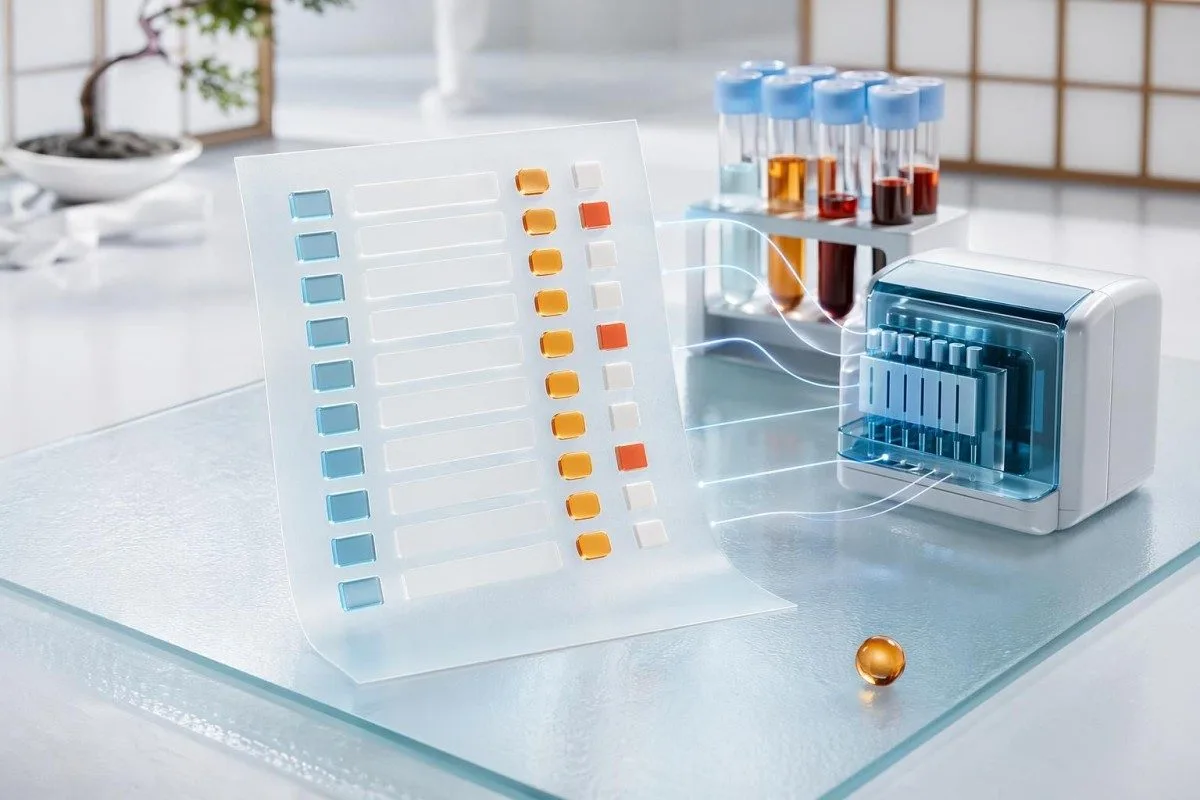
Mi estas Thomas Klein, MD, kaj la plej rapida eraro, kiun mi vidas en la kliniko, estas trakti ruĝan flagon kiel fina respondo. Kalcio de 10.3 mg/dL povas esti sensignifa en unu laboratorio, milda alta en alia, kaj pli maltrankviliga se albumino estas 5.1 g/dL aŭ se paratiroida hormono estas levita.
Laboratoria raporto vere estas kunpremita klinika konversacio. Se vi volas pli larĝan enkondukon antaŭ ol eniri la kodojn, nia gvidilo pri sekura legado de rezultoj klarigas kiel kuracistoj apartigas bruon de signalo.
La neŭrala reto de Kantesti legas la mallongigon, detektas la unuon, kontrolas la lokan referencan gamon, kaj poste serĉas ŝablonojn tra pli ol 15,000 biomarkiloj. Tiu ŝablona paŝo gravas: ALT de 68 IU/L post maratono estas malsama rakonto ol ALT de 68 IU/L kun bilirubino, INR kaj trombocitoj moviĝantaj en la malĝusta direkto.
Kial H, L, abnormalaj kaj kritikaj flagoj ne estas diagnozoj
H, L, nenormalaj kaj kritikaj markiloj estas laboratoriaj avertoj, ne medicinaj diagnozoj. Markilo H signifas, ke la rezulto estas super la referenca intervalo de tiu laboratorio; markilo L signifas, ke ĝi estas sub ĝi; kaj kritika markilo signifas, ke la valoro atingas la urĝan sciigan sojlon de tiu laboratorio.

CLSI EP28-A3c priskribas multajn referencajn intervalojn kiel la centra 95% de valoroj el difinita referenca populacio, kio signifas ke ĉirkaŭ 5% de sanaj homoj povas troviĝi ekster la presita gamo (Horowitz et al., 2010). Tial unu sola milda markilo, precipe malpli ol 10% ekster la gamo, ofte postulas ripetan testadon antaŭ ol etikedo estas aldonita.
La afero estas, ke laboratorioj konstruas gamojn malsame. Iuj eŭropaj laboratorioj fiksas suprajn limojn por ALT proksime al 35 IU/L por viroj kaj 25 IU/L por virinoj, dum aliaj raportoj ankoraŭ presas 40 aŭ eĉ 55 IU/L; nia artikolo pri normalaj gamo-kaptiloj enprofundiĝas en tiun problemon.
Kritikaj valoroj estas alia kategorio. Kalio super proksimume 6.0 mmol/L, glukozo sub 54 mg/dL, natrio sub 120 mmol/L, kaj trombocitokalkulo sub 20 × 10⁹/L kutime meritas promptan klinikan agadon, sed eĉ tiam la specimeno povas esti malĝusta se ĝi estis hemolizita aŭ prokrastita.
CBC-mallongigoj: WBC, RBC, Hb, Hct, MCV, MCH, RDW
CBC-abreviaĵoj priskribas blankajn ĉelojn, ruĝajn ĉelojn, hemoglobinon, trombocitojn kaj ŝablonojn de ĉelgrandeco. WBC kutime signifas kalkulon de blankaj sangoĉeloj, RBC signifas kalkulon de ruĝaj sangoĉeloj, Hb aŭ Hgb signifas hemoglobinon, Hct signifas hematokriton, MCV signifas mezan korpuskulan volumon, kaj RDW signifas larĝon de distribuo de ruĝaj ĉeloj.
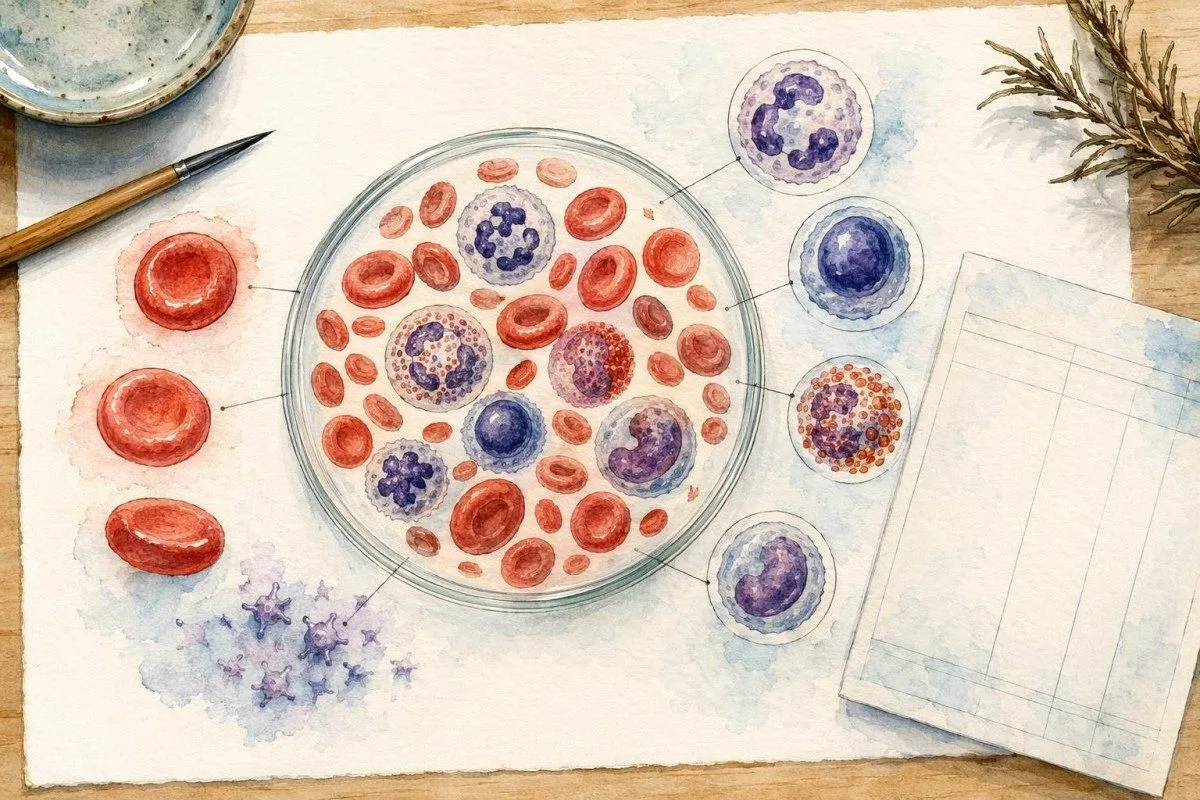
Plenkreska hemoglobino ofte estas ĉirkaŭ 13.5–17.5 g/dL ĉe viroj kaj 12.0–15.5 g/dL ĉe virinoj, kvankam gravedeco, altitudo kaj etneco povas ŝanĝi atendatajn valorojn. Hemoglobino de 11.2 g/dL estas milda anemio ĉe multaj plenkreskuloj, sed ĝi signifas ion malsaman 48 horojn post kirurgio ol ĝi signifas ĉe 22-jaraĝa kun pezaj menstruoj.
MCV estas unu el miaj plej ŝatataj trankvilaj indikiloj. Malalta MCV sub 80 fL montras al fera manko aŭ talasemio-trajto, dum alta MCV super 100 fL altigas riskon de manko de B12, manko de folato, efiko de alkoholo, hepata malsano, hipotiroidismo kaj iuj medikamentoj.
RDW ofte moviĝas antaŭ ol hemoglobino falas. Se RDW estas alta sed MCV ankoraŭ estas normala, mi komencas pensi pri frua fera perdo, miksita manko de B12 plus fera manko, aŭ resaniĝo post sangado; nia gvidilon pri CBC-diferencialo montras kiel la tuta panelo kongruas.
CMP kaj BMP-mallongigoj: glukozo, reno, hepato, saloj
BMP kaj CMP estas oftaj kemiaj paneloj. BMP kutime inkluzivas natrion, kalion, kloridon, karbondioksidon aŭ bikarbonaton, glukozon, BUN, kreatininon kaj kalcion; CMP aldonas albuminon, totalan proteino, bilirubinon, ALP, ALT kaj AST.
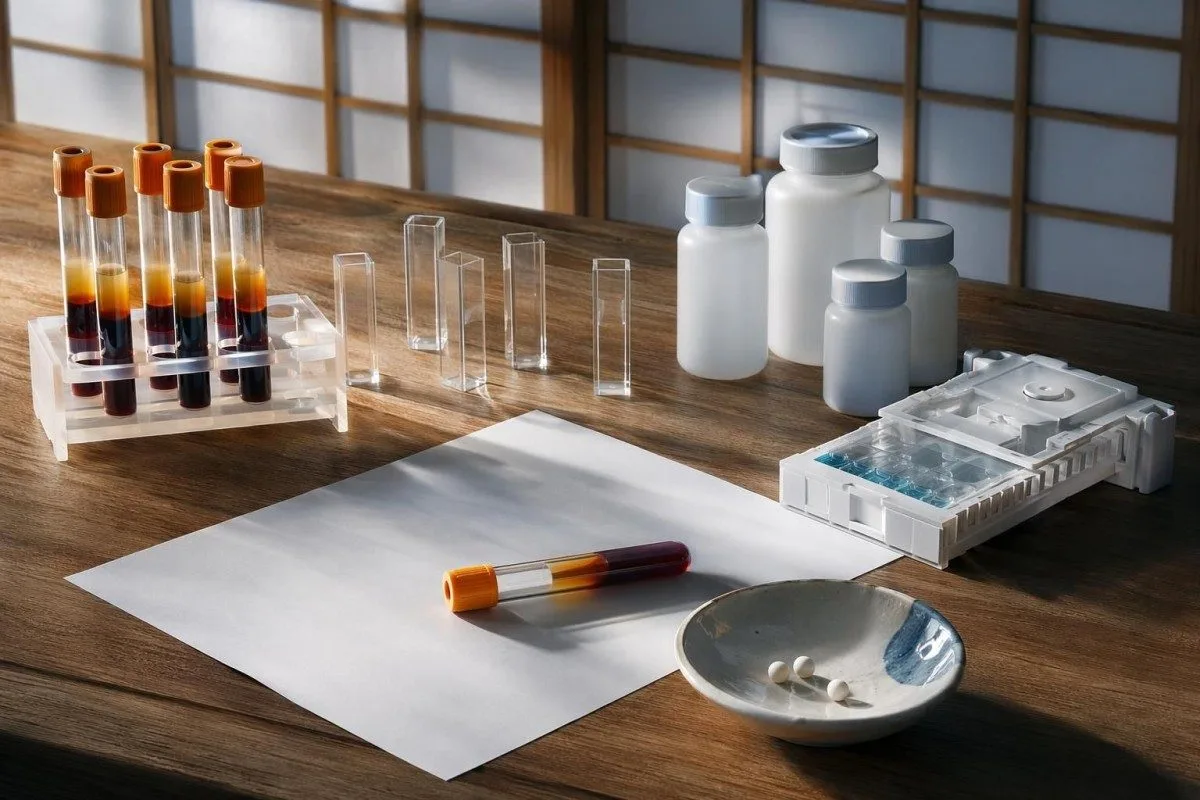
La diferenco gravas ĉar pacientoj ofte diras ke ili havis plenan panelon kiam ili nur havis BMP. Normala BMP ne kontrolas ALT, AST, bilirubinon, albuminon aŭ alkalajn fosfatazojn, do ĝi ne povas ekskludi multajn hepatajn aŭ protein-perdajn ŝablonojn.
Karbon-diooksido en BMP estas kutime takso de bikarbonato, ne karbondioksido en la pulmoj mezurita per arteria sangogaso. CO2 de 19 mmol/L povas reflekti metabola acidozo, diareon, problemojn pri rena pritrakto de acido, aŭ simple prokraston en pritrakto de la specimeno; la anjon-interspaco helpas ordigi tion.
Kiam mi revizias laboratoriojn de kriz-fako, mi unue rigardas natrion kaj kalion ĉar ili povas ŝanĝi decidojn ene de minutoj. Por praktika komparo panelo-post-panelo, vidu nian gvidilo pri CMP kontraŭ BMP.
Unuoj en laboratori-raportoj: mg/dL, mmol/L, IU/L, ng/mL
Laboratoriunuoj diras al vi la mezurskalon, kaj la sama nombro de biomarkilo povas signifi malsamajn aferojn en malsamaj unuoj. Glukozo 100 mg/dL estas proksimume 5,6 mmol/L, kreatinino 1,0 mg/dL estas proksimume 88 µmol/L, kaj vitamino D 30 ng/mL estas proksimume 75 nmol/L.

Jen kie internaciaj pacientoj ofte kaptiĝas. En Britio kaj en granda parto de Eŭropo, kolesterolo kaj glukozo estas ofte raportataj en mmol/L; en Usono, mg/dL restas ofta, kaj kopii malnovajn rezultojn en novan aplikaĵon sen unuoj povas krei sensencaĵojn.
IU/L, foje skribita U/L, mezuras enziman aktivecon prefere ol mason. ALT de 70 IU/L ne signifas 70 miligramojn da ALT; ĝi signifas, ke la enzima aktiveco en la specimeno estas proksimume super la referenca aktiveca sojlo de la laboratorio.
Kantesti AI detektas unuojn antaŭ interpretado laboratoriaj valoroj, kaj nia biomarkila gvidilo listigas pli ol 15 000 markilojn kun oftaj nomvariaĵoj. Se via raporto montras µkat/L por enzimoj, ekzemple, la konvertado al U/L estas proksimume multiplikata per 60.
Lipidaj mallongigoj: TC, LDL-C, HDL-C, TG, ApoB
Mallongigoj por lipidoj priskribas kolesterolajn partiklojn kaj grasojn uzatajn por taksi kardiovaskulan riskon. TC signifas totala kolesterolo, LDL-C signifas kolesterolo de malalta denseco, HDL-C signifas kolesterolo de alta denseco, TG signifas trigliceridojn, kaj ApoB taksas la nombron de aterogenaj partikloj.

LDL-C sub 100 mg/dL estas ofte konsiderata akceptebla por malpli-riskaj plenkreskuloj, sed multaj alt-riskaj pacientoj havas celojn sub 70 mg/dL aŭ eĉ pli malaltajn, depende de lokaj gvidlinioj. Trigliceridoj sub 150 mg/dL kutime estas nomataj normalaj, dum 500 mg/dL aŭ pli altigas zorgon pri pankreatito.
ApoB estas la “dormanta” markilo. Se trigliceridoj estas altaj, LDL-C povas aspekti malpli alarmiga ol la partikla ŝarĝo vere estas, do ApoB aŭ ne-HDL-C povas akrigi riskajn taksojn ĉe pacientoj kun insulinrezisto aŭ metabola sindromo.
Ne paniku se viaj trigliceridoj sen fastado estas 190 mg/dL post la tagmanĝo; mi kutime ripetas fastadon se la rezulto ŝanĝas la administradon. Nia gvidilo pri lipidpanelo klarigas kiam kolesteroltesto sen fastado ankoraŭ validas.
Diferencaj kalkuloj: ANC, ALC, eoz, baso, nematuraj grans
Diferencaj mallongigoj disigas blankajn sangajn ĉelojn en neŭtrofilojn, limfocitojn, monokitojn, eozinofilojn kaj bazofilojn. ANC signifas absoluta nombro de neŭtrofiloj, ALC signifas absoluta nombro de limfocitoj, eos signifas eozinofilojn, baso signifas bazofilojn, kaj IG signifas nematurajn granulocitojn.
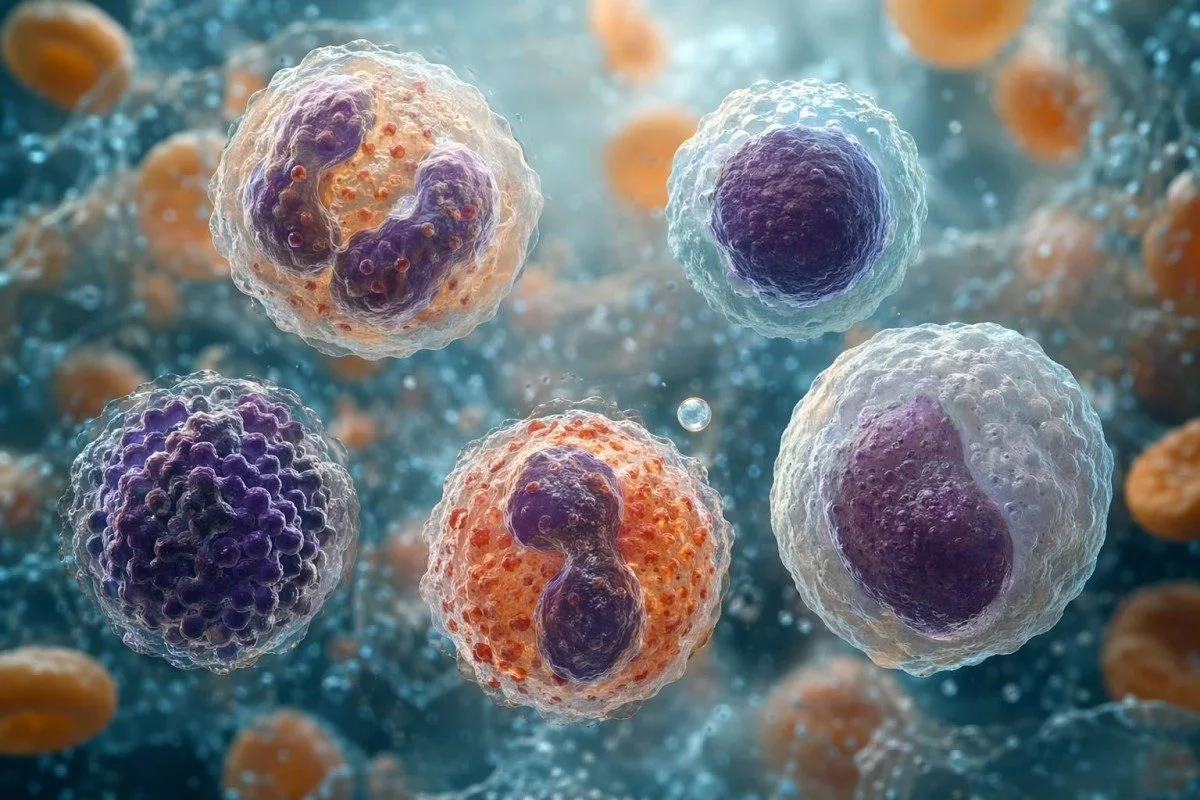
Procentoj povas trompi. Limfocita procento de 48% povas aspekti alta, sed se la absoluta limfocita nombro estas 2.4 × 10⁹/L kaj la neŭtrofila nombro estas malalta-normala, la rezulto eble simple reflektas la denominatoron.
ANC sub 1.5 × 10⁹/L estas ofte nomata neŭtropenio, sub 1.0 × 10⁹/L estas pli klinike signifa, kaj sub 0.5 × 10⁹/L povas altigi zorgojn pri infekta risko. Multaj homoj de afrika, mez-orienta aŭ certa mediteranea deveno havas pli malaltan stabilan ANC sen malsano.
Mi vidas ĉi tiun ŝablonon ĉiun semajnon: virusa infekto puŝas neŭtrofilojn malsupren kaj altigas la limfocitan procenton dum 1–3 semajnoj. Nia gvidilo pri neŭtrofiloj-limfocitoj klarigas kial la rilatumo foje estas pli utila ol ĉiu el la du nombroj sole.
Mallongigoj de hepataj enzimoj: ALT, AST, ALP, GGT, bilirubino
Mallongigoj de hepataj testoj priskribas malsamajn signalojn de hepato kaj galduktoj. ALT kaj AST estas enzimoj liberigitaj de vunditaj hepataj aŭ muskolaj ĉeloj, ALP kaj GGT ofte indikas galduktan aŭ kolestazan ŝablonon, kaj bilirubino reflektas rompon de hemo plus prilaboron en la hepato.
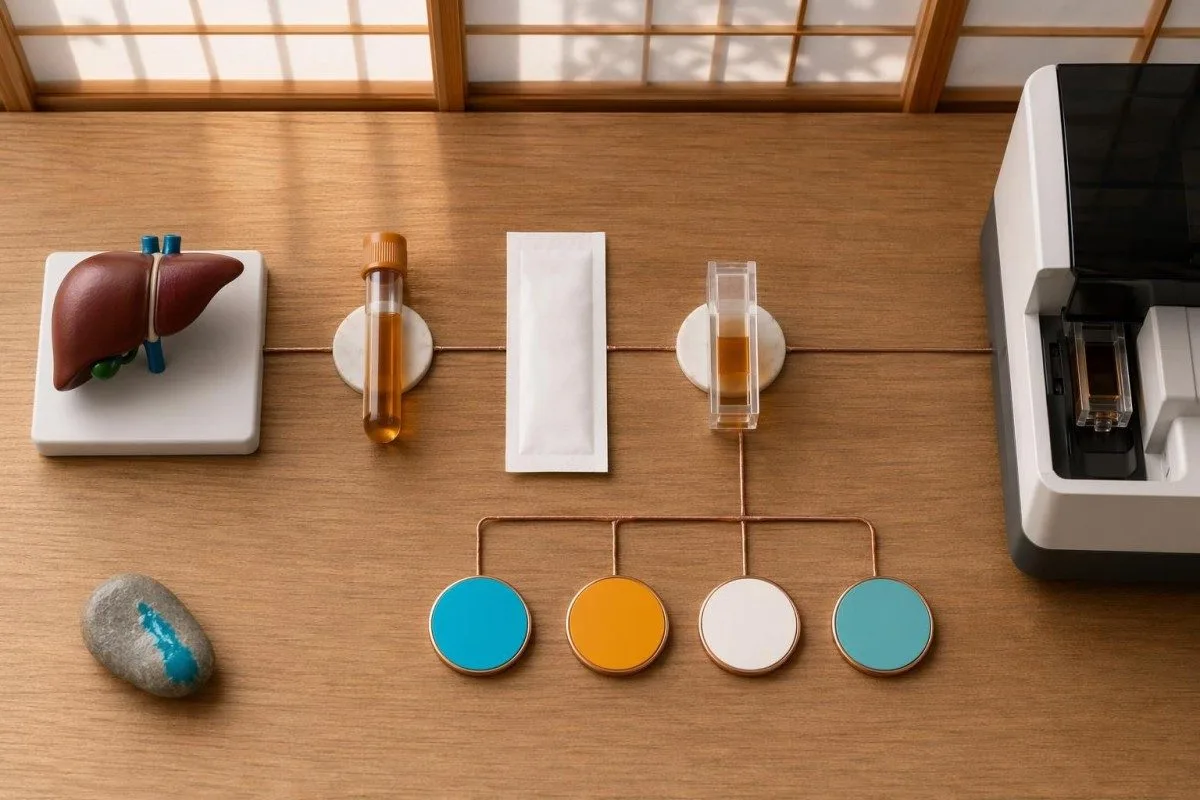
ALT estas pli specifa por la hepato ol AST, sed AST ankaŭ troviĝas en muskolo. 52-jara maratonkuristo kun AST 89 IU/L kaj normala ALT, bilirubino kaj GGT eble bezonas kontroli kreatinkinazon antaŭ ol iu diras hepatan malsanon.
Ŝablono venkas panikon. ALT kaj AST 2–5 fojojn super la supra limo sugestas hepatocelan vundon, dum ALP kune kun GGT-altiĝo sugestas kolestazon; altiĝo de bilirubino kun normalaj enzimoj alportas alian liston, inkluzive de Gilbert-sindromo kaj hemolizo.
Iuj laboratorioj raportas rektan bilirubinon kaj nerektan bilirubinon; aliaj montras nur totalan bilirubinon. Por pli profunda legado de ŝablonoj, nia gvidilo pri hepata funkcia testo trairas kombinojn de ALT, AST, ALP kaj GGT.
Renaj mallongigoj: Cr, eGFR, BUN, UACR, cistatino C
Mallongigoj de renaj testoj kombinas signojn de rubproduktoj, taksojn de filtrado kaj signalojn de urina proteino. Cr signifas kreatinino, eGFR taksas filtradon, BUN signifas sangourea nitrogeno, UACR signifas urin-albumino-al-kreatinina rilatumo, kaj cistatino C povas rafini renajn taksojn kiam muskola maso distordas kreatininon.
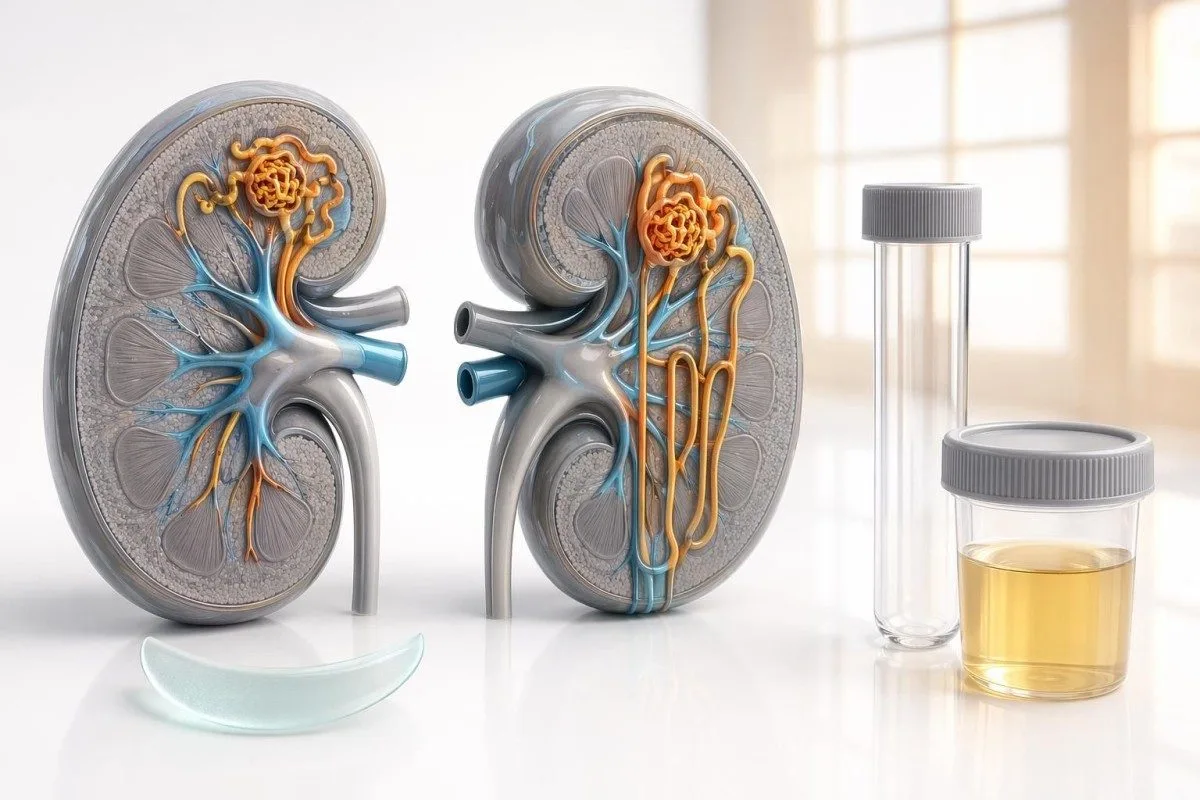
eGFR sub 60 mL/min/1.73 m² dum almenaŭ 3 monatoj estas unu kriterio por kronika rena malsano, sed unu sola eGFR de 58 post senhidratiĝo ne estas la sama afero. KDIGO 2024 emfazas stadiigon de kronika rena malsano per kaj GFR-kategorio kaj albuminurio-kategorio (KDIGO CKD Work Group, 2024).
Kreatinino dependas de muskolo. Muskolhava 30-jaraĝulo povas havi kreatininon 1.3 mg/dL kun normala filtrado, dum malforta 82-jaraĝulo povas havi kreatininon 0.9 mg/dL malgraŭ reduktita rena rezervo.
UACR kaptas damaĝon, kiun kreatinino povas maltrafi. UACR sub 30 mg/g estas ĝenerale normala, 30–300 mg/g estas modere plialtigita, kaj super 300 mg/g estas severe plialtigita; nia gvidilon pri eGFR laŭ aĝo klarigas kial gravas interpretado laŭ aĝo.
Diabetaj signoj: FPG, RBG, OGTT, HbA1c kaj insulino
Mallongigoj rilataj al diabeto priskribas glukozon en malsamaj tempoj kaj pli longdaŭran glikadon. FPG signifas fastan plasman glukozon, RBG signifas hazardan sangoglukozon, OGTT signifas buŝan glukozeltenivan teston, HbA1c taksas averaĝan glikemion, kaj fastanta insulino helpas taksi insulinreziston sed sole ne diagnozas diabeton.
La ADA Standards of Care uzas HbA1c ≥6.5%, fastan plasman glukozon ≥126 mg/dL, 2-horan OGTT-glukozon ≥200 mg/dL, aŭ hazardan glukozon ≥200 mg/dL kun simptomoj kiel diagnozaj kriterioj por diabeto (ADA Professional Practice Committee, 2026). Rezultoj proksimaj al la sojlo kutime devas esti konfirmitaj, krom se simptomoj estas klaraj.
HbA1c estas oportuna, sed ne perfekta. Fera manko povas falsle altigi HbA1c ĉe iuj pacientoj, lastatempa sangoperdo povas malaltigi ĝin, kaj hemoglobinaj variantoj povas fari iujn testmetodojn malfidindaj.
Mi atentas kiam fastanta glukozo estas 96 mg/dL, sed fastanta insulino estas 18 µIU/mL kaj trigliceridoj altiĝas. Tiu ŝablono ofte aperas jarojn antaŭ ol HbA1c transiras 5.7%; vidu nian gvidilo pri HbA1c-limo por interpreto ĉe la limo.
Tiroidaj kaj hormonaj mallongigoj: TSH, FT4, FT3, SHBG
Mallongigoj de tiroidaj kaj hormonaj terminoj kutime priskribas signalajn hormonojn, liberajn hormonajn frakciojn kaj ligajn proteinojn. TSH estas tiroid-stimula hormono, FT4 estas libera tiroksino, FT3 estas libera trijodtironino, TPOAb signifas antikorpon kontraŭ tiroida peroksidazo, kaj SHBG estas globulino liganta seksajn hormonojn.
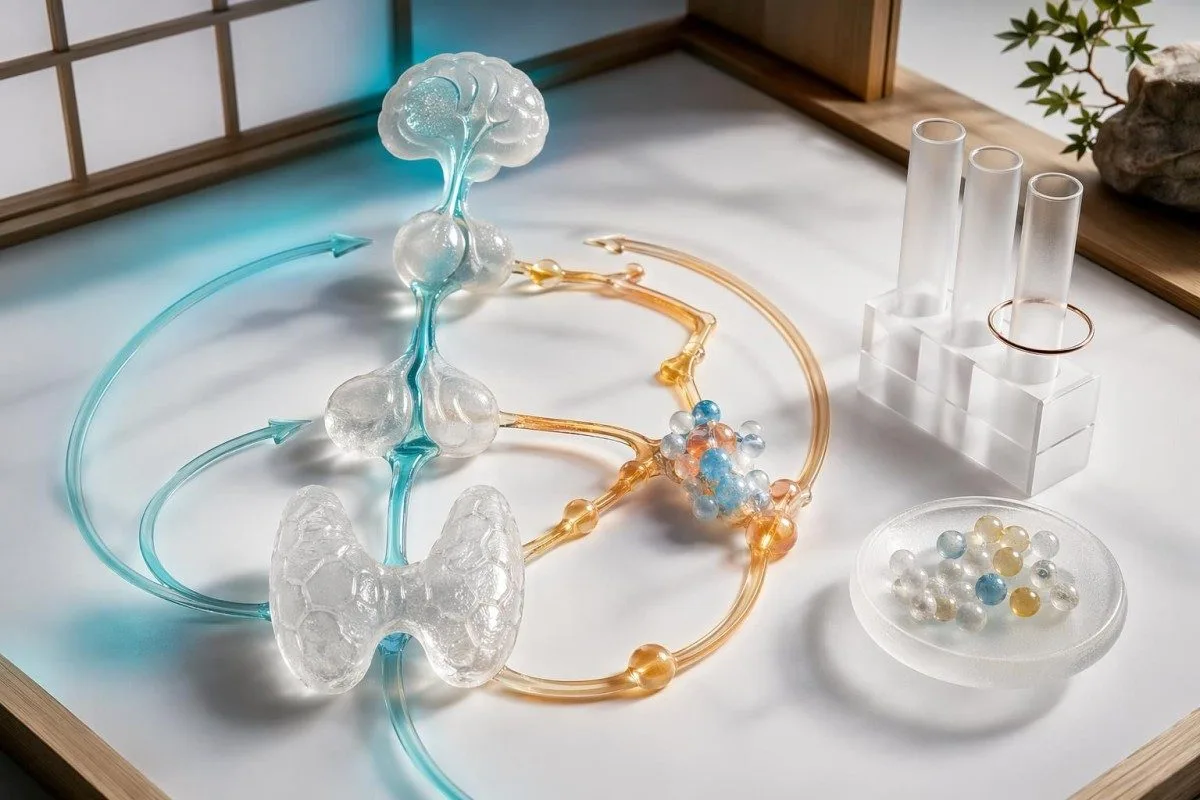
TSH estas tre sentema, sed malrapida. Post komenci aŭ ŝanĝi levotiroksinon, mi kutime atendas 6–8 semajnojn antaŭ juĝi novan TSH, ĉar la hipofizo-hepato-tiroida religa buklo bezonas tempon por stabiligi.
Biotino estas kaŝa problemo. Dozoj de 5–10 mg tage, oftaj en haraj kaj ungoj-suplementoj, povas distordi iujn tiroidajn imunoanalizojn kaj igi TSH aŭ FT4 aspekti malĝustaj depende de la platformo.
Hormonaj analizoj estas sentemaj al tempo. Testosterono kutime plej bone estas kontrolata antaŭ la 10-a horo, progesterono por ovulado ofte estas kontrolata ĉirkaŭ 7 tagojn antaŭ la atendata menstruo, kaj nia gvidilon pri tiroida panelo klarigas kiam FT4, FT3 kaj antikorpoj aldonas valoron.
Fero, vitamino kaj nutraj mallongigoj: ferritino, TSAT, B12
Mallongigoj de fero kaj vitaminoj ofte montras fruan mankon antaŭ ol aperas klasika anemio. Ferritino taksas ferajn rezervojn, TSAT signifas transferrinan saturiĝon, TIBC signifas totalan fer-ligan kapaciton, 25-OH-vitamino D estas la stokada vitamino D-testo, kaj B12 estas kobalamino.

Ferritino sub 30 ng/mL estas ofta praktika sojlo por malaltaj feraj rezervoj ĉe simptomaj plenkreskuloj, eĉ se la presita labora gamo komenciĝas je 10 aŭ 15 ng/mL. En harperdo, senripoza kruro-sindromo aŭ abunda menstrua sangado, ferritino de 18 ng/mL ne estas io, kion mi preteratentas.
Alta feritino ne ĉiam signifas troŝarĝon de fero. Ĝi ankaŭ altiĝas pro inflamo, grasa hepata malsano, alkohola uzo, infekto kaj malignanco, tial TSAT super ĉirkaŭ 45% estas la indico, kiu puŝas min al taksado de troŝarĝo de fero.
Vitamino D estas kutime taksata per 25-OH-vitamino D, ne per 1,25-OH aktiva vitamino D, krom en specifaj demandoj pri kalcio, rena aŭ granulomatoza malsano. Por ferinterpretado preter unu linio, legu nian gvidilo pri feraj studoj.
Kiam abnormal-aspektaj valoroj estas normalaj por vi
Laboratoriovaloroj aspektantaj nenormalaj povas esti normalaj por individuo kiam la ŝanĝo estas klarigita per fiziologio, tempo aŭ specimenado. Gravedeco malaltigas hemoglobinon kaj kreatininon, intensa ekzercado altigas CK kaj foje AST, dehidratiĝo koncentras albuminon kaj hematokriton, kaj fastado ŝanĝas glukozon, trigliceridojn kaj insulinon.
Unu el miaj pacientoj havis albuminon 5.3 g/dL, kalcion 10.4 mg/dL kaj hematokriton 51% post longdaŭra flugo kun tre malmulte da akvo. Du tagojn poste, post normala hidratigo, ĉiuj tri estis reen ene de la gamo; tio estas klasika hemokoncentriĝo, ne tri apartaj malsanoj.
Sportistoj estas alia grupo. CK povas superi 1,000 IU/L post intensa trejnado, kreatinino povas esti alta pro muskola maso, kaj AST povas altiĝi pro muskola disrompiĝo eĉ kiam ALT kaj GGT estas normalaj.
Tendencoj solvas multajn el ĉi tiuj enigmoj. Stabila trombocitkalkulo de 470 × 10⁹/L dum 5 jaroj estas malsama ol nova altiĝo de 240 ĝis 610 × 10⁹/L en 6 semajnoj; nia gvidilo pri senhidratiĝaj fals-altigoj montras oftajn grupiĝojn, kiuj ripetiĝas en praktiko.
Kiel Kantesti AI legas flagojn, unuojn kaj ŝablonojn sekure
Kantesti AI interpretas indikilojn kaj unuojn legante la originalan raporton, normigante nomojn de signiloj, konvertante unuojn kiam necese, kaj komparante rezultojn kiel ŝablonojn prefere ol kiel izolitaj ruĝaj nombroj. Ĝi estas desegnita por subteni komprenon de pacientoj kaj konversaciojn de klinikistoj, ne por anstataŭi diagnozon.

Nia platformo akceptas PDF-ojn kaj foto-alŝutojn, kaj poste redonas interpretadon en ĉirkaŭ 60 sekundoj por multaj rutinaj raportoj. La sistemo kontrolas ĉu glukozo estas en mg/dL aŭ mmol/L, ĉu kreatinino estas en mg/dL aŭ µmol/L, kaj ĉu la propra gamo de la laboratorio diferencas de la ĝenerala gamo por plenkreskuloj.
Kantesti Ltd estas UK-a kompanio, kaj niaj klinikaj normoj estas reviziataj per dokumentitaj regaj kaj privatecaj kaj sekurecaj kontroloj, inkluzive de atesto CE Mark, HIPAA, GDPR kaj ISO 27001. Vi povas legi pli pri nia medicina validigo procezo kaj la kuracistoj malantaŭ nia Medicina Konsila Komisiono.
Thomas Klein, MD, kaj niaj klinikaj reviziantoj atente atentas pri kaptiloj de trodiagnozo: milda ALT-indikilo post ekzercado, malalta kreatinino ĉe malgranda pli maljuna plenkreskulo, aŭ limregiona TSH kiu devus esti ripetita antaŭ kuracado. Nia antaŭregistrita komparnormo estas disponebla kiel klinika validiga studo, kaj Interpretado de sangotestoj funkciigita per artefarita inteligenteco restas plej utila kiam ĝi helpas vin demandi pli bonajn demandojn.
Kiam voki klinikiston pri mallongigoj de rezultoj de sangoanalizo
Voku klinikiston senprokraste. kiam laboratoria mallongigo estas parigita kun kritika markilo, severaj simptomoj aŭ danĝera ŝablono. Kalio super 6,0 mmol/L, natrium sub 120 mmol/L, glukozo sub 54 mg/dL, troponino super la laboratorian tranĉpunkton kun brustaj simptomoj, aŭ hemoglobino sub 7 g/dL kutime ne devus atendi.
Ne administru severajn elektrolitajn, koagulajn aŭ kormarkilajn anomaliojn per blogaĵo. Se via raporto diras kritika, panika valoro, urĝa, aŭ se la laboratorio telefonis pri la rezulto, traktu tion kiel realan eskaladon ĝis klinikisto diras alie.
Iuj ne-kritikaj markiloj tamen bezonas sekvon ene de tagoj ĝis semajnoj. Novaj trombocitoj super 600 × 10⁹/L, eGFR falanta pli ol 25%, ALT pli ol 3 fojojn la supera limo, aŭ feritino super 1,000 ng/mL estas ekzemploj, kiujn mi ne ignorus.
Se vi volas helpon por traduki la kodojn antaŭ via rendevuo, vi povas provi senpagan AI-analizon kaj alporti la resumon al via klinikisto. Por persistantaj simptomoj, nekutimaj kombinaĵoj aŭ konfuzaj raportoj, nia teamo ankaŭ atingeblas per Kontaktu nin.
Praktika konsilo antaŭ ol vi mesaĝos vian kuraciston
Sendu la plenan raporton, ne ekranpaŝon de unu ruĝa linio. Inkluzivu vian aĝon, sekson ĉe naskiĝo, gravedecon se relevante, ĉu vi fastis, lastatempan ekzercadon, suplementojn kiel biotino, kaj iujn ajn medikamentojn komencitajn en la lastaj 8 semajnoj.
Oftaj Demandoj
Kion signifas H kaj L en rezultoj de sangoanalizo?
H signifas, ke rezulto de sangoanalizo estas super la referenca intervalo de tiu laboratorio, kaj L signifas, ke ĝi estas sub tiu intervalo. Ĉi tiuj markiloj ne estas diagnozoj, ĉar referencaj intervaloj ofte priskribas la mezan 95% de elektita populacio, do ĉirkaŭ 5% da sanaj homoj povas fali ekster la presita gamo. Kalio de 6.1 mmol/L estas tre malsama ol ALT de 42 IU/L, ĉar urĝeco dependas de la markilo, la grado de ŝanĝo kaj simptomoj.
Kial mia laboratoria rezulto estas markita kiel alta, se mia kuracisto diras, ke ĝi estas normala?
Laboratoria rezulto povas esti markita kiel alta ĉar ĝi troviĝas nur iomete ekster la statistika referenca gamo de la laboratorio, eĉ se por vi ĝi estas klinike sendanĝera. Mildaj devioj de proksimume 10% ekster la gamo ofte estas ripetataj aŭ komparataj kun antaŭaj rezultoj antaŭ ol oni prenas iun ajn agon. Aĝo, gravedeco, lastatempa ekzercado, dehidratiĝo, altitudo kaj medikamentoj ĉiuj povas ŝanĝi laboratorajn valorojn sen signifi malsanon.
Kio estas la diferenco inter mg/dL kaj mmol/L en sangoanalizoj?
mg/dL mezuras mason laŭ volumeno, dum mmol/L mezuras la nombron de molekuloj laŭ volumeno. La sama glukozrezulto povas esti skribita kiel 100 mg/dL aŭ proksimume 5,6 mmol/L, do kompari nombrojn sen unuoj povas esti danĝere. Ankaŭ kreatinino ŝanĝiĝas laŭ unuo: 1,0 mg/dL estas proksimume 88 µmol/L.
Kiuj sangaj testaj mallongigoj povas esti urĝaj?
Urĝaj mallongigoj de sangoanalizo inkluzivas K por kalio, Na por natrio, Glu por glukozo, Hb por hemoglobino, Plt por trombocitoj, INR por koaguliĝo kaj troponino por korvundo. Kalio super proksimume 6,0 mmol/L, natrio sub 120 mmol/L, glukozo sub 54 mg/dL, hemoglobino sub 7 g/dL, aŭ trombocitoj sub 20 × 10⁹/L ofte postulas medicinan revizion en la sama tago. Troponino super la laboratorian tranĉpunkton kun brusta doloro, manko de spiro aŭ ŝvitado devas esti traktata kiel urĝa.
Ĉu dehidratiĝo povas igi valorojn de sangoanalizo aspekti nenormalaj?
Jes, dehidratiĝo povas koncentri sangon kaj igi albuminon, totalan proteinon, kalcion, hematokriton, BUN kaj foje kreatininon aspekti pli altaj ol kutime. Tipa dehidratiĝa ŝablono estas alt-normala albumino ĉirkaŭ 5.0 g/dL, levita BUN, koncentrita urino kaj hematokrito super la kutima nivelo de la persono. Ripeti la teston post normala hidratigo povas klarigi ĉu la anomalio daŭras.
Ĉu Kantesti AI povas interpreti foton aŭ PDF-on de mia laboratoria raporto?
Kantesti AI povas interpreti multajn PDF-ojn kaj foto-alŝutojn de sangoanalizoj legante mallongigojn, unuojn, referencajn intervalojn kaj flagajn ŝablonojn el la originala raporto. Multaj rutinaj raportoj povas esti resumitaj en proksimume 60 sekundoj, inkluzive de kompleta sangokalkulado, CMP, lipidaj, tiroidaj, feraj, vitamino- kaj diabetaj signoj. La eligo estas desegnita por subteni komprenon de pacientoj kaj diskuton kun kuracisto, ne por anstataŭi kriz-prizorgon aŭ formalan diagnozon.
Ĉu suplementoj por haroj kaj ungoj povas influi miajn rezultojn de sangoanalizo?
Jes, biotino en suplementoj por haroj kaj ungoj povas malhelpi iujn tiroidajn testojn kaj troponinon, markilon de kora damaĝo, kaj doni misgvidajn rezultojn. Informu vian kuraciston pri la produkto kaj dozo antaŭ la testado; demandu, ĉu vi devas provizore ĉesigi ĝian uzadon, ĉar la instrukcioj dependas de la testo kaj la dozo.
Ĉu mi devas fasti antaŭ ĉiu sangokontrolo?
Ne. CBC, rena panelo, tiroida testo, kaj multaj aliaj testoj kutime ne postulas faston. Sekvu la instrukciojn de la laboratorio por glukozo, trigliceridoj, aŭ planita fasta lipida testo; se vi hazarde manĝas, telefonu antaŭ ol preni sangon.
Kial miaj testnomoj aŭ mallongigoj ŝanĝiĝas kiam mi uzas alian laboratorion?
Laboratorioj povas uzi malsamajn analizilojn, nomajn konvenciojn kaj referencajn intervalojn, do la sama markilo povas aperi kun iomete malsamaj mallongigoj. Konservu kopiojn de pasintaj raportoj kaj petu vian klinikiston kompari la realan markilon, unuon kaj tendencojn prefere ol nur la etikedon.
Kion signifas, se mia kuracisto atentas la tendencon anstataŭ unu markita rezulto?
Tendenco signifas kompari la saman markilon laŭlonge, ideale el la sama laboratorio kaj en la sama unuo. Malgranda unufoja marko povas esti malpli zorgiga ol konstanta pliiĝo aŭ falo dum 2–3 rezultoj, precipe kiam simptomoj aŭ medikamentoj kongruas kun la ŝablono.
Akiru hodiaŭ AI-movitan analizon de sangoanalizo
Aliĝu al pli ol 2 milionoj da uzantoj tutmonde, kiuj fidas je Kantesti por tuja, preciza analizo de laboratoriaj testoj. Alŝutu viajn rezultojn de sangoanalizo kaj ricevu ampleksan interpretadon de 15,000+-biomarkiloj en sekundoj.
📚 Referencitaj esplorpublikaĵoj
Klein, T., Mitchell, S., & Weber, H. (2026). Klinika Validigo de la Kantesti AI Engine (2.78T) sur 15 Anonimigitaj Kazoj de Sangotesto: Antaŭregistrita Rubrika Komparnormo Inkluzive de Hyperdiagnosis Trap Kazoj Tra Sep Medicinaj Fakoj. Kantesti AI Medicina Esploro.
Klein, T., Mitchell, S., & Weber, H. (2026). Klinika Valida Kadro v2.0 (Medicina Valida Paĝo). Kantesti AI Medicina Esploro.
📖 Eksteraj medicinaj referencoj
Horowitz GL et al. (2010). Difinante, Starigante kaj Verifante Referencajn Intervalojn en la Klinika Laboratorio; Aprobita Gvidlinio—Tria Eldono. Klinika kaj Laboratoria Normaro-Instituto, CLSI EP28-A3c.
KDIGO CKD Laborgrupo (2024). KDIGO 2024 Klinika Praktika Gvidlinio por la Takso kaj Administrado de Kronika Rena Malsano. Kidney International.
Usona Diabeta Asocio Profesia Praktika Komitato (2026). 2. Diagnozo kaj Klasifiko de Diabeto: Normoj pri Prizorgo en Diabeto—2026. Diabeta Prizorgo.



⚕️ Medicina Deklaro
Ĉi tiu artikolo estas nur por edukaj celoj kaj ne konsistigas medicinan konsilon. Ĉiam konsultu kvalifikitan sanprovizanton por diagnozaj kaj traktadaj decidoj.
Signaloj de fido E-E-A-T
Sperto
Kuracista gvidata klinika revizio de laboratoriaj interpretaj laborfluoj.
Kompetenteco
Laboratoria medicino fokusiĝas pri kiel biomarkiloj kondutas en klinika kunteksto.
Aŭtoritateco
Skribita de d-ro Thomas Klein kun revizio de d-ro Sarah Mitchell kaj prof. d-ro Hans Weber.
Fidindeco
Evident-bazita interpretado kun klaraj sekvaj vojoj por redukti alarmon.