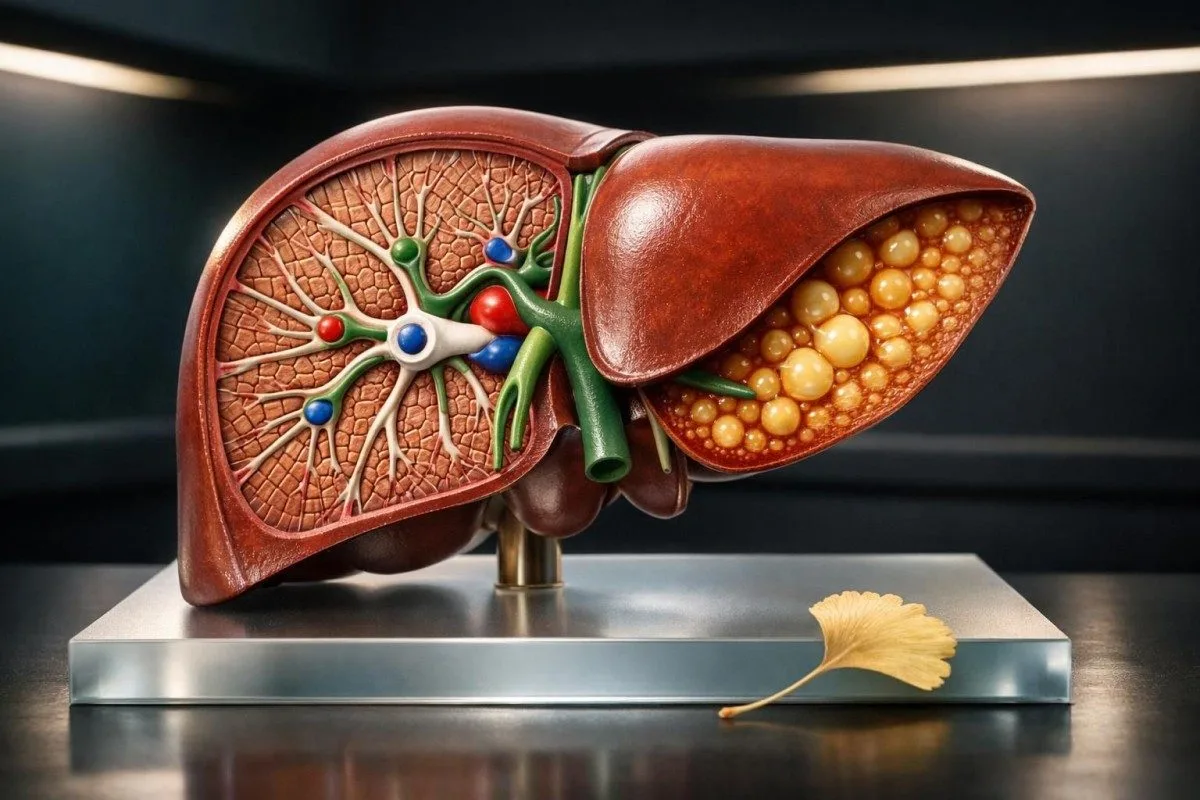
Most abnormal liver enzymes come from fatty liver, alcohol, medications, or recent hard exercise—not liver failure. The combination of ALT, AST, ALP, GGT, bilirubin, and INR is what tells you whether a repeat test can wait a few weeks or should happen within days.


- ALT is often 7-56 U/L in adults; values around 57-120 U/L are commonly mild and metabolic, while levels above 250 U/L need faster workup.
- AST:ALT ratio above 2 raises suspicion for alcohol-related injury, but a CK test matters if you exercised hard in the last 7 days.
- ALP + GGT elevation usually points to bile-flow or medication-related cholestasis rather than bone alone.
- Bilirubin above 2 mg/dL with rising enzymes is a same-day conversation, especially after a new prescription or supplement.
- INR above 1.5 in someone not taking warfarin is a red-flag marker of impaired liver synthesis.
- Albumin below 3.5 g/dL usually suggests chronicity or another systemic issue more than early acute liver injury.
- Repeat timing is often 48-72 hours for values above 5 times the upper limit or any warning symptoms, and 1-4 weeks for mild stable abnormalities.
- Platelets below 150 × 10^9/L alongside a fatty-liver pattern can hint at fibrosis even when ALT is near normal.
How to read a liver function test by pattern
Most elevated liver enzymes come from fatty liver, alcohol, medications, intense exercise, or a short viral illness; the pattern tells us how worried to be. I'm Thomas Klein, MD, and when I review a panel, I worry far more about bilirubin above 2 mg/dL, INR above 1.5, or enzymes above 5 times the upper limit than I do about an isolated ALT of 62 U/L.
ALT and AST make a hepatocellular pattern when they rise out of proportion to ALP. ALP with GGT makes a cholestatic pattern, and you can see those branches laid out in our liver panel pattern guide. On Kantesti AI, our platform uses the same clinician logic with an R factor: ALT divided by its upper limit, then divided by ALP divided by its upper limit; a value above 5 suggests hepatocellular injury, below 2 suggests cholestatic disease, and 2 to 5 is mixed.
A lot of patients assume enzymes and function are the same thing. They are not. A standard liver function test is often part of a CMP panel, but true liver function is better reflected by bilirubin, albumin, and INR, whereas ALT and AST mainly tell us about cell stress or leakage.
AST is less liver-specific than ALT because skeletal muscle also contains AST. If AST is high after a race, heavy lifting, or a fall, I usually add CK before I assume hepatitis; in my experience, that simple step prevents a surprising number of unnecessary scans. A rare trap is macro-AST, where AST stays elevated for months while ALT, GGT, bilirubin, and imaging remain normal.
The pattern matters more than the word high
An ALT of 88 U/L can be less urgent than an ALP of 190 U/L with dark urine, or an AST of 70 U/L with INR 1.7. Kantesti AI flags these combinations because severity depends on distribution, symptoms, and synthetic markers—not just the biggest number.
What mild high ALT levels usually mean
High ALT levels most often reflect MASLD—the term adopted after the 2023 nomenclature change for metabolic dysfunction-associated steatotic liver disease—especially when ALT is 1 to 3 times the upper limit and AST is lower. In adults, ALT is commonly reported as 7 to 56 U/L, although some laboratories and Prati's older Annals of Internal Medicine data support lower upper limits near 30 U/L for men and roughly 19 to 25 U/L for women.
Mild ALT elevation, roughly 57 to 120 U/L in many labs, is commonly tied to insulin resistance, abdominal weight gain, sleep apnea, and triglycerides above 150 mg/dL. For patients trying to decode one report, our ALT interpretation article shows how reference ranges vary by lab and sex.
In Kantesti AI's analysis of more than 2 million uploaded panels, ALT between 45 and 120 U/L often travels with fasting insulin resistance markers rather than classic liver symptoms. A raised HOMA-IR score or a more atherogenic lipid pattern often tells me more about the likely cause than the enzyme alone.
The thing is, ALT can improve before liver fat fully improves, and normal ALT does not rule out fibrosis. Ultrasound becomes less sensitive when steatosis is mild, often below about 20% to 30% fat content, so I do not use a normal scan as a clean bill of health if waist size, glucose, or platelets are drifting in the wrong direction. EASL guidance has been pretty consistent on this point: normal enzymes do not exclude steatotic liver disease.
When mild ALT is not just fatty liver
A lean 28-year-old with ALT 132 U/L and no metabolic risk factors deserves a different workup. Viral hepatitis, celiac disease, autoimmune hepatitis, Wilson disease, and medication injury move up the list quickly when the usual metabolic clues are missing.
When AST is higher than ALT
AST higher than ALT suggests alcohol-related liver injury, muscle release, or more advanced chronic liver disease, but the ratio is only a clue. An AST:ALT ratio above 2 raises suspicion for alcohol, whereas a ratio above 1 with falling platelets can also show up in fibrosis or cirrhosis.
A typical adult AST reference range is about 10 to 40 U/L. If AST is 89 U/L and ALT is 41 U/L, I first ask about recent workouts, muscle soreness, creatine use, and alcohol before I jump to imaging; our deeper AST pattern guide is useful for that exact fork in the road.
Alcohol-related hepatitis often produces AST values under 300 U/L, and AST above 500 U/L is unusual from alcohol alone. The reason is biochemical as much as clinical: alcohol injures mitochondrial AST pathways and can lower ALT activity through pyridoxal phosphate depletion, so the ratio skews upward even when the absolute numbers are not enormous.
I see this after endurance events all the time. A 52-year-old marathon runner with AST 146 U/L, ALT 72 U/L, normal bilirubin, and CK of 1,800 U/L usually has muscle-source leakage, not primary liver disease, and the labs often settle within 5 to 7 days of rest and hydration. If isolated AST persists for months with normal CK and GGT, I start thinking about macro-AST instead of chasing the liver.
What ALP and GGT together can signal
ALP and GGT elevated together most often point to a bile-flow problem, medication effect, or infiltrative liver process. In adults, ALP is commonly 44 to 147 U/L and GGT is often 9 to 48 U/L in women and 8 to 61 U/L in men, though ranges differ by lab.
If ALP is high and GGT is normal, I think bone before liver—healing fractures, vitamin D deficiency, growth, and pregnancy are classic reasons. Our ALP range review helps here because age and trimester change the upper limit more than many patients realize.
If GGT rises with ALP, the source is usually hepatobiliary. The common culprits are gallstones, biliary sludge, primary biliary cholangitis, primary sclerosing cholangitis, pancreatic obstruction, and drugs such as amoxicillin-clavulanate or anabolic agents; our GGT article breaks down why alcohol is only one of several explanations.
The combination I take most seriously is ALP plus GGT plus bilirubin. When dark urine, pale stools, or generalized itch show up with that trio, I want prompt evaluation for obstruction because prolonged cholestasis can damage liver cells even when ALT is only mildly elevated. For symptom context, compare your result with our bilirubin guide.
A cholestatic pattern can appear late
Cholestatic drug injury often peaks 1 to 3 weeks after the medication has already been stopped. Patients understandably miss the link because the antibiotic course is over by the time the itching begins.
Why bilirubin, albumin, and INR change the urgency
Bilirubin, albumin, and INR tell me when abnormal enzymes are becoming a genuine liver function problem. Bilirubin above 2 mg/dL or INR above 1.5 with new enzyme elevation deserves same-day clinical review, while albumin below 3.5 g/dL usually speaks more to chronicity than acute danger.
INR changes fast when the liver cannot make clotting factors, so it is one of the most useful urgency markers in acute hepatitis. If you want the numbers in context, our PT/INR explainer shows why a mildly high INR on warfarin means something very different from a high INR in a patient not taking anticoagulants.
One older rule still earns its keep: Hy's law. When ALT or AST exceeds 3 times the upper limit and total bilirubin rises above 2 times the upper limit without obvious obstruction, the risk of serious drug-induced liver injury jumps enough that I stop watching and start acting; Hyman Zimmerman described this pattern decades ago, and it still holds up in day-to-day medicine.
Albumin has a half-life of roughly 20 days, so it often stays normal early in acute liver injury. A low albumin can also reflect inflammation, kidney protein loss, malnutrition, or dilution, which is why I often read it alongside the serum proteins and A/G ratio instead of treating it as a liver-only number.
Symptoms that change the math
Confusion, easy bruising, vomiting, severe right-upper-quadrant pain, or new abdominal swelling matter as much as the lab value. I have seen patients with ALT under 200 U/L who were far sicker than patients with ALT over 600 U/L because their INR and mental status were deteriorating.
Which medicines and supplements commonly raise liver enzymes
Medications and supplements are a common cause of elevated liver enzymes, and the timing often gives the answer. A new rise appearing 5 to 90 days after starting a drug is classic for drug-induced liver injury, while acetaminophen can spike enzymes within 24 to 72 hours if the dose is excessive.
Common prescription triggers include acetaminophen above 4,000 mg per day, amoxicillin-clavulanate, terbinafine, valproate, methotrexate, isoniazid, nitrofurantoin, and sometimes statins. Our Medical Advisory Board reviews these patterns because the shape of the injury matters: statins usually cause a mild hepatocellular bump, while amoxicillin-clavulanate more often gives a cholestatic picture.
Most patients do not need to stop a statin for an isolated ALT under 3 times the upper limit if bilirubin is normal and they feel well. That point gets lost online. In clinic, I care more about a rising trend, new fatigue or nausea, and whether the drug was started or the dose was changed in the last 8 weeks.
Supplements are the wild card. Green tea extract, bodybuilding products, kava, black cohosh, high-dose niacin at 1 to 3 g daily, and even seemingly gentle herbs such as ashwagandha have all shown up in my medication histories. If your report is on paper, save the original file before the visit; our PDF lab report reader keeps dates and units intact, which patients often retype incorrectly.
How soon abnormal liver enzymes should be repeated
Repeat testing is urgent when enzymes are more than 5 times the upper limit, or when any rise comes with jaundice, dark urine, vomiting, pregnancy, confusion, fever, or right-upper-quadrant pain. As of April 8, 2026, my usual rule is 48 to 72 hours for high-risk patterns, 1 to 4 weeks for mild stable abnormalities, and up to 3 months only when the pattern clearly fits metabolic fatty liver and the rest of the panel is reassuring.
ALT or AST above 10 times the upper limit pushes viral hepatitis, toxin exposure, ischemic injury, or severe muscle injury much higher on my list. In those cases I do not wait for a routine follow-up slot; I arrange repeat labs fast, and I add bilirubin, INR, alkaline phosphatase, GGT, and often CK to avoid missing the real source.
For mild abnormalities—say ALT 68 U/L with normal bilirubin and INR—repeating in 1 to 4 weeks is reasonable, especially if there was a recent cold, new gym routine, or short medication exposure. Patients who wonder how quickly repeat results come back can check our lab turnaround guide before they schedule.
Preparation changes the repeat more than people expect. Skip intense exercise for 5 to 7 days, avoid alcohol for at least 72 hours, and follow the same morning routine; if the panel includes glucose or triglycerides, review our fasting instructions.
Same-day red flags
Pregnancy with enzyme elevation plus headache, swelling, or low platelets can signal HELLP. Suspected acetaminophen overdose, mushroom exposure, or new confusion belongs in urgent care or the emergency department, not in a messaging queue.
Patterns that point to fatty liver, alcohol, viral hepatitis, or autoimmune disease
Pattern combinations can point to fatty liver, alcohol, viral hepatitis, or autoimmune disease before imaging is done. The most helpful clues are the ratio of AST to ALT, the behavior of GGT, the presence of bilirubin or INR changes, and small supporting markers such as ferritin, platelets, and globulins.
Fatty liver usually shows ALT greater than AST, with mild GGT elevation and metabolic markers traveling alongside it. Ferritin is often moderately high—commonly 300 to 1,000 ng/mL—because steatotic liver and systemic inflammation both raise it, and our ferritin guide explains why that does not automatically mean iron overload.
Alcohol-related patterns more often show AST:ALT above 2, GGT elevation, and sometimes macrocytosis even before bilirubin rises. Acute viral or toxic hepatitis, by contrast, can push ALT or AST above 1,000 U/L, while autoimmune hepatitis often comes with disproportionately high globulins or IgG and other immune clues; if that possibility is on the table, our autoimmune lab guide adds useful context.
Platelets add information most patient pages ignore. A platelet count below 150 × 10^9/L in somebody with a fatty-liver pattern raises my concern for fibrosis or portal hypertension, even when ALT is only 48 U/L, and our platelet count explainer shows how to read that result without overreacting. Kantesti AI weighs these cross-panel clues because one abnormal enzyme alone is often the least informative part of the story.
Patterns are clues, not verdicts
The evidence is honestly mixed on how accurately enzymes alone stage fibrosis. That is why I use patterns to prioritize the next test, not to declare a final diagnosis from a spreadsheet.
Special cases people miss: exercise, pregnancy, thyroid, and celiac
Exercise, pregnancy, thyroid disease, celiac disease, and rapid weight loss are common missed explanations for abnormal liver labs. A CK test, pregnancy context, thyroid panel, and a careful timeline can keep a patient from being mislabeled with liver disease.
After strenuous exercise, AST can exceed ALT for 3 to 7 days, and CK may climb above 1,000 U/L. A 52-year-old runner I saw had AST 132 U/L and ALT 58 U/L the day after a half-marathon, but his GGT and bilirubin were completely normal and the pattern normalized after rest.
Pregnancy changes the baseline. ALP can rise physiologically from placental production, but itching with elevated bile acids above 10 µmol/L or enzyme elevation with low platelets, headache, and upper abdominal pain needs urgent obstetric review; our women's hormone and symptom guide helps patients place those symptoms in context.
Mild enzyme elevation also shows up in untreated hypothyroidism and celiac disease, and it can normalize once the real problem is treated. If fatigue, constipation, cold intolerance, or weight change are part of the picture, I look beyond the liver and often review a free T4 pattern before I order more imaging. A practical note from Thomas Klein, MD: rapid weight loss—roughly more than 1 to 1.5 kg per week—can trigger gallstones and a cholestatic pattern even while the scale is moving in the right direction.
What to bring to your doctor and how Kantesti AI can help
To make abnormal enzymes useful, bring the full report, older labs, every medication and supplement with doses, alcohol estimate, exercise timing, recent weight change, and symptoms. Uploading the whole panel to Kantesti AI works better than typing one number because pattern recognition depends on the relationship between markers, not just the highest value.
Our clinicians and engineers built Kantesti for exactly this kind of problem. A single ALT value can mislead, but trend lines across AST, ALT, ALP, GGT, bilirubin, platelets, glucose, triglycerides, and thyroid markers are where the signal lives; if you're new to the company, read about us to see how the team approaches medical review.
Kantesti's neural network analyzes more than 15,000 biomarkers, supports 75+ languages, and has been used across 127+ countries, but we still keep guardrails. Our high-risk liver logic is physician-reviewed against medical validation standards, and we operate within CE Mark, HIPAA, GDPR, and ISO 27001 processes. In my experience, that matters most when the pattern is mixed, the units differ between labs, or the same patient has multiple PDFs from different years.
If you want a quick first pass, start with the original file rather than with memory. The practical route is simple: save the report, then use our lab PDF upload tool or the free blood test demo before your appointment so the trend, units, and reference ranges stay intact.
Research publications and validation references
Kantesti's liver-enzyme interpretation logic is grounded in physician validation and large-scale lab pattern analysis, not a loose keyword match. The most relevant background document for this article is our 2026 global health report, with the formal citations listed below.
Kantesti LTD. (2026). Clinical Validation Framework v2.0. Zenodo. https://doi.org/10.5281/zenodo.17993721. ResearchGate search. Academia.edu search.
Kantesti LTD. (2026). AI Blood Test Analyzer: 2.5M Tests Analyzed | Global Health Report 2026. Zenodo. https://doi.org/10.5281/zenodo.18175532. ResearchGate search. Academia.edu search.
If you care about methodology, both records describe physician review, edge-case escalation, and how our platform handles unit normalization across lab systems. That kind of plumbing is not glamorous, but it is exactly where liver-pattern interpretation usually goes wrong.
Frequently Asked Questions
Can dehydration cause elevated liver enzymes?
Dehydration alone rarely causes a major rise in ALT or AST. It can concentrate the sample a bit and nudge values slightly, but results more than about 2 times the upper limit are usually not explained by dehydration by itself. If you were sick, vomiting, or fasting hard, rehydration and a repeat test within days to weeks can help clarify things. In practice, I look for another cause if ALT is above roughly 100 U/L or if bilirubin, ALP, or INR are also abnormal.
How high is too high for ALT?
ALT becomes more concerning as it rises above the lab's upper limit, but the urgency depends on the whole pattern. In many adult labs, ALT above about 100 to 120 U/L deserves follow-up, ALT above 250 U/L usually needs prompt review, and ALT above 5 times the upper limit often should be repeated within 48 to 72 hours. Values above 10 times the upper limit raise concern for acute viral hepatitis, toxin exposure, ischemic injury, or severe drug reactions. A normal or only mildly abnormal bilirubin and INR can make the situation less urgent, but they do not make it harmless.
Should I stop my statin if liver enzymes are high?
Most patients should not stop a statin on their own for a mild, isolated liver enzyme bump. If ALT is less than 3 times the upper limit, bilirubin is normal, and you feel well, many clinicians repeat the test and review the timing before making a change. You should contact the prescriber promptly if the trend is rising, if bilirubin climbs above 2 mg/dL, or if you develop jaundice, nausea, dark urine, or severe fatigue. True serious statin-related liver injury is uncommon, but it is the pattern, not the fear factor, that matters.
Can exercise make AST and ALT go up?
Yes—hard exercise can raise AST and sometimes ALT, especially after weight training, long-distance running, or high-intensity intervals. AST often rises more than ALT, and CK may exceed 1,000 U/L for several days if muscle is the source. A normal GGT, normal bilirubin, and a history of recent exertion make muscle leakage more likely than primary liver disease. I usually ask patients to avoid intense exercise for 5 to 7 days before a repeat test.
Do elevated liver enzymes mean fatty liver?
No, but MASLD is one of the most common causes of mild high ALT levels, especially when ALT is around 45 to 120 U/L and AST is lower. That pattern becomes more likely when triglycerides are above 150 mg/dL, fasting glucose or HbA1c is drifting up, and waist size has increased. The catch is that normal liver enzymes do not rule out liver fat or fibrosis, and ultrasound can miss mild steatosis. Fatty liver is common, but it should never be assumed without reading the whole panel.
When should elevated liver enzymes be repeated urgently?
Repeat testing is usually urgent when ALT or AST is above 5 times the upper limit, when bilirubin is above 2 mg/dL, or when INR is above 1.5 in a person not taking warfarin. New jaundice, dark urine, vomiting, confusion, right-upper-quadrant pain, pregnancy, fever, or suspected acetaminophen overdose also move the timeline up to same-day or next-day review. Mild stable abnormalities with normal bilirubin and INR can often be repeated in 1 to 4 weeks instead. In my clinic, the symptom pattern matters just as much as the number.
Can liver enzymes be high even if the ultrasound is normal?
Yes. A normal ultrasound does not rule out early fatty liver, drug-induced liver injury, viral hepatitis, autoimmune hepatitis, or fibrosis. Ultrasound becomes less sensitive when steatosis is mild—often below about 20% to 30% fat content—and enzymes can change before imaging does. That is why persistent abnormal ALT, AST, ALP, or GGT still deserves follow-up even after a reassuring scan. A normal picture and an abnormal chemistry panel can absolutely coexist.
Get AI-Powered Blood Test Analysis Today
Join over 2 million users worldwide who trust Kantesti for instant, accurate lab test analysis. Upload your blood test results and receive comprehensive interpretation of 15,000+ biomarkers in seconds.
📚 Referenced Research Publications
Klein, T., Mitchell, S., & Weber, H. (2026). Clinical Validation Framework v2.0 (Medical Validation Page). Kantesti AI Medical Research.
Klein, T., Mitchell, S., & Weber, H. (2026). AI Blood Test Analyzer: 2.5M Tests Analyzed | Global Health Report 2026. Kantesti AI Medical Research.
⚕️ Medical Disclaimer
This article is for educational purposes only and does not constitute medical advice. Always consult a qualified healthcare provider for diagnosis and treatment decisions.
E-E-A-T Trust Signals
Experience
Physician-led clinical review of lab interpretation workflows.
Expertise
Laboratory medicine focus on how biomarkers behave in clinical context.
Authoritativeness
Written by Dr. Thomas Klein with review by Dr. Sarah Mitchell and Prof. Dr. Hans Weber.
Trustworthiness
Evidence-based interpretation with clear follow-up pathways to reduce alarm.