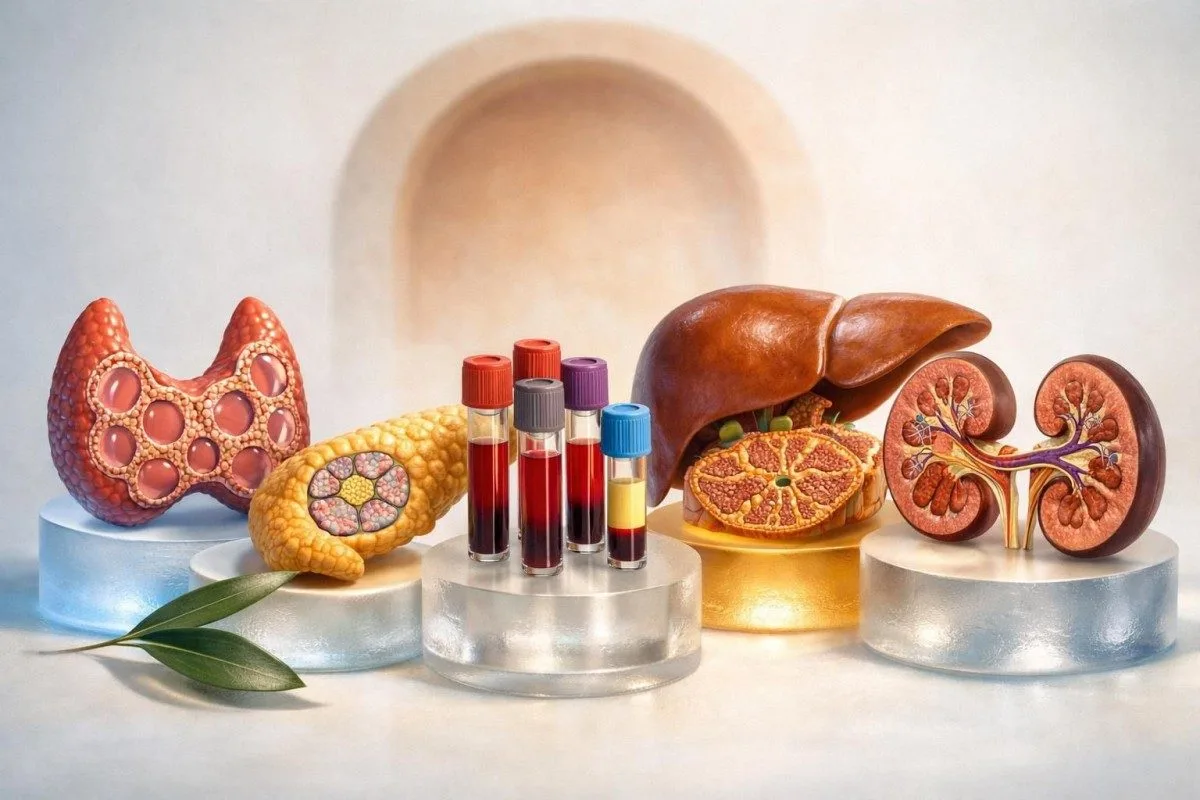
Wala’y kinahanglan sa kadaghanan og dako nga hormone panel. Ang pinakamaayong sinugdanan nga mga lab mao kadtong nagbulag sa thyroid disease, insulin resistance, ug fluid retention sa usa ka higayon.


- TSH palibot sa 0.4-4.0 mIU/L kasagaran sa mga hamtong; taas nga TSH nga adunay ubos nga free T4 nagsuporta sa hypothyroidism.
- HbA1c ubos sa 5.7% normal, 5.7-6.4% prediabetes, ug 6.5% o mas taas sa balik-balik nga testing nagsuporta sa diabetes.
- Fasting glucose ang 100-125 mg/dL nagpasabot og impaired fasting glucose; 126 mg/dL o mas taas sa balik-balik nga testing moabot sa criteria sa diabetes.
- Ang fasting insulin sa ibabaw sa mga 10-12 µIU/mL nga ang glucose naa sa ibabaw sa 90-95 mg/dL kasagaran nagpunting sa sayo nga insulin resistance.
- Albumin ubos sa 3.5 g/dL nagpalihok og kabalaka sa pagtaas sa timbang nga may kalabot sa fluid, labi na kung naa’y paghubag.
- BNP o NT-proBNP sa ibabaw sa 35 pg/mL o 125 pg/mL sa stable nga mga pasyente nga outpatient nagsugyot og posibleng fluid retention nga may kalabot sa kasingkasing.
- ALT/GGT padayon nga labaw sa mga 35 U/L sa mga babaye, 45 U/L sa mga lalaki, o GGT nga labaw sa 40-60 U/L mahimong mohaom sa mga pattern sa fatty liver.
- Morning testosterone ubos sa 300 ng/dL sa 2 ka tests nagsuporta sa hypogonadism sa mga lalaki; ang obesity makapakunhod sa SHBG ug makaliko sa total testosterone.
Unsang mga lab ang takus pangayoon una kung ang pagtaas sa timbang walay klaro nga hinungdan?
Kung ang pagtaas sa imong timbang murag walay klaro nga hinungdan, ang unang blood tests nga takus pangayoon mao ang TSH, free T4, ang CBC, ang CMP, HbA1c o fasting glucose, ug usa ka lipid panel. Kung ang pagtaas paspas o kauban ang paghubag, idugang ang creatinine/eGFR, albumin, ug BNP o NT-proBNP kay kadtong pattern kasagaran nagpunting sa fluid kaysa tambok. Kung nagbag-o ang regla o posible ang pagbuntis, ang targeted hormone testing ang sunod—dili una. Ako si Thomas Klein, MD, ug mao kini ang han-ay nga akong gigamit kasagaran sa clinic ug sa Kantesti AI.
Ang mas pokus nga panel mas maayo kaysa sa dako kaayo. Ang panel sa chemistry sa dugo plus CBC makakupot sa ubos nga albumin, pagkapugong sa kidney, kadaot sa atay, anemia, ug mga pagbag-o sa electrolyte nga napalampasan sa thyroid-only check. Kaniadtong Abril 20, 2026, nagsugod pa gihapon ko didto sa kadaghanan nga mga hamtong gawas kung ang paggamit sa steroid, pagbuntis, o klarong paghubag nagbag-o sa istorya.
Ang timing nagbag-o sa pagkalahi sa hinungdan. Ang pagtaas nga 8 lb sulod sa 6 ka bulan kasagaran nagpasabot sa sobra nga calorie, insulin resistance, menopause, o epekto sa tambal; ang pagtaas nga 6 lb sulod sa 4 ka adlaw mas makalilisang pa para sa fluid, constipation, o usa sa mga makalimbong nga pag-uyog sa timbangan. Ang pagrepaso sa trend pinaagi sa kasaysayan sa lab kada tuig kasagaran makakita sa sumbanan mas sayo pa kaysa sa usa ra ka abnormal nga resulta.
Mao ni ang akong buhaton dili nga unahon sa kadaghanan sa mga pasyente: random cortisol, reverse T3, kompleto nga sex-hormone panel, o inflammatory markers nga walay sintomas. Sa akong kasinatian, ubos ra kaayo ang kapuslanan niini nga mga test gawas kung ang kasaysayan adunay mga timailhan sama sa dali nga pasa, hirsutism, napalampas nga regla, edema, purple stretch marks, o usa ka kaayo paspas nga pagbag-o sa porma sa lawas.
Ang pagrepaso sa tambal kinahanglan nga tupad sa pag-order sa lab. Ang insulin, sulfonylureas, steroids, pipila ka antidepressants, antipsychotics, beta-blockers, gabapentin, ug pipila ka contraceptives makadugang og 2 ngadto sa 15 lb o makapadasig sa pagtipon sa fluid bisan kung ang mga lab sa pagtaas sa timbang morag walay klarong timailhan.
Unsang thyroid tests gyud ang makausab sa plano?
Ang mga thyroid test nga takus pangayoon una kay TSH ug free T4. Sa mga hamtong, TSH mga 0.4-4.0 mIU/L kasagaran, ug free T4 nga mga 0.8-1.8 ng/dL kasagaran; ang taas nga TSH nga ubos ang free T4 nagsuporta sa primary hypothyroidism.
Kadaghanan sa pagtaas sa timbang tungod sa hypothyroidism mas gamay kaysa sa gilauman sa mga tawo—kasagaran 5 ngadto sa 10 lb, ug ang pipila niini tubig kaysa tambok. Kung adunay moingon kanako nga sila misaka og timbang nga 30 lb sa sulod sa 3 ka bulan, padayon ko’g tan-aw bisan kung taas ang TSH, kay ang sakit sa thyroid mahimong usa ra ka bahin sa istorya.
A TSH tali sa 4.5 ug 10 mIU/L nga ang normal nga free T4 gitawag ug subclinical hypothyroidism, ug mao ni ang dapit nga mas importante ang konteksto kaysa sa pula nga pana. Positibo Mga antibody sa TPO, kasagaran labaw pa sa 35 IU/mL depende sa laboratoryo, nagdugang sa kahigayonan nga ang malumo nga kapakyasan sa thyroid mo-uswag sa paglabay sa panahon (Garber et al., 2012).
Ang pipila ka mga laboratoryo sa Europe mogamit ug gamay’ng mas ubos nga upper reference limit para sa TSH, ug mao kana ang usa sa mga rason nga ang mga pasyente makadawat ug lain-laing tubag gikan sa lain-laing portal. Kasagaran mas ganahan ko sa kombinasyon sa mga sintomas, free T4, ug pag-usab sa testing sa 6 hangtod 12 ka semana kaysa sa usa ka higayon nga gamay’ng taas nga TSH.
Bihira ra kaayo ko makakita ug free T3 o balig T3 nga mapuslanon sa unang adlaw. Ang mga suplemento sa biotin nga 5 hangtod 10 mg kada adlaw makapakunhod og sayop sa TSH ug makapataas og sayop sa T4/T3, mao nga kung nag-inom ka ug mga gummies sa buhok-ug-kuko, basaha ang among giya sa thyroid panel ug ang nota sa biotin interference.
Unsang metabolic ug insulin tests ang labing importante para sa hinay ug lisod nga pagtaas sa timbang?
Ang mga metabolic test nga takus pangayoon mao ang A1c, fasting glucose, ug kasagaran usa ka lipid panel; idugang ra fasting insulin kung gigamit kini sa imong clinician. A1c ubos sa 5.7% normal, 5.7-6.4% kay prediabetes, ug 6.5% o mas taas sa pagbalik-balik nga testing nagpasabot og diabetes.
Ang fasting glucose ubos sa 100 mg/dL normal, 100-125 mg/dL ang impaired fasting glucose, ug 126 mg/dL o mas taas sa pagbalik nga pagsulay nagtagbo sa mga pamantayan sa diabetes. Ang “subtle zone” kay 95-99 mg/dL; daghan na kaayong mga pasyente naa na didto sa pagtaas sa insulin bisan pa nga ang lab nagmarka pa nila nga normal.
Ang fasting insulin gubot ug lisod kay magkalahi ang mga assay, ug ang mga clinician tinuod nga nagkalalis kung unsa ang labing maayo nga cutoff. Bisan pa niana, base sa akong kasinatian, ang fasting insulin nga labaw sa 10-12 µIU/mL nga adunay fasting glucose nga labaw sa 90-95 mg/dL kasagaran nagpasabot og sayo nga insulin resistance, ug ang HOMA-IR nga labaw sa mga 2.0 ngadto sa 2.5 usa ka makatarunganon nga timailhan imbis nga usa ka diagnosis (Matthews et al., 1985). Kung gusto nimo ang matematika, among HOMA-IR explainer praktikal.
Sa among analysis sa 2M+ nga mga upload tabok 127+ ka mga nasud, ang labing kasagarang cluster sa pagtaas sa timbang nga misteryoso dili man dramatiko nga endocrine disease. Kini mao ang A1c 5.6-6.2%, triglycerides nga labaw sa 150 mg/dL, HDL nga ubos sa 40 mg/dL sa mga lalaki o 50 mg/dL sa mga babaye, ug medyo taas nga ALT o fasting glucose.
Usa ka praktikal nga timailhan: triglycerides nga labaw sa 200 mg/dL kauban ang ubos nga HDL mas makapahingangha sa insulin resistance kay sa usa ka tagsa-tagsa nga pagtaas sa LDL. Kung ang imong glucose nagasaka-saka, ang among mga bahin bahin sa taas nga glucose walay diabetes ug unsa ang A1c nga 6.5% tinuod nga pasabot maayong sunod nga lakang.
Kanus-a nagpasabot ang pattern nga fluid retention kaysa pagtaas sa tambok?
Dali nga pagdako nga adunay pamamaga kinahanglan albumin, creatinine/eGFR, mga electrolyte, ug kasagaran BNP o NT-proBNP. Pagtaas sa timbang nga labaw pa sa 2-3 lb sa sulod sa 24 oras o 5 lb sa sulod sa usa ka semana nga adunay pamamaga sa bukung-bukong, tiyan, o tabon sa mata kay fluid ra hangtod mapamatud-an nga dili.
Ang pagtaas nga may kalabot sa fluid kasagaran makita sa mga lab una pa makamatikod ang pasyente sa salamin. Albumin kasagaran moabot ug mga 3.5-5.0 g/dL; ang mga lebel nga ubos sa 3.0 g/dL mas makapadali sa posibilidad sa edema, labi na kung ang mga bitiis, tiyan, o tabon sa mata kay nagka-puffy. Ang among giya sa ubos nga albumin ug pamamaga naglakaw pinaagi sa kasagarang mga pattern.
Ang fluid retention nga may kalabot sa kasingkasing mao kana ang BNP o NT-proBNP makatabang. Sa stable nga mga outpatients, ang BNP nga labaw sa 35 pg/mL o NT-proBNP nga labaw sa 125 pg/mL angay kini nga i-contextualize base sa edad ug kidney function, bisan pa man nga ang obesity makapugong niini nga mga marker aron makahatag ug sayop nga makapakalma nga resulta—usa sa mas tinago nga mga lit-ag nga akong makita.
Ang dali nga pagdagsang sa fluid naa pud nay pisikal nga mga timailhan: mas higpit nga singsing sa gabii, mga marka sa medyas, pagmata nga puffy ang tabon sa mata, o kakulang sa gininhawa kung naghigda nga patag. Ang pagtaas sa tambok kasagaran nagpadayon sulod sa mga bulan; ang fluid mahimong molihok ug 24 hangtod 72 oras dayon mag-usab-usab pag-ayo.
Ang calcium-channel blockers, NSAIDs, steroids, ug pioglitazone makadugang ug water weight bisan kung ang albumin ug creatinine tan-awon nga okay. Kung ang heart strain bahin sa pangutana, among BNP guide nagpakita kung unsaon pag-usab sa numero base sa edad, kidney function, ug obesity.
Unsang mga liver numbers ang kasagaran nga mosaka una pa makita ang mga sintomas nga may kalabot sa timbang?
Ang mga liver tests nga labing importante mao ang ALT, AST, GGT, ALP, bilirubin, ug albumin. Nagpadayon nga ALT nga labaw sa mga 35 U/L sa mga babaye o 45 U/L sa mga lalaki angay nga sundan pa, labi na kung ang triglycerides ug A1c mosaka uban niini.
Ang atay usa ka hilom nga kauban sa pagtaas sa timbang. Nagpadayon nga ALT nga labaw sa mga 35 U/L sa mga babaye o 45 U/L sa mga lalaki, labi na kung GGT nga labaw sa 40-60 U/L, kasagaran mohaom sa fatty liver o epekto sa alkohol o tambal imbis nga usa ka talagsaon nga sakit sa atay.
Ang pattern mas labaw kaysa panic. ALT nga mas dako kaysa AST kung adunay taas nga triglycerides nagatudlo sa metabolic fatty liver, samtang AST nga mas kaayo ang taas kaysa ALT human sa bug-at nga workout mahimong pagtagas sa kaunuran, dili injury sa hepatocyte; nakakita ko og usa ka 52-anyos nga marathon runner nga adunay AST 89 U/L, ALT 42 U/L, ug normal nga ultrasound tulo ka adlaw human sa lumba.
Kung ALP ug GGT kung pareho nga mosaka, hunahunaa ang pag-agos sa apdo o epekto sa tambal; kung bilirubin o albumin mosaka usab, mas lapad ang hulagway kaysa sa yano ra nga fatty liver. Ang among mga artikulo bahin sa pagtaas sa liver enzymes ug ang Ratio sa AST/ALT mapuslanon kung gusto nimo basahon ang pattern sa paagi nga buhaton sa mga hepatologist.
Ang usa ka tusok nga dugang nga timailhan mao ang ferritin. Ferritin nga labaw sa 200 ng/mL sa daghang kababayen-an o 300 ng/mL sa daghang mga lalaki mahimong mouban sa fatty liver ug insulin resistance bisan pa kung normal ang iron saturation, mao nga ang taas nga ferritin dili dayon nagpasabot nga adunay iron overload.
Unsang mga kidney markers ang makasulod sa normal-looking nga resulta?
Ang mga kidney marker nga takus i-check kay creatinine, eGFR, BUN, sodium, potassium, ug bicarbonate. Ang usa ka eGFR nga ubos sa 60 mL/min/1.73 m² sulod sa kapin sa 3 months nagasuporta sa chronic kidney disease bisan kung ang creatinine medyo lang ang dili normal.
Ang pagtaas sa timbang nga may kalabotan sa kidney mahimong matago sa luyo sa normal nga creatinine. Creatinine nga mga 0.6-1.3 mg/dL usa ka kasagarang range sa hamtong, apan ang kantidad nga 1.0 mg/dL mahimong ok sa usa ka muscular nga 30-anyos nga lalaki ug dili kaayo makapakalma sa usa ka gamay nga 75-anyos nga babaye.
Mao nga tan-awon nako ang eGFR, dili ra ang creatinine. Ang eGFR nga moubos gikan sa 95 ngadto sa 68 mL/min/1.73 m² sulod sa usa ka tuig makapadani sa akong atensyon bisan kung ang portal pa gihapon nagkolor og tanan nga berde, ug cystatin C mahimong mapuslanon kung ang muscle mass makalibog sa creatinine.
Ratio sa BUN/creatinine nagdugang ug konteksto, bisan dili kini standalone nga diagnosis. Ang mga ratio nga labaw sa mga 20:1 kasagaran nagpasabot sa dehydration o pagkunhod sa kidney perfusion, samtang ang dili kaayo makapatingala nga ratio nga adunay edema ug ubos nga albumin mahimong mohaom sa dilution o protein-loss nga mga kahimtang; atong giya sa pagsulay sa amim Aden ug Katin-awan sa BUN/creatinine ratio pag-ila sa kahulugan sa nuance.
Mahimo gihapon nga makalaktaw ang blood work sa problema. Kung tinuod ang paghubag, kasagaran nagdugang ko og urine albumin-to-creatinine ratio o urinalysis kay ang pagkawala sa protina nga nephrotic mahimong hinungdan sa paspas nga pagdagsa sa likido bisan pa sa wala pa mosaka ang creatinine.
Kanus-a gyud takus pangayoon ang cortisol o adrenal testing?
Ang cortisol testing kay dili usa ka first-line nga lab para sa kadaghanan sa dili klaro nga pagtaas sa timbang. Makatugma kini kung ang pagtaas sa timbang mouban sa sayon nga pagkapasa, purple nga stretch marks, kahuyang sa kaunoran sa hapit na mga lutahan, resistant hypertension, o diabetes nga makita nga dili katimbang.
Ang random serum cortisol dili maayo nga screening para sa Cushing syndrome. Ang giya sa Endocrine Society ni Nieman ug mga kauban nagrekomendar sa dugay sa gabii nga salivary cortisol, 24-hour urinary free cortisol, o usa ka 1 mg overnight dexamethasone suppression test imbis niini (Nieman et al., 2008).
Para sa dexamethasone test, ang serum cortisol nga mas taas pa sa 1.8 µg/dL kasagaran giisip nga abnormal. Kana nga cutoff sinadyang sensitibo, mao nga mahitabo ang false positives tungod sa sobra nga alkohol, dili pa matambalan nga sleep apnea, grabe nga depression, grabe nga stress, ug paggamit sa oral estrogen.
Nagreserba ko sa cortisol workups para sa kaayo espesipikong mga istorya—bag-ong purple nga stretch marks nga mas lapad pa sa 1 cm, dali nga pagkapasa sa panit, proximal muscle weakness, o blood pressure nga kalit nga nanginahanglan og 3 o labaw pa nga mga tambal. Kung magpabilin sa lamesa ang mga pangutana bahin sa adrenal, among giya sa pagsulay sa dugo alang sa DHEA ug ang pagdumala sa endocrine gikan sa among Lupon sa Medikal nga Magtatambag ipasabut kung unsay moabot human sa screening step.
Unsang mga timailhan sa reproductive o sex-hormones ang makataronganon para sa dugang nga testing?
Kung ang pagtaas sa timbang mouban sa dili regular nga regla, acne, bag-ong balhibo sa nawong, ubos nga libido, o pagpagawas gikan sa suso, ang gitumong nga hormone labs makatarunganon. Ang mapuslanon nga sinugdanan kasagaran mao ang prolactin, total testosterone, SHBG, usahay usa ka calculated free testosterone, ug TSH; LH/FSH mas makatabang kaysa sa gipaabot sa kadaghanan sa mga pasyente.
Para sa ginasuspetsahan nga PCOS, ang total testosterone ug SHBG kasagaran mas mapuslanon kaysa sa LH/FSH ratios, ilabi na kung dili regular ang mga cycle. Ang oral contraceptives makapugong sa androgens sulod sa mga semana hangtod sa mga bulan, mao nga ang ideal nga testing mahitabo human sa washout nga giisip sa imong clinician nga luwas; ang among giya sa oras sa PCOS nagtabang sa praktikal nga detalye.
Prolactin takus pangayoon kung ang pagtaas sa timbang mouban sa napalampas nga regla, milky nipple discharge, headaches, o ubos nga libido. Daghang labs ang nagtan-aw nga prolactin ubos sa mga 25 ng/mL normal sa dili mabdos nga mga babaye ug ubos sa 20 ng/mL normal sa mga lalaki, samtang ang mga kantidad nga labaw sa 100 ng/mL nagdugang sa kahigayonan sa usa ka hinungdan nga gikan sa pituitary o usa ka kusog nga epekto sa tambal; tan-awa ang among prolactin primer.
Sa mga lalaki, total testosterone ubos sa 300 ng/dL sa duha ka managlahi nga morning tests mao ang kasagarang biochemical threshold alang sa hypogonadism. Ang obesity makapakunhod sa SHBG, mao nga ang total testosterone mahimong tan-awon nga mas dili normal kaysa sa tinuod nga aktibong hormone—usa sa mga rason nga ganahan ko sa usa ka maampingon nga sample sa buntag ug konteksto gikan sa among giya sa testosterone range.
Ang Perimenopause mas komplikado kaysa sa giingon sa social media. Ang usa ka FSH mahimong mosaka gikan sa 8 ngadto sa 40 IU/L sa tibuok mga semana, mao nga dili kaayo kini mapuslanon kaysa sa pattern sa sintomas, edad, kalidad sa pagkatulog, ug mga timailhan sa insulin kung ang nag-unang reklamo mao ang hinay-hinay nga pagtaas sa timbang sa tunga-tunga sa kinabuhi.
Taunang blood work: unsay i-test kung walay klaro nga makita
Kung normal ang mga first-line nga test apan nagpadayon gihapon ang pagtaas sa timbang, tinuig nga blood work unsay i-test nagdepende sa sintomas ug risgo. Alang sa kadaghanan sa mga hamtong, iulit ang CBC, CMP, lipids, HbA1c o fasting glucose, ug usahay TSH matag 6 hangtod 12 bulan; idugang ra ang ubang mga test kung ang kasaysayan nagpunting didto.
Kung normal ang first-line nga mga test, kasagaran iulit nako ang core panel sa 6 hangtod 12 bulan, dili 6 ka adlaw. Ang eksepsiyon kay paspas nga pagbag-o—bag-ong edema, pagtaas sa blood pressure, o mga sintomas sa glucose—kung diin mas makatarungan ang sayo nga pag-retest.
Ferritin ug bitamina D kay kasagarang mga add-on, apan lain-lain sila og tubag sa lain-laing pangutana. Ferritin ubos sa 30 ng/mL kasagaran nagasuporta sa kakulangan sa iron, samtang 25-OH vitamin D ubos sa 20 ng/mL mao ang kakulangan sa kadaghanan sa mga giya; bisan unsa wala’y klarong hinungdan nga klasiko sa dili mahibaw-an nga pagtaas sa timbang, apan pareho nga makapagrabe sa kakapoy ug sa pagkatugot sa kalihokan. Kung ang pangutana mao ang iron stores, sugdi sa among giya sa range sa ferritin.
Dili ko ganahan sa tinuig nga mga checklist nga giapil ang ESR, CRP, sex hormones, cortisol, ug tumor markers para sa tanan. Sa Kantesti, ang among Medical Validation nagduso sa sukwahi nga pamaagi: iulit ang core tests, dayon idugang ra ang mga lab nga gimaneho sa sintomas kung ang istorya makatarungan kana.
Unsaon pagsabot sa resulta sa lab isip mga pattern imbis nga tagsa-tagsa nga alarma
Unsaon pagsabot sa resulta sa lab nagdepende sa pag-ila sa pattern. Taas nga TSH ug ubos nga free T4 nagpunting sa usa ka direksyon, samtang normal nga TSH plus fasting insulin 15 µIU/mL plus triglycerides 220 mg/dL plus ALT 48 U/L nagpunting sa laing butang nga hingpit nga lahi.
Ang borderline nga mga kantidad mao ang diin kadaghanan sa mga pasyente mawad-an og klaro. Ang TSH nga 4.3, glucose nga 99, ug ALT nga 36 dili emergency, apan tulo ka borderline nga paglihok sa samang direksyon sulod sa 12 hangtod 24 ka bulan nagpasabot og labaw pa sa usa ka bulag nga pula nga kahon; among giya sa borderline results nagpatin-aw kung unsaon nako pagbasa kining matang sa panel.
Gamita ang parehas nga laboratoryo kung mahimo, ug usba ug balik sa susama nga kondisyon—parehas nga oras sa adlaw, parehas nga kahimtang sa pagpuasa, parehas nga rutina sa tambal. Ang fasting insulin nga gihimo sa 8 AM human sa tinuod nga 8-12 ka oras nga pagpuasa mas sayon ug mas klaro ug mas mapasabtan kaysa sa usa nga gikuha sa alas-2 sa hapon human sa kape ug protein bar.
Mao kini ang dapit nga among AI blood test platform makatabang. Ang Kantesti AI naghubad sa PDF o photo uploads sa mga 60 seconds, nagasubay sa mga uso sulod sa mga tuig, ug nagatandi labaw pa sa 15,000 nga biomarkers samtang nagahimo og mga pasidaan sa mga kumpol nga ang gikapoy nga mata sa tawo mahimong makalimot; mahimo nimo kini sulayan sa libre nga blood test demo.
Bottom line gikan kang Thomas Klein, MD: kung ang pagtaas sa imong timbang paspas kaayo, naglakip og paghubag, o mohaom sa kakulang sa gininhawa, pressure sa dughan, grabe nga kahuyang, o mga sintomas sa glucose, hunong sa pagpangita ug paeksamen. Kung hinay ra ug nag-feel ka nga okay ra unta, ang targeted nga panel plus maampingong pagrepaso sa uso kasagaran mas maayo kaysa sa usa ka dramatikong workup.
Mga research publication nga among gigamit kung ang mga kidney ug urine clues naglibog sa hulagway
Kung ang mga timailhan sa paghubag o kidney-liver naglibog sa hulagway, duha ka Kantesti nga publikasyon ang direktang mapuslanon. Dili kini generic nga blog posts; mga reference pieces kini nga among gigamit kung ang resulta sa dugo ug mga nakita sa ihi murag nagkasumpaki.
Team sa Panukiduki sa Kantesti. (2026). _BUN/Creatinine Ratio Explained: Kidney Function Test Guide_. Zenodo. https://doi.org/10.5281/zenodo.18207872. ResearchGate. Academia.edu. Nakasalig ko ani kung ang usa ka gamay nga taas nga ratio gi-overread nga kidney failure; ang dehydration, GI losses, ubos nga pag-inom og protina, ug mga pagbalhin sa fluid makapahimulag niini.
Team sa Panukiduki sa Kantesti. (2026). _Urobilinogen in Urine Test: Complete Urinalysis Guide 2026_. Zenodo. https://doi.org/10.5281/zenodo.18226379. ResearchGate. Academia.edu. Kini importante kung ang pagtaas sa timbang nagtagbo sa itom nga ihi, mga pagbag-o sa bilirubin, sakit sa atay, o mga pangutana bahin sa hemolysis nga naglibog sa hulagway.
Kadaghanan sa mga tawo nga nangutana unsang blood tests ang kinahanglan nako kuhaon alang sa dili mahibaw-an nga pagtaas sa timbang wala’y kinahanglan nga urine studies sa unang adlaw. Apan sa dihang makita na ang paghubag, mabula nga ihi, itom nga ihi, o borderline nga mga numero sa kidney, ang paghubad nga blood-only mahimong mas huyang—mao gyud kana ang hinungdan nga among Mahitungod Kanamo gitukod ang combined report analysis.
Kanunay nga Gipangutana nga mga Pangutana
Unsang mga blood test ang kinahanglan nako una nga pangayoon kung adunay dili mahibal-an nga pagtaas sa timbang?
Ang labing maayo nga first-line nga panel para sa dili mahibaw-an nga pagtaas sa timbang kasagaran mao ang TSH, free T4, ang CBC, ang CMP, HbA1c o fasting glucose, ug usa ka lipid panel. Kung ang pagtaas sa timbang paspas o mohaom sa paghubag, idugang creatinine/eGFR, albumin, ug BNP o NT-proBNP kay ang fluid retention makapahisama sa pagtaas sa tambok. Sa mga hamtong, A1c 5.7-6.4% nagpasabot og prediabetes ug Ang TSH nga mas taas sa lab range nga adunay ubos nga free T4 nagsuporta sa hypothyroidism. Kung ang scale mosaka labaw pa sa 2-3 lb sa sulod sa 24 oras o 5 lb sa sulod sa usa ka semana, mangayo ko og personal nga pagsusi sa tawo kaysa puro pa ug dugang nga mga lab.
Makapabilin ba nga ang normal nga mga thyroid blood test makapahabilin gihapon ug hinungdan sa hormonal nga hinungdan sa pagtaas sa timbang?
Oo. Usa ka normal TSH ug free T4 makapakunhod sa kahigayonan sa overt hypothyroidism, apan dili nila malikayan insulin resistance, PCOS, menopause, ubos nga testosterone, o pagtaas nga may kalabotan sa tambal. Ang sakit sa thyroid kasagaran usab makapahinabo ug mas kasarangan nga pagtaas sa timbang—kasagaran mga 5 ngadto sa 10 lb, nga ang bahin niini tubig. Kung nagbag-o ang regla, misaka ang acne, mikunhod ang libido, o mitungha ang mga sintomas sa prolactin, mapuslanon gihapon ang gitumong nga mga thyroid hormone tests.
Kinahanglan ba ko mangayo ug fasting insulin kung normal man ang akong A1c?
Ang fasting insulin mapuslanon kung normal ang A1c apan ang pagtaas sa timbang nag-umpok uban sa taas nga triglycerides, ubos nga HDL, pagdako sa hawak, o fasting glucose sa han-ay nga 95-99 mg/dL. Daghang clinician ang naghunahuna nga ang fasting insulin nga labaw sa 10-12 µIU/mL nga adunay fasting glucose nga labaw sa 90-95 mg/dL nagpakita og sayop nga timailhan sa sayo nga insulin resistance, bisan pa man tinuod nga adunay variation sa assay. Ang HOMA-IR nga labaw sa mga 2.0 ngadto sa 2.5 kasagaran makatabang sa pagpalig-on niadtong impresyon. Ang A1c ra ra makalaktaw sa sayo nga metabolic nga problema kay nagrepresentar kini sa average nga glucose, dili kung unsa ka lisod ang trabaho sa lawas aron mapadayon nga normal ang glucose.
Kanus-a ang pagtaas sa timbang nagpasabot sa pagtipon sa likido imbis nga tambok?
Ang pagtaas sa timbang nagpasabot og fluid retention kung kini paspas, nagbag-o-bag-o sulod sa mga adlaw, ug mouban sa mga timailhan sama sa pagkalubog sa ankle, namugto nga talukap sa mata, kapun-an sa tiyan, o kakulang sa gininhawa. Ang mga timailhan sa lab naglakip sa albumin nga ubos sa 3.5 g/dL, ang BNP nga labaw sa 35 pg/mL, NT-proBNP nga labaw sa 125 pg/mL, o nagtaas nga creatinine ug pagkunhod sa eGFR. Ang pagtaas sa tambok kasagaran nag-uswag sulod sa mga semana ngadto sa mga bulan, dili sa usa ka gabii. Kung motaas ka ug labaw pa sa 2-3 lb sa usa ka adlaw o 5 lb sa sulod sa usa ka semana, ilabi na kung adunay mga sintomas sa pagginhawa, angay kining ipasusi dayon sa doktor.
Nakatabang ba ang pagpa-test sa cortisol alang sa tambok sa tiyan o sa pabilog nga nawong?
Ang cortisol testing dili maayong unang test para sa ordinaryong central weight gain. Nimong mahimong mapuslanon kung makita ang tambok sa tiyan o pagkapalapad sa nawong uban sa purple nga stretch marks nga mas lapad pa sa 1 cm, sayon nga pagkapasa, kahuyang sa kaunuran, resistant hypertension, o paspas nga paglala sa diabetes. Ang random cortisol level dili husto nga screening; ang kasagaran nga mga test mao ang dugay sa gabii nga salivary cortisol, 24-hour urinary free cortisol, o usa ka 1 mg overnight dexamethasone suppression test, diin ang cortisol sa sunod-morning nga mas taas pa sa 1.8 µg/dL kasagaran giisip nga abnormal. Komon ang false positives sa sobra nga pag-inom og alkohol, depression, grabe nga stress, ug sleep apnea.
Unsa man kung ang tanan kong blood test normal pero padayon ko’g nagkadaghan ug gibug-aton?
Ang normal nga blood test results makapakunhod sa posibilidad sa seryosong endocrine, liver, kidney, ug diabetes nga mga hinungdan, apan dili niini matapos ang istorya. Akong susihon ang mga tambal, risgo sa sleep apnea, pag-inom og alkohol, pag-inom og sodium, pagkalihis sa kaloriya, menopause o perimenopause, ug kung ang pag-usab sa timbang tinuod nga fluid. Kung ang paghubag bahin sa kahimtang, ang ratio sa urine albumin-sa-creatinine o urinalysis mahimong makadugang og labaw pa sa laing hormone test. Kung ang pagtaas hinay-hinay ug maayo ang imong pagbati, ang pag-usab sa core panel sa 6 hangtod 12 bulan kasagaran mas mapuslanon kaysa pag-order dayon og 20 ka dugang nga lab.
Ang dili maayo nga pagkatulog o sleep apnea ba makatampo sa pagtaas sa timbang bisan kung normal ang akong mga pagsulay sa dugo?
Oo. Ang dili maayo nga pagkatulog ug wala matambalan nga sleep apnea makadugang sa kagutom, makapakunhod sa kalihokan sa adlaw, ug makapasamot sa pagsukol sa insulin bisan kung normal ang mga resulta sa routine laboratory. Pangutana bahin sa pagtimbang-timbang kung daghan ka mog orag, momata ka nga nag-agaw ug ginhawa, dili ka mabusog, o dili kasagaran nga matulog sa maadlaw.
Kinahanglan ba nga magpuasa ko sa dili pa magpa-blood test kung wala mahibaw-an ang hinungdan sa pagdako sa timbang?
Makatabang ang pagpuasa kung gusto sa imong clinician ang fasting glucose, fasting insulin, o usa ka standard lipid panel, kasagaran human sa 8-12 ka oras nga walay pagkaon. Ang thyroid tests, CBC, CMP, HbA1c, mga kidney markers, ug urine testing kasagaran dili kinahanglan ug pagpuasa.
Mahimo ba nga ang mga tambal makadugang og timbang bisan normal ang akong mga resulta sa dugo?
Oo. Ang pipila ka mga tambal makadugang og gana sa pagkaon, makapahinay sa pagpagawas sa likido, o makausab sa paagi sa pagtipig sa enerhiya sa lawas bisan dili moresulta sa abnormal ang mga routine nga lab. Ayaw kini hunonga kalit; pangutan-a ang imong clinician kung ang pagbag-o sa dosis o ang laing kapilian makatarungan.
Karon na ang AI-Powered Blood Test Analysis
Apil sa kapin sa 2 milyon nga mga user sa tibuok kalibutan nga nagsalig sa Kantesti para sa dayon ug tukma nga pag-analisa sa lab test. I-upload ang imong resulta sa blood test ug makadawat og komprehensibong pagsabot sa 15,000+ nga mga biomarker sulod sa mga segundo.
📚 Mga Napangalan nga Research Publications
Klein, T., Mitchell, S., & Weber, H. (2026). Pagpasabot sa BUN/Creatinine Ratio: Giya sa Pagsulay sa Function sa Kidney. Kantesti AI Medical Research.
Klein, T., Mitchell, S., & Weber, H. (2026). Pagsulay sa Urobilinogen sa Ihi: Kumpletong Giya sa Urinalysis 2026. Kantesti AI Medical Research.
📖 Mga Panlabas nga Sanggunian sa Medisina
⚕️ Pagpasabot sa Medikal
Kini nga artikulo para sa katuyoan sa edukasyon ra ug dili kini mosangpot sa medikal nga tambag. Kanunay mokonsulta sa usa ka kwalipikado nga healthcare provider alang sa mga desisyon sa diagnosis ug pagtambal.
Mga E-E-A-T Trust Signals
Kasinatian
Pagsusi sa klinika nga gipangulohan sa doktor sa mga workflow sa interpretasyon sa lab.
Kahanas
Pokus sa medisina sa laboratoryo kung giunsa paglihok ang mga biomarker sa konteksto sa klinika.
Pagka-awtorisado
Gisulat ni Dr. Thomas Klein ug gisusi ni Dr. Sarah Mitchell ug Prof. Dr. Hans Weber.
Kasaligan
Interpretasyon nga base sa ebidensya, nga adunay klaro nga mga agianan sa sunod nga buhat aron makunhuran ang kabalaka.