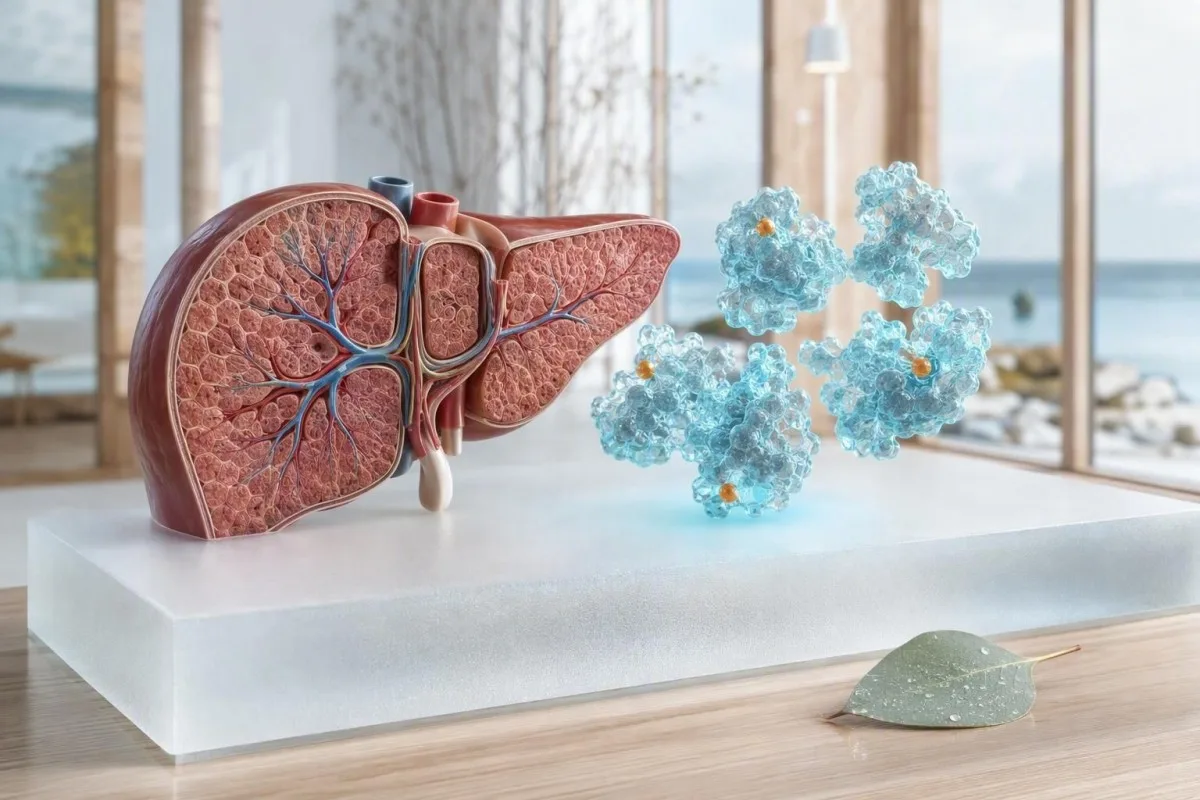
Un resultat baix de la TIBC rarament causa símptomes per si sol. Els símptomes provenen de la condició que canvia la producció de transferrina, la gestió del ferro o l'equilibri proteic.



- TIBC baixa normalment significa que hi ha menys transferrina disponible per transportar ferro; molts laboratoris d'adults utilitzen aproximadament 250–450 µg/dL (45–80 µmol/L) com a interval de referència.
- Els símptomes són indirectes: fatiga, febre, dolor articular, inflor, icterícia o pèrdua de pes apunten cap a la malaltia subjacent en lloc del TIBC baix en si.
- Patró d’inflamació normalment mostra ferro sèric baix, TIBC baix, saturació de transferrina per sota del 45%, i ferritina normal o elevada.
- Patró de deficiència de ferro normalment produeix ferritina baixa i TIBC alt, no baix, a menys que hi hagi inflamació o malaltia hepàtica al mateix temps.
- Saturació de transferrina es calcula com ferro sèric dividit per TIBC × 100; un valor superior al 45% mereix una avaluació per a la càrrega de ferro quan és persistent.
- L'albúmina importa perquè la transferrina és una proteïna produïda pel fetge; una albúmina baixa amb TIBC baix pot indicar una síntesi reduïda, una ingesta deficient, pèrdua de proteïnes o malaltia sistèmica.
- revisió urgent és apropiat per a confusió, icterícia, femtes negres, dificultat per respirar en repòs, inflor que augmenta ràpidament o febre amb debilitat severa.
- Tornar a fer proves savisament significa evitar les pastilles de ferro durant 24 hores abans d'un panel de ferro quan el vostre metge ho accepta, i posposar les proves de rutina durant una malaltia febril aguda quan sigui possible.
Què significa realment un resultat baix de TIBC
Una baixa capacitat total de fixació del ferro significa que la corrent sanguínia té menys capacitat de transferrina disponible per fixar ferro. La TIBC és una mesura indirecta de la transferrina, una proteïna produïda principalment pel fetge; no és una mesura directa de quant ferro emmagatzema el vostre cos.
La majoria dels laboratoris informen d'una TIBC adulta al voltant de 250–450 µg/dL o 45–80 µmol/L, però l'interval imprès al costat del vostre resultat té prioritat perquè la calibració de l'assaig difereix. Un valor de 210 µg/dL no és automàticament perillós; l'interpreto al costat del ferro sèric, la ferritina, la saturació de transferrina, la proteïna C reactiva, l'albúmina i l'hemograma complet. El nostre detallat guia d'estudis del ferro explica per què cap marcador de ferro individual pot respondre a totes les preguntes.
La TIBC i la transferrina estan estretament relacionades però no són proves idèntiques. La transferrina es mesura com una concentració de proteïna, sovint en g/L o mg/dL, mentre que la TIBC estima la capacitat màxima de fixació del ferro de la transferrina circulant; alguns laboratoris calculen una a partir de l'altra. La TIBC és un Analitzador de sang amb IA que interpreta una TIBC baixa en relació amb la resta d'un panel de ferro en lloc de tractar un sol senyal com a diagnòstic.
Un detall pràctic que els pacients sovint passen per alt: la mateixa persona pot tenir una TIBC baixa durant una malaltia viral i un valor més alt diverses setmanes després sense cap suplement que el canviï. L'enfocament del Dr. Thomas Klein és preguntar primer si la mostra es va prendre durant una infecció, després d'un tractament hospitalari o enmig d'una nova inflamació; aquest cronograma sovint evita una prescripció de ferro innecessària.
El càlcul darrere de la saturació de transferrina
La saturació de transferrina és igual a ferro sèric ÷ TIBC × 100. Un ferro sèric de 50 µg/dL amb una TIBC de 250 µg/dL dóna una saturació de 20%, mentre que el mateix ferro sèric amb una TIBC de 125 µg/dL dóna 40%; un denominador baix pot fer que la saturació sembli enganyosament tranquil·litzadora o alta.
Símptomes de TIBC baix: què pots sentir i què no
Una TIBC baixa per si sola normalment no causa cap símptoma distintiu. La fatiga, la reducció de la tolerància a l'exercici, la febre, la inflor abdominal, el dolor articular o l'icterícia ocular sorgeixen d'anèmia, inflamació, disfunció hepàtica, desnutrició o excés de ferro, no només del valor de la TIBC.

Quan la TIBC baixa acompanya una hemoglobina per sota de 120 g/L en dones no embarassades o 130 g/L en homes, la cansament, la sensació de falta d'aire a les escales, les palpitacions, els mals de cap i el mareig poden reflectir anèmia. No obstant això, l'anèmia per inflamació pot ser lleu i encara deixar el pacient esgotat perquè les citocines alteren el lliurament de ferro a la medul·la òssia. Compareu això amb símptomes de glòbuls vermells baixos si el vostre CBC també està marcat.
Els símptomes que fan que em preocupi més per causes hepàtiques o relacionades amb proteïnes inclouen inflor dels turmells, plenitud abdominal nova, hematomes fàcils, picor, orina fosca, femta pàl·lida o pèrdua de gana. Icterícia més confusió, vòmit de sang, femta negra alquitranada, falta d'alè greu o inflor que s'expandeix ràpidament necessiten avaluació el mateix dia. Una TIBC baixa no és l'emergència; aquests signes clínics sí que ho són.
En la pràctica, veig persones que s'ansieten després de buscar “símptomes de baixa capacitat de binding de ferro” i comencen el ferro immediatament. Això pot ser un error si la saturació de transferrina ja està per sobre 45% o la ferritina és alta. El ferro és útil quan la deficiència està establerta, però no és un tònic general i pot emmascarar el patró diagnòstic.
Com la inflamació crea un TIBC baix i un ferro sèric baix
La inflamació és la causa més comuna de TIBC baixa amb ferro sèric baix. El fetge produeix menys transferrina durant una resposta de fase aguda, mentre que la hepcidina limita l'alliberació de ferro dels macròfags i l'absorció intestinal.
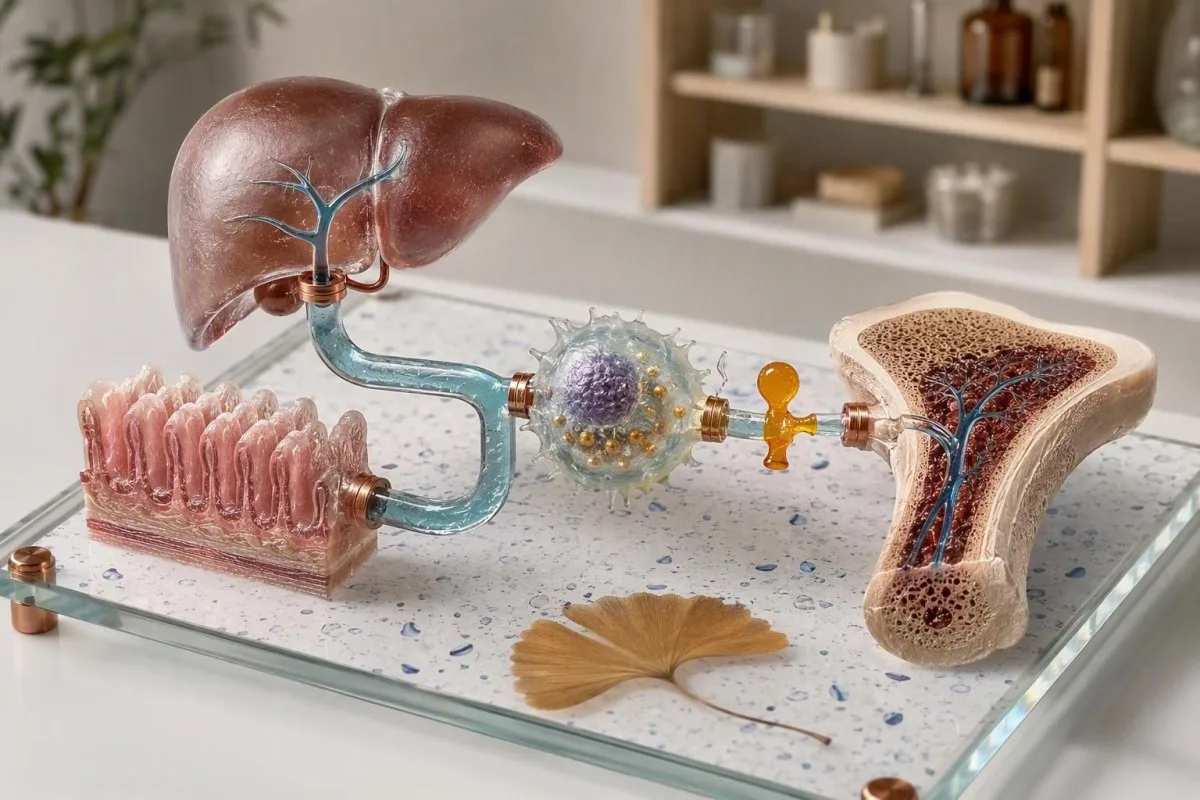
Un patró típic relacionat amb la inflamació és ferro sèric per sota de 50 µg/dL, TIBC per sota de 250 µg/dL, saturació per sota de 20%, i ferritina per sobre de 100 ng/mL, tot i que cap d'aquests valors de tall diagnostica una malaltia per si sol. La ferritina augmenta amb la senyalització inflamatòria, de manera que una ferritina “normal” no exclou de manera fiable la deficiència de ferro quan la CRP està elevada. El marc clínic descrit per Weiss et al. (2019) separa la deficiència absoluta de ferro de la restricció funcional de ferro utilitzant aquesta combinació, no la ferritina de manera aïllada.
Les infeccions agudes, malalties autoimmunes, malaltia renal crònica, inflamació relacionada amb l'obesitat, cirurgia recent i càncer poden reduir la transferrina. CRP per sobre de 10 mg/L fa que una TIBC baixa sigui més probable que sigui reactiva, mentre que la velocitat de sedimentació globular pot romandre alta durant setmanes després que la CRP caigui. Per a context sobre aquest marcador més lent, vegeu la nostra guia sobre per què canvien lentament els ESR.
La part contraintuïtiva és que pot haver-hi ferro emmagatzemat però inaccessible a la medul·la òssia. Kantesti AI, un plataforma d’interpretació de biomarcadors per IA, identifica aquest patró discordant de ferro baix/TIBC baix i planteja preguntes sobre malaltia activa, funció renal i marcadors inflamatoris; no diagnostica la causa només a partir de dades de laboratori.
quan el receptor de transferrina soluble ajuda
El receptor de transferrina soluble sol estar menys distorsionat per la inflamació que la ferritina. Un resultat elevat pot donar suport a la producció de glòbuls vermells realment restringida per ferro quan la ferritina és de 50-300 ng/mL i la CRP està elevada, tot i que els rangs específics de l'assaig signifiquen que ha de ser sol·licitat i interpretat per un metge.
Per què les malalties hepàtiques poden reduir la capacitat de unir ferro
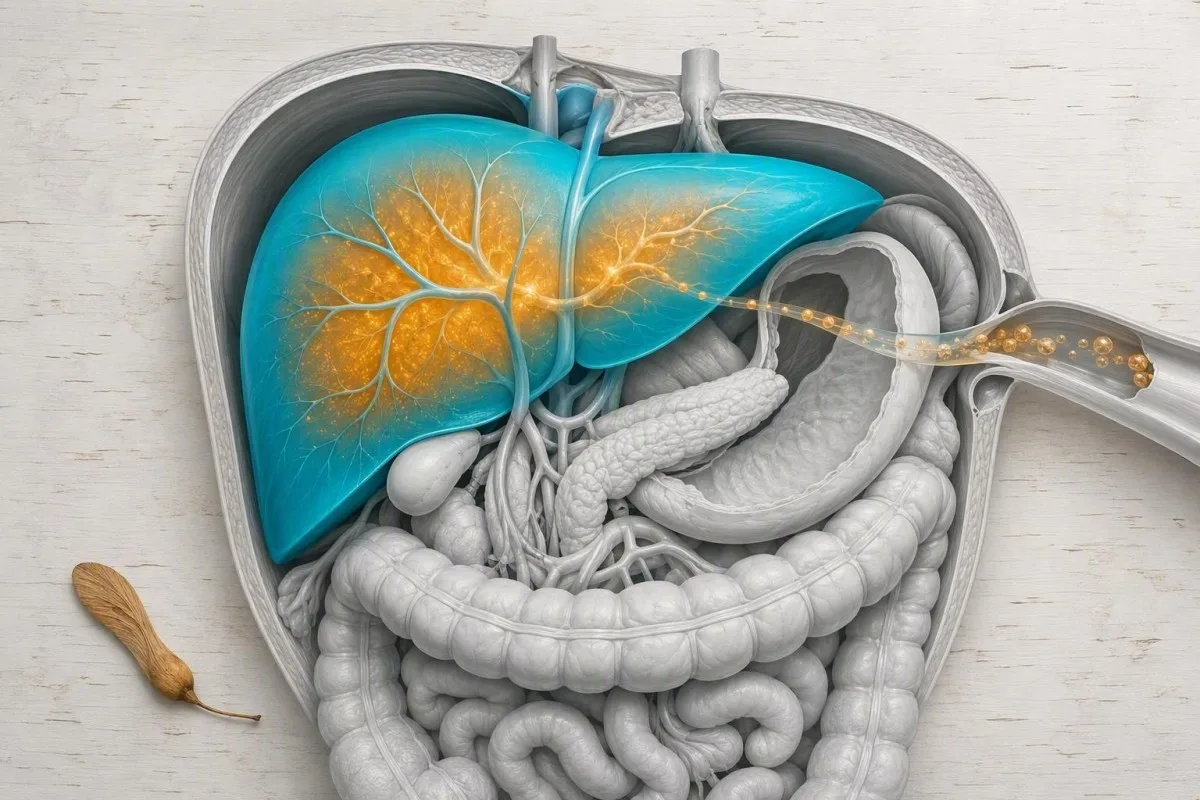
La malaltia hepàtica pot reduir la TIBC perquè els hepatòcits sintetitzen transferrina. La TIBC baixa juntament amb albúmina baixa, INR prolongat, bilirrubina elevada o AST i ALT anormals haurien de desviar l'atenció de la ingesta de ferro cap a la producció hepàtica i la gravetat de la malaltia.
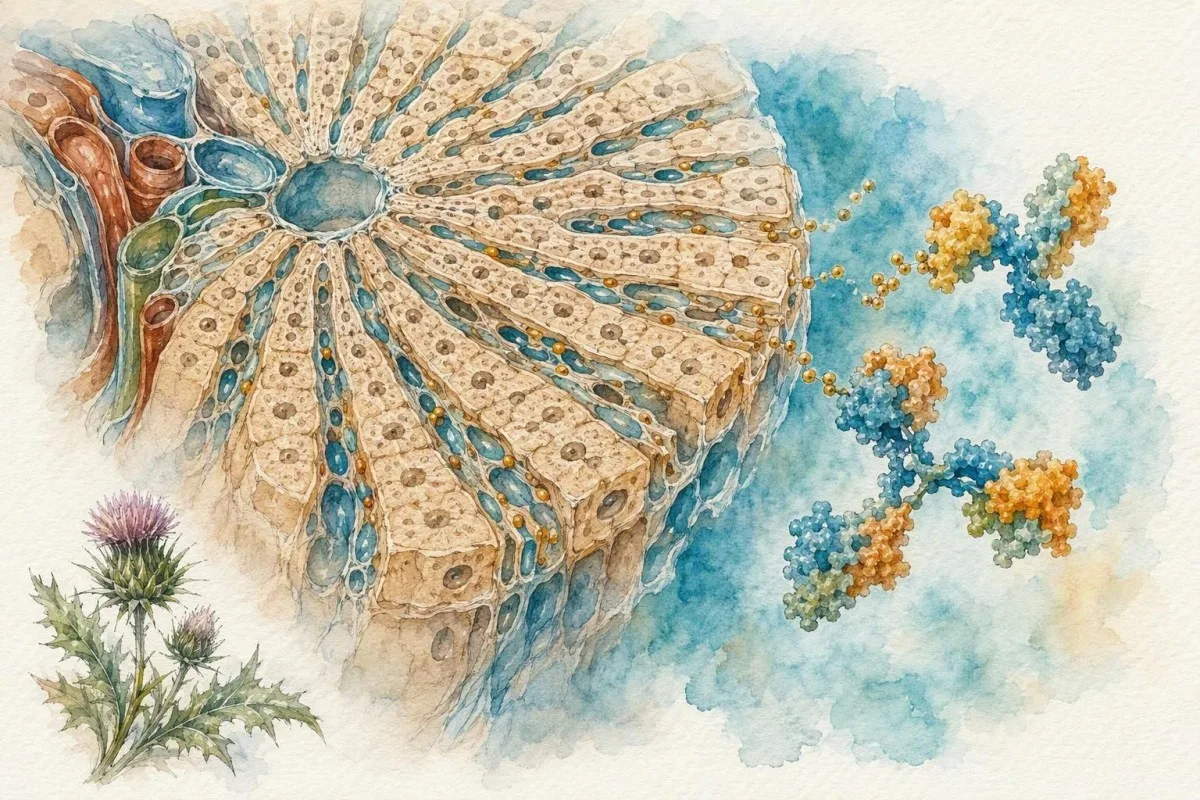
Una resultat de transferrina baixa pot ocórrer en la malaltia del fetge gras, hepatitis viral, lesió hepàtica relacionada amb l'alcohol, fibrosi avançada i cirrosi, però no és prou específica per determinar l'estadi de cap d'elles. Albúmina per sota de 35 g/L juntament amb una TIBC persistentment baixa mereix una revisió clínica adequada, especialment si hi ha edemes o pèrdua de pes. Reviseu el patró més ampli a la nostra visió general del panell hepàtic.
Recentment vaig revisar una corredora amb AST 89 IU/L després d'una cursa llarga i una TIBC baixa-normal; l'AST es va normalitzar després de la recuperació, mentre que l'albúmina i la bilirrubina es van mantenir normals. L'exercici pot alterar transitòriament diversos resultats, mentre que una TIBC baixa més icterícia i albúmina reduïda és un quadre clínic molt diferent. És la combinació, no una AST o TIBC aïllada, la que canvia el proper pas.
Una saturació de transferrina persistentment alta requereix atenció en malalties hepàtiques perquè una transferrina baixa pot inflar el percentatge. La guia de la EASL de 2022 sobre hemocromatosi utilitza la saturació de transferrina superior al 45% en dones i superior al 50% en homes, juntament amb una ferritina elevada, com a desencadenant d'una avaluació addicional en lloc de basar-se en un sol marcador (European Association for the Study of the Liver, 2022).
Quan els símptomes hepàtics necessiten atenció urgent
La icterícia nova, la confusió, el vòmit de sang, les femtes negres o el marcat abdomen inflat requereixen una avaluació mèdica urgent independentment del nivell de TIBC. Aquests símptomes poden indicar flux biliar alterat, hemorràgia gastrointestinal o malaltia hepàtica descompensada; vegeu la nostra revisió de pistes de cirrosi precoç.
TIBC baix per estat proteic deficient o pèrdua de proteïnes
Un TIBC baix pot resultar d'una disponibilitat inadequada de proteïnes, una disminució de la síntesi hepàtica o pèrdua de proteïnes a través dels ronyons o l'intestí. Com que la transferrina té una vida mitjana d'uns 8 dies, pot caure abans que l'albúmina en malalties agudes, però segueix sent una prova nutricional poc fiable per si sola.

La ingesta baixa, la nàusea severa, la malabsorció, la diarrea crònica, les cremades importants i les malalties sistèmiques avançades poden reduir la transferrina. Albúmina per sota de 30 g/L augmenta la probabilitat de depleció o pèrdua de proteïnes clínicament significativa, però la inflamació també pot reduir l'albúmina. És per això que prescriure ferro en dosis altes per a cada resultat de TIBC baix passa per alt el problema subjacent.
La pèrdua de proteïnes renals pot reduir les proteïnes circulants, especialment quan la relació albumina-creatinina en orina està marcadament elevada o la proteïna en orina és persistent. L'orina escumosa, la inflor de les parpelles, l'edema dels turmells i l'augment de pes són pistes útils, però moltes persones amb proteinúria se senten bé. El nostre article sobre orina escumosa persistent explica com una mostra d'orina aclareix aquesta possibilitat.
L'avaluació nutricional ha d'incloure canvis de pes, força muscular, tolerància als aliments, problemes dentals o de deglució i símptomes gastrointestinals, no només l'albúmina. Segons la meva experiència, una pèrdua no intencionada de 5% del pes corporal en 6-12 mesos mereix una avaluació dirigida per un metge fins i tot quan el perfil de ferro sembla només lleugerament anòmal.
Quan un TIBC baix apunta cap a una sobrecàrrega de ferro en lloc d'això
Un TIBC baix amb sèrum de ferro alt i saturació de transferrina alta pot suggerir càrrega de ferro, especialment quan la saturació roman per sobre del 45% en una mostra repetida en dejú al matí. Això és el contrari de la deficiència de ferro no complicada, on el TIBC sol augmentar.
L'hemocromatosi hereditària, les transfusions repetides, l'ús excessiu de ferro, l'eritropoesi ineficaç i alguns trastorns hepàtics poden produir aquest patró. Ferritina per sobre de 300 ng/mL en homes o 200 ng/mL en dones s'utilitza habitualment com a llindar pràctic per a l'avaluació, però la ferritina també pot augmentar amb el consum d'alcohol, malalties metabòliques i resposta tissular. La nostra guia de símptomes d’hemocromatosi posa aquests resultats en context clínic.
No intenteu “baixar el ferro” amb donació de sang si teniu anèmia, esteu embarassada, us trobeu malament o no us han avaluat. Un metge pot repetir els estudis de ferro després d'un dejú nocturn, revisar els suplements i l'alcohol, comprovar les enzymes hepàtiques i considerar proves genètiques HFE quan el patró és persistent. Un valor de ferro sèric no en dejú és una pista, no un veredicte.
Kantesti és una Eina d’anàlisi d’analítica de sang impulsada per IA utilitzat a 30 països per mapejar conjuntament TIBC, ferritina, ferro, saturació, hemoglobina i marcadors hepàtics. La nostra IA assenyala un patró de saturació per a discussió clínica; el diagnòstic encara requereix historial, proves repetides i, de vegades, genètica o imatges.
Es pot tenir deficiència de ferro amb TIBC baix?
Sí, la deficiència de ferro pot coexistir amb una TIBC baixa quan la inflamació, la malaltia hepàtica o la depleció de proteïnes suprimeixen la transferrina. En la deficiència de ferro no complicada, però, la ferritina baixa i la TIBC més sovint augmenten per sobre del rang del laboratori.
Una ferritina per sota de 15 ng/mL és molt específica per a les reserves de ferro esgotades en adults sans, mentre que molts clínics utilitzen per sota de 30 ng/mL per millorar la sensibilitat. Durant la inflamació, la ferritina per sota de 100 ng/mL amb una saturació de transferrina per sota de 20% encara pot donar suport a la deficiència de ferro, particularment en casos de malaltia renal crònica o insuficiència cardíaca. Vegeu la nostra explicació de ferritina baixa abans de l'anèmia per a patrons de símptomes.
Aquí és on un CBC es guanya el seu lloc. Un MCV baix, un RDW elevat, una hemoglobina reticulocitària reduïda i una ferritina baixa afavoreixen la deficiència de ferro veritable; MCV normal o lleugerament baix amb CRP elevada i TIBC baixa afavoreixen la inflamació. La distinció no és perfecta: el tret talassèmic, la deficiència de B12, la malaltia renal i la transfusió recent poden confondre-la. La nostra guia de cribratge d'MCV baix cobreix aquestes explicacions competidores.
El Dr. Thomas Klein aconsella als pacients que no jutgin el tractament del ferro només pel ferro sèric. El ferro sèric pot canviar en un 30% o més al llarg d'un dia i després dels àpats; la resposta de l'hemoglobina, la tendència de la ferritina, els símptomes i la causa de la deficiència importen molt més.
Medicaments, embaràs i efectes temporals en la TIBC
L'exposició als estrògens i l'embaràs sovint augmenten la transferrina i la TIBC, mentre que la malaltia aguda, els corticoides i l'estrès sistèmic sever poden disminuir-la. La història de medicació i etapa de vida pot explicar un resultat inesperat abans de considerar una diagnosi rara.
Els anticonceptius orals i l'embaràs augmenten comunament la producció de transferrina, de manera que una TIBC baixa durant l'embaràs és més notable quan s'acompanya de baixa albúmina, inflamació o anomalies hepàtiques. La interpretació de la ferritina específica de l'embaràs és diferent: un nivell per sota de 30 µg/L s'utilitza àmpliament per identificar la deficiència de ferro en l'embaràs. Llegeix la nostra guia de ferritina trimestral en lloc d'aplicar els rangs no embarassades.
Les tauletes de ferro poden augmentar transitoriament el ferro sèric i la saturació durant diverses hores, la qual cosa pot fer que una TIBC baixa sembli una sobrecàrrega de ferro. Si el metge prescriptor hi està d'acord, deixar el ferro oral durant 24 hores abans de la presa de sang i recollir una mostra del matí pot produir un panell més clar. Els detalls pràctics es troben a la nostra guia de preparació de la TIBC.
La revisió de la medicació ha d'incloure anticonvulsius, quimioteràpia, immunosupressors, teràpia de testosterona o estrògens i ferro intravenós, no perquè cadascun causi directament una TIBC baixa, sinó perquè poden canviar les proves hepàtiques, la inflamació, la producció de glòbuls vermells o la distribució del ferro. Mai deixeu un medicament prescrit només per millorar un resultat de laboratori.
El resultat de TIBC baix podria ser temporal o inexacte?
Un resultat de TIBC baix pot ser temporal durant una malaltia aguda, després de líquids intravenosos, o quan el ferro sèric varia amb el moment, però un assaig de TIBC processat correctament sol ser analíticament fiable. El major risc és la interpretació errònia d'un resultat genuí fora del seu entorn clínic.
La TIBC es mesura habitualment afegint ferro al sèrum, eliminant el ferro no unit i quantificant el que roman unit; els immunoassajos de transferrina directa utilitzen un mètode diferent. La hemòlisi, la lipèmia greu i les paraproteïnes rares poden interferir amb alguns assajos de laboratori. Un canvi sobtat que entra en conflicte amb tendències prèvies justifica una repetició en lloc del pànic; el nostre explicació del delta-check descriu com els clínics pensen els canvis bruscos.
La repetició de les proves és més útil quan el resultat podria canviar el tractament. Per a una persona estable amb TIBC baixa durant un refredat o una brotada autoimmune, normalment prefereixo repetir els estudis de ferro 4–8 setmanes després de la recuperació, juntament amb CBC, ferritina, CRP, perfil hepàtic i albúmina. Per a algú amb icterícia, anèmia greu o saturació per sobre de 45%, el termini és més curt.
Kantesti AI analitza els informes penjats en uns 60 segons i pot ajudar-vos a comparar dates, unitats i rangs de referència, però l'OCR no és infal·lible. Comproveu que el ferro sèric no s'hagi confós amb la ferritina i que µmol/L no s'hagi llegit com µg/dL; utilitzeu el nostre llista de verificació per a la pujada de PDF abans de confiar en un resum digital.
Les proves següents que utilitzen els metges després d'un TIBC baix
El següent pas després d'una TIBC baixa sol ser un panel basat en patrons: CBC, ferritina, ferro sèric, saturació de transferrina, CRP o ESR, albúmina i enzims hepàtics. Les proves de proteïnes en orina, la funció renal, el receptor de transferrina soluble o les proves genètiques s'afegeixen només quan el patró inicial hi apunta.
Un primer conjunt sensat inclou hemoglobina, MCV, RDW, ferritina, ferro, TIBC o transferrina, saturació, CRP, ALT, AST, ALP, bilirubina, albúmina, creatinina i eGFR. saturació de transferrina per sota de 20% indica una disponibilitat de ferro restringida, mentre que valors persistents per sobre 45% necessiten una avaluació de càrrega de ferro. La resposta rau en la relació entre aquests valors, no en l'ordre de totes les proves especialitzades alhora.
Si hi ha inflamació i la ferritina és ambigua, el receptor de transferrina soluble o l'hemoglobina dels reticulòcits poden ajudar a identificar la deficiència de ferro tractable. Si l'albúmina és baixa, l'anàlisi d'orina i l'ACR d'orina poden comprovar la pèrdua de proteïnes renals; si els resultats hepàtics són anormals, les proves d'hepatitis i l'ecografia poden ser apropiades. Saturació de transferrina baixa té un significat diferent de la TIBC baixa, tot i que sovint van junts.
La xarxa neuronal de Kantesti compara trajectòries de resultats en lloc d'una única instantània, cosa que és important perquè la ferritina i la CRP poden moure's en direccions oposades al llarg de diverses setmanes. La metodologia i els límits clínics es descriuen al nostre visió general de validació mèdica; la interpretació d'un resultat és una preparació per a una conversa amb el metge, no un substitut d'aquesta.
Quatre patrons de TIBC baix que canvien el diagnòstic
La TIBC baixa és útil quan s'interpreta com un dels quatre patrons: inflamació, deteriorament hepàtic o proteic, càrrega de ferro, o deficiència de ferro mixta més inflamació. Cada patró té un camí de tractament diferent i diferents preocupacions de seguretat.
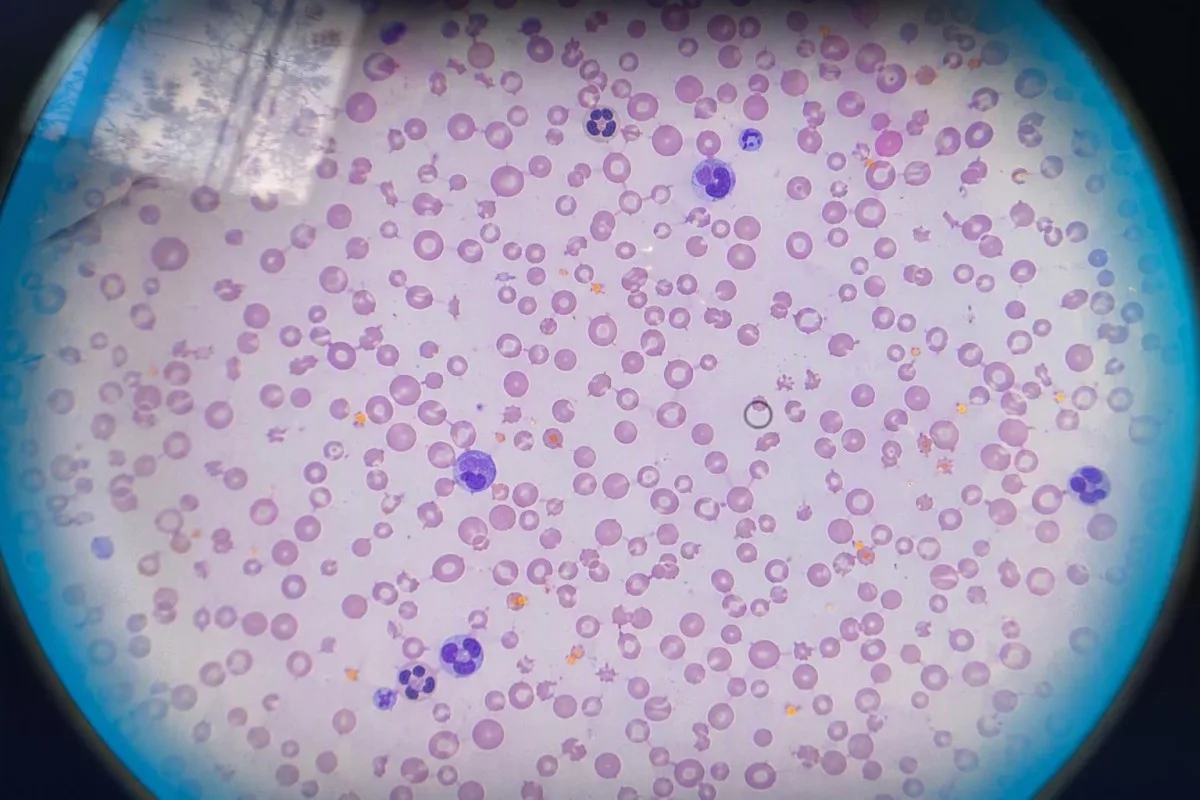
Inflamació: ferro baix, TIBC baixa, saturació sovint per sota de 20%, ferritina normal o alta, CRP elevada. Patró hepàtic/proteic: TIBC baixa amb albúmina baixa i possiblement bilirubina, INR o enzims hepàtics anormals. Patró d'acumulació de ferro: TIBC baixa o normal amb saturació de ferro superior a 45% i elevació de ferritina. Aquests són punts de partida, no caixes rígides.
Deficiència mixta: la ferritina pot ser de 30-100 ng/mL, la saturació per sota de 20%, la TIBC baixa o normal i la PCR elevada. En aquesta situació, pot ser necessari tractar la malaltia inflamatòria i avaluar la pèrdua de sang o la malabsorció. Els símptomes gastrointestinals, el sagnat menstrual abundant i l'ús de medicaments antiinflamatoris mereixen preguntes directes; els pacients sovint no els ofereixen si no se'ls pregunta.
Per als pacients, la pregunta útil no és “Com augmento la TIBC?” sinó “Què va reduir la transferrina o va alterar la distribució del ferro?”. La nostra guia ajuda a fer aquesta distinció abans de triar un suplement.
Què no fer després de veure un senyal de TIBC baix
No s'autotracti una TIBC baixa amb ferro fins que no s'hagin revisat la ferritina, la saturació, l'hemoglobina i el context clínic. Un resultat baix no significa que a la sang li manqui ferro, i el ferro extra pot ser inadequat en patrons d'acumulació de ferro o relacionats amb el fetge.

Eviteu comprar ferro en dosis altes perquè un informe diu “baixa capacitat de fixació del ferro”. Les dosis terapèutiques comunes de ferro contenen 45–65 mg de ferro elemental per comprimit, suficient per causar nàusees, constipació i excrements foscos; en la persona equivocada, poden augmentar les reserves de ferro sense abordar la inflamació o la malaltia hepàtica. Els enfocaments basats en aliments són raonables per a la majoria de la gent, però no substitueixen l'avaluació de l'anèmia.
No utilitzeu un resultat de ferritina sol per descartar la deficiència durant una infecció, obesitat, malaltia autoimmune o una operació recent. I no assumeixi que la fatiga està relacionada amb el ferro si no s'han considerat l'hemoglobina, la ferritina, la tiroide, el son, l'estat d'ànim, els medicaments i la funció renal. La nostra guia de suplements per a la fatiga explica per què les eleccions guiades per laboratori són més segures.
Finalment, no persegueixis un número de TIBC perfecte. En la meva experiència clínica, corregir la inflamació crònica, tractar la celiaquia, controlar la malaltia renal, aturar la pèrdua de sang evitable o millorar la nutrició canvia el panell de ferro de manera més significativa que intentar augmentar directament la transferrina.
Menjar, recuperació i maneres realistes de donar suport a la causa subjacent
Els aliments poden donar suport a la ingesta de ferro i a l'estat proteic, però la dieta per si sola no pot corregir una TIBC baixa causada per inflamació activa, malaltia hepàtica significativa, pèrdua proteica nefròtica o sobrecàrrega de ferro. El pla nutricional ha de coincidir amb el patró del laboratori.
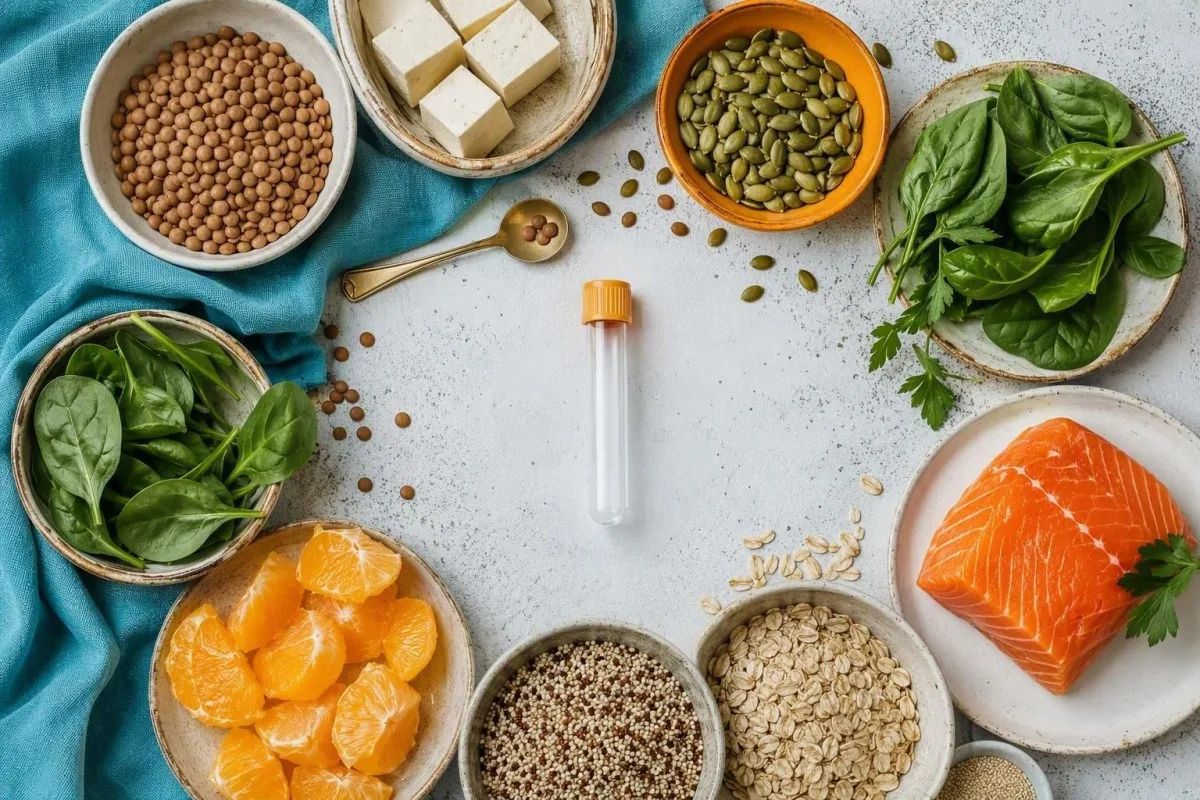
Si es confirma la deficiència de ferro, el ferro hemo del peix, les aus de corral i la carn s'absorbeix generalment de manera més eficient que el ferro no hemo dels llegums, el tofu, les llenties, les llavors i els cereals fortificats. Els productes que contenen vitamina C poden millorar l'absorció del ferro no hemo, mentre que el te i el cafè que es prenen amb els àpats poden reduir-la. La nostra guia pràctica per a aliments amb ferro heme i no heme ofereix opcions a nivell de menjars.
Si la ingesta de proteïnes ha estat deficient, procureu àpats regulars que continguin una font de proteïnes en lloc d'afegir “potenciadors de transferrina” no regulats. Els objectius generals de proteïnes per a adults sovint se situen al voltant de 0.8 g/kg/dia, mentre que les persones grans, les malalties agudes, l'entrenament atlètic i les malalties renals requereixen assessorament individualitzat. Les persones amb malaltia renal crònica no han d'augmentar la proteïna sense parlar el pla amb el seu equip renal.
La recuperació també significa triar la finestra de reavaluació adequada. L'hemoglobina sol augmentar aproximadament 10–20 g/L al llarg de 2–4 setmanes després d'un tractament de ferro eficaç en casos de deficiència senzilla, però la TIBC pot no normalitzar-se en aquest termini si la inflamació o la síntesi hepàtica segueixen sent el principal factor.
Quan un resultat de TIBC baix requereix una revisió mèdica ràpida
Organitzeu una revisió rutinària amb el metge per a una TIBC persistentment baixa i busqueu atenció urgent quan acompanyi símptomes greus com icterícia, confusió, dolor toràcic, dificultat per respirar en repòs, desmai o hemorràgia gastrointestinal. La urgència depèn de la persona i dels resultats acompanyants, no del valor de la TIBC per si sol.

Reserveu una cita a temps si la TIBC roman per sota del rang en proves repetides, la ferritina és inesperadament alta, la saturació supera el 45%, l'hemoglobina està baixant, l'albúmina està per sota de 35 g/L, o les proves hepàtiques són anormals. Porteu resultats previs, llistes de medicaments i suplements, història recent de malaltia, història menstrual quan sigui rellevant, ingesta d'alcohol, canvis en la dieta i historial familiar de sobrecàrrega de ferro o malaltia hepàtica. Una línia de temps ben organitzada pot estalviar una segona cita.
L'atenció el mateix dia és sensata per a excrements negres, vòmits de sang, pell groga amb somnolència, febre alta amb debilitat profunda o dificultat per respirar que limita la parla. Aquests símptomes poden indicar hemorràgia, infecció, anèmia greu o descompensació hepàtica, i esperar un altre panell de ferro no és segur. Per a una preparació estructurada, utilitzeu la nostra llistat de verificació de laboratori per a la visita del metge.
A partir del 10 de setembre de 2026, el missatge més segur continua sent senzill: una TIBC baixa és una pista sobre la biologia de la transferrina, no un diagnòstic ni una raó automàtica per al ferro. El contingut clínic de Kantesti es revisa amb la nostra Consell Assessor Mèdic, però el vostre propi metge pot integrar els resultats de l'exploració, els símptomes, els medicaments i els mètodes de laboratori locals.
Com fer un seguiment d'un resultat de TIBC baix sense reaccionar de manera exagerada
Feu un seguiment de la TIBC baixa juntament amb la data, l'estat de la malaltia, la ferritina, la saturació, la CRP, l'albúmina, l'hemoglobina i els canvis de tractament. Una tendència en dues o tres mostres comparables sol ser més informativa que una sola mesura fora de rang.
Registreu si cada mostra estava en dejú, si vau prendre ferro dins de les 24 hores, si vau tenir febre o exercici físic intens, i si es va utilitzar el mateix laboratori. Un canvi de TIBC 225 a 245 µg/dL pot ser una variació biològica i analítica ordinària, mentre que 225 a 340 µg/dL després de la recuperació de la pneumònia pot ser clínicament significatiu. La nostra guia de comparació d'anàlisis de sang mostra quins detalls contextuals s'han de conservar.
Kantesti, un servei d’interpretació de proves del laboratori d’IA, pot organitzar informes longitudinals i explicar per què la TIBC baixa, la ferritina, la CRP i l'albúmina poden moure's junts o divergir. Està dissenyat per fer les vostres preguntes més precises: “Podria ser una restricció de ferro inflamatòria?” és més útil que “Tinc el ferro baix?”
El punt tranquil·litzador és que molts resultats de TIBC baixos reflecteixen un estat inflamatòri temporal o un problema nutricional i de recuperació reversible. El punt cautelós és igualment real: els resultats persistents amb anèmia, proves hepàtiques anormals, edema o saturació alta mereixen un seguiment clínic adequat en lloc d'endevinar per internet.
Preguntes freqüents
Quins símptomes causa un TIBC baix?
Una TIBC baixa generalment no causa símptomes per si sola, ja que mesura la capacitat de fixació del ferro en lloc d'una funció corporal que puguis sentir directament. Símptomes com fatiga, debilitat, falta d'alè, febre, inflor dels turmells, icterícia o dolor articular provenen de la causa subjacent, com ara anèmia, inflamació, malaltia hepàtica, pèrdua de proteïnes o sobrecàrrega de ferro. Un nivell d'hemoglobina inferior a 120 g/L en dones no embarassades o 130 g/L en homes fa més probables els símptomes relacionats amb l'anèmia. És adequada una avaluació urgent en cas de dolor toràcic, desmais, confusió, deposicions negres, dificultat respiratòria greu o pell groga amb somnolència.
És el TIBC baix el mateix que la transferrina baixa?
Una TIBC baixa sol reflectir una transferrina baixa, però les dues proves no són tècnicament idèntiques. La transferrina és una proteïna transportadora produïda pel fetge que es mesura directament en g/L o mg/dL, mentre que la TIBC estima la quantitat de ferro que el reservori de transferrina pot unir-se i s'informa habitualment en µg/dL o µmol/L. La TIBC típica en adults és d'aproximadament 250–450 µg/dL, encara que els intervals de referència del laboratori difereixen. Els resultats baixos per a ambdues són freqüents durant la inflamació i la reducció de la síntesi de proteïnes hepàtiques.
Un TIBC baix significa deficiència de ferro?
Un TIBC baix no sol significar deficiència de ferro no complicada; la deficiència de ferro clàssica sovint causa ferritina baixa i TIBC alt. Un patró mixt pot ocórrer quan la deficiència de ferro coexisteix amb inflamació, malaltia hepàtica o un estat proteic deficient, que suprimeix el TIBC. La ferritina per sota de 15 ng/mL recolza fermament la depleció de reserves de ferro en un adult sa, mentre que la ferritina per sota de 100 ng/mL més una saturació de transferrina per sota de 20% encara pot suggerir deficiència durant la inflamació. Calen un CBC, ferritina, CRP i saturació abans de començar el ferro.
Quina és la causa d'un TIBC baix amb ferro baix?
La TIBC baixa amb ferro sèric baix reflecteix més sovint la restricció de ferro relacionada amb la inflamació. En aquest patró, l'hepcidina redueix l'alliberament de ferro a la circulació mentre que el fetge produeix menys transferrina, produint ferro baix, TIBC baix, saturació sovint per sota del 20%, i ferritina que pot ser normal o alta. La malaltia renal crònica, la infecció, la malaltia autoimmune, la inflamació relacionada amb l'obesitat, la cirurgia recent i el càncer poden crear aquest patró. La CRP per sobre de 10 mg/L dóna suport a la inflamació activa però no n'identifica la font.
Què significa una TIBC baixa amb ferritina alta?
Una TIBC baixa amb ferritina alta ocorre comunament durant la inflamació, malalties hepàtiques, disfunció metabòlica, lesió hepàtica relacionada amb l'alcohol o hemocromatosi. La ferritina és tant un marcador d'emmagatzematge de ferro com una proteïna de fase aguda, de manera que un valor alt no significa automàticament un excés de ferro emmagatzemat. La saturació persistent de transferrina per sobre del 45% més la ferritina elevada és més preocupant per a la sobrecàrrega de ferro i justifica una avaluació dirigida pel metge. L'albúmina, la CRP, l'ALT, l'AST, la bilirubina i l'hemograma complet ajuden a distingir les causes.
Hauria de prendre ferro si el meu TIBC és baix?
No prengui ferro només perquè la TIBC sigui baixa. El ferro oral és adequat quan la deficiència de ferro es demostra pel patró general, que sovint inclou ferritina baixa, saturació baixa i troballes compatibles de CBC; molts productes terapèutics contenen 45–65 mg de ferro elemental per comprimit. El ferro pot ser inútil o inadequat quan una TIBC baixa resulta d'inflamació, insuficiència hepàtica, pèrdua de proteïnes o hemocromatosi. Pregunti a un metge que revisi la ferritina, la saturació de transferrina, l'hemoglobina, la CRP i les proves hepàtiques primer.
Obteniu avui una anàlisi de sang amb IA
Uneix-te a més de 2 milions d’usuaris a tot el món que confien en Kantesti per a una anàlisi instantània i precisa de proves de laboratori. Pengeu els vostres resultats d’anàlisi de sang i rebeu una interpretació completa de biomarcadors 15,000+ en segons.
📚 Publicacions de recerca citades
Klein, T., Mitchell, S., & Weber, H. (2026). Urobilinogen a la prova d'orina: Guia completa d'anàlisi d'orina 2026. Zenodo. https://doi.org/10.5281/zenodo.18226379. Enllaços d'enregistrament de ResearchGate i Academia.edu disponibles a través del DOI de la publicació.. Kantesti Recerca mèdica amb IA.
Klein, T., Mitchell, S., & Weber, H. (2026). Guia d'estudis del ferro: TIBC, saturació de ferro i capacitat de binding. Zenodo. https://doi.org/10.5281/zenodo.18248745. Enllaços d'enregistrament de ResearchGate i Academia.edu disponibles a través del DOI de la publicació.. Kantesti Recerca mèdica amb IA.
📖 Referències mèdiques externes
⚕️ Avís mèdic
Aquest article és només per a finalitats educatives i no constitueix assessorament mèdic. Consulteu sempre un professional sanitari qualificat per a decisions de diagnòstic i tractament.
Senyals de confiança E-E-A-T
Experiència
Revisió clínica liderada per metges dels fluxos de treball d’interpretació de laboratori.
Experiència
Enfocament en medicina de laboratori sobre com es comporten els biomarcadors en context clínic.
Autoritat
Escrit pel Dr. Thomas Klein amb revisió de la Dra. Sarah Mitchell i el Prof. Dr. Hans Weber.
Fiabilitat
Interpretació basada en l’evidència amb vies de seguiment clares per reduir l’alarma.