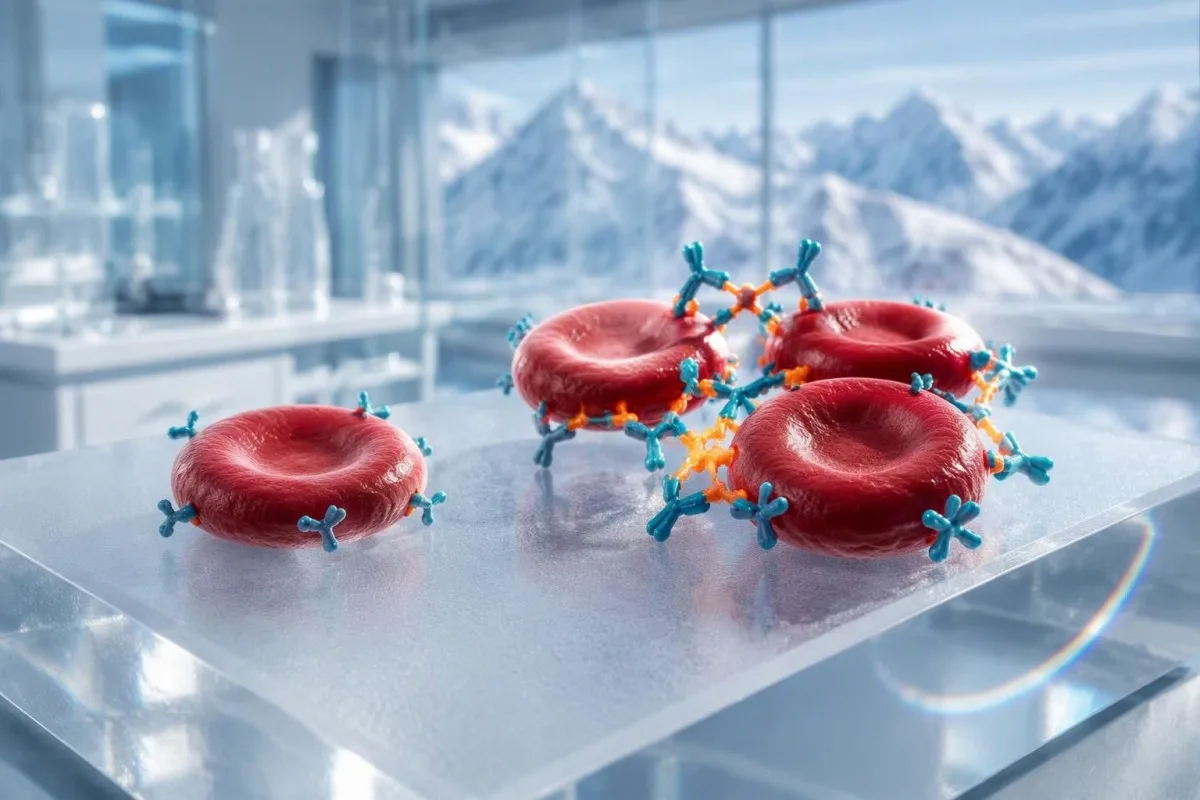
Un resultat positiu identifica material unit a les glòbuls vermells, no necessàriament destrucció de glòbuls vermells. La propera decisió depèn de les tendències de l'hemoglobina, marcadors de hemòlisi, medicaments i historial de transfusions.


- Prova de Coombs directa positiva significa que es van detectar anticossos, complement o ambdós als glòbuls vermells; no diagnostica de manera independent l'anèmia hemolítica.
- Prova directa versus indirecta separa 2 preguntes diferents: material ja unit als glòbuls vermells versus anticossos circulants al sèrum o plasma.
- Intensitat de la DAT sovint s'escala de 1+ a 4+, però l'escala no mesura de manera fiable la gravetat de l'anèmia ni determina el tractament.
- Tendència de l'hemoglobina és més important que un resultat: una caiguda de 12 a 9 g/dL equival a una disminució de 120 a 90 g/L i necessita una explicació.
- Hemòlisi activa s'avalua utilitzant hemoglobina, reticulòcits, LDH, bilirubina, haptoglobina i el frotis perifèric, no només una DAT.
- Transfusió recent s'ha de notificar amb dates exactes, especialment dins dels últims 3 mesos; les reaccions retardades sovint apareixen dies després.
- Revisió de la medicació ha d'incloure antibiòtics, immunoteràpies, IVIG i medicaments aturats durant les 2-4 setmanes anteriors; no atureu el tractament prescrit només a causa d'un resultat aïllat del DAT.
- Símptomes urgents inclouen dificultat per respirar en repòs, desmais, dolor al pit o orina fosca nova amb icterícia; no espereu una prova de repetició programada.
Què significa realment una prova de Coombs directa positiva?
A prova de Coombs directa positiva significa que anticossos, proteïnes del complement o ambdues estan adherides als vostres glòbuls vermells. No ho fa no significa automàticament anèmia hemolítica: els clínics busquen la destrucció de glòbuls vermells utilitzant tendències d'hemoglobina, reticulòcits, LDH, bilirubina i haptoglobina, mentre comproven medicaments i transfusions recents. La primera avaluació fa dues preguntes separades: què està adherit i si està causant dany.
La prova antiglobulínica directa, normalment abreujada DAT, és el nom de laboratori de la prova de Coombs directa. Els seus dos objectius investigats habitualment són la immunoglobulina G, o IgG, i fragments del complement com el C3d; una troballa positiva identifica el recobriment superficial en lloc de mesurar quants glòbuls destrueix el vostre cos.
Hemòlisi i anèmia són troballes diferents. Algú pot tenir hemòlisi compensada amb una hemoglobina normal perquè la producció medul·lar es manté al dia, mentre que una altra persona pot tenir anèmia per deficiència de ferro i un DAT positiu no relacionat; una hemoglobina de 10 g/dL no estableix quina explicació s'aplica.
Quan reviso un DAT, la meva primera pregunta és si la resta del panell dóna suport a una causa immune. Com a Thomas Klein, MD, Chief Medical Officer, no convertíria un senyal de laboratori de 1+ en un diagnòstic sense aquest segon pas; la distinció evita tant el tractament innecessari com el deteriorament passat per alt.
Kantesti és un analitzador de proves de sang AI que ajuda a organitzar un DAT positiu juntament amb el CBC acompanyant i els marcadors d'hemòlisi. El nostre paper és l'explicació, no les proves de compatibilitat del banc de sang ni el triatge d'emergència; el nostre organització i propòsit clínic descriuen aquesta distinció, incloent per què un informe carregat pot necessitar una història clínica addicional.
Prova de Coombs directa vs indirecta: quina és la diferència?
El prova de Coombs directa examina anticossos o complement ja adherits als glòbuls vermells d'una persona. La indirecta de Coombs, també anomenada prova antiglobulínica indirecta o IAT, examina el sèrum o plasma per detectar anticossos que es puguin unir als glòbuls de prova de laboratori; aquestes són dues proves relacionades amb propòsits clínics diferents.
La prova DAT s'utilitza quan se sospita destrucció immune de glòbuls vermells, incloent hemòlisi autoimmune, algunes reaccions transfusionals i avaluació de nounats. Un DAT no identifica el vostre grup ABO o tipus RhD, i el seu resultat positiu/negatiu habitual no és intercanviable amb una concentració d'anticossos reportada en IU/mL.
La prova IAT dóna suport a l'anàlisi d'anticossos pretransfusional i a l'anàlisi d'embaràs. El personal de laboratori exposa els glòbuls de prova al sèrum o plasma del pacient i avalua la unió; el resultat de l'anàlisi de la mare, per tant, respon a una pregunta diferent que el DAT d'un nounat, fins i tot si ambdós informes utilitzen la paraula Coombs.
Les dues proves poden discrepar sense que cap sigui incorrecta. Una persona pot tenir anticossos circulants i un DAT negatiu perquè aquests anticossos no estan recobrint els seus propis glòbuls, o un DAT positiu sense anticossos detectats per un cribratge rutinari perquè els mètodes examinen mostres i condicions de reacció diferents.
For a pregnancy report, first check whether the heading says antibody screen, IAT, o DAT before interpreting a positive result. Our explicació del cribratge d'anticossos durant l'embaràs explains why antibody identity and previous anti-D administration matter; combining these 2 types of results into one generic antibody label can send follow-up in the wrong direction.
Com detecta la DAT IgG i el complement als glòbuls vermells?
El DAT detects red-cell coating by adding antiglobulin reagents that react with human immunoglobulin or complement attached to the cells. Laboratories commonly use an initial polyspecific reagent followed by 2 monospecific tests—anti-IgG and anti-C3d—to clarify the pattern.
Tube, gel-column, and solid-phase methods do not have identical sensitivity. A weak positive from 1 method may not reproduce with another, and a reference laboratory may investigate an unexplained result using additional techniques rather than simply repeating the original assay unchanged.
DAT reactions may be reported as weak positive or graded 1+ through 4+. These grades describe the observed laboratory reaction, not a calibrated antibody concentration; there is no conversion from a 3+ DAT to a predicted hemoglobin decline in g/dL.
An EDTA sample helps limit complement attachment after collection, reducing one potential source of misleading interpretation. Sample age, reagent specificity, and the testing method also matter; Parker and Tormey's 2017 review describes why 1 positive DAT must be interpreted with laboratory details and clinical findings rather than treated as a stand-alone diagnosis.
C3d on red cells is not the same measurement as a serum C3 concentration. Someone can have a C3d-positive DAT without a low circulating C3 level; our guia de proves complementàries separates these 2 questions so a complement label is not mistakenly read as proof of systemic autoimmune disease.
Per què una DAT pot ser positiva sense anèmia hemolítica?
A positive DAT without hemolytic anemia can occur when red-cell coating does not cause clinically significant destruction, or when coating is incidental to another illness or treatment. The interpretation requires 2 independent assessments: evidence of hemolysis and evidence of anemia.
Antibody amount alone does not determine red-cell survival. Antibody characteristics, complement activation, and the body's clearance response all influence whether destruction occurs; a 1+ result may matter in one patient, while a stronger reaction may accompany stable hemoglobin in another.
Passive antibody exposure can produce a temporary positive DAT, particularly after IVIG or other antibody-containing products. Reviewing treatments administered during the preceding 2–4 weeks is often more useful than ordering a broad autoimmune panel immediately, although the relevant interval depends on the product and clinical circumstances.
Anemia can coexist with incidental DAT positivity. Consider an illustrative patient with hemoglobin 10.5 g/dL, low ferritin, stable bilirubin, and no convincing hemolysis pattern: iron deficiency still deserves assessment rather than being replaced by an autoimmune label because the DAT is positive.
A normal hemoglobin does not completely exclude hemolysis, because the marrow may compensate by producing additional cells. Our resultat positiu d'anticossos explains the broader distinction between antibody detection and active disease; here, at least 1 assessment of red-cell turnover is needed before reassurance.
Quines proves de sang mostren si s'està produint hemòlisi activa?
Active hemolysis is supported by a pattern, usually falling hemoglobin, increased LDH and indirect bilirubin, reduced haptoglobin, and an appropriate reticulocyte response. No single marker proves hemolysis; clinicians combine these findings with symptoms, a smear, and changes across at least 2 time points when available.
LDH reflects cell turnover but is not specific to red cells. For example, LDH of 500 U/L is twice an upper limit of 250 U/L, but muscle or liver injury can also cause elevation; our LDH interpretation explanation helps distinguish the ratio from the cause.
Low haptoglobin supports hemolysis but can also reflect reduced liver production. A result below approximately 25 mg/dL, equivalent to 0.25 g/L, can be supportive in the right setting, yet inflammation may raise haptoglobin and mask depletion; our nonhemolytic haptoglobin causes explain why neither a low nor normal result settles the diagnosis.
Indirect bilirubin is more relevant to red-cell breakdown than direct bilirubin alone. A total bilirubin of 2 mg/dL is approximately 34 µmol/L, but bilirubin fractionation is needed to understand the pattern; Gilbert syndrome, liver disease, and hemolysis can overlap rather than appearing as neatly separate categories.
Kantesti is an AI blood test interpretation platform that places DAT findings beside hemoglobin and turnover-marker trends. Hill et al.'s 2017 British Society for Haematology guideline starts with establishing hemolysis and then assessing its immune cause; comparing 2 reports can clarify direction, but our AI cannot replace examination or specialist interpretation.
Què aporten el CBC, el recompte de reticulòcits i el frotis?
The CBC measures the anemia, reticulocytes assess marrow compensation, and the smear adds clues about the mechanism. These 3 assessments help distinguish immune destruction from bleeding, reduced production, inherited red-cell disorders, and laboratory artifacts that can coexist with a positive DAT.
A hemoglobin change should be read in consistent units and context. A decline from 12 to 9 g/dL equals 120 to 90 g/L; dehydration, intravenous fluids, and recent transfusion can alter concentrations, so the dates and circumstances of both measurements belong beside the numbers.
The reticulocyte percentage can exaggerate marrow response in anemia. An illustrative reticulocyte count of 6% with hematocrit 24%, corrected against 45%, becomes about 3.2%; a reticulocyte production index requires an additional maturation adjustment, and an absolute count often provides a clearer starting point.
Spherocytes and polychromasia support particular mechanisms but are not diagnostic alone. Spherocytes can occur in immune hemolysis or hereditary spherocytosis, whereas polychromasia reflects younger cells entering circulation; our polychromasia interpretation guide explains why 1 smear feature cannot establish an autoimmune cause.
An inadequate reticulocyte response does not rule out severe hemolysis. Marrow suppression, nutrient deficiency, or delayed compensation can blunt the expected increase; our guia de reticulòcits i hematologia also distinguishes reticulocyte count from other red-cell measurements, which becomes especially useful when 2 abnormalities point in different directions.
Quins medicaments poden causar o complicar una DAT positiva?
Medicines can cause immune hemolysis, produce red-cell coating without hemolysis, or interfere with antibody testing. Clinicians review current drugs and exposures from the preceding 2–4 weeks, sometimes longer, including antibiotics, IVIG, immune therapies, and medicines discontinued during a hospital stay.
Ceftriaxone and piperacillin are recognized causes of drug-induced immune hemolytic anemia. A sudden hemoglobin decline soon after an implicated medicine is more concerning than an isolated positive DAT; recording the exact administration date and whether symptoms began within hours or days is more useful than listing only the drug class.
Methyldopa can produce red-cell autoantibodies and DAT positivity without hemolysis. A positive result alone does not prove the drug is harming red cells, but an accompanying hemolysis pattern changes the assessment; a hemoglobin of 9 g/dL needs comparison with the pretreatment baseline and an evaluation for other causes.
Anti-CD38 therapies such as daratumumab particularly complicate indirect antiglobulin testing and compatibility work. They should not be casually equated with drug-induced hemolysis or a reliably positive DAT; telling the blood bank about 1 such treatment can prevent avoidable confusion when arranging a transfusion.
As Thomas Klein, MD, I would ask for the discharge medication list as well as the current list, because a medicine stopped 7 days ago may still explain today's result. Kantesti can help organize that timeline, while our medication effects checklist supports preparation; suspected acute drug-related hemolysis requires urgent clinical assessment, not self-directed stopping and restarting.
Com canvia una transfusió recent la interpretació de la DAT?
A positive DAT after transfusion can reflect antibodies coating donor red cells, with or without clinically significant hemolysis. Give the clinician and blood bank the exact transfusion dates, particularly for transfusions within the previous 3 months, and describe any new jaundice, dark urine, or unexpected hemoglobin decline.
Delayed hemolytic transfusion reactions often appear several days after transfusion, commonly around 5–14 days, although timing varies and later presentations occur. A previously formed antibody may have fallen below detection before transfusion and then reappear after exposure to the relevant donor-cell antigen.
A new positive DAT is not automatically a hemolytic transfusion reaction. A delayed serologic reaction can occur without demonstrable hemolysis; clinicians compare posttransfusion hemoglobin, bilirubin, LDH, and haptoglobin with earlier values, rather than interpreting 1 positive compatibility-related result as proof of injury.
The blood bank may repeat the antibody screen and identify antibodies eluted from the cells. This helps distinguish an alloantibody against donor cells from an autoantibody, and a mixed-field pattern may reflect coated donor cells alongside uncoated recipient cells; requesting at least 1 pretransfusion result can materially improve interpretation.
Transfusion also changes the interpretation of other tests. HbA1c reflects a mixture of donor and recipient red-cell histories rather than only your own glucose exposure; our A1c after transfusion guide explains why a reassuring percentage obtained shortly after transfusion may be misleading, particularly when red-cell survival is also shortened.
Una DAT positiva per IgG o positiva per C3 identifica la causa?
An IgG-positive DAT often supports warm-antibody hemolysis, while a C3d-positive pattern raises consideration of cold-antibody processes. Neither pattern establishes the diagnosis by itself: clinicians interpret the 2 reagent results alongside hemolysis, antibody studies, treatment exposure, and transfusion history.
Warm autoimmune hemolytic anemia commonly has an IgG-positive DAT, with or without C3d. The name warm refers to antibody activity near 37°C, not whether a patient feels hot; drug-related and transfusion-related causes still need exclusion before this pattern is labeled primary autoimmune disease.
Cold agglutinin disease typically has a strongly C3d-positive DAT, because the antibody may detach while complement remains on the red cell. A cold agglutinin titer of at least 1:64 at 4°C is commonly part of diagnostic criteria, but titer alone does not establish clinically significant disease.
Thermal amplitude can matter more than a cold antibody's titer. An antibody reacting near or above 30°C may be more clinically relevant than one reacting only at very low temperatures; Jäger et al.'s 2020 international consensus recommendations emphasize classifying the antibody process because treatment decisions differ between warm and cold disease.
Confirmed cold-antibody hemolysis may prompt investigation for an underlying clonal disorder, rather than assuming every case is a transient response to illness. Our immunofixation result explanation explains one possible component of that work-up; detecting 1 small monoclonal band is not, by itself, a diagnosis of lymphoma.
Quan les malalties autoimmunes o les infeccions expliquen la positivitat de la DAT?
Autoimmune conditions, some infections, and lymphoproliferative disorders can accompany DAT positivity or immune hemolysis. Investigation should follow the clinical pattern rather than trigger an indiscriminate panel: 1 positive DAT without hemolysis provides much less justification for extensive testing than anemia with convincing immune destruction.
Lupus can be associated with DAT positivity, with or without autoimmune hemolytic anemia. A DAT does not diagnose lupus, and testing should be guided by findings such as inflammatory joint symptoms, rashes, kidney abnormalities, or multiple cytopenias; the presence of 2 immune-related test flags still does not replace a clinical assessment.
Anti-dsDNA testing answers a different question from the DAT. El nostre anti-dsDNA interpretation guide explains its relevance to lupus assessment; clinicians also consider complement concentrations and urinalysis when appropriate, rather than assuming that 1 red-cell coating result predicts autoimmune activity throughout the body.
Some infections can trigger cold-antibody hemolysis or transient immune red-cell findings. Recent respiratory illness or mononucleosis-like symptoms may guide testing, but an EBV IgG-positive result alone commonly reflects previous exposure; our guia de patrons d'anticossos EBV distinguishes that from evidence of a recent episode.
Primary autoimmune hemolytic anemia is considered only after relevant secondary explanations are assessed. Persistent lymph-node enlargement, unexplained weight loss, or abnormalities in more than 1 blood-cell lineage can change the work-up; no universal number of scans or antibody tests suits every patient, and specialists often stage the investigation to avoid misleading incidental findings.
Què significa una DAT positiva en embarassades o nounats?
In pregnancy, the maternal antibody screen is usually an indirect test; in a newborn, the DAT detects coating of the baby's red cells. A DAT-positive newborn needs assessment for jaundice and anemia, but the result alone does not determine treatment: bilirubin interpretation changes with age measured in hours, not simply 1 adult reference range.
Maternal antibodies can cross the placenta and attach to fetal or newborn red cells. ABO or other red-cell antigen incompatibility may contribute, but the antibody involved and the baby's laboratory course matter more than a DAT grade of 1+ or 2+ considered in isolation.
Preventive maternal anti-D immunoglobulin can sometimes explain newborn DAT positivity without significant hemolysis. The maternity and pediatric teams interpret this against the mother's antibody history and the infant's bilirubin and hemoglobin; 1 positive DAT is not a reason to assume preventive treatment has caused clinically important harm.
Newborn bilirubin treatment decisions depend on gestational age, age in hours, and relevant risk factors. Jaundice appearing during the first 24 hours warrants prompt assessment; an adult bilirubin threshold in mg/dL should never be copied into a newborn's treatment plan or used to delay pediatric advice.
Children need age-specific interpretation and a pediatric safety pathway. El nostre guia de límits d'interpretació per a infants explain why pediatric and newborn results require additional context; arrange the recommended bilirubin check before leaving care, because a follow-up scheduled 24 hours later may address a different risk window than a routine adult repeat test.
Quins símptomes o canvis de laboratori requereixen atenció urgent?
A positive DAT becomes urgent when it accompanies symptoms of severe anemia or rapidly developing hemolysis. Seek immediate care for breathlessness at rest, chest pain, fainting, confusion, or new dark urine with jaundice; do not wait 24–48 hours for a routine repeat if symptoms are progressing.
The speed of hemoglobin decline matters as much as the final value. A fall from 12 to 8 g/dL over 2 days deserves urgent assessment even if the person initially appears comfortable; bleeding, dilution, sampling error, and hemolysis all remain possible until evaluated.
Hemoglobin near or below 7 g/dL, equivalent to 70 g/L, requires prompt clinical assessment, but transfusion decisions are individualized. Symptoms, cardiovascular disease, rate of decline, and instability can make a higher concentration dangerous; conversely, a stable chronic value is not interpreted the same way as an abrupt new fall.
Schistocytes with anemia and a low platelet count raise concern for a different urgent mechanism, such as thrombotic microangiopathy. Our urgent schistocyte findings guide explains why an incidental positive DAT must not distract from this pattern; a platelet count of 40 × 10^9/L adds a separate warning signal.
Dark urine has several possible causes, including hemoglobin, bilirubin, medicines, and urinary red cells. Our signes d’alerta d’orina fosca explain that distinction; when dark urine starts within days of a transfusion or alongside jaundice and weakness, the transfusion service and treating team need the information immediately rather than at the next routine visit.
Què fer després d'una prova de Coombs directa positiva?
The next step is to establish whether hemolysis is active, review the DAT pattern, and identify relevant exposures. Bring at least 2 dated CBC results if available, the medication list, transfusion dates, and any IgG/C3d breakdown; treatment is directed at the cause and clinical severity, not at making the DAT negative.
Ask whether the clinician needs a repeat CBC, reticulocytes, LDH, bilirubin fractions, haptoglobin, and smear. If results are unexpected, the laboratory may repeat the DAT or use another method; a damaged sample can distort some chemistry results, but an elevated hemolysis index is not itself proof of immune destruction inside your body.
Repeat-testing intervals depend on risk rather than one fixed calendar rule. An evolving hemoglobin decline may require reassessment within 24 hours or sooner, while an asymptomatic person with stable markers may have a planned outpatient review; Thomas Klein, MD's practical starting point is to arrange the follow-up before debating whether the DAT should be repeated.
Kantesti is an AI-powered blood test analysis tool that helps compare dated laboratory findings while keeping clinical interpretation separate from compatibility testing. El nostre explicació de la tecnologia d'IA describes the interpretation workflow; verify that a 1+ result, units, and the collection date were read correctly before discussing the generated explanation with your clinician.
Blood-bank expertise remains necessary when transfusion is needed, particularly if autoantibodies complicate identification of clinically significant alloantibodies. Our enfocament de validació clínica describes the standards behind our explanatory service, not a guarantee for every case; neither a 4+ DAT nor a difficult crossmatch should automatically delay a medically necessary emergency transfusion under specialist supervision.
Evidència mèdica, enllaços de publicacions i límits d'interpretació
DAT interpretation rests on hematology and transfusion evidence, not on general wellness publications. As of October 5, 2026, the 2017 British Society for Haematology guideline, the 2020 international consensus recommendations, and Parker and Tormey's laboratory review support the central approach: establish hemolysis, characterize the immune finding, and investigate its context.
The 3 external medical references below directly concern DAT interpretation or autoimmune hemolytic anemia. Their publication years are stated so readers can distinguish an article update from a newly issued guideline; this October 5, 2026 update does not imply that a new 2026 DAT grading threshold or universal retesting schedule exists.
The 2 Figshare items below were supplied as related organizational publications, not evidence for DAT diagnosis or treatment. With verified author and publication-date metadata unavailable here, the APA-style entries begin with their titles and use n.d.; a DOI identifies an archived item but does not, by itself, establish peer review or clinical validation.
Diarrhea after fasting, black specks in stool & GI guide 2026. (n.d.). Figshare. DOI: 10.6084/m9.figshare.31438111. Discovery links are available through Cerca de publicacions a ResearchGate i Cerca de publicacions a Academia; these search destinations are not verified copies of the publication.
Women's health guide: Ovulation, menopause & hormonal symptoms. (n.d.). Figshare. DOI: 10.6084/m9.figshare.31830721. Discovery links include ResearchGate title search i Academia title search; neither item replaces the 3 DAT-specific references, and Kantesti's medical advisory board directory identifies our clinical contributors without implying an independent review of every individual result.
Preguntes freqüents
Una prova de Coombs directa positiva vol dir que tinc anèmia hemolítica?
Una prova de Coombs directa positiva no significa automàticament anèmia hemolítica; detecta anticossos o complement units als glòbuls vermells. Els clínics avaluen l'hemoglobina, els reticulòcits, l'LDH, la bilirubina, l'aptoglobina i el frotis per determinar si s'està produint destrucció de glòbuls vermells. Una DAT graduada de 1+ a 4+ descriu la reacció del laboratori, no la gravetat de l'anèmia. L'hemoglobina normal pot coexistir amb hemòlisi compensada, de manera que els marcadors de recanvi acompanyants encara importen.
Quina és la diferència entre la prova de Coombs directa i indirecta?
La prova de Coombs directa detecta anticossos o complement ja units als glòbuls vermells d'una persona, mentre que la prova de Coombs indirecta detecta anticossos circulants que es poden unir als glòbuls vermells de laboratori. Aquestes 2 proves responen a preguntes diferents i poden tenir resultats diferents en la mateixa persona. La prova indirecta s'utilitza habitualment per al cribratge d'anticossos durant l'embaràs i per al cribratge pretransfusió. La prova directa s'utilitza quan s'està avaluant la destrucció immuno-mediada de glòbuls vermells, certes reaccions transfusionals o el recobriment de glòbuls vermells en nounats.
Pot la medicació causar una prova de Coombs directa positiva?
La medicació pot causar una prova de Coombs directa positiva mitjançant el recobriment immuno-mediat dels glòbuls vermells, hemòlisi immuno-mediada clínicament significativa o complicacions de la prova. La ceftriaxona i la piperacil·lina són causes reconegudes d'anèmia hemolítica immune induïda per fàrmacs, mentre que la metildopa pot produir positivitat del DAT sense hemòlisi. Els clínics revisen el tractament actual i els medicaments utilitzats durant les 2-4 setmanes anteriors, de vegades més. No interrompre el tractament prescrit només a causa d'un resultat aïllat del DAT, sinó buscar una avaluació urgent davant debilitat sobtada, icterícia o orina fosca.
És perillosa una prova de Coombs positiva després d'una transfusió?
Una prova de Coombs directa positiva després de la transfusió pot reflectir glòbuls vermells del donant recoberts per anticossos, però per si sola no demostra una reacció perillosa. Les reaccions hemolítiques retardades de la transfusió sovint apareixen entre 5-14 dies després de la transfusió, encara que el moment pot variar. Una disminució de l'hemoglobina, icterícia, un augment de LDH i una disminució de l'haptoglobina susciten preocupació per hemòlisi activa. Contacteu immediatament amb l'equip tractant o el servei de transfusió si apareixen nous símptomes, i proporcioneu les dates exactes de la transfusió.
Què significa una prova d'antiglobulina directa C3 positiva?
Una prova directa d'antiglobulina positiva per C3d significa que s'han detectat fragments de complement a les cèl·lules vermelles i pot donar suport a la investigació d'un procés d'anticossos freds. La malaltia d'anticossos calents, els efectes medicamentosos i els resultats relacionats amb la transfusió també poden implicar el complement, per la qual cosa la positivitat de C3d per si sola no identifica la causa. Un títol d'aglotinina freda d'almenys 1:64 a 4°C és habitualment part dels criteris de la malaltia d'aglotinines fredes, però també es requereix hemòlisi i el quadre clínic més ampli. Una DAT positiva per C3d no és equivalent a una concentració baixa de C3 sèric.
Necessito tractament si el meu DAT és positiu però la meva hemoglobina és normal?
Una DAT positiva aïllada amb hemoglobina normal no requereix automàticament esteroides ni cap altre tractament immunològic. Els clínics comproven la hemòlisi compensada, els efectes dels medicaments i l'historial de transfusions abans de decidir si el seguiment o una investigació addicional és apropiat. La comparació d'almenys 2 resultats d'hemoglobina datats pot ajudar a establir l'estabilitat, però cap interval de repetició únic s'adapta a tots els pacients. Busqueu atenció urgent si es desenvolupa dispnea en repòs, desmais, dolor toràcic o orina fosca nova amb icterícia.
Obteniu avui una anàlisi de sang amb IA
Uneix-te a més de 2 milions d’usuaris a tot el món que confien en Kantesti per a una anàlisi instantània i precisa de proves de laboratori. Pengeu els vostres resultats d’anàlisi de sang i rebeu una interpretació completa de biomarcadors 15,000+ en segons.
📚 Publicacions de recerca citades
Klein, T., Mitchell, S., & Weber, H. (2026). Diarrea després del dejuni, taques negres a la femta i guia gastrointestinal 2026. Kantesti Recerca mèdica amb IA.
Klein, T., Mitchell, S., & Weber, H. (2026). Guia de salut femenina: ovulació, menopausa i símptomes hormonals. Kantesti Recerca mèdica amb IA.
📖 Referències mèdiques externes
Hill QA et al. (2017). El diagnòstic i el maneig de l’anèmia hemolítica autoimmune primària. British Journal of Haematology.
Jäger U et al. (2020). Diagnostic et traitement de l'anémie hémolytique auto-immune chez l'adulte : Recommandations de la Première Réunion de Consensus Internationale. Revisions de sang.
Parker V, Tormey CA. (2017). The Direct Antiglobulin Test: Indications, Interpretation, and Pitfalls. Archives of Pathology & Laboratory Medicine.
⚕️ Avís mèdic
Aquest article és només per a finalitats educatives i no constitueix assessorament mèdic. Consulteu sempre un professional sanitari qualificat per a decisions de diagnòstic i tractament.
Senyals de confiança E-E-A-T
Experiència
Revisió clínica liderada per metges dels fluxos de treball d’interpretació de laboratori.
Experiència
Enfocament en medicina de laboratori sobre com es comporten els biomarcadors en context clínic.
Autoritat
Escrit pel Dr. Thomas Klein amb revisió de la Dra. Sarah Mitchell i el Prof. Dr. Hans Weber.
Fiabilitat
Interpretació basada en l’evidència amb vies de seguiment clares per reduir l’alarma.