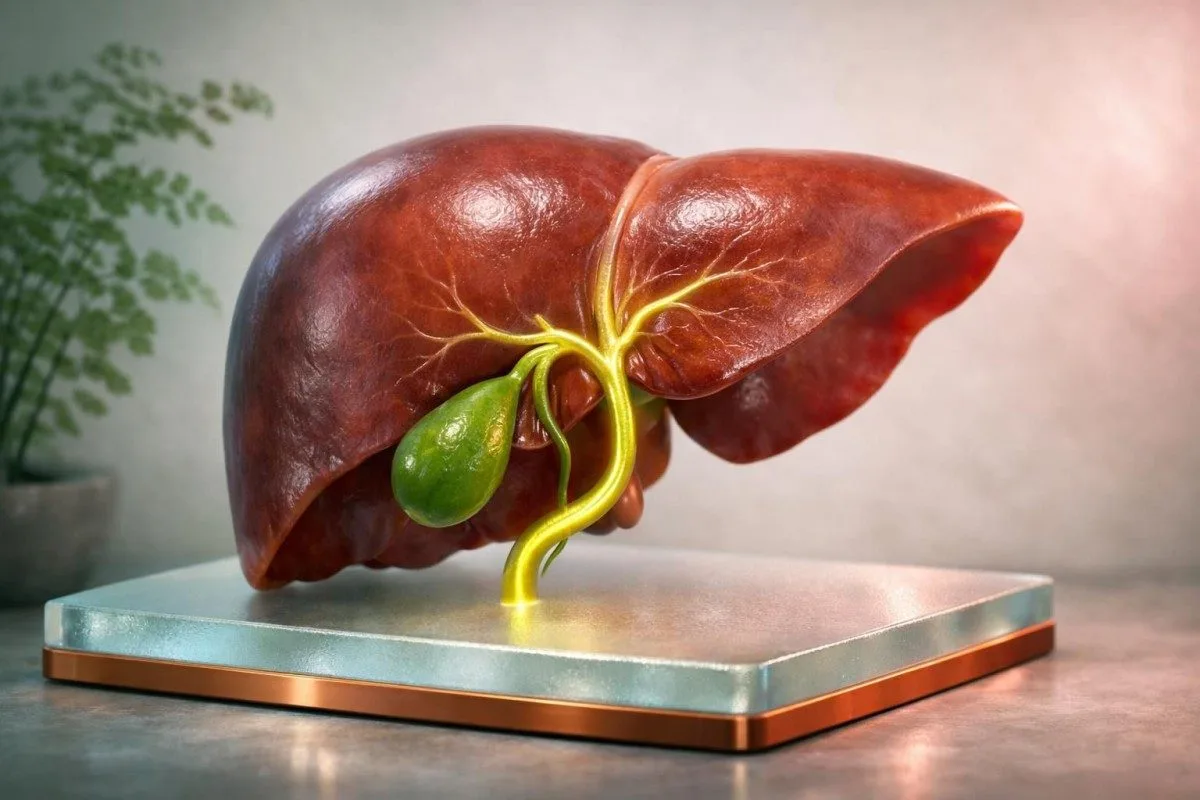
Yellow eyes, dark urine, or a surprise liver panel abnormality can mean very different things. This patient-first guide shows when a mild bilirubin rise is usually harmless and when the pattern needs urgent care.


- Normal range Total bilirubin is usually 0.2-1.2 mg/dL (3-21 µmol/L) in adults.
- Direct bilirubin Most labs consider 0-0.3 mg/dL normal; higher values push the differential toward cholestasis or hepatitis.
- Yellow eyes Scleral icterus often becomes visible around 2-3 mg/dL (34-51 µmol/L).
- Mild isolated rise Bilirubin 1.3-3.0 mg/dL with normal ALT, AST, ALP, and CBC is often Gilbert syndrome.
- Dark urine Urine bilirubin suggests conjugated hyperbilirubinemia because unconjugated bilirubin is not water-soluble.
- Bile duct pattern High bilirubin plus high ALP/GGT is more concerning for obstruction than high bilirubin alone.
- Hemolysis clue Indirect bilirubin with high LDH, low haptoglobin, and reticulocytes above 2% points away from the liver.
- Urgent red flags Bilirubin above 5 mg/dL, fever, confusion, severe abdominal pain, pale stools, or INR above 1.5 need same-day assessment.
What the bilirubin normal range means on your lab report
The bilirubin normal range for most adults is 0.2-1.2 mg/dL (about 3-21 µmol/L) for total bilirubin, and direct bilirubin is usually 0-0.3 mg/dL. Yellow eyes usually appear once total bilirubin is above 2-3 mg/dL. A result of 1.3-2.0 mg/dL with normal enzymes and blood counts is often benign, especially Gilbert syndrome; dark urine, pale stools, fever, or confusion are not benign. On Kantesti AI, we read bilirubin in context. That means looking at the rest of your lab abbreviations because the pattern matters more than the single number.
As of April 2, 2026, most adult labs still set total bilirubin upper normal at 1.2 mg/dL, although some UK and European labs use 1.0 mg/dL or 21 µmol/L. 1 mg/dL equals 17.1 µmol/L, so a result of 1.5 mg/dL is about 26 µmol/L. When I review a so-called abnormal bilirubin with a normal ALT and no symptoms, I slow the story down before I call it liver disease.
Reference ranges are statistical, not magical. About 2.5% of healthy people will fall above the lab's upper limit on a given day, and overnight fasting, dehydration, or a hard cycling session can nudge bilirubin upward by 0.2-0.4 mg/dL in susceptible patients. As Thomas Klein, MD, I am wary of calling 1.4 mg/dL 'liver disease' when the rest of the panel is quiet; the clinician logic behind our medical validation standards weights the full pattern, not the highlighted row.
I often tell patients that yellow eyes are a bigger clue than a tiny lab miss. Scleral icterus usually appears when total bilirubin passes roughly 2 mg/dL, but body lighting can fool you, and smartphone photos exaggerate warmth. Bottom line: if the number is only slightly high and you feel well, repeat it under calmer conditions; if you also have dark urine or pale stools, do not wait on a casual recheck.
A quick unit shortcut
To convert mg/dL to µmol/L, multiply by 17.1. To convert µmol/L to mg/dL, divide by 17.1.
Total, direct, and indirect bilirubin: why the split matters
Total bilirubin is the whole number; direct bilirubin is the conjugated, water-soluble fraction; indirect bilirubin is the unconjugated fraction carried on albumin. A mainly indirect rise usually points to overproduction or poor conjugation, while a mainly direct rise points to impaired excretion or slowed bile flow.
Most bilirubin comes from the daily recycling of old red cells. Heme is converted to biliverdin and then bilirubin, which travels to the liver bound to albumin; the enzyme UGT1A1 conjugates it so it can enter bile. That step matters because unconjugated bilirubin is not water-soluble and does not normally appear in urine.
When direct bilirubin rises, I look quickly at alkaline phosphatase because ALP above about 1.5 times the upper limit of normal strengthens a cholestatic story. I also check GGT because a high GGT makes a biliary source more likely than a bone source for the ALP rise.
The messy lab nuance is that 'direct' bilirubin is not identical across methods. Diazo-based assays can slightly overcall the direct fraction when total bilirubin is very high, and delta bilirubin — conjugated bilirubin stuck to albumin — can keep the direct number elevated for 1-3 weeks after a blockage starts to resolve. Patients notice this as, 'my urine is lighter, but the lab is still off.'
When a mildly high bilirubin is often benign
A mild isolated bilirubin elevation — usually 1.3-3.0 mg/dL with normal ALT, AST, ALP, and CBC — is often Gilbert syndrome, especially if the sample was taken after fasting. Gilbert is common, benign, and easy to overdiagnose if you ignore the rest of the panel.
Gilbert syndrome affects roughly 3-12% of adults, depending on ancestry, and reflects reduced UGT1A1 activity rather than liver damage. Most patients fluctuate between normal and mildly high values, often staying below 4 mg/dL, and the swing is bigger during viral illness, missed meals, menstruation, or a brutal workout. One of my residents once showed me a bilirubin of 1.8 mg/dL after a 26-hour call shift; two weeks later, fed and rested, it was 0.9 mg/dL.
Simple Gilbert usually does not cause a high direct fraction, anemia, or a rising ALP. If the direct bilirubin is more than about 20% of the total, if hemoglobin is falling, or if bilirubin climbs above 4-5 mg/dL, I widen the differential quickly. Certain drugs, including atazanavir and irinotecan, can mimic a Gilbert pattern by interfering with bilirubin handling.
The best repeat test is boring on purpose: morning draw, good hydration, regular meals, and no all-out training for 24-48 hours. In my experience, that single change prevents a lot of unnecessary ultrasounds. If the repeat stays isolated and stable, many clinicians simply document the pattern and move on.
How to read bilirubin beside ALT, AST, ALP, and GGT
Bilirubin tells you where the problem may be, but the enzyme pattern tells you which category it belongs to. Bilirubin with very high ALT/AST suggests hepatocellular injury, while bilirubin with high ALP/GGT suggests cholestasis or bile duct obstruction.
A cholestatic pattern often means bilirubin is conjugated and able to spill into urine. If ALP and GGT are both elevated and bilirubin is climbing, I think about gallstones in the common bile duct, medication-related cholestasis, primary biliary cholangitis, primary sclerosing cholangitis, or a mass compressing the ductal system. Dark urine plus pale stools makes that pattern more urgent.
A hepatocellular pattern usually shows ALT and AST in the hundreds or thousands, sometimes long before bilirubin peaks. That is why a 52-year-old marathon runner with isolated AST elevation to 89 U/L and a normal bilirubin does not scare me the way AST 890 U/L with bilirubin 3.2 mg/dL would. The number is the same analyte; the context is completely different.
I also care about liver function, not just liver injury. A prolonged PT/INR — especially INR above 1.5 without anticoagulants — or albumin that is clearly low alongside bilirubin means the liver may be struggling to synthesize proteins, which is a more serious conversation than a minor isolated bilirubin bump.
Why pattern recognition still beats panic
Kwo, Cohen, and Limdi's widely cited JAMA review on abnormal liver tests made this point years ago, and it still holds up in 2026: classify the pattern before you order everything. In day-to-day practice, mixed patterns — bilirubin plus ALP plus INR — predict imaging and specialist referral far better than a mild isolated bilirubin flag.
Dark urine, pale stools, itching, and fever: symptom clues that matter
Dark urine with bilirubin symptoms usually means conjugated bilirubin is reaching the kidneys. If you also have pale stools or itching, reduced bile flow moves much higher on the list than Gilbert syndrome. A good urinalysis guide helps because bilirubin in urine and excess urobilinogen point to different mechanisms.
Pale or clay-colored stool happens when less bilirubin reaches the intestine to be converted into stercobilin, the pigment that normally makes stool brown. Persistent itching often reflects retained bile acids more than bilirubin itself. Patients who are trying to sort out stool color changes usually do better with a broader digestive symptom review than with internet color charts, which are honestly unreliable.
Fever above 38°C, right upper abdominal pain, vomiting, rigors, or mental fog make jaundice time-sensitive. A patient I saw with bilirubin 4.6 mg/dL, ALP 380 U/L, chills, and dark urine had an obstructing bile duct stone; that is a very different situation from the well 24-year-old with bilirubin 1.5 mg/dL and no symptoms. Our symptom decoder is built around that kind of triage logic.
There is another subtle clue: itching can start before bilirubin becomes dramatically high in cholestatic disorders. And pregnancy changes the threshold for action; new itching with rising bile markers late in pregnancy deserves same-day obstetric review even if bilirubin is only 1.4-2.0 mg/dL.
When high bilirubin comes from red cell breakdown, not the liver
High bilirubin does not always come from the liver. Indirect bilirubin rises when red cells break down faster than the liver can clear the pigment, and the classic companion findings are high LDH, low haptoglobin, and an elevated reticulocyte count. Our reticulocyte and LDH guide walks through that pattern in more detail.
Hemolysis often nudges total bilirubin into the 1.5-3.0 mg/dL range, though brisk episodes can go higher. Reticulocytes commonly rise above 2% or above roughly 100 × 10^9/L in adults, and LDH can climb well beyond the lab upper limit. When that happens with a dropping hemoglobin, I stop calling it 'a liver test problem.'
Pure unconjugated hyperbilirubinemia does not usually create urine bilirubin because the molecule is not water-soluble. That said, severe intravascular hemolysis can still make urine look dark from hemoglobin, which confuses patients and occasionally junior clinicians. The practical clue is that the urine dipstick pattern and the blood count tell the real story.
I, Thomas Klein, MD, usually check the CBC before the ultrasound when bilirubin is isolated. If hemoglobin, reticulocytes, and LDH are calm, and ALT/ALP are normal, Gilbert syndrome immediately becomes more likely than hidden biliary disease. That simple sequence saves time and money.
What clinicians usually do next after an abnormal bilirubin result
The standard workup for abnormal bilirubin starts with confirmation of the fraction and the pattern. Most adults need repeat total and direct bilirubin, ALT, AST, ALP, GGT, a CBC, and a quick medication review; this step-by-step logic is the same one we teach in our guide to reading blood tests.
Sample handling matters more than patients realize. Bilirubin is light-sensitive, so a sample left exposed can drift falsely low, and a severely hemolyzed specimen can muddy interpretation of the whole panel. I also ask about acetaminophen-containing cold remedies, bodybuilding supplements, antibiotics, estrogen therapy, and recent fasting because the history often explains the lab before imaging does.
If direct bilirubin or ALP is clearly elevated, ultrasound is usually the first imaging test because it can quickly show duct dilation, gallstones, or gallbladder inflammation. Our physicians on the Medical Advisory Board see this repeatedly: a stone may pass, symptoms may ease, and yet direct bilirubin stays abnormal for days because delta bilirubin clears slowly.
Kantesti's AI-powered blood test interpretation does something clinicians do instinctively but spreadsheets do badly: it compares today's bilirubin with your last few panels and asks whether the whole pattern is stable, mixed, or newly dangerous. In our experience across millions of interpreted results, trend direction over 2-12 weeks is often more informative than a single flagged value.
When I repeat first and when I scan first
If bilirubin is 1.4 mg/dL in a well patient with normal ALT, ALP, CBC, and no dark urine, repeating in 1-2 weeks under better conditions is often smarter than rushing to imaging. If the direct fraction is high, pain is present, or ALP is rising, I skip the delay and look for biliary disease early.
Which bilirubin levels need urgent care, same-day review, or a repeat later
Urgency depends on the number and the company it keeps. A bilirubin of 1.3-2.0 mg/dL in a well adult with normal enzymes can usually be repeated, but bilirubin above 3 mg/dL with jaundice, dark urine, or pain deserves prompt review, and bilirubin above 5 mg/dL often needs same-day assessment.
Emergency care is the right move if jaundice comes with confusion, fainting, fever, uncontrolled vomiting, black or bloody stool, or severe right upper abdominal pain. In adults, acute liver failure is defined by new liver injury with INR above 1.5 and encephalopathy developing within 26 weeks, and bilirubin may or may not be the first number to spike. That is why I never reassure on bilirubin alone if the person is mentally slower than usual.
Known cirrhosis, pregnancy, active cancer treatment, organ transplantation, or immunosuppression lower my threshold for acting fast. And adults should not borrow newborn jaundice advice; neonatal bilirubin thresholds are completely different, often tracked in mg/dL by hour of life, and do not apply to a 37-year-old with yellow eyes.
If you are unsure how worried to be, collect the full panel rather than one screenshot. Uploading the complete report to Enter Blood Test Results Online Free gives a safer first pass than guessing from a lone bilirubin value, but severe symptoms still belong in urgent care, not online.
If your eyes look yellow but bilirubin is normal
Normal bilirubin makes true jaundice less likely, but it does not always end the story. If the sclera really looks yellow, repeat testing and an eye exam may still be reasonable; if the skin looks yellow while the sclera is white, a benign look-alike is more likely. Our translation guide for blood results helps patients separate lab facts from visual guesswork.
True jaundice often shows first in the sclera because bilirubin binds to elastin-rich tissue. Carotenemia from heavy intake of carrots, sweet potato, or supplements tends to spare the sclera and color the palms and soles more noticeably. That one bedside distinction still works beautifully in 2026.
I also see people misread a yellowish pinguecula, dry-eye film, or warm bathroom lighting as liver disease. If one eye looks different from the other, or the eye is irritated rather than uniformly yellow, an ophthalmic explanation becomes more likely than bilirubin. Clinicians disagree on how sensitive casual self-checks are, and honestly I think they are worse than most websites admit.
A normal bilirubin today does not rule out a fluctuant problem yesterday. Gilbert syndrome can rise during fasting or illness and normalize quickly, and a passed gallstone can leave symptoms before the lab fully catches up. If your story still sounds hepatic — dark urine, pale stools, nausea, right upper quadrant pain — repeat the panel within the same week.
How Kantesti helps you interpret bilirubin without overreacting
Bilirubin is a pattern problem, not just a range problem. On our AI blood test platform, a value of 1.6 mg/dL triggers very different guidance depending on whether ALT is 22 U/L or 420 U/L, whether urine is dark, and whether the number has been stable for years or rose this week.
Kantesti AI analyzes liver markers, CBC patterns, kidney markers, symptom inputs, and prior results in about 60 seconds, which is especially useful for borderline panels that do not fit a single textbook box. If you want the technical layer, our machine-learning interpretation guide explains how trend analysis reduces false alarms from mild isolated abnormalities. Across more than 2 million users in 127+ countries and 75+ languages, isolated bilirubin drift is common; mixed cholestatic patterns are less common but more actionable.
We take the medical review side seriously. Our clinical governance and physician oversight are outlined on About Us. Readers who like concrete examples can browse our real patient case stories to see how a 'minor' bilirubin flag sometimes turns out to be Gilbert syndrome and, occasionally, something more urgent. Kantesti is CE marked and operates under HIPAA, GDPR, and ISO 27001 controls, which matters when people are uploading full lab PDFs. Sarah Mitchell, MD, PhD, and I both push for this kind of contextual reading because single-flag medicine is where mistakes happen.
If you have a PDF or a phone photo of your liver function test, try the free blood test demo. Upload the whole report, not just the highlighted line. Our app and web workflow are best used as a fast interpretation layer before — not instead of — speaking with your own clinician when red flags are present.
Research publications and technical reading
For readers who want the technical papers behind some of the side-paths in bilirubin interpretation, we keep a short internal reading list. Thomas Klein, MD, still believes careful history and examination beat citation collecting, but the background is useful — and our Kantesti AI blood test analyzer is built around that same evidence-first habit.
Kantesti LTD. (2026). B Negative Blood Type, LDH Blood Test & Reticulocyte Count Guide. Figshare. https://doi.org/10.6084/m9.figshare.31333819. Available via ResearchGate. Also indexed on Academia.edu. This one matters when bilirubin is indirect and hemolysis is on the table.
Kantesti LTD. (2026). Diarrhea After Fasting, Black Specks in Stool & GI Guide 2026. Figshare. https://doi.org/10.6084/m9.figshare.31438111. Available via ResearchGate. Also indexed on Academia.edu. It is not a bilirubin paper, but it helps when patients are trying to tell pale stool from black stool or food-related color changes.
Bottom line from the literature and from clinic: bilirubin works best as part of a pattern. Mild isolated elevations are often harmless; bilirubin with dark urine, pale stools, fever, abnormal clotting, or a sick-looking patient deserves fast human assessment.
Frequently Asked Questions
What is a normal bilirubin level for adults?
The normal total bilirubin range for most adults is 0.2-1.2 mg/dL, or about 3-21 µmol/L. Direct bilirubin is usually 0-0.3 mg/dL. Labs vary a little, so some reports use an upper limit of 1.0 mg/dL or 20-21 µmol/L. If the value is only slightly above range, doctors usually interpret it with ALT, AST, ALP, GGT, and symptoms rather than the bilirubin alone.
Is bilirubin 1.3 mg/dL dangerous?
A bilirubin of 1.3 mg/dL is usually not dangerous in an otherwise well adult, especially if ALT, AST, ALP, CBC, and direct bilirubin are normal. Many people with Gilbert syndrome fluctuate around 1.3-2.0 mg/dL, particularly after fasting, illness, dehydration, or hard exercise. The concern rises if the result is new and accompanied by dark urine, pale stools, pain, fever, or a high direct fraction. A repeat test within 1-4 weeks is common.
At what bilirubin level do eyes turn yellow?
Scleral icterus usually becomes noticeable when total bilirubin is above about 2-3 mg/dL, or 34-51 µmol/L. Some people notice it a bit earlier in bright daylight, and others not until the number is higher. Skin tone and room lighting change what the eye sees, so the lab is more reliable than a phone photo. If you see yellow eyes plus dark urine, doctors think more about conjugated bilirubin and bile flow problems.
Can dehydration or fasting raise bilirubin?
Yes. Fasting, dehydration, intercurrent illness, and intense exercise can raise bilirubin by roughly 0.2-0.4 mg/dL in susceptible people, and the effect is most obvious in Gilbert syndrome. That is why a mildly abnormal result is often repeated when the person is well fed, hydrated, and not just off a long run or stomach bug. Persistent elevation despite normal routines deserves a fuller workup.
Why does high bilirubin make urine dark?
Dark urine from bilirubin usually means the direct, conjugated fraction is elevated because conjugated bilirubin is water-soluble and can pass into urine. Unconjugated bilirubin does not normally darken urine on its own. When dark urine appears with pale stools or itching, clinicians worry more about cholestasis or bile duct obstruction than Gilbert syndrome. A urine bilirubin test can support that distinction.
What tests should I ask for if bilirubin is high?
If bilirubin is high, the usual next tests are total and direct bilirubin, ALT, AST, ALP, GGT, a CBC, and often LDH, haptoglobin, and a reticulocyte count. Those results separate the common patterns: liver injury, cholestasis, and hemolysis. Doctors often add PT/INR and albumin when the person looks unwell or the bilirubin is clearly rising, because those markers reflect liver function rather than just irritation. Ultrasound is the usual first imaging test when direct bilirubin or ALP is elevated.
Get AI-Powered Blood Test Analysis Today
Join over 2 million users worldwide who trust Kantesti for instant, accurate lab test analysis. Upload your blood test results and receive comprehensive interpretation of 15,000+ biomarkers in seconds.
📚 Referenced Research Publications
Klein, T., Mitchell, S., & Weber, H. (2026). B Negative Blood Type, LDH Blood Test & Reticulocyte Count Guide. Kantesti AI Medical Research.
Klein, T., Mitchell, S., & Weber, H. (2026). Diarrhea After Fasting, Black Specks in Stool & GI Guide 2026. Kantesti AI Medical Research.
⚕️ Medical Disclaimer
This article is for educational purposes only and does not constitute medical advice. Always consult a qualified healthcare provider for diagnosis and treatment decisions.
E-E-A-T Trust Signals
Experience
Physician-led clinical review of lab interpretation workflows.
Expertise
Laboratory medicine focus on how biomarkers behave in clinical context.
Authoritativeness
Written by Dr. Thomas Klein with review by Dr. Sarah Mitchell and Prof. Dr. Hans Weber.
Trustworthiness
Evidence-based interpretation with clear follow-up pathways to reduce alarm.