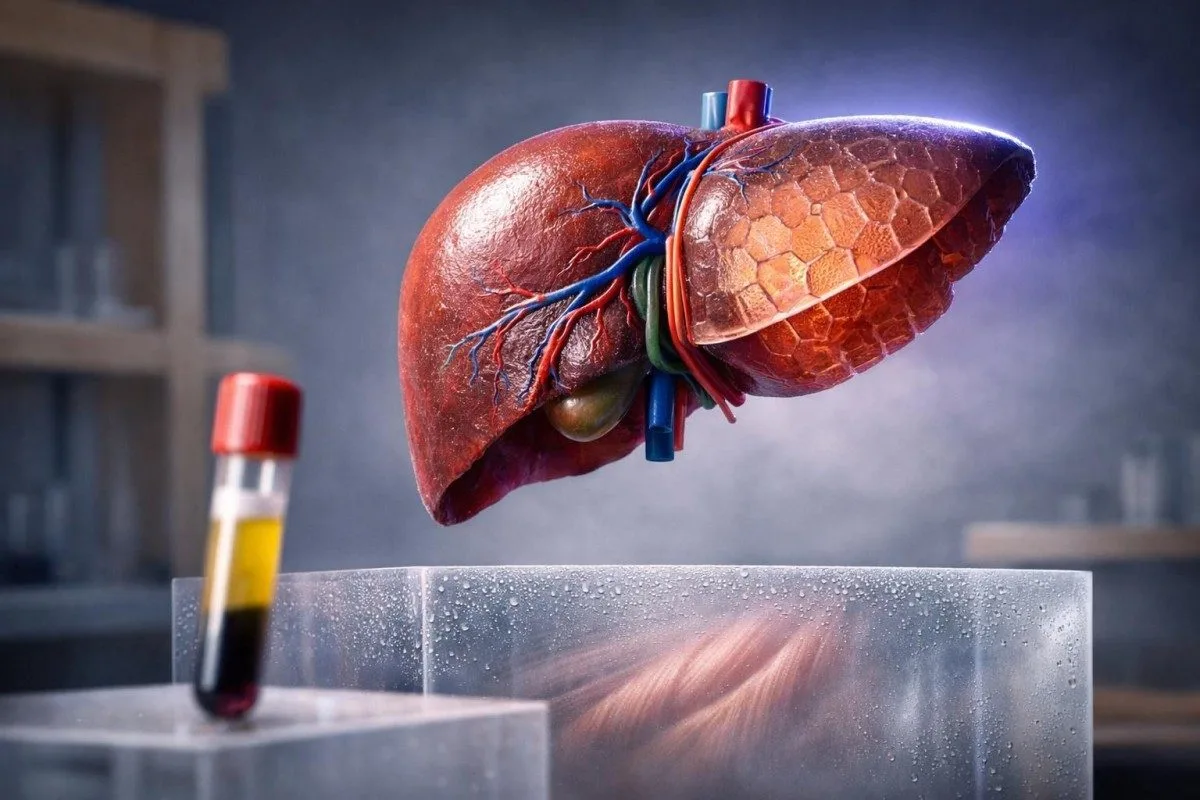
For most adults, AST is normal at roughly 10-40 U/L, though many labs now use a tighter upper limit near 35 U/L for some patients. A high AST does not automatically mean liver disease: exercise, muscle injury, alcohol, hemolysis, and medicines can all raise it, and the pattern with ALT, GGT, CK, bilirubin, and symptoms is what tells us what matters.


- Normal AST in adults is usually about 10-40 U/L, but some labs use upper limits closer to 35 U/L.
- Mild AST elevation means about 1-2 times the lab upper limit and is often caused by fatty liver, alcohol, medicines, or recent exercise.
- AST above 500 U/L is uncommon from simple fatty liver or routine alcohol use alone and needs prompt medical review.
- AST above 1000 U/L raises concern for acute viral hepatitis, ischemic injury, or acetaminophen toxicity.
- AST:ALT ratio above 2 suggests alcohol-associated liver injury when GGT is also elevated, but it is not diagnostic by itself.
- High CK with high AST points toward skeletal muscle injury rather than primary liver disease.
- Normal bilirubin and INR make severe liver failure less likely, even if AST is modestly elevated.
- Repeat testing after 5-7 days without hard exercise and after at least 72 hours without alcohol often clarifies the source.
- Hemolyzed samples can falsely raise AST because red blood cells contain measurable AST.
- Macro-AST can cause persistent isolated AST around 50-120 U/L for months despite otherwise normal tests.
AST normal range and what a high result usually means
AST is usually normal at about 10-40 U/L in adults, although some labs use 8-35 U/L for women or lower cutoffs overall. A high AST blood test does not automatically mean liver disease; recent exercise, muscle injury, alcohol, medications, and even a hemolyzed sample can raise it, which is why we compare it with ALT, GGT, CK, bilirubin, and symptoms using blood test normal range tools and our AST abbreviations guide.
As of April 1, 2026, most adult laboratories still report AST with an upper limit between 35 and 40 U/L. Some European labs are stricter, especially for women, and pediatric reference ranges can run higher than adult values.
My rule, as Thomas Klein, MD, is simple: I never call an AST of 52 U/L liver disease until I see the rest of the panel. Mild elevation usually means about 1-2 times the upper limit of normal, and in practice that range is where false alarms live.
I see this weekly: a 52-year-old marathon runner uploads a panel with AST 89 U/L, ALT 34 U/L, bilirubin 0.8 mg/dL, and CK 1,426 U/L. That pattern fits muscle breakdown from training far better than hepatitis.
Different story: a 61-year-old with nightly alcohol use shows AST 78 U/L, ALT 31 U/L, and GGT 96 U/L. Same enzyme, different context — and that is exactly why generic blood test results explained pages often miss the mark.
Why lab reference ranges differ
Reference intervals differ because labs use different analyzers, local populations, and assay chemistry. One technical detail many patients never hear about is pyridoxal-5-phosphate supplementation in the assay; it can shift the measured value slightly, so the only safe rule is to read AST against the specific lab's own interval.
What the AST blood test actually measures
AST measures cell injury, not liver function. The enzyme sits in liver cells, skeletal muscle, heart muscle, kidneys, brain, and red blood cells, so an elevated result only tells you that some tissue leaked AST into blood.
Biochemically, AST catalyzes transfer of an amino group from aspartate to alpha-ketoglutarate, producing oxaloacetate and glutamate, and it depends on vitamin B6. There are both cytosolic and mitochondrial AST pools, which is one reason severe toxic or ischemic injury can push AST very high.
Here is what matters in practice: AST and ALT are injury markers, not liver function tests. If I am worried about true loss of liver function, I look harder at bilirubin, albumin, and INR than at the AST number itself.
A rough blood draw can mislead you. Hemolysis releases AST from red cells, and many chemistry analyzers generate a hemolysis index before they even release the final value; our doctors on the Medical Advisory Board see this artifact more often than patients realize.
Kantesti AI cross-checks AST against the wider biomarker library because a single transaminase rarely answers the question on its own. In my experience, the most accurate read comes from the pattern, the trend, and what happened in the 7 days before the blood draw.
When high AST really points to liver disease
High AST points toward liver disease when ALT is also elevated or when bilirubin, GGT, ALP, platelets, or INR are abnormal. The common liver causes are fatty liver disease, alcohol-related injury, viral hepatitis, drug-induced hepatitis, and ischemic injury.
In fatty liver disease, AST is often below 150 U/L and ALT is commonly equal or higher early on. When I see AST begin to catch up to or exceed ALT in a fatty liver patient, I start thinking about fibrosis rather than simple steatosis, and I usually review our ALT guide alongside the rest of the panel.
Alcohol changes the pattern. AST:ALT above 2 with a raised GGT is suggestive of alcohol-associated liver injury, although not diagnostic, and AST above 500 U/L from alcohol alone would be unusual in real practice.
Bile duct problems usually push ALP and GGT higher than AST. If AST is only mildly abnormal but ALP and bilirubin are climbing, I worry more about cholestasis or obstruction than about primary hepatocellular damage.
The red-flag zone is AST above 1000 U/L. That level makes me think first about ischemic hepatitis, acetaminophen toxicity, or acute viral hepatitis, not everyday fatty liver, and Pratt and Kaplan made the same broader point years ago in the New England Journal of Medicine: transaminase magnitude matters, but the company it keeps matters more.
High AST without liver disease: muscle, exercise, hemolysis, and macro-AST
Isolated AST elevation without other liver abnormalities is often non-hepatic. The usual culprits are strenuous exercise, muscle injury, rhabdomyolysis, hemolysis, and the rare but real entity called macro-AST.
Pettersson and colleagues reported in the British Journal of Clinical Pharmacology that healthy adults had raised AST, ALT, CK, and LDH for at least 7 days after heavy weightlifting. In clinic I still see this after marathon weekends, CrossFit competitions, and even a first hard gym session after months off.
If CK is markedly high, think muscle first. A patient with AST 210 U/L, ALT 68 U/L, CK 4,800 U/L, muscle pain, and dark urine needs evaluation for rhabdomyolysis, kidney injury, and hydration status, and our LDH and reticulocyte guide helps explain why hemolysis and tissue injury markers can move together.
Another subtle pattern is persistent AST around 50-120 U/L for months with normal ALT, bilirubin, GGT, and CK. That is where macro-AST enters the discussion; the enzyme binds to an immunoglobulin, clears slowly, and can look alarming until a lab does polyethylene glycol precipitation or a similar confirmation test.
I also keep a wider differential. Untreated thyroid disease, celiac disease, and systemic inflammation can nudge AST upward, especially in patients whose main complaint is fatigue, which is why I often widen the workup rather than obsess over one enzyme; our fatigue labs guide is useful here.
Macro-AST is rare but worth remembering
Macro-AST is one of those diagnoses that saves patients from months of needless worry. In my experience, it deserves consideration whenever AST stays mildly elevated for 3 months or more and every other liver and muscle marker remains reassuringly normal.
AST:ALT ratio, CK, bilirubin, and GGT: the pattern matters more than the number
AST:ALT ratio helps, but it never settles the diagnosis by itself. I use the ratio to sort patterns: less than 1 often fits fatty liver or viral injury, greater than 2 supports alcohol-associated injury, and a high CK can override the whole ratio by pointing back to muscle.
The ratio gets overused online. AST:ALT above 2 has decent specificity in the right clinical setting, but Nyblom and others showed its sensitivity is far from perfect, so a normal ratio does not rule alcohol in or out.
When patients ask, what does my blood test mean, I usually answer with clusters, not single numbers. A pattern of AST high, CK high, bilirubin normal, GGT normal argues for muscle, whereas AST high, bilirubin high, platelets low, albumin low argues for liver disease, and our how to read blood test results piece walks through that logic.
Liver failure is not defined by a big AST. INR above 1.5, rising bilirubin, or new confusion are the findings that change my tone, which is why I always pair abnormal transaminases with a clotting review such as our PT/INR guide.
Thomas Klein, MD, and our medical team built the same rule into Kantesti AI: compare AST with ALT, ALP, GGT, bilirubin, albumin, platelets, creatinine, CK, and trend data before labeling the result. In day-to-day practice, that single discipline prevents a surprising amount of unnecessary panic.
Alcohol, statins, acetaminophen, and supplements that can raise AST
Alcohol and medications are among the most common reasons for a mildly to moderately high AST. The pattern is usually more informative than the number: alcohol often gives AST greater than ALT, while drugs can produce anything from a mild transient rise to AST in the thousands if toxicity is severe.
With regular heavy drinking, AST is often in the 50-300 U/L range, ALT is lower, and GGT may be raised. Most patients find it helpful to hear this plainly: AST above 500 U/L is not the typical simple alcohol pattern, so I look harder for another cause or a second hit.
Statins cause small AST or ALT bumps in a minority of patients, usually less than 3 times the upper limit of normal. In most cases I do not stop the statin reflexively, because the cardiovascular benefit is often bigger than the risk, but that decision belongs with the prescribing clinician.
Acetaminophen is different. Doses above 4,000 mg per day in adults — and sometimes lower doses in people who drink heavily, are underweight, or are fasting — can cause severe liver injury, while isoniazid, valproate, methotrexate, amiodarone, anabolic steroids, and some herbal extracts are other names I ask about.
Before surgery, tell the team about every prescription, supplement, and gym product you use; hidden liver-toxic ingredients are still common. Our pre-op labs guide and symptoms decoder help patients decide what details actually matter.
How high is high AST — and when it becomes urgent
AST more than 2 times the upper limit deserves follow-up, AST above 500 U/L deserves prompt evaluation, and AST above 1000 U/L is urgent until proven otherwise. Numbers alone do not determine danger, but those thresholds change how quickly I act.
A mild elevation is usually 1-2 times the upper limit of normal. Moderate elevation is roughly 2-5 times, while marked elevation often means more than 10 times the upper limit, and that is where ischemic, toxic, or acute viral causes climb rapidly up the list.
Simple fatty liver usually keeps AST below 150 U/L, and uncomplicated alcohol-associated injury often stays below 300 U/L. So if an otherwise healthy adult shows AST 780 U/L, I do not reassure first — I ask about acetaminophen, shock, hepatitis exposure, severe exercise, and muscle symptoms.
Numbers matter, but symptoms matter more.
Seek same-day care if high AST comes with jaundice, confusion, severe right upper abdominal pain, repeated vomiting, fever, dark urine, unusual bleeding, or pregnancy-related headache and upper abdominal pain. If you are staring at a portal and wondering where to start, our translate your results article lays out the triage logic in plain language.
Two combinations I never ignore
AST plus CK above 5,000 U/L makes me think hard about rhabdomyolysis and kidney risk. AST plus INR above 1.5 or bilirubin above 3.0 mg/dL makes me worry about true hepatic dysfunction rather than a noisy but harmless bump.
How to prepare for a repeat AST blood test
Repeat AST testing is most useful when you control the avoidable variables first. I usually ask patients to avoid hard exercise for 5-7 days, avoid alcohol for at least 72 hours, and review recent medications before the next draw.
Fasting is not required for an isolated AST in most labs. If AST is being repeated inside a CMP, lipid panel, or glucose workup, an 8-12 hour fast may still be requested, so check the lab instructions or our fasting guide.
For a useful retest, I usually add ALT, ALP, GGT, bilirubin, albumin, CK, creatinine, and sometimes hepatitis B and C testing. If there is muscle pain or dark urine, I also want a urinalysis and I am less interested in fasting than in hydration and timing.
Kantesti's our AI blood test platform can compare your new AST with older panels, unit changes, and lab-specific reference ranges in about 60 seconds from a PDF or phone photo. That trend view is often what finally separates one-off noise from a pattern.
Practical tip: skip intramuscular injections, bodybuilding supplements, and heroic leg day before the retest. If you want a quick first pass before messaging your doctor, try our free blood test interpretation tool.
Athletes, pregnancy, children, and older adults need a different AST lens
Athletes, pregnant patients, children, and older adults need a different AST lens. The same number can mean something very different in a marathon runner, a pregnant patient with hypertension, or a frail older adult on six medications.
In endurance athletes, AST can sit above the adult upper limit for several days after a race, especially if CK is also high. My advice is boring but effective: take a deload week, then repeat the panel before anyone labels it chronic liver disease.
In pregnancy, AST should usually remain within the normal adult range. AST above 40 U/L alongside high blood pressure, low platelets, or right upper abdominal pain raises concern for preeclampsia or HELLP syndrome, and our women's health guide explains that overlap well.
Children and teens often have slightly higher AST reference limits than adults, sometimes 45-50 U/L or more depending on age and lab method. Viral illnesses, muscle activity, and growth all muddy the picture, so using an adult cut-off in a child is a classic interpretation error.
Older adults are the opposite problem. Lower muscle mass can blunt enzyme release, so an AST of 58 U/L with weight loss, polypharmacy, or low albumin worries me more in a 78-year-old than the same number would in a 25-year-old, and our men over 50 labs guide speaks to that broader risk profile.
How Kantesti AI interprets AST results in context
Kantesti AI interprets AST best by reading the whole pattern, not by guessing from a lone number. Our system checks reference range, units, age, sex, trends, and companion markers so patients get a more realistic answer to the question, what does my blood test mean.
Kantesti AI is now used by more than 2 million people across 127+ countries and 75+ languages, and it reads a blood test PDF or photo in about 60 seconds. For AST, the engine weighs hepatocellular clues such as ALT and bilirubin against extrahepatic clues such as CK, LDH, exercise timing, and medication context.
Our team designed the model to normalize unit conversions, catch lab-specific cutoffs, and flag when the AST story conflicts with the rest of the panel. That process is outlined in our medical validation standards and the broader AI technology guide.
Thomas Klein, MD, and the rest of the Kantesti medical editors also set guardrails so the report says when uncertainty is real. You can read more about who we are on About Us, but the short version is simple: our AI helps with interpretation, trend analysis, family risk, and next-step questions — it does not replace urgent clinical care.
In our experience, the most useful AST report is the one that tells you what changed, what likely explains it, and what to repeat next. That is the standard we aim for when our platform reads an AST blood test.
Research publications and further reading
Research on related blood indices improves AST interpretation because abnormal transaminases often sit inside a bigger story — inflammation, hydration, anemia, kidney stress, or lab artifact. If you like deep pattern recognition, our RDW publication guide and BUN/creatinine guide show the same multi-marker method from a different angle.
Klein, T. (2025). RDW Blood Test: Complete Guide to RDW-CV, MCV & MCHC. Zenodo. https://doi.org/10.5281/zenodo.18202598 | ResearchGate | Academia.edu. This paper matters here because unexplained AST sometimes travels with hemolysis, chronic inflammation, or nutritional issues that only become obvious when red-cell indices are interpreted properly.
Klein, T. (2025). BUN/Creatinine Ratio Explained: Kidney Function Test Guide. Zenodo. https://doi.org/10.5281/zenodo.18207872 | ResearchGate | Academia.edu. I include it because dehydration, rhabdomyolysis, and acute illness can move both kidney markers and AST at the same time.
Bottom line: AST is never just about one enzyme. The more I practice, the more convinced I am that the safest interpretation comes from stitched-together physiology, not isolated flags on a patient portal.
Frequently Asked Questions
What is a normal AST blood test range in adults?
A normal AST range in adults is usually about 10-40 U/L, although many labs use upper limits closer to 35 U/L for women and some use slightly different cutoffs for men. Children and teenagers often have somewhat higher reference limits than adults. The safest way to read an AST result is against your own lab's printed range, not a generic internet number. If AST is above the range, the next question is whether ALT, GGT, bilirubin, CK, and symptoms point to liver or non-liver causes.
Can exercise cause high AST?
Yes, strenuous exercise can raise AST, sometimes to 2-5 times the upper limit of normal, especially after heavy weightlifting, endurance events, or muscle injury. The rise can last 5-7 days, and CK is often much higher than AST when muscle is the real source. A pattern of AST high, ALT only mildly elevated, bilirubin normal, and CK markedly high strongly favors muscle rather than liver disease. In practice, I usually ask patients to rest from hard exercise for a week before repeating the test.
Is an AST of 50 dangerous?
An AST of 50 U/L is usually a mild elevation, not an emergency, if the lab upper limit is around 40 U/L. That level is commonly seen with fatty liver, recent alcohol use, statins, vigorous exercise, or even a hemolyzed blood sample. It becomes more concerning if bilirubin is high, INR is prolonged, symptoms are present, or the value is rising on repeat tests. Most patients with AST around 50 need context and a repeat panel, not panic.
Why would AST be high but ALT normal?
High AST with a normal ALT often points away from the liver and toward muscle injury, recent intense exercise, hemolysis, alcohol use, or the rare condition macro-AST. If AST stays around 50-120 U/L for months while ALT, bilirubin, GGT, and CK remain normal, macro-AST becomes a realistic possibility. The next useful tests are usually CK, LDH, bilirubin, GGT, and a review of exercise, medications, and the blood draw quality. This is one of those results where context matters more than the number.
Does alcohol raise AST quickly?
Yes, alcohol can raise AST within 24-72 hours after heavier intake, particularly when drinking is regular rather than truly one-off. The classic pattern is AST higher than ALT, often with an AST:ALT ratio above 2 and a raised GGT. AST above 500 U/L is unusual from alcohol alone, so that level should push clinicians to look for another cause such as toxicity, viral hepatitis, or ischemic injury. Mild alcohol-related elevations often improve noticeably after 2-4 weeks of abstinence.
What tests should be repeated with AST?
A repeat AST is usually most useful when paired with ALT, ALP, GGT, bilirubin, albumin, CK, and creatinine. If the elevation persists, clinicians often add hepatitis B and C testing, and if there is muscle pain or dark urine they may add urinalysis and more detailed kidney tests. INR is valuable when there is concern about true liver dysfunction rather than simple enzyme leakage. Fasting is not usually required for AST alone, but it may be needed if the repeat draw includes other tests such as lipids or glucose.
When should I go to the ER for a high AST result?
Same-day or emergency evaluation is appropriate if AST is above about 1000 U/L or if any high AST level comes with jaundice, confusion, severe right upper abdominal pain, repeated vomiting, unusual bleeding, fever, dark urine, or pregnancy-related headache and upper abdominal pain. A high AST plus CK above 5000 U/L also needs urgent assessment because rhabdomyolysis can injure the kidneys quickly. If bilirubin is above 3.0 mg/dL or INR is above 1.5 along with high AST, I take that far more seriously than AST alone. The number matters, but the symptoms and companion tests are what determine urgency.
Get AI-Powered Blood Test Analysis Today
Join over 2 million users worldwide who trust Kantesti for instant, accurate lab test analysis. Upload your blood test results and receive comprehensive interpretation of 15,000+ biomarkers in seconds.
📚 Referenced Research Publications
Klein, T., Mitchell, S., & Weber, H. (2026). RDW Blood Test: Complete Guide to RDW-CV, MCV & MCHC. Kantesti AI Medical Research.
Klein, T., Mitchell, S., & Weber, H. (2026). BUN/Creatinine Ratio Explained: Kidney Function Test Guide. Kantesti AI Medical Research.
⚕️ Medical Disclaimer
This article is for educational purposes only and does not constitute medical advice. Always consult a qualified healthcare provider for diagnosis and treatment decisions.
E-E-A-T Trust Signals
Experience
Physician-led clinical review of lab interpretation workflows.
Expertise
Laboratory medicine focus on how biomarkers behave in clinical context.
Authoritativeness
Written by Dr. Thomas Klein with review by Dr. Sarah Mitchell and Prof. Dr. Hans Weber.
Trustworthiness
Evidence-based interpretation with clear follow-up pathways to reduce alarm.