Geel oë is nie 'n betroubare siftings toets vir hepatitis B nie. Die infeksie is dikwels stil, en die regte teenliggaam en virale toetse—nie simptome alleen nie—stel vas wat gebeur.



- Stille infeksie is algemeen: baie mense met hepatitis B het geen geelsug en geen herkenbare hepatitis B simptome nie.
- Inkubasietydperk vir akute hepatitis B is gewoonlik 60–150 dae, met 'n gemiddeld van ongeveer 90 dae.
- HBsAg positief vir 6 maande definieer chroniese hepatitis B infeksie en benodig kliniese opvolging.
- IgM anti-HBc ondersteun gewoonlik onlangse akute infeksie, maar dit kan ook styg tydens 'n opvlamming van chroniese hepatitis B.
- Anti-HBs ten minste 10 mIU/mL na 'n gedokumenteerde entstofreeks word oor die algemeen beskou as 'n beskermende immuunrespons.
- ALT bo enigiens 1 000 IU/L kan voorkom by akute virale hepatitis, maar medisyne, iskemie en ander virusse kan dieselfde patroon produseer.
- HBV DNA meet virale replikasie; dit is die toets wat 'n positiewe siftingsresultaat in 'n bestuurplan omskep.
- Noodgeneeskunde is geskik vir verwarring, ernstige braking, ongewone kneusplekke, toenemende slaperigheid, of geelsug met bleek stoelgange.
Kan hepatitis B voorkom sonder geelsug? Ja—dikwels stil
Ja, hepatitis B sonder geelsug is algemeen. Baie mense het glad geen simptome nie, en selfs simptomatiese akute infeksie kan voel soos 'n onspesifieke virussiekte eerder as 'n lewerprobleem. Geelsug verskyn eers wanneer bilirubien genoeg opbou om die oë en vel te verkleur; dit is nie nodig vir lewerselbesering of hepatitis B-oordraging nie.
In my kliniese ervaring, is die persoon wat die meeste waarskynlik misgeloop sal word nie noodwendig siek nie: dit is die gesonde pasiënt wie se siftingspaneel bestel is vir swangerskap, immigrasie, 'n nuwe verhouding, of 'n onverwante abnormale lewerensiem. Akute hepatitis B-simptome ontwikkel slegs by ongeveer 30%–50% van geïnfekteerde volwassenes, terwyl jong kinders veel minder dikwels simptomaties is; afwesigheid van koors, geel oë, of buikpyn sluit dit nie uit nie.
Geelsug weerspieël verhoogde sirkulerende bilirubien, wat algemeen sigbaar word sodra totale bilirubien ongeveer 2–3 mg/dL (34–51 µmol/L) oorskry. Lewerontsteking kan aansienlik wees voor daardie punt, so normale urinekleur en wit oë is slegs in 'n baie beperkte sin gerusstellend; sien ons gids na bilirubien waarskuwingspatrone.
Kantesti is 'n KI-bloedtoetsontleder wat lewerensiem, bilirubien, albumien, en plaatjie resultate langs die virale serologie wat “n klinikus bestel het, plaas. Dit kan nie hepatitis B uit roetine chemie alleen diagnoseer nie, maar dit kan iemand help om te sien dat ”n "lewer toets" resultaat onvolledig is sonder hepatitis-spesifieke toetse.
Waarom simptome 'n swak siftingsinstrument is
HBV kan oorgedra word gedurende 'n simptoomvrye fase omdat virale replikasie sigbare siekte voorafgaan, vergesel, of oortref. Vanaf 11 September 2026, bly risiko-gebaseerde en eenmalige volwasse siftings meer betroubaar as om vir simptome te wag, veral vir mense wat gebore is in streke met hoër HBV-prevalensie of diegene met huishoudelike, seksuele, of inspuiting blootstelling.
Wat is die vroegste hepatitis B simptome?
Vroeë hepatitis B-simptome is gewoonlik moegheid, verminderde eetlus, naarheid, lae-graad koors, spierpyn, en ongemak onder die regterribbes. Geen is spesifiek genoeg om hepatitis B te bevestig nie, en die simptoomvrye interval na blootstelling is algemeen 60–150 dae.

'n Nuttige kliniese wenk is die volgorde van gebeure. Malaise en eetlusverlies kom dikwels voor donker urine of vergeling, en 'n persoon kan merkbaar moeg voel terwyl bilirubien nog normaal is. Die inkubasie gemiddeld is naby 90 dae, daarom kan toetsing die dag na 'n moontlike blootstelling te vroeg wees om die vraag te besleg.
Gewrigspyn en 'n tydelike uitslag kan voorkom in die prodroom omdat immuunkomplekse sirkuleer voordat oop hepatitis ontwikkel. Ek het dit gesien as griep of 'n nuwe voedselreaksie; die onderskeidende detail was 'n ALT van 642 IU/L saam met positiewe hepatitis B-oppervlakantigeen, nie die uitslag self nie.
Parasetamolgebruik, aanvullings, alkohol, Epstein–Barr-virus, en spierbesering kan almal aminotransferases verhoog. 'n Noukeurige ALT resultaat hersiening voorkom die algemene fout om elke verhoogde ALT “hepatitis” te noem voordat die oorsaak bevestig word.
Simptome wat minder tipies is
Jeuk, bleek stoelgang, en aanhoudende donker urine dui op verswakte galsirkulasie en verdien vinniger assessering, maar dit is nie die gewone vroeë aanbieding nie. 'n Persoon met geïsoleerde opgeblasenheid, refluks, of intermitterende linksydige pyn is statisties meer geneig om 'n ander verduideliking te hê, hoewel blootstelling nog steeds HBV-toetsing moet aanmoedig.
Wanneer moet jy hepatitis B toetsing kry?
Kry hepatitis B-toetsing vinnig na 'n bloed-, seksuele, huishoudelike, of perinatale blootstelling, selfs al voel jy heeltemal goed. Basistoetsing dokumenteer jou status, terwyl herhaalde toetsing betyds is vir die vensterperiode en gelei word deur inentingsgeskiedenis.
Die CDC beveel eenmalige siftingsondersoeke by volwassenes aan met 'n drietoetspaneel: HBsAg, anti-HBs, en totale anti-HBc (Conners et al., 2023). Hierdie kombinasie onderskei huidige infeksie, vorige opgeloste infeksie, entstofimmuntiteit en vatbaarheid meer effektief as om slegs HBsAg te bestel.
Na 'n betekenisvolle onlangse blootstelling, kan 'n geneesheer nou toets en toetsing oor ongeveer 6 maande herhaal as die aanvanklike paneel nie infeksie of immuniteit vasstel nie. Proflakse na blootstelling is tydsensitief—hepatitis B-entstof moet so gou as moontlik begin word, en hepatitis B-immunoglobulien kan aangedui word vir geselekteerde nie-immune blootstellings—so moenie wag vir simptome nie.
Kantesti is 'n AI bloedtoets interpretasie platform wat 'n gefotografeerde of opgelaaide serologierapport in die driemerkerpatroon kan organiseer, maar blootstellingsbestuur behoort by 'n akute-sorg-, seksuele-gesondheids-, beroepsgesondheids- of primêre-sorg-geneesheer te wees. Ons hepatitis C-simptoomgids verduidelik waarom virale hepatitis toetse virus vir virus geïnterpreteer moet word.
Toetsing tydens swangerskap
Elke swangerskap moet HBsAg-sifting tydens elke swangerskap insluit, ongeag die waargenome risiko. 'n Positiewe resultaat verander pasgebore voorkomingsbeplanning: die baba benodig hepatitis B-entstof en, waar aangedui, immunoglobulien binne 12 uur na geboorte.
Die drie bloedtoetse wat hepatitis B status verduidelik
HBsAg, anti-HBs, en totale anti-HBc is die kern hepatitis B-siftingstoetse. Saam beantwoord hulle of die virus tans opspoorbaar is, of immuniteit bestaan, en of die immuunstelsel hepatitis B voorheen teëgekom het.
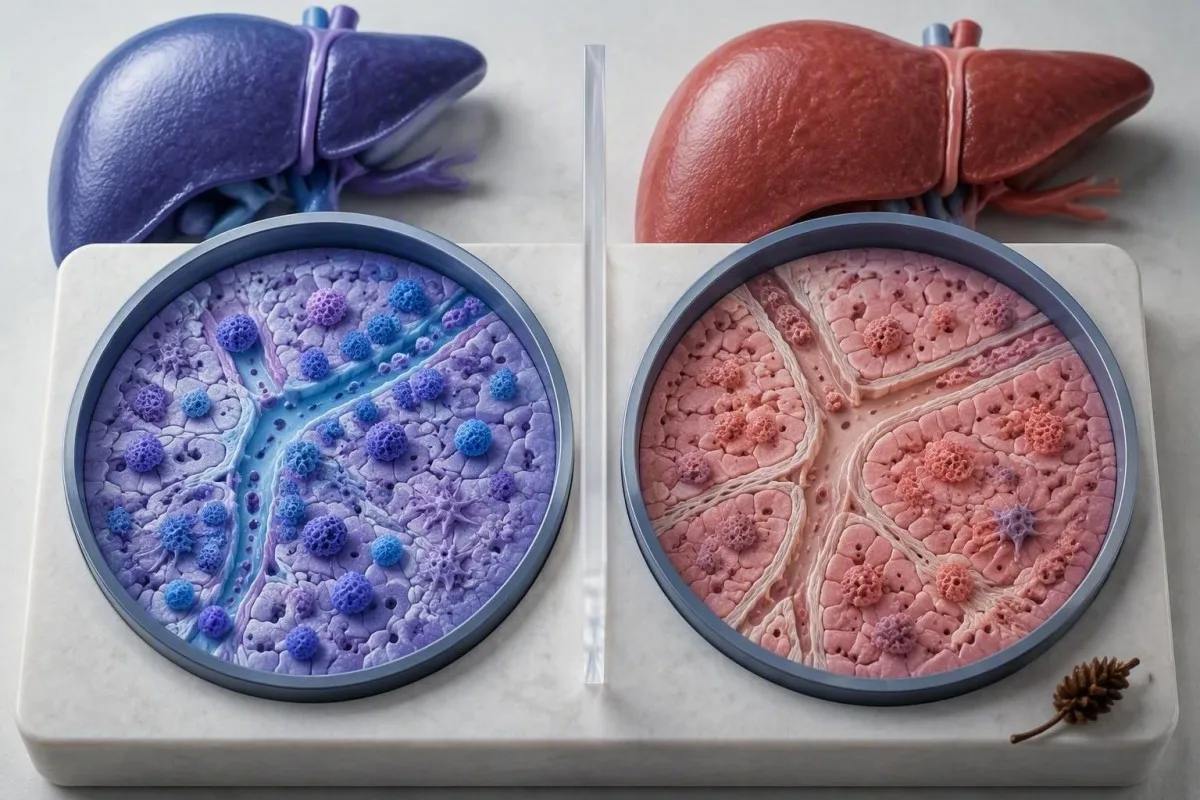
HBsAg is hepatitis B-oppervlakantigeen; 'n positiewe resultaat beteken dat huidige infeksie moontlik is en bevestiging en kliniese opvolging benodig. Anti-HBs is oppervlakanliggaam; 'n vlak van minstens 10 mIU/mL na 'n volledige gedokumenteerde entstofreeks word oor die algemeen as 'n beskermende reaksie by immuunkompetente persone beskou.
Totale anti-HBc bespeur kernantiliggaam van vorige of huidige natuurlike infeksie en word nie deur inenting geproduseer nie. Die patroon HBsAg negatief, anti-HBs positief en totale anti-HBc negatief pas by entstof-afgeleide immuniteit; HBsAg negatief, anti-HBs positief en totale anti-HBc positief pas gewoonlik by opgeloste natuurlike infeksie.
'n Geïsoleerde positiewe totale anti-HBc is een van die lastiger patrone. Dit kan afgemelde opgeloste infeksie met afnemende anti-HBs, 'n vals-positiewe toets, latente infeksie, of minder dikwels vroeë akute infeksie weerspieël; geneeshere kan serologie herhaal en HBV DNA bestel, veral voor immuunonderdrukkende behandeling. Ons verduideliking van positiewe antiliggaam resultate dek waarom een antiliggaam selde die hele storie vertel.
Hoe toetse akute van chroniese hepatitis B onderskei
Akute en chroniese hepatitis B word hoofsaaklik onderskei deur tyd en serologie, nie deur hoe siek iemand voel nie. HBsAg wat vir ten minste 6 maande aanhoudend is, vestig chroniese infeksie; 'n enkele positiewe HBsAg-uitslag kan nie die infeksie op sigself dateer nie.

IgM anti-HBc ondersteun sterk onlangse akute infeksie wanneer dit saam met nuwe HBsAg-posititiwiteit en 'n versoenbare siekte gepaardgaan. Dit is nie volmaak nie: IgM anti-HBc kan ook opspoorbaar wees tydens 'n opvlamming van chroniese hepatitis B, dus vergelyk klinici vorige resultate, simptoomtydsberekening, ALT-trajek, en HBV DNA.
HBV DNA word gerapporteer in IU/mL en meet die hoeveelheid virale genetiese materiaal in omloop. Dit bestempel nie op sigself siekte as akuut of chronies nie, maar 'n opspoorbare resultaat bevestig replikasie en word sentraal tot monitering en behandelingbesluite; lae of onopspoorbare DNA skrap nie die behoefte om HBsAg en lewerstatus saam te interpreteer nie.
Die AASLD-riglyne beklemtoon reeks ALT, HBV DNA, HBeAg-status, en fibrose-assesserings eerder as 'n enkele laboratorium-opname (Terrault et al., 2018). Dit is een rede waarom 'n normale ALT op een trek nie bewys dat chroniese HBV skadeloos is nie.
Die ses-maande reël het 'n doel
Die 6-maande drempel skei infeksies wat waarskynlik spontaan sal opklaar van dié wat voortgeduur het en 'n langertermynrisiko van fibrose en hepatocellulêre karsinoom inhou. By volwassenes, meer as 90% van immuunkompetente akute infeksies herstel, terwyl infeksie wat rondom geboorte opgedoen is veel dikwels chronies word.
Watter lewertoetse kan—en kan nie—wys nie
ALT en AST onthul hepatoselulêre besering, terwyl bilirubien, albumien, INR, en plaatjies help om erns en lewerfunksie te toon. 'n Roetine lewerpaneel kan nie hepatitis B as die oorsaak identifiseer sonder virale serologie nie.

ALT is meer lewer-spesifiek as AST, hoewel geen van hulle eksklusief tot die lewer is nie. In akute virale hepatitis kan ALT 1,000 IU/L oorskry; dieselfde reeks kan voorkom met asetaminofen-toksisiteit of verminderde lewerbloedvloei, dus eis die getal dringende konteks eerder as self-diagnose.
Bilirubien weerspieël konjugasie en galuitskeiding, terwyl INR en albumien sintetiese kapasiteit weerspieël. 'n Stygende INR, veral by 1.5 of bo by iemand met akute hepatitis en veranderde geestelike status, wek kommer vir akute lewerversaking en benodig nood-evaluering; ons INR-gids verduidelik die meting.
Kantesti se neuraal netwerk lees transaminases langs bilirubien, alkaliese fosfatase, albumien, en plaatjies om patrone vir mediese oorsig te merk. Ons lewerpaneel afbreking is nuttig voordat jy aanvaar dat “n normale ”lewerfunksietoets" HBV-sifting ingesluit het.
Die AST:ALT-verhouding is nie 'n hepatitis B-toets nie
'n AST:ALT-verhouding onder 1 is algemeen in virale hepatitis, maar is nóg sensitief nóg spesifiek. Onlangse intense oefening kan AST vanaf spiere verhoog, terwyl gamma-glutamyl transferase en bilirubien normaal kan bly; herhaalde toetse na herstel kan 'n misleidende virale ondersoek voorkom.
Watter hepatitis B simptome benodig sorg op dieselfde dag?
Verwarring, ongewone slaperigheid, herhaalde braking, vinnig verdiepende geelsug, nuwe kneusing, of ernstige abdominale swelling vereis dieselfde-dag dringende assessering. Hierdie simptome kan dui op verswakte lewerfunksie eerder as bloot 'n roetine akute hepatitis siekte.
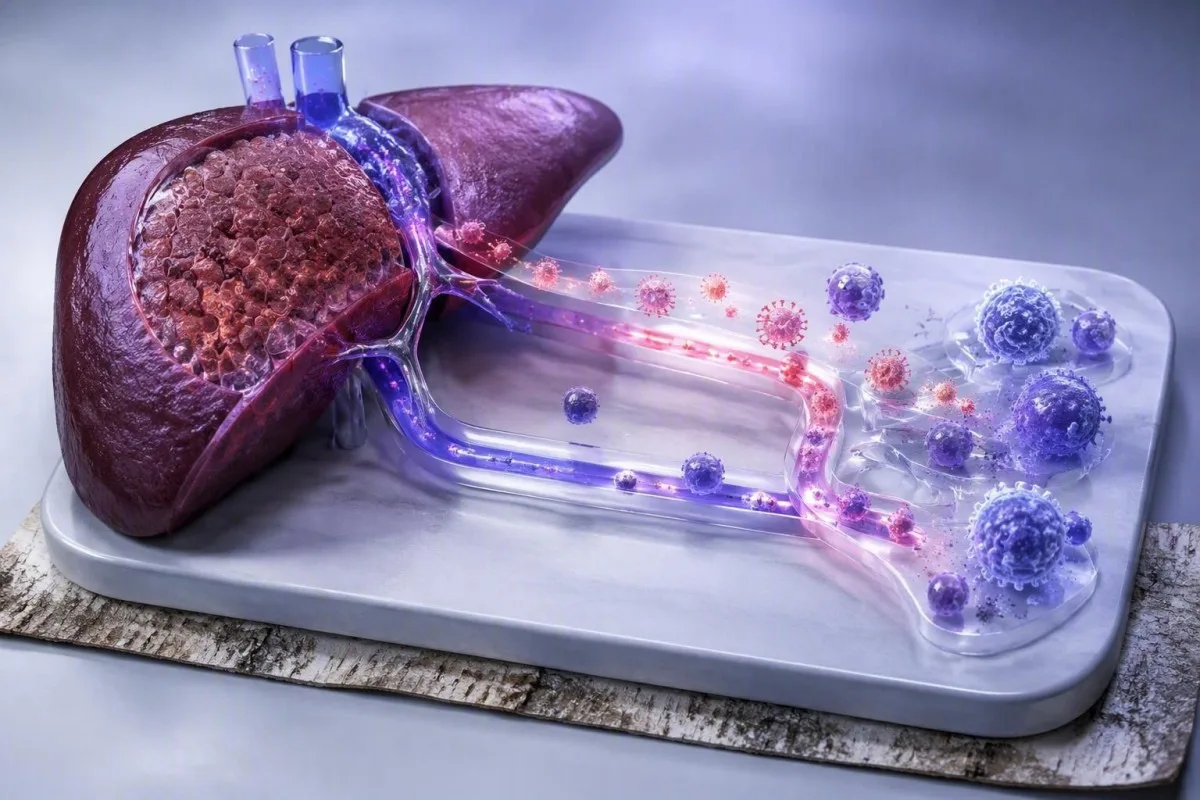
Verwarring of “n veranderde slaap-wakker patroon kan dui op hepatiese enkefalopatie, veral wanneer dit saam met geelsug en verlengde INR voorkom. Dit is ongewoon, maar dit is nie ”n "wag tot Maandag"-simptoom nie—akute lewerversaking kan oor ure tot dae vorder.
Donker urine alleen is nie outomaties 'n noodgeval nie; dehidrasie, medikasie en gekonsentreerde urine is algemene alternatiewe. Donker urine plus bleek stoelgang, geel oë, jeuk, koors, of pyn in die regter boonste buik dui sterker op bilirubien of galsirkulasie versteuring, soos uiteengesit in ons donker urine-gids.
Vermy alkohol en moenie aanvanklik kruie “lewer reinigings” begin terwyl jy geassesseer word nie. Baie multi-bestanddeel aanvullings het onseker inhoud, en 'n produk wat vir ontgifting bemark word, kan geneesmiddel-geïnduseerde lewerskade kompliseer net wanneer klinici 'n skoon diagnostiese prentjie benodig.
Wie moet vroeër geassesseer word selfs sonder simptome?
Persone wat swanger is, sirrose het, chemoterapie of biologiese immuunonderdrukkende terapie neem, HIV het, of bekende chroniese HBV het, benodig geïndividualiseerde hersiening na 'n nuwe abnormale resultaat. Reaktivering kan klinies stil wees totdat ALT styg, so voorkomende antivirale beplanning kan veiliger wees as reaktiewe toetsing.
Hoekom chroniese hepatitis B heeltemal normaal kan voel
Chroniese hepatitis B veroorsaak dikwels geen daaglikse simptome vir jare nie, selfs wanneer virale replikasie of lae-graad lewerskade voortduur. Energiek voel, gereeld oefen, en normale bilirubien toon sluit fibrose risiko uit nie.

Hier is waar pasiënte onbegryplik sukkel: 'n persoon kan normale of effens verhoogde ALT hê en steeds gestruktureerde opvolg benodig omdat HBV DNA, ouderdom, HBeAg status, familiegeskiedenis en fibrose almal risiko verander. 'n Trombosiet telling wat onder ongeveer 150 × 10⁹/L dryf, is nie diagnosties van sirrose nie, maar met abnormale lewer toetse verdien dit aandag.
A FIB-4 telling gebruik ouderdom, AST, ALT, en trombosiet telling as 'n triage skatting vir fibrose; dit kan nie sirrose diagnoseer of elastografie vervang nie. Ons FIB-4 sakrekenaar gids verduidelik waarom ouderdom 'n grensskoor meer kommerwekkend kan laat lyk na 65.
Kantesti is 'n KI-aangedrewe bloedtoets-analisehulpmiddel ontwerp om gedateerde lewerpanele te vergelyk, so “n geleidelike ALT of trombosiet verandering word nie versteek deur ”n enkele "binne reeks" vlag nie. Trendherkenning help om 'n beter klinikusgesprek voor te berei; dit is nie 'n plaasvervanger vir HBV DNA toetsing, ultraklank, of spesialiskundige sorg nie.
Kankeroorvaging is risiko-gebaseerd
Ultraklank oorvaging vir hepatosellulêre karsinoom word nie alleen deur simptome bepaal nie. Klinici gebruik chroniese HBV status, sirrose, familiegeskiedenis, ouderdom, geslag, en streek-van-oorsprong risiko om te besluit of ses-maandelikse oorvaging gepas is; AFP word soms bygevoeg maar is nie betroubaar as 'n selfstandige siftings toets nie.
Moegheid bewys nie hepatitis B nie—hoe klinici dit uitpluis
Moegheid is algemeen in hepatitis B, maar word veel dikwels veroorsaak deur slaapversteuring, anemie, tiroïed siekte, depressie, medikasie effekte, of ander infeksies. Die nuttige vraag is of moegheid voorkom tesame met risiko blootstelling, lewer-toets veranderinge, of positiewe HBV merkers.
'n 52-jarige uithou-atleet met AST 89 IU/L na 'n resies het nie outomaties lewersiekte nie; spier vrystelling kan AST verhoog, en kreatien kinase plus 'n herhaling paneel na rus verduidelik dikwels die bron. Daarteenoor vereis ALT 289 IU/L met positiewe HBsAg en donker urine 'n heel ander pad.
Moegheid plus lae hemoglobien, lae ferritien, of abnormale tiroïed merkers verdien parallelle beoordeling eerder as 'n enkele-oorsaak storie. Ons lae ferritien simptoom artikel verduidelik waarom yster tekort moegheid kan veroorsaak voordat anemie verskyn.
Dr. Thomas Klein se praktiese reël is eenvoudig: simptome begin die ondersoek, maar patrone besluit dit. 'n CBC, lewer chemie, medikasie hersiening, blootstelling geskiedenis, en geteikende virale toetsing beantwoord gewoonlik meer as om herhaaldelik een ensiem te kontroleer.
Moenie bloed skenk om “uit te vind” nie”
Bloedskenkersifting beskerm ontvangers, maar is nie 'n persoonlike diagnostiese strategie nie en bied moontlik nie tydige berading nie. Indien blootstelling moontlik is, reël vertroulike kliniese of openbare gesondheidstoetsing waar die volle drievoudige paneel en opvolg bespreek kan word.
Wat gebeur na 'n positiewe HBsAg resultaat?
'n Positiewe HBsAg-uitslag moet bevestigingsevaluasie, HBV DNA-toetsing, lewerchemie, en 'n oorsig van duur en oordragvoorkoming ontketen. Dit is ernstig genoeg om dadelik op te volg, maar dit beteken nie outomaties sirrose of 'n behoefte aan onmiddellike antivirale behandeling nie.
Klinici bestel algemeen herhaalde of bevestigende HBsAg, totale en IgM anti-HBc, anti-HBs, HBeAg en anti-HBe, kwantitatiewe HBV DNA, ALT, AST, bilirubien, albumien, INR, CBC, en toetse vir hepatitis C, hepatitis D, en HIV wanneer relevant. Die ekstra toetse beantwoord onderskeie vrae—replikasie, fase, lewerskade, ko-infeksies, en behandelingveiligheid.
Huishoudelike en seksuele kontakte moet getoets en ingeënt word indien vatbaar. Moenie skeermesse, tandeborsels of inspuittoerusting deel nie; HBV word deur bloed en sekere liggaamsvloeistowwe oorgedra, maar dit versprei nie deur drukkies, ete deel, hoes, of gewone werksplek kontak nie.
'n Positiewe HBsAg moet ook 'n oorsig van hoë AST patrone eerder as om outomaties alkohol of vetsugtige lewer te blameer. Mededingende metaboliese lewersiekte is algemeen genoeg dat meer as een proses teenwoordig kan wees.
Kan resultate vals positief wees?
Vals-positiewe HBsAg-uitslae is ongewoon maar moontlik, veral naby 'n toetsafsnypunt of kort na inenting in ongewone omstandighede. Bevestiging deur die laboratorium se aanbevole neutralisasie- of herhalingmetode is toepaslik, maar 'n persoon moet as potensieel aansteeklik optree totdat die uitslag opgelos is.
Benodig chroniese hepatitis B altyd behandeling?
Nee, chroniese hepatitis B vereis nie altyd onmiddellike antivirale terapie nie, maar elke bevestigde geval benodig risiko-gebaseerde monitering. Behandelingbesluite weeg HBV DNA, ALT, fibrose of sirrose, HBeAg-status, ouderdom, familiegeskiedenis, en mededingende toestande.

Eerste-lyn langtermynmedisyne sluit dikwels tenofovir of entecavir in omdat dit HBV-replikasie effektief onderdruk en 'n hoë weerstandgrens het. Hulle beheer die virus eerder as om dit betroubaar uit te skakel, so om behandeling te staak sonder spesialisadvies kan 'n opvlam veroorsaak.
HBV DNA-drumpels verskil volgens HBeAg-status en riglynkonteks; 'n algemeen gebruikte besluitpunt is 2,000 IU/mL, maar behandeling is nooit uitsluitlik op daardie getal gebaseer nie. Sirrose verander die berekening aansienlik, omdat enige detektabele HBV DNA behandeling in vergoede sirrose kan regverdig.
Die mediese valideringsraamwerk agter Kantesti beklemtoon dat 'n interpretasie-instrument opvolgvrae moet bied, nie antivirale middels voorskryf nie. Medikasiekeuse vereis nierfunksie, swangerskapplanne, beengesondheid, weerstandgeskiedenis, en spesialisbeoordeling.
Moniteringsintervalle wissel
Mense wat tans nie behandel word nie, benodig dalk ALT- en HBV DNA-kontroles elke 3–6 maande gedurende aktiewe fases en minder gereeld in stabiele fases, met intervalle wat deur hul klinikus bepaal word. 'n Normale uitslag vandag vestig nie permanent 'n slapende toestand nie, omdat HBV-aktiwiteit kan fluktueer.
Hoe om vennote en familielede te beskerm
Inenting en toetsing beskerm huishoudelike en seksuele kontakte teen hepatitis B meer betroubaar as simptoommonitering. Mense wat vatbaar is, moet vinnig met inenting begin, terwyl kontakte met positiewe HBsAg kliniese beoordeling benodig eerder as alleen gerusstelling.
Die hepatitis B-entstof is hoogs effektief wanneer die reeks voltooi is. Vir volwassenes wat na-inenting bewys van reaksie benodig as gevolg van beroeps- of immuunrisiko, word anti-HBs 1–2 maande na die finale dosis gemeet; 10 mIU/mL of hoër is die konvensionele beskermende drempel.
Gebruik kondome totdat die immuniteit van 'n maat gedokumenteer is, bedek snye, en hou persoonlike versorgingitems privaat. Roetine sosiale kontak is veilig, en kinders moet nie van 'n ouer met Hepatitis B geïsoleer word nie - hierdie wanopvatting veroorsaak steeds onnodige gesinsangs.
Kantesti se Gesinsgesondheidsopspoorhulpbronne kan huishoudings help om aparte resultate met toestemming te organiseer, maar elke persoon benodig hul eie toets- en inentingsrekord. Die positiewe antiliggaamtoets van een familielid kan niemand anders se immuniteit vasstel nie.
Hoe gaan dit met borsvoeding?
Borsvoeding word oor die algemeen toegelaat wanneer die pasgeborene aanbevole hepatitis B immunoprofilakse ontvang. Individuele advies word steeds benodig indien daar geskeurde of bloeiende tepels, MIV-koinfeksie, of vrae oor moederlike antivirale terapie is.
Wat moet jy vermy terwyl jy wag vir hepatitis B resultate?
Vermy alkohol, onnodige parasetamol, en nuwe kruie- of liggaamsbou-aanvullings terwyl akute hepatitis B geëvalueer word. Hierdie blootstellings kan lewerstres vererger of dit moeiliker maak om die bron van abnormale resultate te identifiseer.
Daar is geen bewyse dat sappe-reinigings, vasregimes, of oor-die-toonbank detoks-produkte hepatitis B kan verwyder nie. Sommige produkte bevat gekonsentreerde ekstrakte of onverklaarde bestanddele, en die lewer kan veral kwesbaar wees tydens 'n akute inflammatoriese episode; ons oorsig van riskante lewersupplemente verduidelik die kommer.
Moenie 'n voorgeskrewe medisyne skielik stop nie, tensy die voorskrywer dit adviseer. Vir parasetamol, individualiseer klinici dikwels veilige limiete wanneer lewerskade teenwoordig is; 'n andersins standaard maksimum van 4 000 mg daagliks is nie outomaties geskik vir iemand met akute hepatitis, alkoholgebruik, lae liggaamsgewig, of chroniese lewersiekte nie.
Hidrasie, gereelde eenvoudige etes, alkoholvermyding, en die byhou van 'n gedateerde lys van medisyne en aanvullings is verstandig terwyl daar op 'n oorsig gewag word. Indien braking vloeistowwe verhoed, of geestelike helderheid verander, soek dringende sorg eerder as om dit tuis te probeer bestuur.
Kos dra nie HBV oor nie
Hepatitis B word nie verkry van gewone kosbereiding, gedeelde borde, of drinkglase nie. Dit maak saak omdat die vermyding van gesinsmaaltye nie oordraging verminder nie, terwyl inenting en die vermyding van bloed-besmette persoonlike items dit wel doen.
Hoe om voor te berei vir 'n hepatitis B opvolgafstening
Bring elke hepatitis B-resultaat saam met insamelingdatums, jou entstofrekord, 'n medikasielys, en 'n bondige blootstellingstydlyn. Hierdie besonderhede onderskei dikwels 'n onlangse infeksie, 'n afgeleë infeksie, 'n vals-positiewe patroon, of gevestigde chroniese hepatitis B vinniger as om 'n enkele toets te herhaal.
Skryf datums van moontlike blootstelling, reis, nuwe seksuele vennote, inspuiting- of tatoeëermer op, huishoudelike kontak, swangerskap, en vorige inenting neer. Sluit ook immuunonderdrukkende medisyne soos rituximab, hoë-dosis steroïede, chemoterapie, of biologiese middels in, want anti-HBc-positiwiteit kan saak maak selfs wanneer HBsAg negatief is.
Vra vier direkte vrae: Watter drie siftingsmerkers was positief? Is IgM anti-HBc teenwoordig? Wat is die HBV DNA in IU/mL? Benodig ek fibrose-beoordeling of hepatitis D-toetsing? Daardie vrae verskuif die gesprek van vae kommer na 'n plan.
Dr. Thomas Klein beveel aan om die oorspronklike PDF te stoor eerder as slegs 'n portaalskermskoot, omdat verwysingsreekse, toetsname, datums en laboratoriumkommentare die interpretasie kan beïnvloed. Kantesti se tegnologiegids verduidelik hoe ons KI die verslagkonteks onttrek, terwyl jou klinikus verantwoordelik bly vir diagnose en behandeling.
'n Laaste praktiese perspektief
'n Negatiewe gevoel is nie 'n negatiewe toets nie, en geelsug is 'n laat en onooreenstemmende leidraad. Indien blootstelling of siftingsrisiko van toepassing is, reël die drie-merker paneel selfs wanneer jy heeltemal normaal voel; vroeë kennis beskerm beide jou lewer en die mense naby jou.
Gereelde vrae
Kan jy hepatitis B hê sonder geelsug?
Ja. Hepatitis B kan voorkom sonder geelsug, en baie geïnfekteerde mense het glad geen simptome nie. Geelsug word algemeen merkbaar wanneer totale bilirubien tot ongeveer 2–3 mg/dL (34–51 µmol/L) styg, maar hepatitis B kan lewerontsteking veroorsaak voordat bilirubien daardie reeks bereik. Die toepaslike siftingspaneel is HBsAg, anti-HBs, en totale anti-HBc, nie 'n simptoomkontrolelys nie.
Wat is die eerste simptome van hepatitis B?
Die vroegste hepatitis B-simptome kan moegheid, swak aptyt, naarheid, ligte koors, spierpyne, gewrigspyn en ongemak onder die regterribbes insluit. Akute simptome kom gewoonlik voor na 'n inkubasietydperk van 60–150 dae, met 'n gemiddeld van ongeveer 90 dae. Hierdie simptome oorvleuel met baie siektes, so HBsAg-, totale anti-HBc- en anti-HBs-toetse is nodig om hepatitis B-status vas te stel. Donker urine of geel oë kan later voorkom, maar geen van hulle is nodig nie.
Watter toets wys of hepatitis B akuut of chronies is?
Geen enkele toets bepaal hepatitis B perfek nie, maar HBsAg-persistanie vir 6 maande of langer bepaal chroniese infeksie. IgM anti-HBc ondersteun 'n onlangse akute infeksie wanneer dit gepaar word met nuwe HBsAg-positifiteit, hoewel dit ook kan styg tydens 'n chroniese hepatitis B-vlam. HBV DNA in IU/mL meet virale replikasie en help om bestuur te lei, terwyl vorige toetsdatums dikwels die duidelikste antwoord gee. 'n Klinikus interpreteer gewoonlik hierdie toetse met ALT, bilirubien en blootstellingsgeskiedenis.
Kan lewerensieme normaal wees met chroniese hepatitis B?
Ja. ALT en AST kan op 'n bepaalde tydstip normaal wees in chroniese hepatitis B, alhoewel infeksie voortduur en HBV DNA opspoorbaar bly. 'n Normale ALT sluit nie fibrose uit nie, so dokters beoordeel HBV DNA, HBeAg-status, plaatjies, fibrose-risiko, ouderdom en familiegeskiedenis tesame met lewerensieme. ALT bo 1 000 IU/L kan voorkom in akute virale hepatitis, maar ligte of normale ALT-waardes sluit nie chroniese siekte uit nie. Reekse resultate is meer insiggewend as een bloedtrekking.
Wat beteken 'n positiewe hepatitis B-oppervlakantigeen?
'n Positiewe hepatitis B-oppervlakte-antigeen, of HBsAg, dui op moontlike huidige hepatitis B-infeksie en benodig dringende bevestigende opvolg. Klinici voeg gewoonlik HBV DNA, totale en IgM anti-HBc, anti-HBs, HBeAg, lewerchemie, CBC, en dikwels hepatitis C, hepatitis D, en HIV-toetse by op grond van risiko. Indien HBsAg vir ten minste 6 maande positief bly, word die infeksie as chronies geklassifiseer. 'n Positiewe resultaat bewys op sigself nie sirrose of bepaal of antivirale behandeling nodig is nie.
Wanneer moet ek dringende sorg soek vir vermoedelike hepatitis B?
Soek dringende sorg op dieselfde dag vir verwarring, erge slaperigheid, herhaalde braking, vinnig verergerende geelsug, ongewone kneusplekke, beduidende buikswelling, of die onvermoë om vloeistowwe binne te hou. In akute hepatitis, verhoog 'n INR van 1.5 of hoër gekombineer met veranderde geestestoestand kommer oor akute lewerversaking en vereis noodbeoordeling. Donker urine alleen kan goedaardige oorsake hê, maar donker urine met bleek stoelgang, koors, geel oë, of intense jeuk vereis vinnige mediese oorsig. Moenie alkohol of nuwe detoks-aanvullings gebruik terwyl jy wag vir sorg nie.
Kry vandag KI-aangedrewe bloedtoets-analise
Sluit aan by meer as 2 miljoen gebruikers wêreldwyd wat Kantesti vertrou vir onmiddellike, akkurate laboratoriumtoetsanalise. Laai jou bloedtoetsresultate op en ontvang omvattende interpretasie van 15,000+-biomerkers binne sekondes.
📚 Verwysde navorsingspublikasies
Klein, T., Mitchell, S., & Weber, H. (2026). Kantesti LTD. (2026). KI Bloedtoets-ontleder: 2.5M toetse geanaliseer | Globale Gesondheidsverslag 2026. Zenodo.. Kantesti KI Mediese Navorsing.
Klein, T., Mitchell, S., & Weber, H. (2026). Kantesti LTD. (2026). RDW-bloedtoets: Volledige gids tot RDW-CV, MCV en MCHC. Zenodo.. Kantesti KI Mediese Navorsing.
📖 Eksterne mediese verwysings
Wêreldgesondheidsorganisasie (2024). Riglyne vir voorkoming, diagnose, sorg en behandeling vir mense met chroniese hepatitis B-infeksie. Wêreldgesondheidsorganisasie.




⚕️ Mediese Vrywaring
Hierdie artikel is slegs vir opvoedkundige doeleindes en vorm nie mediese advies nie. Raadpleeg altyd ’n gekwalifiseerde gesondheidsorgverskaffer vir besluite oor diagnose en behandeling.
E-E-A-T Vertrouenseine
Ervaring
Kliniese oorsig gelei deur ’n geneesheer van laboratorium-interpretasie-werksvloei.
Kundigheid
Laboratoriumgeneeskunde fokus op hoe biomerkers in ’n kliniese konteks optree.
Gesagsvermoë
Geskryf deur dr. Thomas Klein met hersiening deur dr. Sarah Mitchell en prof. dr. Hans Weber.
Betroubaarheid
Bewysgebaseerde interpretasie met duidelike opvolgpaaie om alarm te verminder.