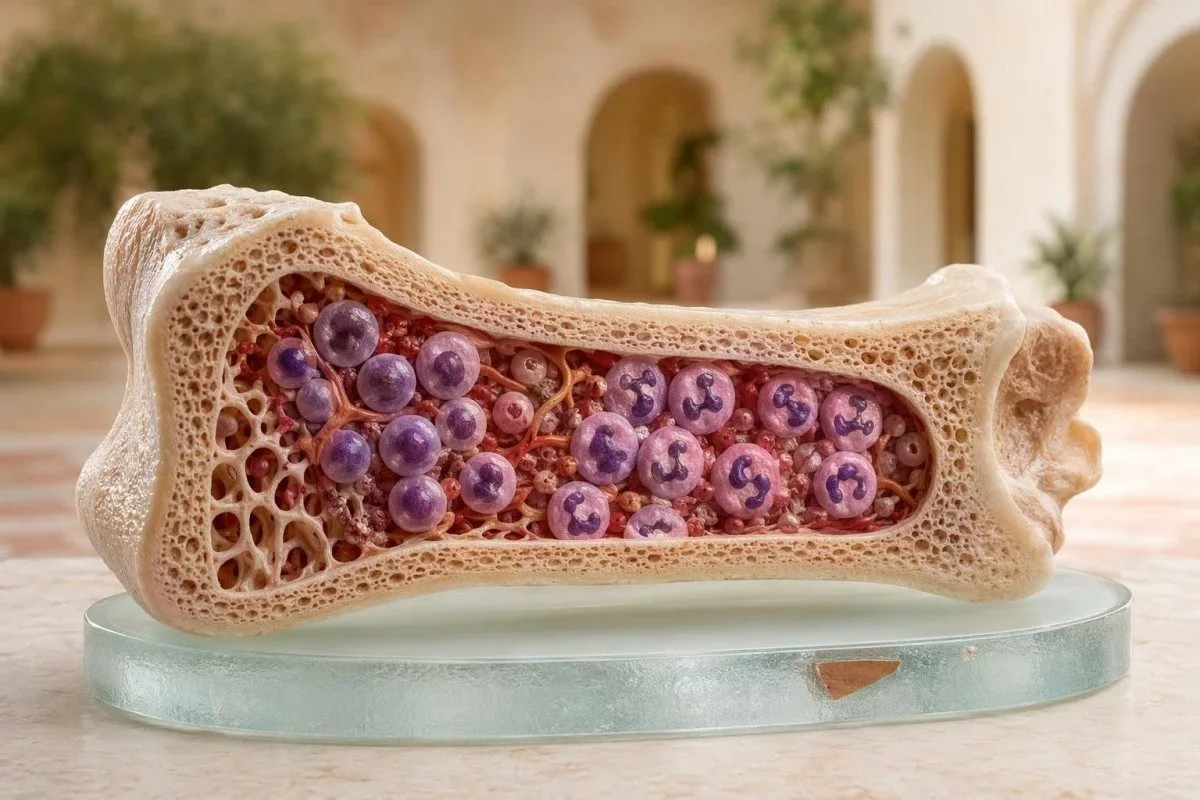
Bands are immature neutrophils released early when the marrow senses demand. The tricky part: a left shift can matter even when the total white blood cell count still looks ordinary.


- Band neutrophils are immature neutrophils; many adult labs call 0-5% normal, but methods differ sharply.
- Left shift CBC means younger granulocytes are entering circulation, usually from infection, tissue response, stress, medication effect, or marrow recovery.
- Bandemia over 10% is often treated as clinically meaningful, especially with fever, low blood pressure, confusion, or fast breathing.
- Normal WBC does not exclude risk; a WBC of 6.5 x10^9/L with 18% bands can be more concerning than a mild WBC rise without symptoms.
- ANC calculation usually includes segmented neutrophils plus bands: WBC x percent neutrophils plus bands divided by 100.
- Manual band counts vary between observers, so a repeat CBC, smear review, or immature granulocyte count may be more reliable than one isolated band percentage.
- Urgent follow-up is needed when bands are high with fever below 36 C or above 38 C, heart rate over 100, systolic blood pressure under 90, low platelets, or new confusion.
- Kantesti AI reads bands in context with WBC, ANC, lymphocytes, platelets, CRP, procalcitonin, medications, age, pregnancy, and prior trends.
What band neutrophils mean before the WBC rises
Band neutrophils on a CBC mean the bone marrow has released younger neutrophils into circulation because demand is rising. A left shift CBC can appear before, during, or after infection, tissue response, surgery, steroid exposure, vigorous stress, bleeding, or marrow recovery; it needs urgent review when symptoms or other labs suggest sepsis, even if the total WBC is only 5-10 x10^9/L.
When I review a panel with 14% bands and a WBC of 7.2 x10^9/L, I do not call it normal just because the total white count sits in range. On Kantesti AI, our first pass is pattern recognition: bands, absolute neutrophil count, lymphocyte suppression, platelet drift, CRP, temperature, medication history, and prior CBCs.
A left shift is not a diagnosis. It is a marrow signal. The useful question is why the marrow is being asked for immature granulocytes now, and whether that demand is benign, expected, or dangerous within the next 6-24 hours.
As of May 2, 2026, many automated differentials no longer report bands separately; they may report immature granulocytes instead. If your report has both, read our CBC differential guide before comparing percentages across labs.
Thomas Klein, MD, here: in clinical practice, the patients I worry about are not always the ones with WBC of 18 x10^9/L. I worry about the older adult with chills, a normal WBC, 22% bands, falling platelets, and a pulse of 112 — that pattern has teeth.
Bands, segmented neutrophils, and left shift ranges
Neutrophils are mature infection-fighting white cells, while band neutrophils are their less mature immediate precursors. In adults, many laboratories consider bands around 0-5% normal, but some labs report no band range at all because manual band identification is not very reproducible.
A typical adult WBC reference interval is about 4.0-11.0 x10^9/L, and a typical absolute neutrophil count is about 1.5-7.5 x10^9/L. The bands blood test result is usually a percentage of 100 counted white cells on a manual smear, although some laboratories also calculate an absolute band count.
The word left shift comes from older paper charts where immature granulocyte stages were placed to the left of mature segmented neutrophils. Kantesti links band results to our biomarker guide logic because the same percentage means different things at WBC 3.0 x10^9/L versus WBC 23.0 x10^9/L.
A band percentage above 10% is commonly called bandemia, and values above 20% are often treated as high-risk when the clinical picture fits infection or sepsis. Clinicians disagree on the exact cutoff; the evidence is useful but imperfect.
Some European and hospital laboratories prefer the automated immature granulocyte count, often reported as IG% or IG absolute, rather than a manual band count. That is not a downgrade — in many settings it is more consistent.
Why bands can rise before infection looks obvious
Band neutrophils can rise before a fever, high WBC, or positive culture appears because marrow release can outpace the visible changes on routine labs. The marrow has a reserve pool of neutrophil precursors, and inflammatory signals such as G-CSF, IL-6, and IL-8 can mobilize them within hours.
A classic scenario is the person who says, I felt off last night, then wakes with shaking chills and a CBC showing 16% bands but WBC 8.8 x10^9/L. The culture may still be negative at that point because bacteria, if present, have not reached detectable levels in the sampled site.
The marrow response is also influenced by age and baseline reserve. A healthy 24-year-old may produce a WBC of 15 x10^9/L quickly, while an 82-year-old or someone on chemotherapy may show a left shift with a WBC that barely moves.
The reason we pair bands with the absolute neutrophil count is simple: 18% bands at WBC 4.0 x10^9/L gives an absolute band count of 0.72 x10^9/L, while 18% at WBC 18.0 x10^9/L gives 3.24 x10^9/L. For mature neutrophilia patterns, our high neutrophils guide explains why absolute counts usually beat percentages.
Seebach and colleagues reported in the American Journal of Clinical Pathology that neutrophil left shift had diagnostic value for inflammatory and infectious disease, but not as a stand-alone test. That matches what I see: bands raise suspicion, they do not close the case.
Why a normal WBC with high bands can still matter
A normal WBC does not rule out clinically important bandemia. A WBC of 5.5-9.5 x10^9/L with 15-25% bands can occur in early bacterial infection, sepsis in older adults, immune suppression, marrow exhaustion, or recovery after a low-count phase.
Drees et al. studied patients with normal WBC counts and found that moderate bandemia of 11-19% and high bandemia of 20% or more were associated with higher odds of positive blood cultures and in-hospital death (Drees et al., 2012). Their adjusted odds ratios for positive blood cultures rose to about 3.8 with moderate bandemia and 6.2 with high bandemia.
That paper changed how many hospital clinicians treat the phrase normal white count. It did not mean every person with 12% bands needs antibiotics; it meant the clinical threshold for reassessment should drop, especially when vital signs are abnormal.
A normal WBC can be misleading because total WBC blends neutrophils, lymphocytes, monocytes, eosinophils, and basophils into one number. Our WBC normal range article shows why age, pregnancy, smoking, and steroid exposure can shift that baseline by 1-4 x10^9/L.
In our AI-powered blood test interpretation workflow, a normal WBC never cancels a high-risk band pattern. The model asks whether the marrow is compensating, failing, or being pharmacologically pushed.
Infection patterns that commonly produce a left shift
Bacterial infections are the classic cause of a left shift, especially pneumonia, urinary tract infection, cellulitis, appendicitis, diverticulitis, meningitis, and bloodstream infection. Viral illnesses can also alter neutrophils, but prominent bands above 10-20% push clinicians to look harder for bacterial or severe tissue response.
The practical difference is pattern. Bacterial pneumonia may show bands, high neutrophils, low lymphocytes, rising CRP, and sometimes low sodium; influenza may show low lymphocytes with a normal or low WBC and fewer bands unless there is secondary bacterial infection.
The Sepsis-3 consensus defined sepsis as life-threatening organ dysfunction caused by a dysregulated host response to infection, not merely a high WBC (Singer et al., 2016). That definition matters because a patient can have WBC 7.0 x10^9/L, 24% bands, confusion, and kidney injury — and still be very sick.
Cultures lag behind the CBC. Blood cultures often require 12-48 hours to flag positive, while a left shift may appear on the same day symptoms begin; our infection blood test comparison explains how CBC, CRP, and procalcitonin answer different questions.
I have seen uncomplicated dental infections produce 8-12% bands and deep abdominal infections produce 2% bands. The site, source control, immune status, and timing of the draw can matter as much as the band number.
Non-infectious inflammation and stress causes
A left shift can occur without infection after surgery, trauma, burns, seizures, major allergic reactions, pancreatitis, inflammatory bowel disease flares, vasculitis, gout attacks, and severe physical stress. In these cases, tissue response and cytokine release stimulate marrow output even when cultures are negative.
After major surgery, bands of 6-12% can be seen in the first 24-48 hours, particularly if the operation was long or tissue trauma was substantial. What bothers me is a second rise after day 3, especially with fever, wound changes, new pain, or oxygen needs.
Exercise can also nudge neutrophils upward. A 52-year-old marathon runner may show WBC 12.5 x10^9/L with mild bands after a hot race, while CRP and creatine kinase may rise over the next day; the story prevents overdiagnosis.
For chronic inflammatory patterns, bands are less specific than markers such as CRP, ESR, ferritin, and platelet count. Our guide to inflammation blood tests compares which markers move quickly and which lag by days.
Pancreatitis is a good example of why bands are a severity clue rather than an infection label. Early pancreatitis can produce a strong neutrophil response before any infected fluid collection exists.
Medications, pregnancy, newborns, and physiologic left shift
Medications and physiologic states can produce neutrophil changes that mimic infection. Corticosteroids usually cause mature neutrophilia through demargination, G-CSF can cause striking immature granulocytes, and pregnancy often raises neutrophils without meaning sepsis.
Prednisone 40-60 mg daily can raise the WBC by several x10^9/L within a day, often with proportionally fewer bands than bacterial infection. If bands are 20% on high-dose steroids, I still look for another driver.
G-CSF after chemotherapy is different. It can push immature granulocytes, bands, metamyelocytes, and even myelocytes into circulation; timing matters because the spike may occur 1-5 days after dosing depending on the formulation.
Pregnancy commonly increases WBC into the 10-16 x10^9/L range, especially in the third trimester and during labour. A left shift in pregnancy deserves symptom-based interpretation, and medication timing is exactly why our drug monitoring timeline asks about dose dates.
Newborns are their own world. A newborn may have WBC values that would alarm an adult clinician, and the immature-to-total neutrophil ratio is often more informative than the band percentage alone.
Manual band counts versus automated immature granulocytes
Manual band counts are less reproducible than most patients realise. Two trained reviewers can disagree about whether a neutrophil is a band or a segmented form, especially when the nucleus has a shallow indentation or the smear quality is imperfect.
Cornbleet reviewed the clinical utility of band counts and highlighted a long-standing problem: band identification is subjective, and the test performs best when interpreted with the rest of the CBC and clinical picture (Cornbleet, 2002). This is why a one-time 7% band result should not trigger panic.
Automated analyzers classify immature granulocytes using light scatter, fluorescence, conductivity, and cell complexity, depending on the instrument. The result may appear as IG%, IG absolute, or an immature granulocyte flag rather than bands.
If your lab switched from manual bands to IG%, your trend may look broken even when your physiology did not change. Our manual versus automated differential guide shows why method changes can create false trend alarms.
I usually trust direction more than a single decimal place. Bands moving from 3% to 18% over 12 hours means more to me than bands reported as 6% versus 8% by two different laboratories.
How bands affect the absolute neutrophil count
The absolute neutrophil count often includes segmented neutrophils plus bands. The usual formula is ANC = WBC x percent segmented neutrophils plus percent bands divided by 100, so a WBC of 8.0 x10^9/L with 60% segmented neutrophils and 10% bands gives an ANC of 5.6 x10^9/L.
ANC matters because infection risk rises when neutrophils are low, while inflammation or stress may drive them high. Mild neutropenia is roughly 1.0-1.5 x10^9/L, moderate is 0.5-1.0 x10^9/L, and severe is below 0.5 x10^9/L.
A person can have bandemia and neutropenia at the same time. WBC 2.0 x10^9/L with 20% bands and 20% segmented neutrophils gives an ANC of 0.8 x10^9/L, which is not reassuring; it may mean the marrow is trying but cannot keep up.
This is where the bands blood test becomes a production marker, not just an infection marker. If you are tracking low counts, our low neutrophils guide explains when ANC thresholds change fever management.
Kantesti AI calculates absolute counts when the uploaded report provides enough data, because percentages alone can mislead. A 15% band result can be tiny or large depending on the denominator.
CBC clues that change what a left shift means
Bands become more meaningful when they travel with other CBC abnormalities. Low lymphocytes, falling platelets, toxic granulation, Dohle bodies, vacuolated neutrophils, anemia, or a rising neutrophil-to-lymphocyte ratio can shift a left shift from mild curiosity to urgent pattern.
Toxic granulation and Dohle bodies are not toxins floating in the blood; they are reactive neutrophil changes seen during accelerated granulopoiesis and intense immune activation. They often carry more clinical weight than a borderline band percentage.
Platelets deserve attention. A platelet fall from 240 to 115 x10^9/L alongside 18% bands can suggest systemic illness, consumption, drug effect, or marrow stress, depending on timing.
The neutrophil-to-lymphocyte ratio is a rough stress and inflammation marker, not a diagnosis. Our neutrophil lymphocyte ratio article explains why an NLR above 6-8 may be concerning in acute illness but nonspecific in chronic stress.
A smear showing blasts, very high immature forms, basophilia, or unexplained anemia is a different conversation. That pattern may require hematology review rather than infection-only thinking.
CRP, procalcitonin, lactate, and chemistry context
Bands should be interpreted with inflammatory and chemistry markers when available. CRP above 50 mg/L, procalcitonin above 0.5 ng/mL, lactate above 2 mmol/L, rising creatinine, low bicarbonate, or abnormal bilirubin can make a left shift far more concerning.
CRP rises slowly, often peaking around 36-50 hours after a stimulus, so early bacterial infection may show bands before CRP is dramatic. Procalcitonin can rise within 6-12 hours in many bacterial infections, but it is imperfect in kidney disease, trauma, and some inflammatory states.
Lactate is not an infection test; it is a perfusion and stress marker. A lactate of 2.5 mmol/L with bands and low blood pressure is far more urgent than the same band count in a well-appearing patient after a long run.
Chemistry panels catch organ stress that CBC alone misses. Our high WBC patterns guide pairs CBC findings with kidney, liver, electrolyte, and acid-base clues because sepsis often announces itself across several panels.
The evidence here is honestly mixed for any single biomarker. The safer clinical move is pattern stacking: bands plus symptoms plus organ markers beats bands alone.
What to do when bands are flagged on your report
A band flag needs action based on symptoms, not panic based on the percentage alone. If bands are above 10% with fever, chills, worsening pain, shortness of breath, confusion, fainting, heart rate above 100, or systolic blood pressure below 90 mmHg, seek same-day medical assessment.
If you feel well and bands are mildly elevated at 6-10%, a repeat CBC in 24-72 hours is often reasonable, especially after exercise, a recent procedure, or a known viral illness. Your clinician may add CRP, procalcitonin, urinalysis, chest imaging, or cultures only if the story points there.
If you feel unwell, do not wait for an app or online explanation. New confusion, blue lips, severe breathlessness, neck stiffness, persistent vomiting, severe abdominal pain, or a fever with ANC below 1.0 x10^9/L belongs in urgent care or emergency assessment.
For non-urgent interpretation, you can upload your CBC to free blood test analysis and our AI will identify whether the band result is isolated or part of a larger pattern. It is not a replacement for emergency care, and we say that plainly.
A practical repeat rule: compare the same lab method whenever possible. Our repeat abnormal labs guide explains when a 24-hour repeat is useful and when a 2-4 week follow-up is safer.
High-risk groups where left shift deserves extra caution
Older adults, newborns, pregnant patients, chemotherapy patients, transplant recipients, and people taking immune-suppressing drugs need a lower threshold for follow-up. In these groups, infection can be severe with WBC still between 4.0 and 11.0 x10^9/L.
Older adults may not mount a fever; a temperature of 36.0 C with confusion can be as concerning as 39.0 C in a younger adult. A left shift in this setting should be read with blood pressure, oxygen saturation, kidney function, and baseline cognition.
Chemotherapy patients can have a dangerous pattern: low ANC with a left shift, meaning the marrow is releasing immature forms but total neutrophil supply remains inadequate. Fever of 38.0 C or higher with ANC below 0.5 x10^9/L is treated as a medical emergency in most oncology pathways.
Newborn CBCs are age-specific, and adult band cutoffs do not apply cleanly. Parents should pair CBC questions with neonatal advice; our newborn blood tests guide explains why timing after birth changes interpretation.
When the smear shows blasts, persistent unexplained immature granulocytes, or very high WBC above 50 x10^9/L, clinicians consider marrow disorders as well as infection. Our leukemia CBC patterns article covers the CBC clues that should not be dismissed as a simple left shift.
How Kantesti interprets left shift patterns safely
Kantesti AI interprets neutrophils by combining the band result with CBC context, chemistry markers, patient age, pregnancy status, medications, symptoms, and prior trends. Our platform does not label bandemia as infection automatically; it ranks plausible explanations and flags urgent patterns.
Our AI blood test platform reads PDF and photo uploads in about 60 seconds, but speed is not the clinical point. The point is reducing the common error of reading 18% bands as either harmless because WBC is normal or catastrophic because the word immature appears.
Kantesti AI applies clinical guardrails reviewed against our medical validation standards and physician oversight. We also publish validation work, including the Kantesti AI Engine benchmark, because lab interpretation needs measurable safety checks rather than marketing claims.
A typical output may say: left shift present, WBC not elevated, ANC adequate, platelets falling, CRP high, urgent review advised if fever or low blood pressure is present. That is more useful than a generic paragraph about neutrophils.
For readers comparing app output with clinician advice, our AI interpretation blind spots article is deliberately frank. Algorithms do not examine you, listen to your lungs, or notice that you look septic from the doorway.
Why trends beat one band percentage
A left shift trend is usually more informative than a single band percentage. Bands rising from 4% to 18% over 12-24 hours suggests increasing marrow demand, while bands falling from 22% to 8% with improving vital signs often suggests recovery.
Timing can reverse interpretation. After antibiotics or source control, bands may stay high for a day while fever improves; after chemotherapy, bands may rise because the marrow is recovering rather than worsening.
I ask patients for three dates: symptom start, medication start, and blood draw time. Without those, a left shift is a snapshot with the clock missing.
Trend interpretation also protects against lab-method noise. If one lab reports bands manually and the next reports IG%, the values are related but not interchangeable; our blood test variability guide explains how to spot a real biological change.
Kantesti stores previous uploads so our AI can compare your usual WBC and ANC baseline against the current report. A WBC of 10.5 x10^9/L may be normal for one person and a 2-fold jump for another.
Kantesti research notes and publication links
Kantesti treats CBC interpretation as a clinical pattern problem, not a single-marker lookup. Our physician-reviewed content and research notes connect neutrophils, bands, red cell indices, kidney chemistry, and longitudinal lab trends so patients can understand what deserves follow-up.
Kantesti LTD is a UK health technology company, and our medical content is reviewed with input from clinicians listed on our Medical Advisory Board. I am Thomas Klein, MD, Chief Medical Officer, and I would rather tell you when a band count is uncertain than pretend one cutoff solves every case.
Formal APA citation: Kantesti Medical Research Group. (2026). RDW Blood Test: Complete Guide to RDW-CV, MCV & MCHC. Zenodo. https://doi.org/10.5281/zenodo.18202598. Supporting links: ResearchGate record and Academia.edu record.
Formal APA citation: Kantesti Medical Research Group. (2026). BUN/Creatinine Ratio Explained: Kidney Function Test Guide. Zenodo. https://doi.org/10.5281/zenodo.18207872. Supporting links: ResearchGate record and Academia.edu record.
Bottom line: band neutrophils are a useful early warning sign only when interpreted with the person, the timing, and the rest of the report. If you want a structured read of your CBC, start with our AI blood test platform, then bring urgent symptoms directly to a clinician.
Frequently Asked Questions
What are band neutrophils in a blood test?
Band neutrophils are immature neutrophils released from the bone marrow before they fully mature into segmented neutrophils. Many adult laboratories consider 0-5% bands normal, although some labs do not report bands separately. A higher band percentage suggests increased marrow demand from infection, tissue response, medication effect, stress, or recovery. The result should be interpreted with the total WBC, ANC, symptoms, and timing of the test.
Is 10% bands serious if my WBC is normal?
Bands around 10% can be clinically meaningful even when the WBC is normal at 4.0-11.0 x10^9/L. Research by Drees et al. found that 11-19% bands and 20% or higher bands in patients with normal WBC counts were associated with higher odds of positive blood cultures and death. A well-appearing person with 10% bands may simply need a repeat CBC, but fever, chills, confusion, low blood pressure, or fast breathing should prompt same-day medical review.
What does left shift CBC mean?
A left shift CBC means younger granulocytes, usually band neutrophils or immature granulocytes, are present in higher-than-expected amounts. It most often reflects increased marrow output from bacterial infection, major inflammation, surgery, trauma, medications such as G-CSF, or marrow recovery. Many clinicians treat bands above 10% as bandemia, but exact cutoffs vary by laboratory and method. The safest interpretation uses the band result alongside WBC, ANC, platelets, CRP, procalcitonin, and symptoms.
Can stress or steroids cause band neutrophils?
Stress and steroids can change neutrophil results, but they do not always create the same pattern as infection. Corticosteroids commonly raise mature neutrophils by demargination and may increase WBC by several x10^9/L within 24 hours, often with relatively fewer bands. Severe physical stress, seizures, trauma, burns, and surgery can produce a true left shift because tissue response signals stimulate marrow release. G-CSF can cause much larger immature granulocyte and band increases, especially after chemotherapy.
When should band neutrophils need urgent care?
Band neutrophils need urgent care when they are high, especially above 10-20%, and occur with fever above 38 C, temperature below 36 C, heart rate above 100, systolic blood pressure below 90 mmHg, confusion, severe pain, shortness of breath, or fainting. Urgency is even higher if ANC is below 1.0 x10^9/L, platelets are falling, lactate is above 2 mmol/L, or kidney function is worsening. A normal WBC does not make those patterns safe. If symptoms are severe, seek emergency assessment rather than waiting for repeat labs.
Do automated CBC machines report bands?
Many automated CBC analyzers do not report bands as a separate category unless a manual differential is performed. Instead, they may report immature granulocytes as IG% or IG absolute, which includes early granulocyte forms but is not identical to a manual band count. Manual band counts can vary between reviewers, especially near the boundary between band and segmented neutrophils. If your lab changed methods, trends should be compared cautiously.
How do I calculate ANC when bands are listed?
ANC is usually calculated as WBC multiplied by the percentage of segmented neutrophils plus bands, divided by 100. For example, WBC 6.0 x10^9/L with 55% segmented neutrophils and 8% bands gives an ANC of 3.78 x10^9/L. Mild neutropenia is about 1.0-1.5 x10^9/L, moderate neutropenia is 0.5-1.0 x10^9/L, and severe neutropenia is below 0.5 x10^9/L. Low ANC with fever is a higher-risk pattern than bandemia alone.
Get AI-Powered Blood Test Analysis Today
Join over 2 million users worldwide who trust Kantesti for instant, accurate lab test analysis. Upload your blood test results and receive comprehensive interpretation of 15,000+ biomarkers in seconds.
📚 Referenced Research Publications
Klein, T., Mitchell, S., & Weber, H. (2026). RDW Blood Test: Complete Guide to RDW-CV, MCV & MCHC. Kantesti AI Medical Research.
Klein, T., Mitchell, S., & Weber, H. (2026). BUN/Creatinine Ratio Explained: Kidney Function Test Guide. Kantesti AI Medical Research.
📖 External Medical References
Cornbleet PJ (2002). Clinical utility of the band count. Clinics in Laboratory Medicine.
⚕️ Medical Disclaimer
This article is for educational purposes only and does not constitute medical advice. Always consult a qualified healthcare provider for diagnosis and treatment decisions.
E-E-A-T Trust Signals
Experience
Physician-led clinical review of lab interpretation workflows.
Expertise
Laboratory medicine focus on how biomarkers behave in clinical context.
Authoritativeness
Written by Dr. Thomas Klein with review by Dr. Sarah Mitchell and Prof. Dr. Hans Weber.
Trustworthiness
Evidence-based interpretation with clear follow-up pathways to reduce alarm.