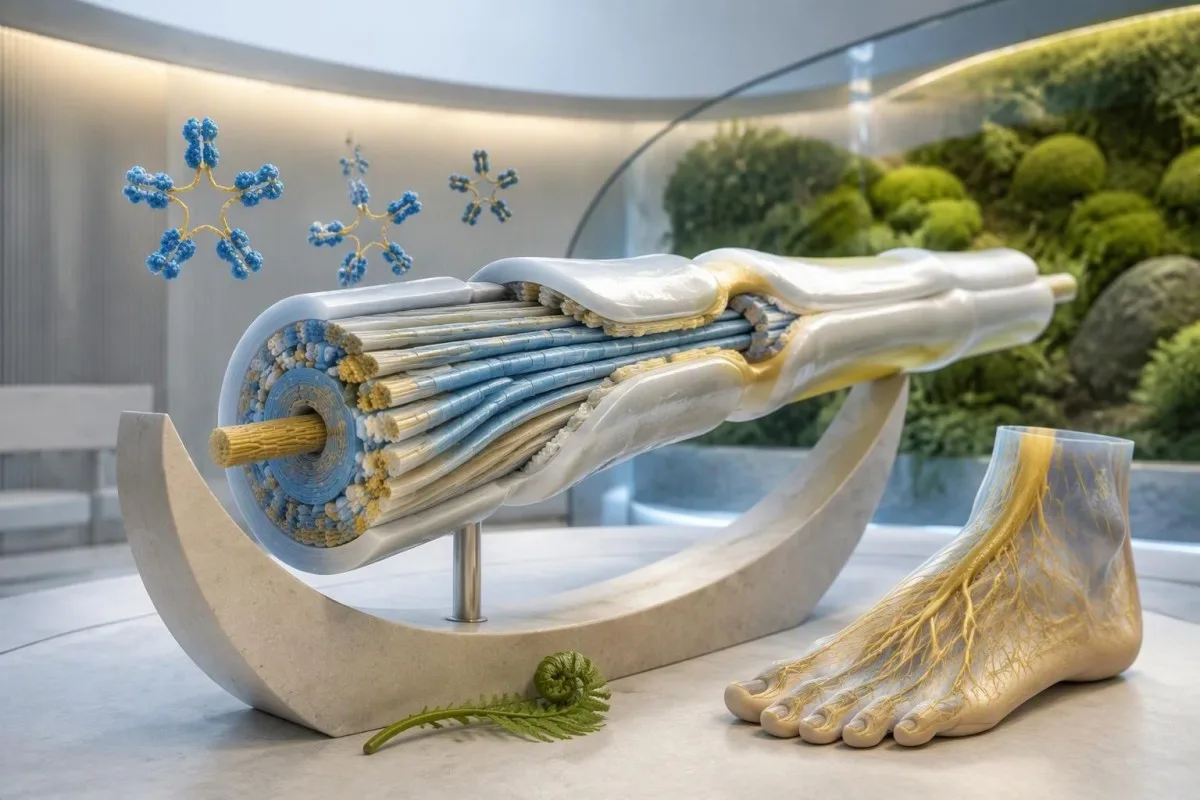
Anti-MAG antitanachalarining yuqori darajasi simptomlar, nerv o‘tkazuvchanligi tekshiruvi natijalari va IgM ishlab chiqaruvchi klon o‘zaro mos kelganda oyoqlarning uvishishini izohlashga yordam berishi mumkin. Past-musbat natija — yoki bu manzarasiz juda yuqori natija ham — tashxis hisoblanmaydi.

Asosiy xulosalar
- Anti-MAG antitanachalari distal sezgi alomatlari, demiyelinizatsion nerv o‘tkazuvchanligi natijalari va odatda monoklonal IgM birgalikda kuzatilganda, muayyan immun vositasida yuzaga keladigan periferik neyropatiyani tasdiqlaydi.
- Antitanachalar uchun chegaraviy qiymatlar tahlil usuliga bog‘liq: bir tijoriy ELISA testida taxminan 1,000 BTU dan past natija odatda manfiy hisoblanadi, 7,000 BTU dan yuqori natijalar esa tashxisni kuchliroq qo‘llab-quvvatlaydi.
- Past-musbat natijalar 1,000–7,000 BTU atrofida boshqa neyropatiyalar bilan ustma-ust kelishi mumkin; bu oraliq mustaqil tashxis qo‘yish uchun ishonchli emas va laboratoriyalar uchun universal ta’rif hisoblanmaydi.
- Odatdagi alomatlar bir necha oydan bir necha yilgacha bo‘lgan davrda rivojlanadi: oyoqlarda simmetrik uvishish, vibratsiya sezgisining pasayishi, muvozanatni saqlash qiyinlashishi va ba’zan qo‘l titrashi; mushak kuchsizligi ko‘pincha keyinroq paydo bo‘ladi.
- Nerv o‘tkazuvchanligi tekshiruvlari miyelin disfunksiyasi xususiyatini baholaydi; rivojlangan anti-MAG neyropatiyasi aksonlar yo‘qolishiga ham olib kelishi mumkin, bu esa talqinni murakkablashtiradi.
- Monoklonal IgM zardob oqsillarini elektroforez va immunofiksatsiya usulida tekshirishni talab qiladi; umumiy IgM konsentratsiyasining me’yorda bo‘lishi kichik monoklonal bandni istisno etmaydi.
- Muqobil sabablar qandli diabet, B12 vitamini tanqisligi, alkogol ta’siri, dori vositalarining ta’siri va nerv siqilishini o‘z ichiga oladi; antitana musbatligi bu ehtimollarni bartaraf etmaydi.
- Davolash bo‘yicha qarorlar faqat antitana miqdoriga emas, kasallikning rivojlanishi va nogironlik darajasiga bog‘liq; 54 ishtirokchi qatnashgan rituksimab sinovi birlamchi samaradorlik mezoniga erisha olmadi.
- Shoshilinch belgilar masalan, kuchsizlikning tez kuchayishi, nafas olish qiyinlashishi yoki siydik pufagi faoliyatining yangi buzilishi boshqa antitana natijasini kutmasdan zudlik bilan baholashni talab qiladi.
Anti-MAG antitanachalarining yuqori darajasi oyoqlarning uvishishini qachon izohlaydi?
Ko‘rik va nerv o‘tkazuvchanligi tekshiruvlari distal, odatda demiyelinizatsiyalovchi neyropatiyaga mos kelsa, anti-MAG antitanalarining yuqori darajasi anti-MAG neyropatiyasi ehtimolini qo‘llab-quvvatlaydi. Monoklonal IgM aniqlanishi ushbu taxminni kuchaytiradi, biroq antitana natijasi ham, IgM bandi ham oyoqlarning uvishish sababini o‘z-o‘zicha aniqlay olmaydi.
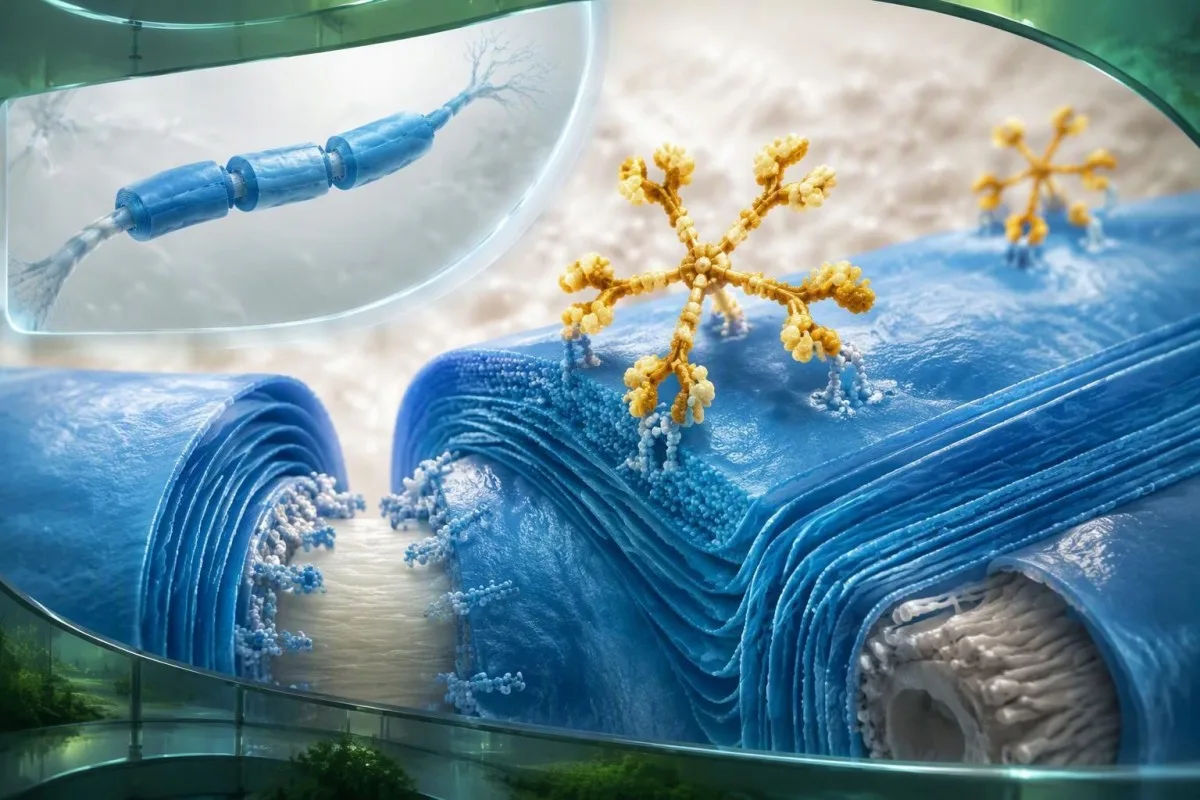
Anti-MAG antitanalari odatda IgM antitanalari sinfiga kiradi va periferik nervlar atrofidagi izolyatsiyalovchi qobiq bilan bog‘liq oqsil — miyelin bilan bog‘liq glikoproteinni taniydi. MAG vitamin ham, muntazam tekshiriladigan yallig‘lanish markeri ham emas; antitana musbatligi glyukoza, B12 yoki C-reaktiv oqsil tahlillari javob beradigan savoldan boshqa savolga javob beradi.
Tashxis o‘zaro bog‘liq 3 sohaga asoslanadi: simptomlar xususiyati, elektrofiziologik tekshiruv va laboratoriya dalillari. Ushbu sohalar o‘rtasidagi kuchli muvofiqlik ishonchni oshiradi; nomuvofiqlik esa avtomatik ravishda immun neyropatiyasi tashxisini qo‘yish o‘rniga, boshqa izoh, birga kechayotgan kasallik yoki tahlil cheklovini izlashga undashi kerak.
Muvozanati asta-sekin yomonlashayotgan, oyoq bosh barmoqlarida vibratsiya sezgisi pasaygan va distal nerv latensiyalari yaqqol uzaygan, faraziy 68 yoshli bemorda 7,000 BTU dan yuqori natija tor poyabzal kiyganidan keyin bitta oyoq barmog‘i uvishgan kishidagiga qaraganda diagnostik jihatdan ko‘proq ahamiyatga ega. Aniqlash va tashxis o‘rtasidagi bu farqni ijobiy antitana natijasining talqini qo‘llanmamiz tushuntiradi.
Kantesti — antitana natijalarini tegishli laboratoriya topilmalari bilan birgalikda tartibga solishga yordam beradigan sun’iy intellektli qon tahlili analizatori, biroq ko‘rik va nerv o‘tkazuvchanligi tekshiruvi faqat qon tahliliga asoslangan baholash doirasiga kirmaydi. bizning tashkilotimiz haqida ko‘proq o‘qishingiz mumkin. xizmatni kim ko‘rsatishini tushuntiradi; sun’iy intellekt talqini bu kam uchraydigan holat bo‘yicha mutaxassis tasdig‘ining o‘rnini bosmasligi kerak.
Anti-MAG neyropatiyasining qaysi alomatlari ushbu holatga mos keladi?
Anti-MAG neyropatiyasi simptomlari odatda oyoqlarda sekin rivojlanadigan, simmetrik sezgi o‘zgarishlari bilan boshlanadi, ayniqsa uvishish, vibratsiyani sezishning pasayishi va beqarorlik bilan. Bu holat odatda bir necha soat ichida emas, oylar yoki yillar davomida rivojlanadi; dastlab mushak kuchsizligi sezgi buzilishiga qaraganda kamroq yaqqol bo‘lishi mumkin.
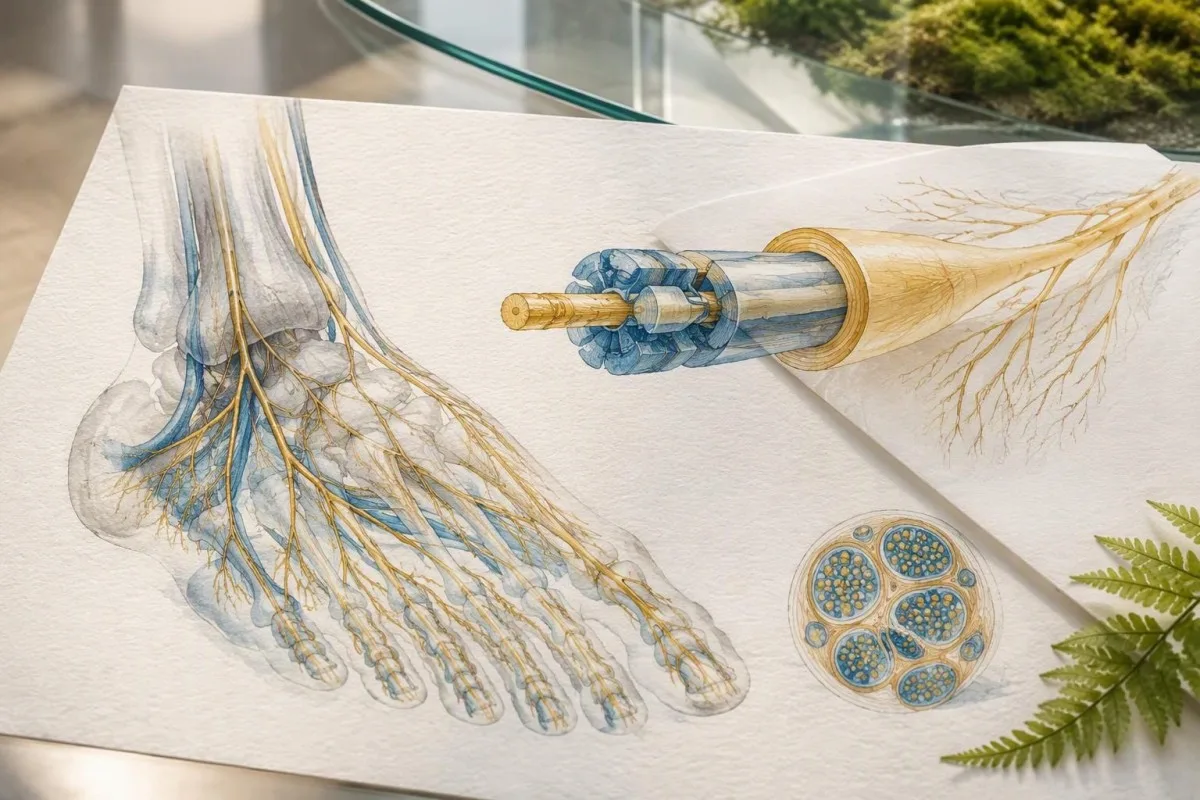
Sezgi holatni anglash yo‘qolishi xira yorug‘likda yurishni qiyinlashtirishi mumkin, chunki ko‘rish oyoqlardan keladigan ishonchsiz sezgi axborotining o‘rnini qoplaydi. Mushak kuchi nisbatan saqlangan bo‘lsa ham, odam o‘zini go‘yo yumshoq yostiqlar ustida yurgandek yoki oyoqlari qayerga tushayotganiga kamroq ishonch hosil qilayotgandek his qilishi mumkin.
Tremor kuzatilishi mumkin bo‘lgan qo‘shimcha belgidir, ayniqsa qo‘llarda, ammo tremorning o‘zi anti-MAG kasalligini aniqlamaydi. Oyoqlari 3 yil davomida uvishib kelgan va yaqinda qo‘l tremori paydo bo‘lgan faraziy odamning tekshiruv yo‘li faqat uzoq yillardan beri davom etayotgan oilaviy tremori bor kishinikidan farq qiladi.
The distribution helps separate generalized neuropathy from focal compression. Symptoms restricted to selected fingers, especially at night, can suggest carpal tunnel nerve compression, whereas length-dependent neuropathy usually affects the feet before substantial hand involvement; both conditions can exist in the same person.
Pain does not rule out anti-MAG neuropathy, but intense burning pain with normal routine nerve conduction results should also raise consideration of small-fiber neuropathy. Record 3 practical observations before review: whether symptoms are symmetric, how balance has changed and whether weakness is genuinely increasing rather than simply feeling fatigued.
Anti-MAG antitanachalari darajasi qanday talqin qilinishi kerak?
Anti MAG antibody levels must be interpreted using the laboratory's assay and units. For one commonly used ELISA reported in Bühlmann titer units, approximately 1,000 BTU is the manufacturer's positivity threshold, while levels above 7,000 BTU provide stronger support for anti-MAG neuropathy in the appropriate clinical setting.
Liberatore et al. (2020), in the Journal of Neuroimmunology, evaluated the diagnostic performance of a commercial anti-MAG ELISA and described a diagnostic gray zone between 1,500 and 7,000 BTU. Their findings explain why a laboratory can correctly flag a positive result that still does not provide sufficient specificity for a clinical diagnosis.
The 2021 EAN/PNS CIDP guideline identifies high anti-MAG titers above 7,000 BTU as strongly suggesting a diagnosis other than CIDP when the relevant assay is used (Van den Bergh et al., 2021). That threshold helps distinguish disease categories; it is not an emergency-treatment threshold or a measure of how much nerve function remains.
Results expressed as a dilution titer, an index or another laboratory's arbitrary units cannot be converted reliably into BTU using a simple formula. The distinction between сифат ва миқдорий натижалар matters here: the words positive and high may conceal very different analytical methods.
A hypothetical report reading greater than 70,000 BTU may reflect the assay's reporting ceiling rather than an exact concentration. Ask whether dilution testing was performed before comparing that result with a later numerical value; a change from greater than 70,000 to 60,000 does not establish a precisely measurable percentage reduction.
| Daraja | Diapazon | Bu nimani anglatadi |
|---|---|---|
| Usually negative on this ELISA | Below approximately 1,000 BTU | Does not support anti-MAG neuropathy on this assay; other causes of neuropathy still require assessment. |
| Low-positive near the assay cutoff | Approximately 1,000–1,499 BTU | Limited diagnostic specificity; assess why testing was ordered and whether the nerve pattern fits. |
| Overlapping diagnostic range | Approximately 1,500–7,000 BTU | Compatible results can occur in different neuropathies; clinical and electrophysiological correlation is necessary. |
| Stronger diagnostic support | Above 7,000 BTU | Supports anti-MAG neuropathy when the clinical pattern fits; does not independently indicate severity or urgency. |
Nega past-musbat anti-MAG natijasi chalg‘itishi mumkin?
A low-positive anti-MAG result may be incidental, analytically nonspecific or associated with a different neuropathy. Its meaning depends heavily on the probability of anti-MAG disease before testing, so broad antibody screening in someone with nonspecific tingling creates more interpretive problems than targeted testing after a neurological assessment.

A test's specificity does not guarantee that every positive result represents disease. Consider a purely hypothetical screening test with 95% sensitivity and 95% specificity in 1,000 people, only 10 of whom have the target condition: it would produce roughly 10 true positives and 50 false positives.
Those example percentages are not measured performance estimates for anti-MAG testing; they demonstrate why low disease prevalence changes the meaning of a positive result. At Kantesti, we explain a flagged antibody as a finding to reconcile with other evidence, not proof that it caused the person's symptoms.
A similar interpretive problem occurs with low-positive MOG antibody findings, although MOG and MAG identify different proteins and disorders. Shared naming does not make the tests interchangeable, and a positive result for one cannot confirm a condition associated with the other.
If a hypothetical result of 1,200 BTU conflicts with an entirely axonal, diabetes-compatible neuropathy, clinicians may review the original method, repeat testing or seek specialist laboratory advice. Repeating an antibody panel every few weeks without a specific question is less useful than confirming whether the phenotype actually supports anti-MAG disease.
Nerv o‘tkazuvchanligi tekshiruvlari tashxisga qanday hissa qo‘shadi?
Nerve conduction studies establish whether numb feet reflect large-fiber neuropathy and whether the electrical pattern suggests myelin dysfunction. Anti-MAG neuropathy commonly shows disproportionately slowed conduction in distal nerve segments, prolonged distal motor latencies and reduced or absent sensory responses; the whole pattern matters more than one abnormal value.
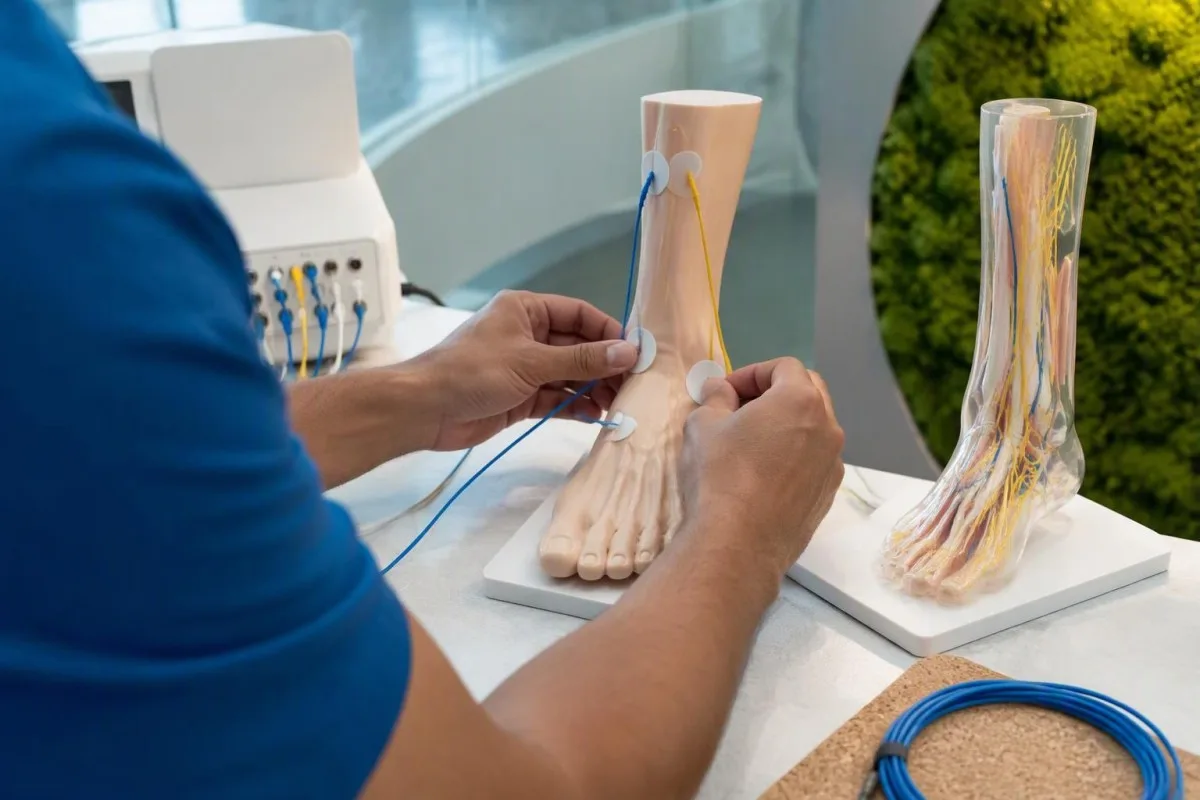
The distal motor latency measures how long a stimulated signal takes to reach a muscle from a distal stimulation site. A hypothetical latency of 7.2 milliseconds against that laboratory's upper limit of 4.5 milliseconds suggests slowing, but it cannot establish anti-MAG neuropathy without reviewing other nerves, distances and technical conditions.
Cold limbs can falsely prolong latency and slow conduction, so temperature control is part of a reliable examination. Common technical targets are at least approximately 32°C for the hands and 30°C for the feet, although laboratories follow their own protocols and should document whether warming was needed.
Severe anti-MAG neuropathy can involve secondary axonal loss, leaving responses too small or absent for standard demyelination criteria to be demonstrated cleanly. An advanced study that appears partly axonal therefore does not automatically exclude the condition; earlier recordings and the distribution of surviving responses may become especially useful.
A neurofilament light chain result cannot replace nerve conduction testing because it does not localize or classify the neuropathy in the same way. Ask for the specialist's written interpretation—not just a page of numbers—and whether the findings are distal-predominant, generalized, focal or technically limited.
Anti-MAG neyropatiyasi CIDP yoki MS dan qanday farq qiladi?
Anti-MAG neuropathy is generally distinguished from CIDP and is not the same disorder as multiple sclerosis. Anti-MAG disease predominantly affects peripheral nerves; MS affects the central nervous system, while CIDP is another immune-mediated peripheral neuropathy with different diagnostic criteria and often different treatment responsiveness.
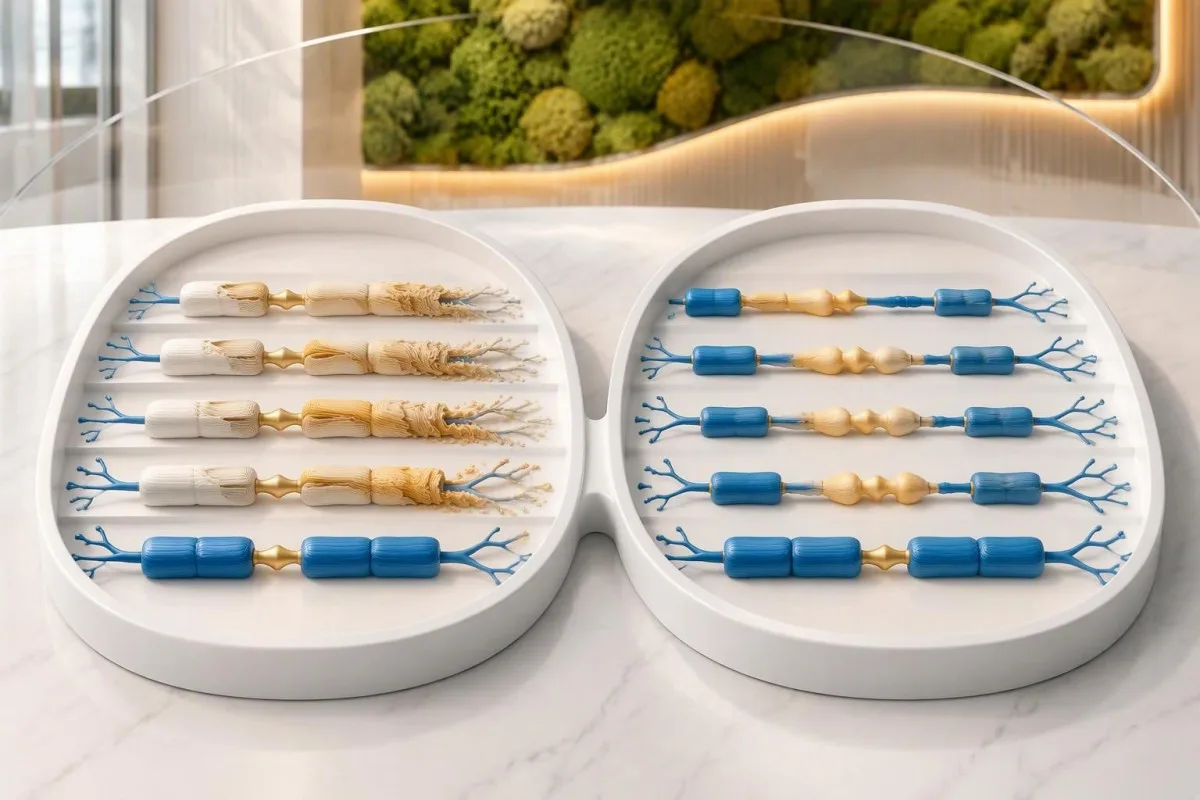
The typical anti-MAG phenotype is sometimes described as distal acquired demyelinating symmetric neuropathy, or DADS. By contrast, typical CIDP commonly causes both proximal and distal weakness, although distal CIDP variants exist; this overlap is one reason an IgM-associated distal phenotype needs more than a diagnostic label from electrophysiology alone.
The EAN/PNS guideline recommends considering anti-MAG testing when a person with an IgM paraprotein meets CIDP criteria, especially in a distal presentation (Van den Bergh et al., 2021). Its greater-than-7,000-BTU discussion concerns disease differentiation, not the assumption that any positive anti-MAG result invalidates every possible CIDP diagnosis.
A spinal fluid protein elevation is not specific enough to settle the distinction by itself. Likewise, oligoklonal tasmalarga tekshiruv answer a different neurological question; neither a CSF finding nor an MRI abnormality should be treated as confirmation that an anti-MAG result explains distal numbness.
Treatment response also requires care in interpretation: limited benefit from IVIG may fit anti-MAG disease, but response or nonresponse alone cannot classify a neuropathy. For a hypothetical person whose diagnosis changes after 2 specialist reviews, the useful question is which examination, antibody and nerve-study findings justified the reclassification.
Nega anti-MAG kasalligida monoklonal IgM muhim?
Monoclonal IgM matters because an antibody-producing cell clone can generate the anti-MAG antibody associated with nerve dysfunction. Many affected people have an IgM monoclonal gammopathy, but an IgM band is not automatically a cancer diagnosis, and an incidental clone does not automatically explain a neuropathy.
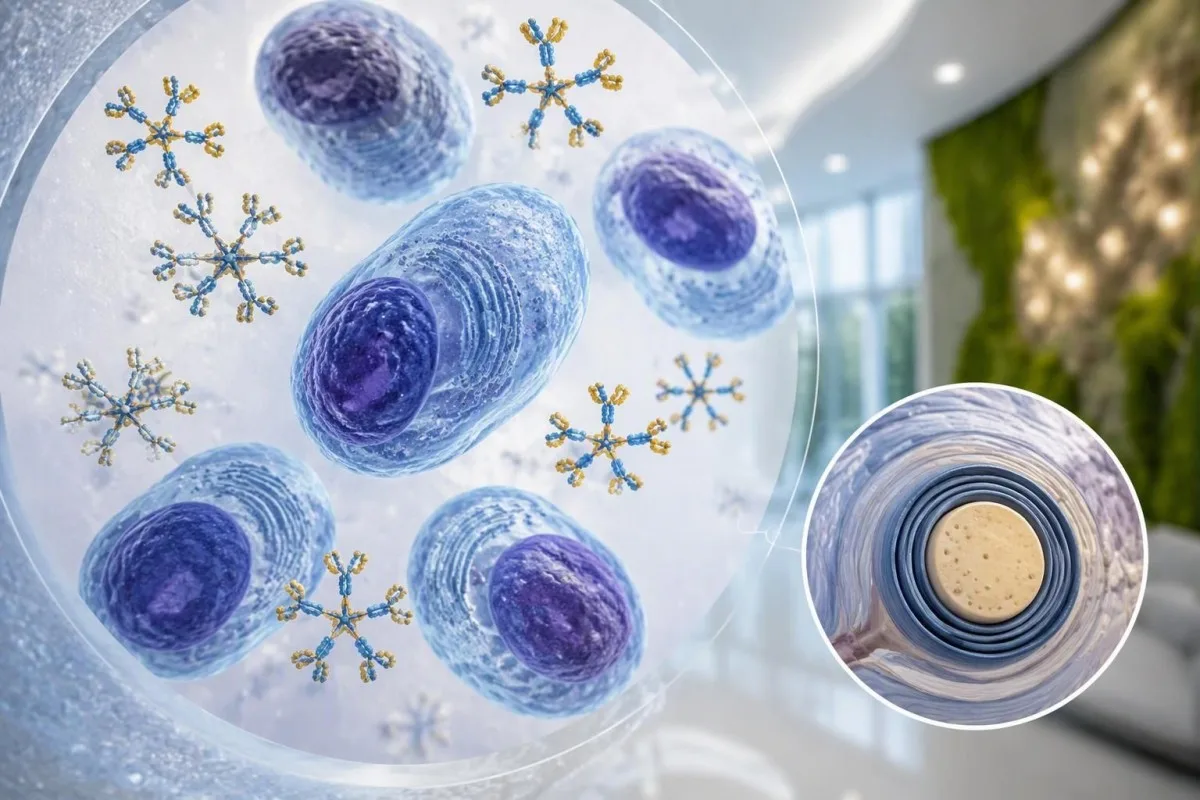
Serum protein electrophoresis estimates a monoclonal protein when it is detectable, while immunofixation identifies its immunoglobulin type and light-chain restriction. A small band may appear on immunofixation testing even when electrophoresis does not show a clearly quantifiable M-spike, so the two tests are complementary rather than redundant.
A common adult total IgM reference interval is approximately 0.4–2.3 g/L, with laboratory-specific variation. A normal total IgM does not exclude a small monoclonal IgM band, while a high total IgM may be polyclonal; our immunoglobulinlar paneli haqidagi izohimiz separates antibody quantity from clonality.
Hematology assessment determines whether the clone represents an IgM monoclonal gammopathy or a condition such as Waldenström macroglobulinemia, using the broader clinical and laboratory picture. Marrow assessment or imaging may be appropriate, but neither is automatically required solely because one antibody test is positive; anemia, organ enlargement and other features influence the decision.
A hypothetical monoclonal protein of 0.5 g/L can still warrant attention if its antibody has a credible nerve-directed effect. Conversely, a larger IgM concentration can coexist with unrelated diabetic neuropathy; clone size, antibody specificity and neurological disability answer different questions and should not be collapsed into one severity score.
Anti-MAG tekshiruvi bilan odatda qaysi qon tahlillari o‘tkaziladi?
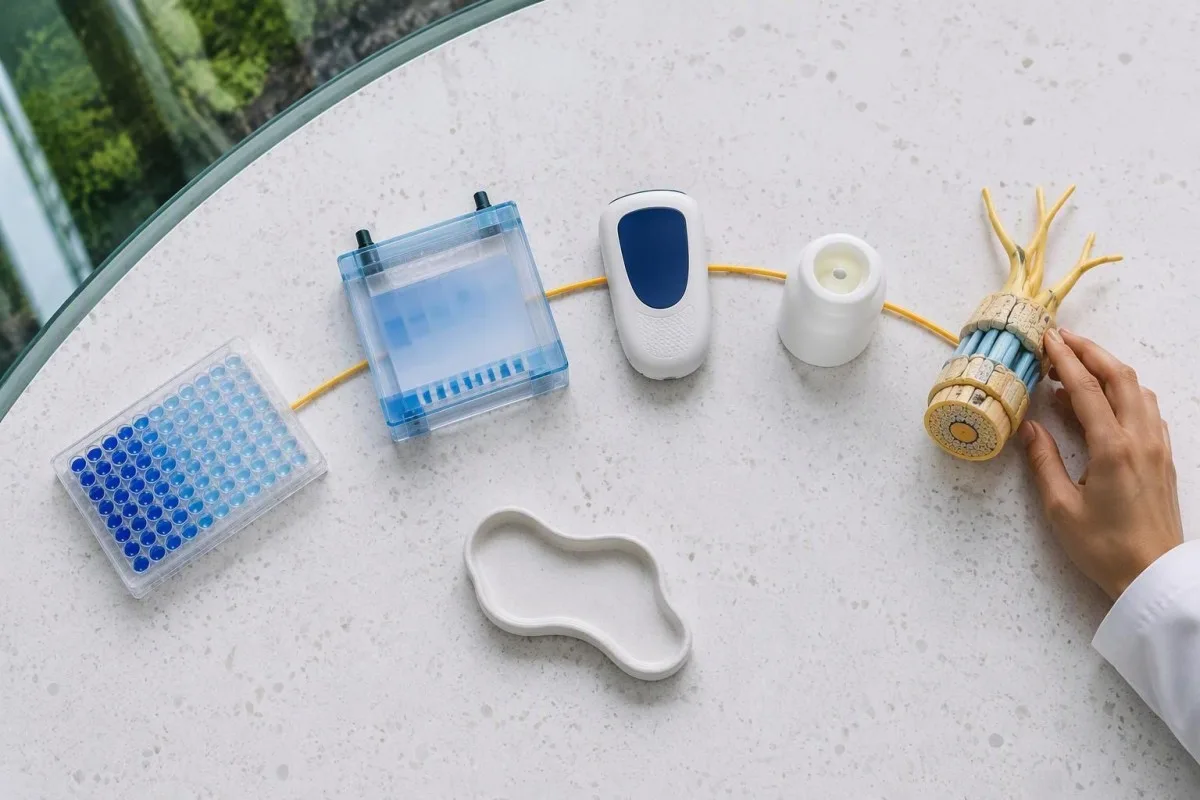
The accompanying workup usually assesses monoclonal proteins and common treatable causes of neuropathy. Depending on the presentation, clinicians consider serum protein electrophoresis, immunofixation, quantitative immunoglobulins, free light chains, glucose or HbA1c, vitamin B12, a complete blood count, kidney function and thyroid testing rather than repeating anti-MAG antibodies alone.
HbA1c 6.5% yoki 48 mmol/mol qiymati is a diagnostic threshold for diabetes, usually requiring confirmation when unequivocal hyperglycemia is absent. That number identifies a metabolic disorder, not proof that diabetes caused the neuropathy; prominent demyelination, unusual asymmetry or rapid progression may still require a separate neurological explanation.
Vitamin B12 below approximately 200 pg/mL dan past, equivalent to 200 ng/L, commonly suggests deficiency, although diagnostic cutoffs vary by assay and guideline. Borderline values may need methylmalonic acid interpretation; reduced kidney function can elevate methylmalonic acid independently, so an abnormal confirmatory marker should not be interpreted without creatinine or eGFR.
Protein measurements need similar context: a normal total protein or albumin/globulin ratio cannot exclude a small monoclonal band. Our sarum oqsili talqini bo'yicha qo'llanma explains why a broad protein measurement and a targeted immunofixation study answer different questions, even when they come from the same sample.
Kantesti is an AI blood test interpretation platform that can help arrange these laboratory findings into a readable review, while the requesting clinician decides which tests are appropriate. Our qon tahlili biomarkerlari bo‘yicha qo‘llanma provides background terminology; a missing test should be identified as missing evidence, not silently treated as normal.
Oyoqlarning uvishishiga yana qaysi keng tarqalgan holatlar sabab bo‘lishi mumkin?
Diabetes, vitamin B12 deficiency, alcohol-related nerve injury, medication effects and nerve compression are more common explanations for numb feet than anti-MAG neuropathy. The symptom distribution and nerve-study pattern guide the comparison, and identifying one possible cause does not exclude a second contributor.
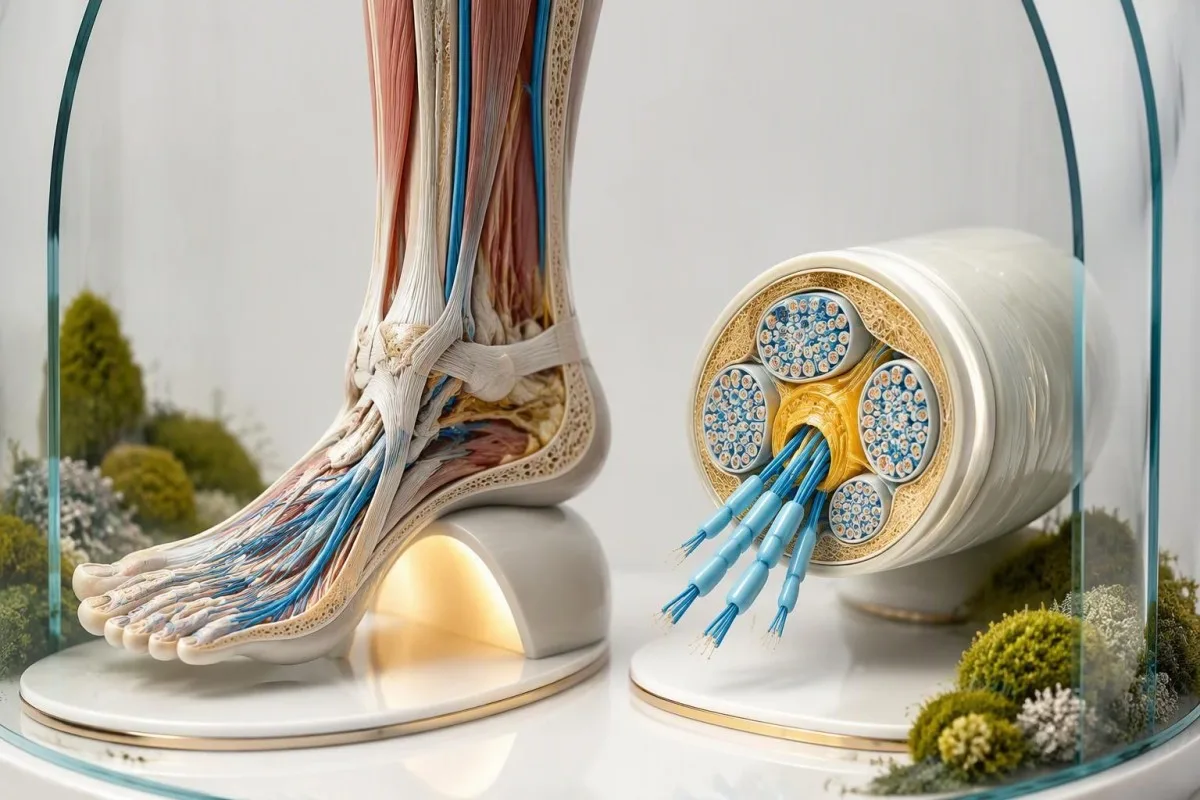
Diabetic distal polyneuropathy is often length-dependent and predominantly axonal, although mixed findings occur and mild slowing is not automatically immune demyelination. A hypothetical person with 12 years of diabetes, reduced sensory amplitudes and a weak anti-MAG signal needs careful correlation, not a diagnosis chosen by whichever laboratory result looks most unusual.
B12-related neurological problems can occur without anemia or a markedly raised MCV. Our borderline B12 assessment guide explains why a normal complete blood count cannot rule out a potentially treatable deficiency, especially when balance or position sense is affected.
Supplements can also complicate the picture: excessive vitamin B6 can cause sensory neuropathy, while excessive zinc can contribute to copper deficiency. A hypothetical daily combination of 3 supplements may duplicate ingredients, so bring the actual product labels; our explanation of zinc-related nerve symptoms covers one avoidable source of harm.
Compression or spinal nerve-root disease becomes more plausible when symptoms are one-sided, follow a specific nerve territory or accompany radiating back pain. Conversely, yuqori glyukoza ogohlantirish belgilari can justify metabolic assessment, but the absence of thirst or frequent urination does not exclude diabetes or diabetic neuropathy.
Amaliyotda anti-MAG natijalarining bir-biridan farq qiladigan ko‘rinishlari qanday?
Contrasting examples show why the same antibody flag can lead to different next steps. A high titer with a matching distal demyelinating neuropathy supports specialist evaluation for anti-MAG disease; a weak titer with a clearly different neurological pattern should trigger diagnostic reconsideration rather than automatic immunotherapy.
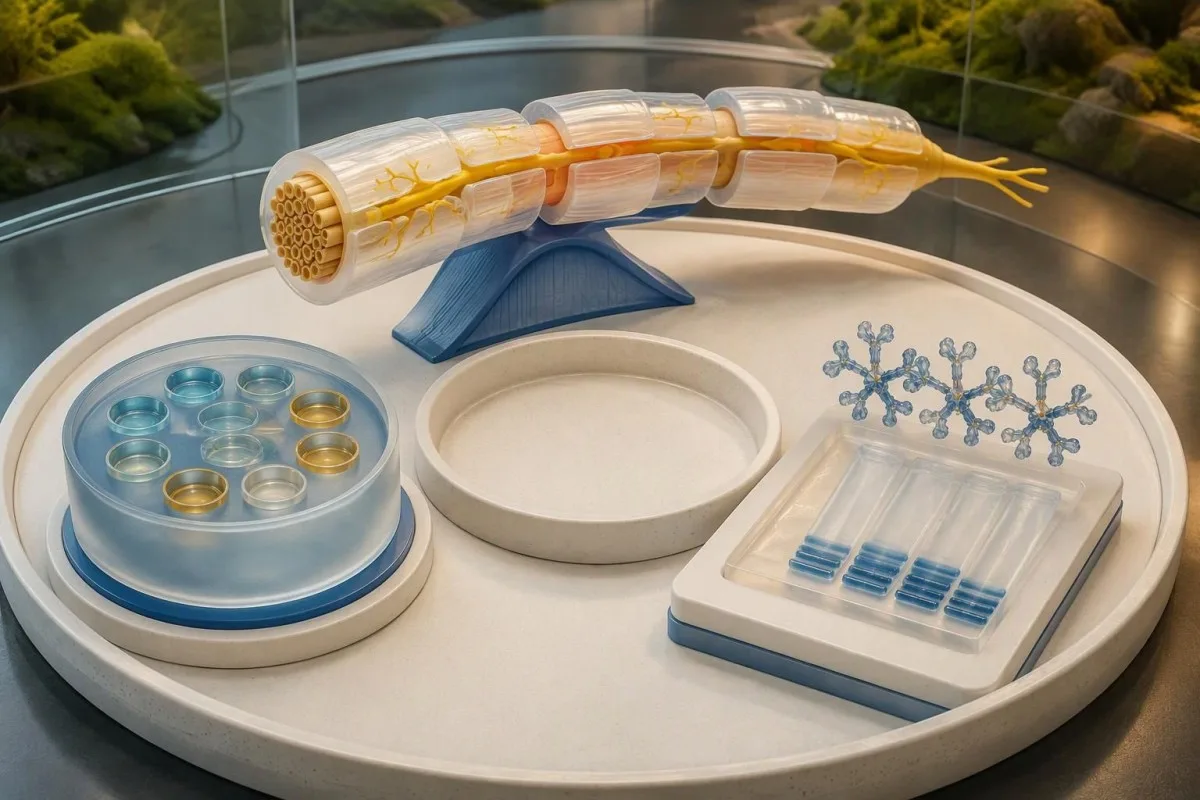
Example A is hypothetical: a 71-year-old has progressive symmetric foot numbness over 4 years, worsening balance in darkness, distal-predominant demyelination and anti-MAG antibodies of 28,000 BTU. Immunofixation identifies monoclonal IgM; together, these findings justify coordinated neuromuscular and hematology assessment, although treatment still depends on disability and progression.
Example B is also hypothetical: a 59-year-old has HbA1c of 9.1%, burning feet, an axonal nerve-study pattern and anti-MAG antibodies of 1,300 BTU. Diabetes is a stronger initial explanation than the low-positive antibody, but the clinician should still investigate atypical features or additional deficiencies rather than assuming every symptom has one cause.
Example C involves a hypothetical 64-year-old with 18,000 BTU but no numbness, weakness, balance change or abnormal neurological examination. The result merits review of why testing was ordered and whether an IgM clone is present; it does not justify treatment to prevent a neuropathy that has not been established.
Kantesti AI can help organize the differences between these laboratory profiles, but the decisive nerve-study and examination findings must come from the clinical record. A measurable M-spike result adds useful information about a clone; it still cannot establish that the clone is responsible for a particular person's sensory symptoms.
Anti-MAG neyropatiyasi har doim immun davolashni talab qiladimi?
Anti-MAG neuropathy does not always require immediate immune treatment. Specialists generally weigh functional impairment, documented progression, fall risk and the associated IgM-producing clone; mild stable symptoms may be monitored, whereas progressive disability can justify discussion of clone-directed treatment despite uncertainty about the size and timing of benefit.
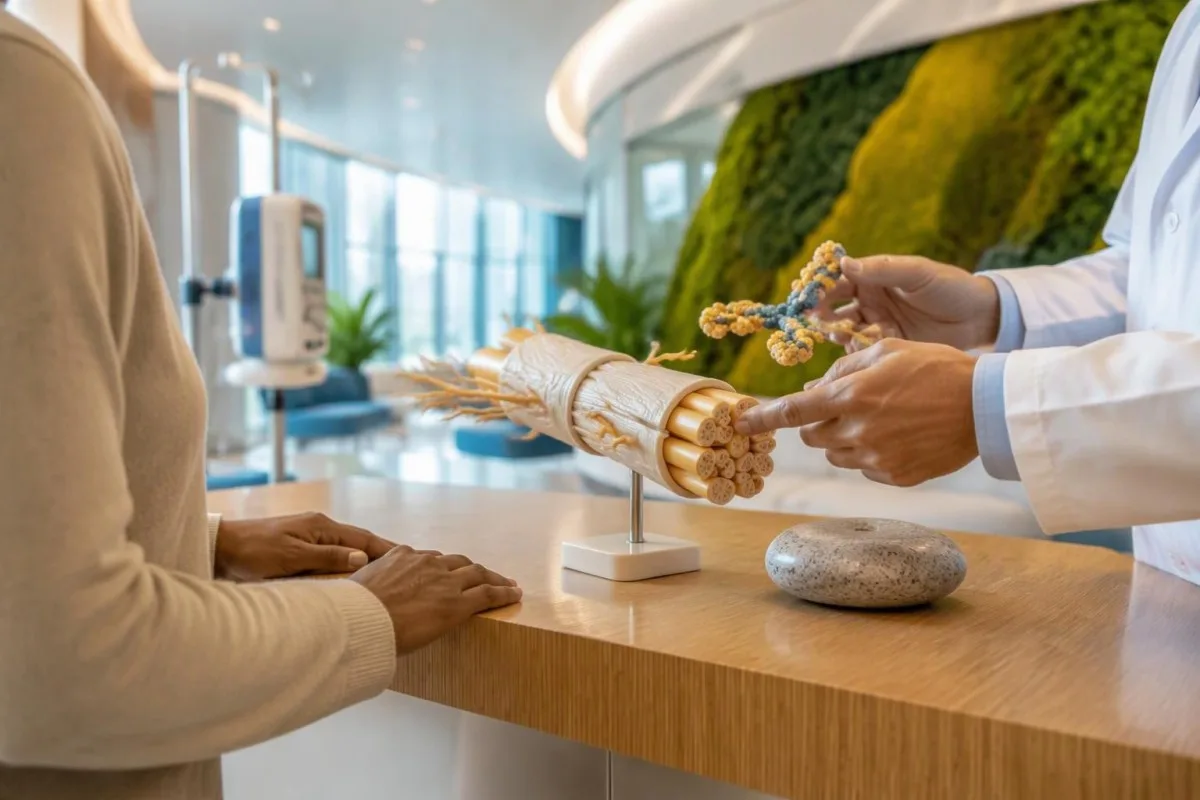
Rituximab is commonly considered by specialists, but the randomized evidence is honestly mixed. In a 54-participant trial, Léger et al. (2013) found no significant benefit on the primary sensory outcome at 12 months, although some secondary analyses suggested benefit; those secondary findings do not overturn the negative primary endpoint.
That trial used 375 mg/m² weekly for 4 weeks, a research regimen rather than a self-treatment recommendation. Clinical protocols vary, and an individual decision must address infection risk, vaccination planning, hepatitis B screening and baseline immunoglobulins; lowering antibody production is not the same as immediately repairing previously injured axons.
Neurological improvement, when it occurs, may take several months, and stabilization can be a meaningful outcome in progressive disease. Transient worsening after rituximab has also been reported; rapidly increasing symptoms after treatment should be reviewed promptly rather than dismissed as an expected laboratory fluctuation.
IVIG, corticosteroids and plasma exchange do not have the same established role in typical anti-MAG disease as in some other immune neuropathies. Before antibody-directed therapy, a history of frequent infections requiring assessment may influence safety planning; physiotherapy, balance support and symptom control remain useful regardless of whether immune treatment is chosen.
Antitanachalar darajasining pasayishi nervlar tiklanayotganini anglatadimi?
Falling anti MAG antibody levels do not reliably prove that nerve function is recovering. Antibody production, myelin function and axonal survival can change on different timelines, so specialists track symptoms, examination and function alongside laboratory results rather than treating a percentage reduction as a neurological outcome.
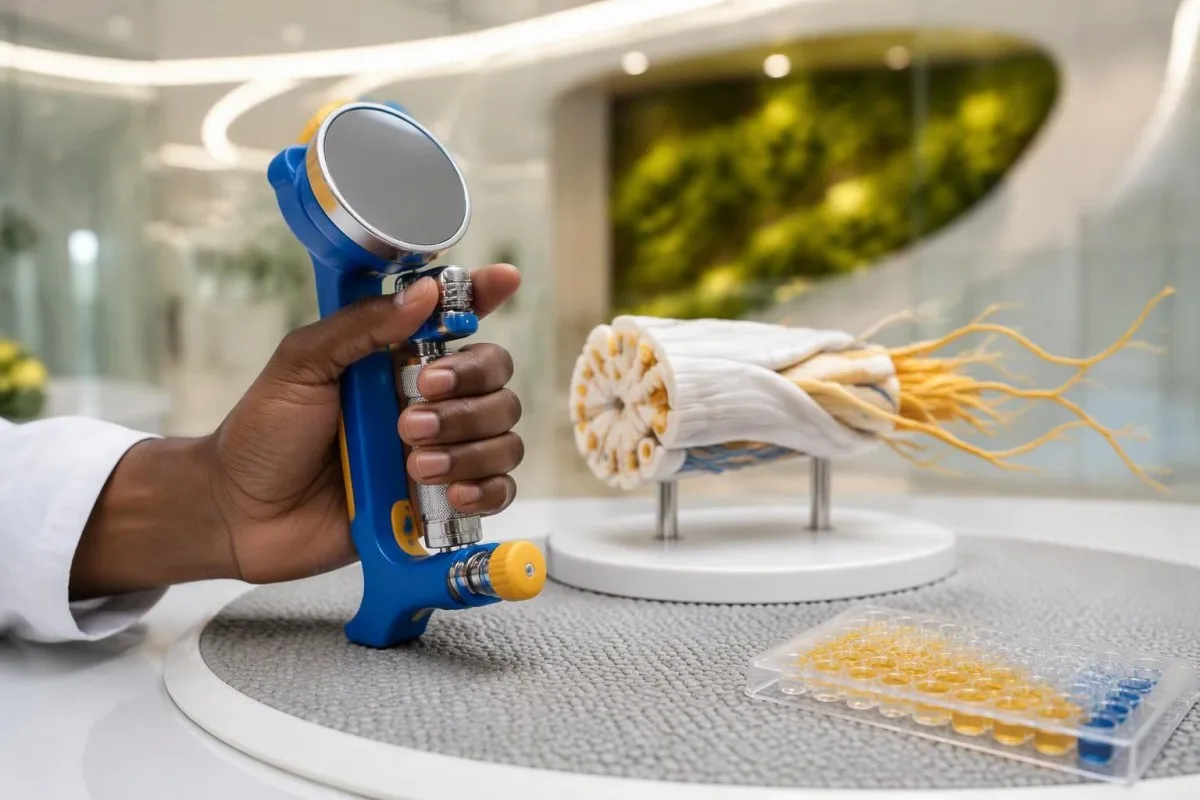
A hypothetical fall from 30,000 to 15,000 BTU represents a 50% numerical reduction if the same assay measured both values within its reliable range. It does not mean sensation has improved by 50%, walking is 50% safer or half the nerve impairment has resolved.
Comparisons are strongest when the laboratory, assay, dilution approach and treatment timing are documented. Results above an analytical ceiling, or values from different assay systems, can create misleading trends; repeat nerve conduction testing is likewise most informative when comparable nerves and technical conditions are assessed.
Functional tracking might include a standardized disability scale, grip strength when relevant and a consistent walking task such as a 10-meter walk if the specialist selects it. Falls, footwear problems and difficulty using stairs often communicate meaningful change better than a daily tingling score, especially when sensory symptoms fluctuate.
Kantesti is an AI biomarker interpretation platform that can help present laboratory trends while keeping assay differences visible. Our texnologiya ta'rifi describes the service's approach, and our dori vositalarining xavfsizligi bo'yicha trend qo'llanmasi explains why numerical change still needs clinical interpretation rather than an automatic treatment decision.
Oyoqlarning uvishishi qachon shoshilinch tibbiy ko‘rikni talab qiladi?
Rapidly increasing weakness, breathing or swallowing difficulty, and new bladder or bowel dysfunction require urgent assessment regardless of an anti-MAG result. These are not features to attribute casually to a usually slow neuropathy; sudden one-sided neurological symptoms or a suddenly cold, painful foot also need immediate evaluation.

Weakness progressing over days rather than years raises concern for other neurological disorders, including Guillain–Barré syndrome. Our rapid weakness warning guide explains why someone who suddenly struggles to stand or climb stairs should not wait for a repeat anti-MAG titer to decide whether help is needed.
New saddle-area numbness with difficulty passing urine or loss of bladder control can indicate spinal nerve compression requiring emergency assessment. A pre-existing antibody-positive neuropathy does not protect someone from a second urgent condition, and a reassuring laboratory report cannot rule out a spinal emergency.
Reduced foot sensation increases the chance of unnoticed pressure injury or burns. Inspect both feet daily, check shoe interiors for foreign objects and test bath water safely before stepping in; avoiding direct heat pads on numb feet is practical prevention, not a treatment for the underlying antibody process.
Balance support should match actual fall risk rather than the height of the antibody result. For a hypothetical person who has fallen twice in 1 month, a mobility assessment, appropriate walking aid and home-hazard review may be more immediately useful than another titer measurement while specialist care is being arranged.
Ko‘rikka qanday tayyorgarlik ko‘rish va tadqiqotlarimizni qanday baholash mumkin?
A useful specialist review needs the original antibody report, nerve conduction interpretation, monoclonal protein results and a clear symptom timeline. Our research publications address blood-test interpretation methodology; they do not establish that an AI system can diagnose anti-MAG neuropathy or replace neurological and hematological assessment.
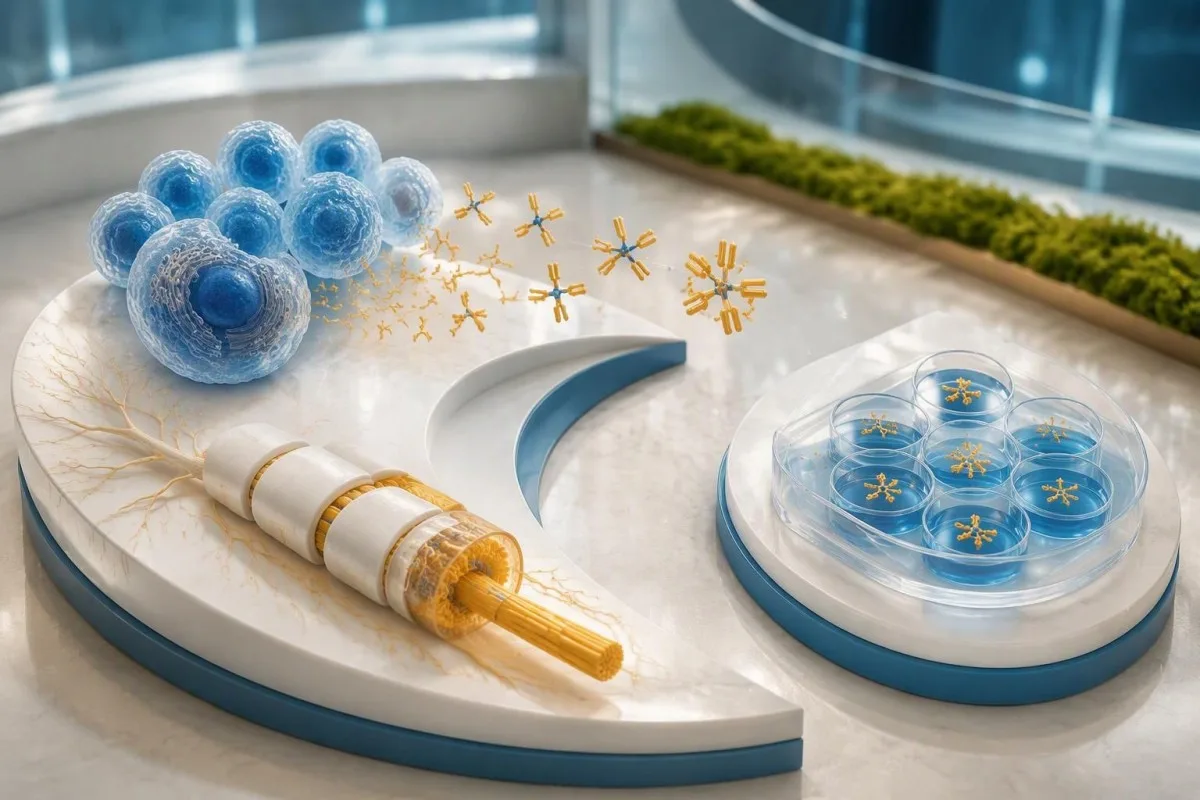
Bring 4 groups of information: the complete anti-MAG report with units, the electrophysiology report, protein studies including immunofixation, and a list of medications and supplements. A one-page timeline of symptom onset, balance change and falls helps distinguish slowly progressive neuropathy from a recent superimposed problem.
Ask whether the nerve pattern is genuinely demyelinating, whether the IgM finding is monoclonal and whether another treatable cause remains plausible. If treatment is proposed, agree on what success would mean—such as fewer falls or stable walking ability—and how it will be assessed over the next several months.
Kantesti's listed technical benchmark concerns 100 000 ta sintetik test holati, while the accompanying validation framework describes a framework for evaluating interpretation and oversight. Synthetic-case performance is not equivalent to prospective clinical validation in people with antibody-positive neuropathy, and neither publication should be cited as evidence that an anti-MAG result alone establishes disease.
The 2 research publications are listed below separately from the external medical references supporting this article. Our texnik validatsiya va nazorat page provides methodological context; the practical next step for persistent numb feet remains a clinician-led examination and targeted testing, not a diagnosis generated from one flagged biomarker.
Tez-tez beriladigan savollar
Anti-MAG antitanachalarining yuqori darajada bo‘lishi menda anti-MAG neyropatiyasi borligini anglatadimi?
Anti-MAG antitanalarining yuqori darajasi anti-MAG neyropatiyasi tashxisini faqat simptomlar va nerv o‘tkazuvchanligi tekshiruvi natijalari mos kelgandagina qo‘llab-quvvatlaydi. Tegishli ELISA tahlilida 7,000 BTU dan yuqori ko‘rsatkich kuchsiz ijobiy natijaga qaraganda tashxisni kuchliroq qo‘llab-quvvatlaydi, biroq bu mustaqil tashxis qo‘yish uchun yetarli emas. Shifokorlar, shuningdek, monoklonal IgM va diabet yoki B12 tanqisligi kabi muqobil sabablarni ham baholaydilar. Nevrologik simptomlarsiz juda yuqori natija immun davolashni avtomatik ravishda asoslamaydi.
Qaysi anti-MAG antitana darajasi yuqori deb hisoblanadi?
Anti MAG antibody thresholds depend on the assay and reporting units. On one commonly used commercial ELISA, approximately 1,000 BTU is the positivity threshold, while results above 7,000 BTU provide stronger support for anti-MAG neuropathy in the right clinical setting. Lower-positive results overlap with other conditions and require careful correlation. These thresholds cannot be transferred directly to dilution titers, index values or another laboratory's arbitrary units.
Anti-MAG neyropatiyasining dastlabki alomatlari qanday?
Anti-MAG neyropatiyasi odatda oyoqlarda sekin rivojlanuvchi, simmetrik uvishish, vibratsiya sezgisining pasayishi yoki muvozanat buzilishi bilan boshlanadi. Alomatlar ko‘pincha bir necha oydan bir necha yilgacha bo‘lgan davrda rivojlanadi, ba’zan esa keyinroq kuchsizlik paydo bo‘ladi. Qorong‘ida yurish barqarorligi 3 yil davomida yomonlashib borgani haqidagi taxminiy anamnez 3 soat ichida to‘satdan paydo bo‘lgan uvishishga qaraganda ko‘proq mos keladi. Tez rivojlanuvchi kuchsizlik, nafas olish qiyinlashuvi yoki siydik pufagi faoliyatining yangi buzilishi boshqa sabablarni aniqlash uchun shoshilinch baholashni talab qiladi.
IgM darajam normal bo‘lsa ham, anti-MAG neyropatiyasi bo‘lishi mumkinmi?
Umumiy IgM darajasining me’yorda bo‘lishi kichik monoklonal IgM tasmasi yoki anti-MAG neyropatiyasini istisno qilmaydi. Kattalarda IgM uchun keng tarqalgan me’yoriy oraliq taxminan 0,4–2,3 g/L ni tashkil etadi, biroq bu oraliq laboratoriyaga qarab farq qiladi va klonallikni emas, miqdorni o‘lchaydi. Zardob immunofiksatsiyasi umumiy IgM tahlilida yoki odatiy elektroforezda yaqqol ko‘rinmaydigan kichik monoklonal tasmani aniqlashi mumkin. Tashxisni baribir nevrologik belgilar tasdiqlashi kerak.
Anti-MAG antitanasining musbat natijasi saratonni anglatadimi?
Anti-MAG antitanachalarining musbat natijasi avtomatik ravishda saraton borligini anglatmaydi. Anti-MAG neyropatiyasi IgM monoklonal gammopatiyasi bilan bog‘liq bo‘lishi mumkin, ayrim kishilar esa Waldenström makroglobulinemiyasi kabi asosiy limfoproliferativ kasallikni aniqlash uchun tekshiruvdan o‘tishi kerak. Hatto faraziy 0,5 g/L monoklonal oqsil ham nevrologik jihatdan ahamiyatli bo‘lishi mumkin, ammo uning konsentratsiyasining o‘zigina klonni tasniflay olmaydi. Gematologik baholashda laboratoriya ko‘rsatkichlarining to‘liq manzarasi, simptomlar va zarur hollarda qo‘shimcha tekshiruvlar hisobga olinadi.
Rituksimab anti-MAG neyropatiyasini davolay oladimi?
Rituksimab anti-MAG neyropatiyasini albatta davolaydi, deb kafolat berib bo‘lmaydi va randomizatsiyalangan tadqiqotlar natijalari bir xil emas. 54 nafar ishtirokchi qatnashgan tadqiqotda 12 oyda asosiy sensor natijada sezilarli yaxshilanish aniqlanmagan, biroq ayrim ikkilamchi tahlillar foyda bo‘lishi mumkinligini ko‘rsatgan. Mutaxassislar xavfsizlik va noaniqliklarni muhokama qilgandan so‘ng, funksional buzilish kuchayib borayotgan holatlarda davolashni ko‘rib chiqishlari mumkin. Antitanalar miqdorining kamayishi allaqachon yo‘qolgan nerv tolalari tiklanishini kafolatlamaydi.
Oyoqlarning uvishishini kuzatish uchun anti-MAG antitanachalarini qayta tekshirish kerakmi?
0 Qayta anti-MAG tekshiruvi mutaxassisda aniq diagnostik yoki davolashni monitoring qilishga oid savol bo‘lganda foydali bo‘lishi mumkin, biroq tez-tez tekshiruv o‘tkazish o‘z-o‘zidan foyda keltirmaydi. 30 000 dan 15 000 BTU gacha pasayish faqat bir xil tahlil usuli taqqoslanadigan o‘lchovlarni taqdim etgandagina 50% miqdoriy pasayishni anglatadi. Bu pasayish sezgi yoki yurishning 50% yaxshilanganini tasdiqlamaydi. Funksional o‘zgarishlar, ko‘rik natijalari va tanlab o‘tkaziladigan takroriy nerv tekshiruvlari kuzatuvning zarur qismlari bo‘lib qoladi.
Qon tahlili natijalarini qanday o‘qish kerak
Laboratoriya hisobotingizni yuklang va Kantesti sun’iy intellekti har bir biomarkerni soniyalar ichida sodda tilda tushuntiradi. Dunyo bo‘ylab 2 milliondan ortiq kishi foydalanadi.
Adabiyotlar
- Klein, T., Mitchell, S., & Weber, H. (2026). Kantesti Blood-Test Interpretation Engine’ining 100 000 ta sintetik test holatlarida erta ro‘yxatdan o‘tgan, rubrika asosidagi avtomatlashtirilgan texnik benchmarki. Kantesti AI tibbiy tadqiqotlari. DOI
- Klein, T., Mitchell, S., & Weber, H. (2026). Klinik tasdiqlash konsepsiyasi v2.0 (Tibbiy tasdiqlash sahifasi). Kantesti AI tibbiy tadqiqotlari. DOI
- Van den Bergh PYK et al. (2021). European Academy of Neurology/Peripheral Nerve Society guideline on diagnosis and treatment of chronic inflammatory demyelinating polyradiculoneuropathy: Report of a joint Task Force—Second revision. European Journal of Neurology. DOI
- Liberatore G et al. (2020). Sensitivity and specificity of a commercial ELISA test for anti-MAG antibodies in patients with neuropathy. Journal of Neuroimmunology. DOI
- Léger JM et al. (2013). Placebo-controlled trial of rituximab in IgM anti-myelin-associated glycoprotein neuropathy. Neurology.
- 2M+Tahlil qilingan testlar
- 127+Mamlakatlar
- 100+Tillar
Tibbiy guruh haqida


E-E-A-T ishonch signallari
Tajriba
Shifokor boshchiligidagi laboratoriya talqin qilish ish jarayonlarini klinik ko‘rib chiqish.
Tajriba
Laboratoriya tibbiyoti biomarkerlarning klinik kontekstda qanday o‘zini tutishini yoritadi.
Vakolatlilik
Doktor Thomas Klein tomonidan tibbiy jihatdan ko‘rib chiqilgan, doktor Sarah Mitchell va professor doktor Hans Weber hissalari bilan.
Ishonchlilik
Xavotirni kamaytirish uchun aniq keyingi qadamlar yo‘nalishlari bilan dalillarga asoslangan talqin.

Tibbiy ogohlantirish
Ushbu maqola faqat ta’lim maqsadlari uchun mo‘ljallangan va tibbiy maslahatni anglatmaydi. Tashxis va davolash bo‘yicha qarorlar uchun har doim malakali sog‘liqni saqlash mutaxassisiga murojaat qiling.
Nashr etilgan · Tahririyat jamoasi bilan bog‘laning
Angliya va Uelsda ro‘yxatdan o‘tgan Kantesti Ltd tomonidan nashr etilgan, kompaniya raqami. 17090423, London, Birlashgan Qirollik.
