
Fecal calprotectin can show intestinal inflammatory activity, but it cannot identify Crohn's disease or ulcerative colitis by itself. The result becomes useful when combined with symptoms, infection testing, blood markers, imaging and, when appropriate, colonoscopy.

اہم نکات
- کیلپروٹیکٹن below 50 µg/g is commonly considered normal in adults, although laboratories use different assays and cutoffs.
- بارڈر لائن نتائج around 50-150 or 50-250 µg/g often need clinical context and sometimes repeat testing rather than an immediate IBD diagnosis.
- بلند نتائج above 150-250 µg/g increase concern for intestinal inflammation, but infection, NSAIDs, coeliac disease and other conditions can also raise calprotectin.
- منفی نتیجہ lowers the likelihood of active colonic IBD but does not completely exclude mild, localised or small-bowel Crohn's disease.
- Stool lactoferrin is another neutrophil-derived marker; a positive result supports intestinal inflammation but cannot distinguish IBD from infection.
- Pathogen testing matters because C. difficile, Campylobacter, Salmonella and other infections can cause diarrhoea and elevated calprotectin.
- FIT or occult blood detects haemoglobin, not IBD itself; a positive result may require separate evaluation for bleeding, polyps or other bowel conditions.
- فوری توجہ کی علامات such as heavy rectal bleeding, dehydration, severe abdominal pain, persistent vomiting or fever require prompt medical assessment regardless of calprotectin.
What does a stool test for IBD actually measure?
A stool test for IBD usually measures fecal calprotectin, a protein released mainly by neutrophils during intestinal tissue inflammation. It estimates inflammatory activity in the bowel, but it does not identify Crohn's disease or ulcerative colitis on its own; a result must be interpreted with symptoms, infection tests and other investigations.
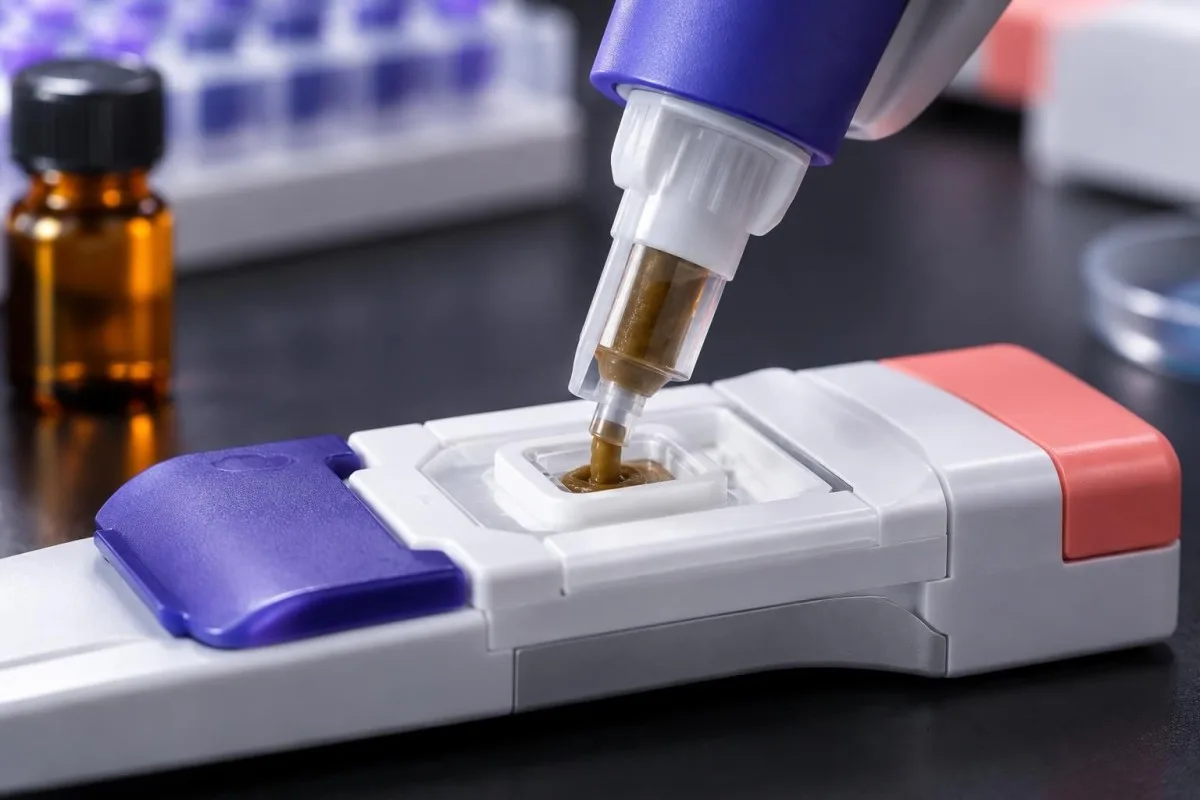
فیکل کیلپروٹیکٹن is reported in micrograms per gram (µg/g) of stool, and many adult laboratories describe values below 50 µg/g as normal. The protein is relatively stable in stool for several days, which makes it practical for outpatient testing, but stability does not make the result disease-specific: an elevated value means that neutrophil activity is present somewhere in the gastrointestinal tract.
Calprotectin is a probability marker, not a diagnostic label. A value of 380 µg/g may fit active ulcerative colitis, Crohn's disease, bacterial gastroenteritis, diverticular inflammation or another bowel disorder, so the number cannot determine which diagnosis is responsible. The reason clinicians combine it with other evidence is that the same biological response can arise from several different causes.
A stool result also reflects where inflammation is occurring. Colonic inflammation tends to release enough marker into stool to produce a clearer rise, whereas mild isolated ileal Crohn's disease can sometimes produce a lower result; this is one reason a normal test cannot always overrule persistent symptoms. The کیلپروٹیکٹن بمقابلہ لیکٹوفرن رہنما explains why different stool markers can disagree.
The National Institute for Health and Care Excellence recommends fecal calprotectin as an aid when clinicians are distinguishing suspected inflammatory bowel disease from non-inflammatory conditions such as irritable bowel syndrome, rather than as a stand-alone diagnostic test (NICE, 2013). In practical terms, the test is most useful when the pre-test question is clear: is there enough evidence of intestinal inflammation to justify further evaluation?
Why the result is not the same as an IBD diagnosis
A calprotectin result cannot tell Crohn's disease from ulcerative colitis because both conditions can recruit neutrophils into the intestinal lining. It also cannot reliably distinguish active IBD from a short-lived infection when the sample is collected during acute diarrhoea; a pathogen panel and symptom timeline may be more informative in that setting.
The result is strongest when it changes a decision. For example, a person with six weeks of diarrhoea, weight loss and calprotectin of 620 µg/g needs a different pathway from someone with intermittent bloating, no weight loss and calprotectin of 42 µg/g. Neither number alone proves or excludes a diagnosis.
What does a positive fecal calprotectin result mean?
A positive fecal calprotectin result means that intestinal inflammatory activity is more likely, not that IBD has been confirmed. Values above roughly 150-250 µg/g commonly prompt closer assessment, but the appropriate cutoff depends on the assay, age, symptoms, medications and whether infection has been excluded.

Many laboratories use less than 50 µg/g as a normal adult result, 50-120 or 50-150 µg/g as borderline, and values above 150-250 µg/g as clearly elevated. These are practical bands rather than universal laws: some services use 100 µg/g as a referral threshold, while others use 250 µg/g to improve specificity and reduce unnecessary colonoscopies. Always read the reference interval printed beside your own result.
A value above 250 µg/g is more concerning for active intestinal inflammation than a value of 75 µg/g, but the relationship is not linear. Calprotectin of 500 µg/g is not automatically twice as clinically serious as 250 µg/g, and it does not predict the exact length or location of affected bowel. It is better treated as a signal that needs explanation.
Non-IBD causes of elevation include bacterial or parasitic gastroenteritis, C. difficile, regular NSAID use, colorectal neoplasia, diverticulitis and coeliac disease. Proton pump inhibitors and recent gastrointestinal disturbance may also complicate interpretation in some patients, although the size and consistency of these effects are less certain than the effect of infection or NSAIDs.
A 2021 meta-analysis by Turvill and colleagues found that fecal calprotectin can help separate inflammatory from non-inflammatory bowel symptoms, but diagnostic performance changes with the cutoff and patient population. That uncertainty explains why a mildly positive result often leads to a repeat sample or additional testing, whereas a markedly high result with red-flag symptoms may lead directly to gastroenterology assessment.
| سطح | حد | اس کا مطلب |
|---|---|---|
| عموماً نارمل | <50 µg/g | Active colonic inflammation is less likely, although mild or isolated small-bowel disease is not completely excluded. |
| بارڈر لائن | 50-150 µg/g | Repeat testing and review of infection, NSAIDs, recent illness and symptoms are often more useful than immediate labelling. |
| واضح طور پر بڑھا ہوا | 150-250 µg/g | Inflammation becomes more plausible; clinicians may arrange further assessment, especially with diarrhoea, bleeding or weight loss. |
| اعلی | >250 µg/g | Substantial intestinal inflammation is possible, but infection and other causes still need consideration before diagnosing IBD. |
Why laboratories use different cutoffs
Calprotectin assays are not perfectly interchangeable, so a result of 120 µg/g may be classified differently by two laboratories. Differences in antibodies, extraction methods, reporting units and reference populations can shift the apparent threshold by several tens of micrograms per gram.
دی borderline calprotectin retesting guide covers the practical questions that matter before repeating the sample, including recent antibiotics, NSAIDs, acute diarrhoea and whether symptoms are improving.
Can a negative stool test rule out Crohn's disease or colitis?
A negative calprotectin result lowers the likelihood of active colonic IBD, but it does not rule out every form of Crohn's disease or ulcerative colitis. The chance of a false-negative result is higher with mild disease, disease limited to a short segment, isolated small-bowel Crohn's disease, sampling problems or treatment that has already reduced inflammation.
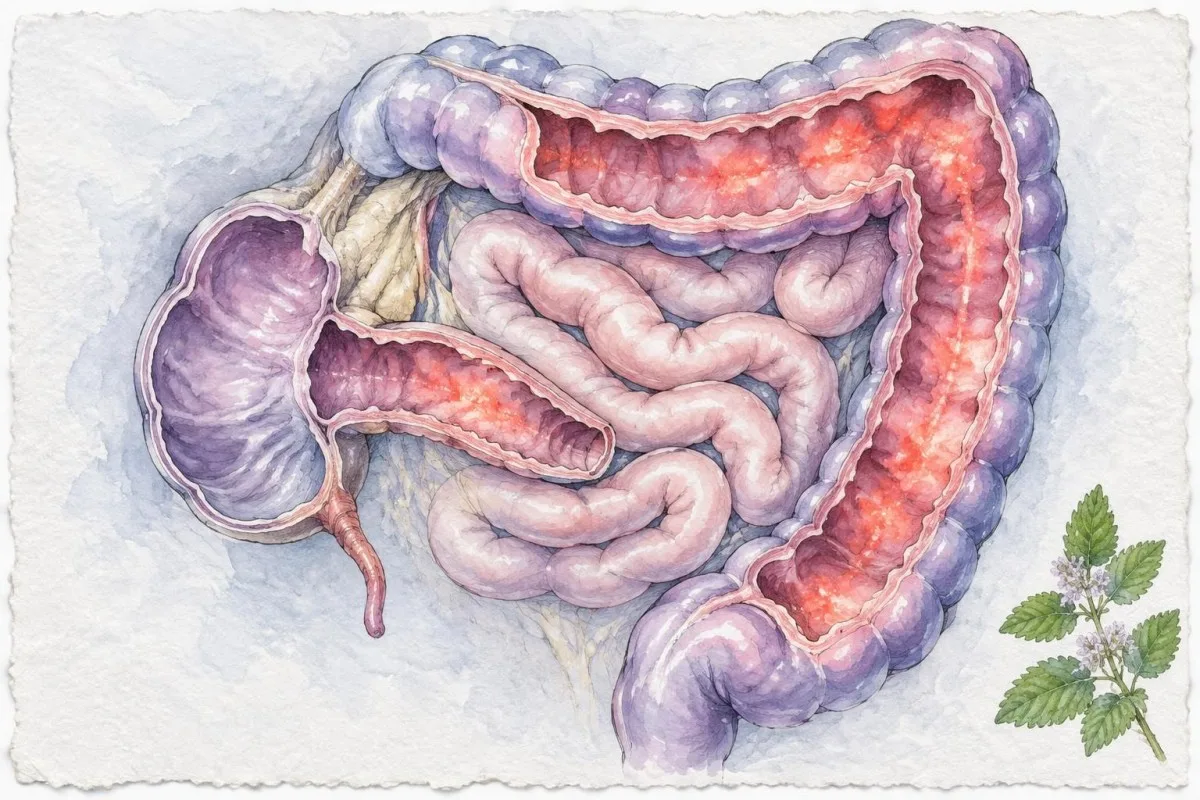
A low result is most reassuring when the sample was collected during active symptoms, before anti-inflammatory treatment, and when the person has no anaemia, raised C-reactive protein, rectal bleeding or unexplained weight loss. It is less reassuring when the only abnormality is persistent right-sided abdominal pain, because small-bowel disease can be harder for stool markers to capture.
For a hypothetical 29-year-old with three weeks of loose stools, calprotectin of 38 µg/g, normal haemoglobin and no nocturnal symptoms, immediate IBD is less likely than a self-limited or functional explanation. For a hypothetical 29-year-old with calprotectin of 38 µg/g, ferritin of 9 ng/mL and repeated nocturnal diarrhoea, the same stool value would not end the investigation.
Why can stool findings and symptoms disagree?
Discordant results usually mean that the marker, the symptoms or the timing needs closer examination; they do not automatically mean that one result is wrong. High calprotectin with mild symptoms may reflect a recent infection or medication effect, while severe symptoms with low calprotectin may reflect non-inflammatory disease, small-bowel disease, sampling limitations or a problem outside the test's target.
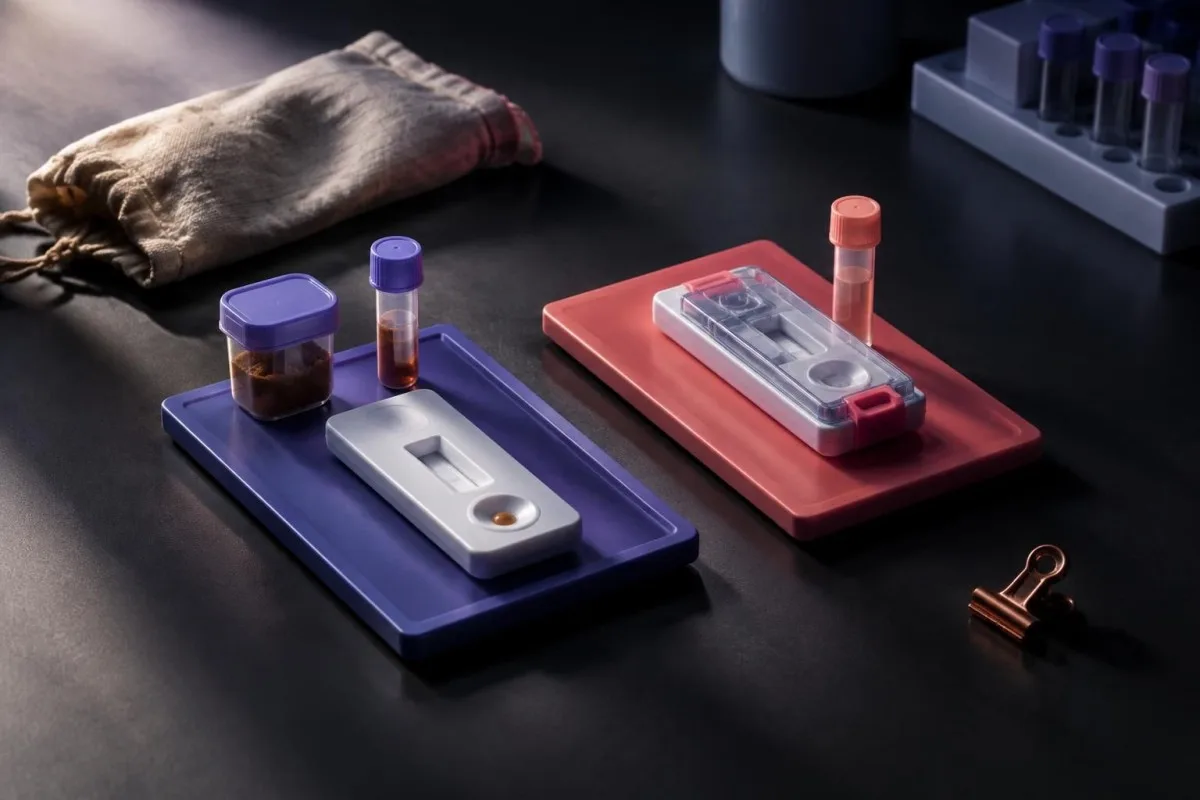
High calprotectin with negative pathogen testing and relatively few symptoms can occur in early IBD, resolving infection, NSAID exposure or a structural bowel problem. A single value of 280 µg/g should therefore trigger a medication and illness review, not an assumption that a flare is present. Repeating the test after the suspected temporary trigger has resolved can show whether the signal persists.
Severe symptoms with a low marker require a different question: is the symptom caused by mucosal neutrophil inflammation at all? Bile acid diarrhoea, lactose intolerance, coeliac disease, pancreatic insufficiency, microscopic colitis and functional bowel disorders can produce significant symptoms with little calprotectin rise. Some of these conditions require separate blood, breath, stool or tissue-based testing.
Calprotectin and C-reactive protein can also disagree because they measure different compartments. Calprotectin reflects neutrophil activity reaching stool, whereas C-reactive protein reflects a systemic liver response and may remain normal in localised disease. Conversely, obesity, infection outside the bowel or another inflammatory condition can raise C-reactive protein without causing IBD.
A useful follow-up pattern is persistence rather than one isolated abnormality. For example, calprotectin values of 310, 290 and 275 µg/g over eight weeks are more concerning than one result of 310 µg/g after a bout of gastroenteritis, particularly if haemoglobin, albumin or platelet count also changes. The platelet trend guide explains why a rising platelet count can add context to intestinal inflammation.
A practical discordance checklist
When symptoms and calprotectin disagree, check the sample date against the onset of diarrhoea, antibiotics, NSAIDs and anti-inflammatory treatment. Also compare the result with haemoglobin, albumin, C-reactive protein, platelet count, weight change and whether symptoms wake the person at night.
دی WBC اور CRP کا موازنہ is useful when a stool marker and systemic inflammatory markers do not point in the same direction. No combination is perfect, but patterns are generally more informative than isolated flags.
Which related stool findings matter in an IBD workup?
Related stool findings help identify inflammation, bleeding and infection, but each test answers a different question. Fecal lactoferrin supports neutrophil activity, FIT or occult-blood testing detects haemoglobin, and pathogen testing looks for infectious causes that can imitate an IBD flare.
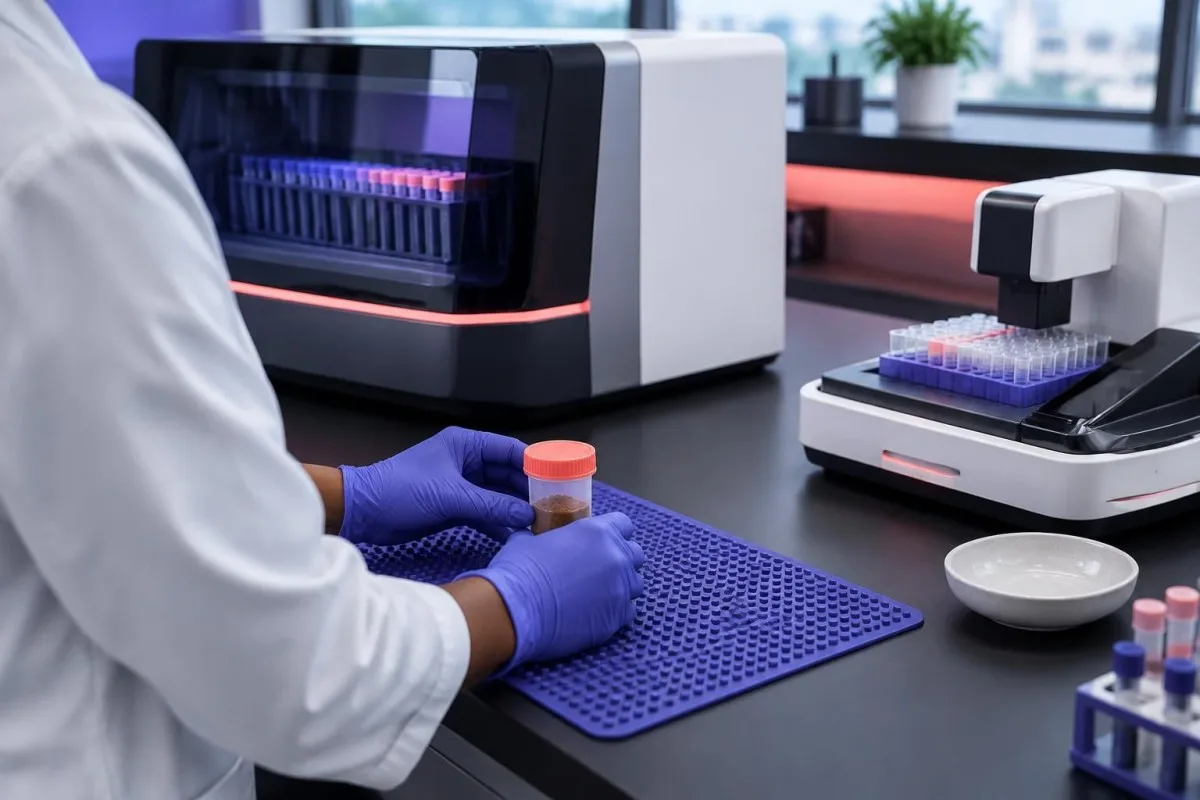
Fecal lactoferrin is a neutrophil-associated protein that can rise in active intestinal inflammation, with many laboratories reporting it qualitatively or in µg/g. A positive result can support IBD, but it can also occur with bacterial gastroenteritis, colorectal inflammation and other conditions; calprotectin and lactoferrin are complementary rather than interchangeable.
Stool pathogen testing may include culture, multiplex PCR, ova-and-parasite testing or targeted assays based on travel, exposures and immune status. C. difficile deserves special attention because it can cause diarrhoea and raised calprotectin in people with or without known IBD, and treating it as an IBD flare without testing can lead to the wrong therapy.
FIT and faecal occult-blood tests detect haemoglobin, not intestinal immune activity. A positive FIT can occur with haemorrhoids, polyps, colorectal cancer, infection or IBD, while a negative FIT does not exclude IBD because inflammation may not bleed detectably at the time of collection; the positive FIT explanation اس فرق کو واضح کرتی ہے۔.
Stool alpha-1 antitrypsin can support the investigation of protein-losing enteropathy, especially when low albumin accompanies diarrhoea or oedema, but it is not a routine IBD confirmation test. Stool fat, pancreatic elastase and microbiome panels answer different clinical questions and should not be treated as substitutes for calprotectin or endoscopic assessment.
Why infection testing should come early
In acute diarrhoea lasting fewer than 14 days, infection is often a more immediate explanation than new IBD, especially with fever, household exposure or recent travel. A positive pathogen result can explain a high calprotectin temporarily, although persistent symptoms after treatment may still justify repeat inflammatory testing.
دی C. difficile کے نتائج کے لیے رہنما explains why GDH, toxin and PCR results can disagree. A detected organism does not always equal toxin-mediated disease, so the laboratory method and clinical picture matter.
How do stool results fit the diagnosis of Crohn's disease or ulcerative colitis?
Stool markers support an IBD workup by estimating inflammatory activity, while diagnosis usually depends on the combined pattern from history, examination, blood tests, endoscopy, tissue examination and imaging. Colonoscopy with biopsies is often central for suspected colitis, whereas magnetic resonance enterography or capsule assessment may be needed when small-bowel Crohn's disease is suspected.

The diagnosis of ulcerative colitis usually depends on a compatible symptom pattern and continuous mucosal inflammation beginning in the rectum, supported by colonoscopy and tissue examination. Crohn's disease can affect any part of the gastrointestinal tract, often in discontinuous areas, so imaging and small-bowel evaluation may be more important when symptoms suggest disease beyond the colon.
Blood tests add a different layer of evidence. Low haemoglobin, low ferritin, low albumin, raised platelet count or increased C-reactive protein can support active or complicated disease, but normal blood tests do not exclude IBD. The آئرن اسٹڈیز گائیڈ is especially relevant because iron deficiency can develop through chronic intestinal loss or poor absorption before anaemia becomes obvious.
A calprotectin result may influence the urgency of referral rather than provide the diagnosis. A patient with chronic diarrhoea and 700 µg/g may need rapid gastroenterology assessment, while a patient with 48 µg/g and no alarm features may initially be managed with observation or evaluation for non-inflammatory causes, depending on the full history.
The diagnosis also depends on excluding mimics. Coeliac disease, intestinal infection, colorectal neoplasia, microscopic colitis, medication injury and ischaemic or diverticular inflammation can overlap clinically with IBD. That is why the same stool result can lead to different next steps in different people.
When colonoscopy or imaging becomes more likely
Endoscopic assessment becomes more likely when calprotectin remains above the local referral threshold, symptoms persist beyond four to six weeks, there is rectal bleeding, iron-deficiency anaemia, weight loss, nocturnal diarrhoea or a strong family history. The exact timing varies with age, symptom severity and access to specialist care.
When small-bowel Crohn's disease is a concern, a normal colonoscopy and low calprotectin may still be insufficient if obstructive pain, unexplained iron deficiency or weight loss continues. Cross-sectional imaging can identify bowel-wall and extra-luminal changes that stool markers cannot measure.
What does calprotectin mean when IBD is already diagnosed?
In established IBD, calprotectin is mainly a monitoring marker: a rising value can precede symptoms, while a falling value may support a response to treatment. It still cannot show the full disease burden by itself, and treatment decisions should consider symptoms, endoscopic findings, blood tests, medication levels and complications.

A single calprotectin value is less useful for monitoring than a trend measured with the same laboratory method. For example, a fall from 900 to 180 µg/g suggests reduced neutrophil activity, but 180 µg/g may still indicate residual inflammation; a person who feels better can still have incomplete mucosal healing.
The STRIDE-II treat-to-target recommendations identify normalisation or meaningful reduction in biomarkers such as fecal calprotectin as an intermediate treatment target, while recognising that biomarker thresholds are not absolute (Turner et al., 2021). Many clinicians use a range around 100-250 µg/g in monitoring discussions, but the target depends on disease history, assay and the planned treatment strategy.
A rising result can be clinically useful before a flare becomes obvious. A change from 70 to 420 µg/g over two months is more informative than a small change from 70 to 95 µg/g, particularly if loose stools, urgency, night waking or rectal bleeding have also returned. The trend can prompt adherence review, infection testing or medication assessment.
The opposite pattern also needs caution. Persistent diarrhoea with calprotectin falling from 500 to 80 µg/g may reflect controlled mucosal inflammation plus bile acid diarrhoea, infection, medication intolerance or functional symptoms. The انفلیکسیماب کی سطح کے لیے رہنما shows why drug exposure and immune response may need separate assessment when symptoms and inflammatory markers diverge.
How often should it be repeated?
Repeat timing depends on the reason for testing. A borderline result after an acute illness may be repeated in roughly four to eight weeks after the trigger resolves, whereas a markedly high result with red flags should not be delayed simply to obtain another number.
For established IBD, specialists may monitor every few months during treatment changes and less often during stable remission, but there is no universal schedule. Repeating the test through the same laboratory reduces apparent changes caused by assay differences rather than biology.
How should you prepare for and read the sample result?
Most fecal calprotectin tests do not require fasting, but accurate interpretation depends on proper collection, medication history and the timing of symptoms. The laboratory's instructions take priority because sample containers, storage limits and extraction devices differ between services.
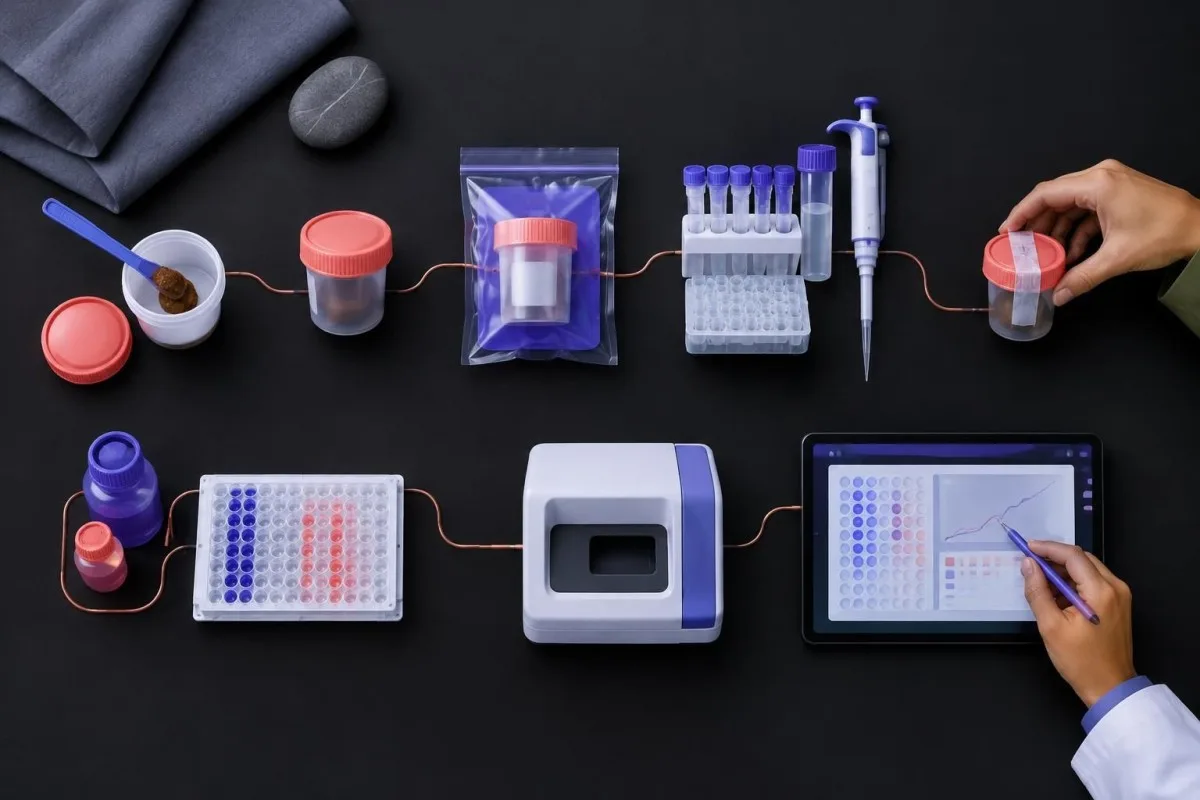
Avoid contaminating the sample with urine, toilet water or disinfectant, and collect from several portions of the stool when the instructions permit. A sample collected during the most symptomatic period may be more representative than one collected after diarrhoea has already resolved, but it should still be transported within the laboratory's stated time window.
Tell the clinician about NSAIDs such as ibuprofen or naproxen, recent antibiotics, proton pump inhibitors, recent travel, gastrointestinal infection, pregnancy, age and current IBD treatment. NSAID exposure is particularly relevant because it can cause intestinal mucosal irritation and produce an elevated calprotectin without Crohn's disease or ulcerative colitis.
Do not compare your value with an internet cutoff without checking the units and reference range. One laboratory may report 50 µg/g as the upper reference limit, while another uses 100 µg/g for a decision pathway; the same number can therefore lead to different flags even when the underlying biology is similar.
For a hypothetical 52-year-old taking naproxen daily with calprotectin of 165 µg/g, the practical next step may be medication review and repeat testing rather than immediate IBD treatment, if clinically safe and agreed with a prescriber. For a 52-year-old with the same result plus visible blood and weight loss, urgent assessment would take priority over waiting for a repeat.
Keep the result with related laboratory data
Interpretation improves when the stool report is viewed beside dates, symptoms, haemoglobin, ferritin, albumin, C-reactive protein and platelet count. A result of 240 µg/g with falling haemoglobin is more concerning than 240 µg/g after a resolved infection with stable blood tests.
A secure personal record can help keep several dates side by side, but it should not replace review by a clinician who can examine the full history and decide whether repeat testing, imaging or endoscopy is appropriate.
When should a positive or negative result be followed up urgently?
Urgent care is guided by symptoms and overall risk, not by calprotectin alone. Heavy or persistent rectal bleeding, black stool, severe or worsening abdominal pain, repeated vomiting, fainting, confusion, marked dehydration, high fever or rapid deterioration warrant prompt medical assessment even if the stool marker is normal.
A high calprotectin result without emergency symptoms still needs timely follow-up, especially when it exceeds 250 µg/g repeatedly or accompanies anaemia, low albumin, weight loss or nocturnal diarrhoea. The result does not tell you whether hospital care is needed, but those accompanying features can indicate more significant disease or another serious bowel problem.
A low result should not delay care for red flags. A normal calprotectin can reduce the likelihood of active colonic inflammation, but it cannot neutralise symptoms such as ongoing rectal bleeding, dehydration, severe pain or unexplained weight loss. The blood-in-stool guide describes why colour and quantity affect urgency.
Children, older adults, pregnant people and immunocompromised patients may need different thresholds or a lower threshold for assessment. Calprotectin concentrations are naturally higher in very young children, and adult cutoffs should not be transferred automatically to infants or toddlers; age-specific interpretation is essential.
The safest next step is to ask what the result changes: does it support repeat testing, infection evaluation, gastroenterology referral, treatment monitoring or urgent assessment? For information about how medical content and safety boundaries are reviewed, see the طبی مواد کے معیارات اور میڈیکل ایڈوائزری بورڈ.
Questions to take to the appointment
Ask which cutoff your laboratory uses, whether the result should be repeated, whether infection testing was completed and whether medicines could have raised or lowered the value. Also ask whether the pattern of symptoms suggests colonic disease, small-bowel disease or a non-inflammatory cause.
Bring the collection date, symptom timeline, medication list and any related blood results. A clinician can interpret a calprotectin value of 180 µg/g very differently when it was collected during acute diarrhoea than when it remains elevated over three symptom-free months.
اکثر پوچھے جانے والے سوالات
What is a normal fecal calprotectin level for adults?
A fecal calprotectin level below 50 µg/g is commonly considered normal for adults, but laboratories use different assays and reference intervals. Results from 50-150 µg/g are often treated as borderline, while values above 150-250 µg/g commonly prompt closer clinical review. A normal result lowers the likelihood of active colonic IBD but does not completely exclude mild or isolated small-bowel Crohn's disease.
Does a high calprotectin result mean I have Crohn's disease?
A high calprotectin result does not diagnose Crohn's disease because infection, NSAID-related bowel irritation, coeliac disease, diverticulitis and other conditions can also raise the marker. Values above 250 µg/g are more concerning for significant intestinal inflammation than values near 75 µg/g, but the number still needs symptom, medication and pathogen context. Diagnosis usually requires a combination of blood tests, endoscopy, tissue examination and imaging.
Can ulcerative colitis occur with normal calprotectin?
Ulcerative colitis can occasionally occur with a normal or near-normal calprotectin, especially when inflammation is mild, limited or already improving with treatment. A result below 50 µg/g makes substantial active colonic inflammation less likely, but persistent rectal bleeding, nocturnal diarrhoea, anaemia or weight loss still requires medical assessment. The result should be interpreted alongside symptoms and, when indicated, colonoscopy.
How long should I wait before repeating borderline calprotectin?
Borderline calprotectin results around 50-150 or 50-250 µg/g are often repeated after approximately 4-8 weeks, depending on symptoms and the suspected temporary trigger. The repeat should be timed after acute gastroenteritis has resolved and after a clinician reviews medicines such as NSAIDs. A persistently elevated result is more informative than one borderline value, but red-flag symptoms should prompt assessment sooner.
Can an infection cause a positive stool test for IBD?
An intestinal infection can raise fecal calprotectin above 250 µg/g and can closely imitate an IBD flare. C. difficile, Campylobacter, Salmonella and other pathogens may cause diarrhoea, fever and neutrophil activity in stool. Pathogen testing is therefore important before interpreting an elevated calprotectin as new Crohn's disease or ulcerative colitis, although persistent symptoms after infection may still need IBD evaluation.
What should I do if my calprotectin is high but I feel well?
A high calprotectin result without symptoms should be reviewed rather than ignored, particularly if it is repeatedly above 250 µg/g. The clinician may check the collection timing, NSAID use, recent infection, blood tests and whether a repeat sample is appropriate. Feeling well does not guarantee that intestinal inflammation is absent, but one isolated high result does not prove IBD either.
Is a stool test enough to diagnose inflammatory bowel disease?
A stool test is not enough to diagnose inflammatory bowel disease because fecal calprotectin measures intestinal inflammatory activity rather than the cause, location or microscopic pattern. A value below 50 µg/g can make active colonic IBD less likely, while a value above 250 µg/g can support further investigation. Crohn's disease and ulcerative colitis are diagnosed using the combined evidence from symptoms, examination, blood tests, endoscopy, tissue examination and imaging.
اپنے خون کے ٹیسٹ کے نتائج کی وضاحت حاصل کریں
اپنی لیب رپورٹ اپ لوڈ کریں اور Kantesti کا AI چند سیکنڈ میں ہر بائیومارکر کو آسان زبان میں سمجھائے گا۔ دنیا بھر میں 2 ملین سے زیادہ افراد استعمال کرتے ہیں۔.
حوالہ جات
- Klein, T., Mitchell, S., & Weber, H. (2026). BUN/کریٹینین ریشو کی وضاحت: گردے کی کارکردگی ٹیسٹ گائیڈ۔. Kantesti AI طبی تحقیق۔. ڈی او آئی
- Klein, T., Mitchell, S., & Weber, H. (2026). پیشاب میں یوروبائلینوجن ٹیسٹ: مکمل پیشاب تجزیہ گائیڈ 2026۔. Kantesti AI طبی تحقیق۔. ڈی او آئی
- National Institute for Health and Care Excellence (2013). Faecal calprotectin diagnostic tests for inflammatory diseases of the bowel. NICE Diagnostics Guidance DG11.
- Maaser C et al. (2019). ECCO-ESGAR Guideline for Diagnostic Assessment in IBD Part 1: Initial diagnosis, monitoring of known IBD, detection of complications. جرنل آف کرونز اینڈ کولائٹس۔ ڈی او آئی پب میڈ
- Turner D وغیرہ (2021)۔ STRIDE-II: An Update on the Selecting Therapeutic Targets in Inflammatory Bowel Disease initiative of the International Organization for the Study of IBD. گیسٹرواینٹرولوجی۔. ڈی او آئی پب میڈ
- 2M+تجزیہ کیے گئے ٹیسٹ
- 127+ممالک
- 100+زبانیں
طبی ٹیم کے بارے میں


E-E-A-T اعتماد کے اشارے
تجربہ
معالج کی قیادت میں لیب تشریح کے ورک فلو کا کلینیکل جائزہ۔.
مہارت
لیبارٹری میڈیسن کا فوکس یہ کہ بایومارکرز کلینیکل سیاق میں کیسے برتاؤ کرتے ہیں۔.
مستندیت
ڈاکٹر تھامس کلائن نے طبی جائزہ لیا، جبکہ ڈاکٹر سارہ مچل اور پروفیسر ڈاکٹر ہانس ویبر نے بھی تعاون کیا۔.
امانت داری
شواہد پر مبنی تشریح واضح فالو اپ راستوں کے ساتھ تاکہ گھبراہٹ کم ہو۔.





طبی دستبرداری
یہ مضمون صرف تعلیمی مقاصد کے لیے ہے اور طبی مشورہ نہیں ہے۔ تشخیص اور علاج کے فیصلوں کے لیے ہمیشہ کسی مستند صحت کے ماہر سے رجوع کریں۔.
شائع ہوا۔ · ادارتی ٹیم سے رابطہ کریں
Kantesti Ltd کی جانب سے شائع کردہ، انگلینڈ اور ویلز میں رجسٹرڈ، کمپنی نمبر. 17090423, ، لندن، برطانیہ۔.
