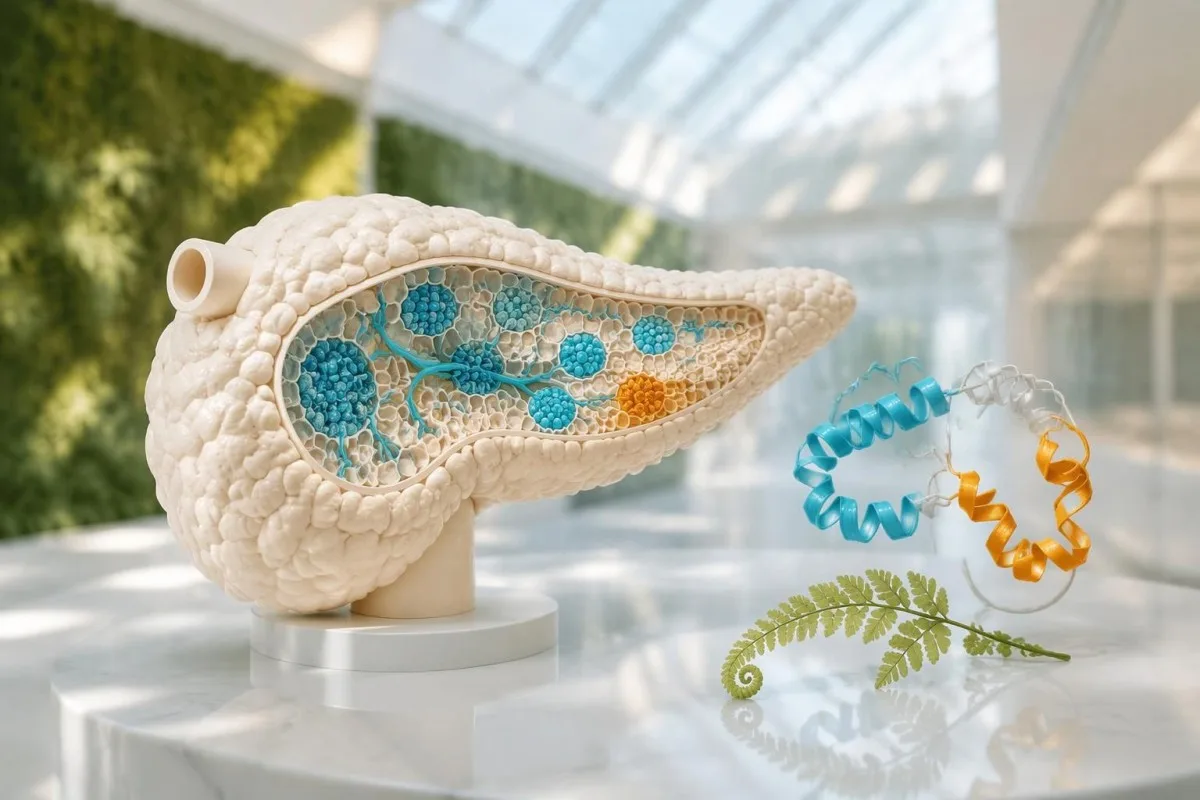
Проинсулинның югары булуы гына инсулиноманы диагностикалау өчен җитми. Табибларга документлар белән расланган гипогликемия вакытында алынган үрнәк кирәк; аны глюкоза, инсулин, C-пептид һәм даруларга тикшерү нәтиҗәләре белән бергә бәялиләр — гадәти метаболик тикшерүдә алынган югары нәтиҗә генә җитми.

Төп нәтиҗәләр
- Проинсулин анализы нәтиҗәләре лабораториядә расланган түбән глюкоза белән бергә үлчәнгәндә диагностик яктан файдалы була; өлкәннәрдә гипогликемияне бәяләгәндә бу күрсәткеч гадәттә 55 mg/dL (3.0 mmol/L) тан түбән була.
- Проинсулинның югары дәрәҗәләре генә инсулиноманы расламый; инсулинга резистентлык, дарулар тәэсире, бөер функциясе бозылу һәм анализ ысуллары арасындагы аермалар нәтиҗәләрне аңлатуга йогынты ясарга мөмкин.
- Эндоген инсулин секрециясе гипогликемия вакытында инсулинның кимендә 3 µIU/mL, C-пептидның кимендә 0.6 ng/mL һәм проинсулинның кимендә 5 pmol/L булуы белән раслана; күрсәткечләр бергә, билгеле бер үрнәк буларак бәяләнә.
- 5 pmol/L чиге глюкоза түбән булганда кулланыла торган клиник күрсәтмәдәге карар кабул итү ноктасы; ул универсаль югары референс чиге дә, нәкъ шешкә хас чик тә түгел.
- Даруларга тикшерү инсулинома лаборатор анализларына хас күренешне кабатлый алганга күрә, тиешле сульфонилмочевина препаратларын һәм меглитинидларны да үз эченә алырга тиеш.
- Табиб күзәтүе астында үткәрелә торган ураза тоту сынавы шикләнелгән ач торуга бәйле гипогликемия үзеннән-үзе теркәлмәсә, 72 сәгатькә кадәр дәвам итә ала; бу сынауны өйдә беркайчан да кабатламагыз.
- Ашаганнан соңгы эпизодлар озакка сузылган ураза тоту урынына, кайвакыт 5 сәгатькә кадәр дәвам итә торган, табиб күзәтүе астында үткәрелгән катнаш ризык белән сынауны таләп итәргә мөмкин.
- Беренче чиратта — кичектергесез куркынычсызлык беренче урында тора: аңлы һәм йота ала торган кеше тиз тәэсир итүче 15–20 g углевод кабул итә һәм 15 минуттан соң глюкоза дәрәҗәсен кабат тикшерә ала.
Проинсулин анализы нәтиҗәсенең югары булуы инсулиноманы аңлатамы?
Проинсулин анализының югары нәтиҗәсе инсулинома диагнозын куймый. Клиник яктан әһәмиятле сорау — лабораториядә үлчәнгән плазмадагы глюкоза дәрәҗәсе түбән булганда (еш кына 55 mg/dL (3.0 mmol/L) дан түбән) ашказаны асты бизеннән инсулин бүленеп чыгу дәвам итәме һәм бу күренешне дарулар яки башка сәбәпләр аңлата аламы.
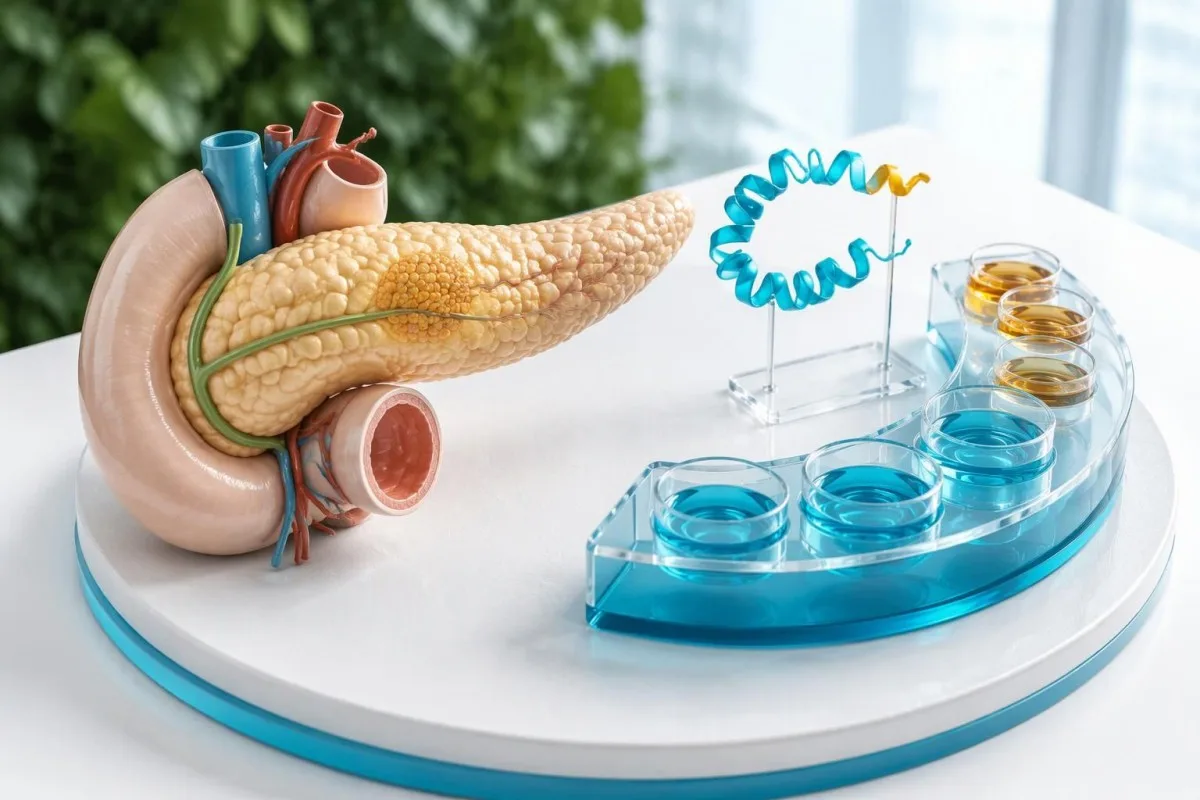
Бер инсулинома — инсулин бүлеп чыгаручы ашказаны асты бизенең нейроэндокрин үсентесе; проинсулин нәтиҗәсе аның урнашу урынын, үз-үзен тотышын яки барлыгын ачыклый алмый. Глюкоза дәрәҗәсе 104 mg/dL булганда алынган 18 pmol/L күрсәткече глюкоза дәрәҗәсе 42 mg/dL булганда алынган шул ук күрсәткечтән башка сорауга җавап бирә, чөнки гипогликемия вакытында ашказаны асты бизенең нормаль секрециясе нык кысылырга тиеш.
Кантести - ЯИ анализы проинсулинның 18 pmol/L булуын бер үк вакытта үлчәнгән глюкоза дәрәҗәсеннән аерым карап аңлатып булмавын аңлатырга ярдәм итә. Безнең биомаркерны аңлатучы кулланмасы лаборатория нәтиҗәләрен контекстта аңларга ярдәм итә, әмма ЯИ аңлатмасы критик үрнәк ала, дару тәэсирен кире кага яки ашказаны асты бизенә бәйле диагнозны раслый алмый.
Эндокринология җәмгыяте күрсәтмәсе түбәндәге очракта Уиппл триадасы олылардагы гипогликемия бозылышын тикшерергә киңәш итә: туры килә торган симптомнар, плазмадагы глюкозаның түбән булуы һәм глюкоза күтәрелгәч хәлнең яхшыруы (Cryer et al., 2009). Бу 3 элемент аерым лаборатория билгесенең яки сенсор сигналының вакытыннан алда инсулинома диагнозына әверелүенә юл куймый; диагностика өчен кирәкле һәр деталь ачыкланганчы да авыр симптомнарны дәваларга кирәк.
Проинсулин ашказаны асты бизе секрециясендә нәрсәне үлчи?
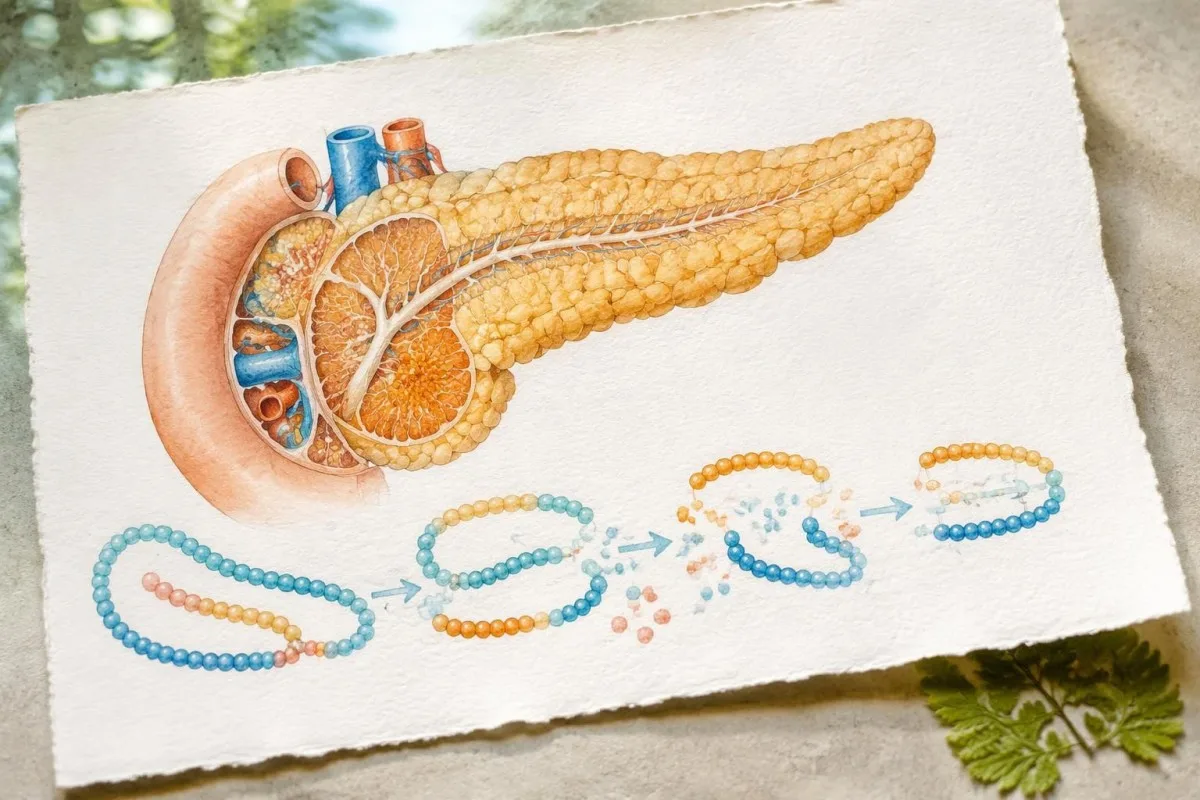
Проинсулин — ашказаны асты бизенең бета-күзәнәкләре инсулин һәм C-пептид җитештерә торган прекурсор. Эшкәртелү нәтиҗәсендә өлгергән инсулин 2 пептид чылбырыннан тора, ә C-пептид аерым бүленеп чыга; канда әйләнештәге проинсулин прекурсорның бүленеп чыгуын да, аның никадәр нәтиҗәле эшкәртелүен дә чагылдыра.
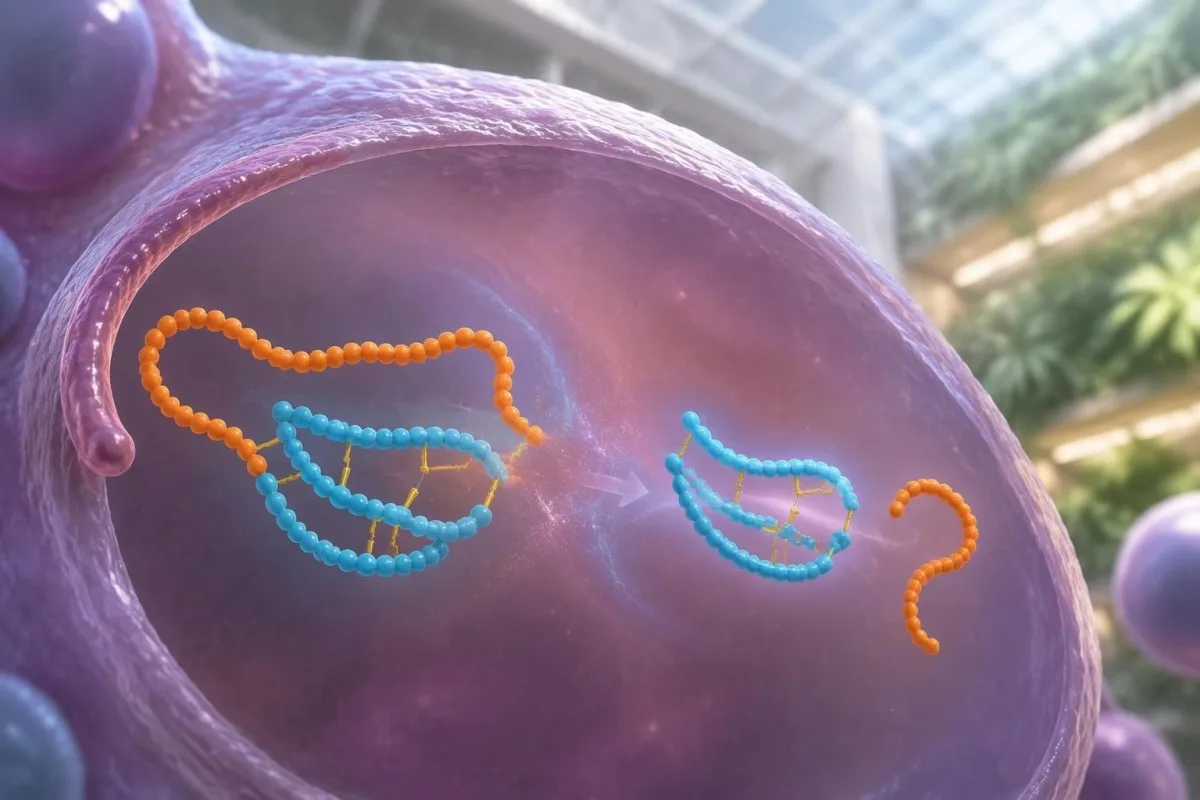
Проинсулин инсулинның башка исеме генә түгел, һәм бу 2 анализ бер-берсен алыштырмый. Прекурсорның күпчелек өлеше бета-күзәнәкләрнең секретор гранулалары эчендә, бүленеп чыкканчы ук эшкәртелә; секрециягә ихтыяҗ арту яки эшкәртелүнең аномаль булуы кандагы прекурсор молекулалары күләмен арттырырга мөмкин, шуңа күрә югары нәтиҗә ашказаны асты бизендәге үсентедән автоном секрецияне түгел, ә бета-күзәнәкләрнең эш йөкләнешен чагылдырырга мөмкин.
C-пептид түбәндәгене ачыкларга ярдәм итә: эндоген инсулин җитештерелүен чөнки инъекция белән кертелгән инсулинда C-пептид юк. Гипогликемия вакытында C-пептид кимендә 0.6 ng/mL булу, башка нәтиҗәләр белән бергә бәяләнгәндә, организм эчендә секреция дәвам итүен раслый; гипогликемия булмаганда, безнең C-пептидның югары нәтиҗәләре метаболик ихтыяҗ һәм бөерләрнең чистарту функциясе ни өчен шундый ук билге бирә алуын аңлата.
Some laboratories measure intact proinsulin, while other methods detect additional processing intermediates to differing degrees. Two reports both expressed in pmol/L may therefore have different reference intervals and diagnostic performance; when comparing an 8 pmol/L result with an earlier 14 pmol/L result, check the method and sampling conditions before assuming pancreatic function improved.
Анализга кадәр документлар белән расланган гипогликемия дип нәрсә санала?
Documented hypoglycemia requires a reliable glucose measurement interpreted with symptoms and recovery. Laboratory plasma glucose below 55 mg/dL (3.0 mmol/L) is a commonly used diagnostic context in adults without diabetes; a home meter or continuous glucose monitor alone does not establish insulinoma.
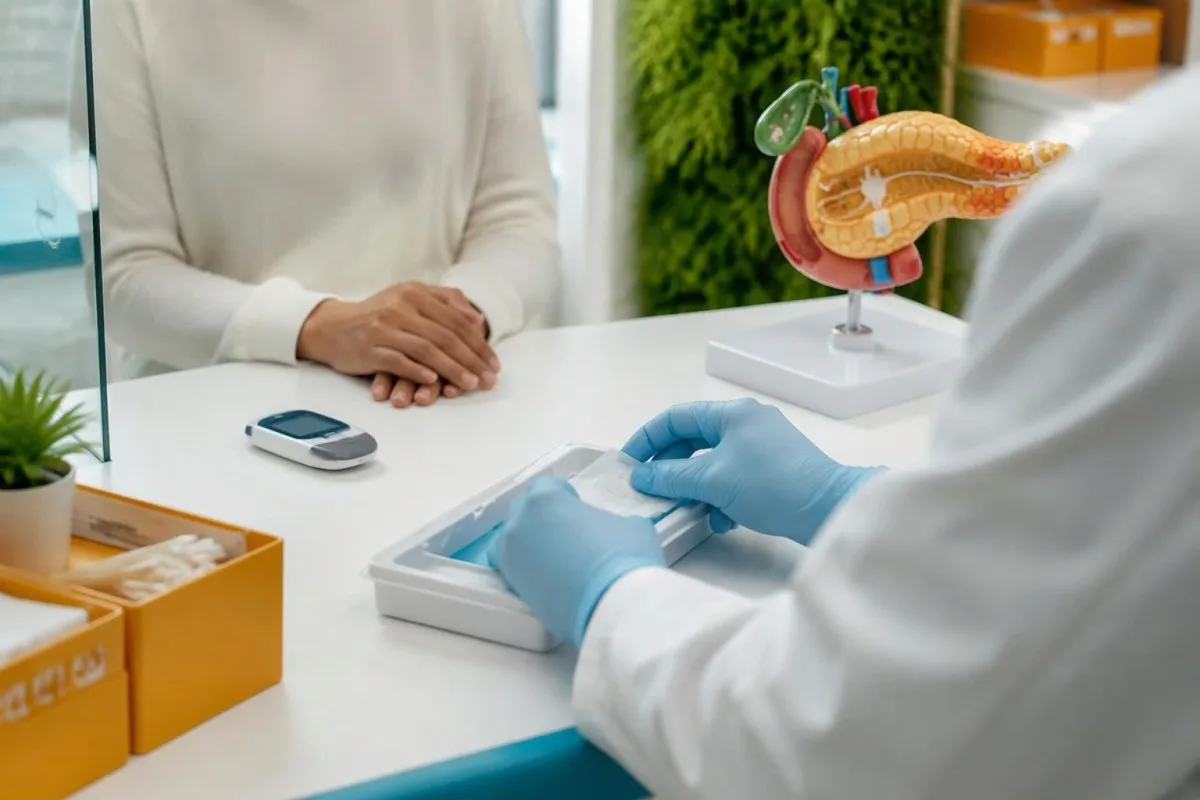
Whipple’s triad links symptoms to the low glucose rather than merely showing that both occurred on the same day. For example, shakiness with a laboratory glucose of 43 mg/dL followed by improvement after carbohydrate is more informative than shakiness with glucose of 91 mg/dL; our глюкозаның түбән булу сәбәпләре guide explains competing medication, illness and fasting explanations.
Continuous glucose monitors measure interstitial glucose, and their readings can lag behind circulating glucose during rapid changes. A nighttime sensor value of 48 mg/dL can also result from pressure on the sensor; discuss repeated alerts with a clinician, but do not deliberately avoid food to reproduce an unconfirmed episode or treat a sensor trace as biochemical proof.
Palpitations, sweating and tremor are autonomic symptoms, while confusion, impaired coordination and unusual behavior can reflect inadequate glucose delivery to the brain. Symptoms with glucose of 85 mg/dL need another explanation, potentially including causes covered in our йөрәк тибеше белән бәйле симптомнарны бәяләү җитәкчелеге; absence of classic sweating does not exclude hypoglycemia, especially after recurrent episodes.
Глюкоза түбән булганда проинсулин белән бергә нинди нәтиҗәләр карала?
The critical sample includes plasma glucose, insulin, C-peptide, proinsulin, beta-hydroxybutyrate and hypoglycemic medication screening. When glucose is below 55 mg/dL, clinicians ask whether insulin-related markers are inadequately suppressed, rather than whether they exceed ordinary fasting reference ranges.
The Endocrine Society guideline describes insulin at least 3 µIU/mL, C-peptide at least 0.6 ng/mL and proinsulin at least 5 pmol/L during hypoglycemia as evidence supporting endogenous hyperinsulinism (Cryer et al., 2009). These values are context-dependent decision thresholds, not an independent checklist that diagnoses a pancreatic growth; clinical circumstances, kidney function and analytical reliability still matter.
Beta-hydroxybutyrate of 2.7 mmol/L or less supports an insulin-mediated mechanism because insulin restrains ketone production. A low ketone result is supportive rather than tumor-specific: injected insulin and insulin-releasing medications can also suppress ketones, while our бета-гидроксибутиратны аңлату кулланмасы explains why nutritional ketosis and ketoacidosis represent different clinical questions.
Samples should be collected during the same hypoglycemic episode, ideally before carbohydrate or intravenous glucose when that does not delay treatment. Pairing proinsulin from 09:00 with glucose from 11:00 can create a misleading pattern; in a supervised setting, a glucose increase of at least 25 mg/dL after intravenous glucagon provides additional evidence of preserved hepatic glycogen in an insulin-mediated episode.
| Дәрәҗә | Диапазон | Мәгънәсе |
|---|---|---|
| Low plasma glucose | <55 mg/dL (<3.0 mmol/L) | Common diagnostic context for adult hypoglycemia assessment; symptoms and sampling reliability remain necessary. |
| Insulin not suppressed | ≥3 µIU/mL | Supports inappropriate insulin activity during hypoglycemia; not an ordinary high-insulin definition. |
| C-peptide not suppressed | ≥0.6 ng/mL (≥0.2 nmol/L) | Supports endogenous secretion; insulin-releasing medications and kidney impairment must be considered. |
| Proinsulin not suppressed | ≥5 pmol/L | Guideline evidence supporting endogenous hyperinsulinism, not an insulinoma-specific cutoff. |
| Ketones suppressed | Beta-hydroxybutyrate ≤2.7 mmol/L | Supports insulin or insulin-like activity; does not distinguish a growth from medication effects. |
| Medication screen | Relevant secretagogues assessed | A detected sulfonylurea or meglitinide can explain an otherwise insulinoma-like pattern. |
Ни өчен 5 pmol/L инсулинома өчен универсаль чик түгел?
Proinsulin of 5 pmol/L is a hypoglycemia decision threshold, not a universal normal-range ceiling. Its specificity for insulinoma is limited when used alone; higher end-of-fast thresholds have performed better in selected studies, but they cannot be transferred uncritically between assays and populations.
Guettier et al. examined this problem in the Journal of Clinical Endocrinology & Metabolism in 2013 and found that an end-of-fast proinsulin threshold around 22 pmol/L discriminated insulinoma cases from controls better than 5 pmol/L in their study population. That finding explains why a specialist may treat 6 pmol/L differently from 60 pmol/L, without declaring either value diagnostic in isolation.
A laboratory reference interval describes results expected under that laboratory’s specified conditions; it does not necessarily describe appropriate hormone suppression during hypoglycemia. In a clearly hypothetical laboratory with a fasting interval of 1–8 pmol/L, a result of 7 pmol/L would not be flagged high, yet it could still be inadequately suppressed if simultaneous plasma glucose were 41 mg/dL.
There is no defensible universal set of mild, moderate and critical proinsulin bands for diagnosing insulinoma. Comparing 12 pmol/L with 20 pmol/L requires the glucose context, method and episode timing—not just percentage change; our guide to лабораториядәге визитлар арасындагы аермалар explains why analytical and biological variation can complicate trends.
Дарулар проинсулин һәм инсулинома очрагындагы күренешләргә ничек охшарга мөмкин?
Sulfonylureas and meglitinides can reproduce the biochemical pattern of insulinoma by stimulating pancreatic insulin release. During glucose of 45 mg/dL, high insulin, C-peptide and proinsulin cannot distinguish a growth from these medications without an appropriately timed and sufficiently broad drug screen.
Examples include gliclazide, glimepiride, glipizide, repaglinide and nateglinide; a laboratory panel may not include every agent used internationally. A negative result from a sample collected 24 hours after an episode may be less informative than a simultaneous critical sample, depending on the drug and assay sensitivity; ask which medications were actually tested rather than accepting the word negative without qualification.
Injected insulin typically produces suppressed C-peptide and proinsulin during hypoglycemia, but insulin assays differ in how well they recognize insulin analogues. Thus, glucose of 39 mg/dL with unexpectedly low measured insulin does not always exclude insulin exposure; the same contextual issue is discussed in our low insulin interpretation guide, and specialist laboratories may need a different analytical method.
Medication reconciliation should include prescribed products, accidental mix-ups and access to another household member’s diabetes treatment, without assuming deliberate exposure. Older adults can have prolonged episodes after a single dose when clearance is impaired; our олы яшьтәгеләрдә медикаментларның йогынтысы guide supports this review, while insulin antibodies may be investigated when results and episode timing suggest an autoimmune mechanism.
Бөер функциясе бозылу яки үрнәк алу хаталары проинсулинны күтәрә аламы?
Reduced kidney clearance can elevate proinsulin and C-peptide, while sample problems can distort the surrounding glucose or insulin results. An eGFR of 24 mL/min/1.73 m² makes straightforward application of standard hypoglycemia thresholds less reliable than it would be with preserved kidney function.
Kidney disease affects both marker clearance and susceptibility to hypoglycemia through medication accumulation, nutrition and altered glucose production. A C-peptide result of 2.1 ng/mL with glucose of 48 mg/dL therefore needs more cautious interpretation in advanced kidney impairment; our low eGFR assessment guide explains why kidney context changes the urgency and meaning of laboratory abnormalities.
Delayed sample processing can create artifactual low glucose because cellular elements continue consuming glucose after collection, while hemolysis can lower measured insulin in susceptible circumstances. A recorded glucose of 44 mg/dL without compatible symptoms may prompt review of processing and a repeat properly handled sample; our kidney chemistry interpretation guide also explains why one chemistry value should not stand in for overall clearance.
Kantesti can help organize a proinsulin result of 16 pmol/L alongside kidney markers, but our explanation cannot determine whether an assay suffered interference or a sample was mishandled. Ask the laboratory about intact versus total proinsulin, insulin cross-reactivity, relevant supplement interference and specimen quality; discordant results sometimes require repeat measurement using another method rather than more aggressive imaging.
Бергә бәяләнгән проинсулин нәтиҗәләре гамәлдә ничек күренә?
The same proinsulin value can mean different things at different glucose concentrations. The following 3 hypothetical examples illustrate clinical reasoning, not diagnostic predictions; each assumes a correctly processed sample, and none substitutes for a specialist assessment of the complete episode.
Example 1: an adult has glucose of 106 mg/dL, insulin of 24 µIU/mL, C-peptide of 4.2 ng/mL and proinsulin of 19 pmol/L during routine fasting testing. This pattern can fit increased secretory demand, including insulin resistance; without documented hypoglycemia, it does not establish an insulinoma pathway, even if proinsulin exceeds the laboratory’s reference interval.
Example 2: during confusion, plasma glucose is 42 mg/dL, insulin 8 µIU/mL, C-peptide 1.6 ng/mL, proinsulin 34 pmol/L and beta-hydroxybutyrate 0.4 mmol/L. This pattern strongly supports insulin-mediated endogenous secretion, but a detected sulfonylurea would change the explanation; a negative comprehensive screen and clinical evaluation would make autonomous pancreatic secretion a more serious consideration.
Example 3: plasma glucose is 46 mg/dL, insulin 1.4 µIU/mL, C-peptide 0.9 ng/mL and proinsulin 58 pmol/L during a supervised assessment. Unusually prominent proinsulin secretion can make the insulin result deceptively unimpressive, so one below-threshold marker should not automatically dismiss the pattern; our кан анализы вакытын билгеләү өчен кулланма explains why same-episode alignment remains necessary.
Бу инсулинга резистентлыкны тикшерүдән нәрсә белән аерыла?
Insulin-resistance testing evaluates metabolic demand, not failure to suppress insulin during hypoglycemia. A routine overnight fasting panel with glucose of 98 mg/dL is therefore not equivalent to a critical sample collected at glucose of 43 mg/dL, even when both include insulin and proinsulin.

HOMA-IR estimates insulin resistance from fasting insulin and glucose; the conventional formula using mg/dL is insulin multiplied by glucose, divided by 405. For example, insulin of 15 µIU/mL and glucose of 100 mg/dL produce about 3.7, but there is no universal diagnostic cutoff across assays and populations; our borderline fasting insulin guide explains those limitations.
High proinsulin levels and an increased proinsulin-to-insulin ratio have been studied as markers of beta-cell processing stress, but these measures are not standard stand-alone tests for insulin resistance or insulinoma. Ratios can become unstable when insulin approaches the assay’s detection limit, and mixing pmol/L with µIU/mL creates an invalid calculation; 2 apparently comparable ratios may therefore reflect different methods rather than different biology.
Кантести - AI биомаркерларны аңлату платформасы that explains why glucose of 100 mg/dL with elevated insulin belongs to a different reasoning pathway from symptomatic glucose of 43 mg/dL. In conditions such as PCOS, established metabolic assessment remains more useful than isolated precursor testing; our PCOS diagnostic criteria guide separates reproductive diagnosis from metabolic risk assessment.
Инсулиномага шик булганда табиб күзәтүендәге озак ач тору сынавы кайчан урынлы?
A supervised fast is appropriate when fasting hypoglycemia is convincingly suspected but a spontaneous critical sample cannot be obtained. The assessment may continue for up to 72 hours, with monitored sampling and predefined stopping rules; an isolated high proinsulin result is not sufficient reason to perform it.
An endocrinology team considers the episode pattern, medication history and quality of previous glucose documentation before arranging a fast. Symptoms before breakfast, during prolonged gaps between meals or after exercise may justify this pathway, whereas a single mildly elevated proinsulin value with glucose of 96 mg/dL usually calls for clarification rather than immediate admission for prolonged fasting.
During the fast, staff monitor symptoms and obtain repeated laboratory samples, increasing sampling frequency as glucose falls; the final critical sample is collected according to the protocol before treatment when safe. The 72-hour duration is a maximum, not a target, and many diagnostic episodes occur earlier; the Endocrine Society protocol explicitly places biochemical assessment and supervised stopping criteria ahead of simply completing a clock interval (Cryer et al., 2009).
Never attempt a 72-hour diagnostic fast at home, including while wearing a glucose sensor. Ordinary meal-timing practices discussed in our интерваллы ач тору һәм лаборатория анализлары буенча кулланма are not substitutes for an endocrine investigation; suspected hypoglycemia may make intentional fasting unsafe, and changes to insulin or other diabetes medicines require a clinician-directed plan.
Ә симптомнар ач торганда түгел, ә ашаганнан соң барлыкка килсә?
Predominantly meal-related hypoglycemia may require a supervised mixed-meal test rather than a prolonged fast. Monitoring can extend to 5 hours after a representative meal, with glucose and hormone samples obtained during symptoms; the meal pattern alone neither proves nor excludes insulinoma.
Hypoglycemia after upper gastrointestinal surgery can reflect altered nutrient delivery and exaggerated insulin release, rather than a pancreatic growth. An episode 2–3 hours after eating therefore requires the surgical history as well as the hormone pattern; endogenous hyperinsulinism is a biochemical description, not a promise that imaging will identify a solitary insulinoma.
An oral glucose tolerance test is generally not the preferred investigation for suspected postprandial hypoglycemia because a glucose drink can create results that do not reproduce everyday meals. A supervised mixed meal better matches the clinical trigger, although meal composition and interpretation are less standardized than a fasting protocol; uncertainty should be discussed rather than hidden behind a single post-meal proinsulin cutoff.
Sugar cravings, fatigue and irritability 1–2 hours after lunch do not establish biochemical hypoglycemia. Record meal timing, symptoms and available glucose readings, then seek an appropriate assessment rather than self-ordering repeated proinsulin panels; our sugar cravings testing guide explains why these symptoms alone are insufficient evidence of an insulin-secreting disorder.
Инсулинома диагностикасы барышына сканерлау кайчан кертелә?
Pancreatic imaging generally follows biochemical confirmation of endogenous hyperinsulinemic hypoglycemia and exclusion of relevant medications. Glucose of 42 mg/dL with an appropriate hormone pattern provides a reason to investigate localization; proinsulin of 20 pmol/L with normal glucose does not justify the same assumption.
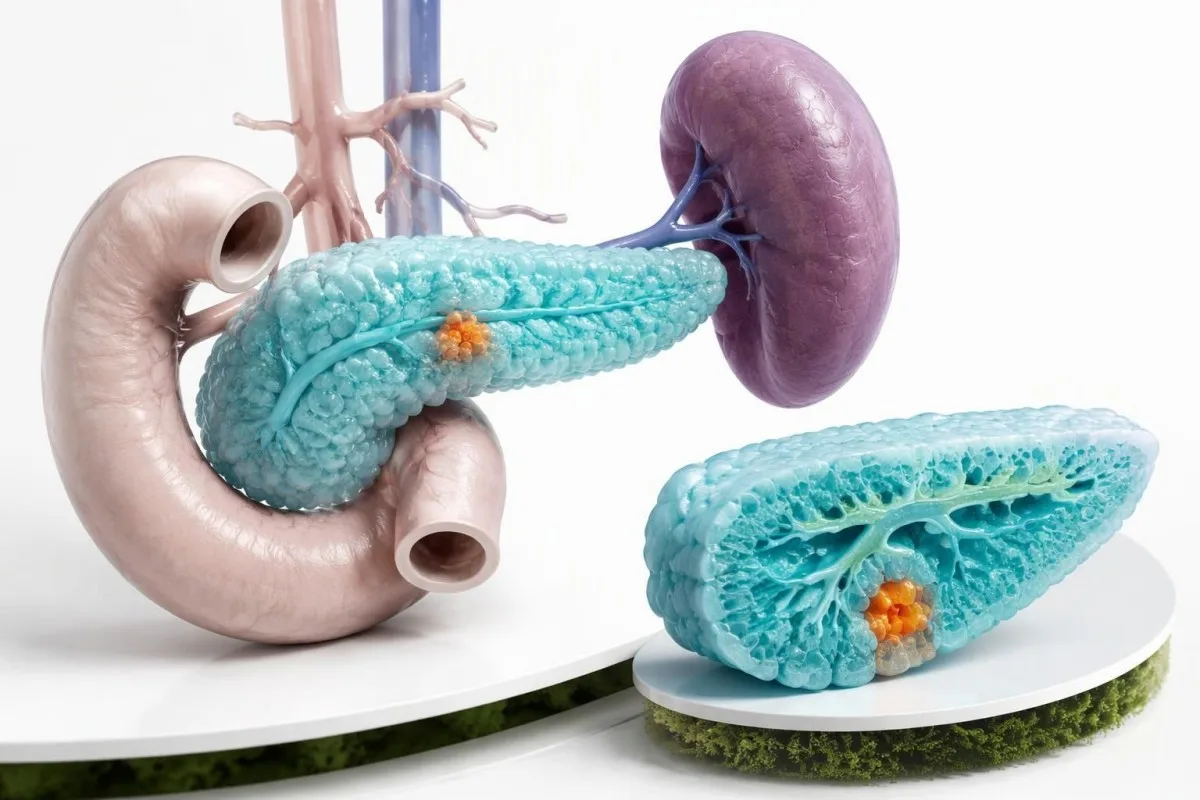
CT, MRI and endoscopic ultrasound can identify or characterize a pancreatic source, but small insulinomas may evade an initial scan. A negative first study does not cancel convincing biochemistry, while an incidental pancreatic finding does not prove that it caused hypoglycemia; those 2 directions of error are why localization and hormone diagnosis must remain separate steps.
When standard imaging is unrevealing, specialist centers may consider receptor-based imaging or selective arterial calcium stimulation with hepatic venous sampling. These are localization tools for a selected patient, not routine responses to a proinsulin result of 11 pmol/L; the choice depends on previous studies, local expertise, availability and whether the clinical pattern supports focal or more diffuse insulin secretion.
Multiple endocrine neoplasia type 1 may become relevant when pancreatic findings coexist with personal or family evidence of other endocrine disorders. A raised gastrin result—for example 300 pg/mL while taking a proton-pump inhibitor—does not independently establish that syndrome; our high gastrin interpretation guide explains why medication effects and clinical context are also necessary here.
Хәзер проинсулин нәтиҗәсе югары булса, нишләргә?
Your next step depends on documented glucose and symptoms, not the proinsulin flag alone. Severe confusion, seizure or inability to swallow requires emergency help; an alert person who can swallow can take 15–20 g of fast-acting carbohydrate and recheck glucose after 15 minutes.
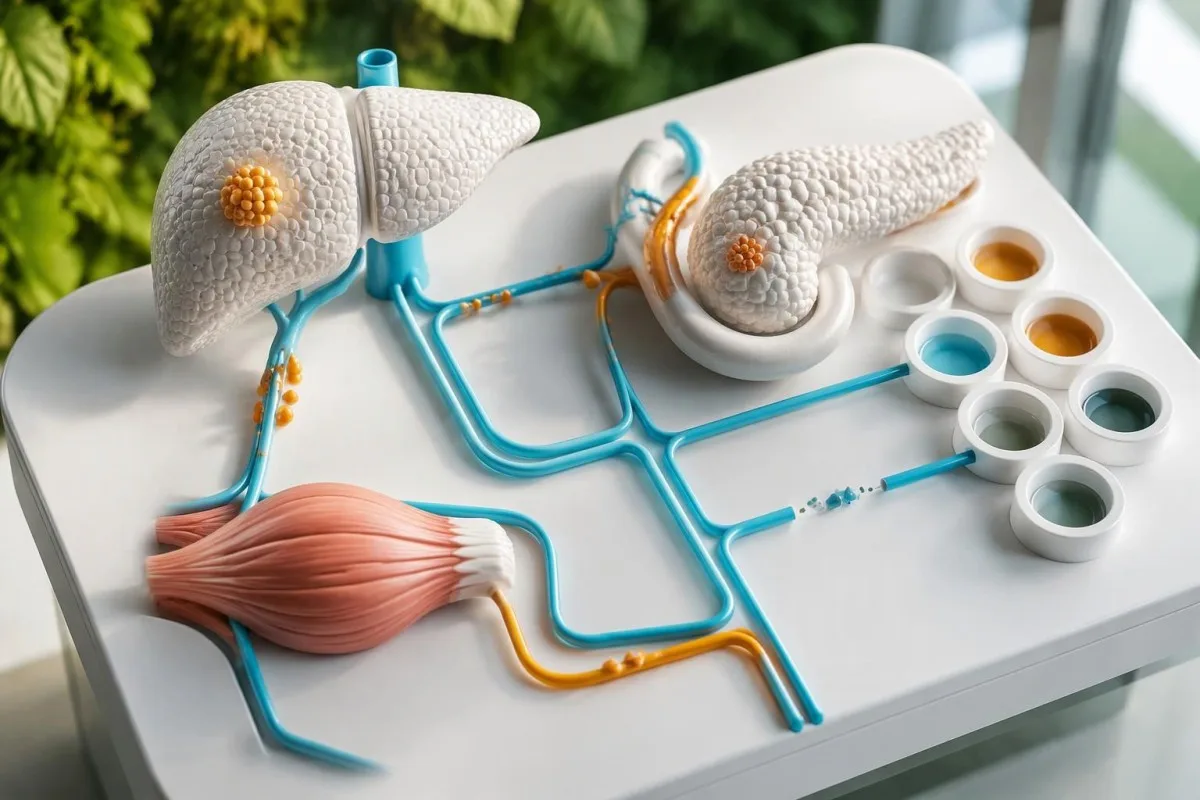
Do not give food or drink to someone who cannot swallow safely; use prescribed rescue glucagon if available and follow the emergency plan. Recurrent confirmed readings below 54 mg/dL, or episodes that require another person’s help, warrant prompt clinical review rather than waiting for another proinsulin result; avoid driving during symptoms and obtain advice about driving safety after recurrent episodes.
Кантести - AI кан анализы нәтиҗәләрен аңлату платформасы that can explain uploaded laboratory reports in about 60 seconds, but it cannot monitor a fast or certify that glucose of 43 mg/dL was measured during symptoms. Kantesti Ltd is a UK organization described on our company information page; our role is educational interpretation, not emergency monitoring or autonomous diagnosis.
Kantesti AI explanations should be checked against the report’s units, collection times, medication list and glucose context before any clinical decision. Our җаваплы ЯИ принциплары explain the need for human oversight; the AI технологиясе буенча кулланма describes the interpretation workflow, which cannot replace the 6 components of a properly collected critical sample or a specialist-supervised assessment.
Проинсулин анализы нәтиҗәләрен аңлатуда нинди дәлилләр ярдәм итә?
The diagnostic framework is supported by clinical hypoglycemia guidance and studies evaluating insulin and proinsulin during supervised fasting. The 2 medical references below directly address those questions; the separate Figshare publications are general educational resources, not evidence validating an insulinoma cutoff.
Cryer et al.’s 2009 Endocrine Society guideline provides the framework for Whipple’s triad, critical sampling and a supervised fast of up to 72 hours. Guettier et al.’s 2013 study adds a specific caution: the 5 pmol/L proinsulin decision point has limited specificity for insulinoma when treated as a stand-alone result, and higher study-derived cutoffs require assay-aware interpretation.
The 2 Figshare guides listed below cover hematology markers and digestive symptoms associated with fasting; neither establishes the sensitivity or specificity of a proinsulin test. Our ач тору һәм ашкайнату симптомнары турындагы белешмәлек addresses a different clinical question, and digestive discomfort is not a reason to attempt a prolonged insulinoma investigation without supervision.
Before an endocrine appointment, bring at least 1 complete report showing the glucose value, collection time, proinsulin method if available and any simultaneous insulin or C-peptide measurements. Add a medication list and a brief symptom timeline; our медицина эчтәлегенә стандартлар explain why we distinguish published clinical evidence, hypothetical examples and platform capabilities rather than presenting them as equivalent proof.
Еш бирелгән сораулар
0 Югары проинсулин дәрәҗәләре инсулиноманы диагностикалый аламы?
0 Югары проинсулин дәрәҗәсе глюкоза һәм клиник контекст булмаса инсулиноманы диагностикалый алмый. Лабораториядә расланган гипогликемия вакытында, гадәттә 55 mg/dL (3.0 mmol/L) дан түбән булганда, проинсулинның тиешенчә кимемәве эндоген инсулин секрециясен күрсәтергә мөмкин. Табиблар шулай ук инсулинны, C-пептидны, бета-гидроксибутиратны һәм тиешле даруларга скрининг нәтиҗәләрен бәяли. Эндоген секрециянең ышандырырлык күрсәткечләре булганда да, ашказаны асты бизендәге урынны билгеләгәнче, моны инсулин бүлеп чыгаручы дарулардан һәм башка сәбәпләрдән аерырга кирәк.
Препроинсулинның нинди дәрәҗәсе инсулиномага ишарә итә?
Гипогликемия вакытында ким дигәндә 5 pmol/L проинсулин күрсәткече — эндоген гиперинсулинизмны раслаучы клиник күрсәтмәдәге карар кабул итү чиге, инсулиномага гына хас диагноз түгел. Guettier һәм хезмәттәшләре үткәргән 2013 елгы тикшеренүдә, тикшеренү төркемендә, ач торуның ахырындагы якынча 22 pmol/L чиге 5 pmol/L чигенә караганда аеручанрак булуы ачыкланган. Анализ ысуллары, бөерләрнең эшчәнлеге һәм үрнәк алу шартлары бу күрсәткечләрнең аерым кешегә кулланылышына йогынты ясый. Глюкоза нормаль булганда алынган гадәти анализ нәтиҗәсен гипогликемия вакытында ач тору ахырында билгеләнгән чикне кулланып аңлатып булмый.
Инсулинга резистентлык аркасында проинсулин югары булырга мөмкинме?
Проинсулин β-күзәнәкләрнең секретор ихтыяҗы арту һәм прекурсорларның эшкәртелүе үзгәрү сәбәпле күтәрелергә мөмкин, шул исәптән инсулинга резистентлык белән бәйле очракларда. Шуңа күрә глюкоза 105 mg/dL булганда проинсулинның 18 pmol/L тәшкил итүе инсулиноманы расламый. Метаболиканы гадәти бәяләү клиник сорауга карап глюкоза, HbA1c, липидлар һәм сайлап алынган инсулин үлчәүләрен үз эченә алырга мөмкин. Проинсулин һәм проинсулинның инсулинга нисбәте инсулинга резистентлыкны диагностикалау өчен аерым стандарт тестлар булып саналмый.
Ни өчен С-пептид һәм даруларга тикшерү кирәк?
C-пептид һәм даруларга скрининг эндоген инсулин секрециясен инъекция белән кертелгән инсулиннан һәм инсулин бүленеп чыгуын көчәйтә торган дарулардан аерырга ярдәм итә. Гипогликемия вакытында C-пептид дәрәҗәсенең кимендә 0.6 ng/mL булуы ашказаны асты бизенең секрециясе дәвам итүен күрсәтә, ләкин сульфонилмочевина препаратлары һәм меглитинидлар да шундый ук күрсәткеч бирә ала. Даруларга скринингның тискәре нәтиҗәсе аның нинди даруларны колачлавына, сизгерлегенә һәм үрнәкне алу вакытына бәйле. Бөер функциясе бозылуы һәм инсулин анализының аналогларны тануы аңлатуны тагын да катлауландырырга мөмкин.
Югары проинсулин нәтиҗәсе өчен миңа 72 сәгатьлек ач тору кирәкме?
Изоляцияләнгән югары проинсулин нәтиҗәсе 72 сәгатьлек ач торуны автоматик рәвештә акламый. Күзәтү астында ач тору уразада гипогликемия булуына җитди нигезле шик туганда һәм үзеннән-үзе барлыкка килгән критик үрнәкне алу мөмкин булмаганда карала. Тест вакытында үрнәкләрне күзәтеп алу һәм туктату критерийлары бар, һәм ул еш кына максималь вакытка җиткәнче тәмамлана. Өйдә озакка сузылган диагностик ач торуны беркайчан да үткәрмәгез, хәтта өзлексез глюкоза мониторын кулланганда да.
Инсулинома инсулин дәрәҗәсе югары булмаганда да булырга мөмкинме?
0 Aşağı яки гадәти күренгән инсулин нәтиҗәсе гипогликемия вакытында инсулиноманы тулысынча кире какмый, аеруча проинсулин секрециясе гадәттән тыш көчле булганда яки анализда проблемалар булганда. Проинсулинның кискен югары булуы һәм C-пептидның җитәрлек дәрәҗәдә басылмавы белән бергә инсулинның 3 µIU/mL-дан түбән булуы белгеч бәяләвен таләп итә, аны автоматик рәвештә әһәмиятсез дип санарга ярамый. Глюкоза концентрациясен, кетоннар реакциясен, даруларга скрининг нәтиҗәләрен һәм аналитик ысулны бергәләп тикшерергә кирәк. Гадәти хисапта нормаль дип күрсәтелгән инсулин да глюкоза 42 mg/dL булганда урынсыз дәрәҗәдә булырга мөмкин.
Тикшерүне көткәндә глюкоза дәрәҗәм түбән булса, нишләргә тиешмен?
Уяу һәм йота алган кеше 15–20 г тиз үзләштерелә торган углевод кабул итә һәм 15 минуттан соң глюкоза дәрәҗәсен яңадан тикшерә ала; глюкоза түбән булып калса, дәвалау планындагы күрсәтмәләр буенча дәвалауны кабатларга кирәк. Көчле буталу, көзән җыеру, аңны югалту яки йота алмау ашыгыч ярдәм таләп итә, һәм авыз аша ризык яки эчемлек бирергә ярамый. Булса, табиб билгеләгән коткару глюкагонын кулланыгыз һәм ашыгыч ярдәм күрсәтмәләрен үтәгез. Проинсулин үрнәген алу өчен дәвалауны кичектермәгез; кабатлана торган эпизодлар кичекмәстән табиб тикшерүен таләп итә.
Кан анализы нәтиҗәләрен аңлатып алыгыз
Лаборатория хисабыгызны йөкләгез, һәм Kantesti AI һәр биомаркерны секундлар эчендә гади тел белән аңлатыр. Дөнья буйлап 2 миллионнан артык кеше куллана.
Сылтамалар
- Klein, T., Mitchell, S., & Weber, H. (2026). B төркемендәге тискәре кан тибы, LDH кан анализы һәм ретикулоцитлар саны буенча белешмәлек. Kantesti AI медицина тикшеренүләре. DOI
- Klein, T., Mitchell, S., & Weber, H. (2026). Ач торганнан соң эч китү, тизәктәге кара нокталар һәм ашказаны-эчәк системасы буенча белешмәлек, 2026. Kantesti AI медицина тикшеренүләре. DOI
- Cryer PE et al. (2009). Evaluation and Management of Adult Hypoglycemic Disorders: An Endocrine Society Clinical Practice Guideline. Journal of Clinical Endocrinology & Metabolism. DOI PubMed
- Guettier JM et al. (2013). The Role of Proinsulin and Insulin in the Diagnosis of Insulinoma: A Critical Evaluation of the Endocrine Society Clinical Practice Guideline. Journal of Clinical Endocrinology & Metabolism. DOI PubMed
- 2М +Анализланган тестлар
- 127+Илләр
- 100+Телләр
Медицина командасы турында


E-E-A-T ышаныч сигналлары
Тәҗрибә
Табиб җитәкчелегендә лаборатория нәтиҗәләрен аңлату эш процессларын клиник тикшерү.
Белгечлек
Лаборатория медицинасы: биомаркерларның клиник контекстта үз-үзләрен тотышын аңлау.
Авторититет
Доктор Томас Кляйн медицина ягыннан тикшерде; доктор Сара Митчелл һәм профессор доктор Һанс Вебер үз өлешләрен кертте.
Ышанычлылык
Ачык күзәтү юллары белән куркуны киметү өчен дәлилләргә нигезләнгән аңлату.
Медицина турында кисәтү
Бу мәкалә бары тик белем бирү максатларында гына һәм медицина киңәше булып тормый. Диагноз һәм дәвалау карарлары өчен һәрвакыт квалификацияле сәламәтлек саклау белгеченә мөрәҗәгать итегез.
Басылып чыкты · Редакция командасына мөрәҗәгать итегез
Kantesti Ltd нәшер итә, Англия һәм Уэльста теркәлгән, компания №. 17090423, Лондон, Бөекбритания.
