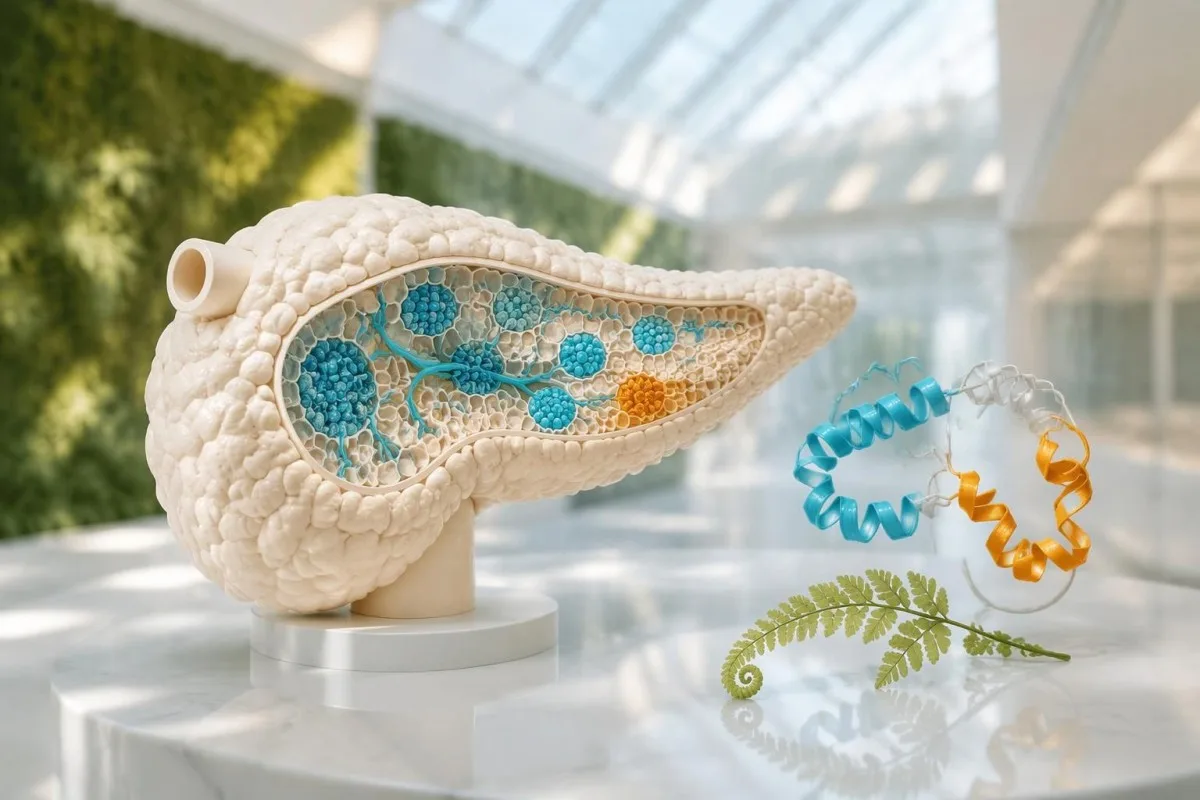
د پروانسولین لوړه کچه په یوازې ځان انسولینوما نه شي تشخیصولی. ډاکټران باید نمونه د مستندې هایپوګلیسیمیا پر مهال واخلي او د ګلوکوز، انسولین، سي-پېپټایډ او درملو د سکریننګ له پایلو سره یوځای یې تفسیر کړي—نه دا چې یوازې د عادي میتابولیکو ازموینو لوړه پایله وارزوي.

مهم ټکي
- د پروانسولین ازموینه پایلې هغه وخت د تشخیص لپاره ګټورې کېږي چې د لابراتوار له خوا تایید شوې د ګلوکوز له ټیټې کچې سره یوځای اندازه شي؛ په لویانو کې د هایپوګلیسیمیا په ارزونه کې دا کچه عموماً تر 55 mg/dL (3.0 mmol/L) ټیټه وي.
- د پروانسولین لوړه کچه په یوازې ځان انسولینوما نه ثابتوي؛ د انسولین مقاومت، د درملو اغېزې، د پښتورګو کمزوري او د ازموینې د طریقو توپیرونه د پایلو تفسیر بدلولی شي.
- د بدن دننه د انسولین ترشح د هایپوګلیسیمیا پر مهال لږ تر لږه 3 µIU/mL انسولین، لږ تر لږه 0.6 ng/mL سي-پېپټایډ او لږ تر لږه 5 pmol/L پروانسولین یې ملاتړ کوي؛ دا د یوې بڼې په توګه تفسیرېږي.
- د 5 pmol/L حد د ټیټ ګلوکوز پر مهال د لارښود له مخې د پرېکړې ټکی دی، نه د نورمالې لوړې کچې نړیوال حد او نه هم د تومور ځانګړی حد.
- د درملو سکریننګ باید اړوند سلفونیلیوریاګانې او مېګلیټینایډونه پکې شامل وي، ځکه دا درمل د انسولینوما په څېر لابراتواري بڼه رامنځته کولای شي.
- تر څارنې لاندې روژه ښايي تر ۷۲ ساعتونو پورې دوام وکړي، کله چې د روژې پر مهال د شکمنې هایپوګلیسیمیا پېښه په خپله نه شي ثبتېدای؛ دا ازموینه هېڅکله په کور کې مه تکراروئ.
- له خوړو سره تړلې پېښې ښايي د اوږدې روژې پر ځای تر څارنې لاندې د ګډو خوړو ارزونې ته اړتیا ولري، چې کله ناکله تر ۵ ساعتونو پورې غځېږي.
- سمدستي خوندیتوب لومړیتوب لري: هوښیار کس چې تېرولای شي، ۱۵–۲۰ g ژر اغېز کوونکی کاربوهایډرېټ اخیستلای شي او ۱۵ دقیقې وروسته ګلوکوز بیا اندازه کولای شي.
ایا د پروانسولین د ازموینې لوړه پایله د انسولینوما معنا لري؟
د پروانسولین د ازموینې لوړه پایله د انسولینوما تشخیص نه کوي. له کلینیکي پلوه مهمه پوښتنه دا ده چې ایا د وینې د پلازما د ګلوکوز د ټیټېدو پر مهال—چې ډېری وخت تر ۵۵ mg/dL (۳.۰ mmol/L) کم وي—د پانقراس د انسولین ترشح لا هم فعاله وي، او ایا درمل یا نور لاملونه دا بڼه تشریح کوي.
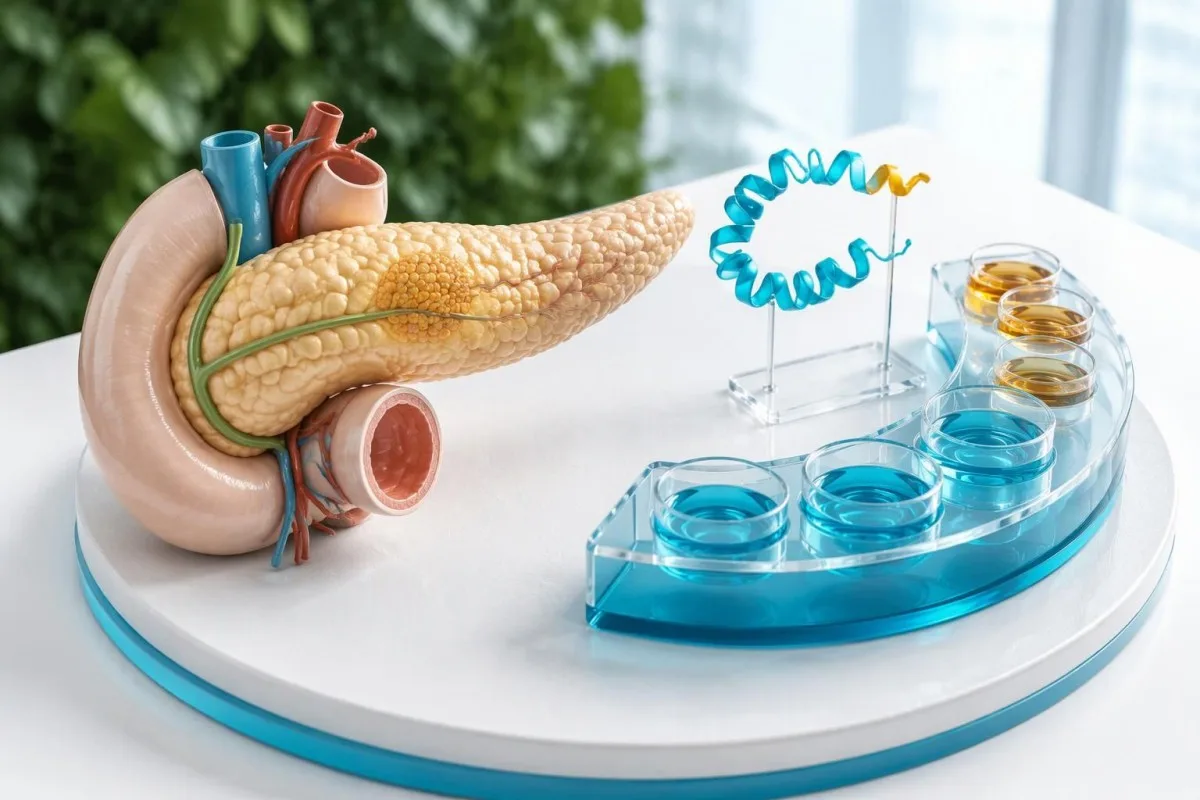
یو انسولینوما د پانقراس هغه نیورواینډوکراین وده ده چې انسولین ترشح کوي؛ د پروانسولین پایله یې ځای، چلند یا شتون نه شي تثبیتولای. د ۱۸ pmol/L کچه چې د ۱۰۴ mg/dL ګلوکوز له کچې سره یوځای اخیستل شوې وي، له هماغې کچې سره چې د ۴۲ mg/dL ګلوکوز پر مهال اخیستل شوې وي، بېله پوښتنه ځوابوي، ځکه د هایپوګلیسیمیا پر مهال د پانقراس عادي ترشح باید په څرګند ډول وځپل شي.
کانټیسټي یو دی د AI د وینې معاینې شنونکی دا مرسته کوي چې روښانه شي ولې د ۱۸ pmol/L پروانسولین کچه د هممهاله ګلوکوز له کچې پرته نه شي تفسیرېدای. زموږ بایومارکر تشریح لارښود د لابراتواري پایلو په شرایطو کې لوستلو ملاتړ کوي، خو د AI تشریح نه شي کولای مهمه نمونه راټوله کړي، د درملو کارول رد کړي یا د پانقراس تشخیص تایید کړي.
د اندوکراین ټولنې لارښود سپارښتنه کوي چې د بالغ کس د هایپوګلیسیمیک اختلال ارزونه هغه مهال وشي چې د ویپل درېګونې (Whipple’s triad) ثبت شوی وي: له حالت سره سمې نښې، د پلازما ټیټ ګلوکوز او د ګلوکوز له لوړېدو وروسته ښهوالی (Cryer et al., 2009). دا ۳ عناصر د لابراتوار د یوې جلا نښې یا د څارونکي د الارم له امله د انسولینوما له وخته مخکې نومولو مخه نیسي؛ سختې نښې بیا هم درملنې ته اړتیا لري، ان که ټولې تشخیصي جزئیات لا نه وي معلوم.
د پروانسولین ازموینه د پانقراس په ترشح کې څه اندازه کوي؟
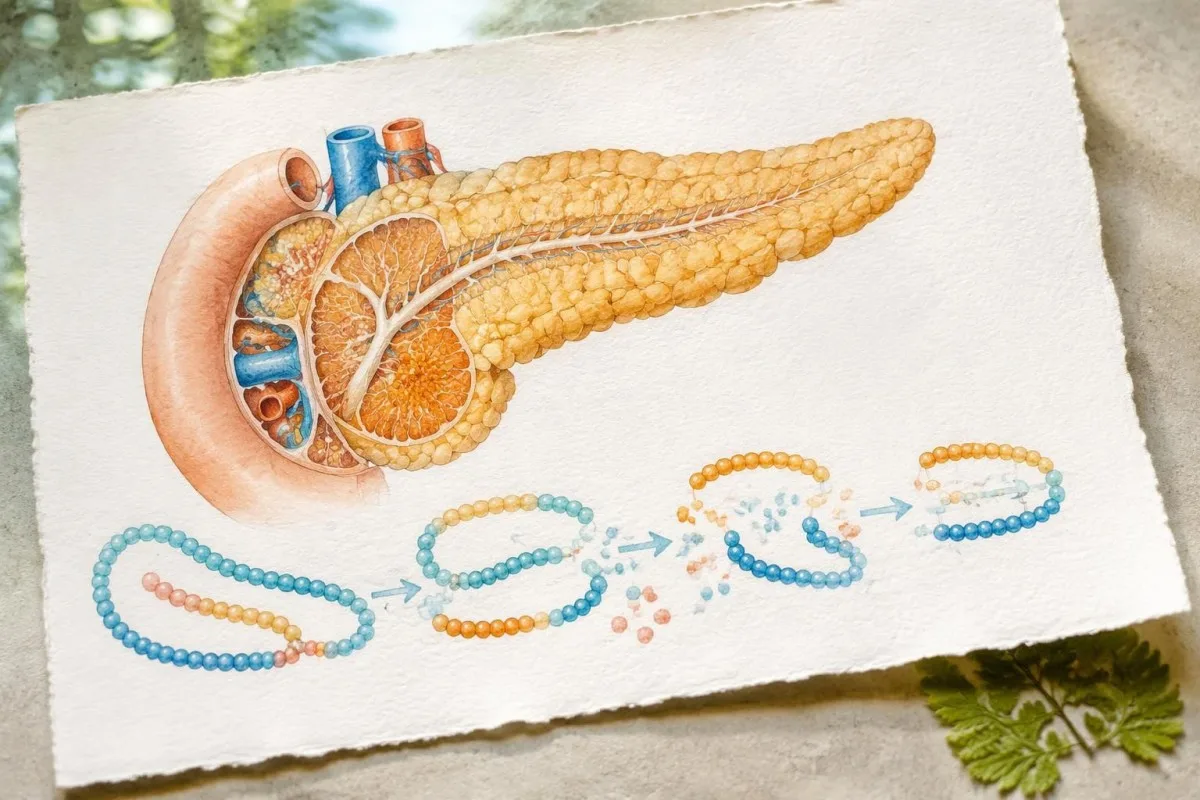
پروانسولین هغه مخکینی ترکیب دی چې د پانقراس د بېټا حجرې ترې انسولین او C-peptide جوړوي. د پروسس په پایله کې بالغ انسولین له ۲ پېپټایډي ځنځیرونو سره پاتې کېږي، په داسې حال کې چې C-peptide جلا خوشې کېږي؛ په وینه کې پروانسولین هم ترشح او هم د دې مخکیني ترکیب د پروسس موثریت منعکسوي.
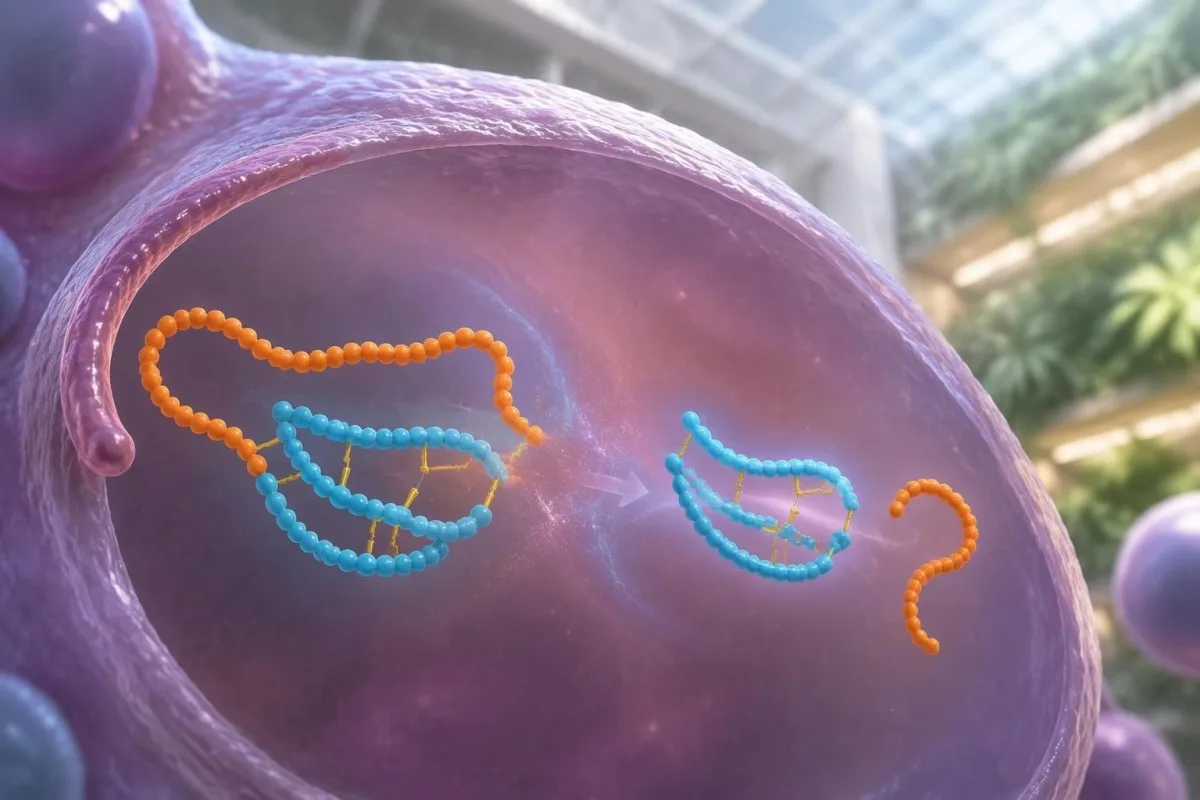
پروانسولین یوازې د انسولین بل نوم نه دی، او دا ۲ ازموینې د یو بل پر ځای نه شي کارېدلی. د مخکیني ترکیب ډېری پروسس د خوشې کېدو تر مخه د بېټا حجرو د ترشحي ګرانولونو دننه کېږي؛ د ترشح زیاتې شوې اړتیا یا غیرعادي پروسس د مخکینیو مالیکولونو کچه په وینه کې لوړه کولای شي، نو لوړه پایله ښايي د بېټا حجرو د فعالیت بار څرګند کړي، نه د پانقراس له ودې څخه خپلواکه ترشح.
C-peptide د پېژندلو مرسته کوي د بدن دننه د انسولین تولید ځکه تزریق شوی انسولین C-peptide نه لري. د هایپوګلیسیمیا پر مهال، لږ تر لږه ۰.۶ ng/mL د C-peptide کچه، کله چې له نورو پایلو سره یوځای تفسیر شي، د بدن دننه د دوامدارې ترشح ملاتړ کوي؛ د هایپوګلیسیمیا بهر، زموږ تشریح د د C-peptide لوړې پایلې څرګندوي چې ولې د میتابولیک اړتیا او د پښتورګو تصفیه ورته نښه رامنځته کولای شي.
Some laboratories measure intact proinsulin, while other methods detect additional processing intermediates to differing degrees. Two reports both expressed in pmol/L may therefore have different reference intervals and diagnostic performance; when comparing an 8 pmol/L result with an earlier 14 pmol/L result, check the method and sampling conditions before assuming pancreatic function improved.
له ازموینې مخکې مستنده هایپوګلیسیمیا څه ته ویل کېږي؟
Documented hypoglycemia requires a reliable glucose measurement interpreted with symptoms and recovery. Laboratory plasma glucose below 55 mg/dL (3.0 mmol/L) is a commonly used diagnostic context in adults without diabetes; a home meter or continuous glucose monitor alone does not establish insulinoma.
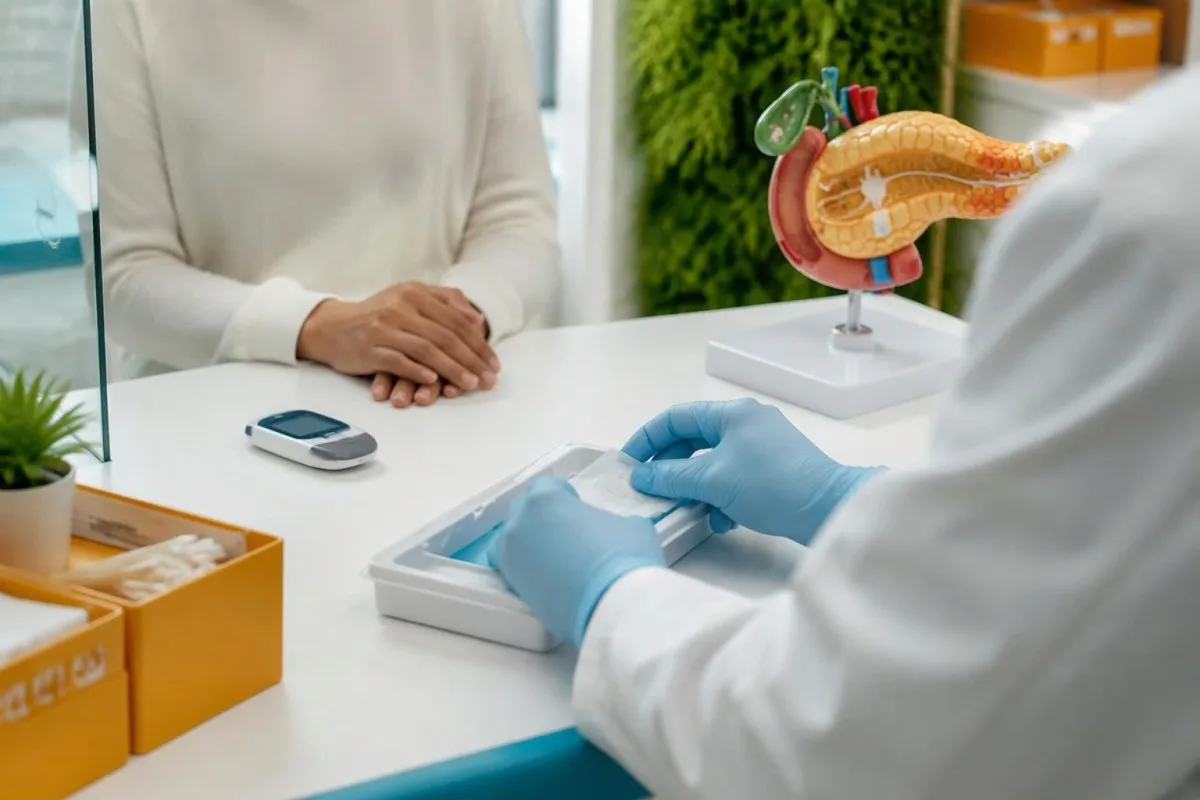
Whipple’s triad links symptoms to the low glucose rather than merely showing that both occurred on the same day. For example, shakiness with a laboratory glucose of 43 mg/dL followed by improvement after carbohydrate is more informative than shakiness with glucose of 91 mg/dL; our د ټیټ ګلوکوز لاملونه guide explains competing medication, illness and fasting explanations.
Continuous glucose monitors measure interstitial glucose, and their readings can lag behind circulating glucose during rapid changes. A nighttime sensor value of 48 mg/dL can also result from pressure on the sensor; discuss repeated alerts with a clinician, but do not deliberately avoid food to reproduce an unconfirmed episode or treat a sensor trace as biochemical proof.
Palpitations, sweating and tremor are autonomic symptoms, while confusion, impaired coordination and unusual behavior can reflect inadequate glucose delivery to the brain. Symptoms with glucose of 85 mg/dL need another explanation, potentially including causes covered in our د زړه د ضربان د ارزیابي لارښود; absence of classic sweating does not exclude hypoglycemia, especially after recurrent episodes.
د ګلوکوز د ټیټې کچې پر مهال د پروانسولین ترڅنګ کومې پایلې باید وارزول شي؟
The critical sample includes plasma glucose, insulin, C-peptide, proinsulin, beta-hydroxybutyrate and hypoglycemic medication screening. When glucose is below 55 mg/dL, clinicians ask whether insulin-related markers are inadequately suppressed, rather than whether they exceed ordinary fasting reference ranges.
The Endocrine Society guideline describes insulin at least 3 µIU/mL, C-peptide at least 0.6 ng/mL and proinsulin at least 5 pmol/L during hypoglycemia as evidence supporting endogenous hyperinsulinism (Cryer et al., 2009). These values are context-dependent decision thresholds, not an independent checklist that diagnoses a pancreatic growth; clinical circumstances, kidney function and analytical reliability still matter.
Beta-hydroxybutyrate of 2.7 mmol/L or less supports an insulin-mediated mechanism because insulin restrains ketone production. A low ketone result is supportive rather than tumor-specific: injected insulin and insulin-releasing medications can also suppress ketones, while our د بیټا-هایدروکسي بیوتریټ تفسیر لارښود explains why nutritional ketosis and ketoacidosis represent different clinical questions.
Samples should be collected during the same hypoglycemic episode, ideally before carbohydrate or intravenous glucose when that does not delay treatment. Pairing proinsulin from 09:00 with glucose from 11:00 can create a misleading pattern; in a supervised setting, a glucose increase of at least 25 mg/dL after intravenous glucagon provides additional evidence of preserved hepatic glycogen in an insulin-mediated episode.
| کچه | حد | مانا یې څه ده |
|---|---|---|
| Low plasma glucose | <55 mg/dL (<3.0 mmol/L) | Common diagnostic context for adult hypoglycemia assessment; symptoms and sampling reliability remain necessary. |
| Insulin not suppressed | ≥3 µIU/mL | Supports inappropriate insulin activity during hypoglycemia; not an ordinary high-insulin definition. |
| C-peptide not suppressed | ≥0.6 ng/mL (≥0.2 nmol/L) | Supports endogenous secretion; insulin-releasing medications and kidney impairment must be considered. |
| Proinsulin not suppressed | ≥5 pmol/L | Guideline evidence supporting endogenous hyperinsulinism, not an insulinoma-specific cutoff. |
| Ketones suppressed | Beta-hydroxybutyrate ≤2.7 mmol/L | Supports insulin or insulin-like activity; does not distinguish a growth from medication effects. |
| Medication screen | Relevant secretagogues assessed | A detected sulfonylurea or meglitinide can explain an otherwise insulinoma-like pattern. |
ولې 5 pmol/L د انسولینوما لپاره یو نړیوال حد نه دی؟
Proinsulin of 5 pmol/L is a hypoglycemia decision threshold, not a universal normal-range ceiling. Its specificity for insulinoma is limited when used alone; higher end-of-fast thresholds have performed better in selected studies, but they cannot be transferred uncritically between assays and populations.
Guettier et al. examined this problem in the Journal of Clinical Endocrinology & Metabolism in 2013 and found that an end-of-fast proinsulin threshold around 22 pmol/L discriminated insulinoma cases from controls better than 5 pmol/L in their study population. That finding explains why a specialist may treat 6 pmol/L differently from 60 pmol/L, without declaring either value diagnostic in isolation.
A laboratory reference interval describes results expected under that laboratory’s specified conditions; it does not necessarily describe appropriate hormone suppression during hypoglycemia. In a clearly hypothetical laboratory with a fasting interval of 1–8 pmol/L, a result of 7 pmol/L would not be flagged high, yet it could still be inadequately suppressed if simultaneous plasma glucose were 41 mg/dL.
There is no defensible universal set of mild, moderate and critical proinsulin bands for diagnosing insulinoma. Comparing 12 pmol/L with 20 pmol/L requires the glucose context, method and episode timing—not just percentage change; our guide to د لابراتوار د معایناتو ترمنځ د توپیرونو explains why analytical and biological variation can complicate trends.
درمل څنګه د پروانسولین او انسولینوما بڼې ته ورته بڼې رامنځته کولی شي؟
Sulfonylureas and meglitinides can reproduce the biochemical pattern of insulinoma by stimulating pancreatic insulin release. During glucose of 45 mg/dL, high insulin, C-peptide and proinsulin cannot distinguish a growth from these medications without an appropriately timed and sufficiently broad drug screen.
Examples include gliclazide, glimepiride, glipizide, repaglinide and nateglinide; a laboratory panel may not include every agent used internationally. A negative result from a sample collected 24 hours after an episode may be less informative than a simultaneous critical sample, depending on the drug and assay sensitivity; ask which medications were actually tested rather than accepting the word negative without qualification.
Injected insulin typically produces suppressed C-peptide and proinsulin during hypoglycemia, but insulin assays differ in how well they recognize insulin analogues. Thus, glucose of 39 mg/dL with unexpectedly low measured insulin does not always exclude insulin exposure; the same contextual issue is discussed in our low insulin interpretation guide, and specialist laboratories may need a different analytical method.
Medication reconciliation should include prescribed products, accidental mix-ups and access to another household member’s diabetes treatment, without assuming deliberate exposure. Older adults can have prolonged episodes after a single dose when clearance is impaired; our په زړو خلکو کې د درملو اغیزې guide supports this review, while insulin antibodies may be investigated when results and episode timing suggest an autoimmune mechanism.
ایا د پښتورګو کمزوري یا د نمونې تېروتنې د پروانسولین کچه لوړولی شي؟
Reduced kidney clearance can elevate proinsulin and C-peptide, while sample problems can distort the surrounding glucose or insulin results. An eGFR of 24 mL/min/1.73 m² makes straightforward application of standard hypoglycemia thresholds less reliable than it would be with preserved kidney function.
Kidney disease affects both marker clearance and susceptibility to hypoglycemia through medication accumulation, nutrition and altered glucose production. A C-peptide result of 2.1 ng/mL with glucose of 48 mg/dL therefore needs more cautious interpretation in advanced kidney impairment; our low eGFR assessment guide explains why kidney context changes the urgency and meaning of laboratory abnormalities.
Delayed sample processing can create artifactual low glucose because cellular elements continue consuming glucose after collection, while hemolysis can lower measured insulin in susceptible circumstances. A recorded glucose of 44 mg/dL without compatible symptoms may prompt review of processing and a repeat properly handled sample; our kidney chemistry interpretation guide also explains why one chemistry value should not stand in for overall clearance.
Kantesti can help organize a proinsulin result of 16 pmol/L alongside kidney markers, but our explanation cannot determine whether an assay suffered interference or a sample was mishandled. Ask the laboratory about intact versus total proinsulin, insulin cross-reactivity, relevant supplement interference and specimen quality; discordant results sometimes require repeat measurement using another method rather than more aggressive imaging.
په عملي توګه د پروانسولین ګډې پایلې څنګه ښکاري؟
The same proinsulin value can mean different things at different glucose concentrations. The following 3 hypothetical examples illustrate clinical reasoning, not diagnostic predictions; each assumes a correctly processed sample, and none substitutes for a specialist assessment of the complete episode.
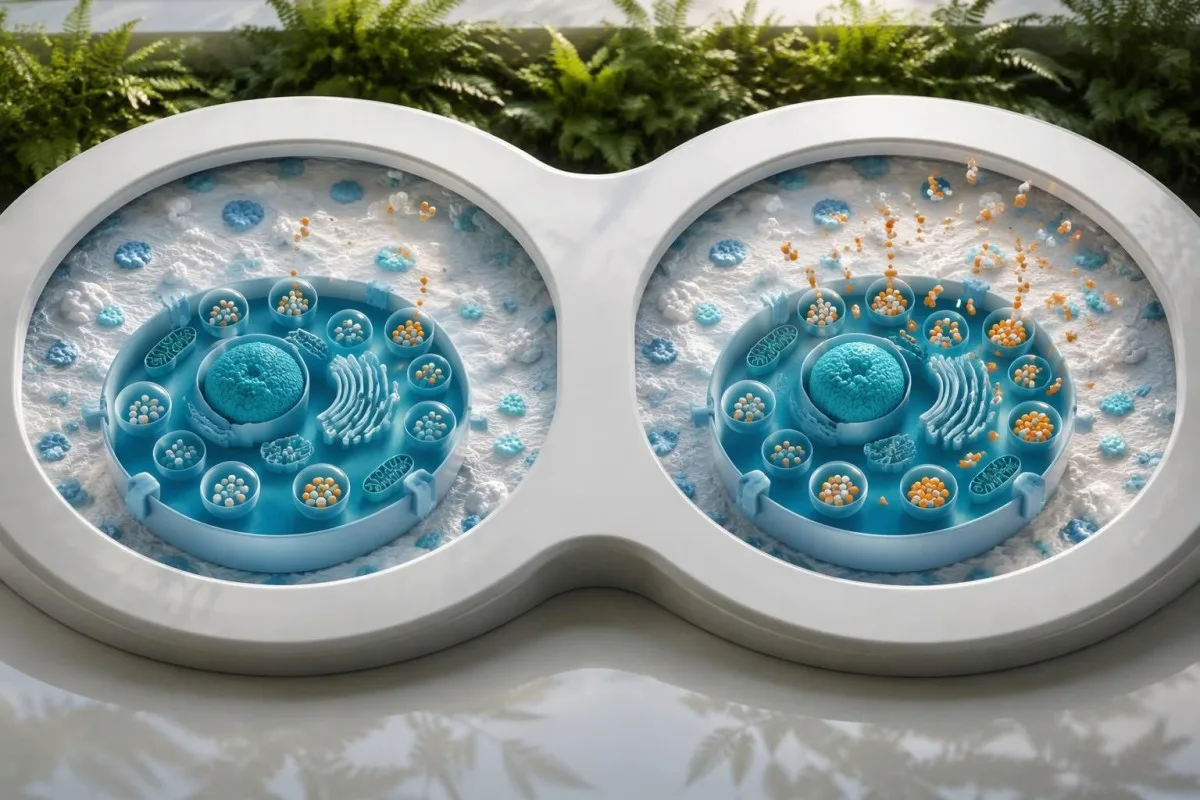
Example 1: an adult has glucose of 106 mg/dL, insulin of 24 µIU/mL, C-peptide of 4.2 ng/mL and proinsulin of 19 pmol/L during routine fasting testing. This pattern can fit increased secretory demand, including insulin resistance; without documented hypoglycemia, it does not establish an insulinoma pathway, even if proinsulin exceeds the laboratory’s reference interval.
Example 2: during confusion, plasma glucose is 42 mg/dL, insulin 8 µIU/mL, C-peptide 1.6 ng/mL, proinsulin 34 pmol/L and beta-hydroxybutyrate 0.4 mmol/L. This pattern strongly supports insulin-mediated endogenous secretion, but a detected sulfonylurea would change the explanation; a negative comprehensive screen and clinical evaluation would make autonomous pancreatic secretion a more serious consideration.
Example 3: plasma glucose is 46 mg/dL, insulin 1.4 µIU/mL, C-peptide 0.9 ng/mL and proinsulin 58 pmol/L during a supervised assessment. Unusually prominent proinsulin secretion can make the insulin result deceptively unimpressive, so one below-threshold marker should not automatically dismiss the pattern; our د وینې ازموینې د وخت لارښود explains why same-episode alignment remains necessary.
دا د انسولین مقاومت له ازموینې سره څه توپیر لري؟
Insulin-resistance testing evaluates metabolic demand, not failure to suppress insulin during hypoglycemia. A routine overnight fasting panel with glucose of 98 mg/dL is therefore not equivalent to a critical sample collected at glucose of 43 mg/dL, even when both include insulin and proinsulin.

HOMA-IR estimates insulin resistance from fasting insulin and glucose; the conventional formula using mg/dL is insulin multiplied by glucose, divided by 405. For example, insulin of 15 µIU/mL and glucose of 100 mg/dL produce about 3.7, but there is no universal diagnostic cutoff across assays and populations; our borderline fasting insulin guide explains those limitations.
High proinsulin levels and an increased proinsulin-to-insulin ratio have been studied as markers of beta-cell processing stress, but these measures are not standard stand-alone tests for insulin resistance or insulinoma. Ratios can become unstable when insulin approaches the assay’s detection limit, and mixing pmol/L with µIU/mL creates an invalid calculation; 2 apparently comparable ratios may therefore reflect different methods rather than different biology.
کانټیسټي یو دی د AI بایومارکر تفسیر پلیټفارم that explains why glucose of 100 mg/dL with elevated insulin belongs to a different reasoning pathway from symptomatic glucose of 43 mg/dL. In conditions such as PCOS, established metabolic assessment remains more useful than isolated precursor testing; our PCOS diagnostic criteria guide separates reproductive diagnosis from metabolic risk assessment.
د انسولینوما د شک پر مهال تر څارنې لاندې روژه کله مناسبه ده؟
A supervised fast is appropriate when fasting hypoglycemia is convincingly suspected but a spontaneous critical sample cannot be obtained. The assessment may continue for up to 72 hours, with monitored sampling and predefined stopping rules; an isolated high proinsulin result is not sufficient reason to perform it.

An endocrinology team considers the episode pattern, medication history and quality of previous glucose documentation before arranging a fast. Symptoms before breakfast, during prolonged gaps between meals or after exercise may justify this pathway, whereas a single mildly elevated proinsulin value with glucose of 96 mg/dL usually calls for clarification rather than immediate admission for prolonged fasting.
During the fast, staff monitor symptoms and obtain repeated laboratory samples, increasing sampling frequency as glucose falls; the final critical sample is collected according to the protocol before treatment when safe. The 72-hour duration is a maximum, not a target, and many diagnostic episodes occur earlier; the Endocrine Society protocol explicitly places biochemical assessment and supervised stopping criteria ahead of simply completing a clock interval (Cryer et al., 2009).
Never attempt a 72-hour diagnostic fast at home, including while wearing a glucose sensor. Ordinary meal-timing practices discussed in our د متناوبې روژې او لابراتواري ازموینو لارښود are not substitutes for an endocrine investigation; suspected hypoglycemia may make intentional fasting unsafe, and changes to insulin or other diabetes medicines require a clinician-directed plan.
که نښې د روژې پر مهال نه، بلکې له خوړو وروسته رامنځته شي، څه؟
Predominantly meal-related hypoglycemia may require a supervised mixed-meal test rather than a prolonged fast. Monitoring can extend to 5 hours after a representative meal, with glucose and hormone samples obtained during symptoms; the meal pattern alone neither proves nor excludes insulinoma.
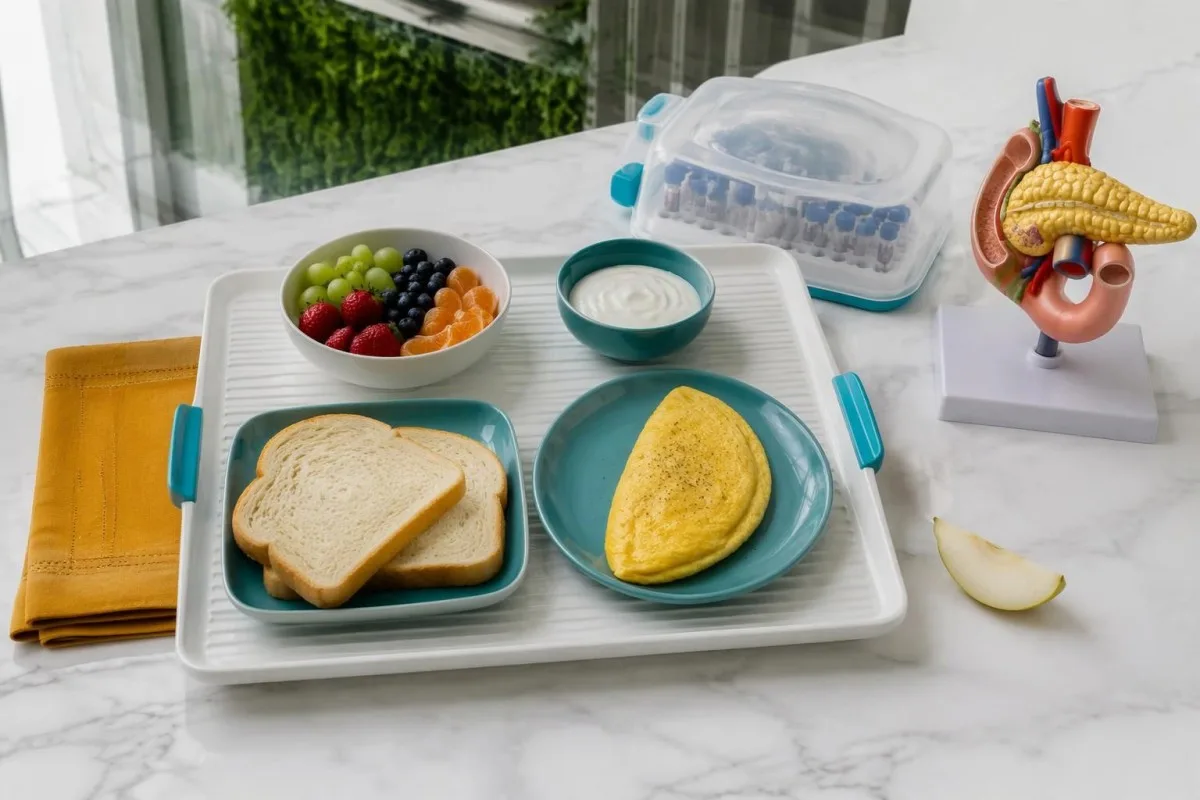
Hypoglycemia after upper gastrointestinal surgery can reflect altered nutrient delivery and exaggerated insulin release, rather than a pancreatic growth. An episode 2–3 hours after eating therefore requires the surgical history as well as the hormone pattern; endogenous hyperinsulinism is a biochemical description, not a promise that imaging will identify a solitary insulinoma.
An oral glucose tolerance test is generally not the preferred investigation for suspected postprandial hypoglycemia because a glucose drink can create results that do not reproduce everyday meals. A supervised mixed meal better matches the clinical trigger, although meal composition and interpretation are less standardized than a fasting protocol; uncertainty should be discussed rather than hidden behind a single post-meal proinsulin cutoff.
Sugar cravings, fatigue and irritability 1–2 hours after lunch do not establish biochemical hypoglycemia. Record meal timing, symptoms and available glucose readings, then seek an appropriate assessment rather than self-ordering repeated proinsulin panels; our sugar cravings testing guide explains why these symptoms alone are insufficient evidence of an insulin-secreting disorder.
د انسولینوما د تشخیص په بهیر کې انځوریزې معاینې کله ترسره کېږي؟
Pancreatic imaging generally follows biochemical confirmation of endogenous hyperinsulinemic hypoglycemia and exclusion of relevant medications. Glucose of 42 mg/dL with an appropriate hormone pattern provides a reason to investigate localization; proinsulin of 20 pmol/L with normal glucose does not justify the same assumption.
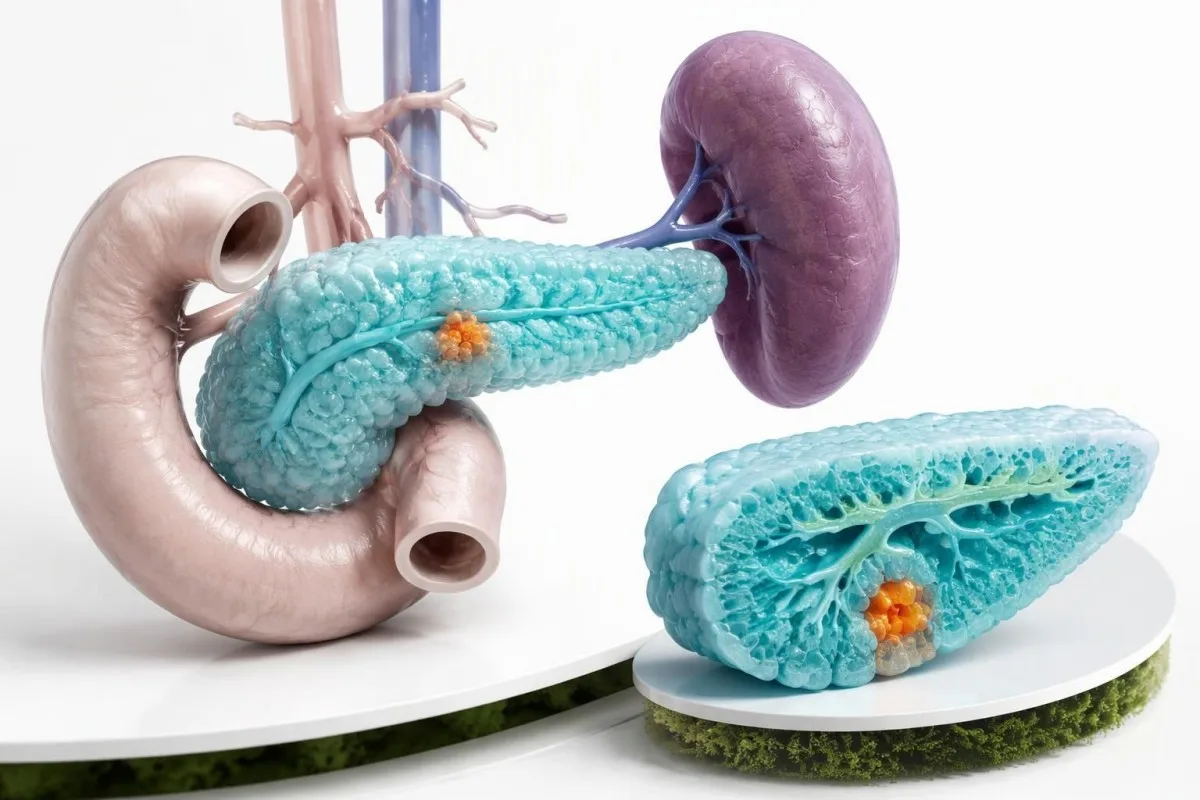
CT, MRI and endoscopic ultrasound can identify or characterize a pancreatic source, but small insulinomas may evade an initial scan. A negative first study does not cancel convincing biochemistry, while an incidental pancreatic finding does not prove that it caused hypoglycemia; those 2 directions of error are why localization and hormone diagnosis must remain separate steps.
When standard imaging is unrevealing, specialist centers may consider receptor-based imaging or selective arterial calcium stimulation with hepatic venous sampling. These are localization tools for a selected patient, not routine responses to a proinsulin result of 11 pmol/L; the choice depends on previous studies, local expertise, availability and whether the clinical pattern supports focal or more diffuse insulin secretion.
Multiple endocrine neoplasia type 1 may become relevant when pancreatic findings coexist with personal or family evidence of other endocrine disorders. A raised gastrin result—for example 300 pg/mL while taking a proton-pump inhibitor—does not independently establish that syndrome; our high gastrin interpretation guide explains why medication effects and clinical context are also necessary here.
اوس د پروانسولین له لوړې پایلې سره څه باید وکړئ؟
Your next step depends on documented glucose and symptoms, not the proinsulin flag alone. Severe confusion, seizure or inability to swallow requires emergency help; an alert person who can swallow can take 15–20 g of fast-acting carbohydrate and recheck glucose after 15 minutes.
Do not give food or drink to someone who cannot swallow safely; use prescribed rescue glucagon if available and follow the emergency plan. Recurrent confirmed readings below 54 mg/dL, or episodes that require another person’s help, warrant prompt clinical review rather than waiting for another proinsulin result; avoid driving during symptoms and obtain advice about driving safety after recurrent episodes.
کانټیسټي یو دی AI د وینې ازموینې تشریح پلیټفارم that can explain uploaded laboratory reports in about 60 seconds, but it cannot monitor a fast or certify that glucose of 43 mg/dL was measured during symptoms. Kantesti Ltd is a UK organization described on our company information page; our role is educational interpretation, not emergency monitoring or autonomous diagnosis.
Kantesti AI explanations should be checked against the report’s units, collection times, medication list and glucose context before any clinical decision. Our د مصنوعي ځیرکتیا مسؤلانه اصول explain the need for human oversight; the د AI ټکنالوژۍ لارښود describes the interpretation workflow, which cannot replace the 6 components of a properly collected critical sample or a specialist-supervised assessment.
د پروانسولین د ازموینې د پایلو د تفسیر ملاتړ کوم شواهد کوي؟
The diagnostic framework is supported by clinical hypoglycemia guidance and studies evaluating insulin and proinsulin during supervised fasting. The 2 medical references below directly address those questions; the separate Figshare publications are general educational resources, not evidence validating an insulinoma cutoff.
Cryer et al.’s 2009 Endocrine Society guideline provides the framework for Whipple’s triad, critical sampling and a supervised fast of up to 72 hours. Guettier et al.’s 2013 study adds a specific caution: the 5 pmol/L proinsulin decision point has limited specificity for insulinoma when treated as a stand-alone result, and higher study-derived cutoffs require assay-aware interpretation.
The 2 Figshare guides listed below cover hematology markers and digestive symptoms associated with fasting; neither establishes the sensitivity or specificity of a proinsulin test. Our د روژې او هاضمي نښو لارښود addresses a different clinical question, and digestive discomfort is not a reason to attempt a prolonged insulinoma investigation without supervision.
Before an endocrine appointment, bring at least 1 complete report showing the glucose value, collection time, proinsulin method if available and any simultaneous insulin or C-peptide measurements. Add a medication list and a brief symptom timeline; our د طبي محتوا معیارونه explain why we distinguish published clinical evidence, hypothetical examples and platform capabilities rather than presenting them as equivalent proof.
پرله پسې پوښتل شوي پوښتنې
ایا د پروانسولین لوړې کچې د انسولینوما تشخیص کولی شي؟
د پروانسولین لوړه کچه د ګلوکوز او کلینیکي وضعیت له معلومولو پرته انسولینوما نه شي تشخیص کولای. د لابراتوار له خوا د تایید شوې هایپوګلیسیمیا پر مهال، چې معمولاً تر 55 mg/dL (3.0 mmol/L) ټیټه وي، په کافي اندازه نه ځپل شوی پروانسولین د بدن دننه د انسولین ترشح ملاتړ کولای شي. ډاکټران انسولین، سي-پېپټایډ، بېټا-هایډروکسيبټیرېټ او د اړوندو درملو سکریننګ هم ارزوي. ان د بدن دننه د ترشح قانع کوونکې بڼه هم باید د پانقراس د ځای معلومولو تر مخه له انسولین خوشې کوونکو درملو او نورو لاملونو څخه جلا وپېژندل شي.
د پروانسولین کومه کچه د انسولینوما نښه ده؟
د هایپوګلیسیمیا پر مهال لږ تر لږه 5 pmol/L پروانسولین یو لارښودي پرېکړهییز حد دی چې د بدن دننه هایپرانسولینیزم ملاتړ کوي، نه دا چې د انسولینوما ځانګړې تشخیص وي. د Guettier او همکارانو یوې ۲۰۱۳ مطالعې وموندله چې د روژې په پای کې شاوخوا 22 pmol/L حد د دوی د مطالعې په وګړو کې تر 5 pmol/L ډېر توپیر څرګندوي. د ازموینې طریقې، د پښتورګو فعالیت او د نمونې اخیستلو شرایط پر دې اغېز کوي چې دا ارزښتونه پر یوه کس څنګه پلي کېږي. هغه عادي پایله چې د ګلوکوز د نورمال کچې پر مهال ترلاسه شوې وي، د روژې په پای کې د هایپوګلیسیمیا لپاره د حد له مخې نه شي تفسیر کېدای.
ایا د انسولین پر وړاندې مقاومت له امله پروانسولین لوړېدای شي؟
پروانسولین د بېټا حجرو د ترشح د زیاتې غوښتنې او د مخکیني موادو د پروسس د بدلون له امله لوړېدای شي، په هغو حالتونو کې هم چې له انسولین مقاومت سره تړاو لري. له همدې امله، د 105 mg/dL ګلوکوز ترڅنګ د 18 pmol/L پروانسولین کچه د انسولینوما تشخیص نه ثابتوي. په عادي میتابولیک ارزونه کې، د کلینیکي پوښتنې له مخې، ګلوکوز، HbA1c، لیپیدونه او د انسولین ټاکلې اندازې شاملېدای شي. پروانسولین او د پروانسولین ـ انسولین نسبتونه د انسولین مقاومت لپاره د یوازنیو تشخیصي ازموینو په توګه معیاري نه دي.
ولې سي-پېپټایډ او د درملو معاینه اړینه ده؟
0 C-پېپټایډ او د درملو سکریننګ د بدن دننه د انسولین ترشح له تزریق شوي انسولین او د انسولین ترشح کوونکو درملو څخه په توپیر کې مرسته کوي. د هایپوګلیسیمیا پر مهال لږ تر لږه 0.6 ng/mL د C-پېپټایډ کچه د پانقراس د دوامدارې ترشح ملاتړ کوي، خو سلفونیلیوریا او مېګلېټینایډونه هم همدا بڼه رامنځته کولی شي. د درملو د سکریننګ منفي پایله یوازې د درملو د پوښښ، حساسیت او د نمونې د راټولولو د وخت هومره معلوماتي ده. د پښتورګو اختلال او د انسولین د ازموینې لهخوا د انسولین انالوګونو پېژندل هم تفسیر لا پېچلی کولی شي.
ایا د پروانسولین د لوړې پایلې لپاره باید ۷۲ ساعته روژه ونیسم؟
د پروانسولین یوه جلا لوړه پایله په خپله د ۷۲ ساعته روژې دلیل نه ګرځي. تر څارنې لاندې روژه هغه وخت په پام کې نیول کېږي چې د نهخوړلو پر مهال د وینې د ټیټ شکر شک په قانع کوونکي ډول موجود وي او په خپله د پېښې پر مهال مهمه نمونه ترلاسه نه شي. په دې ازموینه کې د نمونو اخیستل او د درولو معیارونه تر څارنې لاندې وي، او ډېری وخت تر اعظمي مودې مخکې پای ته رسېږي. هېڅکله په کور کې د تشخیصي موخو لپاره اوږده روژه مه نیسئ، حتی که د ګلوکوز دوامداره څارونکی هم کاروئ.
ایا انسولینوما هغه مهال موجود کېدای شي چې انسولین لوړ نه وي؟
0 د انسولین ټیټه یا په ظاهره عادي پایله د هایپوګلیسیمیا پر مهال انسولینوما په بشپړه توګه نه ردوي، په ځانګړي ډول کله چې د پروانسولین ترشح په غیرمعمولي ډول زیاته وي یا د ازموینې ستونزې موجودې وي. د انسولین کچه تر 3 µIU/mL ټیټه وي، خو پروانسولین په څرګند ډول لوړ او C-پېپټایډ په کافي اندازه مهار شوی نه وي، نو د متخصص تفسیر ته اړتیا لري، نه دا چې په اوتومات ډول رد شي. د ګلوکوز غلظت، د کیټونونو غبرګون، د درملو سکرین او تحلیلي میتود باید په ګډه وکتل شي. هغه انسولین چې په عادي راپور کې نورمال ښودل شوی وي، بیا هم د 42 mg/dL د ګلوکوز په کچه کې نامناسب کېدای شي.
که د ازموینې په تمه یم او د وینې ګلوکوز مې ټیټ وي، څه باید وکړم؟
یو هوښیار کس چې تېرولای شي، ۱۵–۲۰ ګرامه ژر اغېز کوونکی کاربوهایډرېټ اخیستلای شي او له ۱۵ دقیقو وروسته د وینې ګلوکوز بیا اندازه کولای شي؛ که ګلوکوز لا هم ټیټ وي، د خپل پاملرنې د پلان له مخې درملنه تکرار کړئ. سخت ګډوډوالی، تشنج، بېهوښي یا د تېرولو ناتواني بیړنۍ مرستې ته اړتیا لري، او باید له خولې خواړه یا څښاک ورنه کړل شي. که د ژغورنې لپاره تجویز شوی ګلوکاګون موجود وي، وکاروئ او د بیړني حالت لارښوونې تعقیب کړئ. د پروانسولین د نمونې اخیستو لپاره درملنه مه ځنډوئ؛ تکراري پېښې ژر طبي ارزونې ته اړتیا لري.
د وینې ازموینې پایلې څنګه ولولئ
خپل لابراتواري راپور پورته کړئ، او د Kantesti AI به په څو ثانیو کې هر بایومارکر په ساده ژبه تشریح کړي. په ټوله نړۍ کې له 2 میلیونو څخه زیاتو کسانو ترې کار اخیستی.
ماخذونه
- کلاین، ټي.، میچل، ایس.، او وېبر، ایچ. (۲۰۲۶). د B منفي وینې ګروپ، د LDH وینې ازموینه او د رتیکولوسایټونو شمېرنې لارښود. د Kantesti AI طبي څېړنه. د دفاع وزارت
- کلاین، ټي.، میچل، ایس.، او وېبر، ایچ. (۲۰۲۶). له روژې وروسته نسناستی، په غایطه موادو کې تورې ذرې او د معدې او کولمو لارښود ۲۰۲۶. د Kantesti AI طبي څېړنه. د دفاع وزارت
- Cryer PE et al. (2009). Evaluation and Management of Adult Hypoglycemic Disorders: An Endocrine Society Clinical Practice Guideline. Journal of Clinical Endocrinology & Metabolism. د دفاع وزارت پب میډ
- Guettier JM et al. (2013). The Role of Proinsulin and Insulin in the Diagnosis of Insulinoma: A Critical Evaluation of the Endocrine Society Clinical Practice Guideline. Journal of Clinical Endocrinology & Metabolism. د دفاع وزارت پب میډ
- ۲ میلیونه+تحلیل شوې ازموینې
- 127+هېوادونه
- 100+ژبې
د طبي ټیم په اړه


د E-E-A-T باور نښې
تجربه
د ډاکټر تر مشرۍ لاندې کلینیکي بیاکتنه د لابراتواري تفسیر د کاري بهیرونو لپاره.
تخصص
د لابراتواري طب تمرکز پر دې چې بایومارکرونه په کلینیکي شرایطو کې څنګه چلند کوي.
واک ورکول
د ډاکټر توماس کلاین له خوا طبي بیاکتنه شوې، د ډاکټر سارا میچل او پروفیسور ډاکټر هانس وېبر په مرسته.
اعتبار
د شواهدو پر بنسټ تفسیر د روښانه تعقیبي لارو چارو سره، تر څو اندیښنه کمه شي.
طبي سلبِ مسئولیت
دا مقاله یوازې د زده کړې لپاره ده او طبي مشوره نه جوړوي. د تشخیص او درملنې د پرېکړو لپاره تل د وړ روغتیايي خدمت وړاندې کوونکي سره سلا وکړئ.
خپور شوی · له تحریري ټیم سره اړیکه ونیسئ
خپروونکی یې Kantesti Ltd دی، چې په انګلستان او وېلز کې ثبت شوی، د شرکت شمېره. 17090423, ، لندن، بریتانیا.
