Soaking a pad or tampon every hour for 2 hours, passing clots larger than a golf ball, fainting, or bleeding during pregnancy needs urgent assessment. Most heavy periods are treatable, but the pattern—not simply the amount—determines how quickly you should seek care.


- Emergency threshold: Soaking at least 1 pad or tampon each hour for 2 consecutive hours, especially with dizziness or breathlessness, warrants urgent medical assessment.
- Pregnancy test: Any unexpected heavy vaginal bleeding with a positive or possible pregnancy requires same-day evaluation because ectopic pregnancy and miscarriage can look similar early on.
- Iron loss: A ferritin below 15 µg/L strongly supports depleted iron stores, even when hemoglobin has not yet fallen into the anemia range.
- Common causes: Ovulatory hormone variation, fibroids, adenomyosis, polyps, copper IUDs, thyroid disease, and anticoagulant medicines are frequent heavy menstrual bleeding causes.
- Simptoma urgjente: Fainting, chest pain, shortness of breath at rest, one-sided pelvic pain, fever, or a racing pulse are heavy period warning signs that should not wait for a routine appointment.
- Age matters: Bleeding after 12 months without periods is postmenopausal bleeding and needs prompt investigation, even if it happens only once.
- Useful first tests: Pregnancy testing, a full blood count, ferritin, and targeted thyroid or clotting tests often clarify risk; ultrasound identifies many structural causes but not all.
- Medication caution: Do not stop prescribed anticoagulants on your own; urgent clinicians can reduce bleeding safely while balancing clot risk.
How heavy is too heavy, and when is it urgent?
Heavy menstrual bleeding becomes urgent when the flow is rapidly overwhelming protection or causing symptoms of poor circulation. Go to emergency care now if you soak a pad or tampon every hour for 2 hours, faint, feel confused, have chest pain, struggle to breathe, or might be pregnant.
A menstrual blood loss of more than 80 mL per cycle was once the research definition of menorrhagia, but nobody can measure that reliably at home. In practice, flooding through clothes or bedding, changing a high-absorbency product overnight, or using two products together is more useful. NICE guideline NG88 advises judging impact on daily life rather than asking patients to estimate volume (NICE, 2018).
The combination matters more than any one clue. A pulse persistently above 100 beats per minute with light-headedness after standing suggests meaningful volume loss or anemia, whereas a single large clot on day 2 without systemic symptoms usually does not. As of September 16, 2026, I still advise patients to treat a sudden change from their personal baseline as clinically meaningful.
Dr. Thomas Klein has seen patients normalize profound fatigue because their periods had always been difficult. If you cannot safely walk across a room, drive, or stay awake normally, seek urgent help rather than waiting to see whether the next pad is less full; our guide to analizat e gjakut për marramendje explains why symptoms can precede a dramatic laboratory result.
Bleeding patterns that change the level of concern
Sudden bleeding between periods, after sex, after menopause, or in a possible pregnancy deserves faster assessment than a familiar heavy day-2 period. The timing can point toward pregnancy-related causes, cervical or uterine pathology, infection, or medication effects.
Bleeding with one-sided lower abdominal pain, shoulder-tip pain, collapse, or a positive pregnancy test is an emergency until ectopic pregnancy is excluded. A urine pregnancy test can be falsely negative very early, so clinicians may repeat serum beta-hCG after 48 hours and use ultrasound based on symptoms rather than a single result; see our early pregnancy test guide.
Postcoital bleeding is often benign—cervical ectropion, a polyp, or dryness can explain it—but recurrent episodes warrant a speculum examination and up-to-date cervical screening. Bleeding after menopause is never considered a normal hormone fluctuation: even a small episode after 12 months without periods needs prompt review.
Very heavy bleeding beginning at menarche, after dental work, or alongside frequent nosebleeds and easy bruising raises the possibility of a bleeding disorder. About 5% to 24% of women with heavy menstrual bleeding may have von Willebrand disease depending on the population studied, which is why a normal platelet count alone is not enough to rule it out (ACOG Committee Opinion No. 785, 2019).
Clots: useful clue, poor measuring tool
Clots larger than about 2.5 cm, roughly a golf ball, suggest that flow is outpacing the body’s ability to keep menstrual fluid liquid. Their presence does not diagnose fibroids or a clotting disorder, but repeated large clots plus flooding should move an appointment forward.
Hormonal and ovulatory causes of heavy periods
Irregular ovulation is one of the most common heavy menstrual bleeding causes, especially in the first years after periods begin and during perimenopause. Without regular progesterone exposure, the endometrium can build up for weeks and then shed heavily and unpredictably.
Anovulatory cycles often produce intervals longer than 35 days followed by 7 to 14 days of variable bleeding. Polycystic ovary syndrome, marked weight change, under-fueling, severe illness, and the menopause transition can all disrupt ovulation, but no hormone panel can diagnose the cause from one random cycle-day sample; LH and FSH patterns need timing and symptoms.
Thyroid disease can change cycle regularity and flow, although mild TSH variation is rarely the sole explanation for dramatic flooding. Overt hypothyroidism commonly presents with elevated TSH and low free T4; hyperprolactinemia can also suppress ovulation, particularly when irregular periods accompany milky discharge, headaches, or visual change.
Kantesti është një Analizues i testeve të gjakut AI that places full blood count, ferritin, thyroid markers, and cycle context side by side rather than treating a borderline TSH as an automatic explanation. In my experience, the useful question is often whether an endocrine finding explains the whole pattern—or merely coexists with fibroids, iron loss, or a medicine effect.
Perimenopause is not a diagnosis of exclusion
Ages 45 to 55 are common years for erratic ovulation, but new flooding still requires assessment for structural causes. “It is probably menopause” should never be the final answer when bleeding becomes heavier, longer, or more frequent than your usual cycle.
Structural causes: fibroids, adenomyosis, and polyps
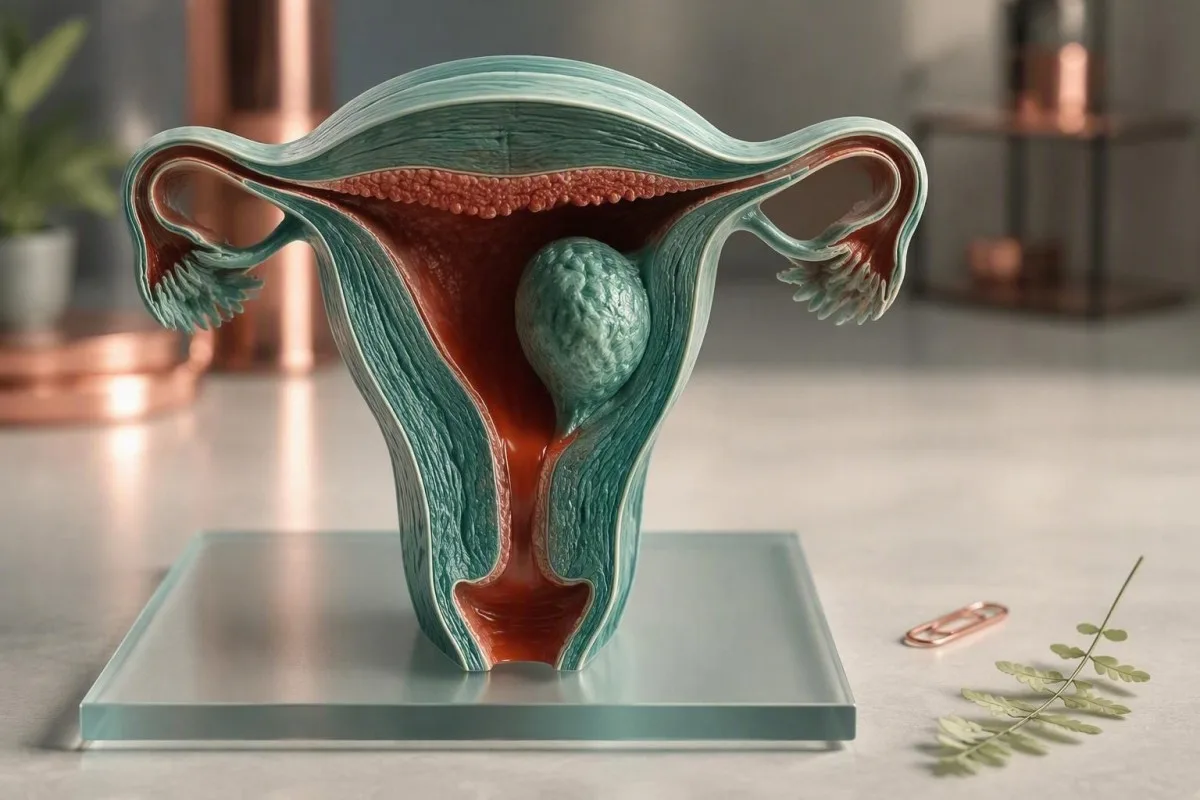
Uterine fibroid bleeding commonly causes prolonged flow, clots, pelvic pressure, and anemia, particularly when a fibroid distorts the uterine cavity. Adenomyosis more often combines heavy bleeding with deep, progressively painful periods, while polyps often cause spotting between periods.
Fibroids are benign smooth-muscle growths, and many never cause symptoms. The location matters: submucosal fibroids near the cavity tend to cause more bleeding than similarly sized fibroids on the outer uterine surface, so a 2-cm submucosal fibroid may matter more than a 6-cm subserosal one.
A transvaginal ultrasound is usually the first imaging test, but it can miss small polyps and some cavity lesions. Hysteroscopy allows direct inspection of the uterine cavity and is especially useful when bleeding persists despite normal ultrasound findings or when ultrasound suggests a submucosal fibroid.
Treatment is individualized: tranexamic acid, anti-inflammatory medication, hormonal therapy, a levonorgestrel intrauterine system, hysteroscopic removal, embolization, or surgery may be considered. A scan finding is not an emergency by itself; urgent care is driven by active blood loss, severe pain, pregnancy risk, or circulatory symptoms, not by fibroid diameter alone. Read more about simptomat hormonale te gratë.
Why a pregnancy test comes before assuming a heavy period
Any person who could be pregnant and has unusual heavy bleeding needs pregnancy testing the same day. Ectopic pregnancy, miscarriage, and bleeding from an early intrauterine pregnancy can overlap in appearance, but their urgency differs sharply.
A positive test plus severe one-sided pain, shoulder-tip pain, fainting, or pain on opening the bowels needs emergency assessment immediately. These features raise concern for ectopic pregnancy, which can become life-threatening before visible bleeding becomes heavy; beta-hCG values and ultrasound findings must be interpreted together, not separately.
After a confirmed early pregnancy loss, bleeding can range from period-like to heavier than a period. Passing tissue, fever of 38.0°C or higher, foul discharge, escalating pain, or soaking more than 2 pads per hour for 2 consecutive hours requires urgent reassessment because retained tissue or infection may need treatment.
Do not use a falling home-test line as proof that everything is resolving safely. Clinicians may follow quantitative beta-hCG until it falls appropriately, and our explanation of beta-hCG after miscarriage describes why a single value is less informative than the trend.
Pregnancy bleeding is not a “wait and see” category
Heavy bleeding in pregnancy should be assessed on the day it occurs, even if cramps are mild. RhD-negative patients may also need anti-D prophylaxis depending on gestation and local protocol, so contact an early-pregnancy unit or emergency service promptly.
Medicines, devices, and whole-body causes
Copper IUDs, anticoagulants, antiplatelet medicines, and some hormonal regimens can increase menstrual flow, but they should not be blamed without checking for anemia and other causes. Liver disease, kidney disease, platelet disorders, and severe thyroid dysfunction can also alter bleeding risk.
Copper IUD-related heaviness is usually greatest in the first 3 to 6 months after insertion, then often settles. New flooding years later is less likely to be simply “the coil” and deserves the same assessment as any new heavy period, including pregnancy testing if expulsion or malposition is possible.
Warfarin, direct oral anticoagulants, aspirin, and some antidepressants can worsen menstrual loss. Never stop an anticoagulant without the prescriber’s advice: the risk of stroke or thrombosis may outweigh the bleeding risk, and clinicians can consider dose timing, gynecologic treatment, or a different agent.
A normal PT/INR and aPTT do not exclude von Willebrand disease or platelet function problems. For a practical explanation of what standard tests miss, see coagulation panel limits; recurrent mucosal bleeding, family history, and bleeding after procedures justify hematology input.
The medication list should include supplements
High-dose fish oil, ginkgo, garlic extracts, and non-prescribed anti-inflammatory products can alter bleeding or interact with prescribed treatment. Bring photographs of bottles and the exact dose; “a natural supplement” is not a clinically useful medication history.
Iron deficiency and anemia: symptoms that mean the loss is catching up
A heavy period can cause iron deficiency before it causes anemia, and a normal hemoglobin does not rule out depleted iron stores. Fatigue, reduced exercise tolerance, palpitations, restless legs, headaches, and hair shedding can appear when ferritin is low.
A ferritin below 15 µg/L is highly specific for absent iron stores in most otherwise well adults; many clinicians investigate symptoms and ongoing loss when ferritin is below 30 µg/L. Ferritin rises during inflammation, so a value of 45 µg/L can still mask deficiency when C-reactive protein is elevated; ferritina dhe CRP must be read together.
Hemoglobin below 120 g/L is anemia in non-pregnant adult women under World Health Organization criteria. The body adapts gradually, which is why someone may be functioning at 90 g/L yet feel breathless on stairs; a rapid fall, syncope, chest discomfort, or hemoglobin near 70 g/L generally requires urgent hospital-based assessment.
Kantesti është një platformë e interpretimit të analizave të gjakut AI that compares ferritin, hemoglobin, MCV, RDW, transferrin saturation, and prior results to identify a developing iron-loss pattern. A falling MCV may lag behind ferritin depletion by months, and our udhëzues për klasifikimin e MCV të ulët explains why thalassemia trait remains an alternative in some populations.
Oral iron is not an instant rescue treatment
Oral elemental iron commonly provides 40 to 65 mg per dose, but it cannot stabilize an actively bleeding person. Absorption and tolerance vary, and intravenous iron or transfusion decisions depend on symptoms, hemoglobin trajectory, ongoing loss, and comorbidity—not a ferritin number alone.
Which tests clarify the cause without overtesting?
The most useful initial work-up is usually a pregnancy test, full blood count, ferritin, and a focused history, with ultrasound or additional tests chosen from the pattern. Broad hormone panels and tumor markers rarely answer the first urgent question.
A full blood count assesses hemoglobin, hematocrit, red-cell indices, and platelets. Hemoglobin tells us the current oxygen-carrying impact; ferritin estimates stored iron, while an elevated platelet count can be a reactive clue to iron deficiency rather than a primary blood disorder—our hemoglobin and hematocrit guide shpjegon këtë dallim.
Testing for TSH is reasonable when periods are irregular or symptoms suggest thyroid disease. Tests for prolactin, androgen excess, clotting disorders, or STI infection should be guided by history: indiscriminate screening creates confusing false positives and can delay imaging or gynecologic examination.
Kantesti është një Mjet për analizën e testeve të gjakut me AI that organizes these results into a physician-ready timeline, while diagnosis still requires clinical examination and, when indicated, ultrasound or hysteroscopy. Our udhëzues për bioshënuesit details which measurements are included in common laboratory panels.
Why CA-125 is usually the wrong first test
CA-125 is not a screening test for a typical heavy period and rises in many benign settings, including menstruation, endometriosis, and fibroids. It is considered only when a clinician finds a relevant mass or symptom pattern, because an isolated result can create more alarm than clarity.
How uterine fibroid bleeding is usually treated
Uterine fibroid bleeding can often be reduced without removing the uterus, but the best option depends on cavity distortion, anemia, fertility plans, pain, and fibroid location. Treatment should address both the bleeding today and the iron loss that may follow it.
Tranexamic acid is a non-hormonal medicine taken only during heavy days; common regimens use 1 g orally three times daily for up to 5 days, though local prescribing differs. It reduces menstrual loss for many patients but is not appropriate for everyone with a history of thrombosis, so individualized prescribing matters.
A levonorgestrel-releasing intrauterine system is highly effective for many people with heavy bleeding when the cavity is not significantly distorted. It may cause irregular spotting for the first 3 to 6 months, a trade-off that is easier to tolerate when patients know it is expected rather than treatment failure.
Hysteroscopic removal is often suitable for cavity-based fibroids or polyps; myomectomy, uterine artery embolization, and hysterectomy have different effects on future pregnancy and recovery. Dr. Thomas Klein’s practical advice is to ask the surgeon to describe the fibroid’s FIGO location, not merely its size, before committing to a procedure.
Pain can point toward adenomyosis
Heavy flow plus worsening cramping, pelvic fullness, and pain during sex is more suggestive of adenomyosis or endometriosis than a painless small fibroid. Ultrasound can identify some adenomyosis features, while MRI is reserved for selected uncertain or complex cases.
What to do at home while arranging care
If you are stable, tracking flow, protecting hydration, and arranging timely review are sensible first steps; home care is not a substitute for urgent evaluation when red flags appear. Record product changes, clot size, pain location, temperature, medications, and pregnancy-test results.
Use the same product type when possible and count fully soaked items rather than guessing volume. Photographing a calendar or noting “changed at 09:00, 10:15, and 11:00” gives a clinician much better information than “very heavy,” especially if you later feel too unwell to recall details.
Drink normally to thirst and eat regular meals, but do not try to compensate for active loss with excessive water alone. Avoid aspirin for period pain unless it has been specifically prescribed, because it can impair platelet function; ibuprofen may reduce menstrual loss for some people but is unsuitable with ulcers, kidney disease, allergy, certain anticoagulants, or pregnancy.
If iron deficiency has already been confirmed, food can support but not rapidly restore stores. Pairing lentils, beans, seafood, eggs, or fortified grains with vitamin-C-containing foods may improve non-heme iron absorption; our iron-rich food guide gives practical examples without overselling diet as treatment.
What not to do
Do not double hormonal doses, combine several anti-inflammatory medicines, or borrow tranexamic acid from another person. These choices can obscure symptoms, worsen gastrointestinal or clotting risk, and make safe prescribing harder.
Heavy bleeding in teenagers and people with lifelong symptoms
Heavy bleeding from the first few periods is more likely to reflect an ovulatory transition or an inherited bleeding disorder than fibroids. Adolescents who soak products hourly, become pale, miss school, or have easy bruising deserve prompt assessment rather than reassurance alone.
Cycles are often irregular for the first 2 to 3 years after menarche because the ovulatory system is still maturing. That does not make severe loss normal: ACOG recommends assessment for anemia, endocrine causes of anovulation, and bleeding disorders when adolescent bleeding is heavy (ACOG Committee Opinion No. 785, 2019).
Ask specifically about bleeding after tooth extraction, frequent nosebleeds lasting more than 10 minutes, easy bruising larger than 5 cm, or relatives with diagnosed bleeding disorders. Testing for von Willebrand factor is affected by stress, acute bleeding, pregnancy, estrogen, and illness, so hematology may repeat tests when the person is stable.
A parent or caregiver can help by tracking products and symptoms without minimizing embarrassment. Our review of von Willebrand bleeding patterns explains why a normal routine clotting screen does not close the investigation.
Iron treatment is often needed before the final diagnosis
Teenagers with hemoglobin below 100 g/L and ongoing heavy loss often need a structured iron and bleeding-control plan in parallel. Waiting for every specialist test before treating symptomatic anemia is rarely good care.
Postpartum, perimenopausal, and postmenopausal bleeding
Bleeding after childbirth, after age 45 with a new pattern, or after menopause follows different safety rules from an ordinary heavy period. Postpartum bleeding can worsen rapidly, while postmenopausal bleeding requires prompt exclusion of endometrial disease.
After delivery, heavy flow that suddenly increases, produces large clots, causes dizziness, or occurs with fever and uterine tenderness needs immediate obstetric assessment. Postpartum hemorrhage is usually defined clinically as cumulative loss of at least 1,000 mL or bleeding accompanied by signs of hypovolemia, but waiting to estimate volume at home is unsafe.
During perimenopause, skipped cycles followed by heavy bleeding are common, yet age does not rule out polyps, fibroids, hyperplasia, or malignancy. Endometrial sampling is commonly considered for abnormal uterine bleeding at age 45 or older, and earlier when there is persistent bleeding or risk factors such as obesity or chronic anovulation.
Bleeding after 12 consecutive months without a period is postmenopausal bleeding, even if it is only pink spotting. It should be assessed promptly with examination and often transvaginal ultrasound or endometrial sampling; if pregnancy is relevant after a recent loss, our pregnancy hormone ranges can help explain the testing sequence.
Hormone therapy can confuse the picture
Unscheduled bleeding can occur in the first 3 to 6 months of menopausal hormone therapy, but heavy or persistent bleeding still needs review. Never alter prescribed hormone doses without speaking to the clinician who manages them.
What urgent care and emergency clinicians will check
Urgent clinicians first assess circulation, pregnancy status, and the rate of ongoing loss before pursuing every possible cause. Expect pulse, blood pressure, temperature, abdominal examination, pregnancy testing, and targeted laboratory studies when bleeding is significant.
A person can have a “normal” blood pressure while compensating for acute loss, so clinicians look at pulse, standing symptoms, skin temperature, mental clarity, urine output, and repeated observations. Hemoglobin may initially underestimate abrupt loss because plasma volume shifts take time; this is one reason symptoms and trend matter so much.
Emergency treatment may include intravenous fluid, antiemetic medication, pain relief, hormonal therapy, tranexamic acid, iron, or blood products depending on severity and cause. Pelvic examination and ultrasound are used selectively; they should be explained and performed with consent, with a chaperone available according to local practice.
Bring a medication list, your last period date, product-change timeline, known fibroid or bleeding-disorder history, and any recent blood results. Kantesti can help organize laboratory trends, but emergency decisions must be made by the clinician examining you; our e validimit mjekësor explains the limits of automated interpretation.
When a normal ultrasound does not end the work-up
Persistent heavy bleeding with a normal ultrasound may still require hysteroscopy, endometrial sampling, or bleeding-disorder evaluation. Ultrasound is valuable, but it does not directly assess every cavity lesion or every systemic cause.
A follow-up plan that prevents repeated iron loss
A good follow-up plan checks whether bleeding improved and whether iron stores recovered; treating one without the other commonly leads to relapse. Repeat timing depends on starting hemoglobin, ferritin, symptoms, treatment, and whether heavy flow continues.
For uncomplicated iron deficiency treated orally, clinicians often recheck a full blood count in 4 to 8 weeks and ferritin after a longer interval, commonly 8 to 12 weeks or more. Hemoglobin should rise by roughly 10 to 20 g/L over 2 to 4 weeks when absorption, adherence, and bleeding control are adequate, although no single response rate fits every patient.
Keep a record of bleeding days, flooding episodes, missed work or school, pain score, and treatment dates. This exposes a pattern that raw lab data cannot: a ferritin of 28 µg/L may be improving after treatment, or worsening from 90 µg/L after six months of repeated unaddressed heavy cycles.
Kantesti’s shërbimin e interpretimit të analizave të AI can compare serial iron markers and blood counts, while our physicians’ bordi këshillimor mjekësor emphasizes that persistent abnormal bleeding requires in-person gynecologic assessment. The goal is not merely a less inconvenient period; it is preventing recurrent anemia, unsafe delay, and loss of quality of life.
Questions worth taking to your appointment
Ask what category is most likely—ovulatory, structural, pregnancy-related, medication-related, or bleeding disorder—and what finding would change the plan. Also ask when to repeat hemoglobin and ferritin, what symptoms override the follow-up date, and whether your fertility preferences alter the treatment choice.
Pyetje të Shpeshta
Kur duhet të shkoj në dhomën e urgjencës për gjakderdhje të rëndë menstruale?
Shkoni në kujdesin urgjent për gjakderdhje të rëndë menstruale nëse lagni të paktën 1 pecetë ose tampon në orë për 2 orë radhazi dhe keni marramendje, të fikët, dhimbje në gjoks, gulçim, konfuzion, dhimbje të forta në legen, ose rrahje të shpejta të zemrës. Gjakderdhja e rëndë me shtatzëni pozitive ose të mundshme gjithashtu kërkon vlerësim urgjent në të njëjtën ditë, veçanërisht me dhimbje njëanësore ose dhimbje në majë të shpatullës. Këto simptoma mund të sinjalizojnë humbje të konsiderueshme gjaku, shtatzëni ektopike, komplikime të abortit, ose një gjendje tjetër që kërkon kohë. Nëse nuk jeni të sigurt, është më e sigurt të kërkoni këshillë urgjente klinike sesa të prisni natën.
Cilat janë shkaqet më të zakonshme të gjakderdhjes së rëndë menstruale?
Shkaqet e zakonshme të gjakderdhjes së rëndë menstruale përfshijnë ovulimin e çrregullt, fibromat, adenomiozën, polipet e mitrës, përdorimin e spirales së bakërt, sëmundjet e tiroides, ilaçet antikoagulante dhe çrregullimet e trashëgueshme të gjakderdhjes si sëmundja von Willebrand. Gjakderdhja e lidhur me fibromën është veçanërisht e mundshme kur periodat janë të zgjatura, me mpiksje dhe shoqërohen me presion në legen ose frekuencë urinare. Shkaku nuk mund të përcaktohet vetëm nga madhësia e mpiksjes ose vëllimi i gjakderdhjes, prandaj testimi i shtatzënisë, një analizë e plotë e gjakut, ferritina dhe ultratingulli selektiv janë hapa fillestarë të zakonshëm. Shumë shkaqe janë të trajtueshme pa kirurgji.
A mundet gjakderdhja e rëndë të shkaktojë mungesë hekuri me hemoglobinë normale?
Po, periodet e rënda mund të shterojnë rezervat e hekurit përpara se hemoglobina të bjerë nën 120 g/L, pragut të zakonshëm të anemisë për gratë jo-shtatzëna të rritura. Një nivel ferritine nën 15 µg/L mbështet fuqishëm mungesën e hekurit, ndërsa vlerat nën 30 µg/L ende mund të shpjegojnë simptomat kur ka humbje të vazhdueshme menstruale. Lodhja, këmbët e shqetësuara, dhimbjet e kokës, palpitacionet, rënia e flokëve dhe toleranca e reduktuar ndaj ushtrimeve mund të ndodhin përpara se të zhvillohet anemia e dukshme. Ferritina mund të duket rrejshëm qetësuese gjatë inflamacionit, kështu që klinicistët mund ta interpretojnë atë me proteinën C-reaktive dhe ngopjen e transferinës.
Grumbullimet e mpiksura të gjakut në madhësinë e një topi golfi gjatë menstruacioneve a janë të rrezikshme?
mpiksje më të mëdha se rreth 2.5 cm, përafërsisht sa një top golfi, sugjerojnë se rrjedhja menstruale është aq e rëndë sa të mpikset para se të dalë nga mitra, por ato vetë nuk provojnë një shkak të rrezikshëm. Mpiksjet e përsëritura të mëdha me ndryshime të produkteve çdo orë, dobësi, gulçim, dhimbje të rënda, ose një ndryshim të papritur nga periudha juaj e zakonshme duhet të nxisin vlerësim urgjent. Miomat, adenomioza, ovulacioni i parregullt dhe gjakderdhja e lidhur me shtatzëninë mund të shkaktojnë mpiksje. Një mjek do të vlerësojë të gjithë modelin në vend që të përdorë madhësinë e mpiksjes si diagnozë.
A mund të shkaktojë një fibromë gjakderdhje të papritur të rëndë?
Një miomë mund të shkaktojë gjakderdhje të papritur të rëndë, veçanërisht kur ajo del në ose shtrembëron kavitetin e mitrës, por një ndryshim i papritur i rëndë ende ka nevojë për vlerësim për shkaqe të lidhura me shtatzëninë, polipet, efektet e medikamenteve ose kushte të tjera. Një miomë submukozale që masë 2 cm mund të shkaktojë më shumë gjakderdhje sesa një miomë 6-cm në sipërfaqen e jashtme të mitrës sepse vendndodhja prek direkt shtresën. Ultrazëri zakonisht është testi i parë imazherik, megjithëse mund të nevojitet histeroskopi nëse simptomat vazhdojnë dhe kavitekti nuk shihet qartë. Kujdes urgjent nevojitet kur humbja aktive shkakton të fikët, vështirësi të rëndë në frymëmarrje ose lagie të orës për 2 orë.
Cilët teste të gjakut janë të dobishëm për periudha të rënda?
Testet e para të gjakut më të dobishme për periudha të rënda janë një analizë e plotë e gjakut dhe feritina, krahas një testi të shtatzënisë kur shtatzënia është e mundur. Hemoglobina nën 120 g/L tregon anemi te shumica e grave të rritura jo shtatzëna, ndërsa feritina nën 15 µg/L tregon fuqishëm mungesën e depove të hekurit. Testimi TSH është i dobishëm kur ka cikle të parregullta ose simptoma të tiroides, dhe testimi von Willebrand merret parasysh kur gjakderdhja e rëndë ka filluar në menarche ose shoqëron mavijosje të lehtë, gjakderdhje nga hunda, ose histori familjare. PT/INR dhe aPTT normale nuk përjashtojnë të gjitha çrregullimet e trashëguara të gjakderdhjes.
Sa është shumë gjatë një periudhë e rëndë?
Gjakderdhja që zgjat më shumë se 7 ditë zakonisht konsiderohet e zgjatur, por urgjenca varet më shumë nga shpejtësia e rrjedhjes dhe simptomat sesa nga numri i ditëve. Një periudhë 10-ditore e lehtë mund të jetë e përshtatshme për një rishikim rutinë, ndërsa 2 orë rrjedhje me njollosje çdo orë me marramendje kërkojnë kujdes urgjent. Ciklet më të gjata se 35 ditë të ndjekura nga një derdhje e zgjatur dhe e rëndë shpesh sugjerojnë ovulacion të parregullt, veçanërisht në adoleshencë dhe perimenopauzë. Gjakderdhja e përsëritur që zgjat 7 ditë ose më shumë duhet të vlerësohet për anemi dhe shkaqe strukturore ose hormonale të trajtueshme.
Merrni sot analizë të analizave të gjakut me AI
Bashkohuni me mbi 2 milionë përdorues në mbarë botën që i besojnë Kantesti për analizë të menjëhershme dhe të saktë të analizave laboratorike. Ngarkoni rezultatet e analizave të gjakut dhe merrni interpretim gjithëpërfshirës të biomarkerëve të 15,000+ brenda sekondash.
📚 Publikime kërkimore të cituara
Klein, T., Mitchell, S., & Weber, H. (2026). Kantesti LTD. (2026). Serum Proteins Guide: Globulins, Albumin & A/G Ratio Blood Test. Zenodo. https://doi.org/10.5281/zenodo.18316300. ResearchGate: https://www.researchgate.net/search/publication?q=Serum%20Proteins%20Guide%20Globulins%20Albumin%20A%2FG%20Ratio%20Blood%20Test. Academia.edu: https://www.academia.edu/search?q=Serum%20Proteins%20Guide%20Globulins%20Albumin%20A%2FG%20Ratio%20Blood%20Test. Kantesti Kërkim Mjekësor me AI.
Klein, T., Mitchell, S., & Weber, H. (2026). Kantesti LTD. (2026). C3 C4 Complement Blood Test & ANA Titer Guide. Zenodo. https://doi.org/10.5281/zenodo.18353989. ResearchGate: https://www.researchgate.net/search/publication?q=C3%20C4%20Complement%20Blood%20Test%20ANA%20Titer%20Guide. Academia.edu: https://www.academia.edu/search?q=C3%20C4%20Complement%20Blood%20Test%20ANA%20Titer%20Guide. Kantesti Kërkim Mjekësor me AI.
📖 Referenca të jashtme mjekësore
Instituti Kombëtar për Shëndetin dhe Përsosmërinë në Kujdesin Shëndetësor (2018). Heavy menstrual bleeding: assessment and management. NICE Guideline NG88.
⚕️ Mohim përgjegjësie mjekësore
Ky artikull është vetëm për qëllime edukative dhe nuk përbën këshilla mjekësore. Gjithmonë konsultohuni me një ofrues të kualifikuar të kujdesit shëndetësor për vendimet e diagnozës dhe trajtimit.
Sinjalet e Besimit E-E-A-T
Përvoja
Rishikim klinik i udhëhequr nga mjeku i flukseve të punës për interpretimin e analizave.
Ekspertizë
Fokus i mjekësisë laboratorike mbi mënyrën se si sillen biomarkerët në kontekstin klinik.
Autoritariteti
Shkruar nga Dr. Thomas Klein me rishikim nga Dr. Sarah Mitchell dhe Prof. Dr. Hans Weber.
Besueshmëria
Interpretim i bazuar në prova, me rrugë të qarta për ndjekje për të reduktuar alarmin.