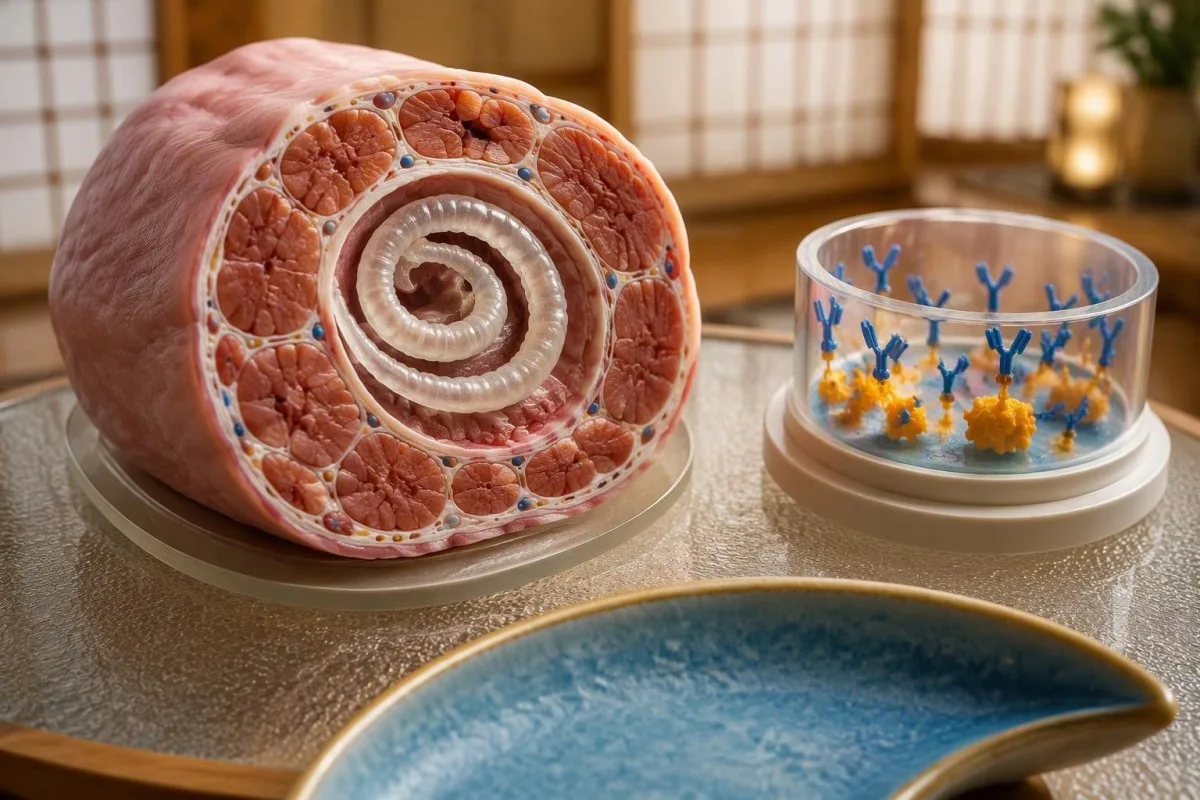
ධනාත්මක ප්රතිඵලයක් Trichinella වලට නිරාවරණය වී ඇති බවට සහාය දක්වන නමුත්, ආසාදනය සිදු වූයේ කවදාද හෝ එය අද ඇති රෝග ලක්ෂණ පැහැදිලි කරන්නේද යන්න තහවුරු නොකරයි. මුල් අවධියේ ඍණාත්මක ප්රතිඵලවලින් ආසාදනය මඟ හැරිය හැකිය; ආහාර වේල ගත් දිනය, රෝග ලක්ෂණ, සහායක රසායනාගාර සොයාගැනීම් සහ නැවත පරීක්ෂා කිරීම ඊළඟ පියවර තීරණය කරයි.


- ධනාත්මක ප්රතිදේහ Trichinella නිරාවරණයට සහාය දක්වයි; එය අනිවාර්යයෙන්ම මෑතකාලීන ආසාදනයක් නොවේ; ප්රතිදේහ වසර 10ක් හෝ ඊට වැඩි කාලයක් හඳුනාගත හැකිය.
- Testing window වෙනස් වේ: ආසාදනයෙන් දින 12–60ක් පමණ ගත වූ පසු Trichinella IgG හඳුනාගත හැකි බැවින්, මුල් අවධියේ ඍණාත්මක ප්රතිඵලයකින් ආසාදනය විශ්වාසදායක ලෙස බැහැර කළ නොහැක.
- නැවත පරීක්ෂා කිරීම මුල් අවධියේ ඍණාත්මක හෝ අවිනිශ්චිත ප්රතිඵලයකින් සති 2–3කට පසු සාමාන්යයෙන් නැවත පරීක්ෂණයක් සිදු කිරීමට සැලසුම් කරන අතර, නිරාවරණය ඉතා මෑතකදී සිදු වූයේ නම් අමතර සාම්පල ලබා ගනී.
- රෝග ලක්ෂණ ඇතිවන කාලය වැදගත් වේ: ආහාර ජීර්ණ පද්ධතියේ රෝග ලක්ෂණ දින 1–2ක් තුළ ආරම්භ විය හැකි අතර, උණ, මාංශ පේශි වේදනාව සහ ඇසිපිය ඉදිමීම සාමාන්යයෙන් පසුව වර්ධනය වේ.
- ඊසිනොෆිල්ස් සෛල/µL 500ට වැඩි අගයන් පටක ආක්රමණය කරන පරපෝෂිතයන් පිළිබඳ අවකල රෝග නිර්ණයකට සහාය දක්වයි; එහෙත් අසාත්මිකතා, ඖෂධ සහ වෙනත් තත්ත්ව නිසාද එම සොයාගැනීම ඇති විය හැකිය.
- පරීක්ෂණ අගයන් රසායනාගාරය අනුව වෙනස් වේ; 2.0ක ප්රතිදේහ දර්ශකයක් පණුවන් ගණනක්, රෝගයේ බරපතළකම දැක්වෙන අගයක් හෝ සෑම තැනකම එකසේ භාවිත කරන ප්රතිකාර සීමාවක් නොවේ.
- හදිසි ඇගයීමක් විශ්වාසදායක නිරාවරණයකින් පසු පපුවේ වේදනාව, හුස්ම ගැනීමේ අපහසුව, ව්යාකූලත්වය හෝ ක්රමයෙන් වැඩිවන දුර්වලතාව ඇති වුවහොත් එය අවශ්ය වේ—ප්රතිදේහ නැවත පරීක්ෂා කිරීමට සති 2–3ක් බලා නොසිටින්න.
- මුල් ප්රතිකාර ප්රතිදේහ තහවුරු කිරීමට පෙර වැදගත් විය හැක; විශේෂඥ පරීක්ෂණ සූදානම් කරන අතරතුර, විශ්වාසදායක මෑත නිරාවරණයක් සහ ගැළපෙන රෝග ලක්ෂණ ඇති විට වෛද්යවරු ප්රතිකාර කළ හැක.
ධනාත්මක Trichinella ප්රතිදේහ ප්රතිඵලයක් යන්නෙන් අදහස් කරන්නේ කුමක්ද?
A ධනාත්මක ට්රයිකිනෙල්ලා ප්රතිදේහ පරීක්ෂණය යන්නෙන් අදහස් වන්නේ ට්රයිකිනෙල්ලා ප්රතිදේහජනක හඳුනාගන්නා ප්රතිශක්තිකරණ ප්රතිචාරයක් පරීක්ෂණයෙන් අනාවරණය වූ බවයි. ප්රමාණවත් ලෙස නොපිසූ ඌරු මස් හෝ වල් සතුන්ගේ මස් ආහාරයට ගැනීමෙන් පසු, එය ට්රයිකිනෙලෝසිස් ඇති විය හැකි බවට සහාය දක්වයි. එහෙත් ආහාරය ගත් දිනය, රෝග ලක්ෂණ සහ රසායනාගාර සන්දර්භය නොමැතිව, එක් ධනාත්මක ප්රතිඵලයකින් මෑතකාලීන ආසාදනයක් පැරණි නිරාවරණයකින් හෝ හරස් ප්රතික්රියාවකින් වෙන්කර හඳුනාගත නොහැක.
ප්රතිදේහ යනු හඳුනාගැනීමේ සාක්ෂියකි; පරපෝෂිතයන්ගේ සෘජු ගණනයක් නොවේ. ට්රයිකිනෙල්ලා IgG වසර 10ක් හෝ ඊට වැඩි කාලයක් හඳුනාගත හැකි මට්ටමක පැවතිය හැකි බැවින්, දඩයම් ගමනකින් මාස ගණනකට පසු ලැබෙන ධනාත්මක ප්රතිඵලයක් නව මාංශපේශී අපහසුතාවයකට හේතුව පැහැදිලි නොකරනු ඇත; Gottstein, Pozio සහ Nöckler 2009 සායනික සමාලෝචනයේදී මෙම දිගුකාලීන පැවැත්ම විස්තර කරති.
උපකල්පිත 46 හැවිරිදි පුද්ගලයෙකු වලස් මස් ප්රමාණවත් ලෙස නොපිසූ ලෙස ආහාරයට ගෙන සති 3කට පසු උණ, පැටවුම්පේශි වේදනාව සහ ඇහිපිය ඉදිමීම ඇති කරගන්නා බව සලකන්න. රෝග ලක්ෂණ හෝ විශ්වාසදායක නිරාවරණයක් නොමැති කෙනෙකුගේ එම ප්රතිඵලයට වඩා, එම ලක්ෂණ එකතුව ධනාත්මක ප්රතිදේහ ප්රතිඵලයක් වඩාත් විශ්වාසනීය කරයි; අපගේ මාර්ගෝපදේශය ධනාත්මක ප්රතිදේහ ප්රතිඵල මෙම පුළුල් වෙනස පැහැදිලි කරයි.
කන්ටෙස්ටි යනු AI රුධිර පරීක්ෂණ විශ්ලේෂකය මඟින් ට්රයිකිනෙල්ලා ප්රතිඵලයක් ඊඔසිනොෆිල්, මාංශපේශී එන්සයිම සහ නියැදි දින සමඟින් සකස් කර දැක්විය හැකි නමුත්, එක් වාර්තාවකින් පරපෝෂිත රෝග නිර්ණයක් තහවුරු කළ නොහැක. Thomas Klein, MD ලෙස මගේ කතුවැකි අවධාරණය සරලය: නිරාවරණයේ කාලරේඛාව රසායනාගාර ප්රතිඵලය සමඟ තිබිය යුතුය; ප්රතිකාර තීරණ දැනටමත් ගෙන ඇති පසු වෙනම සාකච්ඡාවක නොවේ.
Trichinella ප්රතිදේහ පරීක්ෂණය ඇත්ත වශයෙන්ම මනින්නේ කුමක්ද?
බොහෝ සාමාන්ය ට්රයිකිනෙල්ලා සෙරොලොජි පරීක්ෂණ මඟින් හඳුනාගන්නේ IgG ප්රතිදේහ එන්සයිම ප්රතිශක්ති විශ්ලේෂණයක් භාවිතයෙන් වන අතර, බොහෝවිට කීටයන්ගේ බහිස්රාවී-ස්රාවී ප්රතිදේහජනක යොදා ගනී. ප්රතිඵල ධනාත්මක, ඍණ, අවිනිශ්චිත හෝ පරීක්ෂණ දර්ශකයක් ලෙස වාර්තා කළ හැක; ක්රම සහ අර්ථකථන නීති ගැළපෙන්නේ නැත්නම්, එක් සංඛ්යාත්මක දර්ශකයක් වෙනත් රසායනාගාරයක දර්ශකයක් සමඟ සැසඳිය නොහැක.
රසායනාගාර කඩඉම් අගයක් වෙන් කරන්නේ පරීක්ෂණ සංඥා මිස රෝගයේ අවධි නොවේ. උදාහරණයක් ලෙස, 1.2ක් පෙන්වන වාර්තාවක් එම රසායනාගාරයේ ඍණ, අවිනිශ්චිත සහ ධනාත්මක සීමා නොමැතිව අර්ථකථනය කළ නොහැක; අදාළ නොවන වෙනත් රසායනාගාරයක කඩඉම් අගයක් පිටපත් කිරීමෙන් අවිනිශ්චිත ප්රතිඵලයක් ව්යාජ ලෙස විශ්වාසදායක පිළිතුරක් බවට පත් විය හැක.
ඉල්ලන්න පරීක්ෂණ ක්රමය, ප්රතිදේහ පන්තිය, සමුද්දේශ පරාසය සහ නියැදි එකතු කළ දිනය—ප්රතිඵලයක් රෝගී ද්වාර පණිවිඩයකට පිටපත් කරන විට බොහෝවිට අතුරුදහන් වන විස්තර 4කි. අපගේ පැහැදිලි කිරීම ගුණාත්මක එදිරිව ප්රමාණාත්මක පරීක්ෂණ සංඛ්යාත්මක ප්රතිදේහ සංඥාවක් නිරවද්ය ජෛවීය මිනුමක් ලෙස නොව, ප්රධාන වශයෙන් ප්රවර්ගයක් ලෙස අර්ථකථනය කළ හැක්කේ ඇයිද යන්න පැහැදිලි කිරීමට උපකාරී වේ.
ට්රයිකිනෙල්ලා IgG මඟින් විශේෂය හෝ ආහාරය ගත් දිනය හඳුනාගත නොහැක. T. spiralis හි ප්රතිදේහජනක භාවිතයෙන් නිපදවූ පරීක්ෂණයකින් වෙනත් ට්රයිකිනෙල්ලා විශේෂවලට එරෙහි ප්රතිචාර ද හඳුනාගත හැකි අතර, එහි ක්රියාකාරීත්වය ප්රතිදේහජනක සකස් කිරීම සහ වලංගුකරණයට යොදාගත් ජනගහනය මත රඳා පවතී; මෑතකාලීන ආසාදනයක් තහවුරු කරන හෝ ප්රතිකාර නියම කරන 2.0 වැනි විශ්වීය දර්ශක කඩඉම් අගයක් නොමැත.
මුල් අවධියේ Trichinella පරීක්ෂණය ඍණාත්මක විය හැක්කේ ඇයි?
An early negative trichinella antibody test can occur because detectable antibodies have not developed yet. CDC's DPDx resource places initial IgG detection at approximately 12–60 days after infection, with variation related to the infecting dose, host response, and test method; testing during the first week is particularly poor for exclusion.
Symptoms and antibody production run on different clocks. A person may have digestive upset on day 2 and muscle symptoms around week 2 while serology is still negative; tissue involvement does not guarantee that an assay has crossed its detection threshold on the same day.
A negative result on day 7 therefore answers a narrow question: detectable antibodies were not found in that sample. It does not answer whether the recent meal contained viable larvae; the same timing-versus-method problem appears in ehrlichiosis antibody testing, although the organisms, preferred early tests, and diagnostic rules are different.
A later negative lowers suspicion more than an early negative, but no single day creates perfect certainty. If symptoms, eosinophilia, and a shared-meal cluster are convincing, a clinician may consult a reference laboratory even after a negative sample at 6–8 weeks; immunosuppression or an uncertain exposure date can complicate interpretation further.
Trichinella ප්රතිදේහ පරීක්ෂණය නැවත කළ යුත්තේ කවදාද?
Repeat Trichinella serology is commonly obtained 2–3 weeks after an early negative or equivocal result when exposure and symptoms remain concerning. The interval is measured from the first sample, but interpretation must also consider time since the meal; a second sample can still be too early if the first was collected immediately.
Seroconversion means a previously negative sample becomes positive. In a compatible illness, a negative sample at day 10 followed by a positive sample at day 31 supports a recent immune response more strongly than 1 positive sample collected without an earlier baseline, although cross-reactivity and assay changes still need consideration.
Use the same laboratory and method when feasible, and ask whether paired samples can be compared together. A change from an index of 1.1 to 1.4 may reflect analytical variation rather than a meaningful rise; our රුධිර පරීක්ෂණ කාලරේඛා මාර්ගෝපදේශය explains why dates and methods matter when interpreting changing results.
There is no universal fourfold-rise rule for every Trichinella ELISA index. A reference laboratory may use its own validated criteria, and a clinician may arrange another sample around 6–8 weeks after exposure if earlier specimens remain negative; worsening symptoms should trigger reassessment now, not simply another calendar reminder.
ට්රයිකිනෝසිස් රෝග නිර්ණයට සහාය දක්වන නිරාවරණ විස්තර සහ රෝග ලක්ෂණ මොනවාද?
Trichinosis diagnosis becomes more likely when a plausible meat exposure is followed by digestive symptoms, then fever, muscle soreness, eyelid swelling, or eosinophilia. Digestive symptoms can begin within 1–2 days, while systemic features often emerge over subsequent weeks; the sequence is more informative than any single symptom.
The animal species and preparation method change the probability of exposure. Ask about bear, wild boar, walrus, and other relevant game, as well as pork, homemade sausage, jerky, curing, smoking, and tasting meat during preparation; a meal 3 weeks earlier may be more relevant than the memorable restaurant meal from yesterday.
Eyelid swelling is a useful clue only in context. Swelling after a shared wild-game meal, fever, and sore muscles suggests a different workup from longstanding morning puffiness without systemic symptoms; our puffy eyes laboratory guide covers thyroid, kidney, and allergy alternatives that 1 Trichinella result cannot eliminate.
Other diners can provide stronger evidence than another nonspecific test. If 3 people who ate the same batch develop similar symptoms, tell the clinician even if their antibody results differ; portion size, uneven cooking, infecting dose, and sample timing can produce different illness and testing patterns after a single shared exposure.
ප්රතිඵලය අර්ථකථනය කිරීමට ඉයොසිනොෆිල් සහ මාංශ පේශි එන්සයිම උපකාරී වන්නේ කෙසේද?
Eosinophilia and elevated creatine kinase support, but do not prove, trichinellosis in a compatible exposure. An absolute eosinophil count above 500 සෛල/µL is generally considered elevated, while CK must be judged against the local upper limit; neither normal eosinophils nor normal CK independently excludes infection.
Use the absolute eosinophil count rather than the percentage alone. A white-cell count of 8,000 cells/µL with 12% eosinophils gives an absolute count of 960 cells/µL; our ඉහළ eosinophils මඟපෙන්වීම explains why that calculation is more useful than comparing percentages across visits.
CK measures muscle injury from many causes, including strenuous exercise, medications, and inflammatory muscle disease. A CK of 1,100 U/L with a laboratory upper limit of 200 U/L is 5.5 times that limit, but does not measure Trichinella burden; see creatine kinase warning signs for symptom-based reasons to seek prompt assessment.
The combination matters more than an isolated abnormality. New eosinophilia, rising CK, fever, and a credible exposure within the preceding 2–8 weeks form a more coherent pattern than elevated CK alone; AST and LDH may also rise with muscle injury, so an abnormal AST should not automatically be labeled liver disease.
ධනාත්මක Trichinella ප්රතිදේහ පරීක්ෂණයක් ව්යාජ ධනාත්මක විය හැකිද?
. ඔව්—cross-reactive antibodies and assay limitations can produce a positive Trichinella result without recent trichinellosis. Cross-reactions with other helminth infections are described, and performance varies by antigen preparation; a weak positive in someone with no plausible exposure has a different meaning from the same result after a documented outbreak.
Other parasite exposures belong in the differential, not in an automatic testing bundle. Depending on travel and residence history, clinicians may consider conditions such as toxocariasis, filariasis, schistosomiasis, or strongyloidiasis; our Strongyloides IgG interpretation explains another parasite antibody result that must be matched to epidemiology.
Total IgE cannot identify which parasite caused a positive antibody assay. An IgE of 600 IU/mL, for example, may accompany allergy or helminth exposure but does not confirm Trichinella; the high IgE differential is useful when eosinophilia and allergy history overlap.
Predictive value falls when the disease is unlikely before testing. As a purely mathematical illustration—not a claim about a particular Trichinella assay—a test with 95% sensitivity and 95% specificity used at 1% prevalence would have a positive predictive value of about 16%; this is why indiscriminate screening can generate more confusing positives than true diagnoses.
මෑතකාලීන ආසාදනයක් අතීත නිරාවරණයකින් වෙන්කර හඳුනාගත හැක්කේ කෙසේද?
Recent infection is supported by a new compatible illness, a plausible recent meal, and seroconversion or other corroborating evidence. Past exposure is more plausible when antibodies were already positive before the meal or remain positive without a new clinical syndrome; persistent antibodies can last 10 years or longer and do not date infection.
A positive result four days after a meal is usually too early to attribute to that meal alone. Because initial IgG detection is generally reported around 12–60 days after infection, clinicians should look for earlier exposures, previous serology, or cross-reactivity rather than assuming the most recent meal caused the positive.
කන්ටෙස්ටි යනු AI රුධිර පරීක්ෂණ ප්රතිඵල වේදිකාව that can place current and historical laboratory reports on 1 timeline, helping identify whether an antibody result predates symptoms. The distinction between immune memory and present illness also appears in බේබීසියා ප්රතිදේහ ප්රතිඵල අර්ථකථනය, although Babesia requires different direct tests and treatment decisions.
A stable positive does not prove harmlessness, eradication, or protective immunity. Trichinella larvae can persist in muscle, and some patients have prolonged symptoms, but antibodies cannot determine whether viable larvae remain or explain a new complaint 2 years later; those questions require clinical assessment rather than serial positivity checks.
ධනාත්මක මූලික පරීක්ෂණයකින් පසු ලබාගත හැකි තහවුරු කිරීමේ පරීක්ෂණ මොනවාද?
Confirmation may involve repeat serology or a reference-laboratory assay, sometimes including immunoblot, depending on local availability. Muscle tissue examination can demonstrate larvae but is invasive and not routinely required; a negative specimen does not reliably exclude infection because sampling site, timing, and parasite distribution affect detection.
Confirmation should answer a specific uncertainty. A borderline result without symptoms may need a different assay, whereas a convincing shared-meal illness with an early negative may need a later sample; these are 2 different problems, and repeating the same assay tomorrow is unlikely to resolve either one.
Ask whether the original sample can be sent to a specialist laboratory and what result would change management. The principle of checking a weak screening signal with an appropriate confirmatory method is explained in our HSV ප්රතිදේහ තහවුරු කිරීමේ මාර්ගෝපදේශයේ සාකච්ඡා කර ඇත, but HSV index cutoffs must never be transferred to Trichinella testing.
Routine stool ova-and-parasite testing is not a dependable rule-out test for human trichinellosis. Trichinella's adult and larval biology does not produce the usual stool egg-detection pathway, and routine blood PCR is not an established universal replacement for serology; Gottstein et al. (2009) describe the complementary roles and limitations of serology and muscle examination.
ප්රතිදේහ නැවත පරීක්ෂා කිරීමට පෙර හදිසි වෛද්ය ප්රතිකාර අවශ්ය කරන රෝග ලක්ෂණ මොනවාද?
Chest pain, shortness of breath, fainting, confusion, or progressive weakness require urgent assessment after a plausible Trichinella exposure. Severe trichinellosis can involve the heart, lungs, or nervous system; a negative antibody result collected in the first 1–2 weeks must not delay evaluation of these symptoms.
Cardiac involvement is assessed with clinical findings, ECG, and appropriate cardiac biomarkers—not the antibody index. A person with new chest pain and palpitations needs a different workup from someone with uncomplicated muscle soreness; our myocarditis testing guide explains why 1 normal troponin or an isolated antibody result cannot settle every cardiac question.
Progressive difficulty walking, swallowing, or breathing is not a routine retesting issue. These symptoms can have several urgent neurological causes, including conditions discussed in our progressive weakness warning guide; the priority is prompt examination, even if only 7 days have passed since the suspected meal.
CK above roughly 5 times the upper limit, or above 1,000 U/L, can support evaluation for rhabdomyolysis when the clinical picture fits. These are commonly used muscle-injury criteria, not Trichinella-specific severity cutoffs; dark urine, reduced urine output, dehydration, or marked weakness increase concern and may prompt kidney-function and electrolyte testing.
ධනාත්මක ප්රතිඵලයක් ලැබුණහොත් සැමවිටම පරපෝෂිත නාශක ප්රතිකාර අවශ්යද?
A positive antibody result does not automatically require treatment, but a convincing recent exposure with compatible illness may justify treatment before serology becomes positive. Antiparasitic therapy works best early, before larvae are established in muscle; by approximately සති 3–4ක්, tissue involvement can make complete elimination more difficult.
CDC lists albendazole 400 mg by mouth twice daily for 8–14 days as a treatment regimen for trichinellosis. This is clinician-directed treatment, not advice to self-medicate after a positive portal result; pregnancy, childhood, liver disease, medication interactions, and the severity of illness can change the choice, monitoring, or setting of care.
Corticosteroids may be added for severe inflammatory complications, but they are not a substitute for assessing the parasite exposure. A clinician should also consider Strongyloides risk before immunosuppression when the travel or residence history warrants it; our වෛද්ය උපදේශක මණ්ඩලය describes Kantesti's clinical expertise, but an online interpretation cannot prescribe or supervise an 8–14-day treatment course.
Antibody disappearance is not a reliable test of cure. Follow-up focuses on fever, strength, functional recovery, eosinophils, and muscle or organ injury as appropriate, because IgG may persist for years; CDC's clinical-care guidance also notes bone-marrow suppression risk with longer antiparasitic courses, making blood-count monitoring a treatment issue rather than an antibody issue.
එකට ගත් ආහාර වේල සහ ඉතිරි මස් සම්බන්ධයෙන් ඔබ කළ යුත්තේ කුමක්ද?
Stop serving the suspected meat, tell the clinician who else ate it, and follow local public-health instructions about leftovers. Trichinellosis is acquired through meat containing viable larvae, not ordinary person-to-person contact; freezing, drying, curing, or smoking may fail to make wild game safe, even after සති කිහිපයක් of storage.
A household member who did not eat the meat is not exposed simply by sharing a home. By contrast, someone who tasted 1 uncooked sausage portion during preparation may have had a meaningful exposure; record tasting, handling practices, and cross-contamination separately rather than assuming only the main meal counts.
CDC's consumer prevention advice includes cooking wild game to at least 74°C/165°F, with temperatures verified in the thickest part. USDA guidance for whole pork cuts uses 63°C/145°F plus a 3-minute rest, while ground pork uses 71°C/160°F; these distinctions do not make freezing wild game a dependable substitute for cooking.
Hives or an allergic reaction several hours after mammalian meat suggest a different pathway from delayed fever and muscle symptoms. අපගේ alpha-gal meat allergy guide explains that alternative; a positive Trichinella IgG result should not distract from urgent allergy care or be used to explain every reaction occurring within 3–6 hours of a meal.
සායනික අර්ථකථනය සඳහා ප්රතිඵලයක් සකස් කළ යුත්තේ කෙසේද?
සූදානම් වන්න 4 items for interpretation: the full laboratory report, the suspected meal date, the symptom timeline, and relevant companion results. An AI explanation can organize this information, but diagnosis requires a clinician who can assess exposure probability, examine symptoms, arrange reference testing, and decide whether waiting is safe.
කන්ටෙස්ටි යනු AI මගින් බලගැන්වූ රුධිර පරීක්ෂණ විශ්ලේෂණ මෙවලම that can explain uploaded laboratory reports alongside eosinophil counts and CK reference intervals, rather than treating 1 positive line as the whole diagnosis. Our තාක්ෂණික මාර්ගෝපදේශය describes the interpretation approach; the source laboratory's report remains the authority for assay-specific cutoffs.
General interpretation performance is not proof of Trichinella diagnostic accuracy. No overall benchmark should be read as a sensitivity or specificity estimate for this uncommon infection unless a condition-specific validation supports it; our සායනික වලංගුකරණ රාමුව provides methodological context, not permission to replace an examination or defer urgent care for 2–3 weeks.
Thomas Klein, MD, is the editorial voice for this article, and the practical questions are the same whether a report contains 5 markers or 50: what was measured, when was it collected, and what would change care? Our organization overview explains the team behind Kantesti; this educational page does not document an individual examination, diagnosis, or treatment decision.
පර්යේෂණ ප්රකාශන සහ සහායක සාක්ෂිවල සීමාවන්
Trichinella-specific diagnosis should rely on directly relevant clinical evidence, not unrelated laboratory publications. සිට 2026 ඔක්තෝබර් 21, this article uses CDC diagnostic and treatment resources plus the Gottstein et al. clinical review; the 2 educational DOI publications below concern kidney and urine interpretation, not Trichinella assay validation.
Kidney testing becomes relevant when significant muscle injury or dehydration is suspected. එම BUN සහ creatinine මාර්ගෝපදේශය supplies background for interpreting those companion tests, but neither a BUN/creatinine ratio nor an eGFR value confirms Trichinella; their role is assessing consequences or alternatives when CK is markedly elevated, such as above 1,000 U/L.
Urinalysis can help assess dark urine, hydration, or possible muscle-pigment release, but urobilinogen is not a parasite marker. Our සම්පූර්ණ මුත්රා විශ්ලේෂණ මාර්ගෝපදේශය is included for that limited educational purpose; a urine dipstick reacting to heme with few red cells on microscopy can prompt further assessment, but 1 dipstick cannot establish rhabdomyolysis or its cause.
A DOI establishes a persistent identifier, not peer review or diagnostic performance. Kantesti separates educational interpretation from medical decision-making through our වගකිවයුතු AI මූලධර්ම; the 2 supplied repository records are listed with title-based discovery links, and their exact deposited authorship and publication dates should be checked on the repository before being cited as research.
නිතර අසන ප්රශ්න
ට්රිචිනෙල්ලා ප්රතිදේහ පරීක්ෂණයක ධනාත්මක ප්රතිඵලයක් ලැබීමෙන් මට සක්රීය ආසාදනයක් ඇති බව අදහස් වේද?
0 ධනාත්මක Trichinella ප්රතිදේහ පරීක්ෂණයක් මඟින් Trichinella ප්රතිදේහජනකවලට එරෙහි ප්රතිශක්තිකරණ ප්රතිචාරයක් ඇති බවට සහාය ලැබුණද, අලුත් හෝ දැනට රෝග ලක්ෂණ ඇති කරන ආසාදනයක් බව එයින් තහවුරු නොවේ. IgG වසර 10ක් හෝ ඊට වැඩි කාලයක් හඳුනාගත හැකි මට්ටමක පැවතිය හැකි අතර, ඇතැම් පරීක්ෂණ වෙනත් පරපෝෂිතයන්ට එරෙහි ප්රතිදේහ සමඟ හරස් ප්රතික්රියා කළ හැකිය. මෑතකදී මස්වලට නිරාවරණය වීම, ගැළපෙන රෝග ලක්ෂණ, ඉයොසිනොෆිලියාව සහ සෙරොකන්වර්ෂන් තිබීමෙන් මෑතකාලීන ආසාදනයක් වීමේ ඉඩකඩ වැඩි වේ. ප්රතිකාර පිළිබඳ තීරණ සඳහා ධනාත්මක ප්රතිඵලය පමණක් නොව, සායනික ඇගයීම අවශ්ය වේ.
හොඳින් නොපිසූ මස් අනුභව කිරීමෙන් පසු ට්රයිකිනෙලා ප්රතිදේහ හඳුනාගත හැක්කේ කොපමණ ඉක්මනින්ද?
CDC හි DPDx රෝග විනිශ්චය සම්පතට අනුව, ආසාදනයෙන් දින 12–60ක් පමණ ගත වූ පසු Trichinella IgG හඳුනාගත හැකි මට්ටමට පැමිණිය හැකිය. එබැවින්, පළමු සති 1–2 තුළ ලැබෙන ඍණාත්මක ප්රතිඵලයකින් ආසාදනයක් නොමැති බව විශ්වාසදායක ලෙස බැහැර කළ නොහැක. ප්රතිදේහ ඇතිවීමට පෙර ආහාර ජීර්ණ පද්ධතියේ රෝග ලක්ෂණ මතු විය හැකි අතර, ධනාත්මක පරීක්ෂණ ප්රතිඵලයක් ලැබීමට පෙර පද්ධතිමය රෝග ලක්ෂණද මතු විය හැකිය. නිරාවරණය සහ රෝගී තත්ත්වය ආසාදනයකට ප්රබලව ගැළපේ නම්, වෛද්යවරයකුට නැවත සාම්පල ලබාගැනීමට සැලසුම් කර තහවුරු කිරීම ලැබීමට පෙර ප්රතිකාර ගැන සලකා බැලීමට හැකිය.
ඍණාත්මක ට්රයිකිනෙල්ලා ප්රතිදේහ පරීක්ෂණයක් නැවත කළ යුත්තේ කවදාද?
මුල් ප්රතිඵලය ඍණාත්මක හෝ නිශ්චිත නොවන විට සහ සායනික සැකය තවදුරටත් පවතින විට, සාමාන්යයෙන් සති 2–3කට පසු ට්රයිකිනෙල්ලා සෙරොලොජි පරීක්ෂණය නැවත සිදු කිරීමට සූදානම් කෙරේ. සැක සහිත ආහාර වේලෙන් ගත වූ කාලය ද වෛද්යවරයා සැලකිල්ලට ගත යුතුය, මන්ද ඉතා මුල් අවස්ථාවේදී එකතු කරන ලද සාම්පල දෙකම ඍණාත්මක විය හැකි බැවිනි. කලින් කළ පරීක්ෂණවලින් නිශ්චිත නිගමනයකට එළඹිය නොහැකි නම්, ආසාදනයට නිරාවරණය වී සති 6–8කට පමණ පසු අමතර සාම්පල ගැනීම සලකා බැලිය හැකිය. රෝග ලක්ෂණ උත්සන්න වුවහොත්, නැවත පරීක්ෂණය සිදු කරන තෙක් බලා නොසිට වහාම නැවත ඇගයීමක් අවශ්ය වේ.
ප්රතිකාරයෙන් පසුත් ට්රයිකිනෙල්ලා ප්රතිදේහ ධනාත්මකව පැවතිය හැකිද?
ප්රතිකාරයෙන් පසු Trichinella ප්රතිදේහ වසර ගණනාවක් ධනාත්මකව පැවතිය හැකි අතර, වසර 10ක් හෝ ඊට වැඩි කාලයක් හඳුනාගත හැකිය. IgG අඛණ්ඩව පැවතීමෙන් ප්රතිකාර අසාර්ථක වූ බව, පරපෝෂිතයන් ඉවත් වූ බව හෝ ආරක්ෂිත ප්රතිශක්තියක් ඇති බව තහවුරු නොවේ. පසු විපරමේදී සාමාන්යයෙන් ප්රතිදේහ අතුරුදහන් වීම වෙනුවට රෝග ලක්ෂණ, මාංශපේශි ක්රියාකාරිත්වය, ඉයොසිනොෆිල ප්රමාණය සහ ඉන්ද්රිය හානි පිළිබඳ සාක්ෂි කෙරෙහි අවධානය යොමු කරයි. වෙනත් නිරාවරණයකින් පසු ඇති වන නව රෝගී තත්ත්වයක්, පැරණි ප්රතිඵලයක් දැනටමත් ධනාත්මකව තිබුණද, තවමත් ඇගයීමට ලක් කළ යුතුය.
සාමාන්ය ඊසිනොෆිල් මට්ටම්වලින් හෝ ඍණාත්මක මළපහ පරීක්ෂණයකින් ට්රයිකිනෝසිස් රෝගය බැහැර කළ හැකිද?
සාමාන්ය ඊසිනොෆිල් මට්ටම් සහ සාමාන්ය මල පරපෝෂිත පරීක්ෂණයක ඍණාත්මක ප්රතිඵලයක් පමණක් ට්රයිකිනෙලෝසිස් බැහැර කිරීමට ප්රමාණවත් නොවේ. සෛල/µL 500 ඉක්මවන නිරපේක්ෂ ඊසිනොෆිල් ගණනක් පටක ආක්රමණය කරන පරපෝෂිතයන් පිළිබඳ අවකල්ය රෝග විනිශ්චයකට සහාය විය හැකි නමුත්, පරීක්ෂණය සිදු කරන කාලය සහ වෙනත් හේතු එම ගණනට බලපායි. සාමාන්ය මල බිත්තර-සහ-පරපෝෂිත පරීක්ෂණයෙන් ට්රයිකිනෙල්ලා බැහැර කිරීමේ විශ්වාසදායක මඟක් සලසන්නේ නැත. රෝග විනිශ්චය සඳහා නිරාවරණය, රෝග ලක්ෂණ, සෙරොලොජි පරීක්ෂණ සහ ඇතැම් විට විශේෂඥයකු විසින් පටක පරීක්ෂා කිරීම ඒකාබද්ධ කරයි.
ප්රතිකාර ලබා ගැනීමට පෙර ප්රතිදේහ පරීක්ෂණ ප්රතිඵලය ධනාත්මක වන තුරු මා බලා සිටිය යුතුද?
විශ්වාසදායක නිරාවරණයක් සහ ගැළපෙන රෝගී තත්ත්වයක් තිබේ නම්, Trichinella ප්රතිදේහ සඳහා බලා සිටින අතරතුර සායනික තක්සේරුව ප්රමාද නොකළ යුතුය. පරපෝෂිනාශක ප්රතිකාරය වඩාත් ප්රයෝජනවත් වන්නේ, ආසන්න වශයෙන් සති 3–4ක් තුළ කීටයන් මාංශ පේශිවල ස්ථාපිත වීමට පෙර, මුල් අවධියේදීය. CDC විසින් වෛද්යවරයාගේ උපදෙස් යටතේ ඇල්බෙන්ඩසෝල් මිලිග්රෑම් 400 බැගින් දිනකට දෙවරක් දින 8–14ක් සඳහා ලැයිස්තුගත කර ඇතත්, පුද්ගලික ආරක්ෂක සාධක අනුව ප්රතිකාරය වෙනස් විය හැකිය. ප්රතිදේහ ප්රතිඵලය කුමක් වුවත්, පපුවේ වේදනාව, හුස්ම ගැනීමේ අපහසුව, ව්යාකූලත්වය හෝ ක්රමයෙන් වැඩිවන දුර්වලතාවක් ඇත්නම් හදිසි වෛද්ය ප්රතිකාර ලබාගත යුතුය.
අදම AI බලයෙන් රුධිර පරීක්ෂණ විශ්ලේෂණය ලබාගන්න
තත්පර කිහිපයකින් ක්ෂණික හා නිවැරදි රසායනාගාර පරීක්ෂණ විශ්ලේෂණය සඳහා Kantesti විශ්වාස කරන ලොව පුරා මිලියන 2කට වැඩි පරිශීලකයන්ට එක්වන්න. ඔබගේ රුධිර පරීක්ෂණ ප්රතිඵල උඩුගත කර, තත්පර කිහිපයකින් 15,000+ ජෛව සලකුණු පිළිබඳ සවිස්තර අර්ථකථනය ලබාගන්න.
📚 යොමු කර ඇති පර්යේෂණ ප්රකාශන
ක්ලයින්, ටී., මිචෙල්, එස්., සහ වෙබර්, එච්. (2026). BUN/ක්රියේටිනින් අනුපාතය පැහැදිලි කිරීම: වකුගඩු ක්රියාකාරීත්ව පරීක්ෂණ මාර්ගෝපදේශය. Kantesti AI වෛද්ය පර්යේෂණ.
ක්ලයින්, ටී., මිචෙල්, එස්., සහ වෙබර්, එච්. (2026). මුත්රා පරීක්ෂණයේ Urobilinogen: සම්පූර්ණ මුත්රා විශ්ලේෂණ මාර්ගෝපදේශය 2026. Kantesti AI වෛද්ය පර්යේෂණ.
📖 බාහිර වෛද්ය යොමු
රෝග පාලනය සහ වැළැක්වීමේ මධ්යස්ථාන (දිනයක් නැත.). DPDx—Trichinellosis. CDC DPDx.
රෝග පාලනය සහ වැළැක්වීමේ මධ්යස්ථාන (දිනයක් නැත.). Clinical Care of Trichinellosis. CDC Trichinellosis.
⚕️ වෛද්ය වියාචනය
මෙම ලිපිය අධ්යාපනික අරමුණු සඳහා පමණක් වන අතර වෛද්ය උපදෙස් ලෙස නොසැලකේ. රෝග නිદાન සහ ප්රතිකාර තීරණ සඳහා සෑම විටම සුදුසුකම් ලත් සෞඛ්ය සේවා සපයන්නෙකුගෙන් උපදෙස් ලබාගන්න.
E-E-A-T විශ්වාස සංඥා
අත්දැකීම්
වෛද්යවරයා විසින් මෙහෙයවන ලද රසායනාගාර අර්ථකථන ක්රියාවලි පිළිබඳ සමාලෝචනය.
ප්රවීණතාව
සායනික සන්දර්භය තුළ ජෛව සලකුණු (biomarkers) හැසිරෙන ආකාරය පිළිබඳ රසායනාගාර වෛද්ය විද්යා අවධානය.
අධිකාරීත්වය
ආචාර්ය තෝමස් ක්ලයින් විසින් ලියන ලද අතර ආචාර්ය සාරා මිචෙල් සහ මහාචාර්ය ආචාර්ය හෑන්ස් වෙබර් විසින් සමාලෝචනය කරන ලදී.
විශ්වසනීයත්වය
අනතුරු ඇඟවීම් අඩු කිරීමට පැහැදිලි පසුකැඳවීම් මාර්ග සහිත සාක්ෂි-පාදක අර්ථකථනය.