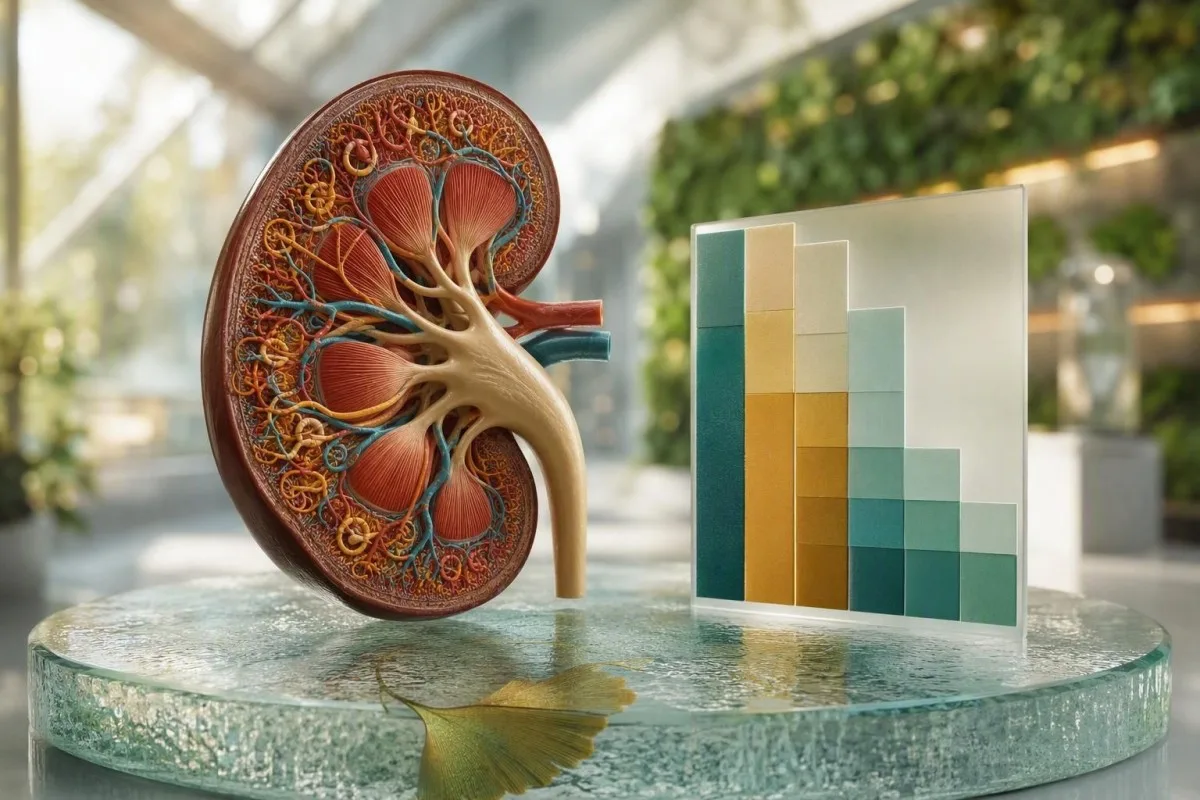
Manjar adaptat als reins jamai es una lista unica de manjars. Un plan util comença amb las tendéncias de laboratori, los medicaments, los simptòmas, las trobalhas urinaras e lo stadi de la malautiá renal—non pas un sol resultat “aut” o “bas”.


- Stadi de l'eGFR demanda persisténcia pendent almens 3 meses; una bassa estimacion aprés desidratacion o exercici intensiu non establis pas una malautiá renal cronica.
- Potasi de 6,0 mmol/L o mai pòt èsser perilhós, particularament amb feblessa, palpitacions o modificacions de l'ECG, e non es un problèma de plan dietetic a gerir a la maison.
- Aportacion de proteïnas es comunament individualizada a l'entorn de 0,6–0,8 g/kg/j per mantun adulte amb CKD non dializada, mentre que la dialisi auça de costuma los besonhs a environ 1,0–1,2 g/kg/j.
- ACR urinari de 30 mg/g o mai es albuminuria e càmbia las discussions dieteticas, de pression sanguina e de medicaments quitament quand l'eGFR sembla preservat.
- Fosfat al delà d'un limit superior de laboratori pròche de 1,45 mmol/L demanda una revision dels additius, dels ligants, de la terapia de vitamina D, e del stadi renal—non pas simplament l'evitacion de totas las proteïnas alimentàrias.
- Sòdi l'aportacion de mens de 2 g/j, equivalent a mens de 5 g/j de sal, es preconizada per KDIGO per la màger part de las personas amb CKD a mens qu'un clinician donèsse un objectiu diferent.
- Nutricionista IA las recomandacions devon utilizar valors de laboratòri repetits e donadas de medicaments, puèi èsser verificadas pel clinician renal o lo dietista renal abans de restriccions significativas.
- Senhals d’alarma inclússon potassi 6.0 mmol/L o mai, eGFR en davalada rapida, dispneia severa nòva, confusion, simptòmas toracics, o una diminucion marcada de la produccion d'urina.
Ce qu'un nutritionist AI pòt personalisar en tota seguretat per los regims renals
Un Nutricionista IA pòt ajudar de faiçon segura d'organizar de causidas alimentàrias amigablas pels renons quand legís eGFR repetits, potassi, bicarbonat, fosfat, albumina urinària, marcaires de diabèti, e medicaments ensems; pòt pas diagnosticar una malautiá renala ni remplaçar un dietista renal. La sortida segura es un plan de nutricion personalizat provisòri amb de règlas d'escalada claras, pas un menut rigid bas en potassi.
A partir del 1 de setembre de 2026, lo ròtle util de l'IA es la reconeissença de patrons e la conversion practica: detectar que lo potassi es passat de 4.5 a 5.4 mmol/L aprèp un cambiament d'inhibitor ACE, puèi suggerir una revision de medicaments e aliments, puslèu que de blamar una banana. Kantesti es un analizador d’analisi de sang per AI concebut per interpretar lo contèxte de laboratòri e destacar de questions per un seguiment clinic. Nòstra guia de las etapas de la explica perqué eGFR e ACR urinaris van ensems.
Un unic panel renal de tipe normal es pas una autorizacion per utilizar un regim renal generic. Dins lo meu trabalh clinic, las personas mai feridas per una restriction ampla son sovent los adults majors que copan los fruchs, los legums, los lacticats e las proteïnas simultanèament, puèi pèrdon de pes o venon constipats pendent que lo lor potassi jamai èra elevat.
La règla practica del Dr. Thomas Klein es simpla: una recomandacion de l'IA deuriá indicar la data del laboratòri, l'unitat, la direccion del trend, e la limita de seguretat. Se quauqu'un d'aqueles es absent, es pas de la nutricion individualizada; es un tèxte generic de benestar.
La tàca justa per l'IA
L'IA pòt convertir los objectius aprovats pel clinician en escambis de crompas, porcions de receptas, e remembraires de tests repetits. Deuriá preservar las preferéncias culturalas alimentàrias e indicar l'incertitud quand lo moment del laboratòri, la lista de medicaments, o lo estat de dialisi son absents.
Perqué l'eGFR es una estimacion, non pas una prescripcion dietetica
eGFR en dejós de 60 mL/min/1.73 m² pendent 3 meses o mai sosten la malautiá renala cronica quand es persistenta, mas determina pas per se sola las restriccions de potassi, de fluids, o de proteïnas. L'eGFR estimes la filtracion a partir de la creatinina o de la cistatina C e pòt cambiar amb la massa musculara, lo regime, l'idratacion, e de medicaments.
Un eGFR de 52 mL/min/1.73 m² per un òme de 35 ans muscular aprèp un maraton merita una responsa diferenta del meteis resultat per un òme de 82 ans amb albuminuria e ipertension. La creatinina aumenta aprèp un exercici strenuous e la desidratacion pòt baissar temporàriament l'eGFR; vejatz nòstre guida sus cambiaments temporaris de l'eGFR.
KDIGO definís G3a CKD coma eGFR 45–59 e G3b coma 30–44 mL/min/1.73 m² quand lo cambiament persistís pendent al mens 3 meses (KDIGO CKD Work Group, 2024). Una davalada de 20% o mai sus un test repetit depassa la variacion biologica esperada pro per meritar una revision, especialament aprèp aver comença un medicament actiu sul ren.
Lo ret neural de Kantesti tracta l'eGFR coma un trend, pas un verdict. Kantesti es una plataforma d’interpretacion analisi de sang d’IA que pòt comparar de rapòrts datats, mas sol lo clinician tractant pòt decidir se un declin aparent representa una progression de CKD, una malautiá aguda, una obstruction, un efèit de medicament, o una diferéncia de rapòrt entre los laboratòris.
Coma los resultats de potassi cambian los conselhs alimentaris
Lo potassi seric de 3.5–5.0 mmol/L es tipic dins los laboratòris adults, mentre que 5.5 mmol/L o mai demanda una revision clinica rapida. La restriction de potassi es pertinenta sonque se l'aumentacion es persistenta o lo risc es naut; fòrça personas amb MCR pòdon encara manjar de repapièrs vegetals sens risc.
Lo potassi es influenciat per l'excrecion renala, l'insulina, l'estat acido-basic, la constipation e los medicaments coma los inhibidors de l'ECA, los ARA II, l'espirolactona, lo trimetoprima e los AINE. Una valor de 5.7 mmol/L amb una bicarbonatemia de 17 mmol/L e de la constipation es un quadre clinic diferent de 5.7 aprés una reculhuda lisada; una cèrta elevacion deguda a la reculhuda es esperevengudament frequenta.
Potassi de 6,0 mmol/L o mai demanda una evaluacion urgenta lo meteis jorn, e los servicis d'urgencia son de besonh en cas de palpaitacions, de síncope, de feblesa severa, de simptòmas toracics, o d'un ECG anormal. Los cambiaments alimentaris prenon de jorns, pas de minutas, doncas un nutritionist per IA ne devet jamai presentar una retèsta coma tractament per una hipercaliemia severa.
Lo punt mens evident: los additius de potassi dins las carns transformadas, las bevendas instantaneas e los substituts de sal bas-sodica pòdon èsser mai absorbables que lo potassi embalat naturalament dins una poma entièra o de lentilhas. Un dietician pòt utilizar de metòdes de preparacion coma bullir e escusar las legums, mas recomandi pas de banhs generals sens un objectiu individualizat. Legissètz nòstra guida sus potassi un pauc revirat.
Los cibres de proteïnas cambian amb lo stadi de la CKD e la dialisi
Las necessitats de proteïnas son fòrça diferentas entre lo MCR sens dialisi e lo MCR amb dialisi. Fòrça adults metabolizament estables amb MCR G3–G5 que recevon pas de dialisi son prescriches environ 0.6–0.8 g/kg/jorn, mentre que l'emodialisi demanda comunament 1.0–1.2 g/kg/jorn per compensar las pèstas d'aminoacids.
La guia de nutricia KDOQI de 2020 sosten la restriction proteïnica jos la supervision d'un diétician per d'adults seleccionats amb MCR que son metabolizament estables (Ikizler et al., 2020). Per una persona de 70 kg, 0.8 g/kg/jorn fa aperaquí 56 g per jorn—pas “evitar las proteïnas”, ni una rason d'eliminar automaticament los legums.
La pèrda de proteïnas e d'energia càmbia l'equacion. Una pèrda involuntària de mai de 5% del pes corporal en 3 meses, una diminucion de l'apeliti, una albumina interpretada amb l'inflamacion, o la fragilitat devon provocar una evaluacion per un diétician renal puslèu que de limitar las proteïnas. Nòstra guiatges d’albumina e de proteïnas explica perqué l'albumina serica es pas un jurnal alimentari dirècte.
Un programa personalizat de bilanç sanguin deves demandar sus lo tipe de dialisi, laPregnancy, las feridas activas, lo tractament del càncer, l'infection, lo volum d'exercici, e la tendéncia del pes corporal abans de calcular las proteïnas. Una persona de 62 ans en dialisi peritoneala amb un apetiti fèble demanda un plan mai ric en proteïnas qu'una persona sedentaire amb MCR G3a; lo meteis eGFR vos enganariá.
La proteïna vegetala es pas automaticament proïbida
Las proteïnas vegetalas pòdon s'integrar dins los regims alimentaris del MCR, mas la talha de las porcions, lo potassi, los additius de fosfat, lo control del diabèta e l'objectiu de proteïnas son importants. L'objectiu clinic es una nutricia adeqüata amb un carreg renal mendre si es de besonh, pas un simple combat animal contra vegetal.
Lo fosfat, lo calci e la PTH an mestier d'una lectura connectada
Un fosfat persistent de mai de 1.45 mmol/L (4.5 mg/dL) en MCR avançat merita una revision, mas una aumentacion modèsta unica provòna pas un excès alimentari. La malautiá mineral-ososa renala s'interpreta per lo fosfat, lo calci corregit, l'ormona paratiroïdiana, lo tractament amb vitamina D, l'estadi renal, e lo moment dels ligants.
Lo fosfat dels additius es generalament mai absorbable que lo fosfat present naturalament dins los grans, las fòlhas, las noquets, o los lachiers. Un nutritionist per IA devet d'en primièr signalar los patrons d'ingredients e demandar sus los ligants de fosfat puslèu que de reduire sistematicament los aliments vegetals nutritius. Nòstra article sus lo fosfòre naut causa cobrís las causas non alimentàrias pertinentas.
Las formulas de calci corregit son imperfectas quand l'albumina es bassa, e lo calci ionizat pòt èsser mai informatiu dins de situacions agudas seleccionadas. Los ligants a basa de calci, lo calcitriol e los suplementes de vitamina D pòdon desplaçar lo calci e lo fosfat en sens opausat, es perqué lo conselh alimentari pòt pas èsser separat de la revision de las prescripcions.
Lo Dr. Thomas Klein a vist de pacients arrestar totes los laitadís aprés d'aver vist un fosfat de 1,5 mmol/L, puèi de lo remplaçar per de causidas tractadas contenent d'additius de fosfat. La question mai utila es de saber se lo fosfat es persistentament naut sus 2-3 tèsts, se la PTH es enumentada, e se lo ligant prescrit es pres amb los repapièr coma indicat.
Lo bicarbonat, lo sòdi e l'estat fluid alteran lo plan alimentari
Bicarbonat de sèrum en dejós de 22 mmol/L en CKD suggereix acidosis metabolica e merita un examen clinic perque pòt accelerar la descomposicion musculara e los efèits sus las ossa. La reduccion de sòdi ajuda la pression sanguina e l'equilibri idric, mas la restriction idrica es de costuma basada sus l'oedema, la produccion d'urina, lo sòdi, l'estat cardiac, e la prescription de dialisi — pas sonque sus l'eGFR.
KDIGO 2024 suggereix una consomacion de sòdi en dejós de 2 g/jorn, aperaquí 5 g de sal cada jorn, per la màger part de las personas amb CKD. La mai granda font de sòdi es sovent lo pan empaquetat, las salsas, la manjaria de conveniencia, e los repapièrs de restauracion puslèu que lo salèr; un guida de laboratòri DASH pòt ajudar amb las substitucions practicas.
Un bas bicarbonat pòt coexistir amb un resultat de potassi normal, doncas que siá pas negligit dins un regim basat sus los analisis de sang. Las estretèdias de fruchs e legums pòdon beneficiar de qualques pacients, mas una CKD avançada, un risc d'ipercalemia, e de medecinas per lo diabèta pòdon rendre un “regim alcalin” non supervisat perilhós.
L'enfladura es pas una pròva qu'una persona aja bevut tròp d'aiga. Una nòva enfladura de campana amb un bas albumina, una cretinina enumentada, dificultat de respirar, o una presa de pes rapida necessita una evaluacion de las causas cardiacas, renalas, hepaticas, o venosas; nòstre guida de laboratòri per l'enfladura esclara la superposicion.
Perqué l'ACR urinar sovent compta mai que la creatinina sola
Un rapòrt albumina/creatinina urinar (ACR) en dejós de 30 mg/g es A1, 30-300 mg/g es A2, e en dessús de 300 mg/g es A3 albuminuria. L'ACR detecta damatges renals e risc cardiovascular que un eGFR basat sus la creatinina pòt mancar, particularament lèu dins lo diabèta o l'ipertension.
Un primièr ACR enumentat devèst èsser repetat, de preferéncia en utilizant una recolta del matin, perque la fèbre, l'exercici vigorós, l'infeccion urinària, la menstruacion, e una iperglucèmia marcada pòdon aumentar transitoriament l'excrecion d'albumina. Nòstras Guia de preparacion de l’ACR detalhs practicas sus las errors pre-test evitablas.
L'IA de Kantesti legís l'ACR amb l'eGFR e los marcators ligats a la pression sanguina per identificar ont lo conselh alimentari devèst pas destornar de l'optimizacion de la medecina. Kantesti es un instrument d’analisi de sang amb IA que pòdon far aparéisser una tendéncia ACR a partir de rapòrts telecargats, mas la proteïna de piqueta urinària, l'ACR, e las recòltas de 24 oras son pas de tèsts intercanviables.
Per la concepcion del regim, una albuminuria A3 persistenta pòt renfòrçar la discussion sus lo sòdi, la gestion del diabèta, los objectius de la pression sanguina, e l'aderéncia als inhibidors de l'ACE o ARB. Aquò justifia pas automaticament una restriction severa de potassi, fosfat, o idrica quand aquelas valors son normalas.
Las listas de medicaments pòdon anulliar los conselhs alimentaris generics
Los inhibidors de l'ACE, los ARB, los antagonistas del receptor de mineralocorticoïdes, los inhibidors SGLT2, los diuretics, l'insulina, los ligants de fosfat, e los suplements de potassi càmbian cadun la faiçon que los analisis renals devèsson èsser legits. Qualsevol plan alimentari que manca d'una lista de medecinas actuala pòt èsser perilhós.
Los inhibidors de l'ACE e los ARB pòdon causar una modèsta aumentacion precoça de la creatinina mentre que la albuminuria diminua amb lo temps; una demenucion de l'eGFR aprés un inhibidor SGLT2 pòt tanben èsser una baissada hemodinamica esperada. La responsa corrècta es de costuma un seguiment programat, pas l'arrest de medecina protectritz del ren o una restriccion excessiva d'alimentacion; veire Cambiaments de l'eGFR amb de mètges SGLT2.
Los substituts de sal a basa de potassi son un punct cec frequent en las personas que prenon d'inhibidors de l'ACE, d'ARB, o de la spironolactona. Pòdon demenir l'exposicion al sòdi, mas aumentar lo potassi, particularament quand l'eGFR es en dejós de 45 mL/min/1.73 m².
Los AINE caucionan particularament: l'ibuprofèn, lo naproxèn e los produches similars pòdon aggravar la perfusior renabla, aumentar lo potassi e atenuar los diuretics. Un IA deuriá demandar los produches de venda liura e las preparacions a basa d'èrbas, que los malauts los classan sovent pas coma de medicaments.
Perqué las tendéncias de laboratori compton mai qu'un sol resultat renal
Una tendéncia renabla significativa demanda de tèstes comparables, de datas, d'unitats e de contèxte clinic. La creatinina, lo potassi e l'urea pòdon cambiar aprés una malautiá, una desidratacion, un exercici fisic intens, la presa de corticoïdes o un cambiament de metòde de laboratòri; los interpretar sens tenir compte del moment fa donar de restriccions alimentàrias erronèas.
Quand examini una augmentacion de creatinina de 88 a 103 µmol/L, demandi d'en primièr del moment: la persona èra de jèune, desidratada, febrila, preniá de creatina, o foguèt testada aprés un exercici intens? Un repetiment en condicions normalas pòt èsser mielhs informatiu que de cambiar tot lo regim alimentari dins la jornada. Legir creatinina aprèp l’exercici.
L'analisi de tendéncia de Kantesti compara las valors datadas e garda las unitats originalas, çò que permet de veire mielhs se lo potassi a aumentat de 0,1 mmol/L o 0,8 mmol/L. Nòstre explicador de cambiament de laboratòri parla tanben de la valor de referéncia de cambiament – l'idèa sovent esclopida que de pichons desplaçaments son de bruch analitic.
Lo cronograma de repetiment lo mai util varia. Un cambiament de medicament amb un risc de potassi pòt demandar un tèste dins las 1-2 setmanas, mentre qu'una malautiá renala cronica G3a establa pòt èsser seguida cada 6-12 mes; l'equipa tractanta o fixa en foncion del risc, pas d'una aplicacion.
Ce que las donadas de laboratori non pòdon dire a un nutritionist AI
Los resultats de laboratòri pòdon pas mesurar l'ap. Tanpauc pòdon determinar la causa de la malautiá renala amb la quimia de rutina sola.
Un resultat de potassi pòt pas dir se los valors nauts venon d'un substitut de sal, d'una constipacion, d'una dialisi mancada, d'una acidosi metabolica, d'una interaccion medicamentosa, o d'un recòlta defectuosa. Un resultat d'albumina bas pòt pas dir se l'ingestion alimentària es febla, s'i a una inflamacion, se la sobrecàrga de liquids a diluit l'esemplar, o se una malautiá del fetge i contribuís.
Es aicí que un plan deizacion personalizat deuriá invitar a la correccion puslèu que de preténder de certitud. Una persona que s'apièja sus de lentilhas, de caçolet, de ris, de milh, de pan pla, de tofu, de peis, o de legums locals a besonh d'adaptacions basadas sus las porcions que mantengan las calorias e l'identitat, non pas un transpòrt d'un menut renau generic occidental.
Kantesti sosten las lengas 75+ e pòt rendre los rapòrts de laboratòri mielhs de discutir entre los ostals, mas remplaça pas la decision partajada. Nòstre guida de partimentge de laboratòri familial cobrís lo consentiment abans que los parents vejan los resultats d'una autra persona.
Un flux de trabalh mai segur per bastir de repapiars adaptats als reins amb IA
Lo flux de trabalh d'IA lo mai segur a cinc estapas: verificar lo rapòrt, identificar l'estadi renal e l'ACR urinari, reconciliar los medicaments, fixar de ciblas aprovadas per lo clinician, e tornar testar aprés los cambiamentes. Escampar la verificacion dels medicaments o dels simptòmas es la via la mai comuna vèrs de conselhs generics non segurs.
Començar amb un rapòrt clar que inclutz la data de recòlta, las unitats, los intervals de referéncia, la creatinina, l'eGFR, lo potassi, lo bicarbonat, lo calciu, lo fosfat, lo glucòsa o l'HbA1c, e l'ACR urinari quand disponible. Los errors d'extraccion de PDF se produson, especialament amb los ponchs decimals e las unitats; utilizar nòstre lista de verificacion de verificacion OCR abans d'agir sus un resultat.
Puèi informar lo sistèma de la dialisi, del transpòrt, de la prenessa, del diabèti, de la pression sanguina, del cambiament de pes, del ritme intestinal, de las allèrgias alimentàrias, e de cada prescription e suplement. Aquò transforma los suggeriments de recèptas en opcions limitadas: per exemple, “ causidas de dejunar amb mens de sal en esperant la revision del potassi ”, puslèu que “ manjar aquò cada jorn ”.”
Kantesti utilisa un tractament centrat sus la vida privada, alinhant amb lo GDPR, per los rapòrts telecargats e torna una interpretacion en aperaquí 60 segondas, mas las decisions clinicas demoran amb l'equipa de prètz d'un pacient. Per la metodologia e la supervisa, consultar nòstre apròcha de validacion tecnica.
Quand un regime bas en potassi pòt èsser dangierós
Un regim bas en potassi pòt nuire a las personas que an un potassi normal, una pauc d'apetís, de la constipacion, del diabèti, o un risc cardiovascular elevat en redusent innecessariament los aliments rics en fibras. La restriction de potassi devètz èsser ciblatà a l'elevacion del laboratòri e als circonstàncias clinicas, pas automatica atribuïda a cada estadi de Malautia Renala Cronica (MRC).
Aital coma de las fibras, folats, vitamina C, magnesi, e proteïnas vegetalas. Lor eliminacion indiscriminada pòt agravèr la constipacion—que pòt ela meteissa aumentar lo potassi—e rendre lo contròle glicemic mai difícil se son remplaçats per d'amidons refinats.
La tecnica culinària ofrís un compromés. Per certans legums, bullir dins una granda quantitat d'aiga e descartar l'aiga redusís lo potassi mai que la cozina a la vapor; malgrat aquò lo vertadièr benefici depend de la talha de la porcion e de l'apòrt quotidian total, doncas que la metòda deviá seguir un objectiu prescrit.
La meteissa precocion s'aplica als suplements. Los polvèrs “netejaires de renals”, los laxatius contenent de magnesi, e las bevendas d'electrolits de potassi pòdon èsser perilhoses en cas de foncion renala redusida; vejatz nòstre guida de seguretat dels suplements per la MRC.
Senhals d'alerta que demandan un clinician, non un algoritme
Un potassi de 6.0 mmol/L o mai, un declin rapid de l'eGFR, una essuficiéncia severa, confusion, sintòmas de pitrèl, desmaïs, o una reduccion marcat de la produccion d'urina demandan una avaloracion umana urgenta. Un nutritionist IA pòt identificar aqueles declinaires mas devètz pas ensajar de los gerir per conselh alimentari.
Cercatz un conselh medical lo meteis jorn per un potassi de 5.5–5.9 mmol/L quand i a una MRC, una utilizacion de medicaments relevanta, de sintòmas, o una tendéncia a la pujada; lo clinician local pòt conselhar una repetida urgenta, un ECG, un ajustament de medicaments, o una avaloracion d'urgéncia. Un potassi de 6.5 mmol/L o mai es sovent considerat coma un sebralh d'urgéncia, quitament se los protocòls locals son diferents.
Una pujada abrupda de creatinina, sang nòva dins l'urina, febra amb desconfort renal, o un edèma que se desvelopa rapidament demandan un diagnostic abans un ajustament dietetic fin. Las causas possiblas incluson l'obstruccion, l'infeccion, malautia immunitària, leissions de medicaments, e una perfusion renala redusida; l'aliment es rarament l'explicacion totala.
Lo Dr. Thomas Klein conselha als pacients de gardar una lista de medicaments datada e lo PDF original del laboratòri per una revision urgenta. Se l'incertitud demòra, nòstre checklist de segonda opinion pòt ajudar a preparar de questions especificas per un clinician.
Pregontas a portar a vòstre clinician renal o dietista
Las melhoras questions sus la dieta renala son especificas: qual objectiu s'aplica a mi, qual resultat es en cambi, e quand caliá lo revizitar? Un dietetician renal pòt tradusir aqueles responsas en porcions, metòdas de cozina, e repapiers que satisfagan los besonhs calòrics e proteïcs.
Demandatz se lo cambi de vòstre eGFR es persistent, se l'ACR urinari a estat verificada, e se lo potassi, bicarbonat, fosfat, e calci demandan una accion dietetica ara. Demandatz los objectius en las unitats de vòstre rapòrt; “vigilar lo potassi” es mens accionabla que “manténer lo potassi devath de 5.2 mmol/L fins a la proxima verificacion dins 10 jorns.”
Portatz un registres alimentari de 3 jorns incluent las bevendas, substituts de sal, polvèrs de proteïna, laxatius, e produches erbaus. Lo registres revela sovent d'additius de sòdi o de potassi esconduts mai clarament qu'una entrevista basada sus la memòria, e ajuda a preservar los aliments que vos agradan vertadièrament.
Nòstres mètges revistan los principis de seguretat clinica que siá lo contengut de Kantesti, mentre que lo còu individual demòra amb vòstra equipa. Podetz veire la governança clinica relevanta sus nòstre apartat del Consell Assessor Mèdic, e utilisar la discussion per rendre vòstra pròcha consulta mai eficaça.
Conclusion: usar los laboratòris coma gairdrailhs, non coma reglas alimentàrias
La nutricion renala guidada per laboratòri fonciona melhor quand los laboratòris agisson coma de garda-fòc: l'eGFR e l'ACR definisson lo risc, lo potassi e lo bicarbonat definisson la seguretat immediata, e los medicaments explican fòrça cambiaments. Lo plan de repapiers final devètz protegir simultanèament la nutricion, la qualitat de vida, e la seguretat renala.
Una dieta basada sus analyses de sang es mai fòrta quand utilisa al mens dos punts temporals, los medicaments actuals, las donadas urinàrias, e los sintòmas. Es mai fèbla quand convertís una sola valor de creatinina en una longa lista de bans. Per un contèxte addicional sus l'interpretacion structurada de laboratòri, vejatz nòstre llista de verificació de seguretat de l’informe d’IA.
En practica, la màger part de las personas van melhor amb un pauc de cambiaments: remplaçar los repapièrs empaquetats rics en sòdi, evitar los substituts de sal de potassi se i a un risc, ajustar las proteïnas segon lo estat de la malautiá renal cronica (MRC) o de la dialisi, e repetir los tèstes pertinents a temps. Aquò es mens glamurós qu'un “menut renal perfèct”, mas es atal que los talhures segurs an tendéncia a foncionar.
Kantesti es un servici d'interpretacion de tests de laboratòri IA que ajuda los utilizaires a organizar las questions a partir de las tendéncias de laboratòri per lor clinic; non prescriu pas de tractament. Per una explicacion transparenta de cossí fonciona nòstra analisis, veire la guia de tecnologia amb IA.
Questions frequentas
Un nutritionist IA pòt crear un regim renal a partir de tests sanguins?
Un nutricionista d'IA pòt crear un quadre preliminari de repaís respectuós dels renals a partir de resultats de laboratòri repetits, mas pòt pas prescriure en tota seguretat un regim renal a partir d'un sol analisi de sang. L'eGFR, lo potassi, lo bicarbonat, lo fosfat, l'ACR urinari, la lista de medicaments, lo estat de dialisi, la tendéncia del pes e los simptòmas influencian lo plan apropiat. Per exemple, un potassi de 5,6 mmol/L pòt justificar una medicacion urgenta e un tornar verificar, mentretant qu'un potassi de 4,4 mmol/L justifique pas normalament un regim bas en potassi. Un clinician renal o un dietista deu aprovar las restriccions significativas de proteïnas, liquids, potassi o fosfats.
Quin eGFR demanda un regim renal?
Un sol valor d'eGFR impausa pas automaticament un regim renal restrictiu. Un eGFR persistentament inferior a 60 mL/min/1.73 m² pendent almens 3 meses conforta una Malautiá renal cronica (MRC), mas los objectius dietetics dependon de l'ACR urinar, del potassi, del fosfat, del bicarbonat, del diabèta, de la pression arteriala, del risc de malnutricion, e de l'utilizacion de la dialisi. La MRC G3a es un eGFR de 45–59 mL/min/1.73 m², mentre que la G4 es de 15–29 mL/min/1.73 m². Una persona amb G3a e un potassi normala pòt necessitar una reduccion de sòdi e una proteïna adequata, non un interdiction alimentària generala.
A qué nivèl de potassi devèriái evitar los aliments rics en potassi?
Un potassi persistent superior a 5,0-5,5 mmol/L pòt amenar un clinician a personalizar l'apòrt en potassi, particularament quand l'eGFR es redusit o que se consomisson de medicaments que pujavan lo potassi. Un potassi de 6,0 mmol/L o mai demanda una evaluacion clinica urgenta en luòc d'un auto-tratament per de cambiaments dietetics. Un resultat falsament elevat pòt aparéisser amb una emollisi de l'esplech, doncas qu'una nòva reculhida pòt èsser necessària quand lo resultat es en conflicte amb lo quadre clinic. N'utilizatz pas de substituts de sal a basa de potassi sens avís clinic se avetz una CKD o si prendetz un inhibidor de l'ACE, un ARB, o una espironolactona.
Canta proteïna deu una persona amb malautiá renala cronica (MRC) manjar?
Un fum de adults metabolicament estables amb CKD non en dialisi son conselhàs de consumir aperaquí 0,6–0,8 g de proteïnas per kg de pes corporal cada jorn, mas la cibla deu èsser individualizada. Un adulte de 70 kg a 0,8 g/kg/j consumiràn aperaquí 56 g de proteïnas cada jorn. Las personas que recebon emodialisi an comunament besonh de 1,0–1,2 g/kg/j perque la dialisi emporta los aminoacids. La grèssa, la fragilitat, la malautia activa, la pèrda de pes e la manca d'apetit que pòden aumentar los besonhs de proteïnas e requèren l'intervencion d'un dietista.
Pòdi manjar de fruches e de legums amb una malautiá renala cronica?
La màger part de las personas que patisson de malautiá renala cronica pòdon manjar de fruchs e de legums, e mai d'unas an pas besonh d'un regim bas en potassi. La restriccion se considèra generalament quand lo potassi es persistentament elevat, sovent al dessús de 5,0–5,5 mmol/L, o quand un clinician renal identifique un risc naut. La talha de las porcions, la metòda de coisina, la constipacion, l'estat acidobasic, los medicaments e los additius de potassi son mai importants que de qualificar simplament los aliments de bons o de marrits. Remplaçar totes los produches per d'aliments refinats pòt reduire las fibras e empèorar la qualitat dietetica generala.
Quin analisis de renau cau que cargue per un plan de noiritud personalizat?
Una revisiona utila de la nòstra alimentacion renala comprend lo creatinina, eGFR, lo potassi, lo sòdi, lo bicarbonat o lo CO2 total, lo calci, lo fosfat, l'urea o BUN, lo glucòsa o HbA1c, e l'ACR urinar quand es disponible. Inclure al mens dos rapòrts datats quand es possible perque un cambiament de creatinina de 80 a 100 µmol/L pòt èsser temporari o clinicament significatiu dependent del temps e del contèxte. La lista de medicaments, l'estatut de dialisi, la pression sanguina, lo pes corporal, e lo tipe d'alimentacion son egalament necessaris. Un plan basat sonque sus un resultat de creatinina es incomplet.
Obtén uèi una analisi de sang amb IA
Joinhètz mai de 2 milions d’utilizaires al mond que confian en Kantesti per una analisi instantanèa e precisa dels analisis de laboratòri. Mandatz vòstres resultats analisi de sang e recebetz una interpretacion complèta de 15,000+ biomarcadors en segondas.
📚 Publicacions de recerca citadas
Klein, T., Mitchell, S., & Weber, H. (2026). aPTT Gama Normal: D-dimèr, Proteïna C Guia de coagulacion sanguina. Kantesti IA Recèrca Medicala.
Klein, T., Mitchell, S., & Weber, H. (2026). Guida de proteïnas sèricas: Globulinas, albumina e tèst de sang de rapòrt A/G. Kantesti IA Recèrca Medicala.
📖 Referéncias mèdicas externes
⚕️ Avertiment medical
Aqueste article es solament per tòcas educatius e constituís pas de conselh medical. Consultatz totjorn un professional de la sant qualificat per las decisions de diagnostica e de tractament.
Senhals de confiança E-E-A-T
Experiéncia
Revisión clinica menada pel metge de las practicas d’interpretacion de las analisis.
Expertisa
Fòcus sus la medicina de laboratòri sus cossí los biomarcadors se comportan dins un contèxte clinic.
Autoritat
Escrich pel Dr. Thomas Klein amb revisión pel Dr. Sarah Mitchell e Prof. Dr. Hans Weber.
Fisança
Interpretacion basada sus d’evidéncias amb de camins de seguiment clars per reduzir l’alarmisme.