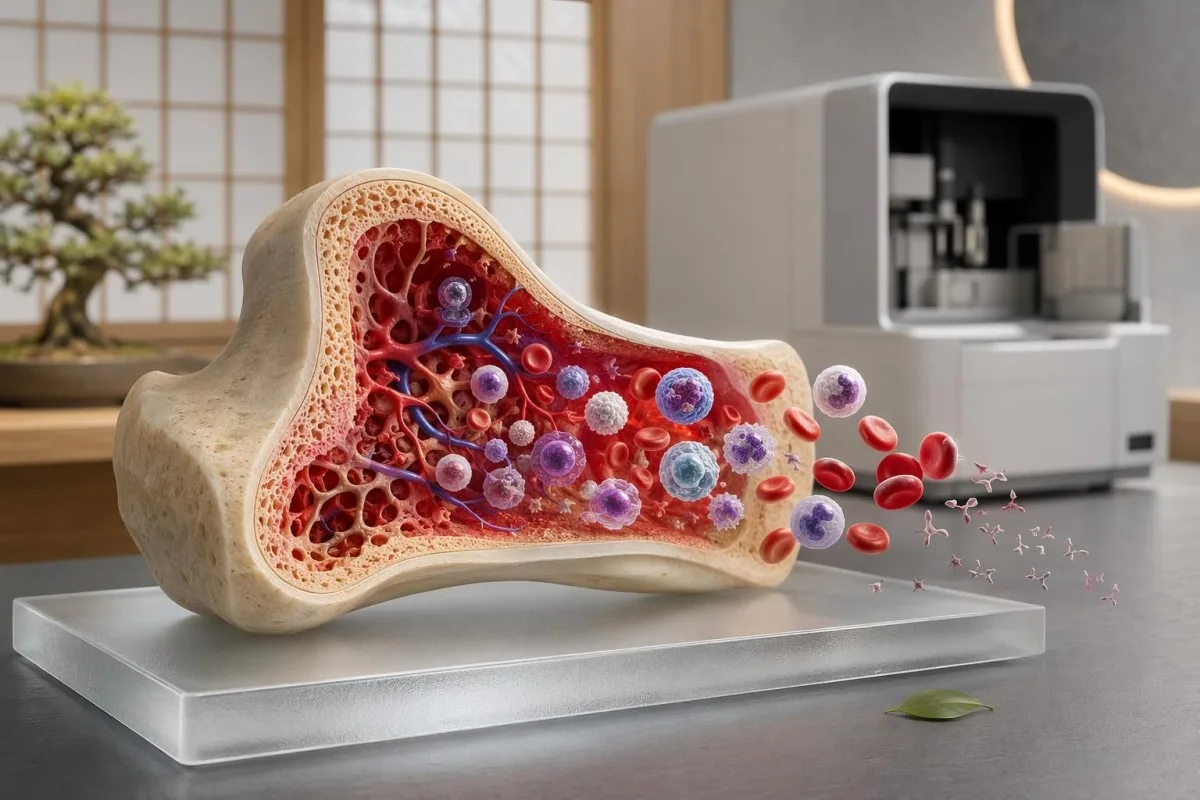
En UK-stil labrapportguide til full blodtellingresultater, CBC-terminologi, referanseområder og de unormale mønstrene som fortjener oppfølging.


- FBC står for full blodtelling, den britiske termen for CBC eller komplett blodtelling som brukes i USA.
- Haemoglobin er vanligvis rundt 130-170 g/L hos voksne menn og 120-150 g/L hos voksne kvinner, selv om områdene varierer fra lab til lab.
- Antall hvite blodceller er ofte 4,0-11,0 x10^9/L hos voksne; differensialtellingen forklarer hvilken cellelinje som driver endringen.
- Trombocytter er vanligvis 150-400 x10^9/L; under 20 x10^9/L eller over 1000 x10^9/L krever vanligvis umiddelbar klinisk vurdering.
- MCV skiller mellom anemi med små, normale og store celler; lav MCV pluss høy RDW peker ofte mot jernmangel.
- FBC vs CBC er hovedsakelig en navneforskjell: UK rapporter sier FBC, mens mange nordamerikanske rapporter sier CBC.
- Røde flagg inkluderer blaster, pankocytopeni, nøytrofiler under 0,5 x10^9/L, hemoglobin under 70 g/L, eller blodplater under 20 x10^9/L.
- Trends matter fordi et resultat innenfor referanseområdet fortsatt kan være klinisk meningsfullt hvis det har avveket 20-30 % fra din vanlige baseline.
FBC betydning på en UK blodprøverapport
FBC står for full blood count, en rutinemessig britisk blodprøve som måler røde blodceller, hvite blodceller og blodplater. I USA og mange internasjonale rapporter kalles den samme testen vanligvis CBC, eller komplett blodstatus. Kantesti er en AI-blodprøvetolkningsplattform som leser både FBC- og CBC-terminologi, og deretter oversetter resultatlinjene til samme kliniske rammeverk.
Det FBC blodprøve er ikke én markør; det er et kompakt hematologipanel. En standard voksen FBC inkluderer vanligvis hemoglobin, antall røde blodceller, hematokrit, MCV, MCH, MCHC, RDW, totalt antall hvite blodceller, en differensialtelling av hvite blodceller og blodplater. Vår biomarker guide forklarer hvordan disse passer inn i bredere blodprøvetaking i stedet for å fungere som en diagnose i seg selv.
Jeg er Thomas Klein, MD, og i daglig klinisk gjennomgang behandler jeg en FBC som en mønsterprøve. En svakt forhøyet lymfocyttprosent kan bety lite, men lymfocytter på 8,0 x10^9/L vedvarende i 3 måneder hos en 68-åring er en annen samtale.
En normal FBC utelukker ikke sykdom, og en unormal FBC betyr ikke automatisk noe farlig. Det praktiske spørsmålet er om abnormaliteten passer med en nylig infeksjon, medisinering, graviditet, eksponering for høyde, tung trening, blødning, ernæringsmangel eller et benmargsproblem.
FBC vs CBC: samme test, forskjellig labspråk
FBC vs CBC er hovedsakelig en navneforskjell: FBC er den britiske termen og CBC er den amerikanske termen for den samme kjerne hematologiske testen. Markørene samsvarer vanligvis, men rekkefølgen, enhetene og forkortelsene kan avvike nok til å forvirre pasienter som sammenligner rapporter fra forskjellige land.
En britisk rapport kan oppgi Hb i g/L, mens en amerikansk rapport kan vise hemoglobin i g/dL. Hemoglobin på 140 g/L er det samme som 14,0 g/dL, så et feilplassert desimaltegn kan få et normalt resultat til å se skremmende ut. Vår abbreviation guide er nyttig når en rapport bruker korte koder uten forklaringer.
Noen britiske laboratorier bruker fortsatt PCV for pakket cellevolum i stedet for hematokrit, og noen rapporter skriver WCC i stedet for WBC. Etter min erfaring er den største feilen pasienter gjør å sammenligne et britisk g/L-resultat med et amerikansk g/dL-referanseområde og tro at hemoglobin har falt ti ganger.
Referanseintervallene er heller ikke universelle. Et laboratorium som betjener mange lokalsamfunn i stor høyde kan forvente litt høyere røde blodverdier, mens graviditetspesifikk rapportering kan senke hemoglobinterskelen fordi plasmavolumet utvider seg med omtrent 40-50 %.
Hvordan en full blodtellingrapport er satt opp
A UK rapport om full blodstatus starter vanligvis med resultater for røde blodceller, deretter hvite blodceller, deretter blodplater. De fleste automatiserte rapporter viser en verdi, en enhet, et laboratoriereferanseintervall og noen ganger en H, L eller unormal flagg.
Enheten betyr like mye som tallet. Antall røde blodceller vises vanligvis som x10^12/L, hvite blodceller som x10^9/L, blodplater som x10^9/L og hemoglobin som g/L i britiske rapporter. Vår laboratorieenhetsguide dekker hvorfor den samme biologien kan se annerledes ut etter en endring av laboratorium eller land.
Automatiserte hematologianalysatorer teller og klassifiserer millioner av cellulære hendelser på sekunder, men de vet ikke om du løp et maraton i går, startet prednisolon, eller fødte for 6 uker siden. Det er derfor en teknisk nøyaktig FBC fortsatt kan være klinisk misvisende uten kontekst.
Flagg som atypiske lymfocytter, umodne granulocytter, blodplateklumper eller NRBC-er er ikke dekorative. Når jeg ser et av disse flaggene, ønsker jeg den kliniske historien først og, om nødvendig, en filmanmeldelse heller enn en ny blind repetisjon.
Hemoglobin, RBC og hematokrit: oksygenbærende resultater
Hemoglobin, RBC og hematokrit beskriver oksygenbærende side av en FBC. I mange britiske voksenlaboratorier er hemoglobin omtrent 130-170 g/L hos menn og 120-150 g/L hos kvinner, men ditt laboratories trykte referanseområde bør veie tyngre enn et generisk referanseområde.
Verdens helseorganisasjons retningslinjer fra 2024 bruker hemoglobinverdier som grenser for å definere anemi etter alder, kjønn og graviditetsstatus, der voksne ikke-gravide kvinner generelt under 120 g/L og voksne menn under 130 g/L regnes som anemiske (WHO, 2024). Et hemoglobin på 108 g/L er ikke det samme problemet hos en 24-åring som menstruerer, som hos en 74-åring med nye tarmproblemer.
RBC-tall er vanligvis rundt 4,5-5,9 x10^12/L hos voksne menn og 4,1-5,1 x10^12/L hos voksne kvinner. En høy RBC-telling med lav MCV kan tyde på talassemi-trekk, mens lav RBC-telling med lavt hemoglobin vanligvis peker mot anemi fra jernmangel, inflammasjon, nyresykdom eller nedsatt benmargsfunksjon. For spesifikke tall for røde blodceller, bruk vår RBC-referanseguide.
Haematocrit er andelen av blodvolumet som opptas av røde blodceller, ofte rundt 0,40-0,52 hos voksne menn og 0,36-0,46 hos voksne kvinner. Dehydrering kan øke hematokriten uten å skape ekstra røde blodceller; vedvarende forhøyelse bør sammenlignes med haematocrit guide og vurderes sammen med oksygenmetning, røyking, søvnapné og EPO/JAK2-testing.
MCV, MCH, MCHC og RDW: røde blodcelleindeks-ledetråder
MCV, MCH, MCHC og RDW forklare hvorfor hemoglobinet er lavt eller hvorfor resultater for røde blodlegemer ikke samsvarer med symptomer. MCV er gjennomsnittlig størrelse på røde blodlegemer; verdier under ca. 80 fL er mikrocytiske og verdier over ca. 100 fL er makrocytiske i mange voksenlaboratorier.
Lav MCV med høy RDW er et klassisk tidlig jernmangel-mønster fordi nye røde blodlegemer blir mindre før alle cellene ser like ut. Snook et al. i retningslinjene fra British Society of Gastroenterology anbefaler at bekreftet jernmangelanemi hos voksne menn og postmenopausale kvinner vanligvis bør føre til gastrointestinal evaluering, ikke bare jerntabletter (Snook et al., 2021).
Høy MCV har en bredere differensialdiagnose enn mange pasienter forventer. Alkoholforbruk, leversykdom, hypotyreose, B12-mangel, folatmangel, noen antiepileptika og beinlidelser kan alle føre MCV over 100 fL. Vår MCV-guide går dypere inn på når tallet sannsynligvis er ernæringsrelatert kontra medisinrelatert.
RDW er variasjonskoeffisienten i størrelsen på røde blodlegemer, ofte rundt 11,5–14,5 %. Høy RDW med normal MCV kan være det tidligste synlige tegnet på blandede jern- og B12-problemer, nylig blødningsgjenoppretting, eller transfusjonseffekt. For et teknisk blikk på RDW-CV og RDW-SD, se vår RDW forskningsguide.
Hvite blodceller og differensialtelling: lesing av immunmønster
Antall hvite blodlegemer ligger vanligvis på ca. 4,0–11,0 x10^9/L hos voksne, men differensialen gir den kliniske betydningen. Absolutte nøytrofil-, lymfocytt-, monocytt-, eosinofil- og basocytt-tall betyr mer enn prosentandeler alene.
Nøytrofiler øker ofte ved bakteriell infeksjon, steroider, røyking, vevstress og intens trening. Lymfocytter øker ofte ved virusinfeksjon, men vedvarende absolutt lymfocytose over 5,0 x10^9/L hos en eldre voksen bør gi en ny vurdering og noen ganger flowcytometri. Vår differensialguide forklarer hvorfor absolutte tall slår prosentandeler.
Et lavt hvite blodceller-antall er ikke automatisk tegn på svikt i immunforsvaret. Noen friske personer, særlig de med benign etnisk nøytropeni, ligger med nøytrofiler rundt 1,0–1,5 x10^9/L uten tilbakevendende infeksjoner. Problemnivået er vanligvis nøytrofiler under 0,5 x10^9/L, særlig ved feber.
Jeg ser ofte pasienter som blir bekymret av en lymfocyttprosent på 48% når det absolutte lymfocyttallet er 2,4 x10^9/L og nøytrofiler bare ligger i den nedre delen av normalområdet. For alders- og graviditetsspesifikke referanseområder er vår WBC-områdeguide mer nyttig enn å tolke prosentandelen alene.
Blodplater og MPV: koagulasjonstelling, ikke koagulasjonsfunksjon
Trombocytter ligger vanligvis på ca. 150–400 x10^9/L hos voksne, og de bidrar til å danne koagler etter skade. FBC-platetallet forteller deg hvor mange trombocytter som finnes, ikke om de fungerer normalt ved bruk av aspirin, nyresvikt eller arvelige trombocyttforstyrrelser.
Trombocytter under 150 x10^9/L kalles trombocytopeni, men risikoen endrer seg brått med nivået. Mange personer med 100–149 x10^9/L er stabile og uten symptomer; under 50 x10^9/L er viktig for prosedyrer, og under 20 x10^9/L trenger vanligvis rask vurdering. Vår guide til blodplateområder dekker disse tersklene mer i detalj.
Høye trombocytter er ofte reaktive. Jernmangel, nylig infeksjon, inflammasjon, kirurgi og noen kreftformer kan alle øke trombocyttene over 450 x10^9/L, mens vedvarende tall over 600–1000 x10^9/L øker muligheten for en myeloproliferativ lidelse.
MPV, eller gjennomsnittlig trombocyttvolum, rapporteres av noen laboratorier og ignoreres av andre. Et høyt MPV med lave trombocytter kan tyde på økt trombocyttomsetning, men MPV er sensitivt for prøvealder og analyseteknikk; jeg tar sjelden en beslutning basert på MPV alene.
Anemimønstre på en FBC: hva leger først antar
En FBC kan antyde typen anemi før tester for jern, B12 eller nyrer returnerer. Leger kombinerer vanligvis hemoglobin, MCV, RDW, retikulocytt-telling og blodplater for å avgjøre om mønsteret er jerntap, vitaminmangel, betennelse, hemolyse eller underproduksjon i margen.
Kantesti er en AI-plattform for tolkning av biomarkører som grupperer hemoglobin-, MCV-, RDW- og ferritin-mønstre i stedet for å lese hver linje som en egen unormalitet. Det har betydning fordi lav hemoglobin med lav MCV og blodplater på 520 x10^9/L ofte oppfører seg som jernmangel, mens lav hemoglobin med normal MCV og lavt antall blodplater peker mot en annen diagnostisk rute.
En nyttig klinisk snarvei er denne: mikrocytisk anemi krever ferritin, transferrinmetning og vurdering av blodtap; makrocytisk anemi krever B12, folat, lever, skjoldbruskkjertel og gjennomgang av medisiner. Vår anemi mønster guide kartlegger de første grenene uten å late som om FBC diagnostiserer alt.
Jernmangel kan oppstå før hemoglobinet faller. Ferritin under 30 µg/L blir ofte behandlet som jernmangel i mange voksne omgivelser, selv om betennelse kan gjøre ferritin falskt normalt eller høyt. Den jernmangelguide er verdt å lese hvis MCV-en din synker, men Hb fortsatt ligger innenfor normalområdet.
Infeksjons- og sepsisledetråder på en full blodtelling
En FBC kan støtte mistanke om infeksjon eller sepsis, men det kan ikke utelukke sepsis alene. WBC over 12 x10^9/L, WBC under 4 x10^9/L, nøytrofilia, umodne granulocytter og fallende blodplater er mer bekymringsfullt når det kombineres med feber, lavt blodtrykk, forvirring eller høy laktat.
Et svært høyt antall nøytrofiler etter prednisolon kan se bakterielt ut når det skyldes medisiner. Motsatt kan en skrøpelig eldre voksen med sepsis ha normal WBC, men ny lymfopeni og blodplater som faller fra 240 til 115 x10^9/L over 48 timer.
Båndnøytrofiler og umodne granulocytter tyder på at benmargen frigjør celler tidlig. Noen analysatorer rapporterer dette automatisk, mens andre bare flagger det for manuell filmanalyse. For en dypere forklaring, se vår veiledning for sepsismarkører.
Når en pasient forteller meg at blodstatusen er normal, men de føler seg desperat syke, stopper jeg ikke der. CRP, prokalcitonin, laktat, blodkulturer, urinprøver, brystbilder og klinisk undersøkelse kan bety mer enn antall, spesielt i de første 6-12 timene av sykdommen.
Blødnings-, koagulasjons- og benmargsvarslingsmønstre
Pancytopeni, som betyr lavt antall røde blodceller, hvite blodceller og blodplater samlet, er et av blodstatusmønstrene som krever rask oppfølging. En enkelt lav linje kan være ufarlig; tre lave linjer sammen gir grunn til bekymring for benmargssuppresjon, alvorlig infeksjon, medikamentell toksisitet, autoimmun sykdom eller hematologisk kreft.
Bain's New England Journal of Medicine-gjennomgang av blodutstrykket forblir en praktisk påminnelse om at automatiserte tellinger går glipp av noen morfologibaserte diagnoser (Bain, 2005). Blaster, tåredråpeceller, schistocytter, NRBC-er eller markert dysplasi på et utstryk kan endre alvoret selv når de viktigste tallene ser bare moderat unormale ut.
Nøytrofiler under 0,5 x10^9/L pluss feber behandles som en medisinsk nødsituasjon i mange kliniske retningslinjer. En pasient som får kjemoterapi, karbimazol, klozapin eller immundempende midler, bør ikke vente flere dager på en rutineavtale hvis feber oppstår med lavt antall nøytrofiler. Vår lave WBC-guiden forklarer siden om infeksjonsrisiko.
Blodplater kan svinge etter virusinfeksjon, og mange normaliseres innen 2-8 uker. Når det er sagt, blodplater under 20 x10^9/L, nye nevrologiske symptomer, graviditet, nyreskade eller anemi med fragmenterte røde blodceller endrer bekymringsnivået. guide for lave trombocytter gir terskelverdier for pasienter.
Når unormale FBC-resultater krever gjentatt testing eller akuttbehandling
An abnormal FBC-resultat krever akutt behandling når antallet er alvorlig, symptomer er til stede, eller mer enn én celletype er unormal. Hemoglobin under 70-80 g/L, nøytrofiler under 0,5 x10^9/L med feber, blodplater under 20 x10^9/L, blaster eller raskt skiftende tellinger bør ikke observeres uaktsomt.
For en mild isolert unormalitet, er det ofte rimelig å gjenta blodstatusen om 2-6 uker, spesielt etter en virusinfeksjon eller tung trening. Jeg forkorter vanligvis det intervallet til 1-2 uker når resultatet er nytt, uforklart, eller nær en klinisk beslutningsterskel.
Symptomer endrer alt. Tungpustethet i hvile, brystsmerter, svarte avføringer, besvimelse, feber, forvirring, alvorlig hodepine, nye blåmerker eller blødninger som ikke stopper, bør tilsidesette en betryggende netttolkning. Vår kritiske verdier veileder lister opp mønstre som fortjener raskere eskalering.
En gjentatt test bør besvare et spesifikt spørsmål, ikke bare gi trygghet. Hvis hemoglobin synker, legg til ferritin, transferrinmetning, retikulocytter og noen ganger CRP; hvis blodplatene er lave, spør om klumping, medisiner eller nylig infeksjon er sannsynlig. For logikk om timing, se vår veiledning for gjentatte tester.
Hvorfor en FBC kan se unormal ut når pasienten er frisk
Falske eller misvisende blodstatusunormaliteter skjer fordi prøver, fysiologi og timing påvirker celletall. Dehydrering kan konsentrere hemoglobin og hematokrit, blodplateklumping kan skape et falskt lavt blodplatetall, og kraftig trening kan forbigående øke WBC i flere timer.
EDTA blodplateklumping er en klassisk felle. Analysatoren kan rapportere blodplater på 70 x10^9/L, mens pasienten ikke har noen blåmerker, og utstrykket viser klumper heller enn ekte trombocytopeni. Kantesti AI flagger denne typen uoverensstemmelse når blodplatetall, MPV, analysatorkommentarer og tidligere resultater ikke stemmer overens.
Graviditet, høyde, røyking, nylig vaksinasjon, steroider og utholdenhetstrening kan alle påvirke en blodstatus. En maratonløper kan vise WBC på 13 x10^9/L og mild nøytrofilia morgenen etter et løp, mens en person som kommer tilbake fra høyden kan ha hemoglobin 10-20 g/L over sin havflatebaseline.
Vårt arbeid med kliniske standarder hos Kantesti gjennomgås mot virkelige artefakttilfeller fordi laboratoriefeilsjekker er en del av trygg tolkning, ikke et valgfritt tillegg. Du kan lese mer i vår medisinsk validering notater, og vår AI feilguide gir eksempler på klumper, blodplateklumper og flekk-celle-flagg.
Hvordan forberede seg til en FBC og hva man skal ta med til oppfølging
You usually du trenger ikke å faste for en FBC, fordi spising ikke meningsfullt endrer røde celler, hvite celler eller blodplater. Ta med tidligere resultater, nåværende medisiner, kosttilskudd, nylige infeksjoner, menstruasjons- eller blødningshistorikk, graviditetsstatus, treningsbelastning og eksponering for reiser eller høyde.
Hydrering hjelper prøvekvaliteten, men for mye vann vil ikke fikse anemi eller blodplater. Hvis legen din har lagt til glukose, lipider, jernstudier eller nyretester, kan faste-regler endres; selve FBC er vanligvis fin uten faste.
Kantesti er en Analyseverktøy for blodprøver drevet av KI brukt av 2M+ personer i 127+ land for å tolke opplastede PDF-er og bilder på flere språk. Hvis du sammenligner gamle og nye rapporter, veiledning for bildeskanning forklarer hvordan man unngår uskarpe opplastinger og beskårne referanseområder.
For oppfølging er en trend ofte mer verdifull enn en enkelt flagget verdi. Et hemoglobin som driver fra 151 til 132 til 118 g/L over 18 måneder er mer meningsfullt enn et engangstilfelle på 118 g/L uten grunnlinje. Hvis du ønsker en strukturert opplastings arbeidsflyt, vår gratis analysesiden er bygget for akkurat det brukstilfellet.
Hvordan Kantesti AI leser FBC-resultater trygt
Kantesti AI leser FBC results ved å sjekke cellinjer sammen, sammenligne enheter, gjenkjenne UK og CBC terminologi, og se etter usikre mønstre som trenger legegjennomgang. Den erstatter ikke din fastlege, hematolog eller akuttmedisin; den hjelper med å organisere tallene før den samtalen.
Fra og med 9. juni 2026 støtter vår plattform 75+ språk og personvernfokusert, GDPR-tilpasset håndtering for blodprøvedokumenter. Thomas Klein, MD gjennomgår vår kliniske innholds tilnærming med samme regel som jeg bruker i klinikken: forklar det sannsynlige mønsteret, navngi usikkerheten, og fortell pasienten hva som bør skje videre.
Kantesti AI sin metode er mønsterbasert fremfor flaggbasert. Et lavt MCH, lavt MCV, høyt RDW og blodplater på 510 x10^9/L tolkes annerledes enn lav MCH med høy RBC-telling og stabilt hemoglobin, fordi det første mønsteret ofte passer jernmangel mens det andre kan passe talassemitrekk.
De tryggeste verktøyene kjenner også sine grenser. Vi publiserer informasjon om klinisk styring gjennom vår Medisinsk rådgivende styre, og vår technology guide beskriver hvordan dokumentparsing, enhetsnormalisering og kliniske regelkontroller fungerer uten å gjøre en labrapport til en diagnose.
Ofte stilte spørsmål
Hva står FBC for i en blodprøve?
FBC står for full blood count, det britiske navnet på en test som måler røde blodceller, hvite blodceller og blodplater. Den inkluderer vanligvis hemoglobin, hematokrit, RBC, MCV, MCH, MCHC, RDW, WBC, differensialtellinger og blodplater. I mange amerikanske rapporter kalles den samme testen en CBC, eller complete blood count.
Er FBC det samme som CBC?
Ja, FBC og CBC viser vanligvis til den samme kjerneundersøkelsen, men navngivning og enheter kan variere fra land til land. Rapporter fra Storbritannia viser ofte hemoglobin i g/L, mens rapporter fra USA ofte viser hemoglobin i g/dL, så 140 g/L tilsvarer 14,0 g/dL. Den kliniske tolkningen bør bruke laboratoriets egne referanseområder og pasientens symptomer.
Hva er et normalt referanseområde for fullstendig blodtelling?
Et typisk referanseområde for fullstendig blodtelling hos voksne er hemoglobin på omtrent 130–170 g/L hos menn og 120–150 g/L hos kvinner, WBC på omtrent 4,0–11,0 x10^9/L, og trombocytter på omtrent 150–400 x10^9/L. MCV er ofte omtrent 80–100 fL. Disse områdene varierer mellom laboratorier, ved graviditet, alder, høyde over havet og klinisk kontekst.
Kan en FBC oppdage kreft?
Et FBC kan vise mønstre som vekker bekymring for blodkreft, som blaster, vedvarende uforklarlig lymfocytose over 5,0 x10^9/L, pancytopeni eller svært unormale verdier for hvite blodceller. Det kan ikke i seg selv stille diagnose for de fleste kreftformer. Hvis FBC-mønsteret er mistenkelig, kan leger be om blodutstryk, gjentatt FBC, flowcytometri, LDH, bildediagnostikk eller henvisning til hematologi.
Må jeg faste før en FBC-blodprøve?
Du trenger vanligvis ikke å faste før en FBC-blodprøve fordi mat ikke endrer røde blodceller, hvite blodceller eller blodplater i betydelig grad. Vann er helt greit og kan gjøre prøvetakingen enklere. Hvis samme time også omfatter glukose, triglyserider, jernstatus eller andre tester, kan legen eller laboratoriet gi separate instruksjoner om faste.
Hvilke FBC-resultater er haster?
Hastetegn ved full blodstatus inkluderer hemoglobin under ca. 70–80 g/L med symptomer, nøytrofiler under 0,5 x10^9/L med feber, blodplater under 20 x10^9/L, blaster i blodutstryk eller pankytopeni som påvirker alle tre cellelinjer. Raskt skiftende antall er også mer bekymringsfullt enn stabile milde unormaliteter. Alvorlige symptomer som brystsmerter, svimmelhet, forvirring, svart avføring, kraftig hodepine eller ukontrollerbar blødning krever medisinsk vurdering samme dag.
Kan blodgivning påvirke resultatet av blodstatusen min?
Ja. En bloddonasjon kan midlertidig senke hemoglobin og, ved hyppig donasjon, redusere jernlagrene før anemi utvikles. Fortell legen din når du sist donerte og hvor ofte; de kan vurdere ferritintesting hvis du har tretthet, lav MCV eller lavt hemoglobin.
Kan jeg trene etter å ha tatt en FBC blodprøve?
Ja. Etter en rutinemessig blodprøvetaking er normale aktiviteter vanligvis greit; hold et fast trykk på stedet i 2–5 minutter og unngå tung løfting med den armen i noen timer. Søk råd hvis blødningen ikke stopper, hevelsen vokser, eller du føler deg svimmel.
Få AI-drevet analyse av blodprøver i dag
Bli med over 2 millioner brukere over hele verden som stoler på Kantesti for øyeblikkelig, nøyaktig analyse av laboratorietester. Last opp blodprøveresultatene dine og få omfattende tolkning av 15,000+-biomarkører på sekunder.
📚 Refererte forskningspublikasjoner
Klein, T., Mitchell, S., & Weber, H. (2026). Diaré etter faste, svarte prikker i avføringen og GI-veiledning 2026. Kantesti KI medisinsk forskning.
Klein, T., Mitchell, S., & Weber, H. (2026). Women's Health Guide: Ovulation, Menopause & Hormonal Symptoms. Kantesti KI medisinsk forskning.
📖 Eksterne medisinske referanser
Verdens helseorganisasjon (2024). Retningslinje om hemoglobin-grenseverdier for å definere anemi hos individer og populasjoner. Verdens helseorganisasjon.
⚕️ Medisinsk ansvarsfraskrivelse
Denne artikkelen er kun for informasjonsformål og utgjør ikke medisinsk rådgivning. Rådfør deg alltid med en kvalifisert helsepersonell for beslutninger om diagnose og behandling.
E-E-A-T tillitssignaler
Experience
Klinisk gjennomgang ledet av lege av arbeidsflyter for laboratorietolkning.
Expertise
Fagområde laboratoriemedisin med fokus på hvordan biomarkører oppfører seg i klinisk kontekst.
Authoritativeness
Skrevet av Dr. Thomas Klein med gjennomgang av Dr. Sarah Mitchell og Prof. Dr. Hans Weber.
Trustworthiness
Evidensbasert tolkning med tydelige oppfølgingsveier for å redusere uro.