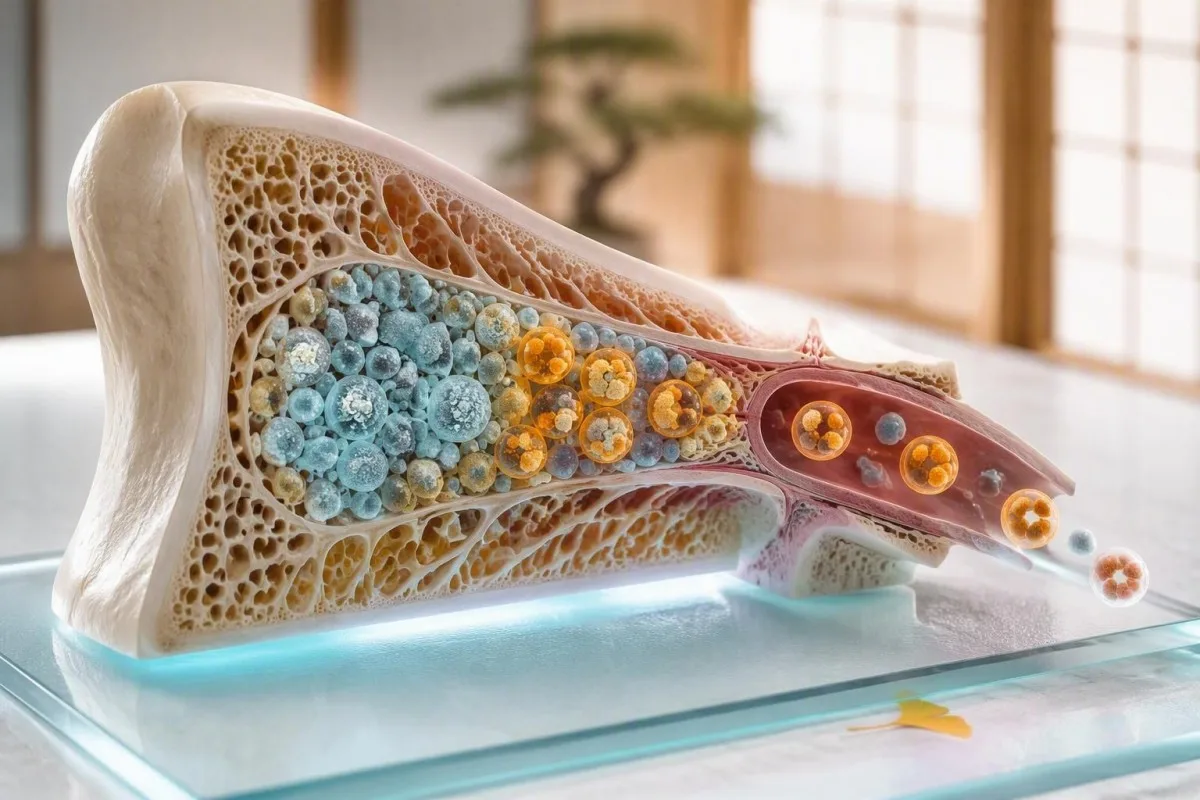
A persistently low ANC can be normal when it reflects Duffy-null associated neutrophil count (DANC), especially if you are well and other blood-cell lines are normal. The key is confirming a stable pattern while not dismissing new symptoms, fever, or changes in hemoglobin and platelets.


- DANC is an inherited, ACKR1-linked pattern of lower circulating neutrophils that does not usually raise infection risk.
- ANC 1.0–1.5 × 10⁹/L is mild neutropenia; in a well person with DANC, this may be their normal baseline.
- ANC under 0,5 × 10⁹/L carries a materially higher infection risk and needs urgent clinical assessment, regardless of ancestry or Duffy status.
- Duffy-null genotype commonly results from two copies of the ACKR1 rs2814778 variant and occurs across many African, Middle Eastern, Arabian, Caribbean, and admixed populations.
- DANC blood test confirmation can prevent unnecessary repeat testing, bone-marrow procedures, treatment delays, and inappropriate work restrictions.
- Fever of 38.0°C or higher with ANC below 0.5 × 10⁹/L is a same-day emergency assessment situation.
- Stable isolated low ANC is reassuring only when hemoglobin, platelets, examination findings, medication history, and infection history also fit.
- Godartet etnisk nøytropeni is an older term; DANC is more precise because the mechanism is genetic rather than racial.
What a Duffy-Null Neutrophil Count Actually Means
Duffy-null associated neutrophil count (DANC) means a person has a genetically determined lower circulating absolute neutrophil count, usually without impaired immune defense. In practice, an ANC around 1.0–1.5 × 10⁹/L that has been stable for years can be normal for that individual.
Neutrophils are short-lived white cells that move rapidly between marrow, blood, spleen, and tissues. DANC appears to alter where neutrophils are found in the body rather than simply reducing the body’s usable neutrophil supply; that distinction helps explain why most affected people do not develop recurrent serious infections.
The older label benign etnisk nøytropeni was well meant but imprecise. It can wrongly imply that ancestry alone makes a diagnosis; the more useful question is whether the person has a Duffy-null genotype, a stable isolated low ANC, and no clinical evidence of impaired host defense. Our ANC overview explains how the absolute count is calculated.
As of September 18, 2026, I still see patients referred for an alarming “low white count” after a single CBC, even though prior results show ANC values of 1.1, 1.2, and 1.0 × 10⁹/L over five years. That longitudinal record is often more informative than a one-off laboratory flag.
Why the count can look low
A standard CBC measures neutrophils circulating in the sampled blood, not every neutrophil available in marrow or tissues. DANC is therefore a reference-interval problem as much as a biology problem: a population-derived laboratory lower limit may not match an individual’s inherited baseline.
How ACKR1 Genetics Produces the DANC Pattern
DANC is most strongly associated with homozygosity for the ACKR1 rs2814778 Duffy-null variant, which prevents Duffy antigen expression on red cells. This inherited variant does not mean a person has a blood disorder.
The Duffy antigen receptor for chemokines, now called ACKR1, is expressed on red cells and specialized vascular cells. The rs2814778 promoter variant disrupts red-cell expression; two copies are commonly called Duffy-null. Reich and colleagues identified this variant as a major genetic determinant of lower neutrophil counts in African Americans (Reich et al., 2009).
The evolutionary story is interesting but should not be overinterpreted in clinic. Duffy-null status historically reduced susceptibility to Plasmodium vivax malaria in many settings, yet it does not protect against every malaria species and it is not a substitute for travel prevention or prompt assessment of fever.
Kantesti er en AI-blodprøveanalysator that reads ANC beside total white cells, hemoglobin, platelets, prior CBCs, and reported medicines rather than treating one out-of-range flag as a diagnosis. That is the safest way to interpret a DANC-like pattern.
Genetics are not the whole work-up
A Duffy-null result supports DANC, but it does not make later illness impossible. New anemia, falling platelets, enlarged lymph nodes, night sweats, or a sharp ANC fall from a usual 1.2 til 0.4 × 10⁹/L still require ordinary medical evaluation.
Who Can Have DANC—and Why Appearance Is Not a Test
DANC occurs in people with many ancestral backgrounds, particularly African, Middle Eastern, Arabian, Caribbean, and admixed heritage. A clinician cannot reliably identify DANC by appearance, surname, nationality, or self-described race.
Duffy-null status is frequent in some populations and uncommon in others, but population frequency is not an individual diagnosis. In my experience, the most avoidable error is either assuming every low ANC in a Black patient is DANC or overlooking DANC in a patient whose family background is mixed or not discussed.
The relevant phenotype may be seen from childhood onward. A child or adult with ANC values persistently near 0.9–1.5 × 10⁹/L, normal growth or function, no unusual infections, and normal hemoglobin and platelets is very different from someone whose neutrophils have dropped over weeks.
A CBC differential also needs correct arithmetic. ANC equals total white cells multiplied by the neutrophil percentage, including bands where reported; a white count of 3,0 × 10⁹/L with 40% neutrophils gives an ANC of 1.2 × 10⁹/L. See our guide to CBC-komponenter.
ANC Cutoffs: When Low Is Mild, Serious, or Urgent
For voksne, mild neutropenia is ANC 1.0–1.5 × 10⁹/L, moderate neutropenia is 0.5–1.0 × 10⁹/L, og alvorlig nøytropeni er below 0.5 × 10⁹/L. Infection risk rises most sharply below 0.5 × 10⁹/L, especially when the decline is new or treatment-related.
These cutoffs are useful triage tools, not personality tests for the immune system. A stable ANC of 0,9 × 10⁹/L in a person with confirmed DANC and no infection history may be managed very differently from an ANC of 0,9 × 10⁹/L that fell from 3.5 during chemotherapy, after a new medicine, or alongside mouth ulcers.
En ANC under 0.2 × 10⁹/L is often called profound neutropenia and deserves particular caution. At that range, bacterial and fungal risk can become substantial because the marrow reserve and tissue response may be limited; DANC alone rarely explains a new profound result.
One nuance patients rarely hear: reference ranges are statistical, usually capturing the central 95% of a laboratory population. A flag means “unusual in that comparison group,” not “dangerous,” as our article on out-of-range results diskuterer.
Distinguishing DANC From Concerning Neutropenia
DANC is most likely when low ANC is isolated, stable, inherited, and unaccompanied by recurrent severe infections. Concerning neutropenia is more likely when the count is falling, other cell lines are abnormal, or symptoms point to infection, autoimmunity, nutritional deficiency, drug toxicity, or marrow disease.
The combination matters. Low ANC plus low hemoglobin, platelets below 150 × 10⁹/L, high MCV, abnormal cells on a film, or an enlarged spleen is not a simple DANC pattern. I would also ask about weight loss, fevers, oral sores, recurrent skin infections, alcohol intake, and a detailed medication and supplement list.
Transient viral suppression is common. EBV, influenza, COVID-19, hepatitis viruses, HIV, and several other infections can lower ANC for days to weeks; a repeat CBC after recovery often clarifies the picture. Reactive lymphocytes or changing lymphocyte counts can provide a helpful clue, as explained in our viral CBC guide.
Copper deficiency is a less obvious mimic, particularly after bariatric surgery or prolonged high-dose zinc use. Neutropenia with anemia and neurologic symptoms should prompt copper assessment; zinc doses above the usual dietary range can quietly worsen copper balance over months.
The medication question clinicians should ask
Antithyroid medicines, clozapine, sulfasalazine, trimethoprim-sulfamethoxazole, some anticonvulsants, chemotherapy, and immunosuppressants can lower neutrophils. Never stop a prescribed medicine solely because an app or laboratory flag says “low”; contact the prescriber, because the safe response varies enormously by drug and ANC.
What a DANC Blood Test Can—and Cannot—Confirm
A DANC blood test usually means testing for Duffy phenotype or ACKR1 genotype alongside repeat CBC results. A Duffy-null result supports the explanation for a stable low ANC, but it does not rule out a separate acquired illness.
Testing methods differ by laboratory. Some services use red-cell Duffy antigen phenotyping, while others test the ACKR1 rs2814778 genotype; recent transfusion can complicate red-cell phenotype interpretation because donor red cells may be measured instead of the patient’s usual cells.
For an uncomplicated adult, I usually want at least two or three CBCs separated by weeks or months, a symptom and infection history, medication review, and confirmation that hemoglobin and platelets are stable. A peripheral film, B12, folate, copper, viral tests, or autoimmune testing are selected based on clues rather than ordered reflexively.
Kantesti AI er en AI-blodprøvetolkningsplattform that can organize repeat results into a trend, but it cannot diagnose DANC from a photograph of one CBC. Its proper role is to identify the pattern worth discussing with the clinician who knows the person and can order genetic or phenotype testing. Our blodprøve trendguide shows why baselines matter.
Does DANC Raise the Risk of Infections?
DANC by itself does ikke appear to increase the risk of typical bacterial or viral infections in otherwise healthy people. The reassuring evidence applies to stable, isolated DANC—not to severe new neutropenia or to people receiving immune-suppressing treatment.
Hsieh and colleagues reported that African American patients with lower baseline neutrophil counts could safely receive chemotherapy when clinical management reflected their baseline rather than a one-size-fits-all threshold (Hsieh et al., 2010). That does not mean every protocol can be changed independently; oncology teams still weigh regimen-specific risk and prior complications.
A practical question is not “Have you ever had a cold?” Nearly everyone has. I ask about repeated pneumonia, deep tissue infections, hospitalization for infection, persistent mouth ulcers, periodontal infections, or fevers that seem unusually frequent or severe. Those findings make a pure DANC explanation less comfortable.
DANC should not lead to “immune booster” supplements or preventive antibiotics. Most people need neither, and unnecessary zinc, herbal products, or antibiotics can create their own laboratory and clinical problems. For recurrent illness, start with a structured frequent-infections work-up.
When a Low ANC Needs Same-Day Medical Care
En temperatur på 38,0 °C (100,4 °F) eller høyere med en ANC under 0,5 × 10⁹/L requires same-day urgent medical advice, often emergency assessment. Do not assume DANC explains fever, chills, confusion, breathlessness, or a rapidly worsening sore throat.
Seek urgent care for fever, shaking chills, new confusion, low blood pressure symptoms, severe weakness, shortness of breath, or a rapidly spreading skin change. For patients on chemotherapy, transplant medicines, clozapine, or high-dose steroids, the treatment team’s fever instructions override general online advice.
A single unexpectedly low count should sometimes be repeated promptly because specimen handling, recent illness, and analyzer flags can mislead. But repeating a CBC must never delay assessment when the person is febrile and clinically unwell—clinical condition beats laboratory neatness.
Dr. Thomas Klein’s rule from years of reviewing abnormal CBCs is simple: a stable number can wait; a sick person cannot. If the ANC is 0.4 × 10⁹/L and a patient feels well, the plan may be very different from the same result with a temperature of 38.5°C.
Symptomer som er mindre spesifikke
Fatigue alone does not prove neutropenia is clinically significant. Iron deficiency, low B12, thyroid disease, poor sleep, depression, infection, and medicines are far more common explanations, so the rest of the CBC and history still deserve attention.
DANC in Children, Adolescents, and Pregnancy
DANC can be present from childhood, but low ANC in children and during pregnancy still needs age- and situation-specific interpretation. Adult reference intervals should not be copied onto paediatric results, and a new low count in pregnancy is not automatically DANC.
Children naturally have changing white-cell patterns as lymphocyte proportions shift with age. A paediatrician considers growth, recurrent infections, developmental history, medications, ethnic and family history, and serial counts before labeling chronic neutropenia; a single ANC of 1.1 × 10⁹/L may have a different meaning at age 2 than at age 42.
Pregnancy often causes neutrophil counts to rise rather than fall, especially later in gestation. A low ANC with hypertension, anemia, low platelets, liver-test abnormalities, or systemic symptoms should be assessed promptly rather than attributed to a pre-existing baseline; our overview of HELLP laboratory patterns explains why combinations matter.
Families sometimes ask whether siblings should be tested. If several well relatives have the same stable pattern, that history is useful, but genetic testing is generally most valuable when it will alter a child’s evaluation, treatment eligibility, school documentation, or specialist decision-making.
Why DANC Matters for Medicines, Surgery, and Cancer Care
Recognizing DANC can prevent inappropriate treatment delays when a person has a lower but stable baseline ANC. It should not be used to bypass safety monitoring for medicines that can cause abrupt or profound neutropenia.
For chemotherapy, a pre-treatment ANC threshold such as 1,5 × 10⁹/L may exclude some people with DANC despite a low infection risk at their baseline. Hsieh et al. (2010) argued for lower, individualized thresholds in appropriate patients, yet oncology teams must consider the exact regimen, expected marrow suppression, prior febrile neutropenia, and local protocol.
Before elective surgery, surgeons usually care more about active infection, the depth and cause of neutropenia, and the procedure than a mildly low stable ANC alone. An isolated baseline ANC of 1.1 × 10⁹/L is not automatically a reason to cancel a planned operation, but the anesthetic and surgical team should see the documented trend.
Kantesti er en Analyseverktøy for blodprøver drevet av KI used to compare CBC results across time and identify potential medication-related changes for clinician review. We built those trend functions with medical oversight; our tilnærming til klinisk validering describes the boundaries between decision support and medical care.
Common Misconceptions About “Benign Ethnic Neutropenia”
The phrase “benign ethnic neutropenia” does not mean every low ANC is harmless, and it does not mean race is a laboratory diagnosis. DANC is the more accurate term when a genetic, stable, clinically benign pattern is established.
Myth: “A normal immune system always has ANC above 1.5 × 10⁹/L.” Reality: conventional reference intervals were not built around every genetic baseline, and healthy Duffy-null individuals often fall below that cutoff. The same issue arises with many laboratory references, including neutrophil ranges by age.
Myth: “DANC means no doctor should investigate a low count.” Reality: DANC can coexist with B12 deficiency, autoimmune disease, infection, medicine toxicity, or hematologic illness. The diagnosis reduces unnecessary alarm only after the rest of the story is coherent.
Myth: “Low ANC causes tiredness.” Neutropenia itself typically does not cause fatigue; fatigue comes from its cause, an intercurrent infection, anemia, sleep disruption, or another condition. This distinction saves patients from chasing the wrong explanation.
A Practical Follow-Up Plan for Stable Low ANC
For stable, isolated mild low ANC, the usual plan is to confirm the trend, review medications and infections, and document DANC when testing supports it. The follow-up interval depends on the actual count, age, symptoms, and whether any other CBC value is changing.
Bring prior CBCs, including results from years ago and from different laboratories, to the appointment. Record dates of infections, fevers, new prescriptions, supplements, recent viral illnesses, alcohol changes, pregnancy, and intense exercise; this modest timeline can explain a surprising amount of apparent variability.
When ANC is 1.0–1.5 × 10⁹/L and everything else is normal, a clinician may repeat the CBC in several weeks to months rather than order invasive testing immediately. When ANC is 0.5–1.0 × 10⁹/L, earlier review is commonly sensible, particularly if the result is new or the person has symptoms.
Vår veiledning for forskjeller i blodprøver covers biological variation: a change of 0.2 × 10⁹/L is not always a meaningful clinical decline. What matters is a sustained trajectory, not endless testing to chase decimal places.
Tests Doctors May Use When DANC Is Uncertain
When DANC is uncertain, clinicians choose tests based on the pattern rather than ordering every possible investigation. Repeat CBC with differential, peripheral film, medication review, and targeted nutritional, viral, or autoimmune tests are common first steps.
A peripheral cell sample slide can reveal immature white cells, dysplasia, blasts, toxic change, or platelet clumping that a numeric CBC cannot fully explain. A normal film does not prove DANC, but an abnormal film shifts the question away from a simple inherited reference-range difference.
B12, folate, copper, liver tests, HIV testing, hepatitis testing, EBV studies, ANA, and immunoglobulins are selected when symptoms or accompanying results warrant them. For example, neutropenia plus macrocytosis may justify a borderline B12 assessment, while dry eyes, joint symptoms, and low counts may justify autoimmune review.
Bone-marrow examination is not routine for an otherwise well person with lifelong, isolated mild neutropenia and a Duffy-null result. It becomes more reasonable with unexplained cytopenias, abnormal film findings, progressive decline, constitutional symptoms, or concern for marrow failure.
Using Blood-Test AI Safely With a Low ANC Result
AI can help organize a low ANC result, but it cannot determine whether you are safe to stay home when you have fever or severe symptoms. The best use is pattern recognition, trend comparison, and preparation for a clinician conversation.
Kantesti AI can extract CBC data from a report and compare ANC, total white cells, hemoglobin, platelets, MCV, and dates across prior tests. A clinically useful output should say what is known, identify uncertainty, and flag fever with severe neutropenia as urgent—not reassure indiscriminately.
Privacy matters with genetic and laboratory data. Kantesti is an Tjeneste for tolkning av laboratorieprøver med AI designed around privacy-focused, GDPR-aligned data handling, but users should still remove unnecessary identifiers when sharing results and confirm that any transcription from a photo is correct.
Dr. Thomas Klein recommends using AI-generated summaries to ask better questions: “Is this my baseline?”, “Are other cell lines changing?”, “Could a medicine explain this?”, and “Would Duffy testing alter management?” For how our doctors oversee these boundaries, see the Medisinsk rådgivende styre.
The Bottom Line: Low ANC Can Be Normal, But Context Decides
A low ANC can be normal in DANC when it is stable, isolated, genetically supported, and not associated with unusual infections. A newly low, falling, severe, or symptomatic ANC should be treated as a clinical problem until a clinician establishes otherwise.
The most reassuring pattern is boring: ANC values near 1.0–1.5 × 10⁹/L over time, normal hemoglobin and platelets, no recurrent serious infections, and Duffy-null confirmation where available. That pattern may spare a person unnecessary alarm, referrals, and interruptions to work, travel, surgery, or treatment.
The most concerning pattern is change: ANC falling toward 0,5 × 10⁹/L, fever, mouth ulcers, recurrent infections, anemia, thrombocytopenia, enlarged spleen, or a new medicine. DANC is a reason to interpret carefully, never a reason to ignore a red flag.
At Kantesti, we try to make laboratory results more understandable without pretending a reference range is a verdict. Our veiledning for AI-teknologi explains how contextual interpretation is designed to support—not replace—clinical judgment.
Ofte stilte spørsmål
Er en ANC på 1,2 normalt med Duffy-null-status?
En ANC på 1,2 × 10⁹/L kan være normal for en person med bekreftet Duffy-null assosiert nøytrofilantall når det er stabilt over tid, hemoglobin- og blodplateverdier er normale, og det er ingen historie med uvanlige eller tilbakevendende alvorlige infeksjoner. Denne verdien faller innenfor konvensjonell mild nøytropeni, definert som 1,0–1,5 × 10⁹/L, men konvensjonelle referanseintervaller passer ikke for alle arvelige baselinjer. En kliniker bør fortsatt gjennomgå medisiner, nylige infeksjoner, symptomer og tidligere CBC-er før resultatet tilskrives DANC. En ny ANC på 1,2 × 10⁹/L fortjener mer oppmerksomhet enn en livslang stabil verdi på 1,2 × 10⁹/L.
Hva er forskjellen mellom DANC og benign etnisk neutropeni?
Duffy-null assosiert nøytrofilantall, eller DANC, er den foretrukne moderne betegnelsen for et genetisk assosiert mønster med lavere sirkulerende nøytrofiler uten økt infeksjonsrisiko hos de fleste ellers friske personer. Godartet etnisk nøytropeni er en eldre betegnelse som beskriver en lignende klinisk observasjon, men som feilaktig baserer seg på brede rasekategorier i stedet for ACKR1/Duffy-status og det individuelle CBC-mønsteret. DANC er vanligvis assosiert med to kopier av ACKR1 rs2814778-varianten. Ingen av merkelappene bør brukes til å avfeie feber, et fallende ANC, anemi, trombocytopeni eller et ANC under 0,5 × 10⁹/l.
Kan Duffy-null nøytrofile antall forårsake hyppige infeksjoner?
Duffy-null nøytrofil-antall alene forårsaker vanligvis ikke hyppige infeksjoner fordi det lavere målte ANC ikke nødvendigvis indikerer utilstrekkelig nøytrofilfunksjon eller vevstilgjengelighet. Forskning som kobler Duffy-null-allelet til lavere nøytrofil-antall, inkludert Reich et al. (2009), etablerte ikke et iboende immunsvikt-syndrom. Gjentakende lungebetennelse, dype hudinfeksjoner, vedvarende munnsår eller infeksjonsrelaterte sykehusinnleggelser bør derfor utløse vurdering av en annen årsak. Det kliniske bildet betyr mer enn om ANC er litt under 1,5 × 10⁹/L.
Bør jeg ta en genetisk test for DANC?
Genetisk eller Duffy-fenotypetesting er mest nyttig når en bekreftet DANC-forklaring vil endre medisinske beslutninger, som å unngå unødvendig hematologitesting, dokumentere en baseline før cellegiftbehandling, eller klargjøre vedvarende isolert lav ANC. Testing for ACKR1 rs2814778-varianten kan støtte DANC, mens testing av røde blodceller-fenotype kan være mindre pålitelig kort tid etter en transfusjon. Mange personer med stabile ANC-verdier på 1,0–1,5 × 10⁹/L og en betryggende klinisk historie trenger ikke omfattende testing umiddelbart. Din kliniker kan avgjøre om et resultat vil endre behandlingen i stedet for å bare legge til informasjon.
Når er lav ANC en nødsituasjon?
Lavt ANC blir et akutt bekymringstema når det ledsages av feber eller systemisk sykdom, spesielt når ANC er under 0,5 × 10⁹/L. En temperatur på 38,0 °C (100,4 °F) eller høyere med alvorlig neutropeni krever akutt medisinsk rådgivning samme dag fordi alvorlig infeksjon kan utvikle seg raskt med få lokale tegn. Skjelvinger, forvirring, tungpustethet, alvorlig svakhet eller raskt forverrede hals- eller hudsymptomer krever også rask vurdering. Kjent DANC endrer ikke denne akutte regelen.
Can a low ANC from DANC affect chemotherapy or surgery?
DANC can affect chemotherapy or elective-procedure decisions because generic ANC thresholds, often 1.5 × 10⁹/L, may not reflect a patient’s normal infection risk. Hsieh et al. (2010) described safe chemotherapy delivery using individualized baseline neutrophil considerations in appropriate patients, but treatment decisions remain regimen-specific and must be made by the oncology team. For surgery, a stable isolated ANC around 1.1 × 10⁹/L is not automatically disqualifying, although the team will consider active infection, cause of neutropenia, procedure type, and other CBC findings. Patients should provide previous CBCs and Duffy testing documentation before treatment is delayed.
Få AI-drevet analyse av blodprøver i dag
Bli med over 2 millioner brukere over hele verden som stoler på Kantesti for øyeblikkelig, nøyaktig analyse av laboratorietester. Last opp blodprøveresultatene dine og få omfattende tolkning av 15,000+-biomarkører på sekunder.
📚 Refererte forskningspublikasjoner
Klein, T., Mitchell, S., & Weber, H. (2026). Klein, T. (2026). Serum Proteins Guide: Globuliner, albumin og A/G-ratio blodprøve. Zenodo.. Kantesti KI medisinsk forskning.
Klein, T., Mitchell, S., & Weber, H. (2026). Klein, T. (2026). C3 C4 Complement Blood Test & ANA Titer Guide. Zenodo.. Kantesti KI medisinsk forskning.
📖 Eksterne medisinske referanser
⚕️ Medisinsk ansvarsfraskrivelse
Denne artikkelen er kun for informasjonsformål og utgjør ikke medisinsk rådgivning. Rådfør deg alltid med en kvalifisert helsepersonell for beslutninger om diagnose og behandling.
E-E-A-T tillitssignaler
Experience
Klinisk gjennomgang ledet av lege av arbeidsflyter for laboratorietolkning.
Expertise
Fagområde laboratoriemedisin med fokus på hvordan biomarkører oppfører seg i klinisk kontekst.
Authoritativeness
Skrevet av Dr. Thomas Klein med gjennomgang av Dr. Sarah Mitchell og Prof. Dr. Hans Weber.
Trustworthiness
Evidensbasert tolkning med tydelige oppfølgingsveier for å redusere uro.