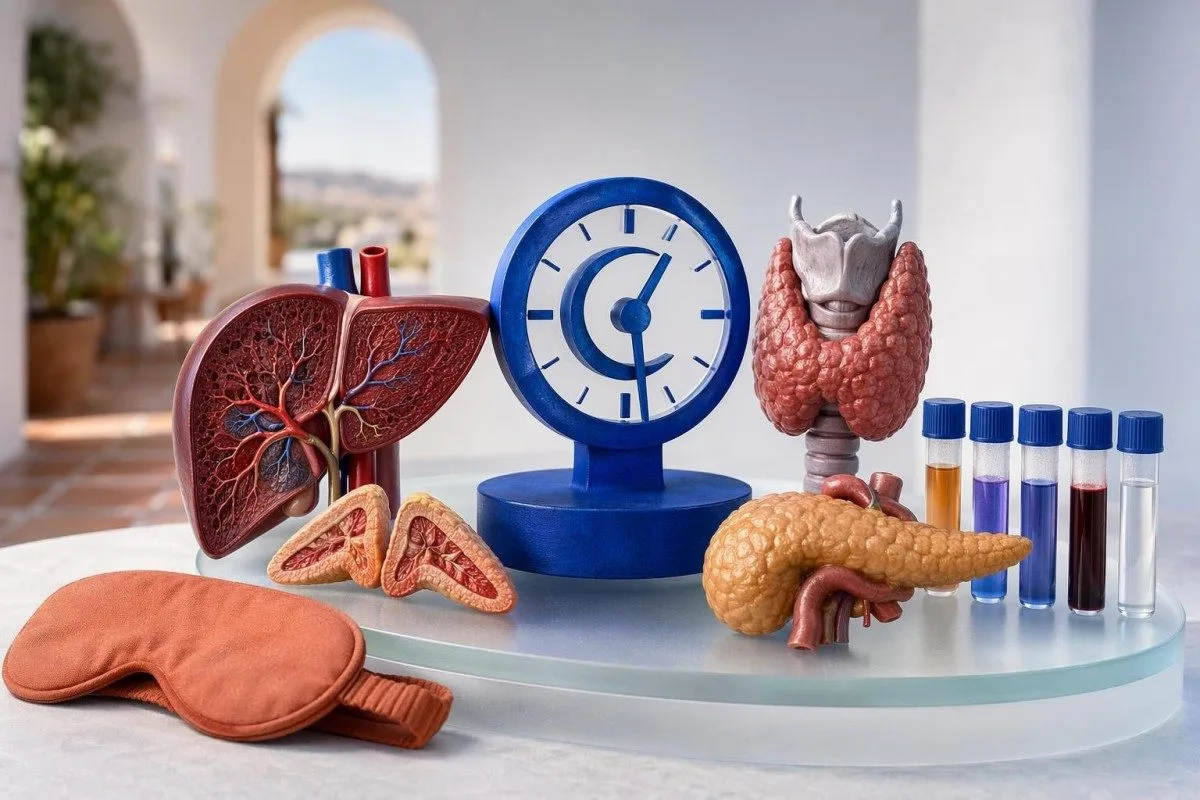
Nattearbeid kan gjøre vanlige laboratorieresultater forvirrende. Triksset er å spore de riktige biomarkørene og registrere søvn, måltider og prøvetakingstidspunkt med samme alvor som tallene.


- Core panel for nattearbeidere inkluderer vanligvis fastende glukose, HbA1c, fastende insulin, lipidpanel, hs-CRP, vitamin D, TSH med fritt T4, CBC, CMP, ferritin, B12 og magnesium.
- Glucose risk er lettere å overse etter nattskift fordi HbA1c kan se akseptabel ut mens fastende insulin eller HOMA-IR stiger først.
- HbA1c-grenseverdier remain <5.7% normal, 5.7-6.4% prediabetes and ≥6.5% diabetes when confirmed, but sleep debt can worsen glucose before diagnosis.
- Triglyserider bør ideelt sett være <150 mgdl; repeat a fasting lipid panel if nonfasting result is>400 mg/dL eller uventet høyt etter et skiftmåltid.
- Cortisol timing må forankres i din hovedsøvnperiode, ikke bare i klokken, fordi 08:00 etter å ha jobbet hele natten er biologisk uvanlig.
- Vitamin D-mangel defineres ofte som 25-OH vitamin D <20 ng/mL, med 20–29 ng/mL som ofte behandles som insuffisiens hos symptomatiske eller høyrisikopasienter.
- hs-CRP under 1 mg/L tyder på lavere kardiovaskulær inflammatorisk risiko, 1–3 mg/L intermediær risiko og >3 mg/L høyere risiko dersom det gjentas når man er frisk.
- TSH-tolkning trenger tidskontekst fordi TSH normalt stiger om natten; testing etter en natt uten søvn kan forvrenge sammenligningen med standard referanseintervaller for morgenen.
- Trend tracking handler om engangstesting: gjenta lett forhøyede avvik etter 2–12 uker med samme søvn, faste og prøvetakingstidspunkt.
Hva bør en blodprøve for nattskiftarbeidere inkludere?
A blodprøve for nattarbeidere bør følge fastende glukose eller HbA1c, fastende insulin, lipidprofil, hs-CRP, vitamin D, TSH med fritt T4, morgen- eller kveldskortisol kun når det er klinisk indisert, CBC, CMP, ferritin, B12 og magnesium. Tidsaspektet betyr noe: en prøve kl. 07:00 etter å ha vært våken hele natten er ikke samme fysiologiske tilstand som kl. 07:00 etter søvn.
Hos Kantesti AI, plattformen vår leser disse markørene sammen fordi skiftarbeid sjelden flytter ett enkelt tall isolert. I analysen vår av 2M+ blodprøver er mønsteret jeg oftest ser ikke dramatisk sykdom; det er en klynge av grenseverdige funn for glukose, triglyserider, vitamin D og inflammasjon som først blir meningsfull når søvntiming legges til.
Det første praktiske detaljen er kjedelig, men kraftfull: skriv ned tidspunktet for din siste hovedsøvn, siste måltid, koffein, nikotin, trening og prøvetaking. Hvis du er usikker på hvilke tester som krever faste, forklarer guiden vår fasteblodprøver hvorfor glukose, insulin og triglyserider er spesielt følsomme for atferd før testen.
Per 30. april 2026 vil jeg heller sammenligne 3 godt timede paneler over 12 måneder enn å reagere for sterkt på én unormal verdi etter en brutal periode med 4 netter. Thomas Klein, MD, vurderer skiftarbeiderpaneler slik i klinisk praksis: først bekreft konteksten, og avgjør deretter om tallet er et helsesignal eller en tidsrelatert artefakt.
Når bør nattskiftarbeidere planlegge blodprøver?
Nattarbeidere bør planlegge de fleste rutinemessige blodprøver etter hovedsøvnperioden og etter en konsekvent faste på 8–12 timer når faste er nødvendig. For en arbeidstaker som sover 08:30–15:30, kan en prøve kl. 16:00 være mer biologisk sammenlignbar enn en standard avtale kl. 08:00 etter å ha vært våken hele natten.
Dette er en av de detaljene som endrer tolkningen. Et kortisol-, glukose- eller TSH-resultat tatt kl. 08:00 etter 10 timer våken tjeneste kan hende ikke samsvarer med referansepopulasjonen som ble brukt til å bygge laboratoriets referanseområde, fordi den populasjonen vanligvis sov om natten.
Sirkadisk feiljustering kan endre glukose, insulin, leptin, kortisolrytme og blodtrykk; Scheer et al. viste dette under kontrollerte laboratorieforhold i PNAS i 2009 (Scheer et al., 2009). Med enkle ord: kroppen din kan håndtere samme frokost annerledes kl. 03:00 enn kl. 09:00.
Ved gjentatt testing, bruk samme regel hver gang: samme skiftmønster, samme fastevindu, samme tid siden oppvåkning, og ideelt sett ingen hard treningsøkt i 24 timer. Hvis to laboratorierapporter er uenige, gir artikkelen vår om variasjon i blodprøver en fornuftig måte å skille biologisk støy fra en reell endring.
Noen europeiske laboratorier spør om prøvetakingstidspunktet for endokrine tester; mange rutinemessige kommersielle laboratorier gjør det ikke. Jeg ber pasientene skrive tidspunktet på PDF-en før de laster den opp, fordi KI-en vår kan tolke en TSH på 3,8 mIU/L svært forskjellig avhengig av om den ble tatt etter søvn eller etter et nattskift.
Hvordan påvirker nattskift glukose, insulin og HbA1c?
Nattarbeid kan øke glukose og insulin før HbA1c krysser terskelen for diabetes. Den mest nyttige metabolske blodprøven ved skiftarbeid er fastende glukose pluss HbA1c pluss fastende insulin, med HOMA-IR beregnet når både glukose og insulin er tilgjengelig.
Fasteglukose under 100 mg/dL er generelt normalt, 100–125 mg/dL tyder på prediabetes, og ≥126 mg/dL ved gjentatte tester støtter diabetes. HbA1c under 5.7% er normalt, 5.7–6.4% tyder på prediabetes, og ≥6.5% støtter diabetes når det bekreftes, i henhold til ADA Standards of Care (American Diabetes Association Professional Practice Committee, 2024).
Fastende insulin er ikke standardisert like strengt som glukose, men i klinikken blir jeg nysgjerrig når fastende insulin vedvarende er over 8–10 µIU/mL hos en trøtt nattarbeider med sentral vektøkning. HOMA-IR beregnes som fastende glukose i mg/dL multiplisert med fastende insulin i µIU/mL delt på 405, og verdier over omtrent 2.0 tyder ofte på tidlig insulinresistens.
Fellen er å stole på HbA1c alene. En 36 år gammel sykepleier jeg vurderte hadde en HbA1c på 5.4%, som så betryggende ut, men hennes fastende insulin var 18 µIU/mL og triglyserider var 211 mg/dL etter 6 måneder med roterende netter; den kombinasjonen endret samtalen.
Hvis fastende glukose og HbA1c er uenige, ikke anta at laboratoriet har gjort en feil. Vår dypere veiledning om HbA1c versus fastende sukker forklarer hvorfor levetid for røde blodceller, nylig søvndisrupsjon og måltidstidspunkt kan trekke de to markørene fra hverandre.
Hvilke lipidmønstre er viktigst hos nattearbeidere?
Nattarbeidere bør følge triglyserider, HDL-C, LDL-C, non-HDL-C og noen ganger ApoB, fordi døgnrytmeforstyrrelser kan forverre håndteringen av fettstoffer etter måltid. Triglyserider over 150 mg/dL er vanlige etter sen spising, men gjentatt forhøyelse ved faste er et sterkere metabolsk varseltegn.
En triglyseridverdi under 150 mg/dL er ønskelig, 150–199 mg/dL er lett forhøyet, 200–499 mg/dL er høy, og ≥500 mg/dL vekker bekymring for risiko for pankreatitt. Hvis en ikke-fastende triglyseridverdi er >400 mg/dL, gjentar de fleste klinikere en fastende lipidprofil før de tar langsiktige beslutninger.
Mål for LDL-C avhenger av personlig risiko, ikke bare et enkelt normalt område. Retningslinjen for kolesterol fra 2018 AHA/ACC behandler ApoB ≥130 mg/dL som en risikoforsterkende faktor, særlig når triglyserider vedvarende er ≥200 mg/dL (Grundy et al., 2019).
Jeg ser et gjenkjennelig lipidmønster ved nattarbeid: normalt total kolesterol, HDL som synker under 40 mg/dL hos menn eller 50 mg/dL hos kvinner, og triglyserider som sakte stiger fra 110 til 190 mg/dL over 2 år. Dette mønsteret bedres ofte når det største måltidet flyttes tidligere i våkneperioden, selv før vektendringer.
For en ren tolkning, sammenlign resultatene dine med en full lipidpanelavlesning i stedet for bare total kolesterol. Kantesti AI sjekker også om lipidmønsteret passer med insulinresistens, tyreoidaforstyrrelse, forhøyede lever enzymer eller medikamenteffekter.
Bør skiftarbeidere teste kortisol?
Kortisoltesting er nyttig for utvalgte nattarbeidere, men bare når prøvetidspunktet samsvarer med det kliniske spørsmålet. Et tilfeldig serumkortisol er ofte misvisende fordi kortisol normalt topper seg etter oppvåkning og faller mot den biologiske natten.
Typisk morgenserumkortisol er omtrent 10–20 µg/dL i mange laboratorier, mens kortisol sent på kvelden vanligvis er mye lavere, ofte under 5 µg/dL. Disse områdene varierer mellom analyser, og en nattarbeider har kanskje ikke en konvensjonell morgen-topp kl. 08:00.
Sen-kurtisol er utviklet for å oppdage tap av den normale kortisoloppgangen, spesielt ved mistanke om Cushings syndrom. For en fast nattarbeider kan riktig innsamlingstidspunkt være før hovedsøvnen, ikke ved midnatt, og den nyansen er lett å overse på en standard rekvisisjon.
Når jeg gjennomgår kortisolresultater, stiller jeg først tre spørsmål: når sto du opp, når ble prøven tatt, og brukte du steroidtabletter, inhalatorer eller kremer. Et kortisolnivå på 7 µg/dL kan være betryggende, mistenkelig eller ufortolkelig avhengig av disse tre faktaene.
Hvis legen din har bestilt kortisol på grunn av tretthet, vektøkning, blodtrykksendringer eller lavt natrium, les vår detaljerte veiledning om tidspunkt for kortisolblodprøve før du sammenligner deg med referanseverdier for dagtid.
Hvorfor er vitamin D ofte lavt hos nattskiftarbeidere?
Vitamin D er ofte lavt hos nattarbeidere fordi eksponering for dagslys reduseres, søvn kan forekomme i perioder med sterkt sollys, og kostholdet kompenserer sjelden fullt ut. Den beste screeningmarkøren er 25-hydroksyvitamin D, ikke aktivt 1,25-dihydroksyvitamin D for rutinemessige mangelsjekker.
Et 25-OH vitamin D-nivå under 20 ng/mL anses vanligvis som mangelfullt, 20-29 ng/mL anses ofte som utilstrekkelig, og 30-50 ng/mL er et praktisk målområde for mange voksne. Noen retningslinjer og laboratorier er uenige om den ideelle grenseverdien, og jeg er ærlig med pasientene om den usikkerheten.
Den aktive vitamin D-testen, 1,25-OH2 vitamin D, kan være normal eller høy selv når 25-OH vitamin D er lav. Den brukes hovedsakelig for uvanlige spørsmål om kalsium, nyre eller granulomatøs sykdom, ikke for rutinemessig screening av nattarbeidere.
De fleste pasienter opplever at 1000-2000 IE vitamin D3 daglig gradvis øker nivået over 8-12 uker, selv om kroppsvekt, absorpsjon og startnivå spiller en rolle. Jeg unngår å fortelle folk å ta 5000 IE permanent uten å sjekke kalsium, nyrefunksjon og gjentatt 25-OH vitamin D.
Hvis rapporten din lister opp både 25-OH og aktivt vitamin D, vil vår vitamin D blodprøve guide hjelpe deg med å unngå å forveksle dem. Kantesti's nevrale nettverk fremhever denne forskjellen fordi de to testene svarer på ulike kliniske spørsmål.
Hvilke inflammatoriske markører avslører søvnforstyrrelser?
De mest nyttige inflammatoriske markørene for søvnforstyrrelser er hs-CRP, standard CRP, CBC med differensialtelling, og noen ganger ESR. Lett hs-CRP-forhøyelse er ikke en diagnose, men gjentatte verdier over 3 mg/L etter god helse og uten infeksjon tyder på høyere kardiometabolisk inflammatorisk belastning.
hs-CRP under 1 mg/L tyder på lavere kardiovaskulær inflammatorisk risiko, 1-3 mg/L tyder på middels risiko, og over 3 mg/L tyder på høyere risiko når det gjentas. En standard CRP over 10 mg/L peker vanligvis mer mot infeksjon, skade, inflammatorisk sykdom eller nylig intens trening enn subtile søvnforstyrrelser.
CBC-endringer er vanligvis uspesifikke, men de gir mer informasjon. En WBC-telling på 4,0-11,0 x10^9/L er typisk hos voksne, og en neutrofil-tung differensialtelling etter søvnmangel kan reflektere akutt stress heller enn bakteriell infeksjon hvis symptomer mangler.
Her er mønsteret som får meg til å nøle: hs-CRP 4,2 mg/L, triglyserider 230 mg/dL, ALT 58 IU/L og fasteinsulin 16 µIU/mL. Grunnen til at vi bekymrer oss for den kombinasjonen er at den samlet tyder på metabolsk inflammasjon, mens hs-CRP alene etter en forkjølelse vanligvis ikke er veldig informativ.
Hvis du sammenligner CRP-typer, vår forklaring om CRP versus hs-CRP er verdt å lese før du får panikk for et markert resultat. Mange laboratorieportaler gjør en dårlig jobb med å vise hvilken analyse som faktisk ble bestilt.
Hvorfor kan skjoldbruskkjertelresultater se merkelige ut etter nattskift?
Tyreoideaprøver kan se merkelige ut etter nattskift fordi TSH har en døgnrytme og normalt stiger om natten. En TSH tatt etter å ha vært våken hele natten er kanskje ikke sammenlignbar med en TSH tatt etter en normal søvsepisode.
Et typisk referanseområde for TSH hos voksne er omtrent 0,4–4,0 mIU/L, selv om noen laboratorier bruker trangere øvre grenser nær 2,5–3,5 mIU/L. Fritt T4 er vanligvis rundt 0,8–1,8 ng/dL, men det eksakte området avhenger av analysen.
Den kliniske feilen er å behandle en mildt forhøyet TSH som permanent hypotyreose uten å gjenta den under stabile forhold. Hvis en nattevaktarbeider har TSH 4.8 mIU/L, normalt fritt T4 og ingen tyreoideaantistoffer, ønsker jeg vanligvis en ny prøve etter jevn søvn før noen diagnostiserer tyreoidea.
Biotin kompliserer dette ytterligere. Kosttilskudd som inneholder 5–10 mg biotin kan forvrenge noen tyreoidea-immunoanalyser, og noen ganger få TSH til å se falskt lav ut og fritt T4 falskt høyt, noe som er grunnen til at vår biotin og tyreoidea artikkel er lenket i mange av våre tyreoidea-tolkninger.
Når symptomene er overbevisende, stopp ikke ved TSH. En komplett tyreoideapanel med fritt T4, noen ganger fritt T3, TPO-antistoffer og tyroglobulinantistoffer kan klargjøre om mønsteret er ekte tyreoideasykdom, tidsvariasjon eller medisininterferens.
Hvilke lever-, nyre- og elektrolytt-indikasjoner bør følges med på?
Nattskiftarbeidere bør følge med på ALT, AST, GGT, kreatinin, eGFR, natrium, kalium, bikarbonat og BUN fordi sen spising, dehydrering og stimulerende bruk kan forskyve disse resultatene. En CMP eller BMP er ofte den stille arbeidshesten for blodprøver ved nattskift.
ALT anses ofte som mer lever-spesifikk enn AST, og mange klinikere undersøker vedvarende ALT over ca. 35 IE/L hos kvinner eller 45 IE/L hos menn, avhengig av laboratoriet. Kveldspising, vektoppgang og insulinresistens kan øke ALT gjennom fettlever-fysiologi.
Kreatinin og BUN påvirkes sterkt av hydrering, muskelmasse og proteininntak. Et BUN/kreatinin-forhold over 20 kan reflektere dehydrering i riktig kontekst, mens et fallende eGFR under 60 ml/min/1,73 m² over 3 måneder antyder kronisk nyresykdom snarere enn en enkelt dårlig natt.
Elektrolytter forteller historier som pasienter ofte overser. Natrium under 135 mmol/L, kalium over 5,5 mmol/L, eller bikarbonat under 22 mmol/L bør ikke avfeies som skiftarbeid-tretthet, spesielt hvis det er hjertebank, svakhet, oppkast eller medisinendringer.
Hvis laboratorierapporten din sier CMP eller BMP og du er usikker på hva som er inkludert, bryter vår CMP versus BMP guide ned forskjellen. Vår AI-blodprøveanalysator sjekker også om leverenzymer, glukose og triglyserider peker i samme metabolske retning.
Hvilke mangelmarkører etterligner skiftarbeidstretthet?
Ferritin, jernmetning, B12, folat og magnesium kan avsløre behandlingsbare mangler som etterligner skiftarbeid-utmattelse. En sliten nattevakt er ikke alltid bare søvndeprivert; lavt jernlager eller grenseverdier for B12 kan se nøyaktig ut som utbrenthet.
Ferritin under 30 ng/mL antyder ofte uttømte jernlagre hos symptomatiske voksne, selv når hemoglobin fortsatt er normalt. Ferritin kan også stige med betennelse, så en ferritin på 120 ng/mL betyr ikke alltid at jernlagrene er perfekte hvis CRP er høy og jernmetningen er lav.
Vitamin B12 under 200 pg/mL behandles vanligvis som mangelfullt, mens 200-350 pg/mL kan være grenseverdier hos symptomatiske pasienter. Jeg har sett nattevakter med numne føtter, hjernetåke og normal hemoglobin forbedre seg bare etter at metylmalonsyre bekreftet funksjonell B12-mangel.
Serum magnesium er vanligvis rundt 1,7-2,2 mg/dL, men det er et grovt verktøy fordi mest magnesium er intracellulært. Lav-normalt magnesium med kramper, dårlig søvn og bruk av protonpumpehemmere får meg til å stille flere spørsmål i stedet for å erklære saken lukket.
Urolige bein etter nattskift fortjener jerntesting, ikke bare søvnråd. Vår guide til ferritin og urolige bein forklarer hvorfor mange søvneksperter sikter mot høyere ferritintærskler enn den grunnleggende anemigrensen.
Hvordan bør testosteron, DHEA og prolaktin tidsbestemmes?
Testosteron, DHEA-S og prolaktin bør tolkes rundt søvntidspunktet fordi flere hormoner følger våken-søvn-biologi. For nattevakter kan en standard testosterontest kl. 08.00 være feil biologisk øyeblikk hvis den skjer etter en hel natt våken.
Totalt testosteron er vanligvis høyest tidlig biologisk morgen og bør gjentas minst to ganger hvis det er lavt. Hos en permanent nattevakt foretrekker jeg ofte testing innen 2-3 timer etter hovedsøvneperioden, og dokumenterer deretter tidspunktet tydelig for klinikeren.
DHEA-S er mer stabilt gjennom dagen enn kortisol, men alders- og kjønnsintervallene er brede. Et DHEA-S-resultat som ser lavt ut for en 28-åring kan være helt ordinært for en 62-åring, noe som er grunnen til at aldersspesifikk tolkning betyr noe.
Prolaktin stiger under søvn og kan være forbigående forhøyet av stress, trening, sex, brystvortestimulering, antipsykotiske medisiner og noen kvalmedempende medisiner. En mild prolaktinforhøyelse, som 30-40 ng/mL, krever ofte en rolig gjentatt prøve før bildediagnostikk diskuteres.
For menn med lav libido, dårlig restitusjon eller nedstemthet etter skiftarbeid, er artikkelen vår om testosterone timing en nyttig følgesvenn. Thomas Klein, MD, leser vanligvis testosteron sammen med SHBG, albumin, søvntidspunkt og medisinanamnese, i stedet for å behandle totalt testosteron som en frittstående dom.
Hvor ofte bør nattskiftarbeidere gjenta laboratorietester?
De fleste nattskiftarbeidere klarer seg bra med basistesting, deretter gjentatte labprøver hver 6.-12. måned hvis stabile, eller hver 8.-12. uke etter en målrettet endring. Grenseverdier for glukose, triglyserider, vitamin D eller TSH bør vanligvis bekreftes under lignende tidsforhold før behandlingsbeslutninger.
En praktisk baseline inkluderer CBC, CMP, fastende glukose, HbA1c, fastende insulin, lipidpanel, hs-CRP, TSH med fritt T4, ferritin, B12 og 25-OH vitamin D. Legg til tester kun når symptomer, familiehistorie, medisiner eller unormale grunnverdier rettferdiggjør dem.
Trenden er ofte mer ærlig enn flagget. En fastende glukose som stiger fra 86 til 98 mg/dL over 18 måneder kan bety mer enn en engangs TSH på 4,3 mIU/L etter tre netter og 4 timers søvn.
Vår AI tolker trendretning ved å sammenligne tidligere resultater, enheter, referanseområder og tidsnotater, i stedet for å bare kalle en verdi høy eller lav. Hvis du bygger en longitudinell journal, viser vår blodprøvehistorikk guide hvilke detaljer som skal lagres.
Jeg liker at pasienter markerer sin vaktplan: permanent natt, roterende natt, tidlige starter eller hvileuke. På vår plattform hjelper den konteksten med å skille en reell metabolsk drift fra en forutsigbar svigning etter vaktplanendringer.
Hvilke unormale resultater bør ikke skyldes skiftarbeid?
Noen unormale resultater bør aldri forklares bort som nattskiftstress. Glukose over 250 mg/dL med symptomer, kalium over 6,0 mmol/L, natrium under 125 mmol/L, CRP over 100 mg/L, alvorlig anemi eller svært unormale leverenzymer krever umiddelbar klinisk vurdering.
Kalium er det jeg aldri ignorerer. Et kalium over 6,0 mmol/L kan være farlig, selv om en hemolysert prøve kan gi en falskt høy verdi; det tryggeste er rask gjentatt testing eller akutt hjelp hvis det foreligger symptomer eller EKG-bekymringer.
Alvorlig anemi er ikke vanlig tretthet. Hemoglobin under ca. 8 g/dL, nye svarte avføringer, brystsmerter, besvimelse eller tungpust bør håndteres akutt i stedet for å følges tilfeldig i en app.
Leverenzymer mer enn 3 ganger øvre normalgrense, bilirubin med gulsott, eller ALT/AST over 500 IU/L fortjener medisinsk rådgivning samme dag. Skiftarbeid kan bidra til risiko for fettlever, men det forklarer ikke ethvert leverbilde.
Hvis portalen din markerer et resultat som kritisk, vår artikkel om kritiske blodprøveverdier forklarer hva som vanligvis krever rask oppfølging. Vår KI kan hjelpe med å organisere mønsteret, men akutte symptomer hører fortsatt hjemme hos en kliniker eller nødetater.
Hvordan tolker Kantesti AI laboratoriemønstre for skiftarbeid?
Kantesti KI tolker laboratoriemønstre for skiftarbeid ved å kombinere biomarkørverdier, enheter, referanseområder, tidspunkter, alder, kjønn, trender og symptomkontekst. Målet er ikke å diagnostisere fra én PDF; det er å vise hvilke mønstre som fortjener bekreftelse, livsstilsendringer eller medisinsk vurdering.
Vår AI-drevet tolkning av blodprøver plattformen leser over 15 000 biomarkører og gir en strukturert forklaring på ca. 60 sekunder etter opplasting av en PDF eller et bilde. For nattarbeidere er den mest nyttige funksjonen mønstergjenkjenning på tvers av glukose, lipider, skjoldbruskkjertel, betennelse og mangler.
Kantestis kliniske standarder gjennomgås gjennom legeledet styring, og vår medisinsk validering side forklarer hvordan vi tester nøyaktighet, sikkerhetsgrenser og eskaleringsspråk. Jeg er forsiktig med dette fordi et selvsikkert svar kan være skadelig hvis tidskonteksten er feil.
Våre leger og rådgivere gjennomgår også grensetilfeller der standard referanseområder gir feil veiledning, inkludert skiftarbeid, graviditet, utholdenhetstrening og medikamentovervåking. Du kan lese mer om legene bak arbeidet på vår Medisinsk rådgivende styre side.
For teknisk anlagte lesere er Kantesti KI-motoren blitt sammenlignet på tvers av syv medisinske spesialiteter, inkludert felle-tilfeller designet for å fange opp overdiagnostiseringsfeil. Metodene er beskrevet i vår klinisk valideringsreferanse, som er den typen åpenhet jeg skulle ønske ethvert medisinsk KI-verktøy tilbød.
Hva er en fornuftig 30-dagers laboratorieplan etter nattskift?
En fornuftig 30-dagers plan er å stabilisere søvntid i 1-2 uker, teste etter hovedsøvnen, registrere faste- og skiftdetaljer, og deretter vurdere mønstre i stedet for isolerte flagg. Denne tilnærmingen fanger opp metabolsk drift uten å gjøre hvert symptom ved nattskift om til en sykdomsetikett.
Uke 1 er for observasjon: følg søvnstart, leggetid, koffein, måltider og trening i minst 7 dager. Uke 2 er for testing: bestill en fastende prøve om morgenen for deg etter hovedsøvnen, selv om det er kl. 15:30 i stedet for kl. 08:00.
Uke 3 er for tolkning. Last opp PDF-en eller bildet til Prøv gratis analyse av blodprøve med kunstig intelligens hvis du ønsker en tolkning på enkelt språk, og ta deretter bekymringsfulle resultater med til legen din med tidspunktene vedlagt.
Uke 4 er for én endring, ikke tolv. Hvis triglyserider og insulin er høye, flytt det største måltidet tidligere i våkenperioden i 4-8 uker; hvis vitamin D er lavt, erstatt og retest etter 8-12 uker; hvis TSH er grenseverdi, gjenta under jevnere søvnforhold.
Bottom line: blodprøver for søvnforstyrrelser er mest nyttige når laboratorieresultatet og kroppsklokken leses sammen. Slik foretrekker jeg, Thomas Klein, MD, å praktisere medisin — presis nok til å fange opp risiko tidlig, men ydmyk nok til å gjenta et tall før jeg navngir en sykdom.
Ofte stilte spørsmål
Hvilke blodprøver bør nattarbeidere ta?
Nattskiftarbeidere bør vanligvis spore CBC, CMP, fastende glukose, HbA1c, fastende insulin, lipidpanel, hs-CRP, TSH med fritt T4, ferritin, vitamin B12, magnesium og 25-OH vitamin D. Kortisol, testosteron, DHEA-S eller prolaktin kan være nyttig når symptomene peker dit, men tidspunktet må dokumenteres. Et fastende insulin over ca. 8-10 µIU/mL med triglyserider over 150 mg/dL kan tyde på tidlig insulinresistens selv når HbA1c fortsatt er under 5.7%.
Kan arbeid på natt påvirke blodsukkermålinger?
Ja, arbeid på natt kan påvirke glukosehåndtering fordi døgnrytmeforstyrrelse endrer insulinfølsomhet og metabolismen etter måltid. Fasteglukose under 100 mg/dL er vanligvis normalt, 100–125 mg/dL tyder på prediabetes og ≥126 mg/dL ved gjentatte tester støtter diabetes. Hos nattarbeidere kan HbA1c se akseptabelt ut, mens fastende insulin eller HOMA-IR viser tidligere metabolsk belastning.
Når bør jeg ta en fastende blodprøve hvis jeg jobber natt?
Hvis du jobber natt, planlegg faste blodprøver etter hovedsøvnperioden din og etter en fasteperiode på 8–12 timer, i stedet for å teste automatisk kl. 08:00 etter å ha vært våken hele natten. For en person som sover 08:30–15:30 kan en prøve kl. 16:00 være mer biologisk sammenlignbar. Bruk samme søvn-, faste- og prøvetidspunkt for gjentatte tester slik at trender blir meningsfulle.
Påvirker nattarbeid thyroideaprøver?
Nattarbeid kan påvirke tolkningen av thyreoidea fordi TSH normalt følger en sirkadisk rytme og har en tendens til å stige om natten. Et typisk referanseområde for TSH hos voksne er omtrent 0,4-4,0 mIU/L, men et mildt forhøyet resultat som 4,5-6,0 mIU/L bør ofte gjentas med fritt T4 og tidsmessig kontekst. Biotin-tilskudd på 5-10 mg kan også forvrenge noen thyreoidea-analyser.
Er kortisoltesting nyttig for skiftarbeidere?
Kortisoltesting kan være nyttig for skiftarbeidere bare når prøven tidsbestemmes i forhold til det kliniske spørsmålet og personens søvnplan. Typisk morgenkortisol i serum ligger ofte rundt 10–20 µg/dL, mens kortisol sent på kvelden vanligvis er mye lavere, men disse klokkeslettbaserte referanseområdene kan villede faste nattarbeidere. Sen-nattlig kortisol i spytt bør vanligvis forankres til den biologiske natten, ikke bare midnatt.
Hvorfor har nattearbeidere ofte lavt vitamin D?
Nattarbeidere har ofte lavt vitamin D fordi de sover i dagslys og kan få lite ultrafiolett stråling midt på dagen. Den beste rutinemessige markøren er 25-OH-vitamin D, med <20 ng/mL regnes ofte som mangelfullt, og 20–29 ng/mL regnes ofte som utilstrekkelig. Mange voksne blir bedre med 1000–2000 IU vitamin D3 daglig i løpet av 8–12 uker, men kalsium og nyrefunksjon bør vurderes.
Hvor ofte bør nattarbeidere gjenta unormale blodprøver?
Skiftarbeidere som jobber natt bør vanligvis gjenta grenseverdier for blodprøver innen 8-12 uker etter stabilisering av søvn, måltider og fasteforhold. Stabile arbeidere med normale resultater gjentar ofte et kjernepanel hver 6.-12. måned. Akutte abnormaliteter, som kalium over 6,0 mmol/L, glukose over 250 mg/dL med symptomer eller CRP over 100 mg/L, bør ikke vente på rutinemessig oppfølging.
Bør jeg ta mine vanlige medisiner før en fastende blodprøve etter en nattevakt?
Ikke stopp foreskrevne medisiner med mindre legen din sier at du skal. Spør på forhånd om du skal utsette doser, spesielt insulin, diabetesmedisiner, tyroideamedisin, steroider eller diuretika, og fortell laboratoriet nøyaktig hva du tok og når.
Kan biotin eller andre kosttilskudd forstyrre blodprøvene mine fra nattskift?
Ja. Høydose biotin kan forvrenge enkelte tester for stoffskifte, hormoner og hjerte-markører, så spør behandleren eller laboratoriet om du bør pause det i 48–72 timer; ikke stopp foreskrevne vitaminer eller medisiner uten råd.
Kan dehydrering etter et nattskift endre mine nyre- eller elektrolyttresultater?
Ja. Tørr munn, kraftig svetting, mye koffein eller lite vann kan konsentrere blodet og mildt øke BUN, kreatinin, natrium, albumin eller hematokrit. Drikk vann som normalt før testing med mindre legen din har begrenset væskeinntaket.
Få AI-drevet analyse av blodprøver i dag
Bli med over 2 millioner brukere over hele verden som stoler på Kantesti for øyeblikkelig, nøyaktig analyse av laboratorietester. Last opp blodprøveresultatene dine og få omfattende tolkning av 15,000+-biomarkører på sekunder.
📚 Refererte forskningspublikasjoner
Klein, T., Mitchell, S., & Weber, H. (2026). aPTT Normalområde: D-dimer, Protein C blodkoagulasjonsveiledning. Kantesti KI medisinsk forskning.
Klein, T., Mitchell, S., & Weber, H. (2026). Veiledning for serumproteiner: Globuliner, albumin og blodprøve for A/G-forhold. Kantesti KI medisinsk forskning.
📖 Eksterne medisinske referanser
American Diabetes Association Professional Practice Committee (2024). 2. Diagnose og klassifisering av diabetes: Standards of Care in Diabetes—2024. Diabetes Care.
⚕️ Medisinsk ansvarsfraskrivelse
Denne artikkelen er kun for informasjonsformål og utgjør ikke medisinsk rådgivning. Rådfør deg alltid med en kvalifisert helsepersonell for beslutninger om diagnose og behandling.
E-E-A-T tillitssignaler
Experience
Klinisk gjennomgang ledet av lege av arbeidsflyter for laboratorietolkning.
Expertise
Fagområde laboratoriemedisin med fokus på hvordan biomarkører oppfører seg i klinisk kontekst.
Authoritativeness
Skrevet av Dr. Thomas Klein med gjennomgang av Dr. Sarah Mitchell og Prof. Dr. Hans Weber.
Trustworthiness
Evidensbasert tolkning med tydelige oppfølgingsveier for å redusere uro.