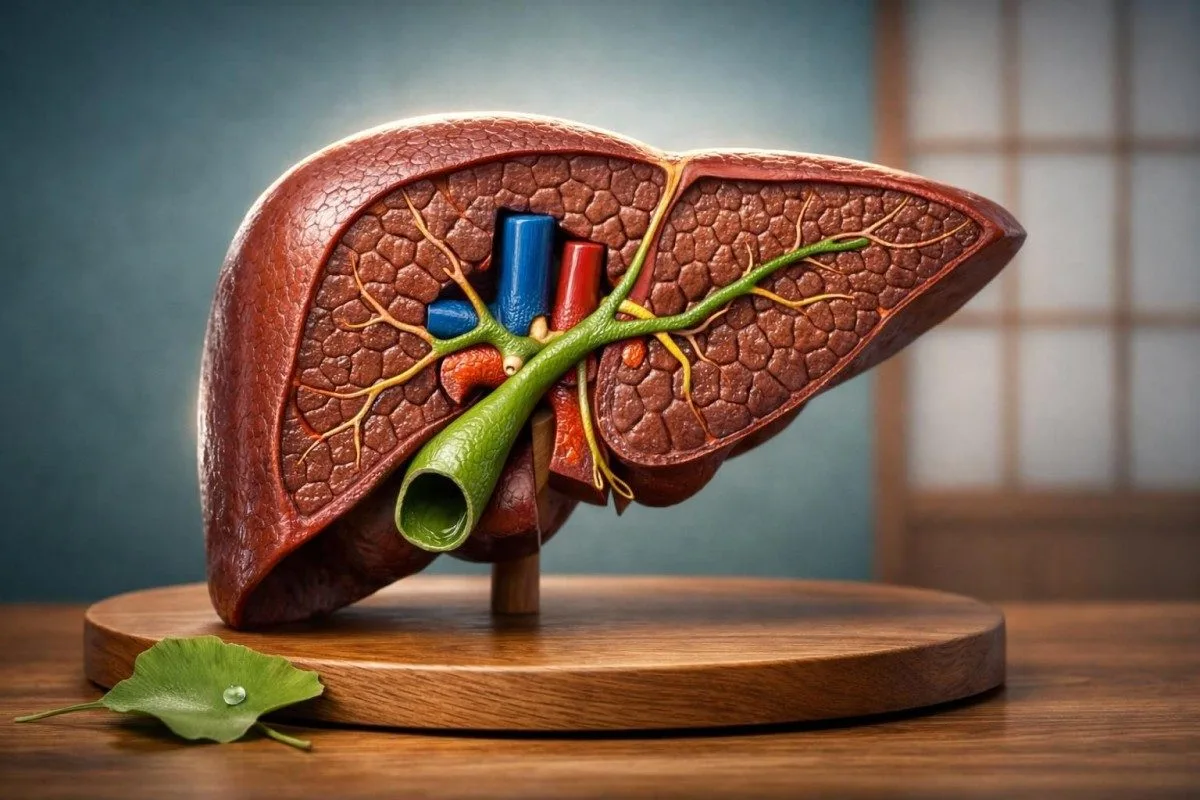
Most people are told one enzyme is high. Real interpretation starts when you compare the whole panel, the printed upper limits, symptoms, and trend over time.


- ALT above 33 U/L in men or 25 U/L in women can be clinically abnormal even if a lab flags only values above 40-55 U/L.
- AST/ALT ratio above 2:1 raises concern for alcohol-associated liver injury, while AST above ALT can also appear in cirrhosis or after hard exercise.
- ALP + GGT rising together usually points to cholestasis; ALP above 1.5× ULN with high GGT often deserves hepatobiliary imaging.
- R factor above 5 suggests hepatocellular injury, below 2 suggests cholestatic disease, and 2-5 suggests a mixed pattern.
- Bilirubin above 3 mg/dL with dark urine or jaundice changes urgency much more than a mild ALT rise alone.
- Albumin and INR are the closest things to true liver function tests; albumin below 3.5 g/dL or INR above 1.5 needs context and often quicker review.
- Very high enzymes over 500 U/L need prompt repeat testing, and values over 1000 U/L raise concern for acute hepatitis, ischemia, or acetaminophen toxicity.
- Exercise effect can push AST to 80-200 U/L and ALT to 40-120 U/L for up to 7 days, especially when CK is also high.
- Gilbert syndrome often causes isolated bilirubin of 1.5-3.0 mg/dL with otherwise normal liver enzymes and a normal CBC.
How to read a liver function test as one pattern
A liver function test only makes sense when you read ALT, AST, ALP, GGT, bilirubin, albumin, and INR together. ALT and AST mainly reflect hepatocyte injury, ALP and GGT together suggest cholestasis, and bilirubin, albumin, and INR tell you whether the liver is still doing its job. On Kantesti AI, we see this daily: one isolated borderline enzyme often means little, while the full pattern changes the story.
The phrase liver function test is slightly misleading. ALT, AST, ALP, and GGT are injury markers, not true function markers, which is why many abnormal panels still sit alongside normal bilirubin, albumin, and clotting. If you are not sure what is even included in your chemistry report, our explainer on the standard blood test is a useful starting point.
Raw numbers matter less than multiples of the upper limit of normal, or ULN. An ALT of 68 U/L may be barely high in one lab yet clearly abnormal in another, because analyzers and reference populations differ. Generic answers often miss that and overcall or undercall the same result.
I usually start with three questions: which group is highest, how high relative to ULN, and is the result new. A stable ALT of 52 U/L for 2 years with normal ALP, GGT, bilirubin, and platelets is usually a different conversation from ALT 52 U/L that was 18 U/L six weeks ago. Trend often matters more than the headline flag.
Some labs still use cutoffs inherited from populations that included people with occult fatty liver or viral hepatitis. Prati and colleagues argued years ago that healthier biologic ALT ceilings are closer to 30 U/L in men and 19 U/L in women, and many hepatologists still think those lower limits are more clinically honest.
ALT and AST: what they mean when read together
ALT is more liver-specific than AST, but the AST/ALT relationship often tells you more than either number alone. When ALT is the dominant enzyme, liver-cell injury is more likely; when AST leads, you have to think about muscle, alcohol, advanced fibrosis, and timing.
ALT normal range is roughly 7-55 U/L in many adult labs, though many experts prefer biologic upper limits near 33 U/L for men and 25 U/L for women. AST normal range is usually 10-40 U/L. If you want a single-marker deep dive, see our ALT blood test guide and our AST interpretation guide.
AST is not liver-exclusive; skeletal muscle contains plenty of it. A 52-year-old marathon runner with AST 89 U/L, ALT 47 U/L, and CK 1,200 U/L after a race usually has muscle spillover, not silent hepatitis. In that setting, a normal GGT and bilirubin are reassuring.
An AST:ALT ratio above 2:1 raises suspicion for alcohol-associated liver injury, especially when GGT is also high, but it is not a diagnosis by itself. Advanced fibrosis or cirrhosis can also push AST above ALT because the liver makes less ALT as hepatocyte mass falls. Part of the alcohol pattern may come from greater mitochondrial AST release.
Very high transaminases change the differential quickly. ALT or AST above 1000 U/L most often points to acute viral hepatitis, ischemic hepatitis, acetaminophen toxicity, or severe autoimmune hepatitis rather than routine fatty liver. Those patients need same-day medical review.
ALP plus GGT: the shortcut to bile duct versus bone clues
ALP becomes far more useful when you pair it with GGT. A high ALP plus high GGT usually points to the liver or bile ducts, while high ALP with normal GGT often points somewhere else, especially bone, pregnancy, or growth.
Adult ALP is commonly about 30-120 U/L and GGT about 9-48 U/L, although some labs use higher sex-specific GGT upper limits, especially for men. ALP above 1.5 × ULN with high GGT usually warrants hepatobiliary evaluation. For marker-specific ranges, see our ALP reference guide and high GGT explainer.
GGT helps because ALP is a shared enzyme; bone, placenta, and intestine also produce it. Adolescents in a growth spurt and pregnant patients can have ALP levels 1.5 to 2 times the adult upper limit with a perfectly normal liver. In my experience, a normal GGT in that setting prevents a lot of unnecessary scans.
A cholestatic pattern often comes with symptoms patients do not connect to the liver. Dark urine, pale stools, itching, and right upper abdominal discomfort matter more than a GGT number alone. When I see ALP 286 U/L and GGT 312 U/L together, ultrasound moves up the list fast.
There is one trap worth remembering. Isolated GGT elevation is common in fatty liver, obesity, diabetes, alcohol exposure, and enzyme-inducing drugs such as phenytoin or phenobarbital, yet it can also be a false alarm with no structural liver disease. GGT is sensitive; it is not especially specific.
Bilirubin, albumin and INR: true function versus injury
Bilirubin, albumin, and INR tell you whether the liver is working; ALT, AST, ALP, and GGT tell you it is irritated. That distinction separates many mildly abnormal panels from the small number that are genuinely urgent.
Total bilirubin is normally about 0.1-1.2 mg/dL. Albumin is usually 3.5-5.0 g/dL, and INR is typically 0.8-1.1 in someone not taking warfarin. Our separate guides on bilirubin, PT/INR, and serum proteins help when those are the confusing values.
Albumin changes slowly because its half-life is around 20 days, so a normal albumin does not rule out acute hepatitis. INR can worsen within 24 to 48 hours, which is why clinicians watch it closely in acute liver injury. An elevated INR is not automatically liver failure if warfarin use or vitamin K deficiency is part of the story.
An isolated bilirubin of 1.8 to 3.0 mg/dL with normal ALT, AST, ALP, GGT, and CBC often turns out to be Gilbert syndrome. Fasting, dehydration, illness, and hard exercise can nudge bilirubin upward because conjugation temporarily lags. That pattern is common and usually benign.
What worries me is a mismatch between mild enzymes and failing function. A patient with ALT 74 U/L, bilirubin 4.2 mg/dL, and INR 1.6 is much sicker than a patient with ALT 220 U/L and normal bilirubin and INR. Most patients are surprised by that, but it is exactly how hepatologists think.
The three patterns doctors use: hepatocellular, cholestatic and mixed
Doctors usually sort abnormal liver enzymes into hepatocellular, cholestatic, or mixed patterns. The quickest formal tool is the R factor, calculated as ALT divided by its ULN, then divided again by ALP divided by its ULN.
An R factor above 5 supports a hepatocellular pattern. An R factor below 2 supports a cholestatic pattern, and 2 to 5 is mixed. This small calculation is routine in hepatology and oddly absent from many patient-facing explanations. If you want a broader framework, our guide on how to read blood test results lays out the logic cleanly.
Try a real example. If ALT is 180 U/L with a ULN of 40, and ALP is 110 U/L with a ULN of 120, the R factor is about 4.9, which is nearly hepatocellular. If ALT is 96 U/L and ALP is 360 U/L using the same ULNs, the R factor is 0.8, which is cholestatic.
Mixed patterns are where quick answers often fall apart. Amoxicillin-clavulanate, Epstein-Barr virus, gallstones passing briefly through the duct, autoimmune hepatitis, and some bodybuilding supplements can all create a blurred picture. In those cases, trend over the next 48 to 72 hours matters as much as the starting number.
Kantesti AI interprets these ratios against the lab-specific reference range rather than a one-size-fits-all cutoff, which is one reason our AI blood test platform usually gives a sharper read than a generic single-marker explanation. The practical tip is simple: never compare your ALT to someone else's without comparing the printed ULN first.
A worked R-factor example using local lab limits
If your ALT is 120 U/L with a ULN of 40 and your ALP is 150 U/L with a ULN of 120, the R factor is 2.4. That is a mixed pattern, not a purely hepatocellular one, and it often explains why clinicians order both hepatitis testing and biliary imaging at the same visit.
Common combinations that patients and generic AI answers often miss
The patterns most often misread are exercise AST, metabolic ALT, and isolated GGT. When those are mistaken, people either panic unnecessarily or ignore a pattern that actually deserves follow-up.
Intense exercise can raise AST to 80-200 U/L and ALT to 40-120 U/L for several days, especially after downhill running, heavy lifting, or unaccustomed training. If triglycerides are also up, the story may be different; our lipid panel guide often fills in that part of the picture. I have seen more than one gym-goer worked up for hepatitis when the real clue was a CK above 2000 U/L.
Mild ALT elevation with central weight gain, fasting insulin resistance, high triglycerides, or an elevated HOMA-IR often fits metabolic dysfunction-associated steatotic liver disease better than mystery liver inflammation. That pattern can exist with ALT only 35-60 U/L. Our HOMA-IR explainer is useful when glucose metabolism looks tangled in the same report.
Here is the uncomfortable truth: normal ALT does not exclude fibrosis or cirrhosis. A falling platelet count, low albumin, splenomegaly on ultrasound, or AST creeping above ALT may be a better clue to chronic scarring than ALT itself. This is one of those areas where context matters much more than the printed green tick.
I see this pattern in practice all the time. A patient with ALT 31 U/L, AST 38 U/L, platelets 128 ×10^9/L, and albumin 3.4 g/dL worries less because the ALT sits inside the lab range, but that is the wrong number to fixate on. The companion markers are the real story.
How high is too high: thresholds that change urgency
Urgency depends on height, speed, and symptoms. As a rule, ALT or AST above 500 U/L, bilirubin above 3 mg/dL, or an INR above 1.5 makes me move faster, especially if the numbers are rising.
A transaminase level above 1000 U/L deserves urgent same-day assessment. The common causes are ischemic hepatitis, acute viral hepatitis, acetaminophen toxicity, and less often severe autoimmune hepatitis or toxin exposure. Routine fatty liver almost never produces numbers that high.
Cholestatic labs can also become urgent. ALP above 3 times ULN with fever, jaundice, or right upper quadrant pain raises concern for biliary obstruction or cholangitis. That is the patient I tell not to wait for a routine follow-up slot.
Symptoms change the risk calculation immediately. New confusion, marked sleep reversal, easy bruising, vomiting, dark urine, pale stools, or generalized itching make an abnormal panel more actionable. Our blood test symptoms decoder is helpful when people are unsure which symptoms belong with which lab abnormality.
Sometimes the next practical step is simply speed. If your clinician asks for repeat labs within 24 to 72 hours, it helps to know how quickly results usually return so you do not lose a week to logistics. A rapidly changing pattern is more informative than a single dramatic number.
Why normal ranges differ by lab, sex, age and recent exercise
Reference ranges differ because labs use different analyzers, local populations, and statistical methods. That is why the same ALT can be labeled normal in one city and high in another.
Many adult labs still print ALT upper limits of 40-55 U/L, yet some European centers use healthier cutoffs closer to 35 U/L for men and 25 U/L for women. Obesity and silent fatty liver in the reference population partly explain the gap. As of April 6, 2026, clinicians still disagree on the ideal boundary.
Pre-test behavior matters more than most people expect. Hard exercise in the previous 3 to 7 days can raise AST and ALT, and a fast longer than 24 hours can raise bilirubin in Gilbert syndrome. If your lab requested fasting, review our guidance on fasting before blood work rather than guessing.
Medication effects are uneven. Statins commonly cause mild ALT elevations under 3 times ULN and can often be continued with monitoring, whereas amiodarone, methotrexate, nitrofurantoin, valproate, and anabolic agents deserve a lower threshold for concern. Herbal supplements are especially messy because ingredient lists are not always honest.
Repeat tests should ideally be done in the same laboratory and compared against the same printed interval. Analytic and biologic variation together can easily create a 5-15% swing without any real clinical change. That is one reason I prefer trend interpretation over one-off alarm.
What doctors usually order next after elevated liver enzymes
The next tests depend on the pattern. Hepatocellular results usually lead to hepatitis tests, CK, iron studies, and ultrasound; cholestatic results usually start with ultrasound and autoimmune cholestasis markers.
For ALT/AST-predominant panels, I commonly add hepatitis B surface antigen, hepatitis C antibody, CK, ferritin, transferrin saturation, and sometimes ANA, SMA, and IgG. Hereditary hemochromatosis becomes more plausible when transferrin saturation exceeds 45% and ferritin is elevated. Our iron studies guide gives the numbers behind that.
For ALP/GGT-predominant panels, abdominal ultrasound is often first because it can quickly spot duct dilation, stones, or fatty change. If cholestasis persists without an obvious obstruction, clinicians may add antimitochondrial antibody for primary biliary cholangitis or MRCP for duct mapping. Dark urine can also be clarified with a urobilinogen and urinalysis review.
Metabolic patterns deserve metabolic tests. HbA1c of 5.7-6.4% supports prediabetes and 6.5% or higher supports diabetes, both of which increase the odds of fatty liver and fibrosis. That is why I often read liver enzymes next to the HbA1c range rather than in isolation.
Thomas Klein, MD, speaking personally: I rarely commit to a firm diagnosis from one liver panel unless the numbers are extreme. Repeating the panel in 2 to 12 weeks, after medication review and behavior cleanup, often turns noise into a recognizable pattern.
When muscle injury is the better explanation
A CK above about 500 U/L alongside AST-predominance and normal GGT makes a muscle source more likely. In that scenario, I usually repeat AST, ALT, CK, and urine testing after 3 to 7 days away from intense exercise before chasing rare liver disease.
How Kantesti AI interprets a liver function test as a whole panel
Kantesti AI reads a liver function test by pattern, not by a single flag. Our system compares ALT, AST, ALP, GGT, bilirubin, albumin, CBC trends, metabolic markers, and lab-specific reference intervals to decide whether the picture looks hepatocellular, cholestatic, mixed, or non-hepatic.
On our medical validation page, we show how the interpretation model handles reference-range differences, trend analysis, and risk prioritization. That matters because an ALT of 62 U/L means something different when the ULN is 55, when it was 18 three months ago, or when AST, platelets, and triglycerides are drifting alongside it. Kantesti AI now analyzes 15,000+ biomarkers across major lab categories.
The medical layer is not an afterthought. Our Medical Advisory Board reviews the clinical logic, and as Chief Medical Officer I still insist that the output separates likely muscle spillover, likely cholestasis, and genuine acute red flags. Most patients find that more useful than a flat elevated liver enzymes alert.
If you have a PDF or phone photo of your report, our blood test upload workflow can parse the panel in about 60 seconds, and the free demo is here: Try Free AI Blood Test Analysis. We built Kantesti for people who have numbers in hand and do not want to wait days to know which abnormalities are trivial and which need a call today.
Kantesti now serves users in 127+ countries and 75+ languages, with CE Mark, HIPAA, GDPR, and ISO 27001 standards spelled out in public materials. If you want the company background rather than the medicine, our About Us page has that story. The shorter version is simple: we built the tool I wished my own patients had between the lab portal and the clinic visit.
Research notes, related methods, and publication links
The two papers below are not liver-enzyme primers; they cover the neighboring lab domains that often decide what an abnormal liver panel means next — iron overload and clotting. Those questions come up more often than most patients expect once the first repeat panel stays abnormal.
I add iron studies surprisingly often when ALT or AST stays high without a clean explanation, because hemochromatosis can masquerade as everyday fatty liver early on. And I watch coagulation closely because worsening clotting can be the first objective sign that a liver enzyme problem has become a liver function problem.
We keep related methods papers collected on the Kantesti blog, and every clinical article is reviewed against current guidance before update. This page was last medically reviewed on April 6, 2026, by Thomas Klein, MD, with advisory oversight from Sarah Mitchell, MD, PhD.
For readers who want the publication trail, see the DOI-linked references listed below. They give extra depth on transferrin saturation, TIBC, aPTT, D-dimer, and Protein C — all tests that sometimes become relevant once a liver panel stops looking simple.
Frequently Asked Questions
What does it mean if ALT is high but AST is normal?
A high ALT with normal AST usually suggests mild hepatocellular irritation rather than muscle injury. Common causes include fatty liver, recent medication changes, viral infections, and some supplements; ALT in the 40-80 U/L range is very common in early metabolic liver disease. If ALP, GGT, bilirubin, albumin, and INR are normal, the situation is usually not emergent, but it still deserves repeat testing within about 1 to 3 months and a careful review of exercise, alcohol, and medications.
Is GGT always high with alcohol use?
No, GGT is not always high with alcohol use, and a high GGT does not prove alcohol is the cause. Many people who drink regularly have normal GGT, while many non-drinkers have GGT above 50-60 U/L because of fatty liver, obesity, diabetes, or enzyme-inducing medications. GGT becomes more suggestive when it rises together with AST, especially if the AST:ALT ratio is above 2:1, but it still needs the rest of the panel for context.
Can exercise cause elevated liver enzymes?
Yes, strenuous exercise can raise liver enzymes, especially AST, because muscle contains AST as well. After heavy lifting, long-distance running, or unaccustomed training, AST can rise to 80-200 U/L and ALT can rise mildly for up to 7 days, particularly if CK is also elevated. A normal GGT and bilirubin make a muscle source more likely, which is why recent training history matters so much.
When should elevated liver enzymes be rechecked?
Mild elevations under 2 times the upper limit of normal without symptoms are often rechecked after 2 to 12 weeks, depending on the pattern and suspected cause. Levels above about 500 U/L, rapidly rising numbers, or any abnormal bilirubin or INR usually justify repeat testing within 24 to 72 hours or even same-day review. In practice, the timing is driven by the whole panel, not one isolated ALT blood test.
What liver test values mean urgent care?
ALT or AST above 1000 U/L is a same-day issue because it raises concern for acute hepatitis, ischemia, or toxin injury. Bilirubin above 3 mg/dL with jaundice, INR above 1.5 in someone not on warfarin, or ALP above 3 times the upper limit of normal with fever and right upper abdominal pain also make the situation more urgent. Symptoms such as confusion, dark urine, pale stools, severe itching, vomiting, or easy bruising increase the need for prompt medical assessment.
Can you have liver disease with normal ALT and AST?
Yes, normal ALT and AST do not exclude liver disease. Advanced fibrosis, cirrhosis, cholestatic disorders, and even some infiltrative liver conditions can exist with ALT and AST inside the lab range, especially if platelets are low, albumin is falling, or AST begins to exceed ALT. That is why clinicians also look at bilirubin, INR, platelet count, imaging, and the clinical picture rather than relying on one normal enzyme.
How do doctors tell whether a high ALP is coming from the liver or bone?
Doctors usually pair ALP with GGT to sort that out. A high ALP with high GGT points toward a hepatobiliary source, while high ALP with normal GGT makes bone turnover, pregnancy, growth, fracture healing, or vitamin D-related bone issues more likely. If the picture is still unclear, clinicians may order ALP isoenzymes or 5-prime-nucleotidase to localize the source more precisely.
Get AI-Powered Blood Test Analysis Today
Join over 2 million users worldwide who trust Kantesti for instant, accurate lab test analysis. Upload your blood test results and receive comprehensive interpretation of 15,000+ biomarkers in seconds.
📚 Referenced Research Publications
Klein, T., Mitchell, S., & Weber, H. (2026). Iron Studies Guide: TIBC, Iron Saturation & Binding Capacity. Kantesti AI Medical Research.
Klein, T., Mitchell, S., & Weber, H. (2026). aPTT Normal Range: D-Dimer, Protein C Blood Clotting Guide. Kantesti AI Medical Research.
⚕️ Medical Disclaimer
This article is for educational purposes only and does not constitute medical advice. Always consult a qualified healthcare provider for diagnosis and treatment decisions.
E-E-A-T Trust Signals
Experience
Physician-led clinical review of lab interpretation workflows.
Expertise
Laboratory medicine focus on how biomarkers behave in clinical context.
Authoritativeness
Written by Dr. Thomas Klein with review by Dr. Sarah Mitchell and Prof. Dr. Hans Weber.
Trustworthiness
Evidence-based interpretation with clear follow-up pathways to reduce alarm.