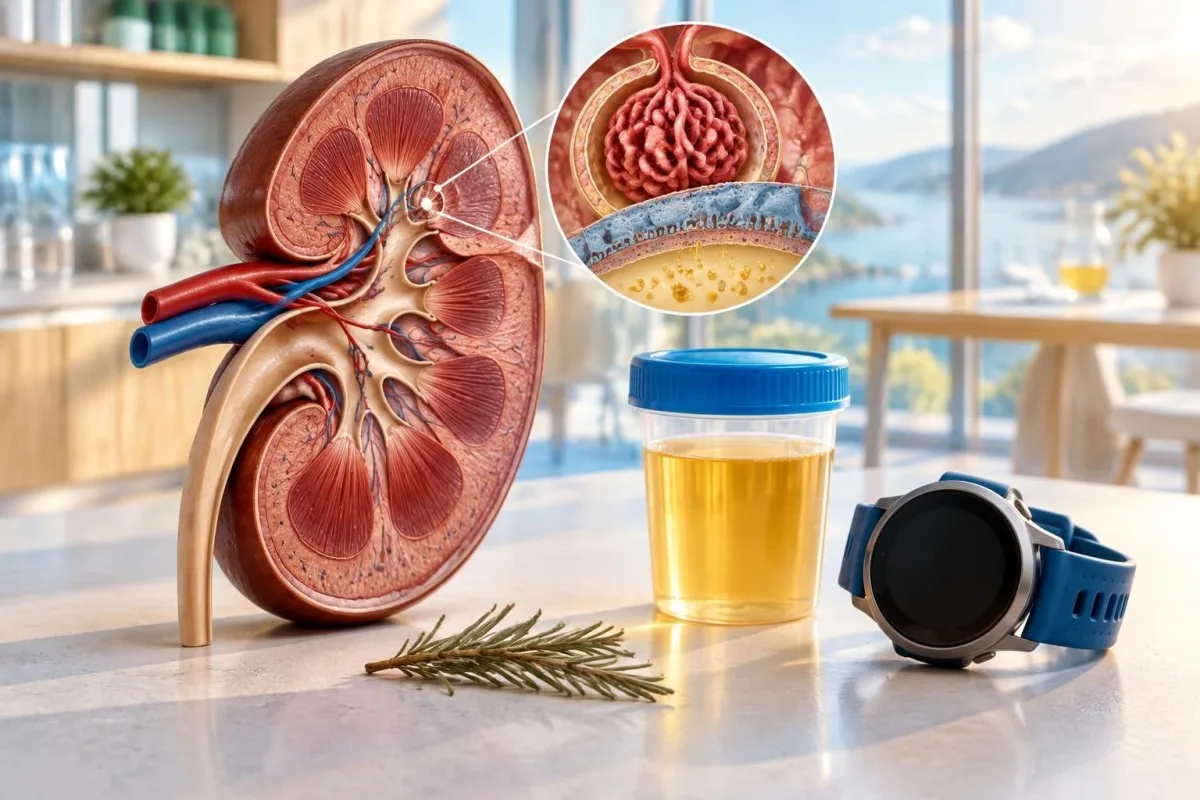
A hard workout can temporarily raise urinary albumin without indicating permanent kidney damage. The useful question is whether the result remains abnormal after adequate rest, normal hydration and a properly collected first-morning sample.

핵심 요점
- Transient albuminuria can follow strenuous or prolonged exercise and often settles within 24–48 hours after rest.
- 재검사 시점 is usually best after at least 24 hours without vigorous exercise; waiting 48 hours is more cautious after an endurance event.
- ACR categories are A1 below 30 mg/g, A2 from 30–300 mg/g, and A3 above 300 mg/g in adults.
- 검체 채취 should use a first-morning, midstream urine sample with normal hydration and no acute fever, urinary infection or visible blood.
- 체내 잔류 means abnormal albuminuria remains present for more than 3 months; one exercise-associated result does not diagnose chronic kidney disease.
- 후속 is prompt when ACR is repeatedly 300 mg/g or higher, when eGFR is falling, or when albuminuria occurs with blood in urine or high blood pressure.
- Hydration effects can dilute or concentrate urine, while muscle mass and creatinine excretion can alter the ratio even when albumin loss is unchanged.
- Diabetes and pregnancy need individualized interpretation because routine screening schedules and urgent blood-pressure-related concerns differ from those of healthy athletes.
Why urine albumin rises after strenuous exercise
Urine albumin after exercise should usually be retested after 24–48 hours without vigorous activity, not interpreted as chronic kidney disease immediately. Strenuous exercise can temporarily increase glomerular albumin leakage through changes in renal blood flow, blood pressure and filtration-barrier permeability.
운동 관련 transient albuminuria is most likely after high-intensity intervals, long-distance running, heavy resistance training or competition lasting more than 60 minutes. The increase can occur within minutes to hours and may affect both albumin and other urinary proteins; the size of the rise depends on exercise intensity, duration, heat exposure and individual conditioning.
The mechanism is functional rather than automatically structural. During intense exertion, sympathetic stimulation redirects blood toward working muscles, renal blood flow falls, circulating catecholamines rise and filtration pressure can change; these effects may let more albumin cross the glomerular barrier temporarily, often returning toward baseline during recovery.
A hypothetical example helps: a healthy 34-year-old runner has an ACR of 18 mg/g at baseline, then 86 mg/g the morning after a 30-kilometre race. That single A2-range result suggests a repeat under rested conditions; it does not by itself prove kidney disease.
The 1994 Sports Medicine review by Poortmans and Vanderstraeten describes exercise-related changes in kidney function and urinary protein excretion, while also emphasizing that the response varies by workload and health status. People with diabetes, hypertension or known kidney disease should not assume that every post-exercise result is harmless; their baseline risk changes the interpretation.
What an ACR result means after a workout
성인 알부민-크레아티닌 비율, or ACR, is classified as A1 below 30 mg/g, A2 from 30 to 300 mg/g, and A3 above 300 mg/g. These categories describe albumin excretion risk, but the category becomes clinically meaningful only after collection conditions and persistence have been assessed.
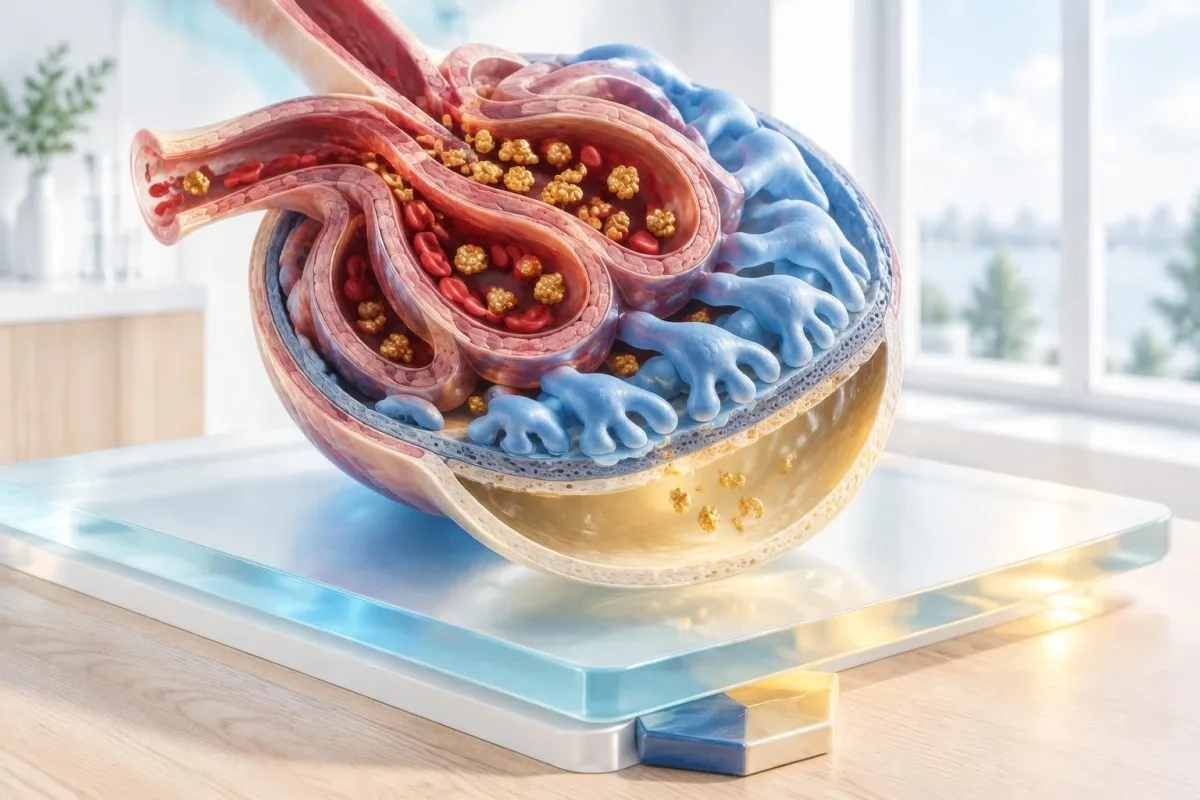
ACR corrects urinary albumin for urine creatinine concentration, making a spot sample more useful than albumin concentration alone. The conversion is approximately 1 mg/mmol equal to 8.84 mg/g, so 30 mg/g is about 3.4 mg/mmol and 300 mg/g is about 34 mg/mmol.
An ACR of 42 mg/g after hill sprints falls into A2, but it is not equivalent to a rested ACR of 42 mg/g obtained during repeated primary-care screening. The reason is that exercise can create a temporary signal, whereas persistent A2 albuminuria is associated with higher long-term kidney and cardiovascular risk.
The albumin measured in urine is not the same as serum albumin measured in a blood test. Serum albumin reflects circulating protein balance, while urine ACR estimates leakage of albumin through the kidney filter; the distinction is explained further in this serum albumin guide.
KDIGO classifies A1 as less than 30 mg/g, A2 as 30–300 mg/g and A3 as more than 300 mg/g, but these are risk categories rather than emergency labels. A3 deserves timely medical evaluation, especially when it persists or accompanies eGFR below 60 mL/min/1.73 m², elevated blood pressure or urinary blood.
| 수준 | 범위 | 의미 |
|---|---|---|
| A1: Normal to mildly increased | <30 mg/g or <3.4 mg/mmol | Usually low albuminuria risk, although a new result should be interpreted with eGFR and clinical context. |
| A2: Moderately increased | 30–300 mg/g or 3.4–34 mg/mmol | Repeat under rested, well-controlled collection conditions; persistent A2 needs medical assessment. |
| A3: Severely increased | >300 mg/g or >34 mg/mmol | Arrange prompt clinical review, particularly if the value is repeated or other kidney findings are present. |
| Very high or rapidly rising ACR | 보편적인 응급 중단(컷오프) 기준은 없습니다. | Urgency depends on symptoms, kidney function, blood pressure, pregnancy status and associated urine findings. |
How long should you wait before an urine albumin retest?
Wait at least 24 hours after vigorous exercise before collecting a repeat ACR, and consider 48 hours after a marathon, long race, heavy lifting session or unusually intense workout. The repeat should be collected after recovery, not immediately after exercise or late the same day.
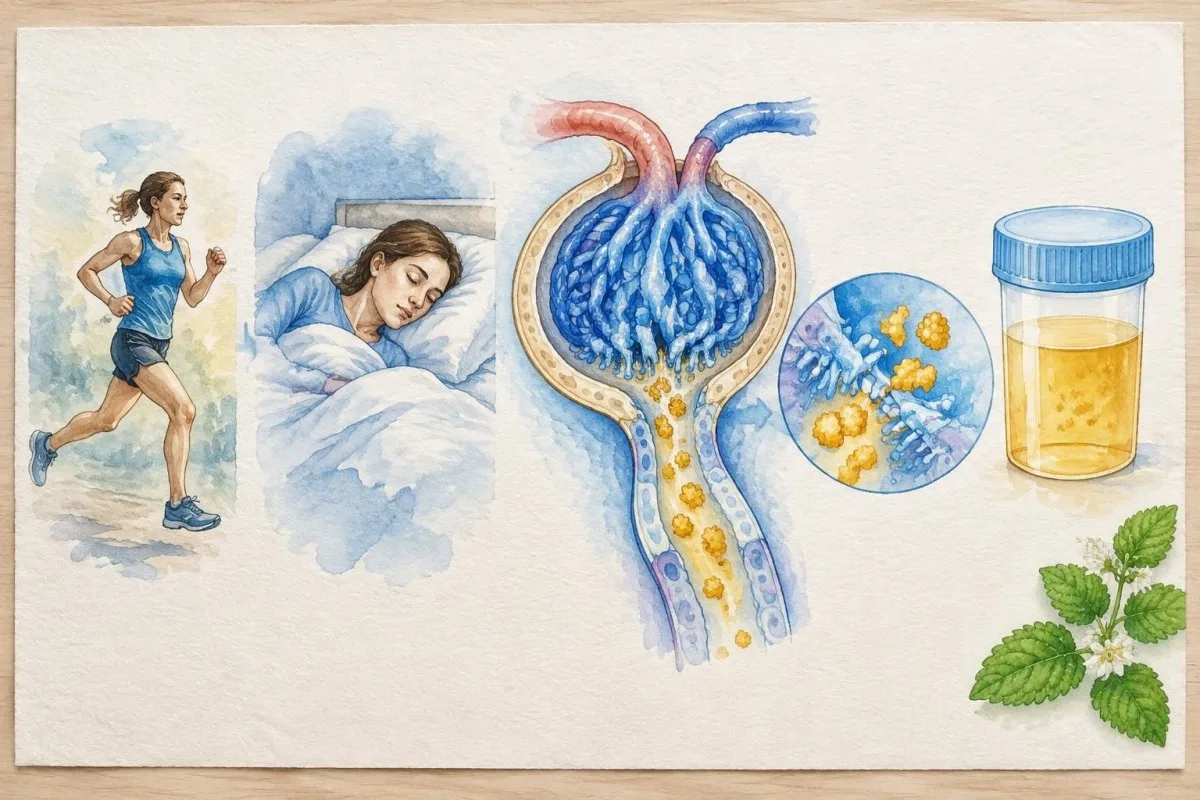
There is no single universally validated waiting period for every sport. A practical minimum is 24 hours without strenuous exercise, while 48 hours provides a cleaner baseline after prolonged endurance activity, heat stress or repeated high-intensity sessions; light walking is generally less disruptive than sprinting or heavy lifting.
Avoid collecting the retest during fever, vomiting, diarrhoea, a suspected urinary infection or visible urinary blood. A urine sediment result can add context when albuminuria appears alongside red cells, white cells or casts rather than as an isolated ACR finding.
A first-morning, midstream sample is usually preferred because overnight urine is less affected by recent activity and short-term food or fluid changes. Wash externally according to the laboratory instructions, begin urinating into the toilet, collect the middle portion in the supplied container and deliver it within the stated time.
Fasting is usually not required for an ACR, so do not skip food simply because the order says urine albumin. A complete 소변검사 가이드 can help distinguish ACR testing from dipstick protein testing, which uses a different method and may miss lower albumin concentrations.
How hydration and muscle mass change the result
Normal hydration improves the usefulness of a urine albumin retest, but drinking excessive water immediately beforehand does not reliably correct an abnormal ACR. Dehydration concentrates urine, while unusually dilute urine, high muscle mass and low creatinine excretion can all complicate ratio-based interpretation.
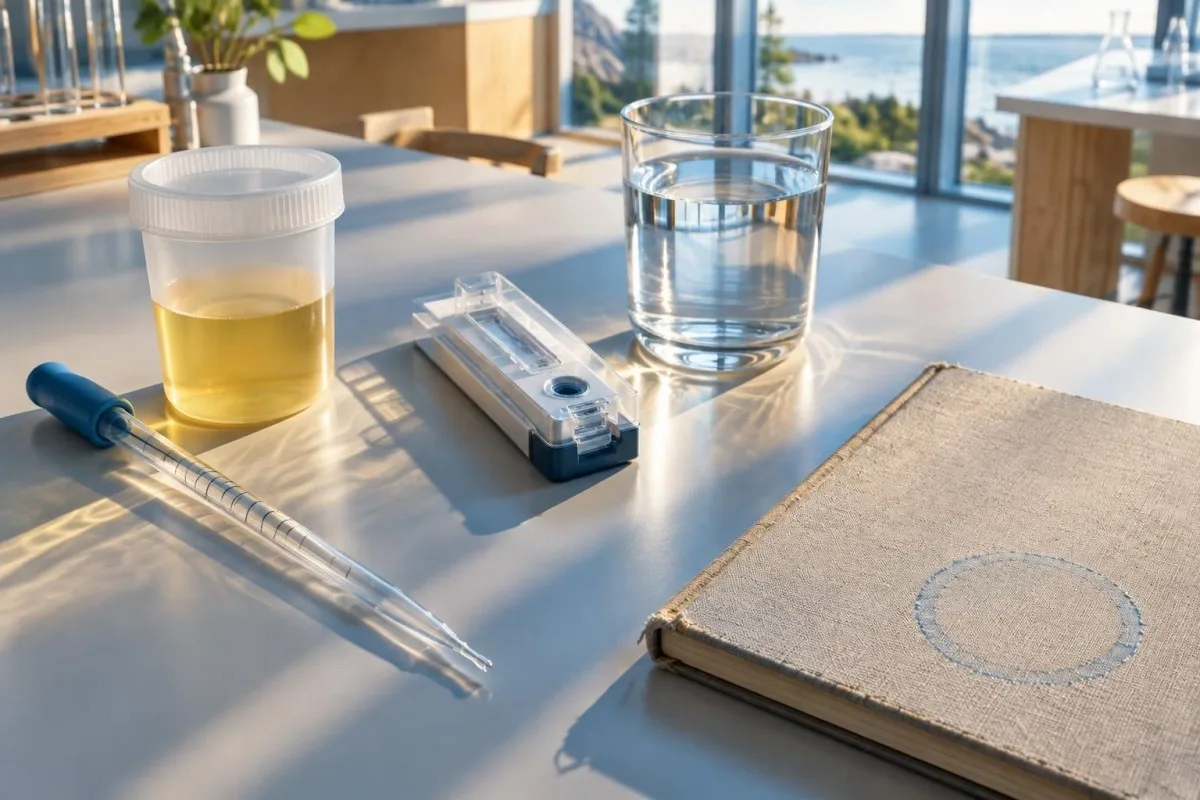
Urine albumin concentration and ACR are different measurements. For example, 18 mg/L of albumin in urine with creatinine of 0.6 g/L produces an ACR of 30 mg/g, while 36 mg/L with creatinine of 1.2 g/L produces the same ratio; concentration doubled, but estimated albumin excretion relative to creatinine did not.
The ratio is not immune to dilution error. A very dilute sample with urine creatinine below about 0.3 g/L may be less reliable in some laboratories, while a concentrated sample after dehydration can magnify small analytical or biological fluctuations; the laboratory comment and specimen concentration matter.
Muscle mass creates another angle because creatinine comes partly from skeletal muscle. A muscular athlete may excrete more creatinine and obtain a lower ACR than expected, whereas an older, frail or low-muscle person may have less creatinine and an apparently higher ratio; this is one reason trends are more useful than one isolated number.
Do not force fluids to produce clear urine. Drink normally according to thirst and medical advice, avoid deliberate dehydration, and record unusual conditions such as a race, sauna exposure or fluid restriction; the practical details of urine creatinine interpretation are particularly relevant for athletes.
When should an albumin-to-creatinine ratio be repeated?
Repeat an unexpected ACR after exercise once you have avoided strenuous activity for 24–48 hours and corrected obvious collection problems; a clinician may then repeat it again over the next 3 months. Chronic kidney disease requires an abnormal kidney marker, such as albuminuria, to persist for more than 3 months rather than appearing once.
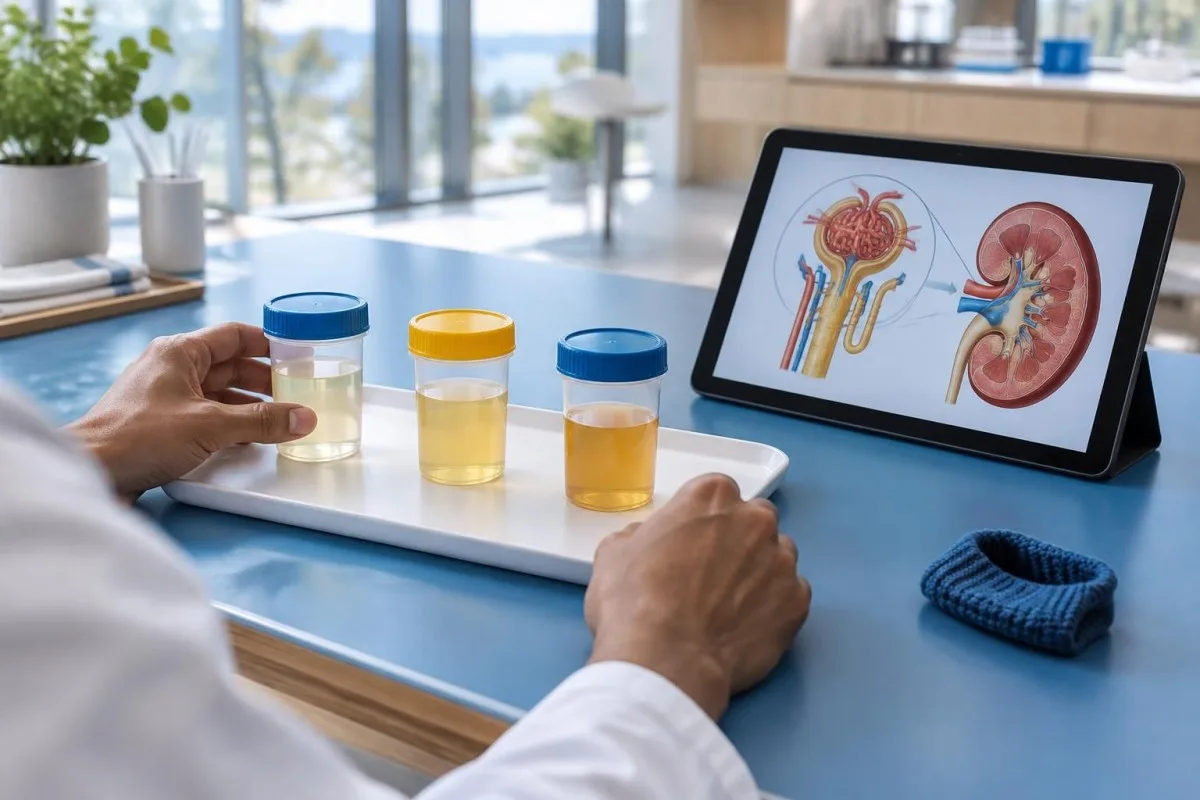
If an otherwise well adult has an ACR of 30–300 mg/g after a demanding workout, a reasonable clinical plan is a first-morning repeat in roughly 1–2 weeks under rested conditions, followed by confirmation over a period that reaches at least 3 months if abnormality remains. Exact scheduling differs with diabetes, hypertension, pregnancy, age and the initial value.
KDIGO 2024 recommends confirming an unexpected ACR of 30 mg/g or higher with a subsequent first-morning urine sample when possible. The guideline's persistence concept matters: two abnormal samples 3 months apart carry a different implication from two abnormal samples collected the morning after consecutive training sessions.
People with type 2 diabetes generally need at least annual urinary albumin and eGFR assessment, while people with type 1 diabetes commonly begin annual screening after 5 years of disease unless symptoms or clinical concerns justify earlier testing. The American Diabetes Association Standards of Care in Diabetes 2024 recommends this risk-based surveillance rather than waiting for urinary symptoms.
Write down the exercise date, duration, intensity, hydration changes, illness, menstruation and sample time beside each result. A 혈액검사 타임라인 가이드 explains the same principle for other biomarkers: timing is part of the result, not a minor administrative detail.
Which persistent patterns need medical follow-up?
Persistent A2 albuminuria, any repeated A3 result above 300 mg/g, falling eGFR, high blood pressure or urine blood warrants medical follow-up. The combination of findings matters more than the ACR alone because it helps distinguish isolated exercise-related leakage from broader kidney disease.

An ACR above 300 mg/g on a rested repeat is not automatically an emergency, but it deserves prompt assessment rather than repeated self-testing for months. A clinician may review blood pressure, serum creatinine and eGFR, glucose or HbA1c, medication use, urinary blood, infection symptoms and family history.
The risk signal becomes stronger when ACR and eGFR move in opposite directions. For example, a persistent ACR of 120 mg/g with eGFR falling from 82 to 64 mL/min/1.73 m² over 12 months is more concerning than a single ACR of 120 mg/g with stable eGFR and a normal repeat.
Kidney referral thresholds vary by health system, but persistent A3 albuminuria, eGFR below 30 mL/min/1.73 m², rapid eGFR decline, resistant hypertension, unexplained blood in urine or suspected glomerular disease commonly justify nephrology input. The GFR after dehydration guide explains why a temporary low eGFR should also be reassessed rather than labelled chronic immediately.
Albuminuria can coexist with a normal eGFR, especially early in diabetes or hypertension. Conversely, eGFR can be reduced without albuminuria; the two measurements describe different aspects of kidney function, which is why a BUN 및 크레아티닌 가이드를 참고하세요. should complement rather than replace ACR interpretation.
The 2024 KDIGO guideline recommends risk-based evaluation rather than a single universal referral rule. A technical discussion of clinical measurement standards is available in this 의학적 검증 개요, but no digital explanation can replace review of the original report and your clinical history.
Special situations: athletes, pregnancy and urinary blood
Athletes, pregnant people and anyone with urinary blood need a more cautious urine albumin retest plan than a healthy adult with one post-workout abnormality. Exercise may explain transient albuminuria, but it does not explain every abnormal urine pattern, and pregnancy introduces separate blood-pressure-related risks.
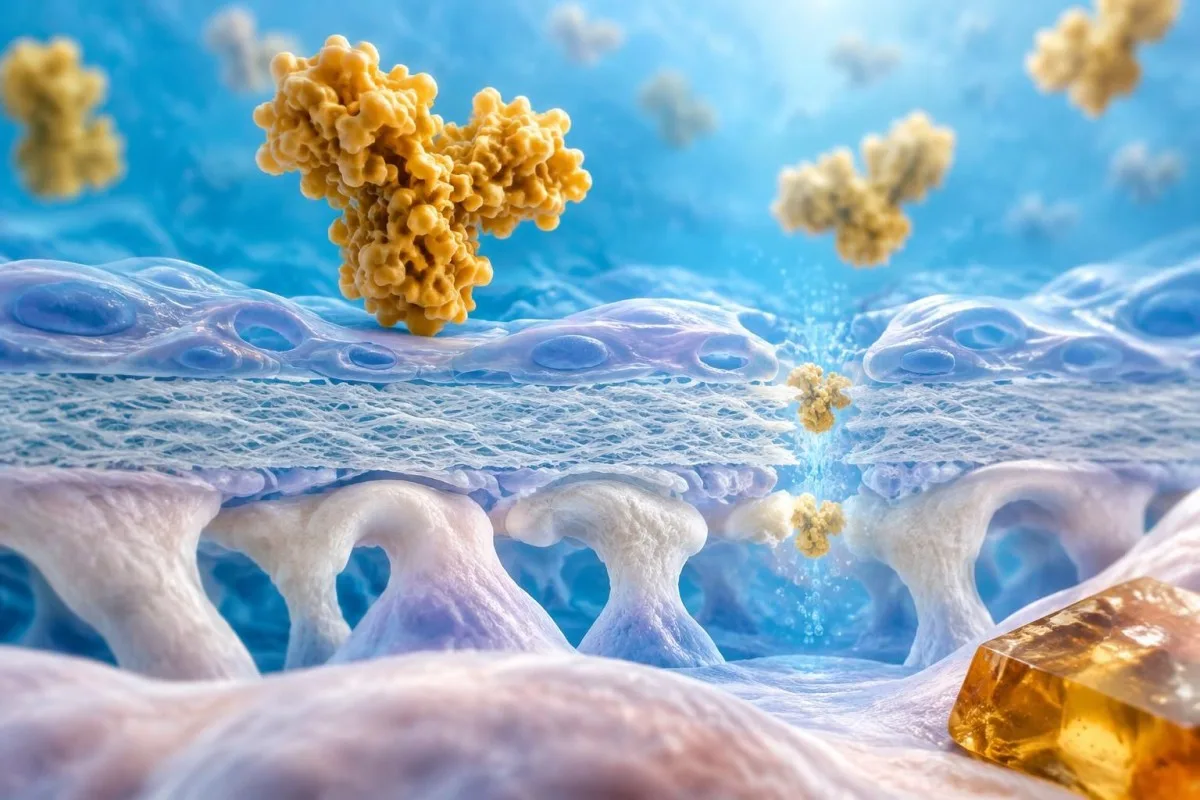
Long-distance running can produce both transient albuminuria and exercise-related blood in urine. Pink, red or cola-coloured urine after exercise should not be dismissed as normal, especially when it persists beyond 24–48 hours, contains clots, occurs with reduced urine output or is accompanied by severe muscle pain or weakness; a dedicated runner’s haematuria guide 설명에서 이러한 차이를 다룹니다.
A very dark urine sample after extreme exertion may reflect concentrated urine, blood-related pigments or muscle breakdown rather than albumin alone. Urgent assessment is appropriate when dark urine occurs with marked weakness, confusion, severe muscle pain, fever or very little urine, because creatine kinase, electrolytes and kidney function may need checking.
Pregnancy changes the threshold for concern because new hypertension plus protein or albumin in urine can be associated with pre-eclampsia. A pregnant person with repeated ACR elevation, new headache, visual disturbance, upper abdominal pain, sudden swelling or high blood pressure should contact maternity or urgent medical services rather than waiting 48 hours for a home retest.
Children and adolescents may have orthostatic proteinuria, where protein is higher later in the day but normal in a first-morning sample. A child with an abnormal post-sport sample needs age-specific assessment; adult ACR categories are useful context but should not be applied without paediatric interpretation.
Persistent visible foam is not a reliable albumin measurement, because toilet cleaners, concentrated urine and fast urine flow can create bubbles. Still, recurrent foam plus an ACR above 30 mg/g deserves review; this foamy urine explanation describes why appearance alone cannot confirm protein loss.
A practical checklist for your repeat sample
For the most interpretable urine albumin retest, avoid vigorous exercise for 24–48 hours, maintain normal hydration, collect the first-morning midstream sample and tell the clinician about illness, menstruation, medicines and training load. Bring the original ACR, repeat ACR, eGFR and blood-pressure readings together rather than judging one number alone.
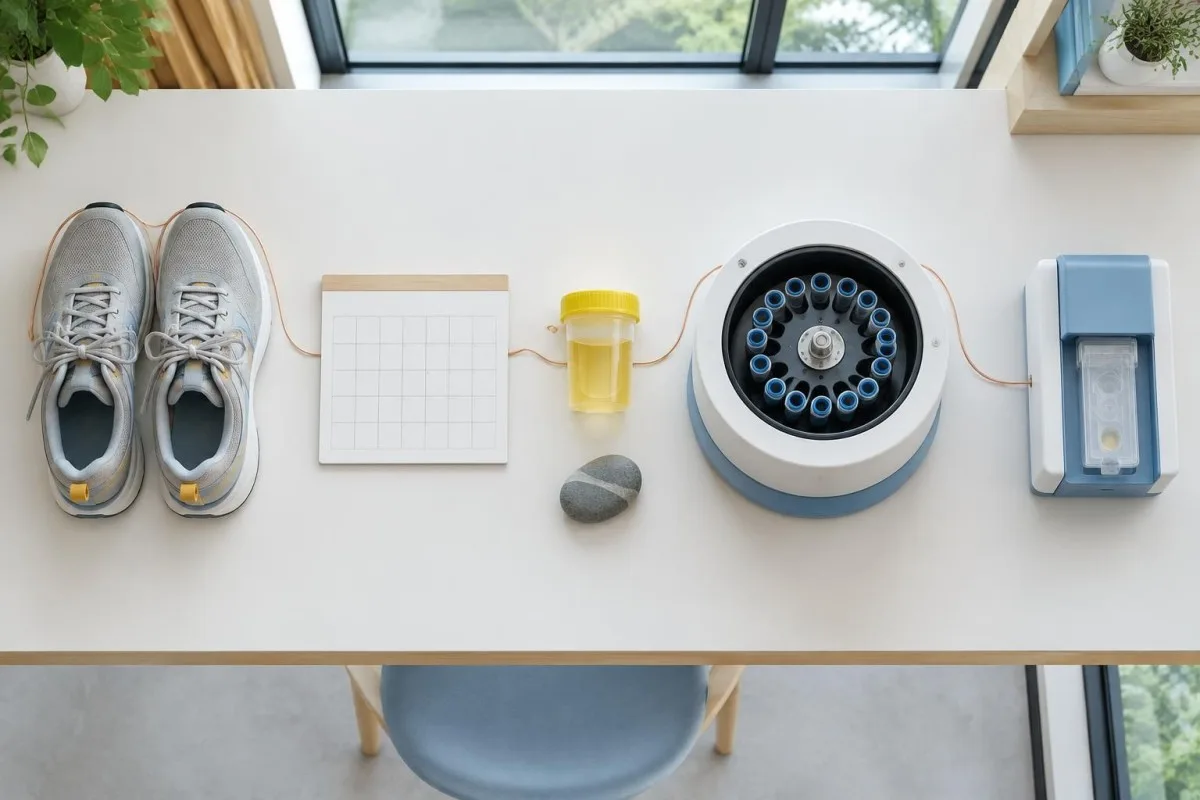
Before collection, ask whether the laboratory wants a spot ACR or a different test such as protein-to-creatinine ratio. Do not substitute a dipstick result for ACR: dipsticks are affected by urine concentration and mainly detect albumin at higher concentrations, while quantitative ACR reports a numeric ratio.
For a hypothetical example, a 52-year-old cyclist has ACR values of 74 mg/g after a race, 22 mg/g after 48 hours of rest and 25 mg/g three months later. That pattern supports transient albuminuria, assuming eGFR, blood pressure and the rest of the urinalysis are reassuring; it does not establish chronic kidney disease.
Ask whether medicines could affect the result or kidney risk, including non-steroidal anti-inflammatory drugs taken around long events, blood-pressure medicines, diuretics and creatine-containing supplements. Do not stop prescribed treatment independently, but tell the clinician exactly what was taken and when, because timing can change the safety assessment.
Keep the same laboratory and collection conditions when possible. A change from first-morning urine to a heavily diluted afternoon sample can create a misleading trend even when kidney albumin leakage is stable.
For readers comparing laboratory dates or reviewing how health information is quality-checked, the 의료 콘텐츠 표준 그리고 책임감 있는 AI 원칙은 explain why automated summaries should support, not replace, clinician-led interpretation.
자주 묻는 질문
격렬한 운동으로 소변 알부민 수치가 높아질 수 있나요?
네, 격렬하거나 장시간 운동을 하면 일시적인 알부민뇨가 발생하여 무작위 소변 ACR이 30 mg/g 미만에서 30–300 mg/g인 A2 범위로 올라갈 수 있습니다. 이러한 영향은 신장 혈류와 여과 압력의 단기적인 변화와 관련이 있으며, 대개 24–48시간 이내에 호전됩니다. 운동 후 단 한 번의 결과만으로는 만성 신장 질환을 진단할 수 없으므로, 휴식 후 첫 아침 소변 검체를 반복 검사하고 eGFR, 혈압 및 요검사 결과와 함께 해석해야 합니다.
운동 후 소변 알부민을 재검사하려면 얼마나 기다려야 하나요?
격렬한 운동 후 소변 알부민 검사를 반복하기 전에 최소 24시간 기다리고, 마라톤, 장거리 경주, 고강도 중량 운동 또는 열 노출 후에는 48시간을 고려하십시오. 정상적으로 수분을 섭취한 상태에서 훈련 직후가 아닌 아침 첫 중간뇨 검체를 채취하십시오. ACR이 30 mg/g 이상으로 지속되면 지속성을 평가하기 위해 3개월을 초과하여 추가 확인이 필요할 수 있습니다.
물을 더 많이 마시면 소변 알부민이 감소하나요?
과도한 수분 섭취는 비정상적인 ACR을 확실하게 교정하지 못하며 소변을 지나치게 묽게 만들 수 있습니다. 탈수는 소변을 농축시키는 반면, 지나치게 묽은 소변과 낮은 크레아티닌 배설량은 비율 해석을 복잡하게 만들 수 있으므로 정상적인 수분 섭취가 바람직합니다. 예를 들어 ACR이 90 mg/g인 경우에는 수 리터의 물을 마셔 조작하기보다 일관된 조건에서 재검사해야 합니다.
What ACR level needs medical follow-up?
An ACR of 30–300 mg/g should usually be repeated after exercise and collection factors are controlled, while a repeated ACR above 300 mg/g warrants prompt clinical evaluation. Urgency increases when albuminuria occurs with eGFR below 60 mL/min/1.73 m², falling kidney function, high blood pressure, urinary blood or pregnancy. The ACR category is a risk marker, not a stand-alone emergency diagnosis.
Can one abnormal ACR result mean I have chronic kidney disease?
No, one abnormal ACR result cannot by itself establish chronic kidney disease. CKD requires a kidney abnormality, such as ACR of 30 mg/g or higher, to persist for more than 3 months or another qualifying finding to be present. Fever, urinary infection, dehydration, menstruation and strenuous exercise can all cause temporary abnormalities that should be checked with a properly timed repeat.
Should I fast before an albumin-to-creatinine ratio test?
Fasting is usually not required for a spot albumin-to-creatinine ratio, although the laboratory's instructions take priority. The more useful preparation is avoiding vigorous exercise for 24–48 hours, maintaining normal hydration and collecting a first-morning midstream sample. If blood tests such as glucose or lipids are ordered at the same time, those tests may have separate fasting instructions.
혈액검사 결과 보는법
검사실 보고서를 업로드하면 Kantesti의 AI가 몇 초 안에 각 바이오마커를 쉬운 말로 설명합니다. 전 세계 200만 명 이상이 사용하고 있습니다.
참고 자료
- Klein, T., Mitchell, S., & Weber, H. (2026). RDW 혈액검사: RDW-CV, MCV 및 MCHC 완전 가이드. Kantesti AI 의학 연구. DOI
- Klein, T., Mitchell, S., & Weber, H. (2026). BUN/크레아티닌 비율 설명: 신장 기능 검사 가이드. Kantesti AI 의학 연구. DOI
- KDIGO CKD 실무그룹(2024). 만성 신장 질환의 평가 및 관리에 관한 KDIGO 2024 임상 진료 지침. Kidney International.
- 미국당뇨병학회 전문실무위원회(2024). Chronic Kidney Disease and Risk Management: Standards of Care in Diabetes—2024. Diabetes Care.
- Poortmans JR, Vanderstraeten J (1994). Kidney function during exercise in healthy and diseased states. Sports Medicine.
- 200만+분석한 검사
- 127+국가
- 100+언어
의료진 소개


E-E-A-T 신뢰 신호
경험
의사가 주도하는 검사 해석 워크플로 임상 검토.
전문적 지식
임상 맥락에서 바이오마커가 어떻게 거동하는지에 대한 검사실 의학 중심.
권위
Thomas Klein 박사의 의학적 검토를 거쳤으며, Sarah Mitchell 박사와 Hans Weber 교수의 기여가 있었습니다.
신뢰성
경고를 줄이기 위한 명확한 후속 경로가 포함된 근거 기반 해석.


의학적 면책 조항
이 글은 교육 목적만을 위한 것이며 의학적 조언을 구성하지 않습니다. 진단 및 치료 결정에는 항상 자격을 갖춘 의료 전문가와 상담하세요.
게시됨 · 편집팀에 문의
Kantesti Ltd 발행, 잉글랜드 및 웨일스에 등록된 회사, 회사 번호. 17090423, 런던, 영국.
