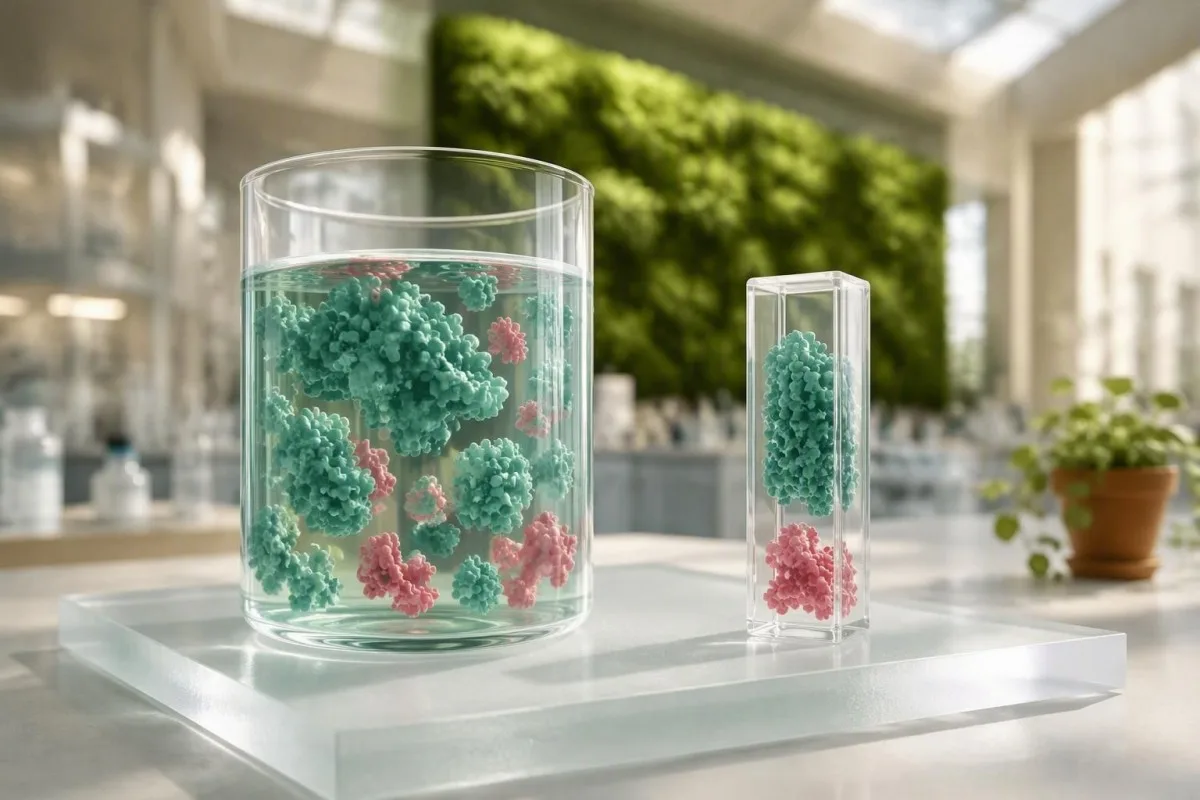
The gamma gap is the difference between total protein and albumin. It can point toward extra antibodies or other globulins, but it cannot diagnose an infection, liver condition, or plasma-cell disorder by itself.


- Gamma gap calculation is total protein minus albumin, using the same units from the same laboratory report.
- Typical value is roughly 2.0-3.5 g/dL (20-35 g/L), although laboratories rarely flag the calculated gap itself.
- Elevated gamma gap above 4.0 g/dL (40 g/L) has traditionally prompted follow-up, but this cutoff is not a diagnosis.
- Albumin penting because dehydration can raise total protein and albumin together, while low albumin can widen the gap without extra antibodies.
- Polyclonal patterns occur with chronic inflammation, autoimmune disease, liver disease, and persistent immune stimulation.
- Monoclonal proteins require confirmation with serum protein electrophoresis, immunofixation, and serum free light chains.
- Tinjauan mendesak is sensible when a high gap accompanies new anemia, kidney impairment, high calcium, bone pain, fever, or unintended weight loss.
- tes baleni after recovery from a short illness is often more informative than ordering an extensive panel from one borderline result.
What the gamma gap shows on a blood panel
A gamma gap blood test result is not a separate test: it is the amount of total serum protein left after albumin is subtracted. A widened gap suggests that non-albumin proteins, especially immunoglobulins, are relatively increased; it is a clue, not a diagnosis.
Total protein includes albumin plus globulins, a broad group containing antibodies, transport proteins, clotting-related proteins, and acute-phase reactants. Albumin usually accounts for about 55-65% of serum protein in well adults, so a changing albumin result can alter the protein gap even when antibody production is unchanged.
The phrase “gamma gap” is slightly imprecise. Laboratory chemistry cannot determine from this subtraction whether the additional protein sits in the gamma fraction, beta fraction, or several fractions; protein serum lan rasio A/G explain that distinction in more depth.
Kantesti iku sawijining Analisa tes getih AI that calculates the protein gap from matched total-protein and albumin values, then checks it against liver markers, kidney function, calcium, and the complete blood count. In my practice, that surrounding pattern has been far more useful than a single calculated number.
Why clinicians call it a clue
A gamma gap of 4.2 g/dL can reflect a resolving viral illness, chronic hepatitis, autoimmune activity, or a monoclonal immunoglobulin. Those possibilities have very different implications, which is why the gap should start a clinical question rather than end one.
Gamma gap calculation: total protein minus albumin
Ing gamma gap calculation is total protein minus albumin. If total protein is 7.8 g/dL and albumin is 4.1 g/dL, the gamma gap is 3.7 g/dL.
Use g/dL with g/dL or g/L with g/L; do not mix units. A value of 72 g/L total protein minus 41 g/L albumin equals 31 g/L, which is the same as 3.1 g/dL after dividing by 10.
Most routine reports list total protein and albumin but not the calculated gap. The pedoman biomarker tes getih helps place a derived value alongside the laboratory’s own reference interval rather than applying a universal internet cutoff.
A calculation can be misleading when the two measurements were taken on different dates, after large fluid shifts, or by methods with different calibration. I have seen a “rising” gap disappear when we compare same-day results from the same laboratory—an unglamorous but clinically meaningful detail.
What is a normal protein gap and why ranges vary?
A gamma gap around 2.0-3.5 g/dL is common in adults, but no single reference range fits every laboratory or clinical setting. The often-cited 4.0 g/dL threshold is a screening convention, not a biological dividing line.
The 4.0 g/dL cutoff has modest sensitivity for the conditions people worry about most. In a nationally representative analysis, Liu et al. found that this threshold was highly specific but insensitive for HIV, hepatitis C, and monoclonal gammopathy, so a normal gap does not rule those conditions out (Liu et al., 2020).
Age adds nuance. Older adults have a higher background prevalence of monoclonal gammopathy of undetermined significance, or MGUS, while pregnancy and fluid expansion can lower albumin and create a wider calculated gap without a primary antibody disorder.
Total protein above 8.3 g/dL (83 g/L) deserves context, particularly if albumin is not elevated with it. Our guide to sababe protein total dhuwur separates concentration from genuinely increased immunoglobulin production.
How infection and immune activation raise the gap
Persistent immune stimulation can raise the gamma gap because B cells produce a broad mixture of antibodies, called polyclonal immunoglobulins. Viral infections, chronic bacterial inflammation, and some parasitic illnesses can all create this pattern.
Acute infections often change the gap only modestly, and the timing matters. A person tested on day 5 of mononucleosis or during a respiratory infection may have elevated globulins for weeks after fever and fatigue improve; EBV result patterns can clarify when Epstein-Barr testing is relevant.
A high gap alone is not a reason to test indiscriminately for every chronic infection. Exposure history, travel, sexual history discussed confidentially, abnormal liver enzymes, lymph-node findings, and symptoms such as prolonged fever should guide the next test.
In one familiar clinic scenario, a 29-year-old with a gap of 4.1 g/dL, reactive lymphocytes, and recent sore throat had a polyclonal pattern that normalized over 10 weeks. The repeat result mattered because her albumin recovered from 3.5 to 4.2 g/dL as the acute illness settled.
Liver disease patterns behind an elevated gamma gap
Chronic liver disease can widen the gamma gap through both increased immunoglobulin production and reduced albumin synthesis. A low albumin result without elevated globulins can also widen the gap, so liver interpretation needs more than one number.
Albumin is made in the liver, but it has a half-life of roughly 20 days. A low albumin value therefore reflects sustained illness, poor intake, protein loss, fluid status, or impaired synthesis more often than a sudden change over 24 hours.
In cirrhosis, a classic electrophoresis appearance is broad polyclonal gamma elevation with beta-gamma bridging, but this is neither universal nor diagnostic from chemistry alone. Review ALT, AST, alkaline phosphatase, bilirubin, platelet count, and INR together; our decoding tes ati nerangake pola kasebut.
Dr. Thomas Klein’s practical rule is to pay attention when a rising gap occurs alongside falling albumin and platelets. That cluster carries more clinical weight than a stable 4.0 g/dL gap in someone whose liver enzymes, platelets, and prior results are unremarkable.
Autoimmune disease and chronic inflammation
Autoimmune and inflammatory conditions may elevate the gamma gap by producing broad, persistent antibody responses. Rheumatoid arthritis, Sjögren disease, lupus, inflammatory bowel disease, and chronic lung inflammation are examples, but symptoms and targeted testing determine relevance.
C-reactive protein and erythrocyte sedimentation rate can support an inflammatory explanation, although neither is specific. CRP often changes within 24-48 hours of a stimulus, while ESR can remain elevated longer because it is influenced by fibrinogen, anemia, age, and immunoglobulin concentration.
Kantesti iku sawijining platform interpretasi hasil tes getih AI that reads an elevated gap alongside CRP, ESR, blood counts, ferritin, and organ-function results rather than implying that one marker identifies an autoimmune disease. That distinction prevents a lot of unnecessary alarm.
Autoantibody panels should be ordered for a clinical reason. Dry eyes and mouth, inflammatory joint swelling, purpura, neuropathy, photosensitive rash, or kidney findings are more useful prompts than a gamma gap of 3.8 g/dL alone; immunoglobulin testing is often a more sensible first clarification.
When a gamma gap raises concern for monoclonal proteins
A persistent high gamma gap can occur with a monoclonal protein, but the gap cannot identify MGUS, myeloma, or related disorders on its own. Serum protein electrophoresis and immunofixation determine whether one immunoglobulin clone is present.
A monoclonal protein, sometimes called an M-protein or M-spike, is a concentrated immunoglobulin made by one plasma-cell clone. By contrast, infection and autoimmunity usually produce a wide, diffuse rise across many antibody types—one reason M-spike results cannot be inferred from the gap.
The International Myeloma Working Group defines MGUS by serum monoclonal protein below 3 g/dL, bone marrow clonal plasma cells below 10%, and no attributable end-organ damage. Its updated criteria also recognize specific biomarkers that identify myeloma before overt complications occur (Rajkumar et al., 2014).
A gap of 4.5 g/dL with normal hemoglobin, calcium, creatinine, and no symptoms is not automatically cancer. Still, persistence over 3-6 months, particularly in an older adult, is a reasonable reason to discuss electrophoresis, immunofixation, and serum free light chains with a clinician.
Low albumin, dehydration, and misleading gap results
The protein gap can widen because albumin falls, even if globulins stay unchanged. Dehydration often raises both albumin and total protein together, while fluid overload, inflammation, kidney loss, or liver dysfunction can lower albumin.
Consider two people with total protein of 7.6 g/dL: albumin 4.5 g/dL produces a 3.1 g/dL gap, whereas albumin 3.2 g/dL produces a 4.4 g/dL gap. The second result may reflect lost or reduced albumin rather than an excess of antibodies.
Protein-losing kidney conditions can lower albumin and may produce swelling around the eyes or ankles, foamy urine, or unexpectedly low total protein. A urine albumin-creatinine ratio and kidney assessment are more direct than repeatedly calculating the gap; FIB-4 liver risk is useful when liver disease is part of the pattern.
In my experience, overnight fasting is not needed for total protein or albumin, but an unusually hard endurance event, dehydration from gastroenteritis, or intravenous fluids before the draw should be recorded. Those details explain more “abnormal” protein calculations than patients expect.
Kidney function changes the meaning of protein results
Kidney disease can change protein results through urinary albumin loss, reduced clearance of light chains, or chronic inflammation. A high gamma gap paired with declining eGFR or protein in urine deserves more attention than an isolated gap.
An eGFR below 60 mL/min/1.73 m² for at least 3 months is one criterion for chronic kidney disease, but a one-time lower eGFR can reflect dehydration, medication effects, or a temporary illness. Creatinine, cystatin C where appropriate, and urine ACR add important context.
Free light-chain ratios need kidney-adjusted interpretation because both kappa and lambda light chains rise as filtration falls. A mildly abnormal ratio in advanced kidney disease is therefore not interchangeable with a monoclonal disorder diagnosis; BUN and creatinine differences can help prepare for that discussion.
Kantesti AI uses trend analysis to flag a widening gap with a falling eGFR or new anemia as a follow-up pattern. Our BUN/creatinine research guide also explains why hydration changes urea more readily than it changes antibody proteins.
Which follow-up tests are usually considered?
Follow-up for an elevated gamma gap usually starts with confirming the result and reviewing the whole panel. The next test depends on whether the dominant clue is low albumin, liver injury, inflammation, infection risk, kidney change, or possible monoclonal protein.
For a persistent gap of 4.0 g/dL or higher without an obvious explanation, clinicians commonly consider CBC, creatinine and eGFR, calcium, liver panel, urinalysis or urine ACR, quantitative IgG/IgA/IgM, serum protein electrophoresis, immunofixation, and serum free light chains. Not every patient needs every test.
When inflammatory symptoms are present, targeted CRP, ESR, hepatitis testing, HIV testing with consent, autoimmune studies, or imaging may be more useful than a broad unselected panel. ANCA testing patterns illustrate why antibody results need symptom-led interpretation.
The evidence is honestly mixed on using the gamma gap as a standalone screening gateway. Liu et al. (2020) showed that a 4.0 g/dL threshold misses many cases of the conditions it is meant to flag, which is why a clinician may test despite a smaller gap when the symptom pattern is persuasive.
When an elevated gap needs prompt medical review
An elevated gamma gap warrants prompt clinical review when it occurs with anemia, reduced kidney function, calcium above the laboratory range, persistent bone pain, unexplained weight loss, night sweats, or recurrent infections. The combination—not the gap alone—creates urgency.
Seek urgent care for confusion, severe weakness, shortness of breath at rest, markedly reduced urine output, fever with immunosuppression, or severe new back pain with weakness or bladder changes. Those symptoms need assessment regardless of the protein gap value.
The myeloma-related CRAB features are hyperCalcemia, Renal impairment, Anemia, and Bone involvement. They are not a home diagnosis checklist, but they explain why clinicians take a possible monoclonal protein more seriously when hemoglobin is falling or creatinine is rising; review the jalur pemeriksaan kanker getih for the usual staged approach.
A stable gap of 4.1 g/dL in an otherwise well person does not usually mean an emergency department visit. A same-week appointment is reasonable if the result is new or persistent, while the pace should be faster when red flags or multiple abnormal results are present.
When to repeat total protein and albumin
For a mild, unexpected gamma gap elevation during a recent illness, repeating total protein and albumin in about 4-12 minggu is often reasonable if a clinician finds no red flags. A meaningful trend requires comparable timing, laboratory method, and clinical conditions.
Repeat sooner when albumin is falling, total protein is rising quickly, or the CBC, calcium, kidney markers, or liver tests have changed. A slow isolated drift of 0.2 g/dL can be ordinary analytical and biological variation; a sustained rise of 1.0 g/dL is harder to dismiss.
Record recent infections, vaccines, exercise, dehydration, new medicines, weight change, and intravenous fluids at each draw. This small timeline can distinguish a transient immune response from a reproducible pattern better than memory alone; wektu tes getih nawakake template praktis.
Kantesti iku sawijining Piranti analisis tes getih berbasis AI that compares previous total protein, albumin, and related markers so that a stable personal baseline is visible. A value outside a population range is less concerning when it has been unchanged for years and the surrounding panel remains reassuring.
Common mistakes after seeing a high protein gap
Do not assume a high gamma gap means cancer, start supplements to “lower proteins,” or try to correct the number with extreme hydration. The right response is to verify the calculation and interpret it with symptoms, medications, and the rest of the laboratory panel.
Extra water shortly before a retest can dilute albumin and total protein, making the result harder—not easier—to interpret. Normal hydration and ordinary meals are usually preferable unless the ordering clinician gives specific preparation instructions.
Do not stop prescribed immunosuppressants, liver medicines, or supplements solely because the gap changed. Some agents alter liver enzymes or renal function, but a medication review should consider dose, start date, indication, and risks; the Kantesti blog includes medication-safety trend discussions.
Dr. Thomas Klein advises patients to bring the actual numeric values and dates, not just an “H” flag. A laboratory flag identifies a statistical outlier, while clinical significance comes from magnitude, trajectory, and the company it keeps.
How to prepare for your clinician visit
Bring your total protein, albumin, calculated gap, prior results, medication list, and a short symptom timeline to the appointment. A focused history can make the difference between a sensible repeat test and an unnecessary cascade of investigations.
Useful questions include: Is my albumin low, my globulin high, or both? Has this pattern persisted? Do my blood count, calcium, kidney tests, liver markers, urine tests, or symptoms suggest electrophoresis or immunoglobulin testing?
Kantesti AI can organize a longitudinal report before a visit, but it does not replace examination, history taking, or diagnostic decisions. As of September 13, 2026, our clinical methodology and quality safeguards are available through our standar validasi medis.
If a clinician recommends testing for monoclonal proteins, ask what result would change management and how follow-up will be scheduled. Our physician-led Dewan Penasehat Medis emphasizes that patient-facing interpretation should clarify uncertainty, not manufacture certainty from a calculated gap.
Pitakonan sing Sering Ditakoni
Apa iku celah gamma dhuwur ing tes getih?
A gamma gap of 4.0 g/dL (40 g/L) utawa luwih dhuwur biasane diterangake minangka dhuwur, sanajan laboratorium ora nggunakake siji cut-off universal. Gap kasebut padha karo total protein dikurangi albumin lan nggambarake protein non-albumin, utamane globulin. Nilai luwih saka 4.0 g/dL bisa kedadeyan kanthi peradangan, infeksi, penyakit ati, albumin kurang, utawa protein monoklonal, nanging ora diagnosa salah siji saka kondisi kasebut. CBC, fungsi ginjel, kalsium, tes ati, gejala, lan nilai sadurunge nemtokake manawa pengujian luwih lanjut migunani.
Piyé carané ngétung gamma gap?
Hitung celah gamma kanthi nyuda albumin serum saka protein serum total nggunakake unit sing cocog lan jupukan getih sing padha. Contone, protein total 8,1 g/dL dikurangi albumin 3,9 g/dL padha karo celah gamma 4,2 g/dL. Ing unit SI, 81 g/L dikurangi 39 g/L padha karo 42 g/L, sing konversi dadi 4,2 g/dL. Aja ngitung tren saka asil sing diukur ing dina sing beda utawa nganggo unit sing ora cocog.
Apa gamma gap sing dhuwur tegese kanker?
Boten, mundhakipun gamma gap boten ateges kanker. Kathah tiyang ingkang gadhah gap langkung saking 4,0 g/dL ngalami paningkatan antibodi poliklonal saking infeksi, aktivitas otoimun, utawi lelara ati, lan sawetawis kagungan katrangan albumin ingkang andhap. Paningkatan ingkang tetep dipunsertai anemia, gangguan ginjel, kalsium inggil, nyeri balung, utawi bobot badan suda saged njalari elektroforesis protein serum saha pancegahan ingkang sami kangge protein monoklonal. Sanajan mekaten, MGUS langkung kathah tinimbang mieloma lan mbetahaken interpretasi spesialis.
Apa dehidrasi bisa nyebabake gamma gap sing dhuwur?
Dehidrasi luwih kerep nambah protein total lan albumin liwat konsentrasi, mula ora bakal nggedhekake celah gamma kanthi substansial. Celah sing amba luwih umum disebabake dening globulin sing tambah, albumin sing suda, utawa loro-lorone. Owah-owahan cairan sing abot isih bisa nggawe asil sing diwilang ora bisa dipercaya, utamane nalika mutah, diare, olahraga ketahanan, utawa cairan intravena. Ngulang protein total lan albumin nalika hidrasi normal bisa ngklarifikasi nilai wates kayata 3,8-4,2 g/dL.
What tests follow a high protein gap?
Follow-up after a high protein gap may include a repeat comprehensive metabolic panel, CBC, creatinine and eGFR, calcium, liver tests, urinalysis or urine albumin-creatinine ratio, and quantitative immunoglobulins. If a monoclonal protein is plausible, serum protein electrophoresis, immunofixation, and serum free light-chain testing are common next steps. The choice depends on the degree of elevation, symptoms, age, and related abnormalities rather than a single 4.0 g/dL threshold. A clinician may reasonably repeat the test first if a recent short illness provides a likely explanation.
Can a normal gamma gap rule out myeloma or MGUS?
No, a normal gamma gap cannot rule out MGUS or myeloma. Some monoclonal proteins are small, some produce mainly light chains, and some patients have albumin values that mask a rise in globulins. Research by Liu et al. in 2020 found that the 4.0 g/dL threshold had low sensitivity for monoclonal gammopathy. Symptoms, anemia, renal changes, calcium results, and formal protein studies are more decisive than the gamma gap alone.
Entuk Analisis Tes Getih Berbasis AI Dina Iki
Gabung karo luwih saka 2 yuta pangguna ing saindenging jagad sing percaya Kantesti kanggo analisis tes lab sing instan lan akurat. Unggah asil tes getihmu lan tampa interpretasi lengkap saka 15,000+ biomarker sajrone sawetara detik.
📚 Publikasi Riset sing Dirujuk
Klein, T., Mitchell, S., & Weber, H. (2026). Kantesti AI. (2026). BUN/Creatinine Ratio Explained: Kidney Function Test Guide. Zenodo. https://doi.org/10.5281/zenodo.18207872. ResearchGate: https://www.researchgate.net/; Academia.edu: https://www.academia.edu/. Riset Medis AI Kantesti.
Klein, T., Mitchell, S., & Weber, H. (2026). Kantesti AI. (2026). Urobilinogen in Urine Test: Complete Urinalysis Guide 2026. Zenodo. https://doi.org/10.5281/zenodo.18226379. ResearchGate: https://www.researchgate.net/; Academia.edu: https://www.academia.edu/. Riset Medis AI Kantesti.
📖 Referensi Medis Eksternal
⚕️ Penafian Medis
Artikel iki mung kanggo tujuan edukasi lan ora dadi saran medis. Tansah konsultasi karo panyedhiya layanan kesehatan sing mumpuni kanggo keputusan diagnosis lan perawatan.
Sinyal Kepercayaan E-E-A-T
Pengalaman
Tinjauan klinis sing dipimpin dokter babagan alur kerja interpretasi lab.
Keahlian
Fokus kedokteran laboratorium babagan carane biomarker tumindak ing konteks klinis.
Kewibawaan
Ditulis dening Dr. Thomas Klein kanthi ditinjau dening Dr. Sarah Mitchell lan Prof. Dr. Hans Weber.
Kapercayan
Interpretasi adhedhasar bukti kanthi tindak lanjut sing cetha kanggo nyuda rasa kaget.