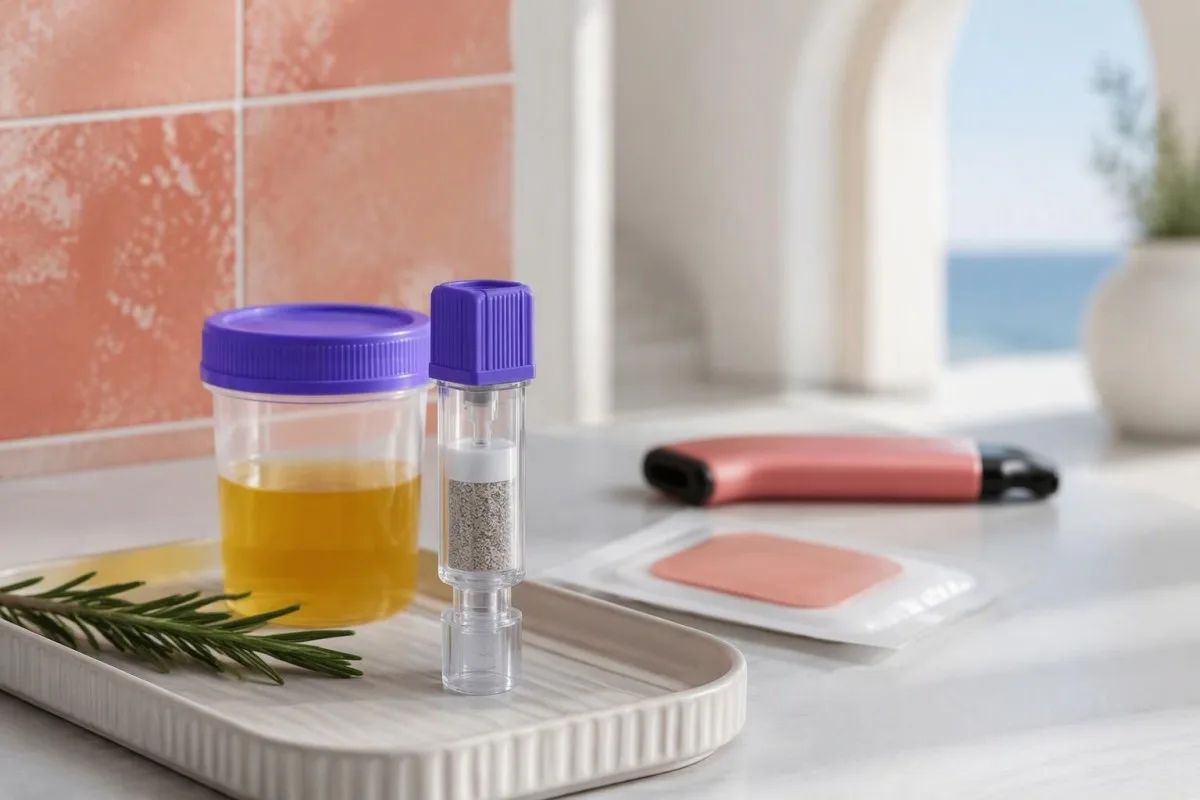
Nicotine has a roughly 2-hour half-life, but cotinine can remain detectable for several days. A positive result shows nicotine exposure—not necessarily tobacco smoking—and its meaning depends on the specimen, cutoff and exposure history.

Pokok-pokok penting
- Positive cotinine test usually means nicotine exposure exceeded the assay cutoff; cigarettes, vaping, nicotine pouches and nicotine replacement can all produce positives.
- Nicotine half-life averages about 2 hours, compared with roughly 16 hours for cotinine; neither value establishes a guaranteed negative-test date.
- Urine detection commonly lasts approximately 3–7 days after nicotine stops, but sustained exposure and sensitive assays can extend detection beyond a week.
- Blood and saliva detection commonly lasts approximately 2–4 days, although low cutoffs or slower metabolism can extend positivity toward a week or longer.
- Cutoff differences matter: research-oriented thresholds may be around 3–10 ng/mL in serum or saliva and 30–50 ng/mL in urine; some urine screens use 200 ng/mL.
- Nicotine replacement such as a 21 mg/24-hour patch or 2 mg gum can keep cotinine detectable despite successful avoidance of cigarettes.
- Secondhand smoke can produce measurable cotinine, especially with low cutoffs; a single low-positive result cannot reliably identify the nicotine source.
- Unexpected results deserve review of specimen type, units, collection time, nicotine products and confirmation method—not accusations or a homemade detox plan.
What does a positive cotinine test actually mean?
A positive cotinine test usually means your body absorbed nicotine and the measured cotinine exceeded that laboratory’s reporting cutoff. It does not, by itself, prove cigarette smoking, establish the last exposure time or diagnose nicotine poisoning; the same result can follow vaping, nicotine replacement or substantial environmental exposure.
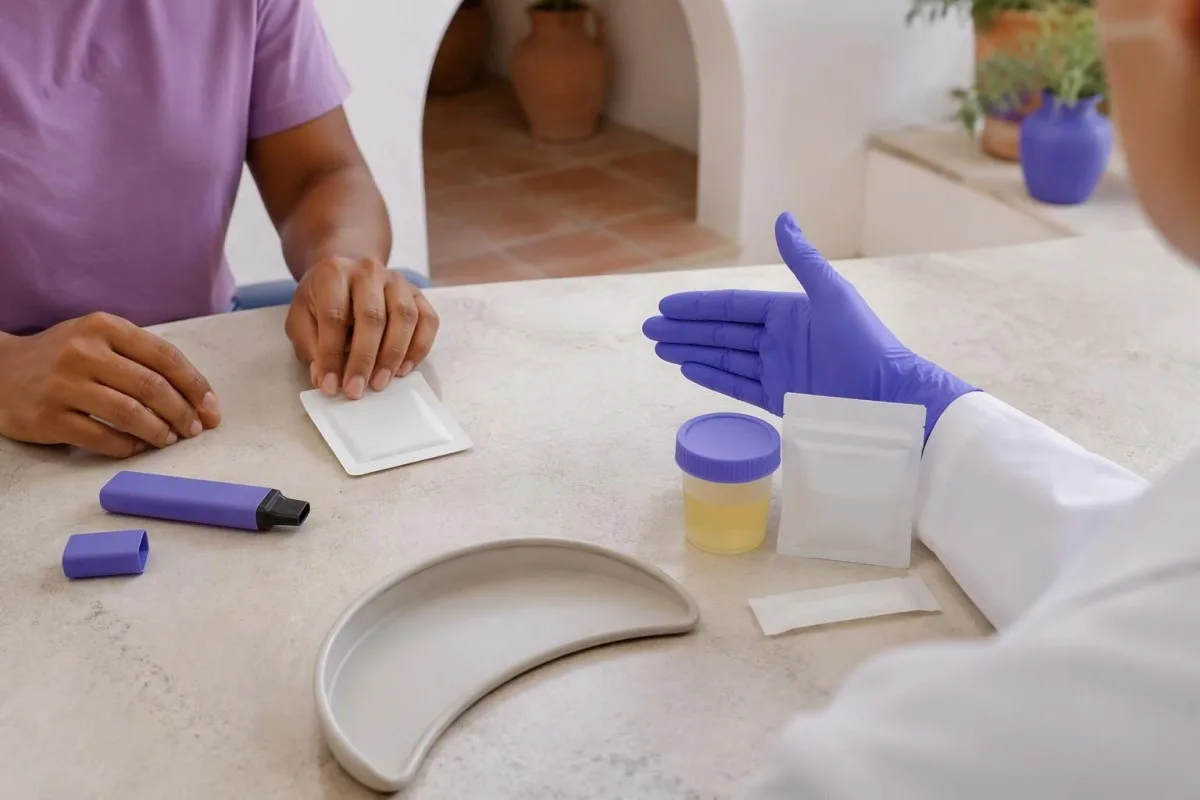
Cotinine is a nicotine metabolite, not a tobacco-specific chemical. Approximately 70–80% of absorbed nicotine is converted to cotinine, which explains why laboratories usually test the metabolite rather than relying on nicotine’s much shorter detection period (Benowitz, Hukkanen and Jacob, 2009).
Asil sing dilapurake minangka “positive” answers a threshold question; a result of “18 ng/mL” provides a concentration. Our guide to asil kualitatif tinimbang kuantitatif explains why a binary report cannot reveal how far above the threshold a specimen was.
For a hypothetical example, two people could both receive a positive urine result at a 50 ng/mL cutoff: one after nicotine gum, another after cigarettes. Their reports do not establish equivalent smoke exposure, cardiovascular risk or cessation progress because the nicotine source remains unresolved.
Kantesti iku sawijining Analisa tes getih AI that can help explain laboratory wording, including why a roughly 16-hour cotinine half-life does not identify an exact smoking date. Our latar mburi perusahaan explains who operates the service; an AI explanation is not independent verification of abstinence.
Why does cotinine last longer than nicotine?
Nicotine has an average half-life of about 2 hours, while cotinine averages approximately 16 hours. Cotinine therefore accumulates with repeated exposure and falls more slowly after nicotine stops; individual cotinine half-lives can range from roughly 8 hours to more than 30 hours.
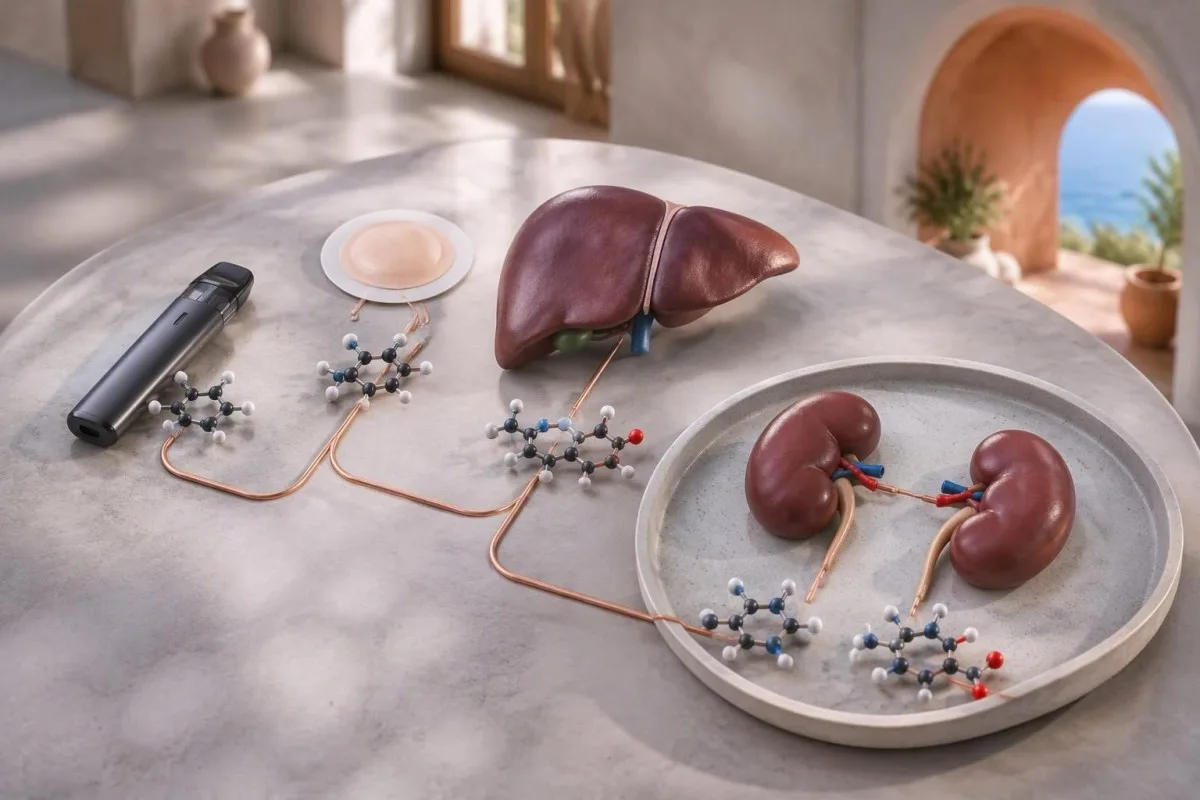
Half-life means a 50% reduction, not complete removal. With a hypothetical starting blood cotinine concentration of 160 ng/mL and a fixed 16-hour half-life, the simplified sequence is 80 ng/mL after 16 hours, 40 after 32 hours and 20 after 48 hours.
At a 10 ng/mL cutoff, that simplified example reaches the threshold after about 64 hours; at 3 ng/mL, it takes approximately 92 hours. These calculations assume no further nicotine, unchanged clearance and a concentration measured after the initial formation phase—not conditions that every real specimen satisfies.
Repeated nicotine doses arrive before the previous cotinine has cleared, creating a higher baseline. A person using nicotine throughout the day may therefore remain positive longer than an occasional user even when both stop at the same time; the starting concentration changes the calculation as much as the half-life does.
The Society for Research on Nicotine and Tobacco review advises allowing approximately 6–7 days when minimizing residual-cotinine misclassification is necessary, rather than treating an average half-life as a deadline (Benowitz et al., 2020). Our wektu tes getih explains why sampling time belongs beside every trend.
How long does cotinine stay in urine?
Cotinine commonly remains detectable in urine for approximately 3–7 days after nicotine exposure stops, but daily use, a high starting concentration or a sensitive cutoff can extend detection beyond a week. Urine usually contains higher cotinine concentrations than blood, making it useful for detecting lower-level exposure.
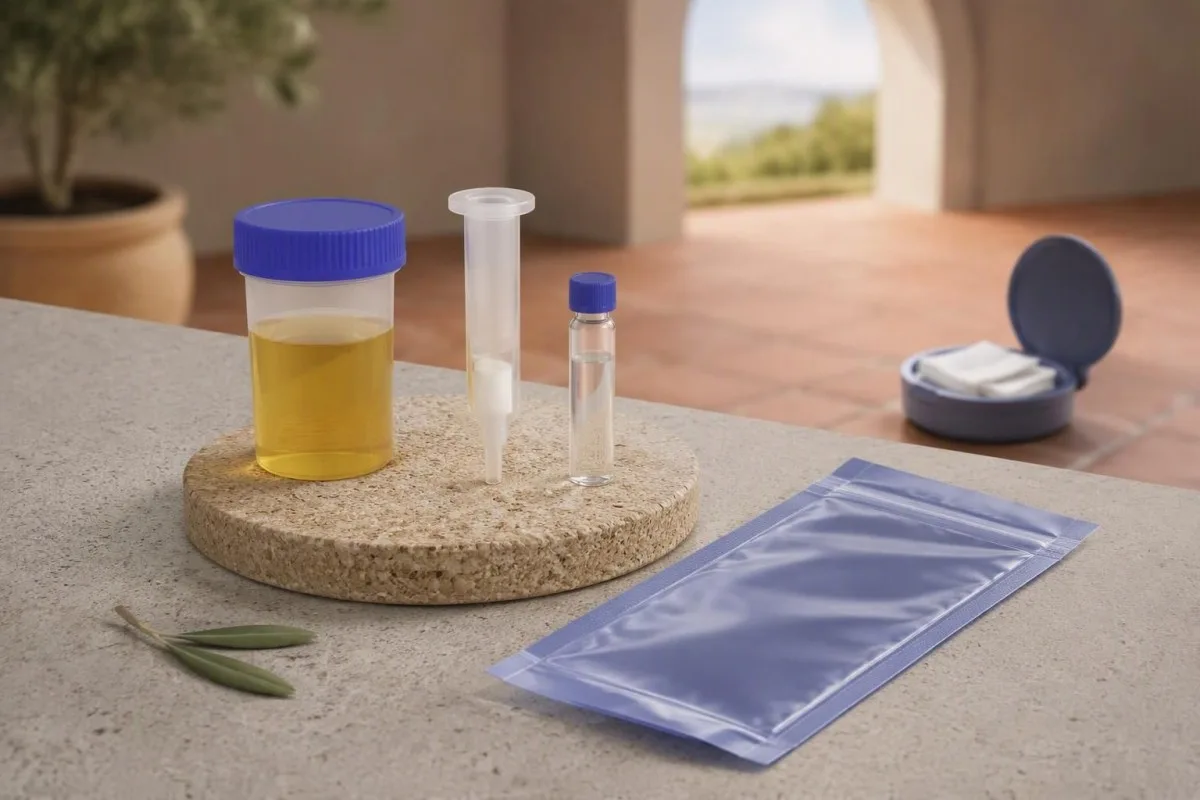
Urine cotinine concentrations are often several times higher than serum concentrations, so urine and blood cutoffs cannot be exchanged. A urine result of 100 ng/mL is not equivalent to a blood result of 100 ng/mL, and neither concentration can be converted reliably into a cigarette count.
Hydration changes the amount of water carrying the metabolite. A hypothetical urine concentration of 80 ng/mL could fall below a 50 ng/mL cutoff in a more dilute specimen without proving faster elimination; kreatinin urin lan pengenceran help explain this distinction.
Free cotinine and total cotinine are different measurements. Total-cotinine methods include cotinine released from its glucuronide conjugate during laboratory processing, so two urine results can differ even if both are expressed in ng/mL; check the analyte name before comparing dates or laboratories.
Routine urine testing does not automatically include cotinine. Our urinalisis sing luwih jembar covers the separate measurements commonly present on a urine panel; a nicotine assessment usually requires its own order, cutoff and analytical method rather than a standard dipstick.
What can a nicotine blood test detect?
A nicotine blood test may measure nicotine, cotinine or both; the analyte determines the useful window. Blood cotinine commonly remains detectable for approximately 2–4 days after exposure stops, with longer detection possible when the starting concentration is high, metabolism is slow or the cutoff is low.
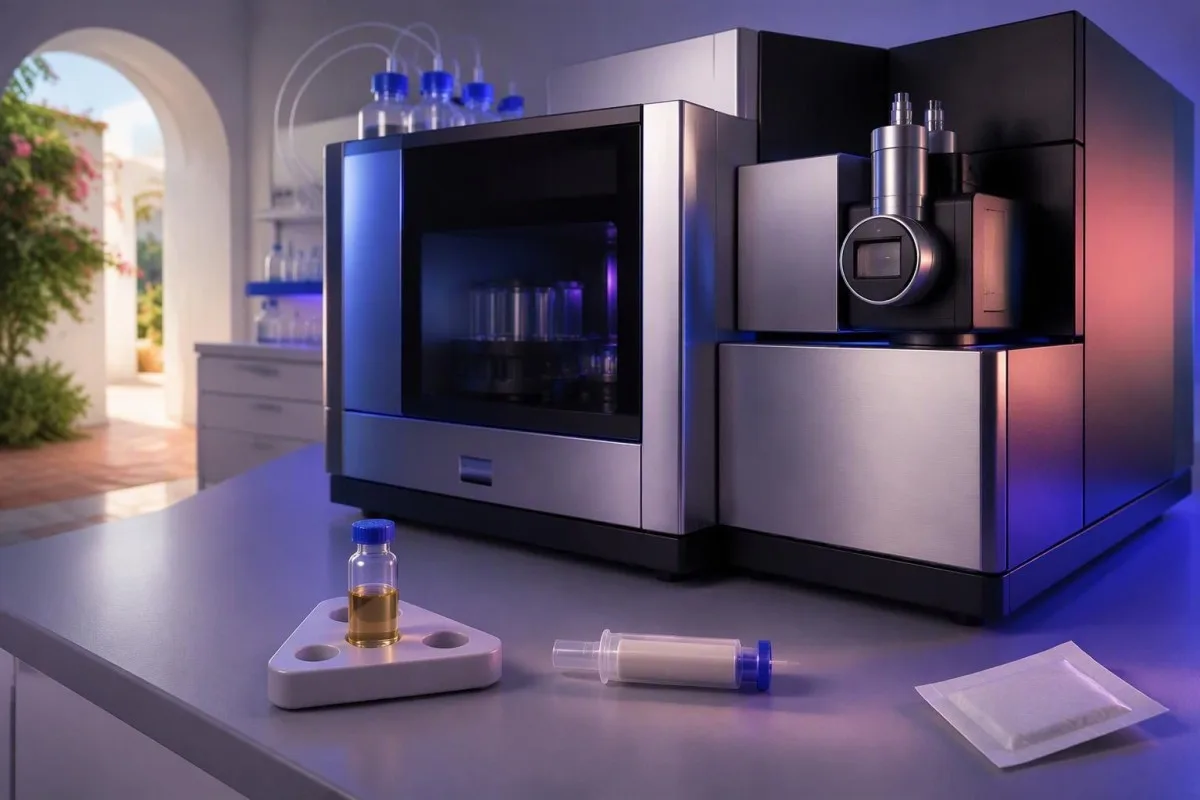
Serum, plasma and whole blood are not interchangeable report labels. Many published smoking-classification thresholds concern serum or plasma cotinine; a result should be interpreted using the laboratory’s validated specimen and method, rather than importing a cutoff from another matrix because both involve a blood collection.
A hypothetical report showing nicotine below detection but cotinine at 25 ng/mL is biologically plausible. Nicotine can disappear from the measurable range while its metabolite remains; this pattern does not establish that exposure occurred exactly 1, 2 or 3 days earlier.
Kantesti AI can help distinguish nicotine from cotinine on a report, including whether a value such as 25 ng/mL is compared with the correct laboratory limit. Our pandhuan interpretasi biomarker provides broader context, but a blood panel alone cannot identify every nicotine source.
Blood is less affected by immediate urine dilution, but that does not make it a universal source-verification test. Ask whether the order is intended to assess recent nicotine exposure, a tobacco-free policy or ongoing treatment; these are 3 different questions, and cotinine alone cannot answer all of them.
How does saliva cotinine testing compare?
Saliva cotinine generally tracks circulating cotinine and commonly detects exposure for approximately 2–4 days, although sensitive testing or slower clearance can extend this interval. Saliva collection is noninvasive, but the collection device, method and cutoff still determine whether a result is called positive.
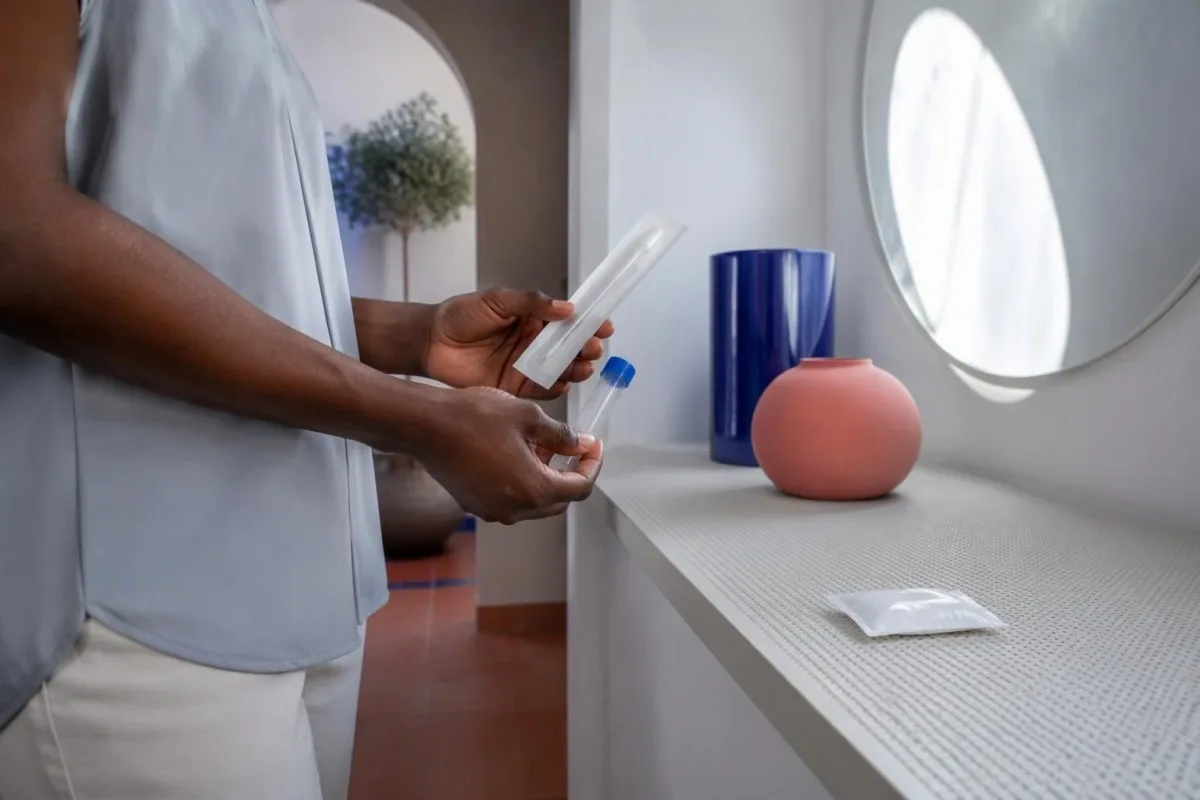
Saliva cotinine is often modestly higher than plasma cotinine, rather than matching it exactly. The pharmacokinetic review by Benowitz, Hukkanen and Jacob (2009) describes an average saliva-to-plasma relationship around 1.2, but this is a population observation—not a conversion formula for an individual report.
Collection instructions matter: stimulated saliva, collection pads and laboratory preparation can affect the recovered concentration. A 5 ng/mL result obtained with one device should not be treated as directly comparable with a 5 ng/mL result from a different method without checking the laboratory documentation.
A cotinine swab is not automatically a nicotine swab. Nicotine itself can be affected by very recent oral product use or contamination, whereas cotinine primarily reflects metabolism; ask exactly which analyte was measured before interpreting a specimen collected soon after nicotine gum, a pouch or vaping.
Different saliva tests answer different physiological questions. Our discussion of saliva versus urine testing concerns cortisol, not cotinine, but illustrates the same practical rule: specimen-specific thresholds and collection instructions must stay attached to the result.
Why do cotinine cutoffs change the answer?
A cotinine cutoff is a decision threshold, not a universal boundary between smoking and nonsmoking. Research-oriented thresholds may be approximately 3–10 ng/mL in serum or saliva lan 30–50 ng/mL in urine, while some qualitative urine screens use 200 ng/mL; laboratories and programs can choose different limits.
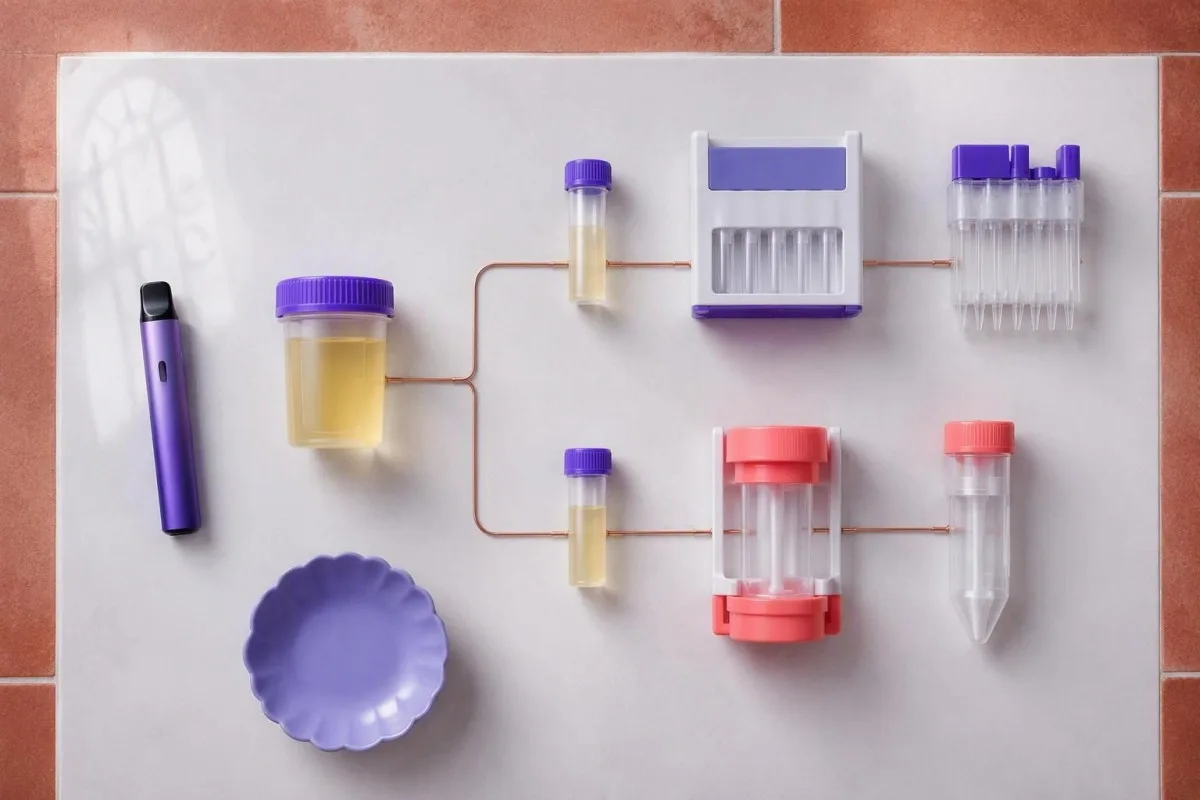
Lower cutoffs detect more low-level exposure but increase overlap with environmental exposure. Higher cutoffs reduce that overlap while missing some light or intermittent nicotine use; the threshold is selected around the intended classification task, not because cotinine becomes biologically harmful at that number.
In US population data from 1999–2004, the optimal overall serum cutoff for distinguishing self-reported cigarette smokers from nonsmokers was about 3 ng/mL, lower than older thresholds around 14–15 ng/mL (Benowitz et al., 2009). Population exposure patterns and statistical objectives help explain why one historical cutoff should not be imposed everywhere.
Consider a hypothetical serum cotinine result of 8 ng/mL: a 3 ng/mL rule classifies it positive, while a 10 ng/mL rule classifies it negative. Kantesti can explain that discrepancy, but neither label independently proves smoking; our asil sing ngluwihi wates separates laboratory flags from diagnoses.
Detection limit, quantification limit and positivity cutoff are separate concepts. A laboratory might detect cotinine below its program’s positive threshold, so “detected” and “positive” are not necessarily synonyms; request the numeric result and decision rule when a borderline classification has consequences.
| Tingkat | Rentang | Tegesé |
|---|---|---|
| Serum or saliva classification | Approximately 3–10 ng/mL | Examples discussed in biochemical-verification literature; not a universal normal range or smoking diagnosis. |
| Urine classification | Approximately 30–50 ng/mL | Examples of lower urine thresholds; specimen method and free versus total cotinine must be checked. |
| Higher-threshold urine screen | Example: 200 ng/mL | Used by some qualitative assays; a negative result can still contain measurable cotinine below this cutoff. |
| Hypothetical serum result | 8 ng/mL | Positive under a 3 ng/mL rule, negative under a 10 ng/mL rule; the concentration is unchanged. |
Can vaping or nicotine pouches cause a positive?
Vaping and nicotine pouches can produce a positive cotinine test whenever they deliver nicotine. Cotinine does not distinguish tobacco-derived nicotine from synthetic nicotine, and avoiding combustion does not prevent nicotine metabolism; a person who has never smoked cigarettes can therefore have a clearly positive result.
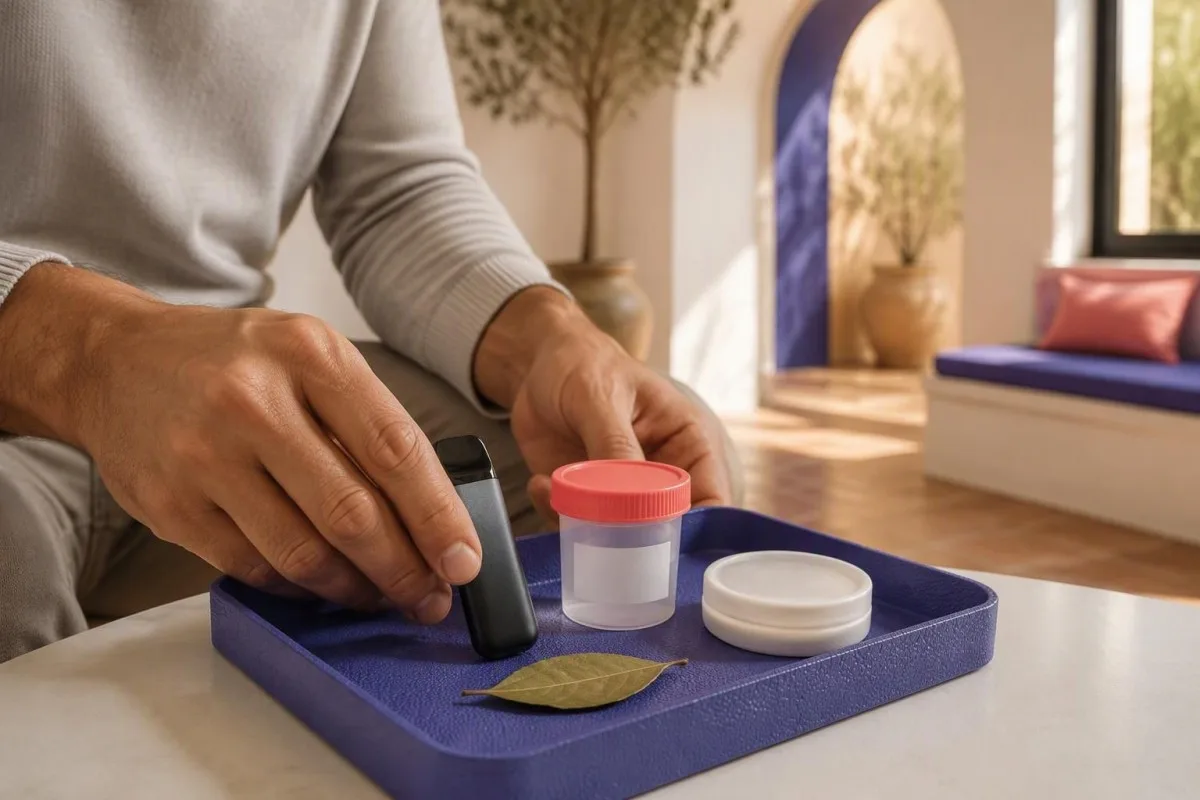
Product strength is not the same as absorbed dose. An e-liquid containing 20 mg/mL nicotine describes its concentration, not the amount reaching the bloodstream; device output, puff duration, nicotine formulation and frequency all affect exposure, making a concentration-to-cotinine prediction unreliable.
A hypothetical person who switches completely from cigarettes to vaping may retain similar cotinine concentrations if absorbed nicotine remains similar. That does not mean smoke exposure is unchanged: cotinine tracks nicotine, whereas carboxyhemoglobin and carbon monoxide concern combustion-related exposure and have their own limitations.
Synthetic nicotine produces ordinary cotinine after metabolism. The molecule’s manufacturing origin does not exempt it from a cotinine assay; similarly, a nicotine pouch labeled 6 mg contains a stated product dose, not proof that exactly 6 mg was absorbed or that a particular test level will follow.
A genuinely nicotine-free product should not create cotinine through nicotine metabolism. However, an unexpected positive requires checking all exposure sources and the product’s actual contents before declaring the laboratory wrong; residual exposure from another source can outlast the switch to a nicotine-free product.
Will nicotine patches, gum or lozenges test positive?
Nicotine replacement therapy can produce positive cotinine results even when cigarette abstinence is complete. A 21 mg/24-hour patch, 2 mg gum utawa 4 mg lozenge supplies nicotine that is metabolized to cotinine; these are genuine exposure results, not inherently false positives.
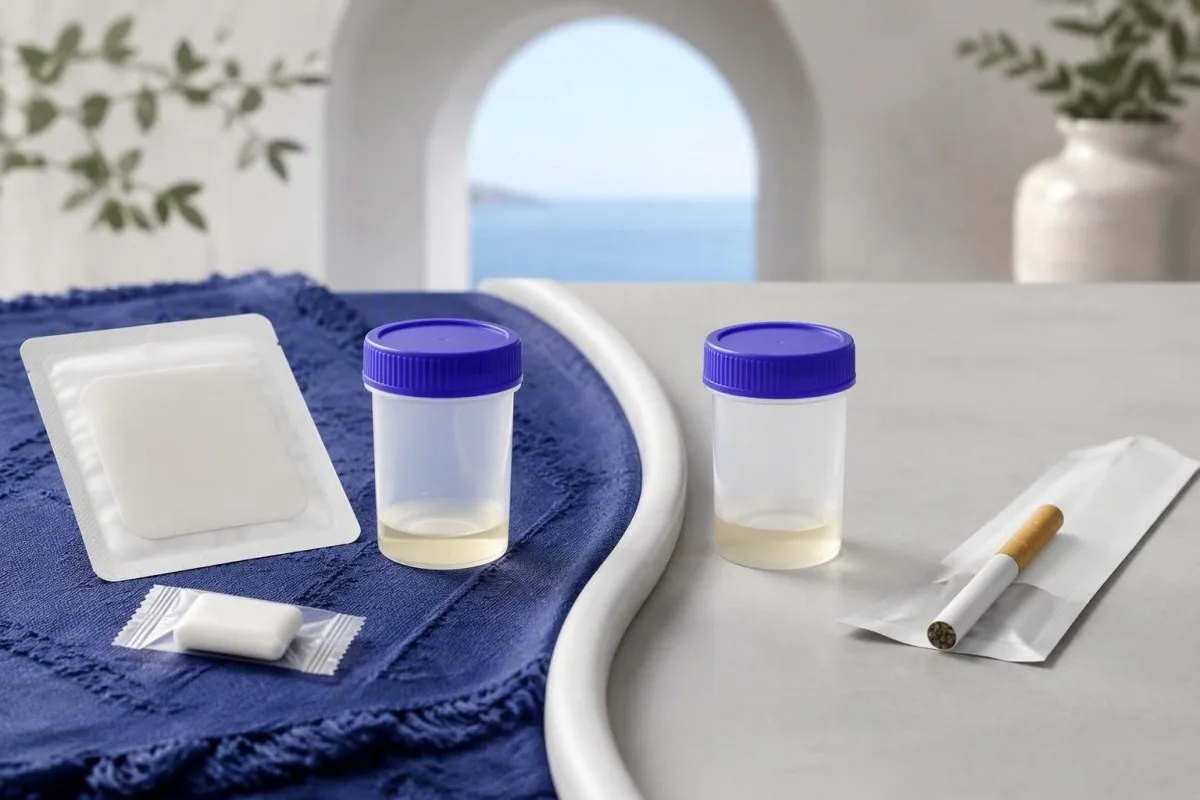
Continuous delivery changes the exposure pattern. A patch can maintain nicotine input across many hours, while gum or lozenges create repeated doses; combining a patch with a short-acting product can sustain cotinine throughout the day without any cigarettes being used.
For a hypothetical cessation plan using a 21 mg patch plus 2 mg gum, a positive urine cotinine result is unsurprising. The result should be assessed against whether the program requires tobacco abstinence or complete nicotine abstinence—two policies that can treat the same prescribed treatment differently.
Do not stop cessation medication solely to alter a screening result without speaking with the prescribing clinician or testing program. Our baseline test preparation guide explains why medication names, doses and collection times should be recorded rather than silently changed before testing.
Varenicline and bupropion do not contain nicotine, so they do not directly generate cotinine through nicotine metabolism. A positive result during either treatment still warrants review of patches, gum, vaping, pouches and environmental exposure; the medication name alone cannot establish the explanation.
Can secondhand smoke explain a low-positive result?
Secondhand tobacco smoke can produce measurable cotinine and sometimes a positive result when the cutoff is low. Passive exposure is generally lower than sustained active nicotine use, but concentrations overlap at the low end; one low-positive result cannot reliably separate passive exposure from occasional direct use.
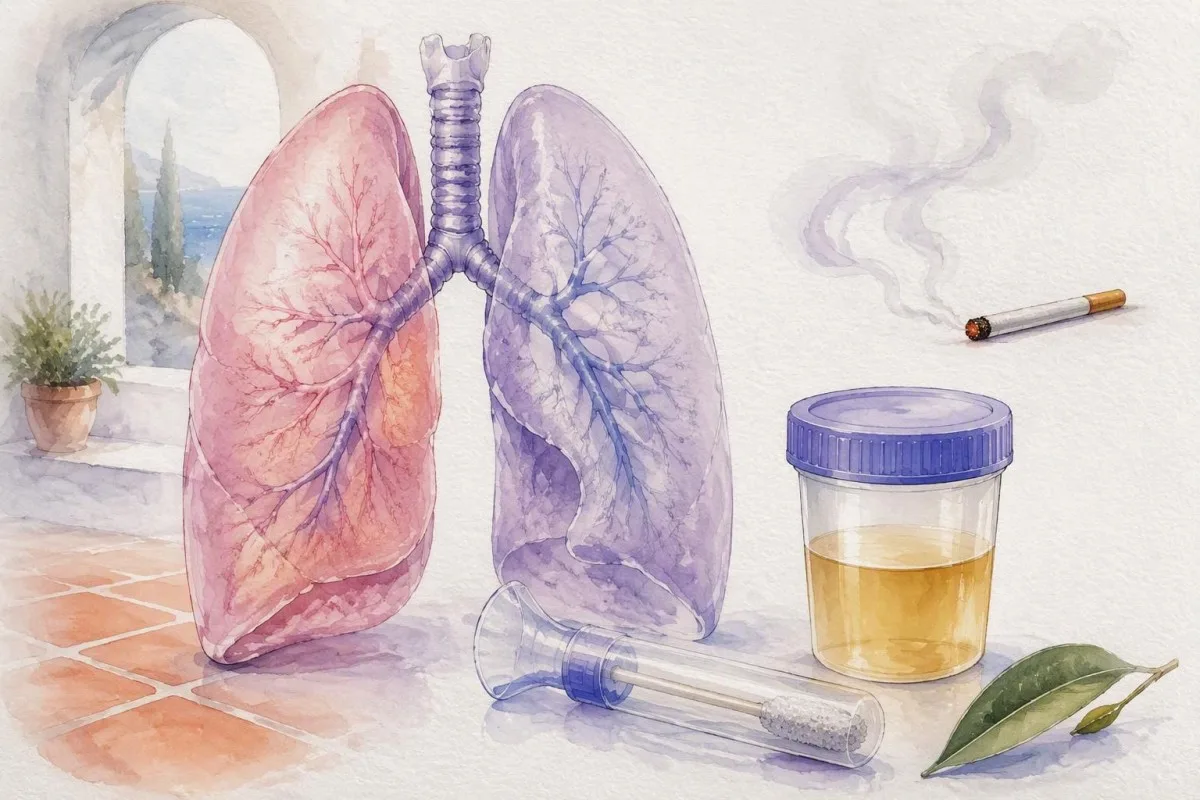
There is no universally valid secondhand-smoke ceiling. An exposure lasting 10 minutes outdoors is not comparable with repeated hours in an enclosed smoking environment; ventilation, proximity and repetition matter, so a single number cannot establish the source without an exposure history.
A hypothetical serum cotinine result of 4 ng/mL may be compatible with several explanations: substantial passive exposure, recent low-dose nicotine use or declining concentrations after cessation. It would exceed a 3 ng/mL cutoff, but that classification should not be relabeled as proof of cigarette smoking.
Children require exposure-focused interpretation, not adult smoking labels. A low detectable result in a child should prompt questions about smoke or aerosol in the home, vehicles and caregiving settings; our guide to watesan interpretasi AI bocah explains why pediatric context changes the follow-up.
Repeated measurements can clarify whether exposure is falling after an environmental change, but only when the specimen type and method remain comparable. The 2020 biochemical-verification review discusses overlapping nicotine sources and cutoffs; it supports contextual interpretation rather than assigning blame from a borderline concentration (Benowitz et al., 2020).
What makes cotinine clear faster or slower?
Exposure amount, repeated dosing, metabolic variation and organ function can all change cotinine persistence. Cotinine half-lives ranging from roughly 8 hours to more than 30 hours explain why two people who stop nicotine together may cross the same cutoff on different days.
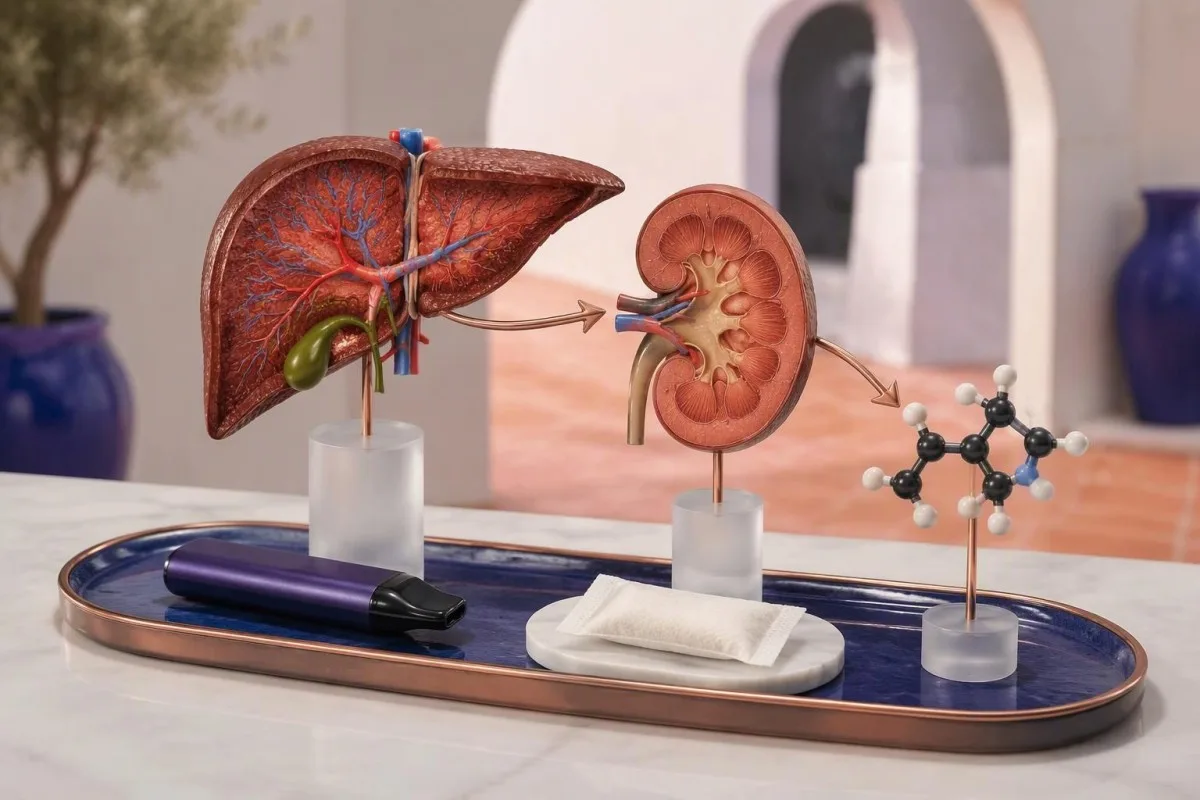
CYP2A6 activity affects nicotine and cotinine metabolism, but cotinine concentration reflects both formation and removal. Genetic differences therefore cannot be reduced to “slow metabolism always means a higher result”; nicotine intake, timing and the specific metabolic step also influence the observed value.
Pregnancy can accelerate nicotine and cotinine metabolism, while impaired kidney function can alter handling of nicotine-related compounds. Neither circumstance creates a reliable personal countdown from a standard 16-hour half-life; pregnancy exposure assessment and reduced kidney function require their own clinical context.
Routine liver enzymes do not measure cotinine clearance. A normal ALT or AST cannot establish that cotinine will disappear within 3 days, and an elevated enzyme does not predict its exact persistence; our singkatan tes ati explains what those measurements actually represent.
Body size, age and hormonal influences may contribute to variability, but precise claims such as “exercise removes cotinine twice as fast” lack a dependable clinical basis. Benowitz, Hukkanen and Jacob (2009) describe multiple pharmacokinetic influences; none supports calculating a guaranteed negative date from weight or a consumer metabolism estimate.
How are unexpected cotinine positives confirmed?
An unexpected cotinine screen can be reviewed with a quantitative, more specific method such as liquid chromatography–tandem mass spectrometry. Confirmation can establish the analyte concentration more reliably, but cotinine confirmation alone still cannot distinguish cigarettes from vaping, pouches or nicotine replacement.
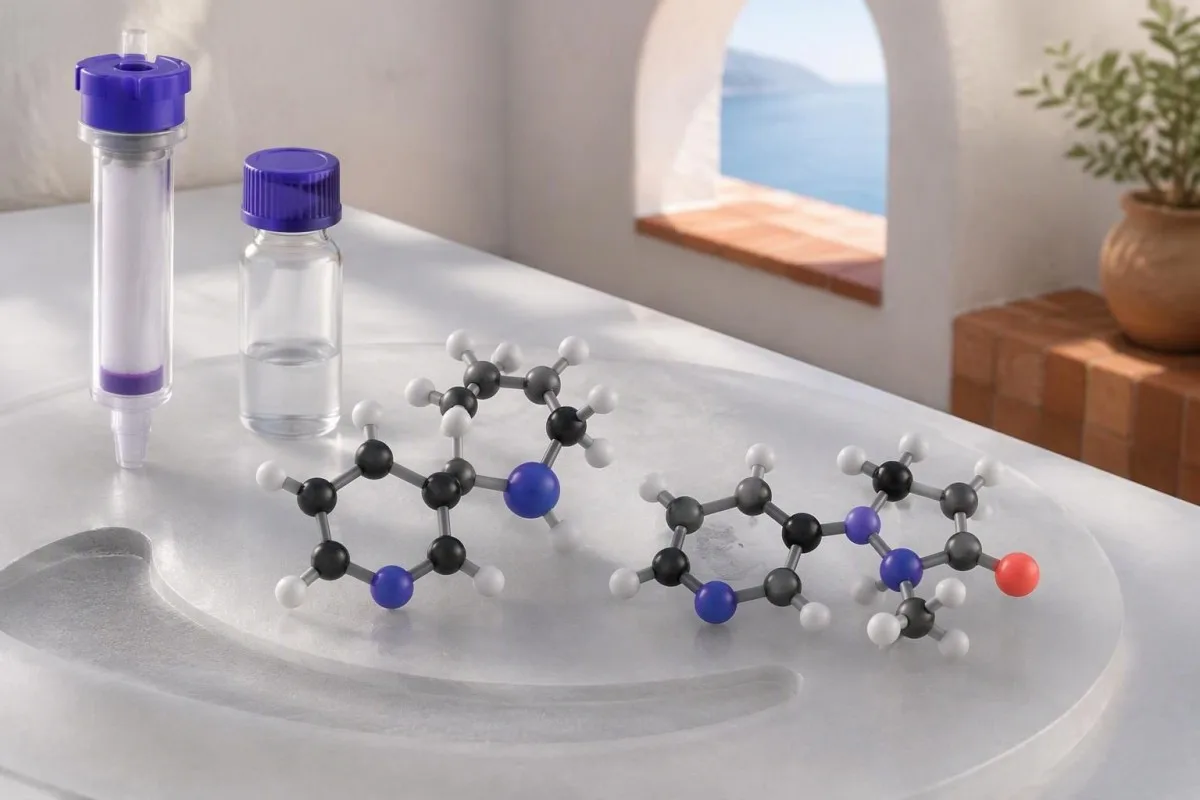
Screening immunoassays and mass-spectrometry methods have different specificity. Cross-reactivity and method-related disagreement are reasons to confirm a surprising screen—not reasons to assume every positive is false; our EtG cutoff interpretation guide explains this distinction for another exposure metabolite without implying identical detection windows.
Anabasine and anatabine are minor tobacco alkaloids sometimes used alongside cotinine to investigate tobacco exposure during nicotine replacement. Urinary thresholds around 2 ng/mL have been used in verification research, but these are supplementary markers with assay-specific interpretation rather than a universal smoking-confirmation rule.
Some tobacco-derived vaping liquids can contain minor alkaloids, whereas synthetic nicotine or highly purified products may not. Consequently, anabasine positivity does not invariably mean cigarette combustion, and anabasine negativity cannot exclude every nicotine product; the exposure question must be defined before ordering a larger panel (Benowitz et al., 2020).
Kantesti iku sawijining platform interpretasi hasil tes getih AI that can help explain a cotinine concentration alongside the method and cutoff printed on a report. Our kerangka validasi lan pengawasan describes interpretation standards; it should not be read as assay validation or a guarantee about an individual’s nicotine source.
How should you prepare for a cotinine retest?
Prepare by following the laboratory’s collection instructions and documenting every nicotine source, dose and last-use time. Normal hydration and consistent specimen methods improve interpretability, but no drink, supplement or fixed 3-dina abstinence interval can guarantee a negative cotinine result.
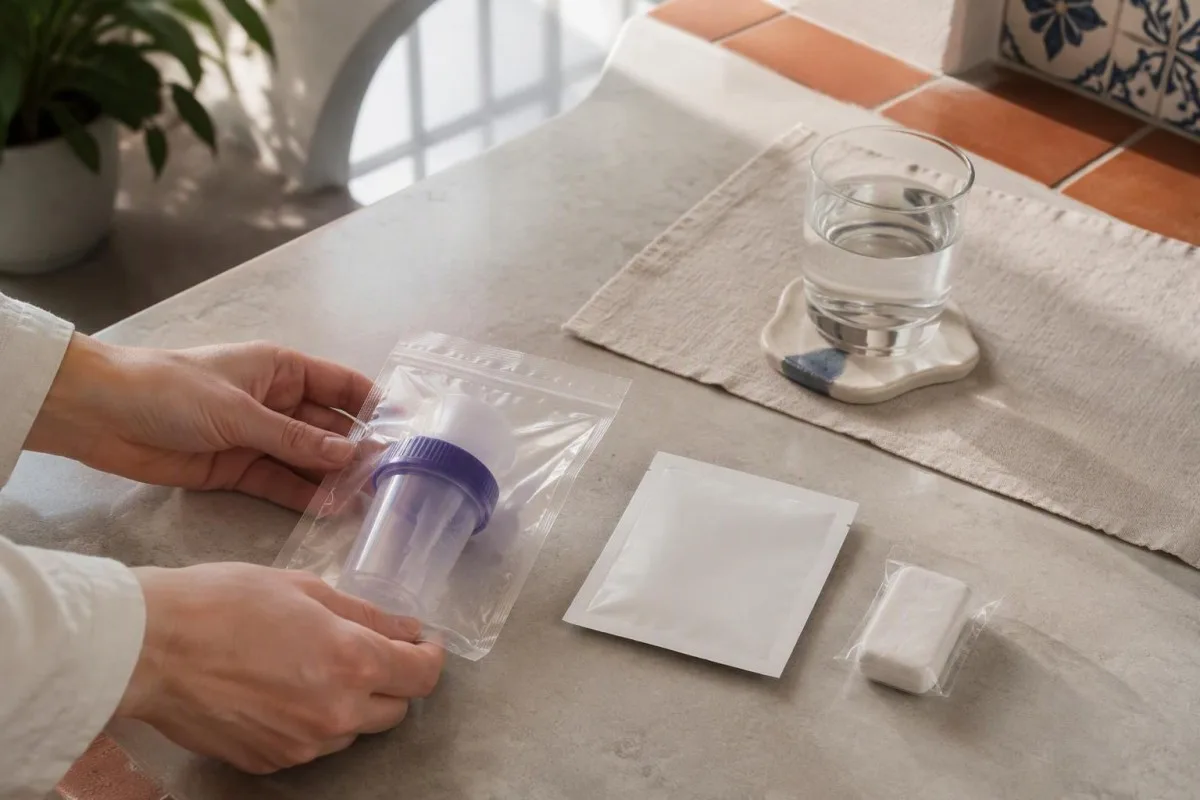
Record ongoing nicotine treatment rather than concealing it. A useful exposure list includes patch strength in mg per 24 hours, gum or lozenge strength in mg, pouch strength and vaping frequency; “I stopped smoking” is incomplete if nicotine input continues through another route.
Penurunan hipotetis saka 120 to 60 ng/mL could reflect reduced exposure, ordinary clearance or a more dilute urine specimen. Our guide to owah-owahan antarane tes getih explains why biological and analytical variation must be considered before treating any two-point trend as a precise dose estimate.
Excess water can dilute urine without speeding cotinine metabolism and may lead to an invalid or rejected specimen under the program’s rules. Detox teas, high-dose supplements and strenuous exercise do not provide a validated negative-test timetable; excessive water intake can also create avoidable health risks.
If retesting is clinically appropriate, ask whether the same laboratory, specimen and free-versus-total cotinine method will be used. A 50 ng/mL urine cutoff and a 10 ng/mL serum cutoff answer different threshold questions; switching methods can change the label without demonstrating a new nicotine exposure.
What if the result affects surgery or insurance?
A cotinine result used for surgery, insurance or an employment-related program must be interpreted against that program’s written rules. A nicotine-free requirement differs from a tobacco-free requirement, and a positive result from a 21 mg patch may be handled differently depending on the purpose of testing.
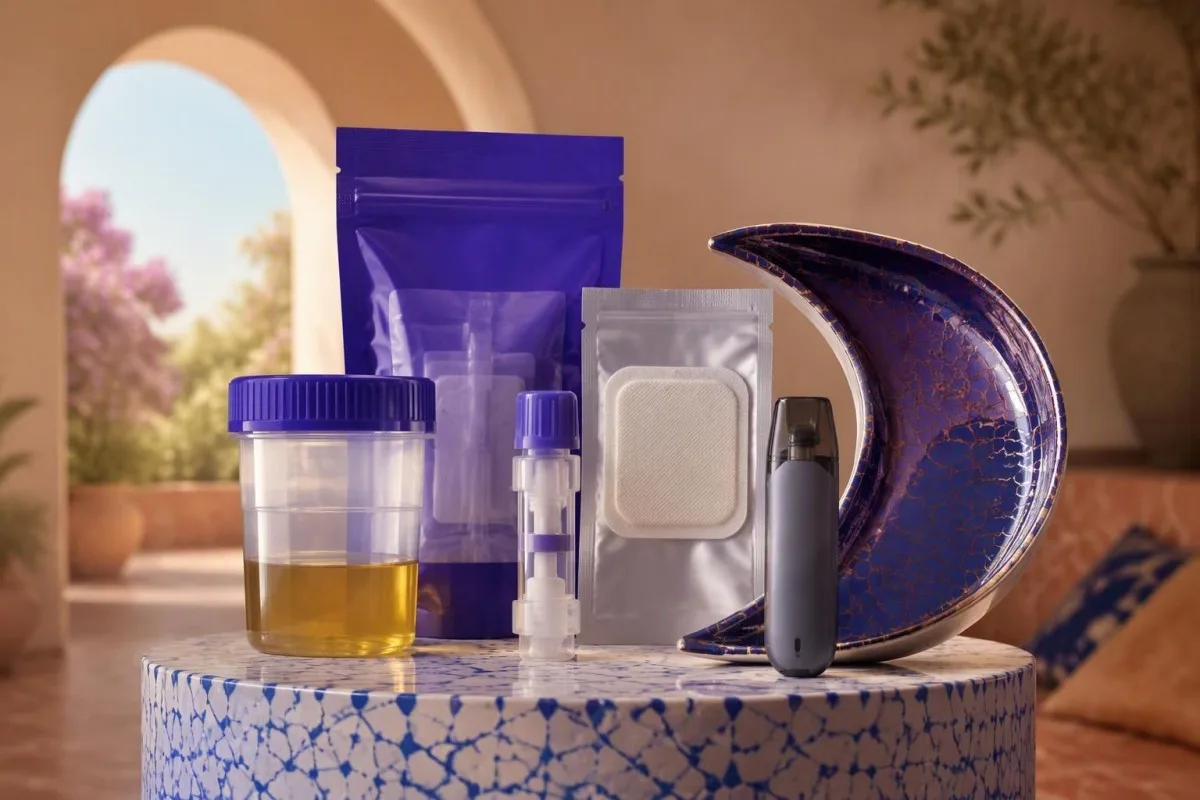
Cotinine is not a direct measure of healing, anesthesia safety or complication probability. Surgical programs may use it as an exposure-verification tool, but the measured concentration cannot by itself quantify an individual’s operative risk; ask how prescribed nicotine replacement is treated before making medication changes.
A preoperative cotinine screen also answers a different question from an anesthesia-related enzyme assessment. Our guide to tes enzim anestesi explains that separate issue; the presence of several preoperative tests does not make their interpretation or risk thresholds interchangeable.
When a result is disputed, request the analyte, numeric concentration, specimen, cutoff, method and available confirmation pathway. Those 6 details are more useful than a generic statement that nicotine clears “in a few days,” particularly when a qualitative screen supplies no concentration or uncertainty information.
Kantesti cannot certify abstinence or override a program’s eligibility decision. Before sharing a nicotine-related report, review our dhaptar priksa privasi unggah asil and the recipient’s requirements; an AI-generated explanation does not replace chain-of-custody documentation or formal laboratory confirmation.
Research context and practical cotinine follow-up
The safest next step is to interpret cotinine with its specimen, cutoff, method and complete nicotine history—not an assumed negative-test deadline. Asil saka 8 ng/mL can cross one laboratory threshold but not another, so the report’s decision rule should come before any conclusion about smoking.
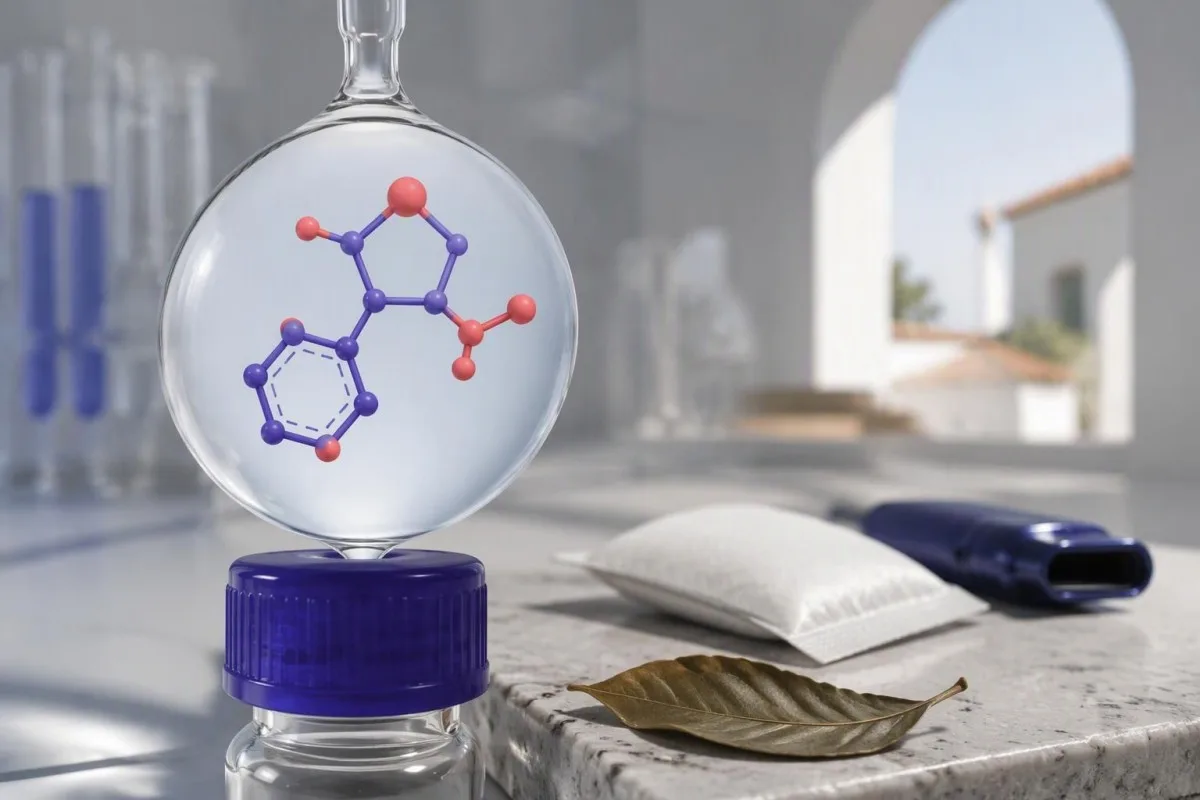
The main cotinine evidence comes from pharmacokinetic and biochemical-verification research. Benowitz, Hukkanen and Jacob (2009) explain metabolism, while Benowitz et al. (2020) discuss specimen-specific cutoffs and alternative biomarkers; these sources support an approximate 16-hour average half-life, not a personalized guarantee.
Kantesti iku sawijining platform interpretasi biomarker AI that can help turn laboratory wording into questions for the ordering clinician. Our responsible AI guidance explains the boundary: an AI interpretation should not label a person a smoker from one borderline result or independently decide whether treatment should stop.
The two Zenodo publications listed below concern urinalysis and iron studies, not cotinine clearance. Our related iron panel interpretation resource is provided as separate educational context; neither DOI should be cited as evidence for nicotine detection windows or smoking-classification thresholds.
A positive cotinine result alone is usually not an emergency, but suspected nicotine poisoning should be assessed on symptoms rather than waiting for a cotinine number. After a recent exposure, repeated vomiting, marked dizziness, confusion, breathing difficulty or collapse require urgent help; cotinine testing cannot replace immediate clinical assessment.
Pitakon sing kerep ditakoni
Suwene kotinin tetep ana ing cipratan sawisé mandheg?
Kotinin biasane isih bisa dideteksi ing urin watara 3–7 dina sawisé paparan nikotin mandheg, nanging tes sing sensitif lan panggunaan sing terus-terusan bisa ndadèkaké deteksi luwih saka seminggu. Konsentrasi wiwitan, ambang wates, cara ngukur kotinin bebas utawa total, lan pengenceran urin kabèh mengaruhi asilé. Terus nggunakake plester nikotin, permen karet, vape utawa kantong nikotin nambah pasokan nikotin anyar lan ndadèkaké garis wektu kasebut ora nggambaraké mandheg nikotin sakabèhé. Ora ana suwé pantang sing tetep sing njamin asil tes urin negatif.
0 Apa asil tes kotinin sing positif ateges aku ngrokok rokok?
0 Tes kotinin sing positif nuduhake paparan nikotin ngluwihi ambang wates tes, ora mesthi amarga ngrokok rokok. Plester nikotin 21 mg/24 jam, permen karet nikotin, vaping utawa kantong nikotin kabeh bisa ngasilake kotinin tanpa rokok. Kumelun rokok saka wong liya uga bisa nyebabake kadar sing bisa diukur, utamane ing ambang wates sing endhek kayata 3 ng/mL ing serum. Ngenali sumberé mbutuhake riwayat paparan lan, yen cocog, tes tambahan.
Suwene nikotin utawa kotinin bisa dideteksi ing getih?
Nikotin nduwé wektu paruh rata-rata watara 2 jam, déné kotinin rata-rata udakara 16 jam. Kotinin ing getih lumrahe isih bisa dideteksi watara 2–4 dina sawisé paparan mandheg, sanajan ambang wates sing endhek, konsentrasi awal sing dhuwur utawa metabolisme sing luwih alon bisa ndawakake deteksi nganti meh seminggu utawa luwih. Tes nikotin ing getih bisa ngukur nikotin, kotinin utawa loro-loroné, mula jeneng analit iku penting. Perkiraan iki ora njamin suwéné wektu nganti asil tes dadi negatif.
Apa kumelun rokok wong liya bisa ndadèkaké asil tes kotinin positif?
Kumelun rokok saka wong liya bisa ngasilake kotinin sing bisa diukur lan bisa nyebabake asil positif nalika laboratorium nggunakake ambang wates sing endhek. Asil serum hipotesis 4 ng/mL ngluwihi ambang 3 ng/mL, nanging ora kanthi mandiri mbuktekake kebiasaan ngrokok aktif. Paparan bola-bali ing papan katutup beda banget karo paparan sedhela ing njaba ruangan, lan konsentrasi endhek bisa tumpang tindih karo panggunaan nikotin langsung sing sok-sokan. Sampel, ambang wates lan riwayat paparan kudu ditinjau bebarengan.
Apa plester utawa permen karet nikotin bakal nyebabake asil positif palsu ing tes kotinin?
Plester nikotin lan permen karet nikotin bisa nyebabake asil kotinin positif sing nyata amarga ngemot nikotin sing dimetabolisme dening awak. Plester 21 mg utawa permen karet 2 mg bisa njaga kadar kotinin tetep bisa dideteksi sanajan ora ngrokok rokok babar pisan. Iki dudu kesalahan uji kanthi sendirine; bisa uga nuduhake ora cocoge aturan tes bebas nikotin lan bebas tembakau. Aja mandhegake perawatan kanggo mandheg ngrokok sing diresepake mung kanggo ngowahi asil tanpa ngrembug syarat tes karo klinisi.
0 Ngombe banyu bisa mbantu aku lulus tes kotinin?
Drinking extra water can dilute urinary cotinine concentration, but it does not reliably accelerate nicotine metabolism or guarantee a negative test. A dilute specimen may cross a 50 ng/mL cutoff while still containing cotinine, and some programs may reject it based on specimen-validity measures. Normal hydration and honest documentation of nicotine exposure produce more interpretable results. Excessive water intake and detox products are not safe or validated negative-test strategies.
Entuk penjelasan babagan asil tes getih sampeyan
Unggah laporan laboratorium sampeyan lan AI Kantesti bakal nerangake saben biomarker nganggo basa sing prasaja sajrone sawetara detik. Digunakake luwih saka 2 yuta wong ing saindenging donya.
Referensi
- Klein, T., Mitchell, S., & Weber, H. (2026). Tes Urobilinogen ing Urine: Pituduh Urinalisis Lengkap 2026. Riset Medis AI Kantesti. DOI
- Klein, T., Mitchell, S., & Weber, H. (2026). Iron Studies Guide: TIBC, Iron Saturation & Binding Capacity. Riset Medis AI Kantesti. DOI
- Benowitz NL et al. (2020). Biochemical Verification of Tobacco Use and Abstinence: 2019 Update. Nicotine & Tobacco Research. DOI PubMed
- Benowitz NL, Hukkanen J, Jacob P 3rd (2009). Nicotine Chemistry, Metabolism, Kinetics and Biomarkers. Handbook of Experimental Pharmacology. DOI PubMed
- Benowitz NL et al. (2009). Optimal Serum Cotinine Levels for Distinguishing Cigarette Smokers and Nonsmokers Within Different Racial/Ethnic Groups in the United States Between 1999 and 2004. American Journal of Epidemiology. DOI PubMed
- 2M+Tes sing dianalisis
- 127+negara-negara
- 100+Basa
Babagan tim medis


Sinyal Kepercayaan E-E-A-T
Pengalaman
Tinjauan klinis sing dipimpin dokter babagan alur kerja interpretasi lab.
Keahlian
Fokus kedokteran laboratorium babagan carane biomarker tumindak ing konteks klinis.
Kewibawaan
Ditinjau sacara medis dening Dr. Thomas Klein, kanthi kontribusi saka Dr. Sarah Mitchell lan Prof. Dr. Hans Weber.
Kapercayan
Interpretasi adhedhasar bukti kanthi tindak lanjut sing cetha kanggo nyuda rasa kaget.
Sanggahan medis
Artikel iki mung kanggo tujuan edukasi lan ora dadi saran medis. Tansah konsultasi karo panyedhiya layanan kesehatan sing mumpuni kanggo keputusan diagnosis lan perawatan.
Diterbitake · Hubungi tim editorial
Diterbitake dening Kantesti Ltd, kadhaptar ing Inggris & Wales, nomer perusahaan. 17090423, London, Britania Raya.
