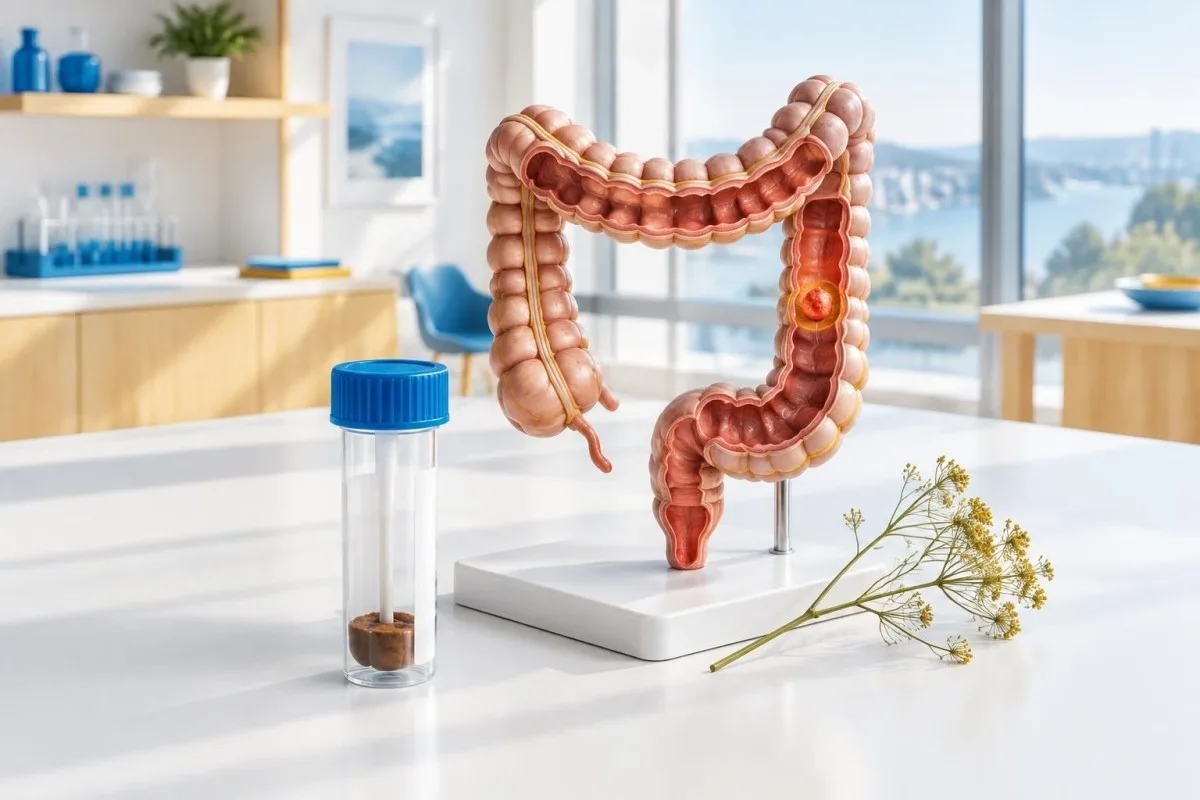
A positive result is a screening signal, not a cancer diagnosis. The next step is usually a colonoscopy that can inspect the colon and remove or sample abnormalities.

要点
- Positive means follow-up is needed: A stool DNA test detects signals associated with colorectal cancer or precancerous growths; it does not diagnose either condition.
- Colonoscopy is the usual next test: It examines the colon directly and allows a clinician to remove suitable polyps or take tissue samples during the same procedure.
- A positive result is not a cancer probability: In the pivotal study, multitarget stool DNA sensitivity for colorectal cancer was 92.3%, but specificity among people without advanced neoplasia was 86.6%.
- A negative repeat does not cancel the first result: Stool-test signals can vary between samples, and repeating the test cannot reliably rule out the source of the original positive result.
- Screening follow-up differs from urgent care: Arrange colonoscopy promptly through the referring clinician; seek urgent assessment for severe ongoing bleeding, fainting, or severe abdominal pain.
- Bring useful records: Share the original report, medications, allergies, prior colonoscopy reports, and family history; ask the endoscopy team which medicines need individualized instructions.
- Preparation is individualized: Bowel-cleansing instructions and medication changes depend on the person and the procedure plan, so follow the endoscopy unit's written directions rather than a generic online schedule.
What a Positive Stool DNA Screening Result Means
A positive stool DNA test means the sample met the laboratory's threshold for one or more DNA markers and/or blood-related signals associated with colorectal neoplasia. It raises the need for diagnostic follow-up; it does not show where a growth is, whether one is present, or whether it is cancer.
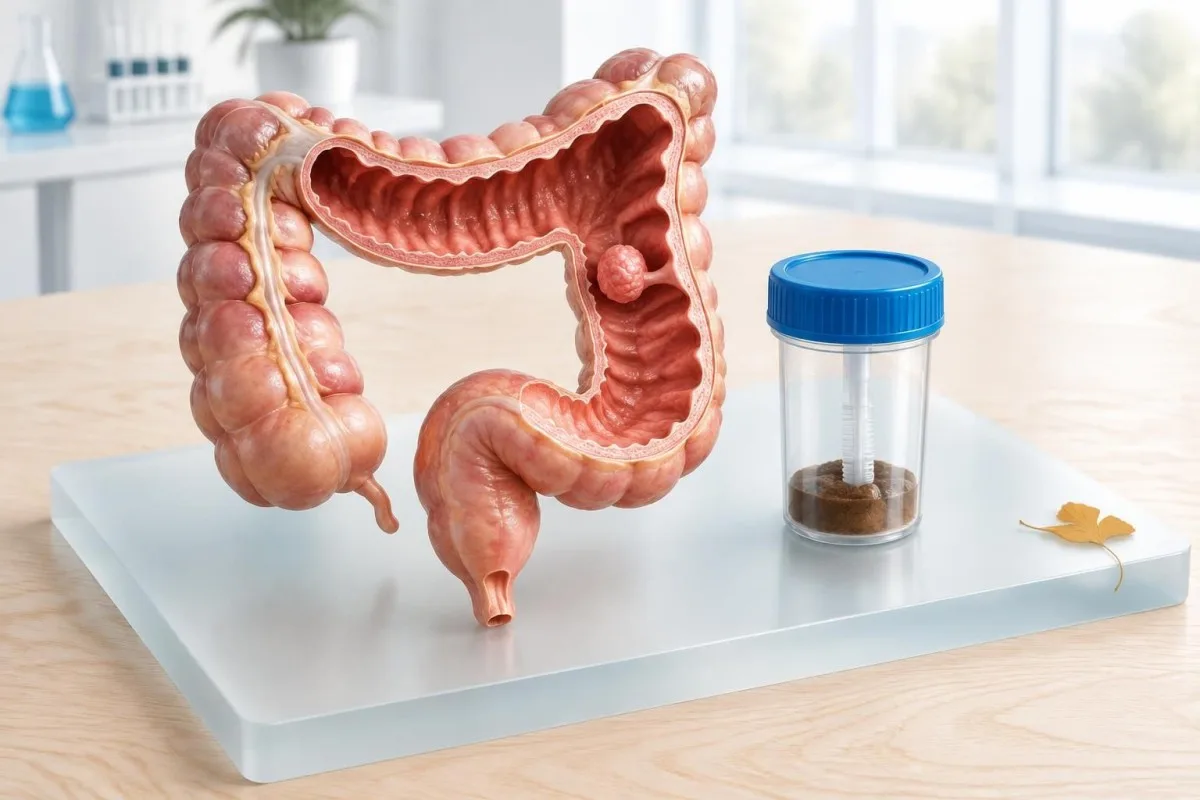
Multitarget stool DNA screening, often combined with a fecal blood test, is designed to find people who should receive further evaluation. In the pivotal study by Imperiale et al. in the New England Journal of Medicine, sensitivity for colorectal cancer was 92.3%, while sensitivity for advanced precancerous lesions was 42.4%; these are test-performance estimates, not an individual's chance of having cancer. A positive result is therefore a screening flag, not a diagnosis.
The test detects signals shed into stool; it does not identify the exact location or explain why those signals appeared. A positive result can occur with colorectal cancer, an advanced polyp, or without advanced neoplasia on colonoscopy. The 2014 study reported 86.6% specificity among participants without advanced neoplasia, meaning false-positive classifications occur, especially when screening a population in which most people do not have advanced disease.
For example, imagine a healthy 58-year-old with no bowel symptoms receives a positive result during routine screening. That result does not mean cancer is likely or confirmed; it means the screening pathway is incomplete until colonoscopy checks the colon. A person with symptoms such as persistent blood in stool needs clinical assessment for those symptoms too, whether the screening result is positive or negative; see our guide to 便中の血液.
The test does not locate a growth
A stool DNA report cannot say whether a signal came from the right colon, left colon, rectum, or a non-cancerous source. Colonoscopy provides that anatomical information, and removal or tissue examination can establish what a visible abnormality is. A normal-looking result on a repeat stool test does not provide equivalent information.
The result is also not a measurement of tumor size, stage, or spread. Those questions require other diagnostic steps if a clinician finds a cancer; the stool test itself cannot answer them.
Why Colonoscopy Is the Usual Follow-Up
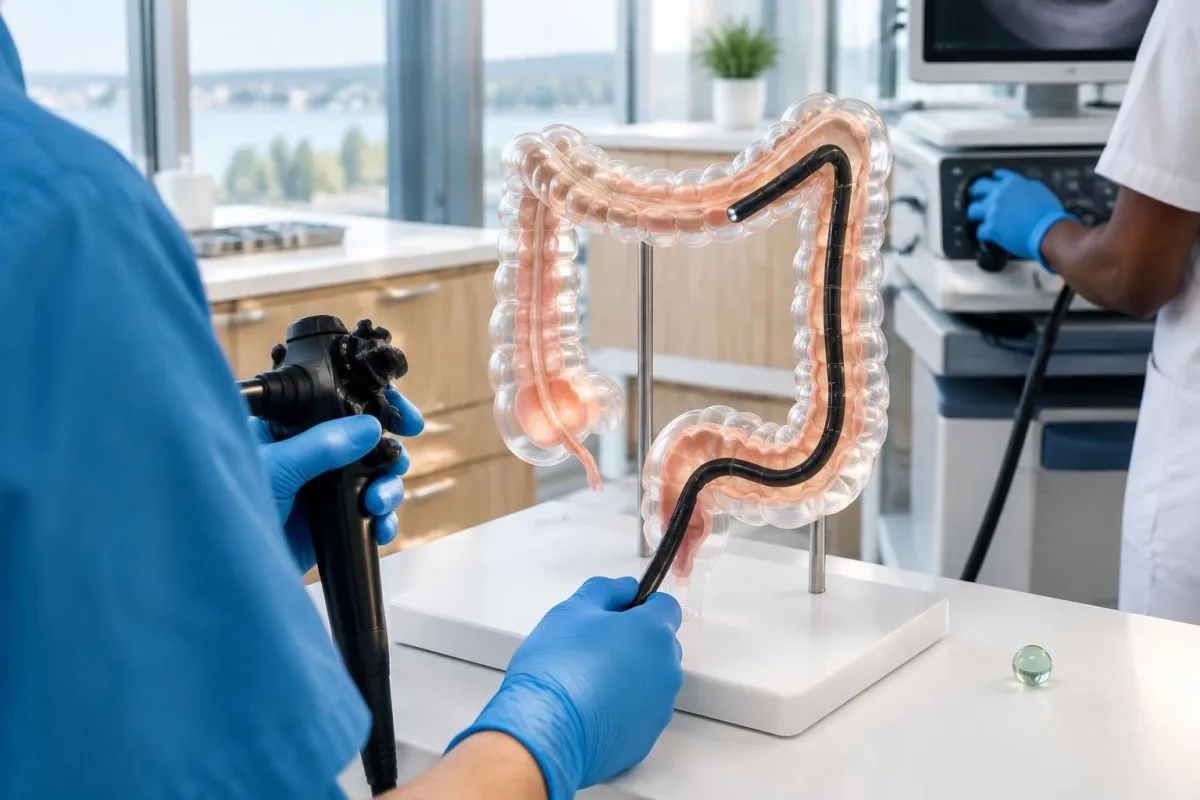
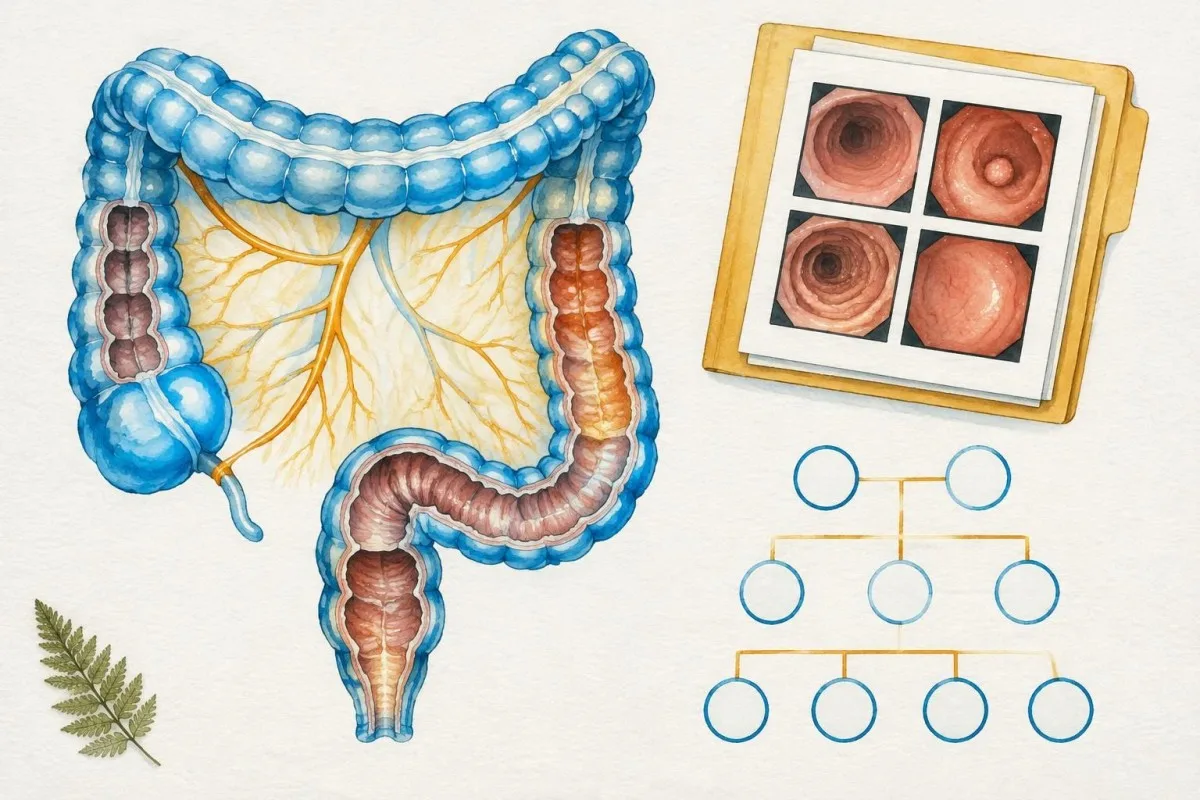
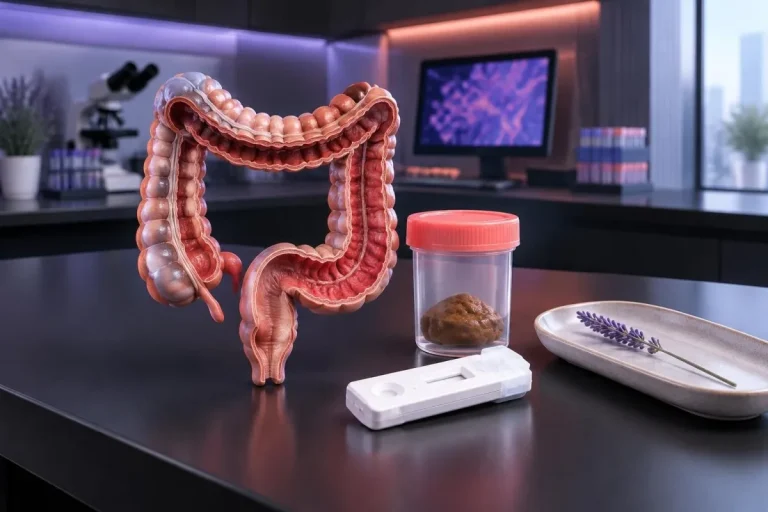
After a positive stool DNA screening result, colonoscopy is the usual follow-up because it can examine the colon directly and, when appropriate, remove polyps or collect tissue in the same procedure. A second stool test cannot provide that visual examination or treatment.
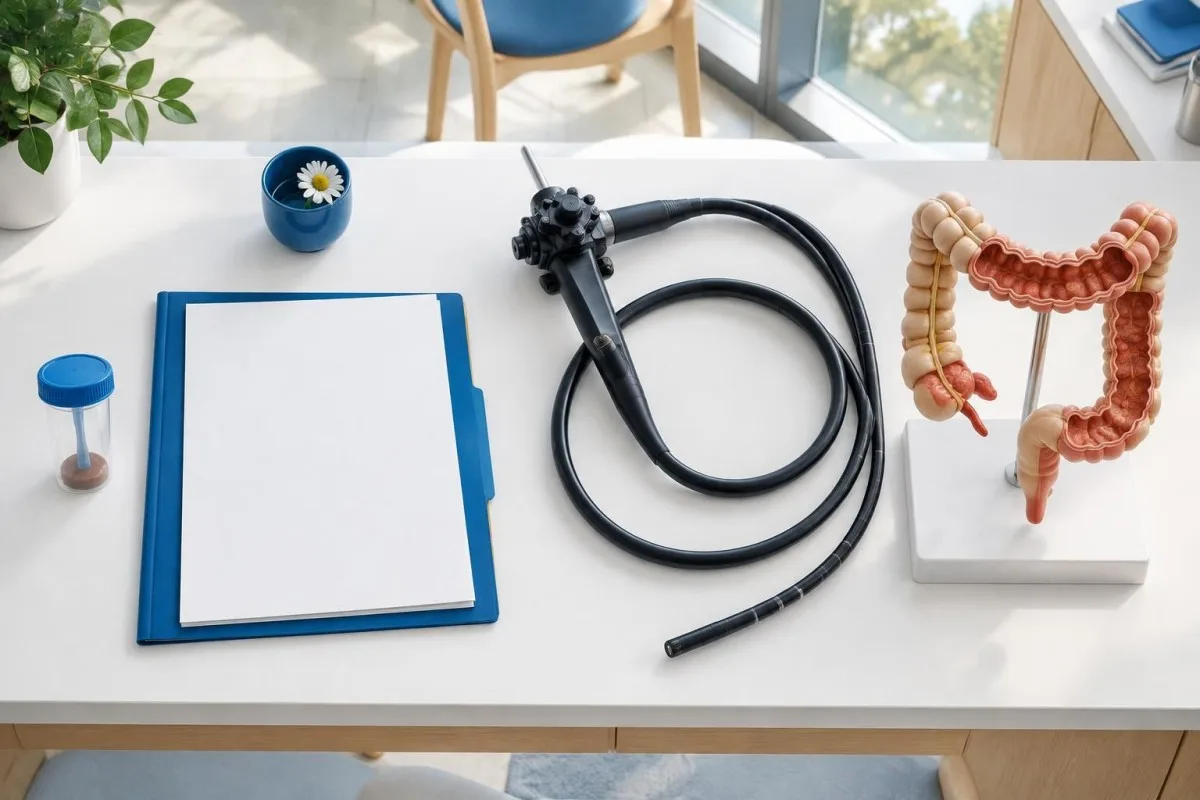
The US Preventive Services Task Force's 2021 colorectal cancer screening recommendation states that a positive result from a stool-based screening test requires follow-up colonoscopy for the screening benefit to be achieved. The colonoscope is a flexible instrument with a camera; the clinician inspects the colon lining and may remove suitable polyps or take a tissue sample. That makes colonoscopy both a diagnostic examination and, sometimes, a treatment step.
In Imperiale et al.'s 2014 comparison, multitarget stool DNA detected more colorectal cancers and advanced precancerous lesions than FIT in that study population, but it also produced more false-positive results. This is a trade-off in screening-test design: a test that detects more lesions can also prompt more colonoscopies in people whose examination shows no advanced neoplasia. The colonoscopy determines what the screening signal means for that individual.
A normal colonoscopy after a positive result is a meaningful outcome, not proof that the stool test was useless. It can rule out visible abnormalities requiring action at that examination, while the clinician uses the quality of bowel preparation, completeness of the exam, and prior findings to recommend a future screening interval. The US Multi-Society Task Force's 2017 consensus guidance addresses follow-up after positive non-colonoscopy screening tests; the practical point is to complete the diagnostic pathway rather than restart screening.
What the colonoscopy may find
Possible findings include no abnormality, a non-advanced polyp, an advanced precancerous lesion, or colorectal cancer. A polyp's appearance alone may not determine its exact type, so a removed polyp may be sent for laboratory examination. The final follow-up plan depends on that finding and on whether the examination reached and adequately viewed the whole colon.
If the colonoscopy is incomplete because of preparation or technical difficulty, the team may recommend another examination or a different completion test. Ask whether the report states that the cecum was reached and whether preparation was adequate; those details affect how confidently a negative examination can be interpreted.
Why Repeating the Stool Test Is Not a Substitute
Repeating a positive stool DNA test is not a substitute for colonoscopy because a later negative sample cannot reliably overturn the original signal or inspect the colon. Screening tests are designed to identify who needs diagnostic evaluation, not to confirm one another through serial retesting.
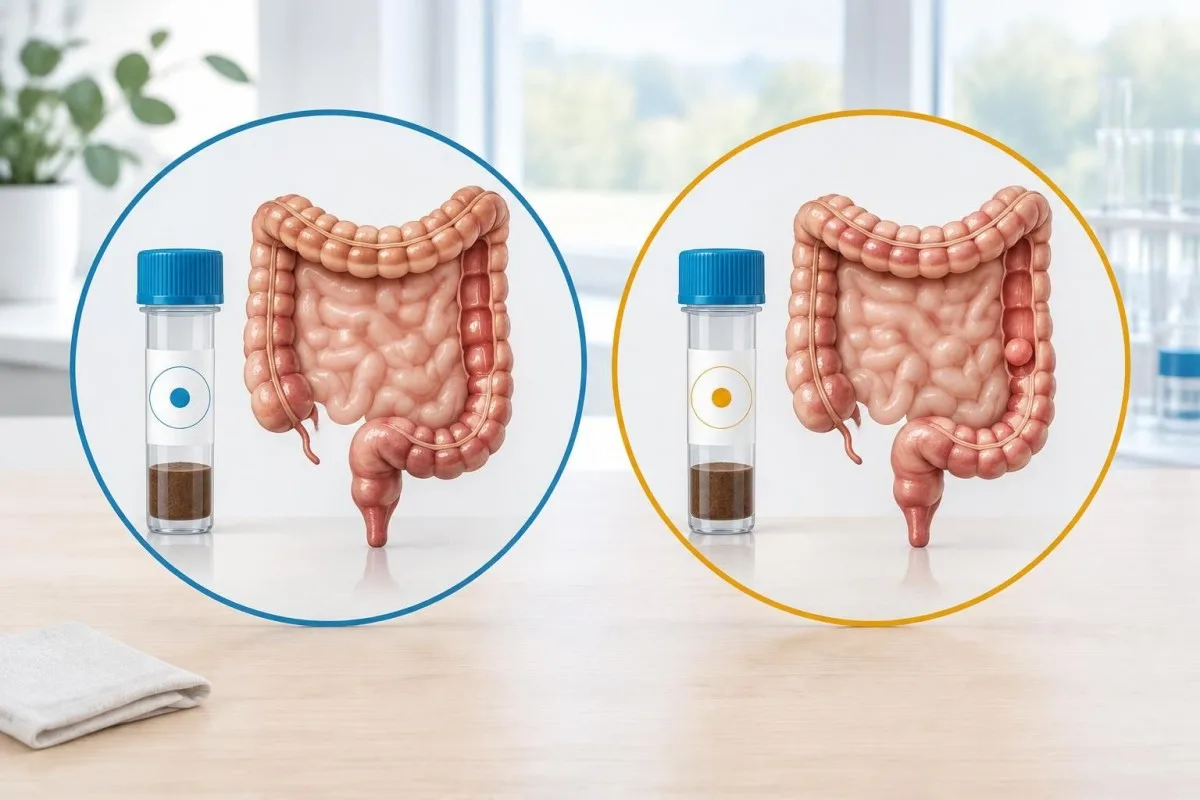
Signals in stool can vary from one bowel movement to another. A polyp or cancer may shed DNA or blood intermittently, so a second sample may not contain the same detectable material as the first. A negative repeat can therefore create false reassurance without resolving why the original test crossed its positive threshold.
This is a different situation from repeating a test after a documented collection or laboratory error. If the report says the specimen was invalid, the clinician or laboratory may advise a replacement sample; if the result is valid and positive, the usual next step is colonoscopy. Ask the ordering clinician to clarify whether the report says 陽性, invalid, 、 または unsatisfactory, since those terms lead to different actions.
A hypothetical example: a 62-year-old gets a positive multitarget stool DNA result, then repeats the kit and gets a negative result. The second result does not establish that the first was false; it may simply reflect variation in what was shed into each sample. The appropriate action is to discuss diagnostic colonoscopy, not to use the negative repeat as clearance.
Do not confuse screening with symptom testing
A person with persistent bowel changes, unexplained weight loss, iron-deficiency anemia, or visible bleeding needs an assessment based on symptoms and risk factors, not just a repeat screening kit. A screening stool DNA test is not designed to diagnose every cause of these symptoms, including inflammatory bowel disease or infection. Our overview of stool testing for IBD explains why different stool tests answer different clinical questions.
Likewise, a negative stool DNA result does not rule out colorectal cancer in someone with concerning symptoms. Screening is intended for people without symptoms who meet local eligibility guidance; symptoms may move care into a diagnostic pathway.
False Positives, Accuracy, and What the Numbers Mean
A false-positive stool DNA result means the test is positive but colonoscopy does not find the advanced neoplasia the screening test is designed to detect. False positives are expected in screening and do not necessarily mean the laboratory made an error or that a hidden cancer is present.
In the 2014 Imperiale et al. study, multitarget stool DNA sensitivity for colorectal cancer was 92.3%, and specificity among people without advanced neoplasia was 86.6%. Sensitivity describes the proportion of people with a target condition who test positive; specificity describes the proportion without that condition who test negative. Neither number directly gives the probability that a particular person with a positive result has cancer.
Positive predictive value changes with the prevalence of disease in the screened population, age, prior screening, and other risk factors. For that reason, it would be misleading to convert the 92.3% sensitivity figure into a statement such as “you have a 92.3% chance of cancer.” The study also found a 42.4% sensitivity for advanced precancerous lesions, showing that performance differs by target condition.
The false-positive label is usually known only after diagnostic follow-up shows no relevant advanced neoplasia. A positive result may still have led to identification of a non-advanced polyp or another finding that informs future care. Our related explanation of FIT-positive follow-up covers a different stool-based test; its result should also be followed by colonoscopy rather than another screening test.
Why a positive result does not mean cancer
A screening test is built to sort people into those who need further evaluation and those who can continue routine screening, not to establish a diagnosis. The proportion of positive results that lead to cancer depends on the population tested and the mix of cancers, advanced polyps, and people without advanced disease. This is why the test manufacturer’s performance statistics cannot replace the individual's colonoscopy report.
If colonoscopy finds no advanced lesion, the clinician may review examination quality and whether another explanation or follow-up is needed. Additional upper gastrointestinal tests are not automatically required solely because stool DNA was positive and colonoscopy was negative; the decision depends on symptoms, anemia, examination quality, and clinical context. The 2017 US Multi-Society Task Force guidance is one reference point for this follow-up question.
Booking the Procedure and Choosing the Right Timing
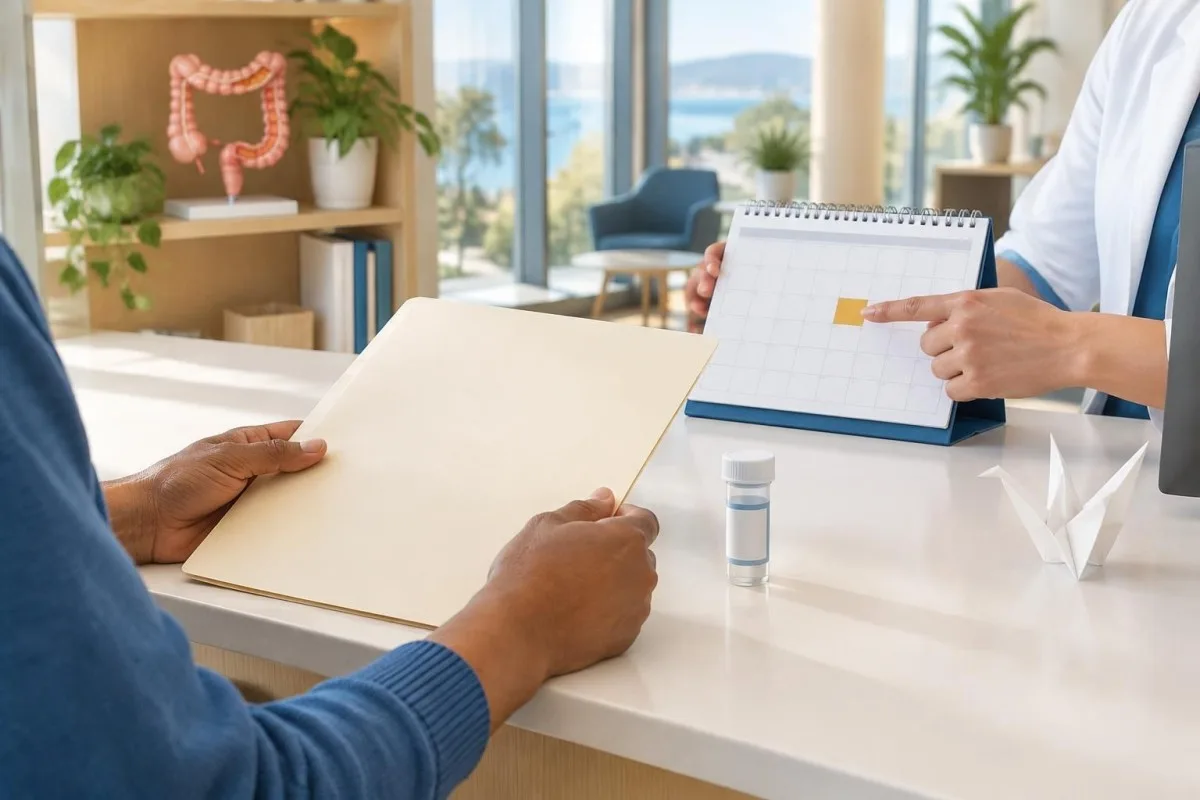
After a valid positive stool DNA screen, contact the clinician who ordered it or the endoscopy service to arrange diagnostic colonoscopy. The result usually calls for timely follow-up, but it is not generally an emergency in a person who feels well and has no acute warning symptoms.
There is no single universally stated deadline that applies to every positive stool DNA test in every health system. Arrange the referral promptly and ask the service how long the local wait is; do not wait for the next routine screening interval or repeat the home kit instead. If you have symptoms, a strong family history, or a history of polyps, mention those when booking because they may affect triage.
Evidence about delays is strongest for positive fecal immunochemical tests, not specifically for every multitarget stool DNA program. In a 2017 JAMA cohort study, Corley et al. found that longer delays after a positive FIT were associated with greater colorectal cancer risk and more advanced stage, particularly when colonoscopy occurred beyond 10 months. That observational finding supports avoiding prolonged delay, but it should not be presented as an exact deadline validated for all stool DNA tests.
If you cannot obtain an appointment, contact the referring practice and ask whether the referral was received, whether the result was marked diagnostic, and what to do if the wait becomes long. Keep the positive report and any previous colonoscopy records together. Our article on digestive symptoms and blood tests can help explain why routine blood results do not replace this examination.
When symptoms change the urgency
Seek urgent medical care for heavy ongoing rectal bleeding, fainting, severe or worsening abdominal pain, or signs of significant blood loss. These symptoms require assessment on their own and should not wait for a routine screening appointment. If symptoms are mild but persistent, tell the clinician arranging the colonoscopy rather than assuming they are explained by the screening result.
A positive screen in an otherwise well person is usually handled through an expedited outpatient diagnostic pathway. The clinical team can judge urgency using the full picture, including symptoms, hemoglobin results if available, age, family history, and prior findings.
What Happens Before Colonoscopy
Before colonoscopy, the endoscopy team reviews your health history, medicines, allergies, and prior procedures, then gives individualized bowel-preparation instructions. Preparation quality matters because stool residue can hide small abnormalities and may make the examination incomplete.
Expect questions about blood-thinning medicines, diabetes medicines, iron, kidney or heart conditions, allergies, and previous sedation problems. Do not stop a prescribed anticoagulant, antiplatelet medicine, insulin, or other regular treatment on your own; the prescriber and endoscopy team should decide whether any adjustment is appropriate. The right plan depends on why the medicine is used and on your medical history.
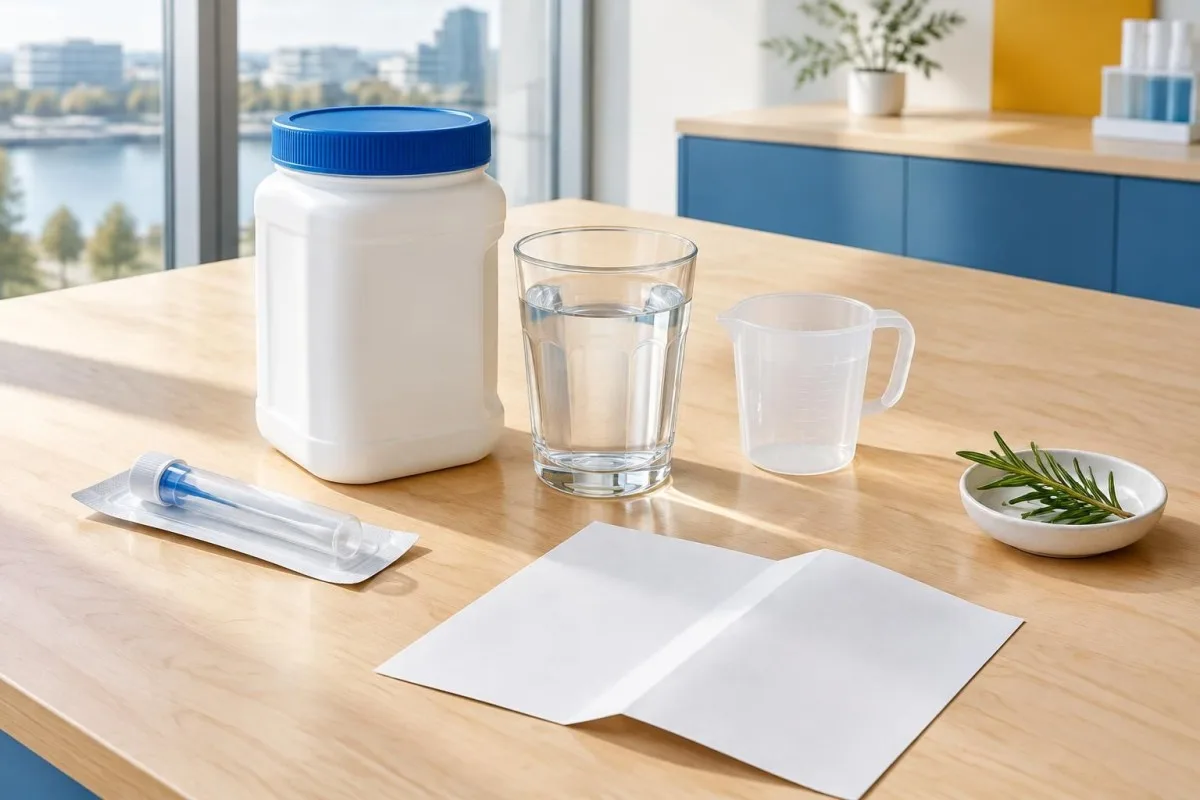
Most preparation plans use a prescribed bowel-cleansing solution, temporary changes to food, and clear-fluid instructions, but products and timing vary. Follow the written plan from your endoscopy service rather than combining advice from different websites. If the preparation instructions conflict with a medicine label or you cannot keep the solution down, call the service before the procedure.
A companion may be required after sedation, and driving is commonly restricted for the remainder of the day; exact rules vary by facility and sedation plan. Ask the clinic what time to arrive, whether you need someone to escort you home, and when to stop drinking clear liquids. For context on what different stool markers can show, see our guide to カルプロテクチンとラクトフェリンの比較; those tests address different questions from stool DNA screening.
Bring information that changes the plan
Bring the positive report, a list of medicines and doses, allergy information, and any previous colonoscopy or polyp pathology reports. Prior findings can affect the examination plan and the interval recommended afterward. Tell the team about a family history of colorectal cancer or advanced polyps, including the relative's age at diagnosis if known.
If you have kidney disease, heart failure, diabetes, or a history of difficult bowel preparation, raise it before starting the cleansing regimen. Some preparation products may be unsuitable for certain conditions, and the team can select instructions that fit your risks.
What to Expect During and After the Procedure
During colonoscopy, a trained clinician guides a flexible camera through the colon while you receive the agreed level of sedation or comfort measures. The procedure checks the bowel lining, and suitable polyps can often be removed during the same session.
Before starting, staff confirm identity, consent, allergies, medicines, and the planned procedure. The examination may involve air or carbon dioxide to open the colon for viewing, which can cause temporary bloating afterward. Ask the endoscopy team what sedation they plan to use and what you will remember; this varies between patients and facilities.
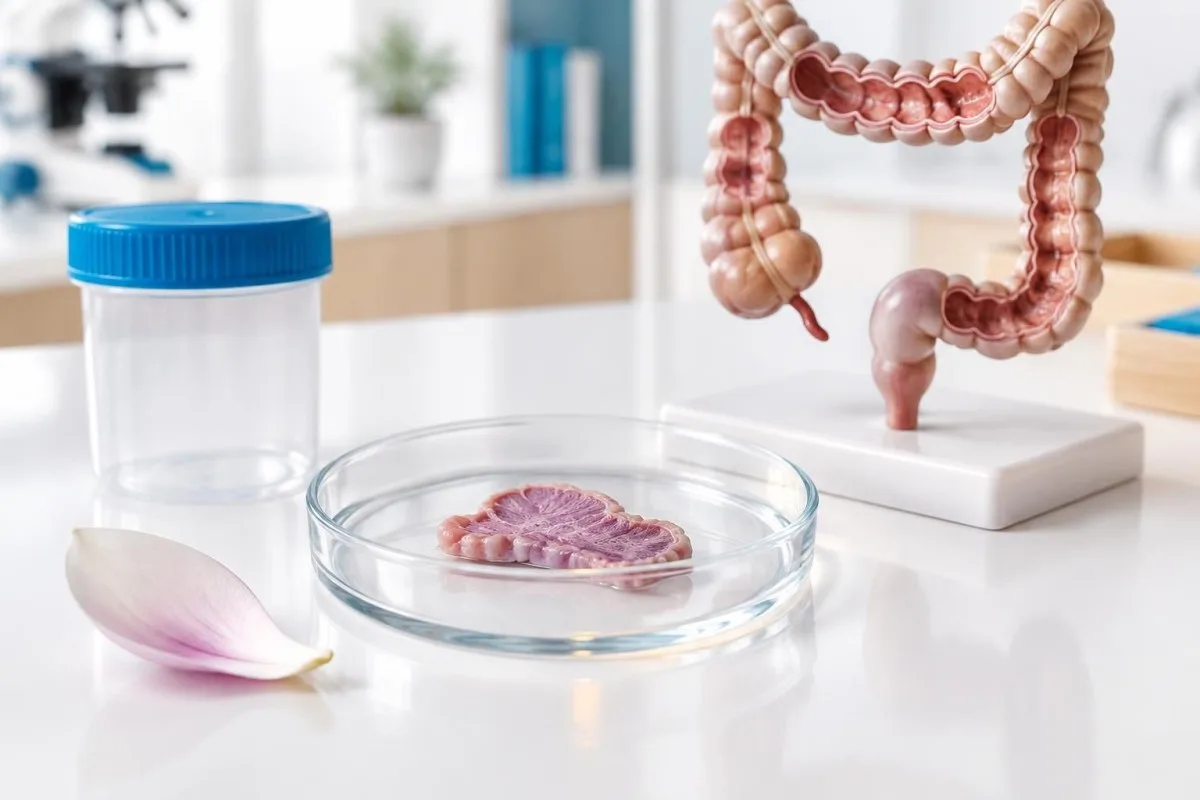
If a polyp is removed or tissue is sampled, the specimen is sent for laboratory assessment and the final plan may take days or longer, depending on local processing. The endoscopy report may describe what was seen immediately, but pathology results can refine the diagnosis and follow-up interval. A finding's appearance during the procedure is not always enough to establish its exact tissue type.
After sedation, you may feel drowsy or bloated and need an escort, according to the clinic's policy. Follow the discharge instructions about food, medicines, driving, and when to call. Contact the service urgently for severe or worsening abdominal pain, heavy bleeding, fever, or fainting after the procedure; minor transient bloating is different from those warning signs.
The report has details worth checking
Ask whether the colonoscopy was complete, whether bowel preparation was adequate, and whether any polyps were removed or samples taken. These points help distinguish a reassuring high-quality negative examination from one that needs completion or earlier repeat evaluation. A normal result after a positive test should still be documented in your screening history.
If the examination is incomplete or preparation was poor, the clinician may recommend repeating colonoscopy sooner or using another method to assess the part not seen. Do not assume “no cancer found” means the whole colon was adequately examined; the procedure report supplies that context.
How Results Affect Future Screening and Family Risk
The colonoscopy finding determines what happens next: no significant abnormality may lead to a longer interval, while certain polyps, cancer, or an incomplete examination require a different plan. Do not choose a future stool-test date until the clinician has reviewed the colonoscopy quality and any pathology.
After a high-quality colonoscopy showing no relevant abnormality, routine screening may resume at an interval set by the clinician and local guidelines. A positive stool test alone does not automatically mean annual colonoscopy. If polyps are removed, size, number, histology, completeness of removal, and preparation quality can all influence the recommended interval.
Family history can change screening advice even when the colonoscopy is normal. A first-degree relative diagnosed with colorectal cancer or an advanced polyp at a younger age may justify earlier or more frequent screening, depending on the exact family pattern and local guidance. If relatives have multiple cancers or unusually young diagnoses, ask whether hereditary cancer assessment is appropriate; our Lynch syndrome testing guide explains how inherited risk evaluation differs from stool screening.
A negative colonoscopy does not explain every bowel symptom, and a positive stool DNA result does not prove that symptoms are caused by colorectal disease. If symptoms persist, the clinician may consider other explanations or tests based on the pattern; for instance, fecal calprotectin evaluates intestinal inflammation rather than colorectal cancer screening. People with a borderline calprotectin result can read about repeat testing and follow-up, but it does not replace the colonoscopy indicated by a positive DNA screen.
Keep screening and symptom evaluation separate
A stool DNA test is a screening tool for colorectal cancer and certain precancerous lesions; it is not a general test for digestion, infection, or inflammatory bowel disease. For example, persistent diarrhea or abdominal discomfort may need a separate assessment even after a normal colonoscopy. Our overview of stool changes and digestive symptoms discusses why symptom patterns need their own context.
Blood tests can show clues such as anemia, but a normal complete blood count does not rule out colorectal polyps or cancer. A clinician may use blood results alongside symptoms and history, but the positive screening test still needs the recommended diagnostic follow-up.
A Practical Checklist After a Positive Result
After a positive stool DNA result, save the report, contact the ordering clinician, and arrange diagnostic colonoscopy rather than repeating the kit. Share symptoms and family history, follow individualized preparation instructions, and ask who will communicate the final findings.
First, verify the exact wording of the report and ask whether it was a valid positive result or an invalid sample. Next, confirm that a colonoscopy referral has been placed and ask which service will contact you. If a referral has not moved forward, contact the ordering practice rather than ordering another stool test.
Before the appointment, provide the endoscopy team with previous colonoscopy reports, family history, current medicines, allergies, and relevant conditions such as diabetes or kidney disease. Ask who is responsible for changing medicines and how to reach the team if preparation is difficult. A clear handoff is especially useful when the ordering clinician and procedure unit are different services.
After the examination, obtain the report and ask when pathology results are expected, who will explain them, and what interval is recommended for the next screening test. If results are not communicated by the expected date, contact the clinic. Our 医療コンテンツ基準 describe how patient-facing health information should distinguish screening signals from diagnoses; your own care plan should come from the clinician reviewing your complete record.
Questions to ask the endoscopy team
Ask whether the procedure is booked as a diagnostic colonoscopy after a positive screening test, what preparation product to use, and which medicines need specific instructions. Confirm whether you need an escort and when you may return to driving or work. The answers vary by facility, sedation, medical history, and local policy.
Also ask how you will receive the procedure report and any pathology results. Knowing the contact route in advance can prevent a polyp result or an incomplete examination from being lost between services.
よくある質問
陽性の便DNA検査は、大腸がんがあることを意味しますか?
No, a positive stool DNA test does not diagnose colon cancer; it means the sample met the screening threshold and needs follow-up. In the 2014 Imperiale et al. study, the test's sensitivity for colorectal cancer was 92.3%, but that figure describes detection among people with cancer, not the chance that any one positive result is cancer. Colonoscopy is usually needed to identify whether a cancer, polyp, or no advanced abnormality is present.
大腸内視鏡検査を受ける前に、陽性の便DNA検査を再度受けるべきですか?
いいえ、陽性の便DNA検査を再度行うことは、大腸内視鏡検査の代わりにはなりません。DNAや血液関連のシグナルは排便ごとに変動する可能性があるため、その後の陰性検体によって最初の結果を確実に取り消すことはできません。検査を依頼した臨床医に連絡し、診断目的の大腸内視鏡検査を手配してください。再採取が一般的に必要となるのは、検査機関または臨床医が元の検体を無効または不適切と判断した場合に限られます。
便DNA検査で陽性となった場合、どのくらい早く大腸内視鏡検査を受けるべきですか?
検査を指示した臨床医を通じて、速やかに大腸内視鏡検査を手配してください。便を用いたスクリーニング検査が陽性の場合は、診断のためのフォローアップが必要です。すべての便DNA検査プログラムおよび医療システムに一律に適用される期限はありません。2017年の観察研究では、FIT陽性後の遅延が長いほど、特に10か月を超えると転帰が悪化することが示されましたが、これらのFITの知見を、すべてのDNA検査に妥当性が確認された厳密な期限として扱うべきではありません。
What happens if my colonoscopy is normal after a positive stool DNA test?
A normal colonoscopy means the examination did not find a visible abnormality requiring action, but the quality and completeness of the procedure matter. Ask whether the clinician reached the end of the colon and whether bowel preparation was adequate. Future screening timing depends on those details, your history, and local guidelines; a positive stool DNA result alone does not automatically mean annual colonoscopy.
Can a positive stool DNA test be a false positive?
Yes, a stool DNA test can be positive even when colonoscopy finds no advanced colorectal neoplasia. In the pivotal 2014 study, specificity among people without advanced neoplasia was 86.6%, so false-positive classifications occurred. Screening-test accuracy is not a personal cancer probability, and colonoscopy is the test that clarifies what the positive result means for an individual.
Do I need to stop my medicines before colonoscopy?
Do not stop prescribed medicines on your own before colonoscopy. The endoscopy team and the clinician who prescribes them should give individualized instructions, especially for anticoagulants, antiplatelet medicines, diabetes treatments, and iron. The plan depends on the medicine, why you take it, your health conditions, and the procedure arrangements.
血液検査結果の見方を確認しましょう
検査報告書をアップロードすると、KantestiのAIが数秒で各バイオマーカーを平易な言葉で説明します。世界中で200万人以上が利用しています。.
参考文献
- Klein, T., Mitchell, S., & Weber, H. (2026). 臨床検証フレームワーク v2.0(医学的検証ページ)。. Kantesti AI医学研究。. 掲載日
- Klein, T., Mitchell, S., & Weber, H. (2026). AI血液検査アナライザー:2.5M件の検査を分析 | グローバルヘルスレポート 2026。. Kantesti AI医学研究。. 掲載日
- 米国予防医療専門委員会(2021年)。 Screening for Colorectal Cancer: US Preventive Services Task Force Recommendation Statement. JAMA. 掲載日 パブメッド
- Imperiale TF et al. (2014). Multitarget Stool DNA Testing for Colorectal-Cancer Screening. New England Journal of Medicine。. 掲載日 パブメッド
- Corley DA et al. (2017). Association Between Time to Colonoscopy After a Positive Fecal Test Result and Risk of Colorectal Cancer and Cancer Stage at Diagnosis. JAMA. 掲載日 パブメッド
- 200万以上分析対象の検査
- 127+国
- 100+言語
医療チームについて


E-E-A-T 信頼性シグナル
経験
医師主導による、検査結果解釈ワークフローの臨床レビュー。.
専門知識
臨床的な文脈においてバイオマーカーがどのように振る舞うかに焦点を当てた検査医学。.
権威
Thomas Klein医師による医学的レビュー。Sarah Mitchell医師およびHans Weber教授の協力。.
信頼性
アラームを減らすための明確なフォローアップ経路を備えた、エビデンスに基づく解釈。.

医療免責事項
この記事は教育目的のみを対象としており、医療助言を構成するものではありません。診断や治療の判断を行う際は、必ず有資格の医療提供者にご相談ください。.
公開 · 編集チームにお問い合わせください
Kantesti Ltdが発行。イングランドおよびウェールズで登録、会社番号. 17090423, 、英国ロンドン。.
