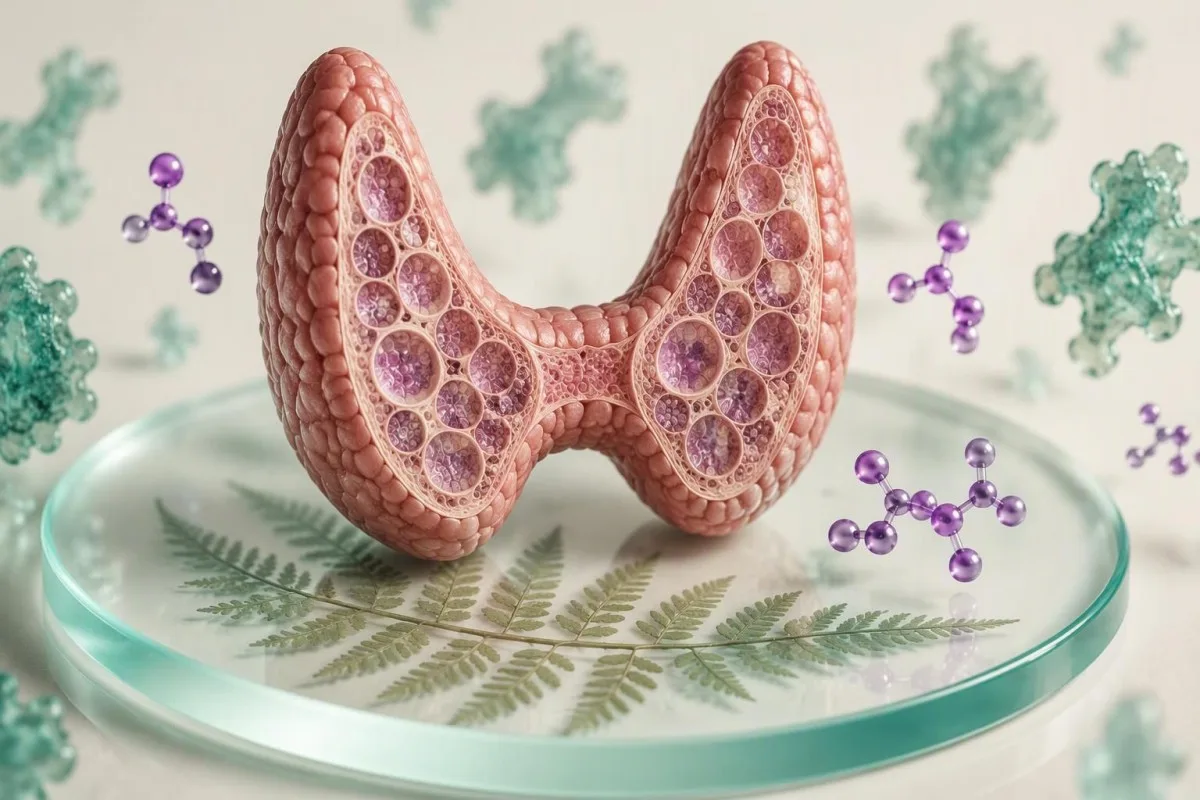
Aðgerðir T3 geta stutt greiningu á ofstarfsemi skjaldkirtils, sérstaklega T3-ráðandi sjúkdómum, en einar og sér getur það ekki greint skjaldkirtilssjúkdóma. Meðganga, estrógen, lifrarframleiðsla á próteinum, alvarleg veikindi og ýms lyf geta breytt heildar T3 án þess að breyta líffræðilega virku hormóni.


- Heildar T3 próf mælir próteinbundna auk frjálsan tríjódóþýrónín; það er ekki bein mæling á virkri skjaldkirtilsáhrifum vefja.
- Dæmigert svið fullorðinna er um það bil 80-180 ng/dL eða 1,2-2,8 nmol/L, en viðmiðunarbil rannsóknarstofunnar ræður.
- Hátt heildar T3 með lækkað TSH undir 0,1 mIU/L getur stutt ofstarfsemi skjaldkirtils, einkum T3 eiturhrif.
- Lægri heildar T3 orsakir eru bráð veikindi, takmörkun kaloría, glúkókortíkóíð, amíódarón, lifrarsjúkdómur og lág bindiprótein.
- Meðganga og inntaka estrógenlyfja hækka almennt heildar T3 með því að auka týroxínbindandi globúlín, jafnvel þegar frjálst hormón og TSH eru viðeigandi.
- Heildar T3 gegn frjálsri T3 er ekki keppni: hver mæling hefur takmarkanir og TSH ásamt frjálsu T4 leiða venjulega til venjulegra klínískra ákvarðana.
- Bíótíntruflun getur skapað villandi niðurstöður skjaldkirtilsónæmisprófa; skammtar 5-10 mg daglega ættu að vera gefnir upp fyrir próf.
- Bráð mat er þörf fyrir hraðan eða óreglulegan hjartslátt, brjóstverki, yfirlið, hita, ringulreið eða alvarlegan andnauð með skjaldkirtilseinkennum.
Hvað heildar T3 niðurstaða getur raunverulega sagt þér
Heildar T3 próf er mest gagnlegt til að staðfesta grun um ofskjaldkirtilsvirkni þegar TSH er lágt, ekki til að skima heilbrigða einstaklinga eða greina skjaldkirtilsskort einan. Það mælir heildar tríjódóþýrónín sem er á dreifingu í sermi: lítið óbundið brot auk mun stærra próteinbundins brots.
T3 er líffræðilega virkara skjaldkirtilshormónið, en skjaldkirtillinn losar mun minna T3 en T4; mikið af T3 á dreifingu er myndað með umbreytingu T4 í lifur, nýrum, vöðvum og öðrum vefjum. Hjá fullorðnum er um það bil 0.3% af sermis T3 óbundið, sem útskýrir hvers vegna breyting á bindipróteinum getur hreyft heildar T3 verulega án þess að sanna ofmagn hormóna.
Þegar ég rýni í panel með TSH undir 0.1 mIU/L, frítt T4 innan viðmiðunar, og heildar T3 fyrir ofan efri mörk rannsóknarstofu, hugsa ég um , sem sést í snemma Graves-sjúkdómi eða eitruðum hnúð, og það er einmitt ástæðan fyrir því að tveggja-prófa. Þetta mynstur kemur fram í snemmbærri Graves sjúkdómi og sjálfstæðum skjaldkirtilshnútum, en endurtekið panel og klínískt mat skipta enn máli; gildi 205 ng/dL þýðir eitthvað annað ef efri mörk rannsóknarstofu eru 200 samanborið við 180 ng/dL.
Kantesti er AI blóðprufugreiningartæki sem les heildar T3 ásamt TSH, fríu T4, lyfjum, viðmiðunarmörkum og fyrri niðurstöðum frekar en að meðhöndla eitt merki sem greiningu. Fyrir víðara próf orðaforða, okkar skjaldkirtilspróf orðasafn útskýrir algengar skammstafanir sem sjúklingar sjá.
Heildar T3 viðmiðunarmörk, einingar og merkingu
Flestar rannsóknarstofur fyrir fullorðna tilkynna heildar T3 um 80-180 ng/dL, sem samsvarar um það bil 1.2-2.8 nmol/L, en það eru engin alhliða greiningarmörk. Prófunaraðferðin, aldur, meðgöngustaða og staðbundið viðmiðunarfólk ákvarða hvort niðurstaða sé merkt.
Umbreytingin er einföld: 1 ng/dL af heildar T3 jafngildir um 0.0154 nmol/L. Niðurstaða 190 ng/dL getur aðeins verið lítið yfir viðmiðunarmörkum, á meðan magn yfir 300 ng/dL með greinilega bælt TSH er meira áhyggjuefni fyrir opinni skjaldkirtilsofitil, sérstaklega ef skjálfti, þyngdartap og hjartsláttarónot eru til staðar.
Aldur skiptir meira máli en margar skýrslur gera augljóst. Nýburar og börn hafa oft hærra heildar T3 magn en fullorðnir, og eldri fullorðnir geta sýnt lægri þéttni þrátt fyrir eðlilega skjaldkirtilsstarfsemi; ég nota ekki viðmiðunarmörk 30 ára aldurs fyrir 82 ára gamlan án þess að athuga minnisblað rannsóknarstofu.
Niðurstaða rétt fyrir utan viðmiðunarmörk verðskuldar samhengi fyrir meðferð. Hvað niðurstöður utan viðmiðunarmarka þýða er oft minna ógnvænlegt en sjúklingar búast við, sérstaklega þegar frávikið er undir 10% og TSH er eðlilegt.
Hvers vegna bindiprótein geta breytt heildar T3
Thyroxine-binding globulin, transthyretin, and albumin carry more than 99% of circulating T3, so altered protein levels can change total T3 while free hormone remains appropriate. This is the central limitation of the test.
Thyroxine-binding globulin, usually abbreviated TBG, has high affinity but low capacity for thyroid hormones. Higher TBG raises total T3 and total T4 after a new equilibrium is reached; TSH usually stays normal because the hypothalamus and pituitary respond primarily to available hormone, not the total amount attached to proteins.
Low albumin, nephrotic syndrome, severe liver dysfunction, and inherited TBG deficiency can lower total T3. The result can look like hypothyroidism, yet a normal TSH and free T4 often show that the thyroid gland is functioning appropriately; albumin and globulin context can be reviewed in our um leiðbeiningar um sermi-prótein.
This is one reason a total triiodothyronine result should not trigger a dose change in levothyroxine by itself. Thomas Klein, MD, has seen patients placed on unnecessary thyroid medication after an isolated low total T3 was interpreted without checking albumin, TSH, or the week's clinical events.
Meðganga, estrógenmeðferð og hærri heildar T3
Pregnancy and oral estrogen commonly increase total T3 because estrogen increases hepatic TBG production; this alone does not indicate hyperthyroidism. The rise is often evident by 6-8 weeks of pregnancy and can persist throughout estrogen exposure.
TBG commonly rises by about twofold in pregnancy, lifting total T4 and total T3 above non-pregnant reference ranges. The 2017 American Thyroid Association pregnancy guideline advises trimester- and laboratory-specific interpretation where possible, with TSH and free T4 assessment taking priority over non-pregnancy total T3 flags (Alexander et al., 2017).
Oral contraceptives and oral menopausal hormone therapy have a similar liver-mediated effect because first-pass hepatic estrogen exposure raises TBG. Transdermal estradiol usually has a smaller effect, so route, dose, and timing matter; our guide to áhrif estrogens á fæðingarvarn covers this wider laboratory issue.
In pregnancy, laboratories may use total T4 adjusted upward by roughly 50% after week 16 when reliable free T4 testing is unavailable, but total T3 has a narrower role. A high total T3 plus TSH below 0.1 mIU/L, vomiting, persistent tachycardia, or weight loss deserves clinician review rather than reassurance based solely on pregnancy.
Lág heildar T3 orsakir sem ekki eru skjaldkirtilssvikt
Low total T3 most often reflects acute or chronic illness, reduced calorie intake, medications, or low carrier proteins rather than an underactive thyroid gland. A low value with normal TSH is not evidence that T3 replacement is needed.
During major infection, surgery, trauma, heart failure, kidney disease, or prolonged fasting, conversion of T4 to T3 falls and reverse T3 may rise. This is called non-thyroidal illness syndrome; the Fliers and colleagues review describes low T3 as an adaptive and prognostic signal in critical illness, not a diagnosis of primary thyroid failure (Fliers et al., 2015).
A practical example: after 72 hours of poor intake during gastroenteritis, total T3 can fall below 80 ng/dL while TSH remains normal or briefly low. Rechecking after recovery, usually 4-8 weeks later if the patient is stable, is safer than labeling the person hypothyroid during an acute episode.
Low energy availability also matters in endurance sport and restrictive eating. Patients concerned about fatigue should compare thyroid markers with iron indices, CBC, and nutrition history; our RED-S rannsóknarstofumynstur guide explains why low T3 can be a metabolic conservation signal.
Lyf og fæðubótarefni sem brengla T3 niðurstöður
Amiodarone, glucocorticoids, propranolol at higher doses, iodine-containing agents, and biotin can alter T3 physiology or test measurement without straightforward thyroid disease. A medication list is part of the assay, clinically speaking.
Amiodarone inhibits type 1 deiodinase and often lowers serum T3 while increasing T4 and reverse T3; it can also cause true hypothyroidism or thyrotoxicosis. Prednisone doses around 20 mg daily or more can transiently reduce T4-to-T3 conversion, so a low T3 during steroid treatment is not automatically thyroid failure.
Biotin is different: it can interfere with some streptavidin-biotin immunoassays and produce an apparent high T3 or free T4 with falsely low TSH. The American Thyroid Association has advised holding biotin for at least 2 days before thyroid tests, although high-dose therapeutic regimens may need a longer laboratory-specific plan.
Kantesti er þjónustu fyrir túlkun á rannsóknarprófum með gervigreind that prompts users to record supplements, thyroid medicines, and recent medication changes before interpreting a discordant hormone panel. People taking lithium need a separate monitoring strategy because it more often affects TSH and thyroid hormone release than isolated total T3; see our lithium monitoring overview.
Heildar T3 gegn frjálsri T3: Hvor prófið er betra?
Neither total T3 nor free T3 is universally better: total T3 is vulnerable to binding-protein shifts, while routine free T3 immunoassays can be unreliable in illness, pregnancy, and altered protein states. TSH and free T4 usually provide the more dependable starting pair.
Free T3 represents the small unbound fraction, generally reported around 2.0-4.4 pg/mL or 3.1-6.8 pmol/L, depending on method. Yet direct analogue immunoassays estimate rather than physically isolate free hormone, and results can diverge from equilibrium dialysis or ultrafiltration in patients with abnormal binding proteins.
For suspected hyperthyroidism, clinicians commonly order TSH first and add free T4 plus total T3 if TSH is suppressed. The 2016 American Thyroid Association guideline recognizes elevated total T3 as useful in overt or T3-predominant thyrotoxicosis, but it does not endorse T3 as a standalone screening diagnosis (Ross et al., 2016).
I am cautious about chasing a borderline low free T3 in a person with normal TSH, normal free T4, and no pituitary risk factors. Our article on low free T3 symptoms explains why symptoms such as tiredness and low mood are real but not specific to one hormone.
Hvenær læknar nota próf fyrir heildar T3
Total T3 is most helpful when TSH is suppressed and free T4 is normal or borderline, because it can identify T3-predominant hyperthyroidism. It also helps follow selected patients receiving antithyroid treatment, although TSH may lag for weeks.
In early Graves disease, toxic adenoma, and toxic multinodular goitre, T3 may rise first because autonomous tissue preferentially produces T3. A classic pattern is TSH less than 0.1 mIU/L, free T4 near the upper limit, and total T3 above range; thyroid receptor antibodies or radionuclide imaging then helps identify the cause.
During antithyroid treatment, free T4 and total T3 may normalize before TSH recovers. A persistently suppressed TSH for 2-3 months does not necessarily mean treatment failure, which is why clinicians avoid adjusting methimazole solely to TSH in the early phase.
If neck pain follows a viral illness and the panel changes rapidly, total T3 may be part of thyroiditis assessment rather than Graves testing. The timeline in our subacute thyroiditis guide is useful because the hyperthyroid phase often resolves without long-term antithyroid medicine.
Hvað heildar T3 getur ekki greint eitt og sér
A total T3 result alone cannot diagnose Graves disease, Hashimoto disease, hypothyroidism, a thyroid nodule, pituitary disease, or the cause of fatigue. It cannot distinguish excess hormone production from altered protein binding or assay interference.
A normal total T3 does not exclude hyperthyroidism, especially early disease, central causes, or assay variation. Conversely, a high result does not prove Graves disease; diagnosis may require TSH receptor antibodies, Doppler ultrasound, uptake imaging, examination findings, and a careful medication history.
Hypothyroidism is usually identified by elevated TSH with low free T4 in primary disease, not by low total T3. In central hypothyroidism, TSH may be low, normal, or modestly elevated despite low free T4, which is why a normal TSH should not end the evaluation when pituitary disease is plausible; read lágt frjálst T4 með eðlilegu TSH.
Thomas Klein, MD, advises patients not to start liothyronine after seeing a lone low T3 result online. Liothyronine has a short half-life, can trigger palpitations, and requires specialist-guided use when it is considered at all.
Próftaka vegna veikinda, sjúkrahúsvistar og bata
Thyroid panels drawn during hospitalisation frequently show low T3 that improves as the underlying illness resolves, so routine thyroid testing in acutely unwell people can create false diagnoses. The exception is when symptoms or history strongly suggest true thyroid dysfunction.
Low T3 is common in intensive care, and progressively lower levels can correlate with illness severity; correlation does not establish that replacing T3 improves outcomes. In clinically stable patients, repeating TSH and free T4 after the acute process resolves is more informative than ordering reverse T3, which rarely changes outpatient management.
A 68-year-old admitted with pneumonia may have total T3 of 55 ng/dL, TSH 0.4 mIU/L, and free T4 near normal on day 2. If there was no pre-existing thyroid concern, I would usually document the result and repeat testing about 6-8 weeks after recovery rather than prescribe thyroid hormone during the admission.
Result timing changes many tests, not only T3. Our post-hospital laboratory timeline can help patients prepare a useful follow-up list for their primary clinician.
Villur í mælingum, tímasetning sýna og betri undirbúningur
A surprising total T3 result should be confirmed before major treatment decisions, particularly when it conflicts with TSH, free T4, symptoms, or previous results. Analytical interference is uncommon but clinically consequential.
Heterophile antibodies, anti-ruthenium antibodies, thyroid hormone autoantibodies, and biotin can interfere with certain immunoassays. Laboratories can repeat the test on another manufacturer platform, use dilution studies, or use a reference method when the biochemical pattern is physiologically implausible.
Fasting is usually not required for a total T3 test, and morning collection is less critical than for cortisol or testosterone. Still, record the exact time of levothyroxine or liothyronine dosing: blood drawn 2-4 hours after liothyronine can capture a temporary peak and misrepresent the usual daily exposure.
Kantesti AI compares current and prior values to identify a plausible laboratory delta rather than overcalling a one-off change. For patients reviewing uploaded reports, our leiðbeiningum okkar um mun á blóðprófum explains why biological variation can be larger than a small numerical flag.
Einkenni sem breyta brýntni T3 niðurstöðu
A high total T3 becomes more urgent when it accompanies a resting pulse above 120 beats per minute, new irregular heartbeat, chest pain, fainting, fever, agitation, or severe breathlessness. Symptoms and vital signs, not the T3 number alone, determine emergency triage.
Hyperthyroidism can cause tremor, heat intolerance, unintentional weight loss, frequent stools, anxiety, and menstrual changes, but none is diagnostic. Atrial fibrillation is more common with age and thyroid hormone excess, so a new irregular pulse deserves prompt assessment even if total T3 is only modestly elevated.
Low total T3 does not itself cause an emergency. The underlying issue may be serious, however: severe calorie restriction, sepsis, advanced liver disease, and decompensated heart failure can all lower T3, so the patient’s overall condition outweighs the hormone number.
People with palpitations should not assume a thyroid result explains everything. Our palpitation blood test guide covers electrolyte, anaemia, glucose, and cardiac considerations that clinicians often assess in parallel.
Praktísk eftirfylgniáætlun fyrir óeðlilega heildar T3
An abnormal total T3 should usually be followed by a review of TSH, free T4, symptoms, pregnancy or estrogen status, medications, supplements, albumin, and prior thyroid results. The next step is pattern recognition, not automatic treatment.
For high total T3, confirm whether TSH is below 0.1 mIU/L and check free T4; if both support thyrotoxicosis, a clinician may add TSH receptor antibodies and determine whether imaging is appropriate. For low total T3 with normal TSH and free T4, ask first about illness, intake, weight change, protein loss, and medication exposure.
Bring the complete report, not a cropped value, to the appointment. Kantesti, an AI lífmerkjatúlkunarvettvangur, organizes longitudinal thyroid results and flags discordance between a binding-protein pattern and a likely thyroid-gland pattern; it does not replace examination, diagnosis, or prescription decisions.
As of September 25, 2026, the sensible default remains conservative interpretation: repeat an unexpected result under stable conditions before changing medication unless symptoms are severe. If you need a structured review of test methodology and clinical oversight, our læknisfræðilega staðfestingarleið okkar describes the safeguards behind our reporting.
Spurningar til að taka með á fund um skjaldkirtilinn
The most useful question after an abnormal total T3 is “Does my TSH and free T4 pattern support true thyroid disease, or could binding proteins, illness, or medication explain this?” That single question prevents many unnecessary treatment changes.
Ask whether your laboratory used an immunoassay, whether the interval is age- or pregnancy-specific, and whether a repeat on a different assay is warranted. If you are pregnant, taking oral estrogen, using biotin, or receiving amiodarone, mention it before the clinician interprets a number such as 185 ng/dL.
Ask what clinical finding would change the plan: persistent TSH suppression, elevated free T4, antibody positivity, a nodule, or symptoms. This is more useful than asking for a “perfect” T3 target, because there is no evidence-based target total T3 concentration for a person with normal thyroid regulation.
Kantesti AI er byggt af our medical advisory team to make laboratory reports easier to discuss, not to turn a single biomarker into a self-diagnosis. Most patients find that a one-page timeline of doses, illness dates, pregnancy status, and previous TSH values makes the consultation much more productive.
Niðurstaðan um túlkun heildar T3
Total T3 is a targeted supporting test for suspected hyperthyroidism, especially when TSH is low; it is a poor standalone test for diagnosing low thyroid function. Binding proteins and acute illness explain many apparently abnormal results.
The reason clinicians worry about high T3 combined with suppressed TSH is that together they suggest thyroid hormone excess, whereas high total T3 alone often reflects TBG. The reason a low T3 with normal TSH is usually handled cautiously is that illness and reduced conversion are substantially more common explanations than primary hypothyroidism.
Do not use food, iodine, selenium, or thyroid supplements to “correct” an isolated total T3 result. Excess iodine can worsen autoimmune thyroid disease or trigger hyperthyroidism in susceptible people; our öryggisleiðarvísir fyrir skjaldkirtilsfæðubótarefni explains practical dose concerns.
Kantesti is an AI-powered blood test analysis tool used across 127+ countries to put thyroid markers in their laboratory and personal context. A useful report is a starting point for a clinical conversation—never the last word.
Algengar spurningar
Hver er eðlileg heildar T3 gildi?
A typical adult total T3 range is about 80-180 ng/dL, or 1.2-2.8 nmol/L, although the interval printed by the performing laboratory is the correct one to use. Children, pregnancy, estrogen therapy, and assay methods can shift expected values. A result inside the range does not by itself prove normal thyroid function; TSH and free T4 provide the essential context. A value just outside range, especially by less than 10%, often needs confirmation rather than treatment.
Getur hátt heildar T3-magn bent til skjaldkirtilsoverstar?
High total T3 can support hyperthyroidism when TSH is suppressed below 0.1 mIU/L and free T4 is high or high-normal. Total T3 above 300 ng/dL with symptoms such as tremor, weight loss, or palpitations warrants timely clinical review, but the number alone does not diagnose Graves disease. Pregnancy and oral estrogen can raise total T3 through higher TBG without true hormone excess. Clinicians commonly confirm the pattern with repeat TSH, free T4, antibodies, and sometimes imaging.
Af hverju er heildar T3 mitt lágt ef TSH mitt er eðlilegt?
Low total T3 with normal TSH most often reflects non-thyroidal illness, reduced calorie intake, medication effects, or low binding proteins rather than hypothyroidism. Acute infection, surgery, fasting for 48-72 hours, prednisone, and amiodarone can all lower T3 conversion. If free T4 is normal and there is no pituitary concern, clinicians often repeat testing 4-8 weeks after recovery instead of starting thyroid hormone. Persistent fatigue still deserves evaluation for causes such as anaemia, iron deficiency, sleep disruption, depression, and chronic disease.
Hækkar meðganga heildar T3?
Pregnancy commonly raises total T3 because estrogen increases thyroxine-binding globulin, often by about twofold. This effect can make total T3 exceed a non-pregnant range while TSH and biologically available thyroid hormone remain appropriate. Pregnancy-specific TSH ranges and laboratory-specific free T4 interpretation are more useful than an isolated total T3 result. A pregnant person with TSH below 0.1 mIU/L, persistent tachycardia, weight loss, or severe vomiting should be assessed promptly.
Ætti ég að taka T3 lyf vegna lágs heildar T3 gildis?
A low total T3 result alone is not a reason to start liothyronine, also called T3 medicine. Most low total T3 results arise from illness, calorie restriction, medication effects, or low carrier proteins, and replacing T3 has not become standard treatment for non-thyroidal illness. Liothyronine can cause palpitations, anxiety, tremor, and heart rhythm problems, particularly when doses create short-lived peaks. Treatment decisions should follow TSH, free T4, medical history, symptoms, and clinician assessment.
Getur bíótín haft áhrif á heildar T3 próf?
Biotin can interfere with some thyroid immunoassays and may produce falsely high total T3 or free T4 results with an inappropriately low TSH. Supplements marketed for hair and nails often contain 5-10 mg of biotin, far above ordinary dietary intake. Many clinicians advise stopping biotin for at least 48 hours before thyroid testing, although high-dose prescribed biotin may require a longer plan set by the laboratory. Always tell the clinician and laboratory about supplements before a repeat test.
Fáðu AI-knúna greiningu á blóðprufum í dag
Vertu með yfir 2 milljónir notenda um allan heim sem treysta Kantesti fyrir tafarlausa og nákvæma greiningu á blóðprufum. Hladdu upp niðurstöðum blóðrannsókna þinna og fáðu yfirgripsmikla túlkun á 15,000+ lífmerkjum á sekúndum.
📚 Tilvísuð rannsóknarútgáfa
Klein, T., Mitchell, S., & Weber, H. (2026). Serum Proteins Guide: Globulins, Albumin & A/G Ratio Blood Test. Kantesti LTD. (2026). Zenodo. https://doi.org/10.5281/zenodo.18316300. ResearchGate: https://www.researchgate.net/. Academia.edu: https://www.academia.edu/.. Kantesti AI Medical Research.
Klein, T., Mitchell, S., & Weber, H. (2026). C3 C4 Complement Blood Test & ANA Titer Guide. Kantesti LTD. (2026). Zenodo. https://doi.org/10.5281/zenodo.18353989. ResearchGate: https://www.researchgate.net/. Academia.edu: https://www.academia.edu/.. Kantesti AI Medical Research.
📖 Ytri læknisfræðilegar heimildir
⚕️ Fyrirvari vegna læknisfræðilegra mála
Þessi grein er eingöngu til fræðslu og felur ekki í sér læknisráðgjöf. Leitaðu alltaf til hæfs heilbrigðisstarfsmanns vegna ákvarðana um greiningu og meðferð.
E-E-A-T traustmerki
Reynsla
Læknastýrð klínísk yfirferð á vinnuferlum við túlkun rannsóknarniðurstaðna.
Sérþekking
Áhersla á rannsóknarstofulækningar: hvernig lífmarkarar hegða sér í klínísku samhengi.
Yfirvald
Skrifað af Dr. Thomas Klein með yfirferð Dr. Sarah Mitchell og próf. Dr. Hans Weber.
Traustleiki
Rökstudd túlkun byggð á gögnum með skýrum eftirfylgnileiðum til að draga úr ávörun.