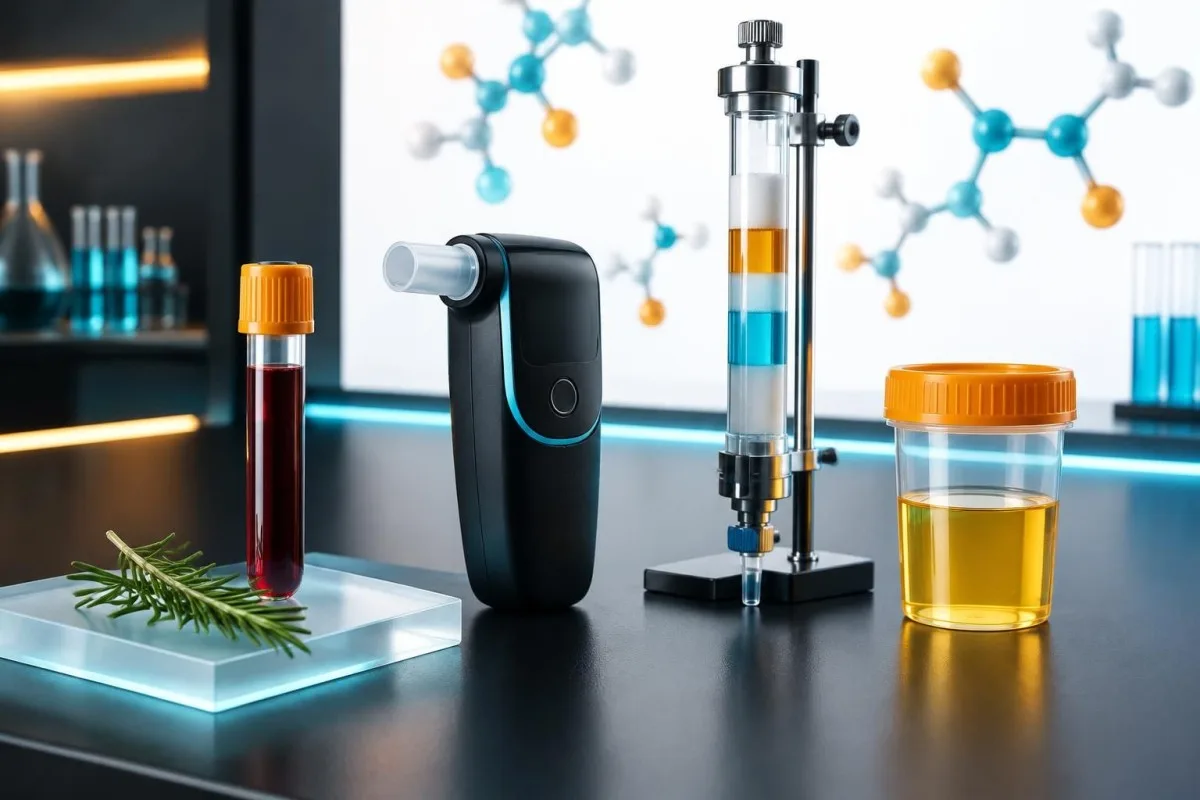
A blood alcohol test measures ethanol in a specific specimen, but the result depends heavily on timing, sample type and laboratory method. Breath testing estimates alcohol in exhaled air, blood testing measures circulating ethanol more directly, and urine testing may detect alcohol or its metabolites after blood levels have fallen.

Ondorio nagusiak
- Blood ethanol is usually detectable for about 6-12 hours after drinking, although a large dose, delayed absorption or liver disease can extend that window.
- Breath testing measures breath alcohol concentration and estimates blood alcohol concentration; mouth alcohol, device calibration and recent drinks can distort a reading.
- Urine ethanol often has a shorter direct-alcohol window than urine EtG, which may remain detectable for approximately 24-72 hours but does not prove current impairment.
- BAC conversion uses 0.08 g/dL = 80 mg/dL = 80 mg/100 mL; units must be checked before interpreting a report.
- Alcohol elimination commonly averages about 0.010-0.020 g/dL per hour after peak concentration, but individuals vary substantially.
- Emaitza positiboa identifies alcohol or an alcohol metabolite in a specimen; it does not by itself establish when drinking occurred, how much was consumed or whether a person is impaired.
- Larrialdi-sintomak such as slowed or irregular breathing, seizure, inability to wake or repeated vomiting require urgent emergency care regardless of the measured BAC.
- PEth testing reflects repeated alcohol exposure over roughly 2-4 weeks, whereas BAC is a short-window measurement and should not be substituted for a long-term alcohol biomarker.
What does a blood alcohol test actually measure?
A blood alcohol test measures ethanol concentration in a defined specimen at a particular time. A whole-blood result is reported as BAC, while serum or plasma ethanol can read higher because those liquid components contain more water; a result therefore needs its specimen type, units and collection time before it can be interpreted safely.
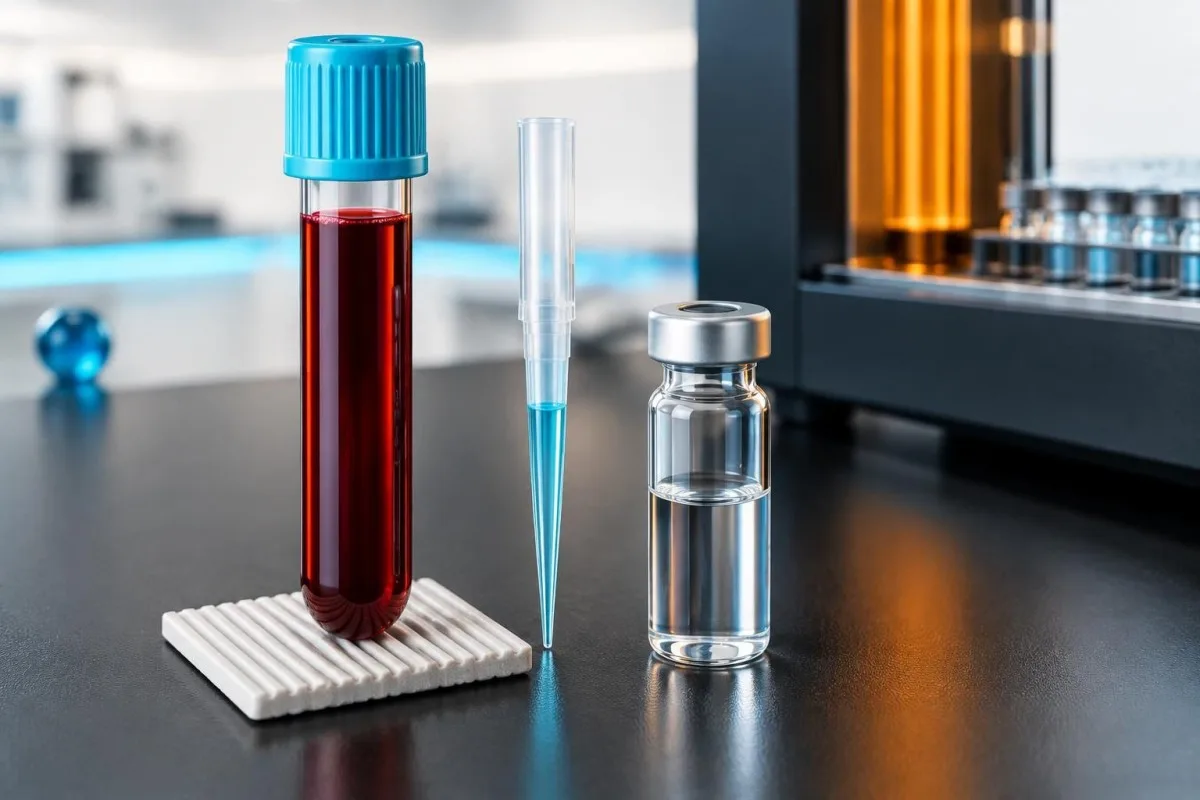
Whole-blood ethanol is the closest routine laboratory measure of alcohol circulating through the body, and 0.08 g/dL equals 80 mg/dL or 80 mg per 100 mL. A result of 80 mg/dL is numerically the same concentration as 0.08%, but the percentage notation can cause confusion when a report uses g/L or mmol/L instead.
Kantesti bat da. AI odol-analisi analizatzailea that can organize an accompanying laboratory report by specimen, unit and collection time, but it cannot determine legal intoxication from a photograph alone. A toxicology laboratory or clinician must resolve whether a result is whole blood, serum, plasma, breath-equivalent or urine-based.
Blood alcohol concentration is a time-stamped measurement, not a permanent trait. Ethanol may still be rising for 30 minutes to 2 hours after a drink, especially when food delays stomach emptying, so a sample collected shortly after drinking can understate a later peak; a second sample may be clinically or legally more informative.
How does a breath alcohol test work?
A breath alcohol test estimates BAC by measuring ethanol in exhaled deep-lung air. The instrument usually reports BrAC, often in grams per 210 litres of breath, because the legal conversion convention treats 210 litres of breath as approximately equivalent to 1 litre of blood; breath and blood are related but not identical measurements.
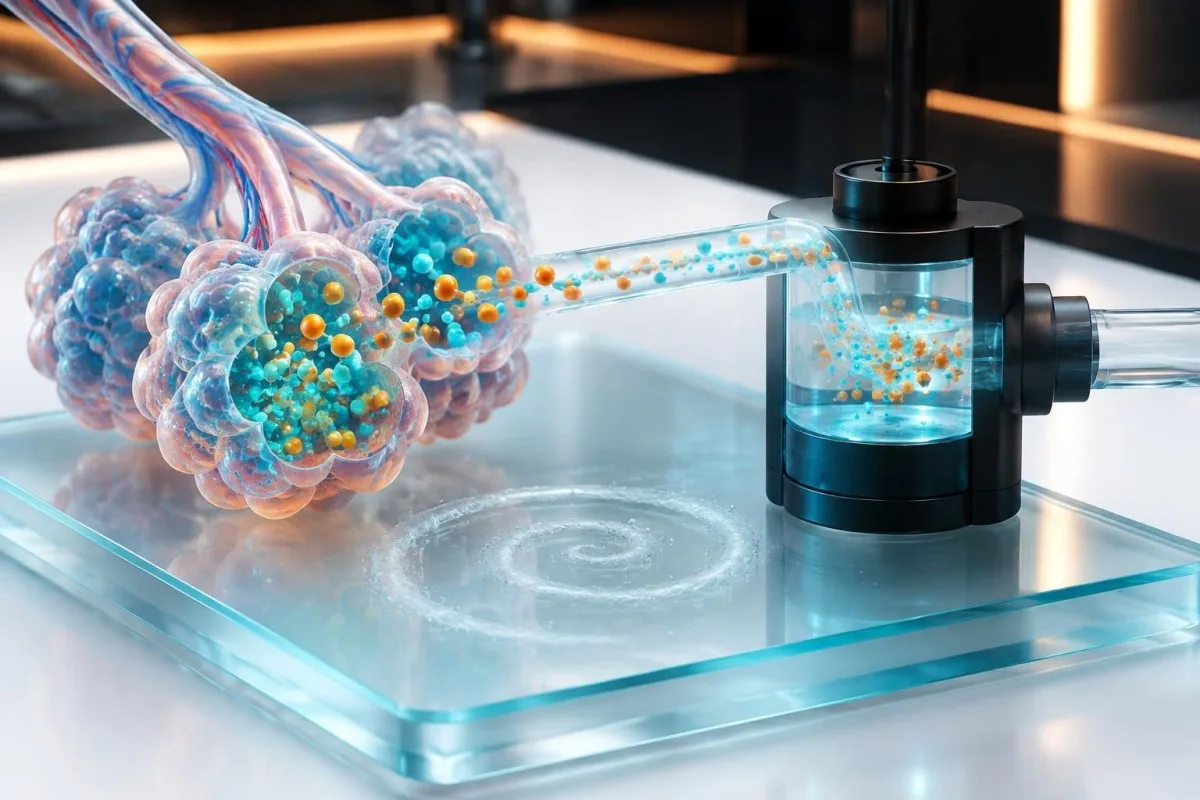
Breath alcohol concentration depends on alveolar air reaching the device. A mouth rinse, recent sip, reflux episode or vomiting within roughly 15 minutes can leave alcohol in the mouth and produce a falsely high screening value; many protocols therefore require an observation period before a repeat test.
Fuel-cell instruments measure an electrochemical reaction, while infrared instruments assess how ethanol absorbs specific wavelengths; confirmatory systems can use a second analytical principle. The 2010 review by Jones describes why an average elimination rate near 0.015 g/dL per hour is useful for estimates but unsafe as an exact personal countdown.
A breath result that seems inconsistent with behaviour should not be dismissed or accepted without checking calibration, duplicate readings and the time of the last drink. Our teknologia-gida explains why an automated reading still needs specimen context, quality controls and human review.
What happens during a laboratory blood alcohol test?
A laboratory blood alcohol test measures ethanol in a collected specimen, commonly using headspace gas chromatography with flame-ionisation detection. The result is generally more analytically specific than a preliminary breath screen, but its reliability still depends on correct tube selection, prompt sealing, preservative use and accurate recording of the collection time.
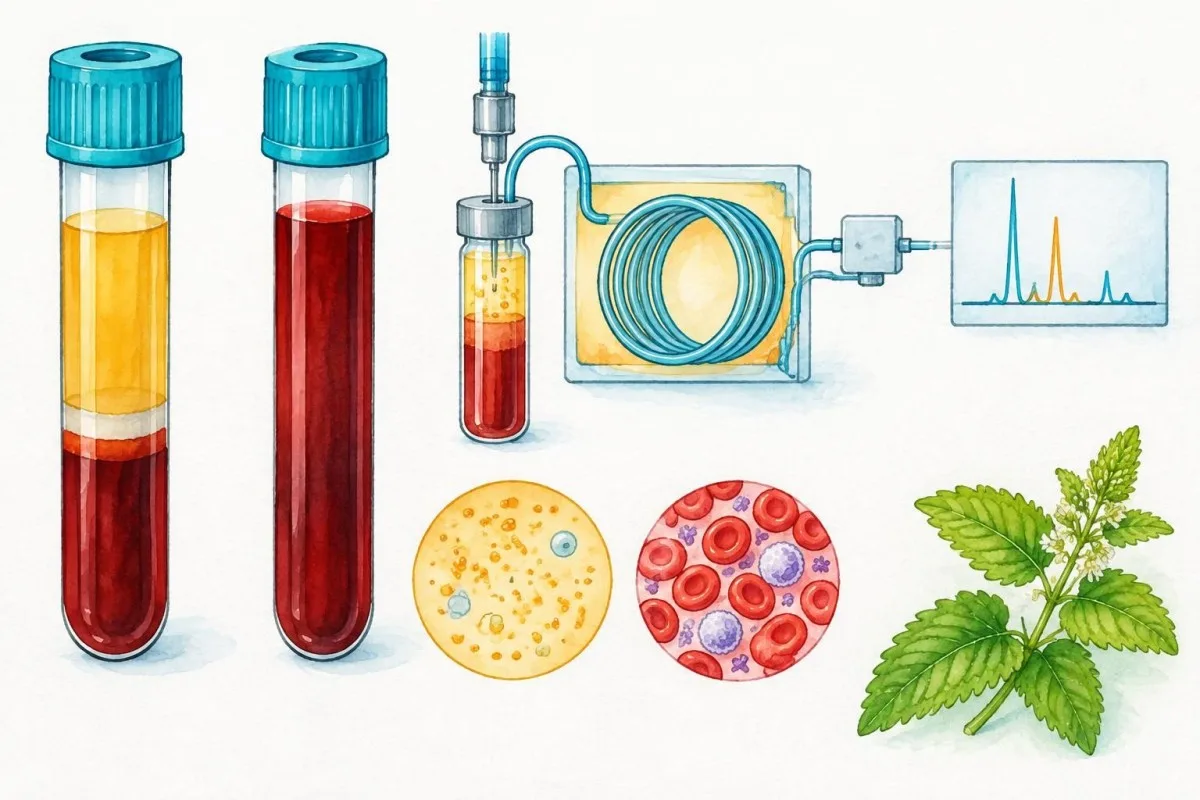
Whole blood, serum and plasma are not interchangeable matrices. Serum or plasma ethanol can be approximately 10-20% higher than whole-blood ethanol because water is distributed differently between cells and plasma; the exact relationship varies with haematocrit, so a report should never be converted using a universal fixed multiplier.
For example, a hypothetical serum ethanol result of 96 mg/dL should not automatically be rewritten as 96 mg/dL whole blood. If the report is for clinical care, the laboratory's reference method and specimen label take priority; if it is for legal work, the authorised laboratory's validated conversion rules and chain-of-custody documentation matter more than a calculator.
The practical distinction is also visible in liver panels: ethanol itself can be present while ALT, AST or GGT remain within range, because enzyme changes reflect tissue response over a different timescale. Our guide to reading liver test abbreviations helps separate a short-term ethanol measurement from longer-term organ markers.
How is urine alcohol testing different?
Urine testing can measure unchanged ethanol or longer-lasting ethanol metabolites, especially ethyl glucuronide and ethyl sulfate. Direct urine ethanol usually reflects relatively recent alcohol exposure, whereas EtG may remain detectable for about 24-72 hours and occasionally longer after heavy intake; neither result alone proves current impairment.
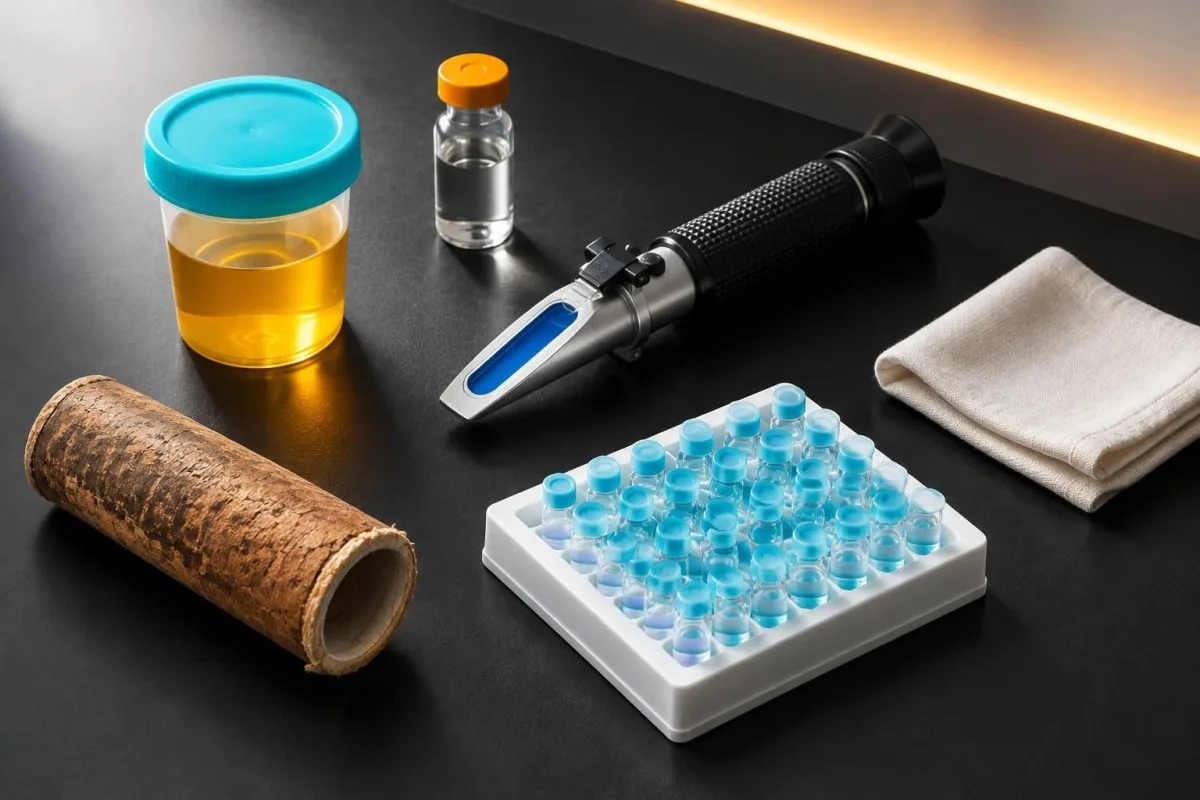
Urine EtG is a metabolite test, not a blood alcohol concentration test. Common interpretive thresholds include 100 ng/mL and 500 ng/mL, but a lower cutoff increases sensitivity to small exposures while a higher cutoff reduces some incidental positives; the laboratory's assay and reporting policy must accompany the number.
The 2006 review by Wurst and colleagues describes EtG as a direct ethanol metabolite that can bridge the gap between very recent drinking and longer-term alcohol biomarkers. Hand sanitiser vapour, alcohol-containing products and specimen contamination can complicate very low results, so an isolated value near a cutoff deserves cautious interpretation rather than a categorical conclusion.
Urine concentration is another hidden variable. A dilute specimen with creatinine below approximately 20 mg/dL can reduce metabolite concentration, while a concentrated specimen can make the same exposure look higher; a dedicated gernu-analisirako gida explains why creatinine, specific gravity and collection conditions belong beside the EtG result.
How long does alcohol stay in the blood?
Alcohol commonly remains measurable in blood for about 6-12 hours after drinking, but the window is not a fixed rule. A large dose, delayed absorption, reduced liver function or a sample taken near the absorption peak can extend detectability; a negative blood test hours later cannot reconstruct earlier drinking with certainty.
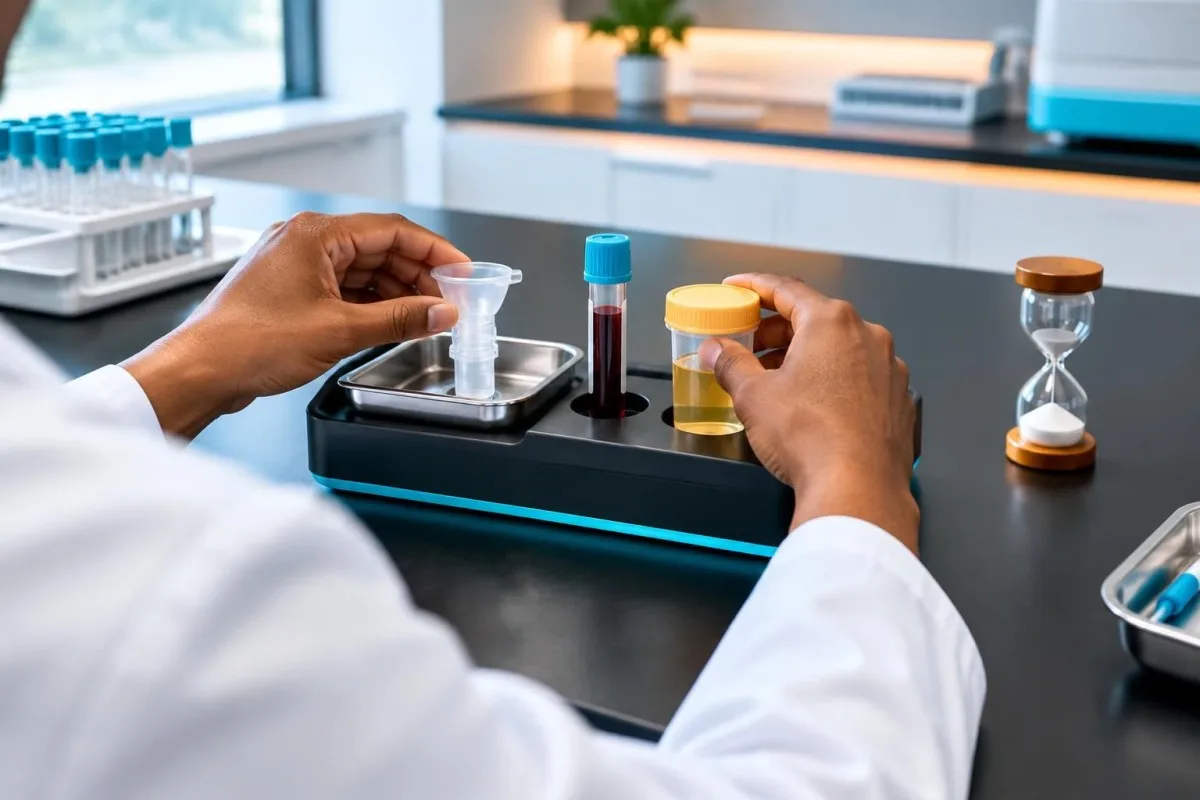
The liver generally removes ethanol at a rate near 0.010-0.020 g/dL per hour after peak concentration. Jones (2010) emphasises wide individual variation, so subtracting 0.015 g/dL every hour gives an estimate rather than proof; the rate is not accelerated reliably by coffee, cold showers, exercise or drinking water.
A hypothetical 70 kg adult with a peak BAC of 0.12 g/dL might fall to approximately 0.06 g/dL after 4 hours at a 0.015 g/dL-per-hour rate, but this example assumes peak absorption has already finished. If the person drank quickly or ate a large meal, the actual peak could occur later and the calculation could be wrong in either direction.
EtG and PEth answer different timing questions, which is why comparing them can be useful. Our article on PEth detection windows covers a biomarker that may remain informative for roughly 2-4 weeks, unlike blood ethanol's short window.
How should blood alcohol test results be read?
BAC results must be read using the stated unit, specimen and collection time; a numerical value has no safe interpretation in isolation. In many systems, 0.02 g/dL equals 20 mg/dL, 0.05 g/dL equals 50 mg/dL and 0.08 g/dL equals 80 mg/dL, but legal thresholds differ by country, driving category and circumstance.

There is no universally safe BAC threshold for driving or other hazardous tasks. At around 0.02-0.05 g/dL, attention, divided-task performance and judgement may already change in some people; tolerance can mask subjective feelings without restoring reaction time or coordination.
A result at or above 0.08 g/dL is a legal driving threshold in several jurisdictions, but England, Wales and Northern Ireland use 80 mg per 100 mL while Scotland uses 50 mg per 100 mL. These thresholds are legal rules, not medical boundaries, and a person can be dangerously impaired below them.
For a worked example, a report reading 0.080 g/100 mL is equivalent to 80 mg/dL, not 8 mg/dL. If the number appears as 0.80 g/L, it is also 80 mg/dL; our alcohol test results guide shows why unit conversion and specimen type should be checked before comparing results.
| Maila | Tartea | Zer esan nahi duen |
|---|---|---|
| Not detected or very low | <0.02 g/dL or <20 mg/dL | May reflect no recent alcohol, a late sample or a concentration below the method's reporting limit; it does not prove lifelong abstinence. |
| Measurable BAC | 0.02-0.05 g/dL or 20-50 mg/dL | Alcohol exposure is present; judgement and divided attention may be affected even when symptoms seem mild. |
| High BAC | 0.05-0.15 g/dL or 50-150 mg/dL | Impairment becomes more likely and varies with tolerance, speed of drinking, medications and clinical condition. |
| Very high BAC | >0.15 g/dL or >150 mg/dL | Severe impairment is possible; inability to wake, slow breathing, seizures or repeated vomiting requires emergency assessment. |
What can make an alcohol test inaccurate?
Alcohol test accuracy can be affected by sample type, device calibration, mouth alcohol, specimen storage and analytical interference. A screening result is not automatically wrong when it conflicts with symptoms, but an unexpected value should trigger a quality review, repeat collection or confirmatory method rather than a guess.
Breath testing is particularly vulnerable to residual mouth alcohol during the first 10-15 minutes after exposure. Reflux, vomiting, alcohol-containing mouthwash and some volatile chemicals can affect screening readings, while poorly maintained devices can introduce systematic error; duplicate tests and observation periods reduce but do not eliminate these problems.
Blood specimens can change if the tube is not sealed, preservative is unsuitable or analysis is delayed. Microbial fermentation can create ethanol in a poorly preserved specimen, while evaporation can lower a concentration; these mechanisms are uncommon in well-controlled laboratories but matter when a result is surprising by 20-30 mg/dL or more.
Kantesti can flag discordant laboratory values for review by comparing dates, units and related biomarkers, but our AI does not certify a breath device or validate chain of custody. The principles behind our baliozkotze klinikoko prozesuak explain why analytical quality and clinical interpretation are separate steps.
When should alcohol testing be done?
The best collection time depends on the question: blood and breath address recent ethanol exposure, while urine metabolites and PEth address longer windows. Record the last known drink, the sample time, food intake and any vomiting because a result without those timestamps cannot reliably distinguish absorption from elimination.
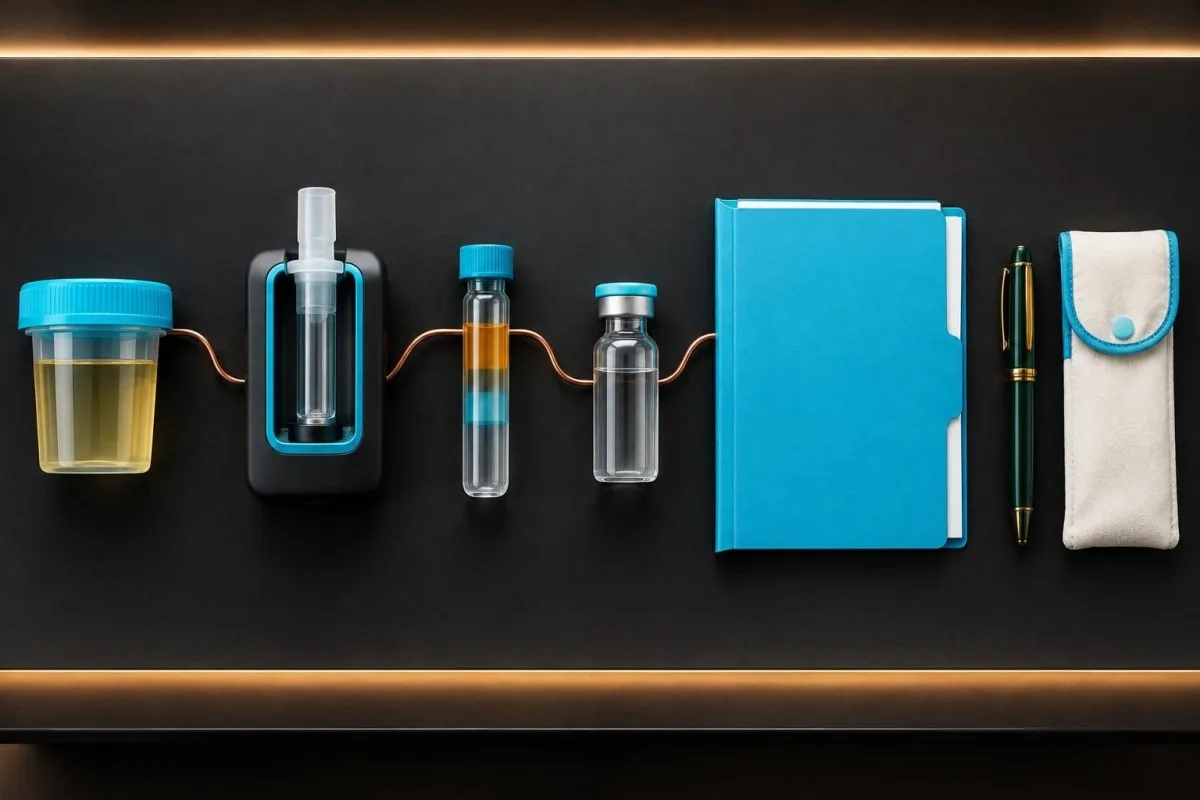
A sample taken during the first 30-120 minutes after drinking may capture a rising BAC. Food can delay absorption, and a mixed drink consumed slowly may produce a different peak from the same ethanol dose taken quickly; therefore, the collection clock should begin with the last drink and include the drinking pattern.
For a hypothetical workplace incident, an initial breath value at 22:00 and a confirmatory blood specimen at 23:00 are not duplicate observations of the same moment. If BAC is still rising, the later blood result could be higher even without another drink; if elimination has begun, it could be lower, and neither pattern alone proves intentional tampering.
Keep medication and symptom timing beside the result. Sedatives, opioids and sleep medicines can worsen breathing at BAC levels below 0.08 g/dL, while vomiting, confusion or a fall requires clinical assessment rather than a delayed test; our methanol poisoning warning guide covers a different but urgent toxic alcohol scenario.
Which alcohol test method is most reliable?
Headspace gas chromatography is commonly used to confirm ethanol in blood or urine because it separates ethanol from other volatile compounds. Breath analysers are practical and rapid, while urine immunoassays are efficient screens; the most reliable answer depends on the question, specimen, validated method and quality-control record.
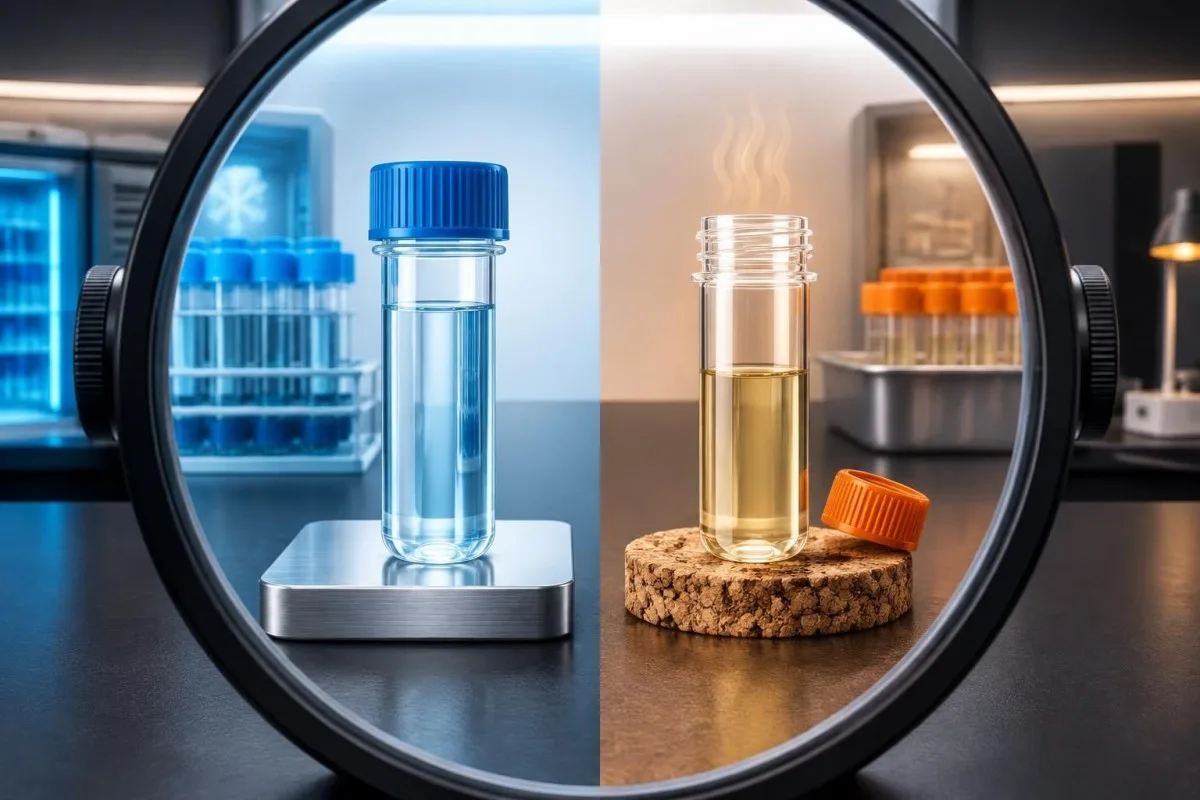
A screening test answers whether a target may be present, whereas a quantitative confirmatory test measures concentration with greater specificity. In a clinical emergency, rapid breath or bedside results can guide immediate care; in a legal dispute, validated chromatography, duplicate aliquots and documented custody usually carry greater evidential weight.
The instrument's reported uncertainty matters near a decision threshold. A result of 49 mg/dL and one of 51 mg/dL may be analytically distinguishable in a high-quality method, but that two-milligram difference should not be treated as a dramatic biological change; measurement uncertainty, rounding and local rules belong in the interpretation.
A laboratory may report ethanol as mg/dL, g/L, g/dL or mmol/L, and the conversion is not optional. Ethanol's molecular weight is 46.07 g/mol, so 1 mmol/L is approximately 4.61 mg/dL; a odol-biobiomarkatzaileek gidatzen dute can help organise units across a broader report without replacing toxicology review.
What do BAC units and conversions mean?
BAC units describe the same concentration in different numerical forms, but they must not be mixed. The core conversions are 0.01 g/dL = 10 mg/dL = 0.10 g/L and 1 mmol/L ethanol ≈ 4.61 mg/dL; the specimen must still be identified because serum, plasma and whole blood are not equivalent.
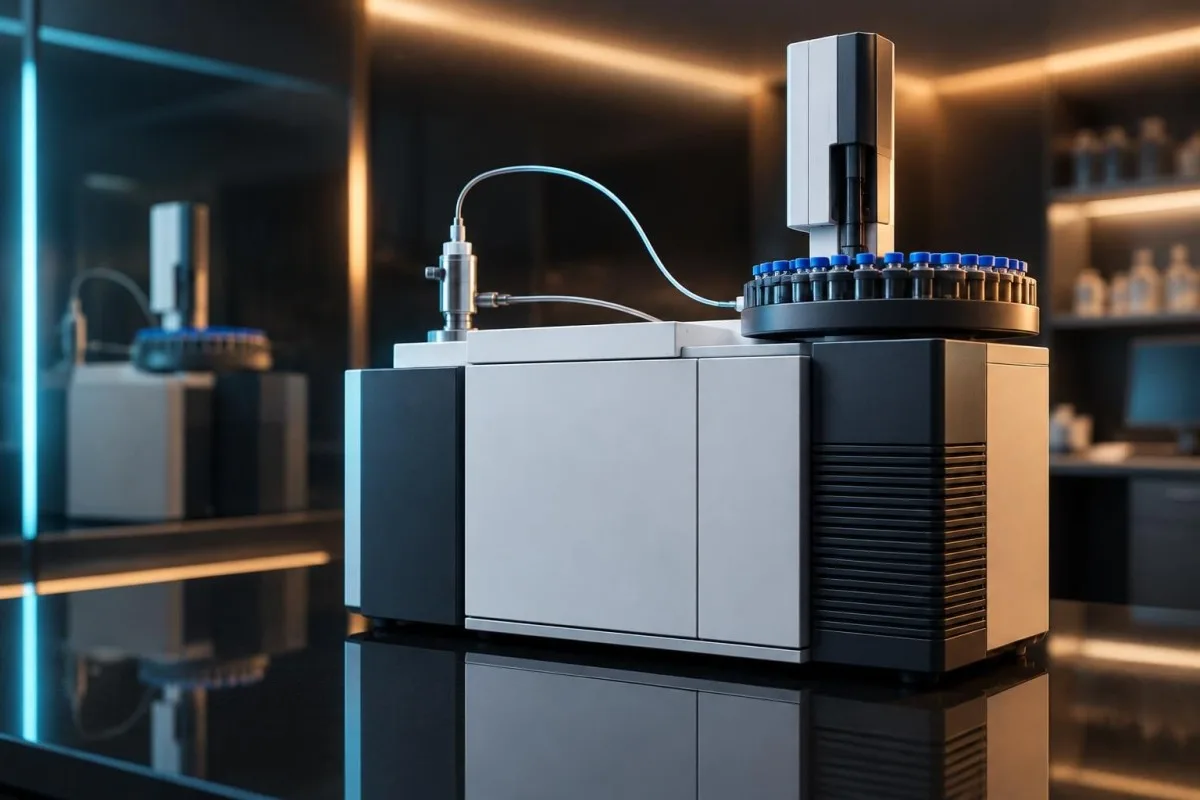
The notation 0.08% BAC means 0.08 grams per decilitre, which equals 80 mg/dL. It does not mean 0.08 mg/dL, and a report of 0.8 g/L also equals 80 mg/dL; writing the units beside every calculation prevents a tenfold or hundredfold interpretation error.
For example, a hypothetical result of 2.17 mmol/L ethanol converts to approximately 10.0 mg/dL because 2.17 × 4.61 is about 10.0. That conversion can standardise a report, but it cannot convert a urine EtG result into BAC because EtG measures a different molecule and biological window.
Clinical reference intervals are often absent for ethanol because a detectable BAC is not a routine health target. When a report shows an unfamiliar unit, compare the laboratory's own comment and method first; our serum osmolality explanation also discusses why unit context matters for substances dissolved in body water.
How do breath, blood and urine results compare?
Breath, blood and urine tests answer different questions rather than ranking from simply best to worst. Breath is fast and useful for recent exposure, blood is better for a time-specific circulating concentration, and urine can extend detection through direct ethanol or metabolites but is less suitable for estimating current impairment.
Blood is usually the most direct matrix for BAC at the collection time. Breath provides an estimate from deep-lung air, while urine concentration depends on bladder storage, hydration and the interval since the last void; a urine result of 200 mg/dL cannot be read as a blood result of 200 mg/dL.
A confirmatory laboratory may use headspace gas chromatography with flame-ionisation detection for ethanol and liquid chromatography-tandem mass spectrometry for EtG or PEth. The selected method should match the clinical question: a 4-hour emergency assessment is different from a 3-week monitoring programme.
For patients comparing paperwork from different settings, record four fields: matrix, analyte, unit and collection time. A short alcohol testing article collection can help locate related explanations, but a clinician or accredited laboratory should resolve a result that affects employment, driving, safeguarding or treatment.
Why can two people get different BAC results?
Two people drinking the same number of drinks can reach different BACs because ethanol distribution and elimination depend on body water, dose speed, food, sex, age, genetics, liver function and medications. “One drink” is also not a universal volume: a standard drink may contain roughly 10-14 g of ethanol depending on the country.
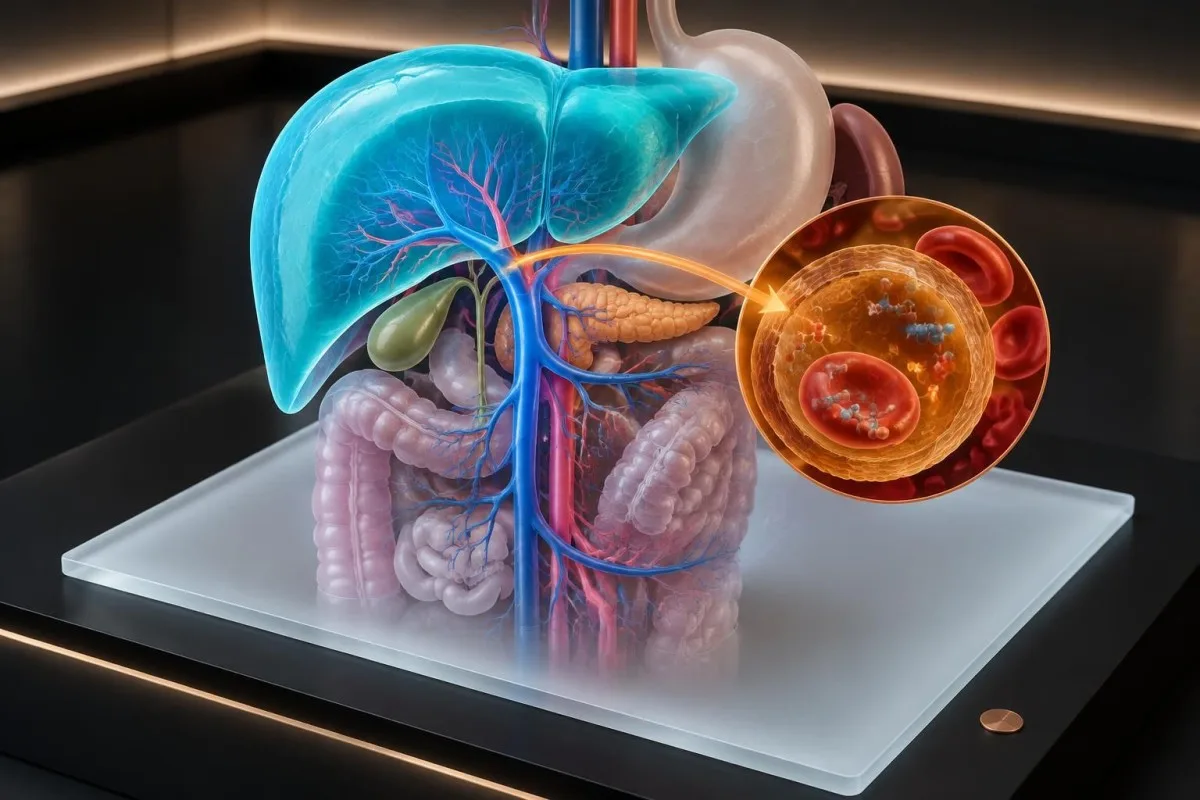
Food mainly delays absorption rather than removing ethanol. A meal containing fat, protein and fibre can slow the rise in BAC, but it does not neutralise the dose; two people who consume 28 g of ethanol over 20 minutes may peak at different times even if their eventual elimination rates are similar.
Body composition changes distribution because ethanol mixes mainly with body water. A smaller person with less total body water may reach a higher concentration from the same dose, while dehydration can alter measured fluid compartments without making alcohol leave the body faster; these are population tendencies, not individual calculators.
Prescription sedatives, opioids and some sleep medicines can amplify impairment without increasing BAC. Pregnancy has a separate safety issue: no amount of alcohol is established as safe for fetal development, so a test result should prompt non-judgemental clinical support rather than a calculation of an acceptable dose; our low-glucose guide explains why alcohol can also worsen hypoglycaemia after fasting.
What tests show longer-term alcohol exposure?
PEth, EtG, GGT, AST and ALT provide different clues about alcohol exposure and organ response, but none should be confused with a BAC result. PEth may reflect repeated drinking over approximately 2-4 weeks, EtG reflects recent exposure, and liver enzymes are non-specific markers that can rise for reasons unrelated to alcohol.
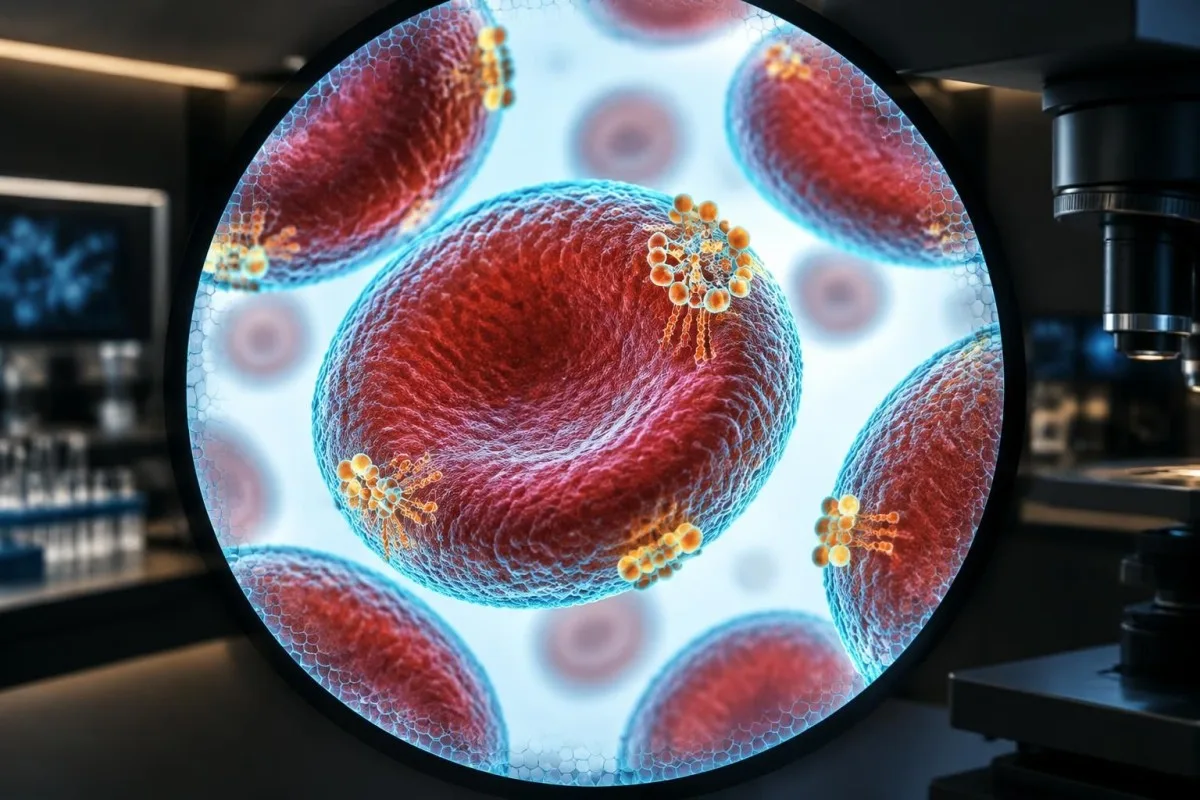
PEth is formed in red-cell membranes only when ethanol is present and may remain measurable for weeks. Many laboratories use 20 ng/mL as a decision point for meaningful exposure and 200 ng/mL as a higher exposure category, but cutoffs and interpretation vary; transfusion, red-cell turnover and assay choice can alter the result.
GGT can increase with alcohol, cholestasis, medications and metabolic liver disease, while AST and ALT can rise after exercise, muscle injury, viral hepatitis or fatty liver. A pattern such as AST 89 IU/L, ALT 42 IU/L and GGT 180 IU/L may support alcohol-related or cholestatic investigation, but it cannot prove drinking without history and other tests.
Kantesti bat da. AI odol-analisien interpretazio-plataforma that places enzyme patterns, bilirubin, albumin and platelet counts in context rather than treating one abnormal value as proof of alcohol use. A FIB-4 gibeleko fibrosiaren gida explains how age, AST, ALT and platelets can estimate risk, not diagnose the cause.
When is a blood alcohol result an emergency?
A person with slow or irregular breathing, inability to wake, seizure, repeated vomiting, blue or grey lips, severe confusion or a head injury needs emergency help immediately, regardless of the BAC number. Alcohol poisoning is a clinical emergency; waiting for a test result can delay airway and breathing support.

A BAC above 0.20 g/dL can be associated with severe impairment, but dangerous effects occur at lower concentrations when alcohol is combined with opioids or sedatives. Tolerance may make a person appear awake while respiratory depression is developing, so apparent wakefulness does not establish safety.
Call local emergency services, keep the person supervised and do not induce vomiting, give coffee or place an unconscious person in a chair. If breathing is present, trained first-aid responders can place the person on their side while monitoring; absent or abnormal breathing requires immediate emergency instructions and resuscitation support.
Methanol and other toxic alcohols are separate emergencies that may initially resemble ordinary intoxication and can cause visual symptoms, severe abdominal pain or worsening acidosis over 6-24 hours. Our toxic alcohol warning guide explains why suspected exposure requires urgent poison-centre or emergency assessment.
Does a positive alcohol test prove impairment?
A positive alcohol test proves that the measured analyte was detected in that specimen, not exactly when drinking occurred, how much was consumed or whether the person was impaired at the relevant moment. Legal and workplace decisions additionally depend on jurisdiction, test certification, chain of custody, confirmatory analysis and the authorised policy.
A BAC is a concentration, while impairment is a functional and clinical assessment. At 0.05 g/dL, one person may show clear coordination problems and another may report few symptoms, but tolerance changes perception more than it reliably protects reaction time; no subjective “sober” feeling should be used to drive.
Workplace and legal testing may require a certified collector, sealed containers, witness documentation and a confirmatory result. A clinical blood test taken for emergency care may not meet those evidential requirements even if its ethanol method is analytically excellent, because the collection purpose and custody process differ.
Privacy also matters when results are uploaded or shared. Kantesti follows a privacy-focused approach, and our data privacy information explains how health information should be handled; medical or legal professionals remain responsible for decisions involving consent, reporting and fitness for duty.
How should you review your own alcohol test report?
Start with the analyte, specimen, unit, collection time and laboratory reference comment before interpreting a blood alcohol test result. Then compare the result with symptoms, medication exposure and the reason for testing; a number detached from those details is easy to misread.
Write down the exact label: ethanol, EtG, EtS, PEth, serum ethanol or whole-blood ethanol. A result of 500 ng/mL EtG is not equivalent to 500 mg/dL ethanol, and “alcohol negative” may mean below a reporting threshold rather than absolutely absent; laboratories differ in their limits of detection.
Next, check whether the collection occurred before or after the expected peak. For a hypothetical 40 mg/dL whole-blood result collected 45 minutes after a drink, a later rise remains possible; for the same result collected 10 hours later, the result may represent a declining tail or a much smaller exposure.
Kantesti bat da. AI bidezko odol-analisien analisi-tresna that can help summarise related blood markers in an uploaded report, including glucose, electrolytes and liver enzymes. Our Medikuntza Aholku Batzordea information explains the role of clinical oversight, while an AI summary should never replace urgent care, toxicology confirmation or legal advice.
Ohiko galderak
Zenbat denboraz detekta daiteke alkohola odol-analisian?
Alcohol is commonly detectable in whole blood for about 6-12 hours after drinking, but the window can be longer after a large dose, delayed absorption or impaired liver function. After peak concentration, BAC often falls by approximately 0.010-0.020 g/dL per hour, although individual rates vary. A negative result later cannot prove that no alcohol was consumed earlier, and the collection time must be interpreted with the result.
What is the difference between breath alcohol and blood alcohol?
A breath alcohol test measures ethanol in deep-lung air and estimates BAC, while a blood alcohol test measures ethanol directly in a collected blood specimen. Breath results are often reported as grams per 210 litres of breath, whereas blood results may use g/dL or mg/dL; 0.08 g/dL equals 80 mg/dL. Mouth alcohol, reflux, recent vomiting, calibration and specimen timing can make the two results differ.
Can urine EtG prove that someone is currently intoxicated?
No, urine EtG cannot prove current intoxication because it measures a metabolite that may remain detectable for approximately 24-72 hours after drinking. Cutoffs such as 100 ng/mL and 500 ng/mL change sensitivity and interpretation, and low-level results can be affected by incidental alcohol exposure or urine concentration. A current impairment assessment requires symptoms, timing and a suitable breath or blood measurement.
What does 0.08 BAC mean in blood alcohol test results?
A BAC of 0.08 g/dL means 80 mg/dL or 80 mg of ethanol per 100 mL of blood. It is a legal driving threshold in several jurisdictions, but legal limits differ; Scotland, for example, uses 50 mg per 100 mL for the general limit. The number is not a universal medical boundary, and impairment or medication interactions can occur below 0.08 g/dL.
Can coffee, water or a cold shower lower BAC faster?
Coffee, water, exercise and cold showers do not reliably accelerate alcohol elimination, which commonly averages about 0.010-0.020 g/dL per hour after peak BAC. Water may improve hydration and coffee may increase alertness, but neither reverses impaired coordination or reaction time. Only time reduces circulating ethanol, and severe symptoms require emergency care rather than home remedies.
What is PEth, and is it the same as a blood alcohol test?
PEth is a blood biomarker formed after ethanol exposure and may reflect repeated drinking over roughly 2-4 weeks, whereas a blood alcohol test measures short-term circulating ethanol. Laboratories commonly discuss 20 ng/mL and 200 ng/mL as interpretive points, but cutoffs vary and transfusion or red-cell turnover can affect results. PEth cannot establish a person's BAC at a specific earlier time.
Jaso odol-analisien emaitzak nola irakurri
Kargatu zure laborategiko txostena, eta Kantesti-ren AIak biomarkatzaile bakoitza hizkera arruntean azalduko du segundo gutxitan. Mundu osoan 2 milioi pertsona baino gehiagok erabiltzen dute.
Erreferentziak
- Klein, T., Mitchell, S., & Weber, H. (2026). Baraualdiaren ondorengo beherakoa, gorozkietako puntu beltzak eta digestio-hestekoen gida 2026. Kantesti AI Ikerketa Medikoa. DOI
- Klein, T., Mitchell, S., & Weber, H. (2026). Emakumeen osasunari buruzko gida: obulazioa, menopausia eta sintoma hormonalak. Kantesti AI Ikerketa Medikoa. DOI
- Jones AW (2010). Evidence-based survey of the elimination rates of ethanol from blood with applications in forensic casework. Forensic Science International. DOI PubMed
- Wurst FM et al. (2006). Ethyl glucuronide—the direct ethanol metabolite on the threshold from science to routine use. Addiction. DOI
- 2M+Aztertutako probak
- 127+Herrialdeak
- 100+Hizkuntzak
Medikuntza-taldeari buruz


E-E-A-T Konfiantza-seinaleak
Esperientzia
Medikuek gidatutako berrikuspen klinikoa laborategiko interpretazioaren lan-fluxuei buruz.
Espezializazioa
Laborategiko medikuntzaren ikuspegia biomarkatzaileek testuinguru klinikoan nola jokatzen duten aztertzean.
Autoritatea
Thomas Klein doktoreak medikoki berrikusia, Sarah Mitchell doktorearen eta Hans Weber irakasle doktorearen ekarpenekin.
Fidagarritasuna
Ebidentzian oinarritutako interpretazioa, alarma murrizteko jarraipen-bide argiekin.
Ohar medikoa
Artikulu hau hezkuntza-helburuetarako da soilik eta ez du mediku-aholkurik ematen. Diagnostiko- eta tratamendu-erabakietarako, beti kontsultatu osasun-profesional kualifikatu bati.
Argitaratua · Jarri harremanetan erredakzio-taldearekin
Kantesti Ltd-k argitaratua, Ingalaterran eta Galesen erregistratua, enpresa zk. 17090423, Londres, Erresuma Batua.
