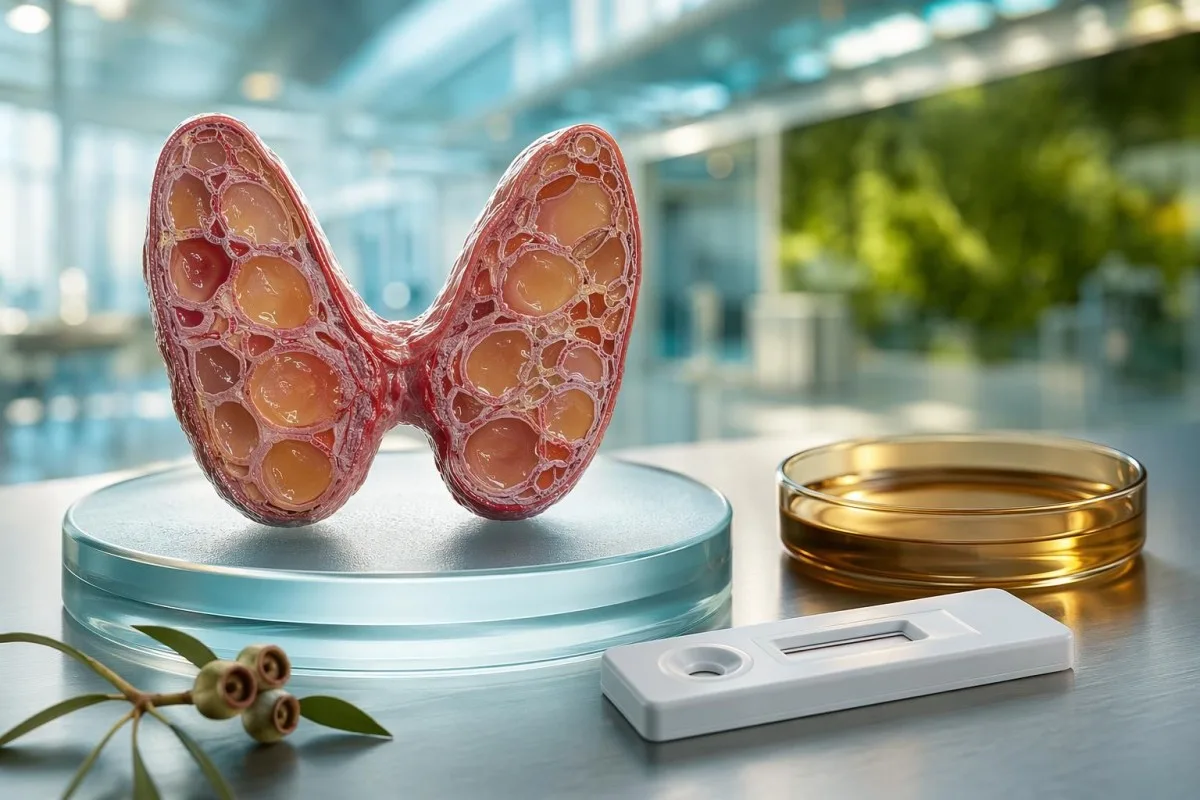
Ένα θετικό αποτέλεσμα TgAb μπορεί να υποδεικνύει αυτοάνοση θυρεοειδική νόσο, αλλά μπορεί επίσης να περιπλέξει την παρακολούθηση του καρκίνου του θυρεοειδούς, καθιστώντας τη θυρεοσφαιρίνη πιο δύσκολο να την εμπιστευτεί κανείς. Γι’ αυτό η εξέταση αυτή χρειάζεται πλαίσιο, όχι εικασίες.


- Τιμή αναφοράς Πολλά εργαστήρια αναφέρουν το TgAb ως αρνητικό κάτω από περίπου 4 IU/mL, αλλά ορισμένες αναλύσεις χρησιμοποιούν όρια πιο κοντά στο 1 ή στο 20 IU/mL.
- Αυτοάνοχο στοιχείο Το θετικό TgAb υποστηρίζει αυτοάνοση θυρεοειδική νόσο όταν συνδυάζεται με μη φυσιολογικό TSH, ελεύθερη T4 ή αντισώματα TPO.
- Παρακολούθηση καρκίνου Το TgAb μπορεί να κάνει τη θυρεοσφαιρίνη ορού να φαίνεται ψευδώς χαμηλή ή μη ανιχνεύσιμη μετά τη θεραπεία του καρκίνου του θυρεοειδούς.
- Μετράει η τάση Η πτώση του TgAb μέσα σε 6-24 μήνες μετά την θυρεοειδεκτομή συνήθως είναι καθησυχαστική· μια επίμονη αύξηση αξίζει αξιολόγηση.
- Όχι βαθμολογία βαρύτητας Ένα TgAb 200 IU/mL δεν σημαίνει αυτόματα χειρότερα συμπτώματα από 20 IU/mL.
- Καλύτερες συνοδευτικές εξετάσεις Τα TSH, ελεύθερη T4, TPOAb και μερικές φορές το υπερηχογράφημα δίνουν την πιο ξεκάθαρη ερμηνεία εξετάσεων αίματος.
- Χρόνος επανεξέτασης Οι σταθεροί ασθενείς συχνά επανελέγχονται σε 6-12 μήνες· η παρακολούθηση του καρκίνου του θυρεοειδούς μπορεί να γίνεται κάθε 3-12 μήνες.
- Επείπτωτα συμπτώματα Μια νέα μάζα στον τράχηλο, βραχνάδα που διαρκεί περισσότερο από 2-3 εβδομάδες, δυσκολία στην κατάποση ή έντονες παλpitations απαιτούν άμεση ιατρική αξιολόγηση.
Τι μετρά στην πραγματικότητα η εξέταση αίματος για αντισώματα θυρεοσφαιρίνης
Ο εξέταση αίματος αντισωμάτων θυρεοσφαιρίνης ανιχνεύει ανοσολογικές πρωτεΐνες που στοχεύουν θυρεοσφαιρίνη, την πρωτεΐνη αποθήκευσης μέσα στα θυλάκια του θυρεοειδούς. Ένα θετικό αποτέλεσμα υποστηρίζει συχνότερα την αυτοάνοση θυρεοειδική νόσο και, μετά από θεραπεία για καρκίνο του θυρεοειδούς, μπορεί να αλλοιώσει την παρακολούθηση παρεμβαίνοντας στη μέτρηση της θυρεοσφαιρίνης· σε Καντέστι Τεχνητή Νοημοσύνη επισημαίνουμε αυτή τη διαφορά άμεσα και το οδηγό για την εξέταση θυρεοειδούς δείχνει πού ταιριάζει το TgAb.
Η εξέταση μετρά αντισώματα, όχι θυρεοειδική ορμόνη, και όχι την ίδια την πρωτεΐνη θυρεοσφαιρίνη. Αυτό ακούγεται προφανές, αλλά στην πραγματική κλινική πράξη βλέπουμε τακτικά ασθενείς να μπερδεύουν TgAb με θυρεοσφαιρίνη, παρότι το ένα είναι δείκτης ανοσίας και το άλλο συχνά χρησιμοποιείται ως δείκτης όγκου μετά από θεραπεία για καρκίνο του θυρεοειδούς.
Ένα τυπικό σενάριο είναι ένας ασθενής με κόπωση, δυσκοιλιότητα και TSH 6,8 mIU/L, του οποίου η αναφορά δείχνει επίσης TgAb στα 118 IU/mL. Όταν ο Δρ. Thomas Klein εξετάζει ένα πάνελ όπως αυτό, το αποτέλεσμα των αντισωμάτων δεν στέκεται μόνο του· εξετάζουμε το ορμονικό προφίλ, τα συμπτώματα, τη λίστα φαρμάκων και αν υπάρχει ιστορικό θυρεοειδικής χειρουργικής.
Από τις 17 Μαΐου 2026, αυτό παραμένει ένας από τους πιο παρερμηνευμένους θυρεοειδικούς δείκτες στο διαδίκτυο. Το πρακτικό συμπέρασμα είναι απλό: ένα θετικό αποτέλεσμα TgAb συχνά λέει περισσότερα για τη δραστηριότητα του ανοσοποιητικού γύρω από τον θυρεοειδή παρά για το πόσο έντονα είναι τα συμπτώματά σας σήμερα, και σίγουρα δεν λειτουργεί ως γενική εξέταση προσυμπτωματικού ελέγχου για καρκίνο.
Γιατί οι ασθενείς μπερδεύουν το TgAb με τη θυρεοσφαιρίνη
Αντισώματα θυρεοσφαιρίνης είναι ανοσολογικές πρωτεΐνες, ενώ θυρεοσφαιρίνη είναι μια πρωτεΐνη που παράγεται από τον θυρεοειδή. Στα αποτελέσματα εξετάσεων αίματος που εξηγούνται σωστά, αυτοί οι δύο δείκτες διαχωρίζονται, επειδή το TgAb μπορεί να αλλοιώσει την παρακολούθηση της θυρεοσφαιρίνης, ειδικά μετά από θεραπεία για καρκίνο του θυρεοειδούς.
Τι θεωρείται φυσιολογικό, οριακό ή θετικό
A φυσιολογικό αποτέλεσμα TgAb εξαρτάται από τη μέθοδο, όχι από ένα ενιαίο παγκόσμιο όριο. Πολλά εργαστήρια αναφέρουν αρνητικό κάτω από περίπου 4 IU/mL, οριακό από 4-9 IU/mL, και θετικό στο 10 IU/mL ή υψηλότερο, αλλά ορισμένες μέθοδοι χρησιμοποιούν όρια αναφοράς πιο κοντά στο 1 IU/mL ή 20 IU/mL.
Αυτό που έχει σημασία για την ερμηνεία εξετάσεων αίματος είναι να χρησιμοποιήσετε το εύρος αναφοράς που εκτυπώνει το δικό σας εργαστήριο. Αν το αποτέλεσμα σας είναι 6 IU/mL, μπορεί να είναι ήπια θετικό σε ένα εργαστήριο και ακόμη να είναι αρνητικό σε ένα άλλο· το άρθρο μας για το οι τιμές εργαστηρίου σε διαφορετικές μονάδες εξηγεί γιατί οι δείκτες του θυρεοειδούς μπορεί να φαίνονται εκπληκτικά διαφορετικοί σε διαφορετικές αναφορές.
Ένας μεγαλύτερος αριθμός δεν δεν ισοδυναμεί αξιόπιστα με περισσότερη βλάβη στον θυρεοειδή. Βλέπουμε ασθενείς με TgAb πάνω από 200 IU/mL που εξακολουθούν να έχουν φυσιολογικό TSH και ελεύθερη T4, και βλέπουμε επίσης ασθενείς με TgAb περίπου 15 IU/mL που έχουν ήδη σαφή υποθυρεοειδισμό.
Τα οριακά αποτελέσματα χρειάζονται προσοχή, όχι πανικό. Μια αλλαγή από 4,2 σε 5,1 IU/mL είναι συχνά λιγότερο σημαντική από μια επίμονη αύξηση σε επαναληπτική εξέταση που γίνεται με την ίδια μέθοδο και ερμηνεύεται μαζί με TSH, ελεύθερη T4, συμπτώματα και προηγούμενα αποτελέσματα.
Γιατί ο ίδιος αριθμός σε IU/mL μπορεί να σημαίνει διαφορετικά πράγματα
Οι ανοσολογικές δοκιμασίες αντισωμάτων δεν ανιχνεύουν όλες τον ίδιο πληθυσμό αντισωμάτων με την ίδια ευαισθησία. Ορισμένα ευρωπαϊκά εργαστήρια χρησιμοποιούν χαμηλότερα όρια, ορισμένα νοσοκομειακά εργαστήρια χρησιμοποιούν ευρύτερα διαστήματα αναφοράς, και ακριβώς γι’ αυτό μια απλή ένδειξη στην εκτύπωση δεν απαντά στο ερώτημα τι σημαίνει η εξέταση αίματος μου.
Πώς ένα θετικό TgAb παραπέμπει σε θυρεοειδίτιδα Hashimoto
Επίμονος θετική TgAb σε συνδυασμό με μη φυσιολογικές θυρεοειδικές ορμόνες υποδηλώνει έντονα αυτοάνοση θυρεοειδίτιδα, ειδικά τη νόσο του Hashimoto. Στην πράξη, το μοτίβο γίνεται πιο πειστικό όταν η TSH είναι υψηλή, η ελεύθερη T4 είναι χαμηλή ή χαμηλο-φυσιολογική, ή αντισώματα TPO είναι επίσης θετικές.
Το Hashimoto συνήθως εξελίσσεται πρώτα ως ανοσολογική διαδικασία και αργότερα ως πρόβλημα ορμονών. Σύμφωνα με τους Caturegli et al. στο Autoimmunity Reviews (2014), τα θυρεοειδικά αυτοαντισώματα είναι κεντρικά στη διάγνωση, με TPOAb γενικά μεγαλύτερη ευαισθησία και TgAb παραμένουν κλινικά χρήσιμα· για μια πρακτική σύγκριση, δείτε τον οδηγό μας για αιματολογικές εξετάσεις θυρεοειδούς στη νόσο του Hashimoto.
Ένα συχνό μοτίβο σε κλινικό επίπεδο είναι TSH πάνω από 4,5 mIU/L, ελεύθερη T4 κοντά στο κατώτερο όριο, TPOAb έντονα θετικό, και TgAb μέτρια θετικό. Αυτός ο συνδυασμός λέει μια πιο ξεκάθαρη ιστορία από το TgAb μόνο του, και εξηγεί γιατί ένα μεμονωμένο θετικό αποτέλεσμα αντισώματος δεν πρέπει ποτέ να οδηγεί σε θεραπεία χωρίς πλαίσιο.
Μπορείτε επίσης να έχετε θετικό TgAb με φυσιολογική θυρεοειδική λειτουργία. Βλέπω αυτό το μοτίβο σε συγγενείς ατόμων με Hashimoto, σε ασθενείς που ελέγχονται κατά τη διερεύνηση γονιμότητας και σε άτομα των οποίων το μόνο παράπονο είναι ασαφής κόπωση· συχνά χρειάζονται παρακολούθηση, όχι άμεση λεβοθυροξίνη.
Μπορεί το TgAb να εμφανιστεί επίσης στη νόσο Graves ή στη θυρεοειδίτιδα μετά τον τοκετό
Ναί, Το TgAb μπορεί να είναι θετικό στη νόσο Graves, στη θυρεοειδίτιδα μετά τον τοκετό και στη σιωπηλή θυρεοειδίτιδα. Το αντισώμα δεν είναι αποκλειστικό για το Hashimoto, και αυτός είναι ένας λόγος που η σωστή ερμηνεία εξετάσεων αίματος χρησιμοποιεί πάντα ολόκληρο τον θυρεοειδικό πίνακα.
Σε νόσος Graves, το αντίσωμα που έχει τη μεγαλύτερη σημασία για τη διάγνωση είναι συνήθως TRAb ή TSI, αλλά μπορεί επίσης να υπάρχει TgAb. Όταν η ομάδα μας βλέπει TSH κατασταλμένη κάτω από 0.1 mIU/L, υψηλό ελεύθερο T4, και θετικό TgAb, δεν το αποκαλούμε Hashimoto από συνήθεια· κάνουμε ένα βήμα πίσω και ρωτάμε αν το ευρύτερο μοτίβο ταιριάζει με Graves, θυρεοειδίτιδα ή μια μεταβατική κατάσταση, και η δική μας Οδηγός Graves έναντι υποθυρεοειδισμού εξηγεί τη διαφορά.
Η θυρεοειδίτιδα μετά τον τοκετό συχνά εμφανίζεται εντός 12 μηνών μετά τον τοκετό και μπορεί να περάσει από μια υπερθυρεοειδική φάση, μια υποθυρεοειδική φάση ή και τις δύο. Οι οδηγίες εγκυμοσύνης και μετά τον τοκετό της Αμερικανικής Εταιρείας Θυρεοειδούς του 2017 σημειώνουν ότι η θετικότητα σε αντισώματα θυρεοειδούς αυξάνει τον κίνδυνο για θυρεοειδίτιδα μετά τον τοκετό (Alexander et al., 2017)· αν τα συμπτώματα ξεκίνησαν μετά τη γέννα, ο νέος οδηγός εργαστηριακών εξετάσεων για τις νέες μητέρες μπορεί να βοηθήσει να πλαισιωθούν τα επόμενα βήματα.
Το θέμα είναι ότι ο χρόνος αλλάζει το νόημα. Μια γυναίκα που είναι 4 μήνες μετά τον τοκετό με αίσθημα παλμών, TSH 0.03 mIU/L και θετικά TgAb χρειάζεται εντελώς διαφορετική συζήτηση από μια 52χρονη με σταδιακή αύξηση βάρους και TSH 7.2 mIU/L, ακόμη κι αν και οι δύο έχουν την ίδια ένδειξη αντισωμάτων.
Γιατί οι γιατροί συνδυάζουν το TgAb με TSH, ελεύθερη T4, TPOAb και υπερηχογράφημα
Τα TgAb από μόνα τους είναι ελλιπή. Η πιο ξεκάθαρη απάντηση συνήθως προκύπτει από τον συνδυασμό TSH, ελεύθερη T4, αντισώματα TPO, συμπτωμάτων και μερικές φορές υπερηχογραφήματος θυρεοειδούς όταν ο αδένας φαίνεται διογκωμένος ή όταν υπάρχει υποψία για όζο.
Τα περισσότερα εργαστήρια ενηλίκων χρησιμοποιούν ένα εύρος αναφοράς TSH περίπου 0.4-4.0 mIU/L, αν και παίζουν ρόλο η ηλικία, η εγκυμοσύνη και η τοπική μέθοδος. Το οδηγός για το εύρος του TSH και άρθρο μας για την ερμηνεία της ελεύθερης T4 δείχνει γιατί μια φυσιολογική ορμόνη σε μία επίσκεψη δεν ξεκαθαρίζει πάντα το ζήτημα αν τα συμπτώματα είναι έντονα ή αν τα αντισώματα επιμένουν.
TPOAb είναι συχνά ο πιο ευαίσθητος δείκτης αυτοανοσίας, αλλά TgAb προσθέτει χρήσιμες λεπτομέρειες όταν η εικόνα είναι οριακή. Ο λόγος που μας ανησυχεί το θετικό TPOAb μαζί με θετικά TgAb περισσότερο από τα TgAb μόνο είναι ότι μαζί αυξάνουν τις πιθανότητες η συνεχιζόμενη αυτοάνοση θυρεοειδική νόσος να είναι πραγματική και όχι τυχαίο εύρημα.
Ο υπέρηχος γίνεται χρήσιμος όταν υπάρχει ψηλαφητό εξόγκωμα, ασυμμετρία στον τράχηλο ή ανησυχία για όζους. Ένα θυρεοειδικό οζίδιο 1 cm ή μεγαλύτερο συχνά ενεργοποιεί δομημένη αξιολόγηση κινδύνου με υπερηχογράφημα, και το υπερηχογράφημα μπορεί επίσης να δείξει το ετερογενές ηχομορφολογικό πρότυπο που συνήθως συσχετίζουν οι κλινικοί με τη χρόνια αυτοάνοση θυρεοειδίτιδα.
Γιατί το θετικό αποτέλεσμα ενός εργαστηρίου μπορεί να είναι αρνητικό σε άλλο
ο σχεδιασμός της δοκιμασίας, η βαθμονόμηση και η ετερογένεια των αντισωμάτων μπορούν να κάνουν τα αποτελέσματα TgAb να διαφέρουν ουσιαστικά μεταξύ εργαστηρίων. Γι’ αυτό η επανάληψη της εξέτασης σε διαφορετικό εργαστήριο μπορεί να δημιουργήσει φαινομενική αλλαγή, ακόμη κι όταν η κατάσταση του θυρεοειδούς σας έχει μετακινηθεί ελάχιστα.
Διαφορετικές ανοσοδοκιμασίες αναγνωρίζουν διαφορετικούς στόχους αντισωμάτων και χρησιμοποιούν διαφορετικά πρότυπα βαθμονόμησης. Αν θέλετε μια πιο βαθιά ματιά σε αυτό το πρόβλημα, τα άρθρα μας για η διακύμανση των εξετάσεων αίματος και πώς να διαβάσετε τα αποτελέσματα των εξετάσεων αίματος εξηγούν γιατί μια τιμή που επισημαίνεται με σήμανση μερικές φορές αφορά τη μεθοδολογία όσο και τη βιολογία.
Σημασία έχουν και τα προαναλυτικά ζητήματα, αν και λιγότερο δραματικά απ’ ό,τι με ορισμένες ορμονικές εξετάσεις. Δόσεις υψηλές πριν από εξετάσεις θυρεοειδούς ή ορμονικές ανοσοπροσδιοριστικές εξετάσεις, νηστέψτε, που συχνά πωλούνται σε 5.000-10.000 mcg κάψουλες, συχνότερα προκαλούν TSH και ελεύθερη T4 παρά το TgAb, αλλά εξακολουθεί να ανήκει στη λίστα φαρμάκων· το οδηγός για βιοτίνη και εξετάσεις θυρεοειδούς μας καλύπτει αυτή την παγίδα.
Να η πρακτική συμβουλή που δίνω στους ασθενείς: αν παρακολουθείτε διαχρονικά το TgAb, χρησιμοποιήστε το ίδιο εργαστήριο όποτε είναι δυνατόν. Ένας μικρότερος αριθμός από νέο εργαστήριο μπορεί να μην είναι βελτίωση, και ένας μεγαλύτερος αριθμός από νέο εργαστήριο μπορεί να μην είναι επιδείνωση.
Γιατί το TgAb έχει σημασία μετά τη θεραπεία του καρκίνου του θυρεοειδούς
Μετά χειρουργική επέμβαση για καρκίνο του θυρεοειδούς, το TgAb έχει σημασία επειδή μπορεί να κάνει το θυρεοσφαιρίνη να φαίνεται ψευδώς χαμηλό ή ακόμη και μη ανιχνεύσιμο σε κοινές ανοσομετρικές δοκιμασίες. Αυτό είναι μεγάλο ζήτημα, επειδή η θυρεοσφαιρίνη συχνά χρησιμοποιείται ως δείκτης παρακολούθησης μετά τη θεραπεία για διαφοροποιημένο καρκίνο του θυρεοειδούς.
Σε ασθενείς που είχαν μια ολική θυρεοειδεκτομή, συχνά και με ραδιενεργό ιώδιο, οι κλινικοί συνήθως θέλουν το μη διεγερμένο Tg να είναι πολύ χαμηλό. Σύμφωνα με την κατευθυντήρια οδηγία για τον καρκίνο της Αμερικανικής Εταιρείας Θυρεοειδούς (Haugen et al., 2016), η ερμηνεία εξαρτάται από τη δοκιμασία και το επίπεδο κινδύνου, αλλά μια εξαιρετικά ευαίσθητη εξέταση που δείχνει Tg κάτω από 0,2 ng/mL συχνά καθησυχάζει μόνο όταν δεν υπάρχει παρεμβολή· το οδηγός για την εξέταση θυρεοειδούς μετά από θυρεοειδεκτομή εξηγεί τη συνολικότερη εικόνα της παρακολούθησης.
Πρόκειται για έναν από εκείνους τους τομείς όπου η συμφραζόμενη σημασία έχει μεγαλύτερη βαρύτητα από τον αριθμό. Αν η Tg είναι μη ανιχνεύσιμη αλλά η TgAb είναι θετική και αυξάνεται, το φαινομενικά καθησυχαστικό αποτέλεσμα της θυρεοσφαιρίνης μπορεί να είναι παραπλανητικό αντί να καθησυχαστικό.
Ο Δρ. Thomas Klein έχει δει ακριβώς αυτή τη σύγχυση σε κλινικές παρακολούθησης: ένας ασθενής ενημερώνεται ότι ο δείκτης όγκου του είναι εντάξει, όμως η τάση των αντισωμάτων ανεβαίνει επί ένα χρόνο. Η αυξανόμενη TgAb δεν αποδεικνύει υποτροπή, αλλά αρκεί για να δικαιολογήσει πιο προσεκτική επανεξέταση της απεικόνισης, του κινδύνου από την παθολογοανατομική εξέταση και του προγράμματος παρακολούθησης.
Πώς να διαβάζετε μαζί τις τάσεις της θυρεοσφαιρίνης και του TgAb
Στην παρακολούθηση του καρκίνου του θυρεοειδούς, η πτώση της TgAb μέσα σε 6-24 μήνες είναι συνήθως καθησυχαστική, ενώ μια επίμονη αύξηση αξίζει προσοχή. Μια μεμονωμένη τιμή σπάνια λέει όλη την ιστορία· η κατεύθυνση της τάσης είναι συχνά το τμήμα που έχει κλινική χρησιμότητα.
Ένας καλός κανόνας είναι να ερμηνεύετε τη θυρεοσφαιρίνη και την TgAb ως ζεύγος. Όταν η μηχανή τάσεων της AI μας βλέπει μη ανιχνεύσιμη Tg με πτώση της TgAb, αυτό συνήθως υποδηλώνει λιγότερο υπολειμματικό θυρεοειδικό ιστό με την πάροδο του χρόνου· όταν βλέπει μη ανιχνεύσιμη Tg με αυξανόμενη TgAb, επισημαίνουμε το αποτέλεσμα για πιο στενή κλινική επανεξέταση.
Η ποιότητα της τάσης εξαρτάται από τη συνέπεια. Ο οδηγός μας για τη σύγκριση εξετάσεων αίματος με την πάροδο του χρόνου δείχνει γιατί η εξέταση στο ίδιο εργαστήριο, με την ίδια μέθοδο, και σε παρόμοια διαστήματα κάνει το γράφημα πιο εύκολο να το εμπιστευτείτε.
Μικρές «ταλαντώσεις» είναι συχνές. Μια αλλαγή από 42 σε 44 IU/mL είναι συνήθως λιγότερο ουσιαστική από μια σταθερή αύξηση από 42 σε 88 σε 160 IU/mL σε επαναλαμβανόμενες εξετάσεις, και το άρθρο μας για το γράφημα τάσεων του εργαστηρίου δείχνει πώς να διαχωρίζεται ο θόρυβος από το σήμα.
Γιατί η τάση υπερισχύει του στιγμιότυπου
Ένα μεμονωμένο αποτέλεσμα μπορεί να αλλοιωθεί από παρεμβολή της μεθόδου, από το χρονικό σημείο ή από διαφορές μεταξύ εργαστηρίων. Μια σταθερή κατευθυντική μεταβολή σε τουλάχιστον δύο ή τρεις επισκέψεις παρακολούθησης δίνει στους κλινικούς ιατρούς μια πολύ πιο ισχυρή βάση για τη λήψη αποφάσεων.
Πότε ένα θετικό αποτέλεσμα δεν σημαίνει ότι είστε άρρωστος/η
A ένα θετικό αποτέλεσμα TgAb δεν σημαίνει αυτόματα ενεργό νόσο, σοβαρή νόσο ή καρκίνο. Μια ήπια θετικότητα μπορεί να εμφανιστεί πριν από την εμφάνιση αλλαγών στις ορμόνες, και ορισμένοι άνθρωποι παραμένουν ευθυρεοειδείς για χρόνια.
Εδώ είναι που πολλές διαδικτυακές εξηγήσεις κάνουν λάθος. Μια ήπια θετική αντισωματική απάντηση μπορεί να αντανακλά κίνδυνο, ιστορικό, ή ανοσολογική προδιάθεση και όχι μια τρέχουσα ανάγκη για θεραπεία, γι’ αυτό το άρθρο μας για το γιατί τα φυσιολογικά εύρη μπορεί να παραπλανήσουν είναι τόσο σχετικό με το τι σημαίνει η εξέταση αίματός μου.
Η θετική TgAb από μόνη της δεν δεν διαγνώστε καρκίνο του θυρεοειδούς. Στην πραγματικότητα, εκτός του πλαισίου της παρακολούθησης μετά τον καρκίνο, το αντίσωμα συνδέεται πολύ συχνότερα με αυτοάνοση νόσο του θυρεοειδούς παρά με κακοήθεια.
Βλέπω αυτό το μοτίβο αρκετά συχνά στον οικογενειακό έλεγχο. Ένας ασθενής με φυσιολογικό TSH, φυσιολογική ελεύθερη T4 και TgAb 18 IU/mL μπορεί απλώς να χρειάζεται επανέλεγχο σε 6-12 μήνες, ειδικά αν τα συμπτώματα είναι ελάχιστα και η κλινική εξέταση είναι κατά τα άλλα χωρίς ευρήματα.
Πότε να επαναλάβετε την εξέταση και τι αλλάζει με τον χρόνο
Οι σταθεροί ασθενείς με απομονωμένη θετικότητα TgAb συχνά επαναλαμβάνουν τον έλεγχο σε 6-12 μήνες. Οι ασθενείς με παρακολούθηση καρκίνου του θυρεοειδούς, πρόσφατη θυρεοειδίτιδα, αλλαγές σχετιζόμενες με την εγκυμοσύνη ή μεταβαλλόμενο TSH μπορεί να χρειάζονται μικρότερο μεσοδιάστημα, όπως 3-6 μήνες.
Αν το κύριο ερώτημα είναι η αυτοάνοση νόσος του θυρεοειδούς, ο χρόνος επανάληψης συνήθως εξαρτάται από TSH, ελεύθερη T4, και από τα συμπτώματα, παρά μόνο από το αντίσωμα. Ο οδηγός μας για πότε να επαναλάβετε τον έλεγχο μη φυσιολογικών εργαστηριακών εξετάσεων δίνει ένα ευρύτερο πλαίσιο που ταιριάζει καλά στον έλεγχο του θυρεοειδούς.
Τα αντισώματα τείνουν να αλλάζουν πιο αργά από τις ορμόνες. Αν ξεκινήσει ή προσαρμοστεί η λεβοθυροξίνη, το TSH συχνά επανελέγχεται σε περίπου 6-8 εβδομάδες, ενώ το TgAb μπορεί να μετατοπίζεται μέσα σε μήνες· το άρθρο μας για τα χρονικά ορόσημα του TSH μετά την έναρξη λεβοθυροξίνης εξηγεί γιατί αυτοί οι «χρονόμετροι» διαφέρουν.
Η εγκυμοσύνη και η περίοδος μετά τον τοκετό αξίζουν επιπλέον λεπτές αποχρώσεις. Ένα άτομο που είναι θετικό σε αντισώματα και αναπτύσσει νέα συμπτώματα μετά τον τοκετό μπορεί να χρειάζεται έλεγχο νωρίτερα από το συνηθισμένο ετήσιο πλάνο, ειδικά αν το TSH κυμαίνεται από κατασταλμένο σε αυξημένο μέσα σε λίγους μήνες.
Συμπτώματα και σενάρια ασθενών που δικαιολογούν πιο πλήρη θυρεοειδικό έλεγχο
Η κόπωση, η δυσανεξία στο κρύο, η αλλαγή βάρους, η δυσκοιλιότητα, η τριχόπτωση, οι παλμοί, ο τρόμος, η αίσθηση πληρότητας στον τράχηλο και οι ανεξήγητες εμμηνορροϊκές ή μεταγεννητικές αλλαγές μπορούν να δικαιολογήσουν έναν ευρύτερο έλεγχο του θυρεοειδούς. Το TgAb είναι πιο χρήσιμο όταν απαντά σε ένα πραγματικό κλινικό ερώτημα, όχι όταν παραγγέλλεται απομονωμένα.
Ένας ασθενής με κόπωση, ξηροδερμία, δυσκοιλιότητα, και ένα TSH 8,1 mIU/L είναι πολύ διαφορετικό από έναν ασθενή που νιώθει καλά και έχει μόνο TgAb 12 IU/mL. Αν προσπαθείτε να ξεδιαλύνετε ανεξήγητη χαμηλή ενέργεια, ο οδηγός εργαστηριακών εξετάσεων για την κόπωση βοηθά να εντοπίσετε πότε η εξέταση θυρεοειδούς ανήκει στη σύντομη λίστα.
Η δυσανεξία στο κρύο είναι ένα ακόμη κλασικό στοιχείο, αλλά όχι ειδικό για τον θυρεοειδή. Γι’ αυτό συχνά συγκρίνουμε τα αποτελέσματα του θυρεοειδούς με δείκτες σιδήρου και Β12, και ο οδηγός για τη δυσανεξία στο κρύο δείχνει πώς αλληλεπικαλύπτονται αυτά τα μοτίβα.
Υπάρχει και μια άλλη οπτική εδώ: τα συμπτώματα της περίσσειας θυρεοειδικών ορμονών έχουν επίσης σημασία. Αίσθημα παλμών, άγχος, δυσανεξία στη ζέστη και απώλεια βάρους με θετικό TgAb μπορούν ακόμη να παραπέμπουν σε νόσος Graves ή θυρεοειδίτιδα και όχι σε υποθυρεοειδισμό, ειδικά όταν το TSH είναι κάτω από 0.1 mIU/L.
Τι να κάνετε μετά από μια θετική εξέταση αίματος για αντισώματα θυρεοσφαιρίνης
Το επόμενο βήμα μετά από ένα θετικό αποτέλεσμα TgAb είναι συνήθως επιβεβαίωση της κατάστασης του θυρεοειδούς, όχι πανικός. Οι περισσότεροι ασθενείς χρειάζονται μια δομημένη επανεξέταση του TSH, ελεύθερη T4, των συμπτωμάτων, των φαρμάκων και μερικές φορές υπερηχογράφημα, αντί για μια άμεση απόφαση θεραπείας.
Αν οι ορμόνες είναι φυσιολογικές και τα συμπτώματα είναι ήπια, συχνά είναι κατάλληλη η προσεκτική παρακολούθηση. Αν το TSH είναι υψηλό, η ελεύθερη T4 είναι χαμηλή ή ο θυρεοειδής φαίνεται διογκωμένος, αλλάζει η συζήτηση και γίνεται πιο πιθανή η θεραπεία ή/και η απεικόνιση.
Η ανασκόπηση φαρμάκων και συμπληρωμάτων έχει μεγαλύτερη σημασία από ό,τι νομίζουν πολλοί. Οι ενήλικες χρειάζονται περίπου 55 mcg σεληνίου την ημέρα, ενώ η χρόνια πρόσληψη πάνω από 400 mcg την ημέρα μπορεί να είναι επιβλαβής, οπότε γενικά προτιμώ στρατηγικές «πρώτα από την τροφή» και προσεκτική δοσολογία· ο οδηγός σεληνίου και θυρεοειδούς είναι ένα λογικό σημείο εκκίνησης.
Μην κυνηγάτε μόνο τον αριθμό του αντισώματος. Μας απασχολεί λιγότερο το αν το TgAb είναι 60 ή 160 IU/mL και περισσότερο το αν το TSH ανεβαίνει σταδιακά, αν η ελεύθερη T4 πέφτει, αν τα συμπτώματα συσσωρεύονται και αν υπάρχει ιστορικό καρκίνου του θυρεοειδούς στο ιστορικό.
Πώς το Kantesti AI ερμηνεύει αυτά τα αποτελέσματα στο πλαίσιο
Το Kantesti AI δεν διαβάζει το TgAb μεμονωμένα. Η μηχανή μας ελέγχει το εύρος της εξέτασης, τις αντίστοιχες θυρεοειδικές ορμόνες, ενδείξεις από φάρμακα, τη διεύθυνση της τάσης και το αν η αναφορά μοιάζει περισσότερο με παρακολούθηση αυτοάνοσης θυρεοειδικής νόσου ή με παρακολούθηση καρκίνου του θυρεοειδούς· μπορείτε να δείτε τη ροή εργασίας στο η πλατφόρμα μας για ανάλυση αίματος με AI.
Το Kantesti AI συγκρίνει την αναφερόμενη τιμή TgAb με TSH, ελεύθερη T4, TPOAb, και προηγούμενους θυρεοειδικούς πίνακες πριν δημιουργήσει αποτελέσματα εξετάσεων αίματος με απλή γλώσσα. Επισημαίνουμε επίσης τους περιορισμούς της μεθόδου και της ασφάλειας, και το η σελίδα ιατρικής επικύρωσης εξηγεί πώς χειριζόμαστε τα κλινικά πρότυπα και την αβεβαιότητα.
Σε όλο 2+ εκατομμύρια χρήστες σε 127+ χώρες και 75+ γλώσσες, βλέπουμε σταθερά την ίδια σύγχυση: στους ανθρώπους λέγεται ότι ένα αντίσωμα είναι υψηλό, αλλά δεν τους λένε αν αυτό έχει σημασία τώρα, αργότερα ή κυρίως στην παρακολούθηση για καρκίνο. Γι’ αυτό η ροή εργασίας μας σε PDF και φωτογραφία έχει σημασία· το οδηγός για μεταφόρτωση PDF εξετάσεων αίματος δείχνει πώς η πλατφόρμα μας διαβάζει ολόκληρη την αναφορά σε περίπου 60 δευτερόλεπτα αντί για ένα μεμονωμένο στοιχείο.
Ο Thomas Klein, MD, εξετάζει το περιεχόμενο για τον θυρεοειδή με την ιατρική μας ομάδα, και οι γιατροί πίσω από τα μοντέλα μας αναφέρονται στο Ιατρική Συμβουλευτική Επιτροπή. Όταν αναφέρουμε ένα σήμα αντισωμάτων θυρεοειδούς, δηλώνουμε επίσης τι θα αύξανε την ανησυχία, τι θα τη μείωνε και πότε ένας κλινικός ιατρός θα πρέπει να παρέμβει.
Δημοσιεύουμε επίσης τη μεθοδολογία μας. Για τους αναγνώστες που θέλουν την τεχνική πλευρά, το κλινική μελέτη επικύρωσης δίνει μια άποψη επιπέδου έρευνας για το πώς το Kantesti αξιολογεί την ποιότητα της ερμηνείας εργαστηριακών εξετάσεων σε μεγάλα διεθνή σύνολα δεδομένων.
Πότε πρέπει να ζητήσετε άμεση ιατρική αξιολόγηση
Η θετικότητα TgAb από μόνη της σπάνια είναι επείγουσα, αλλά ορισμένα συμπτώματα είναι. Απαιτείται άμεση ιατρική αξιολόγηση για μια νέα μάζα στον τράχηλο, προοδευτική βράγχυνση που διαρκεί περισσότερο από 2-3 εβδομάδες, δυσκολία στην κατάποση, καρδιακός ρυθμός ηρεμίας πάνω από 120, σοβαρή δύσπνοια, σύγχυση ή έντονη υπνηλία με οίδημα και δυσανεξία στο κρύο.
Μετά από θεραπεία για καρκίνο του θυρεοειδούς, η αύξηση TgAb μαζί με ένα νέο εξόγκωμα, ο επίμονος βήχας ή η αλλαγή στη φωνή αξίζουν ταχύτερη παρακολούθηση από μια ήσυχη αύξηση αντισωμάτων σε μια κατά τα άλλα σταθερή αναφορά. Σε αυτοάνοση νόσο, η επείγουσα αξιολόγηση καθοδηγείται συχνότερα από συμπτώματα θυρεοτοξίκωσης, σοβαρά συμπτώματα υποθυρεοειδισμού, ή ένα πλαίσιο σχετικό με την εγκυμοσύνη, παρά από τον ίδιο τον αριθμό του αντισώματος.
Αν τα αποτελέσματά σας είναι μπερδεμένα και το ραντεβού σας είναι ακόμη σε λίγες μέρες, μπορείτε να τα ανεβάσετε στο δωρεάν demo ερμηνείας εξετάσεων αίματος για δομημένο, φιλικό προς τον ασθενή πλαίσιο. Και αν κάτι στην αναφορά ή στα συμπτώματά σας χρειάζεται κλιμάκωση, χρησιμοποιήστε το Επικοινωνήστε μαζί μας ώστε η σωστή ομάδα να σας υποδείξει το ασφαλέστερο επόμενο βήμα.
Συμπέρασμα: τα αντισώματα θυρεοσφαιρίνης είναι ένας δείκτης πλαισίου. Έχουν μεγάλη σημασία σε αυτοάνοση νόσο του θυρεοειδούς, και έχουν διαφορετική σημασία μετά από καρκίνο του θυρεοειδούς, αλλά το αποτέλεσμα γίνεται πραγματικά χρήσιμο μόνο όταν ερμηνεύεται μαζί με τις ορμόνες, τα συμπτώματα, το ιστορικό και τις τάσεις.
Συχνές Ερωτήσεις
Ποιο είναι ένα φυσιολογικό επίπεδο αντισωμάτων έναντι της θυρεοσφαιρίνης;
Το φυσιολογικό επίπεδο αντισωμάτων έναντι της θυρεοσφαιρίνης εξαρτάται από τη μέθοδο ανάλυσης, αλλά πολλά εργαστήρια αναφέρουν τα TgAb ως αρνητικά κάτω από περίπου 4 IU/mL. Ορισμένες μέθοδοι χρησιμοποιούν χαμηλότερα ή υψηλότερα όρια, όπως λιγότερο από 1 IU/mL ή λιγότερο από 20 IU/mL, επομένως το αναγραφόμενο εύρος του εργαστηρίου έχει μεγαλύτερη σημασία από έναν γενικό αριθμό από το διαδίκτυο. Ένα οριακό αποτέλεσμα ακριβώς πάνω από το όριο είναι συχνά λιγότερο ενημερωτικό από το συνολικό πρότυπο με TSH, ελεύθερη T4 και επαναληπτικές εξετάσεις στο ίδιο εργαστήριο.
Μια θετική εξέταση TgAb σημαίνει ότι έχω Hashimoto;
Ένα θετικό αποτέλεσμα TgAb αυξάνει την πιθανότητα αυτοάνοσης θυρεοειδικής νόσου, αλλά δεν θέτει από μόνο του τη διάγνωση της θυρεοειδίτιδας Hashimoto. Η διάγνωση γίνεται ισχυρότερη όταν το TSH είναι αυξημένο, η ελεύθερη T4 είναι χαμηλή ή χαμηλο-φυσιολογική, τα αντισώματα TPO είναι επίσης θετικά ή ο υπέρηχος δείχνει ένα τυπικό ετερογενές θυρεοειδικό πρότυπο. Μερικοί άνθρωποι έχουν θετικό TgAb για μήνες ή χρόνια ενώ το TSH παραμένει εντός του εύρους αναφοράς, επομένως οι αποφάσεις για τη θεραπεία δεν πρέπει να βασίζονται μόνο στο αντίσωμα.
Μπορούν τα αντισώματα θυρεοσφαιρίνης να σημαίνουν καρκίνο του θυρεοειδούς;
Οι θετικές αντιθυρεοσφαιρινικές αντισώματα συνήθως δεν σημαίνουν καρκίνο του θυρεοειδούς. Στις περισσότερες γενικές εξωτερικές δομές, το TgAb συνδέεται πολύ πιο στενά με αυτοάνοση θυρεοειδοπάθεια παρά με κακοήθεια. Το ζήτημα που σχετίζεται με τον καρκίνο είναι διαφορετικό: μετά από θεραπεία για καρκίνο του θυρεοειδούς, τα TgAb μπορούν να παρεμβαίνουν στη μέτρηση της θυρεοσφαιρίνης και να κάνουν ένα αποτέλεσμα δείκτη όγκου να φαίνεται ψευδώς χαμηλό, γι’ αυτό έχει σημασία η ερμηνεία της τάσης.
Γιατί ελέγχονται τα αντισώματα θυρεοσφαιρίνης μετά από θυρεοειδεκτομή για καρκίνο;
Μετά από θυρεοειδεκτομή για διαφοροποιημένο καρκίνο του θυρεοειδούς, οι κλινικοί ιατροί συχνά παρακολουθούν τη θυρεοσφαιρίνη ορού ως δείκτη υπολειπόμενου θυρεοειδικού ιστού. Η TgAb ελέγχεται επειδή τα θετικά αντισώματα μπορούν να παρεμβαίνουν στις συνήθεις ανοσομετρικές αναλύσεις θυρεοσφαιρίνης και να κάνουν τη θυρεοσφαιρίνη να φαίνεται μη ανιχνεύσιμη ακόμη και όταν υπάρχει υπολειπόμενος ιστός. Μια φθίνουσα τάση της TgAb κατά τη διάρκεια 6-24 μηνών είναι συνήθως πιο καθησυχαστική από μια σταθερή ή αυξητική τάση, ειδικά όταν μετράται με την ίδια εργαστηριακή μέθοδο.
Πόσο συχνά θα πρέπει να επαναλαμβάνεται ένα θετικό αποτέλεσμα TgAb;
Για σταθερούς ασθενείς χωρίς σημαντικά συμπτώματα, η επανάληψη των εξετάσεων συχνά γίνεται σε 6-12 μήνες. Αν το TSH μεταβάλλεται, αν τα συμπτώματα από τον θυρεοειδή αυξάνονται, αν ο ασθενής είναι λεχωίδα ή αν εμπλέκεται παρακολούθηση για καρκίνο του θυρεοειδούς, η επανάληψη των εξετάσεων μπορεί να γίνει νωρίτερα, μερικές φορές κάθε 3-6 μήνες. Η πιο χρήσιμη σύγκριση προκύπτει από τη χρήση του ίδιου εργαστηρίου και την ταυτόχρονη ανάγνωση TgAb μαζί με TSH, ελεύθερη T4 και κλινικό ιστορικό.
Μπορούν τα αντισώματα έναντι της θυρεοσφαιρίνης να μειωθούν ξανά;
Ναι, τα αντισώματα έναντι της θυρεοσφαιρίνης μπορούν να μειώνονται με την πάροδο του χρόνου. Σε αυτοάνοση θυρεοειδοπάθεια μπορεί να μειώνονται σταδιακά, να παραμένουν θετικά για χρόνια ή να παρουσιάζουν διακυμάνσεις ανάλογα με τη δραστηριότητα του ανοσοποιητικού, ενώ μετά από θυρεοειδεκτομή για καρκίνο του θυρεοειδούς συχνά μειώνονται μέσα σε διάστημα άνω του 1-3 ετών, εάν παραμένει ελάχιστος θυρεοειδικός ιστός. Ένας μειούμενος αριθμός είναι συνήθως πιο σημαντικός από μία μεμονωμένη χαμηλή τιμή, και μια επίμονη αύξηση είναι το μοτίβο που αξίζει πιο προσεκτική επανεξέταση.
Χρειάζεται να κάνω νηστεία πριν από μια εξέταση αίματος για αντισώματα θυρεοσφαιρίνης;
Όχι. Συνήθως δεν απαιτείται νηστεία για μια εξέταση TgAb, αν και οι οδηγίες μπορεί να διαφέρουν εάν παραγγελθούν άλλες εξετάσεις αίματος κατά την ίδια επίσκεψη. Εάν λαμβάνετε λεβοθυροξίνη, ρωτήστε εάν πρέπει να γίνει η αιμοληψία πριν από την ημερήσια δόση σας όταν ελέγχεται η ελεύθερη Τ4.
Πρέπει να εξεταστούν τα μέλη της οικογένειάς μου αν τα αντισώματα κατά της θυρεοσφαιρίνης (TgAb) είναι θετικά;
Η αυτοάνοση νόσος του θυρεοειδούς μπορεί να εμφανίζεται σε οικογένειες, αλλά οι συγγενείς δεν χρειάζονται έλεγχο TgAb μόνο και μόνο επειδή το αποτέλεσμά σας είναι θετικό. Ένας/μία κλινικός μπορεί να συστήσει έλεγχο TSH για συγγενείς που εμφανίζουν συμπτώματα, έχουν βρογχοκήλη, είναι έγκυοι ή προγραμματίζουν εγκυμοσύνη, ή έχουν άλλη αυτοάνοση πάθηση.
Μπορεί το ιώδιο ή τα συμπληρώματα από φύκια (kelp) να επηρεάσουν τα αντισώματα κατά της θυρεοσφαιρίνης;
Το ιώδιο σε υψηλές δόσεις, συμπεριλαμβανομένων των προϊόντων από φύκια (kelp), μπορεί να επιδεινώσει αυτοάνοσα προβλήματα του θυρεοειδούς σε ορισμένα άτομα και ενδέχεται να μεταβάλει τις εξετάσεις θυρεοειδούς. Αποφύγετε την έναρξη συμπληρωμάτων πάνω από την συνήθη ημερήσια απαιτούμενη δόση, εκτός αν ο κλινικός σας ιατρός τα συστήσει, ειδικά αν το TSH, το TPOAb ή το TgAb είναι μη φυσιολογικά.
Λάβετε σήμερα ανάλυση εξετάσεων αίματος με AI
Εγγραφείτε σε πάνω από 2 εκατομμύρια χρήστες παγκοσμίως που εμπιστεύονται το Kantesti για άμεση, ακριβή ανάλυση εργαστηριακών εξετάσεων. Ανεβάστε τα αποτελέσματα εξετάσεων αίματος και λάβετε ολοκληρωμένη ερμηνεία βιοδεικτών του 15,000+ μέσα σε δευτερόλεπτα.
📚 Παραπομπές σε δημοσιεύσεις έρευνας
Klein, T., Mitchell, S., & Weber, H. (2026). Πολύγλωσση AI με Υποστήριξη Κλινικής Απόφασης για Πρώιμο Τριαζ Αποκλεισμού του Ιού της Χανταβίρωσης: Σχεδιασμός, Μηχανική Επικύρωση και Πραγματική Ανάπτυξη σε 50.000 Ερμηνευμένες Αναφορές Εξετάσεων Αίματος. Ιατρική έρευνα του Kantesti με AI.
Klein, T., Mitchell, S., & Weber, H. (2026). Οδηγός Πρωτεϊνών Ορού: Εξέταση Αίματος Σφαιρινών, Αλβουμίνης και Αναλογίας A/G. Ιατρική έρευνα του Kantesti με AI.
📖 Εξωτερικές ιατρικές αναφορές
⚕️ Ιατρική αποποίηση ευθύνης
Αυτό το άρθρο προορίζεται μόνο για εκπαιδευτικούς σκοπούς και δεν αποτελεί ιατρική συμβουλή. Συμβουλεύεστε πάντα έναν κατάλληλο επαγγελματία υγείας για αποφάσεις σχετικά με τη διάγνωση και τη θεραπεία.
Σήματα εμπιστοσύνης E-E-A-T
Εμπειρία
Κλινική ανασκόπηση από ιατρό για τις ροές εργασίας ερμηνείας εργαστηριακών αποτελεσμάτων.
Πραγματογνωμοσύνη
Εστίαση στην εργαστηριακή ιατρική στο πώς συμπεριφέρονται οι βιοδείκτες στο κλινικό πλαίσιο.
Αυθεντικότητα
Γραμμένο από τον Δρ. Thomas Klein με ανασκόπηση από την Δρ. Sarah Mitchell και τον Καθ. Dr. Hans Weber.
Αξιοπιστία
Ερμηνεία βασισμένη σε τεκμηριωμένα δεδομένα με σαφείς οδούς παρακολούθησης για τη μείωση του συναγερμού.