Ang positibong resulta sa hugaw dili awtomatikong nagkinahanglan og tambal. Ang desisyon sa pagtambal nagdepende sa pagkahubas, sa dagan sa mga sintomas, sa edad, ug sa kahimtang sa resistensiya sa lawas—dili lang sa timailhan sa laboratoryo.



- Positibong resulta sa hugaw nagpasabot nga nakit-an ang Cryptosporidium; wala kini magsukod sa pagkahubas o awtomatikong magpasabot nga kinahanglan og tambal.
- Hydration lang mahimong angay alang sa tawo nga himsog sa ubang bahin kon malumo ang kalibanga, nag-anam og kaayo, ug madumala pinaagi sa pag-inom og mga likido.
- Nitazoxanide usa ka kapilian nga gireseta alang sa mga pasyenteng adunay mga sintomas ug normal ang resistensiya sa lawas, nga nag-edad og 1 ka tuig pataas, ubos sa pagtugot sa paggamit niini sa US; mas makatarunganon nga hisgotan ang pagtambal kon magpadayon o makabalda ang kalibanga.
- Regimen sa reseta alang sa mga hamtong mao ang nitazoxanide 500 mg kaduha kada adlaw uban sa pagkaon sulod sa 3 ka adlaw alang sa mga pasyenteng normal ang resistensiya sa lawas ug nag-edad og 12 anyos pataas.
- Mıluya nga resistensiya sa lawas nag-usab sa plano: dili sigurado ang kaepektibo sa nitazoxanide, ug mas importante tingali ang pagpabalik sa normal nga gimbuhaton sa immune system kaysa pagdugay sa pagtambal batok sa parasito.
- Panahon sa pagkaayo kasagarang molungtad og 2–3 ka semana sa mga tawo nga himsog ang immune system, bisan tuod mahimong mag-usab-usab ang mga sintomas hangtod sa 30 ka adlaw.
- Pag-usab sa pagsusi sa hugaw dili kasagarang gikinahanglan human sa klinikal nga pagkaayo; gisugyot sa CDC nga ikonsiderar ang pagsusi pag-usab labing menos 1 ka semana human sa kataposang dosis sa nitazoxanide kon magpadayon ang mga sintomas.
- Pagdili sa paglangoy molungtad hangtod sa 2 ka semana human hingpit nga mohunong ang kalibanga, bisan pa kon milampos ang pagtambal.
Kinahanglan ba tambalan ang positibong resulta sa Cryptosporidium?
A positibo sa cryptosporidium ang resulta sa hugaw wala magpasabot dayon nga kinahanglan nimo ang nitazoxanide. Ang mga tawo nga himsog sa ubang bahin ug adunay malumo, nagkaanam og kaayong kalibanga kasagarang maulian pinaagi lamang sa pag-inom og igo nga pluwido; makatarunganong hisgotan ang tambal nga gireseta sa doktor kon magpadayon ang kalibanga o makasamok kini sa pagkaon, pagkatulog, o adlaw-adlaw nga kinabuhi. Ang mga pasyenteng huyang ang immune system nagkinahanglan og sayo nga pag-atiman ubos sa pagdumala sa doktor kay dili kasaligan ang kaepektibo sa tambal.
Ang Cryptosporidium usa ka mikroskopikong parasito nga kasagarang magpahinabo og tubigon nga kalibanga, dili impeksiyong bakteryal nga nagkinahanglan og ordinaryong antibiotiko. Tulo ka pangutana ang mas hinungdanon kaysa positibong marka: mapulihan ba nimo ang nawalang pluwido, nagkaanam ba og kaayo ang mga sintomas, ug normal ba ang paglihok sa imong immune system? Lahi ang hisgotanan bahin sa usa ka tawo nga komportableng makainom sa ika-4 nga adlaw, kumpara sa usa nga nagkaanam og kaluya samtang nagpadayon ang kalibanga sa ika-10 nga adlaw.
Gikinahanglan gihapon ang pag-inom og igo nga pluwido, gireseta man o wala ang nitazoxanide. Dili dayon mapulihan sa tambal ang nawalang sodium, potassium, o tubig, ug dili niini mahimo nga luwas ang pagdumala sa grabeng pagka-uga sa lawas sa balay. Walay sukdanan sa gidaghanon sa paglibang nga giuyonan sa tanan isip basihan sa pagtambal; mas mapuslanon ang pagtan-aw sa hiniusang gidaghanon sa mogawas, makuha nga pluwido, gidaghanon sa ihi, ug kahuyang sa pasyente kaysa pag-ihap lamang sa mga pag-adto sa kasilyas.
Ang Kantesti usa ka AI nga tigtuki sa mga pagsusi sa dugo nga makatabang sa pagpasabot sa kauban nga mga resulta sa elektrolayt ug kidney, apan dili niini mapamatud-an kining diyagnosis sa hugaw o makareseta og pagtambal. Kantesti's organisasyon ug klinikal nga katuyoan lahi sa konsultasyon sa espesyalista sa mga sakit nga makatakod. Sukad sa Oktubre 25, 2026, nagpabilin nga pareho ang praktikal nga kalainan: mailhan sa positibong pagsusi ang organismo, samtang ang kahimtang sa pasyente maoy motino sa sunod nga lakang.
Unsa gayod ang gipakita sa positibong pagsulay sa hugaw?
Ang positibong resulta sa pagsusi sa hugaw nagpasabot nga nakamatikod ang laboratoryo og materyal nga henetiko, antigen, o mga oocyst sa Cryptosporidium, depende sa pamaagi niini. Dili niini mahibaloi ang eksaktong petsa sa impeksiyon o mapamatud-an nga kining parasito maoy hinungdan sa tanang kasamtangang sintomas. Kasagarang magsugod ang mga sintomas 2–10 ka adlaw human ma-expose, busa lagmit nahitabo ang exposure dugay pa sa unang pagluag sa imong hugaw.
Ang mga panel sa multiplex PCR makamatikod og labaw sa 1 ka organismo sa samang sampol. Kon ireport usab ang Giardia, mahimong mausab ang pagpili sa pagtambal kay dili mapuli-puli ang duha ka parasito, bisan tuod pareho silang makapahinabo og dugayng kalibanga. Ang among pagpasabot sa mga resulta sa Giardia antigen makatabang sa pag-ila nianang nakit-an gikan sa resulta sa Cryptosporidium nga dili magdahom nga kinahanglan nga bisan hain sa mga organismo maoy mopasabot sa tanang sintomas.
A qualitative result such as “detected” is not a severity score. Laboratories may use different reporting formats, and a PCR cycle-threshold value, if supplied, is not a validated home-treatment cutoff. A person with 2 loose stools daily can still need assessment if they are a transplant recipient; another person with a strongly positive molecular result may already be clinically recovering.
Recent antibiotics and mixed panel findings deserve separate interpretation. A concurrent C. difficile result can require toxin testing and clinical correlation rather than automatic treatment of both detections; our guide to discordant C. difficile results explains that distinction. Cryptosporidium testing is ordinarily stool-based, so a normal white-cell count or a generic parasite antibody result does not cancel a positive stool finding.
Kanus-a makatarunganon nga hydration lang ang pilion?
Hydration alone may be reasonable when an otherwise healthy patient has mild, improving diarrhea, can drink and eat, and has no dehydration warning signs. Oral rehydration solution is usually more useful than plain water during repeated watery stools because it replaces electrolytes as well as fluid. Watch the trend over 24–48 oras, not just one good afternoon.
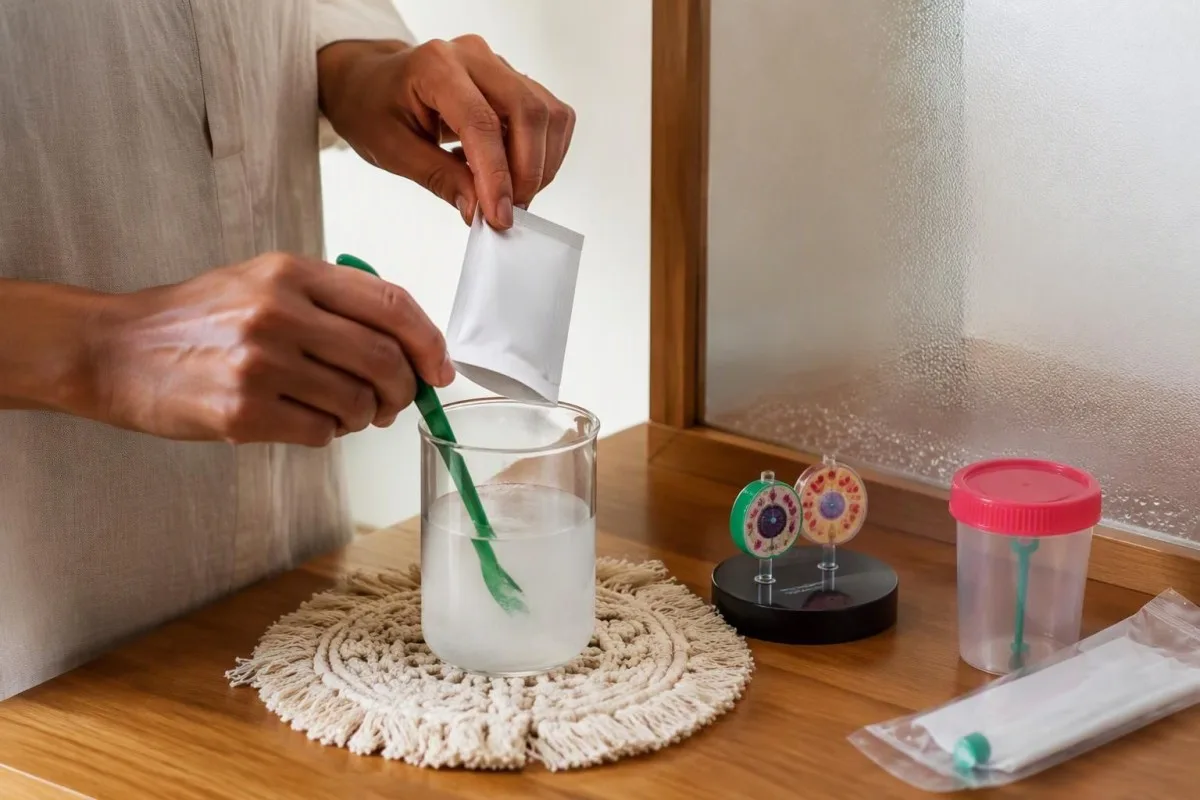
Adults can often start with roughly 200–250 mL of oral rehydration solution after each loose stool, then adjust to thirst, losses, and medical advice. This is a practical starting amount, not a compulsory target for someone with heart failure, kidney disease, or a prescribed fluid restriction. Mix commercial sachets with exactly the stated water volume; making the drink stronger can worsen electrolyte problems.
Small, frequent drinks are easier to tolerate when nausea accompanies diarrhea. For a child who is not severely dehydrated, a clinician may recommend approximately 10 mL/kg after each loose stool, offered gradually rather than all at once. Continue breastfeeding and usual age-appropriate feeding; infants, especially those under 1 year, warrant a lower threshold for pediatric advice rather than an adult-style wait-and-see plan.
Urine output, alertness, and standing dizziness provide useful clues that stool counts miss. Record drinks, bathroom visits, and urine over 24 hours if the picture feels unclear; unusually dark urine can reflect concentration, but color alone cannot quantify dehydration. Our dark urine guidance also explains when a color change suggests something other than simple fluid loss.
Kanus-a makahatag og dakong kaayohan ang nitazoxanide?
Nitazoxanide for cryptosporidium is an option for symptomatic patients with healthy immune systems, especially when diarrhea is persistent, burdensome, or preventing adequate intake. It does not have to be reserved until a particular day of illness. CDC reports clinical cure rates of 72–88% in immunocompetent patients, but improvement is not guaranteed and hydration must continue.
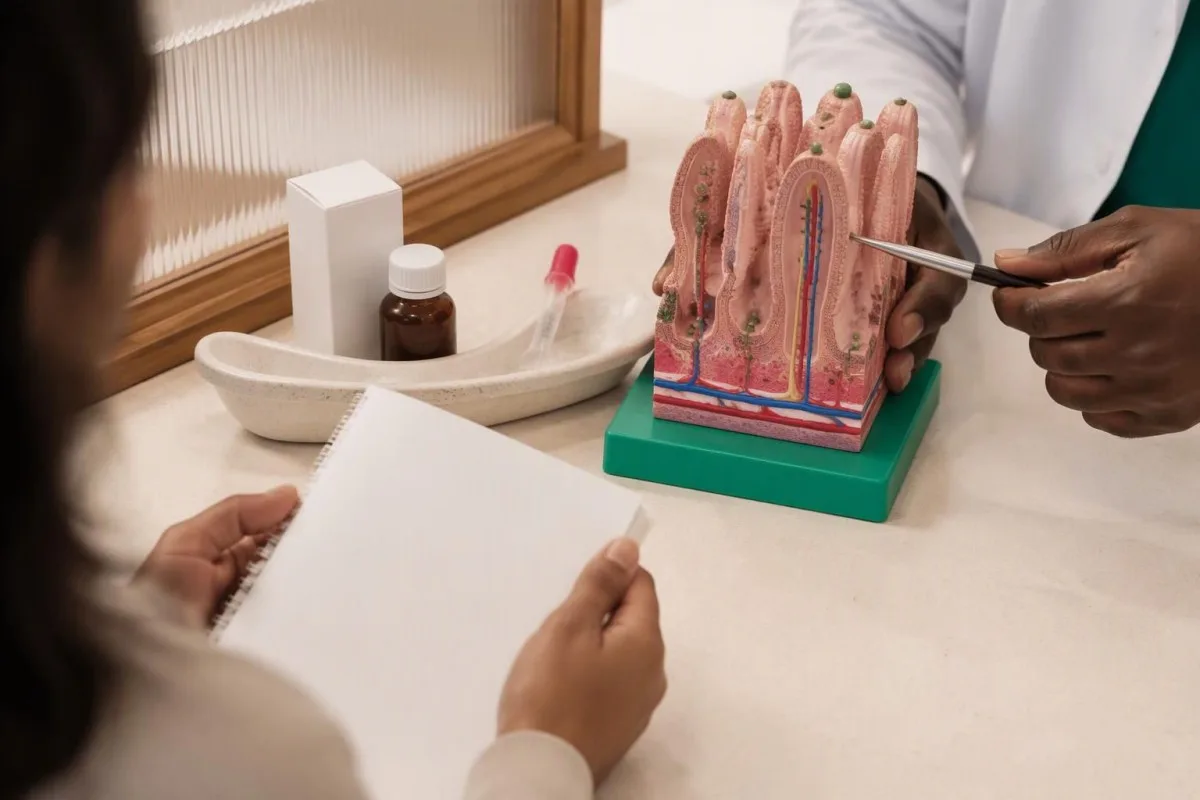
A randomized trial found diarrhea resolution by day 7 in about 80% of nitazoxanide recipients versus 41% of placebo recipients. Rossignol, Ayoub, and Ayers reported that comparison in the Journal of Infectious Diseases in 2001; it supports a genuine treatment effect without proving that every mild case needs medication. The study's setting and participants also limit how confidently its percentages can be applied to a different patient.
Persistent diarrhea deserves a treatment conversation before it causes substantial weight loss or dehydration. A hypothetical adult with 7–8 watery stools daily, interrupted sleep, and poor intake has a stronger practical reason to discuss medication than someone whose stools are already becoming formed. Seven days is a useful review point in many cases, not a mandatory waiting period or a formal prescribing threshold.
My decision framework is to treat the person, not the laboratory flag. I'm Thomas Klein, Chief Medical Officer at Kantesti AI, and I would not use a positive result alone to justify another 3-day course when symptoms have already settled. Our broader guide to diarrhea and stool changes separates stool appearance from findings that actually change urgency.
Unsa ang kasagarang dosis sa nitazoxanide sumala sa edad?
For immunocompetent patients under US prescribing guidance, nitazoxanide is taken twice daily with food for 3 days. The usual dose is 100 mg per dose at ages 1–3 years, 200 mg at ages 4–11 years, and 500 mg from age 12 onward. These are prescribing references, not instructions to self-start medication.
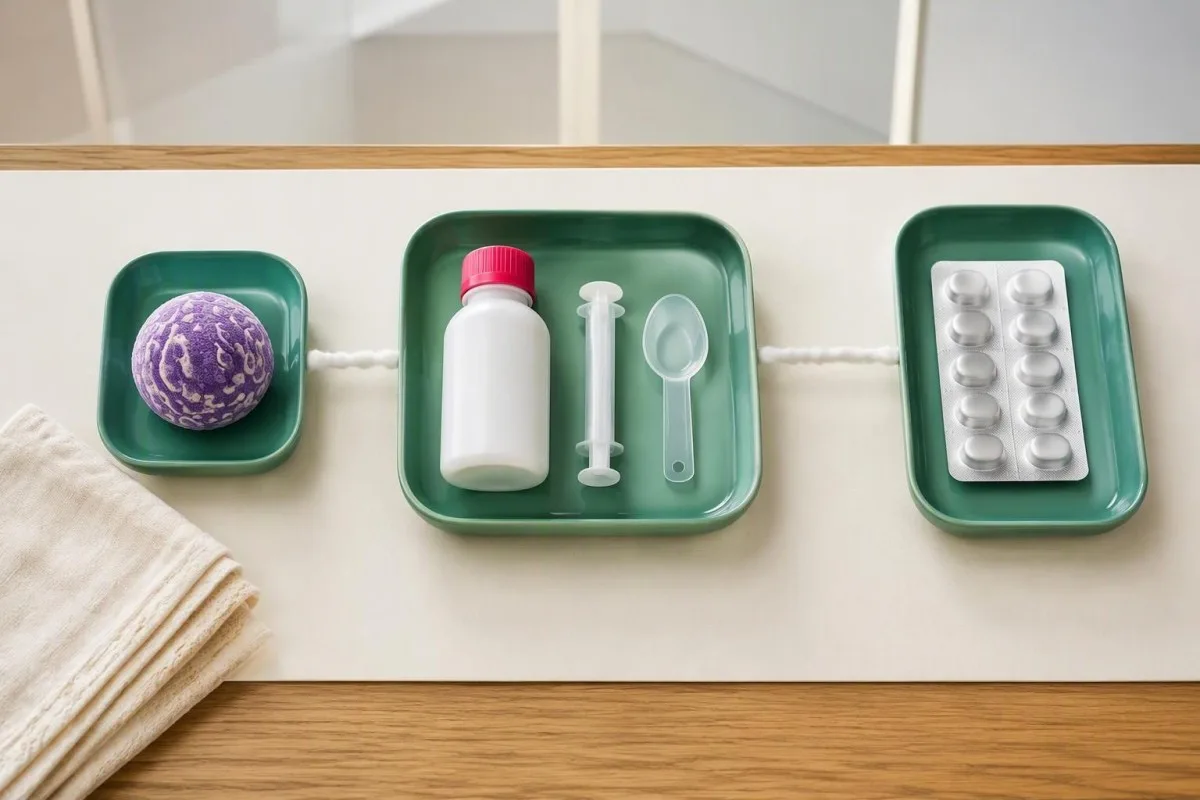
The pediatric suspension commonly contains 100 mg per 5 mL. At that concentration, 100 mg corresponds to 5 mL and 200 mg to 10 mL, but the dispensed bottle must always be checked before measuring. Use the supplied oral dosing device, shake the suspension as directed, and follow the pharmacist's preparation and storage instructions rather than estimating with a household teaspoon.
The 500 mg tablet is not the appropriate standard formulation for children younger than 12 years. Nitazoxanide's safety and effectiveness for this indication have not been established in infants younger than 1 year under US approval. Our discussion of mga limitasyon sa paghubad sa AI sa mga bata reflects the same principle: adult thresholds and adult formulations cannot simply be scaled down without pediatric judgment.
Taking nitazoxanide with food improves drug exposure, but a patient unable to retain food or fluids needs reassessment. If vomiting occurs shortly after a dose, ask the pharmacist or prescriber whether to repeat it; do not automatically double the next dose. US approval does not establish availability or authorization in every country, and UK patients may need local formulary or specialist advice.
Unsa ang angay susihon sa dili pa moinom og nitazoxanide?
Before taking nitazoxanide, review allergies, pregnancy or breastfeeding, liver or kidney disease, and your full medication list with the prescriber. Common adverse effects include abdominal discomfort, nausea, headache, and urine discoloration. A 3-adlaw nga kurso is short, but short treatment does not remove the need to check interactions or investigate worsening symptoms.
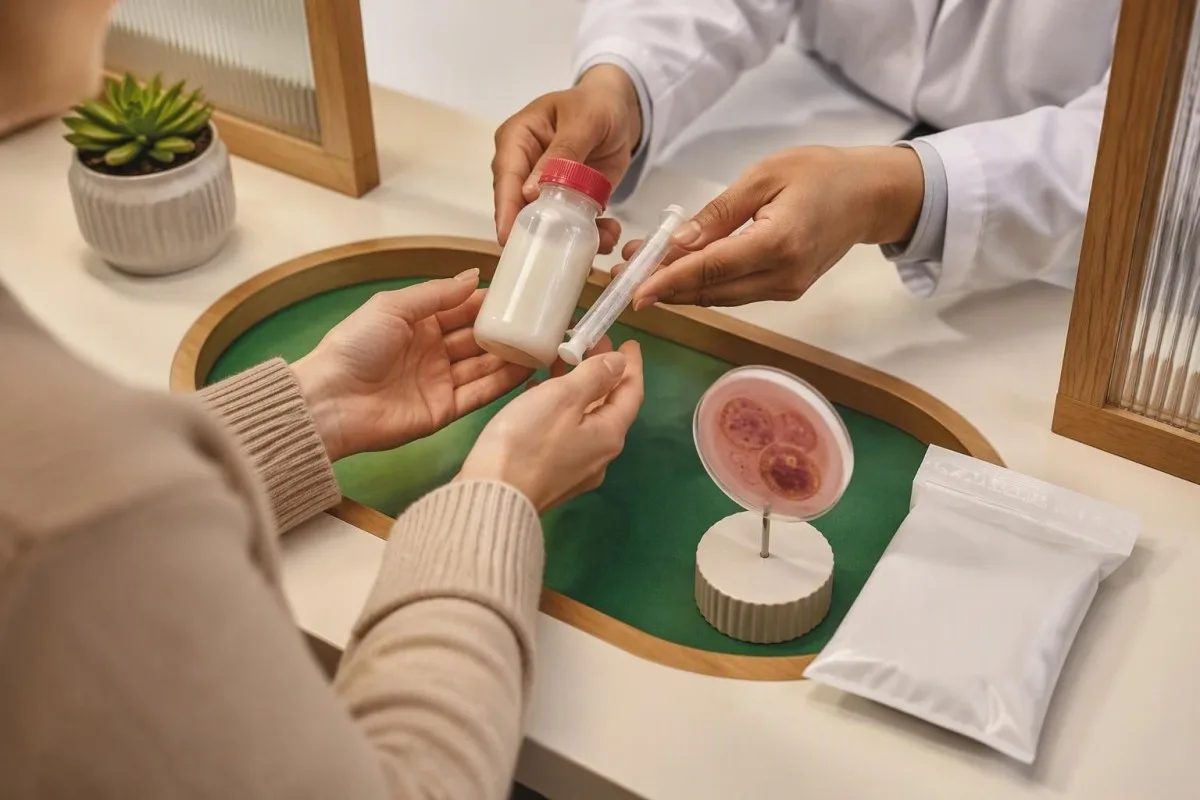
Nitazoxanide's active metabolite is more than 99% protein-bound, so prescribing information advises caution with highly protein-bound medicines that have a narrow therapeutic index, including warfarin. That warning does not mean an interaction will occur in every patient, but the anticoagulation team should decide whether additional monitoring is needed. Bring nonprescription medicines and supplements into the review, not just the new prescription.
Pregnancy, breastfeeding, and significant renal or hepatic impairment require individualized decisions because relevant human data are limited. A positive stool result is not a reason to assume that nitazoxanide is either automatically safe or automatically prohibited. For 1 patient, improving symptoms may favor supportive care; for another, continuing fluid losses may justify specialist discussion of the uncertain medication evidence.
A new symptom after starting treatment can come from the medicine, the illness, or another condition. Kantesti's approach to medication-related laboratory trends emphasizes comparing results with timing and the complete medicine list. Seek urgent help for facial swelling, breathing difficulty, fainting, or rapidly worsening illness rather than waiting to finish all 6 scheduled doses.
Nganong mausab ang pagtambal sa cryptosporidium kon maluya ang resistensiya sa lawas?
Immunocompromised patients need earlier clinical assessment because cryptosporidiosis can become prolonged, severe, and harder to eradicate. Relevant risks include advanced HIV, organ transplantation, some cancer treatments, primary immune disorders, and substantial immunosuppressive therapy. A standard 3-day nitazoxanide course cannot be assumed to work as reliably as it does in an otherwise healthy patient.
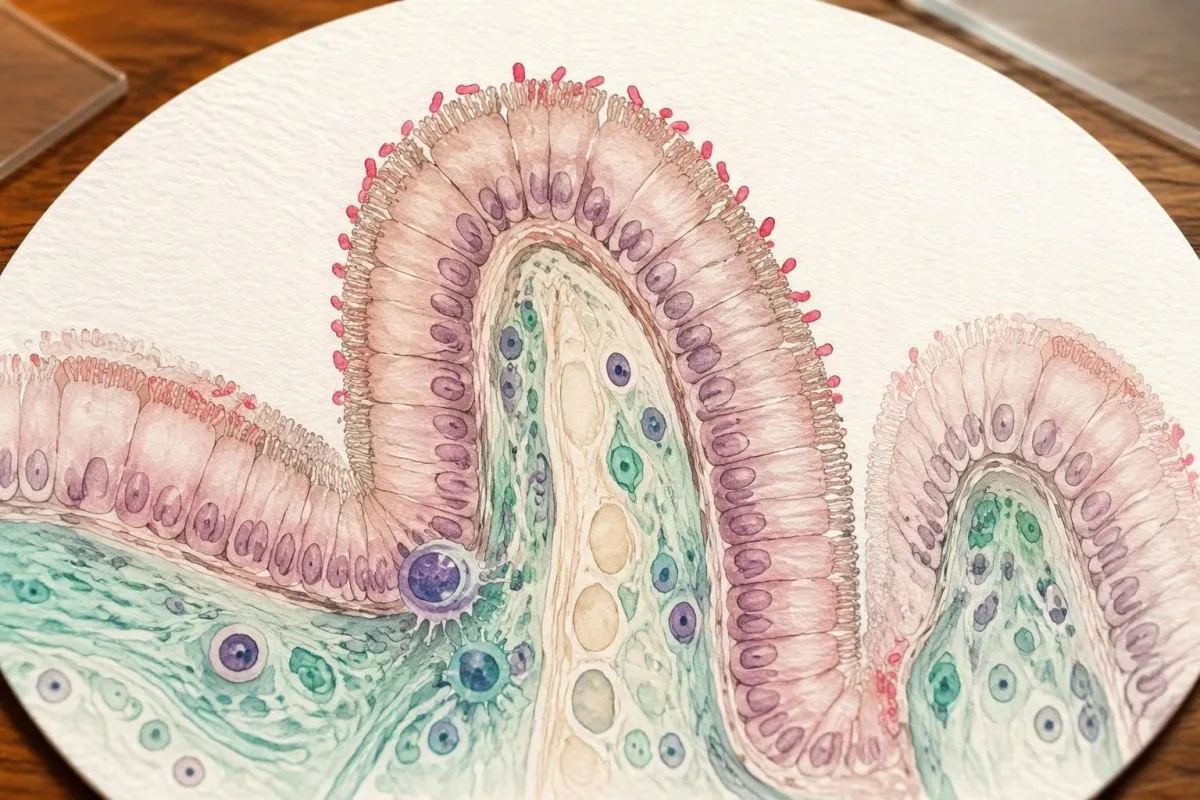
Immune status is a clinical assessment, not a single normal blood-test result. A normal total white-cell count does not rule out impaired T-cell function, and one borderline lymphocyte value does not establish major immunosuppression. Our guide to pagsulay sa mga kasagaran nga impeksyon explains why infection history, medicines, and targeted testing matter more than treating the complete blood count as an immune-system certificate.
Persistent cryptosporidiosis can cause malabsorption, weight loss, and substantial electrolyte losses. In advanced immune suppression, the parasite may also affect the biliary tract, so right-upper-abdominal symptoms or jaundice warrant assessment rather than another empiric 3-day prescription. Clinicians may check nutritional status and liver tests when symptoms suggest these complications; those tests assess consequences, not whether the stool detection was genuine.
The practical goal is to support hydration while addressing the reason clearance is impaired. Contact the treating team promptly after a positive result, even if stool frequency is only 2–3 times daily, because the same apparent symptom burden can carry different risks. Do not stop steroids, biologics, or transplant medicines independently; a treatment adjustment may help, but it can also trigger rejection or disease relapse.
Giunsa pagdumala ang cryptosporidiosis sa mga tawo nga adunay HIV?
For people with HIV, effective antiretroviral therapy and immune restoration are the foundation of cryptosporidiosis care. NIH opportunistic-infection guidance identifies advanced immunosuppression, commonly a CD4 count below 100 cells/mm³, as a major risk for prolonged or severe disease. Nitazoxanide may be considered as an adjunct, but it should not replace antiretroviral treatment.
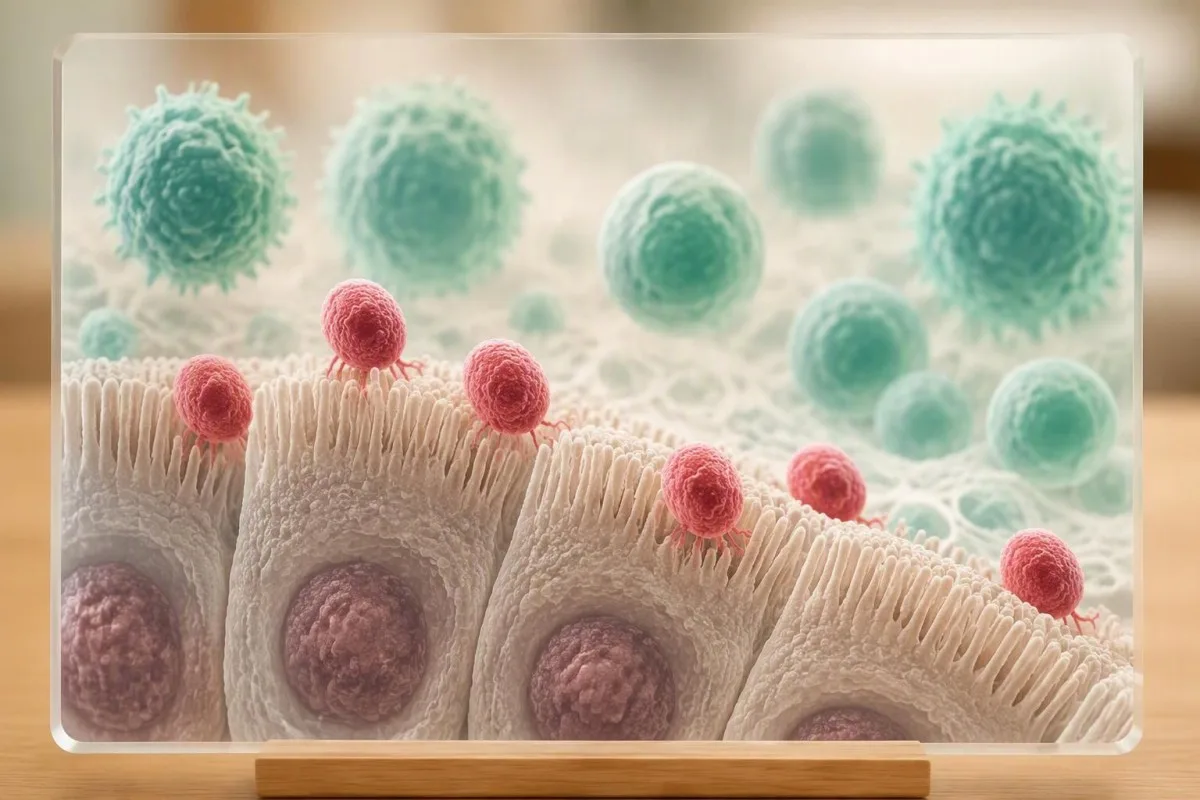
NIH guidance allows consideration of nitazoxanide 500–1,000 mg twice daily with food for at least 14 days alongside optimized antiretroviral therapy. This specialist regimen differs from the licensed 3-day regimen for immunocompetent patients and rests on limited evidence. CDC's Clinical Care of Crypto also states that nitazoxanide has not demonstrated superiority to placebo in patients with HIV or weakened immune systems; the distinction is uncertain adjunctive use, not a proven cure.
Viral load and CD4 count answer different questions. A suppressed viral load indicates control of HIV replication, while the CD4 count helps describe immune recovery and susceptibility to opportunistic disease; one favorable result cannot replace the other. Our explanation of HIV viral load results helps make that distinction without implying that an undetectable viral load guarantees immediate clearance of Cryptosporidium.
Clinical follow-up should track hydration, weight, stool burden, and whether oral medicines are being retained. A patient with a CD4 count of 40 cells/mm³ and persistent watery diarrhea needs a different intensity of assessment from someone whose immune function has recovered. If HIV status is unknown and diarrhea is unusually persistent or severe, a clinician may offer testing with consent rather than assuming the stool result itself diagnoses HIV.
Unsa ang mausab alang sa mga pasyente nga nakadawat og transplant ug adunay kanser?
Transplant recipients and patients receiving substantial cancer-related immunosuppression should involve their treating team promptly after a positive stool result. Cryptosporidium treatment may require individualized duration, hydration support, drug-level monitoring, and carefully considered changes to immunosuppression. There is no universally reliable 3-day treatment pathway for these patients, and stopping protective medicines independently can be dangerous.
Diarrhea can increase tacrolimus exposure, even when patients assume poor absorption should lower every medicine level. The direction is not predictable from stool frequency alone, and dehydration can compound kidney risk at the same time. Our guide to tacrolimus trough timing explains why a sample's relationship to the preceding dose matters; report the exact dosing time rather than treating any concentration as a valid trough.
A positive parasite test does not exclude medication-related diarrhea or another opportunistic infection. Transplant teams may consider several explanations together, especially when symptoms continue despite treatment, and chemotherapy teams must account for neutropenia and mucosal effects. With 2 plausible contributors, improving only one may leave substantial diarrhea; that is a reason to reassess, not evidence that the laboratory necessarily made an error.
Reducing immunosuppression is a specialist risk-benefit decision. Patients taking azathioprine or related medicines may need assessment of blood counts and treatment exposure, but metabolite results do not themselves direct Cryptosporidium therapy; our thiopurine treatment-pattern guide explains their separate role. Fever during chemotherapy, reduced urine after transplantation, or inability to retain essential medicines warrants urgent contact rather than waiting another 48 hours.
Unsang mga pagsulay sa dugo ang makatabang sa pagsusi sa pagkahubas ug mga komplikasyon?
Blood tests assess the consequences of cryptosporidiosis, not the stool diagnosis itself. Electrolytes, bicarbonate, urea or BUN, and creatinine are useful when fluid losses are substantial, symptoms persist, or the patient is vulnerable. Common adult laboratory intervals include sodium 135–145 mmol/L ug ang potassium 3.5–5.0 mmol/L, although local ranges and clinical urgency vary.

Diarrhea can lower potassium and bicarbonate, while dehydration can raise creatinine; sodium may move in either direction. A potassium level below 3.0 mmol/L generally needs prompt clinical review, with urgency influenced by symptoms, cardiac disease, and ECG findings. Our pagpasabot sa electrolyte panel shows why replacing water alone is not always sufficient, especially when weakness or palpitations appear.
Kantesti is an AI blood test interpretation platform that can help organize electrolyte and kidney trends alongside symptom and medication context. A creatinine rise of at least 0.3 mg/dL, approximately 26.5 µmol/L, within 48 hours meets one standard laboratory criterion for acute kidney injury and should not be dismissed as a minor flag. Our Komparison sa BUN ug creatinine explains why baseline values and recent change matter.
A normal panel does not prove that hydration is adequate, particularly early in fluid loss. Kantesti AI should be used as explanatory support, not as permission to ignore fainting, minimal urine, or inability to drink; our klinikal nga framework sa validation describes the distinction between interpretation and bedside assessment. Two results taken before and after rehydration can be more informative than one isolated value, but repeat testing should follow clinical need.
Unsa ang kasagarang gidugayon sa pagkaayo gikan sa cryptosporidium?
Cryptosporidium recovery time is usually 2–3 weeks in people with healthy immune systems, although symptoms can come and go for up to 30 days. Some patients improve sooner, including after nitazoxanide, while immunocompromised patients may have a much longer course. Count recovery by sustained improvement in hydration, appetite, weight, and stool pattern—not a single symptom-free day.
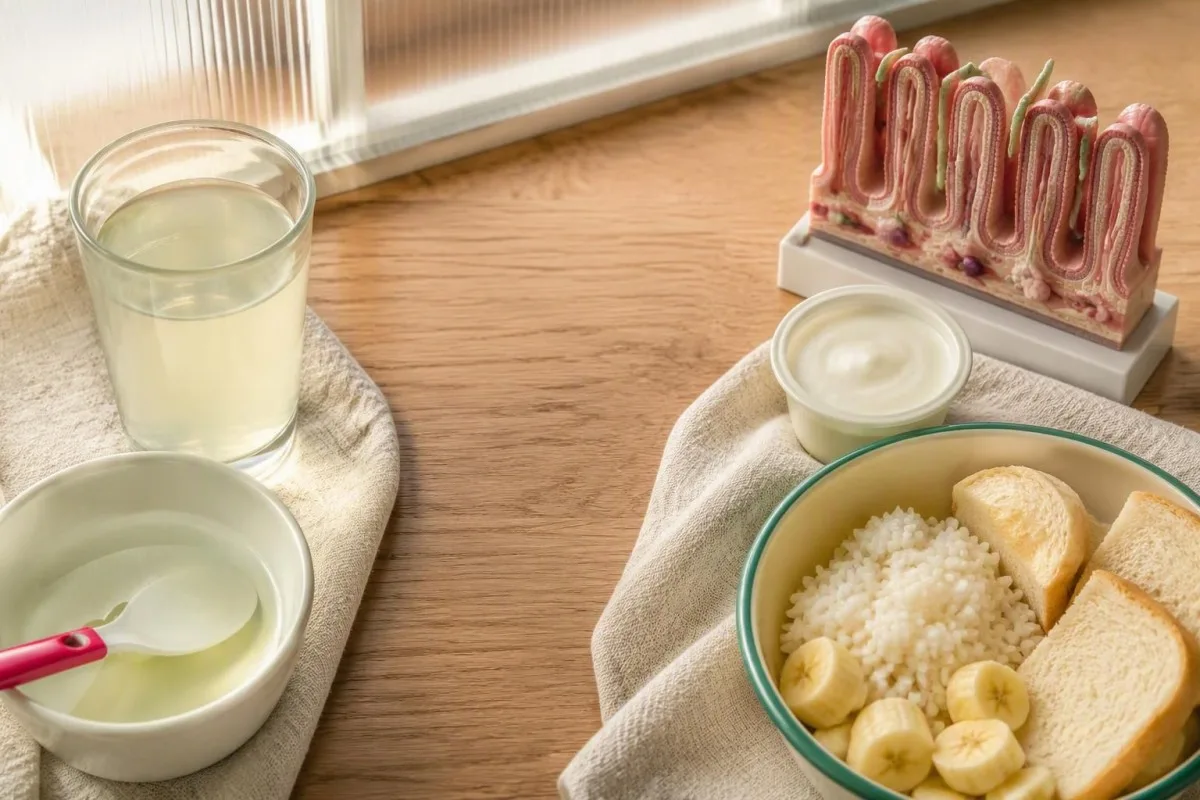
Temporary lactose malabsorption can follow intestinal illness because the surface enzyme lactase is vulnerable during recovery. If milk clearly worsens bloating or loose stools, a short trial of reduced lactose for 1–2 weeks may be reasonable while maintaining nutrition. That pattern does not prove ongoing parasite activity, and children should not have major dietary restrictions imposed without considering growth, usual feeding, and pediatric advice.
Lingering carbohydrate-related symptoms are different from a new diagnosis of lifelong enzyme deficiency. Stool acidity or reducing-substance tests have limitations and are not routine adult tests of Cryptosporidium cure; our discussion of ubos nga stool pH sa mga bata explains what those findings can and cannot establish. If symptoms remain after 2–3 weeks, reassess the clinical picture before ordering a large panel of unrelated digestive tests.
Weight and function can recover more slowly than stool frequency. A hypothetical patient may have only 2 loose stools daily yet still be eating half their usual intake, so “less diarrhea” is not the whole recovery story. Keep meals small and regular, avoid strenuous exercise while dehydrated, and request review for continuing weight loss, nighttime diarrhea, recurrent fever, or symptoms that stop improving.
Kinahanglan ba og laing pagsulay sa hugaw human sa pagtambal?
Routine test-of-cure stool testing is usually unnecessary after clinical recovery in an otherwise healthy patient. CDC advises considering another stool test at least 1 week after the final nitazoxanide dose if symptoms have not resolved. Repeat testing should answer a clinical question—such as ongoing illness or possible reinfection—rather than serve as an automatic reassurance check.
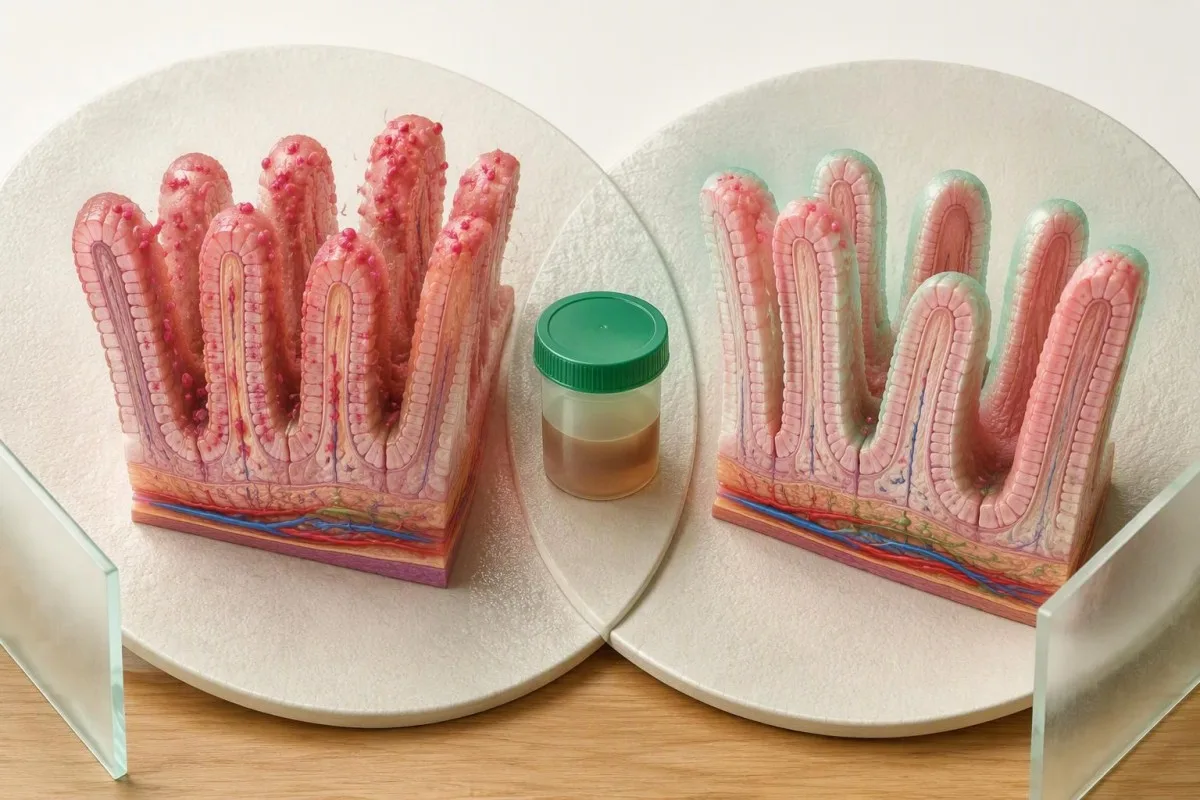
Continued diarrhea after treatment can reflect persistent infection, reinfection, another detected pathogen, or postinfectious intestinal dysfunction. Review whether all 6 standard doses were taken with food, whether vomiting interfered with dosing, and whether exposure continued through untreated water or household contact. Those questions often change the next test more usefully than repeating the original panel immediately after the last tablet.
Inflammatory stool markers can rise during intestinal infection and do not automatically diagnose inflammatory bowel disease. If a calprotectin result is borderline during acute diarrhea, timing and subsequent symptoms matter; our guide to borderline nga fecal calprotectin explains why repeat assessment may be more appropriate than an immediate chronic-disease label. A positive parasite result and an inflammatory marker should be interpreted together, not treated as mutually exclusive findings.
Immunocompromised patients may need individualized microbiological follow-up even when symptoms partly improve. The treating team may investigate other opportunistic causes or biliary involvement rather than simply prolonging nitazoxanide by another 3 days. Public-health investigations and certain employment settings can also create separate testing requirements, so clinical recovery rules should not be confused with local occupational or outbreak-control instructions.
Hangtod kanus-a ka makatakod, ug kanus-a ka makalangoy?
Cryptosporidium can still spread after diarrhea improves, and CDC recommends avoiding swimming until 2 weeks after diarrhea has completely stopped. Treatment does not shorten that precaution. Wash hands with soap and water for at least 20 seconds; alcohol-based hand sanitizers are not effective against Cryptosporidium, so sanitizer alone is not an adequate substitute.
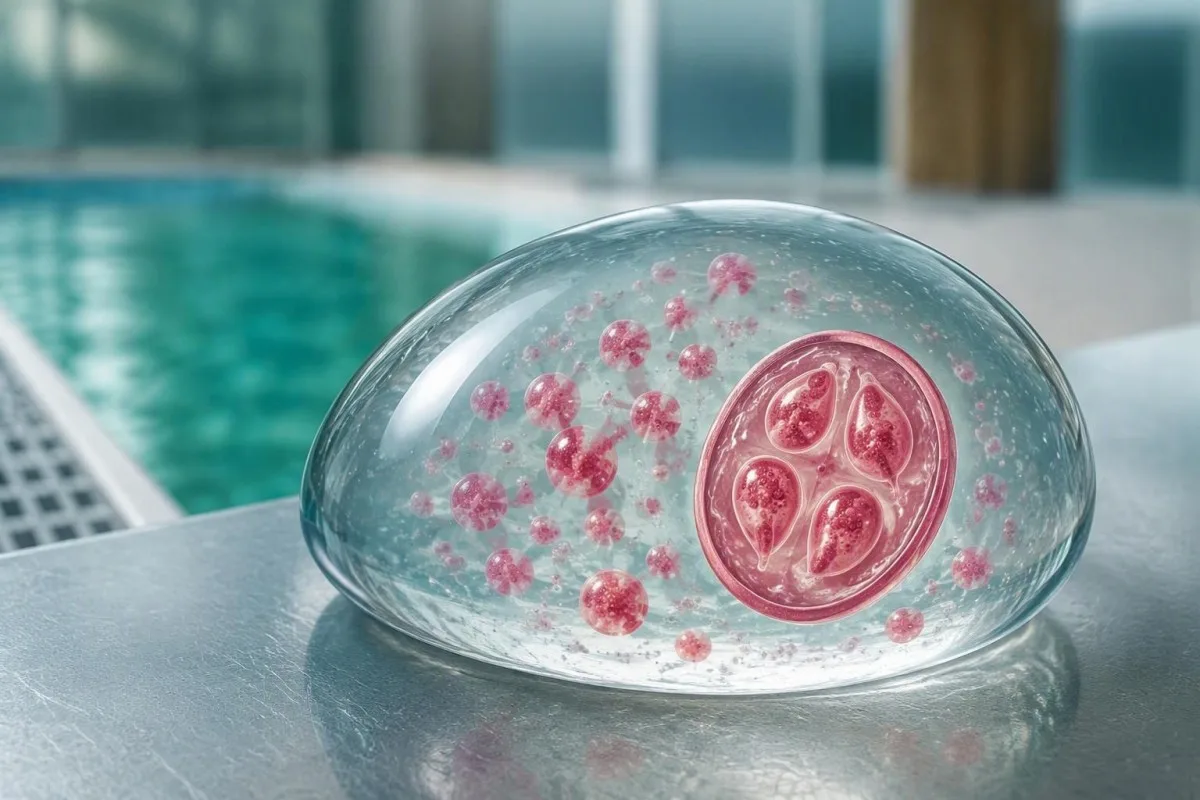
Cryptosporidium oocysts resist chlorine concentrations normally used in swimming pools. A pool that looks clean is therefore not proof that transmission risk is absent, and swallowing even a small amount of contaminated water can expose a swimmer. The 2-week swimming restriction applies after the final episode of diarrhea, not 2 weeks after the positive result or the first dose of medication.
Boiling water for 1 minute is an established precaution when water safety is uncertain; at elevations above 6,500 feet, boil for 3 minutes. Not every household filter removes Cryptosporidium, so check for a validated cyst-reduction claim rather than assuming that a carbon jug filter is protective. Follow local drinking-water advisories, especially if you are immunocompromised or an outbreak involves your water supply.
Work and school exclusion rules are different from swimming rules. Many settings use at least 48 hours without diarrhea, but food handling, childcare, healthcare, and local public-health instructions can require different arrangements. Our explanation of norovirus after recovery illustrates why symptom recovery and transmission precautions are separate questions; it should not be used to replace Cryptosporidium-specific swimming advice.
Unsa ang angay ilakip sa imong plano sa follow-up?
Your follow-up plan should identify who to contact, which symptoms require urgent care, and when persistent diarrhea will be reassessed. Seek prompt help for inability to retain fluids, fainting, confusion, very little urine, severe abdominal pain, or blood in stool. Immunocompromised patients should not wait through a standard 2–3-week recovery window before involving their treating team.
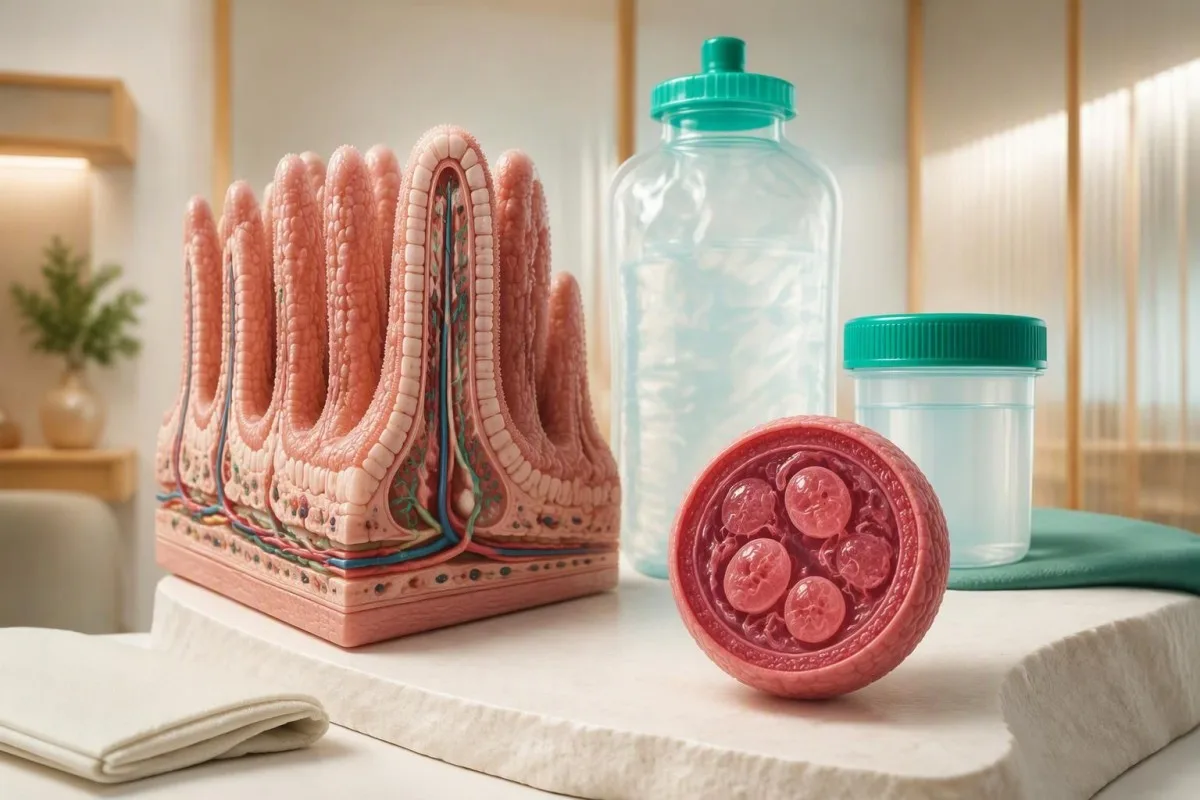
A practical check-in records 3 things: stool burden, fluid intake and urine, and the direction of weight or appetite change. My advice as Thomas Klein is to bring the original report, medication list, and a short symptom timeline rather than relying on the word “positive.” Kantesti's medical advisory team provides organizational clinical context, while the clinician caring for you remains responsible for treatment and follow-up decisions.
Kantesti is an AI lab test interpretation service that can help explain supporting laboratory abnormalities, not certify parasite clearance. A review at roughly 1 week can be useful when diarrhea remains troublesome, but deteriorating hydration warrants earlier care rather than waiting for that date. Our mga sumbanan sa medikal nga sulod distinguish educational explanations from individualized diagnosis, prescribing, and verified bedside assessment.
The 2 related publications below provide background on serum proteins and immune-related laboratory testing; neither is a Cryptosporidium treatment trial. Atong giya sa interpretasyon sa serum protein is relevant when prolonged illness prompts nutritional assessment. Our giya sa complement ug ANA explains a different branch of immune testing—normal complement or ANA findings do not establish normal defenses against this parasite.
Kanunay nga Gipangutana nga mga Pangutana
Kinahanglan ba kanunay og nitazoxanide kung positibo ang resulta sa cryptosporidium?
Ang positibong resulta sa stool test alang sa cryptosporidium dili kanunay magkinahanglan og nitazoxanide. Ang mga tawo nga himsog sa ubang bahin ug adunay malumo, nagkagamay nga kalibanga mahimong maulian pinaagi lamang sa pag-inom og igo nga tubig, kasagaran sulod sa 2–3 ka semana. Ang padayon o makasamok nga kalibanga, dili maayong pagkaon ug pag-inom, o nagkagrabe nga hydration maoy mga rason aron hisgotan ang giresetang tambal imbis maghulat sa usa ka piho nga adlaw sa sakit. Ang mga pasyenteng huyang ang resistensiya kinahanglang mas sayo nga susihon ubos sa paggiya sa klinisyan kay lahi ang pagkaepektibo sa pagtambal ug ang pag-follow-up.
Unsa ang dosis sa nitazoxanide alang sa hamtong nga adunay Cryptosporidium?
Ang kasagarang regimen sa US alang sa mga pasyenteng adunay normal nga resistensya sa immune nga nag-edad og 12 ka tuig pataas mao ang nitazoxanide 500 mg kaduha sa usa ka adlaw uban sa pagkaon sulod sa 3 ka adlaw. Ang mga bata nga nag-edad og 1–3 ka tuig kasagarang makadawat og 100 mg matag dosis, ug ang mga nag-edad og 4–11 ka tuig makadawat og 200 mg matag dosis, gamit ang angay nga suspension. Mga reperensiya kini sa pagreseta ug dili angay gamiton aron magsugod og tambal nga walay giya. Ang mga pasyenteng immunocompromised mahimong manginahanglan og regimen nga giyahan sa espesyalista, ug mahimong magkalahi ang lokal nga pagtugot o pagkaanaa niini.
Unsa ka dugay ang pag-ayo gikan sa Cryptosporidium?
Ang mga sintomas sa Cryptosporidium kasagaran mawala sulod sa 2–3 ka semana sa mga tawo nga himsog ang immune system, bisan pa og mahimong mag-usab-usab kini hangtod sa 30 ka adlaw. Makatabang ang Nitazoxanide sa pagdugang sa posibilidad nga mawala ang kalibanga, apan dili dihadiha o garantiya ang pagkaayo. Mahimong magpadayon ang temporaryong lactose malabsorption o mga sintomas human sa impeksiyon bisan mohupay na ang grabeng sakit. Ang padayon nga pagniwang, dehydration, hilanat, o kawalay pag-uswag angay nga susihon pag-usab.
Epektibo ba ang nitazoxanide kon huyang ang imong immune system?
Ang Nitazoxanide dili kaayo kasaligan ang pagkaepektibo sa mga pasyenteng huyang ang resistensiya, ug sumala sa giya sa CDC wala kini napamatud-ang mas labaw kaysa placebo sa mga pasyenteng adunay HIV o huyang nga sistema sa imyunidad. Alang sa cryptosporidiosis nga may kalabotan sa HIV, mahinungdanon sa pagtambal ang epektibong antiretroviral therapy ug pagpahiuli sa resistensiya, ilabi na kon ubos sa 100 cells/mm³ ang ihap sa CD4. Gitugotan sa giya sa NIH nga ikonsiderar ang nitazoxanide nga 500–1,000 mg kaduha kada adlaw sulod sa labing menos 14 ka adlaw isip dugang nga pagtambal ubos sa pagdumala sa espesyalista. Nagpakita kana nga rekomendasyon sa kakulang sa ebidensiya, ug dili kini kapuli sa pagtambal sa nagpahiping pagkadaot sa resistensiya.
Kinahanglan ba nakong usbon ang test sa hugaw pagkahuman sa nitazoxanide?
Kasagarang dili na kinahanglan ang pag-usab sa eksaminasyon sa hugaw human mamaayo sa klinika ang pasyente nga himsog man sa ubang bahin. Gitambagan sa CDC nga ikonsiderar ang pag-usab sa eksaminasyon labing menos 1 semana human sa kataposang dosis sa nitazoxanide kon wala pa mawala ang mga sintomas. Ang nagpadayong mga sintomas mahimong timailhan sa padayong impeksiyon, reinfection, laing pathogen, o pagkadaot sa pag-obra sa tinai human sa impeksiyon, busa usa lamang ka bahin sa pagtimbang-timbang pag-usab ang pag-usab sa eksaminasyon. Ang mga pasyenteng immunocompromised ug ang mga tawo nga sakop sa mga kinahanglanon sa panglawas sa publiko mahimong magkinahanglan og lahi nga plano sa follow-up.
Kanus-a ko makalangoy human mataptan og Cryptosporidium?
Likayi ang paglangoy hangtod molabay ang 2 ka semana human hingpit nga mahunong ang kalibanga, bisan nahuman na nimo ang nitazoxanide ug maayo na ang imong paminaw. Makasugakod ang mga oocyst sa Cryptosporidium sa mga konsentrasyon sa klorin nga kasagarang gigamit sa mga swimming pool, busa bisan malampuson ang pagtambal, kinahanglan gihapon sundon kini nga pag-amping. Sugdi ang pag-ihap sa maong panahon human sa kataposang hugaw nga malibang, dili human sa petsa sa pagsulay. Hugasi ang mga kamot gamit ang sabon ug tubig sulod sa labing menos 20 segundos kay dili epektibo batok sa Cryptosporidium ang sanitizer nga nakabase sa alkohol.
Kanus-a angay isipon nga emerhensiya ang kalibanga tungod sa Cryptosporidium?
Dali dayon pagpaanalisar sa kahimtang kon dili makapabilin ang imnonon sa tiyan, makuyapan, malibog, gamay ra kaayo ang ihi, grabe ang sakit sa tiyan, o adunay dugo sa tae. Ayaw gamita ang kasagarang panahon sa pag-ayo nga 2–3 ka semana isip rason sa paghulat samtang nagkagrabe ang pagkawalay igong tubig sa lawas o ang kinatibuk-ang kahimtang. Kinahanglang mas sayon nga magpatan-aw sa doktor ang mga masuso, huyang nga mga tigulang, mga buntis nga gamay ra og makonsumo, ug mga pasyenteng huyang ang resistensiya. Ang hilanat samtang nagpa-chemotherapy o ang dili makapabilin sa tiyan sa mga tambal human sa transplant o para sa HIV angayan usab nga ipahibalo dayon sa nag-atiman nga grupo.
Karon na ang AI-Powered Blood Test Analysis
Apil sa kapin sa 2 milyon nga mga user sa tibuok kalibutan nga nagsalig sa Kantesti para sa dayon ug tukma nga pag-analisa sa lab test. I-upload ang imong resulta sa blood test ug makadawat og komprehensibong pagsabot sa 15,000+ nga mga biomarker sulod sa mga segundo.
📚 Mga Napangalan nga Research Publications
Klein, T., Mitchell, S., & Weber, H. (2026). Giya sa mga Protina sa Serum: Pagsulay sa Dugo sa mga Globulin, Albumin ug A/G Ratio. Kantesti AI Medical Research.
Klein, T., Mitchell, S., & Weber, H. (2026). Giya sa C3 C4 Complement Blood Test ug ANA Titer. Kantesti AI Medical Research.
📖 Mga Panlabas nga Sanggunian sa Medisina
Centers for Disease Control and Prevention (n.d.). Clinical Care of Crypto. CDC Cryptosporidium Clinical Guidance.
Panel on Guidelines for the Prevention and Treatment of Opportunistic Infections in Adults and Adolescents With HIV (n.d.). Cryptosporidiosis. NIH Guidelines for the Prevention and Treatment of Opportunistic Infections in Adults and Adolescents With HIV.
Rossignol JF, Ayoub A, Ayers MS (2001). Treatment of diarrhea caused by Cryptosporidium parvum: a prospective randomized, double-blind, placebo-controlled study of nitazoxanide. The Journal of Infectious Diseases, 184(1), 103–106.


⚕️ Pagpasabot sa Medikal
Kini nga artikulo para sa katuyoan sa edukasyon ra ug dili kini mosangpot sa medikal nga tambag. Kanunay mokonsulta sa usa ka kwalipikado nga healthcare provider alang sa mga desisyon sa diagnosis ug pagtambal.
Mga E-E-A-T Trust Signals
Kasinatian
Pagsusi sa klinika nga gipangulohan sa doktor sa mga workflow sa interpretasyon sa lab.
Kahanas
Pokus sa medisina sa laboratoryo kung giunsa paglihok ang mga biomarker sa konteksto sa klinika.
Pagka-awtorisado
Gisulat ni Dr. Thomas Klein ug gisusi ni Dr. Sarah Mitchell ug Prof. Dr. Hans Weber.
Kasaligan
Interpretasyon nga base sa ebidensya, nga adunay klaro nga mga agianan sa sunod nga buhat aron makunhuran ang kabalaka.
