A positive stool result does not automatically require medication. The treatment decision depends on dehydration, symptom trajectory, age, and immune function—not the laboratory flag alone.



- Positive stool result means Cryptosporidium was detected; it does not measure dehydration or automatically establish a need for medication.
- Hydration alone may be appropriate for an otherwise healthy person whose diarrhea is mild, improving, and manageable with oral fluids.
- Nitazoxanide is a prescription option for symptomatic, immunocompetent patients aged 1 year and older under US approval; persistent or disruptive diarrhea strengthens the reason to discuss treatment.
- Adult prescription regimen is nitazoxanide 500 mg twice daily with food for 3 days in immunocompetent patients aged 12 years and older.
- Weakened immunity changes the plan: nitazoxanide has uncertain effectiveness, and restoring immune function may be more important than extending an antiparasitic course.
- صحتيابي جو وقت is usually 2–3 weeks in people with healthy immune systems, although symptoms may fluctuate for up to 30 days.
- Repeat stool testing is not routinely needed after clinical recovery; CDC suggests considering retesting at least 1 week after the final nitazoxanide dose when symptoms persist.
- Swimming restriction lasts until 2 weeks after diarrhea has completely stopped, even if treatment worked.
Does a cryptosporidium positive result need treatment?
A cryptosporidium positive stool result does not automatically mean you need nitazoxanide. Otherwise healthy people with mild, improving diarrhea often recover with hydration alone; prescription treatment is reasonable to discuss when diarrhea persists or disrupts eating, sleep, or daily life. Immunocompromised patients need earlier clinician-led care because medication works less reliably.
Cryptosporidium is a microscopic parasite that usually causes watery diarrhea, not a bacterial infection requiring ordinary antibiotics. Three questions matter more than the positive flag: can you replace fluid losses, are symptoms getting better, and is your immune system functioning normally? Someone drinking comfortably on day 4 needs a different discussion from someone becoming weaker with ongoing diarrhea on day 10.
Hydration remains necessary whether or not nitazoxanide is prescribed. Medication does not immediately replace lost sodium, potassium, or water, and it cannot make severe dehydration safe to manage at home. There is no universally validated stool-frequency cutoff that determines treatment; the combination of output, intake, urine production, and vulnerability is more useful than counting bathroom visits alone.
Kantesti is an AI blood test analyzer that can help explain accompanying electrolyte and kidney results, but it cannot confirm this stool diagnosis or prescribe treatment. ڪينٽيسٽي جو تنظيم ۽ ڪلينڪل مقصد are distinct from an infectious-disease consultation. As of October 25, 2026, the practical distinction remains the same: a positive test identifies an organism, while the patient's condition determines the next step.
What does the positive stool test actually show?
A positive stool test means the laboratory detected Cryptosporidium genetic material, antigen, or oocysts, depending on its method. It does not reveal the exact infection date or prove that every current symptom comes from this parasite. Symptoms commonly begin 2–10 days after exposure, so the exposure may predate your first loose stool substantially.
Multiplex PCR panels can detect more than 1 organism in the same specimen. If Giardia is also reported, treatment selection may change because the two parasites are not interchangeable, even though both can cause prolonged diarrhea. Our explanation of Giardia antigen results helps distinguish that finding from a Cryptosporidium result without assuming that either organism must explain every symptom.
A qualitative result such as “detected” is not a severity score. Laboratories may use different reporting formats, and a PCR cycle-threshold value, if supplied, is not a validated home-treatment cutoff. A person with 2 loose stools daily can still need assessment if they are a transplant recipient; another person with a strongly positive molecular result may already be clinically recovering.
Recent antibiotics and mixed panel findings deserve separate interpretation. A concurrent C. difficile result can require toxin testing and clinical correlation rather than automatic treatment of both detections; our guide to discordant C. difficile results explains that distinction. Cryptosporidium testing is ordinarily stool-based, so a normal white-cell count or a generic parasite antibody result does not cancel a positive stool finding.
When is hydration alone a reasonable option?
Hydration alone may be reasonable when an otherwise healthy patient has mild, improving diarrhea, can drink and eat, and has no dehydration warning signs. Oral rehydration solution is usually more useful than plain water during repeated watery stools because it replaces electrolytes as well as fluid. Watch the trend over 24–48 ڪلاڪ, not just one good afternoon.
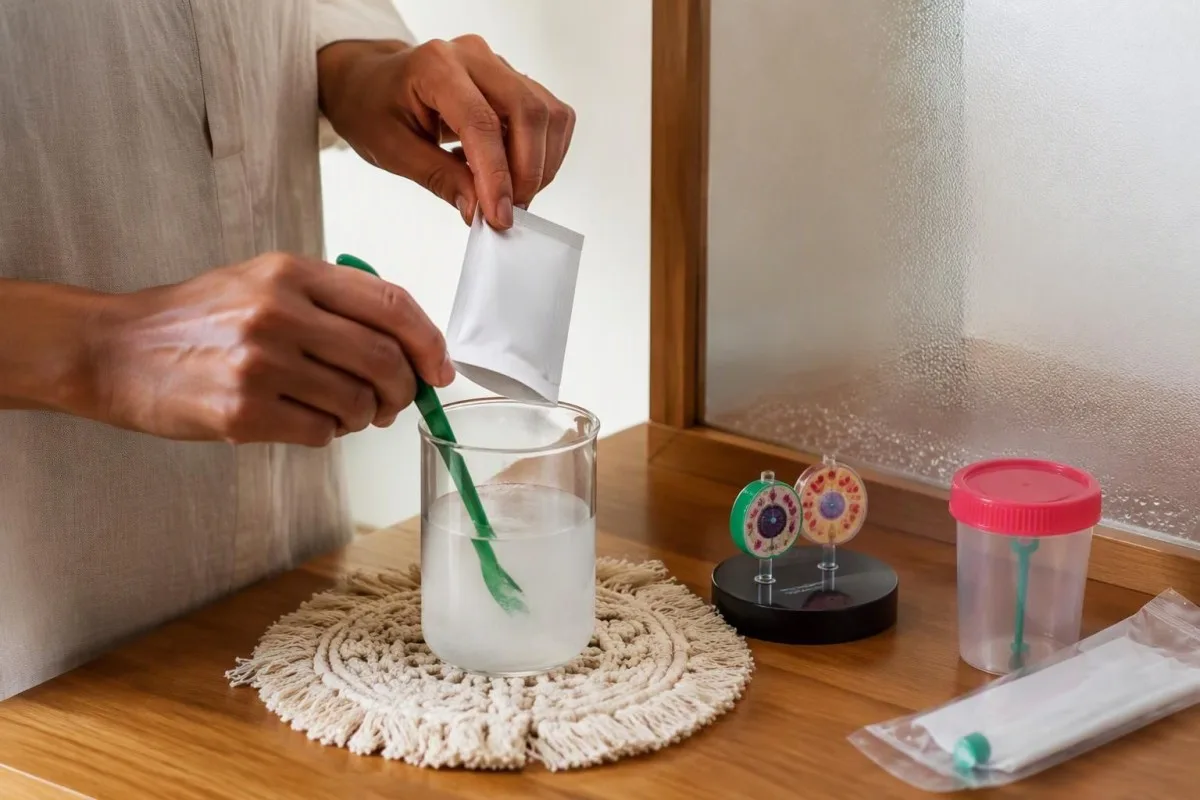
Adults can often start with roughly 200–250 mL of oral rehydration solution after each loose stool, then adjust to thirst, losses, and medical advice. This is a practical starting amount, not a compulsory target for someone with heart failure, kidney disease, or a prescribed fluid restriction. Mix commercial sachets with exactly the stated water volume; making the drink stronger can worsen electrolyte problems.
Small, frequent drinks are easier to tolerate when nausea accompanies diarrhea. For a child who is not severely dehydrated, a clinician may recommend approximately 10 mL/kg after each loose stool, offered gradually rather than all at once. Continue breastfeeding and usual age-appropriate feeding; infants, especially those under 1 year, warrant a lower threshold for pediatric advice rather than an adult-style wait-and-see plan.
Urine output, alertness, and standing dizziness provide useful clues that stool counts miss. Record drinks, bathroom visits, and urine over 24 hours if the picture feels unclear; unusually dark urine can reflect concentration, but color alone cannot quantify dehydration. Our dark urine guidance also explains when a color change suggests something other than simple fluid loss.
When does nitazoxanide offer a meaningful benefit?
Nitazoxanide for cryptosporidium is an option for symptomatic patients with healthy immune systems, especially when diarrhea is persistent, burdensome, or preventing adequate intake. It does not have to be reserved until a particular day of illness. CDC reports clinical cure rates of 72–88% in immunocompetent patients, but improvement is not guaranteed and hydration must continue.
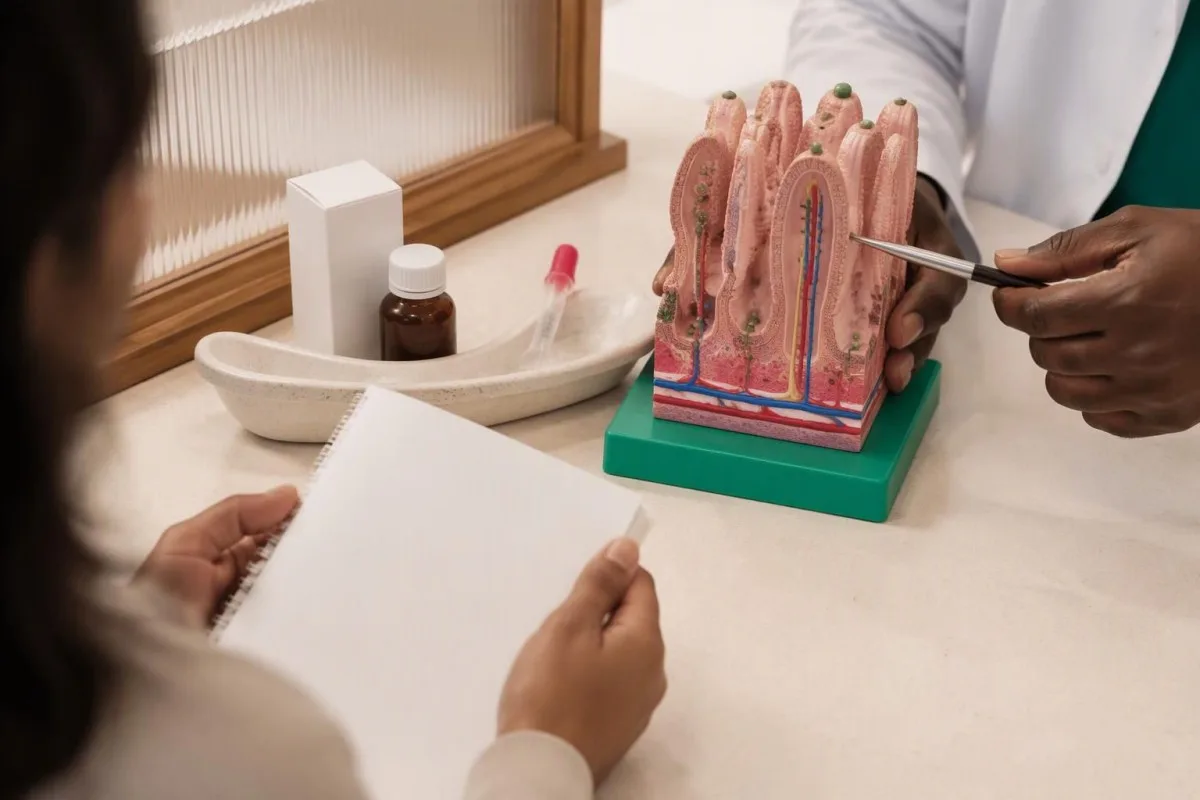
A randomized trial found diarrhea resolution by day 7 in about 80% of nitazoxanide recipients versus 41% of placebo recipients. Rossignol, Ayoub, and Ayers reported that comparison in the Journal of Infectious Diseases in 2001; it supports a genuine treatment effect without proving that every mild case needs medication. The study's setting and participants also limit how confidently its percentages can be applied to a different patient.
Persistent diarrhea deserves a treatment conversation before it causes substantial weight loss or dehydration. A hypothetical adult with 7–8 watery stools daily, interrupted sleep, and poor intake has a stronger practical reason to discuss medication than someone whose stools are already becoming formed. Seven days is a useful review point in many cases, not a mandatory waiting period or a formal prescribing threshold.
My decision framework is to treat the person, not the laboratory flag. I'm Thomas Klein, Chief Medical Officer at Kantesti AI, and I would not use a positive result alone to justify another 3-day course when symptoms have already settled. Our broader guide to diarrhea and stool changes separates stool appearance from findings that actually change urgency.
What are the usual nitazoxanide doses by age?
For immunocompetent patients under US prescribing guidance, nitazoxanide is taken twice daily with food for 3 days. The usual dose is 100 mg per dose at ages 1–3 years, 200 mg at ages 4–11 years, and 500 mg from age 12 onward. These are prescribing references, not instructions to self-start medication.
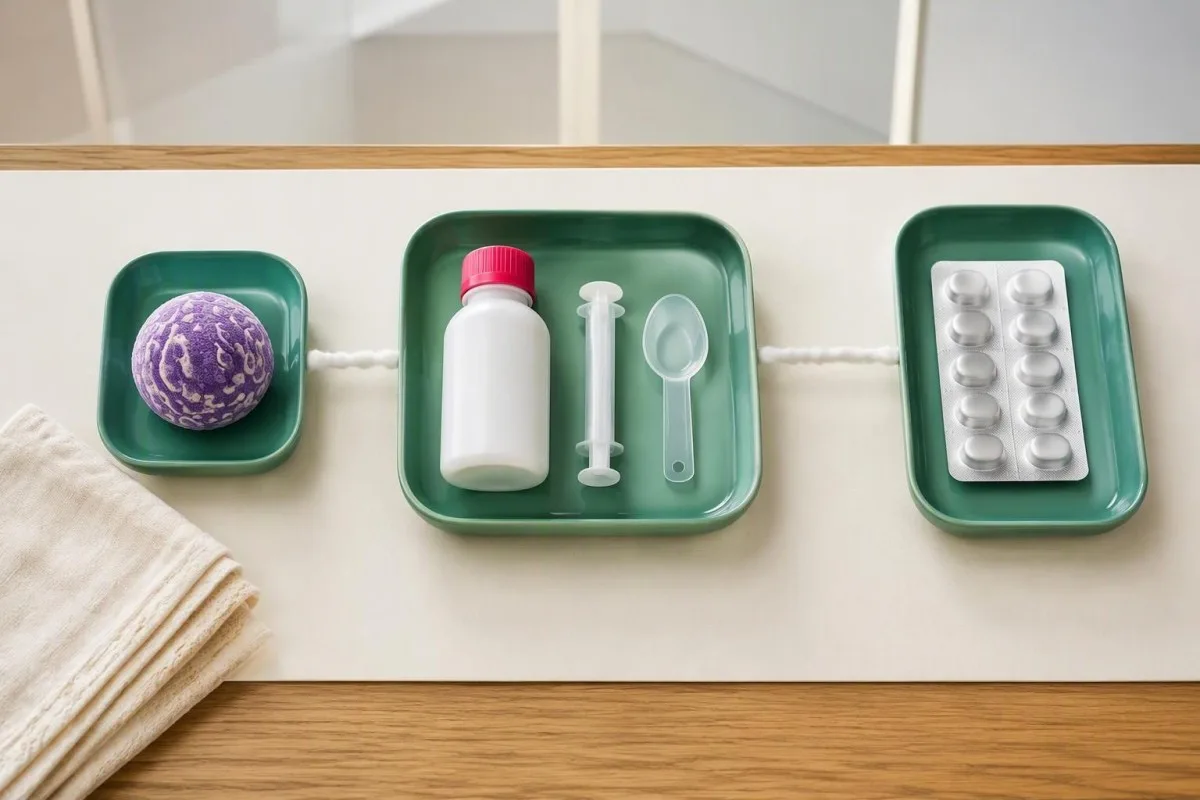
The pediatric suspension commonly contains 100 mg per 5 mL. At that concentration, 100 mg corresponds to 5 mL and 200 mg to 10 mL, but the dispensed bottle must always be checked before measuring. Use the supplied oral dosing device, shake the suspension as directed, and follow the pharmacist's preparation and storage instructions rather than estimating with a household teaspoon.
The 500 mg tablet is not the appropriate standard formulation for children younger than 12 years. Nitazoxanide's safety and effectiveness for this indication have not been established in infants younger than 1 year under US approval. Our discussion of ٻارن جي AI تشريح جي حدون reflects the same principle: adult thresholds and adult formulations cannot simply be scaled down without pediatric judgment.
Taking nitazoxanide with food improves drug exposure, but a patient unable to retain food or fluids needs reassessment. If vomiting occurs shortly after a dose, ask the pharmacist or prescriber whether to repeat it; do not automatically double the next dose. US approval does not establish availability or authorization in every country, and UK patients may need local formulary or specialist advice.
What should you check before taking nitazoxanide?
Before taking nitazoxanide, review allergies, pregnancy or breastfeeding, liver or kidney disease, and your full medication list with the prescriber. Common adverse effects include abdominal discomfort, nausea, headache, and urine discoloration. A 3 ڏينهن جو ڪورس is short, but short treatment does not remove the need to check interactions or investigate worsening symptoms.
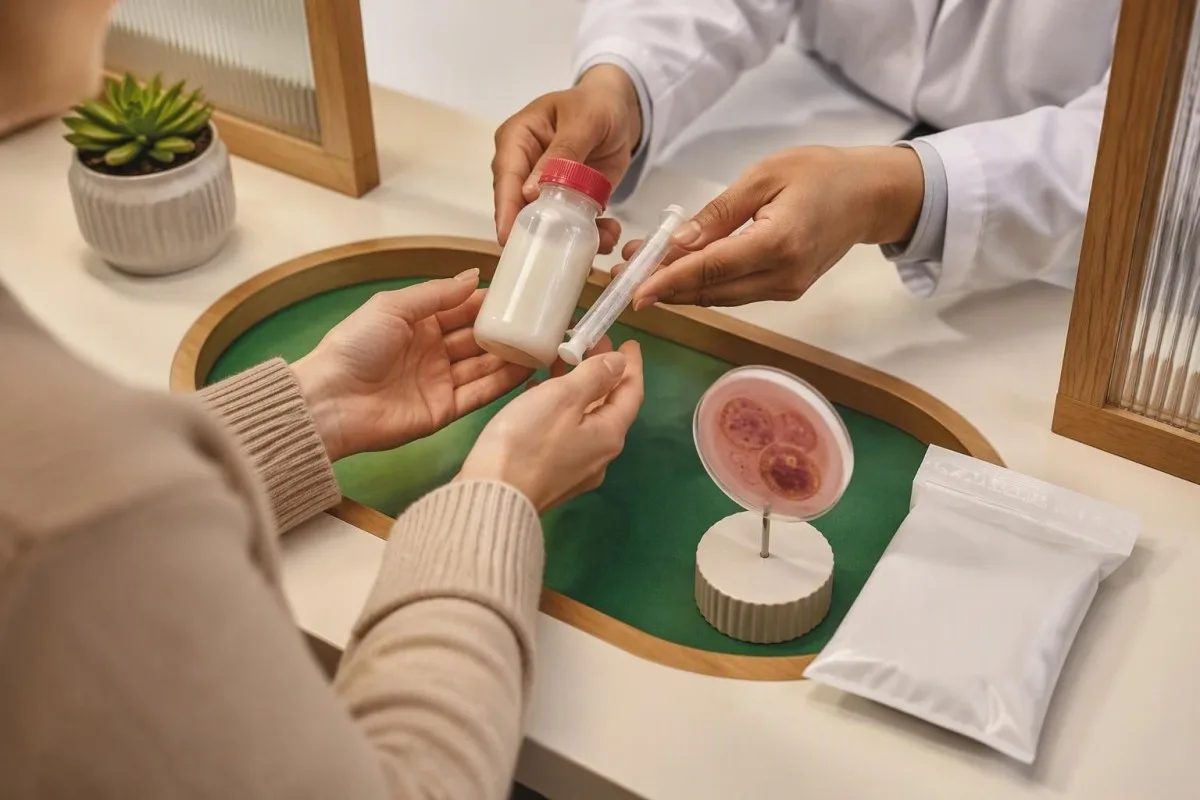
Nitazoxanide's active metabolite is more than 99% protein-bound, so prescribing information advises caution with highly protein-bound medicines that have a narrow therapeutic index, including warfarin. That warning does not mean an interaction will occur in every patient, but the anticoagulation team should decide whether additional monitoring is needed. Bring nonprescription medicines and supplements into the review, not just the new prescription.
Pregnancy, breastfeeding, and significant renal or hepatic impairment require individualized decisions because relevant human data are limited. A positive stool result is not a reason to assume that nitazoxanide is either automatically safe or automatically prohibited. For 1 patient, improving symptoms may favor supportive care; for another, continuing fluid losses may justify specialist discussion of the uncertain medication evidence.
A new symptom after starting treatment can come from the medicine, the illness, or another condition. Kantesti's approach to medication-related laboratory trends emphasizes comparing results with timing and the complete medicine list. Seek urgent help for facial swelling, breathing difficulty, fainting, or rapidly worsening illness rather than waiting to finish all 6 scheduled doses.
Why does weakened immunity change cryptosporidium treatment?
Immunocompromised patients need earlier clinical assessment because cryptosporidiosis can become prolonged, severe, and harder to eradicate. Relevant risks include advanced HIV, organ transplantation, some cancer treatments, primary immune disorders, and substantial immunosuppressive therapy. A standard 3-day nitazoxanide course cannot be assumed to work as reliably as it does in an otherwise healthy patient.
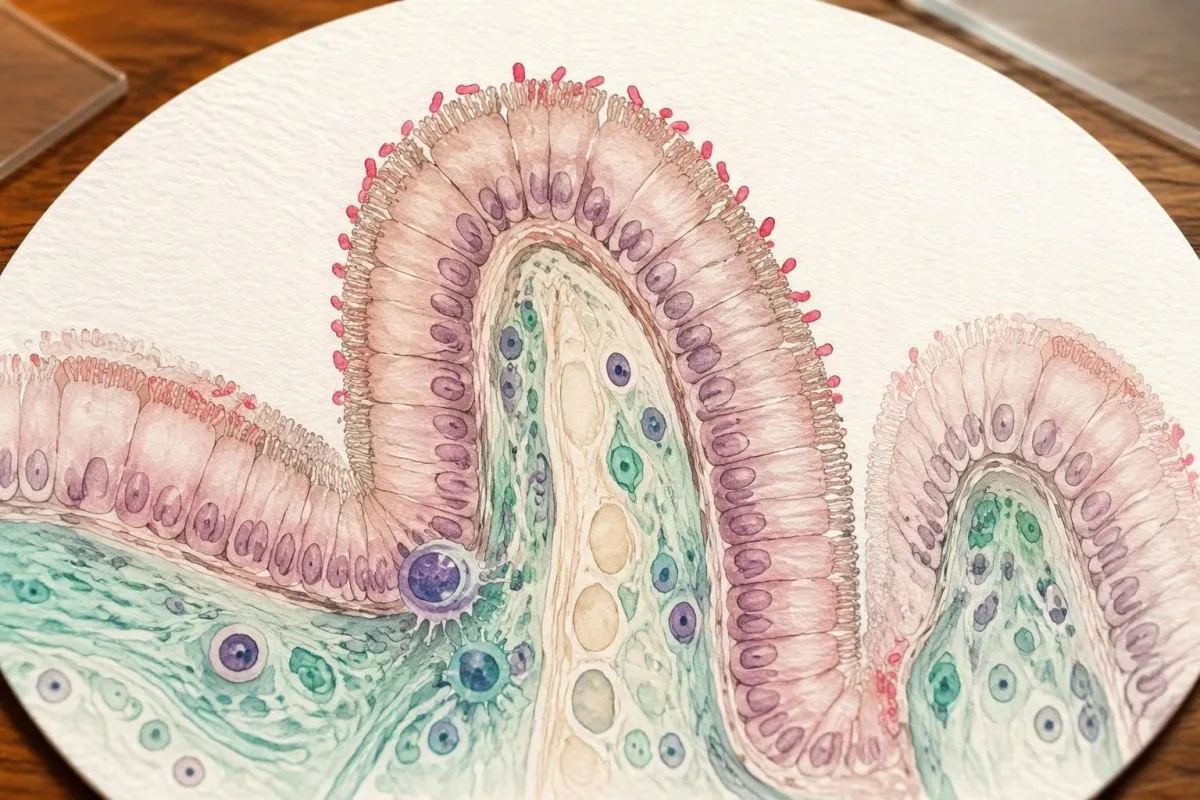
Immune status is a clinical assessment, not a single normal blood-test result. A normal total white-cell count does not rule out impaired T-cell function, and one borderline lymphocyte value does not establish major immunosuppression. Our guide to ٽيسٽ بار بار ٿيندڙ انفيڪشن explains why infection history, medicines, and targeted testing matter more than treating the complete blood count as an immune-system certificate.
Persistent cryptosporidiosis can cause malabsorption, weight loss, and substantial electrolyte losses. In advanced immune suppression, the parasite may also affect the biliary tract, so right-upper-abdominal symptoms or jaundice warrant assessment rather than another empiric 3-day prescription. Clinicians may check nutritional status and liver tests when symptoms suggest these complications; those tests assess consequences, not whether the stool detection was genuine.
The practical goal is to support hydration while addressing the reason clearance is impaired. Contact the treating team promptly after a positive result, even if stool frequency is only 2–3 times daily, because the same apparent symptom burden can carry different risks. Do not stop steroids, biologics, or transplant medicines independently; a treatment adjustment may help, but it can also trigger rejection or disease relapse.
How is cryptosporidiosis managed in people with HIV?
For people with HIV, effective antiretroviral therapy and immune restoration are the foundation of cryptosporidiosis care. NIH opportunistic-infection guidance identifies advanced immunosuppression, commonly a CD4 count below 100 cells/mm³, as a major risk for prolonged or severe disease. Nitazoxanide may be considered as an adjunct, but it should not replace antiretroviral treatment.

NIH guidance allows consideration of nitazoxanide 500–1,000 mg twice daily with food for at least 14 days alongside optimized antiretroviral therapy. This specialist regimen differs from the licensed 3-day regimen for immunocompetent patients and rests on limited evidence. CDC's Clinical Care of Crypto also states that nitazoxanide has not demonstrated superiority to placebo in patients with HIV or weakened immune systems; the distinction is uncertain adjunctive use, not a proven cure.
Viral load and CD4 count answer different questions. A suppressed viral load indicates control of HIV replication, while the CD4 count helps describe immune recovery and susceptibility to opportunistic disease; one favorable result cannot replace the other. Our explanation of HIV viral load results helps make that distinction without implying that an undetectable viral load guarantees immediate clearance of Cryptosporidium.
Clinical follow-up should track hydration, weight, stool burden, and whether oral medicines are being retained. A patient with a CD4 count of 40 cells/mm³ and persistent watery diarrhea needs a different intensity of assessment from someone whose immune function has recovered. If HIV status is unknown and diarrhea is unusually persistent or severe, a clinician may offer testing with consent rather than assuming the stool result itself diagnoses HIV.
What changes for transplant and cancer patients?
Transplant recipients and patients receiving substantial cancer-related immunosuppression should involve their treating team promptly after a positive stool result. Cryptosporidium treatment may require individualized duration, hydration support, drug-level monitoring, and carefully considered changes to immunosuppression. There is no universally reliable 3-day treatment pathway for these patients, and stopping protective medicines independently can be dangerous.
Diarrhea can increase tacrolimus exposure, even when patients assume poor absorption should lower every medicine level. The direction is not predictable from stool frequency alone, and dehydration can compound kidney risk at the same time. Our guide to tacrolimus trough timing explains why a sample's relationship to the preceding dose matters; report the exact dosing time rather than treating any concentration as a valid trough.
A positive parasite test does not exclude medication-related diarrhea or another opportunistic infection. Transplant teams may consider several explanations together, especially when symptoms continue despite treatment, and chemotherapy teams must account for neutropenia and mucosal effects. With 2 plausible contributors, improving only one may leave substantial diarrhea; that is a reason to reassess, not evidence that the laboratory necessarily made an error.
Reducing immunosuppression is a specialist risk-benefit decision. Patients taking azathioprine or related medicines may need assessment of blood counts and treatment exposure, but metabolite results do not themselves direct Cryptosporidium therapy; our thiopurine treatment-pattern guide explains their separate role. Fever during chemotherapy, reduced urine after transplantation, or inability to retain essential medicines warrants urgent contact rather than waiting another 48 hours.
Which blood tests help assess dehydration and complications?
Blood tests assess the consequences of cryptosporidiosis, not the stool diagnosis itself. Electrolytes, bicarbonate, urea or BUN, and creatinine are useful when fluid losses are substantial, symptoms persist, or the patient is vulnerable. Common adult laboratory intervals include sodium 135–145 mmol/L ۽ پوٽاشيم 3.5–5.0 mmol/L, although local ranges and clinical urgency vary.

Diarrhea can lower potassium and bicarbonate, while dehydration can raise creatinine; sodium may move in either direction. A potassium level below 3.0 mmol/L generally needs prompt clinical review, with urgency influenced by symptoms, cardiac disease, and ECG findings. Our اليڪٽرولائٽ پينل جي وضاحت shows why replacing water alone is not always sufficient, especially when weakness or palpitations appear.
Kantesti is an AI blood test interpretation platform that can help organize electrolyte and kidney trends alongside symptom and medication context. A creatinine rise of at least 0.3 mg/dL, approximately 26.5 µmol/L, within 48 hours meets one standard laboratory criterion for acute kidney injury and should not be dismissed as a minor flag. Our BUN ۽ بلڊ جي مقابلي explains why baseline values and recent change matter.
A normal panel does not prove that hydration is adequate, particularly early in fluid loss. Kantesti AI should be used as explanatory support, not as permission to ignore fainting, minimal urine, or inability to drink; our ڪلينڪل ويلڊيشن فريم ورڪ describes the distinction between interpretation and bedside assessment. Two results taken before and after rehydration can be more informative than one isolated value, but repeat testing should follow clinical need.
What is the usual cryptosporidium recovery time?
Cryptosporidium recovery time is usually 2–3 weeks in people with healthy immune systems, although symptoms can come and go for up to 30 days. Some patients improve sooner, including after nitazoxanide, while immunocompromised patients may have a much longer course. Count recovery by sustained improvement in hydration, appetite, weight, and stool pattern—not a single symptom-free day.

Temporary lactose malabsorption can follow intestinal illness because the surface enzyme lactase is vulnerable during recovery. If milk clearly worsens bloating or loose stools, a short trial of reduced lactose for 1–2 weeks may be reasonable while maintaining nutrition. That pattern does not prove ongoing parasite activity, and children should not have major dietary restrictions imposed without considering growth, usual feeding, and pediatric advice.
Lingering carbohydrate-related symptoms are different from a new diagnosis of lifelong enzyme deficiency. Stool acidity or reducing-substance tests have limitations and are not routine adult tests of Cryptosporidium cure; our discussion of ٻارن ۾ گهٽ اسٽول pH explains what those findings can and cannot establish. If symptoms remain after 2–3 weeks, reassess the clinical picture before ordering a large panel of unrelated digestive tests.
Weight and function can recover more slowly than stool frequency. A hypothetical patient may have only 2 loose stools daily yet still be eating half their usual intake, so “less diarrhea” is not the whole recovery story. Keep meals small and regular, avoid strenuous exercise while dehydrated, and request review for continuing weight loss, nighttime diarrhea, recurrent fever, or symptoms that stop improving.
Do you need another stool test after treatment?
Routine test-of-cure stool testing is usually unnecessary after clinical recovery in an otherwise healthy patient. CDC advises considering another stool test at least 1 week after the final nitazoxanide dose if symptoms have not resolved. Repeat testing should answer a clinical question—such as ongoing illness or possible reinfection—rather than serve as an automatic reassurance check.
Continued diarrhea after treatment can reflect persistent infection, reinfection, another detected pathogen, or postinfectious intestinal dysfunction. Review whether all 6 standard doses were taken with food, whether vomiting interfered with dosing, and whether exposure continued through untreated water or household contact. Those questions often change the next test more usefully than repeating the original panel immediately after the last tablet.
Inflammatory stool markers can rise during intestinal infection and do not automatically diagnose inflammatory bowel disease. If a calprotectin result is borderline during acute diarrhea, timing and subsequent symptoms matter; our guide to غير واضح فيڪل ڪيلپروٽڪٽين explains why repeat assessment may be more appropriate than an immediate chronic-disease label. A positive parasite result and an inflammatory marker should be interpreted together, not treated as mutually exclusive findings.
Immunocompromised patients may need individualized microbiological follow-up even when symptoms partly improve. The treating team may investigate other opportunistic causes or biliary involvement rather than simply prolonging nitazoxanide by another 3 days. Public-health investigations and certain employment settings can also create separate testing requirements, so clinical recovery rules should not be confused with local occupational or outbreak-control instructions.
How long are you contagious, and when can you swim?
Cryptosporidium can still spread after diarrhea improves, and CDC recommends avoiding swimming until 2 weeks after diarrhea has completely stopped. Treatment does not shorten that precaution. Wash hands with soap and water for at least 20 seconds; alcohol-based hand sanitizers are not effective against Cryptosporidium, so sanitizer alone is not an adequate substitute.

Cryptosporidium oocysts resist chlorine concentrations normally used in swimming pools. A pool that looks clean is therefore not proof that transmission risk is absent, and swallowing even a small amount of contaminated water can expose a swimmer. The 2-week swimming restriction applies after the final episode of diarrhea, not 2 weeks after the positive result or the first dose of medication.
Boiling water for 1 minute is an established precaution when water safety is uncertain; at elevations above 6,500 feet, boil for 3 minutes. Not every household filter removes Cryptosporidium, so check for a validated cyst-reduction claim rather than assuming that a carbon jug filter is protective. Follow local drinking-water advisories, especially if you are immunocompromised or an outbreak involves your water supply.
Work and school exclusion rules are different from swimming rules. Many settings use at least 48 hours without diarrhea, but food handling, childcare, healthcare, and local public-health instructions can require different arrangements. Our explanation of norovirus after recovery illustrates why symptom recovery and transmission precautions are separate questions; it should not be used to replace Cryptosporidium-specific swimming advice.
What should your follow-up plan include?
Your follow-up plan should identify who to contact, which symptoms require urgent care, and when persistent diarrhea will be reassessed. Seek prompt help for inability to retain fluids, fainting, confusion, very little urine, severe abdominal pain, or blood in stool. Immunocompromised patients should not wait through a standard 2–3-week recovery window before involving their treating team.

A practical check-in records 3 things: stool burden, fluid intake and urine, and the direction of weight or appetite change. My advice as Thomas Klein is to bring the original report, medication list, and a short symptom timeline rather than relying on the word “positive.” Kantesti's طبي مشاورتي ٽيم provides organizational clinical context, while the clinician caring for you remains responsible for treatment and follow-up decisions.
Kantesti is an AI lab test interpretation service that can help explain supporting laboratory abnormalities, not certify parasite clearance. A review at roughly 1 week can be useful when diarrhea remains troublesome, but deteriorating hydration warrants earlier care rather than waiting for that date. Our طبي مواد جا معيار distinguish educational explanations from individualized diagnosis, prescribing, and verified bedside assessment.
The 2 related publications below provide background on serum proteins and immune-related laboratory testing; neither is a Cryptosporidium treatment trial. اسان جو سيرم پروٽين تشريح گائيڊ is relevant when prolonged illness prompts nutritional assessment. Our ڪمپليمينٽ ۽ ANA گائيڊ explains a different branch of immune testing—normal complement or ANA findings do not establish normal defenses against this parasite.
وچان وچان سوال ڪرڻ
ڇا ڪرپٽوسپورڊيئم جو مثبت نتيجو هميشه نائٽازوڪسانائيڊ جي ضرورت رکي ٿو؟
ڪرپٽوسپورڊيم لاءِ هاڪاري پاخاني جي نتيجي ۾ هميشه نٽازوڪسانائيڊ جي ضرورت نه هوندي آهي. ٻي صورت ۾ صحتمند ماڻهو، جن کي هلڪو ۽ بهتر ٿيندڙ اسهال هجي، رڳو جسم ۾ پاڻي برقرار رکڻ سان ٺيڪ ٿي سگهن ٿا، عام طور تي 2–3 هفتن اندر. لڳاتار يا روزمره ۾ خلل وجهندڙ اسهال، گهٽ کاڌو کائڻ، يا جسم ۾ پاڻي جي حالت خراب ٿيڻ، بيماري جي ڪنهن مقرر ڏينهن تائين انتظار ڪرڻ بدران نسخي واري علاج بابت ڳالهائڻ جا سبب آهن. مدافعتي نظام ڪمزور رکندڙ مريضن لاءِ ڊاڪٽر جي رهنمائيءَ هيٺ جلد جائزو ضروري آهي، ڇاڪاڻ ته علاج جي اثرائتي ۽ فالو اپ مختلف هوندا آهن.
ڪرپٽو اسپورڊيم لاءِ بالغن ۾ نٽازوڪسانائيڊ جي ڪهڙي دوز آهي؟
0 عام طور تي 12 سالن ۽ ان کان وڏي عمر جي مدافعتي نظام معمول مطابق ڪم ڪندڙ مريضن لاءِ آمريڪا ۾ تجويز ڪيل علاج nitazoxanide جي 500 mg خوراک ڏينهن ۾ ٻه ڀيرا، کاڌي سان گڏ، 3 ڏينهن تائين آهي. 1–3 سالن جي عمر وارن ٻارن کي عام طور تي هر خوراک ۾ 100 mg، ۽ 4–11 سالن جي عمر وارن کي هر خوراک ۾ 200 mg ڏنو ويندو آهي، مناسب سسپينشن استعمال ڪندي. اهي خوراکون دوا تجويز ڪرڻ لاءِ حوالا آهن ۽ انهن جي بنياد تي پاڻمرادو دوا شروع نه ڪرڻ گهرجي. مدافعتي نظام ڪمزور رکندڙ مريضن کي ماهر جي تجويز ڪيل علاج جي ضرورت ٿي سگهي ٿي، ۽ مقامي منظوري يا دستيابي مختلف ٿي سگهي ٿي.
ڪرپٽوسپورڊيئم مان صحتياب ٿيڻ ۾ ڪيترو وقت لڳندو آهي؟
صحتمند مدافعتي نظام وارن ماڻهن ۾ ڪرپٽوسپورڊيم جون علامتون عام طور تي 2–3 هفتن اندر ختم ٿي وڃن ٿيون، جيتوڻيڪ اهي 30 ڏينهن تائين گهٽ وڌ ٿي سگهن ٿيون. نائٽازوڪسانائيڊ سان دستن جي ختم ٿيڻ جو امڪان بهتر ٿي سگهي ٿو، پر صحتيابي نه ته فوري آهي ۽ نه ئي يقيني. عارضي طور ليڪٽوز جو صحيح جذب نه ٿيڻ يا انفيڪشن کان پوءِ جون علامتون، شديد بيماريءَ ۾ سڌارو اچڻ کان پوءِ به جاري رهي سگهن ٿيون. وزن گهٽجڻ جاري رهڻ، پاڻيءَ جي کوٽ، بخار يا سڌارو نه اچڻ جي صورت ۾ ٻيهر جائزو وٺڻ گهرجي.
ڇا نائٽازوڪسانائيڊ ڪم ڪري ٿي جيڪڏهن توهان جو مدافعتي نظام ڪمزور هجي؟
نٽازوڪسانائيڊ مدافعتي نظام ڪمزور ٿيل مريضن ۾ گهٽ ڀروسي سان اثرائتو آهي، ۽ CDC جي هدايتن موجب HIV يا ڪمزور مدافعتي نظام وارن مريضن ۾ اهو پلاسيبو کان بهتر ثابت نه ٿيو آهي. HIV سان لاڳاپيل ڪرپٽوسپورڊيوسس جي علاج ۾، اثرائتي اينٽي ريٽرووائرل علاج ۽ مدافعتي نظام جي بحالي بنيادي اهميت رکن ٿا، خاص طور تي جڏهن CD4 جي ڳڻپ 100 سيلز/mm³ کان گهٽ هجي. NIH جي هدايتن موجب ماهر جي نگراني هيٺ اضافي علاج طور گهٽ ۾ گهٽ 14 ڏينهن تائين ڏينهن ۾ ٻه ڀيرا نٽازوڪسانائيڊ 500–1,000 mg ڏيڻ تي غور ڪري سگهجي ٿو. اها سفارش محدود ثبوتن تي ٻڌل آهي ۽ بنيادي مدافعتي ڪمزوريءَ جي علاج جو متبادل ناهي.
ڇا مون کي نائٽازوڪسانائيڊ کان پوءِ پاخاني جو ٽيسٽ ٻيهر ڪرائڻ گهرجي؟
ٻيهر پاخاني جي ٽيسٽ عام طور تي ٻي صورت ۾ صحتمند مريض ۾ ڪلينڪي طور صحتياب ٿيڻ کان پوءِ ضروري ناهي. CDC صلاح ڏئي ٿو ته جيڪڏهن علامتون ختم نه ٿيون هجن ته نائٽازوڪسانائيڊ جي آخري خوراک کان گهٽ ۾ گهٽ 1 هفتي پوءِ ٻيهر ٽيسٽ ڪرڻ تي غور ڪيو وڃي. برقرار رهندڙ علامتون جاري انفيڪشن، ٻيهر انفيڪشن، ڪنهن ٻئي بيماريءَ جي جراثيم، يا انفيڪشن کان پوءِ آنڊن جي خرابيءَ جي عڪاسي ڪري سگهن ٿيون، تنهنڪري ٽيسٽ ورجائڻ ٻيهر جائزي جو صرف هڪ حصو آهي. مدافعتي نظام جي ڪمزوريءَ وارن مريضن ۽ عوامي صحت جي گهرجن جي تابع ماڻهن کي فالو اپ جو مختلف منصوبو گهربل ٿي سگهي ٿو.
When can I swim after a Cryptosporidium infection?
Avoid swimming until 2 weeks after diarrhea has completely stopped, even if you completed nitazoxanide and feel well. Cryptosporidium oocysts resist the chlorine concentrations normally used in pools, so successful treatment does not remove the need for this precaution. The interval starts after the last diarrheal stool, not after the test date. Wash hands with soap and water for at least 20 seconds because alcohol-based sanitizer is not effective against Cryptosporidium.
When should Cryptosporidium diarrhea be treated as urgent?
Seek urgent assessment for inability to retain fluids, fainting, confusion, very little urine, severe abdominal pain, or blood in stool. Do not use the usual 2–3-week recovery time as permission to wait while hydration or general condition deteriorates. Infants, frail older adults, pregnant patients with poor intake, and immunocompromised patients need a lower threshold for medical review. Fever during chemotherapy or inability to retain transplant or HIV medicines also warrants prompt contact with the treating team.
اڄ ئي AI-طاقتور خون جي جاچ جو تجزيو حاصل ڪريو
دنيا ڀر ۾ 2 ملين کان وڌيڪ استعمال ڪندڙن ۾ شامل ٿيو جيڪي فوري ۽ درست ليب ٽيسٽ تجزيو لاءِ Kantesti تي ڀروسو ڪن ٿا. پنهنجا خون جي جاچ جا نتيجا اپلوڊ ڪريو ۽ سيڪنڊن ۾ 15,000+ بائيو مارڪرز جي جامع تشريح حاصل ڪريو.
📚 حوالا ڏنل تحقيقي اشاعتون
ڪلين، ٽي.، مچل، ايس.، ۽ ويبر، ايڇ. (2026). سيرم پروٽين گائيڊ: گلوبولين، البومين ۽ اي/جي تناسب بلڊ ٽيسٽ. Kantesti AI Medical Research.
ڪلين، ٽي.، مچل، ايس.، ۽ ويبر، ايڇ. (2026). C3 C4 Complement Blood Test ۽ ANA Titer گائيڊ. Kantesti AI Medical Research.
📖 ٻاهرين طبي حوالا
Centers for Disease Control and Prevention (n.d.). Clinical Care of Crypto. CDC Cryptosporidium Clinical Guidance.
Panel on Guidelines for the Prevention and Treatment of Opportunistic Infections in Adults and Adolescents With HIV (n.d.). ڪرپٽو اسپورڊياسس. NIH Guidelines for the Prevention and Treatment of Opportunistic Infections in Adults and Adolescents With HIV.
Rossignol JF, Ayoub A, Ayers MS (2001). Treatment of diarrhea caused by Cryptosporidium parvum: a prospective randomized, double-blind, placebo-controlled study of nitazoxanide. The Journal of Infectious Diseases, 184(1), 103–106.




⚕️ طبي دستبرداري
هي آرٽيڪل صرف تعليمي مقصدن لاءِ آهي ۽ طبي مشورو نٿو بڻجي. تشخيص ۽ علاج جي فيصلن لاءِ هميشه ڪنهن قابل صحت فراهم ڪندڙ سان صلاح ڪريو.
E-E-A-T اعتماد جا سگنل
تجربو
ڊاڪٽر جي نگرانيءَ هيٺ ليبارٽري نتيجن جي تشريح واري عمل جو جائزو.
ماهر
ليبارٽري دوائن جو ڌيان ان ڳالهه تي ته بايو مارڪرز ڪلينڪل حوالي سان ڪيئن رويو ڏيکارين ٿا.
اختيار
ڊاڪٽر ٿامس ڪلين لکيو، ۽ ڊاڪٽر ساره مچل ۽ پروف. ڊاڪٽر هانس ويبر طرفان جائزو ورتل.
اعتبار
ثبوتن تي ٻڌل تشريح، جنهن سان خبرداري گهٽائڻ لاءِ واضح پيرويءَ جا رستا موجود هجن.
