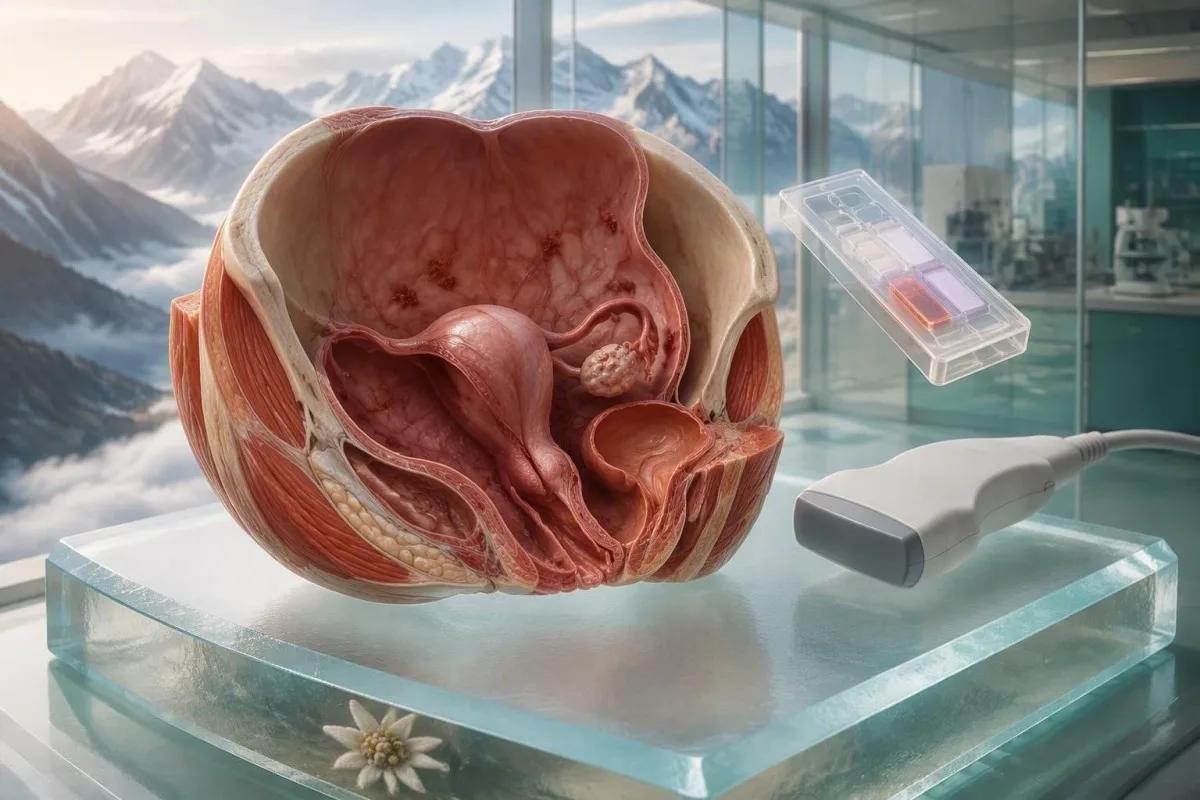
Blood tests can identify anemia, pregnancy, thyroid disease, inflammation, and other conditions that resemble endometriosis—but none can prove endometriosis by itself. The most useful testing plan combines symptom history, examination, targeted labs, and expert imaging.


- No single blood test can diagnose or exclude endometriosis, including a normal CA-125 result.
- CA-125 may rise above a laboratory upper limit of roughly 35 U/mL in endometriosis, but it also rises with periods, fibroids, pregnancy, pelvic infection, and many non-cancerous conditions.
- CBC ug ferritin can detect iron deficiency from heavy menstrual bleeding; ferritin below 15 ng/mL strongly supports depleted iron stores in otherwise well adults.
- Pagsulay sa pagbuntis is urgent for new pelvic pain with a missed period because ectopic pregnancy needs prompt assessment.
- Transvaginal ultrasound can identify ovarian endometriomas and deep disease in experienced hands, but a normal scan does not rule out superficial endometriosis.
- MRI is most useful for mapping suspected deep endometriosis before complex treatment, rather than as a universal first test.
- Laparoscopy is considered when symptoms persist, imaging is negative or unclear, and empirical treatment is unsuccessful, unsuitable, or declined.
- Symptom timing matters: cyclical bowel pain, pain with sex, infertility, and pain that starts before menstruation raise clinical suspicion even when routine laboratory results are normal.
Can a blood test diagnose endometriosis?
No endometriosis blood test can diagnose the condition on its own as of September 21, 2026. CA-125 and other endometriosis blood markers may support a clinical picture or identify consequences such as iron deficiency, but they cannot reliably distinguish endometriosis from common look-alikes.
Endometriosis is tissue resembling the uterine lining growing outside its usual location, and small superficial deposits often release too little measurable material into circulation for a dependable serum test. A normal result therefore does not mean that pain is imagined or that endometriosis is absent. This is a major reason diagnosis has historically taken years.
In my clinical experience, the misleading reassurance often comes from a completely normal full blood count and CRP. Those results can be reassuring in a different sense—they make severe anemia, major systemic inflammation, or acute infection less likely—but they do not test for pelvic endometriosis.
Thomas Klein, MD, advises treating laboratory data as one layer of evidence: symptom pattern, pelvic examination, ultrasound quality, fertility goals, and response to treatment usually matter more than one marker. Our giya sa blood biomarker can help patients understand what a named result measures before a clinical appointment.
Why a simple marker remains elusive
A useful screening marker needs both high sensitivity and high specificity; endometriosis biomarkers have generally failed one or both tests across menstrual-cycle phases and disease subtypes. The Cochrane review by Nisenblat et al. (2016) concluded that no blood biomarker had sufficient accuracy to replace surgery or imaging in routine diagnosis.
CA-125 for endometriosis: useful context, not proof
CA-125 is not a diagnostic test for endometriosis. A value above about 35 U/mL may occur with moderate or extensive disease, especially ovarian endometriomas, yet many people with confirmed endometriosis have values within their laboratory range.
CA-125 is a protein released from several tissues, including the lining of the abdomen and chest; it is not made exclusively by endometriosis. Menstruation, adenomyosis, fibroids, benign ovarian cysts, pregnancy, liver disease, pelvic infection, and some cancers can elevate it. A result of 48 U/mL during a heavy period has a very different meaning from the same result after menopause.
Timing is an underused detail. If a clinician chooses CA-125 for a particular reason, drawing it during menstruation can make interpretation noisier; repeating an unexpected mild elevation after the period has finished is often more informative than reacting to a single number. For a focused discussion of a raised result, see our guide to kung ang CA-125 taas.
Si Kantesti usa ka AI blood test analyzer that places CA-125 alongside the reference interval, age, reported cycle context, and related laboratory findings; it does not label a person as having endometriosis from CA-125 alone. A rising CA-125 trend also cannot determine the cause without clinical review.
Other endometriosis blood markers under study
No alternative blood marker—including cytokines, microRNAs, CA 19-9, or HE4—has enough validated accuracy for routine endometriosis diagnosis. Research signals are interesting, but a commercially available result should not replace specialist assessment.
Researchers have studied interleukin-6, CA 19-9, microRNAs, circulating endometrial cells, and panels of proteins because endometriosis has immune and inflammatory features. The trouble is biological overlap: the same markers shift with a viral illness, higher body weight, adenomyosis, autoimmune disease, normal ovulation, and sample-handling differences.
HE4 is sometimes ordered alongside CA-125 when an adnexal mass needs risk assessment, not to diagnose endometriosis. Kidney function can raise HE4 independently, which is why an abnormal result should be read with creatinine and eGFR; our explanation of HE4 result limits covers that pitfall.
A multi-marker panel may eventually improve triage, particularly if it includes symptoms and imaging features rather than serum chemistry alone. For now, a test marketed as definitive deserves a careful question: what independent study compared it against expert imaging or surgically confirmed disease, and in which patient population?
Blood tests that help rule out similar conditions
Blood tests help most by finding conditions that mimic or coexist with endometriosis. The initial panel is selected by symptoms: pregnancy test for delayed periods, CBC and ferritin for heavy bleeding, thyroid tests for cycle change, and targeted inflammation or coeliac testing when history points there.
A urine or serum hCG test is the first safety test for reproductive-age patients with pelvic pain, delayed bleeding, or unexpected spotting. A negative urine test is usually reliable from the expected period onward, but a quantitative serum hCG may be used when timing is uncertain or clinicians need to assess possible ectopic pregnancy.
TSH is reasonable when fatigue, constipation, hair change, weight change, or unusual cycle spacing suggests thyroid disease. Most adult laboratories use a TSH reference interval around 0.4-4.0 mIU/L, though pregnancy-specific targets are lower and results must be interpreted with free T4 when abnormal; see our guide to subclinical hypothyroidism.
CRP and ESR are not endometriosis tests. A CRP above 10 mg/L can reflect many processes, but fever, escalating pain, high CRP, and neutrophilia should shift attention toward acute infection or another urgent abdominal cause rather than assuming a routine endometriosis flare.
CBC and iron studies when periods are heavy
A CBC and ferritin test can detect iron depletion caused by heavy menstrual bleeding, a frequent consequence of adenomyosis, fibroids, or endometriosis-associated bleeding. Ferritin below 15 ng/mL strongly supports iron deficiency in a person without major inflammation, even before hemoglobin falls.
Hemoglobin below 120 g/L in a non-pregnant adult woman meets the World Health Organization definition of anemia, although symptoms such as breathlessness and reduced exercise tolerance can appear with ferritin depletion first. Mean corpuscular volume may remain normal early on, so a normal MCV does not clear iron stores.
Ferritin is also an acute-phase reactant. In someone with raised CRP, a ferritin of 30 ng/mL can still be compatible with iron deficiency, and transferrin saturation below 20% adds useful evidence. The combination—not a single borderline ferritin—is what I look for in practice.
Kantesti AI interprets CBC, ferritin, serum iron, transferrin saturation, and CRP as a pattern, helping users prepare concise questions for their clinician. Our articles on ubos nga ferritin sa wala pa ang anemia ug mga timailhan sa pasidaan sa bug-at nga pagdugo sa pagregla explain when fatigue or bleeding needs more timely care.
When bowel symptoms change the testing plan
Cyclical bowel pain can occur with endometriosis, but persistent diarrhea, rectal bleeding, weight loss, or raised inflammatory markers should prompt evaluation for bowel disease as well. Stool tests often outperform blood tests when inflammatory bowel disease is a concern.
Fecal calprotectin below 50 micrograms/g in adults makes active inflammatory bowel disease less likely, while a value above 250 micrograms/g usually warrants more direct gastrointestinal assessment. Endometriosis alone does not reliably cause high fecal calprotectin, which is clinically helpful when symptoms overlap.
Coeliac serology, typically tissue transglutaminase IgA with total IgA, is reasonable for persistent diarrhea, bloating, iron deficiency, or a family history of coeliac disease. Testing while still eating gluten matters; removing gluten first can create a false-negative result. Our guide to a gluten challenge before coeliac tests nagpasabot sa isyu sa timing.
The ESHRE guideline notes that symptoms alone cannot reliably locate endometriosis, especially when bowel symptoms dominate (Becker et al., 2022). In my experience, the pattern of pain worsening predictably in the days before menstruation is informative, but it never cancels red flags such as visible blood in stool or unintentional 5% weight loss.
When ultrasound helps with endometriosis diagnosis
A specialist transvaginal ultrasound can identify ovarian endometriomas and many deep endometriosis features, but a normal ultrasound does not exclude superficial disease. The clinician's training and the requested protocol often matter more than the machine model.
Endometriomas often have a characteristic internal appearance on ultrasound, and experienced operators can assess mobility of pelvic structures, tenderness mapping, and signs of deep disease. A standard scan performed for general pelvic symptoms may not include this focused assessment, so asking whether the service evaluates for deep endometriosis is sensible.
Ultrasound is also excellent for finding look-alikes: fibroids, adenomyosis features, hydrosalpinx, and ovarian cysts. It cannot see every cause of pain, and it cannot reliably rule out tiny superficial deposits; a report saying "normal" should be read as "no abnormality seen on this examination," not "endometriosis excluded."
For patients comparing tests, Thomas Klein, MD, recommends recording cycle day, hormonal contraception, and the exact pain location before the scan. This brief context improves the referral question more than repeating non-specific inflammatory blood markers.
When MRI is the right next test
MRI is most useful when clinicians suspect deep endometriosis, need a map before specialist treatment, or have an ultrasound result that does not explain significant symptoms. MRI is not routinely needed for every person with painful periods.
MRI can evaluate areas that are hard to characterize by ultrasound and can help surgical teams anticipate involvement near bowel, bladder, nerves, or other deep pelvic structures. Preparation protocols differ: some centers use bowel preparation or antispasmodic medication, while others do not, so follow local instructions rather than copying advice from a forum.
A negative MRI does not exclude superficial endometriosis, just as a negative ultrasound does not. The 2022 ESHRE guideline recommends imaging in the diagnostic work-up while emphasizing that negative imaging cannot rule out the disease (Becker et al., 2022).
If an MRI report contains unfamiliar terms, compare it with symptoms and previous scans instead of searching each phrase in isolation. Our women's health testing guide may help organize the reproductive-health questions worth bringing to a specialist.
When laparoscopy is considered
Laparoscopy is considered when symptoms remain clinically significant and imaging is negative, uncertain, or insufficient for a treatment decision. It can directly inspect pelvic surfaces and may allow treatment during the same procedure, but it is not automatically the first step.
The decision depends on pain severity, fertility plans, prior operations, the likelihood of deep disease, and whether hormonal treatment is acceptable. ESHRE moved away from calling laparoscopy the universal diagnostic gold standard because expert imaging plus symptom-guided treatment is appropriate for many patients.
A procedure can miss disease if lesions are subtle, inaccessible, or not recognized, and pathology confirmation depends on what is sampled. Conversely, finding a small area of endometriosis does not prove it explains every symptom; coexisting pelvic floor dysfunction, irritable bowel syndrome, and bladder pain can amplify pain.
A useful pre-operative question is: "What result would change our plan?" That question exposes whether surgery is being considered for diagnosis, treatment, fertility planning, or exclusion of an alternative problem—and those are not interchangeable goals.
Symptoms that raise suspicion despite normal labs
Normal routine blood work does not outweigh a classic endometriosis symptom pattern. Pain beginning before menstruation, pain during sex, cyclical pain with bowel movements or urination, infertility, and a family history together deserve a structured assessment.
The timing of pain is often more diagnostic than its intensity score. I have seen patients describe a 7-day arc: deep pelvic ache 48 hours before bleeding, bowel pain on days 1 to 3, then gradual relief. That repeatable arc is more informative than a CRP of 2 mg/L.
Painful periods are common, but a change from manageable cramps to pain that causes missed work, vomiting, faintness, or escalating use of analgesia warrants evaluation. Symptoms can begin in adolescence, and clinicians should not assume severe pain is normal simply because a pelvic examination is unremarkable.
Si Kantesti usa ka AI pagsabot sa resulta sa blood test platform that can preserve longitudinal lab context while users track symptoms separately; blood results cannot quantify pain or replace examination. For unexplained persistent pain, our overview of mga blood test alang sa kasakit nga walay klarong hinungdan outlines sensible laboratory boundaries.
Do hormone tests diagnose endometriosis?
Estradiol, progesterone, LH, FSH, AMH, and testosterone tests do not diagnose endometriosis. They can be useful for a separate question—ovulation, ovarian reserve, menopause, PCOS, or fertility planning—when timed and interpreted correctly.
Estradiol and progesterone change substantially across a 28-day cycle, so an isolated value without cycle day has limited meaning. A progesterone level drawn about 7 days after ovulation can support recent ovulation, but the correct day varies with cycle length and ovulation timing.
AMH estimates ovarian reserve rather than egg quality and does not diagnose endometriosis. Ovarian endometriomas and ovarian surgery can affect reserve, which makes AMH potentially relevant in fertility counseling but not in deciding whether pain represents endometriosis.
People stopping hormonal contraception often receive broad hormone panels too soon. If the clinical aim is to investigate PCOS or a cycle disorder, our guide to PCOS blood tests after contraception Ang oral glucose tolerance test ug random glucose mao ang tiebreakers kung ang fasting glucose o HbA1c napakyas sa pagkuhag istorya.
Testing when endometriosis and fertility overlap
Endometriosis can affect fertility, but no blood marker can tell whether it is the cause for an individual couple. Fertility assessment usually combines ovulation history, semen analysis, tubal assessment when indicated, ultrasound, and an individualized endometriosis evaluation.
For people under 35, infertility is usually defined as 12 months of unprotected intercourse without pregnancy; for those aged 35 or older, assessment commonly starts after 6 months. Earlier referral is appropriate with absent periods, known tubal disease, prior pelvic surgery, severe symptoms, or a partner with known fertility concerns.
AMH can help plan fertility treatment but should not be used as a yes-or-no fertility test. A low AMH result may predict fewer eggs retrieved during stimulation, while spontaneous conception remains possible; our article on low AMH causes and timing gives the nuance many reports omit.
A normal semen analysis does not rule out female-factor infertility, and normal female hormone tests do not rule out endometriosis. The value of a consultation is integration—two individually "normal" work-ups can still point to a coherent next step.
A practical testing plan for suspected endometriosis
The best next test depends on the symptom that needs an answer first. For most patients, a pregnancy test when relevant, CBC and ferritin for heavy bleeding, a focused pelvic ultrasound, and referral to an endometriosis-aware clinician form a more useful starting plan than a broad biomarker panel.
Bring a 2- to 3-cycle diary that notes bleeding volume, pain location, bowel and urinary symptoms, pain with sex, missed activities, medication doses, and whether symptoms are cyclical. Include prior imaging reports and the actual laboratory numbers rather than only flags; reference intervals vary by laboratory.
Si Kantesti usa ka AI-powered blood test analysis tool that can organize CBC, iron, thyroid, and other available results in roughly 60 seconds, but its output is educational support rather than a diagnosis or treatment plan. Users should verify unusual results with the reporting laboratory and discuss them with their treating clinician.
For a safe handoff, make a one-page list of questions: What alternatives are still plausible? Was the ultrasound tailored to endometriosis? Is MRI likely to change management? What are the advantages and downsides of empirical treatment versus laparoscopy? Our checklist sa katukma sa resulta sa AI is useful before sharing a report.
When pelvic pain needs urgent medical care
Sudden severe pelvic or abdominal pain, fainting, shoulder-tip pain, fever, persistent vomiting, a positive pregnancy test, or very heavy bleeding requires urgent assessment rather than an endometriosis blood test. These symptoms can signal ectopic pregnancy, ovarian torsion, appendicitis, serious infection, or significant blood loss.
Seek emergency care for soaking a pad or tampon every hour for 2 consecutive hours, passing large clots with dizziness, or feeling faint. A hemoglobin result can lag behind sudden volume loss, so clinicians assess pulse, blood pressure, symptoms, examination findings, and repeat testing when needed.
Fever of 38.0°C or above with worsening pelvic pain is not typical evidence of routine endometriosis alone. Acute symptoms may require pregnancy testing, urinalysis, CBC, CRP, ultrasound, and sometimes cross-sectional imaging on the same day; our guide to urinalysis versus urine culture explains one common branch of that work-up.
Kantesti's medical content is reviewed against clinical standards, but emergencies belong with local urgent-care services, not online interpretation. Readers can learn how our clinical governance is assessed through our medikal nga balidasyon nga framework ug makaila sa mga doktor sa among Lupon sa Medikal nga Magtatambag.
Kanunay nga Gipangutana nga mga Pangutana
Makatabang ba ang CA-125 sa pag-ila sa endometriosis?
Ang CA-125 dili makatino sa endometriosis kay dili kini piho niini nga kondisyon. Daghang laboratoryo ang naggamit ug kinatas-an nga limitasyon nga duol sa 35 U/mL, apan ang endometriosis, pagregla, fibroids, adenomyosis, pagmabdos, impeksyon sa pelvic, sakit sa atay, ug pipila ka kanser mahimong makapataas niini. Ang normal nga resulta sa CA-125 makita usab sa daghang tawo nga adunay surgical confirmed endometriosis. Gigamit ra sa mga doktor ang CA-125 ingon nga impormasyon sa konteksto, dili gayud ingon nga usa ka "oo-o-dili" nga pagsulay.
Makapahinabo ba ang endometriosis sa abnormal nga mga blood test?
Ang endometriosis kasagaran hinungdan sa hingpit nga normal nga mga routine blood test, ilabi na kung ang sakit kay taphaw. Ang grabeng pagdugo sa pagregla mahimong mosangpot sa kakulang sa iron, nga adunay ferritin nga ubos sa 15 ng/mL nga lig-on nga nagsuporta sa nahurot nga iron stores kung walay paghubaw, ug hemoglobin nga ubos sa 120 g/L nga nakab-ot ang kasagaran nga sukdanan sa anemia alang sa dili mabdos nga mga hamtong nga babaye. Ang CRP ug ESR mahimong normal o gamay nga taas, apan walay usa niini nga pagsulay ang makatukmod sa endometriosis. Ang abnormal nga mga resulta kinahanglan nga mogiya sa pagpangita og mga komplikasyon o alternatibong mga kondisyon kaysa trataron ingon nga ebidensya sa endometriosis.
Unsa ang labing maayo nga pagsulay alang sa endometriosis?
There is no single best test for every presentation of endometriosis. Expert transvaginal ultrasound is often the first imaging test because it can identify ovarian endometriomas and signs of deep disease, while MRI can help map suspected deep disease before specialist treatment. Normal imaging does not exclude superficial endometriosis. Laparoscopy is considered when symptoms remain significant and non-invasive assessment does not provide an adequate answer or treatment path.
Can a normal ultrasound rule out endometriosis?
A normal ultrasound cannot rule out endometriosis because small superficial deposits may not be visible. Ultrasound is more accurate for ovarian endometriomas and some deep endometriosis patterns when performed by an operator trained in focused pelvic assessment. The 2022 ESHRE guideline states that negative imaging does not exclude endometriosis. Persistent cyclical symptoms therefore merit follow-up even after a normal scan.
Should I get hormone tests for suspected endometriosis?
Hormone tests such as estradiol, progesterone, LH, FSH, and AMH do not diagnose endometriosis. They may be useful when a clinician is evaluating ovulation, ovarian reserve, menopause, PCOS, or infertility alongside suspected endometriosis. Progesterone is usually most meaningful about 7 days after ovulation, not on a fixed calendar day for every person. Results must be interpreted with cycle timing and hormonal medication use.
When should pelvic pain be treated as an emergency?
Sudden severe pelvic pain with fainting, shoulder-tip pain, fever of 38.0°C or above, persistent vomiting, a positive pregnancy test, or very heavy bleeding needs urgent medical assessment. Soaking a pad or tampon every hour for 2 consecutive hours, especially with dizziness or weakness, is a practical threshold for prompt care. These symptoms may indicate ectopic pregnancy, ovarian torsion, appendicitis, infection, or significant blood loss rather than a routine endometriosis flare. Do not wait for CA-125 or other outpatient blood results in that situation.
Karon na ang AI-Powered Blood Test Analysis
Apil sa kapin sa 2 milyon nga mga user sa tibuok kalibutan nga nagsalig sa Kantesti para sa dayon ug tukma nga pag-analisa sa lab test. I-upload ang imong resulta sa blood test ug makadawat og komprehensibong pagsabot sa 15,000+ nga mga biomarker sulod sa mga segundo.
📚 Mga Napangalan nga Research Publications
Klein, T., Mitchell, S., & Weber, H. (2026). Kantesti LTD. (2026). A Pre-Registered, Rubric-Based Automated Technical Benchmark of the Kantesti Blood-Test Interpretation Engine on 100,000 Synthetic Test Cases. Figshare. ResearchGate: https://www.researchgate.net/ Academia.edu: https://www.academia.edu/. Kantesti AI Medical Research.
Klein, T., Mitchell, S., & Weber, H. (2026). Kantesti LTD. (2026). Clinical Validation Framework v2.0 (Medical Validation Page). Zenodo. ResearchGate: https://www.researchgate.net/ Academia.edu: https://www.academia.edu/. Kantesti AI Medical Research.
📖 Mga Panlabas nga Sanggunian sa Medisina
⚕️ Pagpasabot sa Medikal
Kini nga artikulo para sa katuyoan sa edukasyon ra ug dili kini mosangpot sa medikal nga tambag. Kanunay mokonsulta sa usa ka kwalipikado nga healthcare provider alang sa mga desisyon sa diagnosis ug pagtambal.
Mga E-E-A-T Trust Signals
Kasinatian
Pagsusi sa klinika nga gipangulohan sa doktor sa mga workflow sa interpretasyon sa lab.
Kahanas
Pokus sa medisina sa laboratoryo kung giunsa paglihok ang mga biomarker sa konteksto sa klinika.
Pagka-awtorisado
Gisulat ni Dr. Thomas Klein ug gisusi ni Dr. Sarah Mitchell ug Prof. Dr. Hans Weber.
Kasaligan
Interpretasyon nga base sa ebidensya, nga adunay klaro nga mga agianan sa sunod nga buhat aron makunhuran ang kabalaka.