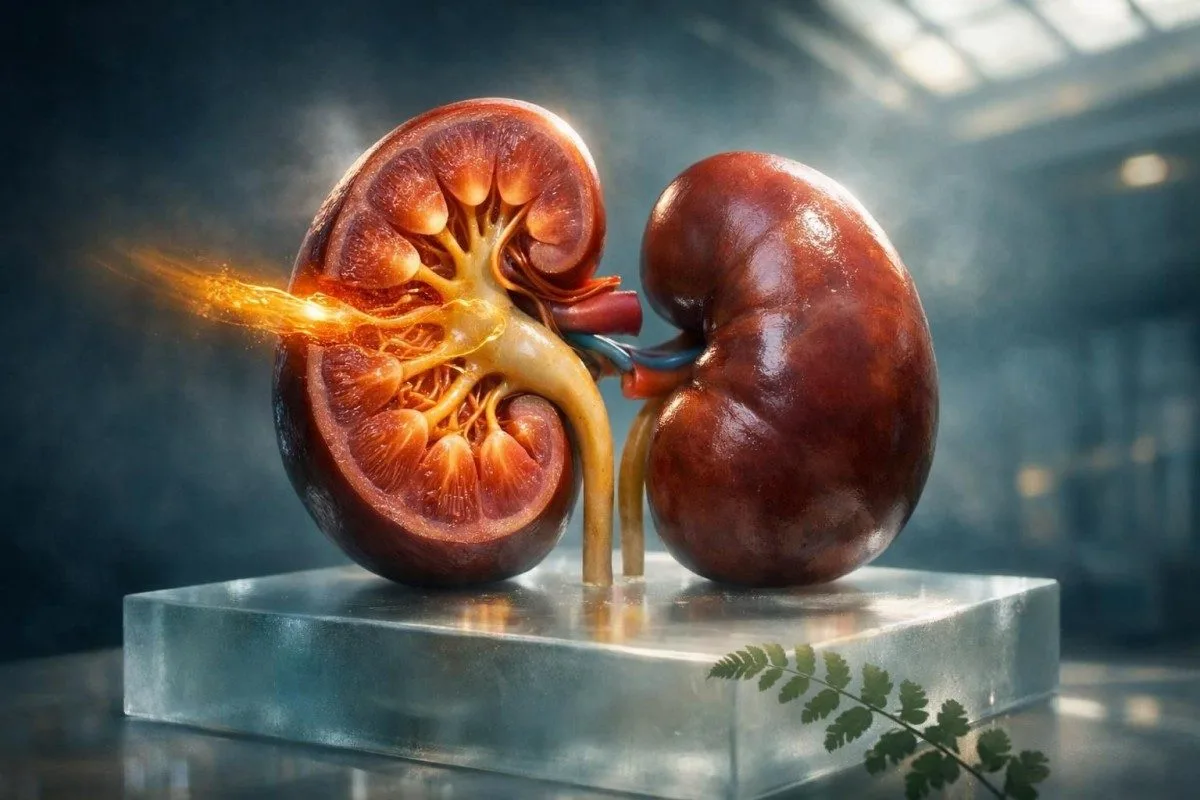
A BUN result looks simple until creatinine is normal and the portal still flags red. We break down the cutoffs clinicians actually use, what dehydration does to BUN first, and when a repeat or urgent call makes sense.


- Normal adult BUN is usually 7-20 mg/dL in most U.S. labs, though some laboratories use slightly wider ranges.
- Borderline high BUN of 21-24 mg/dL is often dehydration, fasting, or recent high-protein intake rather than kidney failure.
- BUN above 30 mg/dL deserves closer review, especially if it persists, rises over time, or comes with symptoms.
- BUN 60 mg/dL or higher is high enough that same-day medical advice is sensible if you have low urine output, vomiting, black stools, or confusion.
- Low BUN below 6-7 mg/dL is usually less urgent and often reflects pregnancy, low protein intake, or overhydration.
- BUN/creatinine ratio above 20:1 suggests a prerenal pattern such as dehydration or reduced kidney blood flow, but it is not diagnostic on its own.
- High BUN with normal creatinine can still matter in older adults, low-muscle-mass patients, GI bleeding, steroid use, and early volume depletion.
- Kidney disease is not diagnosed by BUN alone; persistent eGFR below 60 mL/min/1.73 m² or UACR 30 mg/g or higher for more than 3 months carries more weight.
What counts as a normal BUN on a kidney blood test?
BUN normal range in most adults is 7-20 mg/dL. Values of 21-30 mg/dL are often dehydration, recent high protein intake, steroids, or GI bleeding; values above 30 mg/dL deserve closer review, and 60 mg/dL or higher is urgent even if creatinine looks normal. At Kantesti AI, we treat this as a pattern to explain, not a random red flag. If you want the wider lab context first, start with our guide to reading blood test results.
Adult BUN is usually reported in mg/dL, and the most common reference interval is 7-20 mg/dL. Some labs use 6-24 mg/dL, and some European reports show urea instead of BUN; 7-20 mg/dL BUN is roughly 2.5-7.1 mmol/L urea. As of March 29, 2026, that unit mismatch is still one of the commonest reasons patients think their result is abnormal when it is not.
I usually call 21-24 mg/dL borderline, 25-30 mg/dL mildly high, 31-59 mg/dL clearly abnormal, and 60+ mg/dL high enough that timing and symptoms matter right away. A fit adult with BUN 23 mg/dL after a dry morning fast is a very different case from a frail adult with BUN 23 mg/dL, edema, and a falling urine output.
Last month we reviewed a 52-year-old runner with BUN 27 mg/dL, creatinine 0.92 mg/dL, sodium 146 mmol/L, and dark urine after a long race weekend. Forty-eight hours later, after steady oral fluids, the BUN was 16 mg/dL. That is classic volume depletion, not silent kidney failure.
BUN is not a direct kidney-damage marker. It measures nitrogen from urea, a waste product made in the liver, so hydration, protein intake, GI bleeding, catabolism, and liver function all shift the number before the kidney diagnosis is even on the table.
Why BUN and urea are not identical numbers
BUN reports only the nitrogen portion of urea, which is why international lab reports can look mismatched even when they are clinically equivalent. If the abbreviations on your basic metabolic panel are confusing, our blood test abbreviations guide helps decode what is actually being measured.
How to tell dehydration from kidney disease when BUN is high
Dehydration usually raises BUN more than creatinine because the kidney reabsorbs more urea when it is trying to conserve water. Intrinsic kidney disease more often raises both values together and usually brings a lower eGFR or an abnormal urine result. The practical starting point is our BUN/creatinine ratio guide.
A BUN/creatinine ratio above 20:1 supports a prerenal pattern, but it is not specific. The physiology matters: urea is passively reabsorbed during low-flow states, while creatinine is not reabsorbed much, so BUN often moves before creatinine does.
In outpatient practice, dehydration clues are often mundane rather than dramatic: diarrhea, vomiting, fever, heavy exercise, travel, sauna use, or simply not drinking before a morning blood draw. We also see mild hemoconcentration, where sodium, albumin, or hematocrit drift upward, and a fasting blood test guide often explains a BUN of 22-28 mg/dL.
A kidney cause is more likely when creatinine rises, eGFR falls below 60 mL/min/1.73 m², or the urine shows protein or blood. Potassium above 5.5 mmol/L or bicarbonate below 22 mmol/L makes me less relaxed; our eGFR range explainer is useful for that next step.
The thing is, heart failure, severe infection, and upper GI bleeding can mimic dehydration on paper. When the story is muddy, a complete urinalysis guide, blood pressure review, and sometimes a repeat BMP after hydration give you more signal than the BUN alone.
A practical outpatient rule
If BUN is mildly high, creatinine is normal, urine is concentrated, and the person feels dry or recently had fluid loss, dehydration is the leading explanation. If BUN is high with swelling, frothy urine, high potassium, or a falling eGFR, I stop thinking simple dehydration and look for kidney or cardiorenal disease.
When high BUN matters even if creatinine looks normal
High BUN with normal creatinine can still be important when BUN stays above 25-30 mg/dL or the patient has diabetes, hypertension, albuminuria, heart failure, or black stools. A normal creatinine does not reliably rule out kidney disease in older adults, smaller-bodied patients, or anyone with low muscle mass. This is one pattern our AI blood test platform flags early.
Creatinine is a muscle-derived marker. A 78-year-old woman with little muscle may look normal at 0.8 mg/dL while her true filtration is already falling, which is why cystatin C or a urine albumin-creatinine ratio can uncover risk that BUN and creatinine alone miss.
Persistent BUN above 30 mg/dL with creatinine 0.9-1.1 mg/dL makes me look for hidden causes: chronic dehydration, GI bleeding, diuretics, steroids, or a high protein load. If symptoms include fatigue, dizziness, ankle swelling, or nocturia, our blood test symptoms decoder can help frame what to ask next.
Thomas Klein, MD speaking plainly: the older, thinner patient with normal creatinine is the one I do not wave away. I recently reviewed a 76-year-old with BUN 34 mg/dL and creatinine 0.9 mg/dL; her urine albumin-creatinine ratio was 180 mg/g, and that persistent albuminuria mattered more than the apparently normal creatinine.
Upper GI bleeding is the other trap. Digested blood behaves like a protein load, so BUN can jump into the 30s or 40s while creatinine barely moves; black stools or coffee-ground vomiting turn this from a lab interpretation problem into a same-day medical problem.
Why normal creatinine can mislead
Creatinine depends on muscle mass, age, and body size more than many patients realize. In my experience, BUN is sometimes the early nudge that prompts a fuller kidney workup in people whose creatinine still looks deceptively tidy.
What a low BUN usually means — and the few times it matters
Low BUN below 6-7 mg/dL is usually not dangerous by itself. The main exceptions are advanced liver disease, marked overhydration, or SIADH, where a very low BUN helps support the diagnosis. If liver markers are off too, compare them with our ALT guide.
The liver converts ammonia into urea, so severe hepatic dysfunction can lower BUN. A BUN of 4 mg/dL matters more when albumin is below 3.5 g/dL, INR is prolonged, or bilirubin is high; that pattern points to impaired synthesis rather than a harmless lab blip.
Pregnancy commonly lowers BUN because plasma volume expands and renal blood flow rises. In many pregnant patients, BUN around 3-9 mg/dL can be physiologic, especially when creatinine is low and the rest of the panel looks steady.
I also see low BUN in strict low-protein diets, malnutrition, and older adults who simply are not eating enough. When BUN is 5 mg/dL and albumin looks low, our serum proteins guide adds useful context. If ferritin or iron saturation are off too, compare them with our iron studies explainer.
Low BUN can accompany dilutional states. If BUN is 5 mg/dL, sodium is 128 mmol/L, and the patient feels nauseated or confused, I worry less about the BUN itself and more about water balance and symptomatic hyponatremia.
BUN/creatinine ratio cutoffs that are actually useful
BUN/creatinine ratio is most useful at the edges: 10:1 to 20:1 is typical, above 20:1 suggests prerenal states or upper GI bleeding, and below 10:1 suggests low urea production or a disproportionate creatinine rise. Clinicians disagree on how much weight to give the ratio, and honestly that caution is fair.
Here is the practical comparison I use at the bedside. BUN 28 mg/dL with creatinine 1.0 mg/dL gives a ratio of 28:1 and usually pushes me toward dehydration or bleeding, while BUN 28 mg/dL with creatinine 1.8 mg/dL gives a ratio near 16:1 and points more toward combined renal dysfunction.
A ratio above 30:1 raises my suspicion for upper GI bleeding, especially when melena, anemia, or lightheadedness are present. If a portal result arrives with that pattern and you also have black stool, our digestive symptom guide is relevant, but I would still advise speaking to a clinician the same day.
A low ratio is not automatically reassuring. BUN 18 mg/dL with creatinine 2.4 mg/dL gives a ratio of 7.5:1, which can reflect significant kidney impairment, rhabdomyolysis, or reduced urea generation in liver disease. If the math itself feels opaque, our translate lab results guide makes this easier to follow.
Hospital nephrologists sometimes use fractional excretion of urea, where values below 35% support prerenal physiology, especially if diuretics distort sodium-based indices. That is not a routine outpatient test, but it explains why the simple ratio sometimes gets the direction right and the diagnosis wrong.
When the ratio fails
The ratio loses accuracy when creatinine generation is abnormal, which is common in low muscle mass, liver disease, amputation, or major catabolic illness. That is why I never use it as a stand-alone CKD screening test.
How BUN fits into a basic metabolic panel or renal function panel
BUN belongs inside the whole basic metabolic panel, not on its own. A renal function panel adds albumin and phosphorus, and those two numbers often decide whether a BUN of 24 mg/dL is trivial or worth chasing. If the abbreviations are muddy, our blood test abbreviations guide clears up the panel names.
A standard BMP usually includes sodium, potassium, chloride, bicarbonate or CO2, glucose, calcium, BUN, and creatinine. An eGFR is often auto-calculated from creatinine, age, and sex, and many labs now use a 2021 CKD-EPI approach even though the exact reporting format still varies.
I worry more when BUN rises alongside bicarbonate below 22 mmol/L, potassium above 5.5 mmol/L, or symptoms like edema and shortness of breath. A BUN of 26 mg/dL means one thing with potassium 4.2 mmol/L and another with potassium 5.8 mmol/L.
Mildly high BUN after a long fast is common. BUN 23 mg/dL with creatinine 0.88 mg/dL, sodium 145 mmol/L, and bicarbonate 26 mmol/L after a dry morning is usually not the same story as BUN 23 mg/dL with creatinine 1.3 mg/dL, frothy urine, and hypertension.
Kantesti AI interprets BUN by reading the whole cluster rather than one digit. To understand the neighboring analytes, our blood test biomarkers guide maps 15,000+ markers and shows why bicarbonate, phosphorus, and albumin often change the story.
What makes a panel renal
The renal panel earns its name because it adds markers that change with kidney handling and nutritional state. In borderline cases, phosphorus and albumin often provide more clinical texture than another isolated glance at BUN.
High BUN causes that are not primary kidney failure
High BUN is not the same as kidney failure. Upper GI bleeding, prednisone 40-60 mg/day, high-protein intake, fever, burns, and endurance exercise can all push BUN above 25 mg/dL while creatinine stays normal. If bowel symptoms are in the picture, our digestive symptom guide is one place to start.
The GI bleed mechanism is stronger than many patients expect. Digested blood is absorbed like protein, the liver converts that nitrogen to urea, and BUN can climb into the 30s or 40s before creatinine looks impressive; this is one reason blood urea appears in the Glasgow-Blatchford bleeding score.
Corticosteroids and catabolic stress do something similar by increasing protein breakdown. In my practice, a short burst of prednisone can raise BUN by several mg/dL within a few days, especially if the patient is also sleeping badly, eating erratically, and under-hydrating.
Endurance athletes are a classic false alarm. After a marathon or a hard cycling block, BUN may rise 5-15 mg/dL for 24-48 hours, and I see the same pattern in travelers who come in exhausted and worried; our fatigue lab guide helps sort out what else to check.
Diuretics can concentrate BUN, and heart failure can generate the same prerenal pattern even when total body fluid is high. That is why ankle swelling plus BUN 32 mg/dL tells a very different story from dry lips plus BUN 32 mg/dL.
The upper GI bleed exception
If BUN is rising, creatinine is still normal, and there is melena or coffee-ground emesis, think bleed before you think mysterious kidney disease. It is one of the few situations where a disproportionately high BUN can carry real urgency even with a normal creatinine.
Which BUN numbers are concerning enough to call your clinician
BUN becomes more concerning as the number rises and as symptoms accumulate. 21-24 mg/dL is often low urgency, 25-30 mg/dL usually deserves context and a repeat, 31-59 mg/dL deserves prompt medical review, and 60+ mg/dL is same-day territory if you feel unwell.
Call sooner if there is low urine output, confusion, shortness of breath, swelling, chest pressure, black stools, repeated vomiting, or severe diarrhea. A BUN of 28 mg/dL with melena worries me more than a BUN of 38 mg/dL after a hot-day race.
Risk factors change the threshold. Diabetes, known CKD, heart failure, age over 70, transplanted kidneys, uncontrolled hypertension, or heavy NSAID use make even a BUN of 26 mg/dL worth more attention than it gets in a healthy younger adult.
Repeat timing matters. After a stomach bug or dehydration episode, many clinicians recheck a BMP within 24-72 hours; if the value is stable but unexplained, 1-2 weeks is common, and our lab timing guide helps set expectations.
Thomas Klein, MD here: trend beats drama. A BUN drifting from 18 to 24 to 31 mg/dL over three months means more to me than one isolated 29, and patient stories in our case studies show how early pattern recognition can change follow-up.
Red flags that override the number
Black stools, vomiting, severe thirst, confusion, or marked drop in urination matter more than whether the BUN is 32 or 36. Symptoms are what turn a lab abnormality into a clinical event.
What to do after an abnormal BUN result
After an abnormal BUN, the first steps are usually hydration review, medication review, and a repeat basic metabolic panel. If the abnormality persists, ask about urinalysis, urine albumin-creatinine ratio, and sometimes cystatin C before assuming kidney disease. You can test your report in our free blood test demo if you want a structured first pass.
Do not try to fix the lab by chugging liters of water right before the redraw. In most adults without heart, liver, or kidney fluid restrictions, steady hydration over 24 hours gives a truer result than a last-minute water load, which can blur sodium and BUN without solving the cause.
Bring a medication list. NSAIDs, diuretics, steroids, protein powders, creatine, and recent antibiotics can all distort interpretation, and our medical validation standards explain why exposure history matters as much as the number. That same workflow supports our CE-marked, HIPAA- and GDPR-aligned clinical review process.
If BUN stays above 30 mg/dL or the creatinine trend worsens, I usually add urinalysis, urine albumin-creatinine ratio, blood pressure review, and sometimes cystatin C. KDIGO guidance still does not diagnose CKD from BUN alone; persistence of eGFR below 60 mL/min/1.73 m² or UACR 30 mg/g or higher for more than 3 months carries more weight.
Kantesti AI can read a PDF or photo of your lab report in about 60 seconds, compare trends, and do so for users across 127+ countries and 75+ languages. On our AI lab analysis tool, that is where a borderline BUN becomes either likely dehydration or needs renal follow-up instead of vague worry.
Best repeat-test setup
Most patients get the clearest repeat result by avoiding hard exercise for 24 hours, keeping fluid intake normal, and not overdoing protein supplements the evening before. I would rather see the body in its ordinary state than in a frantic pre-lab cleanup mode.
Research notes, methodology, and where BUN fits in modern interpretation
BUN still matters in 2026, but only as part of a pattern. At Kantesti AI, we analyze BUN beside creatinine, eGFR, sodium, potassium, bicarbonate, albumin, medications, and symptoms because isolated numbers mislead people every day. If you want to know more about us as an organization, see About Us.
Thomas Klein, MD reviews kidney panels with one question first: is this a filtration problem, a flow problem, or a protein-breakdown problem? Across more than 2 million user-uploaded reports, we repeatedly see mild isolated BUN elevations resolve with hydration, timing correction, or medication review rather than intrinsic renal disease.
Our physician oversight is visible, not hidden. The Medical Advisory Board reviews clinical content. And our blog is where we publish the kind of plain-English lab interpretation patients actually need when a portal posts results on a Sunday night.
For readers who want the methodology, our AI interpretation technology guide explains how Kantesti's neural network weighs adjacent biomarkers, trend direction, and internal consistency. In my experience, that matters most for borderline BUN values between 22 and 30 mg/dL, where context decides whether the result is boring or meaningful.
Research that supports broader lab context is listed below, including Urobilinogen in Urine Test: Complete Urinalysis Guide 2026 and Iron Studies Guide: TIBC, Iron Saturation & Binding Capacity. Those papers are not about BUN directly, but they are relevant because renal interpretation improves when urine findings, nutrition status, and neighboring biomarkers are not treated as separate silos.
Frequently Asked Questions
Is BUN 23 mg/dL high?
A BUN of 23 mg/dL is slightly above the usual adult reference range of 7-20 mg/dL, but it is often only a mild abnormality. In practice, values in the 21-24 mg/dL range commonly reflect dehydration, fasting, recent exercise, or high protein intake rather than kidney failure. If creatinine and eGFR are normal and you feel well, many clinicians simply review hydration, medications, and repeat the test. It deserves more attention if it persists, rises over time, or occurs with diabetes, CKD, swelling, dark stools, or reduced urine output.
Can dehydration raise BUN while creatinine stays normal?
Yes. Dehydration commonly raises BUN into the 22-30 mg/dL range before creatinine changes, because the kidney reabsorbs more urea when blood flow is low and the body is trying to conserve water. A BUN/creatinine ratio above 20:1 supports that pattern, although it is not diagnostic by itself. This is why a mildly high BUN after vomiting, diarrhea, heavy exercise, or a dry morning fast often normalizes after sensible rehydration.
What BUN level is dangerous?
There is no single dangerous BUN cutoff that applies to everyone, but the urgency usually rises above 30 mg/dL and becomes much more concerning at 60 mg/dL or higher. A BUN above 40 mg/dL deserves prompt review, and values above 60 mg/dL warrant same-day medical advice if you have confusion, black stools, vomiting, severe thirst, or are urinating much less. Context matters because BUN can rise from dehydration, GI bleeding, steroids, heart failure, or kidney injury. Extremely high values above 100 mg/dL often accompany major renal dysfunction, severe catabolism, or both.
Why is my BUN high but eGFR normal?
A high BUN with normal eGFR is common because eGFR is calculated mainly from creatinine, not from BUN. Dehydration, steroids, high protein intake, upper GI bleeding, fever, and intense exercise can raise BUN while creatinine and eGFR remain normal. The result matters more if BUN stays above 25-30 mg/dL on repeat testing or if urine albumin, blood pressure, or symptoms suggest kidney disease. In older adults or people with low muscle mass, a normal creatinine-based eGFR can occasionally look more reassuring than it should.
Does fasting or a high-protein diet affect BUN?
Yes. Prolonged fasting with low fluid intake and high-protein eating can both nudge BUN upward, often by several mg/dL. In real life, people who fast overnight, drink very little water, then have a heavy protein dinner or use protein supplements can show BUN values in the low 20s without true kidney disease. That is why clinicians usually interpret BUN with sodium, creatinine, symptoms, and the timing of the blood draw. A repeat test under more ordinary conditions often settles the question.
Is low BUN bad?
Usually not. Low BUN below 6-7 mg/dL is often seen in pregnancy, low protein intake, or overhydration, and by itself it is often less concerning than a high result. It becomes more clinically relevant when it falls below about 4 mg/dL and occurs with low albumin, abnormal liver tests, or low sodium. In that setting, clinicians think about liver dysfunction, malnutrition, or dilutional states such as SIADH.
How fast can BUN fall after rehydration?
If dehydration is the main cause, BUN often begins to improve within 24 hours and may normalize within 24-72 hours. The speed depends on how high it was, how depleted the person is, whether there is ongoing fluid loss, and whether diuretics or steroids are also involved. A mild isolated BUN rise after a stomach bug or endurance event frequently corrects quickly with steady fluids and rest. If it does not improve or symptoms worsen, the explanation is often more than simple dehydration.
Get AI-Powered Blood Test Analysis Today
Join over 2 million users worldwide who trust Kantesti for instant, accurate lab test analysis. Upload your blood test results and receive comprehensive interpretation of 15,000+ biomarkers in seconds.
📚 Referenced Research Publications
Klein, T., Mitchell, S., & Weber, H. (2026). Urobilinogen in Urine Test: Complete Urinalysis Guide 2026. Kantesti AI Medical Research.
Klein, T., Mitchell, S., & Weber, H. (2026). Iron Studies Guide: TIBC, Iron Saturation & Binding Capacity. Kantesti AI Medical Research.
⚕️ Medical Disclaimer
This article is for educational purposes only and does not constitute medical advice. Always consult a qualified healthcare provider for diagnosis and treatment decisions.
E-E-A-T Trust Signals
Experience
Physician-led clinical review of lab interpretation workflows.
Expertise
Laboratory medicine focus on how biomarkers behave in clinical context.
Authoritativeness
Written by Dr. Thomas Klein with review by Dr. Sarah Mitchell and Prof. Dr. Hans Weber.
Trustworthiness
Evidence-based interpretation with clear follow-up pathways to reduce alarm.