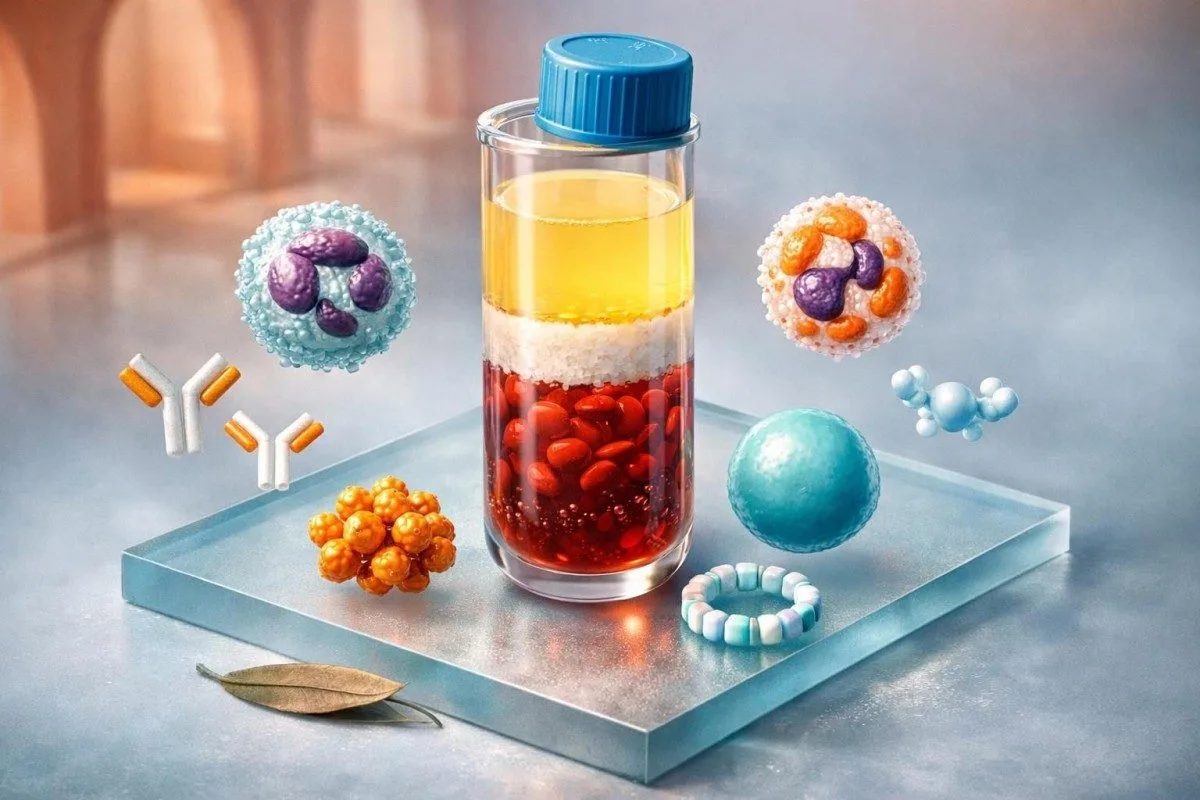
যদি আপুনি বাৰে বাৰে সংক্ৰমণত ভুগিছে বা অধিক স্পষ্ট ইমিউন মূল্যায়ন বিচাৰে, তেন্তে কোষৰ গণনা, এন্টিবডিৰ পৰিমাণ, প্ৰদাহৰ সূচক, আৰু কিছুমান লক্ষ্যভিত্তিক ঘাটতিৰ সূত্ৰৰ পৰা আৰম্ভ কৰক। উপযোগী উত্তৰটো এটা একক পৰীক্ষা নহয়—সঠিক আৰ্হিটো।.


- differential সহ CBC সাধাৰণতে প্ৰথম ইমিউন স্ক্ৰীন; প্ৰাপ্তবয়স্ক ডব্লিউ বি চি প্ৰায়ে 4.0-11.0 ×10^9/L, কিন্তু উপপ্ৰকাৰৰ গণনাই মুঠ গণনাতকৈ অধিক গুৰুত্বপূৰ্ণ।.
- ANC তলত 1.5 ×10^9/L হৈছে নিউট্ৰ’পেনিয়া, আৰু 0.5 ×10^9/L তকৈ তলত বাস্তৱিক সংক্ৰমণৰ চিন্তা উত্থাপন কৰিবলৈ যথেষ্ট গুৰুতৰ।.
- ALC তলত 1.0 ×10^9/L প্ৰাপ্তবয়স্কত লিম্ফ’পেনিয়া; ষ্টেৰ’ইড, ভাইৰাছজনিত অসুখ, আৰু অপুষ্টিয়ে সকলোবোৰে ইয়াক সৃষ্টি কৰিব পাৰে।.
- IgG সাধাৰণতে থাকে 700-1600 mg/dL প্ৰাপ্তবয়স্কৰ ক্ষেত্ৰত; 500-600 mg/dL তকৈ তলত বাৰে বাৰে হোৱা সংক্ৰমণৰ সৈতে থাকিলে ই এক তাৎপৰ্যপূর্ণ ইমিউন ঘাটতিৰ সূত্ৰ।.
- IgAৰ ঘাটতি সাধাৰণতে সংজ্ঞায়িত কৰা হয় যেনে IgA 7 mg/dL তকৈ তলত আনহাতে IgG আৰু IgM অন্যথা সংৰক্ষিত থাকিলে।.
- চি আৰ পি ওপৰত 10 mg/L সক্ৰিয় প্ৰদাহ বা সংক্ৰমণৰ ইংগিত দিয়ে, আনহাতে 100 mg/L তকৈ ওপৰত বেছিভাগ সময়ে তৎক্ষণাৎ চিকিৎসাজনিত পৰ্যালোচনা লাগিব পাৰে।.
- গ্ল’বিউলিন প্ৰায় 2.0 গ্ৰাম/ডি এল কম এন্টিবডিৰ বাবে সস্তা আৰম্ভণিৰ এটা আগতীয়া সূত্ৰ হ’ব পাৰে, বিশেষকৈ যদিহে যকৃত কাৰ্যক্ষমতা পৰীক্ষা স্বাভাৱিক থাকে।.
- ভেকচিন টাইটাৰ এন্টিবডিৰ কাৰ্যক্ষমতা পৰীক্ষা কৰে; এটা টিটেনাছ IgG ≥0.1 IU/mL সাধাৰণতে সুৰক্ষামূলক বুলি ধৰা হয়।.
- CD4 গণনা সাধাৰণতে প্ৰায় 500-1500 কোষ/µL প্ৰাপ্তবয়স্কসকলৰ ক্ষেত্ৰত; অসুখৰ পিছত এটা কম মান দেখা দিলে বেছিভাগ সময়ে তাক পুনৰ পৰীক্ষা কৰা উচিত। 4-8 সপ্তাহ.
প্ৰকৃততে ইমিউন সূত্ৰ পৰীক্ষা কৰা চাৰিটা তেজ পৰীক্ষাৰ গোট
ৰোগ প্ৰতিৰোধ ক্ষমতা সম্পৰ্কীয় চিন্তা থাকিলে কোন তেজ পৰীক্ষা কৰিব? চাৰিটা গোটৰ পৰা আৰম্ভ কৰক: এটা differential সহ CBC ৰ বাবে, ৰোগ প্ৰতিৰোধ কোষৰ গণনা, পৰিমাণগত ইমিউনোগ্ল’বুলিনসমূহ ৰ বাবে এন্টিবডিৰ স্তৰ, CRP বা ESR ৰ বাবে ৰোগ প্ৰতিৰোধ কাৰ্যকলাপ, আৰু লক্ষ্যভিত্তিক পৰীক্ষা যেনে ভেকচিন টাইটাৰ, লিম্ফ’চাইট উপগোট, কমপ্লিমেণ্ট, HIV পৰীক্ষা, আৰু ছিৰাম গ্ল’বুলিন যেতিয়া ৰোগ প্ৰতিৰোধ ঘাটতিৰ কথা বিবেচনাত থাকে। একেটা একক ৰোগ প্ৰতিৰোধ ব্যৱস্থাৰ তেজ পৰীক্ষাই আপোনাৰ ৰক্ষা শক্তি শক্তিশালী নে দুৰ্বল—সেইটো প্ৰমাণ কৰিব নোৱাৰে।.
২১ এপ্ৰিল, ২০২৬ তাৰিখলৈ, আটাইতকৈ উপযোগী আৰম্ভণিৰ পেনেল হৈছে এটা differential সহ CBC, IgG/IgA/IgM, আৰু CRP বা ESR. । আমাৰ কান্টেষ্টি এ আই, সেয়ে আমি ৰোগ প্ৰতিৰোধ সম্পৰ্কীয় লেবসমূহক কোষৰ গণনা, এন্টিবডিৰ স্তৰ, প্ৰদাহজনিত সূচক, আৰু ঘাটতিৰ সূত্ৰ—এইবোৰত ভাগ কৰোঁ, কিয়নো কেৱল এটা ৰোগ প্ৰতিৰোধ তেজ পৰীক্ষা বুলি একেবাৰে নাই।.
মানুহে আটাই বেছি বিচৰা পৰীক্ষা—'মোৰ ৰোগ প্ৰতিৰোধ ব্যৱস্থা পৰীক্ষা কৰক'—বেছিভাগ সময়ে এটা বহল পৰীক্ষা-সমষ্টিৰ ভিতৰত লুকাই থাকে, কিন্তু এটা মানক তেজ পৰীক্ষা সাধাৰণতে ইমিউনোগ্ল’বুলিন আৰু ভেকচিনৰ প্ৰতিক্ৰিয়া বাদ দিয়ে। সেইবাবেই ৰোগীয়ে একেবাৰে স্বাভাৱিক ধৰণৰ মৌলিক পেনেল থাকিলেও সাইনাছ, কাণ, বা বুকুৰ সংক্ৰমণ চলি থাকিব পাৰে।.
মই, ড° থমাছ ক্লেইন, MD, যেতিয়া পুনঃপুন সংক্ৰমণৰ ইতিহাস পৰ্যালোচনা কৰোঁ, তেতিয়া এটা একক চিহ্নিত ফলতকৈ সামগ্ৰিক ধৰণটো অধিক গুৰুত্বপূৰ্ণ। ধৰণ-প্ৰথম এই পদ্ধতিটো আমাৰ কাম কৰাৰ ধৰণৰ এটা অংশ। আমাৰ দলটো. আমাৰ চিকিৎসক পৰ্যালোচনা মানদণ্ডসমূহো তলত দিয়া ধৰণে দেখা যায়— মেডিকেল এডভাইজাৰী ব’ৰ্ড.
ইয়াতেই সেই বিভাজন দিয়া হৈছে যিয়ে বেছিকৈ সহায় কৰে: কম কোষ মজ্জা, ঔষধ, বা ভাইৰাছজনিত প্ৰভাৱৰ ইংগিত দিয়ে; কম এন্টিবডি হিউমোৰাল ঘাটিৰ ইংগিত দিয়ে; উচ্চ CRP বা ESR ইমিউন সক্ৰিয়কৰণৰ ইংগিত দিয়ে; স্বাভাৱিক পৰীক্ষা ফলাফল কিন্তু স্থায়ী সংক্ৰমণ প্ৰায়ে আমাক ফাংচনেল এন্টিবডি পৰীক্ষাৰ দিশে আগুৱাই লৈ যায়। Bonilla et al. ৰ 2015 চনৰ practice parameter-এ একে কথাই কৈছে—ইমিউন ঘাটতি সাধাৰণতে ধৰণ (pattern) অনুসৰি ধৰা হয়, এটা একক সংখ্যাৰে নহয়।.
ডিফাৰেনচিয়েলসহ সম্পূৰ্ণ তেজ গণনা (CBC): বেছিভাগ চিকিৎসকে অর্ডাৰ কৰা ইমিউন কোষ গণনাৰ পৰীক্ষা
differential সহ CBC ইমিউন কোষৰ গণনাৰ বাবে প্ৰথম-লাইন তেজ পৰীক্ষা। ই মুঠ বগা তেজ কোষ (white cells) আৰু পাঁচটা ডাঙৰ উপপ্ৰকাৰ জুখে, কিন্তু নিৰপেক্ষ (absolute) গণনা সাধাৰণতে শতাংশতকৈ বেছি গুৰুত্বপূৰ্ণ।.
প্ৰাপ্তবয়স্কৰ ডব্লিউ বি চি ৰেফাৰেন্স ৰেঞ্জ সাধাৰণতে 4.0-11.0 ×10^9/L, যদিও কিছুমান লেব’ৰেটৰীয়ে ব্যৱহাৰ কৰে 3.5-10.5 ×10^9/L. আমাৰ CBC ডিফাৰেনশিয়েল গাইড কিয় এটা স্বাভাৱিক মুঠ WBC-এও কম লিম্ফ’চাইট গণনা বা সীমান্তীয় নিউট্ৰ’পেনিয়া লুকুৱাই ৰাখিব পাৰে—সেয়া বুজাই দিয়ে।.
ANC তলত 1.5 ×10^9/L হৈছে নিউট্ৰ’পেনিয়া, আৰু ANC 0.5 ×10^9/L ৰ তলত হৈছে গুৰুতৰ নিউট্ৰ’পেনিয়া, যাৰ বাস্তৱ সংক্ৰমণৰ ঝুঁকি থাকে। আফ্ৰিকান, মধ্যপ্ৰাচ্য, বা কেৰিবিয়ান বংশোদ্ভৱ লোক কিছুমানৰ ANC স্থিৰভাৱে প্ৰায় 1.0-1.5 ×10^9/L থাকে, কিন্তু সঘন সংক্ৰমণ নহয়; সেয়ে ইতিহাসে ৰঙা পতাকাৰ (red flag) সমানেই গুৰুত্ব পায়।.
ALC তলত 1.0 ×10^9/L প্ৰাপ্তবয়স্কৰ ক্ষেত্ৰত লিম্ফ’পেনিয়া। মই সদায়েই ইনফ্লুৱেঞ্জা, COVID, অলপ সময়ৰ prednisone বুষ্ট, বা টোপনি নোহোৱা চিকিৎসালয়ত ভৰ্তি হোৱাৰ পিছত ক্ষণস্থায়ী লিম্ফ’পেনিয়া দেখা পাওঁ—সেইবাবেই 2-6 সপ্তাহ তে পুনৰ গণনা কৰাটো প্ৰায়ে ৰোগীক অযথা ভয়ৰ পৰা ৰক্ষা কৰে।.
কেৱল নিজে নিজে মই আটাইতকৈ কম বিশ্বাস কৰা গণনা হৈছে শতাংশ। এটা 80% নিউট্ৰ’ফিল ফলাফল নাটকীয় যেন লাগিব পাৰে, কিন্তু যদি মুঠ WBC হয় 4.2 ×10^9/L, নিৰপেক্ষ নিউট্ৰ’ফিল গণনা এতিয়াও সাধাৰণ হ’ব পাৰে।.
শতাংশতকৈ নিৰপেক্ষ গণনাই গুৰুত্ব পায়
নিউট্ৰ’ফিলৰ শতাংশ, লিম্ফ’চাইটৰ শতাংশ, বা ম’ন’চাইটৰ শতাংশ বিভ্ৰান্তিকৰ হ’ব পাৰে যেতিয়া মুঠ WBC অতি কম বা অতি বেছি হয়। ক্লিনিকত আমি প্ৰথমে নিৰপেক্ষ গণনা গণনা কৰোঁ, কিয়নো সংক্রমণৰ ঝুঁকিক আটাইতকৈ নিৰ্ভৰযোগ্যভাৱে অনুসৰণ কৰে সেইটোৱেই।.
যেতিয়া মোট WBCতকৈ CBCৰ আৰ্হিটো অধিক গুৰুত্বপূৰ্ণ হয়
অবিৰাম লিম্ফ’পেনিয়া, পুনৰ নিউট্ৰ’পেনিয়া, স্পষ্টভাৱে neutrophilia, আৰু তাৎপৰ্যপূর্ণ ইঅ’চিন’ফিলিয়া হৈছে সেই CBC ধৰণসমূহ যি আটাইতকৈ বেছি সিদ্ধান্ত সলনি কৰে। এবাৰ-দুইবাৰ হোৱা সৰু ওঠ-পথ সাধাৰণ; পুনৰাবৃত্ত অস্বাভাৱিকতা—য’ত কাহিনীটো অধিক আকৰ্ষণীয় হয়।.
কম লিম্ফ’চাইট সাধাৰণ, কিন্তু প্ৰতিটো কম লিম্ফ’চাইট গণনাই ৰোগ-প্ৰতিৰোধ ক্ষমতাৰ ঘাটতি বুজায় বুলি নহয়। প্ৰতিদিনৰ প্ৰেডনিছ’ন ড’জ 20 mg এ লিম্ফ’চাইট কমাব পাৰে 24-48 ঘণ্টাৰ আশে-পাশে সৰ্বোচ্চ (peak) হয়, আৰু ভাইৰাছজনিত সংক্রমণে সিহঁতক ১-৬ সপ্তাহ; ক্লিনিকেল মানদণ্ড কম লিম্ফ’চাইট গাইড সেই ধৰণবোৰৰ বিষয়ে অধিক গভীৰভাৱে আলোচনা কৰে।.
উচ্চ নিউট্ৰ’ফিলসমূহে সাধাৰণতে শক্তিশালী ৰোগ-প্ৰতিৰোধ ক্ষমতাৰ পৰিৱৰ্তে মানসিক চাপ, ষ্টেৰ’ইড, ধূমপান, বেক্টেৰিয়েল সংক্ৰমণ, বা সক্ৰিয় প্ৰদাহক বুজায়। এটা ANC 7.5-8.0 ×10^9/L ৰ ওপৰত এ প্ৰসংগৰ প্ৰয়োজন, আৰু যদি জ্বৰ, কাহ, বা মূত্ৰজনিত লক্ষণ থাকে, মই প্ৰথমে উৎসটো বিচাৰোঁ; আমাৰ উচ্চ নিউট্ৰ’ফিল ভাঙোন সাধাৰণ কাৰণবোৰৰ মাজেৰে খোজ কঢ়িয়াই যায়।.
ইঅ’চিন’ফিল 0.5 ×10^9/L ৰ ওপৰত ইঅ’চিন’ফিলিয়া বুজায়, আৰু 1.5 ×10^9/L ৰ ওপৰত ডিফাৰেনশ্বিয়েলক বহল কৰিবলৈ যথেষ্ট গুৰুত্বপূৰ্ণ। ব্যৱহাৰত, ইঅ’চিন’ফিলিয়া সাধাৰণতে দুৰ্বল ৰোগ-প্ৰতিৰোধ ক্ষমতাৰ তুলনাত এলাৰ্জি (atopy), হাঁপানি, একজিমা, ঔষধজনিত প্ৰতিক্ৰিয়া, বা পৰজীৱীৰ দিশে বেছি ইঙ্গিত দিয়ে—সেইবাবেই আমাৰ ইঅ’চিন’ফিল সম্পৰ্কীয় লেখা সাধাৰণ “ইমিউন বুষ্ট” পৰামৰ্শতকৈ বহু সময়ত বেছি উপযোগী।.
সত্যিই অতি উচ্চ গণনাই সুৰ সলনি কৰে। এটা WBC 25-30 ×10^9/L ৰ ওপৰত, চলি থকা অপৰিপক্ক কোষ, বা একেলগে হিম’গ্ল’বিন আৰু প্লেটলেট কমি যোৱা—এইবোৰে চিকিৎসকক কেৱল সংক্ৰমণ বুলি নাভাবি মজ্জাজনিত (marrow) বিকাৰৰ কথা বিবেচনা কৰিবলৈ উৎসাহিত কৰিব লাগে; লিউকেমিয়া সন্দেহ উত্থাপন কৰা CBC ধৰণসমূহৰ ওপৰত আমাৰ লেখা কিয় এই সংমিশ্ৰণটো গুৰুত্বপূৰ্ণ, সেইটো ব্যাখ্যা কৰে।.
এন্টিবডিৰ পৰিমাণ: IgG, IgA, IgM, আৰু কিয় IgE বেলেগ
পৰিমাণগত ইমিউন’গ্ল’বুলিনে ছিৰামত থকা এন্টিবডি প্ৰ’টিনসমূহ জুখে।. IgG, IgA, আৰু IgM ইমিউন’ ডিফিচিয়েন্সিৰ বাবে মূল স্ক্ৰিনিং এন্টিবডি; IgE সাধাৰণতে ইমিউন দুৰ্বলতাৰ কথাৰ নহয়, এলাৰ্জিৰ কথাৰ ভিতৰতেই থাকে।.
সাধাৰণ প্ৰাপ্তবয়স্কৰ ৰেফাৰেন্স সীমা হৈছে IgG 700-1600 mg/dL, IgA 70-400 মি.গ্ৰা./ডি.এল., আৰু IgM 40-230 মি.গ্ৰা./ডি.এল., যদিও কিছুমান ইউৰোপীয় লেবে এইদৰে প্ৰতিবেদন কৰে g/L । আমাৰ প্লেটফৰ্মত আমি সেই এককবোৰ স্বাভাৱিক কৰোঁ, কিয়নো ৰোগীক প্ৰায়ে '10.2' বুলি কোৱা হয়, কিন্তু কোৱা নহয় যে 10.2 গ্ৰাম/লিটাৰ IgG সমান 1020 মি.গ্ৰা./ডি.এল..
নিম্ন IgG পুনঃপুন বেক্টেৰিয়াজনিত ছাইনোপালমোনাৰী সংক্ৰমণৰ ক্ষেত্ৰত আটাইতকৈ বেছি চিন্তাৰ কাৰণ হোৱা ফলাফলটো এয়াই।, প্ৰাপ্তবয়স্কৰ ক্ষেত্ৰত IgG 500-600 মি.গ্ৰা./ডি.এল. তকৈ তলত পুনঃপুন সংক্ৰমণৰ সৈতে থাকিলে কেৱল কৌতূহলজনক বিষয় নহয়, আৰু 400 মি.গ্ৰা./ডি.এল. তকৈ তলত সাধাৰণতে ইমিউন’লজি পৰ্যালোচনা আৰু ভেকচিনৰ প্ৰতিক্ৰিয়াৰ ওপৰত অধিক ঘনিষ্ঠ দৃষ্টি দাবী কৰে, যেনেকৈ Bonilla et al. (2015) এ পৰামৰ্শ দিয়ে।.
নিৰ্বাচিত IgAৰ ঘাটতি সাধাৰণতে সংজ্ঞায়িত কৰা হয় IgA 7 mg/dL তকৈ তলত অন্যথা IgG আৰু IgM অক্ষুণ্ণ থকা অৱস্থাত, যিসকল লোকৰ বয়স 4 বছৰৰ ওপৰত. ।.
IgE বেলেগ ধৰণে আচৰণ কৰে। মুঠ IgE প্ৰায় 100-150 IU/mL বেছিভাগ সময় এলাৰ্জি, একজিমা, বা পৰজীৱীৰ সৈতে মিলি যায়, আৰু 1000 IU/mL তকৈ বেছি স্তৰ গুৰুতৰ এটোপিতো দেখা দিব পাৰে। আমাৰ IgE এলাৰ্জি পৰীক্ষা ব্যাখ্যাতা ইয়াত সহায়ক। আন এটা সাধাৰণ ভুলৰ বাবে, চাওক আমাৰ স্বাভাৱিক সীমাৰ বাস্তৱতা পৰীক্ষা.
ভেকচিন টাইটাৰ: যেতিয়া এন্টিবডি স্বাভাৱিক যেন লাগে কিন্তু ভালদৰে কাম নকৰে
ভেকচিন টাইটাৰ পৰীক্ষা—এন্টিবডি কাৰ্যক্ষমতা, কেৱল এন্টিবডি নহয় পৰিমাণ. । ই এটা কঠিন প্ৰশ্নৰ উত্তৰ দিয়ে: ভেকচিন দিয়া বা সংস্পৰ্শৰ পিছত, আপোনাৰ ইমিউন ব্যৱস্থাই সুৰক্ষামূলক প্ৰতিক্ৰিয়া সৃষ্টি কৰিছিল নে?
Pneumococcal এন্টিবডি পেনেলসমূহ ক্লাছিক উদাহৰণ। বহু লেব’ৰেটৰীয়ে পলিছেকেৰাইড ভেকচিনেচনৰ পিছত এটা ছিৰ’টাইপ স্তৰ প্ৰায় 1.3 µg/mL সম্ভাৱ্যভাৱে সুৰক্ষামূলক বুলি গণ্য কৰে, কিন্তু কাট-অফটো বিতৰ্কিত, বয়সভিত্তিক, আৰু বেছিভাগ অনুসন্ধান ফলতকৈ বহু বেছি জটিল।.
টিটেনাছ এন্টিবডিৰ স্তৰেও আন এটা কাৰ্যক্ষম “উইণ্ড’” পোৱা যায়। এটা টিটেনাছ IgG কমেও 0.1 IU/mL সাধাৰণতে সুৰক্ষামূলক বুলি ধৰা হয়, আৰু ভেকচিনেচনৰ পিছত কম/দুৰ্বল বৃদ্ধি 4-8 সপ্তাহ এন্টিবডি উৎপাদনৰ সমস্যা সূচাব পাৰে, যদিও মুঠ IgG গ্ৰহণযোগ্য যেন লাগে।.
IgG উপশ্ৰেণীসমূহ—IgG1, IgG2, IgG3, আৰু IgG4—সহায় কৰিব পাৰে, কিন্তু কেৱল লক্ষণসমূহ মিলিলে। মোৰ অভিজ্ঞতাত, কেৱল এটা বিচ্ছিন্নভাৱে কম IgG4 আনুষ্ঠানিকভাৱে সুস্থ এজন প্ৰাপ্তবয়স্কত সাধাৰণতে পুনঃপুন সংক্রমণৰ কাৰণ বুজাই নোৱাৰে, আনহাতে কম IgG2 আৰু কেতিয়াবা বেয়া pneumococcal প্ৰতিক্ৰিয়াই বুজাব পাৰে; এইটো সেইবোৰ ক্ষেত্ৰৰ ভিতৰত এটা য’ত চিকিৎসকসকলে সঁচাকৈয়ে মতভেদ কৰে।.
ইয়াত এটা সূক্ষ্ম সংযোগ আছে যিটো ৰোগীয়ে সদায়েই এৰি দিয়ে: কম মুঠ IgA এ এটা tTG-IgA celiac পৰীক্ষা মিছাকৈ আশ্বাসজনক যেন দেখাব পাৰে। সেইবাবেই দীঘলীয়া GI লক্ষণ আৰু সংক্রমণৰ ইতিহাস থকা লোকসকলে আমাৰ celiac তেজ পৰীক্ষাৰ ফলাফল কেনেকৈ পঢ়িব নেগেটিভ ফলাফলে প্ৰশ্নটো শেষ বুলি ধৰি লোৱাৰ আগতে পঢ়িব লাগে।.
প্ৰদাহৰ সূচক: CRP, ESR, ফেৰিটিন, আৰু ইহঁতে সঁচাকৈ কি দেখুৱায়
চি আৰ পি, ই এছ আৰ, আৰু কেতিয়াবা ফেৰিটিন তেজ পৰীক্ষা যিবোৰে ৰোগ-প্ৰতিৰোধ ক্ষমতাৰ সক্ৰিয়তা দেখুৱায়। সেইবোৰে নহয় আপোনাৰ ৰোগ-প্ৰতিৰোধ ব্যৱস্থা ভাল নে নহয় সেইটো জুখে; ই ক্ৰিয়া কৰি আছে নে নাই সেইটো জুখে।.
চি আৰ পি বহুতো প্ৰাপ্তবয়স্কৰ বাবে তলত ৩ মিলিগ্ৰাম/লিটাৰ সাধাৰণতে কম পটভূমিৰ প্রদাহকেই প্ৰতিফলিত কৰে, 3-10 mg/L এটা মৃদু সংকেত, 10-100 mg/L কেতিয়াবা সংক্রমণ বা সক্ৰিয় প্রদাহজনিত ৰোগৰ লগত মিল খায়, আৰু 100 mg/L তকৈ ওপৰত এটা গুৰুত্বপূৰ্ণ বেক্টেৰিয়াজনিত প্ৰক্ৰিয়াৰ সম্ভাৱনা বৃদ্ধি কৰে। Pepys আৰু Hirschfield (2003) এ বহু বছৰ আগতেই CRP ৰ মূল সীমাবদ্ধতা স্পষ্ট কৰি দিছিল: ই সংবেদনশীল, কিন্তু নিৰ্দিষ্ট নহয়।.
ই এছ আৰ বেছি ধীৰ আৰু আঠাল। সাধাৰণতে ওপৰৰ সীমা প্ৰায় 15 mm/hour কম বয়সীয়া পুৰুষসকলৰ ক্ষেত্ৰত আৰু 20 mm/hour কম বয়সীয়া মহিলাসকলৰ ক্ষেত্ৰত, কিন্তু ৰক্তহীনতা, গৰ্ভাৱস্থা, বৃক্কৰ ৰোগ, আৰু বয়সে সংক্রমণ নাথাকিলেও ইয়াক ওপৰলৈ ঠেলি দিব পাৰে; Gabay আৰু Kushner (1999) এ কিয় acute-phase response এইদৰে আচৰণ কৰে সেইটো বুজাইছে।.
ফেৰিটিন লোহা সংৰক্ষণ কৰে, কিন্তু ই এটা acute-phase reactantো। তাতকৈ ওপৰৰ মান 300 ng/mL ৰ ওপৰত থাকিলে পুৰুষৰ ক্ষেত্ৰত আৰু ২০০ ng/mL মহিলাসকলৰ ক্ষেত্ৰত প্ৰায়ে কেৱল লোহা অতিমাত্ৰা জমা হোৱাৰ পৰিৱৰ্তে প্রদাহ, চৰ্বিযুক্ত যকৃত, মদ্যপান, বা বিপাকীয় চাপকেই প্ৰতিফলিত কৰে—সেইবাবেই আমাৰ উচ্চ ferritin গাইড ই ইমানেই সহায়ক। যদি CRP আৰু ESR ও আপোনাৰ মূল্যায়নৰ অংশ হয়, তেন্তে সিহঁতক আমাৰ থাকিলেও সঁচা কাৰ্যক্ষম (functional) বা মিশ্ৰ লৌহৰ ঘাটতি প্ৰতিফলিত কৰিব পাৰে। আমাৰ.
মই এই ধৰণৰ আৰ্হি বহুতো দেখিছোঁ: CRP ৪৫ mg/L ভিজিটৰ আৰম্ভণিতে স্বাভাৱিক WBC আৰু যথেষ্ট সাধাৰণ পৰীক্ষা থাকিলেও, পাছত নিউমোনিয়া নিজকে প্ৰকাশ কৰে 12-24 ঘণ্টাৰ ভিতৰত পিছত। আৰু ওলোটাও হয়—এটা ESR 60 mm/hour সৈতে CRP 1 mg/L মোক প্ৰায়ে নতুনকৈ হোৱা সংক্ৰমণৰ পৰিৱৰ্তে ক্ৰনিক প্রদাহজনিত অৱস্থা, ৰক্তহীনতা, বা অস্বাভাৱিক ছিৰাম প্ৰ’টিনৰ কথা ভাবিবলৈ বাধ্য কৰে।.
স্পষ্ট দেখা নোপোৱা পৰিস্থিতিৰ বাহিৰেও ইমিউন ঘাটতিৰ সূত্ৰ বিচৰাৰ বাবে তেজ পৰীক্ষা
কেইবাটাও সাধাৰণ তেজ পৰীক্ষাই উন্নত ইমিউন’লজি লেবৰেটৰি কাকো আদেশ দিয়াৰ আগতেই ইমিউন’ ডিফিচিয়েন্সিৰ ইংগিত দিব পাৰে।. কম গ্ল’বুলিন, কম এলবুমিনৰ সৈতে, স্থায়ী লিম্ফ’পেনিয়া, আৰু সঠিক সংক্ৰমণৰ আৰ্হিটো—মই প্ৰথমে যিবোৰ ক্লু হিচাপে চাই।.
ছিৰাম গ্ল’বুলিন বহু লেবত সাধাৰণতে প্ৰায়ে থাকে 2.0-3.5 g/dL বহু লেবত। প্ৰায় 2.0 গ্ৰাম/ডি এল, তকৈ কম গ্ল’বুলিন, বিশেষকৈ স্বাভাৱিক যকৃতৰ এনজাইম আৰু পুনঃপুনীয়া চাইনাছ বা বুকুৰ সংক্ৰমণৰ সৈতে, কম এন্টিবডিৰ এটা সস্তা ক্লু; আমাৰ ছিৰাম প্ৰ’টিন গাইড কিয় এইটো এৰি যোৱা হয় সেই কথা বুজাই।.
৬.০ g/dL ৰ তলত থকা মুঠ প্ৰ’টিন অপুষ্টি, প্ৰ’টিন হেৰুওৱা অন্ত্ৰৰ ৰোগ, বৃক্কৰ ক্ষতি, যকৃতৰ ৰোগ, বা কম ইমিউনোগ্ল’বুলিন প্ৰতিফলিত কৰিব পাৰে। কৌশলটো হ’ল ইয়াক ভাগ কৰি চোৱা— এলবুমিন আৰু গ্ল’বুলিন; ক্লিনিকেল মানদণ্ড বায়’মাৰ্কাৰ ৰেফাৰেন্স লাইব্ৰেৰী ৰোগীসকলে এই পাৰ্থক্যটো দ্ৰুতকৈ বুজি পোৱাত সহায় কৰে।.
অর্জিত ইমিউন ঘাটতি—উত্তৰাধিকাৰী ধৰণৰ দৰে—একেই গুৰুত্বৰ। যদি এজন প্ৰাপ্তবয়স্কৰ ওজন কমি যায়, কম বয়সতে মুখত thrush হয়, কম বয়সতে shingles হয়, বা বাৰে বাৰে অস্বাভাৱিক সংক্ৰমণ হয়, তেন্তে মই দেৰি কৰাৰ পৰিৱর্তে আগতেই HIV পৰীক্ষা যোগ কৰোঁ; আমাৰ HIV পৰীক্ষাৰ সময় নিৰ্দেশনা উইণ্ড’ পিৰিয়ড বুজিবলৈ উপযোগী।.
Kantesti ৰ নিউৰেল নেটৱৰ্কে নিস্তব্ধ সংমিশ্ৰণ ধৰা পেলাবলৈ ভাল—কম গ্ল’বুলিন + কম IgG + বাৰে বাৰে এন্টিবায়’টিক কেৱল এটা মাত্ৰ সূচকৰ ওপৰত নিৰ্ভৰ কৰাতকৈ বহু বেছি তথ্যসমৃদ্ধ। আমি সেই যুক্তি গঢ়ি তুলোঁতে, আমাৰ চিকিৎসকসকলে চিকিৎসা বৈধকৰণ ত বৰ্ণিত একে ধৰণৰ পেটাৰ্ন-ভিত্তিক মানদণ্ড ব্যৱহাৰ কৰিছিল, কেৱল একক-ফ্লেগ ব্যাখ্যাৰ ওপৰত নিৰ্ভৰ নকৰাকৈ।.
ফ্ল’ সাইট’মেট্ৰি আৰু কমপ্লিমেণ্ট পৰীক্ষা: যেতিয়া সাধাৰণ লেবৰেটৰী পৰীক্ষা যথেষ্ট নহয়
ফ্ল’ সাইট’মেট্ৰি ইমিউন কোষৰ উপগোট গণনা কৰে, আৰু কমপ্লিমেণ্ট পৰীক্ষা সহজাত (innate) ইমিউন ব্যৱস্থাৰ এটা অংশ মূল্যায়ন কৰে। এইবোৰ দ্বিতীয়-শ্ৰেণীৰ ইমিউন তেজ পৰীক্ষা—প্ৰতি শীতকালত কাহ-জ্বৰ হোৱা সকলোৰে বাবে নিয়মীয়া স্ক্ৰিনিং নহয়।.
ফ্ল’ সাইট’মেট্ৰিয়ে ইমিউন কোষৰ উপগোটসমূহক নিৰপেক্ষ গণনা (absolute counts) আৰু শতকৰা হিচাপে প্ৰতিবেদন কৰে। সাধাৰণ প্ৰাপ্তবয়স্কৰ ৰেফাৰেন্স ৰেঞ্জসমূহ প্ৰায় CD4 500-1500 কোষ/µL, CD8 150-1000 কোষ/µL, CD19 B কোষ 100-500 কোষ/µL, আৰু NK কোষ 90-600 কোষ/µL, কিন্তু কোনো এটা ভাইৰাছ-উত্তৰ (post-viral) ফলাফল সাধাৰণতে লেবেল লগোৱাৰ আগতে বাৰে বাৰে পৰীক্ষা কৰাটো উচিত।.
কমপ্লিমেণ্ট স্ক্ৰিনে সহজাত ৰক্ষাকৱচ (innate defenses) চায়। যথেষ্ট কম বা অনুপস্থিত CH50 এ ক্লাছিকেল পথ (classical pathway) ত্ৰুটি সূচাব পাৰে, আনহাতে AH50 বিকল্প পথ (alternative pathway) মূল্যায়নত সহায় কৰে; এজন ৰোগীৰ পুনঃপুন সংক্রমণ থাকিলে বা সেইবোৰৰ শক্তিশালী পৰিয়ালৰ স্বাস্থ্য ইতিহাস থাকিলে মই আগতেই কমপ্লিমেণ্টৰ অভাৱ (complement deficiency) কথা ভাবোঁ। Neisseria সংক্রমণ বা সেইবোৰৰ শক্তিশালী পৰিয়ালৰ স্বাস্থ্য ইতিহাস।.
Thomas Klein, MD, ইয়াত এটা ব্যৱহাৰিক টিপছ: নিৰপেক্ষ CD4 গণনা (absolute CD4 count) শতাংশটো ভাল দেখিলেও গুৰুত্বপূৰ্ণ হ’ব পাৰে। মই CD4 শতাংশ প্ৰায় 28% দেখুওৱা ৰোগী দেখিছোঁ, কিন্তু নিৰপেক্ষ CD4 প্ৰায় 280 কোষ/µL—ভয়ংকৰ নহয়, কিন্তু নিশ্চিতভাৱে এনে কথা মই আওকাণ নকৰোঁ।.
আমাৰ AI তেজ পৰীক্ষা প্লেটফৰ্মে এই বিশেষায়িত ফলাফলবোৰ সংগঠিত কৰি সময়ৰ লগে লগে তুলনা কৰিব পাৰে। যদি আপুনি নিশ্চিত নহয় যে বহু-পৃষ্ঠাৰ ইমিউন’লজি (immunology) ৰিপ’ৰ্ট কেনেকৈ পৰিচালনা কৰা হয়, তেন্তে PDF upload workflow ব্যৱহাৰ কৰে এ দেখুৱাইছে যে Kantesti এ সেইবোৰ প্ৰায় 60 ছেকেণ্ডত.
ইমিউন চিষ্টেমৰ তেজ পৰীক্ষাই আপোনাক ক’ব নোৱাৰা কথা
কোনো তেজ পৰীক্ষাই নিশ্চিতভাৱে ক’ব নোৱাৰে যে আপোনাৰ ৰোগ-প্ৰতিৰোধ ক্ষমতা শক্তিশালী। তেজ পৰীক্ষাই ৰোগ-প্ৰতিৰোধৰ কিছুমান নিৰ্বাচিত অংশৰ অনুমান দিয়ে, কিন্তু ই শ্লৈষ্মিক (mucosal) সুৰক্ষা, গঠন (anatomy), শুই থকা (sleep), পুষ্টি (nutrition), মানসিক চাপ (stress), আৰু সংস্পৰ্শৰ ধৰণ (exposure patterns) বাদ দিয়ে।.
ত কভাৰ কৰা হৈছে। এটা স্বাভাৱিক চিবিচি, স্বাভাৱিক IgG, আৰু কম চি আৰ পি হাঁপানী, ৰিফ্লাক্স, দীঘলীয়া নাকৰ চাইনাছৰ বাধা, নিয়ন্ত্ৰণহীন ডায়েবেটিছ, বা বেয়া শুই থকাৰ পৰা হোৱা পুনঃপুন সংক্রমণক বাদ নিদিব। মই দেখিছোঁ—বাস্তৱ সমস্যাটো নাকৰ পলিপ বা ৰাতি নিশ্বাসত খাদ্য/লালাৰ আশ্ৰয় (aspiration) হ’লেও বহু ৰোগীয়ে মাহৰ পিছত মাহ ধৰি ইমিউন পেনেলৰ পিছে পিছে দৌৰি থাকে।.
অটোইমিউন পৰীক্ষাই বেলেগ এটা প্ৰশ্নৰ উত্তৰ দিয়ে।. এ এন এ, anti-CCP, বা থাইৰয়ড এন্টিবডি সঠিক পৰিস্থিতিত মূল্যৱান হ’ব পাৰে, কিন্তু ইমিউন শক্তি জুখিবলৈ নিয়মীয়া পৰীক্ষা নহয়—সেইবাবেই আমাৰ অটোইমিউন পেনেল ব্লাইণ্ড-স্পট পৰ্যালোচনা অন্য এটা আলোচনাত থাকিব লাগে।.
এটা আৰু সূক্ষ্ম কথা: তেজ কেৱল এটা অংশ (compartment)। নাক, ফুসফুস, অন্ত্ৰ, আৰু ছালত আপোনাৰ প্ৰথম প্ৰতিৰক্ষা বহু পৰিমাণে স্থানীয় বাধা (local barriers) আৰু সচিবী এন্টিবডিৰ ওপৰত নিৰ্ভৰ কৰে—নিয়মীয়া চিৰাম (serum) পেনেলে সেয়া বেছিকৈ স্পৰ্শ নকৰে।.
সেইবাবেই এজন ব্যক্তিৰ তেজৰ কাম-কাজ (blood work) পাঠ্যপুথিৰ দৰে স্বাভাৱিক হ’লেও তেওঁ নিজৰ ল’ৰা-ছোৱালীৰ পৰা সকলো ভাইৰাছ ধৰা যেন অনুভৱ কৰিব পাৰে। কেতিয়াবা উত্তৰটো হয় এক্সপ’জাৰ ল’ড, শুই থকাৰ ঋণ (sleep debt), এলাৰ্জিক এয়াৰৱে ৰোগ, বা গঠনগত (anatomy)—নহয় কোনো লুকাই থকা ভয়ংকৰ অটোইমিউন/ইমিউন বিকাৰ।.
ইমিউন-সম্পৰ্কীয় তেজ পৰীক্ষা কেনেকৈ প্ৰস্তুত হ’ব, পুনৰ কৰিব, আৰু ফলাফলৰ ওপৰত কেনেকৈ কাৰ্য্য কৰিব
সময়ে ইমিউন লেবক প্ৰভাৱিত কৰে। শেহতীয়া সংক্রমণ, ক’ৰ্টিক’ষ্টেৰয়ড, তীব্ৰ ব্যায়াম, আৰু আনকি পানীশূন্যতা (dehydration) ফলাফলক যথেষ্ট বেঁকা কৰি ব্যাখ্যাও সলনি কৰিব পাৰে—সেইবাবেই এটা সংখ্যাৰ ওপৰত তৎক্ষণাৎ সিদ্ধান্ত লোৱাৰ তুলনাত পুনৰ পৰীক্ষা কৰাটো বহু সময়ত বুদ্ধিমান।.
প্ৰেডনিছন কেইঘণ্টামানৰ ভিতৰতে লিম্ফ’চাইট কমাব পাৰে আৰু ডিমাৰ্জিনেচনৰ (demargination) জৰিয়তে নিউট্ৰ’ফিল বঢ়াব পাৰে; এটা কঠিন প্ৰশিক্ষণৰ দিনত WBC প্ৰায় 12.0 ×10^9/L লৈ ঠেলিব পাৰে 24 ঘণ্টা. । যদি মই এটা পৰিষ্কাৰ বেছলাইন (clean baseline) বিচাৰোঁ, সাধাৰণতে ৰোগী কমেও ১-২ সপ্তাহৰ ভিতৰত। দিন ভালকৈ থাকিলে আৰু সুৰক্ষিত হ’লে চুটি সময়ৰ ক’ৰ্টিক’ষ্টেৰয়ডৰ বুষ্ট (short steroid bursts) বন্ধ থাকিলে পুনৰ পৰীক্ষা কৰোঁ।.
সীমান্তীয় ফলাফলক আতংকিত হৈ তৎক্ষণাৎ সিদ্ধান্ত লোৱাৰ সলনি বেছিকৈ পুনৰ পৰীক্ষা কৰাটো যোগ্য। এটা ALC 0.9, IgG 690 mg/dL, অথবা CRP 6 mg/L দ্বিতীয়বাৰ তোলাত বহু বেলেগ অৰ্থ দিব পাৰে—সেইবাবেই আমাৰ সীমান্তৱৰ্তী লেব গাইড ইমানেই ব্যৱহাৰিক। যদি পুনৰ পৰীক্ষাত একে ধৰণৰ ফল দেখা যায়, আমাৰ ট্ৰেণ্ড তুলনা প্ৰবন্ধ এ আপোনাক দেখুৱাব যে পেটাৰ্নটো নতুন নে আগৰেপৰা চলি থকা।.
যদি আপুনি পেটাৰ্নটো বুজিবলৈ সহায় বিচাৰে, তেন্তে বিনামূলীয়া তেজ পৰীক্ষাৰ ডেমো চেষ্টা কৰা।. । ২,০০০+ তকৈ অধিক 2 million আপলোড কৰা ৰিপ’ৰ্টসমূহ চাওক; ৰোগীসকলে সাধাৰণতে এটা একক বিচ্ছিন্ন অস্বাভাৱিক সংকেতৰ পিছে দৌৰাৰ তুলনাত সময়ৰ লগে লগে ইমিউন লেবক তুলনা কৰিলে বেছি লাভ পায়। Kantesti AI এ ছিটিকি থকা সূচকসমূহক এজন চিকিৎসকৰ ধৰণৰ সাৰাংশলৈ ৰূপান্তৰ কৰে আৰু কোনবোৰ ফল সাধাৰণতে “watchful waiting” (অবলোকন কৰি অপেক্ষা) লাগে আৰু কোনবোৰত দ্ৰুত অনুসৰণ (faster follow-up) লাগে—সেইটো চিনাক্ত কৰে।.
সংখ্যা যদি বেছি গুৰুতৰ হয় বা লক্ষণসমূহ যদি সমগ্ৰ শৰীৰত (systemic) দেখা যায় তেন্তে বেছি দ্ৰুত আগবাঢ়ক।. ANC 0.5 ×10^9/L ৰ তলত, WBC 25-30 ×10^9/L ৰ ওপৰত অসুস্থতাৰ সৈতে, 300 mg/dL ৰ তলত IgG বা পুনঃপুন সংক্রমণ, অথবা 100 mg/L তকৈ অধিক CRP জ্বৰ থাকিলে তৎক্ষণাৎ চিকিৎসা পৰ্যালোচনা লাগে; চলি থকা ব্যাখ্যাৰ বাবে, আমাৰ এআই-চালিত তেজ পৰীক্ষাৰ ব্যাখ্যা সেই ধৰণবোৰ সহজে দেখা পোৱাকৈ গঢ়ি তোলা হৈছে।.
সঘনাই সোধা প্ৰশ্ন
ইমিউন ব্যৱস্থাটো পৰীক্ষা কৰা এটা তেজ পৰীক্ষা আছেনে?
একেটি তেজ পৰীক্ষাই সম্পূৰ্ণভাৱে ৰোগ-প্ৰতিরোধ ক্ষমতা পৰীক্ষা কৰিব নোৱাৰে। সাধাৰণতে আৰম্ভণিৰ বিন্দু হৈছে differential সহ CBC শ্বেত তেজকণাৰ গণনাৰ বাবে, পৰিমাণগত ইমিউনোগ্ল’বুলিনসমূহ এন্টিবডিৰ মাত্ৰাৰ বাবে, আৰু CRP বা ESR প্ৰদাহজনিত সক্ৰিয়তাৰ বাবে; ইতিহাসে ৰোগ-প্ৰতিরোধ ক্ষমতাৰ ঘাটিৰ ইংগিত দিলে ভেকচিন টাইটাৰ বা ফ্ল’ চাইট’মেট্ৰিৰ দৰে অতিৰিক্ত পৰীক্ষাও কৰা হয়। এটা শ্ৰেণীত স্বাভাৱিক ফল এটাই আন এটা শ্ৰেণীত অস্বাভাৱিক ফল বাতিল নকৰে—সেয়েহে চিকিৎসকে এটা “মাত্ৰ এটা যাদুকৰী সংখ্যা”ৰ পৰিৱর্তে ধৰণ বিচাৰে।.
ডিফাৰেনশ্বিয়েলসহ সম্পূৰ্ণ তেজ গণনা (CBC) এ দুৰ্বল ৰোগ-প্ৰতিৰোধ ক্ষমতা দেখুৱাব পাৰেনে?
A differential সহ CBC গুৰুত্বপূৰ্ণ ৰোগ-প্ৰতিরোধ সংকেত দেখুৱাব পাৰে, কিন্তু নিজে নিজাকৈ দুৰ্বল ৰোগ-প্ৰতিরোধ ক্ষমতা নিৰ্ণয় কৰিব নোৱাৰে। প্ৰাপ্তবয়স্ক ডব্লিউ বি চি প্ৰায়ে 4.0-11.0 ×10^9/L, ANC 1.5 ×10^9/L ৰ তলত হৈছে নিউট্ৰ’পেনিয়া, আৰু ALC 1.0 ×10^9/L ৰ তলত হৈছে লিম্ফ’পেনিয়া। সেই ফলাফলবোৰ গুৰুত্বপূৰ্ণ, কিন্তু বহু এন্টিবডি ঘাটিত সম্পূৰ্ণ তেজ গণনা (CBC) স্বাভাৱিক থাকে; সেয়েহে স্বাভাৱিক CBC থকা সত্ত্বেও পুনঃপুন সংক্রমণে ইমিউনোগ্ল’বুলিন বা ভেকচিনৰ প্ৰতিক্ৰিয়া চাবলৈ যুক্তি দিয়ে।.
প্ৰাপ্তবয়স্কসকলৰ ক্ষেত্ৰত ৰোগ-প্ৰতিৰোধ ক্ষমতাৰ ঘাটতি সূচোৱা তেজ পৰীক্ষাসমূহ কি কি?
প্ৰাপ্তবয়স্কত ৰোগ-প্ৰতিরোধ ক্ষমতাৰ ঘাটিৰ ইংগিত আটাইতকৈ বেছি দিয়া তেজ পৰীক্ষাবোৰ হৈছে IgG, IgA, IgM, , differential সহ CBC, আৰু কেতিয়াবা ছিৰাম গ্ল’বুলিন, ভেকচিন টাইটাৰ, HIV পৰীক্ষা, ফ্ল’ সাইট’মেট্ৰি (flow cytometry), অথবা কমপ্লিমেণ্ট অধ্যয়ন. । চিকিৎসাগতভাৱে, মই বেছি চিন্তিত যেতিয়া IgG 500-600 mg/dL ৰ তললৈ নামে, IgA 7 mg/dL ৰ তলত থাকে, গ্ল’বুলিন প্ৰায় 2.0 g/dL ৰ তলত থাকে, অথবা পুনৰ পৰীক্ষাত লিম্ফ’পেনিয়া স্থায়ী হৈ থাকে। পুনঃপুন চাইনাছ, কাণ, ব্ৰংকিয়েল, বা নিউম’নিয়া সংক্রমণে এই সংখ্যাবোৰ বহু বেছি অৰ্থবহ কৰি তোলে।.
আপুনি স্বাভাৱিক IgG থাকিলেও কিবা এটা ৰোগ-প্ৰতিৰোধ (ইমিউন) সমস্যা থাকিব পাৰেনে?
হয়, আপোনাৰ মুঠীয়া স্বাভাৱিক থাকিলেও ৰোগ-প্ৰতিরোধৰ সমস্যা থাকিব পাৰে। কিছুমান ৰোগীয়ে এটা IgG — ভেকচিন এন্টিবডি প্ৰতিক্ৰিয়া, কিছুমানৰ কম থাকে IgA, কিছুমানৰ অস্বাভাৱিক থাকে IgG উপশ্ৰেণীসমূহ, আৰু কিছুমানৰ T-চেল বা কমপ্লিমেণ্টৰ সমস্যা থাকে যিবোৰে মুঠ IgG-এ ধৰা নেপেলায়। সেইবাবে, 900 mg/dL এ পুনঃপুন সংক্রমণক স্বয়ংক্ৰিয়ভাৱে সম্পূৰ্ণৰূপে বুজাই দিয়া বুলি ধৰা নহ’ব।.
CRP আৰু ESR এ ৰোগ-প্ৰতিরোধ ক্ষমতা (ইমিউন শক্তি) জুখে নেকি?
নহয়, চি আৰ পি আৰু ই এছ আৰ ইমিউন কাৰ্যকলাপ জুখে, ইমিউন শক্তি নহয়।. CRP 10 mg/L-তকৈ ওপৰত সাধাৰণতে সক্ৰিয় প্ৰদাহ বা সংক্রমণৰ সম্ভাৱনা বেছি বুজায়, আনহাতে 100 mg/L তকৈ অধিক CRP এটা গুৰুত্বপূৰ্ণ বেক্টেৰিয়েল বা প্ৰদাহজনিত প্ৰক্ৰিয়াৰ বাবে চিন্তা বঢ়ায়; ESR লাহে লাহে আগবাঢ়ে আৰু বেছি দিনলৈ উচ্চ হৈ থাকিব পাৰে। স্বাভাৱিক CRP থাকিও ইমিউন-অক্ষমতা থাকিব পাৰে, আৰু সংক্রমণৰ প্ৰতি সঠিকভাৱে সঁহাৰি দিয়া একেবাৰে সুস্থ ইমিউন ব্যৱস্থাৰ ক্ষেত্ৰতো CRP উচ্চ হ’ব পাৰে।.
কেতিয়া ইমিউন-সম্পৰ্কীয় তেজ পৰীক্ষাৰ ফলাফলসমূহ তৎক্ষণাৎ পৰ্যালোচনা কৰা উচিত?
অস্বাভাৱিকতা গুৰুতৰ বা লক্ষণসমূহ উল্লেখযোগ্য হ’লে ইমিউন-সম্পৰ্কীয় ফলাফলসমূহে তৎক্ষণাৎ চিকিৎসাজনিত পৰ্যালোচনা দাবী কৰে। উদাহৰণস্বৰূপ ANC 0.5 ×10^9/L ৰ তলত, CD4 200 কোষ/µL-ত তলত, 300 mg/dL ৰ তলত IgG পুনঃপুন সংক্রমণৰ সৈতে, WBC 25-30 ×10^9/L ৰ ওপৰত অসুস্থতাৰ সৈতে, বা 100 mg/L তকৈ অধিক CRP জ্বৰসহ। যদি আপোনাৰ শ্বাসকষ্ট, বিভ্ৰান্তি, গুৰুতৰ দুৰ্বলতা, বা স্থায়ী জ্বৰো থাকে, তেন্তে সাধাৰণ ফলো-আপলৈ অপেক্ষা কৰাটো সাধাৰণতে বেয়া ধাৰণা।.
কিমান ঘনাই ইমিউন তেজ পৰীক্ষা পুনৰাবৃত্তি কৰা উচিত?
পুনৰ পৰীক্ষাৰ সময় কিয় অস্বাভাৱিক হৈছিল তাৰ ওপৰত নিৰ্ভৰ কৰে, কিন্তু বহু সীমান্তীয় ইমিউন পৰীক্ষা ভাল অৱস্থাত থাকিলে পুনৰ কৰাটো মূল্যৱান। 2-6 সপ্তাহ আপুনি ভাল থাকিলে। ভাইৰেল অসুখ, ষ্টেৰয়ড, তীব্ৰ ব্যায়াম, আৰু শুই নোপোৱাৰ ফলেও কেইদিনমানৰ পৰা কেইসপ্তাহলৈকে লিম্ফ’চাইট, নিউট্ৰ’ফিল, আৰু চি আৰ পি ৰ ফলাফল বিকৃত হ’ব পাৰে। কম IgG বা কম গ্ল’বুলিনৰ দৰে ক্ৰনিক অস্বাভাৱিকতা স্বয়ংক্ৰিয়ভাৱে স্বাভাৱিকলৈ ঘূৰি অহাৰ সম্ভাৱনা কম, সেয়ে কেইমাহমানৰ ধাৰাবাহিক প্রবণতা (trend) এটা একক পৰীক্ষাৰ তুলনাত বহু সময়ত বেছি উপযোগী।.
মানসিক চাপ বা নিদ্ৰাৰ অভাৱে তেজ পৰীক্ষাৰ ফলাফলত অসঙ্গতি আনিব পাৰেনে?
তীক্ষ্ণ মানসিক চাপ, নিদ্ৰাৰ অভাৱ, শাৰীৰিক শ্ৰম, আৰু শেহতীয়া অসুস্থতাই শ্বেত ৰক্ত কণিকাৰ সংখ্যা, বিশেষকৈ নিউট্ৰোফিল আৰু লিম্ফোচাইটসক অস্থায়ীভাৱে স্থানান্তৰিত কৰিব পাৰে। ই সাধাৰণতে স্থায়ী বা উল্লেখযোগ্যভাবে অসঙ্গত ফলাফলৰ কাৰণ নহয়, গতিকে আপোনাৰ চিকিৎসকে সুস্থ হোৱাৰ পিছত পুনৰ পৰীক্ষা কৰিব পাৰে আৰু আন কাৰণসমূহো বিবেচনা কৰিব পাৰে।.
এলাৰ্জী বা একজিমাই ইমিউন ৰক্ত পৰীক্ষাবোৰ অস্বাভাৱিক যেন দেখাব পাৰেনে?
হয়। এলাৰ্জী, হাঁপানি, একজিমা, আৰু পৰজীৱী সংস্পৰ্শই IgE বা ইঅ’চিন’ফিলৰ গণনা বৃদ্ধি কৰিব পাৰে, কিন্তু ইয়াৰ অৰ্থ এইটো নহয় যে ইমিউন ঘাটতি নিশ্চিত। আপোনাৰ চিকিৎসকে গভীৰ ইমিউন পৰীক্ষা নিৰ্ধাৰণ কৰাৰ আগতে ফলাফলটো সংক্রমণৰ ইতিহাস, ঔষধ, আৰু লক্ষণৰ সৈতে তুলনা কৰিব।.
ঔষধে কি ইমিউন ৰক্ত পৰীক্ষাসমূহ অস্বাভাৱিক যেন দেখাব পাৰে?
হয়। কৰ্টিক’ষ্টেৰ’ইড, কেমোথেৰাপি, কিছুমান খিঁচনিৰ ঔষধ, বায়’ল’জিক ইমিউন চিকিৎসা, আৰু কিছুমান নিৰ্দিষ্ট এন্টিবায়’টিক ঔষধে শ্বেত ৰক্তকণিকাৰ গণনা বা এন্টিবডি ফলাফল সলনি কৰিব পাৰে। আপুনি যি সকলো গ্ৰহণ কৰে, সেয়া সকলো আপোনাৰ চিকিৎসকক ক’ব—সাম্প্ৰতিক কৰ্টিক’ষ্টেৰ’ইডৰ “বাৰ্স্ট” (burst) অন্তৰ্ভুক্ত কৰি—যাতে ফলাফলসমূহ পৰিস্থিতিৰ প্ৰেক্ষাপটত ব্যাখ্যা কৰিব পাৰি।.
আজিয়েই AI-চালিত তেজ পৰীক্ষাৰ বিশ্লেষণ লাভ কৰক
বিশ্বজুৰি ২ মিলিয়নতকৈ অধিক ব্যৱহাৰকাৰীয়ে বিশ্বাস কৰা Kantesti-ত যোগদান কৰক—তাৎক্ষণিক আৰু সঠিক লেব পৰীক্ষাৰ বিশ্লেষণৰ বাবে। আপোনাৰ তেজ পৰীক্ষাৰ ফলাফল আপলোড কৰক আৰু কেইছেকেণ্ডমানৰ ভিতৰতে 15,000+ বায়’মাৰ্কাৰৰ সম্পূৰ্ণ ব্যাখ্যা লাভ কৰক।.
📚 উদ্ধৃত গৱেষণা প্ৰকাশনা
Klein, T., Mitchell, S., & Weber, H. (2026)।. আইৰন ষ্টাডিজ গাইড: টি আই বি চি, আইৰন চেচুৰেচন আৰু বান্ধনি ক্ষমতা.। Kantesti AI Medical Research.
Klein, T., Mitchell, S., & Weber, H. (2026)।. aPTT স্বাভাৱিক পৰিসৰ: D-ডাইমাৰ, প্ৰটিন C তেজ জমা হোৱাৰ গাইড.। Kantesti AI Medical Research.
📖 বাহ্যিক চিকিৎসা সম্পৰ্কীয় উৎসসমূহ
⚕️ চিকিৎসা অস্বীকাৰ
এই লেখাটো কেৱল শিক্ষামূলক উদ্দেশ্যৰ বাবে, আৰু ই চিকিৎসাজনিত পৰামৰ্শ নহয়। ৰোগ নিৰ্ণয় আৰু চিকিৎসাৰ সিদ্ধান্তৰ বাবে সদায় যোগ্য স্বাস্থ্যসেৱা বিশেষজ্ঞৰ সৈতে পৰামৰ্শ কৰক।.
E-E-A-T বিশ্বাস সংকেত
অভিজ্ঞতা
চিকিৎসক-নিৰ্দেশিত লেব ব্যাখ্যা কাৰ্যপ্ৰবাহৰ ক্লিনিকেল পৰ্যালোচনা।.
বিশেষজ্ঞতা
ক্লিনিকেল পৰিপ্ৰেক্ষিতত বায়’মাৰ্কাৰসমূহ কেনেকৈ আচৰণ কৰে—সেই বিষয়ে লেবৰেটৰী মেডিচিনৰ গুৰুত্ব।.
কৰ্তৃত্বশীলতা
ড° থমাছ ক্লেইনৰ দ্বাৰা লিখিত; ড° ছাৰাহ মিচেল আৰু প্ৰফ. ড° হান্স ৱেবাৰৰ দ্বাৰা পৰ্যালোচনা।.
বিশ্বাসযোগ্যতা
স্পষ্ট অনুসৰণ পথৰ সৈতে প্ৰমাণ-ভিত্তিক ব্যাখ্যা—আতংক কমাবলৈ।.