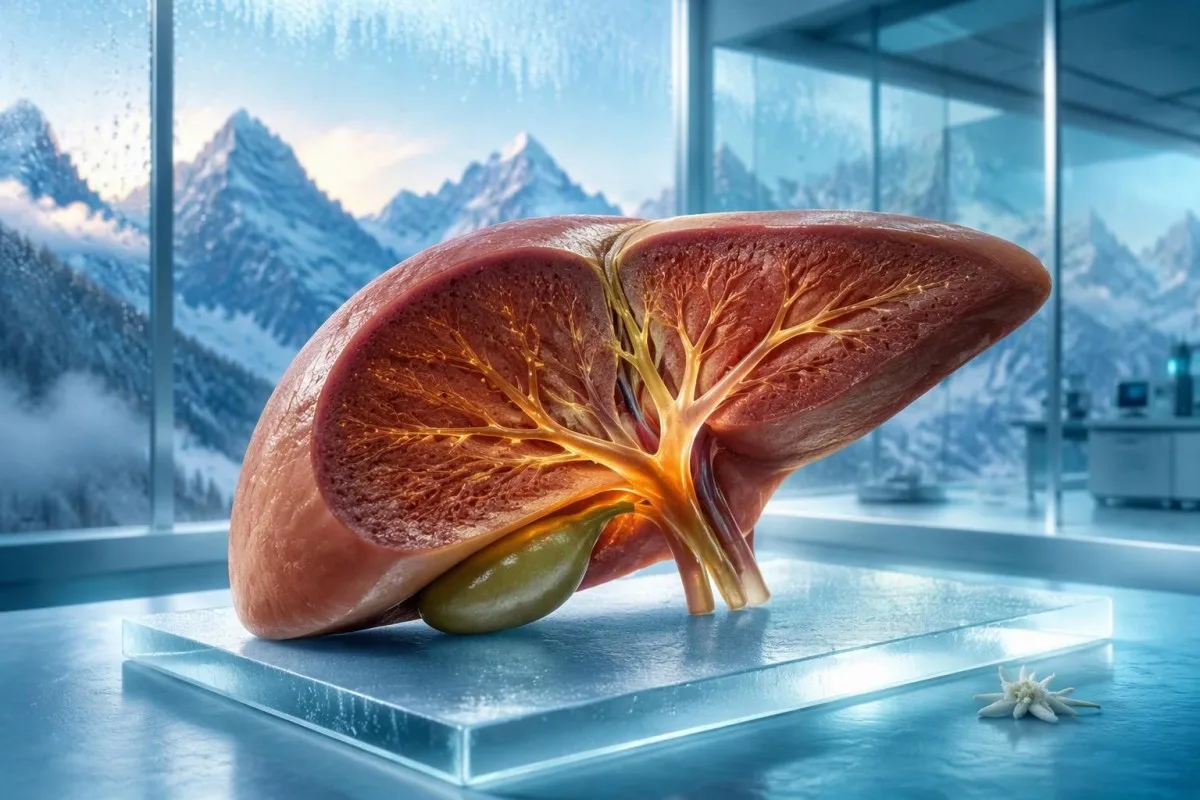
A low gamma-glutamyl transferase result is rarely a liver warning sign. The useful question is whether the rest of your liver panel, nutrition history, medicines, and symptoms tell a different story.


- Low GGT levels are usually benign when ALT, AST, ALP, bilirubin, albumin, and symptoms are unremarkable.
- الفواصل المرجعية تختلف: many adult laboratories report roughly 5-55 U/L, but some do not flag a low GGT at all.
- A value below 5 U/L is usually an assay-floor or individual-baseline finding, not evidence of liver failure.
- Low gamma glutamyl transferase can accompany low oxidative exposure, lower body mass, hormonal effects, or certain medications, although the evidence is not strong enough to diagnose any one cause.
- Rare inherited GGT deficiency causes glutathionuria and broader clinical clues; an isolated low serum result does not establish this diagnosis.
- ALP context matters: a normal or low GGT with raised ALP makes a bone source more likely than a bile-duct source.
- Nutrition testing should be targeted: low GGT alone does not prove zinc, protein, vitamin B6, or antioxidant deficiency.
- Repeat testing is reasonable when a result is unexpected, but urgent care is not needed for low GGT alone without concerning symptoms.
What a Low GGT Blood Result Usually Means
Low GGT levels are almost always a reassuring finding rather than a disease signal, particularly when bilirubin, alkaline phosphatase (ALP), ALT, and AST are within the reporting laboratory's range. A low gamma-glutamyl transferase does not mean that the liver has “stopped working”; impaired liver synthesis is assessed with albumin, INR, bilirubin, platelets, and clinical findings—not a low GGT alone.
GGT is a membrane-associated enzyme concentrated in the biliary epithelium, kidney tubules, pancreas, and several other tissues. Laboratories mainly use it as a supporting marker of enzyme induction or cholestatic stress, which is why clinical attention is usually directed toward high, not low, values. The EASL cholestasis guideline uses GGT alongside ALP and bilirubin when evaluating a cholestatic pattern; it does not define an adverse lower GGT threshold (EASL, 2009).
In my clinical work, a result such as GGT 4 U/L with ALT 18 U/L, ALP 72 U/L, and bilirubin 9 µmol/L needs explanation, not alarm. It commonly reflects normal biology, a laboratory method that reports down to 3 or 5 U/L, or an individual who has little enzyme induction from alcohol, metabolic liver stress, or medicines. For the wider context of a liver panel, see our guide to what liver tests include.
As of September 25, 2026, no major liver guideline recommends treatment, imaging, or a special diet solely because GGT is below range. Dr. Thomas Klein, Kantesti's Chief Medical Officer, advises patients to first verify the unit, reference interval, and neighboring results before pursuing deficiency testing. Kantesti is an AI blood test analyzer that reads low GGT alongside the full liver-panel pattern rather than treating a single low number as a diagnosis.
Why GGT Reference Ranges Differ Between Laboratories
There is no universal lower cutoff for GGT, because methods, calibration, sex distribution, and local reference populations differ. Many adult laboratories quote approximately 5-55 U/L, while others use 7-49 U/L for women and 10-71 U/L for men or simply report values below the assay limit as low.
GGT is generally measured by a kinetic colorimetric assay that detects the rate of substrate conversion at 37°C. A reported result of “<3 U/L” is not the same as a precisely measured value of 0 U/L; it often means the activity was below the method's reliable quantification boundary. That distinction is easy to miss when patient portals automatically apply a low flag.
Sex, age, alcohol exposure, adiposity, and laboratory selection criteria shift the upper end of a GGT interval much more than the lower end. A 24-year-old woman with GGT 3 U/L and a 68-year-old man with GGT 3 U/L can both be well, provided the wider panel is coherent. Read the laboratory’s own interval rather than borrowing a number from a search result; our ديال نطاق GGT explains the common unit and sex differences.
Kantesti AI compares reported values with the laboratory-specific range whenever it is visible on an uploaded report, then checks whether the apparent low value is analytically meaningful. Kantesti is an AI blood test interpretation platform designed to identify when a flagged result conflicts with the actual clinical pattern. A one-point difference around an assay floor rarely represents a meaningful biological change.
When Low GGT Levels Are Entirely Benign
Low GGT is generally benign when it is isolated and stable over time. A person with GGT 2-6 U/L, normal ALP and bilirubin, no jaundice or persistent itch, and normal nutrition does not usually need a liver work-up because of that value.
The most useful clinical clue is stability. If GGT has been 4, 5, and 3 U/L over 4 years while ALT remains below 30 U/L and ALP below 120 U/L, that is more persuasive evidence of a personal baseline than one isolated draw. Biological variation affects enzymes, but values close to the lower analytic boundary may appear to bounce by 1-2 U/L without any biological consequence.
I see this after preventive panels in physically active people who do not drink alcohol and take few medicines. One 52-year-old trail runner had GGT 4 U/L, AST 46 U/L after a mountain race, and normal bilirubin; the muscle-related AST rise—not the low GGT—was what needed a repeat after 7 days without strenuous exercise. Our article on high AST after exercise gives useful context for that different pattern.
A normal GGT does not rule out every liver condition, and a low result certainly does not provide a “liver health score.” It simply has weak negative clinical meaning by itself. If you feel well and your other results are normal, save the date, fasting status, recent exercise, and medicines for comparison at your next فحص الدم الأساسي.
Nutrition, Weight Loss and Low GGT Claims
Low GGT levels do not diagnose poor nutrition, antioxidant deficiency, or “liver detoxification.” Severe undernutrition can affect many liver-related proteins and enzymes, but low GGT alone is neither sensitive nor specific enough to identify a nutrient shortfall.
GGT participates in extracellular glutathione metabolism, which has led to attractive but oversimplified online claims that a low value proves low glutathione, zinc deficiency, or inadequate protein intake. Human serum GGT activity is not a validated proxy for tissue glutathione stores. A person with poor protein intake is more likely to show clues such as low weight, reduced muscle mass, anemia, low phosphate, low albumin in advanced illness, or specific vitamin deficiencies.
Rapid weight loss deserves a more nuanced reading. During calorie restriction, GGT often falls alongside reductions in liver fat and insulin resistance, yet transient ALT changes can occur during rapid weight loss or heavy exercise. If fatigue, restrictive eating, missed periods, recurrent injuries, or low ferritin coexist, the priority is a broader nutrition assessment; our دليل مختبر رياضيي التحمل describes practical screening patterns.
Dr. Thomas Klein has seen patients spend substantial sums on antioxidant panels after a GGT of 4 U/L, only to find that their CBC, ferritin, vitamin B12, thyroid tests, and diet history were the real clinical leads. Targeted testing beats supplement guessing. A low GGT blood result is not a reason to start glutathione, zinc, or high-dose vitamin supplements without a documented indication.
Medicines and Hormones That Can Lower GGT
Some medicines and hormonal states may lower GGT activity, but medication-related low GGT is usually clinically harmless. The practical issue is not to stop a prescribed treatment because one enzyme result falls below a reference interval.
Medication effects are far better established for elevated GGT than reduced GGT. Enzyme-inducing antiseizure medicines, for example, can raise GGT; conversely, improved metabolic control, reduced alcohol use, and some lipid-lowering therapies may reduce a previously higher value. A falling GGT after treatment is not automatically a direct drug effect—it may reflect the condition improving.
Oestrogen-containing contraception and pregnancy can alter several liver analytes, including GGT, but reference intervals for pregnancy are laboratory-dependent. In a person taking oral contraception with GGT 5 U/L, normal bilirubin, and no itching, the result usually requires no action. Persistent itch with raised bile acids in pregnancy is a different clinical question, covered in our bile-acid testing guide.
Bring a complete medication and supplement list to any repeat test, including antiseizure medicines, statins, antibiotics, herbal products, and hormonal treatments. Do not discontinue medication because of low gamma glutamyl transferase without discussing it with the prescriber. The risk of stopping an essential medicine is usually much greater than the significance of an isolated GGT of 3 U/L.
How to Read Low GGT Alongside Alkaline Phosphatase
Low or normal GGT with elevated ALP often points away from a liver or bile-duct source and toward bone, intestine, or pregnancy-related ALP. This pairing is one of the few situations where GGT meaningfully changes the interpretation of another result.
ALP comes mainly from liver and bone in adults. When ALP is elevated but GGT remains low-normal, clinicians often consider vitamin D deficiency, healing fracture, high bone turnover, hyperparathyroidism, adolescence, or pregnancy before ordering biliary imaging. A GGT of 6 U/L does not exclude liver disease, but it makes an isolated ALP of 155 U/L less suggestive of cholestasis when bilirubin is normal.
The reason this pair matters is biochemical: biliary epithelial stress commonly increases both ALP and GGT, whereas osteoblast activity increases ALP without necessarily changing GGT. EASL's 2009 cholestasis guideline supports using GGT to help establish hepatic origin when ALP is raised (EASL, 2009). For a focused discussion of bone-source ALP, read our guide to ALP بعد كسر.
A 34-year-old with ALP 164 U/L, GGT 7 U/L, 25-hydroxyvitamin D 18 ng/mL, and normal bilirubin needs bone and vitamin D context—not reflex ultrasound. In contrast, ALP 260 U/L plus bilirubin 42 µmol/L and right-upper-abdominal pain warrants prompt clinical assessment even if GGT is unexpectedly low. Symptoms and the total pattern always outrank one enzyme.
Rare Inherited GGT Deficiency and Glutathionuria
True inherited GGT deficiency is exceptionally rare and is not diagnosed from a single low serum GGT value. It involves pathogenic changes affecting gamma-glutamyl transferase activity and may cause glutathionuria, neurological features, metabolic concerns, or abnormal findings from childhood.
The rare disorder sometimes called gamma-glutamyl transpeptidase deficiency affects glutathione processing and is evaluated with specialist biochemical and genetic testing. Published case descriptions include increased urinary glutathione, but the phenotype is variable and the evidence base is necessarily small because so few people are affected. An adult who feels well with an isolated GGT of 3 U/L is very unlikely to have this condition.
I would think about specialist referral only when the low result is persistent and there are additional clues: unexplained neurological or developmental symptoms, a childhood history of unusual metabolic findings, family members with a confirmed condition, or a report of abnormal urinary glutathione. Routine commercial genetic panels can produce uncertain variants, so they should not be interpreted without genetics expertise.
Kantesti's neural network can flag an unusually low GGT for contextual review, but it does not diagnose rare enzyme disorders from routine chemistry data. Kantesti is an AI-powered blood test analysis tool that identifies when low GGT coexists with other abnormalities that justify clinician-led follow-up. For laboratory questions that need careful method review, our نظرة عامة على التحقق الطبي النزيف الغزير المستمر مع فحص بالموجات فوق الصوتية طبيعي قد لا يزال يتطلب تنظير الرحم، أو أخذ عينات من بطانة الرحم، أو تقييم اضطراب النزيف.
Why Low GGT Does Not Mean Low Liver Function
Low GGT does not measure liver reserve, liver detoxification capacity, or liver failure. Liver synthetic function is better assessed using bilirubin, albumin, INR or prothrombin time, platelet trend, clinical examination, and—in selected cases—imaging or fibrosis evaluation.
GGT is an enzyme activity measurement, not a direct measure of hepatocyte mass. In advanced cirrhosis, GGT can be normal, high, or occasionally lower than expected depending on the cause and stage; therefore, neither a normal nor low GGT rules out chronic liver disease. New jaundice, confusion, abdominal swelling, black stools, or easy bruising require medical attention regardless of GGT.
When I review a panel, albumin below 35 g/L, bilirubin above 34 µmol/L, INR above 1.5 in someone not taking anticoagulants, and falling platelets are more clinically concerning than a GGT of 2 U/L. These are not stand-alone diagnoses either, but they point toward impaired synthesis, cholestasis, or portal hypertension more directly. Our guide to علامات مبكرة لتليف الكبد يغطي النمط الأوسع.
The phrase “liver enzyme” causes understandable confusion: ALT, AST, ALP, and GGT are injury, tissue-source, or induction markers—not a report card for overall organ performance. A low GGT blood result should never reassure someone away from urgent symptoms, and it should not create anxiety in an otherwise entirely normal panel.
Could a Low GGT Result Be a Testing Artifact?
A very low GGT result can reflect assay sensitivity, sample handling, or ordinary analytic variation, especially near 3-5 U/L. Repeating the test is reasonable when the result is unexpected or conflicts with the rest of the panel, but a same-day emergency redraw is rarely necessary.
Unlike potassium or glucose, GGT is not usually one of the analytes most distorted by a brief delay in sample processing, yet every enzyme assay has imprecision near its lower measuring limit. A result changing from 4 U/L to 7 U/L may be entirely compatible with analytic and within-person variation. Compare the laboratory, units, fasting state, recent exercise, and medicines before interpreting a small shift.
Hemolysis, lipemia, and icterus can interfere with some laboratory measurements, but their effect depends on the exact analyzer and assay chemistry. A report that labels the specimen as hemolyzed or unsuitable should prompt laboratory-specific advice rather than assumptions. Our تكرار الفحص بعد انحلال الدم. explains why a redraw can clarify selected panels.
If a low GGT is isolated, repeating it with the next routine panel in 3-12 months is usually sufficient. Repeat sooner—often within 2-8 weeks—if ALP, bilirubin, ALT, or symptoms are changing, not because the GGT itself is low. Record the exact value; “low” is a flag, not a clinical measurement.
Symptoms That Matter More Than a Low GGT Number
Symptoms change the plan when they suggest liver, biliary, gastrointestinal, or systemic illness; low GGT itself causes no recognized symptom syndrome. Yellow eyes, dark urine, pale stools, fever with abdominal pain, persistent generalized itch, or new confusion need prompt clinical assessment even if GGT is below range.
Bile-duct obstruction can present with pain, jaundice, dark urine, pale stool, and rising bilirubin or ALP. A low GGT would be unusual in that pattern but would not make it safe to wait. The same principle applies to viral hepatitis, medication-associated liver injury, and gallbladder inflammation: the symptom trajectory and wider laboratory pattern lead the decision.
Systemic symptoms can point elsewhere. Unintentional weight loss of more than 5% over 6-12 months, chronic diarrhoea, recurrent vomiting, or marked fatigue may justify CBC, ferritin, thyroid testing, coeliac screening, and nutrition review even when GGT is low. For persistent digestive warning signs, see our article on undigested food and red flags.
I tell patients this plainly: an isolated GGT of 4 U/L is not an emergency, but a person with jaundice and severe pain is not “cleared” by it. Medical triage is based on the whole person. Bring your test report and a timeline of symptoms, alcohol intake, medicines, recent infections, and travel exposures.
Who Actually Needs Follow-Up for Low GGT?
Most adults need no follow-up for isolated low GGT, while a smaller group needs review because of associated abnormalities or a concerning clinical history. Follow-up is driven by the companion results, not by a numeric lower cutoff such as 5 U/L.
Arrange routine primary-care review if low GGT accompanies unexplained fatigue, marked dietary restriction, low BMI, repeated fractures, chronic diarrhoea, or other abnormal laboratory values. Consider timely review if ALP is raised, bilirubin is abnormal, albumin is low, INR is prolonged, or platelet count is falling. A low GGT with otherwise normal results generally does not require hepatology referral.
Children deserve a little more caution because reference intervals vary substantially with age, puberty, and laboratory method. A paediatrician should interpret persistently very low results in the setting of developmental, neurological, growth, or metabolic concerns. For families, our guide to safe age-based blood tests outlines why adult ranges cannot simply be copied onto children.
Kantesti AI supports result organization and trend review, but it cannot replace clinical examination or specialist assessment. If you are unsure whether a combination needs review, use a structured فحص قبل زيارة الطبيب to list values, symptoms, family history, and current treatments.
A Practical Plan After Seeing Low GGT on Results
The practical response to low GGT is to confirm the laboratory range, inspect the full liver panel, review medicines and symptoms, and avoid unnecessary supplements. For an isolated value below range, this takes minutes and is usually more useful than ordering a large “detox” panel.
Start with five items: GGT value and unit; laboratory reference interval; ALT, AST, ALP, and bilirubin; albumin and platelet count if available; and symptoms. If all are reassuring, document the value as a likely personal baseline. If your report uses U/L, do not convert it to IU/L—these labels are generally used interchangeably for enzyme activity in routine reporting.
Next, list medication changes, hormonal therapy, alcohol pattern, major weight change, recent endurance exercise, pregnancy status, and supplements. This context helps distinguish a harmless low result from a panel that needs another look. Our دليل توقيت تحاليل الدم explains which life events can make one draw differ from the next.
Avoid “correcting” low GGT. There is no evidence-based target dose of zinc, glutathione, milk thistle, or B vitamins intended to raise GGT in a well person. If a nutritional concern exists, test and treat the relevant deficiency—for example, ferritin, vitamin B12, vitamin D, folate, zinc, or albumin—rather than chasing an enzyme number.
How Kantesti Interprets a Low GGT in Context
Kantesti interprets low GGT by checking the liver-panel pattern, reference interval, symptoms entered by the user, medications, and prior results—not by assigning a diagnosis to one low value. This approach is especially useful when the same report contains an ALP, bilirubin, ALT, or nutrition-related result that changes the clinical meaning.
Kantesti AI can process a laboratory-report PDF or photo and organize findings in roughly 60 seconds, while keeping the reported laboratory ranges visible for review. A low GGT is generally categorized as low clinical priority when it is isolated, then escalated for human discussion when paired with abnormalities such as high ALP, high bilirubin, low albumin, or concerning symptoms. Trend analysis is often more valuable than a single flagged result.
Our clinical team reviews medical content and safety boundaries; the المجلس الاستشاري الطبي provides physician oversight for how result explanations are framed. Kantesti is an AI lab test interpretation service that turns a low GGT result into a pattern-based question for the patient and clinician, rather than a misleading diagnosis. In our experience with more than 2 million interpreted reports, isolated low flags are a common source of avoidable worry.
The right endpoint is a better conversation with your clinician, not an automated verdict. Save the original report, note whether the test was fasting, and compare like with like over time. If you want to understand how our result-reading methodology handles reference intervals and uncertainty, review our دليل تقنية الذكاء الاصطناعي.
Bottom Line: Low GGT Is Usually a Reassuring Finding
Low GGT levels almost never need treatment or urgent investigation on their own. The exception is not a particular low number; it is a low result appearing with other abnormal tests, significant symptoms, a relevant childhood or family history, or clear evidence of malnutrition.
Use the laboratory’s own reference interval and do not assume that a value of 3 U/L means the same thing across laboratories. A low value has very different implications from a high GGT, which is why guidance designed for elevated GGT should not be applied in reverse. The related overview of what GGT stands for may help when reading your report.
The most clinically useful question is, “What else is happening in this panel and in my life?” Normal ALP, bilirubin, ALT, AST, albumin, and platelets make an isolated low result reassuring. Symptoms such as jaundice, dark urine, persistent itching, fever, severe abdominal pain, confusion, or rapid weight loss deserve evaluation whether GGT is low, normal, or high.
Dr. Thomas Klein's practical advice is simple: do not supplement to raise GGT, do not stop medication because of it, and do not let a low flag overshadow more meaningful findings. For questions about the organisation and its clinical approach, see نبذة عن كانتستي.
الأسئلة الشائعة
واش مستوى GGT طايح مزيان؟
كونسونطراسيون GGT قليلة غالبا ماشي خطيرة ونادر ما كتدل على مرض فالكبد إلى كانت نتائج الكبد الأخرى عادية. بزاف ديال المختبرات كيستعملو قيم مرجعية للكبار بين 5-55 U/L, ولكن ما كاينش شي حد أدنى خطير متفق عليه عالميا. GGT ديال 3-5 U/L مع normal ALT, AST, ALP, bilirubin, albumin, وما كاينينش أعراض هو في العموم علامة مزيانة. المراجعة الطبية مناسبة إلى كانت GGT قليلة مع نتائج أخرى غير عادية, خسارة الوزن كبيرة, أعراض سوء الامتصاص, أو تاريخ عائلي و طفولي مهم.
شنو لي كيسبب هبوط الكاما غلوتاميل ترانسفيراز؟
انخفاض إنزيم ALT قد يعكس الاختلاف الطبيعي لدى الفرد، أو ضعف النشاط التحليلي بالقرب من الحد الذي يبلغه الفحص، أو انخفاض التعرض للكحول أو الأدوية المحفزة للإنزيمات، أو السياق الهرموني، أو التحسن في إجهاد الكبد الأيضي. يمكن أن يؤدي سوء التغذية الحاد إلى تغيير العديد من قيم المختبر، لكن انخفاض GGT وحده لا يثبت نقص البروتين أو الزنك أو فيتامين B6 أو الجلوتاثيون أو مضادات الأكسدة. يوجد نقص نادر في GGT موروث، ولكنه عادة ما يتضمن دلائل أيضية أو سريرية إضافية ويتطلب اختبارات متخصصة. قيمة أقل من 5 U/L وحدها لا تكفي لتشخيص سبب.
واش نخاف إذا كانت نسبة GGT عندي 4 U/L؟
GGT ديال 4 U/L ما تخافش منو غالبا إلا كان بوحدو و التحاليل الأخرى ديالك نورمال. شوف بعدا واش التحاليل كتعطي قيم أقل من 3 أو 5 U/L كحد للقياس، حيت الفرق الصغير في هاد الرينج ما كيكونش عندو معنى كبير طبيا. شوف ALP، بيليروبين، ALT، AST، ألبومين، عدد الصفائح الدموية، الدوايات، والأعراض عوض ما تركز على GGT بوحدو. إعادة التحليل ممكن تبقى حتى للتحليل العادي الجاي إلا كانت النتائج أو الأعراض الأخرى كاتبدل.
واش GGT منخفض يمكن يعني نقص الفيتامينات أو المعادن؟
GGT منخفض لا يشخص بشكل موثوق أي نقص في الفيتامينات أو المعادن. على الرغم من أن GGT تشارك في أيض الجلوتاثيون، إلا أن نشاط المصل لم يتم التحقق منه كمقياس سريري لوضع الزنك، أو وضع فيتامين ب 6، أو تناول البروتين، أو احتياطيات مضادات الأكسدة. إذا كانت الأعراض تشير إلى مشكلة غذائية، يختار الأطباء عادةً اختبارات مستهدفة مثل الفيريتين، وفيتامين ب 12، وحمض الفوليك، و 25-هيدروكسي فيتامين د، والزنك، CBC، والألبومين، والفوسفات. تناول المكملات الغذائية لرفع نتيجة GGT من 3-6 U/L فقط ليس قائمًا على الأدلة.
شنو كيعني انزيم GGT قليل مع انزيم phosphatase alcine طالع؟
Low or normal GGT with high alkaline phosphatase can suggest that the alkaline phosphatase comes from bone rather than liver or bile ducts. Vitamin D deficiency, healing fractures, high bone turnover, pregnancy, and adolescence are common contexts for this pattern. For example, ALP 160 U/L with GGT 6 U/L and vitamin D 18 ng/mL merits bone and vitamin D assessment before assuming bile-duct disease. Jaundice, dark urine, abdominal pain, or high bilirubin still need medical assessment regardless of GGT.
Can medications lower GGT?
Medications can be associated with lower GGT, although medicine-related GGT elevation is better established than medicine-related suppression. Improved metabolic health, reduced alcohol exposure, hormonal treatments, and treatment of a prior liver condition can all coincide with a lower value. Do not stop statins, antiseizure medicines, contraception, antibiotics, or supplements because a GGT result falls below 5 U/L without speaking to the prescriber. The full panel and reason for treatment matter more than a low isolated enzyme result.
احصل على تحليل الدم بالذكاء الاصطناعي اليوم
انضم إلى أكثر من 2 مليون مستخدم عالمي يثقون في Kantesti لتحليل فوري ودقيق لنتائج التحاليل المخبرية. ارفع نتائج تحليل الدم الخاصة بك واحصل على تفسير شامل لـ 15,000+ للـ biomarkers في ثوانٍ.
📚 أبحاث منشورة مُشار إليها
Klein, T., Mitchell, S., & Weber, H. (2026). اختبار الدم لفيروس نيباه: دليل الكشف المبكر والتشخيص 2026. Kantesti بحث طبي بالذكاء الاصطناعي.
Klein, T., Mitchell, S., & Weber, H. (2026). دليل فصيلة الدم B السالبة، تحليل LDH، وعدّ الخلايا الشبكية. Kantesti بحث طبي بالذكاء الاصطناعي.
📖 مراجع طبية خارجية
Whitfield JB (2001). غاما غلوتاميل ترانسفيراز. مراجعات نقدية في علوم المختبرات السريرية.
⚕️ إخلاء مسؤولية طبية
هذه المقالة لأغراض تعليمية فقط ولا تشكل نصيحة طبية. استشر دائمًا مقدم رعاية صحية مؤهلًا لاتخاذ قرارات التشخيص والعلاج.
إشارات الثقة E-E-A-T
خبرة
مراجعة سريرية يقودها الأطباء لسير عمل تفسير التحاليل.
خبرة
تركيز طب المختبر على كيفية سلوك الـ biomarkers في السياق السريري.
السلطة
مكتوب من طرف الدكتور Thomas Klein مع مراجعة من طرف الدكتورة Sarah Mitchell والأستاذ الدكتور Hans Weber.
الجدارة بالثقة
تفسير قائم على الأدلة مع مسارات متابعة واضحة لتقليل الإنذار.