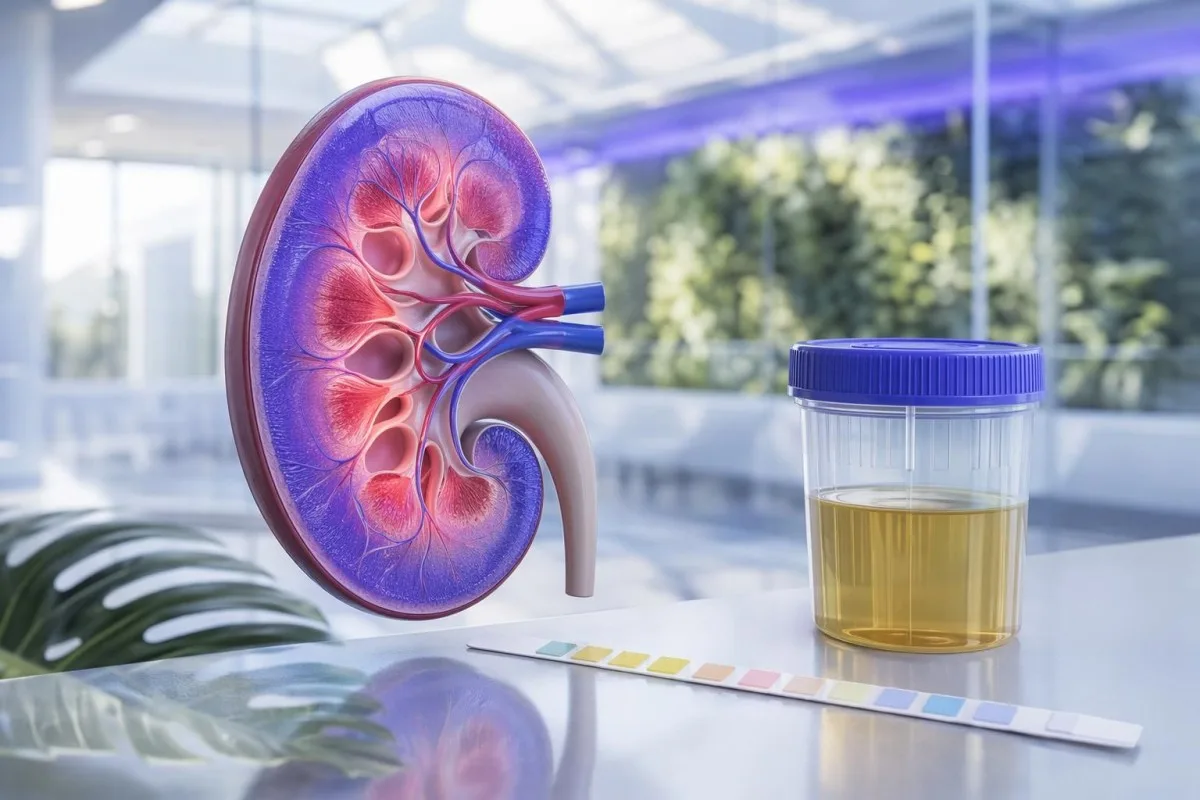
ትንሽ ወይም 1+ ፕሮቲን በብዙ ጊዜ ጊዜያዊ ነው፣ ነገር ግን የሚቀጥል ፕሮቲንዩሪያ የሽንት ACR መጠየቅ ይገባል። 2+ ወይም 3+ ፕሮቲን፣ እብጠት፣ ከፍተኛ የደም ግፊት፣ በሽንት ውስጥ ደም፣ ወይም የእርግዝና ለውጦች ፈጣን እንክብካቤ ይፈልጋሉ።.


- ትንሽ ፕሮቲን በሽንት ዲፕስቲክ ላይ ብዙ ጊዜ የውሃ መጥፋት (dehydration)፣ የእንቅስቃሴ ስራ (exercise)፣ ትኩሳት (fever) ወይም የተጠናከረ ሽንት ያሳያል እና ብዙ ጊዜ በመጀመሪያ ጠዋት ናሙና እንደገና ይመረመራል።.
- 1+ ፕሮቲን ብዙ ጊዜ በብዙ ዲፕስቲኮች ላይ 30 mg/dL ግምት ይሆናል፣ ነገር ግን መጠን (concentration) እና የሽንት ልዩ ክብደት (urine specific gravity) እውነተኛው ከሆነ በላይ ወይም በታች እንዲመስል ሊያደርጉ ይችላሉ።.
- 2+ ፕሮቲን ብዙ ጊዜ 100 mg/dL ግምት ይሆናል እና በተለይ ከቀጠለ በሽንት አልቡሚን-ወደ-ክሬአቲኒን ሬሾ (urine albumin-to-creatinine ratio) መረጋገጥ አለበት።.
- 3+ ፕሮቲን ብዙ ጊዜ 300 mg/dL ግምት ይሆናል እና በተለይ እብጠት፣ ከፍተኛ የደም ግፊት፣ ዝቅተኛ eGFR፣ ወይም በሽንት ውስጥ ደም ካለ በቶሎ የሕክምና ግምገማ ይፈልጋል።.
- የሽንት ACR ከ30 mg/g በታች ወይም ከ3 mg/mmol በታች ብዙ ጊዜ መደበኛ ወይም በትንሹ የተጨመረ የአልቡሚን መውጣት እንደሚቆጠር ይታሰባል።.
- መጠነኛ የተጨመረ ACR 30-300 mg/g ወይም 3-30 mg/mmol ነው እና በዲያቤትስ ወይም በhypertension ውስጥ የኩላሊት ጉዳት የመጀመሪያ ሊለካ የሚችል ምልክት ሊሆን ይችላል።.
- እጅግ የተጨመረ ACR ከ300 mg/g በላይ ወይም ከ30 mg/mmol በላይ ነው እና ብዙ ጊዜ ቀላል ማረጋገጫ ሳይሆን የኩላሊት ተኮር ግምገማ ይፈልጋል።.
- የእርግዝና ፕሮቲንዩሪያ ከ20 ሳምንታት በኋላ የደም ግፊት 140/90 mmHg ወይም ከዚያ በላይ ከሆነ ፕሪኢክላምፕሲያን ሊያመለክት ይችላል እና ለመደበኛ ቀጠሮ መጠበቅ አይገባም።.
- አስቸኳይ ምልክቶች አዲስ የፊት ወይም የእግር መድማት፣ የእስትንፋስ እጥረት፣ ከባድ ራስ ምታት፣ የእይታ ምልክቶች፣ በጣም ከፍተኛ የደም ግፊት፣ የሽንት መቀነስ፣ ወይም ኮላ ቀለም ያለው ሽንት እንዲካተቱ ያስታውሱ።.
በሽንት ውስጥ ያለው ፕሮቲን ብዙ ጊዜ ምን ማለት ነው
በሽንት ውስጥ ፕሮቲን ማለት የሽንት ዲፕስቲክ ወይም ላብ ፕሮቲን አግኝቷል እሱም በአብዛኛው በደም ውስጥ መቆየት ይገባዋል። ትሬስ ወይም 1+ ጊዜያዊ ሊሆን ይችላል፤ 2+ ወይም 3+ የበለጠ አሳሳቢ ነው፣ እና ማንኛውም የሚቀጥል ውጤት በሽንት አልቡሚን-ወደ-ክሬአቲኒን ሬሾ መረጋገጥ አለበት፣ ብዙ ጊዜ ይህ ተብሎ ይጠራል የሽንት ACR.
ከሰኔ 22 ቀን 2026 ጀምሮ የእኔ መደበኛ አቀራረብ ቀላል ነው፦ በንጹህ ሁኔታ ውስጥ ትንሽ ውጤት እንደገና መለካት፣ የሚቀጥል ማንኛውንም ነገር መጠን ማስተካከል፣ እና ምልክቶች ወይም እርግዝና ተሳትፎ ሲኖር ፈጣን መሆን። Kantesti የሚሠራው ነው AI የደም ምርመራ ውጤት ትርጓሜ መድረክ በ ካንቴስቲ ሊሚትድ የሚረዳ ነው ይህም የሽንት ግኝቶችን ከ eGFR፣ ከ creatinine፣ ከ albumin፣ ከ glucose፣ ከ HbA1c እና ከደም ግፊት ንድፎች ጋር ለማገናኘት ይረዳል።.
ዲፕስቲክ አጠቃላይ የኩላሊት አደጋን አይለካም። በዋናነት albumin ይገነዘባል እና ትንሽ ፕሮቲኖችን፣ የብርሃን ሰንሰለቶችን (light chains)፣ ወይም የተቀነሰ የ albumin መጥፋትን ሊያመልጥ ይችላል፤ የእኛ የሽንት ምርመራ መመሪያ ለምን አዎንታዊ ስትሪፕ እና መጠናዊ የሽንት ውጤት አንዳንዴ እርስ በርስ እንደማይስማሙ ያብራራል።.
በክሊኒኬ ውስጥ፣ ከ18 ኪሎ ሜትር ትሬኒንግ ሩጥ በኋላ በሙቀት የተነሳ ትሬስ ፕሮቲን ያለበት 29 ዓመት የሩጫ ሰው ከ 63 ዓመት የስኳር በሽታ ያለበት ሰው ጋር አይመሳሰልም፤ የእግር እግር እብጠት፣ eGFR 52 mL/min/1.73 m²፣ እና 2+ ፕሮቲን አለው። ቶማስ ክላይን፣ MD፣ እነዚህን ሁለት ንድፎች በጣም በተለያየ መንገድ ያነባል፣ ምክንያቱም አደጋው በክላስተሩ ውስጥ ነው እንጂ በስትሪፑ ላይ በአንድ ካሬ ላይ ብቻ አይደለም።.
በሽንት ምርመራ ውጤቶች ላይ ያለው ትንሽ፣ 1+፣ 2+ እና 3+ ፕሮቲን
የዲፕስቲክ ፕሮቲን ደረጃዎች ግምታዊ የመጠን ባንዶች ናቸው፣ ትክክለኛ የየቀኑ ፕሮቲን መጥፋት አይደለም። ብዙ ስትሪፖች ያነባሉ ትሬስ በግምት 10-20 mg/dL፣, 1+ በግምት 30 mg/dL፣, 2+ በግምት 100 mg/dL፣ እና 3+ በግምት 300 mg/dL፣ ሆኖም አምራቾች እና የሽንት መጠን መቀየር ትርጉሙን ይለውጣል።.
A ትሬስ ፕሮቲን በጣም በተጨናነቀ ሽንት ውስጥ ያለ ውጤት የሽንት ልዩ ክብደት ከ 1.030 ወደ 1.015 ሲመለስ ሊጠፋ ይችላል። አንድ 1+ ፕሮቲን በውሃማ ሽንት ውስጥ ያለ ውጤት በደረቅ ሽንት ውስጥ ያለ ትሬስ ፕሮቲን ከማሳሰብ ይበልጥ ያሳስበኛል፣ ምክንያቱም መቀልበስ (dilution) ፕሮቲንን ለመለየት እንዲከብድ ሊያደርግ ይገባል።.
A 2+ ፕሮቲን ውጤት በራሱ የኩላሊት ውድቀት አይደለም፣ ነገር ግን ለወራት መተው አይገባም። ታካሚዎች በላብ ፖርታሎች ላይ ምልክቶች፣ ኮከቦች፣ ወይም የቀለም ካሬዎች ሲያዩ ብዙ ጊዜ ወደ መመሪያችን እመራቸዋለሁ በ የመደበኛ ያልሆኑ ውጤቶችን መንበብ ምክንያቱም ምልክቱ ምን እንደሆነ ይነግርዎታል፣ ለምን እንደሆነ አይደለም።.
A 3+ ፕሮቲን ውጤቱ ብዙ ጊዜ እብጠት (edema) ለመፈለግ፣ የደም ግፊት መጨመር (hypertension)፣ ዝቅተኛ የሴረም አልቡሚን (serum albumin)፣ የተቀነሰ eGFR እና በሽንት ውስጥ ደም መኖር በቂ እንደሆነ ያሳያል። በነፍሮቲክ-ሬንጅ ፕሮቲንዩሪያ (nephrotic-range proteinuria) ውስጥ የጠቅላላ ፕሮቲን መውጣት ብዙ ጊዜ ከ3.5 ግ/ቀን በላይ ነው፣ ይህም ከዲፕስቲክ (dipstick) በትክክል ሊቆጠር ከሚችለው በጣም ይበልጣል።.
መቼ በሽንት ACR እንደገና መደገም አለበት
ዲፕስቲክ ላይ ፕሮቲን መቀጠሉ ሲታይ፣ 1+ ወይም ከዚያ በላይ ሲታይ፣ ወይም በሰውየው ውስጥ የስኳር በሽታ (diabetes)፣ የደም ግፊት መጨመር (hypertension)፣ የተቀነሰ eGFR፣ የእርግዝና አደጋ (pregnancy risk) ወይም እብጠት (swelling) ካለ የሽንት ACR የተመረጠው የመደጋገሚያ ምርመራ ነው። ከመጀመሪያ ጠዋት ሽንት ACR ከውሃ መጠጣት (hydration) እና እንቅስቃሴ የሚመጡ የተሳሳተ መለዋወጦችን ይቀንሳል።.
KDIGO 2024 አልቡሚኑሪያን እንደ A1 ከ30 mg/g በታች፣ A2 ከ30-300 mg/g መካከል እና A3 ከ300 mg/g በላይ ብሎ ይመድባል፤ የmmol/mmol እኩልነቶቹ ከ3 በታች፣ 3-30 እና ከ30 በላይ ናቸው። ይህ መመደብ ለምን እኛ እንዲህ እንደምንሆን ነው። የሽንት ACR ማብራሪያ በዲፕስቲክ ቀለም ብቻ ሳይሆን የአደጋ ምድቦችን ላይ ያተኩራል።.
ለTrace ወይም 1+ ፕሮቲን ያለ ምልክት ካለ፣ እኔ ብዙ ጊዜ ድርቀት (dehydration)፣ ትኩሳት (fever) ወይም እንቅስቃሴ (exercise) እንደሚጠበቅ ከሆነ በ1-2 ሳምንት ውስጥ ንፁህ-መያዣ (clean-catch) የመጀመሪያ ጠዋት ናሙናን እደግማለሁ። ፕሮቲን በ3 ናሙናዎች ውስጥ በ2 ላይ በግምት በ3 ወራት ውስጥ ከታየ፣ ቃሉ ቀጣይ ፕሮቲንዩሪያ (persistent proteinuria) ይሆናል።.
Kantesti AI የACRን ከሴረም ክሬአቲኒን (serum creatinine)፣ eGFR፣ HbA1c፣ CRP፣ አልቡሚን እና የመድሀኒት ታሪክ ጋር በአንድ ላይ ይተረጉማል፣ ምክንያቱም እነዚህ ዝርዝሮች ሳይኖሩ የአልቡሚኑሪያን መጠን በቀላሉ ሊገመት ይችላል (overcall) ወይም ሊያንስ ሊታይ ይችላል (undercall)። እዚህ ያለው ማስረጃ ፍጹም ንፁህ አይደለም፤ ሐኪሞች በጤናማ 22 ዓመት ልጅ ውስጥ ለተነጠለ 1+ ፕሮቲን ፈጣኑ መንገድ ላይ አብሮ አይስማሙም፣ ነገር ግን በ300 mg/g በላይ የሚቀጥል ACR ላይ ብዙ ጊዜ አይለያዩም።.
የጊዜያዊ ምክንያቶች ፕሮቲን በሽንት ሊያሳድጉ የሚችሉ
ጊዜያዊ ፕሮቲንዩሪያ ከባድ ልምምድ በኋላ፣ ትኩሳት፣ ድርቀት (dehydration)፣ ስሜታዊ ጭንቀት፣ በረዶ መጋለጥ (cold exposure)፣ ወይም በቅርብ የተከሰተ ኢንፌክሽን በኋላ ሊከሰት ይችላል። እነዚህ መንስኤዎች ብዙ ጊዜ መነሻው ሲረጋጋ ይሻላሉ፣ ስለዚህ ጊዜ (timing) እና ድጋሚ ናሙና መውሰድ አስፈላጊ ነው።.
የልምምድ ፕሮቲንዩሪያ ብዙ ጊዜ አጭር ጊዜ የሚቆይ ሲሆን ብዙ ጊዜ በ24-48 ሰዓታት ውስጥ ይጠፋል። ከረጅም ሩጫዎች፣ CrossFit ስብስቦች፣ እና የወታደር የአካል ብቃት ፈተናዎች በኋላ ትንሽ (trace) እስከ 1+ ፕሮቲን አይቻለሁ፣ በተለይ የሽንት የተወሰነ መጠን (urine specific gravity) ከ1.025 በላይ ሲሆን; የእኛ መመሪያ ይህን የሚሸፍን ላይ ያሉ የእኛ ጽሑፎች የዚህ ንድፍ የደም-ምርመራ ጎን ያብራራል።.
ትኩሳት ለጥቂት ቀናት የግሎሜሩላር መግባት ተጋላጭነት (glomerular permeability) ሊጨምር ይችላል፣ እና የመተንፈስ ወይም የሽንት መታወክ ኢልነስ (respiratory or urinary illness) ምልክቶቹ ሲሻሉ በዲፕስቲክ ላይ ትንሽ ፕሮቲን ሊቀር ይችላል። ተግባራዊው እርምጃ የትኩሳቱ ከፍተኛ ጊዜ ላይ ሽንትን ድጋሚ እንዳትመረምሩ መቆጠብ ነው፣ እንደ ሽንት ውስጥ ደም (blood in urine)፣ የጎን ህመም (flank pain)፣ ወይም የሽንት መውጣት መቀነስ (reduced urine output) ያሉ ቀይ ባንዲራዎች ካሉ በስተቀር።.
ኦርቶስታቲክ ፕሮቲንዩሪያ (Orthostatic proteinuria) ልዩ ግኝት ነገር ግን እውነተኛ ነው፣ በተለይ በአዳዲስ ወጣቶች እና በወጣት አዋቂዎች። ፕሮቲን በቀኑ ኋላ ይታያል ነገር ግን በመጀመሪያ ጠዋት የሽንት ናሙና (first-morning urine) ውስጥ አይታይም፣ አጠቃላይ የቀን ፕሮቲን መጠን ብዙ ጊዜ ከ1 g/day በታች ነው፤ ይህ ልዩነት በሚያስደንቅ መጠን ብዙ የተጨነቁ ቤተሰቦችን ከአላስፈላጊ ምስል ምርመራ (imaging) ያድናል።.
የኩላሊት ምክንያቶች—ሐኪሞች በመጀመሪያ ይመረምራሉ
በሽንት ውስጥ የሚቀጥል ፕሮቲን ከግሎሜሩላር ኩላሊት በሽታ፣ ከዲያቢቴስ የኩላሊት በሽታ (diabetic kidney disease)፣ ከከፍተኛ የደም ግፊት የኩላሊት ጉዳት (hypertensive kidney damage)፣ ከቱቦ-ኢንተርስቲሻል በሽታ (tubulointerstitial disease)፣ ወይም ከመድሃኒት ጋር የተያያዘ ጉዳት ሊመጣ ይችላል። የACR፣ GFR/eGFR፣ የሽንት ደም (urine blood)፣ የደም ግፊት (blood pressure)፣ እና የሴረም አልቡሚን (serum albumin) ጥምር ብዙ ጊዜ አቅጣጫውን ይጠቁማል።.
ግሎሜሩላር መንስኤዎች ብዙ ጊዜ አልቡሚን-ተመራጭ ፕሮቲንዩሪያ ያመጣሉ፣ ምክንያቱም ማጣሪያ መከላከያው ከሚገባው በላይ የሚፈስ ይሆናል። ፕሮቲንዩሪያ ከሽንት ውስጥ ደም ጋር (blood in urine) እና ከቀይ የሴል ካስቶች (red cell casts) ጋር ሲከሰት፣ ግምገማው ከቀላል ድጋሚ ዲፕስቲክ በላይ ወደ በለጠ አስቸኳይ ይሄዳል።.
ክሬቲኒን (Creatinine) በመጀመሪያ ጊዜ መደበኛ ሊቆይ ይችላል፣ በተለይ በተጨማሪ የኩላሊት ክምችት (kidney reserve) ያላቸው ሰዎች ላይ። ስለዚህ የእኛ ጽሑፍ ላይ ክሬቲኒን ከመጨመሩ በፊት የሚከሰቱ የኩላሊት ለውጦች አልቡሚንዩሪያ፣ ሲስታቲን C (cystatin C)፣ እና አቅጣጫዎች (trends) እንጂ አንድ ብቻ የክሬቲኒን እሴት አይደለም ያጎላል።.
NICE CKD መመሪያ በብዙ የአዋቂ ኩላሊት-አደጋ መንገዶች (adult kidney-risk pathways) ውስጥ ፕሮቲንዩሪያን ለመለየት እና ለመከታተል ብቻ የreagent-strip ፕሮቲን ሳይሆን ACR እንዲጠቀሙ ይመክራል (NICE, 2021)። በቀላል ቃላት፣ መደበኛ የሚመስል ክሬቲኒን እና በተደጋጋሚ የሚያሳይ የACR መዛባት አሁንም ጠቃሚ የኩላሊት ምልክት ሊሆን ይችላል።.
ዲያቤትስ፣ የደም ግፊት (hypertension) እና የሜታቦሊክ አደጋ ንድፎች
ዲያቢቴስ እና ከፍተኛ የደም ግፊት በሽንት ውስጥ የሚቀጥል አልቡሚን ከሚያስከትሉ በጣም የተለመዱ ሁለት የረጅም ጊዜ መንስኤዎች ናቸው። ACR ምልክቶቹ ከመታየታቸው በፊት መዛባት ሊያሳይ ይችላል፣ ብዙ ጊዜ eGFR እስከ 60 mL/min/1.73 m² በላይ ሲሆንም።.
በዲያቢቴስ ውስጥ ACR 30-300 mg/g ብዙ ጊዜ በጣም ቀደም ብሎ የሚለካ የኩላሊት-ማስጠንቀቂያ ባንድ ነው። እኔ ይህን በጣም በትኩረት እወስዳለሁ ከHbA1c 7.0% በላይ ሲሆን፣ የሲስቶሊክ የደም ግፊት 130-140 mmHg በላይ ሲቀመጥ፣ ወይም ትራይግሊሰራይድስ ከፍ ሲሆኑ; የእኛ የስኳር በሽታ የደም ምርመራ መመሪያ ከኩላሊት አደጋ ጋር የሚጓዙ የደም ማስታወቂያዎችን ይመራል።.
ከከፍተኛ የደም ግፊት ጋር የተያያዘ ፕሮቲንዩሪያ በመጀመሪያ ጊዜ ብዙ ጊዜ መጠነኛ ነው፣ ግን የደም ግፊት በተደጋጋሚ ከ140/90 mmHg በላይ ሲሆን እና ACR ከ30 mg/g በላይ ሲቆይ ሲያሳስብ ይጀምራል። KDIGO 2024 ሁለቱንም eGFR እና የአልቡሚንዩሪያ ምድቦችን ይጠቀማል፣ ምክንያቱም ተመሳሳይ የeGFR እሴት በACR 10 mg/g እና በACR 600 mg/g ላይ በጣም የተለያየ አደጋ ሊያመጣ ይችላል (KDIGO CKD Work Group, 2024)።.
ካንቴስቲ እ.ኤ.አ. በ AI የተጎላበተ የደም ምርመራ ትንተና መሳሪያ በ127+ አገሮች ውስጥ ለሚኖሩ ሰዎች የሚጠቀሙት ነው፣ እና የእኛ ነርቭ ኔትወርክ ግሉኮዝ (glucose)፣ HbA1c፣ ክሬቲኒን፣ ፖታስየም፣ አልቡሚን፣ እና የሊፒድ ውጤቶች የኩላሊት-አደጋ ክላስተር እንደሚጠቁሙ ሲያስተውል ለማወቅ ተምሯል። ይህ የኩላሊት በሽታን አይመረምርም፣ ነገር ግን ታካሚዎች ከሐኪማቸው ጋር የተጣራ ጥያቄ እንዲያመጡ ይረዳል።.
UTI፣ በሽንት ውስጥ ደም እና የናሙና መበከል
የሽንት መንገድ ኢንፌክሽን (UTI)፣ ታይቶ ወይም በማይክሮስኮፕ ደረጃ የሚታይ ደም፣ የወር አበባ መበከል (menstrual contamination)፣ ዘር (semen)፣ ወይም በደንብ ያልተሰበሰበ ናሙና የሽንት ፕሮቲን መዛባት እንደሚመስል ሊያደርግ ይችላል። ፕሮቲን ከመደናቀፉ ጉዳይ በኋላ እንደገና መመርመር አለበት።.
UTIs ብዙ ጊዜ ሌዩኮሳይቶች (leukocytes)፣ ናይትራይቶች (nitrites)፣ ደም፣ እና አንዳንድ ፕሮቲን በተመሳሳይ ናሙና ላይ ይጨምራሉ። ናይትራይቶች ወይም ሌዩኮሳይት ኢስተራዝ (leukocyte esterase) አዎንታዊ ሲሆኑ፣ የፕሮቲን ውጤቱን በተለየ መንገድ እተረጉማለሁ እና ብዙ ጊዜ ከህክምና በኋላ 1-2 ሳምንት እስኪያልፍ ድረስ ድጋሚ እጠብቃለሁ፤ የእኛ የሽንት ባህል (urine culture) መመሪያ የኮሎኒ ቆጠራዎች (colony counts) እና የተደባለቀ እድገት (mixed growth) ያብራራል።.
በሽንት ውስጥ ደም ፕሮቲን ፓድን ሊያሳድግ ይችላል፣ ምክንያቱም ሄሞግሎቢን (hemoglobin) እና የፕላዝማ ፕሮቲኖች በአንድ ጊዜ ናሙናው ውስጥ ይገባሉ። በከባድ ልምምድ በኋላ ፕሮቲን እና ደም ያሳየ ዲፕስቲክ በከፍተኛ የደም ግፊት፣ ክሬቲኒን እየጨመረ በመሄድ፣ ወይም ቀይ የሴል ካስቶች ጋር ፕሮቲን እና ደም ከሚታይ ጋር ሲነጻጸር ብዙ ጊዜ ያነሰ አስጊ ነው።.
የመሰብሰብ ቴክኒክ ከተነገረላቸው በላይ ለታካሚዎች የሚያስፈልገው ነገር ነው። መካከለኛ ንፁህ-መያዣ (midstream clean-catch) ናሙና የሐሰት አዎንታዊዎችን ይቀንሳል፣ እና የጠዋት በመጀመሪያ ሽንት (first-morning urine) የቀኑ የፕሮቲን መለዋወጥ ሊያሳስት የሚችል ስለሆነ ለታካሚዎችም ለሐኪሞችም የሚያስተማምን ነው።.
ከፕሮቲንዩሪያ ጋር የሚመጡ ምልክቶች ፈጣን እንክብካቤ የሚፈልጉ
ፕሮቲንዩሪያ (Proteinuria) ከእብጠት፣ እስትንፋስ እጥረት (shortness of breath)፣ በጣም ከፍተኛ የደም ግፊት (very high blood pressure)፣ የመሽናት መቀነስ (reduced urination)፣ ኮላ ቀለም ያለው ሽንት (cola-colored urine)፣ የደረት ምቾት መታወክ (chest discomfort)፣ ከባድ ራስ ምታት (severe headache)፣ ግራ መጋባት (confusion)፣ ወይም አዲስ ድካም/ደካማነት (new weakness) ጋር ከተከተለ ፈጣን እንክብካቤ ይፈልጋል። እነዚህ ምልክቶች ውጤቱ የተስፋፋ የኩላሊት፣ የደም ሥር (vascular)፣ ወይም የስርዓተ-አካል (systemic) ችግኝ አካል ሊሆን እንደሚችል ያመለክታሉ።.
አዲስ የእግር እግር ጫፍ (ankle)፣ የዓይን ሽፋን (eyelid)፣ ወይም የፊት እብጠት ከ2+ ወይም 3+ ፕሮቲን ጋር በጊዜ ውስጥ መመርመር ይገባል፣ ምክንያቱም ከባድ የአልቡሚን መጥፋት የሴረም አልቡሚንን ከግምት በታች ወደ 3.0 g/dL ያህል ሊያወርድ ይችላል። የእኛ መመሪያ ለ እብጠት እና የላብ ፍንጮች አልቡሚን፣ የኩላሊት ምልክቶች፣ የጉበት ሙከራዎች፣ እና የልብ ምልክቶች ለምን አንድ ላይ ሊመረመሩ እንደሚችሉ ያብራራል።.
በሽንት ውስጥ ፕሮቲን ካለ እና የደም ግፊት ከ180/120 mmHg በላይ ከሆነ በተመሳሳይ ቀን የሕክምና ሁኔታ ነው፣ ሰውየው በጣም ጥሩ ሆኖ ቢሰማውም። ምክንያቱ ፕሮቲኑ ብቻ አይደለም፤ የኩላሊት አጣዳፊ ጭንቀት (acute kidney strain)፣ የደም ሥር ጉዳት (vascular injury)፣ የስትሮክ አደጋ (stroke risk)፣ ወይም በእርግዝና የተያያዘ የደም ግፊት መጨመር (pregnancy-related hypertension) እድል ነው።.
በራሱ የሚታይ አረፋማ ሽንት (foamy urine) አስተማማኝ አይደለም። አስደናቂ አረፋ ያላቸው እና የACR መደበኛ ያላቸው ታካሚዎችን አገኘሁ፣ እና ደግሞ ACR ከ1000 mg/g በላይ ያለባቸው ነገር ግን አረፋ በጭራሽ አልተመለከቱም ያሉ ታካሚዎችንም አገኘሁ፤ ምልክቶች ይረዳሉ፣ ነገር ግን ቁጥራዊ ሙከራ ክርክሩን ያስተካክላል።.
በእርግዝና ወቅት በሽንት ውስጥ ፕሮቲን
ከ20 ሳምንት በኋላ በእርግዝና ውስጥ የሽንት ፕሮቲን መኖር የበለጠ አሳሳቢ ነው የደም ግፊት 140/90 mmHg ወይም ከዚያ በላይ ከሆነ። በዚህ ሁኔታ ሐኪሞች ፕሪኢክላምፕሲያ (preeclampsia) ላይ ያስባሉ እና ብዙ ጊዜ ፕሮቲንን በACR፣ PCR ወይም በ24-ሰዓት ሽንት በመረጋገጥ ያረጋግጣሉ ከዲፕስቲክ ብቻ በመተማመን ሳይሆን።.
ACOG Practice Bulletin No. 222 በፕሪኢክላምፕሲያ ውስጥ ፕሮቲንዩሪያን በ24 ሰዓት ውስጥ 300 mg ወይም ከዚያ በላይ፣ የፕሮቲን-ወደ ክሬቲኒን ሬሾ 0.3 ወይም ከዚያ በላይ፣ ወይም ዲፕስቲክ 2+ ብቻ የሚሆነው ቁጥራዊ ዘዴዎች ካልተገኙ ብቻ እንደሆነ ይገልፃል (ACOG, 2020)። ለደም ግፊት ወሰኖች እና የቤት መለኪያዎች የእኛ የእርግዝና BP መመሪያ ጠቃሚ አጋር ነው።.
በተመሳሳይ ቀን ግምገማ ለከባድ ራስ ምታት፣ የእይታ ምልክቶች፣ በቀኝ ላይ የሆድ ክፍል የሚሰማ ህመም (right upper abdominal pain)፣ እስትንፋስ እጥረት፣ ድንገተኛ እብጠት፣ የፅንስ እንቅስቃሴ መቀነስ (reduced fetal movements)፣ ወይም የደም ግፊት 160/110 mmHg ወይም ከዚያ በላይ ለሆነ ሁኔታ ተገቢ ነው። ፕሌትሌቶች ከ100,000/µL በታች፣ ክሬቲኒን ከ1.1 mg/dL በላይ፣ ወይም የጉበት ኢንዛይሞች ከላይኛው ገደብ በሁለት እጥፍ በላይ መሆን ስጋቱን ይጨምራል።.
በእኔ ልምድ ውስጥ አደገኛው የእርግዝና ንድፍ በ24 ሳምንት ላይ አንድ ብቻ የሚታይ ትንሽ የፕሮቲን ውጤት አይደለም። እሱ ክምችት ነው፦ የደም ግፊት መጨመር፣ አዲስ ምልክቶች፣ የፕሮቲን መባባስ፣ የፕሌትሌት መውደቅ፣ የክሬቲኒን መጨመር፣ ወይም የፅንስ እድገት ስጋት።.
ልጆች፣ አትሌቶች እና ኦርቶስታቲክ ፕሮቲንዩሪያ
ልጆች፣ ታዳጊዎች፣ እና የመቋቋም ስፖርት አትሌቶች ብዙ ጊዜ ጤናማ ወይም ጊዜያዊ ፕሮቲንዩሪያ ይኖራቸዋል፣ ነገር ግን መቀጠል አሁንም ጠቃሚ ነው። የorthostatic proteinuria ወይም የexercise proteinuria እድል ሲጠረጠር የሚወስነው ናሙና የጠዋት በመጀመሪያ ሽንት ነው።.
Orthostatic proteinuria በአረጋውያን ውስጥ አልተለመደም፣ ነገር ግን በታዳጊዎች ውስጥ የቀን የፕሮቲን መኖር ሊያብራራ ይችላል። የጠዋት በመጀመሪያ ሽንት የፕሮቲን-ወደ-ክሬቲኒን ሬሾ ከግምት በታች ወደ 0.2 mg/mg የሚሆን ከሆነ በብዙ የህፃናት መንገዶች ውስጥ በአጠቃላይ አስተማማኝ ነው፣ የደም ግፊት እና የሽንት ማይክሮስኮፒ መደበኛ እንደሆነ ተገምቶ።.
አትሌቶች በከባድ ስልጠና በኋላ ጊዜያዊ ፕሮቲን፣ ኬቶኖች፣ ከፍተኛ የተወሰነ ክብደት (high specific gravity)፣ እና ከexercise ጋር የተያያዘ የክሬቲኒን ወይም CK ለውጦች ሊያሳዩ ይችላሉ። ይህ ንድፍ ከ የማራቶን ሯጭ ላብ መመሪያ, ጋር ይደባለቃል፣ በዚያም ውሃ መጠጣት (hydration)፣ የጡንቻ ጭንቀት (muscle stress)፣ ሶዲየም (sodium)፣ እና የኩላሊት ምልክቶች ሁሉ አውድ ይፈልጋሉ።.
ብዙ ጊዜ አትሌቶችን ከ48 ሰዓት በኋላ ከከባድ ስልጠና ሳይኖር እና መደበኛ ውሃ መጠጣት እንዲኖር ሽንትን እንዲደግሙ እጠይቃለሁ። ፕሮቲኑ ቢቀጥል ቢሆንም እረፍት ቢያደርጉ፣ ወይም ደም ካለ፣ የደም ግፊት ከፍ ካለ፣ ወይም eGFR እየቀነሰ ከሆነ ይህን እንደ የስልጠና ጉዳት መገለጫ (training artifact) መጥራት አቆማለሁ።.
ሙሉውን ምስል የሚያጠናቅቁ የደም ምርመራዎች
ፕሮቲንዩሪያ ከደም ምርመራዎች ጋር ተተርጉሟል፤ እነዚህም እንደ creatinine፣ eGFR፣ urea ወይም BUN፣ electrolytes፣ የሴረም አልቡሚን፣ HbA1c፣ lipids፣ CBC፣ CRP እና አንዳንዴም የአውቶኢሙን (autoimmune) ምልክቶች ይጨምራሉ። ሽንት ብቻ ብዙ ጊዜ ሙሉውን ታሪክ አይነግርም።.
የኩላሊት ተግባር ፓነል (renal function panel) ብዙ ጊዜ creatinine፣ eGFR፣ urea ወይም BUN፣ sodium፣ potassium፣ bicarbonate፣ calcium፣ phosphate እና albumin ይካተታል፣ በአገር እና በላብ መሠረት። የእኛ የኩላሊት ፓነል መመሪያ የ potassium እና bicarbonate የኩላሊት ውጤት አስቸኳይነትን ለምን ሊቀይሩ እንደሚችሉ ያሳያል።.
ዝቅተኛ የሰረም አልቡሚን እና ከፍተኛ የሽንት ፕሮቲን መኖር ሰውነት ፕሮቲኑን ከጉበት እንዲተካ ከሚችለው በላይ ፈጥኖ እያጣ ሊሆን ይችላል የሚል ፍንጭ ይሰጣል። አልቡሚን ከግምት በታች ወደ 3.0 g/dL ሲወርድ እና የሽንት ፕሮቲን ከባድ ሲሆን ሐኪሎች እንደ እብጠት (edema)፣ ከፍተኛ LDL ኮሌስትሮል እና የመዝጋት አደጋ (clotting risk) ያሉ የነፍሮቲክ ሲንድሮም ባህሪያትን ይፈልጋሉ።.
ካንቴስቲ እ.ኤ.አ. የAI ባዮማርከር ትርጓሜ መድረክ የሽንት ጉዳዮችን ከደም ባዮማርከሮች ጋር የሚያስተካክል ነው። 15,000+ ማርከር መመሪያ. ቶማስ ክላይን (Thomas Klein), MD፣ እና የእኛ የሕክምና ቡድን አይ ውጤትን እንደ ውሳኔ ድጋፍ (decision support) ብቻ እንደሚቆጥር እና በታካሚው ላይ ሊመረምር የሚችል ሐኪምን እንደማይተካ እንቀጥላለን።.
ACR፣ PCR፣ eGFR እና 24-ሰዓት የሽንት ምርመራ—እንዴት ይለያያሉ
ACR የአልቡሚን መጥፋትን ይለካል፣ PCR የጠቅላላ ፕሮቲን መጥፋትን ይገምታል፣ eGFR የማጣሪያ አቅምን ይገምታል፣ እና የ24-ሰዓት ሽንት መለኪያ የየቀኑ መውጣትን ይለካል። እነዚህ ፈተናዎች የተለያዩ ጥያቄዎችን ስለሚመልሱ አንድ መደበኛ ውጤት ሁልጊዜ ሌላ መደበኛ ያልሆነን አይሰርዝም።.
የሽንት ACR ለመጀመሪያ የአልቡሚን መፍሰስ በጣም ጥሩ ነው፣ በተለይ በስኳር በሽታ (diabetes) እና በደም ግፊት (hypertension)። የሽንት PCR የአልቡሚን ያልሆኑ ፕሮቲኖች ሊኖሩ ሲችሉ ወይም የጠቅላላ ፕሮቲን ጭነት ጉዳይ ሲሆን ጠቃሚ ነው፤ የእኛ የ eGFR የእድሜ መመሪያ ማጣሪያ ግምቶች ከእድሜ ጋር እንዴት እንደሚለወጡ ያብራራል።.
የ24-ሰዓት ሽንት መሰብሰብ ያስቸግራል ነገር ግን አንዳንድ ጊዜ የሚያስተናግዱ የቦታ ውጤቶችን ያብራራል። መደበኛ የጠቅላላ ሽንት ፕሮቲን በተለምዶ ከ150 mg/day በታች ነው፣ የነፍሮቲክ-መጠን ፕሮቲኑሪያ ግን በተለምዶ ከ3.5 g/day በላይ ነው።.
ዩሪያ (Urea) እና ክሬቲኒን (creatinine) ንድፎች ሌላ ደረጃ ይጨምራሉ። የእኛ በምርምር የተደገፈ BUN/creatinine ሬሾ መመሪያ ድርቀት (dehydration)፣ ከፍተኛ የፕሮቲን መመገብ (high protein intake)፣ የጂአይ ትራክት የፈሳሽ መጥፋት (gastrointestinal fluid loss) ወይም የኩላሊት የደም መፍሰስ (kidney perfusion) ምናልባት ምስሉን እየቀየረ ሊሆን ሲችል ጠቃሚ ነው።.
ለእንደገና የሽንት ምርመራ እንዴት መዘጋጀት
ለተደጋጋሚ የሽንት ፕሮቲን ፈተና የሚሆን ናሙና ለመውሰድ የጠዋት መጀመሪያ ንጹህ-መያዣ (first-morning clean-catch) ናሙና ይጠቀሙ፣ ለ24-48 ሰዓታት ከባድ ልምምድ (heavy exercise) ያስወግዱ፣ በተለመደው መጠን ውሃ ያጠጡ (hydrate normally)፣ እንዲቻል በንቁ ትኩሳት (active fever) ወይም የወር አበባ መበከል (menstrual contamination) ጊዜ ላይ ፈተና አያድርጉ። ሐኪምዎ እንዲያቆሙ ካልነገረዎት በታዘዙ መድሃኒቶች ላይ አያቁሙ።.
መደበኛ የውሃ መጠን ማለት ቀላ ቢጫ ሽንት (pale-yellow urine) ነው፣ በግዴታ ከመጠን በላይ መጠጣት (forced overhydration) አይደለም። ፈተና ከመጀመሩ በፊት በቀጥታ 2-3 ሊትር መጠጣት አልቡሚንን ሊቀንስ እና የሐሰት ማረጋገጫ (false reassurance) ሊፈጥር ይችላል፤ ድርቀት ግን ፕሮቲኑን ሊያተኩር እና የድንበር መለኪያ በሚመስል መጠን ወደ trace ወይም 1+ ሊያደርስ ይችላል።.
የቀድሞ የሽንት ምርመራ (urinalysis)፣ ACR፣ creatinine፣ eGFR፣ የደም ግፊት ንባቦች (blood pressure readings) እና የመድሃኒት ዝርዝር (medication list) ይዘው ወደ ተደጋጋሚ ጉብኝት ይምጡ። ስለ የተለመዱ ያልሆኑ ላቦራቶሪ ውጤቶችን መድገም በጣም ቀደም ብሎ ወይም በተለያዩ ሁኔታዎች ላይ እንደገና መፈተሽ ግልጽነት ሳይሆን ጫጫታ እንዴት እንደሚፈጥር ያብራራል።.
የመድሃኒት አውድ ጠቃሚ ነው። NSAIDs፣ lithium፣ አንዳንድ ፀረ-ባክቴሪያዎች፣ የተወሰኑ ፀረ-ቫይረሶች፣ የመከላከያ ሕክምናዎች፣ እና የንፅፅር መጋለጥ የኩላሊት ምልክቶችን ሊያስተናግዱ ይችላሉ፤ ነገር ግን ACE inhibitors እና ARBs በሳምንታት እስከ ወራት ውስጥ አልቡሚኑሪያን ሊቀንሱ ይችላሉ።.
Kantesti እንዴት የፕሮቲንዩሪያ ንድፎችን ለመተርጎም ይረዳል
Kantesti የደም-ምርመራ አውድን በሽንት ፕሮቲን ግኝት ዙሪያ በማደራጀት ይረዳል፦ eGFR፣ creatinine፣ albumin፣ glucose፣ HbA1c፣ lipids፣ electrolytes፣ የእብጠት ምልክቶች፣ እና የቀደሙ አቅጣጫዎች። በጣም ደህናው ትርጓሜ የቅጥ መሠረት ነው፣ የዲፕስቲክ መሠረት አይደለም።.
Kantesti የነበረ የproteinuria ስጋት ብቻውን ነው ወይስ ከሰፊ የስጋት ምልክት ጋር የተያያዘ ነው ብሎ ይመረምራል፣ እና ዘዴዎቻችን በ ቴክኖሎጂ መመሪያ. 1+ dipstick ከ eGFR 96፣ ACR 8 mg/g፣ መደበኛ የደም ግፊት፣ እና በቅርብ ጊዜ የተከሰተ ትኩሳት ጋር ብዙ ጊዜ ከ 1+ ፕሮቲን ጋር ከ ACR 220 mg/g እና HbA1c 8.4% የተለየ ውጤት ይያዛል።.
የእኛ የክሊኒካል አስተዳደር ጉዳይ ጠቃሚ ነው፣ ምክንያቱም የሕክምና ትርጓሜ የቅጥ መለያየት ብቻ አይደለም። Kantesti AI በ የሕክምና ማረጋገጫ, ውስጥ በተገለጹ መመዘኛዎች መሠረት ይገመገማል፣ እና ዶክተሮቻችን እርግዝና፣ የተቀነሰ መሽናት፣ ከባድ የደም ግፊት፣ ወይም በፍጥነት እየተባባሰ የኩላሊት ምልክቶች ሲኖሩ ጥንቃቄ ያለው የማስፋፊያ እርምጃ እንዲወሰድ ይመክራሉ።.
መደምደሚያ፦ ቀላል እና ሊታብራራ የሚችል ፕሮቲንን እንደገና መፈተሽ፤ ተከታታይ ፕሮቲንን በ ACR መጠን ማስተካከል፤ እና 2+ ወይም 3+ ፕሮቲን ከምልክቶች፣ እርግዝና፣ ከፍተኛ የደም ግፊት፣ በሽንት ውስጥ ደም፣ ወይም የሚቀንስ eGFR ጋር ከሆነ ፈጣን እርምጃ መውሰድ። በእኛ የሕክምና አማካሪ ቦርድ ላይ ያሉ ክሊኒሻኖች ይህን ጥንቃቄ ያለውን የስራ ፍሰት ገንብተውታል፣ ምክንያቱም የኩላሊት በሽታን ማለፍ ከአንድ ተጨማሪ የሽንት ምርመራ መድገም ይበልጥ ከፋ ነው።.
በተደጋጋሚ የሚጠየቁ ጥያቄዎች
మూత్రంలో స్వల్ప ప్రోటీన్ ఉండటం తీవ్రమైనదా?
మూత్రంలో ప్రోటీన్ స్వల్పంగా కనిపించడం అనేది నిర్జలీకరణం, జ్వరం, తీవ్రమైన వ్యాయామం లేదా సాంద్రిత మూత్రం సమయంలో ఒక్కసారి మాత్రమే కనిపిస్తే తరచుగా తీవ్రమైనది కాదు. అనేక డిప్స్టిక్లు సుమారు 10–20 mg/dL వరకు స్వల్ప ప్రోటీన్ను గుర్తిస్తాయి; ఇది మొదటి ఉదయం తీసిన పునఃనమూనాలో మాయమవచ్చు. స్వల్ప ప్రోటీన్ 2 లేదా అంతకంటే ఎక్కువ పరీక్షల్లో కొనసాగితే, అధిక రక్తపోటుతో కలిసి ఉంటే, లేదా మూత్రంలో రక్తం, వాపు, లేదా తగ్గిన eGFR తో కూడి ఉంటే మరింత ప్రాముఖ్యత పొందుతుంది.
1+ протеин в моче ምን ማለት ነው?
1+ የፕሮቲን መጠን በሽንት ውስጥ ብዙውን ጊዜ ዲፕስቲክ በግምት 30 mg/dL የፕሮቲን መጠን መለየቱን ያመለክታል፣ ሆኖም ትክክለኛው እሴት በስትሪፕ እና በሽንት መጠን መጠን ይለያያል። አንድ ጊዜ የሚታይ 1+ ውጤት ጊዜያዊ ሊሆን ይችላል፣ ነገር ግን ቀጣይነት ያለው 1+ ፕሮቲን ብዙውን ጊዜ በሽንት ACR መረጋገጥ አለበት። ACR 30-300 mg/g ወይም 3-30 mg/mmol ከሆነ፣ ሐኪሞች ይህን መጠነኛ የአልቡሚንዩሪያ (moderately increased albuminuria) ብለው ይጠሩታል።.
2+ ወይም 3+ ፕሮቲን በሽንት ውስጥ መኖሩን መቼ ማስጨነቅ አለብኝ?
2+ ወይም 3+ ፕሮቲን በሽንት ውስጥ ከትንሽ ወይም 1+ ይልቅ የበለጠ አሳሳቢ ነው፣ ምክንያቱም ብዙ ዲፕስቲክስ 2+ እንደ 100 mg/dL እና 3+ እንደ 300 mg/dL ያህል ይገምታሉ። 2+ ወይም 3+ ፕሮቲን ከእብጠት፣ በሽንት ውስጥ ደም፣ ከፍተኛ የደም ግፊት፣ እስትንፋስ እጥረት፣ የሽንት መቀነስ፣ እርግዝና፣ ወይም ዝቅተኛ eGFR ጋር ቢከሰት ፈጣን የሕክምና ምክር መፈለግ አለብዎት። የሽንት ACR፣ የሽንት PCR፣ የደም ግፊት ምርመራ፣ ክሬአቲኒን፣ eGFR፣ እና የሴረም አልቡሚን በተለምዶ አደጋውን ለመግለጽ ይጠቀማሉ።.
ایا کچهٔ ACR ادرار چه مقدار غیرعادی است؟
ከ30 mg/g በታች የሆነ ወይም ከ3 mg/mmol በታች የሆነ የሽንት ACR መደበኛ ወይም ትንሽ ከፍ ያለ እንደሆነ ይቆጠራል። ከ30-300 mg/g የሆነ ወይም ከ3-30 mg/mmol የሆነ ACR መካከለኛ መጠን ያለው ጭማሪ ሲሆን የኩላሊት-አደጋ ቀደምት ጠቋሚ ሊሆን ይችላል። ከ300 mg/g በላይ የሆነ ወይም ከ30 mg/mmol በላይ የሆነ ACR በከፍተኛ ሁኔታ ጨምሯል እና ከተረጋገጠ ብዙውን ጊዜ የኩላሊት-ማተኮር ግምገማ ይፈልጋል።.
నిర్జలీకరణం మూత్రంలో ప్రోటీన్కు కారణమవుతుందా?
አዎ፣ ድርቀት (dehydration) ሽንት ውስጥ ያለው ፕሮቲን ከፍ ያለ ይመስል ይችላል ምክንያቱም ሽንቱ የበለጠ የተጨመቀ ስለሆነ ነው። ከ1.025 በላይ የሆነ የሽንት ልዩ መመርመሪያ (urine specific gravity) ብዙ ጊዜ ናሙናው የተጨመቀ መሆኑን ያመለክታል፣ እና የተለየ ወይም 1+ ፕሮቲን ውጤት ከተለመደ እርጥበት በኋላ ሊጠፋ ይችላል። በግዳጅ መብዛት (forced overhydration) ጥሩ መፍትሄ አይደለም ምክንያቱም ናሙናውን ሊቀንስ እና እውነተኛ የአልቡሚን መፍሰስ (albumin leak) ሊያስተናግድ ይችላል።.
በእርግዝና ወቅት በሽንት ውስጥ ፕሮቲን መኖሩ ምን ማለት ነው?
እርግዝና ወቅት በሽንት ውስጥ ፕሮቲን መኖሩ ከ20 ሳምንታት በኋላ በደም ግፊት 140/90 ሚሜ ኤችጂ ወይም ከዚያ በላይ ሲሆን በጣም አሳሳቢ ነው። የፕሪኢክላምፕሲያ ፕሮቲኑሪያ ብዙ ጊዜ በ24 ሰዓት ውስጥ 300 ሚግ ወይም ከዚያ በላይ፣ የፕሮቲን-ወደ ክሬአቲኒን ሬሾ 0.3 ወይም ከዚያ በላይ፣ ወይም መጠናዊ ምርመራ ካልተገኘ 2+ በዲፕስቲክ ሲታይ ተብሎ ይገለጻል። ከባድ ራስ ምታት፣ የእይታ ምልክቶች፣ በቀኝ ላይኛ ሆድ ውስጥ ህመም፣ እስትንፋስ እጥረት፣ ድንገተኛ እብጠት፣ የፅንስ እንቅስቃሴ መቀነስ፣ ወይም የደም ግፊት 160/110 ሚሜ ኤችጂ ወይም ከዚያ በላይ ከሆነ በዚያው ቀን ውስጥ የሚደረግ ግምገማ ያስፈልጋል።.
UTI እንደ ሽንት ውስጥ ፕሮቲን ሊያስከትል ይችላል?
UTI ከሆነ በሽንት ውስጥ ፕሮቲን ሊያስከትል ይችላል፣ ምክንያቱም ኢንፌክሽን፣ የሽንት ነጭ ሕዋሳት እና ደም የዲፕስቲክ ውጤቱን ሊነኩ ይችላሉ። ፕሮቲን በተለምዶ የUTI ምልክቶች ከተሻሉ ወይም ሕክምናው ከተጠናቀቀ በኋላ 1-2 ሳምንታት በኋላ መደገም አለበት፣ በተለይም የመጀመሪያው ምርመራ ናይትራይት፣ ሉኩኦሳይት ኢስተሬዝ ወይም ደም እንዲሁም አሳይቶ ከነበረ። ኢንፌክሽኑ ከጠፋ በኋላ የሚቀጥል ፕሮቲን ከሆነ በሽንት ACR ወይም PCR መመርመር አለበት።.
በሽንቴ ውስጥ ፕሮቲን ከተገኘ ፕሮቲን ያነሰ መብላት አለብኝ?
በራስዎ የፕሮቲን መጠን የሚቀንስ አመጋገብ አይጀምሩ። አብዛኛዎቹ ሰዎች መንስኤው እስኪረጋገጥ ድረስ ሚዛናዊ አመጋገብን መከተል አለባቸው፤ የኩላሊት ህመም ከተረጋገጠ፣ ሐኪም ወይም የኩላሊት አመጋገብ ባለሙያ የፕሮቲን እና የጨው መጠንን እንደ የኩላሊትዎ ተግባር እና አጠቃላይ ጤናዎ ማስተካከል ይችላሉ።.
መድሃኒቶች በሽንት ውስጥ ፕሮቲን ሊያስከትሉ ይችላሉ?
አዎ። እንደ ኢቡፕሮፌን ወይም ናፕሮክሰን ያሉ የፀረ-እብጠት የህመም መድሃኒቶች አንዳንዴ የኩላሊት የደም ፍሰትን ሊያባብሱ እና ፕሮቲን መፍሰስን ሊያበረታቱ ይችላሉ፣ በተለይም ውሃ እጥረት (dehydration) ወይም የቀድሞ የኩላሊት በሽታ ካለ። የታዘዙ መድሃኒቶችን ብቻውን አያቋርጡ፤ ለሐኪምዎ ወይም ለፋርማሲስትዎ እንዲያገምግሙ ይጠይቁ።.
ዛሬ የAI-የኃይል የደም ምርመራ ትንተና ያግኙ
በፍጥነት እና ትክክለኛ የላቦራቶሪ ምርመራ ትንተና ለማግኘት Kantestiን የሚያምኑ ከ2 ሚሊዮን በላይ ተጠቃሚዎችን ይቀላቀሉ። የደም ምርመራ ውጤትዎን ይስቀሉ እና በ15,000+ ባዮማርከሮች ላይ የተሟላ ትርጓሜን በሰከንዶች ውስጥ ይቀበሉ።.
📚 የተጠቀሱ የምርምር ህትመቶች
📖 ውጫዊ የሕክምና ማጣቀሻዎች
የሲ.ኬ.ዲ. የሥራ ቡድን KDIGO (2024)።. KDIGO 2024 ለሥር የሚከሰት የኩላሊት በሽታ (Chronic Kidney Disease) ግምገማ እና አስተዳደር የክሊኒካዊ ልምድ መመሪያ.። Kidney International።.
የጤና እና እንክብካቤ ጥራት ብሔራዊ ተቋም (2021)።. የረጅም ጊዜ የኩላሊት በሽታ፡ ግምገማ እና አስተዳደር. [.
⚕️ የሕክምና ማስተባበያ
ይህ ጽሑፍ ለትምህርታዊ ዓላማ ብቻ ነው እና የሕክምና ምክር አይደለም። ለምርመራ እና ለሕክምና ውሳኔዎች ሁልጊዜ ብቁ የጤና ባለሙያን ያማክሩ።.
የE-E-A-T እምነት ምልክቶች
ልምድ
በሐኪም መሪነት የላቦራቶሪ ትርጓሜ የስራ ፍሰቶች ክሊኒካዊ ግምገማ።.
ባለሙያነት
በክሊኒካዊ አውድ ውስጥ ባዮማርከሮች እንዴት እንደሚሰሩ ላይ የላቦራቶሪ ሕክምና ትኩረት።.
ስልጣን ያለው
በዶክተር ቶማስ ክላይን የተፃፈ ከዶክተር ሳራ ሚቸል እና ፕሮፌሰር ዶክተር ሃንስ ዌበር ግምገማ ጋር።.
አስተማማኝነት
ለማስጠንቀቂያ ምላሽ መቀነስ ግልጽ የቀጣይ መንገዶች ያለው በማስረጃ የተደገፈ ትርጓሜ።.