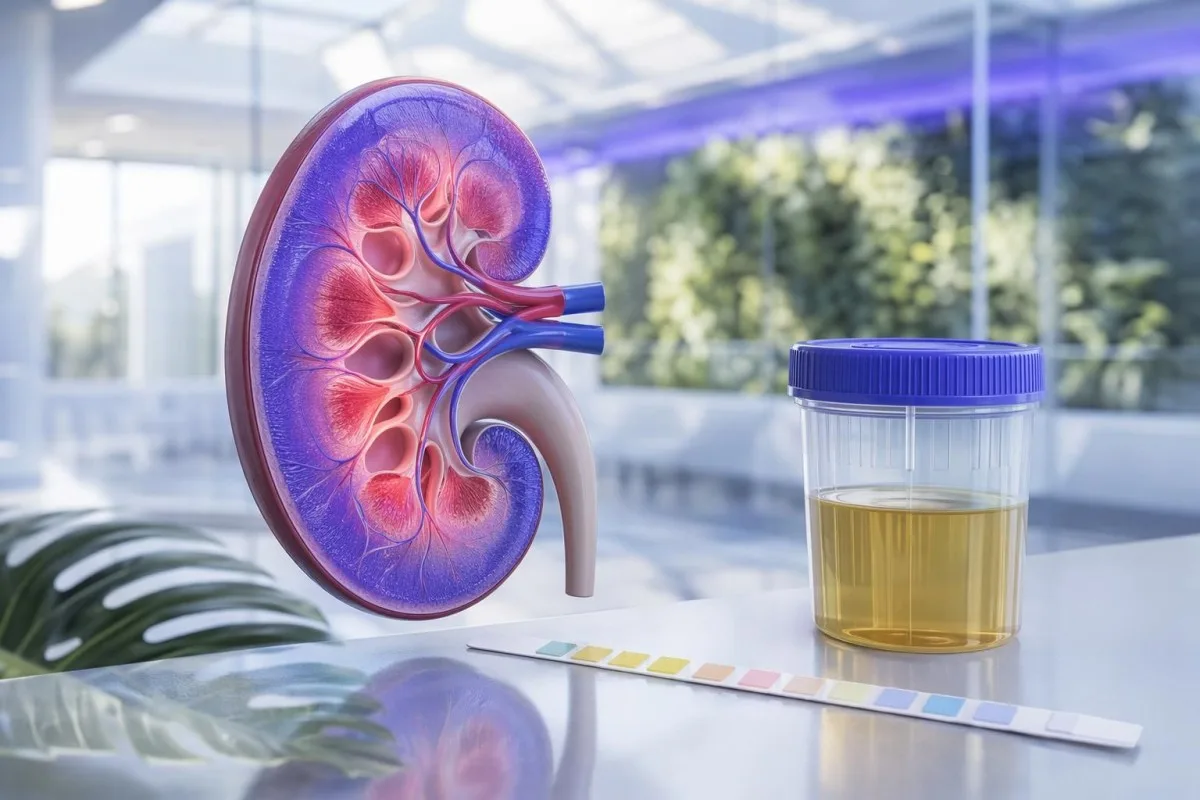
요검사에서 미량 또는 1+ 단백뇨는 흔히 일시적이지만, 지속적인 단백뇨는 소변 ACR(알부민-크레아티닌 비율)을 확인해야 합니다. 2+ 또는 3+ 단백, 부종, 고혈압, 소변 내 혈뇨, 또는 임신 변화는 더 빠르게 처리해야 합니다.


- 미량 단백 소변 딥스틱에서 흔히 탈수, 운동, 발열 또는 농축뇨를 반영하며, 보통 첫 소변(기상 후 첫 소변) 검체로 반복 확인합니다.
- 1+ 단백질 많은 딥스틱에서 대략 30 mg/dL에 해당하지만, 농도와 요 비중에 따라 실제보다 더 크거나 작게 보일 수 있습니다.
- 2+ 단백 흔히 대략 100 mg/dL에 해당하며, 특히 지속된다면 보통 소변 알부민-크레아티닌 비율로 확인해야 합니다.
- 단백질 3+ 흔히 대략 300 mg/dL에 해당하며, 특히 부종, 고혈압, 낮은 eGFR, 또는 혈뇨가 동반되면 시의적절한 의학적 평가가 필요합니다.
- 소변 ACR 30 mg/g 미만 또는 3 mg/mmol 미만은 일반적으로 정상 또는 경미하게 증가한 알부민 배출로 간주됩니다.
- 중등도로 증가한 ACR 30-300 mg/g 또는 3-30 mg/mmol이며, 당뇨 또는 고혈압에서 신장 손상의 첫 측정 가능한 징후일 수 있습니다.
- 중증으로 증가한 ACR 300 mg/g 초과 또는 30 mg/mmol 초과이며, 보통 단순한 안심이 아니라 신장 중심의 평가가 필요합니다.
- 임신 중 단백뇨 임신 20주 이후 혈압이 140/90 mmHg 이상이면 자간전증을 시사할 수 있으므로 정기 진료를 기다리면 안 됩니다.
- 응급 증상 얼굴이나 다리의 새로운 부종, 숨가쁨, 심한 두통, 시각 증상, 매우 높은 혈압, 소변량 감소, 콜라색 소변이 포함됩니다.
소변에서 단백질이 있다는 것은 보통 무엇을 의미하나요
소변의 단백질 소변 검사 스트립(딥스틱)이나 검사실에서 대부분 혈류에 그대로 남아 있어야 할 단백질이 검출되었다는 뜻입니다. 미량 또는 1+는 일시적일 수 있지만, 2+ 또는 3+는 더 우려되며, 어떤 결과든 지속되면 보통 소변 알부민-크레아티닌 비율(통상 ACR.
2026년 6월 22일 기준으로, 제 일반적인 접근은 간단합니다. 더 깨끗한 조건에서 경미한 결과를 다시 확인하고, 지속되는 것은 수치화하며, 증상이나 임신이 관련되면 더 빠르게 움직입니다. Kantesti는 AI 혈액검사 결과 해석 플랫폼 가 칸테스티 LTD 를 구축해 소변 소견을 eGFR, 크레아티닌, 알부민, 포도당, HbA1c, 혈압 패턴과 연결하는 데 도움이 됩니다.
딥스틱은 전체 신장 위험을 측정하지 않습니다. 주로 알부민을 검출하며, 더 작은 단백질, 경쇄(light chains), 또는 희석된 저등급 알부민 손실은 놓칠 수 있습니다. 우리의 소변검사 가이드 는 양성 스트립과 정량 소변 결과가 때때로 일치하지 않는 이유를 설명합니다.
제 클리닉에서는, 더운 날 18km 훈련 후 미량 단백뇨가 나온 29세 러너와, 당뇨가 있고 발목 부종이 있으며 eGFR 52 mL/min/1.73 m²이고 단백뇨가 2+인 63세 환자는 완전히 다른 환자입니다. Thomas Klein, MD는 위험이 스트립의 한 칸이 아니라 ‘군집’에 있기 때문에 이 두 패턴을 매우 다르게 해석합니다.
요검사 결과에서 미량, 1+, 2+ 및 3+ 단백
딥스틱 단백질 수치는 정확한 일일 단백 손실이 아니라 대략적인 농도 구간입니다. 많은 스트립에서 미량은 약 10-20 mg/dL, 1+ 약 30 mg/dL, 2+ 약 100 mg/dL, 3+ 약 300 mg/dL로 읽히지만, 제조사와 소변 농도에 따라 의미가 달라집니다.
A 미량 단백뇨 가 매우 농축된 소변에서 나온 결과는, 소변 비중이 1.030에서 1.015로 돌아오면 사라질 수 있습니다. 1+ 단백질 탈수된 소변에서의 미량 단백뇨보다, 묽은 소변에서의 결과가 더 걱정됩니다. 희석은 단백질이 검출되기 더 어렵게 만들기 때문입니다.
A 2+ 단백 결과가 자동으로 신부전을 의미하는 것은 아니지만, 수개월 동안 무시해서는 안 됩니다. 환자들이 검사 포털에서 기호, 별, 색 블록을 보면, 저는 종종 그들을 이상 결과 읽는 방법에 대한 안내서로 안내합니다. 왜냐하면 표기는 무엇이 일어났는지 알려주지, 왜 그런지는 알려주지 않기 때문입니다.
A 단백질 3+ 결과는 부종, 고혈압, 저혈청 알부민, eGFR 감소, 소변 내 혈액을 확인할 만큼 충분히 높은 농도를 나타내는 경우가 많습니다. 신증후군 범위의 단백뇨에서는 총 단백질 배설이 보통 하루 3.5 g을 초과하며, 이는 소변 스트립으로는 정확히 정량할 수 있는 수준을 훨씬 넘어섭니다.
소변 ACR로 다시 검사해야 하는 시점
소변 스트립에서 단백질이 지속되거나 1+ 이상으로 나타나거나, 당뇨, 고혈압, eGFR 감소, 임신 위험 또는 부종이 있는 사람에서 발생하는 경우에는 소변 ACR이 선호되는 반복 검사입니다. 첫 소변 ACR은 수분 상태와 활동으로 인한 위양성 변동을 줄여줍니다.
KDIGO 2024는 알부민뇨를 A1(30 mg/g 미만), A2(30-300 mg/g), A3(300 mg/g 초과)로 분류하며, mmol/mmol 환산치는 각각 3 미만, 3-30, 30 초과입니다. 이 분류가 바로 우리가 소변 ACR 설명 소변 스트립 색만이 아니라 위험 범주에 초점을 맞추는 이유입니다.
증상이 없는 미량 또는 1+ 단백질의 경우, 탈수, 발열, 운동이 있었을 가능성이 있었다면 보통 1-2주 내에 깨끗한 채취(first-morning) 첫 소변 샘플을 한 번 더 반복합니다. 약 3개월 동안 3개 샘플 중 2개에서 단백질이 나타나면 지속성 단백뇨 라고 말할 수 있습니다.
Kantesti AI는 ACR을 혈청 크레아티닌, eGFR, HbA1c, CRP, 알부민, 그리고 약물 병력과 함께 해석합니다. 이는 이러한 세부 정보 없이 알부민뇨를 과대평가하거나 과소평가하기가 쉽기 때문입니다. 여기의 근거는 완벽하게 정리되어 있지 않습니다. 건강한 22세에서 1+ 단백질만 있는 경우 가장 빠른 경로가 무엇인지 임상의들 사이에 의견 차이가 있을 수는 있지만, 보통 300 mg/g을 초과하는 지속성 ACR에 대해서는 의견이 갈리지는 않습니다.
소변 단백을 높일 수 있는 일시적 원인
일시적인 단백뇨는 격렬한 운동, 발열, 탈수, 정서적 스트레스, 한랭 노출 또는 최근 감염 이후에 나타날 수 있습니다. 이러한 원인은 유발 요인이 가라앉으면 대개 호전되므로, 시기와 반복 채뇨 검사가 중요합니다.
운동으로 인한 단백뇨는 대개 짧게 지속되며 24-48시간 내에 사라지는 경우가 많습니다. 저는 장거리 달리기, CrossFit 세션, 군 체력검사 후에 특히 요 비중이 1.025보다 높을 때 1+까지의 단백뇨(미량~1+)를 본 적이 있습니다; 우리의 은 는 이러한 양상의 혈액검사 측면을 다룹니다.
발열은 며칠 동안 사구체의 투과성을 증가시킬 수 있으며, 호흡기 또는 요로 질환은 증상이 호전된 뒤에도 소변 딥스틱에서 경미한 단백뇨를 남길 수 있습니다. 실무적으로는 혈뇨, 옆구리 통증, 소변량 감소 같은 경고 신호가 없다면 발열이 최고조일 때 소변을 반복 검사하지 않는 것이 핵심입니다.
기립성 단백뇨는 다소 특수하지만 실제로 관찰되는 소견이며, 특히 청소년과 젊은 성인에서 그렇습니다. 단백뇨는 하루 중 후반에 나타나지만 첫 소변(기상 직후 소변)에서는 나타나지 않으며, 하루 총 단백뇨는 보통 1 g/일 미만입니다; 이 구분은 불필요한 영상검사를 걱정하는 상당수 가족을 놀라울 정도로 덜어줍니다.
의사들이 먼저 확인하는 신장 원인
소변에서의 지속적인 단백뇨는 사구체 신장질환, 당뇨병성 신장질환, 고혈압성 신장 손상, 세뇨관간질성 질환, 또는 약물 관련 손상에서 비롯될 수 있습니다. ACR, eGFR, 소변 혈뇨, 혈압, 혈청 알부민의 조합이 보통 방향을 제시합니다.
사구체 원인은 여과 장벽이 원래보다 더 “새는” 상태가 되기 때문에 알부민이 주로 나타나는 단백뇨를 흔히 유발합니다. 단백뇨가 혈뇨와 함께 나타나고 적혈구 원주가 보이면, 단순 반복 딥스틱보다 더 시급한 평가가 필요해집니다.
크레아티닌은 신장 예비력이 더 큰 사람들에서는 초기에 정상으로 유지될 수 있습니다. 그래서 우리의 크레아티닌이 상승하기 전의 신장 변화 는 단일 크레아티닌 수치보다 알부민뇨, 시스타틴 C, 그리고 추세를 강조합니다.
NICE CKD(만성콩팥병) 지침은 많은 성인 신장 위험 경로에서 단백뇨를 검출하고 모니터링할 때 시약 스트립 단백뇨만 단독으로 사용하기보다 ACR을 사용할 것을 권고합니다(NICE, 2021). 쉽게 말해, 크레아티닌이 정상처럼 보이더라도 ACR이 반복적으로 비정상이라면 여전히 의미 있는 신장 신호일 수 있습니다.
당뇨, 고혈압 및 대사 위험 양상
당뇨와 고혈압은 소변에서 지속적인 알부민이 나타나는 가장 흔한 만성 원인 두 가지입니다. 증상이 나타나기 전에 ACR이 비정상이 될 수 있으며, eGFR이 아직 60 mL/min/1.73 m²보다 높은 동안에도 흔히 그렇습니다.
당뇨에서는 ACR 30-300 mg/g이 종종 가장 이른 측정 가능한 신장 경고 구간입니다. 저는 HbA1c가 7.0%보다 높거나, 수축기 혈압이 130-140 mmHg를 넘거나, 중성지방이 높을 때 이를 더 심각하게 받아들입니다; 우리의 당뇨병 혈액검사 가이드 는 신장 위험과 함께 움직이는 혈액 지표들을 설명합니다.
고혈압 관련 단백뇨는 보통 처음에는 비교적 경미하지만, 혈압이 반복해서 140/90 mmHg를 넘고 ACR이 30 mg/g 이상으로 계속되면 양상이 우려스러워집니다. KDIGO 2024는 같은 eGFR이라도 ACR 10 mg/g과 600 mg/g에서 위험이 매우 다를 수 있기 때문에 eGFR과 알부민뇨 범주를 모두 사용합니다(KDIGO CKD Work Group, 2024).
칸테스티는 AI 기반 혈액검사 분석 도구 127+ 국가에 있는 사람들이 사용하며, 우리의 신경망은 포도당, HbA1c, 크레아티닌, 칼륨, 알부민, 지질 결과가 신장 위험군을 시사할 때 이를 알아차리도록 훈련되어 있습니다. 이는 신장질환을 진단하지는 않지만, 환자들이 더 명확한 질문을 담당의에게 가져가도록 돕습니다.
요로감염(UTI), 혈뇨, 검체 오염
요로감염, 육안 또는 현미경적 혈뇨, 월경 오염, 정액, 또는 제대로 채취되지 않은 검체는 소변 단백이 비정상적으로 보이게 만들 수 있습니다. 방해 요인이 해소된 뒤 단백뇨를 다시 확인해야 합니다.
요로감염(UTIs)은 흔히 같은 검체에 백혈구, 아질산염, 혈뇨, 그리고 일부 단백을 추가합니다. 아질산염이나 백혈구 에스터레이스가 양성이면, 저는 단백 결과를 다르게 해석하며 대개 치료 후 1-2주가 지난 뒤에 다시 반복합니다; 우리의 소변 배양검사 가이드는 는 집락 수와 혼합 성장에 대해 설명합니다.
혈뇨는 헤모글로빈과 혈장 단백이 함께 검체에 들어오기 때문에 단백뇨 패드(딥스틱 반응)를 높일 수 있습니다. 격렬한 운동 후 단백+혈뇨가 보이는 딥스틱 소견은, 고혈압, 크레아티닌 상승, 또는 적혈구 원주가 동반된 단백+혈뇨보다 대개 덜 경고적입니다.
채뇨(소변) 채취 방법은 환자들이 들은 것보다 더 중요하다. 중간뇨(clean-catch) 검체는 위양성을 줄이고, 첫 아침 소변은 낮 동안의 단백뇨 변동으로 인해 환자와 임상의 모두를 오도할 수 있는 상황을 피하게 해준다.
단백뇨와 함께 나타나며 더 빠른 진료가 필요한 증상
단백뇨가 부종, 호흡곤란, 매우 높은 혈압, 소변량 감소, 콜라색 소변, 흉부 불편감, 심한 두통, 혼란, 또는 새로운 약화와 함께 나타나면 더 빠른 치료가 필요하다. 이런 증상은 그 결과가 더 광범위한 신장, 혈관, 또는 전신 문제의 일부일 수 있음을 시사한다.
2+ 또는 3+ 단백뇨와 함께 새로 생긴 발목, 눈꺼풀, 또는 얼굴 부종은 알부민 손실이 혈청 알부민을 약 3.0 g/dL 이하로 낮출 수 있으므로 제때(신속히) 재평가를 받아야 한다. 우리의 안내서: 부종과 검사실 단서 는 알부민, 신장 지표, 간 검사, 심장 지표를 함께 확인할 수 있는 이유를 설명한다.
소변에 단백이 있으면서 혈압이 180/120 mmHg를 넘는 경우는, 그 사람이 이상하게도 몸이 괜찮게 느끼더라도 당일(같은 날) 의료 상황이다. 이유는 단백 자체만이 아니다. 급성 신장 부담, 혈관 손상, 뇌졸중 위험, 또는 임신 관련 고혈압 가능성 때문이다.
거품뇨만으로는 신뢰하기 어렵다. 나는 극적으로 거품이 많은데 ACR이 정상인 환자들을 만났고, 거품이 전혀 없다고 느꼈지만 ACR이 1000 mg/g를 넘는 환자들도 만났다. 증상은 도움이 되지만, 정량 검사가 논쟁을 정리해준다.
임신 중의 소변 단백
임신 20주 이후의 단백뇨는 혈압이 140/90 mmHg 이상일 때 더 우려된다. 이런 상황에서는 임상의들이 자간전증을 떠올리고, 소변 스트립만 의존하기보다는 보통 ACR, PCR 또는 24시간 소변으로 단백을 확인한다.
ACOG Practice Bulletin No. 222는 자간전증에서 단백뇨를 24시간 300 mg 이상, 단백-크레아티닌 비율 0.3 이상, 또는 정량적 방법을 사용할 수 없을 때만 소변 스트립 2+로 정의한다(ACOG, 2020). 혈압 기준치와 가정 측정값에 대해서는 우리의 임신 혈압 가이드 가 유용한 동반 자료입니다.
심한 두통, 시각 증상, 우상복부 통증, 호흡곤란, 갑작스러운 부종, 태아 움직임 감소, 또는 혈압이 160/110 mmHg 이상인 경우에는 당일 평가가 타당하다. 혈소판이 100,000/µL 미만, 크레아티닌이 1.1 mg/dL 초과, 또는 간 효소가 상한의 2배 초과이면 우려의 무게가 더해진다.
내 경험상, 위험한 임신 양상은 24주에서의 단 한 번의 외로운(고립된) 미량 단백 결과가 아니다. 양상은 한 덩어리로 나타난다: 혈압 상승, 새로운 증상, 단백뇨 악화, 혈소판 감소, 크레아티닌 상승, 또는 태아 성장에 대한 우려.
소아, 운동선수 및 기립성 단백뇨
소아, 청소년, 지구력 운동선수는 흔히 양성 또는 일시적 단백뇨를 보이지만, 지속 여부는 여전히 중요하다. 기립성 단백뇨 또는 운동 관련 단백뇨가 의심될 때는 첫 아침 소변이 결정적인 검체다.
기립성 단백뇨는 고령자에서는 흔치 않지만, 청소년에서 낮 시간대의 단백뇨를 설명할 수 있다. 혈압과 소변 현미경 검사에서 이상이 없다는 전제하에, 첫 아침 소변의 단백-크레아티닌 비율이 약 0.2 mg/mg 미만이면 많은 소아 경로에서 대체로 안심할 만하다.
운동선수는 강도 높은 세션 후 일시적인 단백, 케톤, 높은 요비중, 그리고 운동 관련 크레아티닌 또는 CK 변화가 나타날 수 있다. 이 양상은 우리의 마라톤 러너 검사실 가이드, 와 겹치는데, 여기서는 수분, 근육 스트레스, 나트륨, 그리고 신장 지표가 모두 맥락을 필요로 한다.
나는 보통 운동선수에게 무거운 훈련 없이 48시간 후 소변을 다시 검사해보라고 한다. 휴식을 해도 단백이 지속되거나, 혈뇨, 고혈압, 또는 eGFR 저하가 있으면 나는 이를 훈련으로 인한 일시적 이상(훈련 아티팩트)으로 더 이상 부르지 않는다.
전체 그림을 완성하는 혈액검사
단백뇨는 크레아티닌, eGFR, 요소 또는 BUN, 전해질, 혈청 알부민, HbA1c, 지질, CBC, CRP 같은 혈액 검사와 함께 해석한다. 때로는 자가면역 지표도 함께 본다. 소변만으로는 거의 전부의 이야기를 말해주지 못한다.
신기능 패널은 보통 국가와 검사실에 따라 크레아티닌, eGFR, 요소 또는 BUN, 나트륨, 칼륨, 중탄산염, 칼슘, 인, 알부민을 포함한다. 우리의 신장 패널 가이드 는 칼륨과 중탄산염이 신장 결과의 긴급도를 어떻게 바꿀 수 있는지 보여준다.
혈청 알부민이 낮고 소변 단백이 높으면, 몸이 간이 보충할 수 있는 속도보다 더 빠르게 단백을 잃고 있을 수 있음을 시사합니다. 알부민이 약 3.0 g/dL 미만으로 떨어지고 소변 단백이 많은 경우, 임상에서는 부종, LDL 콜레스테롤 상승, 혈액응고 위험 증가 같은 신증후군 특징을 찾습니다.
칸테스티는 AI 바이오마커 해석 플랫폼 소변 관련 우려를 우리 15,000+ 마커 가이드는. Thomas Klein, MD, 그리고 우리 의료팀은 여전히 AI의 출력을 의사결정 보조로만 취급하며, 환자를 직접 진찰할 수 있는 임상의의 대체물이 아닙니다.
ACR, PCR, eGFR 및 24시간 소변: 어떻게 다른가요
ACR은 알부민 손실을 측정하고, PCR은 총 단백 손실을 추정하며, eGFR은 여과 능력을 추정하고, 24시간 소변은 하루 배출량을 측정합니다. 이 검사들은 서로 다른 질문에 답하므로, 한 가지 결과가 정상이라고 해서 다른 이상 소견을 항상 상쇄하는 것은 아닙니다.
소변 ACR은 특히 당뇨와 고혈압에서 초기 알부민 누출을 확인하는 데 가장 좋습니다. 소변 PCR은 알부민이 아닌 단백이 존재할 수 있거나 총 단백 부담이 중요할 때 유용합니다; 우리 eGFR 연령 가이드를 는 여과 추정치가 나이에 따라 어떻게 변하는지 설명합니다.
24시간 소변 채취는 번거롭지만 때로는 혼란스러운 단회(spot) 결과를 명확히 해줍니다. 정상 총 소변 단백은 보통 150 mg/day 미만인 반면, 신증후군 범위의 단백뇨는 대개 3.5 g/day를 초과합니다.
요소와 크레아티닌의 패턴은 또 다른 층을 더합니다. 근거 기반 우리 연구 검사실 오차(검체 아티팩트)도 존중할 필요가 있습니다. 매주 사람들을 속이기 때문입니다. EDTA 의존성 혈소판 응집은 잘못 낮은 결과를 만들 수 있으며, 말초도말검사(peripheral smear)나 구연산 튜브에서의 재검(반복 검사)으로 종종 수수께끼가 풀립니다. 더 넓은 패널에서도 신장 질환, 간 질환, 또는 단백질 이상이 시사된다면, 독자들은 종종 는 탈수, 고단백 섭취, 위장관의 체액 손실, 또는 신장 관류가 그림을 왜곡하고 있을 수 있을 때 유용합니다.
반복 소변검사를 위해 준비하는 방법
반복 소변 단백 검사에서는 첫 아침의 깨끗한 채취(first-morning clean-catch) 샘플을 사용하고, 24-48시간 동안 격렬한 운동은 피하며, 평소처럼 수분을 섭취하고, 가능하면 활동성 발열이나 월경 오염이 있는 동안에는 검사를 피하세요. 처방된 약은 임상의가 중단하라고 말하지 않는 한 중단하지 마세요.
정상적인 수분 상태는 옅은 노란색 소변을 의미하며, 억지로 과수분을 섭취하는 것은 아닙니다. 검사 직전에 2-3리터를 마시면 알부민이 희석되어 거짓 안심을 만들 수 있는 반면, 탈수는 단백을 농축시켜 경계선 딥스틱 결과를 trace 또는 1+로 밀어 올릴 수 있습니다.
반복 방문 시 이전 소변검사(urinalysis), ACR, 크레아티닌, eGFR, 혈압 측정값, 그리고 약물 목록을 가져가세요. 우리 가이드 on 이상 혈액검사 결과 재검 너무 이른 시점에 재검사하거나 다른 조건에서 검사하면 명확함이 아니라 잡음이 생기는 이유를 설명합니다.
약물 맥락이 중요합니다. NSAIDs, 리튬, 일부 항생제, 특정 항바이러스제, 면역 치료, 조영제 노출은 신장 지표에 영향을 줄 수 있는 반면, ACE 억제제와 ARB는 수 주에서 수 개월에 걸쳐 알부민뇨를 감소시킬 수 있습니다.
Kantesti가 단백뇨 양상을 해석하는 데 어떻게 도움이 되나요
Kantesti는 소변 단백질 발견을 중심으로 혈액검사 맥락을 정리해 도움을 줍니다: eGFR, 크레아티닌, 알부민, 포도당, HbA1c, 지질, 전해질, 염증 표지자, 그리고 이전 추이. 가장 안전한 해석은 패턴 기반이며, 소변검사 스트립(dipstick) 기반이 아닙니다.
Kantesti의 신경망은 단백뇨(단백뇨증) 우려가 단독인지, 더 광범위한 위험 신호의 일부인지 확인하며, 우리의 방법은 다음에 설명되어 있습니다. 기술 가이드. eGFR 96, ACR 8 mg/g, 정상 혈압, 최근 발열이 있는 1+ 소변검사 스트립은 ACR 220 mg/g 및 HbA1c 8.4%와 함께 있는 1+ 단백뇨와는 보통 다르게 나타납니다.
우리의 임상 거버넌스는 의학적 해석이 단순한 패턴 인식 이상이기 때문에 중요합니다. Kantesti AI는 당사의 의학적 검증, .
핵심: 경미하고 설명 가능한 단백질 반복; ACR로 지속적인 단백질 정량화; 2+ 또는 3+ 단백질에 증상, 임신, 고혈압, 혈뇨 또는 eGFR 감소가 있는 경우 신속하게 진행하십시오. 당사의 임상의 의료 자문 위원회 .
자주 묻는 질문
소변에 단백질이 소량 검출되는 것은 심각한가요?
소변에서 단백뇨가 미량으로 나타나는 것은 탈수, 발열, 격렬한 운동 또는 농축뇨 시 한 번 나타난 경우에는 대개 심각하지 않은 경우가 많습니다. 많은 소변 검사 스트립은 약 10-20 mg/dL 수준의 미량 단백을 검출하며, 첫 아침 소변을 다시 검사하면 사라질 수 있습니다. 미량 단백뇨는 2회 이상 검사에서 지속되거나, 고혈압과 함께 나타나거나, 소변에 혈뇨가 동반되거나, 부종이 있거나, eGFR이 감소한 경우 더 의미가 커집니다.
소변에서 단백질 1+는 무엇을 의미하나요?
소변에서 단백뇨가 보통 1+로 나타난다는 것은 딥스틱이 대략 30 mg/dL의 단백질을 검출했음을 의미하지만, 정확한 수치는 검사 스트립과 소변 농도에 따라 달라질 수 있습니다. 한 번의 1+ 결과는 일시적일 수 있으나, 지속적인 1+ 단백뇨는 대개 소변 ACR로 확인해야 합니다. ACR이 30-300 mg/g(또는 3-30 mg/mmol)이라면 임상의들은 이를 중등도로 증가된 알부민뇨라고 부릅니다.
소변에서 단백뇨가 2+ 또는 3+로 나타나면 언제 걱정해야 하나요?
소변에서 2+ 또는 3+ 단백뇨는 미량 또는 1+보다 더 우려됩니다. 이는 많은 소변 딥스틱이 2+를 약 100 mg/dL, 3+를 약 300 mg/dL로 추정하기 때문입니다. 2+ 또는 3+ 단백뇨가 부종, 소변 내 혈뇨, 고혈압, 호흡곤란, 소변량 감소, 임신, 또는 낮은 eGFR과 함께 나타나면 더 빠른 진료를 받으셔야 합니다. 소변 ACR, 소변 PCR, 혈압 확인, 크레아티닌, eGFR, 혈청 알부민은 위험도를 명확히 하기 위해 흔히 사용됩니다.
소변 ACR 수치가 비정상인 기준은 무엇인가요?
소변 ACR이 30 mg/g 미만 또는 3 mg/mmol 미만이면 일반적으로 정상에서 경미하게 증가한 것으로 간주됩니다. ACR이 30-300 mg/g 또는 3-30 mg/mmol이면 중등도로 증가한 것이며, 이는 초기 신장 위험 표지자일 수 있습니다. ACR이 300 mg/g 초과 또는 30 mg/mmol 초과이면 심하게 증가한 것이며, 확인되면 보통 신장 중심의 재평가가 필요합니다.
탈수는 소변에 단백질이 나타나게 할 수 있나요?
예, 탈수는 소변이 더 농축되어 있기 때문에 소변에서 단백질이 더 높게 보이게 만들 수 있습니다. 약 1.025 이상의 요비중은 흔히 검체가 농축되었음을 의미하며, 미량 또는 1+ 단백뇨 결과는 정상적인 수분 보충 후 사라질 수 있습니다. 억지로 과도하게 수분을 섭취하는 것은 좋은 해결책이 아닙니다. 검체를 희석시켜 실제 알부민 누출을 숨길 수 있기 때문입니다.
임신 중 소변에서 단백질이 발견된다는 것은 무엇을 의미하나요?
임신 중 소변 내 단백질은 혈압이 140/90mmHg 이상인 경우 20주 이후에 가장 우려됩니다. 자간전증 단백뇨는 흔히 24시간 소변에서 300mg 이상, 단백-크레아티닌 비율 0.3 이상, 또는 정량 검사가 불가능할 때 딥스틱 2+로 정의됩니다. 심한 두통, 시각 증상, 우상복부 통증, 호흡곤란, 갑작스러운 부종, 태아 움직임 감소, 또는 혈압이 160/110mmHg 이상인 경우 당일 평가가 필요합니다.
요로감염(UTI)이 소변에 단백질을 유발할 수 있나요?
요로감염(UTI)은 감염, 요의 백혈구, 그리고 혈액이 딥스틱 결과에 영향을 줄 수 있기 때문에 소변에서 단백질을 유발할 수 있습니다. 단백질 검사는 보통 UTI 증상이 호전되거나 치료가 끝난 후 1~2주 후에 반복해야 하며, 특히 원래 검사에서도 아질산염(nitrites), 백혈구 에스터레이스(leukocyte esterase), 또는 혈액이 함께 나타났던 경우에는 더욱 그렇습니다. 감염이 해소된 뒤에도 지속되는 단백질은 소변 ACR 또는 PCR로 확인해야 합니다.
소변에서 단백질이 검출되면 단백질 섭취를 줄여야 하나요?
저단백 식단을 임의로 시작하지 마십시오. 원인이 명확해질 때까지 대부분의 사람들은 균형 잡힌 식단을 유지해야 하며, 신장 질환이 확인되면 임상의나 신장 영양사가 신장 기능과 전반적인 건강 상태에 맞춰 단백질과 염분 섭취량을 조절할 수 있습니다.
약물이 소변의 단백질을 유발할 수 있나요?
네. 이부프로펜이나 나프록센 같은 항염증 진통제는 때때로 신장으로 가는 혈류를 악화시켜 단백질이 누출되는 데 기여할 수 있으며, 특히 탈수 상태이거나 기존에 신장 질환이 있는 경우에 그렇습니다. 처방된 약을 혼자서 중단하지 말고, 임상의나 약사에게 검토를 요청하세요.
오늘 AI 기반 혈액검사 분석 받기
즉시 정확한 검사 분석을 위해 Kantesti를 신뢰하는 전 세계 200만 명 이상의 사용자와 함께하세요. 혈액검사 결과를 업로드하고 몇 초 만에 15,000+ 바이오마커에 대한 포괄적인 해석을 받아보세요.
📚 참고된 연구 출판물
📖 외부 의학 참고문헌
KDIGO CKD 작업반 (2024). KDIGO 2024 만성 신장질환 평가 및 관리를 위한 임상진료지침. Kidney International.
영국의 National Institute for Health and Care Excellence (2021). 만성 신장질환: 평가 및 관리. NICE 가이드라인 NG203.
⚕️ 의료 면책 조항
이 글은 교육 목적만을 위한 것이며 의학적 조언을 구성하지 않습니다. 진단 및 치료 결정에는 항상 자격을 갖춘 의료 전문가와 상담하세요.
E-E-A-T 신뢰 신호
경험
의사가 주도하는 검사 해석 워크플로 임상 검토.
전문적 지식
임상 맥락에서 바이오마커가 어떻게 거동하는지에 대한 검사실 의학 중심.
권위
Dr. Thomas Klein이 작성했으며 Dr. Sarah Mitchell과 Prof. Dr. Hans Weber가 검토했습니다.
신뢰성
경고를 줄이기 위한 명확한 후속 경로가 포함된 근거 기반 해석.