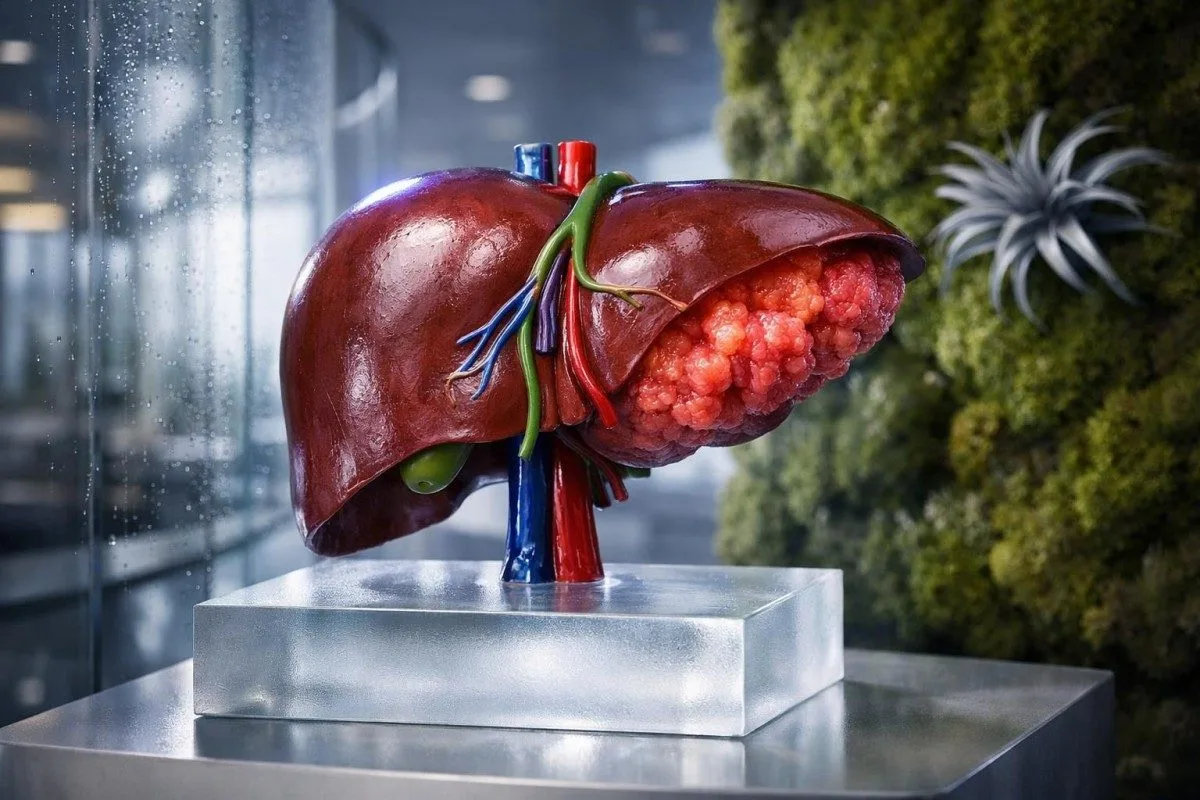
A high ALT result usually means liver-cell irritation, not automatic liver failure. The real question is whether you need a calm repeat test, a medication review, or a proper liver workup.


- Adult range in many labs is 7-35 U/L for women and 7-45 U/L for men, but liver specialists often use lower healthy cutoffs.
- Healthy cutoffs favored by many hepatology guidelines are about 19-25 U/L for women and 29-33 U/L for men.
- Mild elevation means roughly 1-2× the upper limit of normal and is commonly linked to fatty liver, alcohol, medicines, or hard exercise.
- Urgent threshold starts around ALT >200 U/L for prompt review; >500-1000 U/L can signal acute toxic, viral, or ischemic injury.
- Pattern matters more than ALT alone; high bilirubin, high INR, low albumin, or low platelets make the result more concerning.
- Repeat timing for a mild isolated ALT is often 2-4 weeks, ideally after 72 hours without hard exercise and 5-7 days without alcohol.
- Persistent elevation for more than 6 months usually needs ultrasound, hepatitis testing, and fibrosis assessment.
- ALT is not a liver function test; it reflects cell injury, while bilirubin, albumin, and INR reflect how well the liver is still working.
ALT normal range chart for adults, teens, and real-world labs
ALT normal range in many adult labs is about 7-35 U/L for women and 7-45 U/L for men, although some liver specialists use lower healthy upper limits of 19-25 U/L and 29-33 U/L. A single ALT of 46 U/L is usually not an emergency; an ALT above 200 U/L needs faster follow-up, and an ALT above 1000 U/L can signal acute liver injury.
Most labs still print a broad upper limit, sometimes 40 to 56 U/L, because older reference populations included people with silent steatotic liver disease and regular alcohol use. The healthier upper limits promoted by hepatology groups are lower—roughly 29 to 33 U/L for men and 19 to 25 U/L for women—which is why a barely abnormal result can still matter. If you want a quick second read, Kantesti AI compares ALT with sex, trend, and the rest of the chemistry panel rather than the red highlight alone.
As of March 29, 2026, I still see patients reassured too quickly by a lab sheet that says 55 U/L is normal. Across more than 2M uploaded blood tests on our platform, isolated ALT in the 40 to 70 U/L range with normal bilirubin is common and usually not an emergency, but it often tracks with weight gain, insulin resistance, or recent alcohol exposure. Our ALT and AST guide helps readers place ALT inside the larger CMP.
One more nuance: teenagers can run a little higher during growth, and pregnancy does not make a true ALT elevation harmless. ALT above the local upper limit during pregnancy—especially with headache, swelling, high blood pressure, or right-upper-quadrant pain—needs urgent obstetric review because preeclampsia and HELLP can move fast.
Why one lab prints 55 U/L as normal and another does not
Some European labs use a lower reference range, which is one reason patients get confused when they change clinics. U/L and IU/L are effectively equivalent on most reports, so the units are usually not the issue; the reference population is.
What the ALT blood test actually measures
The ALT blood test measures alanine aminotransferase, an enzyme stored mainly inside liver cells. ALT rises when hepatocytes leak enzyme into the bloodstream, so it is best understood as a marker of cell injury, not a direct measure of liver performance.
ALT sits mostly in the cytosol of hepatocytes, so it is more liver-specific than AST. That is why the biomarkers guide places ALT under hepatocellular injury rather than true liver function. A raised ALT tells me cells are leaking; it does not tell me, by itself, how much permanent damage exists.
Here is the distinction patients miss: ALT is not the same thing as liver performance. Albumin, bilirubin, and INR tell me more about whether the liver is still doing its job, while ALT tells me something has annoyed or injured liver cells recently. Kantesti AI reads that pattern the same way clinicians do, and our reading lab reports explainer walks through it in plain language.
A technical wrinkle matters too. ALT has a serum half-life of roughly 47 hours, while AST is closer to 17 hours, so timing after an illness, medication change, or binge weekend can shift the interpretation. Hemolysis usually distorts AST more than ALT, and severe vitamin B6 deficiency can make aminotransferases look lower than the clinical picture would suggest.
How high ALT levels are graded in real clinical practice
High ALT is usually graded by how many times it exceeds the upper limit of normal. 1-2× ULN is mild, 2-5× ULN is moderate, more than 5× ULN is significant, and ALT above 1000 U/L often points to acute toxic, ischemic, or viral injury.
A mild bump—say ALT 58 U/L when the upper limit is 35 U/L—rarely behaves like acute liver failure. The combinations that make me move faster are ALT above 200 U/L, bilirubin above 2 mg/dL, INR above 1.5, or symptoms from our symptom decoder such as dark urine, pale stools, or confusion.
When I, Thomas Klein, review ALT in the 100 to 300 U/L range, the first question is timing, not drama. Did the patient start amoxicillin-clavulanate, increase acetaminophen, finish a marathon, or have a viral illness last week? The number alone rarely separates a reversible blip from a serious process.
Counterintuitively, a falling ALT can be bad news if bilirubin and INR are rising at the same time. That pattern can mean worsening liver failure with less viable tissue left to leak enzyme, which is why no hepatologist interprets ALT in isolation.
Common causes of high ALT levels doctors see most often
The most common causes of high ALT levels are metabolic dysfunction-associated steatotic liver disease (MASLD), alcohol exposure, medicines, supplements, viral hepatitis, and less commonly autoimmune or inherited disorders. In everyday clinic work, mild chronic elevations are far more often metabolic than catastrophic.
By far the most common chronic cause I see is MASLD. ALT often rises before symptoms do, and triglycerides, waist circumference, and fasting glucose usually give the game away earlier than patients expect. If your ALT is creeping up, our lipid panel guide is a useful companion. I also ask patients to compare it with HbA1c ranges because insulin resistance and ALT travel together more often than people realize.
Alcohol matters, but not always in the dramatic way people imagine. A weekend binge may nudge AST more than ALT for 24 to 72 hours, while steady daily intake can keep both mildly elevated. An AST:ALT ratio above 2 supports alcohol-associated liver injury, yet advanced fibrosis can do the same, so it is a clue—not a verdict.
There is another cluster that people do not hear about enough: viral hepatitis B or C, autoimmune hepatitis, hemochromatosis, celiac disease, and thyroid disorders can all raise ALT. Hypothyroidism is a sleeper cause in primary care, especially when fatigue, LDL, or weight gain are also present; our high TSH guide explains that overlap.
Less obvious but real diagnoses
Ferritin and transferrin saturation help when iron overload is on the table; transferrin saturation above 45% deserves a closer look. Autoimmune hepatitis often pairs high ALT with elevated IgG, and in my experience that diagnosis is missed most often in women whose symptoms are brushed off as stress.
High ALT with normal AST, bilirubin, and ALP: what it often means
An isolated mild ALT elevation usually means early steatotic liver disease, medication effect, recent exercise, or post-viral inflammation rather than liver failure. If AST, bilirubin, and ALP are normal, the situation is often lower urgency—but not automatically harmless.
Isolated ALT in the 40 to 80 U/L range with normal AST, ALP, and bilirubin is often low-acuity, but it is not noise. Early MASLD, medication effect, muscle strain, and post-viral inflammation are the usual culprits. The tricky part is that people feel fine, so they ignore it until the same number shows up for a year.
I see this pattern in runners a lot. A 52-year-old marathon patient once showed AST 89 U/L and ALT 63 U/L after a race weekend; his CK was the real headline, not the liver. If your report looks cryptic, our translated results guide helps you line up ALT with AST, CK, bilirubin, and symptoms.
Recent respiratory or gastrointestinal infections can leave ALT elevated for 2 to 8 weeks after everything else feels normal. That is one reason I prefer one well-prepared repeat test over three anxious repeats done after workouts, parties, and assorted supplements.
Medicines, supplements, alcohol, and exercise that can raise ALT
Many cases of elevated liver enzymes are triggered by exposures outside the liver itself. Common culprits include acetaminophen, antibiotics, statins, seizure medicines, herbal supplements, alcohol, and hard exercise that also raises muscle enzymes.
Medication history changes ALT interpretation immediately. Acetaminophen above 4 g per day can injure the liver, and the danger threshold drops with fasting, alcohol use, or low body weight. Statins deserve a calmer conversation: if ALT is less than 3× ULN and the patient feels well, we usually look for other causes before blaming the statin.
Supplements are messier than prescriptions because the label is not always the whole story. Green tea extract, anabolic products, high-dose vitamin A, and mixed fat-burner powders are repeat offenders in my practice. Our supplement guide is a good place to organize what you are taking before the clinic call.
And yes, exercise counts. Heavy eccentric lifting, CrossFit, boxing, or a marathon can push ALT and AST up for 3 to 7 days, especially if CK is also high. If there is genuine right-upper-quadrant pain, jaundice, or nausea on top of that, do not assume it is just the gym.
When repeat testing is enough — and how to prepare for it
A mild isolated ALT elevation can often be repeated rather than fully worked up right away. If ALT is less than 2× ULN, the rest of the panel is reassuring, and there are no symptoms, most clinicians repeat the test in 2 to 4 weeks.
If ALT is less than 2× the upper limit of normal, the rest of the panel is reassuring, and you feel well, repeating the test in 2 to 4 weeks is reasonable. If ALT is above 3× ULN, symptoms are present, or bilirubin is rising, I usually recheck sooner and widen the workup. Our lab timeline guide helps patients plan that follow-up without guessing.
Before the redraw, skip alcohol for 5 to 7 days and avoid hard workouts for at least 72 hours. Do not stop prescription medicines on your own, but bring a full list of everything you take, including powders and teas. The fasting guide explains when fasting helps and when it changes nothing, because ALT itself does not require fasting.
Persistence changes the math. ALT that stays above the upper limit for more than 6 months deserves ultrasound, hepatitis screening, and fibrosis assessment even if you feel perfectly normal. When patients upload results online, Kantesti AI is particularly useful at spotting a slow upward trend that a single visit can miss.
When you need a full liver workup instead of a simple recheck
A full liver workup is usually needed when ALT is persistently elevated, rises above about 2 to 3× ULN, or appears with abnormal bilirubin, ALP, GGT, albumin, INR, or platelets. At that point, repeating the same test without context wastes time.
A full workup usually includes AST, ALP, GGT, bilirubin, albumin, INR, CBC with platelets, hepatitis B surface antigen, hepatitis C antibody, ferritin, transferrin saturation, ANA, ASMA, IgG, and liver imaging. Dark urine or bilirubin spillover can also be cross-checked with our urobilinogen guide. The logic is simple: ALT tells me there is leakage; the rest tells me why and how dangerous.
Fibrosis risk is easy to underestimate. FIB-4 uses age, AST, ALT, and platelets; in adults under 65, a score below 1.3 suggests lower near-term risk, while a score above 2.67 raises concern for advanced fibrosis. In older adults, I pay attention even earlier because normal ALT does not rule out scarring.
Go urgently—same day, not next month—if ALT is above 500 to 1000 U/L, jaundice appears, stools turn pale, vomiting or confusion develops, or pregnancy is in the mix. Those are the cases where we think about acetaminophen toxicity, acute viral hepatitis, biliary obstruction, ischemic hepatitis, or HELLP syndrome.
Why a normal ALT does not rule out fibrosis
This is one of those areas where context matters more than the number. I regularly see older patients with steatotic liver disease, low platelets, and ultrasound evidence of fibrosis whose ALT is in the 20s or 30s, because scarred liver tissue may not leak large amounts of enzyme.
How AST, ALP, GGT, bilirubin, and platelets change the meaning
ALT becomes much more useful when it is read alongside AST, ALP, GGT, bilirubin, albumin, and platelets. A hepatocellular pattern points in one direction, a cholestatic pattern in another, and a mixed pattern often needs faster imaging or referral.
ALT by itself tells you there is hepatocellular irritation; the surrounding labs tell you from where and how serious. ALT higher than AST is common in MASLD and viral hepatitis, whereas an AST:ALT ratio above 2 points me toward alcohol-associated injury or advanced fibrosis. Kantesti AI on our AI blood test platform weighs that pattern automatically instead of treating ALT as a stand-alone alarm.
ALP and GGT change the story because they point toward bile-flow problems. If ALP is more than 1.5× ULN and GGT is also high, I start thinking cholestatic disease, gallstone obstruction, or medication-related bile injury. Low albumin from our serum proteins guide or INR prolongation makes the conversation more urgent because those are function markers, not just leak markers.
Platelets often get ignored on liver panels, and that is a mistake. A platelet count below 150 × 10^9/L, especially with splenomegaly or a high FIB-4, can hint at portal hypertension and fibrosis even when ALT is not dramatic. The platelet count guide explains why a modestly low platelet count deserves more respect in liver disease than in a routine wellness visit.
What to do next after an abnormal ALT result
The next step after an abnormal ALT depends on degree, symptoms, and pattern. Most people need one of three things: a careful repeat test, a medication-and-lifestyle review, or a broader liver workup.
Start with three questions: how high is the ALT, are there symptoms, and what do AST, bilirubin, ALP, albumin, and platelets show? That three-step sort usually tells you whether you need a calm repeat or a real workup. If you want a structured second read before your appointment, try our free blood test demo; Kantesti AI will map ALT against the rest of the panel in about a minute.
Skip the online liver-detox kits. A steady 5% to 10% weight loss over 6 to 12 months can improve MASLD and lower ALT, while crash diets can briefly make liver tests look worse. Thomas Klein, MD: I also tell patients that 2 to 3 cups of coffee a day may help liver outcomes in observational studies, but coffee is not a substitute for stopping the offending drug or addressing alcohol.
My practical script is simple: document every medicine and supplement, pause alcohol, avoid hard training, repeat the panel correctly, and book sooner care if bilirubin, INR, or symptoms move the wrong way. Our medical advisory board reviews the clinical standards behind that advice. For day-to-day interpretation, AI-powered blood test interpretation on our platform gives you trend, context, and a cleaner question list for your own doctor.
How Kantesti interprets ALT and selected publications
Kantesti AI interprets ALT by comparing sex-specific reference intervals, trend direction, medications, metabolic markers, and neighboring liver tests rather than reading one red number in isolation. That is why a borderline ALT 41 U/L with normal bilirubin is handled very differently from ALT 41 U/L with platelets of 120 × 10^9/L and albumin of 3.2 g/dL.
Because we serve users in 127+ countries, our engine normalizes for lab-specific reference ranges, units, and trend direction before assigning risk language. You can read more about the organization on our About Us page. The quality framework behind our physician-reviewed workflows is outlined on our medical validation page.
Thomas Klein, MD and colleagues use the same logic in clinic: degree of elevation, pattern, time course, and red flags. If you want the technical side of how our models interpret chemistry panels, the technology guide is the clearest starting point I can offer. In my experience, patients do best when they arrive at the appointment with trend data, a medication list, and one or two focused questions—not twenty tabs open.
For readers who like formal references, Kantesti LTD. (2025). RDW Blood Test: Complete Guide to RDW-CV, MCV & MCHC. Zenodo. https://doi.org/10.5281/zenodo.18202598. ResearchGate: https://www.researchgate.net/search?q=10.5281%2Fzenodo.18202598. Academia.edu: https://www.academia.edu/search?q=10.5281%2Fzenodo.18202598.
A second example is Kantesti LTD. (2025). BUN/Creatinine Ratio Explained: Kidney Function Test Guide. Zenodo. https://doi.org/10.5281/zenodo.18207872. ResearchGate: https://www.researchgate.net/search?q=10.5281%2Fzenodo.18207872. Academia.edu: https://www.academia.edu/search?q=10.5281%2Fzenodo.18207872.
Frequently Asked Questions
What is a dangerously high ALT level?
An ALT above about 500 U/L deserves urgent same-day medical review, and ALT above 1000 U/L often occurs with acute toxic, ischemic, or viral liver injury. The raw number still needs context, because bilirubin, INR, mental status, and symptoms tell you how unstable the situation is. An ALT of 120 U/L in a well patient is very different from an ALT of 120 U/L with jaundice or confusion. In practice, rising bilirubin above 2 mg/dL or INR above 1.5 alongside a high ALT is what makes me act faster.
Can exercise cause high ALT levels?
Yes, hard exercise can temporarily raise ALT levels, especially after heavy eccentric lifting, boxing, sprint work, or endurance events. The rise usually lasts about 3 to 7 days, and AST and CK often go up as well. In athletes, CK is often the clue that muscle injury is contributing more than liver injury. If ALT remains elevated after 72 hours of rest or if bilirubin is abnormal, I stop blaming exercise alone.
Do I need to fast before an ALT blood test?
Fasting is not usually required for an ALT blood test by itself. Many clinicians still order ALT as part of a larger chemistry panel or lipid panel, and those added tests may require 8 to 12 hours of fasting depending on the lab. Water is generally fine, but alcohol for 5 to 7 days and strenuous exercise for 72 hours are more important than fasting when you are repeating a mildly high ALT. Medication changes should only be made with your clinician, not on your own.
What does high ALT but no symptoms mean?
High ALT without symptoms most often means early steatotic liver disease, medication effect, alcohol exposure, recent exercise, or lingering inflammation after a viral illness. Many people with ALT in the 40 to 80 U/L range feel completely normal, which is why the result is often ignored for months. A symptom-free ALT elevation is usually lower urgency, but persistent elevation beyond 6 months should still trigger ultrasound and broader liver testing. Feeling well does not reliably exclude fibrosis.
Is ALT more important than AST?
ALT is usually more liver-specific than AST, but neither test is more important on its own than the pattern they create together. ALT higher than AST is common in steatotic liver disease and viral hepatitis, while an AST:ALT ratio above 2 supports alcohol-associated injury or advanced fibrosis. AST also rises from muscle injury more easily than ALT, which is why CK sometimes matters. The best interpretation always includes bilirubin, ALP, GGT, albumin, and platelets.
How long does it take for ALT to go back to normal?
The timeline depends on the cause. Exercise-related bumps may settle within 3 to 7 days, drug or alcohol effects often improve over 1 to 4 weeks after the trigger is removed, and MASLD may take months of weight loss and metabolic improvement before ALT falls. ALT has a blood half-life of roughly 47 hours, so it does not normalize overnight even when the cause is gone. Persistent elevation for more than 6 months is the point where I stop calling it temporary.
Get AI-Powered Blood Test Analysis Today
Join over 2 million users worldwide who trust Kantesti for instant, accurate lab test analysis. Upload your blood test results and receive comprehensive interpretation of 15,000+ biomarkers in seconds.
📚 Referenced Research Publications
Klein, T., Mitchell, S., & Weber, H. (2026). RDW Blood Test: Complete Guide to RDW-CV, MCV & MCHC. Kantesti AI Medical Research.
Klein, T., Mitchell, S., & Weber, H. (2026). BUN/Creatinine Ratio Explained: Kidney Function Test Guide. Kantesti AI Medical Research.
⚕️ Medical Disclaimer
This article is for educational purposes only and does not constitute medical advice. Always consult a qualified healthcare provider for diagnosis and treatment decisions.
E-E-A-T Trust Signals
Experience
Physician-led clinical review of lab interpretation workflows.
Expertise
Laboratory medicine focus on how biomarkers behave in clinical context.
Authoritativeness
Written by Dr. Thomas Klein with review by Dr. Sarah Mitchell and Prof. Dr. Hans Weber.
Trustworthiness
Evidence-based interpretation with clear follow-up pathways to reduce alarm.