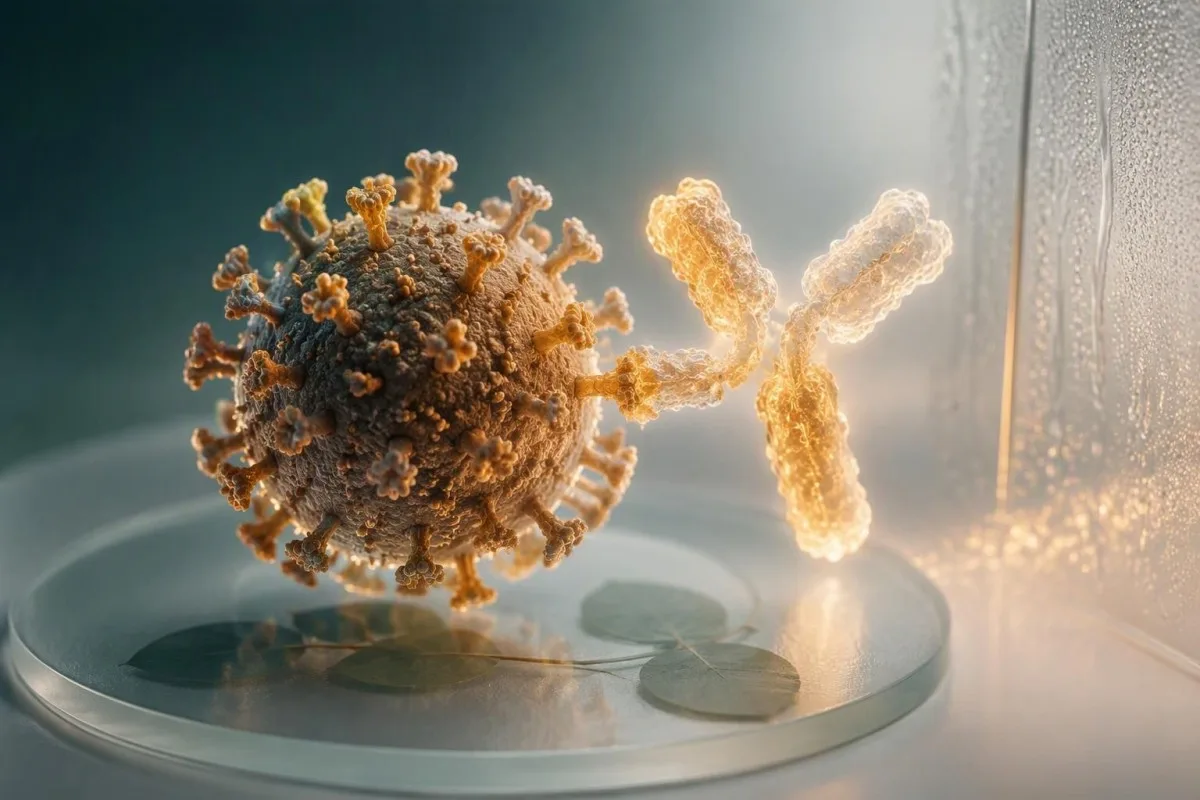
A varicella-zoster IgG result can document immunity, but the right next step depends on vaccine records, pregnancy status, and the assay your laboratory used.


- Positive varicella IgG usually means detectable antibodies and is accepted as laboratory evidence of immunity by most schools and employers.
- Negative varicella IgG means no detectable antibody on that assay; adults without documented 2-dose vaccination are generally treated as susceptible.
- Equivocal result means the value falls in the laboratory’s uncertainty zone, not that you are partly immune or currently ill.
- Two documented doses of varicella vaccine, given at least 4 weeks apart for adults, usually satisfy immunity requirements even if a later commercial IgG test is negative.
- Swangerskapbeplanning requires action before conception: varicella vaccine is not given during pregnancy, and conception should be avoided for 1 month after each dose.
- Healthcare workers need stronger documentation than the general public; US birth before 1980 alone is not accepted evidence for pregnant people or healthcare personnel.
- Post-exposure care is time-sensitive: a pregnant or immunocompromised person without evidence of immunity should contact a clinician urgently after a meaningful exposure.
- Antibody index values are assay-specific; an index of 1.1 at one laboratory cannot be compared directly with 150 IU/mL at another.
What a Varicella Immunity Blood Test Actually Measures
A varicella immunity test measures IgG antibodies directed against varicella-zoster virus (VZV), the virus that causes chickenpox and later can reactivate as shingles. A positive result usually supports past infection or vaccination, but it does not measure whether someone can transmit shingles or diagnose an active rash.
The test is usually ordered as VZV IgG, varicella IgG, or a chickenpox immunity blood test. IgG generally appears after infection or vaccination and persists for years; IgM is a different test and is not used to establish long-term immunity. For a rash today, clinicians favour lesion PCR rather than antibody testing because PCR can identify VZV directly.
A laboratory may report a qualitative answer such as positive, negative, or equivocal, sometimes alongside an antibody index or signal-to-cutoff ratio. Those numbers are not universal protective thresholds. An index of 1.10 might be positive in one enzyme immunoassay and meaningless in another, which is why kwalitatiewe teenoor kwantitatiewe resultate deserve different interpretations.
Kantesti is 'n KI-bloedtoetsontleder that places VZV IgG beside the laboratory’s own reference interval, test method, and your uploaded documentation. That matters because the result answers an administrative and preventive-care question, not a general measure of how “strong” your immune system is.
IgG is not an active-infection test
A positive VZV IgG result does not prove that a current blistering rash is chickenpox or shingles. New rash assessment may require PCR from a lesion, particularly in pregnancy, newborns, or immunocompromised adults, where the treatment window can be measured in hours rather than weeks.
What a Positive Varicella IgG Result Means
A positive varicella IgG test means the assay detected antibodies consistent with previous VZV exposure or vaccination. For most adults, it is accepted as evidence of immunity for school, employment, and routine pre-pregnancy screening.
Positive does not mean you recently had chickenpox, and it does not mean your antibody level needs annual monitoring. ACIP lists laboratory evidence of immunity as one accepted form of evidence; a positive IgG normally ends the question unless an employer has a particular documentation policy (Marin et al., 2007).
In my clinic, a common concern is a positive result after a vague childhood history: “I only remember being itchy.” The lab result is usually more useful than the memory. A positive result also does not prevent shingles decades later, because shingles reflects reactivation of latent VZV rather than failure to have had chickenpox.
A positive test does not require vaccination solely to raise the number. Save the PDF, the collection date, laboratory name, result, and reference wording; this is the practical record employers often need. Our guide to positiewe antiliggaam resultate explains why antibody tests are interpreted differently across infections.
When a positive result may still need review
A positive IgG result should be reviewed rather than self-interpreted if it follows recent immune globulin, plasma products, or severe immune suppression. These situations are uncommon, but they can alter how a specialist documents immunity or schedules vaccination.
Negative Varicella Titer Results: Vaccine Records Matter
A negative varicella IgG result means the laboratory did not detect antibody above its stated cutoff. In an adult without other acceptable evidence of immunity, the usual next step is two varicella vaccine doses separated by at least 4 weeks, provided vaccination is safe for that person.
The phrase “not immune” is reasonable shorthand, but there is a catch: commercial VZV IgG assays can miss low-level antibody produced after vaccination. CDC guidance specifically warns that routine post-vaccination serology is not recommended because available commercial tests may lack sensitivity for vaccine-induced immunity (Marin et al., 2007).
Documented vaccination changes the decision. Adults with written proof of two valid doses generally count as immune even if a later varicella titer is negative, while someone with no record and a negative result is commonly offered vaccination rather than serial antibody testing. A dose given before the first birthday or less than 28 days before the next dose may not meet administrative rules.
Kantesti AI is ’n AI bloedtoets interpretasie platform that can help you identify the exact negative wording, collection date, and missing documentation to discuss with occupational health. Keep immunisation records with your gesondheidsgeskiedenis-opsporing; a photograph of an old card can be surprisingly valuable.
Do not confuse negative IgG with a diagnosis
Negative VZV IgG does not explain fatigue, frequent colds, or a rash. It only says that this assay did not find measurable VZV IgG, and it should not be treated as a broad immune-deficiency screen.
Equivocal Varicella Results Are an Uncertainty Zone
'n equivocal varicella IgG result falls between the assay’s negative and positive cutoffs, so it cannot reliably establish immunity. Most laboratories recommend repeat testing on a new sample, while many occupational-health programmes treat equivocal as non-immune until acceptable vaccine evidence is produced.
Equivocal does not mean “50% protected,” early chickenpox, or a dangerous finding. It often reflects analytical variation near the cutoff, differences in antigen binding, or low antibody concentrations after remote vaccination. Repeating the same assay in 2 to 4 weeks can clarify a borderline result when a recent exposure is clinically relevant.
If the result is equivocal before a job start, do not spend months chasing tiny index changes. Ask whether the organisation accepts two documented vaccine doses; many do. A different laboratory can produce a different qualitative category because the antigen target and positivity threshold may differ, so direct numerical comparison is unreliable.
Dr. Thomas Klein’s practical rule is simple: use the result for the decision it was ordered to answer. For administrative clearance, vaccine documentation is often stronger than repeat serology; for recent exposure in a high-risk patient, a clinician should direct the next test and preventive treatment. See our guide to buite-reeks laboratoriumvlae vir die breër beginsel.
Wanneer herhaalde toetsing sinvol is
Repeat testing is most useful after a truly equivocal result in a person who cannot locate records and whose status changes pregnancy, employment, or exposure management. It is much less useful after two documented vaccine doses, where a negative commercial assay may be falsely reassuringly—or falsely concerningly—low.
Which Documents Count as Evidence of Varicella Immunity
Acceptable evidence of varicella immunity usually includes a positive laboratory test, clinician-documented prior disease, or age-appropriate vaccination records. In the United States, birth before 1980 is sometimes accepted for the general population but not for pregnant people, healthcare personnel, or immunocompromised people.
For adults, age-appropriate vaccination means two doses. The standard minimum interval is 4 weeks for people aged 13 years and older. A credible clinician diagnosis of chickenpox or shingles can also count, but a parent’s recollection alone may not satisfy a hospital, university, or immigration medical requirement.
Rules vary beyond the US. UK practice often focuses on a clear history of chickenpox or laboratory confirmation in pregnancy-related assessment, while employers may set their own occupational-health documentation standards. Before paying for another test, obtain the policy in writing and ask whether it accepts a clinician-signed immunisation record.
A good record contains the vaccine product, date, clinic, and ideally batch information, although the last item is not always required. If you are gathering several documents for a move or visa, our medical test requirements guide can help you organise questions for the receiving authority.
Why self-reported disease history is uneven
Chickenpox is memorable for many people but not all; mild childhood cases and other viral rashes are easily confused. That is why a well-documented medical history can be accepted in some settings, while high-consequence settings may ask for serology or vaccination evidence instead.
Adult Vaccination After a Negative Chickenpox Immunity Test
Adults without evidence of immunity should usually receive two varicella vaccine doses 4 to 8 weeks apart. The minimum acceptable interval is 28 days, and an extra dose is not harmful when prior vaccination status cannot be verified, though individual circumstances still matter.
Varicella vaccine is live attenuated vaccine. It is generally avoided during pregnancy and in people with certain significant immune suppression; recent high-dose systemic corticosteroids, chemotherapy, and transplant medicines warrant a clinician’s review. In contrast, a mild cold or a course of ordinary antibiotics usually does not automatically prevent vaccination.
Do not order a varicella titer 4 to 6 weeks after every dose just for reassurance. For healthy adults with written two-dose documentation, CDC does not recommend routine serologic confirmation because test sensitivity for vaccine antibodies is imperfect. This is one of those areas where paperwork is genuinely more useful than a number.
Kantesti, ’n KI-aangedrewe bloedtoets-analisehulpmiddel, can preserve the negative test and later vaccine documentation in one timeline, but it cannot determine vaccine eligibility from a result alone. Medication history and pregnancy status need a clinician-led decision; our mediese geldigheids-oorsig explains the boundaries of lab-result interpretation.
Two-dose timing in practice
If dose 1 was given years ago and documented, it usually does not need to be restarted; a second valid dose can complete the series. If the first dose date is uncertain, public-health or occupational-health teams often use a new two-dose course rather than assume protection.
Pregnancy Planning: Act Before Conception, Not During
People planning pregnancy with negative or equivocal VZV IgG should arrange vaccination before conception if they lack other evidence of immunity. Varicella vaccine is contraindicated during pregnancy, and CDC advises avoiding pregnancy for 1 month after each dose.
The reason for caution is the infection, not a concern that an IgG blood test harms pregnancy. Maternal chickenpox can be severe, particularly with pneumonia, and infection in early pregnancy carries a small but serious risk of congenital varicella syndrome. The Royal College of Obstetricians and Gynaecologists advises prompt specialist assessment after exposure in a susceptible pregnant person (RCOG, 2015).
A pregnant person with a positive VZV IgG result is generally considered immune and does not need vaccination during pregnancy. A negative or equivocal result should be documented in antenatal care, because it changes what happens after a close exposure and allows postpartum vaccination planning.
I have seen couples postpone this discussion until the first antenatal blood draw, when options become narrower. Put varicella status alongside prekonsepsie bloedtoetsing at least 2 months before trying, leaving time for two doses and the recommended 1-month interval after the second dose.
Breastfeeding and postpartum vaccination
Varicella vaccination can usually be given after delivery, including during breastfeeding, when a non-immune parent needs protection. The exact schedule should be recorded before hospital discharge so the second dose is not lost during a busy newborn period.
What to Do After Exposure When You Test Non-Immune
A susceptible person who has had close contact with chickenpox or shingles should contact a clinician promptly, ideally the same day. Post-exposure vaccination may prevent or lessen disease when given within 3 tot 5 dae, while high-risk people may need varicella-zoster immune globulin within 10 days.
Meaningful exposure usually involves indoor face-to-face contact, household contact, or being in the same room for a substantial period with an infectious person; brief hallway contact is different. Shingles can transmit VZV when lesions are present, especially if they are uncovered, but it causes chickenpox in a non-immune contact—not shingles.
Pregnant people, newborns, and people with major immune suppression need individual advice even if they feel well. Varicella-zoster immune globulin does not guarantee prevention, but it can modify illness severity; its availability and exact pathway differ by country. Fever, widespread blister-like rash, breathlessness, or confusion after exposure merits urgent assessment.
A negative result from years ago may not be enough to plan care today if records are incomplete. Bring the original report and vaccine dates, not a recollection of “low antibodies.” Our article on infection test timing explains why the date of a test changes its clinical value.
Antivirals are not a self-start treatment
Antiviral prevention or treatment may be considered in selected high-risk patients, but drug choice and timing depend on age, pregnancy stage, kidney function, immune status, and exposure date. Do not use leftover antiviral medication as a substitute for urgent professional advice.
School, Healthcare, and Workplace Clearance Rules
Schools commonly accept a positive VZV IgG or vaccine record, while healthcare employers often require stricter evidence. For healthcare personnel, two documented doses, laboratory immunity, laboratory-confirmed disease, or clinician-verified disease history are typical accepted routes.
Healthcare staff face a lower tolerance for uncertainty because VZV can harm susceptible patients. US birth before 1980 alone is not accepted as evidence for healthcare personnel, pregnant people, or immunocompromised people under ACIP criteria. A university may be less strict, but it can still demand official rather than self-entered records.
A negative titer after two recorded doses is a frequent occupational-health dispute. CDC guidance supports accepting documented age-appropriate vaccination rather than repeatedly testing or automatically revaccinating the worker. Ask the occupational-health team to cite its policy, because local contractual rules can exceed public guidance.
For overseas training, store an original-language report plus a certified translation when needed; test names vary between “VZV IgG,” “varicella antibody,” and “immune status.” Kantesti’s case workflows show how a chronological record prevents common interpretation errors.
Do not use antibody concentration as a job-risk score
A higher IgG index does not prove that one nurse is safer than another, and a low-positive result is not a reason to restrict someone who otherwise meets the organisation’s immunity definition. Administrative eligibility rests on accepted evidence categories, not a league table of antibody values.
Why Varicella Antibody Results Can Differ Between Laboratories
Varicella titer results can differ between laboratories because assays use different antigens, calibrators, and positivity cutoffs. A result should always be interpreted against the reference interval printed on that specific report, not against an online index-value chart.
Enzyme immunoassay and chemiluminescent immunoassay methods may each classify a borderline sample differently. Some reports give an antibody index, others report IU/mL, and some provide only a word. The laboratory’s stated cutoff—not a generic threshold such as 10 IU/mL—defines the laboratory’s positive result.
Pre-analytical problems are less dramatic than social media suggests. Routine fasting is not needed, and ordinary diet does not meaningfully alter VZV IgG, but specimen identification, sample handling, and a test ordered too soon after exposure can create a result that does not answer the real question. A repeat-result guide can help distinguish redraw situations from clinical repeats.
Kantesti AI interprets varicella IgG by reading the analyte name, qualitative category, laboratory cutoff, and nearby clinical notes rather than treating every number as interchangeable. This approach is particularly useful for multilingual reports, where “reactive” may mean positive and “borderline” may mean equivocal.
Why vaccine antibodies can be missed
Natural chickenpox often creates antibody levels that commercial assays detect readily, whereas vaccination may produce lower yet protective assay signals. That technical limitation is why vaccine records can outweigh a negative commercial serology in immunisation policy.
Chickenpox Immunity Is Not the Same as Shingles Immunity
A positive VZV IgG result shows prior immune recognition of varicella-zoster virus, but it does not rule out shingles later in life. Shingles occurs when latent VZV reactivates, usually decades after chickenpox or vaccination, rather than because an IgG result became “too low.”
This distinction matters because patients sometimes seek a varicella immunity test to decide whether they need a shingles vaccine. That is the wrong test for most adults. Shingles vaccination recommendations are based mainly on age and immune status, not on a positive or negative chickenpox titer.
A prior history of shingles itself is generally accepted as evidence of varicella immunity, though it does not remove the need for a shingles vaccine when age- or risk-eligible. If a new rash is painful and limited to one side of the body, prompt clinical review is more useful than ordering IgG; treatment works best when started early.
For a deeper explanation of antibody patterns, compare VZV testing with our EBV IgG and IgM guide. Both involve herpesviruses, but their markers and clinical decisions are not interchangeable.
Do not test children for shingles protection
Healthy children who complete routine varicella vaccination do not need antibody testing to prove future shingles protection. Their scheduled vaccines and medical history, rather than serial IgG values, guide normal preventive care.
Immunocompromised Adults Need Individualised Interpretation
Immunocompromised adults should not assume that a positive VZV IgG guarantees full protection or that a negative result automatically means they can receive live vaccine. Their result should be interpreted by the clinician managing the immune-suppressing condition or medicine.
The key issue is the type, dose, and timing of immune suppression. A person using low-dose topical treatment is very different from someone receiving B-cell-depleting therapy, high-dose prednisone, chemotherapy, or a stem-cell transplant. Antibody tests may be less reliable after therapies that reduce B cells, and live vaccination may be unsafe during treatment.
Specialists sometimes check VZV status before planned immune suppression because vaccination, if appropriate, needs to be completed in advance. A live vaccine typically requires a buffer before treatment begins, but the exact interval depends on the medicine and guideline. This is not a place to use a generic online schedule.
Thomas Klein, MD, has seen preventable confusion when a “positive antibody” is read as permission to ignore exposure precautions. Discuss the report with the prescribing team, and use medical advisory oversight for clarity about where AI interpretation ends and clinical decision-making begins.
After transplant or cellular therapy
People who have received a haematopoietic stem-cell transplant may need a completely new immunisation plan even if childhood VZV IgG was positive. Their transplant service determines testing and vaccination sequence because immune memory can be substantially altered.
How to Read Your Varicella Laboratory Report Safely
Read a varicella laboratory report in this order: analyte name, qualitative result, reference interval, test date, then your vaccine or disease documentation. The result category is more actionable than the raw index value unless your own laboratory explicitly provides a validated quantitative interpretation.
Look for terms including VZV IgG, varicella-zoster antibody, immune, reactive, non-reactive, negative, or equivocal. Do not mistake VZV IgM for an immunity result; IgM may be absent in true infection or falsely positive, so it is not a reliable screening test for remote immunity.
Record whether testing followed vaccination, a recent exposure, pregnancy screening, or a work request. That context determines whether repeating, vaccinating, or simply filing the report makes sense. A sample collected 7 days after exposure cannot rule out future infection from that exposure, even if it documents prior immunity status.
Use a secure copy rather than manually retyping index values. Kantesti is an KI-labtoets-interpretasiediens that can extract results from a PDF or photo and flag missing reference ranges for clinician review; see our PDF-oplaai-ondersoeklys before relying on any scanned report.
Questions to ask your clinician or employer
Ask: “Does this report meet your evidence-of-immunity policy?”, “Do two documented doses override this negative assay?”, and “Is repeat testing necessary before vaccination?” These three questions resolve most titer disputes faster than debating a single index number.
When a Varicella Result Needs Urgent Medical Advice
Urgent advice is needed after a significant VZV exposure if you are pregnant, severely immunocompromised, or caring for a newborn and lack clear immunity evidence. A test result alone is rarely an emergency, but exposure-management options have narrow time windows of 3 tot 10 dae.
Seek same-day medical advice for a new widespread blister-like rash with fever, especially after known exposure. Breathing difficulty, severe headache, confusion, inability to drink, or rapidly worsening illness warrants emergency assessment. Adults tend to experience more severe chickenpox complications than healthy young children.
Pregnant people with a concerning exposure should contact maternity services or an urgent clinical advice line before visiting a waiting room, where infection-control arrangements can be made. Tell the team the exposure date, whether lesions were covered, your gestational age, and whether you have a documented positive IgG or two vaccine doses.
Not every exposure leads to infection, and not every negative result means crisis. The practical priority is speed, accurate records, and a clinician who can assess your individual risk. For how Kantesti handles interpretation safeguards and referral boundaries, review our KI-tegnologiegids.
A final practical checklist
Save your report, retrieve vaccine records, verify the receiving organisation’s policy, and arrange clinical advice promptly if pregnancy or immune suppression is involved. As of September 25, 2026, these steps remain more dependable than attempting to compare antibody numbers across laboratories.
Gereelde vrae
Wat beteken 'n positiewe waterpokkies-immuniteitstoets?
'n Positiewe waterpokkies immuniteitstoets beteken dat die laboratorium VZV-spesifieke IgG-teenliggame bo die laboratorium se gevalideerde afsnypunt opgespoor het. Dit dokumenteer gewoonlik vorige waterpokkiesinfeksie of inenting en word deur baie skole en werkgewers as bewys van immuniteit aanvaar. 'n Positiewe resultaat diagnoseer nie 'n aktiewe uitslag nie en waarborg nie dat gordelroos nooit sal voorkom nie. Hou die verslag, want die laboratorium se naam, datum en positiewe kategorie word dikwels vereis vir formele vrystelling.
Wat moet ek doen as my waterpokkies IgG negatief is?
'n Negatiewe varicella IgG-resultaat beteken dat die toets nie teenliggaam bo sy afsnypunt opgespoor het nie, maar die volgende stap hang af van u rekords. Volwassenes sonder bewyse van immuniteit word oor die algemeen 2 varicella-entstofdosisse aangebied, met ten minste 28 dae tussenin, indien hulle in aanmerking kom vir lewendige entstof. As u reeds skriftelike bewyse van 2 geldige dosisse het, beveel CDC-riglyne nie roetine-herhaal serologie aan nie omdat kommersiële toetse entstof-geïnduseerde teenliggame kan mis. Swangerskap, immuunonderdrukking en onlangse blootstelling vereis klinikus-spesifieke advies.
word 'equivocal' in Afrikaans is 'twyfelagtige'
'n Dubbelsinnige waterpokkientiter is nie betroubare laboratoriumgetuienis van immuniteit nie omdat dit in die toets se grenslyn-sone lê. Baie werkgewers en kliniese dienste behandel dubbelsinnige resultate as nie-immuun tensy jy 'n geldige 2-dosis inentingsrekord of ander aanvaarde dokumentasie kan verskaf. 'n Klinikus kan die toets oor 2 tot 4 weke op 'n nuwe monster herhaal wanneer die resultaat swangerskapsbeplanning of blootstellingsbestuur beïnvloed. 'n Dubbelsinnige resultaat beteken nie dat jy aktiewe waterpokkies het of dat jy half-beskerm is nie.
Kan ek ingeënt word as ek as kind waterpokkies gehad het, maar my titer is negatief?
Ja, volwassenes met 'n onsekere siektegeskiedenis en 'n negatiewe VZV IgG kan gewoonlik waterpokkie-entstof ontvang indien hulle geen kontraindikasie het nie. Die standaard volwasse skedule is 2 dosisse geskei deur 4 tot 8 weke, met 'n minimum interval van 28 dae. Entstof ontvang wanneer jy reeds immuun is, is oor die algemeen nie skadelik nie, maar inenting word nie tydens swangerskap of sekere vorme van immuunonderdrukking gegee nie. 'n Gedokumenteerde klinikus diagnose van waterpokkies mag reeds aan sommige instellings voldoen, so kyk eers na die beleid.
Hoe lank na die waterpokkie-entstof moet ek wag voor swangerskap?
CDC advises avoiding pregnancy for 1 month after each dose of live varicella vaccine. If an adult needs 2 doses 28 days apart, a practical plan is to complete the second dose and then wait at least 1 additional month before trying to conceive. The vaccine is not administered during pregnancy, but inadvertent vaccination is not usually considered a reason to end a pregnancy; contact an obstetric clinician for individual guidance. A positive VZV IgG during preconception screening generally means vaccination is not needed.
Do healthcare workers need a varicella titer after vaccination?
Healthcare workers with documentation of 2 appropriately spaced varicella vaccine doses generally do not need post-vaccination antibody testing. Commercial VZV IgG assays can be insufficiently sensitive for vaccine-induced antibody, so a negative result after 2 documented doses does not automatically mean the worker lacks immunity. US guidance does not accept birth before 1980 alone as evidence of immunity for healthcare personnel. Occupational-health departments may have local documentation procedures, so retain dates and original vaccination records.
Kry vandag KI-aangedrewe bloedtoets-analise
Sluit aan by meer as 2 miljoen gebruikers wêreldwyd wat Kantesti vertrou vir onmiddellike, akkurate laboratoriumtoetsanalise. Laai jou bloedtoetsresultate op en ontvang omvattende interpretasie van 15,000+-biomerkers binne sekondes.
📚 Verwysde navorsingspublikasies
Klein, T., Mitchell, S., & Weber, H. (2026). Diarree na vas, swart spikkels in stoelgang en GI-gids 2026. Kantesti KI Mediese Navorsing.
Klein, T., Mitchell, S., & Weber, H. (2026). Vrouegesondheidsgids: Ovulasie, Menopouse en Hormonale Simptome. Kantesti KI Mediese Navorsing.
📖 Eksterne mediese verwysings
Royal College of Obstetricians and Gynaecologists (2015). Chickenpox in Pregnancy: Green-top Guideline No. 13. RCOG Green-top Guideline.
⚕️ Mediese Vrywaring
Hierdie artikel is slegs vir opvoedkundige doeleindes en vorm nie mediese advies nie. Raadpleeg altyd ’n gekwalifiseerde gesondheidsorgverskaffer vir besluite oor diagnose en behandeling.
E-E-A-T Vertrouenseine
Ervaring
Kliniese oorsig gelei deur ’n geneesheer van laboratorium-interpretasie-werksvloei.
Kundigheid
Laboratoriumgeneeskunde fokus op hoe biomerkers in ’n kliniese konteks optree.
Gesagsvermoë
Geskryf deur dr. Thomas Klein met hersiening deur dr. Sarah Mitchell en prof. dr. Hans Weber.
Betroubaarheid
Bewysgebaseerde interpretasie met duidelike opvolgpaaie om alarm te verminder.