
Friedreich ataxia is usually confirmed by finding disease-causing GAA-repeat expansions in both copies of FXN. One expansion alone does not confirm the diagnosis; targeted analysis may be needed to find a different variant in the second copy.

Belangrike punte
- Diagnostic confirmation generally requires 2 pathogenic or likely pathogenic FXN variants, one in each gene copy, interpreted alongside the clinical findings.
- GAA-repeat expansions occur in both FXN copies in approximately 96% of people with Friedreich ataxia; most remaining cases have an expansion plus another disease-causing variant.
- Normal repeat range is commonly 5–33 GAA repeats; approximately 34–65 repeats require more nuanced laboratory interpretation.
- Expanded repeat range usually begins at 66 GAA repeats, but results near the boundary need specialist assessment rather than automatic classification.
- Routine sequencing may miss the intron 1 repeat expansion, even when FXN appears on an exome or gene-panel report.
- One detected expansion calls for FXN sequencing and deletion/duplication analysis when symptoms strongly suggest Friedreich ataxia.
- Draerstatus means one disease-causing FXN allele has been identified without a confirmed disease-causing finding in the second allele.
- Family recurrence risk is 25% per pregnancy when both parents carry a disease-causing FXN allele.
What confirms a Friedreich ataxia diagnosis?
Friedreich ataxia testing confirms the molecular diagnosis by identifying disease-causing changes in both copies of FXN, usually GAA-repeat expansions. If testing finds only 1 expansion, the diagnosis remains incomplete until the second copy is adequately assessed; a single finding may instead indicate carrier status.

Friedreich ataxia is an autosomal recessive condition, meaning the usual diagnostic requirement is 2 affected FXN alleles rather than one. An allele is one inherited copy of a gene; finding two changes on the same copy does not satisfy that requirement because the other copy may still function normally.
The repeat expansion lies in intron 1, a noncoding portion of FXN, and reduces production of frataxin rather than simply changing one amino acid. The original genetic discovery established this unusual mechanism, explaining why a conventional search for coding variants alone is inadequate (Campuzano et al., 1996).
A clearly hypothetical report showing approximately 600 and 900 GAA repeats, both classified as pathogenic by an accredited laboratory, provides strong molecular confirmation in someone with compatible neurological findings. The repeat counts do not, however, tell that person exactly when walking, heart function, or daily independence will change.
Kantesti is an AI blood test analyzer that helps explain accompanying laboratory results, not a substitute for diagnostic FXN testing. Ons organization and scope distinguish laboratory interpretation from genetic diagnosis; our guide to recessive genetic test results also explains why 1 finding and 2 findings have different meanings.
When should symptoms lead to an FXN gene test?
'n FXN gene test is appropriate when progressive coordination problems, sensory impairment, and examination findings suggest Friedreich ataxia. Onset often occurs before age 25, but later-onset disease exists, so an adult presentation or preserved reflexes should not automatically end the investigation.

Progressive gait ataxia means balance and coordination deteriorate over time, rather than appearing suddenly during one isolated episode. The pattern matters more than any single symptom: reduced vibration sense, impaired position sense, absent leg reflexes, and an extensor plantar response can together justify targeted testing.
A negative family history does not exclude a recessive diagnosis because 2 unaffected carrier parents can have an affected child. Small families, incomplete medical histories, and relatives with unrecognized symptoms also make a pedigree less informative than patients sometimes expect; absence of affected relatives should not override a convincing examination.
Sudden imbalance developing over minutes or hours requires a different response from symptoms progressing over 2 jaar. New facial weakness, speech difficulty, or one-sided weakness warrants emergency assessment rather than waiting for genetics; our urgent stroke warning signs verduidelik daardie onderskeid.
Numb feet alone are not enough to diagnose Friedreich ataxia, even when they have persisted for 12 maande. A neurologist may first characterize the neuropathy with nerve-conduction studies and assess acquired causes; our discussion of antibody-associated sensory neuropathy illustrates why the same symptom can arise through a very different mechanism.
Which test should the laboratory actually perform?
The initial molecular investigation should explicitly include FXN GAA-repeat expansion testing, not merely an unspecified genetic panel. The request should establish whether the laboratory detects expansions in intron 1, assesses both alleles, and performs additional analysis when only 1 disease-causing finding is identified.
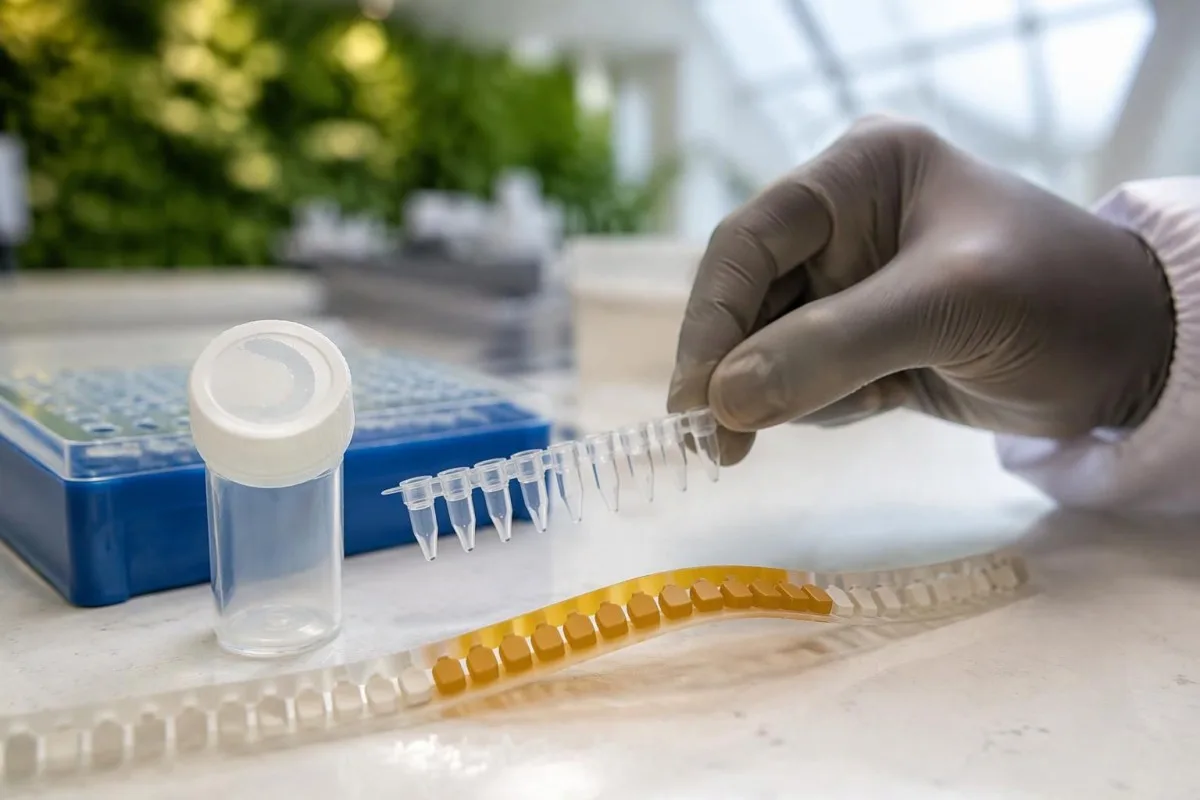
A laboratory may accept DNA obtained from an EDTA laboratory sample or another validated specimen type, such as saliva. Fasting is generally unnecessary for the genetic assay itself; specimen requirements concern DNA quantity, quality, and identification rather than a glucose measurement after an 8-hour fast.
GAA has 2 unrelated meanings in these discussions: a DNA triplet in FXN testing and the gene name for acid alpha-glucosidase in Pompe disease. An enzyme result labelled GAA does not count FXN repeats; our Pompe enzyme testing guide explains that separate diagnostic pathway.
A useful requisition includes the suspected diagnosis, age at symptom onset, major neurological findings, and any known family variant. If a relative has 1 documented expansion and 1 sequence variant, supplying the original report helps the laboratory choose a method that can detect both rather than repeating only the expansion assay.
Turnaround time is laboratory-specific, especially when 2 stages are needed: initial repeat analysis followed by reflex sequencing or copy-number testing. Ask whether reflex testing is automatic, needs a new authorization, or requires another specimen; these administrative details can explain a prolonged investigation without implying that the result is abnormal.
What do FXN GAA-repeat numbers mean?
FXN repeat counts commonly fall into normal, intermediate, or expanded categories. A frequently used normal range is 5–33 repeats, with approximately 34–65 considered intermediate and 66 or more generally within the disease-associated range; borderline results require the laboratory's own interpretation.

Repeat counts are measured in repeats, not mg/dL or IU/L, and they describe the length of a DNA sequence rather than a circulating biomarker concentration. These categories concern the behavior of one allele; they are not a four-step severity scale and should not be presented as emergency laboratory thresholds.
An intermediate allele with 50 repeats does not have the same established meaning as a clearly expanded allele with 800 repeats. Near-boundary interpretation can depend on repeat purity, interruptions, technical accuracy, and the finding in the other gene copy; ask whether the report uses intermediate, borderline, or uncertain terminology.
Two clearly pathogenic expansions establish a different situation from 1 expansion paired with a normal allele. For example, approximately 700 and 20 repeats would usually indicate one expanded allele, not confirmed Friedreich ataxia, unless another disease-causing change is subsequently found in the apparently nonexpanded copy.
Repeat thresholds are gene-specific: an FXN count of 40 cannot be interpreted using a Huntington disease reference table. Our explanation of die interpretasie van Huntington-herhalingstellings provides a useful contrast, but its CAG thresholds and dominant inheritance do not transfer to FXN.
| Vlak | Reeks | Wat dit beteken |
|---|---|---|
| Common normal category | 5–33 GAA repeats | Not an expansion-based disease-causing finding; does not exclude a separate FXN sequence or deletion variant. |
| Intermediate or borderline category | Approximately 34–65 GAA repeats | Requires laboratory-specific interpretation; not sufficient by itself to confirm Friedreich ataxia. |
| Generally disease-associated expansion | Usually ≥66 GAA repeats | Interpret with repeat structure, assay limitations, and the second FXN allele; the lower boundary needs particular care. |
How does GAA-repeat expansion testing work?
Repeat-primed PCR detects the presence of an expanded FXN repeat tract, while other validated methods help determine its size or resolve ambiguous results. A positive expansion signal does not necessarily provide an exact count or prove that 2 separate alleles are expanded.
Ordinary flanking PCR can amplify a short allele more easily than a very large expansion, producing allele dropout if the method is unsuitable. Detecting one short product therefore does not always prove that both copies are short; the laboratory must use an approach validated for large expanded alleles.
Long-range PCR, Southern blotting, or validated long-read methods may help characterize large or technically difficult expansions. Laboratories do not all use the same combination, so a report stating more than 1,000 repeats may be an appropriately qualified estimate rather than a failed attempt to provide an exact integer.
Two expanded alleles of similar size may overlap in an assay, making 2 copies appear as one size class. The laboratory should explain how its method establishes a biallelic result, particularly if the report gives only one repeat estimate; matching parental results can sometimes clarify the interpretation.
At Kantesti, we encourage readers to distinguish 2 report questions: was an expansion detected, and was its size established reliably? Our guide to Fragile X repeat testing explains a comparable method issue, although FMR1 has different repeat chemistry, thresholds, and inheritance.
Why can routine genetic sequencing miss Friedreich ataxia?
Routine sequencing can miss Friedreich ataxia because the principal FXN abnormality is a long, repetitive sequence in intron 1. Exome sequencing mainly targets coding regions, and standard short-read analysis may not accurately detect or size a tract containing hundreds of repeated triplets.

Listing FXN on a panel does not prove that its GAA expansion was tested. One laboratory may include dedicated repeat analysis, whereas another may report only single-nucleotide changes and small insertions or deletions; these are different analytical capabilities even when the same gene name appears on the front page.
Short-read sequencing often examines fragments around 100–150 bases long, whereas a 600-repeat GAA tract spans approximately 1,800 bases. Specialized computational tools can sometimes infer an expansion from short reads, but routine pipelines may not run those tools or validate their performance for FXN.
Whole-genome sequencing offers broader coverage than exome sequencing, yet 1 negative genome report still needs a methods check. Some genome services explicitly validate repeat-expansion detection and others do not; a promising research algorithm is not interchangeable with a clinically validated expansion assay.
A hypothetical negative exome in someone with 3 years of progressive ataxia does not exclude Friedreich ataxia unless FXN expansion analysis was included and technically adequate. Our discussion of negative genetic test limits reinforces the central principle: a negative result excludes only what the chosen method can reliably assess.
What happens if only one disease-causing FXN variant is found?
When symptoms suggest Friedreich ataxia but testing identifies only 1 disease-causing FXN finding, additional analysis should look for a second variant. After one expansion is detected, this usually means FXN sequencing plus deletion/duplication analysis, with review of the expansion assay's limitations.

Approximately 96% of affected people have expansions in both FXN alleles, while roughly 4% have an expansion paired with another pathogenic variant. These are approximate diagnostic proportions, not a guarantee for an individual; uncommon genetic configurations and differences between studied populations can complicate the simple split.
FXN sequencing can identify single-nucleotide changes and small insertions or deletions that a repeat-only test will miss. Copy-number analysis asks a separate question: whether an exon or larger gene segment is missing or duplicated; a laboratory's standard sequencing assay may not reliably answer both questions.
’n Hipotetiese persoon met 750 repeats in one allele and an unresolved second allele should not receive either premature reassurance or automatic diagnostic confirmation. The clinician should check reflex sequencing, copy-number coverage, and whether the two findings are on opposite copies; our enzyme-to-genetic confirmation guide illustrates another recessive testing workflow.
If those 3 review steps do not resolve the result, a genetics specialist may consider reanalysis, a different laboratory method, or selected investigation of less routinely covered regions. Kantesti's metodologie en kliniese standaarde describe our interpretation framework, not validation of an FXN molecular assay.
How is carrier status different from a confirmed diagnosis?
A Friedreich ataxia carrier has one disease-causing FXN allele without a confirmed disease-causing finding in the other copy. A molecular diagnosis generally requires 2 pathogenic or likely pathogenic findings in trans, meaning one on each inherited gene copy; carrier status alone does not explain progressive ataxia.
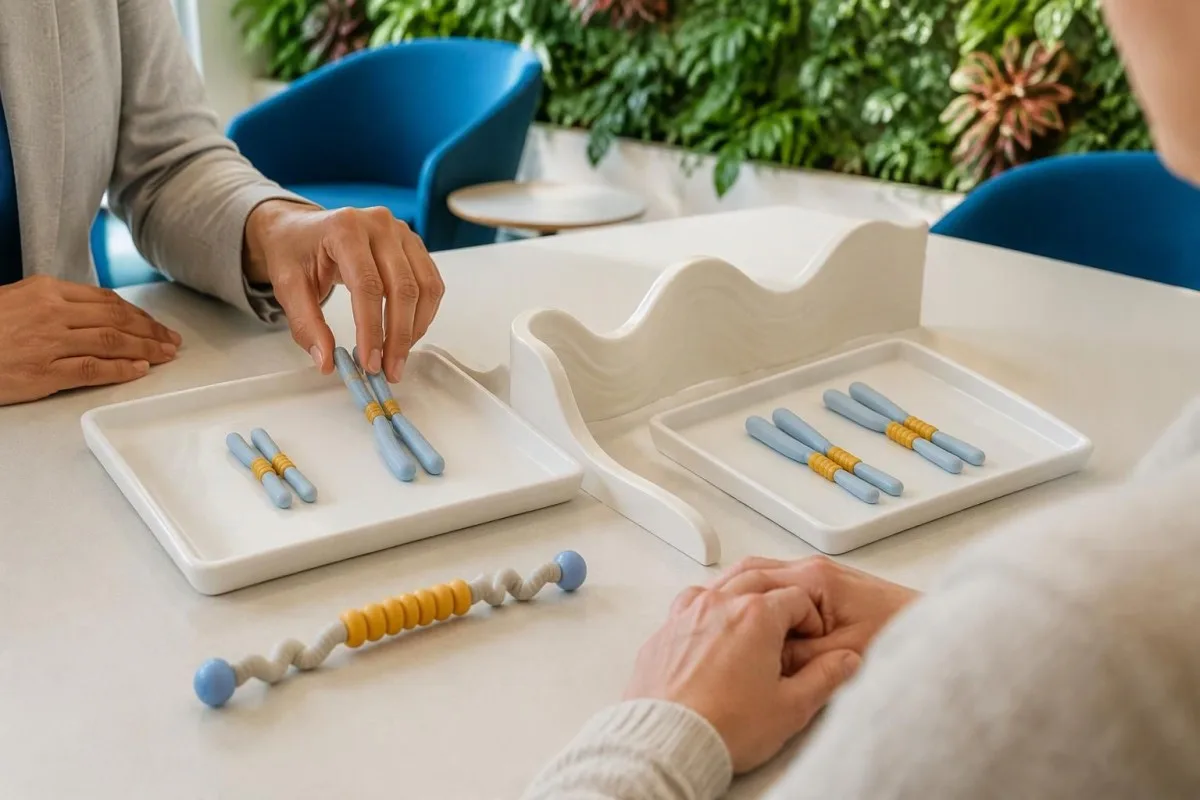
Carriers are generally not expected to develop Friedreich ataxia from that single allele. If an apparent carrier has neurological symptoms, there are 2 main possibilities to investigate: a second FXN finding was missed, or a different condition is causing the symptoms; neither possibility should be assumed without assessment.
Die frase in trans means the findings affect opposite copies; in cis means they lie on the same copy. For example, 1 expansion and 1 sequence variant located together on the maternal allele do not demonstrate biallelic disease if the paternal allele has no disease-causing change.
Parental testing can establish phase when 2 different findings are identified, especially an expansion plus a sequence variant. Direct laboratory phasing may also help in selected cases; the practical request is whether the report demonstrates opposite-copy inheritance or merely lists two variants without resolving their location.
An apparently reassuring copy count is not always the whole genetic story, but the mechanism must remain gene-specific. Our explanation of hidden carrier screening risk discusses why 2 SMN1 copies can occasionally conceal carrier status; that particular silent-carrier mechanism should not be transferred to FXN.
How are borderline repeats and uncertain variants handled?
Borderline repeat counts and variants of uncertain significance do not automatically confirm Friedreich ataxia. A result near 65–66 repeats needs laboratory and specialist interpretation, while a second FXN sequence finding classified as a VUS leaves the molecular diagnosis unresolved rather than established.

A VUS is not equivalent to a pathogenic variant, even if it is the only plausible second finding. Classification may draw on population frequency, segregation, predicted effects, and functional evidence; no single computer prediction is enough to convert 1 uncertain result into a confirmed diagnosis.
A hypothetical report with 800 repeats plus an FXN VUS gives a clear expansion finding and an unresolved second result. The next question is whether family testing or additional evidence could clarify the VUS—not whether the patient should treat two listed entries as two established disease-causing alleles.
At the lower repeat boundary, 1 or 2 repeats of sizing uncertainty can materially change the category written on a report. Repeat interruptions can also complicate interpretation, and the evidence is less straightforward than for large, clearly expanded alleles; seek the laboratory's explanation rather than applying an online cutoff mechanically.
Variant classifications can change after additional evidence becomes available, but 1 reclassification is not guaranteed and there is no universal timetable. Ask who receives amended reports and whether the genetics service offers periodic review; our discussion of uncertain inherited variant results explains this distinction between uncertainty and confirmation.
What if Friedreich ataxia testing is negative?
A negative FXN result is meaningful only after checking what the assay covered. If validated expansion testing and appropriate additional FXN analysis are negative, clinicians should investigate other inherited or acquired causes of ataxia rather than repeatedly ordering the same incomplete test.
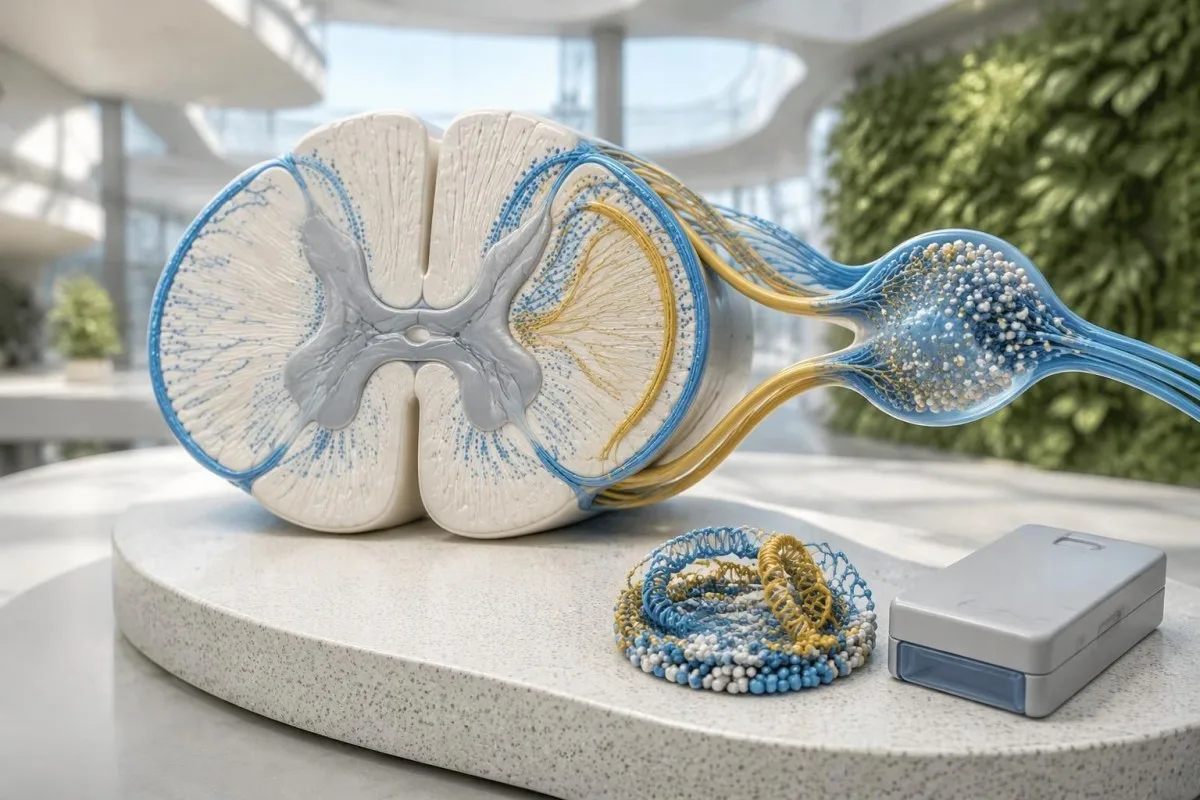
First separate 2 different negative reports: sequencing that found no coding variant and dedicated repeat testing that found no expansion. Those results answer different questions; requesting the original methods page can prevent an unnecessary repeat appointment or a false assumption that the principal Friedreich ataxia mechanism was excluded.
Vitamin B12 deficiency can impair sensory pathways, sometimes without obvious anemia, so it belongs in selected differential investigations. A hypothetical B12 result of 220 pg/mL may need assessment with symptoms and supplementary markers rather than dismissal; our borderline B12 result guide explains the interpretation limits.
Copper deficiency is another potentially treatable explanation for sensory ataxia, particularly after malabsorption or excessive zinc exposure. 1 low copper result still needs assessment of context and laboratory reference ranges; our guide to copper deficiency and nerve signs discusses why supplementation should follow a proper diagnostic review.
Depending on the phenotype, a specialist may consider vitamin E deficiency, immune-mediated disease, or other genetic ataxias, including RFC1-related disease and dominant repeat-expansion disorders. The next panel should be chosen for both genes and methods; expanding from 20 to 200 sequenced genes does not solve an untested repeat-expansion mechanism.
Can frataxin levels, MRI, or routine blood tests confirm it?
Routine laboratory tests and MRI do not replace molecular FXN confirmation. Frataxin measurements may provide useful specialist or research information, but there is no universal routine blood-test cutoff that independently establishes Friedreich ataxia or distinguishes every carrier from someone with 2 disease-causing alleles.
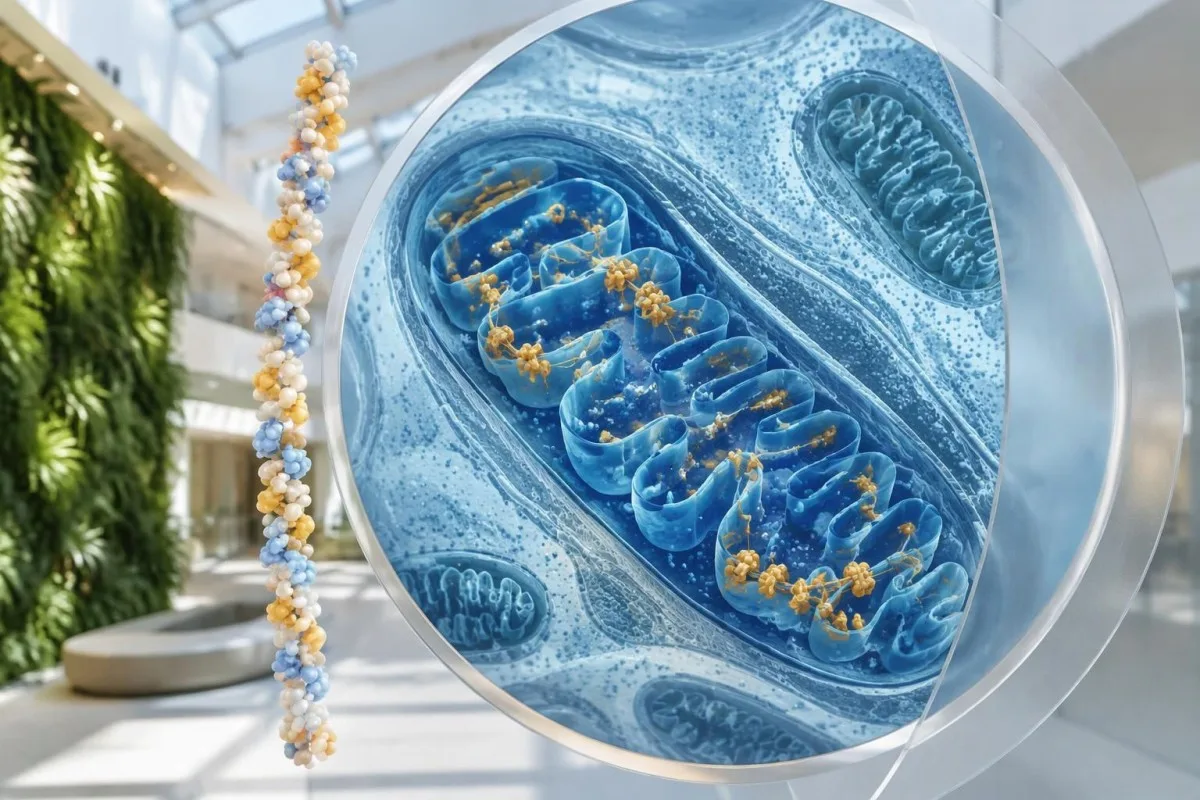
Frataxin concentrations depend on specimen type and assay methodology, making values from different laboratories difficult to compare directly. A numerical result should identify its units, method, and reference population; an isolated low value does not prove that 2 pathogenic FXN alleles are present.
MRI may investigate alternative structural causes and document supportive nervous-system changes, but 1 normal brain MRI does not exclude Friedreich ataxia. The clinical deficit can involve spinal and peripheral sensory pathways, so the absence of a striking cerebellar imaging abnormality should not override appropriate genetic testing.
Neurofilament light chain is a marker of neuronal injury, not an FXN-specific diagnostic test. A high NfL result cannot identify which of more than 1 possible neurological conditions caused the elevation; our NfL-interpretasiegids explains why age, assay, and clinical context remain necessary.
Kantesti is an AI biomarker interpretation platform that can explain accompanying results without claiming they establish a 2-allele FXN diagnosis. Our role is to distinguish a routine biomarker abnormality from a genetic finding; a normal complete blood count or ferritin level cannot close the Friedreich ataxia investigation.
What does an FXN result mean for relatives and pregnancy?
Family testing should use the confirmed familial FXN findings whenever possible. When both parents are carriers, each pregnancy has a 25% chance of an affected child, a 50% chance of a carrier child, and a 25% chance of a child inheriting neither familial disease-causing allele.

Each pregnancy is an independent event; having one unaffected child does not reduce the 25% risk in the next pregnancy when both parents are carriers. These proportions describe expected probabilities across many pregnancies, not a promise that exactly one of every four children in a particular family will be affected.
For a sibling without symptoms, distinguish 2 purposes of testing: carrier assessment and presymptomatic identification of biallelic disease. Counseling should address the person's age, preferences, possible monitoring benefits, and local rules for testing minors; a sibling's blood chemistry cannot substitute for targeted testing of the family variants.
If a carrier's partner tests negative, the reproductive risk usually falls but does not become exactly 0%, because residual risk depends on the assay and ancestry-related carrier probability. Our family genetic risk guide illustrates why inheritance must be established for the specific condition before calculating risk.
Prenatal testing and preimplantation genetic testing may be options after the familial findings are characterized, including both variants when the affected relative is a compound heterozygote. Kantesti's genetic information privacy guidance explains our data handling; obtain each relative's consent rather than uploading a family member's report automatically.
Which assessments follow a confirmed FXN diagnosis?
A confirmed Friedreich ataxia diagnosis should lead to neurological, cardiac, and metabolic assessment, not simply another repeat-count test. The 2022 clinical management guidelines recommend structured monitoring because heart involvement and diabetes can require attention even when mobility symptoms are the main reason testing began (Corben et al., 2022).
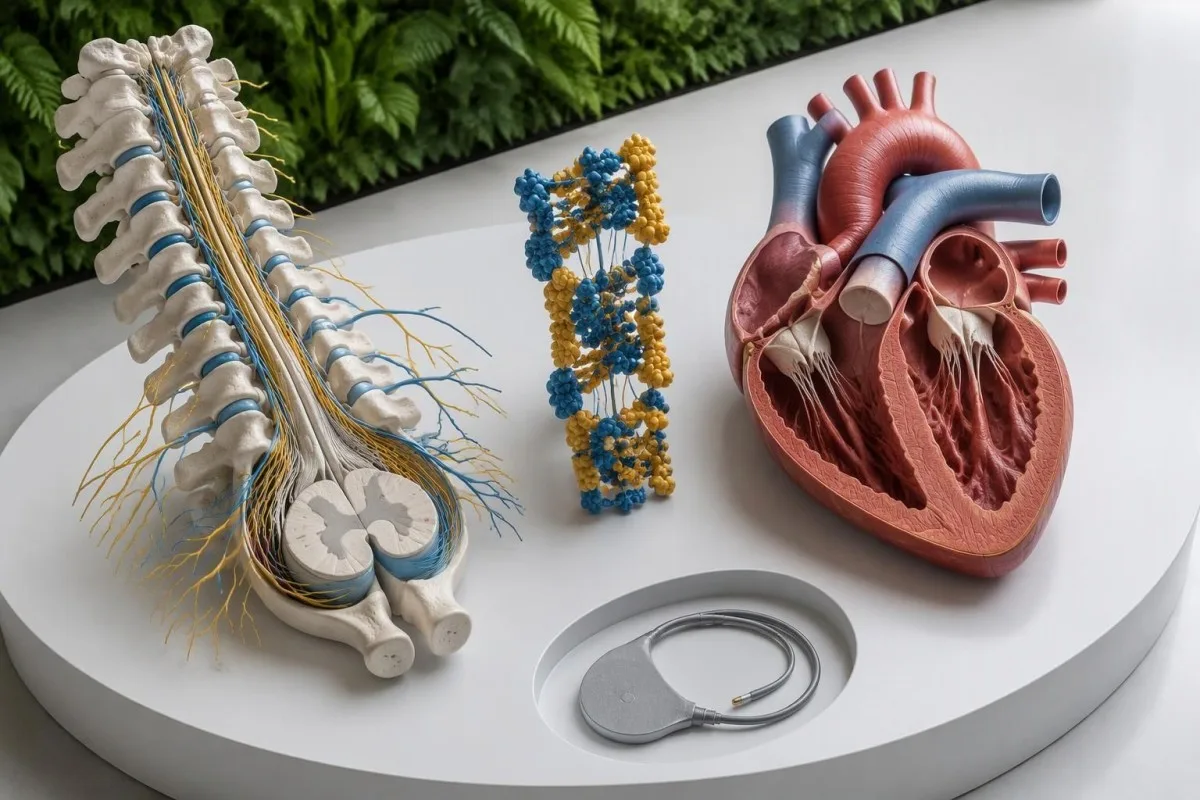
ECG and echocardiography assess different aspects of cardiac involvement, and the 2022 guidelines support assessment at diagnosis with ongoing surveillance, generally at least annually. A normal result does not guarantee that later cardiomyopathy or rhythm problems will not occur; monitoring frequency should reflect the findings and symptoms.
Glucose assessment looks for a complication rather than confirming the genetic disorder. A fasting plasma glucose of 126 mg/dL, of 7.0 mmol/L, meets a standard diabetes threshold, usually requiring confirmation in someone without unequivocal hyperglycemia; the diabetes label still depends on the clinical testing circumstances.
HbA1c alone may not capture every early disturbance in glucose regulation, so additional testing can be appropriate when symptoms or other results raise concern. Thirst and increased urination deserve prompt review rather than waiting 12 months for surveillance; our high glucose symptom guide explains the practical warning signs.
Repeat length cannot give a precise individual prognosis, even though shorter expanded alleles are associated with later onset at a population level. Two people with approximately 500 repeats in their smaller allele can follow different courses; rehabilitation, cardiac surveillance, treatment eligibility, and personal goals require assessment beyond the DNA count.
Your FXN report checklist and research sources
A usable FXN report should state the method, findings in both alleles, classification, and any unresolved limitations. Before the next appointment, check 4 essentials: expansion coverage, second-allele analysis, whether findings are in trans, and the clinician's conclusion about confirmation versus carrier status.
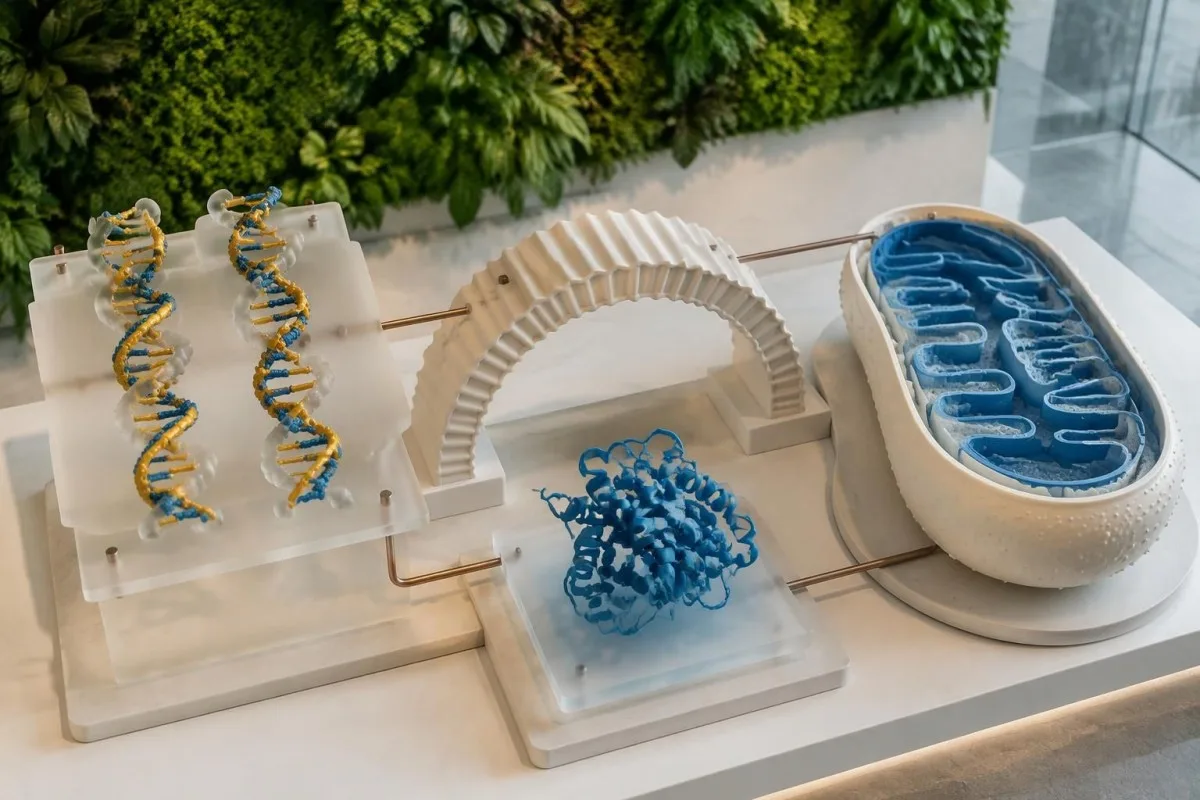
Bring the full report, not just a screenshot saying positive, because 1 summary line may omit repeat estimates or incomplete reflex testing. Useful questions are whether both alleles were assessed, whether sequencing included copy-number analysis, and which result remains unresolved; retain laboratory contact details for method-specific clarification.
Kantesti is an AI blood test interpretation platform that helps readers organize accompanying laboratory information while preserving the distinction between 1 carrier finding and a confirmed diagnosis. Ons responsible interpretation principles explain why an AI explanation should not overrule an accredited laboratory's classification or a genetics specialist's assessment.
Die 2 external medical references below support the disease mechanism and clinical follow-up discussed here: Campuzano et al. established the intronic repeat-expansion basis, and Corben et al. developed clinical management guidance. Neither reference turns routine kidney, urine, or nutritional measurements into an alternative to molecular FXN confirmation.
Kantesti se 2 Zenodo educational publications listed below address general laboratory topics, not FXN diagnostic accuracy. The accompanying kidney result interpretation guide en urinalysis result interpretation guide may help explain separate investigations; they should not be cited as evidence that these tests confirm Friedreich ataxia.
Dikwels gevraagde vrae
Watter toets bevestig Friedreich-ataksie?
Friedreich-ataksie word gewoonlik bevestig deur geteikende toetsing vir FXN-GAA-herhalingsuitbreiding, wat patogene uitbreidings in albei geenkopieë identifiseer. Ongeveer 96% van geaffekteerde mense het hierdie bialleliese uitbreidingspatroon. Die meeste oorblywende gevalle het een uitbreiding en ’n ander patogene FXN-variant, wat volgordebepaling of kopiegetalontleding vereis. Die bevindings moet saam met die kliniese beeld vertolk word en, indien nodig, bevestig word dat hulle op teenoorgestelde geenkopieë voorkom.
Kan ’n eksomtoets Friedreich-ataxie uitsluit?
A routine negative exome test cannot reliably rule out Friedreich ataxia unless validated FXN repeat-expansion analysis was included. The principal expansion lies in intron 1, outside the coding regions primarily assessed by exome sequencing. A 600-repeat GAA expansion spans approximately 1,800 bases and can be difficult for standard sequencing pipelines to characterize. Check the report's methods rather than assuming that listing FXN guarantees expansion coverage.
Beteken een enkele FXN-uitbreiding dat ek Friedreich-ataksie het?
Een siekteveroorsakende FXN-uitbreiding alleen bevestig nie Friedreich-ataksie nie. Dit kan op draerstatus dui, maar ’n persoon met simptome moet beoordeel word vir ’n tweede variant wat die aanvanklike toets moontlik gemis het. Ongeveer 4% van die aangetaste mense het ’n uitbreiding saam met ’n ander patogene variant, eerder as twee uitbreidings. FXN-volgordebepaling, delesie-/duplikasie-analise en soms fasering help om dié situasie op te klaar.
Hoeveel GAA-herhalings is abnormaal in die FXN-geen?
’n Algemeen gebruikte normale reeks vir FXN is 5–33 GAA-herhalings, met ongeveer 34–65 wat as intermediêr beskou word en 66 of meer wat gewoonlik met die siekte geassosieer word. Hierdie kategorieë beskryf een alleel en stel nie op hul eie ’n resessiewe diagnose vas nie. Resultate naby die onderste uitbreidingsgrens vereis laboratoriumspesifieke interpretasie, omdat herhalingstruktuur en meetonsekerheid van belang kan wees. Twee duidelik patogene bevindings, een in elke geenkopie, is die gewone molekulêre vereiste.
Kan ’n draer van Friedreich-ataksie simptome ontwikkel?
Daar word oor die algemeen nie verwag dat iemand met slegs een siekteveroorsakende FXN-alleel Friedreich-ataksie sal ontwikkel bloot op grond van daardie draerskapbevinding nie. Progressiewe neurologiese simptome by ’n oënskynlike draer vereis ondersoek na ’n gemiste tweede FXN-variant of ’n ander toestand. Twee gelyste variante bevestig nie outomaties die siekte as hulle saam op een geenkopie voorkom nie. ’n Genetiese spesialis kan die toets se dekking, variantklassifikasie en of die bevindings in trans is, nagaan.
Moet ek vas voor genetiese toetsing vir Friedreich-ataksie?
Fasting is generally unnecessary for an FXN DNA test because the assay analyzes genetic material rather than a meal-sensitive biomarker. The laboratory may request an EDTA specimen or another validated sample type. An 8-hour fast may still be needed if a separate fasting glucose test is ordered at the same visit. Follow the collecting laboratory's instructions and distinguish preparation for the genetic test from preparation for accompanying blood chemistry.
Kry verduideliking van jou bloedtoets resultate
Laai jou laboratoriumverslag op en Kantesti se KI verduidelik elke biomerker binne sekondes in verstaanbare taal. Meer as 2 miljoen mense wêreldwyd gebruik dit.
Verwysings
- Klein, T., Mitchell, S., & Weber, H. (2026). BUN/Kreatinien-verhouding Verduidelik: Nierfunksie Toets Gids. Kantesti KI-mediese navorsing. DOI
- Klein, T., Mitchell, S., & Weber, H. (2026). Urobilinogeen in Urine Toets: Volledige Urinalise Gids 2026. Kantesti KI-mediese navorsing. DOI
- Campuzano V et al. (1996). Friedreich's ataxia: autosomal recessive disease caused by an intronic GAA triplet repeat expansion. Science. DOI PubMed
- Corben LA et al. (2022). Clinical management guidelines for Friedreich ataxia: best practice in rare diseases. Orphanet Journal of Rare Diseases. DOI
- 2M+Ontleedde toetse
- 127+Lande
- 100+Tale
Oor die mediese span


E-E-A-T Vertrouenseine
Ervaring
Kliniese oorsig gelei deur ’n geneesheer van laboratorium-interpretasie-werksvloei.
Kundigheid
Laboratoriumgeneeskunde fokus op hoe biomerkers in ’n kliniese konteks optree.
Gesagsvermoë
Medies beoordeel deur Dr. Thomas Klein, met bydraes van Dr. Sarah Mitchell en Prof. Dr. Hans Weber.
Betroubaarheid
Bewysgebaseerde interpretasie met duidelike opvolgpaaie om alarm te verminder.





Mediese vrywaring
Hierdie artikel is slegs vir opvoedkundige doeleindes en vorm nie mediese advies nie. Raadpleeg altyd ’n gekwalifiseerde gesondheidsorgverskaffer vir besluite oor diagnose en behandeling.
Gepubliseer · Kontak die redaksiespan
Gepubliseer deur Kantesti Ltd, geregistreer in Engeland en Wallis, maatskappynr. 17090423, Londen, Verenigde Koninkryk.
