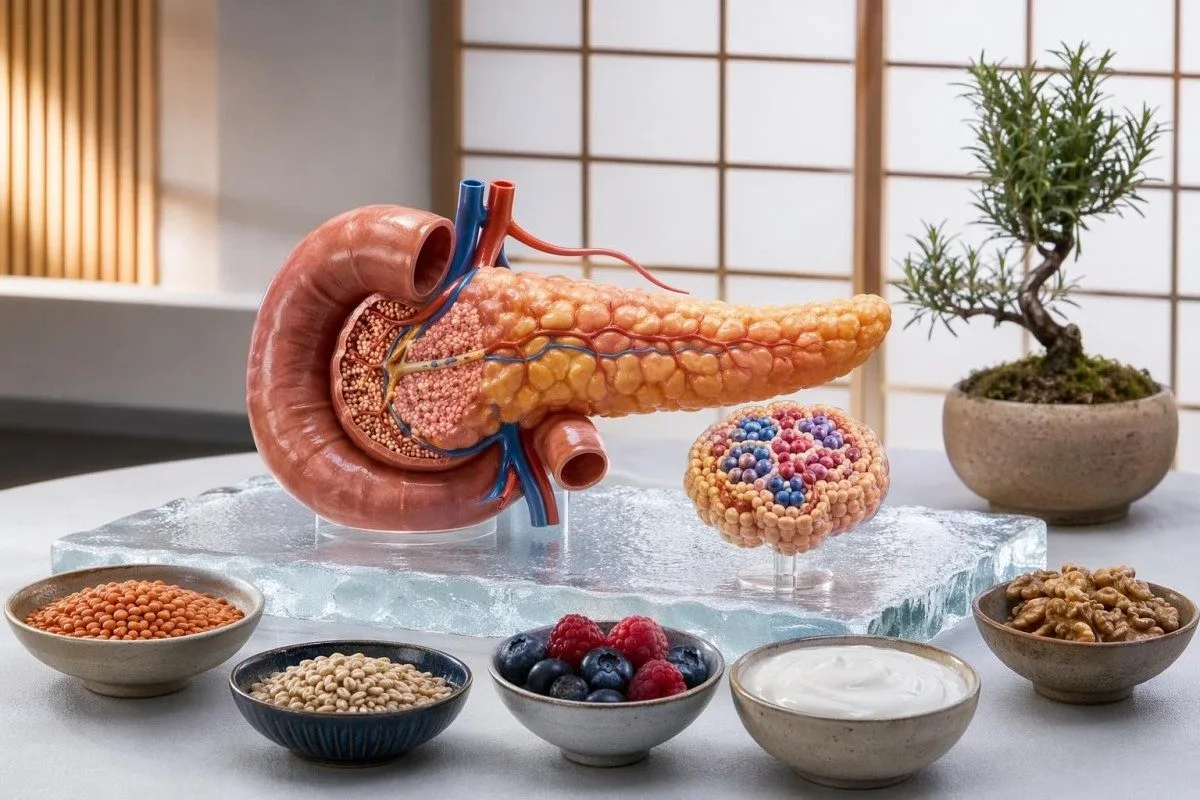
A physician-led guide to choosing glycemic index foods that actually move glucose labs, not just look healthy on paper.


- Low glycemic foods have a glycemic index of 55 or lower and usually blunt 1-2 hour glucose spikes before HbA1c changes.
- Fasting glucose is normal at 70-99 mg/dL, prediabetes is 100-125 mg/dL, and diabetes is 126 mg/dL or higher on repeat testing.
- HbA1c below 5.7% is normal, 5.7-6.4% suggests prediabetes, and 6.5% or higher meets a diabetes threshold when confirmed.
- Post-meal glucose should usually be below 140 mg/dL at 2 hours in people without diabetes and below 180 mg/dL in many adults with diabetes.
- Legumes and barley are among the most reliable low glycemic foods because they combine starch structure, protein, magnesium and 7-10 g fiber per serving.
- A1c timing matters: recheck HbA1c after about 12 weeks because the result reflects red cell glycation over roughly 8-12 weeks.
- Fasting insulin above about 10-12 µIU/mL can suggest early insulin resistance even when fasting glucose is still under 100 mg/dL.
- Blood test based diet planning should recheck HbA1c, fasting glucose, fasting insulin, triglycerides, ALT, creatinine/eGFR and urine albumin-creatinine ratio when risk is higher.
How low glycemic foods change fasting glucose, spikes and HbA1c
Low glycemic foods such as lentils, beans, barley, steel-cut oats, plain yogurt, berries, nuts and non-starchy vegetables can reduce 1-2 hour glucose spikes first, fasting glucose next, and HbA1c after roughly 8-12 weeks. The best lab rechecks are fasting glucose, HbA1c, fasting insulin or HOMA-IR, triglycerides, ALT, creatinine/eGFR and urine albumin-creatinine ratio when risk is higher. At Kantesti AI, our platform reads those patterns together rather than treating one glucose result as the whole story.
According to the American Diabetes Association Standards of Care in Diabetes 2026, fasting plasma glucose is normal below 100 mg/dL, prediabetes is 100-125 mg/dL, and diabetes is 126 mg/dL or higher when confirmed. If you need the practical cutoffs side by side, our normal glucose ranges guide explains why fingerstick, CGM and venous lab results do not always match.
I see a common pattern in clinic: a person switches breakfast from cornflakes and juice to Greek yogurt, chia, berries and walnuts, then their 2-hour glucose falls from 168 mg/dL to 122 mg/dL within 10 days. Their HbA1c may still sit at 5.9% because HbA1c is slow; that delay does not mean the diet failed.
In our analysis of 2M+ uploaded lab reports, the earliest diet responders often show triglycerides falling by 20-40 mg/dL before HbA1c moves by even 0.1 percentage point. That happens because post-meal insulin demand and liver fat handling can improve faster than red cell glycation.
Here is the practical clinical point: low glycemic foods help most when they replace refined starch, not when they are simply added to an already high-calorie diet. A 35 g carbohydrate portion of lentils behaves very differently from 35 g carbohydrate in white bread, even before we discuss weight loss.
What glycemic index foods and glycemic load really mean
Glycemic index foods are ranked by how much 50 g of available carbohydrate raises glucose compared with pure glucose. Low GI is 55 or lower, medium GI is 56-69, and high GI is 70 or higher; glycemic load adjusts that score for the actual carbohydrate grams eaten.
Glycemic load equals glycemic index multiplied by available carbohydrate grams, then divided by 100. A glycemic load of 10 or lower is usually considered low, 11-19 medium, and 20 or higher high.
This is why watermelon can have a high-ish GI but a modest glycemic load in a normal serving, while a large bowl of rice can have a high load even if the GI varies by variety. When patients tell me they are eating only low GI foods, I still ask about portion size, because the pancreas cares about the total glucose challenge.
Food processing changes the number. Intact oat groats, steel-cut oats and rolled oats can produce different glucose curves, and instant oats often behave more like refined starch because particle size speeds digestion.
HbA1c and fasting glucose can disagree even when a person follows a textbook prediabetes diet, especially with anemia, kidney disease or unusually short red cell survival. I usually send patients to our guide on why glycemic labs sometimes disagree before anyone overreacts to a single borderline result.
Low glycemic foods most likely to improve fasting glucose
The low glycemic foods most likely to improve fasting glucose are legumes, barley, minimally processed oats, nuts, seeds, plain fermented dairy and high-fiber vegetables. They work best because they lower overnight liver glucose output indirectly by reducing evening insulin demand, improving satiety and sometimes lowering liver fat.
Fasting glucose is heavily influenced by the liver, not just by last night’s dessert. A morning glucose of 108 mg/dL often reflects hepatic insulin resistance, dawn hormone effects, poor sleep, alcohol, late eating or untreated sleep apnea.
In practice, I start with ½ to 1 cup cooked lentils, chickpeas or beans at lunch or dinner, 5-6 days per week. That usually provides 7-15 g fiber per serving, plus magnesium and slowly digestible starch.
Barley is underused. Three grams of beta-glucan from oats or barley can improve cholesterol, and in some patients the same viscous fiber pattern trims fasting glucose by 5-10 mg/dL over 4-8 weeks.
If fasting glucose is the main abnormality, track the morning value for 14 days rather than judging one lab draw. Our fasting glucose guide covers the dawn phenomenon, which is the reason a sensible dinner can still be followed by a stubborn 105 mg/dL reading.
How to reduce post-meal glucose spikes without over-restricting
Post-meal glucose spikes usually improve fastest when low glycemic carbohydrates are eaten with protein, unsaturated fat and fibrous vegetables. In many adults without diabetes, a 2-hour glucose below 140 mg/dL is expected; in many adults with diabetes, treatment targets often aim for below 180 mg/dL 1-2 hours after meals.
Food order matters more than most patients expect. Eating vegetables and protein before starch can reduce the glucose peak by roughly 20-40% in small meal-sequence studies, even when the total carbohydrate grams are unchanged.
The simplest plate is not fancy: half non-starchy vegetables, one palm-sized protein, one small low GI starch, and a fat source such as olive oil, avocado, tahini or nuts. For many people, that means the same 35-45 g carbohydrate meal produces a gentler curve.
Pasta is a useful example. Al dente pasta often has a lower GI than soft-cooked pasta, and pairing it with beans, vegetables and fish can be very different from eating a large plain pasta bowl at 9 pm.
A 1-hour glucose above 180 mg/dL after ordinary meals deserves attention even if the 2-hour value recovers. Our after-meal glucose guide explains why early peaks can expose insulin resistance before HbA1c crosses 5.7%.
How much HbA1c can change after switching to low glycemic foods
HbA1c usually needs about 8-12 weeks to show the full effect of low glycemic foods. In randomized trials and meta-analyses, low glycemic index or low glycemic load diets often lower HbA1c by about 0.2-0.5 percentage points, with larger changes when baseline glucose is higher.
Chiavaroli et al. reported in BMJ in 2021 that low GI or low glycemic load dietary patterns reduced HbA1c by about 0.31 percentage points in people with diabetes. That size sounds small until you remember that some medications are judged meaningful at similar absolute A1c differences.
Jenkins et al. published a JAMA trial in 2008 comparing a low GI diet with a high cereal fiber diet in type 2 diabetes over 6 months. Both diets helped, but the low GI pattern produced a larger HbA1c fall and improved HDL cholesterol, which is a clue that carbohydrate quality was not the only mechanism.
HbA1c below 5.7% is considered normal, 5.7-6.4% suggests prediabetes, and 6.5% or higher meets a diabetes diagnostic threshold when confirmed. For age nuance and borderline results, see our HbA1c normal ranges article.
One clinical caveat: if HbA1c drops from 6.4% to 6.1% after 12 weeks, that is real progress, but it does not prove all post-meal spikes are gone. I still want fasting glucose, triglycerides and sometimes a short CGM snapshot.
Prediabetes diet targets that show up on blood tests
A useful prediabetes diet target is not perfection; it is moving fasting glucose below 100 mg/dL, HbA1c below 5.7% when possible, triglycerides below 150 mg/dL, and fasting insulin toward the lower half of the lab range. Low glycemic foods are one tool, not the whole treatment.
Prediabetes is diagnosed by fasting glucose 100-125 mg/dL, HbA1c 5.7-6.4%, or a 2-hour OGTT glucose of 140-199 mg/dL. Those three tests identify overlapping but not identical groups of people.
I remember a 52-year-old teacher whose HbA1c was 6.2% but fasting glucose was only 96 mg/dL. Her CGM showed breakfast spikes above 190 mg/dL from rice cakes and sweetened coffee creamer, so her plan focused on the first meal rather than the entire day.
Weight loss of 5-7% can improve prediabetes risk, but I do not make weight the only scorecard. A patient can lose 2 kg and still cut 2-hour glucose by 40 mg/dL if the carbohydrate source changes from refined flour to legumes and oats.
If your result is near the cutoff, our prediabetes blood test guide explains which borderline values deserve a repeat and which ones need a broader metabolic work-up.
Insulin resistance clues when glucose still looks normal
Insulin resistance can exist years before fasting glucose or HbA1c become abnormal. A fasting insulin above about 10-12 µIU/mL, triglycerides above 150 mg/dL, low HDL cholesterol or a HOMA-IR above roughly 2.0-2.5 can suggest early metabolic strain.
HOMA-IR is calculated as fasting insulin in µIU/mL multiplied by fasting glucose in mg/dL, then divided by 405. Cutoffs vary by population, but values above 2.0-2.5 often fit insulin resistance in adults.
This is where a blood test based diet becomes more precise. A person with fasting insulin of 18 µIU/mL may need lower glycemic load dinners and resistance training even if fasting glucose is still 94 mg/dL.
Protein timing also matters. A 25-35 g protein breakfast often lowers mid-morning cravings, which indirectly reduces glucose variability because fewer patients reach for refined snacks at 11 am.
If fasting insulin appears on your report, our insulin blood test guide explains why many laboratory reference intervals are wider than the range I would call metabolically ideal.
Why low glycemic foods sometimes do not move HbA1c
Low glycemic foods may not lower HbA1c if calories remain high, sleep is poor, medications raise glucose, iron deficiency distorts HbA1c, or kidney disease changes red cell turnover. When the number does not fit the home glucose pattern, I recheck the biology before blaming the patient.
HbA1c can look falsely high in iron deficiency because older circulating red cells have more time to accumulate glycation. HbA1c can look falsely low after recent blood loss, hemolysis, transfusion or some advanced kidney disease patterns.
Steroids, some antipsychotics, certain HIV medicines, late-night shift work and untreated sleep apnea can all push glucose up despite careful meals. A patient working rotating nights may eat perfectly low GI food and still wake with cortisol-driven glucose of 115 mg/dL.
This is one of those areas where context matters more than the number. Our HbA1c accuracy guide covers hemoglobin variants, anemia and kidney-related pitfalls in more detail.
Our physicians on the Medical Advisory Board often flag these mismatch patterns during review because a diet plan should not be intensified when the test itself is the weak link.
Blood tests to recheck after changing to low glycemic foods
After changing to low glycemic foods, recheck fasting glucose and triglycerides after 4-8 weeks, HbA1c after about 12 weeks, and fasting insulin or HOMA-IR when insulin resistance is suspected. Add kidney and urine albumin testing if diabetes, hypertension or kidney risk is present.
Do not recheck HbA1c after 2 weeks and expect a fair answer. HbA1c reflects roughly 8-12 weeks of glycation, with the most recent month contributing more heavily than older glucose exposure.
A sensible baseline panel includes fasting glucose, HbA1c, fasting insulin, lipid panel, ALT, AST, creatinine/eGFR and urine albumin-creatinine ratio if risk is elevated. Kantesti’s biomarker guide helps map those markers to the organ systems they represent.
Triglycerides often move earlier than HbA1c because they respond quickly to refined carbohydrate, alcohol and liver insulin resistance. A fall from 210 mg/dL to 145 mg/dL after 6 weeks is a meaningful metabolic signal even if A1c changes from 6.0% to only 5.9%.
If results look worse after a diet change, check the boring details first: fasting duration, illness, steroid use, lab unit differences and whether the blood draw happened after an unusually poor sleep night.
Lipid, liver and kidney labs that may shift with better carbs
Low glycemic foods can improve triglycerides, HDL cholesterol, ALT and urine albumin in some patients, especially when refined starch and sugary drinks are reduced. These labs matter because glucose metabolism, liver fat and vascular kidney stress often travel together.
Triglycerides below 150 mg/dL are generally considered normal, 150-199 mg/dL borderline high, 200-499 mg/dL high, and 500 mg/dL or higher raises pancreatitis concern. In clinic, high triglycerides plus fasting glucose of 105 mg/dL usually makes me think insulin resistance before genetics.
ALT is often framed as a liver test, but in metabolic care it is also a liver fat clue. Many hepatologists become more attentive when ALT stays above about 30 U/L in men or 19-25 U/L in women, even if the printed lab range is wider.
If triglycerides are high, read our triglycerides guide before assuming fat intake is the only cause. Refined carbohydrate and alcohol are common drivers, and low glycemic substitutions can help within weeks.
For patients with fatty liver, the diet target is not only low GI; it is also less ultra-processed food and less excess energy. Our fatty liver diet article covers why ALT can fall even before ultrasound changes are visible.
Medication and safety issues before lowering glycemic load
People taking insulin, sulfonylureas or meglitinides should lower glycemic load with medical supervision because glucose can fall quickly. Low glycemic foods are usually safe, but medication doses may need adjustment when post-meal readings drop by 30-60 mg/dL.
A fasting glucose below 70 mg/dL is hypoglycemia, and values below 54 mg/dL are clinically significant hypoglycemia. If low GI changes coincide with shakiness, sweating, confusion or overnight lows, the medication plan needs urgent review.
SGLT2 inhibitors, GLP-1 receptor agonists and metformin rarely cause hypoglycemia alone, but insulin and sulfonylureas can. Patients often forget this distinction and blame the lentils when the issue is really the old dose meeting a new meal pattern.
Kidney disease changes the conversation. A very high legume intake may be appropriate for many people, but those with advanced kidney disease may need potassium, phosphorus and protein guidance individualized to eGFR.
If you are unsure which tests diagnose diabetes versus monitor it over time, our diabetes blood tests guide separates diagnostic cutoffs from follow-up targets.
Using fingerstick or CGM data with lab trends
Fingerstick and CGM data can show whether low glycemic foods are working weeks before HbA1c changes. The most useful pattern is paired testing: check before a meal and again 1-2 hours after the first bite, then compare the rise rather than one isolated value.
For many patients, a rise of less than 30-40 mg/dL after a meal is reassuring, while repeated rises above 60 mg/dL deserve a closer look. The absolute number matters too; a peak of 158 mg/dL is not the same as 228 mg/dL.
CGM sensors can lag behind blood glucose by about 5-15 minutes because they measure interstitial fluid glucose. That is why I compare trends, meal timing and repeated patterns rather than arguing about one sensor dot.
The cleanest experiment is changing one meal for 7 days. Swap white toast and jam for eggs, tomatoes, beans and a small slice of dense rye, then compare the same time window.
When a lab result shifts, our blood test comparison guide can help decide whether the movement is larger than ordinary biological and laboratory variation.
Common low glycemic food traps that still worsen labs
Some foods marketed as low glycemic can still worsen labs if they are calorie-dense, ultra-processed or eaten in large portions. A low GI cookie is still a cookie, and a large smoothie can deliver 60-90 g carbohydrate before the stomach has much work to do.
Fruit juice is not equivalent to whole fruit. An orange may provide about 15 g carbohydrate with fiber and chewing time, while a large juice can deliver 45-60 g carbohydrate quickly.
Brown rice is not automatically low GI. Depending on variety, cooking method and portion, rice can produce a glucose rise similar to white rice in some patients, especially when eaten as a large bowl without protein or vegetables.
Nut butters, oils and cheese can flatten glucose spikes by slowing stomach emptying, but they may also add hundreds of calories. If weight, LDL cholesterol or ApoB is rising, the low spike may be hiding a different metabolic cost.
For patients also working on LDL or ApoB, I often pair low glycemic planning with our guide to foods that lower cholesterol so the glucose plan does not accidentally worsen cardiovascular risk.
A blood test based diet is more precise than a generic low GI list
A blood test based diet uses your actual HbA1c, fasting glucose, insulin, triglycerides, liver enzymes, kidney markers and medication context to decide which low glycemic foods matter most. Kantesti AI interprets these results by analyzing patterns across more than 15,000 biomarkers, not just one glucose flag.
Kantesti’s neural network can read a blood test PDF or photo and return structured interpretation in about 60 seconds, including nutrition suggestions tied to the abnormal markers. Use our AI blood test analyzer when you want the glucose number interpreted beside lipids, liver enzymes and kidney function.
Our clinical standards are described on the medical validation page, including how physician review, evidence mapping and safety rules shape the output. I still tell patients that AI interpretation supports care; it does not replace an urgent clinician review for severe symptoms or critical values.
The technical benchmark behind our current engine includes population-scale validation across multiple specialties, including trap cases designed to catch overconfident interpretations. The pre-registered clinical validation benchmark gives more detail for readers who like methods.
Here is how I use it personally as Dr. Thomas Klein, MD: I look for the smallest diet change that should move the next lab. For one patient that is adding beans; for another it is stopping a 10 pm cereal habit that keeps fasting glucose high.
Bottom line, recheck plan and Kantesti research notes
Bottom line: choose low glycemic foods that replace refined starch, check early glucose patterns within 1-2 weeks, and recheck HbA1c at about 12 weeks. If fasting glucose, insulin, triglycerides or ALT are abnormal, the diet plan should be personalized rather than copied from a generic GI chart.
As of May 3, 2026, my usual recheck plan is simple: fasting glucose and triglycerides at 4-8 weeks, HbA1c at 10-12 weeks, and kidney urine testing every 3-12 months when diabetes or hypertension is present. A normal eGFR is generally above 60 mL/min/1.73 m², while urine albumin-creatinine ratio should be below 30 mg/g.
You can learn more about Kantesti as an organization, including our clinical mission and international work across 127+ countries. Dr. Thomas Klein, MD and our medical team write these articles to make lab interpretation safer, clearer and less anxiety-inducing.
If you already have lab results, upload them to free blood test analysis and compare your glucose markers with lipids, kidney function and liver enzymes. If you have symptoms of severe hyperglycemia, chest pain, confusion, dehydration or glucose repeatedly above 300 mg/dL, seek urgent medical care instead of waiting for an app result.
Two related Kantesti research publications sit in our broader lab-interpretation library: Kantesti Medical Research Group. (2026). aPTT Normal Range: D-Dimer, Protein C Blood Clotting Guide. Zenodo. DOI: 10.5281/zenodo.18262555.
Kantesti Medical Research Group. (2026). Serum Proteins Guide: Globulins, Albumin & A/G Ratio Blood Test. Zenodo. DOI: 10.5281/zenodo.18316300. Our Medical Advisory Board reviews clinical content standards across these patient guides.
Frequently Asked Questions
Which low glycemic foods lower HbA1c the most?
Legumes, barley, minimally processed oats, plain yogurt, nuts, seeds, berries and non-starchy vegetables are the low glycemic foods most likely to improve HbA1c when they replace refined starch. In trials, low GI or low glycemic load diets often lower HbA1c by about 0.2-0.5 percentage points over 8-12 weeks. The effect is usually larger when baseline HbA1c is above 7.0% than when someone starts near 5.7%.
How long does it take low glycemic foods to change A1c?
Low glycemic foods can improve post-meal glucose within days, but HbA1c usually needs about 8-12 weeks to show the full change. HbA1c reflects glycation over the lifespan of red cells, with the most recent 30 days weighted more heavily. Rechecking HbA1c after only 2-4 weeks can underestimate real progress.
Can a low glycemic diet reverse prediabetes?
A low glycemic diet can help some people move out of the prediabetes range, especially when combined with 5-7% weight loss, resistance training and better sleep. Prediabetes is defined as fasting glucose 100-125 mg/dL, HbA1c 5.7-6.4%, or 2-hour OGTT glucose 140-199 mg/dL. I would confirm improvement with repeat labs after about 12 weeks rather than relying only on home glucose readings.
What blood tests should I recheck after starting a prediabetes diet?
After starting a prediabetes diet, recheck fasting glucose, HbA1c, fasting insulin or HOMA-IR, lipid panel, ALT, AST and creatinine/eGFR. HbA1c is best repeated at about 10-12 weeks, while fasting glucose and triglycerides may change within 4-8 weeks. If you have diabetes, hypertension or kidney risk, add a urine albumin-creatinine ratio, with a usual target below 30 mg/g.
Is brown rice a low glycemic food?
Brown rice is not reliably a low glycemic food because its glucose effect depends on variety, cooking method, portion size and what it is eaten with. Some brown rice servings can still produce a high glycemic load, especially when the portion is 1.5-2 cups cooked. If rice raises your 1-2 hour glucose above 160-180 mg/dL repeatedly, try smaller portions, mixed meals or lower GI starches such as lentils or barley.
Why is fasting glucose high even after a low glycemic dinner?
Fasting glucose can stay high after a low glycemic dinner because the liver releases glucose overnight under the influence of cortisol, growth hormone and glucagon. Poor sleep, late eating, alcohol, sleep apnea and insulin resistance can keep morning glucose in the 100-125 mg/dL range. Track 7-14 morning readings and compare them with dinner timing before deciding the diet has failed.
Are glycemic index foods enough to manage diabetes?
Glycemic index foods are helpful, but they are not enough by themselves to manage diabetes safely. Total carbohydrate grams, medication type, kidney function, weight change, activity, sleep and glucose monitoring all affect the final lab pattern. People using insulin or sulfonylureas should change glycemic load with clinician guidance because hypoglycemia is defined as glucose below 70 mg/dL.
Get AI-Powered Blood Test Analysis Today
Join over 2 million users worldwide who trust Kantesti for instant, accurate lab test analysis. Upload your blood test results and receive comprehensive interpretation of 15,000+ biomarkers in seconds.
📚 Referenced Research Publications
Klein, T., Mitchell, S., & Weber, H. (2026). aPTT Normal Range: D-Dimer, Protein C Blood Clotting Guide. Kantesti AI Medical Research.
Klein, T., Mitchell, S., & Weber, H. (2026). Serum Proteins Guide: Globulins, Albumin & A/G Ratio Blood Test. Kantesti AI Medical Research.
📖 External Medical References
American Diabetes Association Professional Practice Committee (2026). Standards of Care in Diabetes—2026. Diabetes Care.
⚕️ Medical Disclaimer
This article is for educational purposes only and does not constitute medical advice. Always consult a qualified healthcare provider for diagnosis and treatment decisions.
E-E-A-T Trust Signals
Experience
Physician-led clinical review of lab interpretation workflows.
Expertise
Laboratory medicine focus on how biomarkers behave in clinical context.
Authoritativeness
Written by Dr. Thomas Klein with review by Dr. Sarah Mitchell and Prof. Dr. Hans Weber.
Trustworthiness
Evidence-based interpretation with clear follow-up pathways to reduce alarm.