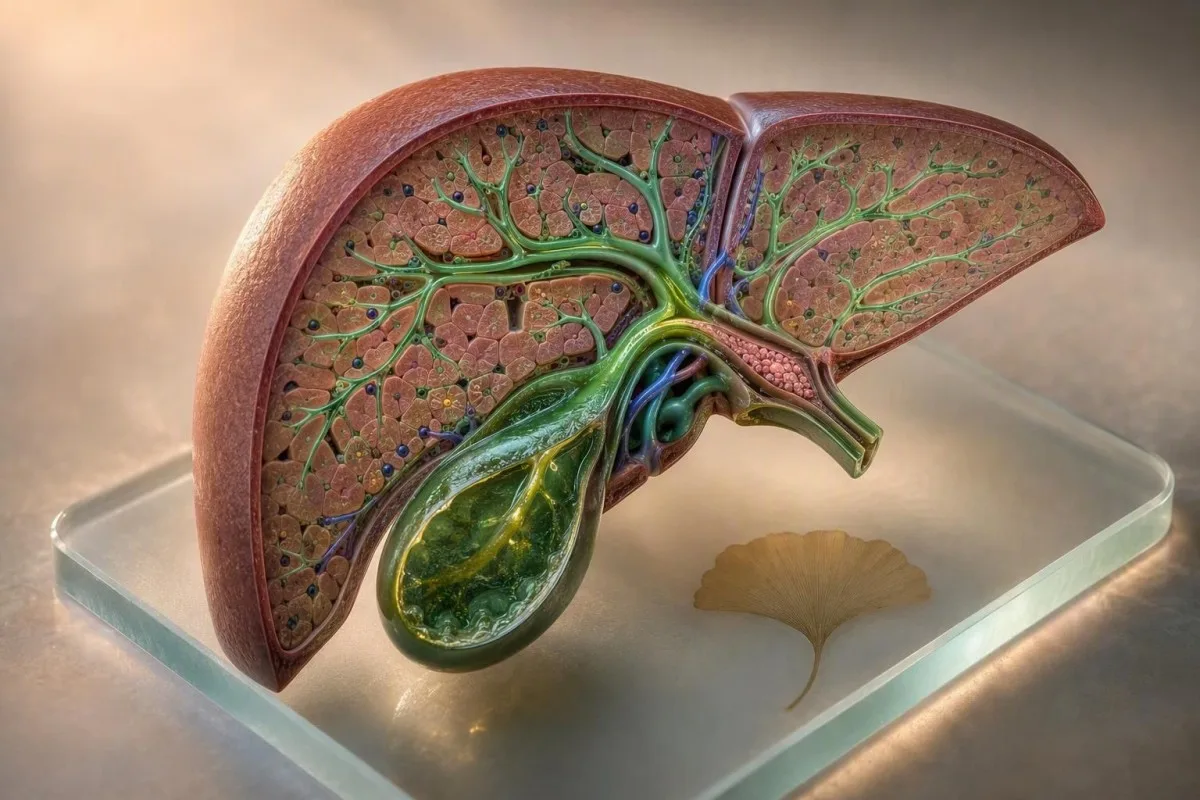
Yuqori to'g'ridan-to'g'ri bilirubin natijasi jigarda bilirubin kon'yugatsiyalangan, lekin uni normal ravishda o't pufagiga chiqara olmasligini bildiradi. Jigarning umumiy holati, ayniqsa ALP, GGT, siydik rangi va belgilari, obstruktsiya yoki jigar hujayrasi shikastlanishi ehtimoli ko'proq ekanligini ko'rsatadi.


- To‘g‘ridan-to‘g‘ri bilirubin odatda 0,3 mg/dL yoki 5 µmol/L dan past bo'ladi; ko'tarilishi qon oqimiga kon'yugatsiyalangan bilirubin yetib borishini ko'rsatadi.
- Siydikdagi bilirubin kon'yugatsiyalangan bilirubin bilan sodir bo'ladi, chunki u suvda eriydi; to'g'ridan-to'g'ri bo'lmagan bilirubin odatda siydikni quyuqlashtirmaydi.
- Xolestatik (o‘t dimlanishi) naqsh ishqoriy fosfataza va GGT darajalarining ALT va AST bilan taqqoslaganda nomutanosib ravishda ko'tarilishini bildiradi, ko'pincha o't oqimining buzilishiga ishora qiladi.
- R koeffitsiyentini 2 yoki undan past bo'lgan qiymat xolestatik naqshni qo'llab-quvvatlaydi, 5 yoki undan yuqori qiymat esa gepatoselüler shikastlanishni qo'llab-quvvatlaydi.
- Shoshilinch kombinatsiya sariqlik, isitma va o'ng yuqori qorin og'rig'i bilan birgalikda o't pufagi infektsiyasi ehtimoli uchun bir kunlik baholashni talab qiladi.
- Gepatit naqsh odatda ALP ga nisbatan yuqori ALT va AST ni hosil qiladi, garchi jiddiy gepatit ham to'g'ridan-to'g'ri bilirubini ko'tarishi mumkin.
- Och rangli najas va quyuq siydik Bu natijalar birgalikda ichakka kamroq safro kirib borishini ko'rsatadi va zudlik bilan klinik ko'rikni talab qiladi.
- Yagona qiymat tashxis emas; avvalgi natijalar, dorilar, homiladorlik holati, spirtli ichimliklarga ta'sir qilish va tasvirlovchi tekshiruvlar ko'pincha keyingi qadamni aniqlaydi.
Yuqori to'g'ridan-to'g'ri bilirubin natijasi haqiqatda nimani anglatadi
Yuqori to'g'ridan-to'g'ri bilirubin jigarda uni qayta ishlagandan keyin qon oqimida to'planganligini anglatadi. Odatdagi muammo jigar hujayralaridan kichik safro kanallariga safro oqimining buzilishi yoki safro yo'llarida keyinroq tiqilib qolishdir; bu ochlik bilan bog'liq Gilbert sindromining klassik namunasi emas.
Aksariyat kattalar laboratoriyalarida to'g'ridan-to'g'ri bilirubin quyidagidan kamroq 0,3 mg/dl (5 mkmol/l), ammo mahalliy mos yozuvlar intervali har doim ustunlikka ega. Taxminan yuqori bo'lgan to'g'ridan-to'g'ri fraktsiya 20% qismidan kam bo‘lishi kerak. ko'pincha kon'yugatsiyalangan giperbilirubinemiya sifatida davolanadi, ammo shifokorlar faqat shu foizdan ko'ra hamroh bo'lgan fermentlarga ko'proq ahamiyat berishadi. To'g'ridan-to'g'ri va bilvosita bilirubin naqshlari sababli turlicha talqin qilinadi.
Bilvosita bilirubindan farqli o'laroq, kon'yugatsiyalangan bilirubin suvda eriydi va siydikga kirishi mumkin. Shu sababli bemor ko'zlar sarg'ayishidan oldin choy rangli siydikni payqashi mumkin; siydik tayoqchasi umumiy zardob bilirubini faqat mo''tadil oshgan bo'lsa ham bilirubini aniqlashi mumkin.
2026-yil 24-avgust holatiga ko'ra, men bu natijani tashxisdan ko'ra yo'naltirish muammosi sifatida ko'rib chiqaman. Doktor Tomas Kaynning amaliy qoidasi sodda: to'g'ridan-to'g'ri bilirubin va siydikdagi bilirubin bizni birinchi navbatda safro oqimi, jigar hujayrasi shikastlanishi, dori vositalariga ta'sir qilish va simptomlar vaqt jadvalini ko'rib chiqishimiz kerakligini bildiradi.
To'g'ridan-to'g'ri va bilvosita emas, bu shiddat shkalasi emas
1,2 mg/dl to'g'ridan-to'g'ri bilirubin 3,0 mg/dl bilvosita bilirubindan avtomatik ravishda xavfliroq emas; har biri boshqa mexanizmga ishora qiladi. To'g'ridan-to'g'ri bilirubin, ishqoriy fosfataza, GGT, ALT, INR va simptomlarning kombinatsiyasi shoshilinchlikni aniqlaydi.
Bilirubin qanday qilib to'g'ridan-to'g'ri bilirubinga aylanadi
Jigar bilvosita bilirubini glyukuron kislotasini qo'shib, to'g'ridan-to'g'ri bilirubinga aylantiradi, keyin uni safroga chiqaradi. Shuning uchun yuqori to'g'ridan-to'g'ri natija kon'yugatsiya sodir bo'lganligini, ammo keyingi eksport, kanal drenaji yoki ikkalasi ham muvaffaqiyatsiz bo'lishi mumkinligini aytadi.
Eski qizil qon hujayrasi gemi bilvosita bilirubinga parchalanadi, u albumin bilan bog'langan holda harakatlanadi va siydikka o'ta olmaydi. Gepatotsitlar uni UGT1A1 orqali glyukuron kislotasi bilan kon'yugatsiya qiladi, suvda eriydigan birikmani hosil qiladi, u kanalikulalardan o'tib, o't yo'llariga oqishi kerak.
Ushbu eksport sekinlashganda, kon'yugatsiyalangan bilirubin plazmaga qayta oqishi va siydik tahlilida paydo bo'lishi mumkin. Ijobiy natija yonida o'qilishi kerak siydikdagi bilirubin natijalari, chunki S vitamini, eskirgan namunalar va yorug'lik ta'siridan ba'zan noto'g'ri tayoqcha natijalari paydo bo'lishi mumkin.
Kantesti - bu AI qon testi analizatori unda umumiy bilirubin, ALT, AST, ALP, GGT, albumin va avvalgi natijalar yonida to'g'ridan-to'g'ri bilirubinni o'qiydi, bir belgili raqamga ma'no berishdan ko'ra. To'g'ridan-to'g'ri komponent diapozondan atigi 0,4 dan 0,6 mg/dl gacha yuqori bo'lsa, bu kontekst muhimdir.
Albumin bilan bog'langan bilirubin nima uchun har xil xulq-atvorda bo'ladi
Bilirubinning to'g'ridan-to'g'ri bo'lmagan shakli odatiy konsentratsiyalarda kuchli albumin bilan bog'langan bo'lib qoladi, shuning uchun u siydikda mavjud emas. Shu sababli, jigarrang siydik shunchaki suvsizlanish belgisi emas, balki biokimyoviy ko'rsatkichdir.
Shifokorlar foydalanadigan to'g'ridan-to'g'ri bilirubin darajalari va fraktsiyalari
To'g'ridan-to'g'ri bilirubin odatda 0,3 mg/dL dan past bo'lganida normal hisoblanadi, ammo laboratoriyalar turli tahlillar va chegaralardan foydalanadi. To'g'ridan-to'g'ri qiymat umumiy bilirubin va hisobot beruvchi laboratoriyaning yuqori chegarasi bilan taqqoslanishi kerak, umumiy internet diapazoni bilan emas.
UK uslubidagi birliklarda umumiy bilirubinning mos yozuvlar chegarasi ko'pincha 20 dan 21 mkmol/L gacha, to'g'ridan-to'g'ri bilirubin esa ko'pincha quyidagidan past bo'ladi 5 mkmol/L. Ba'zi Yevropa laboratoriyalari hisoblangan bog'langan fraktsiyani hisobga oladi va chegaraga yaqin kichik o'zgarish yangi kasallikni emas, balki usulni aks ettirishi mumkin.
To'g'ridan-to'g'ri bilirubin 0.82 mmol/L umumiy bilurubini 2,4 mg/dL bilan juda boshqacha naqshni anglatadi, to'g'ridan-to'g'ri bilurubini 0,2 mg/dL umumiy bilurubini 3,0 mg/dL bilan. Birinchisi asosan bog'langan; ikkinchisi asosan to'g'ridan-to'g'ri bo'lmagan va gemoliz, Gilbert sindromi yoki bog'lanishning buzilishi uchun boshqacha tekshiruvni talab qiladi.
Agar natijalar kutilmagan bo'lsa, odam sog'lom bo'lganda takroriy tekshiruv oqilonadir, ammo sarg'ayish yoki og'riq paydo bo'lganda emas. To'satdan o'zgarishlar bizning ma'noli laboratoriya delta.
Nima uchun quyuq siydik kon'yugatsiyalangan bilirubin uchun foydali ko'rsatkichdir
To'q sariq yoki choy rangli siydik to'g'ridan-to'g'ri bilirubin ko'tarilganda siydikda bilirubin borligini ko'rsatishi mumkin. Normal gidratatsiya ga qaramay davom etganda va och rangli najas, qichima yoki sariq ko'zlar bilan birga kelganda, bu ko'proq tavsiya etiladi.
Bilirubinuriya kon'yugatsiyalangan bilirubinning suvda eruvchanligi sababli yuzaga keladi; bilvosita bilirubin siydikka shu tarzda filtrlanavermaydi. Siydikdagi bilirubin natijasi ko'rinadigan sarg'ayishdan oldin ijobiy bo'lishi mumkin, bu kichik, ammo klinik jihatdan foydali vaqtinchalik belgidir.
Suvsizlanish bilirubin bo'lmagan holda ham siydikni quyuqroq qilishi mumkin, shuning uchun rangning o'zi xolestazni aniqlay olmaydi. Amalda, suyuqliklardan so'ng ham quyuq bo'lib qoladigan va bilirubin uchun ijobiy natija beradigan quyuq siydik, bir martalik erta tongda konsentrlangan namuna olishdan ko'ra ko'proq ma'noga ega; bizning siydik ranglari bo‘yicha qo‘llanma boshqa umumiy sabablarni tushuntiradi.
Urobilinogen qo'shimcha ma'lumot beradi. Safro yo'lining to'liq tashqi tiqilishi siydikdagi urobilinogenni kamaytirishi mumkin, gepatit esa bilirubinuriyani normal yoki ko'paygan urobilinogen bilan ko'rsatishi mumkin, garchi tayoqchalar mukammal bo'lmasa ham va men bu farqni yolg'iz holda ishlatmayman.
Dorilar va taomlar quyuq siydikni taqlid qilishi mumkin
Nitrofurantoin, metronidazol, levodopa, senna va ba'zi qo'shimchalar bilirubin bo'lmagan holda siydik rangini o'zgartirishi mumkin. Tayoqcha va jigar paneli hammom chirog'i ostida rangni baholashdan ko'ra savolga yaxshiroq javob beradi.
Xolestazni ko'rsatadigan ALP va GGT darajalari
Xolestatik jigar polaysi, agar ALP ALT va AST dan ko'proq ko'tarilsa, ayniqsa GGT ham ko'tarilgan bo'lsa, yuzaga keladi. Bu kombinatsiya ALPning gepatobiliar manbaini qo'llab-quvvatlaydi va tiqilish, dori vositalariga bog'liq xolestaz yoki kichik yo'l kasalligi haqida xavotirni kuchaytiradi.
ALP ko'pincha laboratoriya yuqori chegarasidan oshib ketganda ko'tarilgan deb hisoblanadi, odatda taxminan kattalarda 120 dan 130 IU/L gacha kattalarda, lekin u suyak va platsentadan ham keladi. Ko'tarilgan GGT, ko'pincha yuqorida ayollarda 35 dan 45 IU/L gacha yoki erkaklarda 55 dan 65 IU/L gacha laboratoriyaga bog'liq holda, jigar yoki o't yo'li manbai ehtimolini oshiradi.
R nisbati pola'yni rasmiylashtirishga yordam beradi: ALT ni uning yuqori chegarasiga bo'lingan, keyin ALP ni uning yuqori chegarasiga bo'linganiga bo'lingan. R nisbati 2 yoki undan kam xolestatik, esa aralash bo‘ladi. Bu kichik hisob-kitob gepatologiyada odatiy, ammo bemorlarga mo‘ljallangan ko‘plab izohlarda g‘alati tarzda uchramaydi. Agar sizga kengroq asos kerak bo‘lsa, bizning aralash va 5 yoki undan ko'p gepatotsellyulyar; bu konventsiya dori vositalaridan kelib chiqqan jigar shikastlanishini baholashda qo'llaniladi va ayniqsa har bir ferment anormal bo'lganda foydalidir.
EASL xolestatik jigar kasalliklari bo'yicha yo'riqnomasi xolestaz shubha ostiga olinganda birinchi tasviriy test sifatida ultratovushni tavsiya etadi, chunki u nurlanishsiz yo'l kengayishini va o't toshlarini aniqlay oladi (EASL, 2017). Qo'shimcha biokimyoviy tushuntirish uchun bizning xolestaz ko‘rinishlari bo‘yicha qo‘llanmamiz.
Yuqori to'g'ridan-to'g'ri bilirubin obstruktsiyaga ishora qilganda
Yuqori to'g'ridan-to'g'ri bilirubin yuqori ALP va GGT bilan ko'pincha o't drenajining buzilishini ko'rsatadi, ammo bu tosh yoki tiqilgan yo'lni isbotlamaydi. Safras (xol) keng tarqalgan, ammo torayishlar, oshqozon osti bezi kasalliklari, o't yo'llarining yallig'lanishi va dorilarning ta'siri mumkin bo'lgan sabablar bo'lib qolmoqda.
O't yo'lining umumiy qismidagi tosh to'satdan o'ng yuqori qorin og'rig'i, ko'ngil aynishi, quyuq siydik va bir necha soatdan bir necha kungacha to'g'ridan-to'g'ri bilirubinning ko'tarilishiga olib kelishi mumkin. Agar tosh harakatlansa, og'riq susayishi mumkin, ammo jigar testlari bir necha kun davomida anormalligicha qolishi mumkin; bu nomuvofiqlik odamlarni hayron qoldiradi.
Och yoki loy rangli najas kam miqdorda safro pigmenti ichakka yetib borganda hosil bo'ladi, teri constituents teri ichiga yig'ilganda esa qichishish kuchayishi mumkin. Belgilardan hech biri blokirovka joyini tasdiqlamaydi, ammo to'g'ridan-to'g'ri giperbilirubinemiya bilan birgalikda ular tezkor baholashni va odatda ultratovushni talab qiladi.
O't yo'lining tiqilib qolishi oshqozon osti bezi fermentlariga ham ta'sir qilishi mumkin. Yangi yuqori qorin og'rig'i, qusish va ko'tarilgan lipaza izolyatsiya qilingan jigar panelidan ko'ra shoshilinch baholashni talab qiladi; bizning amaliy qo'llanmamizga qarang xavfli lipaza naqshlari.
Gepatit qanday qilib boshqa bilirubin darajasini hosil qiladi
Gepatit odatda ALT va ASTni ALPga nisbatan ko'proq ko'tarilishiga olib keladi, to'g'ridan-to'g'ri bilirubin esa gepatotsit transporti buzilganda ko'payadi. Virusli gepatit, alkogol bilan bog'liq shikastlanish, metabolik yog'li jigar kasalligi, autoimmun gepatit va dori ta'siridan shikastlanish bu naqshni keltirib chiqarishi mumkin.
yuqori ALT qiymatlari 1,000 IU/L oddiy kanal tiqilishiga xos emas va o'tkir virusli gepatit, ishemik shikastlanish, asetaminofen toksikligi yoki og'ir dori ta'siridan shikastlanish ehtimolini oshiradi, ammo kesishmalar mavjud. Aksincha, surunkali jigar kasalligi jigar zahirasi pasayganda 200 IU/L dan past ALT bilan sezilarli bilirubin ko'tarilishiga olib kelishi mumkin.
Amerika Gastroenterologiya Kolleji keng qamrovli tekshiruvdan oldin jigar kimyosining buzilishini tasdiqlashni va buyurilgan dorilarni, retseptsiz mahsulotlarni va qo'shimchalarni ko'rib chiqishni tavsiya qiladi (Kwo va boshqalar, 2017). Klinikamda men zerdeçal aralashmalari, anabolik mahsulotlar va konsentrlangan yashil choy ekstraktlari bemorlar dastlab kutgandan ko'ra ko'proq ahamiyatga ega bo'lganini ko'rganman.
Yuqori AST avtomatik ravishda gepatit degani emas; zo'riqishli mashqlar, mushak shikastlanishi va alkogol ASTni ko'tarishi mumkin. Qarang yuqori AST ogohlantirish naqshlari jigarning yagona manba ekanligini taxmin qilishdan oldin.
Aralash jigar holatlari va R nisbati nima uchun mukammal emas
Aralash naqsh ALT yoki AST va ALP ikkalasi ham sezilarli darajada ko'tarilganligini, odatda 2 dan 5 gacha bo'lgan R nisbati bilan bildiradi. Aralash natijalar dori ta'siridan jigar shikastlanishi, o'tgan safro toshlari, virusli gepatit, alkogol bilan bog'liq jigar shikastlanishi va sepsis bilan bog'liq xolestazda yuzaga keladi.
R nisbati bu snapshot, yakuniy tashxis emas. Kanal vaqtincha tiqilib qolgan bemor dastlab quyidagi ALTni ko'rsatishi mumkin 600 IU/L va ALP faqat mo''tadil baland, keyin 48 soatdan keyin bilirubin va ALP ortidan kelayotgan xolestatik profildan o'tadi.
Homiladorlik, yosh, suyak aylanishi va yaqinda sinish ALPni jigardan mustaqil ravishda oshirishi mumkin. GGT normal bo'lsa, klinisyenlarning suyagi manba deb hisoblashlari kerak; bizning tushuntirishimiz GGT normal bo‘lganda ALP bo‘yicha qo‘llanmamizga qarang. bu imkoniyatlarni ajratishga yordam beradi.
Kantesti - bu AI qon tahlili natijalari platformasi bir xil kunlik markerlarni va uzoq muddatli o'zgarishlarni solishtiradi, bu ayniqsa birinchi ALT ko'tarilishidan keyin to'g'ridan-to'g'ri bilirubinning ko'tarilishi kuzatilganda foydalidir. Shunga qaramay, algoritm tekshiruv, ultratovush yoki belgilari xavfli bo'lsa, favqulodda baholashni almashtira olmaydi.
Yuqori to'g'ridan-to'g'ri bilirubinga shoshilinch choralar ko'rishni talab qiladigan belgilar
Isitma, titroq va o'ng yuqori qorin og'rig'i bilan birga kelgan sariqlik favqulodda holatdir, chunki u yuqoriga qarab ko'tarilayotgan xolangitni ko'rsatishi mumkin. Ang jamiyat, past qon bosimi, doimiy qusish yoki kuchli holsizlik ham qon testini takrorlashni kutishdan ko'ra favqulodda tekshiruvga loyiqdir.
Klassik Charcot uchlik belgisi - bu isitma, sariqlik va o'ng yuqori qorin og'rig'idir. Har bir xolangit bilan kasallangan bemorda ushbu uch belgi hammasi ham bo'lavermaydi, ayniqsa keksa yoshdagi bemorlarda, shuning uchun isitma va sariqlikning o'zi bir kunda tibbiy maslahat olishga sabab bo'lishi kerak; obstruktsiya orqasidagi infektsiya tezda yomonlashishi mumkin.
Homiladorlikda yangi paydo bo'lgan sariqlik, jigar uchun potentsial toksik dori qabul qilishni boshlagandan keyin bilirubinning ko'tarilishi, qora najas, hushidan ketish yoki suyuqlikni ichida ushlab turolmaslik holatlarida shoshilinch tibbiy yordamga murojaat qiling. INR dan yuqori 1.5 o'tkir jigar shikastlanishi bilan bog'liq bo'lsa, bu ayniqsa xavotirlidir, chunki u jigarning sintez qilish qobiliyatining pasayganligini ko'rsatishi mumkin.
Kamroq keskin ko'rinish ham tezkor ko'rib chiqishni talab qilishi mumkin: och rangli najas va to'q siyoh rangli siydik bilan birga keladigan qichima, 24 dan 48 soatgacha shifokor bilan bog'lanish uchun yetarli. Bizning qo'llanmamiz bilirubin qachon e’tiborni talab qiladi qizil bayroqlarni oddiy tilda sanab o'tadi.
Kon'yugatsiyalangan bilirubin ko'tarilgandan keyin klinisyenlarning keng tarqalgan testlari
Birinchi kuzatuv odatda jigar panelini, INR, albumin, to'liq qon sonini va qorin bo'shlig'i ultratovushini takrorlashni o'z ichiga oladi. Tanlangan testlar xolestatik, gepatotsellyulyar yoki aralash profil bormi va belgilar birdan boshlanganmi yoki yo'qmi, shunga bog'liq.
Ultratovush o't pufag'i toshlarini, o't pufag'i o'zgarishlarini va kattaroq o't yo'llarining kengayishini baholaydi; normal tekshiruv kichik toshlarni yoki jigar ichidagi xolestazni istisno qilmaydi. MRCP, endoskopik ultratovush yoki ERCP, agar shubha yuqori bo'lsa, davom etishi mumkin, ERCP esa odatda davolash kerak bo'lsa ajratib qo'yiladi.
Virusli gepatiti serologiyasi, autoimmun markerlar, ferritin, transferrin to'yinganligi va dori-darmonlarni ko'rib chiqish tasodifiy buyurilmay, kontekstga qarab tanlanadi. To'liq jigar paneli (liver panel) umumiy ko‘rinishi bemorlarga nega faqat bilirubin sababni aniqlay olmasligini ko'rishga yordam beradi.
Doktor Tomas Kayn bemorlarga uchrashuvdan oldin dori va qo'shimcha mahsulotlar yorliqlarini suratga olishni tavsiya qiladi. Aniq dozalar, boshlang'ich va tugatish sanalari ko'pincha xotirada yo'qolgan naqshni ochib beradi, ayniqsa yangi mahsulot oldingi 5 dan 90 kungacha.
To'g'ridan-to'g'ri bilirubinni ko'tarishi mumkin bo'lgan dori-darmonlar va qo'shimchalar
dorilar xolestaz, gepatotsellyulyar shikastlanish yoki ikkalasi orqali kon'yugatsiyalashgan bilirubin ko'tarilishiga olib kelishi mumkin. Tegishli ko'rsatkich ko'pincha vaqt jadvali hisoblanadi: belgilar yoki g'ayritabiiy testlar dori boshlanganidan bir necha kun o'tgach yoki bir necha oy o'tgach paydo bo'lishi mumkin.
Amoksisilin-klavulanat kechiktirilgan xolestatik jigar shikastlanishining yaxshi tan olingan sababidir, ba'zan antibiotik kurs tugagandan keyin paydo bo'ladi. Anabolik-androgen steroidlar, xlorpromazin, azatioprin, ba'zi antifungal vositalar va ba'zi o'simlik mahsulotlari ham o't oqimini buzishi mumkin, ammo individual xavfni bashorat qilish qiyin.
Muhim buyurilgan dori-darmonlarni vrach bilan gaplashmasdan to'xtatmang, agar favqulodda xizmat ko'rsatuvchi shifokorlar boshqacha maslahat bermasa. Asetaminofenning haddan tashqari dozasi boshqacha: u shoshilinch harakatni talab qiladi va bilirubin cho'qqiga chiqishidan oldin, ko'pincha 1,000 IU/L, dan yuqori bo'lgan aminotransferaza darajasining keskin ko'tarilishiga olib kelishi mumkin.
Detoksifikatsiya yoki jigar qo'llab-quvvatlashi sifatida sotiladigan mahsulotlar avtomatik ravishda zararsiz emas. Bizning jigar faoliyatiga ta'sir qiluvchi qo'shimchalarning sharhimiz umumiy mahsulot toifalarini qamrab oladi, ular oshkor qilinishiga loyiqdir.
Spirtli ichimliklar va yog'li jigar: foydali kontekst, avtomatik javoblar emas
Spirtli ichimliklarni iste'mol qilish va metabolik yog'li jigar kasalligi GGT, ALT, AST va ba'zan to'g'ridan-to'g'ri bilirubini ko'tarishi mumkin, ammo ular sariqlikni tushuntirish uchun ishlatilmasligi kerak. Konjugatsiyalangan bilirubinning yangi ko'tarilishi obstruktsiya, gepatit va dori vositalari shikastlanishini baholashni talab qiladi.
Alkogol bilan bog'liq gepatit ko'pincha AST ALT dan yuqori bo'lishiga olib keladi, odatda AST:ALT nisbati 2, dan yuqori bo'ladi, ammo bu nisbat uni yolg'iz o'zi tashxislash uchun etarli darajada sezgir yoki o'ziga xos emas. Juda yuqori bilirubin, ko'tarilgan INR, qorinning shishishi yoki chalkashlik kuchli kasallikni ko'rsatishi mumkin va uni zudlik bilan baholash kerak.
Metabolik yog'li jigar kasalligi ko'proq ALT ustunlik qiluvchi engil ko'tarilishlarni keltirib chiqaradi va ilg'or kasallik yoki boshqa jarayon rivojlanmaguncha normal bilirubin bo'lishi mumkin. Vazn yo'qotish vaqtincha ALT ni o'zgartirishi mumkin, ammo u doimiy och rangli najas yoki bilirubinli siydikni keltirib chiqarmasligi kerak; vazn yo'qotishdan keyin jigar fermentlarini ko'ring vazn yo'qotgandan keyin jigar fermentlari.
Mening tajribamda, kamaytirilgan alkogol iste'molidan keyin GGT ning mo''tadil holga kelishi ko'pchilikni xushnud etadi, ammo bu bilirubinni 3 mg/dL uyda kuzatish uchun xavfsiz qilmaydi. Polotnolar birga mavjud bo'lishi mumkin, aynan shuning uchun tarix va tasvirlash muhimdir.
Homiladorlik, yoshi kattalik va boshqa maxsus holatlar
Homiladorlik, yosh va asosiy kasallik yuqori to'g'ridan-to'g'ri bilirubinning shoshilinchligini va differensial diagnostikasini o'zgartiradi. Kechki homiladorlikda toshmasiz qichishish bir kunlik akusherlik maslahatini talab qiladi, chunki homiladorlikning ichki xolestazi bilirubindan sezilarli darajada ko'tarilishidan oldin o't kislotalarini ko'paytirishi mumkin.
Homiladorlikda, serum o't kislotalari odatda xolestazdan ko'ra bilirubin uchun ko'proq sezgir, va akusherlik guruhlari qiymatlar o'zgarishi mumkinligi sababli takroriy tekshiruvlardan foydalanadilar. Sariqlik, qorin og'rig'i yoki isitma homiladorlik bilan bog'liq deb taxmin qilinmaydi va zudlik bilan baholashni talab qiladi.
Keksa odamlar obstruktsiyadan klassik kolik og'riq o'rniga og'riqsiz sariqlik, ishtaha yo'qolishi yoki chalkashlikni boshdan kechirishi mumkin. Bilirubinning kutilmagan vazn yo'qolishi, yangi diabet yoki og'riqsiz sariqlik bilan ko'tarilishi zudlik bilan shifokor nazorati ostida tasvirlashni talab qiladi; muntazam tekshiruvni kutish mos emas.
Bolalar va yangi tug'ilgan chaqaloqlar, ayniqsa hayotning birinchi haftalarida, turli xil bilirubin qoidalariga rioya qilishadi. Bolada doimiy konjugatsiyalangan bilirubin 1 mg/dL dan yuqori bo'lsa, bu anormal hisoblanadi va umumiy yangi tug'ilgan chaqaloqlarning sariqligi haqida tasalli emas, balki pediatrik baholashni talab qiladi.
To'g'ridan-to'g'ri bilirubini vaqt o'tishi bilan xavfsiz kuzatib borish
Kamayotgan to'g'ridan-to'g'ri bilirubin odatda tiklanishni qo'llab-quvvatlaydi, ammo tendentsiya ALP, ALT, INR va alomatlar bilan birgalikda talqin qilinishi kerak. Bilirubin vaqtinchalik obstruktsiya yoki gepatit epizodidan keyin bir necha kun yoki haftalar davomida klinik yaxshilanishdan orqada qolishi mumkin.
Sana, ochlik holati, alkogol iste'moli, yangi dori-darmonlar, kasallik, qorin og'riqlari va siydik yoki najas rangi o'zgarganligini yozib qo'ying. Bir haftada 0.4 dan 2.1 mg/dL gacha ko'tarilish klinik jihatdan muhimdir, 0.1 mg/dL ga ma'lumotnoma chegarasiga yaqin farq analitik o'zgarish bo'lishi mumkin.
Kantesti - bu AI asosidagi qon tahlili analiz vositasi bu yuklangan hisobotlardan bilirubin va jigar fermentlarining tendentsiyalarini tashkil qilishi mumkin, bu esa foydalanuvchilarga o'z shifokorlari uchun aniq savollarni tayyorlashga yordam beradi. Bizning qon tahlili trendi bo‘yicha qo‘llanma ko'pincha bitta izolyatsiya qilingan bayroqdan ko'ra nishab va vaqt muhimligini tushuntiradi.
Kantesti ning tibbiy ko'rib chiqish jarayoni bizning veb-saytimizda ko'rsatilgan klinisyenlar tomonidan shakllantiriladi, Tibbiy maslahat kengashi, ammo shoshilinch alomatlar mahalliy favqulodda xizmatlarga yoki shaxsan shifokorga murojaat qilishni talab qiladi. Hech qanday hisobotni talqin qilish xizmati bloklangan kanalni drenajlash kerakligini aniqlay olmaydi.
Yuqori to'g'ridan-to'g'ri bilirubin uchun amaliy keyingi qadamlar rejasi
Yuqori to'g'ridan-to'g'ri bilirubin, agar siz sog'lig'ingiz yaxshi bo'lsa, haftada tibbiy ko'rikni, agar sariqlik, isitma, og'riq, qusish yoki karaxtlik mavjud bo'lsa, bir kunlik baholashni keltirib chiqarishi kerak. Jigar tozalashga urinmang, ochlik qilmang yoki obstruksiyani o'z-o'zidan davolashga urinmang.
Laboratoriya hisobotining to'liq nusxasini olib keling, nafaqat bilirubin. Shifokorga umumiy va to'g'ridan-to'g'ri bilirubin, ALP, GGT, ALT, AST, albumin, agar mavjud bo'lsa, INR va oldingi natijalar kerak; buni bizning bilan solishtiring to'liq panel naqsh qo'llanmasi.
Sabab aniq bo'lguncha alkogoldan saqlaning, normal hidratsiyani saqlang va asetaminofen o'z ichiga olgan mahsulotlarning belgilangan dozasidan oshmang. Sharbatlar o't yo'llarini ochishini isbotlovchi hech qanday dalil yo'q va ochlik bilindirmaydigan bilindirmaydigan bilindirmaydigan oshishini kuchaytirishi mumkin, bu rasmni o'qishni qiyinlashtiradi.
Agar natija kutilmagan bo'lsa va sizda simptomlar bo'lmasa, jigar kimyosini takrorlashni so'rang 48 dan 72 soatgacha va ultratovush sizning naqshingiz uchun mosmi. Kantesti’s klinik validatsiya yondashuvimiz talqinga xavfsizlik triaji bilan bog'liq bo'lganligini tushuntiradi, chunki u bitta ma'lumot-o'lchovli bayroqqa tayanishdan ko'ra talqin qilinadi.
Tez-tez so'raladigan savollar
Agar umumiy bilirubinim normal bo'lsa, yuqori to'g'ridan-to'g'ri bilirubin nimani anglatadi?
Yuqori to'g'ridan-to'g'ri bilirubinning normal yoki deyarli normal umumiy bilirubin bilan birga bo'lishi o't oqimining buzilishi, yengil xolestaz, dori ta'siri yoki laboratoriya o'zgarishining dastlabki belgisi bo'lishi mumkin. Ko'pgina laboratoriyalar to'g'ridan-to'g'ri bilirubinning yuqori chegarasini 0,3 mg/dL yoki 5 mkmol/l deb hisoblaydilar, shuning uchun 0,4 mg/dL natijasi ALP, GGT, ALT va avvalgi qiymatlar bilan birgalikda talqin qilinishi kerak. Agar siydik bilirubin musbat bo'lsa, kon'yugatsiyalangan bilirubin haqiqatan ham aylanib yuradi va Gilbert sindromini taxmin qilishdan ko'ra, kuzatuv yanada foydaliroqdir. Yangi sarg'ayish, ochiq rangli najas, isitma yoki qorin og'rig'i buni muntazam kuzatuvdan bir kunlik baholashga o'zgartiradi.
Suvsizlanish to'g'ridan-to'g'ri bilirubinning ko'payishiga olib kelishi mumkinmi?
Suvsizlanish umumiy bilurubinni biroz to'plashi mumkin, ammo bu to'g'ridan-to'g'ri fraktsiyaga qaraganda bilvosita fraktsiyani ko'proq ko'taradi. Suvsizlanish siydikni bilirubin mavjud bo'lmagan taqdirda ham qorong'i ko'rsatishi mumkin, shuning uchun siydik tayoqchasi yordam beradi. Agar jigar fermentlari va alomatlar ko'rib chiqilmasa, 1,0 mg/dl yoki 17 mkmol/l dan yuqori to'g'ridan-to'g'ri bilurubinni suvsizlanishga bog'lash kerak emas. Normal gidratatsiyadan keyin ham qorong'i siydik paydo bo'lishi tibbiy ko'rikni talab qiladi, ayniqsa siydik testi bilurubinni aniqlasa.
Yuqori to'g'ridan-to'g'ri bilirubin har doim o't yo'llarining tutilib qolganligini anglatadimi?
Yuqori to'g'ridan-to'g'ri bilirubin har doim o't yo'llarining tiqilib qolganligini anglatmaydi. Agar ALP va GGT ko'tarilgan bo'lsa, najas oqarib ketsa, siydik to'q bo'lib qolsa yoki ultratovush tekshiruvi yo'llarning kengayganini ko'rsatsa, tiqilib qolish ehtimoli ko'proq; gepatit va dori vositalariga bog'liq xolestaz tosh bo'lmagan holda ham xuddi shu bilirubin naqshini hosil qilishi mumkin. R nisbati 2 yoki undan past bo'lsa xolestazni, R nisbati 5 yoki undan yuqori bo'lsa gepatotsellyulyar shikastlanishni qo'llab-quvvatlaydi. Ushbu sabablarni ishonchli ajratish uchun odatda tasvirlash va klinik tarix kerak bo'ladi.
O't pufagi oqishining bloklanishida qaysi jigar testlari yuqori bo'ladi?
O't pufagining to'silanishi odatda ALT va AST bilan taqqoslaganda ishqoriy fosfataza va GGT ni nomutanosib ravishda oshiradi, va to'g'ridan-to'g'ri bilirubinning ko'tarilishi drenaj yomonlashganda kuzatilishi mumkin. Kattalar uchun ishqoriy fosfataza yuqori chegarasi odatda 120-130 IU/L atrofida, GGT yuqori chegarasi jins va laboratoriyaga qarab farqlanadi, ko'pincha 35-65 IU/L atrofida. O't pufagining to'silishi sababli ALT qisqa muddatga yuzlab ko'tarilishi mumkin, shuning uchun dastlabki namuna xolestatik holat namoyon bo'lishidan oldin gepatosellular ko'rinishi mumkin. To'silish shubha qilinganda, odatda birinchi tasviriy test ultratovush hisoblanadi.
Yuqori to'g'ridan-to'g'ri bilirubinga qachon shoshilinch yordam bo'limiga borishim kerak?
Yuqori to'g'ridan-to'g'ri bilirubin bilan birga isitma, titroq sovqatish, sarg'ayish, qorinning o'ng yuqori qismida og'riq, chalkashlik, hushdan ketish, doimiy qusish yoki past qon bosimi bo'lsa, shoshilinch yordam bo'limiga boring yoki shoshilinch baholashni oling. Ushbu kombinatsiya xolangit, ya'ni obstruktsiyalangan o't yo'lining yuqori qismidagi jiddiy infektsiya bo'lishi mumkin. INR 1.5 dan yuqori bo'lgan o'tkir jigar shikastlanishi, yangi chalkashlik yoki tez sur'atda kuchayib borayotgan sarg'ayish ham shoshilinch baholashni talab qiladi. Mild izolyatsiya qilingan ko'tarilish bilan yaxshi odam tez-tez klinik mutaxassis bilan bog'lanishi mumkin, ammo alomatlar paydo bo'lsa kutmasligi kerak.
Gepatit siydikda bilirubinni keltirib chiqarishi mumkinmi?
Gepatit buyrakdagi jigar hujayralarining shikastlanishi natijasida jigar kon'yugirlangan bilirubinni o'tga chiqarish qobiliyatini kamaytirganda siydikda bilirubin paydo bo'lishiga olib kelishi mumkin. Bunday holatda, ALT va AST ko'pincha ALPga nisbatan yuqori bo'ladi va 1000 IU/L dan yuqori ALT darajalari virusli, toksik yoki ishemik gepatit kabi o'tkir jiddiy shikastlanishdan shubhalanishga asos beradi. Siydikdagi bilirubinning o'zi aniq sababni aniqlamaydi, chunki o't yo'llarining o'tkazuvchanligi buzilishi ham shu kabi natija berishi mumkin. Dorilarning qabul qilingan vaqti, gepatitga qarshi testlar, jigarning sintetik faoliyati va tasvirlash usullari keyingi bosqichni belgilashga yordam beradi.
Bugun AI asosidagi qon tahlilini tahlil qilishni oling
Kantesti’ga tezkor va aniq laboratoriya tahlili uchun ishonadigan butun dunyo bo‘ylab 2 milliondan ortiq foydalanuvchiga qo‘shiling. Qon tahlili natijalaringizni yuklang va soniyalar ichida 15,000+ biomarkerlarining to‘liq talqinini oling.
📚 Havola qilingan ilmiy tadqiqot nashrlari
Klein, T., Mitchell, S., & Weber, H. (2026). Kantesti MChJ. (2026). Sun'iy intellekt bilan qon tahlili analizatori: 2,5M tahlillar tahlil qilingan | Global Health Report 2026. Zenodo. https://doi.org/10.5281/zenodo.18175532. Kantesti AI tibbiy tadqiqoti.
Klein, T., Mitchell, S., & Weber, H. (2026). Kantesti LTD. (2026). RDW qon testi: RDW-CV, MCV va MCHC bo‘yicha to‘liq qo‘llanma. Zenodo. https://doi.org/10.5281/zenodo.18202598. Kantesti AI tibbiy tadqiqoti.
📖 Tashqi tibbiy manbalar
⚕️ Tibbiy ogohlantirish
Ushbu maqola faqat ta’lim maqsadlari uchun mo‘ljallangan va tibbiy maslahatni anglatmaydi. Tashxis va davolash bo‘yicha qarorlar uchun har doim malakali sog‘liqni saqlash mutaxassisiga murojaat qiling.
E-E-A-T ishonch signallari
Tajriba
Shifokor boshchiligidagi laboratoriya talqin qilish ish jarayonlarini klinik ko‘rib chiqish.
Tajriba
Laboratoriya tibbiyoti biomarkerlarning klinik kontekstda qanday o‘zini tutishini yoritadi.
Vakolatlilik
Dr. Tomas Klein tomonidan yozilgan, Dr. Sarah Mitchell va Prof. Dr. Hans Weber tomonidan ko‘rib chiqilgan.
Ishonchlilik
Xavotirni kamaytirish uchun aniq keyingi qadamlar yo‘nalishlari bilan dalillarga asoslangan talqin.