
Emlashga qarshi antitelalar bo‘yicha qon tahlili, agar yozuvlar yo‘q bo‘lsa, homiladorlik qarorni o‘zgartirsa yoki quturish (rabies) xavfi davom etayotgan bo‘lsa, foydali bo‘lishi mumkin. Biroq ko‘plab sayohatchilar uchun hujjatlashtirilgan dozalarga ega bo‘lish—yoki shunchaki emlanish—titerni quvib yurishdan ko‘ra ishonchliroq.



- Gepatit B sirt antitelasi kamida 10 mIU/mL bo‘lib, to‘liq kurs tugaganidan keyin 1–2 oy o‘tgach o‘lchanadi; post-emlash testi kerak bo‘lgan odamlarda emlashga javobni hujjatlashtiradi.
- Qizamiq (measles) IgG ijobiylik immunitetning laboratoriya dalili hisoblanadi, ammo MMRning ikkita dozasiga oid yozma isbot salbiy tijorat qizamiq titrini bekor qiladi.
- Rubella IgG homiladorlikdan oldin eng foydali; ijobiy natija odatda immunitetni ko‘rsatadi, laboratoriya cutoff esa analiz usuliga qarab farq qiladi.
- Varicella IgG o‘tmishdagi suvchechak (chickenpox) immunitetini hujjatlashtirishi mumkin, ammo tijorat testlari ikki doza emlashdan keyin paydo bo‘lgan antitelalarni o‘tkazib yuborishi mumkin.
- Quturishga qarshi neytrallovchi antitana 0,5 IU/mL ga teng yoki undan yuqori bo‘lishi titr talab qilinadigan, davom etayotgan ta’sir xavfi bo‘lgan odamlar uchun xalqaro miqyosda qo‘llaniladigan chegara hisoblanadi.
- Gepatit A IgG yoki umumiy anti-HAV musbatlik immunitetni ko‘rsatadi, ammo safargacha tekshiruv odatda jo‘nash yaqin bo‘lsa, emlashga qaraganda kamroq samarali bo‘ladi.
- IgM testlari emlash immunitetini isbotlamaydi; ular asosan yaqinda bo‘lgan infeksiyani tekshirish uchun mo‘ljallangan va noto‘g‘ri xavotir uyg‘otishi mumkin.
- Safar vaqti muhim: jo‘nashdan 4–6 hafta oldin sayohat bo‘yicha konsultatsiya tashkil qiling, garchi bir nechta vaksinalar safarga yaqinroq muddatda ham yetarli darajada foydali himoya berishi mumkin.
Sayohatchilar uchun qon tahlili qachon yordam beradi va qachon emlash yutadi
A sayohatchilar uchun qon testi eng ko‘p foydali bo‘ladi, agar u real qarorni o‘zgartirsa: klinisyen uchun gepatit B ga javobni tasdiqlash, homiladorlikdan oldin qizilcha (rubella)ni tekshirish, ish uchun immunitetni hujjatlashtirish yoki quturishga uzoq muddatli ta’sirni boshqarish. Agar siz sog‘lom bo‘lsangiz, ishonchli yozuvlar bo‘lmasa va vaksinni xavfsiz qabul qila olsangiz, emlash odatda keng qamrovli antitana paneliga qaraganda tezroq, arzonroq va ishonchliroq bo‘ladi.

Men tez-tez uchraydigan safardan oldingi xatoni ko‘raman: safardan 10 kun oldin mavjud bo‘lgan barcha antitanalarni buyurtirib, keyin noaniq (ekvivalent) natijalarga ta’sir qilishga vaqtingiz qolmaydi. Musbat antitana natijasi immunitetni hujjatlashtirishi mumkin, ammo manfiy natija har doim ham sezuvchanlikni isbotlamaydi, ayniqsa qizamiq yoki varikella (suvchechak)ga qarshi emlashdan keyin. Immunizatsiya yozuvlari, manzil, qolish muddati, faoliyatlar, homiladorlik rejalari va immun holatdan boshlang; bizning sayohat isitmasini tekshirish safardan keyingi tekshiruv nima uchun butunlay boshqa mantiqqa asoslanishini tushuntiradi.
Kantesti da men o‘quvchilarga laboratoriya ma’lumotlarini “ruxsatnoma” sifatida emas, balki sayohat tibbiy qarorining bir qismi sifatida ko‘rib chiqishni tavsiya qilaman. Klinikada doktor Tomas Klein qoidasi oddiy: agar natija sizning vaksina rejangizni o‘zgartirmasa, uni olish uchun himoyani kechiktirmang. Yozuvlar noaniq bo‘lsa, odatda vaksina yana berilishi mumkin; ammo og‘ir allergiya kabi kontrendikatsiyalar yoki jonli vaksinalar bo‘yicha cheklovlar muhim istisnolar hisoblanadi.
Sayohatga mo‘ljallangan emlash antitelalari testini to‘g‘ri qanday buyurtma qilish kerak
A sayohat vaksinasiga antitana testi “immunitet paneli”ni shunchaki so‘rash emas, balki antigen va analiz usulini (assay) nomlashi kerak. Savolga javob berilayotganiga qarab gepatit A umumiy antitanasi yoki IgG, gepatit B sirt antitanasi, qizamiq IgG, rubella IgG, varikella-zoster IgG yoki quturish virusi neytrallovchi antitanasini so‘rang.
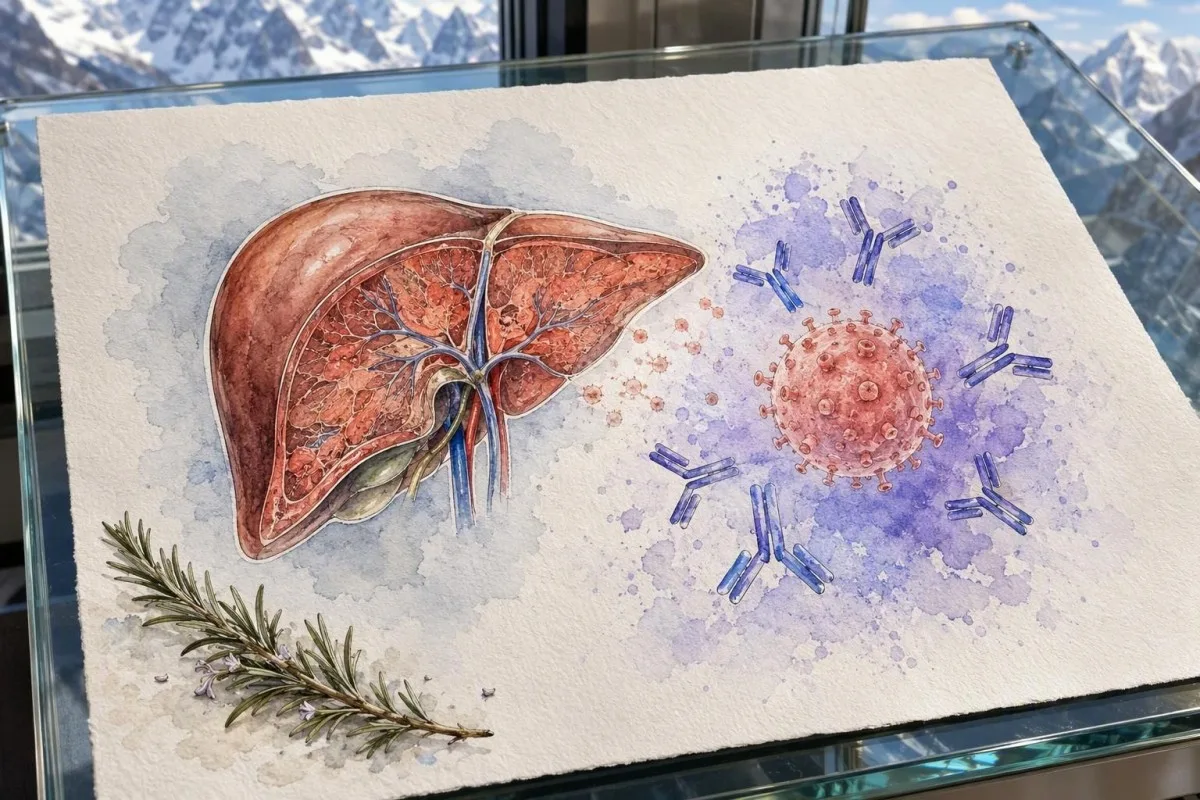
Gepatit B core antitanasini vaksina-javob testi sifatida buyurtirmang. Anti-HBs gepatit B sirt antigeniga javobni o‘lchaydi; anti-HBc esa o‘tmishdagi yoki hozirgi tabiiy infeksiyani bildiradi va faqat emlash natijasida ishlab chiqarilmaydi. Gepatit B holati noaniq bo‘lsa, klinisyen HBsAg, umumiy anti-HBc va anti-HBs ni birgalikda talqin qilishi kerak, ayniqsa tug‘ilgan joyi yuqori tarqalgan hudud bo‘lgan yoki u yerda uzoq vaqt bo‘ladigan odam uchun.
Vaqt ma’noni o‘zgartiradi. Gepatit B anti-HBs ni chizing yakuniy do‘zadan keyin 1–2 oy o‘tgach javob isboti talab qilinganda; yillar o‘tib tekshirish immun xotira barqaror bo‘lsa ham past yoki aniqlanmaydigan sonni ko‘rsatishi mumkin. Kantesti — bu AI qon tahlili natijalari platformasi bu assay nomlari, birliklar, referens interval va yig‘ish sanalarini yonma-yon joylashtiradi, lekin u manzilga xos vaksina buyurish o‘rnini bosa olmaydi. Metod va aniqlik bo‘yicha savollar uchun bizning klinik validatsiya standartlarimizga.
Gepatit A antitellari: oldingi uchrashuv uchun foydali, sayohat oldidan kamdan-kam hollarda zarur
Total anti-HAV yoki gepatit A IgG musbatligi avvalgi infeksiya yoki emlashdan kelib chiqqan immunitetni bildiradi. Gepatit A xavfi mavjud bo‘lgan mamlakatlarga ko‘pchilik emlanmagan sayohatchilar uchun test o‘tkazmasdan vaksina berish amaliy tanlovdir, chunki u bilan immun bo‘lgan odamni emlashda zarar yo‘q.
Gepatit A vaksina odatda kamida 6 oy oralatib ikki doza ko‘rinishida beriladi, garchi bitta doza ko‘pchilik sog‘lom sayohatchilar uchun erta muhim himoyani ta’minlaydi. 40 yoshdan katta kattalar, surunkali jigar kasalligi bo‘lganlar va 2 haftadan kam muddatda jo‘nab ketayotgan immuniteti zaif sayohatchilar vaksina bilan birga immun globulinga individual yondashuvni talab qilishi mumkin. CDC Yellow Book 2026 ushbu holatlarda serologiyani kutishdan ko‘ra tezkor emlashni birinchi o‘ringa qo‘yishda davom etadi.
Anti-HAV IgM immunitet testi emas. U o‘tkir gepatit A gumon qilinganda qo‘llanadi va bir necha oy davomida aniqlanib turishi mumkin; uni sog‘lom sayohatchida buyurtma qilish keraksiz xavotirni keltirib chiqarishi mumkin. Agar holatga charchoq, sariqlik, to‘q rangli siydik yoki g‘ayritabiiy fermentlar kirsa, antitanani yakka o‘zi davolash o‘rniga jigar paneli talqinini sayohat tarixingiz bilan birga ko‘rib chiqing.
Sayohat uchun gepatit B titri: 10 mIU/mL chegarasi izohi
A sayohat uchun gepatit B titri anti-HBs kamida dan pastga siljishi mumkin, bo‘lganda himoya qiluvchi deb hisoblanadi, lekin bu chegara hujjatlashtirilgan to‘liq emlash seriyasidan keyin 1–2 oy o‘tgach o‘lchanganda tasdiqlanadi. Anti-HBs 10 mIU/mL dan past bo‘lgan har bir sayohatchiga kuchaytiruvchi doza kerakligi universal qoida emas.
CDC ACIP gepatit B bo‘yicha tavsiyalari post-vaksinatsion serologiyani javobni bilishga bog‘liq bo‘lgan guruhlar uchun saqlab qoladi: ta’sirlanish xavfi bo‘lgan sog‘liqni saqlash xodimlari, HBsAg-musbat onalardan tug‘ilgan chaqaloqlar, dializ bemorlari, OIV yoki boshqa immuniteti zaif shaxslar hamda HBsAg-musbat shaxslarning jinsiy hamkorlari (Schillie et al., 2018). Hujjat bilan tasdiqlangan emlashga ega immunokompetent kattalarga oddiy sayohat oldidan muntazam anti-HBs testlari kerak emas.
Men maslahat bergan 32 yoshli shoshilinch tibbiyot xodimida emlashdan 12 yil o“tib anti-HBs 4 mIU/mL bo”lgan va u “immunitetini yo‘qotgan” deb xavotir olgan. Uning ish joyidagi xizmat tarixiy yetarli post-seriya titrini ko‘rib chiqdi; bu yangi past raqamdan ancha muhimroq edi. Kantesti — bu AI asosidagi qon tahlili analiz vositasi bo‘lib, u uchta gepatit B markerini naqsh sifatida aniqlab berishi mumkin, bunda biomarker ma'lumotnomasi foydalanuvchilarga laboratoriyasi aynan qaysi antitanani o‘lchaganini aniq tekshirishga yordam beradi.
Qizamiqqa (measles) immunitet qon testi: nega ikkita MMR doza muhimroq
A qizamiqqa immunitet qon tahlili qizamiq IgG ni o‘lchaydi va ijobiy natija immunitetning laboratoriya dalili sifatida qabul qilinadi. Biroq kamida 28 kun farq bilan berilgan ikkita MMR doza ko‘pchilik emlangan kattalar uchun yanada kuchli amaliy dalildir, hatto tijorat IgG tahlili manfiy yoki noaniq (equivocal) chiqarsa ham.
Tijorat qizamiq IgG testlari emlash natijasida hosil bo‘ladigan past antitanalar darajalari yaqinida sezgirligi bo‘yicha farq qiladi. Ikki marta hujjatlashtirilgan MMR dozasidan keyin qizamiq IgG natijasi manfiy bo‘lsa, bu avtomatik ravishda takroriy dozalarga olib kelmasligi yoki sezuvchanlik (susceptibility) deb e’lon qilinmasligi kerak. ACIP xalqaro sayohatchilar, sog‘liqni saqlash xodimlari va oliy ta’limdan keyingi ta’limdagi talabalar uchun ikkita hujjatlashtirilgan doza immunitetning taxminiy dalili deb hisoblaydi (McLean et al., 2013).
Qizamiq g‘ayrioddiy darajada yuqumli bo‘lib qoladi; bitta yuqumli shaxs virusni taxminan 12–18 ta to‘liq sezuvchan aloqaga tarqatishi mumkin to‘liq sezuvchan muhitda. 6–11 oylik bo‘lgan sayohatchilar xalqaro safar uchun erta MMR dozasiga muhtoj, lekin bu erta doza odatiy ikki dozali seriyaga kirmaydi. Oilalar uchun doza sanalarini boshqa yozuvlar bilan birga oilaviy salomatlik tarixi trekerida eslab qolingan bolalikdagi ukolga tayanishdan ko‘ra saqlang.
Sayohat oldidan rubella IgG va homiladorlik: ijobiy natija nimani anglatadi
Qizilcha IgG ning ijobiyligi odatda immunitetni hujjatlashtiradi, qizilcha IgM esa buni qilmaydi. Tekshiruv homilador bo‘lib qolishi mumkin bo‘lgan sayohatchilar uchun alohida ahamiyatga ega, chunki erta homiladorlik davrida qizilcha infeksiyasi og‘ir homila shikastlanishiga olib kelishi mumkin, garchi faqat sayohat sababli emlash talab qilinmasa ham.

Ko‘plab laboratoriyalar 10 IU/mL qizilcha IgG uchun ijobiy chegara sifatida ishlatadi, ammo hisobotdagi assayga xos bo‘lgan o‘z chegarasi talqinni belgilaydi. Past-ijobiy natija odatda baribir immun deb xabar qilinadi; chegaradan yuqori bo‘lgan son qiymatlar bir odamning boshqasiga nisbatan qanchalik himoyalanganini ishonchli tarzda tartiblab bera olmaydi. Bu kontekst raqamdan ko‘ra muhimroq bo‘ladigan sohalardan biridir.
Homiladorlik davrida jonli MMR vaksinasidan saqlanish kerak va odamlarga MMR vaksinasidan keyin homiladorlikdan kamida 28 kun davomida saqlanish tavsiya etiladi. Agar sayohatchi immun bo‘lmasa va homilador bo‘lmasa, kontsepsiyadan oldin emlashni qayta-qayta tekshiruvdan ko‘ra afzalroq deb hisoblash mumkin. Kontsepsiyadan oldin qizilcha (rubella) vaqtini belgilash bo‘yicha amaliy maqolamiz bu oraliqni batafsilroq yoritadi.
Varicella IgG: suvchechak (chickenpox) immunitetini tekshirish qachon adashtirishi mumkin
Varicella-zoster IgG musbatligi suvchechak (tovuqchechak)ga nisbatan immunitet borligini qo‘llab-quvvatlaydi, biroq manfiy tijorat testi vaksina chaqirgan immunitetni o‘tkazib yuborishi mumkin. Varicella vaksinasining ikki marta hujjatlashtirilgan dozasini immunitetning isboti sifatida qabul qilinadi va odatda vaksinadan keyingi antitana natijasining manfiy chiqishini ustunroq hisobga olish kerak.
Farq klinik jihatdan foydali. Tabiiy suvchechak ko‘pincha emlashga qaraganda yuqoriroq aniqlanadigan antitana konsentratsiyalarini keltirib chiqaradi, holbuki ayrim odatiy analizlar vaksina oluvchilarni ishonchli aniqlash uchun yetarlicha sezgir emas. Shuning uchun vaksinadan keyingi varicella serologiyasi muntazam tekshiruv sifatida tavsiya etilmaydi, ayniqsa ikki doza qabul qilinganini yozma tarzda tasdiqlovchi hujjati bo‘lgan shaxs uchun.
Immunitet dalili bo‘lmagan kattalarga bir-biridan 4–8 hafta farq bilan ikki marta varicella dozasini olish kerak; vaksina jonli bo“lib, homiladorlikda va muhim darajada immunosupressiyada yaroqsiz. Klinik shifokor tomonidan tashxis qo”yilgan suvchechakning haqiqiy anamnezi ko‘plab sharoitlarda dalil sifatida qabul qilinishi mumkin, ammo noaniq oilaviy hikoya — “men bolaligimda toshmalar bo‘lgan deb o‘ylayman” — kuchsizroq dalildir. Vaksinaga oid muntazam laborator o‘zgarishlarni bizning vaksinadan keyingi qon testi bo‘yicha qo‘llanmamizda.
Quturish (rabies) antitelalari titrlari: faqat uzoq muddatli ta’sir xavfi bo‘lganda
Rabies neytrallovchi antitana 0.5 IU/mL yoki undan yuqori bo‘lsa, titr ko‘rsatilganda qabul qilingan minimal chegara hisoblanadi. Tavsiya etilgan rabies preekspozitsion vaksinasini yakunlagan ko‘pchilik qisqa muddatli sayohatchilarga jo‘nashdan oldin muntazam titr tekshiruvi kerak emas; ularning manzili, hayvon bilan aloqa ehtimoli va postekspozitsion tezkor tibbiy yordamga kirish imkoniyati muhimroq.

Hozirgi ACIP yo‘riqnomasi ko‘plab tez-tez yoki uzoq muddatli xavfga duch keladigan sayohatchilarni 3-xavf toifasiga kiritadi. 0 va 7 kunlarda, ikki dozali preekspozitsion seriyadan so‘ng, ular 1-yildan 3-yilgacha bo‘lgan davrda bir martalik titr yoki shu interval davomida booster doza orqali uzoqroq muddatli himoyani saqlab turishlari mumkin. 0.5 IU/mL chegara neytrallovchi faollikka asoslangan, standart bog‘lovchi-antitana testi emas.
Titr ayniqsa rabies virusi bilan ishlaydigan laboratoriya xodimlari, ko‘rshapalaklar bo‘yicha mutaxassislar, hayvonlarni nazorat qiluvchi xodimlar va biologik preparatlarni tezda olish qiyin bo‘lgan joylarga qayta-qayta sayohat qiladigan odamlarda juda mantiqli. Potensial quturish (rabies) yuqtirgan sutemizuvchi hayvon tishlagan yoki tirnalganidan keyin titrni kutmang: shoshilinch mahalliy tibbiy baholashga murojaat qiling. Oldin emlangan odamlar baribir postekspozitsion dozalarga muhtoj bo‘lib, ular 0 va 3, kunlarda beriladi.
Sayohat oldidan kim antitelalar strategiyasini yanada ehtiyotkorroq tanlashi kerak?
, garchi ularga rabies immun globulini (Rupprecht et al., 2010) berilmasa. OIV, transplantatsiya tarixi, B-hujayralarni depletsiya qiluvchi davolash, dializ, kimyoterapiya yoki yuqori doqali kortikosteroidlar vaktsina vaqtini moslashtirishga va ba’zan vaktsinadan keyingi zardob serologiyasiga ehtiyoj bo‘lishi mumkin. Ishonchli antitelo soni immun funksiya o‘zgarayotgan paytda kamroq bashorat qiluvchi bo‘lishi mumkin, va tirik vaktsinalar xavfsiz bo‘lmasligi mumkin.

Gepatit B uchun dializ va ayrim immuniteti zaiflashgan bemorlarda antitelolar yo‘qolishi darholroq oqibatlarga ega bo‘lgani sababli revaktsinatsiya va yillik tekshiruv bo‘yicha maxsus yo‘llar mavjud. Ushbu guruhlarda to‘g‘ri belgilangan kursdan keyin anti-HBs 10 mIU/mL dan past bo‘lsa, klinisyen tomonidan yo‘naltirilgan keyingi kuzatuv talab etiladi, o‘zbilarmonlik bilan qo‘shimcha doza qabul qilish emas. Tegishli dori, doza, oxirgi davolash sanasi, zarur bo‘lsa CD4 soni va safar (trip) sanasi barchasi bir xil muhokamada bo‘lishi kerak.
Mening tajribamda, sayohat marshruti haddan tashqari ko‘p ta’kidlanadi, immunosupressiv dori-darmonlar vaqtini belgilash esa e’tibordan chetda qoladi. Rituksimab qabul qilayotgan sayohatchi davolashdan keyin bir necha oy davomida kam antitelo hosil qilishi mumkin, shuning uchun ekspeditsiyadan sal oldin emlash kutilganidan kamroq foyda berishi ehtimol. Immun markerlarni talqin qilish uchun klinisyenga murojaat qiling; bizning umumiy sharhimiz immun tizimi bo‘yicha qon tahlillari antitelo darajalari immunitet manzarasining hammasi emasligini nima uchun tushuntirishini.
Emlash titrlarida ijobiy, salbiy va noaniq (equivocal) natijalarni qanday o‘qish kerak
ijobiy, salbiy va shubhali (equivocal) antitelo yorliqlari himoyaning aynan bir xil o‘lchovi emas, balki analizga xos laborator tasniflar hisoblanadi. Eng yaxshi talqin aniq test, laboratoriya chegarasi, vaktsinatsiya hujjatlari va natija klinik jihatdan muhim vaqtda olingan-olinmaganini birga hisobga oladi.

Qizamiq va varikella uchun hujjatlashtirilgan vaktsina dozalari ko‘pincha chegaraga yaqin natijadan ko‘ra masalani ishonchliroq hal qiladi. Gepatit B uchun anti-HBs natijasi 10 mIU/mL yoki undan yuqori bo‘lsa, eng aniq ma’nosi to‘liq kurs tugaganidan keyin 1–2 oy o‘tgachgina namoyon bo‘ladi. Quturish (rabies) uchun laboratoriya tasdiqlangan neytrallash usulidan foydalanganiga va “ijobiy” degan noaniq ibora o‘rniga IU/mL ko‘rsatganiga ishonch hosil qiling.”
Kantesti AI lab test interpretatsiya xizmati suratga olingan hisobotlarni tartibga solishi va tendensiyalarni ko‘rsatishi mumkin; bu eski immunitet tekshiruvlari bir nechta mamlakat va tillar bo‘ylab tarqoq bo‘lganda foydali. U yetishmayotgan vaktsinatsiyalarni “o‘ylab topish” yoki natijani uning usulidan ajratib talqin qilish uchun hech qachon ishlatilmasligi kerak. Agar ikki tashrif natijalari bir-biriga mos kelmasa, bizning maqolamiz laboratoriyada muhim farqlar analizdagi o‘zgarishlar nima uchun ahamiyatli ekanini tushuntirishga yordam beradi.
Antitelalar testini yo‘nalish, faoliyatlar va ketishgacha bo‘lgan vaqtga moslang
Marshrut titrning amaliy qiymatga ega-yo‘qligini belgilaydi. Sog‘liqni saqlash tizimi ishonchli bo‘lgan shaharda bir hafta, uch oylik qishloqdagi amaliyot, hayvonlar bilan ishlash va do‘stlar hamda qarindoshlarni ziyorat qilish, hatto boriladigan mamlakat bir xil bo‘lsa ham, juda turli vaktsina ustuvorliklarini keltirib chiqarishi mumkin.
Gepatit A va B bo‘yicha qarorlar oziq-ovqat va suv bilan ta’sir, uzoqroq qolishlar, tibbiy ish, tatuirovka yoki pirsing xavfi, jinsiy ta’sir va potensial tibbiy yordamga kirish cheklovlari bilan birga ustuvorlikda oshadi. Qizamiq deyarli barcha xalqaro safarlar uchun e’tiborga loyiq, chunki avj olishlar tranzit markazlarida ham, manzil jamoalarida ham yuz beradi. Titr sayohat bo‘yicha konsultatsiyaning o‘rnini bosa olmaydi; u shuningdek bezgak profilaktikasi, oziq-ovqat xavfsizligi va jarohatlarning oldini olish rejalashtirishini ham qamrab olishi kerak.
Do“stlar va qarindoshlarni ziyorat qiladigan odamlar ba’zan o”zlarini “mahalliy” deb qabul qilib, profilaktik tibbiy yordamni kechiktirishi mumkin, biroq ular kurort sayohatchilariga qaraganda uzoqroq qolishlari va uy xo‘jaligida oziq-ovqat ta’siri ko‘proq bo‘lishi ehtimoli bor. Qaydlar nusxasini elektron va qog‘oz ko‘rinishida tayyorlab oling, ayniqsa siz oilaviy parvarishni muvofiqlashtirayotgan bo‘lsangiz. oilaviy sog‘lomlashtirishni rejalashtirish bo‘yicha qo‘llanma ham muhtojliklarni o‘tkazib yubormaslik, ham keraksiz tekshiruvlarni buyurtma qilmaslik uchun oqilona yo‘lni taklif etadi.
Sayohatchilar odatda buyurtma qilmasligi kerak bo‘lgan antitelalar testlari
Vaktsina antitelari panellaridan umumiy “immun tizim kuchi” testlari sifatida foydalanmang. IgM panellari, umumiy immunoglobulinlar va nospetsifik virus antitelalari sog‘lom sayohatchiga odatiy vaktsinalar ularni himoya qiladimi-yo‘qmi kamdan-kam hollarda aniq aytadi va qimmatga tushadigan noto‘g‘ri musbat natijalar keltirib chiqarishi mumkin.
Qizamiq, qizilcha, varikella va A gepatiti IgM faqat himoyani tekshirish uchun buyurilmasligi kerak. IgM o‘zaro reaktivlik yoki nospetsifik immun faollanish tufayli noto‘g‘ri musbat bo‘lishi mumkin, va qizamiq IgM musbat natijasidan keyin jamoat salomatligi bo‘yicha tekshiruv kuzatilishi mumkin. IgMni faqat mos keladigan simptomlar va yaqinda infeksiya ehtimolini ko‘rsatadigan ta’sir (ekspozitsiya) tarixi bo‘lgandagina buyuring.
Sariq isitma, tif, yapon ensefaliti, meningokokk, poliomiyelit yoki tetanus himoyasiga ehtiyoj bor-yo‘qligini antitel titrlari bilan faqat tor sababni sayohat tibbiyoti bo‘yicha klinisyen aniqlagan hollar bundan mustasno, hal qilmang. Bu vaktsinalar uchun hujjatlashtirilgan doza(lar) va jadvalni ko‘rib chiqish odatda parvarishni belgilaydi. Hisobotlarni yuklashdan oldin bizning laboratoriya fayllari uchun maxfiylik chek-listimizga pasport raqamlari va aloqasi bo‘lmagan identifikatorlar olib tashlanishi uchun amal qiling.
Amaliy laboratoriya tafsilotlari: ro‘za tutish, birliklar, natijaga yetib kelish va takroriy test
Vaktsina antitel testlari odatda ro‘za tutishni talab qilmaydi va ko‘pchiligi zardob (serum) laboratoriya namunasi bilan o‘tkaziladi. Natijalar odatda gepatit va virus IgG analizlari uchun 1–5 ish kuni ichida tayyor bo‘ladi, quturma (rabies) neytrallovchi testlar esa ko‘proq vaqt olishi mumkin, chunki ular ko‘pincha ixtisoslashgan laboratoriyalarga yuboriladi.

Vaktsina titrini yig‘ish (kolleksiya)dan oldin ishonchli tarzda oshiradigan biror ovqatlanish bo‘yicha “hiyla” yo‘q. Og‘ir mashqdan tiyilish qizamiq IgG ma’nosini sezilarli o‘zgartirmaydi va boshqa buyurilgan testlar talab qilmasa, ro‘za tutish shart emas. Asosiy tayyorgarlik ma’muriy: vaktsina sanalari, oldingi titrlar, dori vositalari, homiladorlik holati va jo‘nash sanasini olib keling.
Natijani faqat test savolga mos bo‘lmagan bo‘lsa, vaktsiyadan juda erta olingan bo‘lsa yoki ishonchli yozuvlarga zid bo‘lsa takrorlang. Doktor Tomas Klein imkon bo‘lsa, ketma-ket (serial) B gepatiti titrlari uchun aynan o‘sha laboratoriyadan foydalanishni tavsiya qiladi, chunki analiz kalibrovkasi yaqin dan pastga siljishi mumkin qiymatlarni o‘zgartirishi mumkin. Laboratoriya nomenklaturasi bo‘yicha kengroq tushuntirish uchun zardob va plazma bo‘yicha qo‘llanmamizda tushuntiramiz..
Kechikishlarning oldini oladigan 4–6 haftalik sayohat oldi reja
jo‘nashdan 4–6 hafta oldin sayohat parvarishini kitobini ko‘ring, lekin safar tezroq bo‘lsa ham harakat qiling. Birinchi tashrifda darhol berilishi mumkin bo‘lgan vaktsinalar, boshqaruvni o‘zgartiradigan testlar va tezlashtirilgan yoki keyingi kuzatuv jadvali kerak bo‘ladigan har qanday ko‘p dozali seriyalar aniqlanishi kerak.

6-haftada yozuvlarni olib, marshrutni aniq qiling: mamlakatlar, qishloq joylarda tunashlar, hayvon bilan aloqa, kasbiy ish, homiladorlik ehtimoli va tibbiy holatlar. 4-haftada past qiymatli testlarni kutish o‘rniga emlang. 2-haftada faqat hujjatlashtirilgan talabni yoki yuqori xavfli qarorni o‘zgartiradigan natijalarni quvib boring, masalan, kasbiy B gepatiti javobi yoki rejalashtirilgan homiladorlik bo‘yicha muhokama.
Kantesti AI yuklangan antitel hisobotlarini hisobot qilingan birlik va referens intervalni saqlagan holda talqin qiladi, bu esa IU/mL quturma natijasining mIU/mL B gepatiti natijasi bilan adashib ketishining oldini olishga yordam beradi. Bizning qon testi bo‘yicha qisqacha chek-listimiz klinisyen uchun tushuntirilmagan ko‘plab bosma materiallar bilan kelishdan ko‘ra, yo‘naltirilgan savollarni tayyorlashga yordam berishi mumkin.
Uchrashuvingizdan keyin kelgusi safarlar uchun nimani saqlab qolish kerak
Vaktsina preparati nomlarini, doza sanalarini, mavjud bo‘lsa partiya (lot) hujjatlarini va klinik jihatdan ko‘rsatilgan har qanday antitel natijasini saqlang. Yaxshi yuritilgan yozuv o‘nlab yillar davomida, ayniqsa MMR, varikella, B gepatiti va quturma (rabies) preekspozitsion emlash uchun, takroriy tekshiruvning oldini olishi mumkin.
Faqat “immun” deb yozilgan skrinshot emas, balki original laboratoriya hisobotini saqlang. Analiz, olingan sana va chegara (threshold) B gepatiti natijasi to‘g‘ri vaqtga mos javob testi bo‘lganmi yoki kechikkan, past titr va cheklangan ma’noga ega natijami — shuni tushuntiradi. 2026-yil 28-iyul holatiga ko‘ra, xalqaro talablar epidemiyalar paytida tez o‘zgarishi mumkin, shuning uchun jo‘nashga yaqin rasmiy manzil bo‘yicha yo‘riqnomani yana bir bor tekshiring.
Kantesti - bu AI biomarker talqin platformasi vaqt davomida odamlar laboratoriya kontekstini saqlab qolishi va taqqoslashi uchun mo‘ljallangan, biroq sayohat-vaktsina bo‘yicha tavsiyalar klinisyen boshchiligida va joyga xos bo‘lib qolishi kerak. Bizning shifokorlarimiz Tibbiy maslahat kengashi Sog‘liqni saqlash bo‘yicha axborot ish jarayonlarini ko‘rib chiqishda. Agar safar davomida yoki undan keyin isitma, toshma, sariqlik, chalkashlik, nafas olish qiyinlashishi yoki hayvon bilan aloqada bo‘lish holati yuz bersa, antitela hisobotiga tayanish o‘rniga shoshilinch ravishda bevosita (in-person) tibbiy yordamga murojaat qiling.
Tez-tez so'raladigan savollar
Xalqaro safar oldidan qaysi vaksina antitanalarini tekshirishim kerak?
Sayohat oldidan ko‘pincha tekshirishga arziydigan emlashga oid antitanachalar — gepatit A IgG yoki umumiy anti-HAV, gepatit B sirt antitanachasi, qizamiq IgG, qizilcha IgG, varicella-zoster IgG va tanlab olingan yuqori xavfli sayohatchilarda quturma neytrallovchi antitanachadir. Gepatit B sirt antitanachasi darajasi kamida 10 mIU/mL bo‘lsa, u faqat to‘liq kurs tugatilgandan keyin 1–2 oy o‘tgach o‘lchanganida javobni tasdiqlaydi. Qizamiq va varitsella titrlari emlashdan keyin kamroq ishonchli, shuning uchun salbiy laborator natijaga qaraganda ko‘pincha ikki marta hujjatlashtirilgan doza yaxshiroq dalil bo‘ladi. Ko‘pchilik sog‘lom sayohatchilarga olti ta testning barchasi kerak emas.
Sayohat uchun immunitet deb hisoblanadigan gepatit B titri qanchaga teng?
Gepatit B vaksina seriyasini tugatgandan keyin 1–2 oy o‘tgach o‘tkazilgan tekshiruvda anti-HBs darajasi 10 mIU/mL yoki undan yuqori bo‘lsa, u seroprotektiv hisoblanadi. Keyinchalik ko‘p yillar o‘tib anti-HBsning pastroq natijasi immunokompetent shaxs himoyani yo‘qotganini avtomatik ravishda anglatmaydi, chunki o‘lchanadigan antitanalar pasayganidan keyin ham immun xotira saqlanib qolishi mumkin. Postvaksinatsion tekshiruv asosan ta’sirlanish xavfi bo‘lgan tibbiyot xodimlari, dializ bemorlari, tanlab olingan immuniteti zaiflashgan shaxslar va HBsAg-musbat shaxslarning hamkorlari uchun tavsiya etiladi. Sayohat bo‘yicha shifokor anti-HBsni vaksina yozuvlari bilan birga, zarur bo‘lganda esa HBsAg va total anti-HBc bilan birgalikda talqin qilishi kerak.
Ikki marta MMR emlashdan keyin qizamiqqa qarshi immunitetni qon tahlilida manfiy chiqishi mumkinmi?
Ha, qizamiq IgG testi ikki marta hujjatlashtirilgan MMR dozasidan keyin manfiy yoki noaniq (ekvivalent) bo‘lishi mumkin, chunki ayrim tijorat analizatorlari past darajadagi vaksina bilan bog‘liq antitanalarni aniqlay olmasligi mumkin. ACIP xalqaro sayohatchilar uchun kamida 28 kun oralatib berilgan ikki MMR dozasini, keyinchalik IgG testi manfiy bo‘lsa ham, immunitet dalili sifatida qabul qiladi. Qizamiq IgM immunitetni baholash uchun ishlatilmasligi kerak, chunki u yaqinda bo‘lgan infeksiyani baholashga mo‘ljallangan. Hujjatlari bo‘lmagan sayohatchilar odatda, qarshi ko‘rsatma bo‘lmasa, noaniq eslab qolishga tayanish o‘rniga MMR olishi kerak.
Safarga chiqishdan oldin quturishga qarshi titr kerakmi?
Ko‘pchilik sayohatchilarga, 0 va 7-kunlarda tavsiya etilgan ikki dozali preekspozitsion kursni tugatgan bo‘lsalar ham, bitta qisqa safar oldidan quturish titrini topshirish shart emas. Quturishga qarshi neytrallovchi antitanalarni tekshirish asosan barqaror yoki takroriy ta’sir xavfi bo‘lgan odamlar uchun qo‘llanadi, masalan, ko‘rshapalak tadqiqotchilari, ayrim laboratoriya xodimlari, hayvonlarni nazorat qilish xizmati xodimlari va uzoq hududlarga tez-tez sayohat qiladiganlar. Zarur bo‘lganda, kamida 0.5 IU/mL qiymati qabul qilingan minimal ko‘rsatkichga mos keladi. Quturishning potensial ta’siridan keyin, oldingi titr holatidan qat’i nazar, shoshilinch tibbiy yordam zarur.
Agar mening varikella titrim manfiy bo‘lsa, emlashim kerakmi?
Varicella IgG ning manfiy natijasi, agar sizda varicella bo‘yicha ikki doza qabul qilinganligi haqida yozma hujjat mavjud bo‘lsa, sizga yana bir emlash dozasini albatta olish kerakligini anglatmaydi. Tijorat varicella tahlillari emlash natijasida hosil bo‘lgan immunitetni aniqlay olmasligi mumkin, shuning uchun emlashdan keyingi tekshiruvlar odatda tavsiya etilmaydi. Immunitetga oid dalillari bo‘lmagan kattalar odatda 4–8 hafta oralatib beriladigan ikki doza olishi kerak, agar ular homilador bo‘lmasa yoki sezilarli darajada immuniteti zaiflashmagan bo‘lmasa. Sayohat bo‘yicha shifokor manfiy natija immunitet yo‘qligini yoki tahlil usuli cheklanishini aks ettiradimi-yo‘qligini hal qilishi mumkin.
Safar qilishdan oldin emlash antitanalarini tekshirtirishni qanchalik tez oldin qilishim kerak?
Sayohatdan 4–6 hafta oldin emlashni ko‘rib chiqish va zarur bo‘lsa antitanalarni tekshirishni rejalashtiring, chunki keng tarqalgan virusli IgG tahlillari 1–5 ish kunini olishi mumkin va keyingi emlash bir necha haftani talab qilishi ehtimol. Gepatit B ga javobni tekshirish yakuniy emlash dozasidan 1–2 oy o‘tgach topshirilishi kerak, shuning uchun u yaqinda tugallangan kursning oxirgi daqiqadagi testi sifatida foydali emas. Quturma neytrallovchi tahlillar ixtisoslashgan laboratoriyaga yuborilganda ko‘proq vaqt olishi mumkin. Agar jo‘nash tez bo‘lsa, shifokor odatda rejani vaqtida o‘zgartira olmaydigan tekshiruvlar o‘rniga darhol berilishi mumkin bo‘lgan vaksinalarni birinchi o‘ringa qo‘yadi.
Bugun AI asosidagi qon tahlilini tahlil qilishni oling
Kantesti’ga tezkor va aniq laboratoriya tahlili uchun ishonadigan butun dunyo bo‘ylab 2 milliondan ortiq foydalanuvchiga qo‘shiling. Qon tahlili natijalaringizni yuklang va soniyalar ichida 15,000+ biomarkerlarining to‘liq talqinini oling.
📚 Havola qilingan ilmiy tadqiqot nashrlari
Klein, T., Mitchell, S., & Weber, H. (2026). Klein, T. (2026). BUN/Creatinine nisbati tushuntirildi: buyrak funksiyasi tahlili bo‘yicha qo‘llanma. Zenodo.. Kantesti AI tibbiy tadqiqoti.
Klein, T., Mitchell, S., & Weber, H. (2026). Klein, T. (2026). Siydikdagi Urobilinogen testi: to‘liq umumiy siydik tahlili bo‘yicha qo‘llanma 2026. Zenodo.. Kantesti AI tibbiy tadqiqoti.
📖 Tashqi tibbiy manbalar
McLean HQ va boshq. (2013). 2013-yilda qizamiq, qizilcha, tug‘ma qizilcha sindromi va parotitning oldini olish: Immunizatsiya bo‘yicha maslahat beruvchi qo‘mita tavsiyalarining qisqacha mazmuni. MMWR tavsiyalari va hisobotlari.


⚕️ Tibbiy ogohlantirish
Ushbu maqola faqat ta’lim maqsadlari uchun mo‘ljallangan va tibbiy maslahatni anglatmaydi. Tashxis va davolash bo‘yicha qarorlar uchun har doim malakali sog‘liqni saqlash mutaxassisiga murojaat qiling.
E-E-A-T ishonch signallari
Tajriba
Shifokor boshchiligidagi laboratoriya talqin qilish ish jarayonlarini klinik ko‘rib chiqish.
Tajriba
Laboratoriya tibbiyoti biomarkerlarning klinik kontekstda qanday o‘zini tutishini yoritadi.
Vakolatlilik
Dr. Tomas Klein tomonidan yozilgan, Dr. Sarah Mitchell va Prof. Dr. Hans Weber tomonidan ko‘rib chiqilgan.
Ishonchlilik
Xavotirni kamaytirish uchun aniq keyingi qadamlar yo‘nalishlari bilan dalillarga asoslangan talqin.